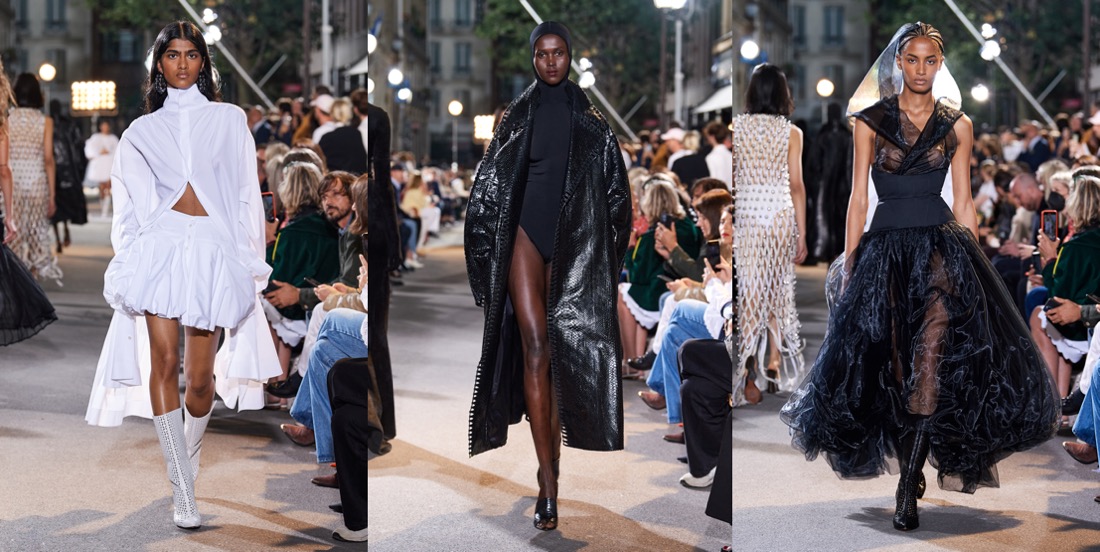
Down Rue De Moussy. Alaïa SS22

Since the much-mourned passing of Azzedine Alaïa in 2017, the maison was lead by the monsieur’s studio and largely focused on delivering beautiful tribute re-editions. In the beginning of 2021, however, the brand decided to go forward. Stepping onto the Rue de Moussy on Sunday with a debut collection honoring the legacy of Alaïa was a statement which radiated both respect and confidence from Pieter Mulier. Of course, the location couldn’t be more symbolic. Redolent of the culture revered by insiders – it’s the street on which Alaïa opened his first boutique (which up to now is also the label’s studio) and is home now to the Azzedine Alaïa Foundation. Mulier’s arrival came with the serendipitous energy of timing: the fact that right now, there could hardly be anything more relevant, more new, to young women than the post-pandemic surge in desire for ‘body-conscious’ dressing. The term itself was coined to describe the visceral uniqueness of Alaia’s work almost 40 years ago. “For me, it’s about how to explain the codes [Alaïa invented] to a new generation,” said Mulier. All those codes were embodied in the sinuous and slinky dresses, the flippy black skirts, the draped hoods, the flowing silk capes, the black leather – everything using all the techniques of incredible knitwear, body-sculpting cut, and house fabrics. “I wanted to make it democratic again,” is the way Mulier put it, pointing out the cross-references with, say, the leggings “that everyone wears today” or, no doubt, hoodies. But in Alaïa-world, these things are transformed into objects of the utmost sophistication: leggings that are a hybrid of cycling shorts and stockings, head-drapes that become almost goddess-like. “I wanted it to be the opposite of sportswear,” said Mulier emphatically. It’s creating fashion with an ultra-glamour that also has “ease” that he finds interesting. “They don’t like the word ‘sexual’ here, but I do. Because to me, this is the only house in the world which is sexual without being vulgar. It’s actually about pure beauty, and working on the body, which I have never seen anywhere else.

Mulier left his last job at Calvin Klein in 2018, in the aftermath of the departure of Raf Simons, and he said he spent a long time feeling demoralized by the industry. “I thought I wouldn’t do fashion any more. After New York, I really thought it was finished for me,” he said. Though he didn’t have a public profile, Mulier was well known as a highly experienced professional who’d been Simons’s right hand in womenswear at Christian Dior and Jil Sander before that. Several companies came courting, but he was in no frame of mind to pitch his fortunes in with big business again. “I took a long break. I really wanted something small. Something human-scale.” And that is what Azzedine Alaïa, the house, presented. Although owned by the luxury conglomerate Richemont, the house in Paris is still more or less family-scale, populated by the experts who worked with Alaïa and have continued producing the collections since he died. “There’s stuff here I didn’t know was possible,” Mulier exclaimed, pointing out a strapless, corseted black leather dress. “We moulded it out of triple-layer leather, from one hide.” To some pieces, like the iconic perforated leather belt – part of the famous house output for decades – he added his own iridescent twist: “I wanted to put it in the show from the beginning. We found a leather with reflective film, like a mirror. I thought that modernized it in a second,” he said. “That’s the gesture I like: that you don’t touch too much because it’s already perfect. Just with little things.” In the IRL event, there was loud applause from the audience as Mulier ran out to give one embrace to Alaïa’s life-partner Christoph von Weyhe, and another to his own, the designer Matthieu Blazy. It felt like a passing of the flame to a new-generation safe pair of hands who comes with no plan to trample over too many of the boundaries set by the man who famously and stubbornly went against the pressure of industry norms that didn’t make sense to him. For Mulier, that applied to his skeptical approach to all things social media. “I don’t think it’s a house made for social media, even though I’m on it myself,” he observed. “It’s such a small brand, like an artwork that I want to take care of. We’ll build a family slowly.”

“Live” collage by Edward Kanarecki.
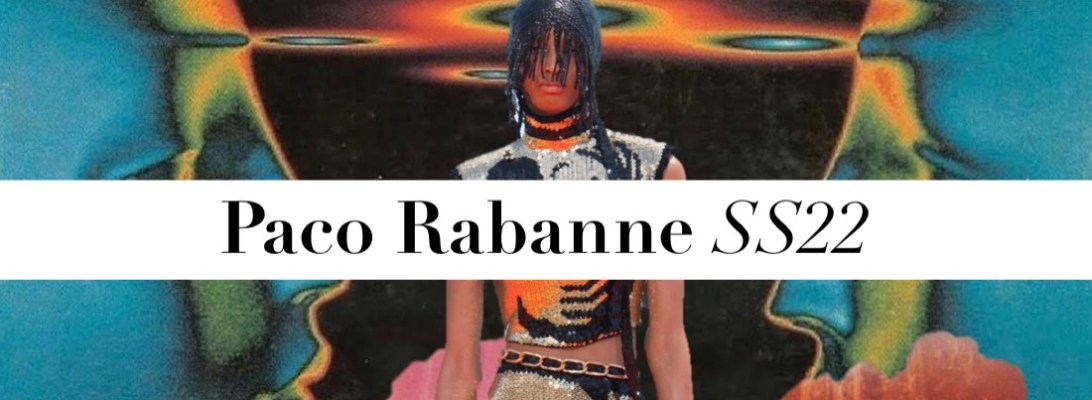
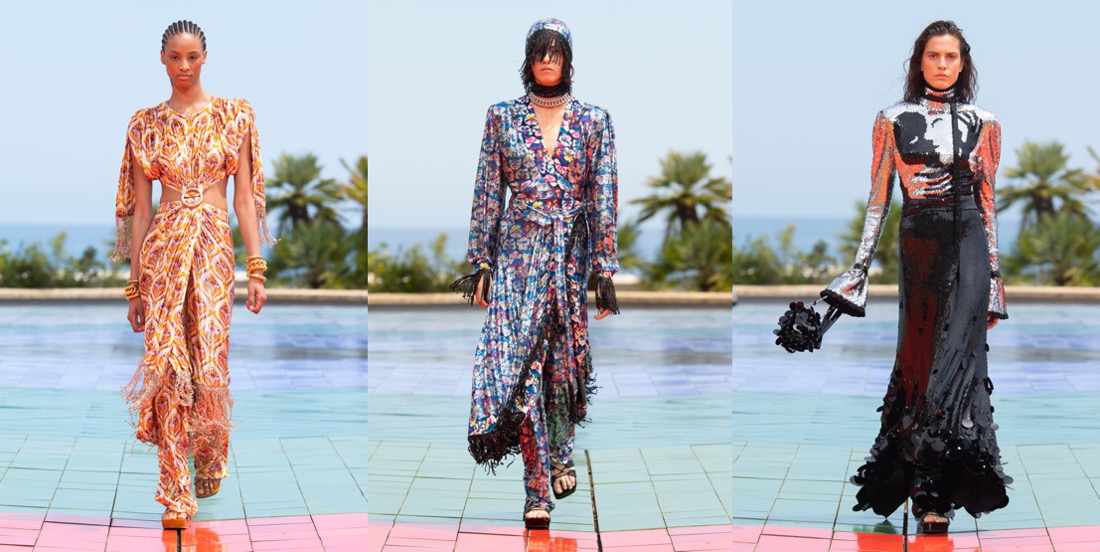
Heat Wave. Paco Rabanne SS22

We just wanted this super-genuine feeling of wanting the sun on your skin. Of being by the sea, and feeling the warmth and the happiness of it,Julien Dossena said of his spring-summer 2022 collection for Paco Rabanne. “Because all of those pleasures are what we’ve all been craving for so long. So I thought, let’s just go with it, and have fun with it.” Last week, he and the Paco Rabanne team were vividly capturing all those sybaritic sun-worshipping impulses atop the spectacularly-tiled hexagonal geometric Op Art Hexa Grace installation in Monaco. It made for a brilliantly-chosen platform for showcasing all of the glinting, sinuous glamour of the French jet-set “bohemian ’70s vibe” that he’s re-channeling for 21st century would-be hedonists of the post-pandemic world. Under the baking heat of the Mediterranean sun, out strode a collection Dossena aptly described as “compositions” or “assemblages” that were melded into silhouettes of dresses and skirts over flared trousers, all-over wallpaper and pansy prints, sarongs and scarf belts, and all kinds of inventive ways of reinventing the chainmail and metallic paillettes and sequins that made up Paco Rabanne’s identity in the first place. Amongst all of it was a print collaboration with the Victor Vasarely Foundation, the holder of the legacy of the artist who designed the Monte Carlo public art installation in 1979. “It felt culturally linked to Paco Rabanne” to do that, the designer remarked. Yet cleverly, Dossena’s knack for design takes clothes somewhere that’s never retro. In orchestrating his collections, he does things like wraps chains into necklines and around hips, adds asymmetric lashings of fringe, and knots and drapes crop-tops to reveal skin in ways that never happened in the 1970s. When he comes to quoting Vasarely’s Op Art, his print placement of the original’s circles and 3D illusion grids are set to flatter the body, mathematically graduated to narrow into waists. Besides, bucket hats were never the thing in the ’70s; they are now, but worked by Dossena into his ‘total print’ top-to-toe looks they’ve picked up a fresh sense of sophistication. Season on season, his instincts are steadily taking Paco Rabanne the brand to the place in the sun it rightfully deserves in the constellation of contemporary fashion.

“Live” collage by Edward Kanarecki.

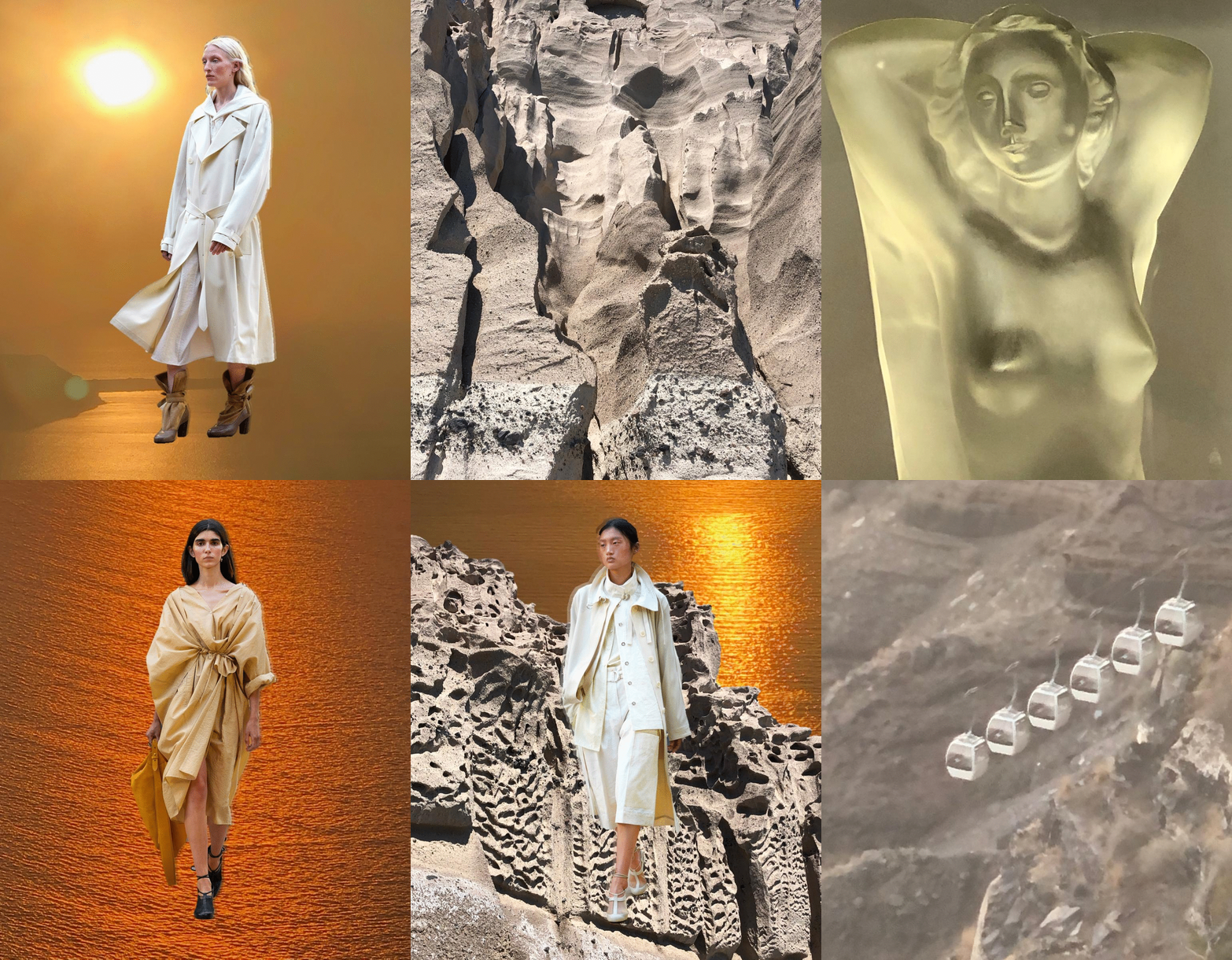
The Right Balance. Lemaire SS22

If you read me, then you know I’m a sucker for Lemaire! What Christopher Lemaire and Sarah-Linh Tran create every six months is just so well-balanced, and it perfectly fits my personal style. For spring-summer 2022, the label has no shock value intentions, instead, it delivers functional, timeless and beautifully tailored garments that are the perfect building blocks of a summer wardrobe. The designers offer a post-pandemic line-up of essentials – from classic, crisp white shirts and chic jackets made in Japanese denim to flared skirts in light-weight duvet and billow-y day-dresses in the most charming earth tones. You just hope those clothes will go out to the office, and not end up behind the computer monitor. The Lemaire woman and man never try too hard. The clothes are neat, but never uptight. The silhouettes are over-sized, but not slouchy. The colour palette is all about sun-burnt neutals, except for some items that come in idyllic watercolour prints. And as for the accessories, you just can’t miss the over-sized necklaces and vests made from wooden beads (like the once you see on the seats of your grandpa’s car), just as the signature “Croissant” bags in new colour-ways. Some things are great the way they are, and I always find Lemaire’s calm approach to fashion as a sort of relaxing comfort zone.

“Live” collage by Edward Kanarecki.

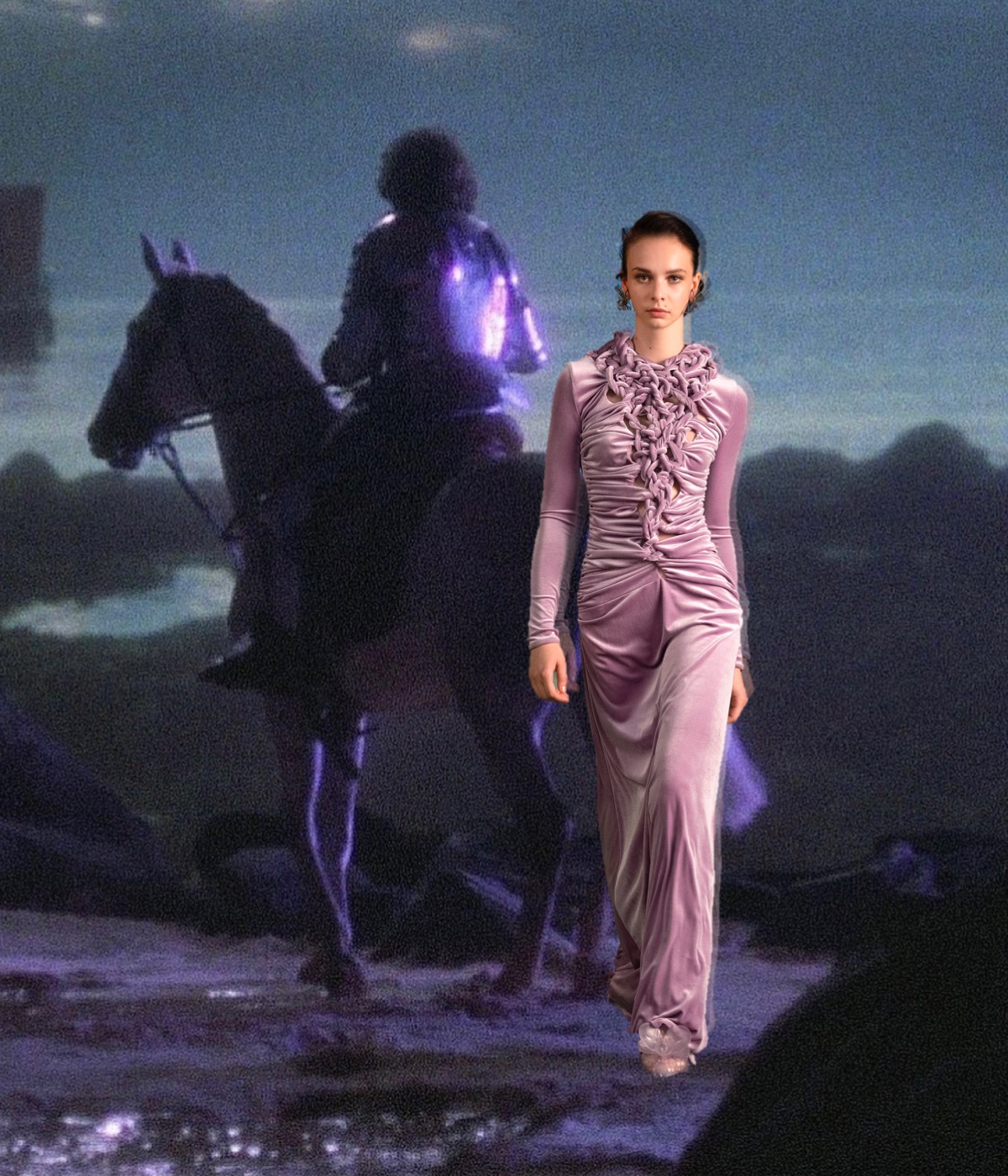
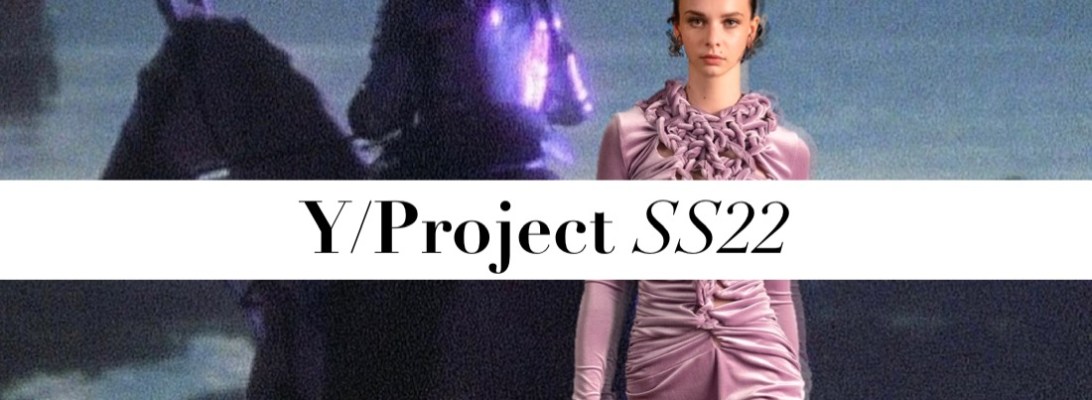
Distort, Insert, Wear. Y/Project SS22

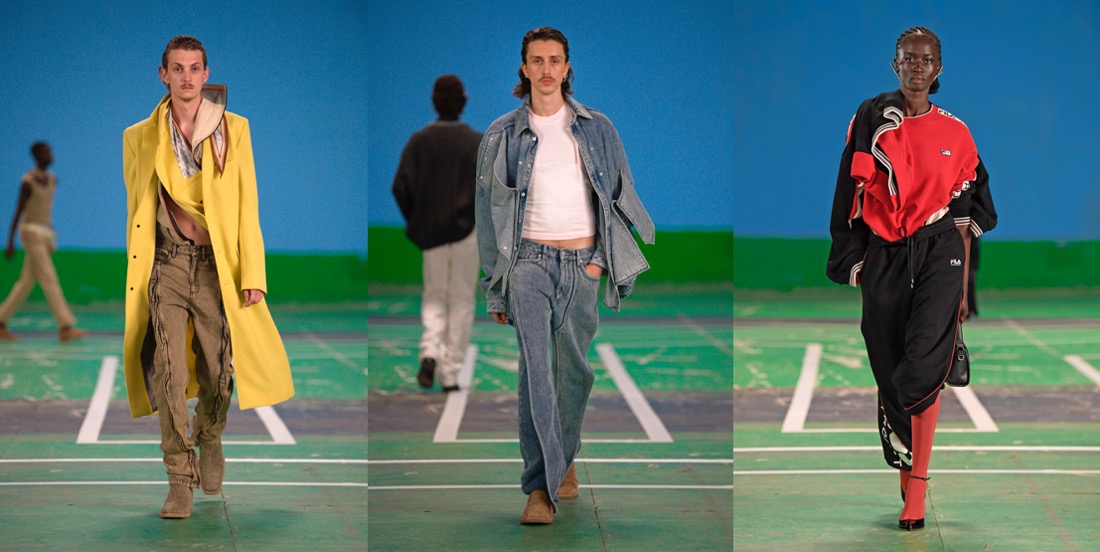
This season at Y/Project, the biggest news is the collaboration with Fila. Glenn Martens‘ worked around the sporstwear items made in co-operation with the Italian giant, staying true to himself – there just wouldn’t be a Y/Project line-up without his distorted twists and trompe l’oeil doublings that build the brand’s aesthetics. Some of the latest developments? Take the braided knits that rose from the waist to tangle at the neckline in order to allow the wearer to rearrange the garment in various permutations according to inclination. As Martens said: “You have to choose where exactly to put your head within it: we always try to push people to experiment with the garments and really embrace them and have fun with them.” Double mini-dresses could be worn with the organza top layer pulled down for a more classic look, or pulled up by drawstring for a broken effect. Bucket bags came structured, as did many of the garments, with wire inserts that invited the carrier to reshape their architecture as they pleased. The ‘Melissa’ shoes, in rubber, were the chicest vegan beach-ready footwear you will ever see. A red Fila tracksuit cut in with white branding was rearrangeable via popper to allow you to dictate how much logo you were flashing. Look 33’s skirt was in fact a pant, with a hole to the top left of the garment that the wearer had ejected her leg from. A men’s short-sleeved shirt came with a series of panels whose arrangement demanded that you decide whether you preferred pattern or plain, while some awesome gowns in jersey and velvet could be worn in multiple ways. Y/Project clothes are like a box of hard puzzles – they are demanding, sophisticated, but once you fall in love with them, there’s satisfaction.

Collage by Edward Kanarecki.
Men’s – For The Individuals. Jil Sander SS22

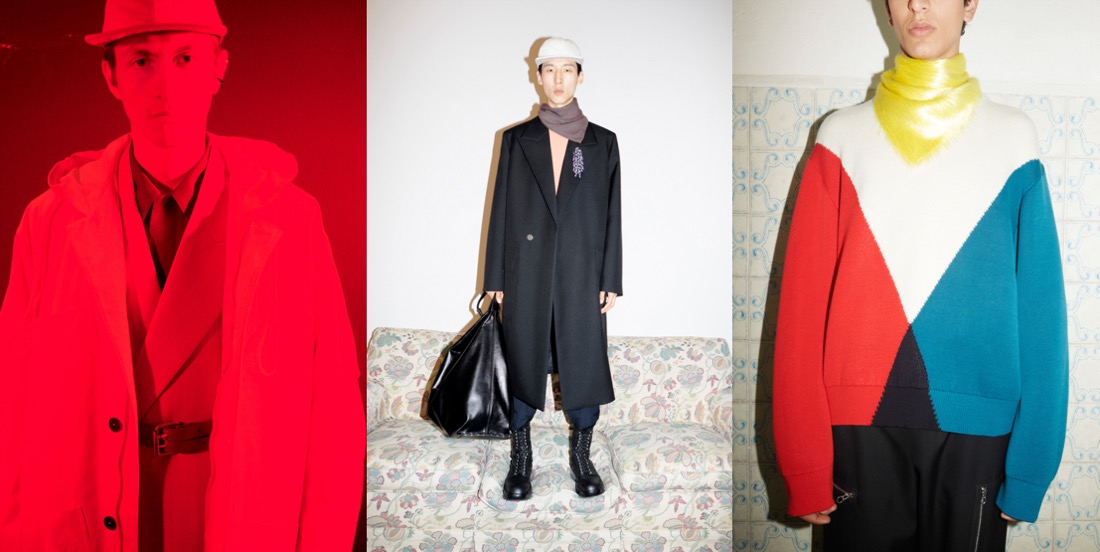
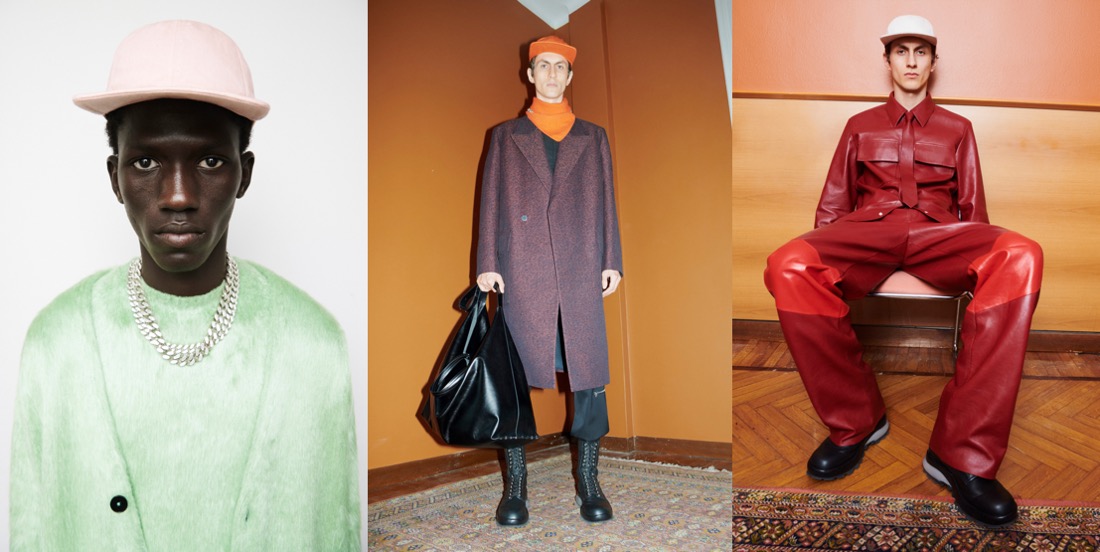
It’s an important time for the duo behind Jil Sander. Two-and-a-half weeks ago, Lucie Meier gave birth to a daughter. “It’s three of us now,” said her husband and co-creative director Luke Meier. Lucie hadn’t tried to hide her pregnancy, but since everyone outside her studio had only seen her neck-up on a Zoom call for the last nine months, no one realized. “I worked until a week before, but it’s good to be two,” she said. “Luke could take over.” They had begun working on their men’s collection some three months into the pregnancy, so, as Luke pointed out, “I don’t know if it’s conscious and present in the work yet.” The designers were, however, more reflective about the fashion world than normal. On a video call from Milan, Luke lamented fashion’s commercialization of parts of the sports – and streetwear that shaped him (he spent eight years at Supreme), and fondly remembered the eclecticism and individuality of New York street style in the early 1990s. “You’d see people on the street who’d be able to mix things like tailoring with an interesting piece of jewelry and something more functional like a parka. We were thinking about Jean-Michel Basquiat or Glenn O’Brien, these seminal New York characters,” he said. “Now, things are a bit uniform: there’s ‘this kind of person’ and ‘that kind of person.’ It’s nice to see people going for something that’s not considered the coolest thing of the moment.” While their collection was a reaction to uniformity, uniforms were undeniably present. Between utility suits, flight suits, strictly-belted tailored suits, and slender leather shirts with matching leather ties, there was an air of tonal, monumental dressing, which did go hand-in-hand with the industrial influences of the post-modern New Yorker artist wardrobe, but also evoked more symbolic uniforms of the post-war era. That wasn’t on the mood board, but the designers explained that the look they had in mind was about interrupting familiar or generic lines with pieces that express a certain individuality. That’s why colorful silken and fluffy foulards were tied around necks, why suits were bejeweled with jingly grape brooches, or why trousers were wildly magnified. It’s why a pink granny cardigan suddenly popped up, then a sexy cheetah print gilet, then a jumper motif that seemed to have zoomed in on a fragment of a multi-colored argyle pattern. Those graphic, color-block elements were nods to Donald Judd, whose SoHo building Luke would pass every day, admiring its Dan Flavin installation, when he lived in New York. After being stuck in the same places for so long, with the selfies of social media as our only real window to people-watching, this re-emergent period could trigger the individuality the Jil Sander designers are hoping to experience in the street once again. “I miss those characters and that world,” Luke said. “I don’t if it’s because we’ve been stuck inside so much, but I just want to see some interesting people.”

Collage by Edward Kanarecki.