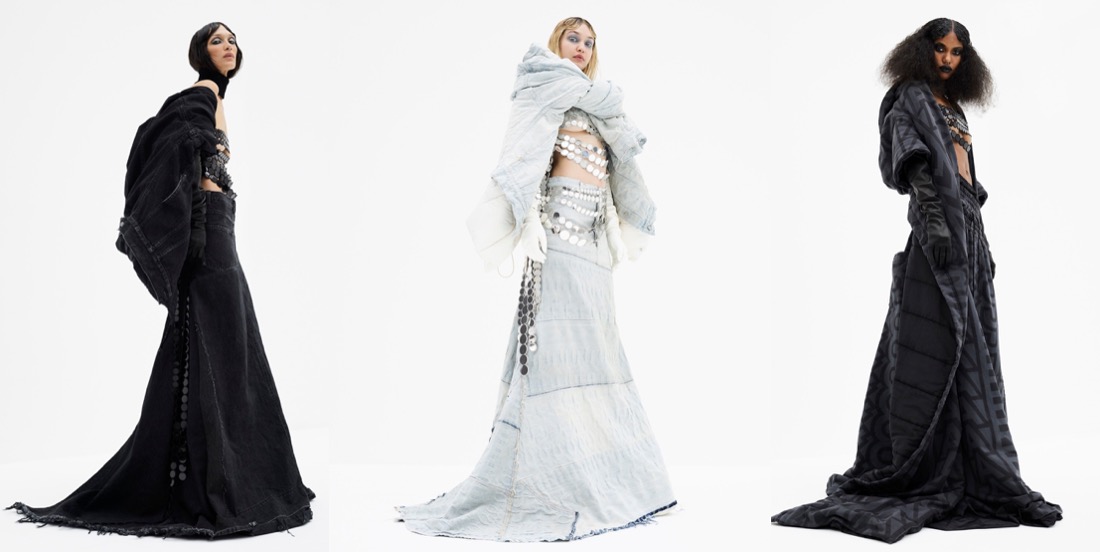
New York Fashion Week may officially be over, but that didn’t stop one of it most beloved showmen from unveiling a surprise new collection on Instagram. What’s New York’s fashion scene without Marc Jacobs? The 10 look line-up (which will be available exclusively at Bergdorfs), is essentially a glamorous reworking of Marc’s remarkable autumn-winter 2021, with their grand silhouettes slashed into new skin-baring forms, cargo pants transformed into sweeping statement skirts, and brilliant paillette embellishments wrapped into something stunningly new. The collection came up quite spontaneously. As Jacobs avoided the phygital fashion and virtual shows which largely defined this industry through 2020 and 2021, he instead waited until he had the potential of a live runway to create a collection for. “We were like, ‘we’re not showing until we can do a show the way we show,’” Marc told I-D. “But then, this time, me and Joseph [Carter, from his design team] and Alastair (McKimm, Marc’s collaborator) decided that we were going to make some clothes. And we were going to photograph them.” In result, this new collection appears exceptionally impactful, something of a deeply desirable dystopian fantasy. “We played with the clothes that we made before in order to make other, new clothes,” he explained. So paillette pieces were slashed and wrapped into new apparitions, while a denim jacket draped on the body to become a fabulous sculpted stole. Couture-level deconstruction, something the designer is obsessed with lately. “There was this word that kept going around early on in the process: elevate,” Marc laughed. “‘It has to be elevated, it has to be elevated.’ I looked it up in the dictionary – and to elevate has two definitions. Firstly: to raise or lift something up to a higher position, and secondly: to raise to a more important or impressive level.” He managed to tap into both meanings with this mind-blowing offering, as we can see.
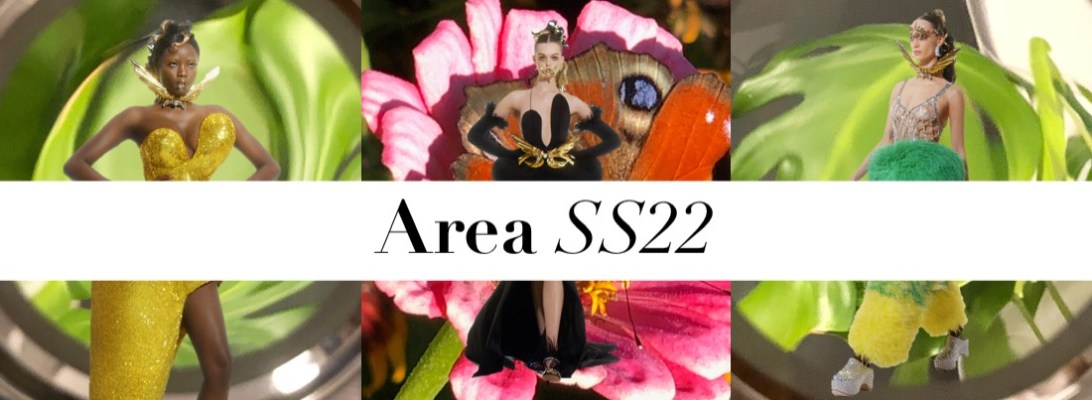
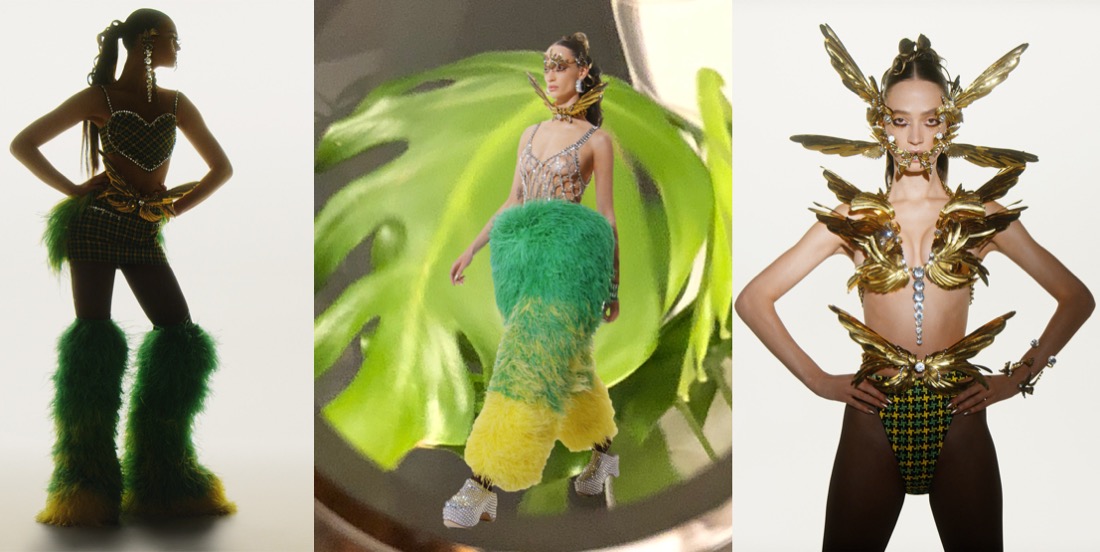
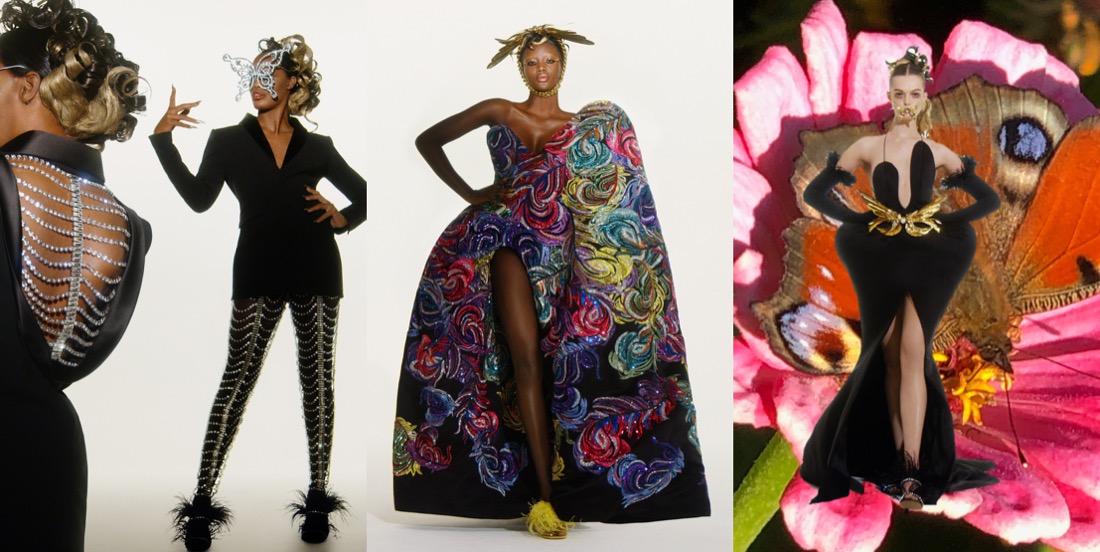
And just like that… FASHION is back at New York Fashion Week! For all the places Area has taken us, around the world and to outer space, a nightclub has strangely never been a stop along the way. It was maybe too obvious to Piotr Panszczyk – Area is a brand rooted in crystal trim and sexy cutouts. You get it; he doesn’t really need to spell it out. But wow, what a treat when he does. For its spring 2022 collection, Area finally delved into its showgirl roots, touching on the Deco glamour of Zizi Jeanmaire, the exuberant costumes of Brazil’s Carnaval, and the slouchy glitz of an off-duty Vegas dancer. “We are all showgirls,” Panszczyk said within Area’s new showroom that is completely silver, ceiling to floor, save for an entirely gilded bathroom. “And showgirls aren’t just about being pretty. It’s political; it’s about their bodies – and they are tough.” The Follies Area are oozing sparkle – crystal pants, obsessive beading in every color of the rainbow, A-R-E-A spelled out in crystal on their thongs – but the spirit is different. No more thoughtless spangle, no flippant sexiness. In a video, Connie Fleming, Janet Jumbo, Sophie Koella, Precious Lee, Lulu Tenney, and Mariana Pardinho move like Mugler-inspired Barbarellas – rigid, assertive, almost threatening in their beauty. The clothes are as diverse as the women who wear them: sweatsuits are trimmed with feathers; baggy jeans have cutouts on the thighs; and blazers are modeled on corset shapes, fastening with hook-and-eye closures. There’s no question: these are over-the-top pieces for a woman who knows what she wants.
When it comes to the couture elements of Area’s latest, props to Panszczyk for asking a question so demented it has surely never been asked before: what if Jean Arp were sexy and sparkly? Working with embroidery artisans in India, the designer built bulbous bodies out of padding and strict seaming, and had the artisans embroider them completely with beads, crystals, and sequins. Metal headpieces, tops, and jewelry were handmade by a German artist in Rome to evoke the tremble of feathers. The level of handwork is resplendent, and amid a NYFW of problem-solving clothes, it feels even more a delight to be in the presence of such unadulterated creativity. It’s also funny. Fashion can be too self-serious; Panszczyk has hit his stride with this collection and isn’t afraid to giggle about it.
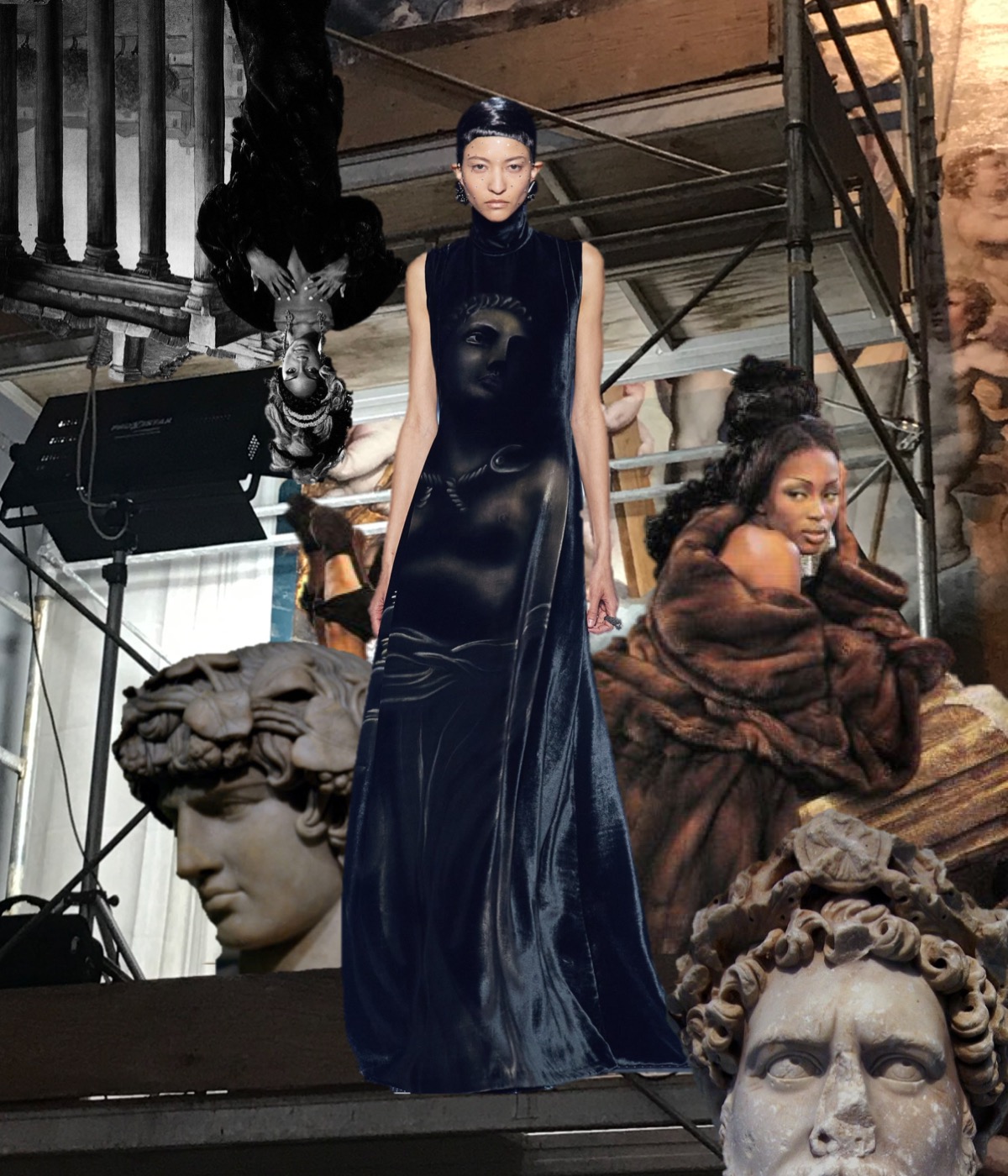
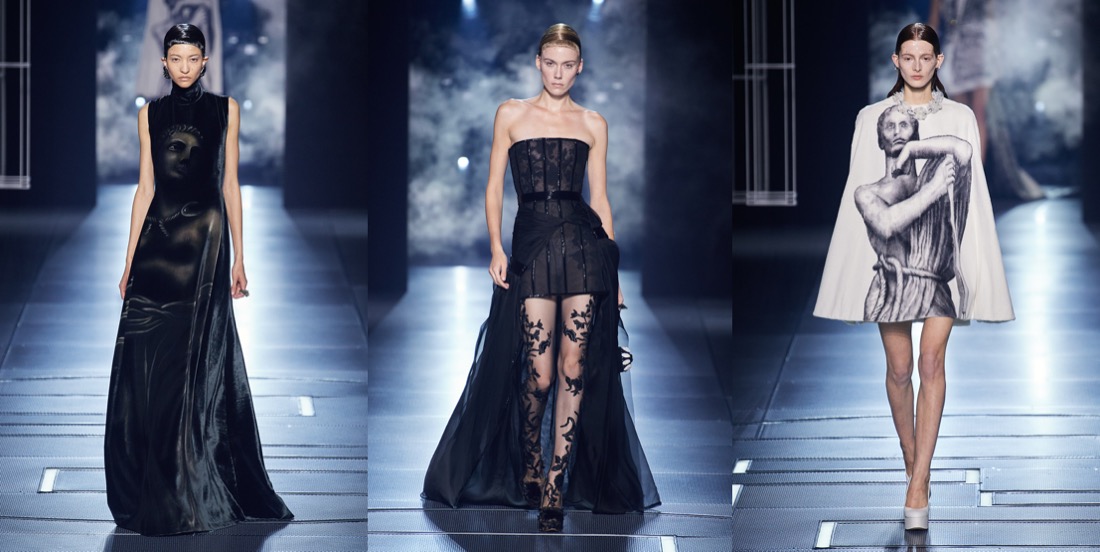
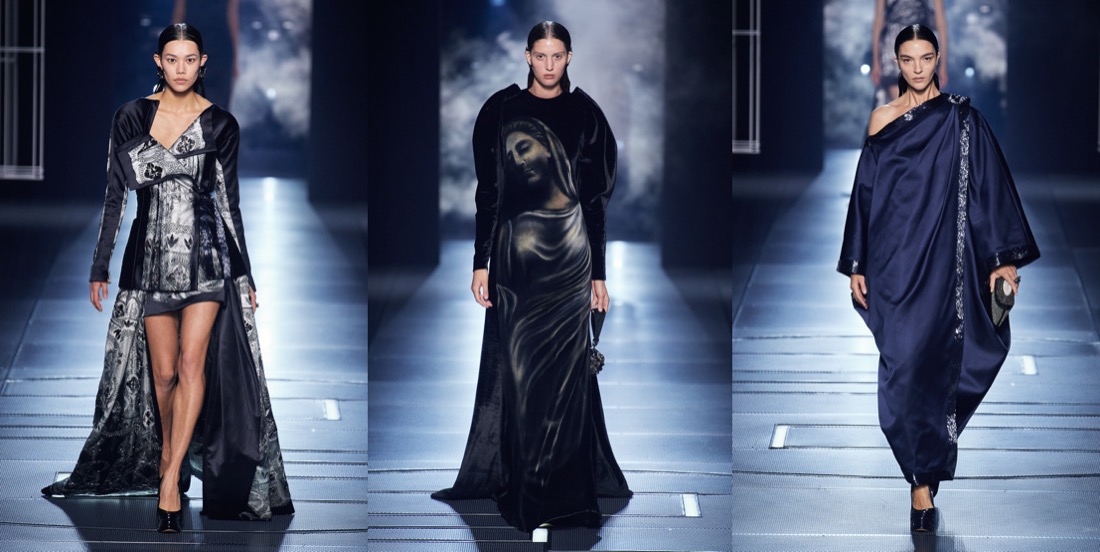
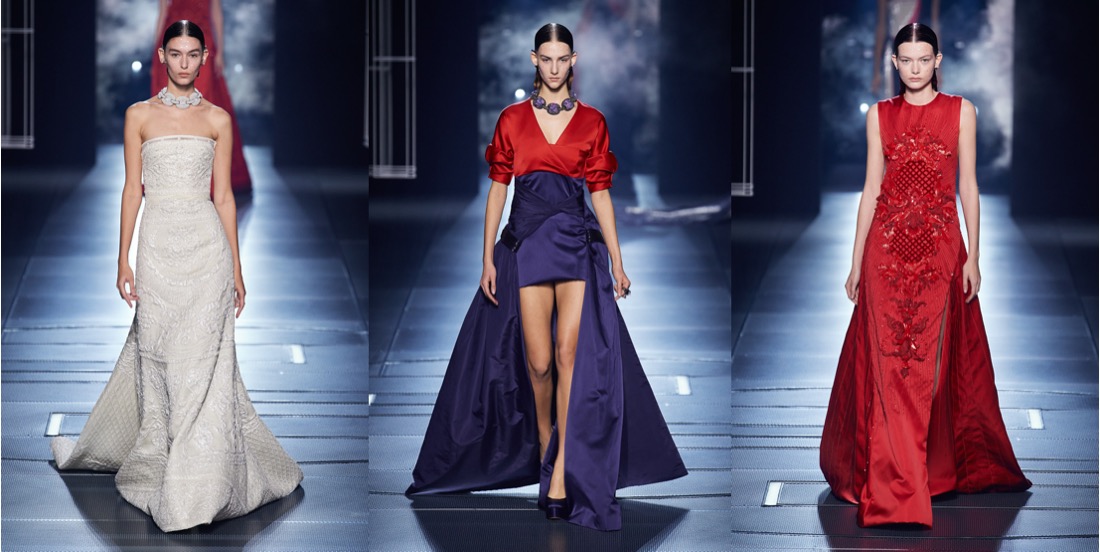
For his third Fendi haute couture collection, Kim Jones clashed the past with the future. This season, Jones continued his evening-centric approach, proposing a series of gowns he said illustrated the craftsmanship and techniques he can’t show in his ready-to-wear for Fendi. Like previous collections, Rome played muse: “It has so many layers to it. It’s such an ancient city,” he said. “We’re always thinking of the past, present, and future of it. The idea of different times and that very spiritual side of Rome, which becomes almost celestial; almost spacey.” Space, astrology, and heaven have been themes in this season’s couture and men’s collections. No doubt mildly inspired by last year’s billionaire space race, they mainly represent the great escape. The pandemic’s part in that scenario is pocket psychology. Jones, who said he had been re-reading Dune and a book on Star Wars by George Lucas, approached the theme with a Hollywood zest that recalled a number of sci-fi films centered around the age-old conversation between the ancient and the futuristic. Mirroring that dialogue in the time-transcendence embodied by Rome, Jones mixed the city’s structures with futuristic imagery and applied it to eveningwear. Renditions of the statues outside Fendi’s monumental Palazzo della Civiltà Italiana headquarters hand-painted on velvet dresses and a sheared mink cape looked like the statues in Prometheus or the landscapes in the scenes in The Planet of the Apes. Elsewhere, he applied the contours of a Roman fountain to a white dress and “filled it with mink,” while the radiant opening and closing dresses seemed to morph the lines of the peplos – the oldest dress in history – with a sci-fi structure. The collection was Jones’s first haute couture show for Fendi with a live audience. As a showcase of the skill of the house’s Roman atelier and a theater of ballroom fashion, it was a proper ending to a marvelous couture season.
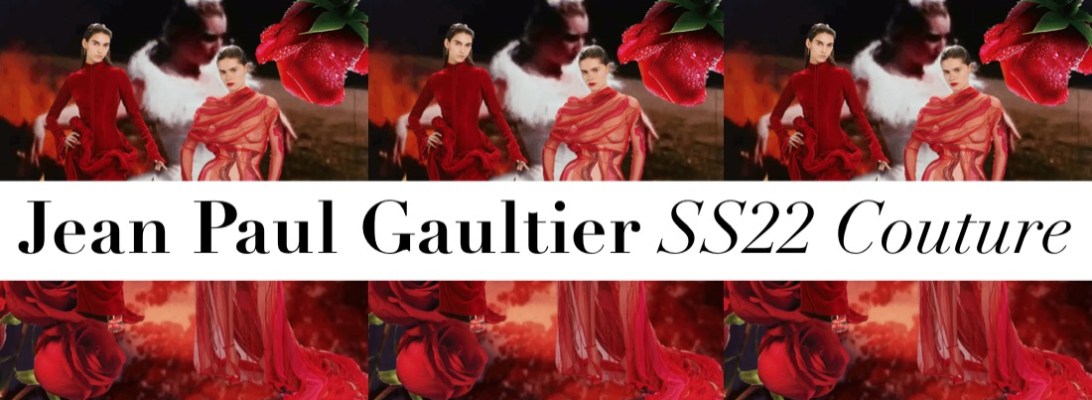
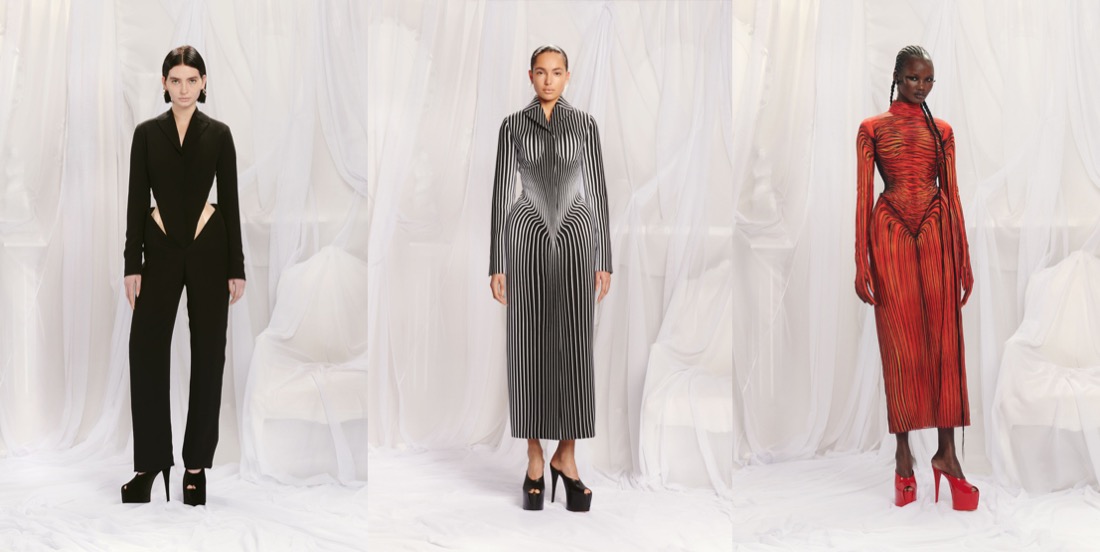
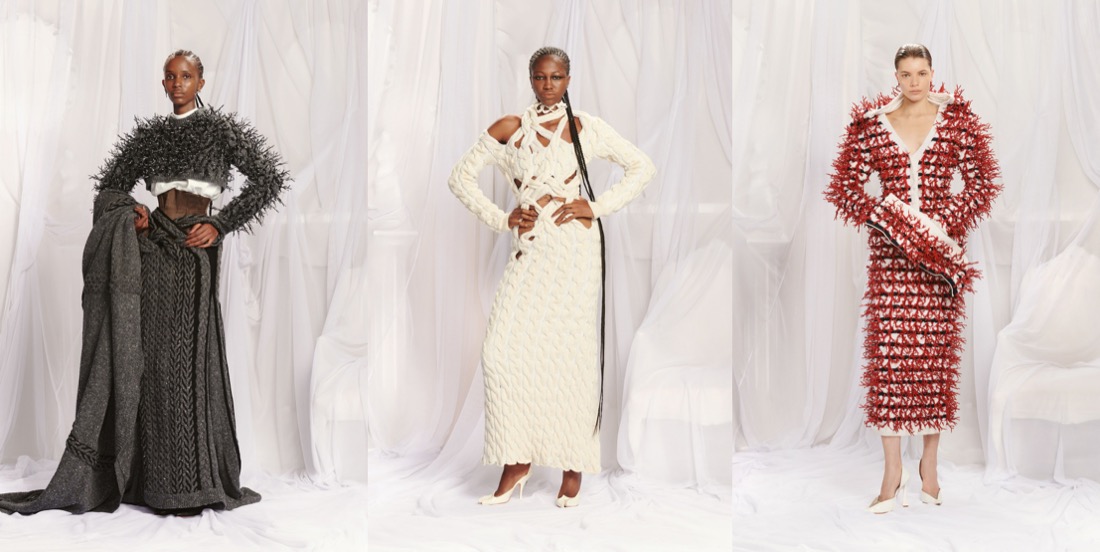
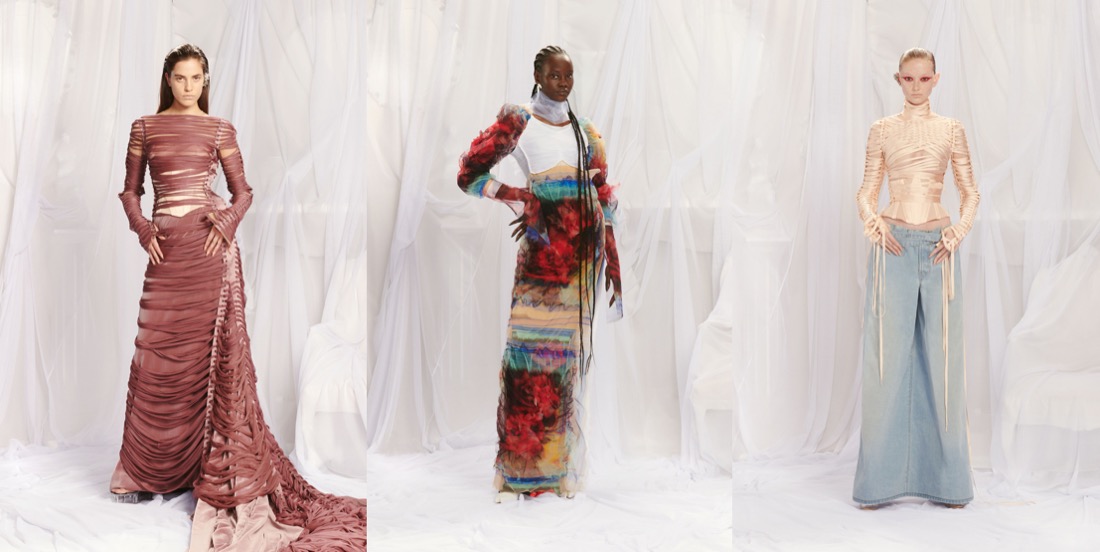
Y/Project’s Glenn Martens unveiled his vision of Jean Paul Gaultier haute couture—the second designer to do so, after Chitose Abe of Sacai last season – and it appeared to be a heavenly match. What makes this collection so magical, so right and so much fun? It’s an escapist exercise in what you can do when you’re let loose in the wunderateliers that are the Gaultier workrooms. Plus, as we all well know, Martens knows how to make a brilliant and inventive silhouette. One of the looks he was furiously working on is a Breton marinière which has been turned into a dress and then hand-embroidered to ripple 3D-style with hundreds of faux coral fronds. The sailor stripes are pure Gaultier, yet the twists to this dress – the folded-over shoulder line, the knit panel which sinuously and unexpectedly juts out from the left hip – are pure Martens at Y/Project. “I am only doing this for one season, so it’s not like I have to envision a whole new future for the house; that’s a very different exercise,” Martens said. “This is a celebration of Gaultier. I’ve stayed close to the woman Jean Paul created in the past—pure diva goddess beauty, hips, whatever, all that drama he loved. I’m building on that through what I think of his iconic Gaultier moments. This marinière…it’s so him, but I completely fucked it up with all the fake coral spikes. I’m reinventing those iconic moments in my own way.” That’s what makes Martens’s version of Gaultier couture fly: the acknowledgement that it can’t be a retread of the past glories of one of fashion’s greatest designers, but instead honor what went before and incorporate the best of yourself. It is not C as in collaboration ( a word which is looking increasingly passé) but C as in conversation, a constant state of respectfully going back and forth between incoming designer and the heritage of the house.
That marinière dress was sandwiched between a series of corseted jacquard knit looks, whose body molding striations recall ’90s Gaultier and plenty of gorgeous, ethereal evening dresses, confections of chiffon selvedge, whose lightness were amplified by the ferocious ingenuity of their barely visible inner constructions. One, in black chiffon across a delicately pale pink corset, was a particular knockout. The interaction between the two visions continued with an evening gown in a boudoir-y, peignoir-y ’30s peach which looked like a deconstructed corset, the lacing asymmetrically blown up across the billowing skirts, while a cream knit sweater dress featured cable panels that intersected, baring a little skin along the way. Elsewhere, those wired experimental volumes Martens loves so much figured prominently, in red velvet or green taffeta, as did a wink-wink to Y/Project with the Y shaping of the hips on some of his silhouettes, his own version of the classic hourglass but reimagined for today. Martens was drafted in to do this collection two years ago, so because of the pandemic, it has been in gestation for a while. Yet, despite that, it feels hardwired to the moment. While it will very likely appeal to Gaultier couture loyalists, it will also speak to today’s fashion-savvy IG generation who applaud every big gesture and historically savvy flourish.
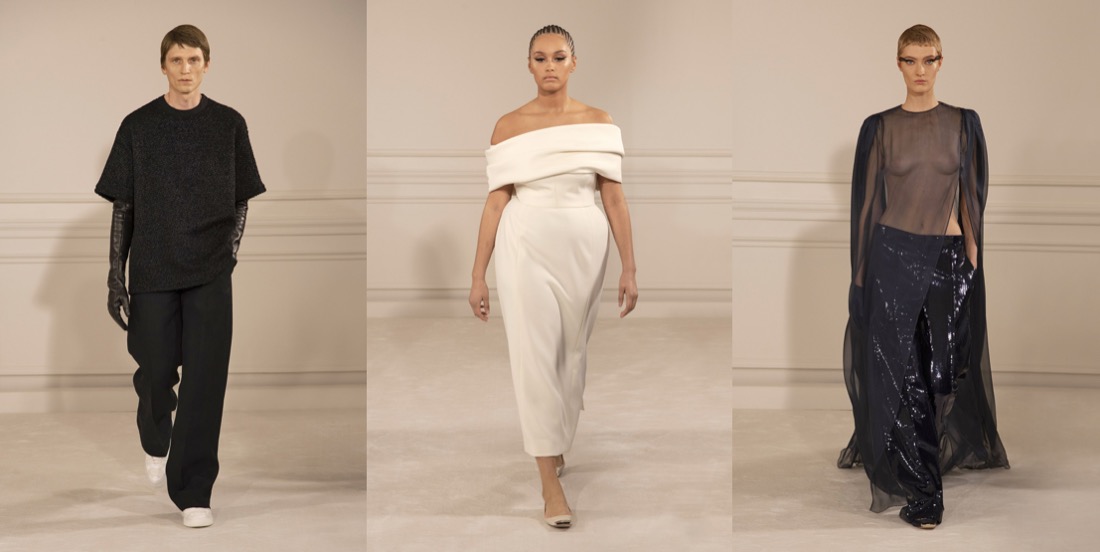
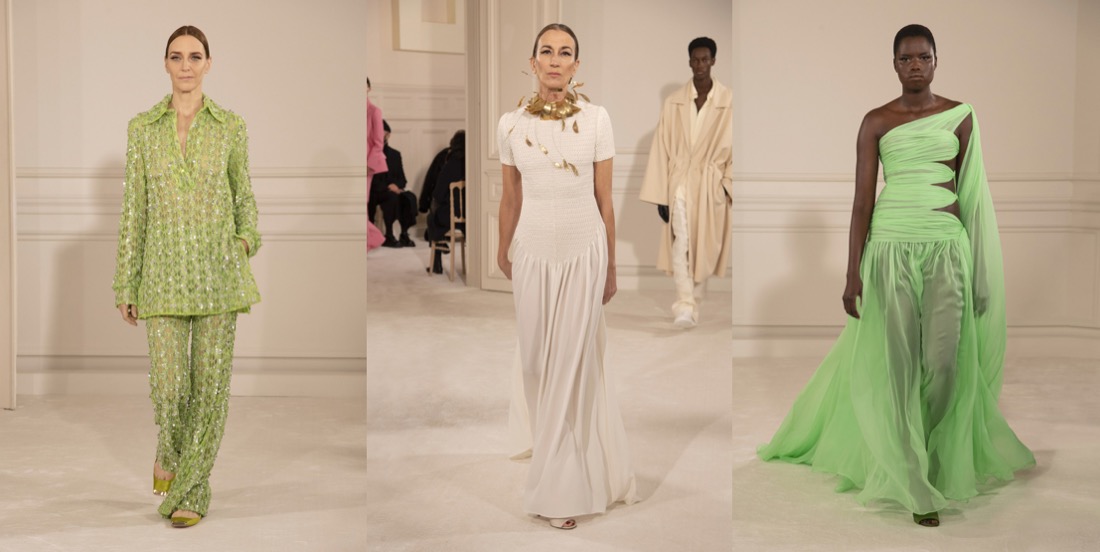
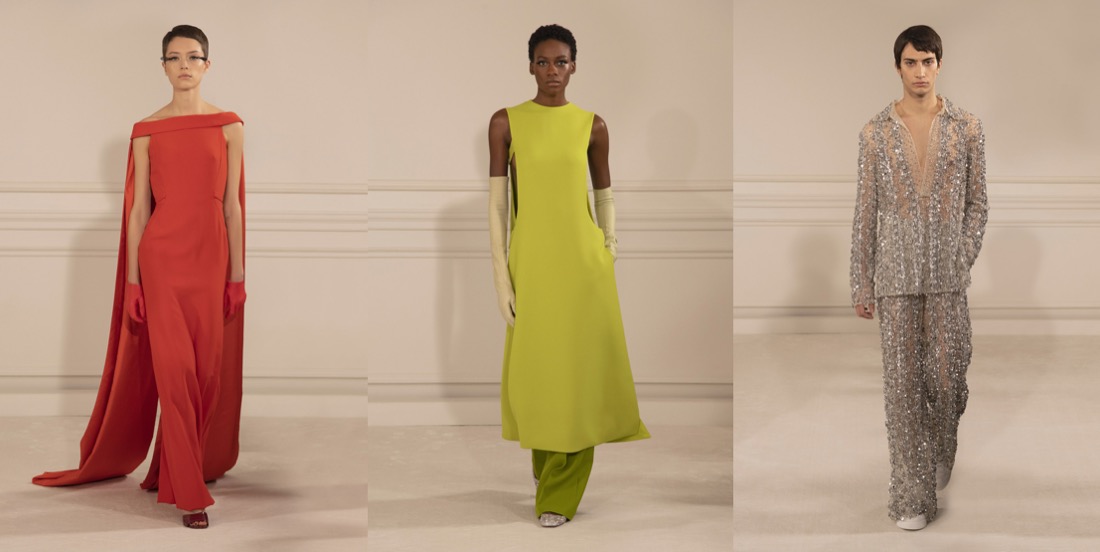
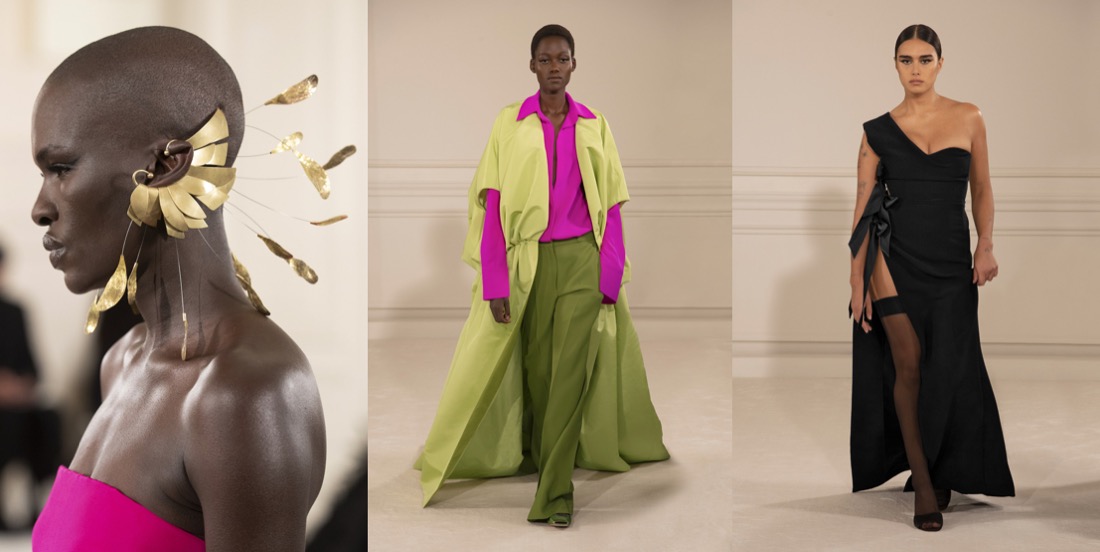
And just like that, Pierpaolo Piccioli is the king of spring-summer 2022 haute couture season. The latest Valentino collection is everything a truly phenomenal couture collection should be, and more. You could see the emotion in the eyes of some of the models as they glided through the maison’s Place Vendôme salons to a specially recorded soundtrack by Anohni. “She was told she’d never walk couture,” Pierpaolo Piccioli said of one of. “In couture you never see these bodies. Never.” It is in large part thanks to Piccioli that haute couture is finding relevance in an age set on breaking the constructs of the past. On his mission to make this elitist corner of fashion matter to the generations dubbed “woke,” he has decided to “keep the codes, but change the values”: to give the broad spectrum of humanity the chance to mirror themselves in haute couture, in place of the waify, white, classical beauty ideal of its past. In front of a distanced audience of just 65, he broke with the skinny stigma of that heritage in a collection titled the Anatomy of Couture. “When you do couture, you have the house model. And you apply the body of the house model to 50 or 60 models on the runway. I wanted to break these rules and embrace the idea of different proportions of body, different sizes, different ages. But it was impossible to do this with just one house model. So, I broke the rules and got 10 house models in with differently proportioned bodies,” he explained. The idea of haute couture was always to adapt silhouettes to the client’s body. But those silhouettes are typically dreamt up, fitted and realized on a tall, slim and young physique. This season, Piccioli changed that model, in more than one way. And in the process, he said, “We got to create new silhouettes.” A partly fuller-figured cast than what you normally see on a couture catwalk did change Piccioli’s silhouette. His signature monastic Roman lines and Hellenistic drapery morphed into shapes that registered more dynamic, more mid-century, more glamorous. Through a Hollywood lens, you might call them sexy. But it wasn’t as if his new cast looked shockingly different in size to the runway norm, which was perhaps testament to his method – and skill. “In runway shows, sometimes there are 50 skinny models and one bigger-sized. I feel like you don’t really relate to that. You don’t believe that. You just tick the box,” Piccioli said.
His consistent cast helped to illustrate the power of the craft. The intertwined straps of an ebony velvet gown framed the shoulders of the model and pulled in her waist, the volume of its skirt balancing out the proportions. A chocolate stretch tulle dress covered in two kilos of Venetian glass beads hand-embroidered for three months hugged the body, allowing the beads to shape and support the model’s frame. Piccioli employed his approach to surface decoration, too. A lilac faille gown was adorned with great big bows around the neckline, something that could easily look overwhelming on a fuller figure, but didn’t because of the custom proportions and placements of those bows on that particular neckline. In his couture take on the stretchy body-con favored by the generation who coined slim thicc, Piccioli proposed a neon coral ankle dress, which wasn’t stretch at all, but created through four layers of georgette whose interaction created a natural elasticity that adapted to the body. Throughout, he demonstrated how couture can build a silhouette around the body, and either highlight a person’s shape or manipulate it through dressmaking. It made all the difference, because clothes are construction. One size doesn’t fit all, but one blueprint scaled up or down certainly doesn’t, either. We’ve all seen that in practice on red carpets where people of a different physique to the body that modeled the dress on the runway can end up looking under – or overblown, because the dimensions and adornments of the silhouette don’t take kindly to the scaling process. And then, the confidence goes. “I feel that if you don’t deliver the ideas of power and strength and fierceness with these kinds of shapes, you’re missing the message,” Piccioli said. If body empowerment is something he is sensitive to, it’s also because his own three children are in their teens and twenties: Gen Z-ers raised on social media in an age where body ideals have the added extremity of plastic surgery normalization. “That’s what I share with them,” he said, referring to the connection he felt with his cast through the experiences of being a father to young people today. “This could deliver a strong message for young people who are struggling with something. If she’s beautiful, you can be beautiful,” Piccioli said, gesturing at one of his gorgeous cast members.
For his own generation, the message was the same. “The body modifies with age. They’re still as beautiful but the shape is different. I wanted to capture the beauty of how the body modifies.” Models older than the couture show average – Kristen McMenamy, Marie Sophie Wilson, Lara Stone, Violetta Sanchez, Lynn Koster, Jon Kortajarena – hardly looked out of place. On the contrary, the character that comes with age brought a confidence to their looks. It was never more pronounced than in Piccioli’s most “normal” silhouettes infused with the gestures of haute couture, like Sanchez’s white T-shirt (in silk sablé crêpe) worn with a pearl gray duchesse satin skirt wildly hand-embroidered with silver sequins, or Mariacarla Boscono’s tailored sequinned trousers (silk poplin with hand-embroidery) worn with a dramatic fuchsia stole in faille. Piccioli’s collection was another brick in the legacy he is building for himself as a couturier of change. If used as a laboratory to develop techniques that can inform both the possibilities and values of ready-to-wear, haute couture becomes the most relevant part of a contemporary fashion system. It turns into the think tank of fashion. “Since the Middle Ages, there have always been canons of beauty,” Piccioli said, listing all the body ideals of the times. “Once we’d had enough of all the canons, we discovered that humanity is the only canon that’s valid: freedom; be yourself. That’s the real canon.”



















 Design & Culture by Ed