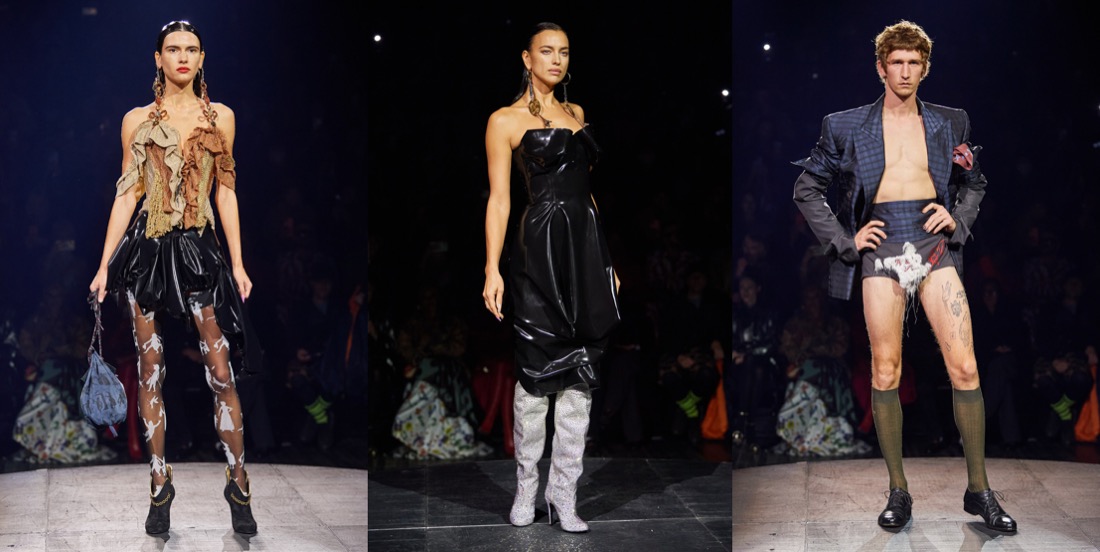
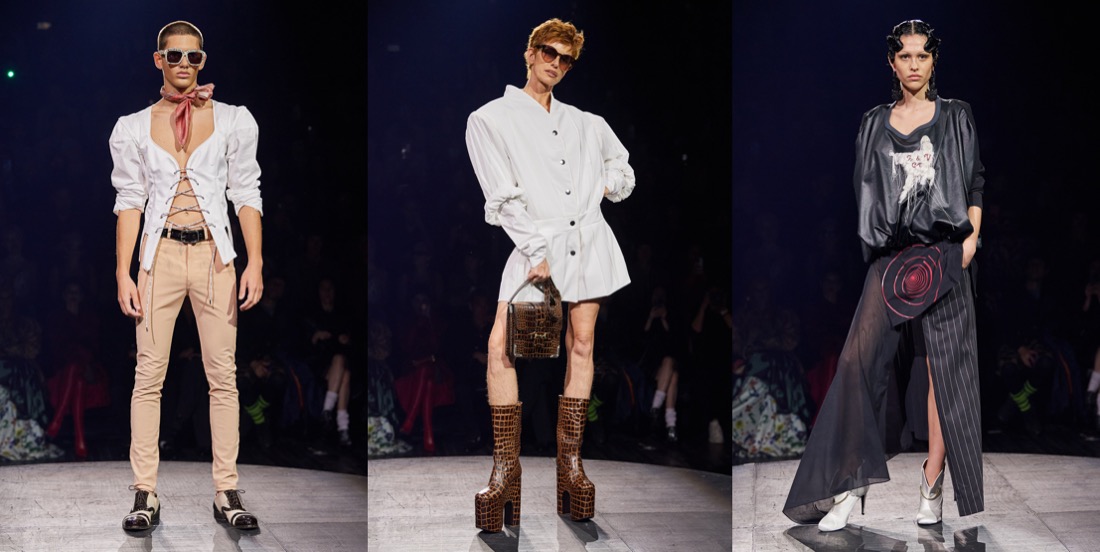
For spring-summer 2023, Andreas Kronthaler was in philosophical form. He reported that until his arrival in Paris a few days ago, he’d not been out of London in more than a year. Instead he had stayed at home and read and designed. The book that hit him hardest was Super-Infinite: The Transformations of John Donne by Katherine Rundell. That text on the great metaphysical poet, who saw lovers’ eyes as hemispheres and clothes as states of mind, helped fire this collection. The ragged tricolored cardigan of look 16 and the soulful accordion on the soundtrack signaled Kronthaler’s enchantment at this Paris return. More broadly we were on an imaginative trip through various characters shaped through clothing. Sibyl Buck was particularly magnificent in her two broad-shoulder, Renaissance-man looks. There were slatterns and angels, monks and harlots, nobles and commoners. The models all wore super-high, Vivienne Westwood-signature platforms that even Donne would have struggled to describe. The only missing element was Westwood herself, whom her husband said was back in London taking part in a wave of protests against the government.
Collage by Edward Kanarecki. Don’t forget to follow Design & Culture by Ed on Instagram!
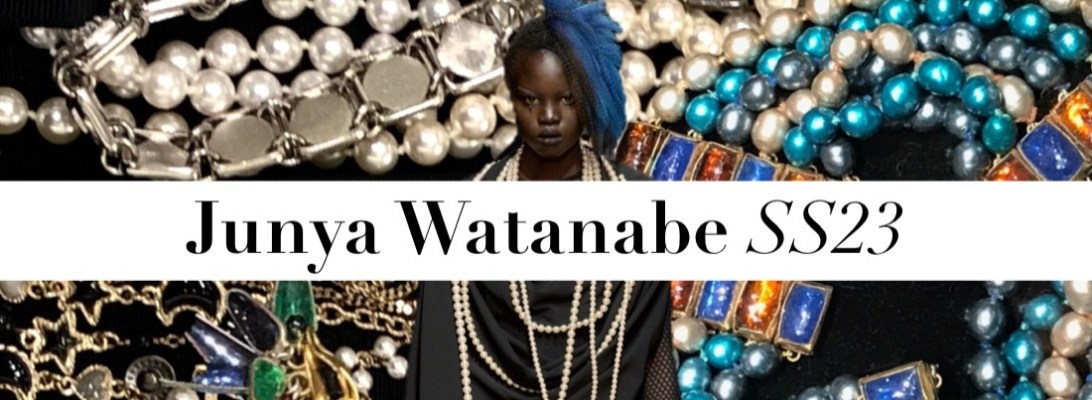
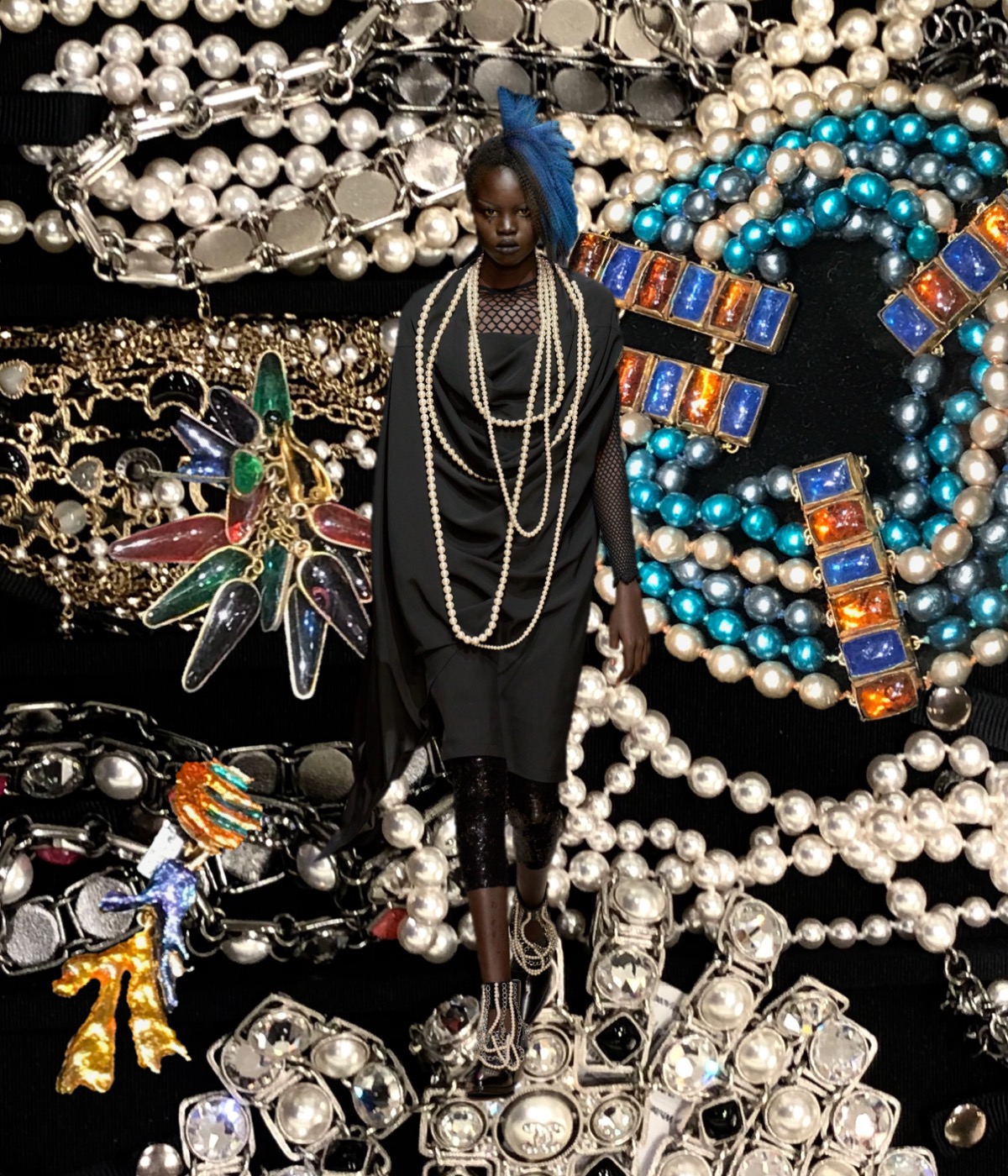
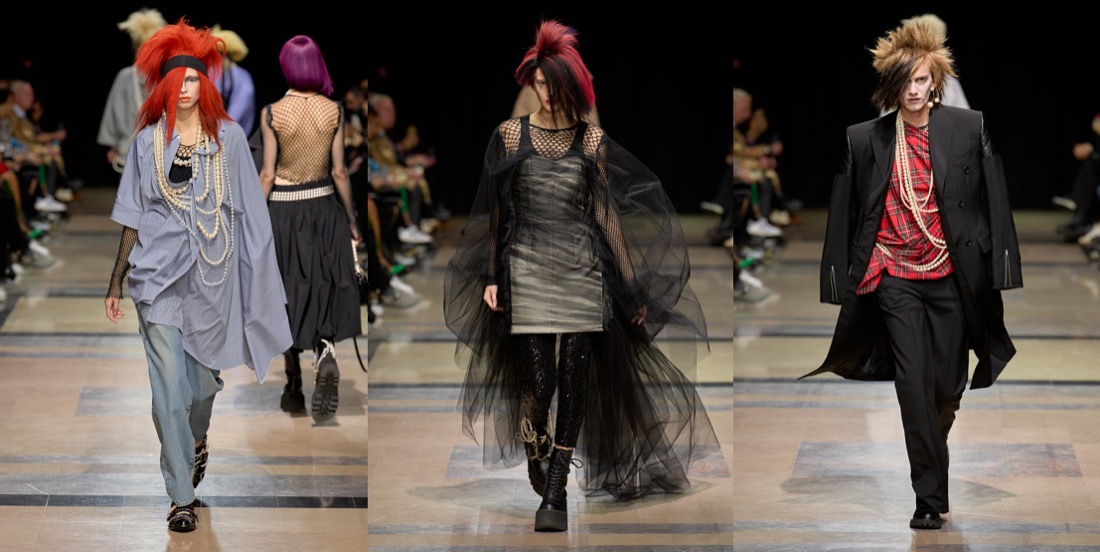
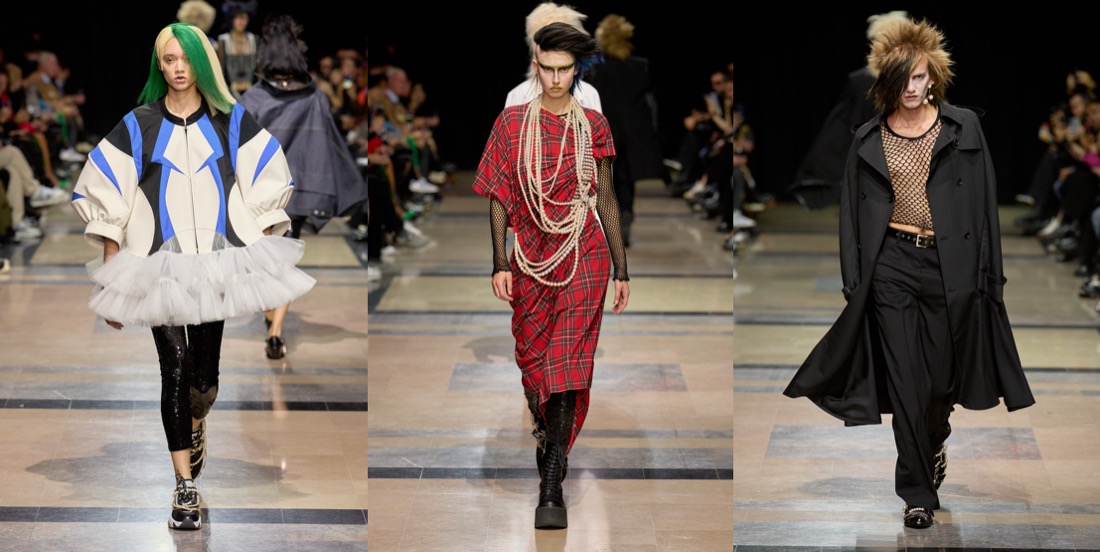
The three Comme Des Garçons brands have finally returned to the Parisian schedule: Junya Watanabe, Noir Kei Ninomiya and CDG itself. Lately, Watanabe loves a theme to stick with for an entire season, so for spring-summer 2023 we went back to 1980s. The familiar flashing camera sounds of Duran Duran’s hit “Girls on Film” kicked in and a pair of New Romantic kids emerged from the side of the runway, their hair crimped into mohawks and wedges and their makeup airbrushed on like a Patrick Nagel portrait. All of that was enriched with Junya’s signature codes, from deconstructed tailoring to the punk-rock badassery of chains and pearls. Those first two looks set the silhouette: wide, very-1980s-shouldered capes and a skinny leg punctuated by a sharp-toed boot dressed up with those chains and pearls. Some of the capes were caught by a belt in the front or cut like a trad two-button blazer, but turn them around and it was a different story: all swagger and sweeping shapes, punctuated by fabric selvedge. Shirting got the Junya treatment too; split personality button-downs were well fit on one side and unstructured on the other, a clutch of pearls holding them in place, while pleated shirtdresses came in Klaus Nomi–ish inverted triangles. About those pearls: they were worn as necklaces and integrated into garments, almost like belts, creating the kind of askew volumes Watanabe likes. He seemed to be making a case for more glamour and more drama, but without disconnecting from the realities of daily life. The jeans, whose upturned cuffs revealed a flash of red tartan, were made with Levi’s, and the color-blocked and patchwork jackets came together with Komine, a Japanese racing-gear maker.
Collage by Edward Kanarecki. Don’t forget to follow Design & Culture by Ed on Instagram!
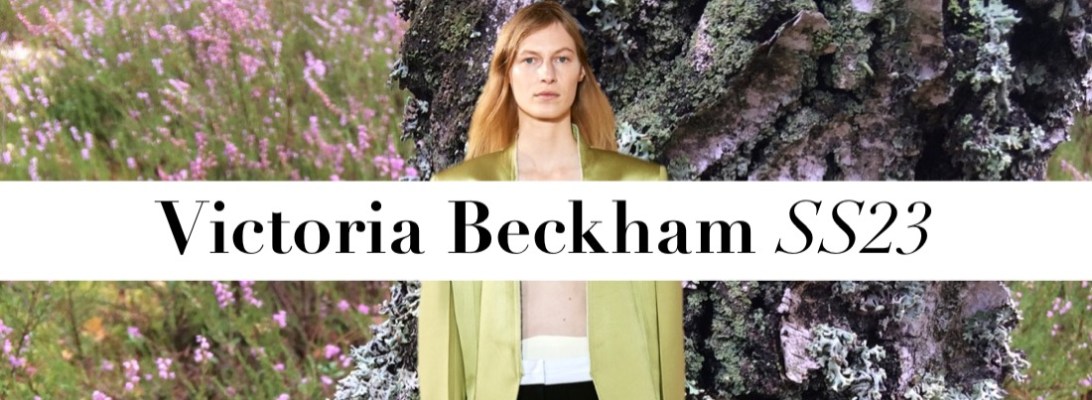
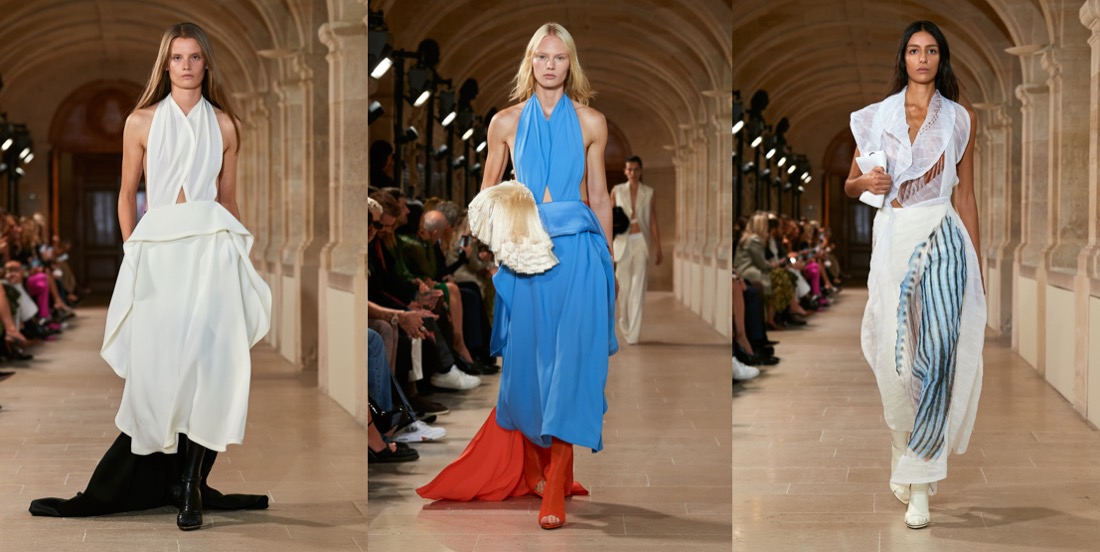
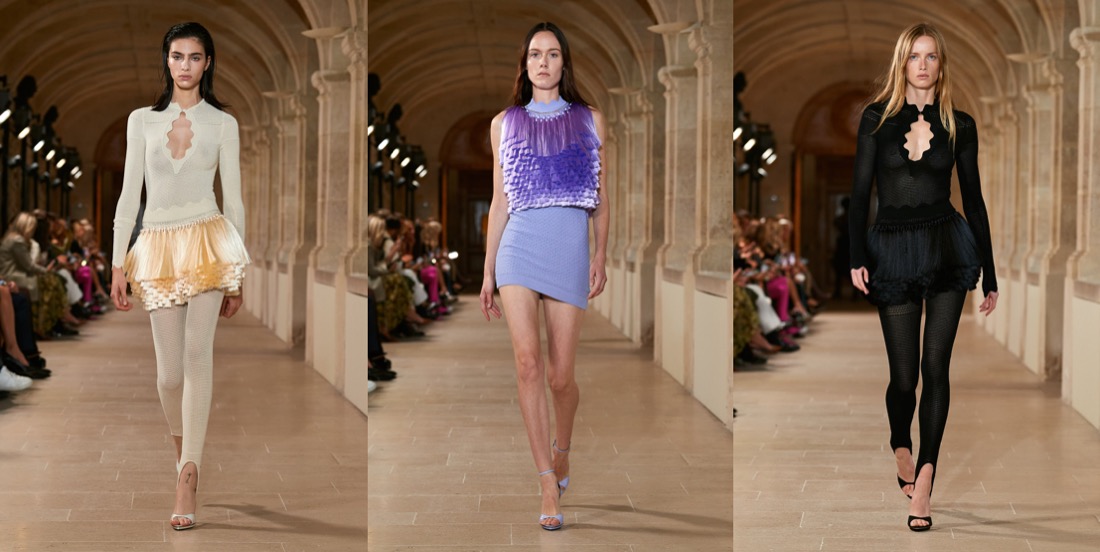
Spring-summer 2023 collection was Victoria Beckham‘s runway debut in Paris. But also, it was one of the least consistent offerings coming from the designer. This makes me wonder: for whom is this brand for at that very moment? And what does it really stand for? The collection wasn’t bad, but it felt like it tried to check all the current trends. The first look: Rianne Van Rompaey in a medical-pink rigorous, ankle-length dress sheathed over her body, its sleeves slit to the shoulder, its waist stitched at the front and pulled apart with strict ruching. Beckham underpinned it with opera gloves in monogrammed lace the color of the model’s skin, matching tights, and high satin heels with almond-shaped toes. It was pretty twisted, but glamorous. The designer could stay in the orbit of this look. But she decided to experiment further. Draped dresses (some seedily worn over latex tights), deconstructed cami dresses that looked as if they were about to slip off the body, and perversely bias-cut fishtail gowns in more medical pastels. A black dress was adorned in slashes as if it had been clawed into. Next to coats with edges cut to reveal their construction and trompe l’oeil leather jackets with the imprint of lapels, tailored jackets had been deconstructed at the back and reduced to their core frame, exposing the naked body (very Peter Do). Each look put separately seemed intriguing, but in overall, the line-up needed a tighter edit.
Collage by Edward Kanarecki. Don’t forget to follow Design & Culture by Ed on Instagram!
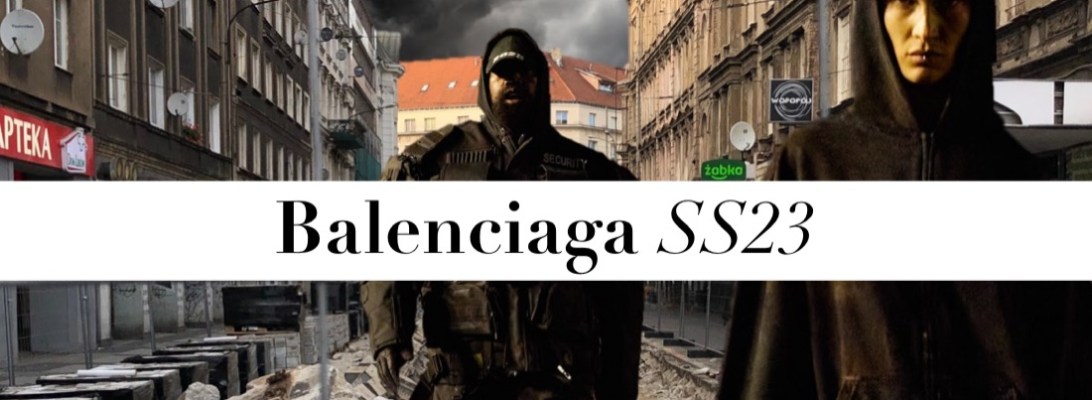
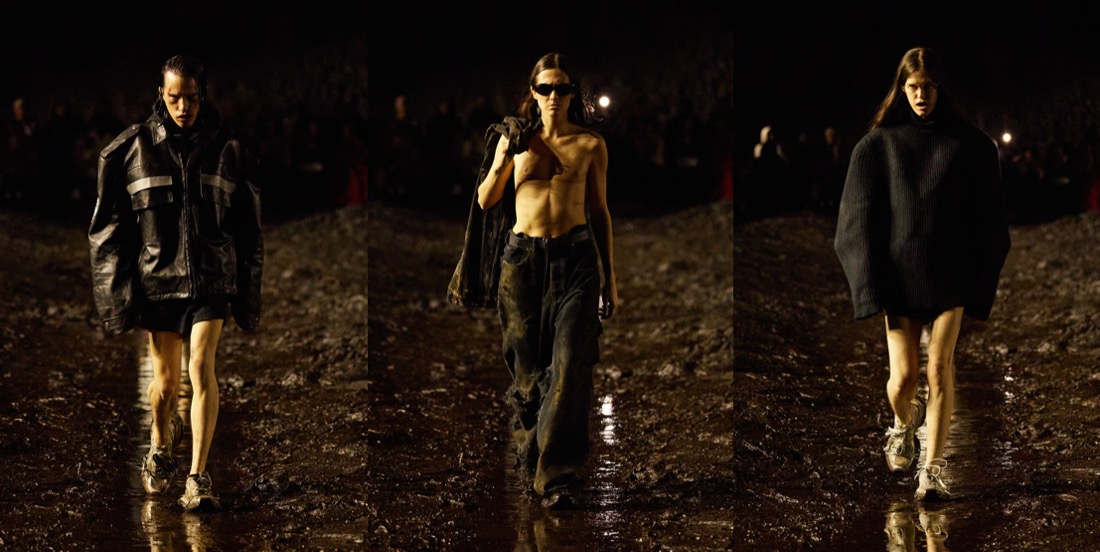
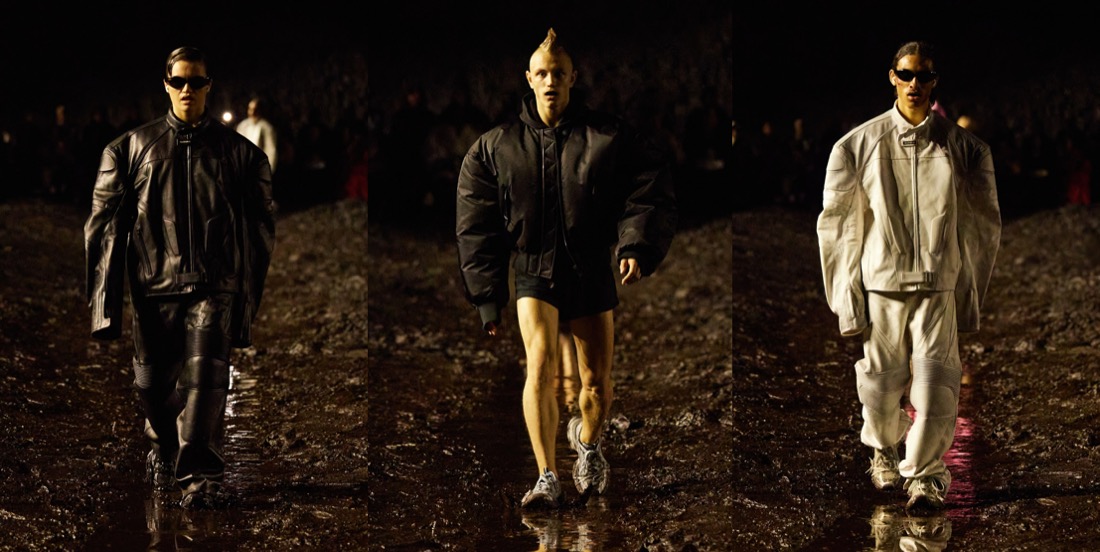
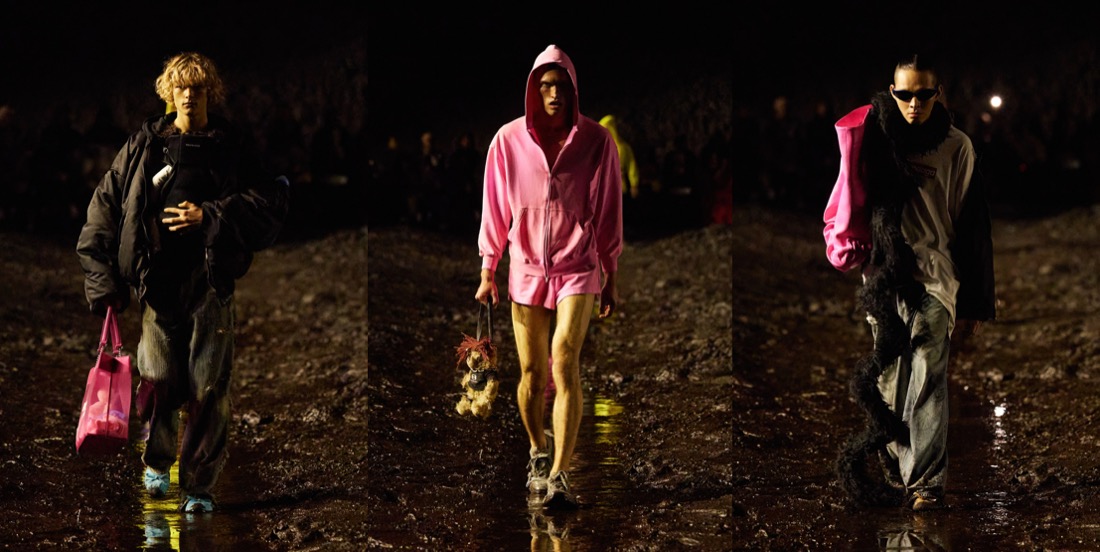
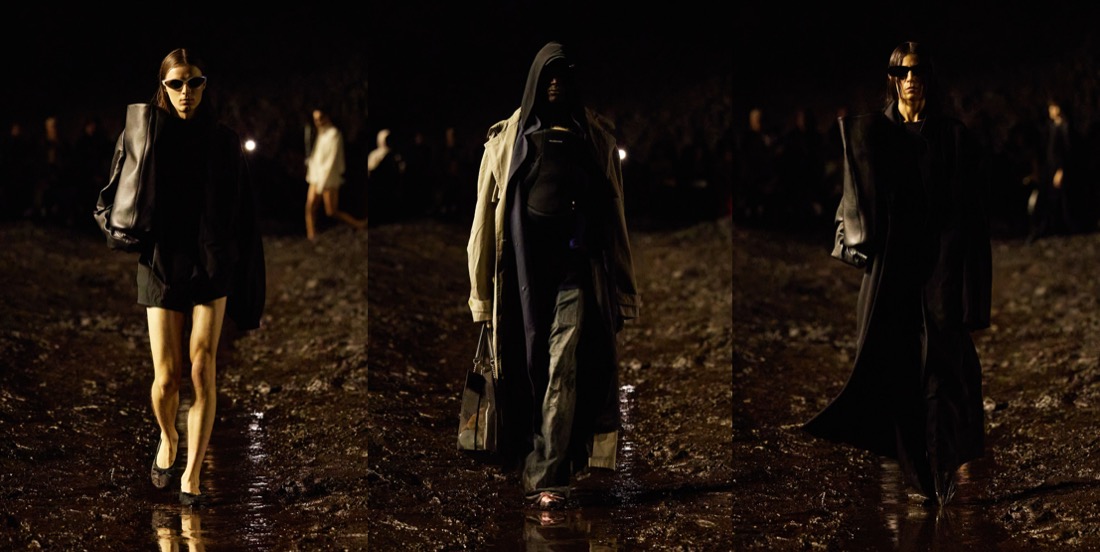
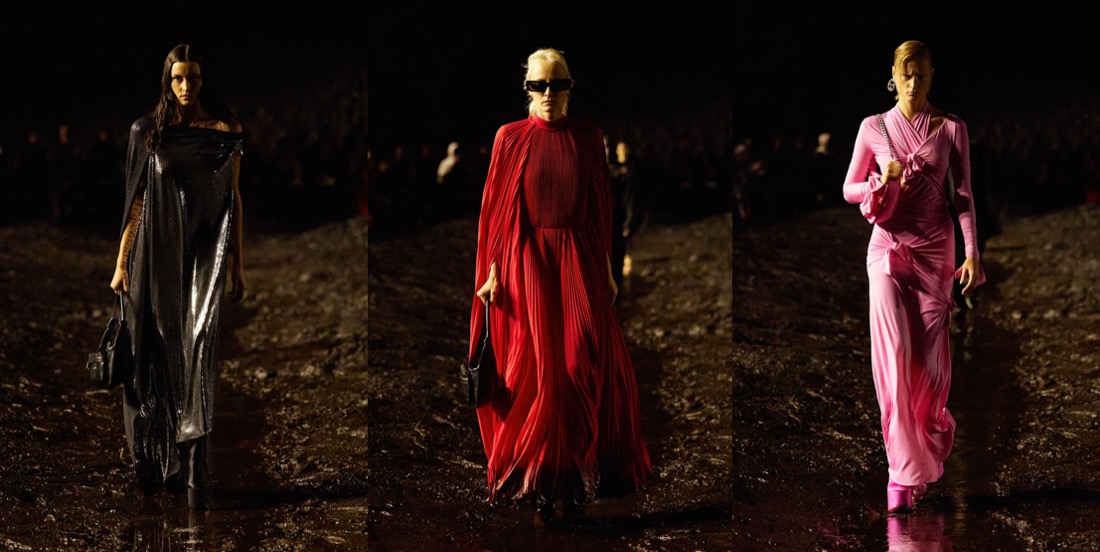
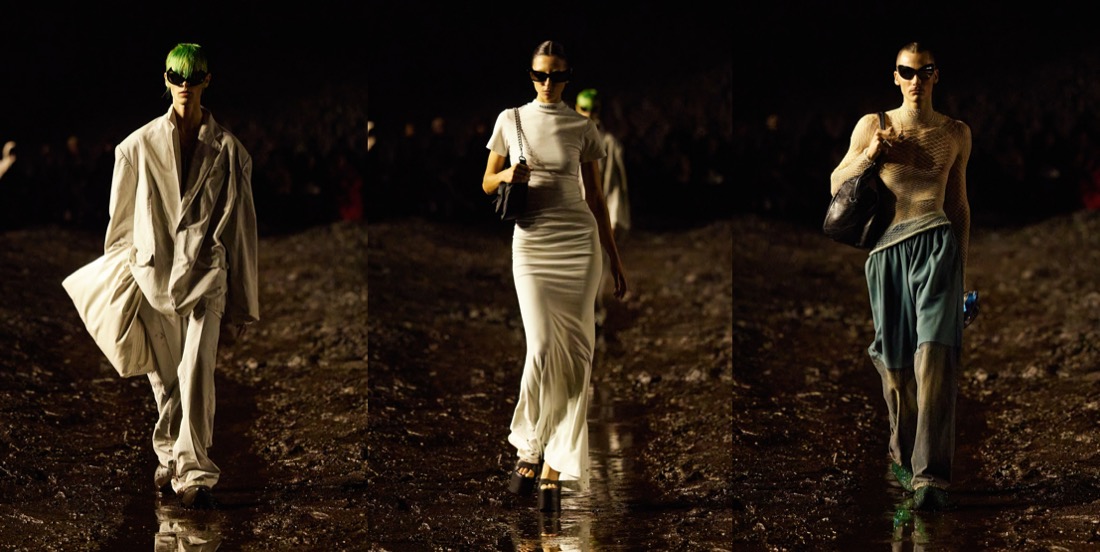
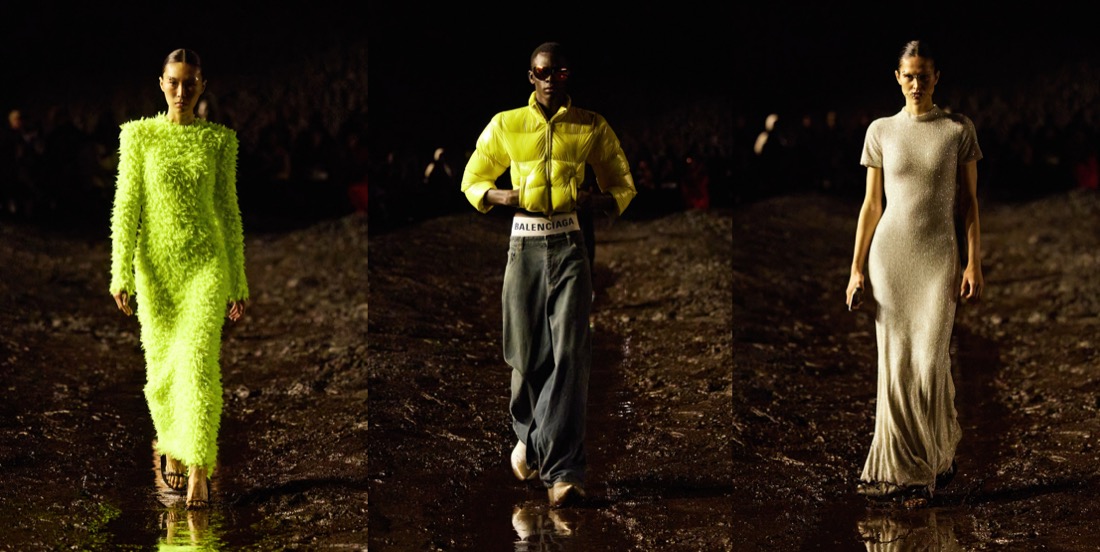
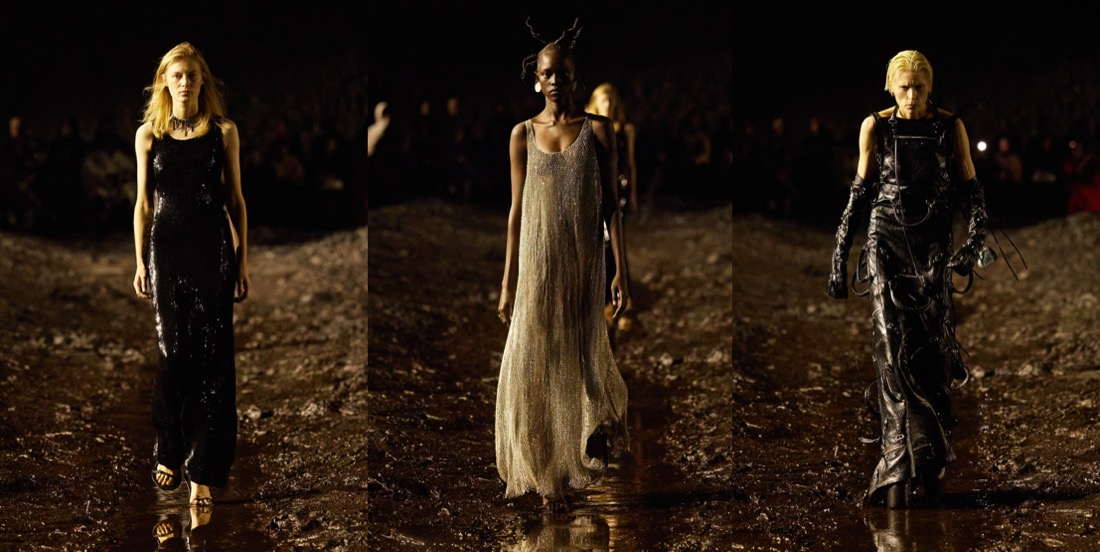
When Balenciaga invited its guests to a “mud show“, they meant it literally. There were tons of mud on the spring-summer 2023 runway, piled up at the sides of the stadium space, and dug out like bomb craters in the center, staged by the Spanish artist Santiago Sierra. The raw odeur of decomposition, a custom-made scent by Sissel Tolaas, blasted in the face. Demna did it yet again: he shook up the fashion industry like no one else, reminding about rising inequality, the return of fascism, wars happening all over the globe, and the very real threat of nuclear war. Kanye West opened the show in a tactical jacket and leather pants with reinforced knees, military garb topped off with a baseball cap and a logo mouthguard. The ragtag band that followed was rough around the edges to say the least, their faces beat-up and their clothes treated to look old and beat-up too (requiring a “couple of days” more than making pristine luxury, Demna said). Some carried bags made from stuffed animals that looked like they’d been through a war. When the 75 models made their circuit on the wet track, dirt splashed their bare ankles and soaked their hems, the 3-D printed Dutch clogs being no match for the mud. Demna has had his own experience of war – he fled Georgia with his family when he was a young boy of 10. Being gay compounded his struggles. “I’ve felt like I’ve been punched in my face for being who I am,” he said, but “you have to stand up and continue walking, kind of like this crusade of discovering who you are and defending that.” He called this a “very me show.” It was heavy on grafitti’d hoodies and ravaged jeans, but there was also evening wear, in clingy T-shirt jersey or glamorous pleats. These were survivors against the odds, a point Demna made by sending out men clutching baby carriers propped with eerily lifelike dolls. “Naturally I’m an optimist, but I cannot be very optimistic right now,” he said. “I think this show actually expresses that very much – the music, the set, it spoke about the moment in which we live.” To finish, Demna sent out a dress made from cut-up parts of black Balenciaga Lariat bags, a make-do-and-mend masterpiece that also pointed up our nasty overconsumption habits. Remember, he sent every last piece through the mud, a “sacrilege” by luxury standards. Using fashion to comment on the crises that plague us is a tricky business. Of course Demna wants us to shop, and of course his bosses do, too. But when it comes time to spend, my money’s on the guy who looks around and is terrified, not the sleepwalkers.
Collage by Edward Kanarecki. Don’t forget to follow Design & Culture by Ed on Instagram!
Coperni‘s spectacular – and wildly viral – spring-summer 2023 finale could easily be a separate fashion show in its own right. The whole process lasted around seven minutes. Bella Hadid came out in her underwear, arm across her bosom, and stood on an underlit platform. What followed was down, Arnaud Vaillant said, to “our little geek” Sebastien Meyer’s specific obsession with cutting edge technology. A scientist Meyer had befriended named Dr. Manel Torres came out with a colleague and proceeded to spray the near-naked Hadid from neckline to mid-calf with a white substance that looked a bit like spray snow. When it hit her skin it had the sheen of liquid, but in the few minutes of its application it became matte. The smell, strong and synthetic, filled the Musée des Arts et Métiers’ Salle des Textiles. Hadid kept her poise during the spray-down, before one of Meyer and Vaillant’s colleagues came out and spent a minute cutting at the hem and tugging at the shoulder of the layer of who-knows-what that covered the model. And then Hadid walked the runway in a pure white dress – perfectly fitted – hat until five minutes ago had been liquid in a bottle: fashion alchemy. The final look apart, the rest of the “Femme” collection felt rather plain and flat. Highlights had included dresses made in a thousand pieces of embroidered glass that tinkled uproariously, like a recycling truck driven by an amphetamine-addled getaway driver. Other dresses came in panels connected by a sort of brutal metal suture. There was a solid gold version of the designers’ Swipe bag which – all 1kg of it – will be melted down after the show. It was created by an artisan goldsmith named Gabriele Veneri in Italy, and was accompanied by a considerable security retinue. No one got a clue what was the point behind it, expect for another “viral” moment. In the next seasons, the Coperni boys should definitely focus on their new, hi-tech patent for making a dress – or any other piece of clothing – and try making it the future of fashion.
Collage by Edward Kanarecki. Don’t forget to follow Design & Culture by Ed on Instagram!













 Design & Culture by Ed