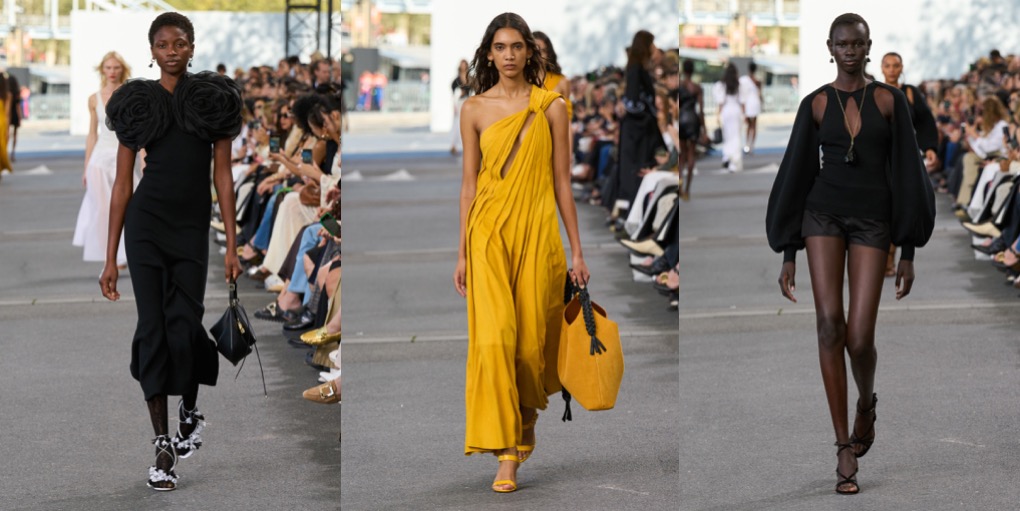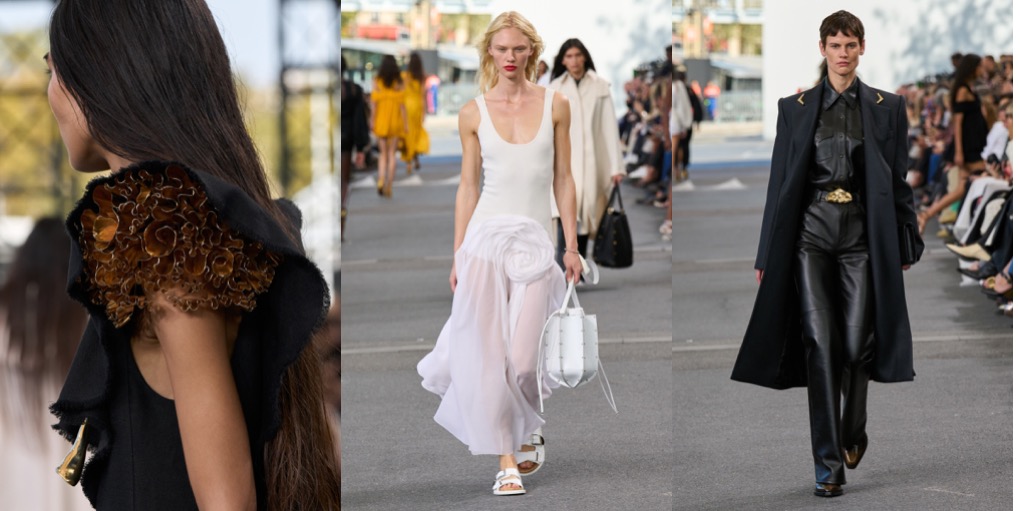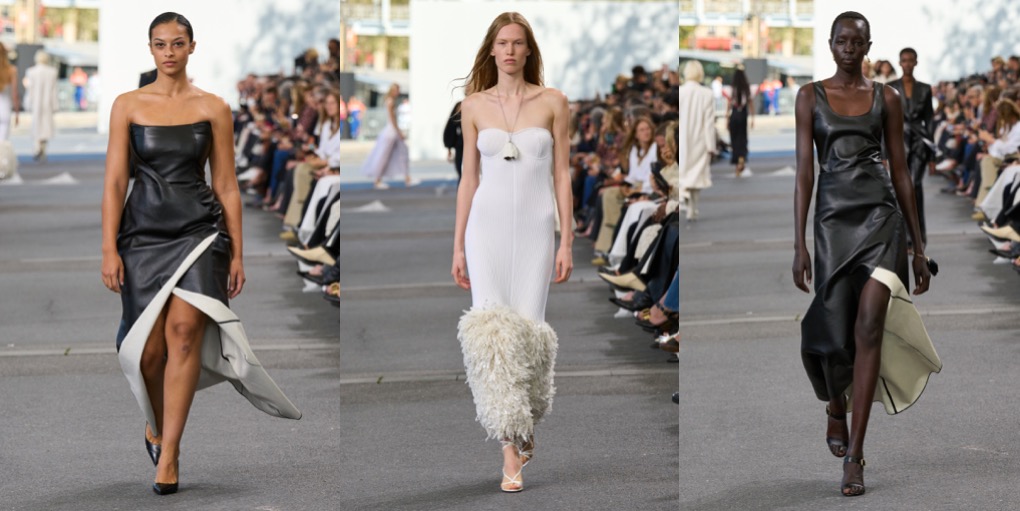
Power-Sensuality. Chloé SS24

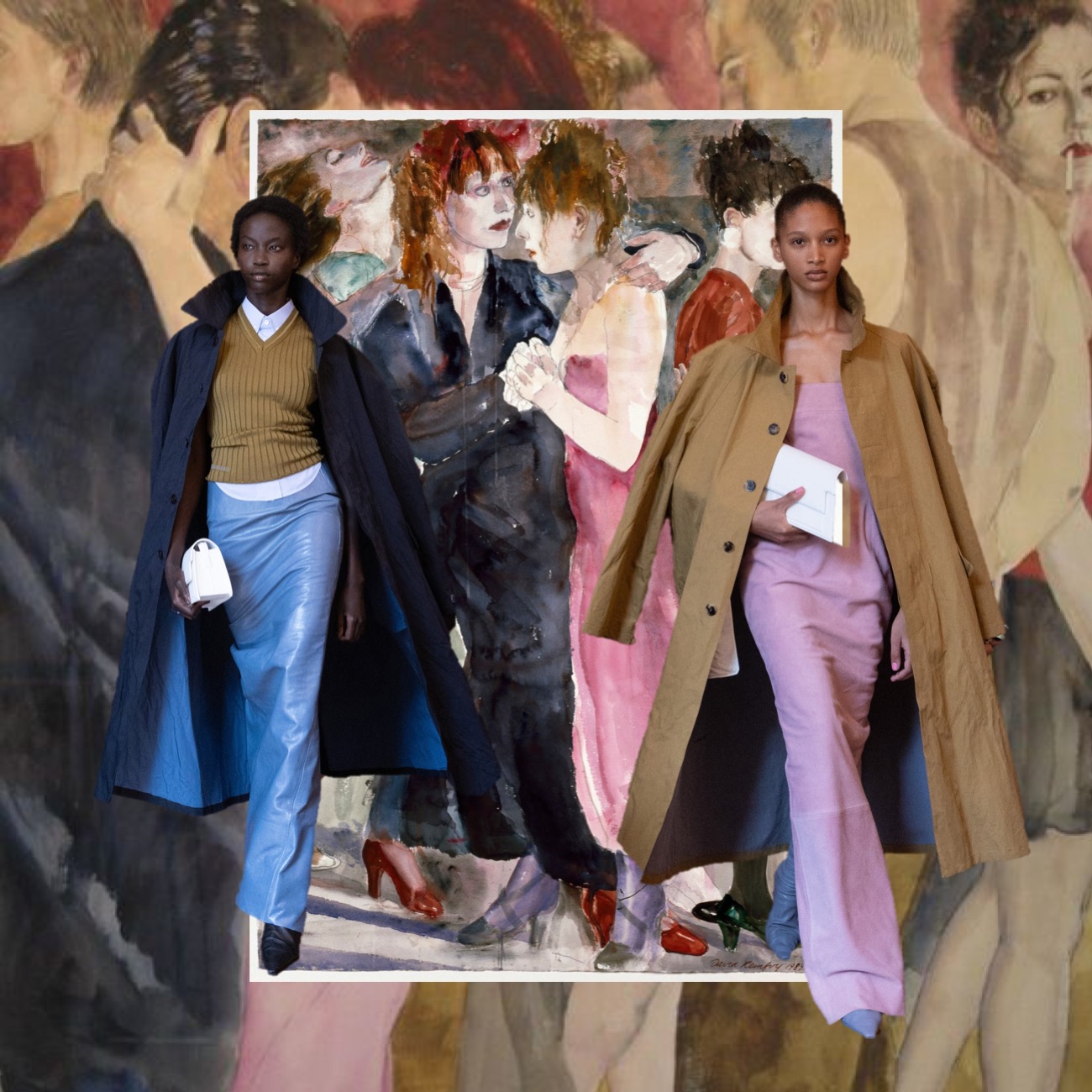
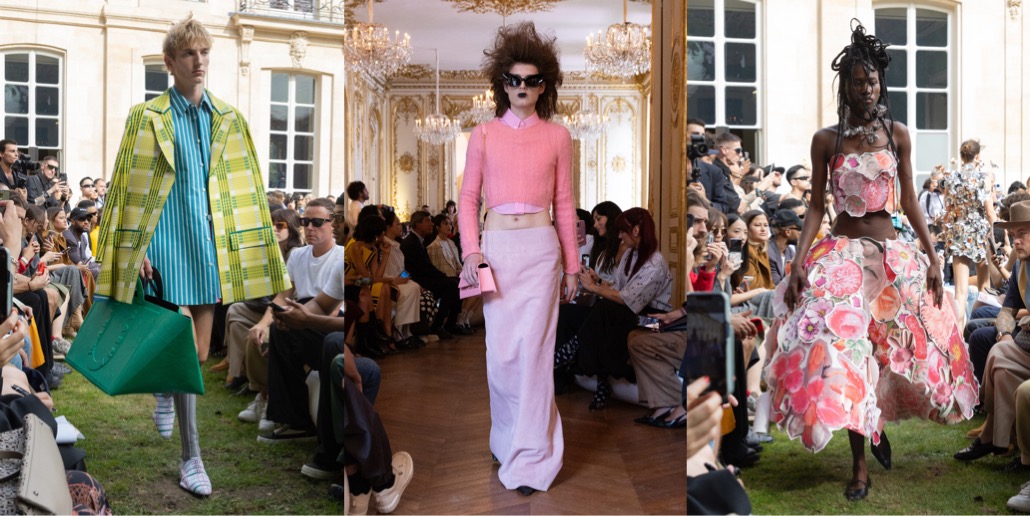
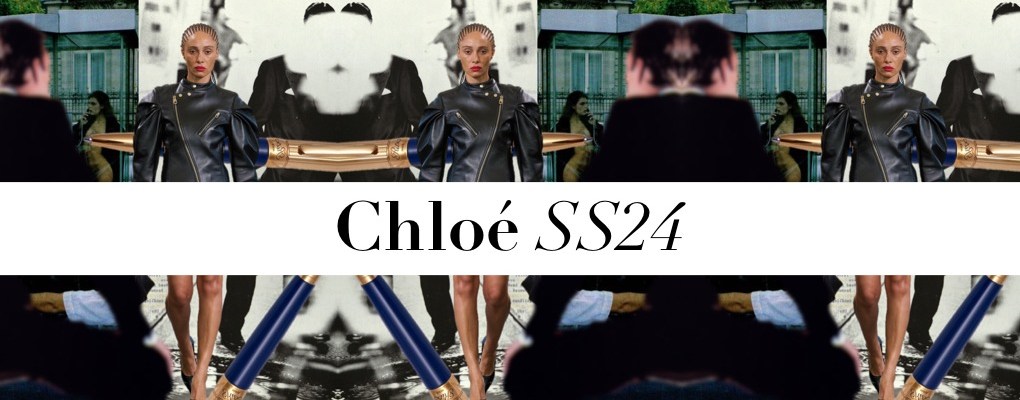
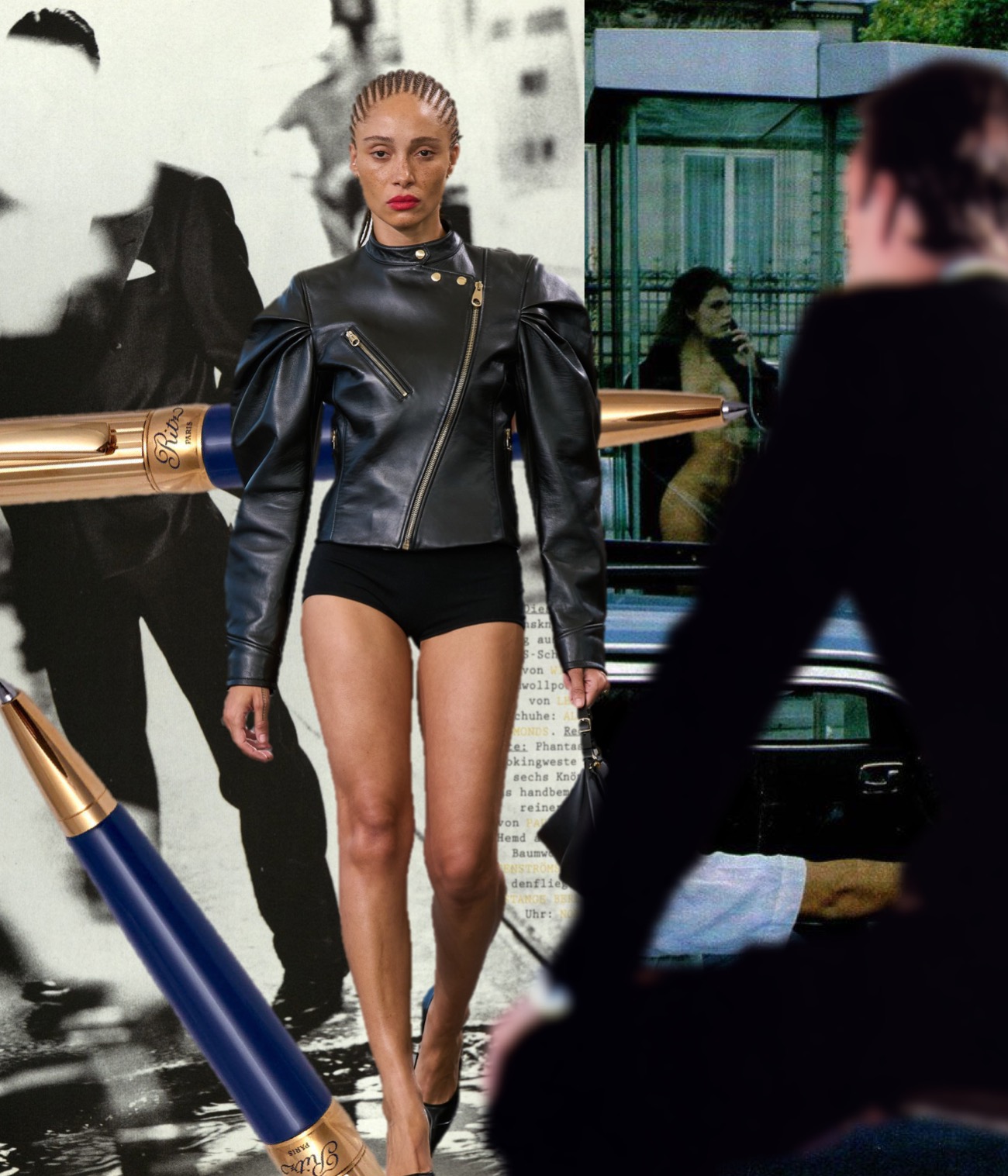
For her finale collection for Chloé, Gabriela Hearst at last showed her sexier side of the Parisian maison. Maybe if she indulged a bit more in these smooth leathers and shorter lengths, she would thrive at the brand? The spring-sumer 2024 collection didn’t reinvent Parisian chic, but it had some much-needed sensuality that lacked throughout Hearst’s tenure. But it seemed the New York-based designer wasn’t in a sorrowful mood, as the show’s ambience was lively and bright, set outside against the Seine on a warm, sunny Parisian afternoon. Hearst leaves behind a legacy of championing socially responsible designs, and her last collection continues that theme. Per the press release, consciousness is the fourth and final ingredient to achieving climate success, which continues the ideas on clean energy, regeneration and female leadership that the designer set forth in her prior collections. For Hearst, this is best symbolized by the flower and that motif was evident from the opening look, a ruffled one shoulder dress that looked like layers of petals. Other dresses reinforced the idea, with gauzy rosette swirls adorning the hips or jutting shoulders that featured undersides stuffed with blooms. For her final look, Hearst opted for a black and white leather dress, a rather serious note given that the runway shortly segued into an all out dance party, featuring a samba band. As the models danced, it seemed that while this chapter at Chloé may have ended, Hearst was leaving it with plenty of joy.

Collage by Edward Kanarecki.
Don’t forget to follow Design & Culture by Ed on Instagram! By the way, did you know that I’ve started a newsletter called Ed’s Dispatch? Click here to subscribe!

NET-A-PORTER Limited

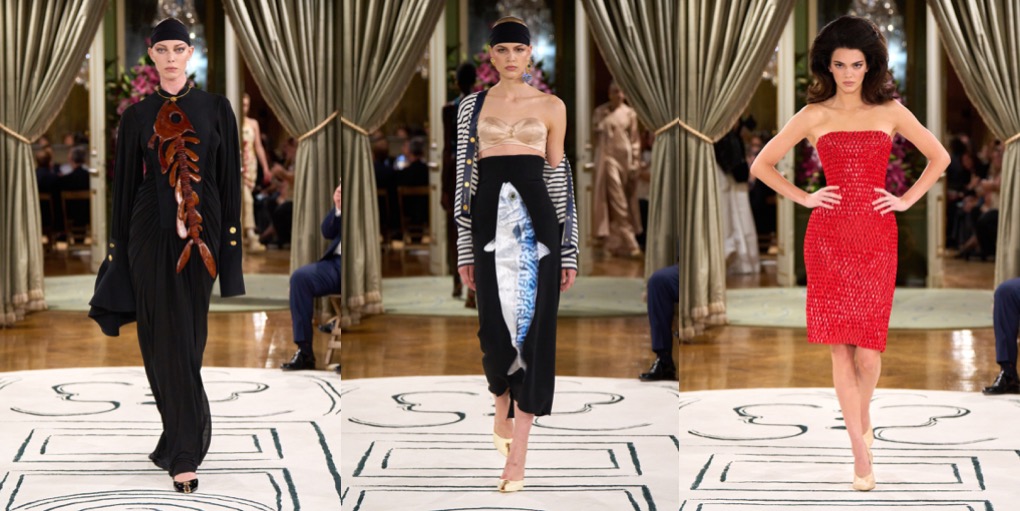
Extremes. Schiaparelli SS24

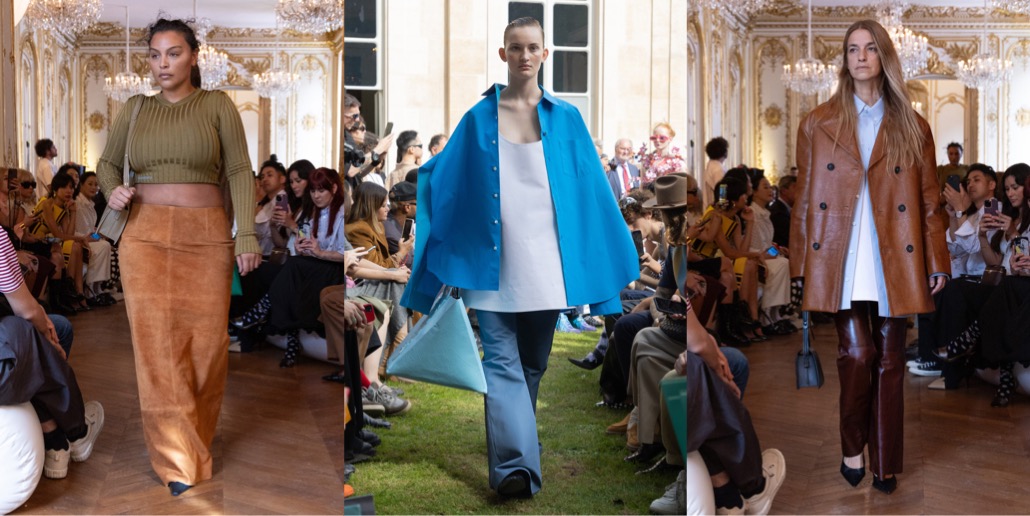
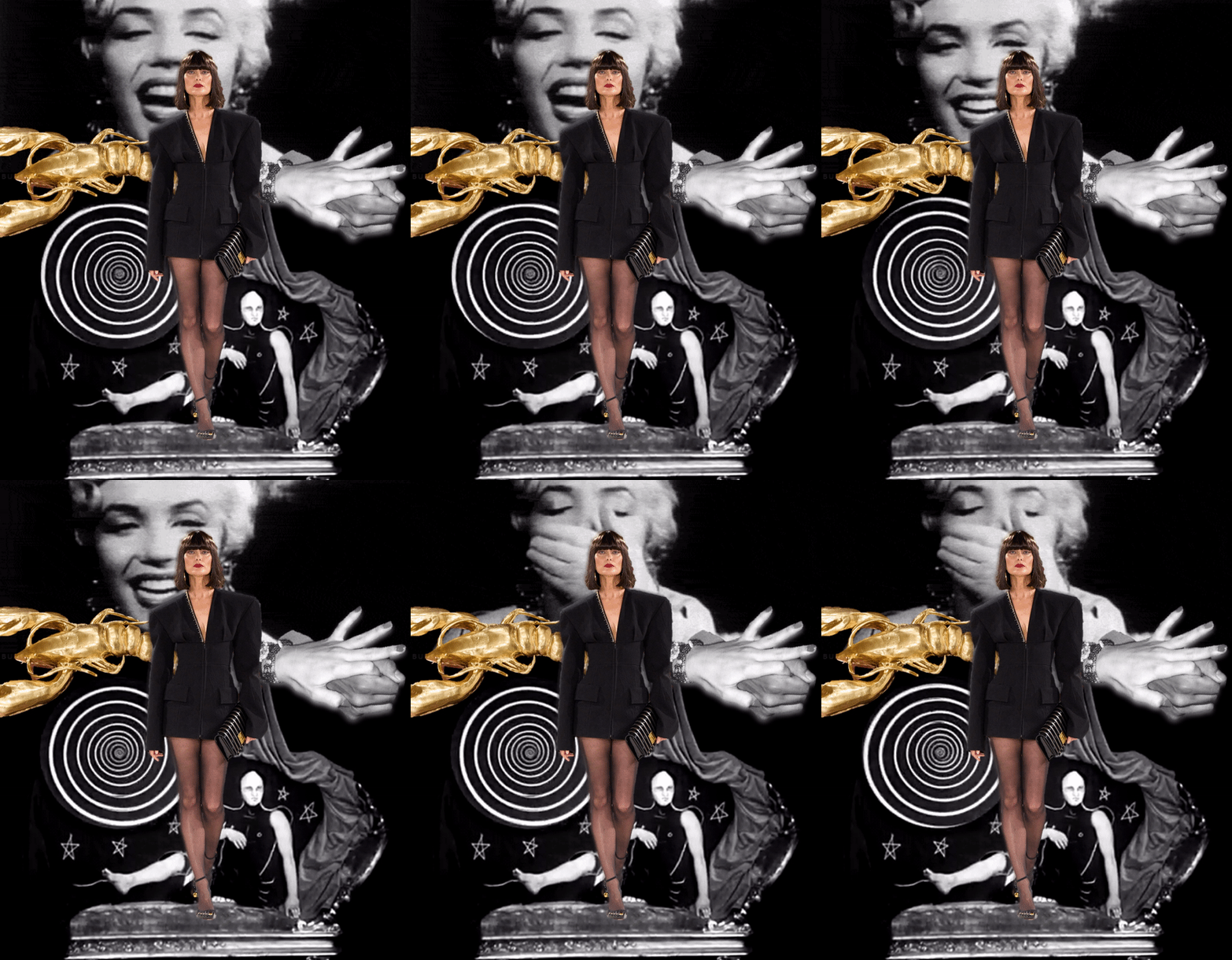
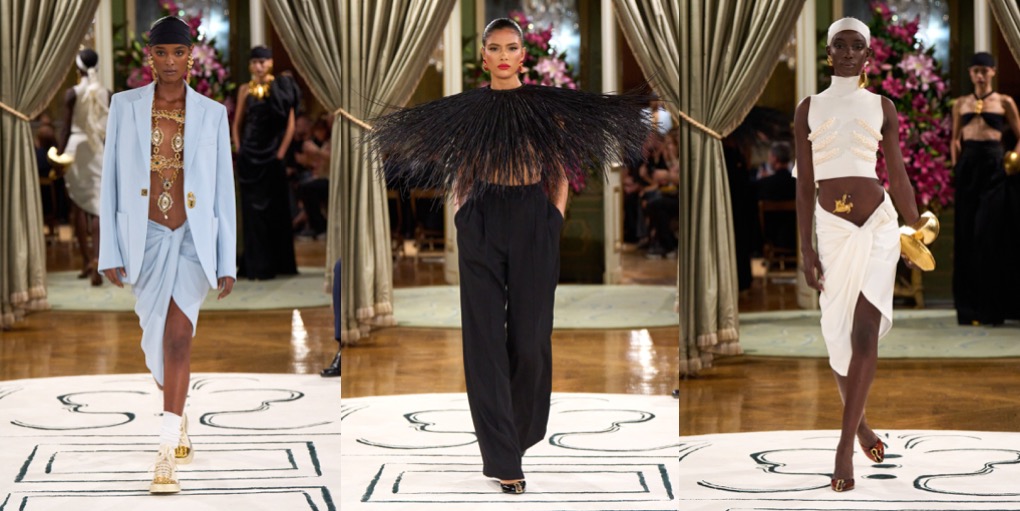
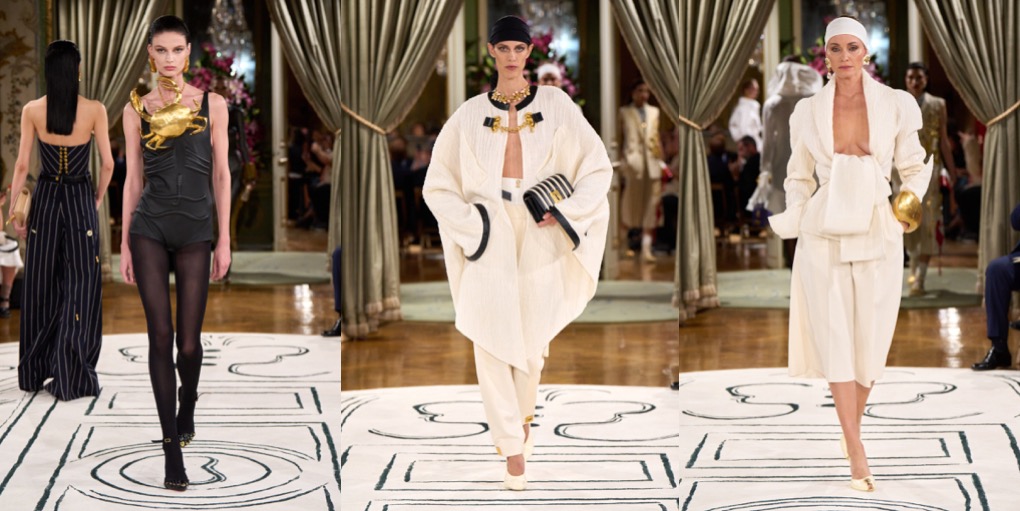
When you design to provoke, you must also take yourself less seriously: that’s Daniel Roseberry’s ethos for spring-summer 2024. His latest Schiaparelli collection is all about extremes. Extreme chic and extreme humor. The starting point for the Texas-born designer was one of Elsa Schiaparelli’s first successes: a sweater knit with a trompe l’œil collar and bow. Thus his desire to “make the everyday come to more vivid, more surprising life” gave birth to white shirts, suits and smoking jackets – classic silhouettes reimagined with Schiaparelli spice. A simple-seeming ribbed dress bore illusion breasts, and shimmered in a metallic pewter knit. Another ensemble was a play on an emerging formula: a boxy blazer, low-rise trousers, and the flash of a boxer over the waistband. Roseberry served his interpretation in elevated fabrics, embellished with gold bijoux: a sandy short jacket over white boxers and cowboy-style denim. But the most delightful looks were those that unleashed Schiaparelli’s menagerie from the archives, where the most amusing of animal neighbors reside. The lobster, protagonist of Schiaparelli’s famous 1937 dinner dress, clung in ceramic from chain necklaces; so too did crabs and fish skeletons dangle over leather bodysuits and jersey sheaths. A halterneck dress, Roseberry’s signature look, featured the spoils of another creature: the contents of a woman’s bag, spilled over ecru cotton. 

Collage by Edward Kanarecki.
Don’t forget to follow Design & Culture by Ed on Instagram! By the way, did you know that I’ve started a newsletter called Ed’s Dispatch? Click here to subscribe!
NET-A-PORTER Limited

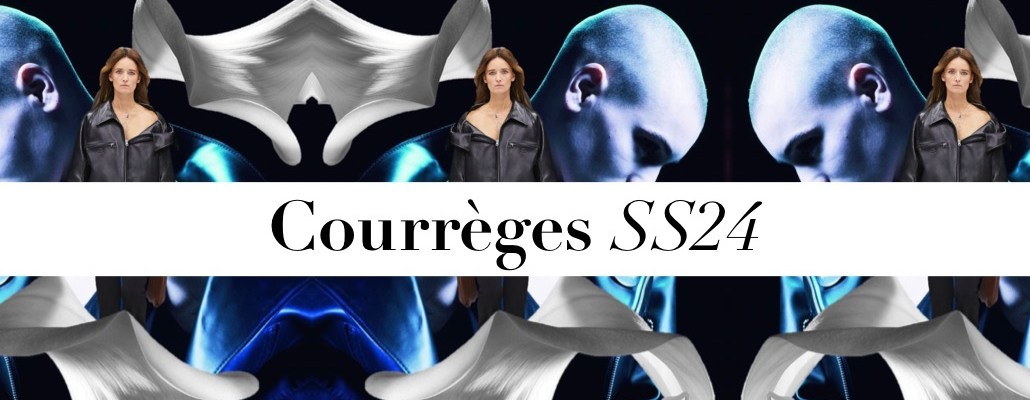
Miseducation. Courrèges SS24

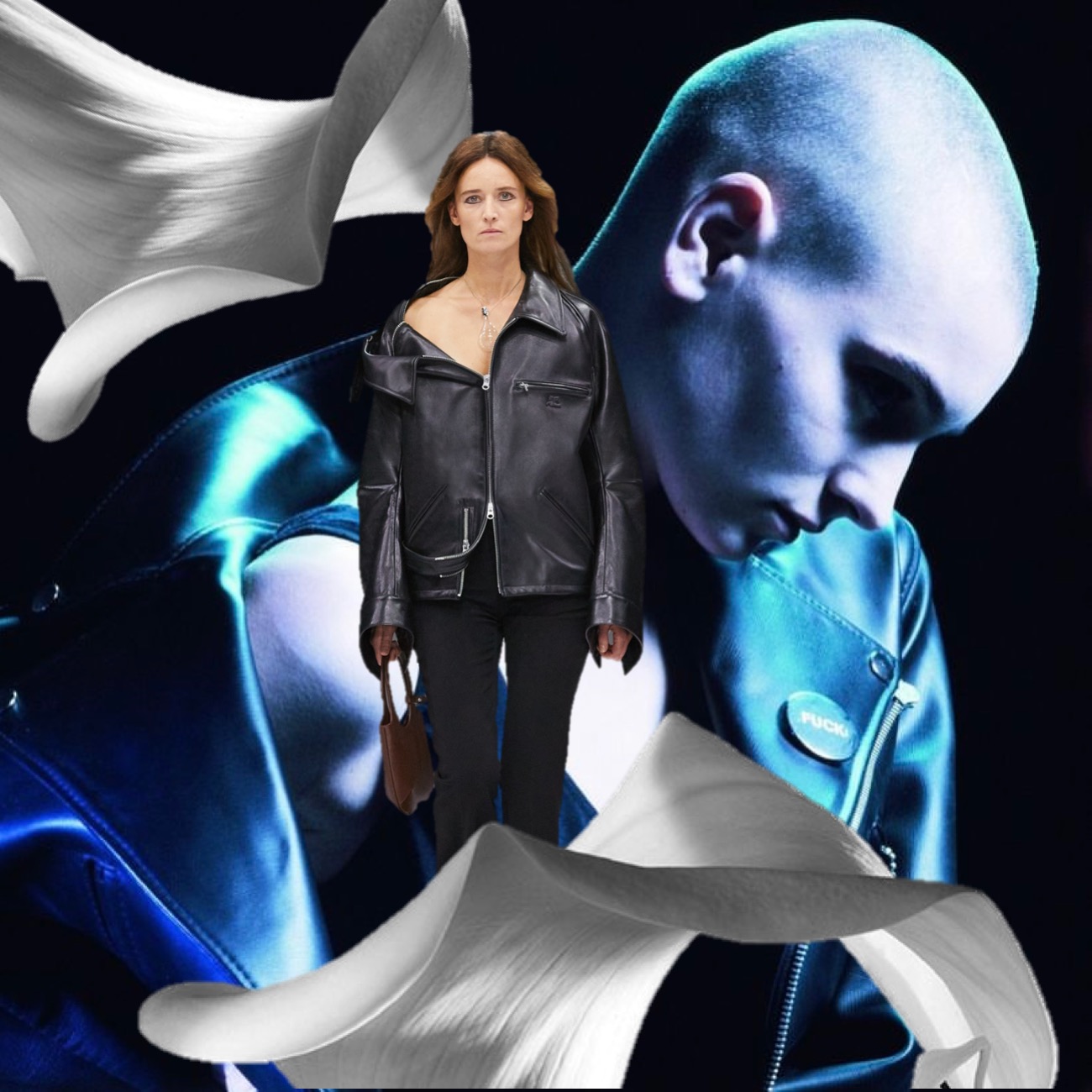
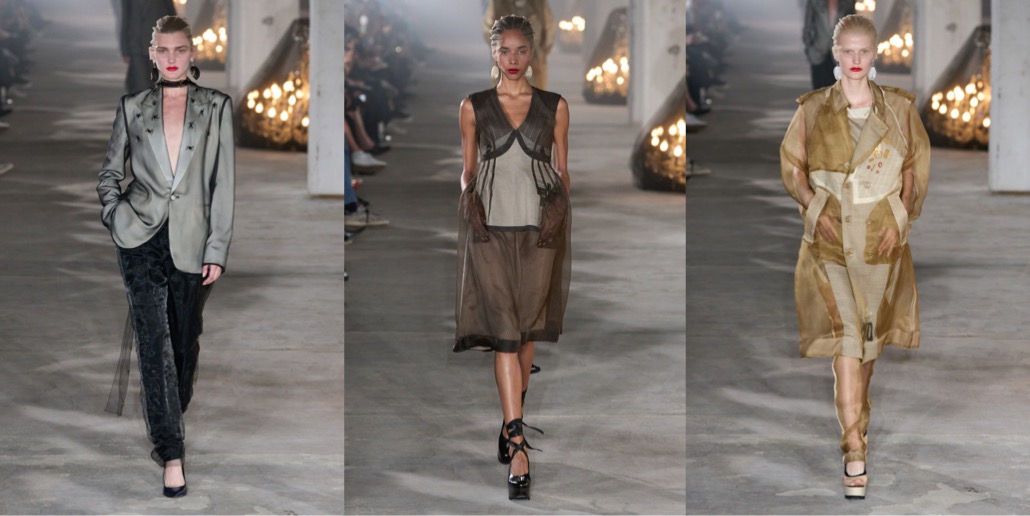
As the Courrèges models stepped out onto the spring-summer 2024 set, it cracked. Made of plaster and designed to look like moon rock, artist Remy Brière was responsible for the earth-shattering effect. Brière drew inspiration from the stripped-back strategies of Land Art, echoing the clash of Mind and Nature as models strut past, creating audible, visual fractures beneath their feet. If only Nicolas Di Felice‘s collection was as intriguing as the setting – even though the story behind promised a lot. So, the designer was inspired by the imaginary narrative of a woman graduating from university and going on a road trip. Along the way, she loosens up, becoming more open, less burdened as she ventures into the vast desert. There she discovers a “cult run by mothers” and begins her miseducation. However, I wasn’t convinced any of that was truly captured by the rather unremarkable clothes. Models wore elevated campus-like slouchy polo dresses in cotton piqué, oversized Harrington vests and biker jackets, spliced and zipped asymmetrically. Masculinity flirted with the feminine while funnelled necklines were altered to enhance body posture, and, like Amazonian warriors, the girls loomed large. A modern take on the 1960s space-age aesthetic, sculptural gowns and hybrid cotton canvas pieces could morph from military skirts into sleek hooded mini dresses. On leather armour and silver or glass breastplates, New Age symbols paid homage to the elements of the Earth. What truly speaks to me in this new Courrèges collection is the leather jacket offering. There are really good.

Collage by Edward Kanarecki.
Don’t forget to follow Design & Culture by Ed on Instagram! By the way, did you know that I’ve started a newsletter called Ed’s Dispatch? Click here to subscribe!

NET-A-PORTER Limited

Flâneur State of Mind. Marni SS24

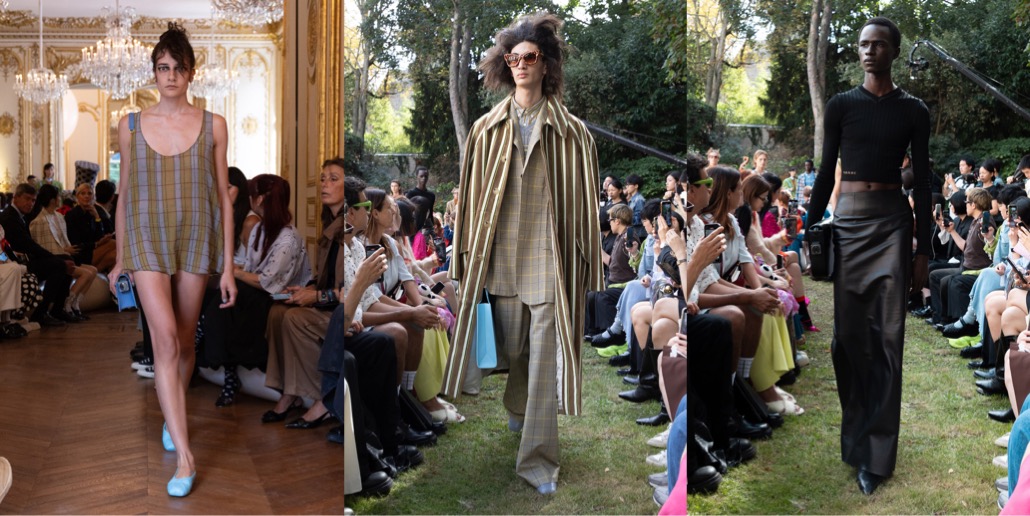
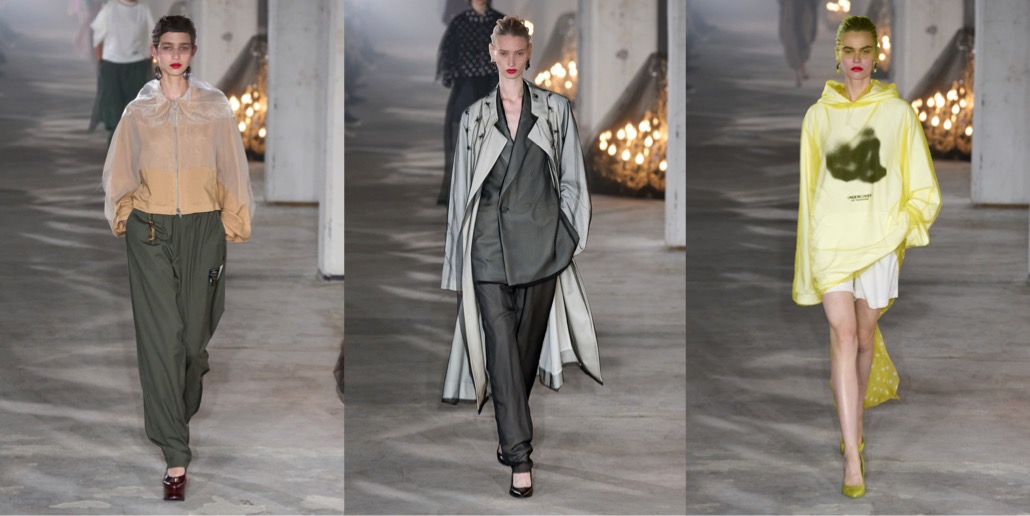
Marni is on a world tour. After New York and Tokyo, Francesco Risso brought his spring-summer 2024 collection to Paris “to continue amplifying connections among our global community. I’m in a flâneur state of mind.” The first time the Italian designer visited the city of lights was when he was 14, and at a party he met by chance “a beautiful creature, who suddenly disappeared, leaving behind only a faint whiff of perfume,” he explained. That subtle French flutter haunted him for years, making him travel to Paris only in the hope of smelling it somewhere again. He never found it, but the magic of Paris was forever imprinted in his memory and olfactory functions. Then, as a teenager, Risso used to visit his friend Serena in Paris at her parents’ house in the chic 7th arrondissement; their neighbor was the late Karl Lagerfeld, whom they spied on obsessively, waiting for him to appear all-black clad in Rue de l’Université “as if he were Michael Jackson.” Recently, scouting for this show’s location, Risso was presented with the possibility of using Lagerfeld’s little Versailles. Et voilà – dots were connected. The private apartments and the formal gardens of the fabulous hôtel particulier where Lagerfeld spent many years were colonized by Marni and its audience. A series of small orchestras, dressed in surgical white vinyl lab coats, performed music by Dev Hynes, a frequent Risso collaborator. The co-ed collection’s flow had a sort of interrupted progression. It started with lean, light, tight-fitting ribbed tube tops in various lengths, to underline the body celebration that’s inherent to Risso’s discourse. Then the show segued into a series of sartorial specimens variously combined: oversize trapeze or boxy-cut tops worn under sharp-tailored trench coats and dusters, paired with straight-cut pants or undulating miniskirts. Most of the pieces were made in soft-bonded techno knitwear to keep their angular shape, rendered into the rainbow-colored combinations of textural checks and stripes that’s a Marni trademark. A few undone crinolines in saturated pastels with apron tops left open at the back and voluminous bell-shaped ankle skirts brushed past the front row, hinting at the obvious reference to the frivolous queen of “let them eat brioches” fame. The crinolines then sort of exploded into the show’s pièces de résistance: a series of exceptional concoctions of fleurs en découpage – visually enchanting, painstakingly handmade creations that Risso called “the ecstasy of the hand.” Hundreds of bright-colored images of flowers, sourced from antique botanical almanacs, were printed on cotton, individually cut out, and then patiently stitched onto bustier dresses with round-shaped crinolines, poufy miniskirts, and a skirt suit with round, jutting shoulders. Adding further wonderment, discarded tin cans were molded into flowers that stemmed, protruded, or sprouted from body-skimming minidresses. “This is the virtuosity of the hand that goes against pervasive virtuality,” said Risso. “We’ve got to undress our mind, and dress up our senses.”

Collage by Edward Kanarecki.
Don’t forget to follow Design & Culture by Ed on Instagram! By the way, did you know that I’ve started a newsletter called Ed’s Dispatch? Click here to subscribe!

NET-A-PORTER Limited

Butterflies In My Stomach. Undercover SS24

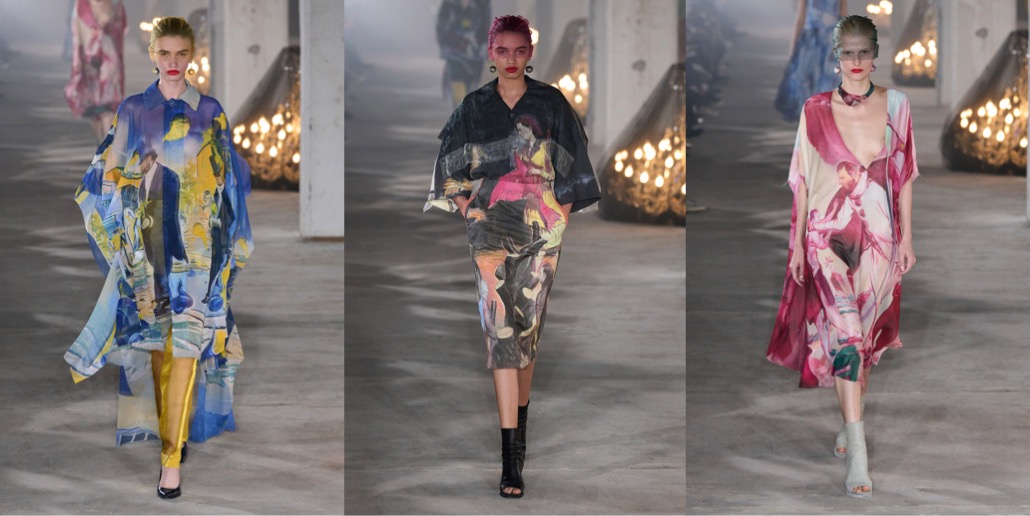
Jun Takahashi delivered a zsa zsa zsu – what Carrie Bradshaw calls the feeling of butterflies-in-your-stomach – moment this season. Literally. For Undercover’s finale, three models materialized out of the darkness wearing strapless dresses whose skirts seemed to light up. From a distance they looked like movie projections, but as they approached it became clear the skirts were glowing from within. Moving closer still, you saw the colorful flowers and… butterflies. Terrarium dresses are a new level of ingenious, a technical feat as well as an emotionally resonant one. Through an interpreter backstage, Takahashi shared that he was grieving for people he was close to. “He feels like he’s stuck in the world, but he wants to release himself.” The butterflies, the interpreter made sure to add, “will be freed, of course.”

Reckoning with mortality is an undercurrent of Takahashi’s shows lately. It’s said that grief doesn’t end, it only changes. That it can produce powerful work was proved today. This was Takahashi at his most focused: the leitmotif that carried from the first suit to the final terrarium dress was transparent veiling or shrouding. To start, he showed neat tailoring, the sheer materials exposing the inner construction and the items he slipped between the front and back sides, like playing cards, straight razors, and silk flowers. On a camel trench the outer layer encased a set of feathered wings. Later on came more formal suits, not see-through but swathed in more black georgette. They were as elegant as any tailoring anywhere this season, but Takahashi isn’t someone who seems to look around at what his peers are doing; for one thing, he’s too busy. Three of the looks here reproduced portraits from his first-ever oil painting exhibition, “They See More Than You Can See,” held in Tokyo earlier this month. Like the figures on his canvases, the faces on the deeply ruffled skirts had their eyes deleted, or disappeared, an eerie effect that was echoed in the other figurative pieces, which reproduced the surreally beautiful paintings of the German artist Neo Rauch. At his art show in Tokyo, Takahashi said “painting is more personal”. But this was a deeply personal show and it was a spellbinder.

Collage by Edward Kanarecki.
Don’t forget to follow Design & Culture by Ed on Instagram! By the way, did you know that I’ve started a newsletter called Ed’s Dispatch? Click here to subscribe!
NET-A-PORTER Limited