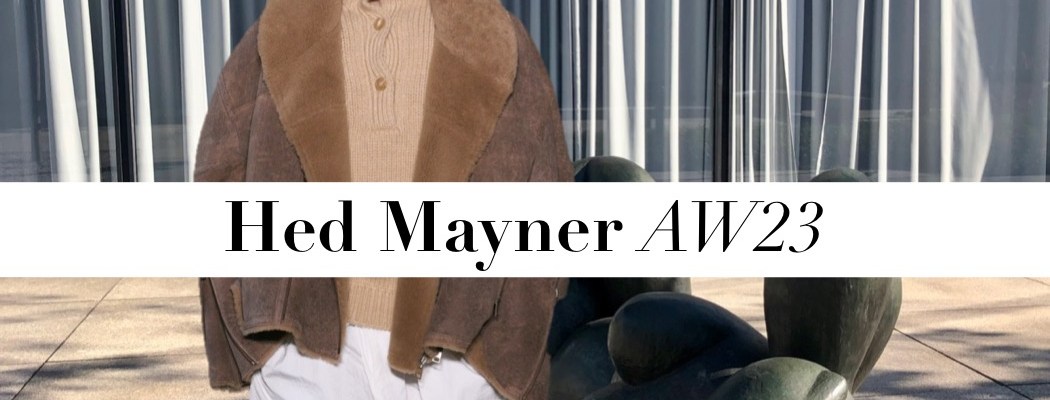
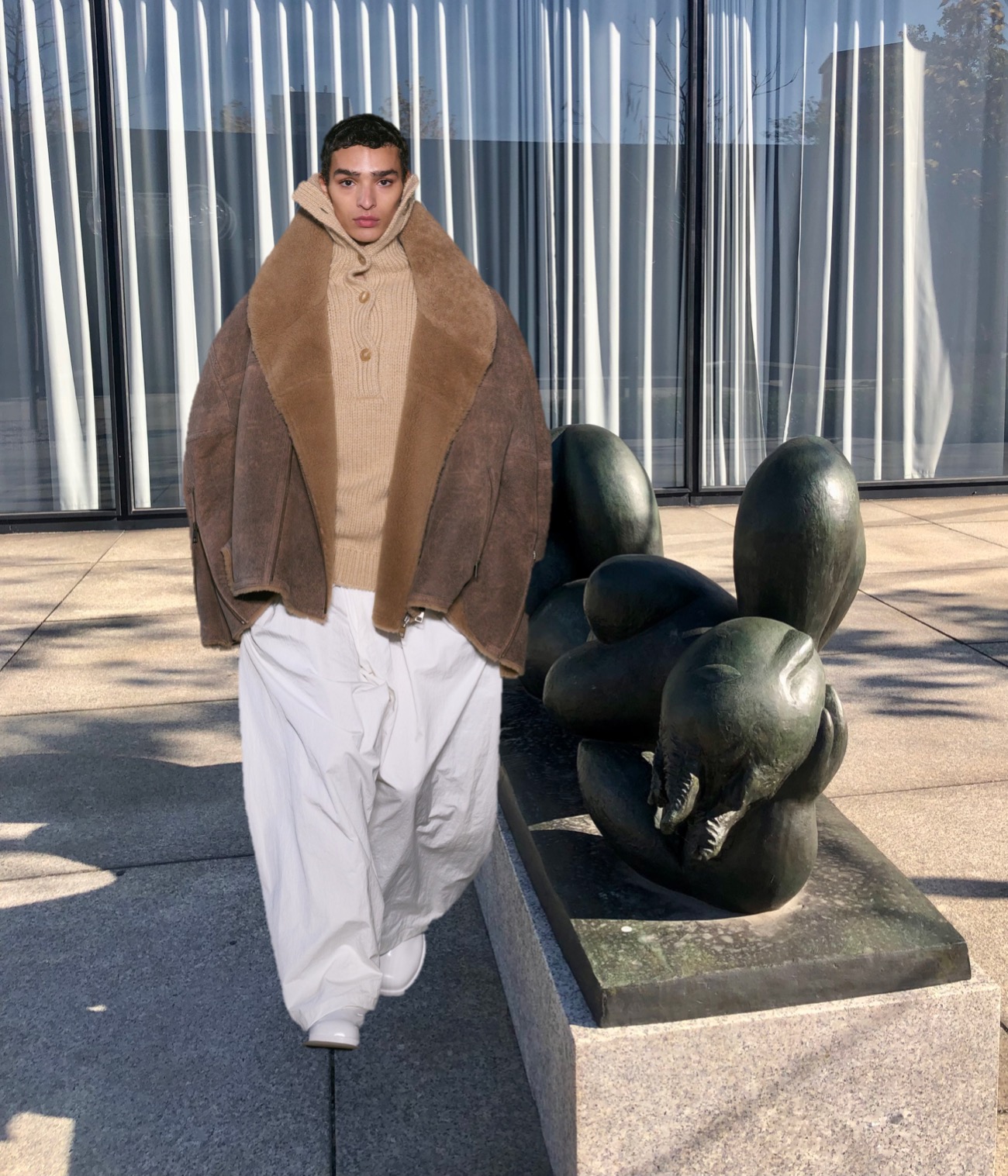
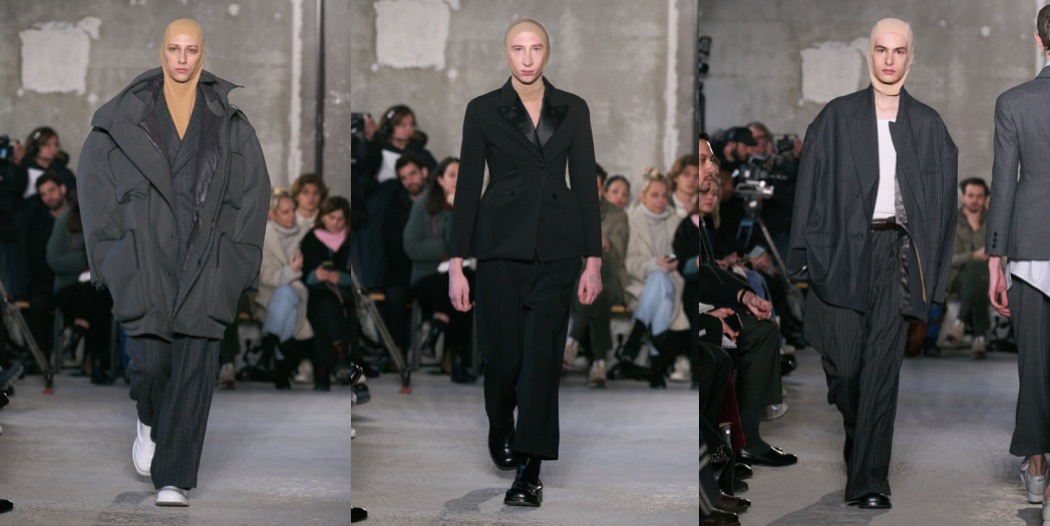
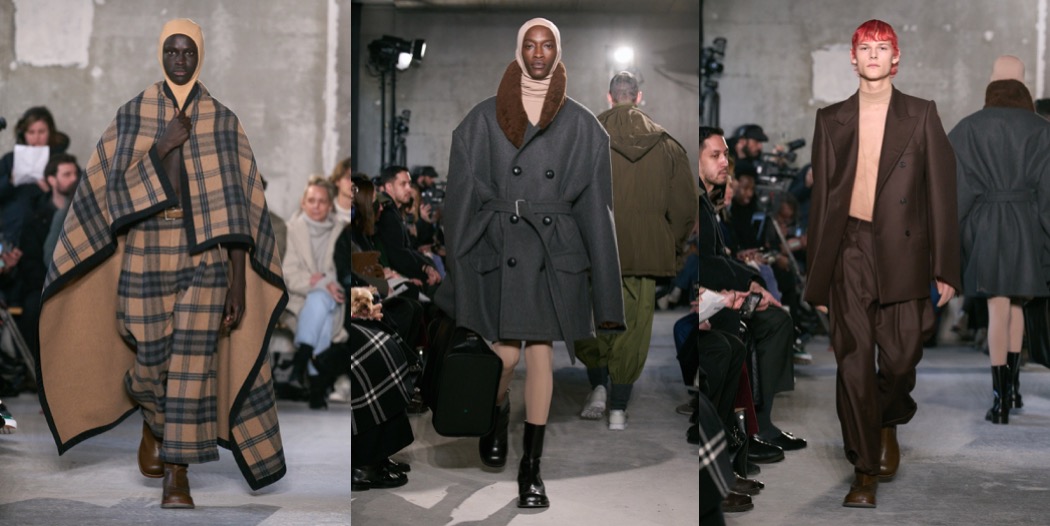
Hed Mayner, the designer from Tel Aviv who captivates the Parisian crowd for a couple seasons now, loves a big silhouette. He is known for blowing up conventional clothes to XXXL size, creating garments that are both timeless and absolutely poetic. In his autumn-winter 2023, Mayner has some of the most desirable pieces of the season: denim cargos pants meet gargantuan wind-jackets, an exquisitely tailored jacket that comes with unisex pinstriped skirt, thick cashmere socks worn over cashmere leggings, beige balaclavas… in general, it’s a more utilitarian vision, one that lets in some non-chalance and spontaneity to the designer’s world. The look featuring a faux-fur coat, white tank-top and leather pants is to die for, too. For the first time, Mayner is dipping into the footwear realm, partnering with Reebok on a set of remixed Classic Leather sneakers. The resulting shape epitomizes the Hed Mayner ethos: the shoes are washed and then flattened by hand to create a loose, lived-in shape, some with a deconstructed tongue that wraps the upper. The off-the-radar designer, gatekept by the industry insiders, is about to blow up.
Collage by Edward Kanarecki. Don’t forget to follow Design & Culture by Ed on Instagram!
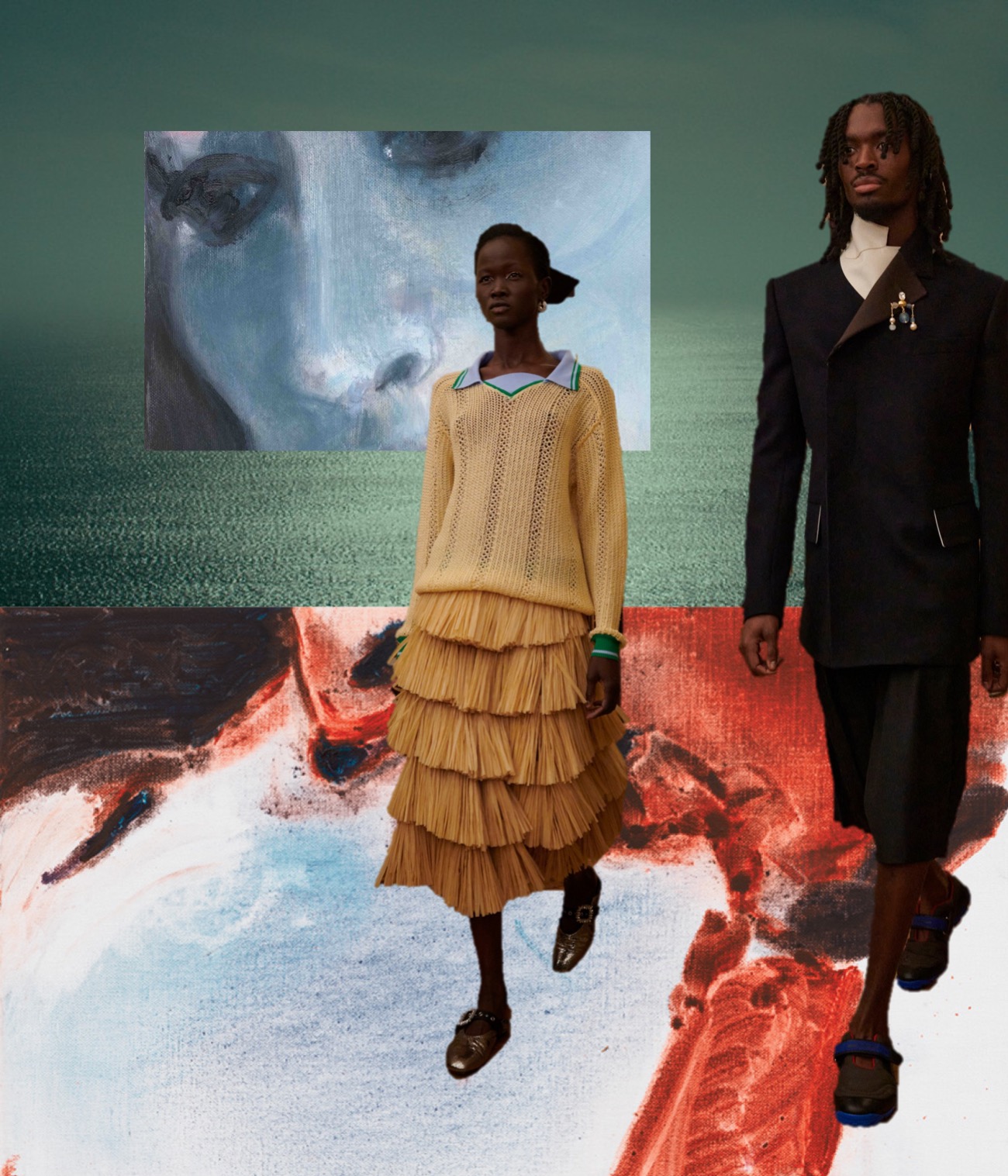
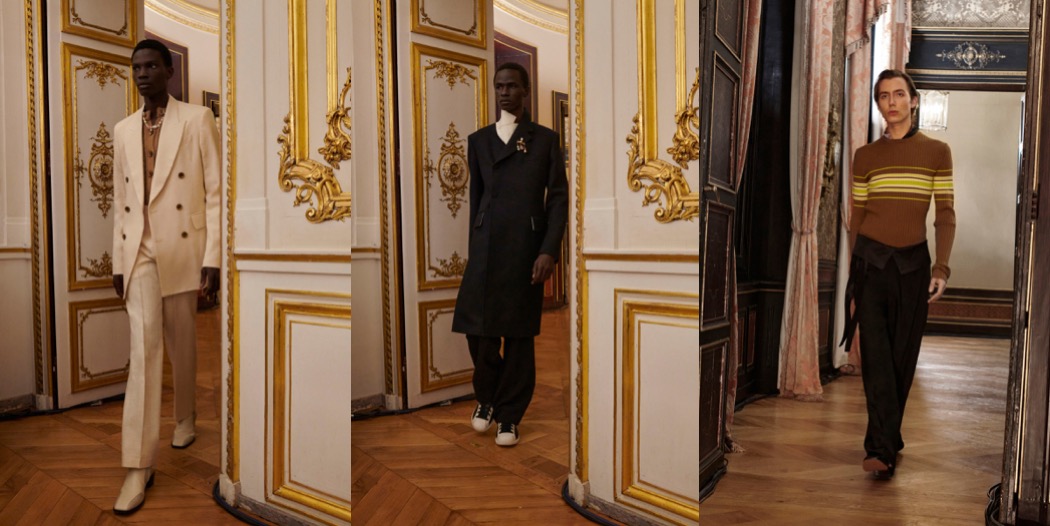
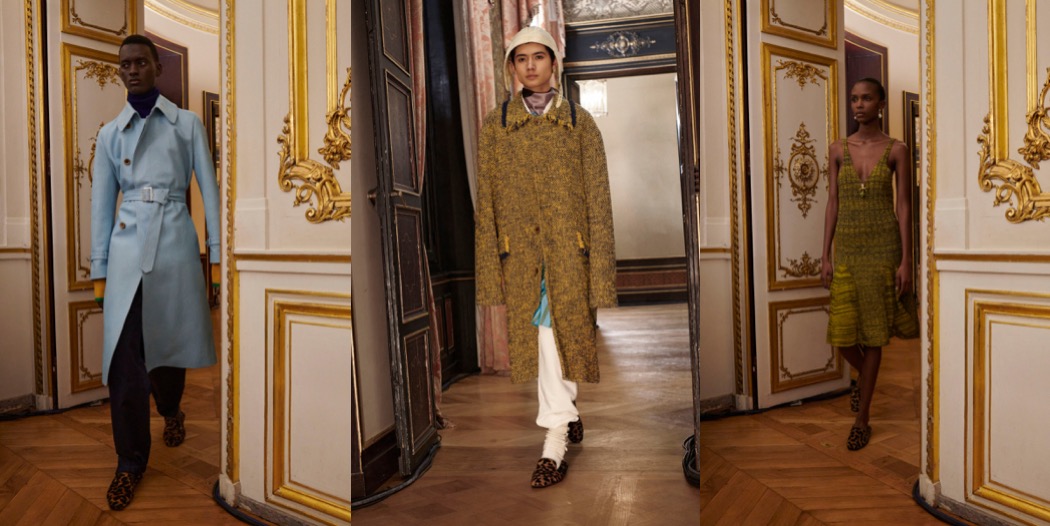
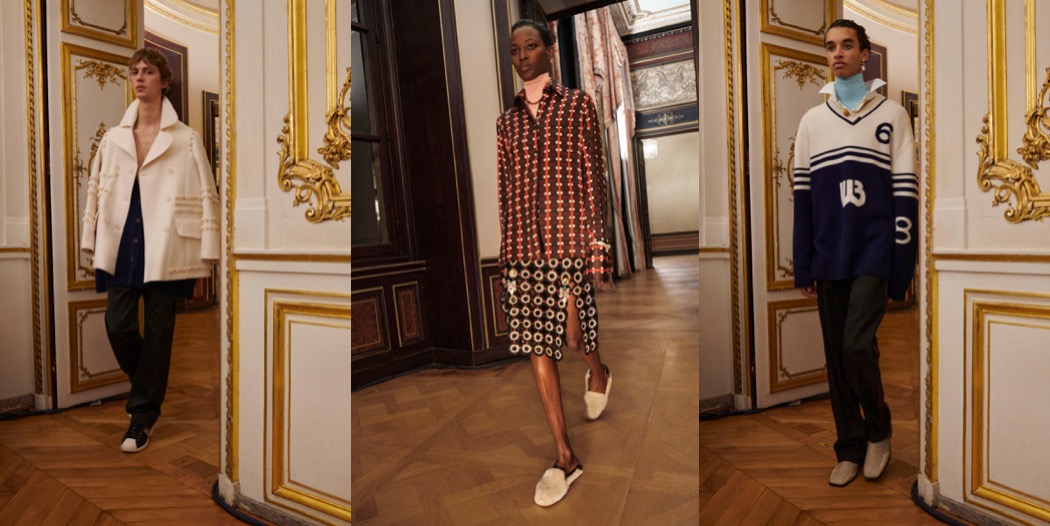
For autumn-winter 2023, Grace Wales Bonner delivered one of the best collections of the season. “Somehow, I feel like being away from home, in somewhere like Paris has this romance and grandeur about it.” Wales Bonner‘s show took place in an historic suite of salons at the Hotel D’Evreux. This hallowed site is at the very corner of the Place Vendome, the heart of haute French luxury. It couldn’t have been a more intentional choice of backdrop for the aspirations of this most studied of young designers, who often repeats “bringing an Afro-Atlantic spirit to an idea of European luxury” as her mantra. Her abiding mission to elevate “Black male style; a very refined approach to masculinity” took on the Parisian sojourns of the American writer and intellectual giant James Baldwin, the fabulously wealthy young Maharaja and Maharani of Indore, and fanned out to admire the showgirl, style-maker and activist Josephine Baker. By immersing herself in their worlds, she said she found herself transported, not so much by the idea of literal references of costume as by the uplifting effect of the cultural atmosphere. “Thinking about what Paris as a place gave them license to do and express. This idea of freedom of self-expression, to define yourself.” Paris, she speculated, “may create space to have more license to be expressive.” The award-winning jazz trumpeter Herman Mehari stood in the middle of the apartment and played as a procession of sophisticated “Black flanuers” threaded its way through the rooms. First out was a strikingly precise black tailored coat with half its upturned collar in white. On its breast was pinned a brooch – one of several composites of baroque pearl and Ghanaian bead jewelry that studded the show with a sense of the ceremonial. Wales Bonner’s knack is for drawing her own clever intellectual line between past and present. Saturated as her pieces are with cultural symbolism, she always takes care that the way they’re put together is wearable and relatable. You could see that knack of hers as you scanned down an outfit – say, a precision cut tailored jacket, worn with cotton utility-type trousers and babouche slippers. Babouches walked the parquet in many variants; twinkling silver and sparkly and with Mary Jane straps on the toes for women. She also knows how to elevate the ordinary, or the generic, to give it her own stamp of cachet. Cowrie-shell decoration has been in her repertoire from the very first; now she deployed it as lines of embroidery on an oversized ecru peacoat, white on white. Half- French classic, half Wales Bonner classic. The leveling up, the equality of craftsmanship across cultures is also what Wales Bonner is about. Her casual wear has her intellectualism coded into it too. When you’re wearing a Wales Bonner collegiate jacket with the words Sorbonne 56 sewn onto it, you’re referring to the First Congress of Black Artists and Writers in Paris, to which James Baldwin was a delegate. When sporty, there are also genuine cultural connections. Wales Bonner’s designs for the new Adidas soccer kit for the Jamaican team was showcased.
Collage by Edward Kanarecki. Don’t forget to follow Design & Culture by Ed on Instagram!
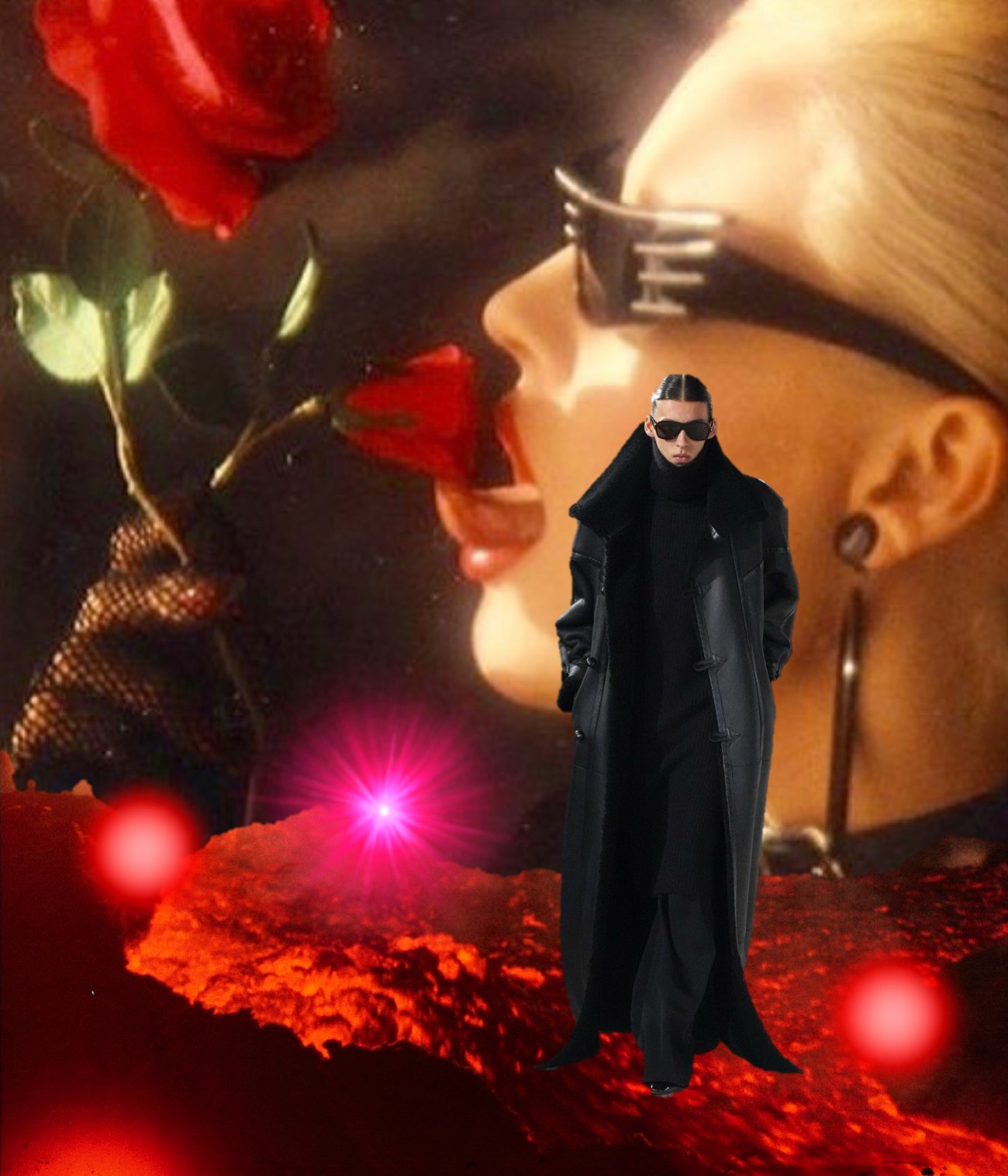
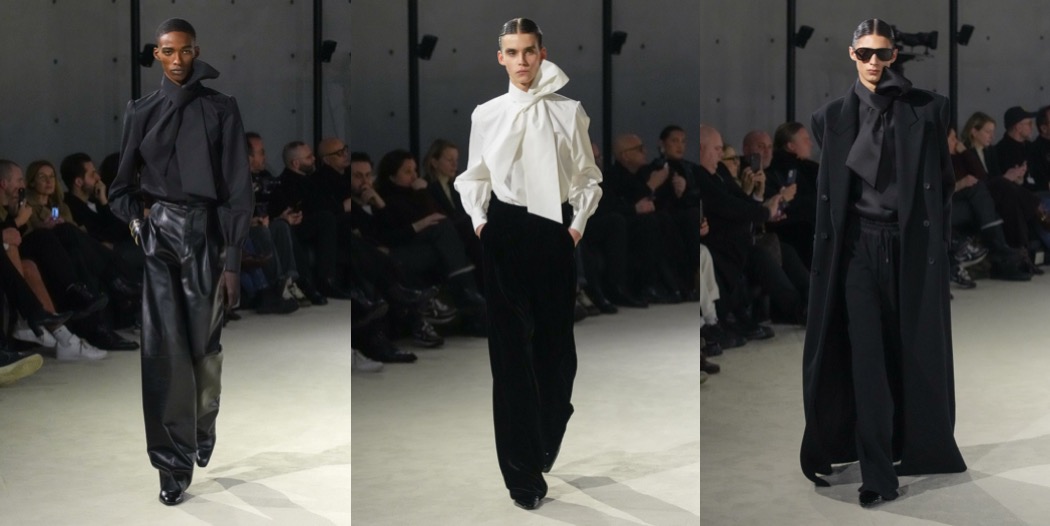
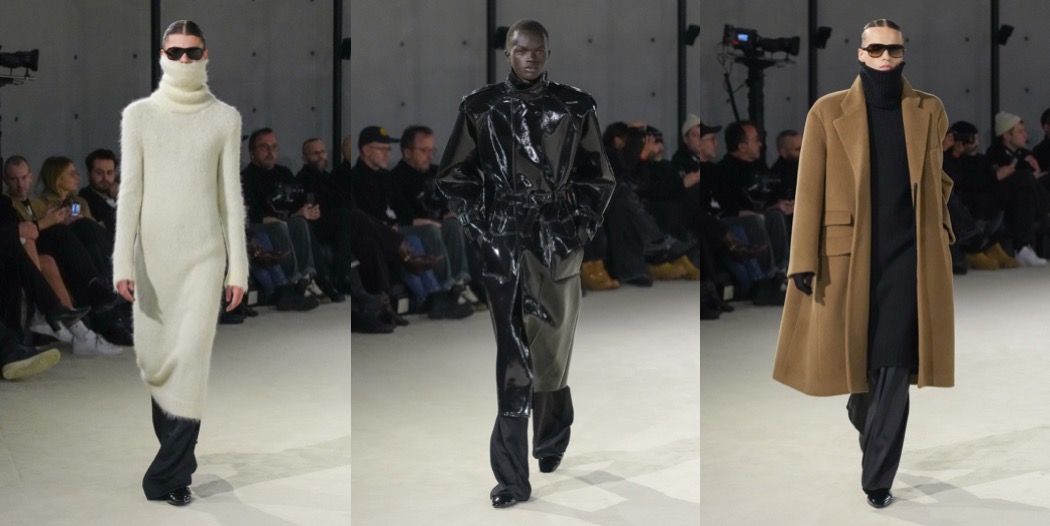
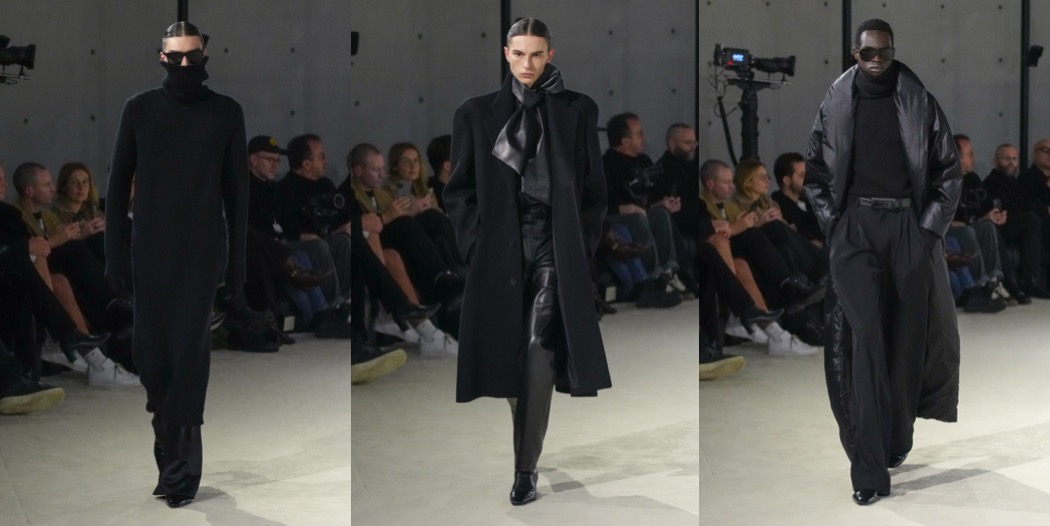
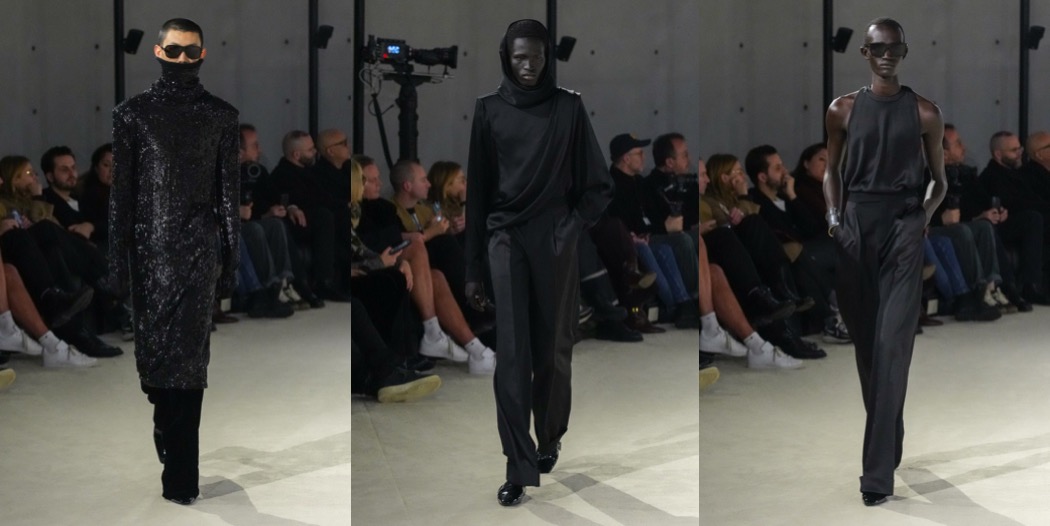
For the last couple of seasons, Anthony Vaccarello has been delivering his best womenswear collections for Saint Laurent. He’s starting to refine (and redefine) the menswear line as well. Long, tall, lean – those were the words that spontaneously shot to mind while the designer was sending out the autumn-winter 2023 collection that swept away the gendering of clothes with every passing flick of its floor-grazing coat-tails. At Saint Laurent, it was instantly very clear: Vaccarello has been building on the dramatically attenuated silhouettes that have been striding out at his women’s collections recently, and their transference into menswear is now complete. “I really want them to be almost one person,” he said. “So women could be the men, and the men could be the women. No difference. I want more and more to put them at the same level. No distinction.” While the audience reclined on a circular banquette, sipping Champagne at the perimeter of a beige center-stage, it was equally apparent that Vaccarello was speaking about his idea of what drop-dead elegance means to people of his own generation. In material terms, that translates to dark, vertical, narrow coats; black leather and velvet; necks exaggeratedly tied in flourishing bows or sunk funnel-necks; the cool, tailored swagger of Smoking jackets, the cache-coeur drape of tops and chest-revealing cowl-front silk shirts that plunge into wrapped cummerbunds. Whereas what was for “her” was pioneeringly co-opted from “him” by Yves Saint Laurent in the 1960s and ’70s, now Vaccarello has reversed the process in the 2020s. Of course, the codes of the house offer endless gifts to play with on the menswear scale: patent block heels, adaptations of the pussy-bow see-through chiffon blouse, a hint of the North African draped hood. Vaccarello did all that, with a confidence and conviction that is all his own. What’s progressive about it is the way he’s pushed past anything that might be categorized as “blurry,” “fluid” or “neutral.” In the bigger scheme of fashion, his contribution is bringing exactly the opposite qualities to rethinking clothes and gender: what Vaccarello deals in is rigor, precision, and a brilliant ability to cut. It was a true Saint Laurent on-brand orchestration (with a little help from Charlotte Gainsbourg, who while wearing a black velvet tuxedo played on the piano in the middle of the Bource De Commerce venue), for sure, but a resonantly relevant step forward for the designer too.
Collage by Edward Kanarecki. Don’t forget to follow Design & Culture by Ed on Instagram!
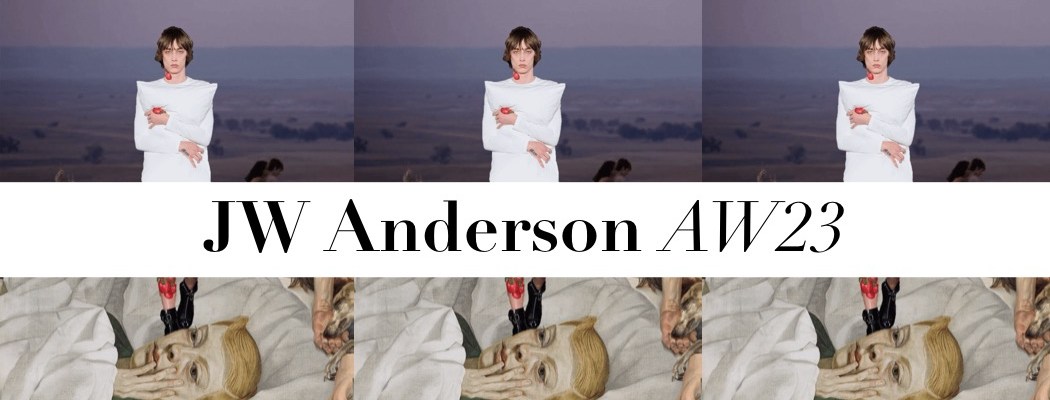
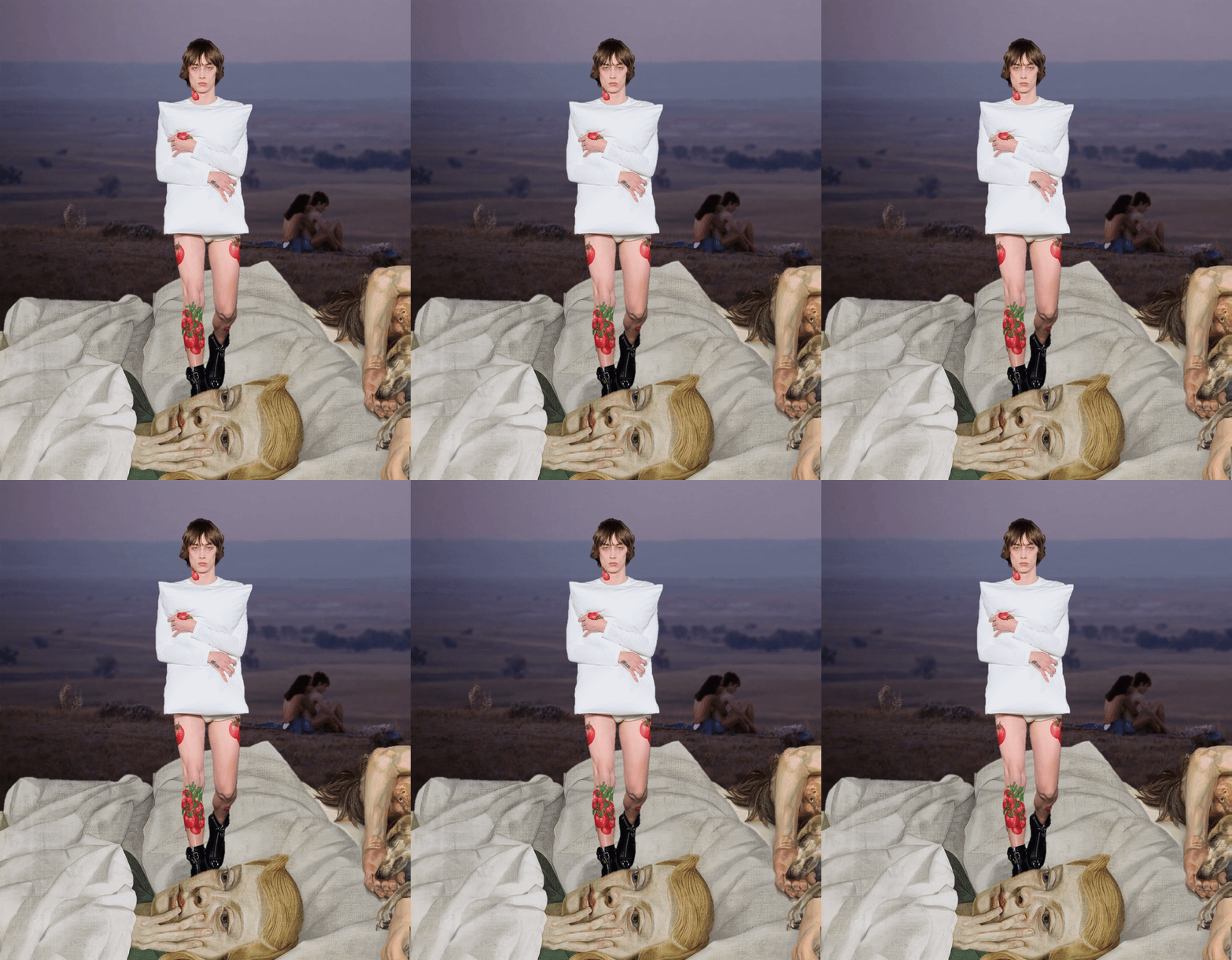
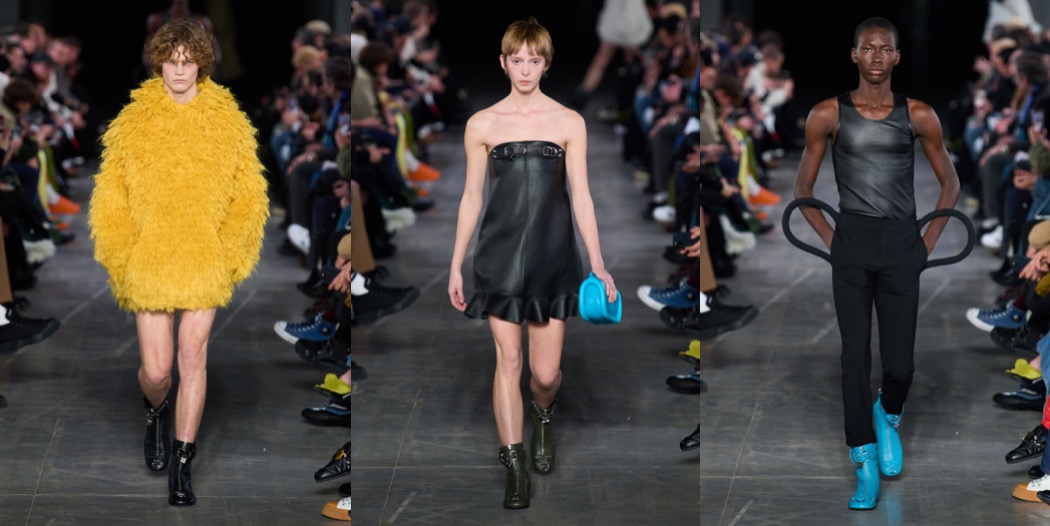
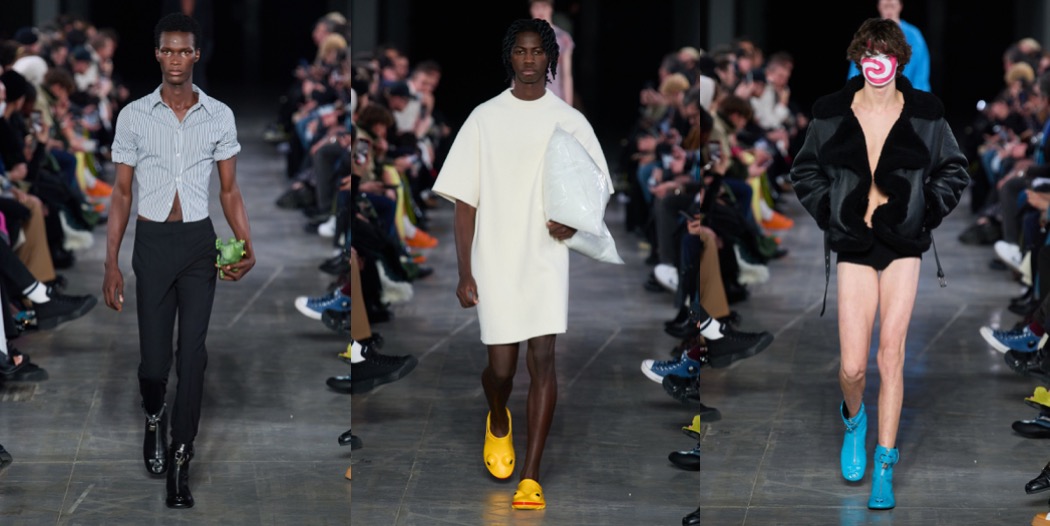
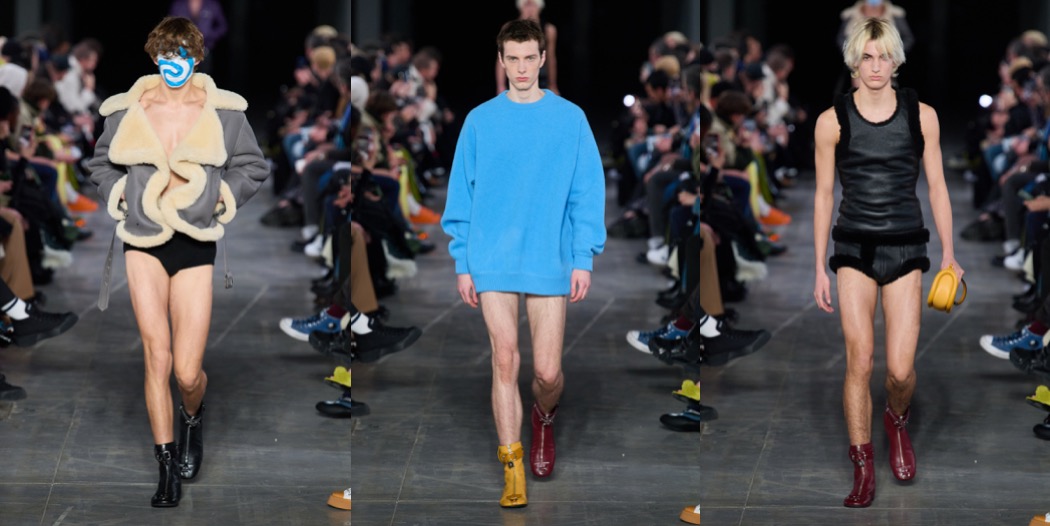
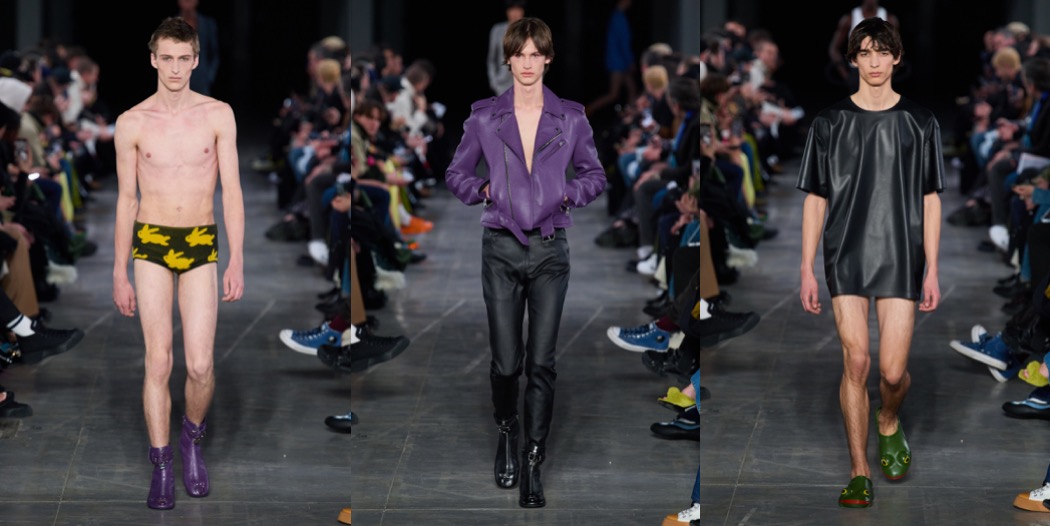
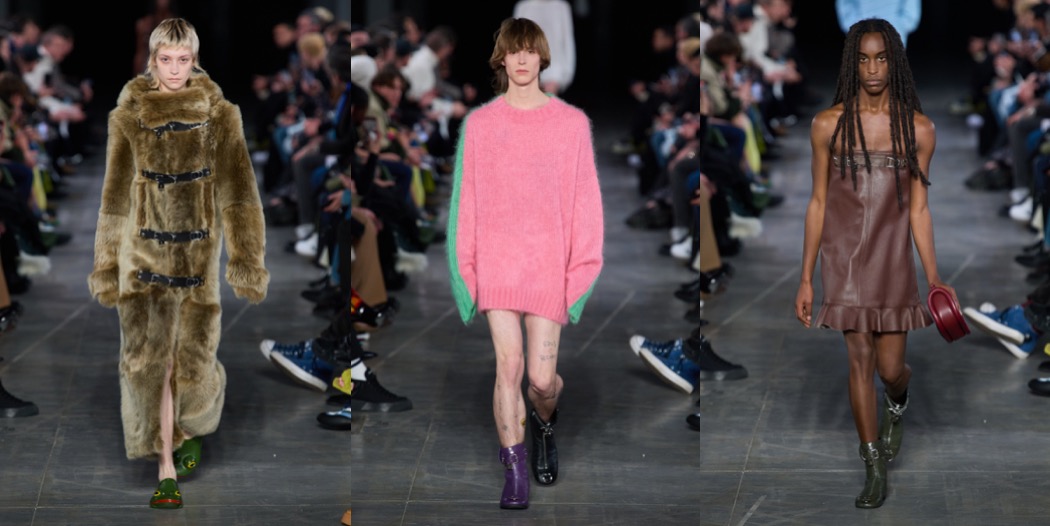
JW Anderson‘s menswear events have become the most exciting moments of Milan Fashion Week. And there’s a lot to unpack in the autumn-winter 2023 collection. Jonathan Anderson reflected on all his past work by returning to one of his most transgressive statements. Ten years ago, his ruffled shorts, skirts, and minidresses – all modeled by men – drove the London fashion scene crazy. Recalling the moment pre-show, Anderson said: “I found it very strange… that collection was about a shared wardrobe.” Even if, he added, he knew he was being something of a “brat” at the time, the force of the reaction revealed the depth of the subversion. He returned to it tonight to interrogate the notion that recent history’s radical rephrasing – even if still polarizing – discourse around gender would soften its impact. He said: “this feels like an old fashioned thing for myself to say now, but it is still something as a society we have yet to work out. How do we package people? Do we need to package people or not?” The Milan show opened with two boys in underwear holding bolts of cloth: the undressed waiting to be dressed, the unpackaged waiting to be packaged. Then came two models clutching pillows inserted into their garments, whose limbs were painted with tomato images. And then came the ruffled short. The difference between this and the original was that version 2.0 came in leather, but otherwise it was effectively a fresh edition of the garment this designer could barely sell the first time round, and which he still works to buy back at auction when they re-enter the market. The following looks teased your notions of facade and identity. The fully grown non-binary cast wore anthropomorphic frog-faced slides and boots by Wellipets, a recently relaunched but until now kids-only brand that was once worn by the British royal family’s heir and the spare back in the 1990s. As any basic biologist knows, certain healthy frogs can change gender according to circumstance. Torsos, some butch and some slender, were printed on terry vests worn over slouchy pants. There were some infantile animal print briefs and a series of uniform-aping duffle coats, fastened with lock and key instead of horn and eye, in leather and faux fur. The ruffle returned on occasion. Certain garments came inserted at the top of the spine with the decorative leather and plastic SIM cards that also acted as show invitations. One model had his placed over his heart. “Everyone’s attached to one,” said Anderson of this detail. “The idea is that you are taking it and turning it into something completely useless. Also all technology becomes useless in the end.” In the whole this was a radical wardrobe ready to come out and be inhabited, now that the times have caught up with the spirit of its inception.
Collage by Edward Kanarecki. Don’t forget to follow Design & Culture by Ed on Instagram!
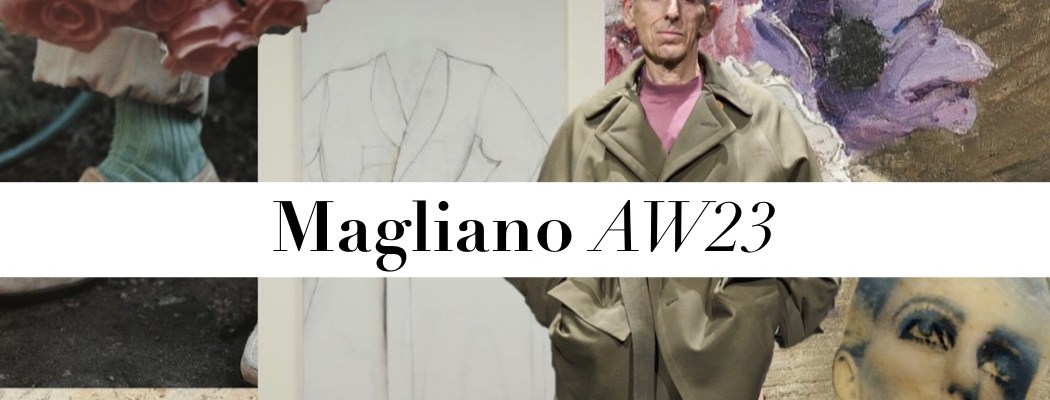
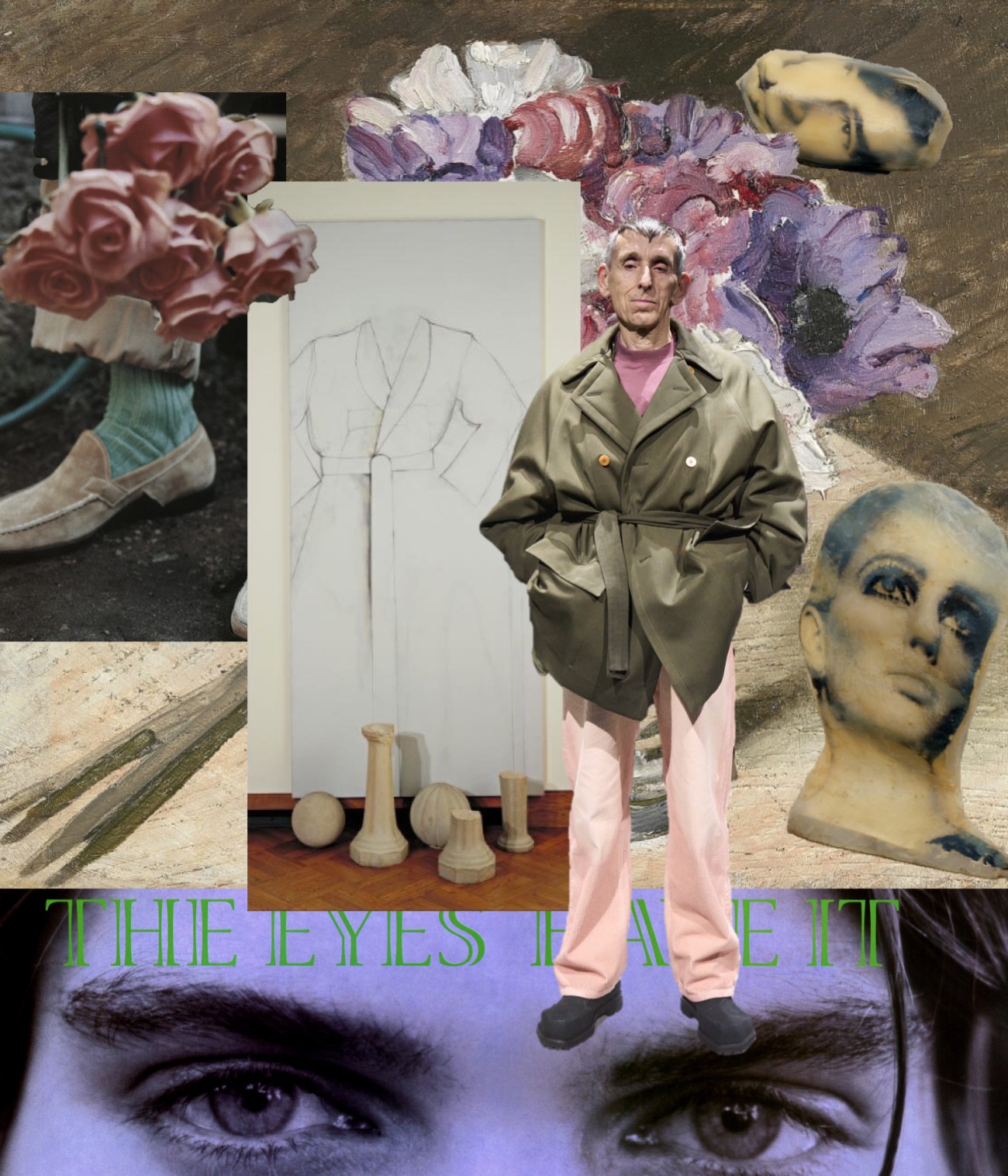
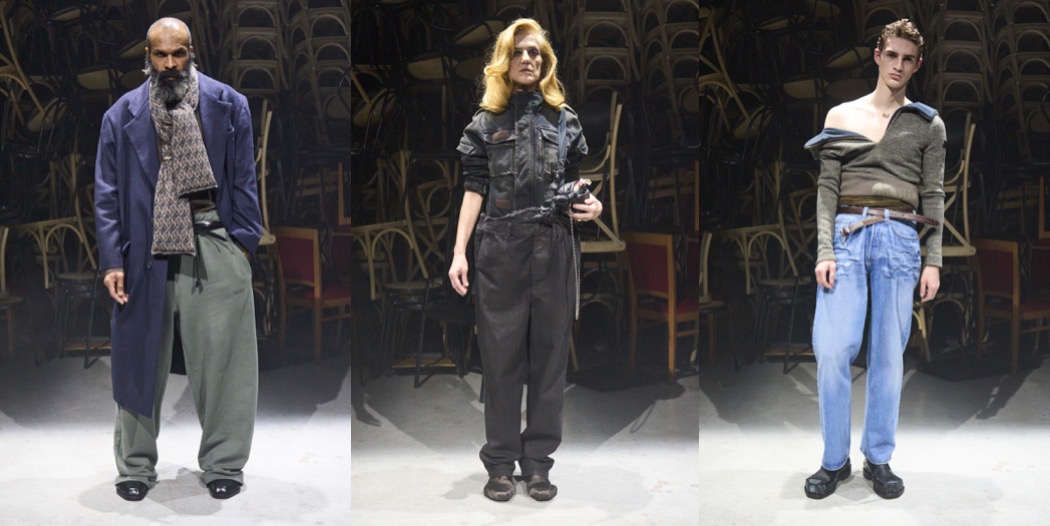
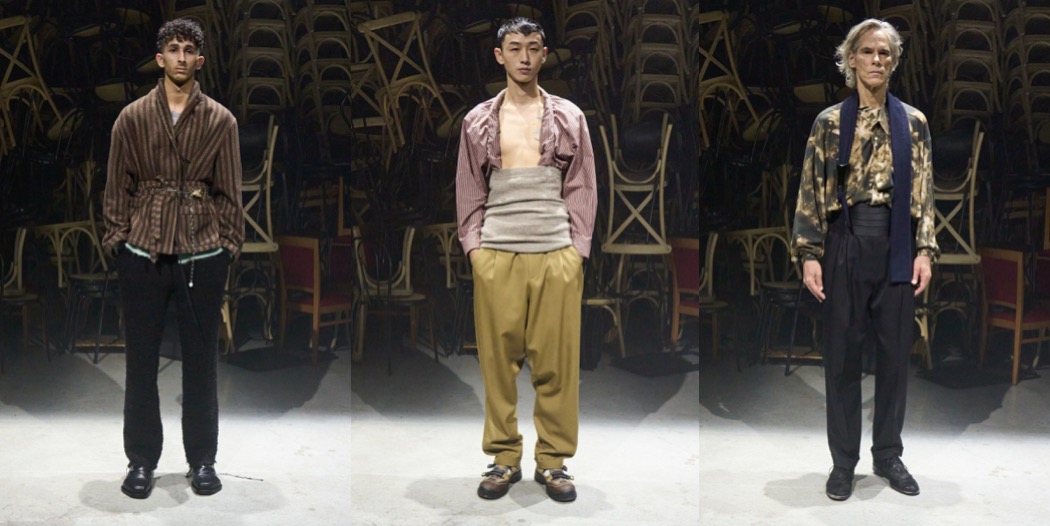
Of all the fashion capitals, Milan seems to be the most harsh for emerging and independent designers. Luchino Magliano is one of these designers, and he finally gains the much deserved spotlight. Sitting in the cavernous dark space of the show, held in the underbelly of a school, with a huge wall of stacked chairs as rather ominous backdrop, he said, “this time we have chosen a less challenging location because we wanted to be a little more hospitable towards our guests, but not too much.” Making people slightly uncomfortable is just one of Magliano’s many charms. “I’m afraid this collection is a bit tough,” he said. “It’s a really somber, gloomy collection. It’s gray, it’s melancholy. It’s shrouded in shadows, but it isn’t sad or desperate. It just comes from an inner place, it looks inward, like this venue, we wanted to represent a luogo interiore, an inner ground.” The theme of the collection was No by Magliano. In the show, it screamed as a manifesto from the back of a gray tailored blazer – a logo of protest, a slogan that “wants you to remember not to be complacent,” the designer said, “because life brings you to say yes most of the time, to accept and bend, but it’s vital to learn to say no. It’s an affectionate no, joyful and beautiful. But it’s a no.” If anyone thinks that success will change Magliano’s mindset, making him content to meekly oblige to rules and regulations, well, better think again. The collection was excellent – more mature and polished, while keeping intact the under-the-surface vehemence that makes you wriggle slightly uncomfortably in your seat. Riffing on the slouchy, languid pajama look, garments were inventive while remaining wearable. Assembled/disassembled cashmere jumpers were repurposed from surplus finds, and military blankets were turned into dressing gowns. Utility wear, one of Magliano’s fundamentals as it pertains to the world of labor, was given a less antagonistic, more laid-back vibe, as in a scarf made from pockets thrown over a soft-tailored blazer. Raw borders, knotted and braided hems, and dangling drawstring ropes hinted at the inner tension of the garments’ construction. But tension is an everlasting propulsive presence in Magliano’s universe. A long lock of hair was dangling as a charm from a belt; a broken glass bottle neck was pinned on a lapel as a brooch, as was fly; a shirt was printed with a bunch of stray cats in a bad mood. “I know, they’re disturbing objects,” said Magliano. “But I can’t help keeping on my retina images of what happens in the world. Bombs have been made out of bottles; women’s long hair has been cut. The fly is a memento mori, reminding us of the impermanence of our lives on earth. As for the cats, they’re certainly not cute TikTok creatures.”
Collage by Edward Kanarecki. Don’t forget to follow Design & Culture by Ed on Instagram!














 Design & Culture by Ed