Men’s – Let’s Talk About Clothes. Prada AW23

Whenever Prada delivers a collection this stern and reductive, you can expect a recession, economic crisis or a global disaster to happen in the near future. But since the last couple of years feel like a 24/7 state of being at verge of the world’s end, Miuccia Prada and Raf Simons‘ extremely minimal and modest-looking outing might foreshadow the ultimate dystopia. Or maybe not? Maybe these are investment pieces for a yet unknown utopia?

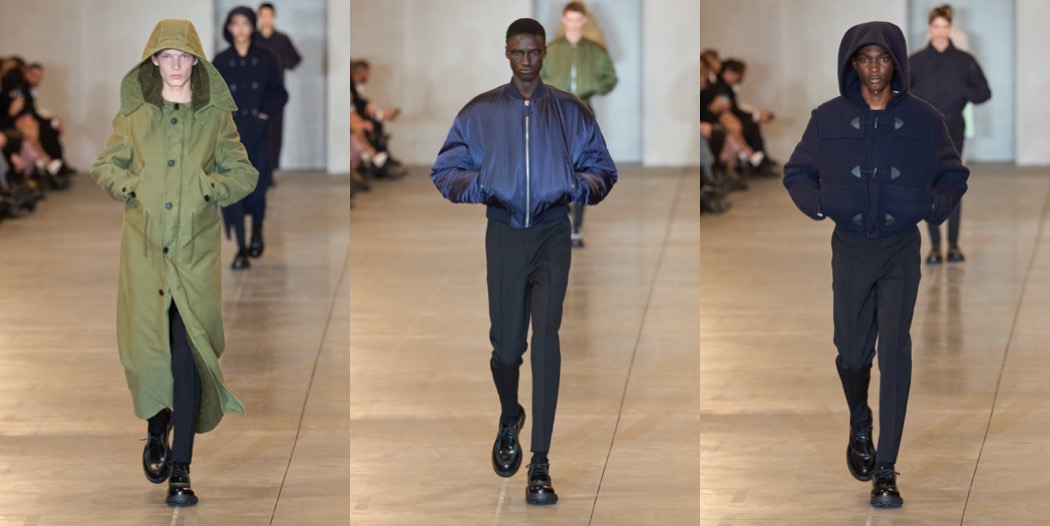
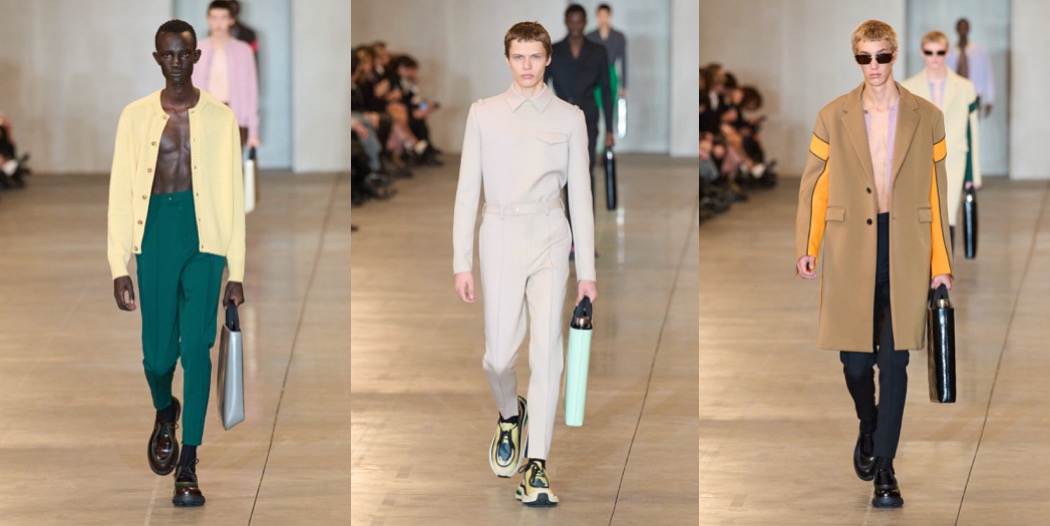
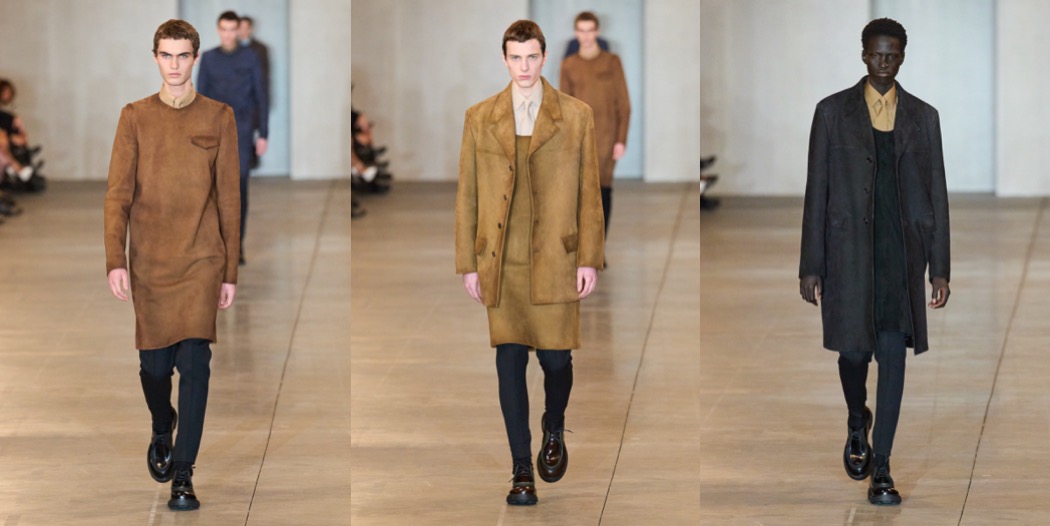
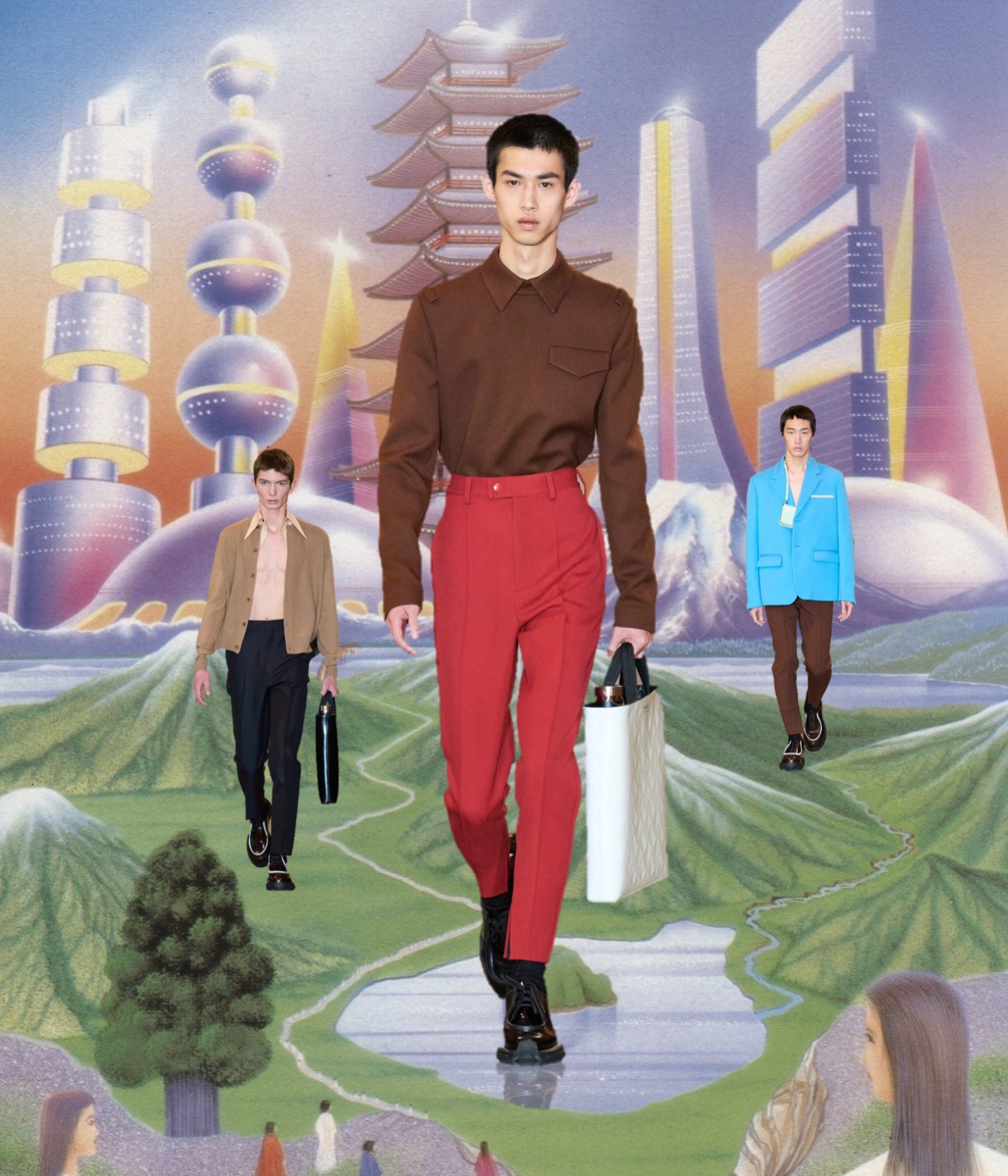
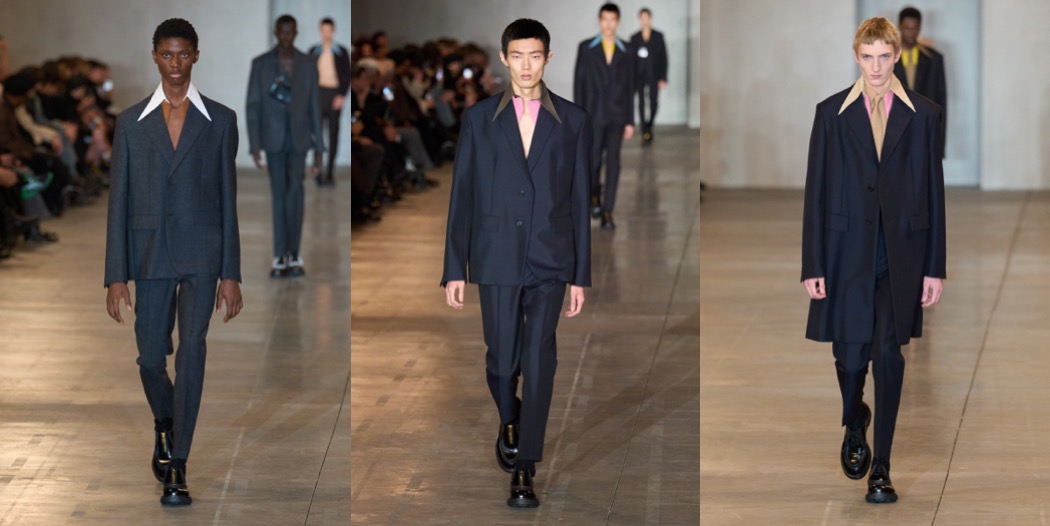
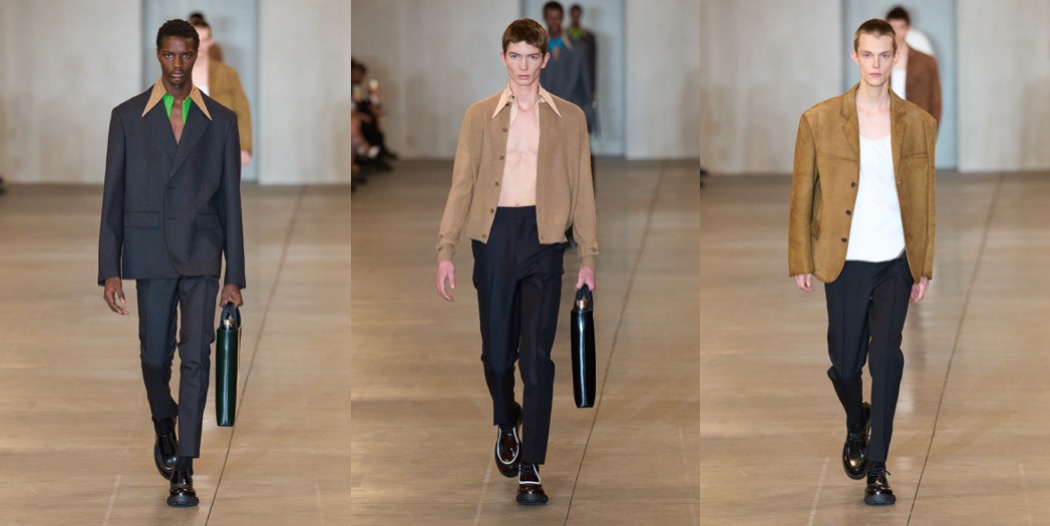
The collection was entitled “Let’s Talk About Clothes“. The show was held in a Fondazione space pared back as never before, right down to its poured concrete bones. Above the guests’ head was installed a sunken roof of plasterboard in the same sludgy tone, about a meter above their heads. During the show it slowly rose, until sinking again at the finale. Clothes-wise, it was really about clothes. Of their recent dialogues, Raf Simons said: “we talk about how we want to work really hard to make clothes that can have a reality in this world, but which on the other hand still push it, which have a fashion point of view.” To achieve that they worked on a series of archetypal masculine garments in which they tried simultaneously to transmit both minimalism along with comfort and warmth. The first cluster of looks presented minutely-articulated variations – three-buttoned or two-, single-breasted or slightly doubled – in a kaleidoscope of charcoals. The cut was slim but floating, both to cut and physique. Instead of shirting the models wore detachable collars in various patterned fabrics, a motif that returned throughout the collection. These crisp cottons were the same used for the pillowcases, with accompanying pillows, sent out along with the show invitations. They were there to echo as “a Prada gesture” the floating sailor collars we had seen in past house collections for both men and women. The jackets were suddenly replaced with two blazers in suede, before a cocoon-like top – prefigured by those pillows – that more resembled something to lay your head on than slip your body into. An equivalent piumino version of Prada’s vaunted vest followed directly. Two (collarless) engorged and pillowish MA-1 bombers in the classic orange-lined colorways were next. These were the first in what Simons called “the stereotypes” of outerwear, a series that included a parka, a donkey jacket, and a duffel coat. They were cut extra-long, like formal feminine evening dress, and then quickly repeated in radically foreshortened equivalents. The collection continued its unfolding with a dialogue between color, texture, and form articulated through slim fit pants worn over colored cardigans and top coats shot through with retro-futuristic go-faster panels of contrasting and dynamic tones. The models carried totes, seemingly containing water bottles that were sometimes puckered in texture like cast-steel industrial flooring. At the end the white collar uniform of the introduction was supplanted by a modern version of a blue-collar equivalent; suede work aprons transformed into dresses, sometimes worn under topcoats. These pieces spoke of several assumptions at once relating to work, class, and gender.
Collage by Edward Kanarecki.
Don’t forget to follow Design & Culture by Ed on Instagram!
NET-A-PORTER Limited

Men’s – Tactile Legacy. Etro AW23

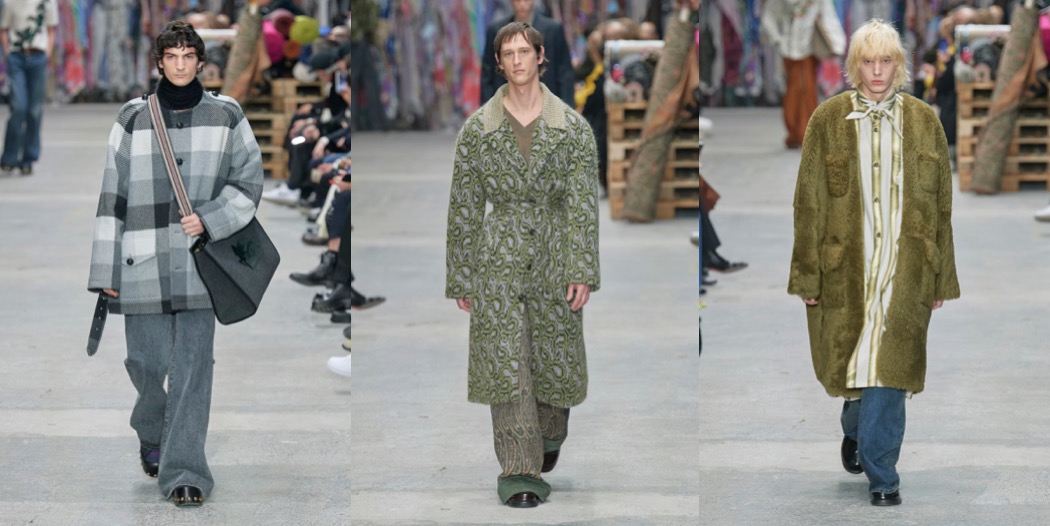
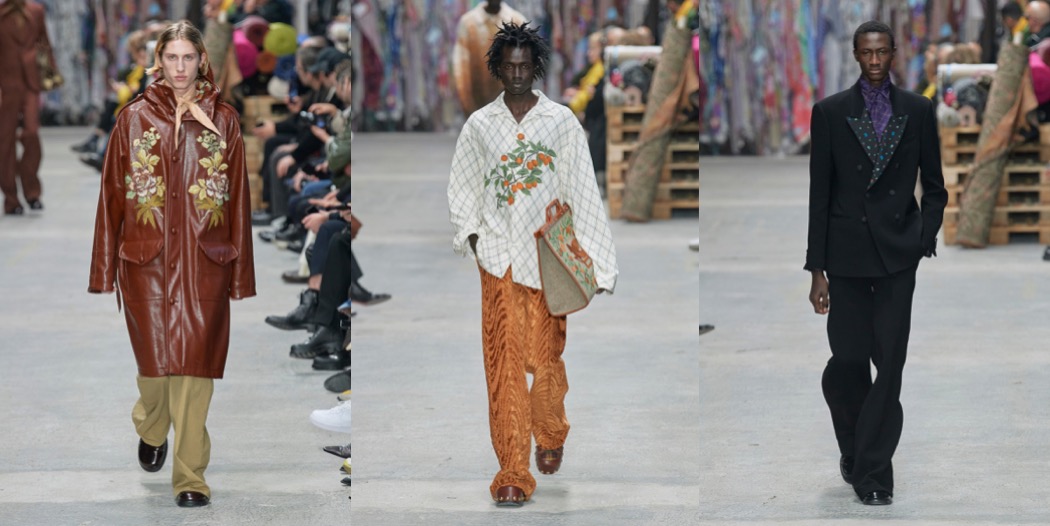
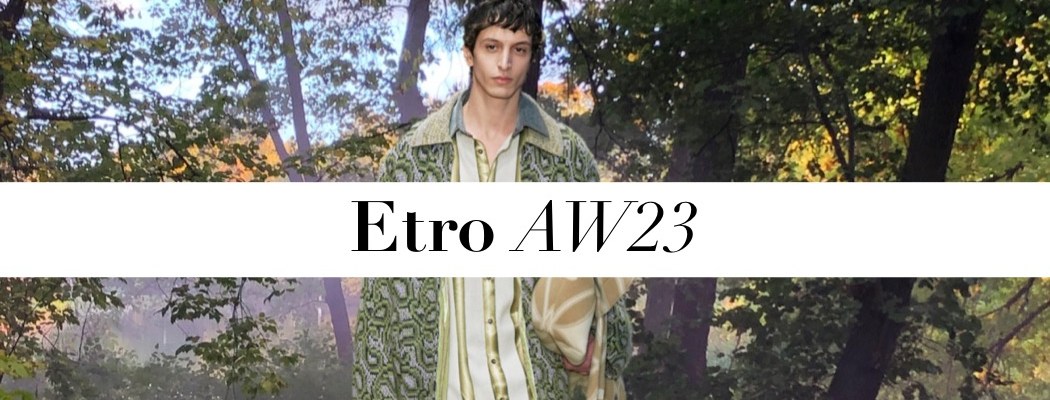
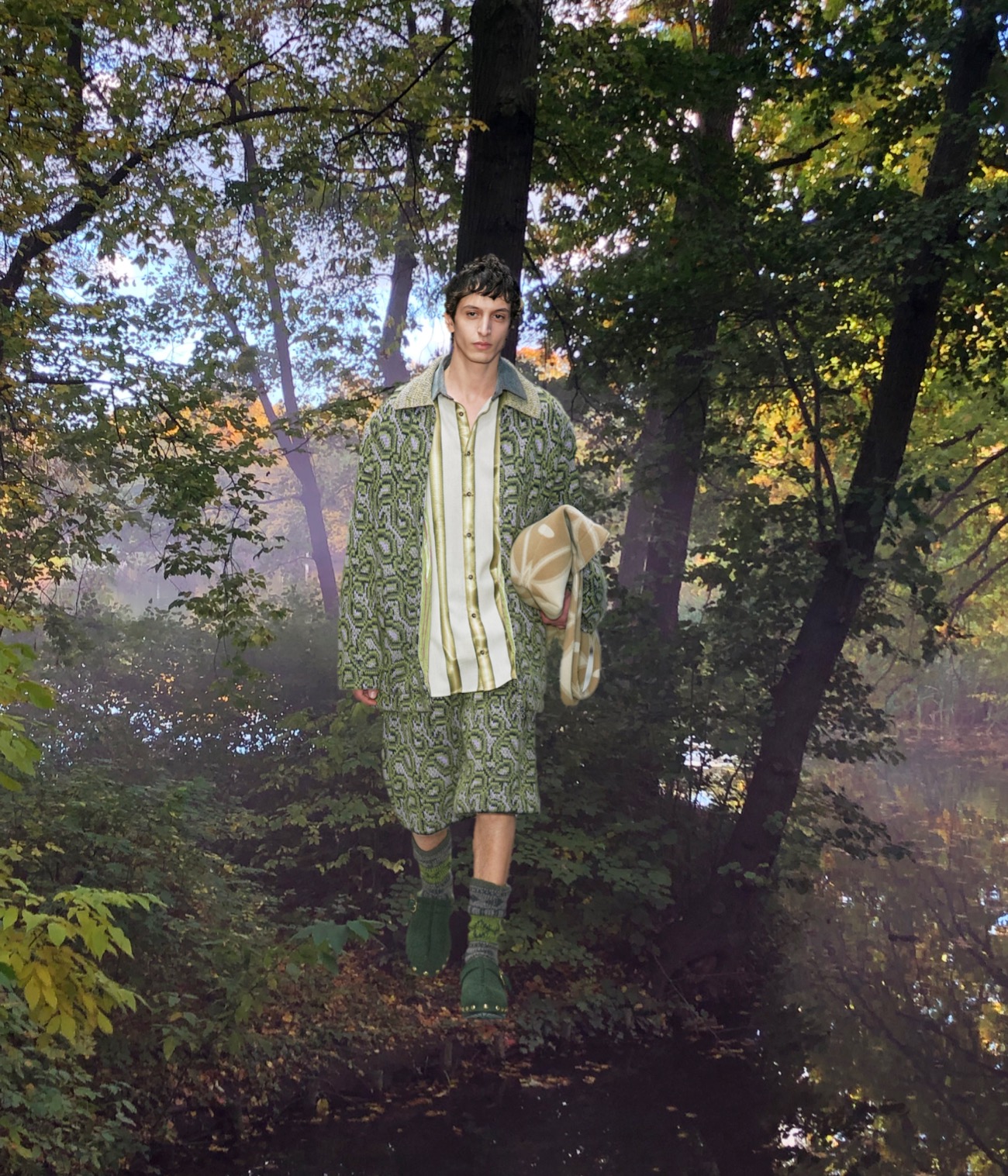
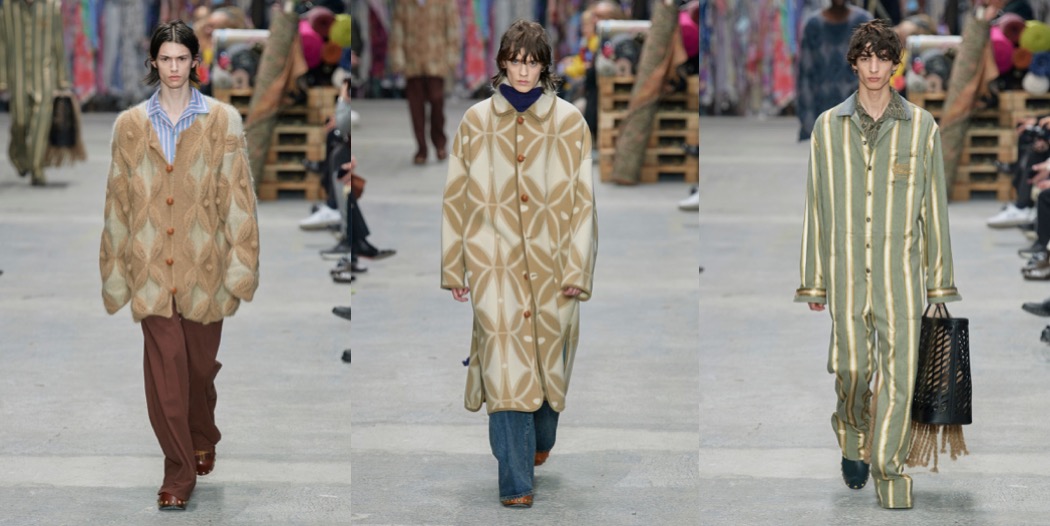
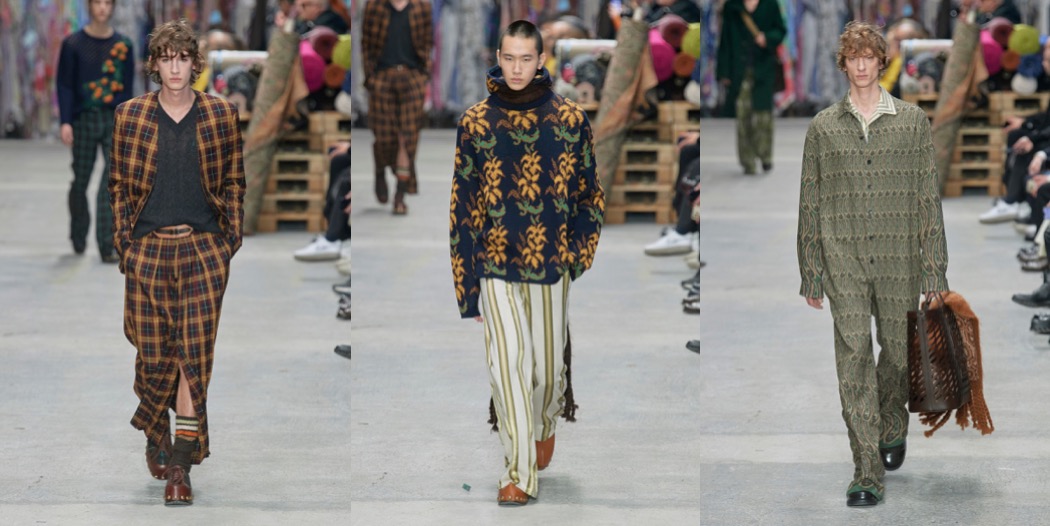
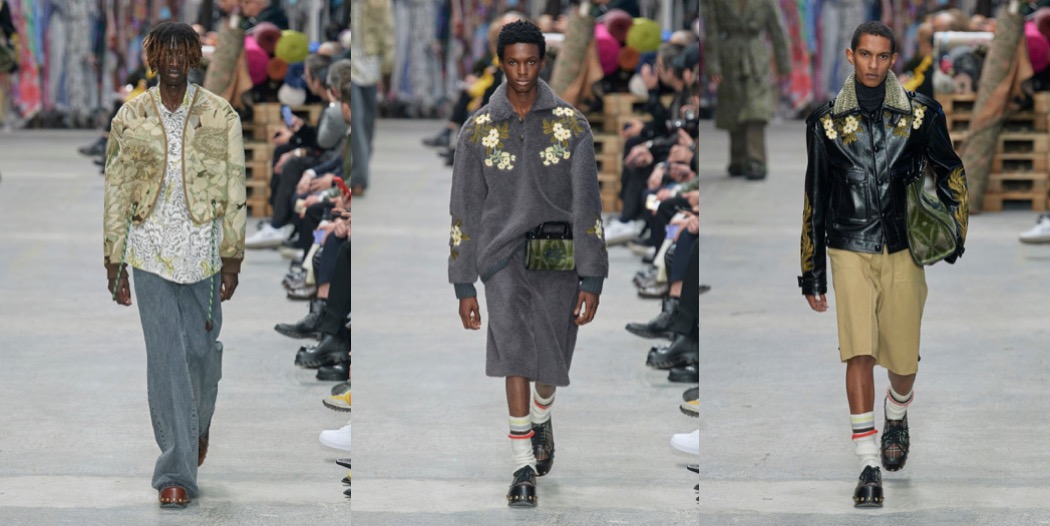
Marco De Vincenzo‘s first menswear collection for Etro is definitely much better than his womenswear debut that we’ve seen last September. The brand’s massive textile warehouse in Como was transported and installed in its entirety into a vast industrial space to become the immersive show’s set, with samples hanging from wooden racks and rolls of vintage fabrics scattered around. It was the homage De Vincenzo wanted to pay to the house’s patrimony of textile culture, which is the groundwork on which he’s building his interpretation of the label’s codes. Connecting with Etro’s history is pivotal for De Vincenzo, and his way of dealing with its legacy is respectful; yet he isn’t intimidated by its scale. At a preview, he said that he wanted to throw a little of his own past into the picture. Cue a little fetish, a small wool blanket from his childhood “which I brought with me, a lucky charm of sorts that gave me not only the inspiration for graphics and colors, but also the sentimental impulse to put my story alongside that of the Etro family.” In his menswear outing for the house, what De Vincenzo was keen to express was a sense of coziness and eccentricity. “Comfort of lines but eccentricity in the image” is how he summarized his take on the collection. The idea of masculinity he suggested came with an aura of artsy domesticity, and the look was balanced between a flair for romantic extravagance and supple refinement. Malleable high-end fabrics were cut into soft, gentle shapes: kimonos, shirt coats, and duffels were fluid, unstructured, and unlined, with rounded shoulders, often nonchalantly belted and wrapped as robes de chambre; fuzzy teddy bear pajamas embroidered with florals had an ironic childlike charm. Knitwear was outstanding, with big, chunky sweaters handknitted in imaginative kinetic patterns rendered in an acidic-rainbow palette. On the playful side, tight-fitting jumpers crocheted in open-weave cashmere were appliquéd with 3D bunches of mulberries or kumquats, and worn with roomy high-waisted flares in bright-colored windowpane checks or with low-slung washed denims. At the opposite end of the spectrum, said De Vincenzo, “I wanted tailoring to look sexy.” Inflected with a ‘70s groove, pantsuits were cut in eye-popping tartans, with double-breasted fitted blazers worn over fluid roomy flares, or with long pleated kilts open at the front.

Collage by Edward Kanarecki.
Don’t forget to follow Design & Culture by Ed on Instagram!
NET-A-PORTER Limited

Buckle Up. Christopher Kane Pre-Fall 2023

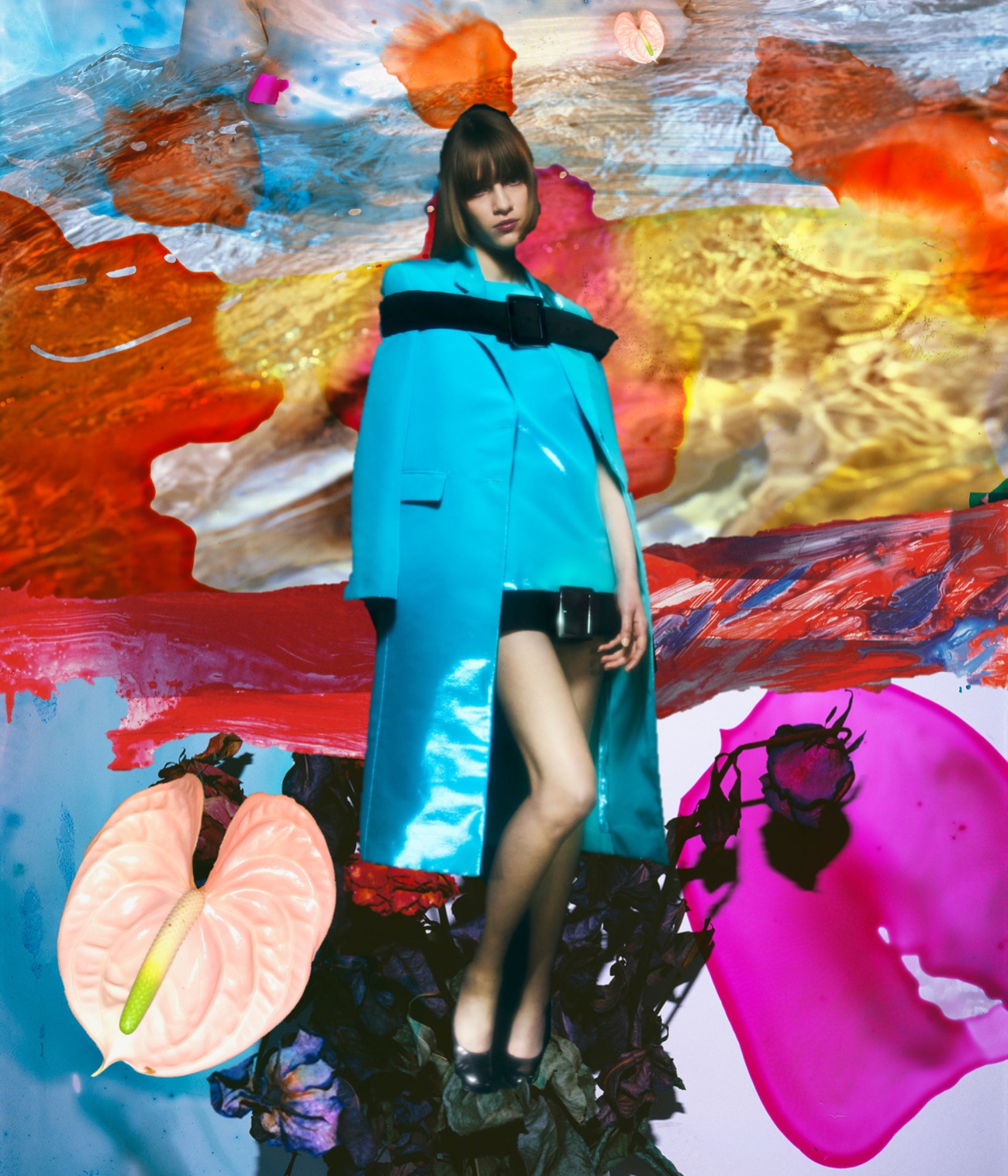
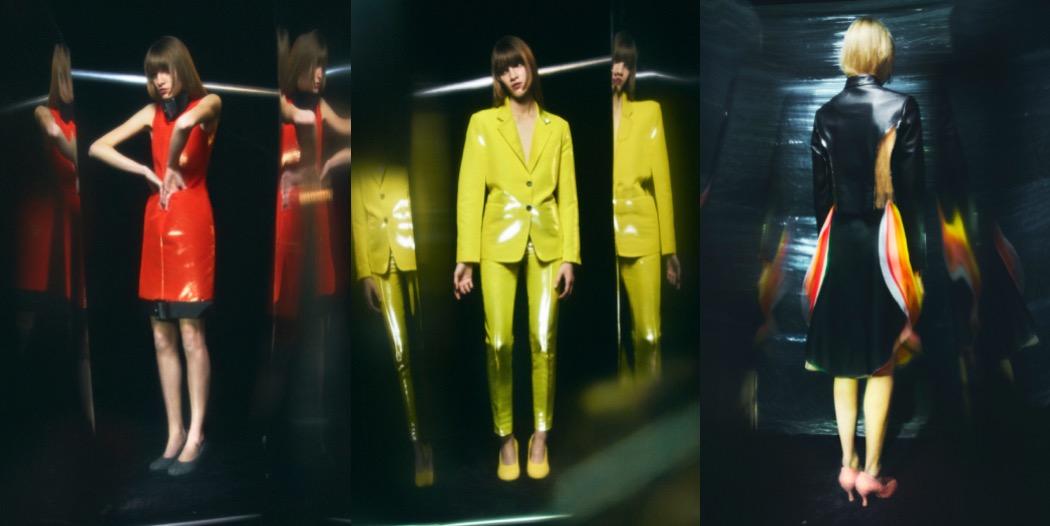
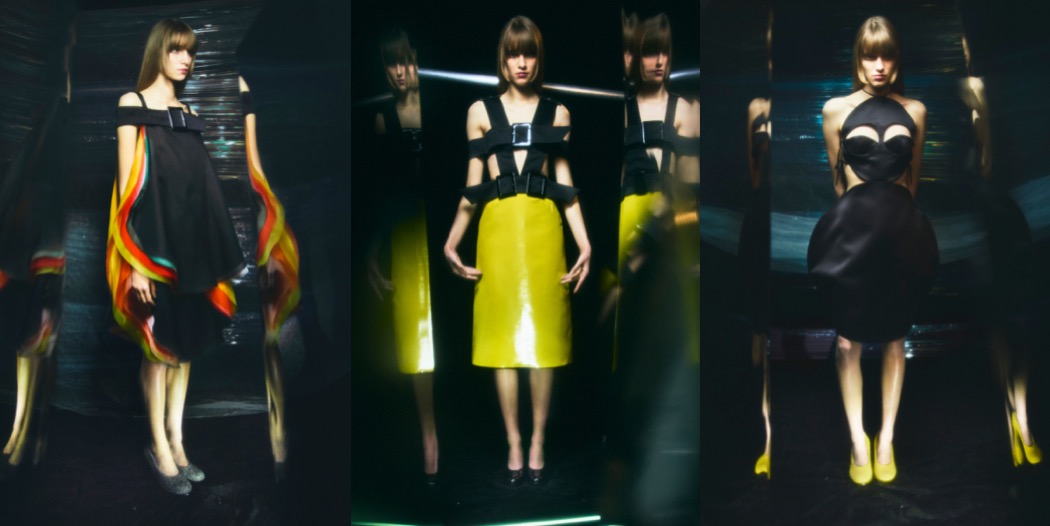
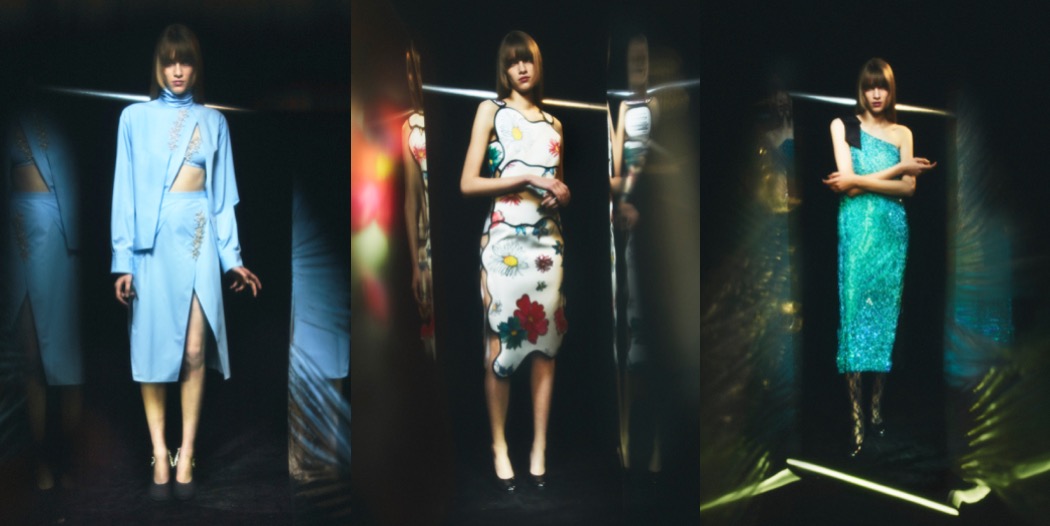
No one does “sex” and “sexy” like Chistopher Kane. His pre-fall 2023 is yet another reminder that the London-based designer owns this territory. The collection’s main character is a buckled strap. Broad, big, buckled straps are bound around the shoulders, necks, and hemlines of mini-shifts and coats. In one case they formed the entire upper body of a dress. Bondage and fetish might be the words we’d automatically reach for here, but not so fast. To Kane, the heavy-duty strapping, combined with reflective yellow, neon green, and orange fabric is more bound up with “uniforms, security, police women, and school lolly-pop ladies.” This season the designer indulged himself with circular cutouts, creating some of the most captivating eveningwear of the season. Circles roll through the naked waist of a long black column, and then wickedly expose two half-moons of flesh above a built-in bra. Kane points out that the collection will start dropping in April, so he’s also found room for “clothes to wear to weddings, cocktail parties, the things you need for summer.” There are little white dresses decorated with hand-drawn micro-flowers, patchworked from organic-shaped “blobs.” Flounced skirts in highlighter orange or lime have hems which can either be buttoned up in front, or left long. All-in-all, it’s a collection that covers a lot of bases, yet still looks inimitably Christopher Kane. By now, he’s accumulated a big playbook to draw on.

Collage by Edward Kanarecki.
Don’t forget to follow Design & Culture by Ed on Instagram!
NET-A-PORTER Limited

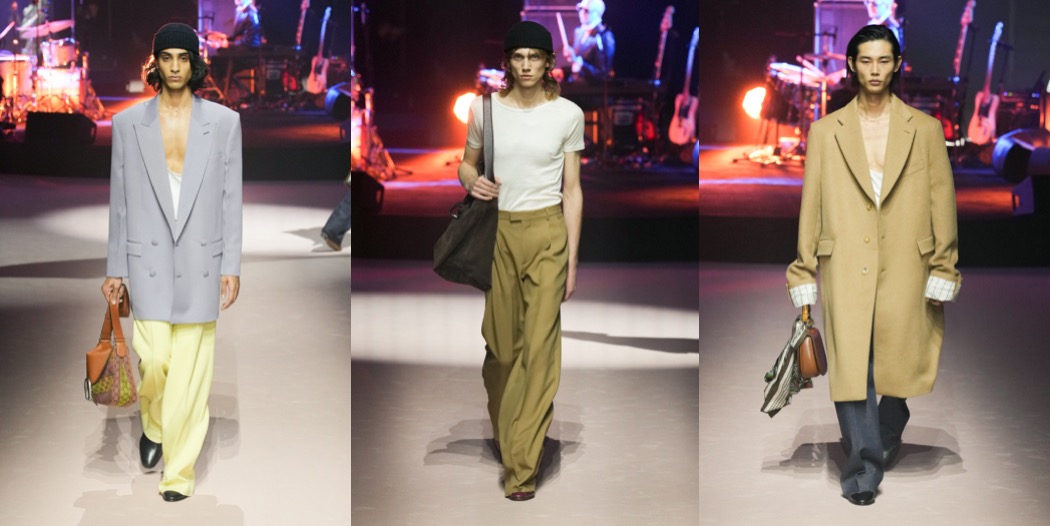
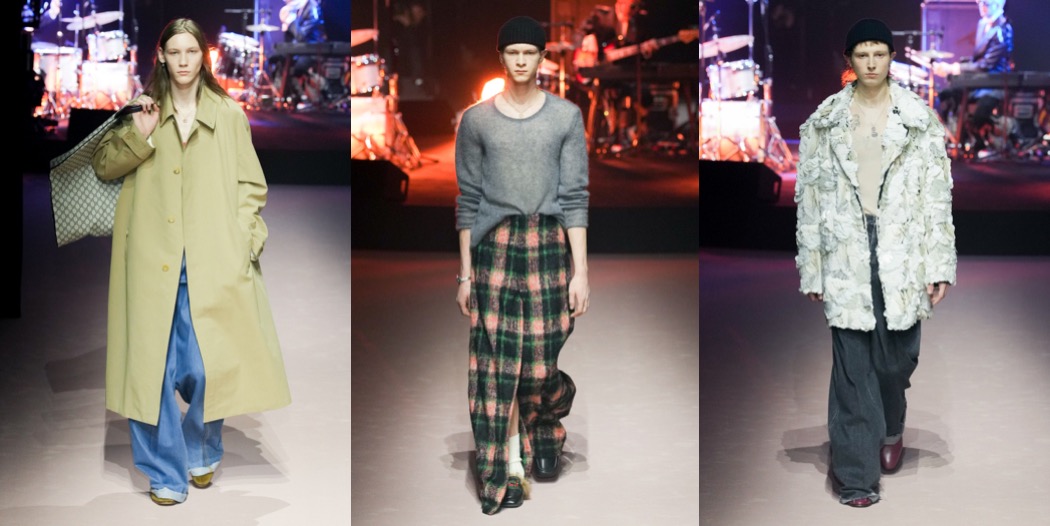
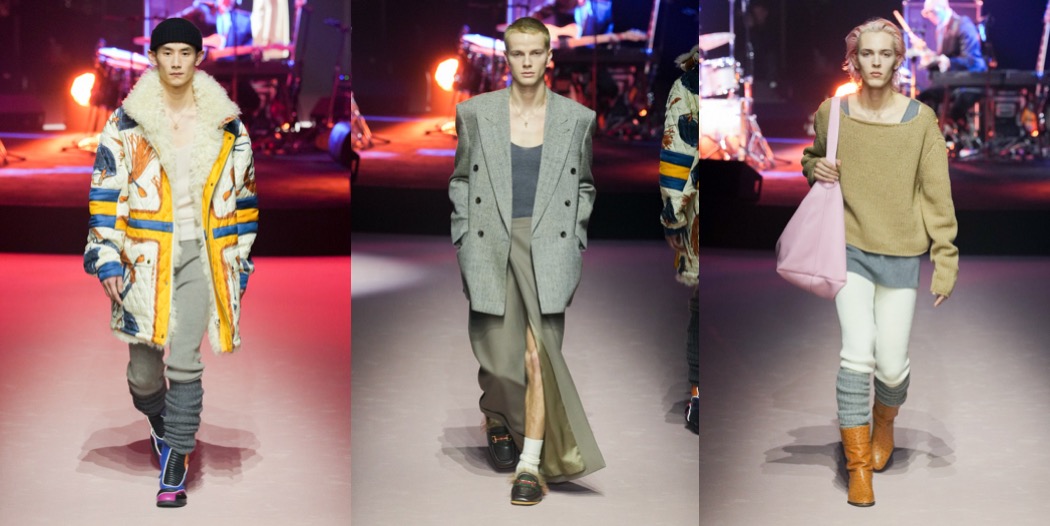
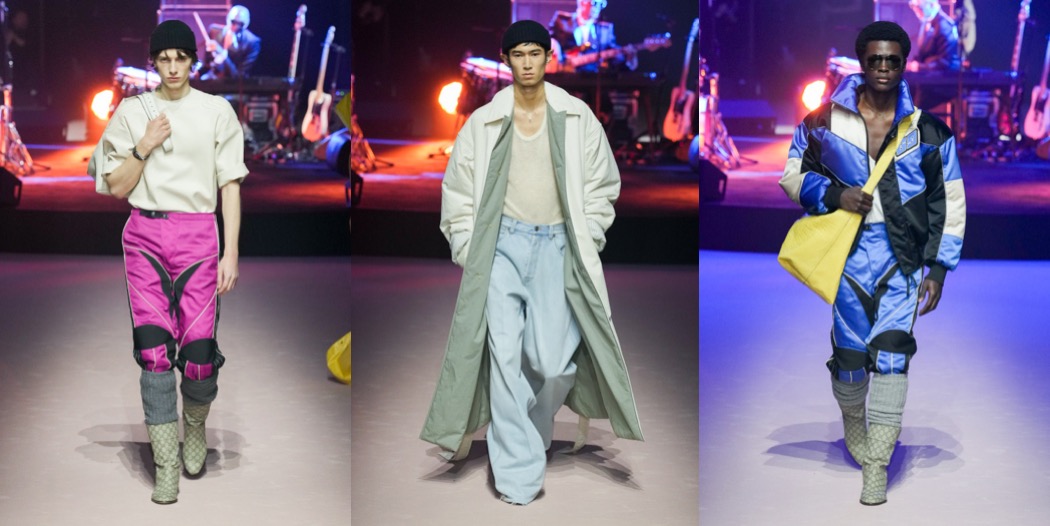
Men’s – Fill The Gap. Gucci AW23

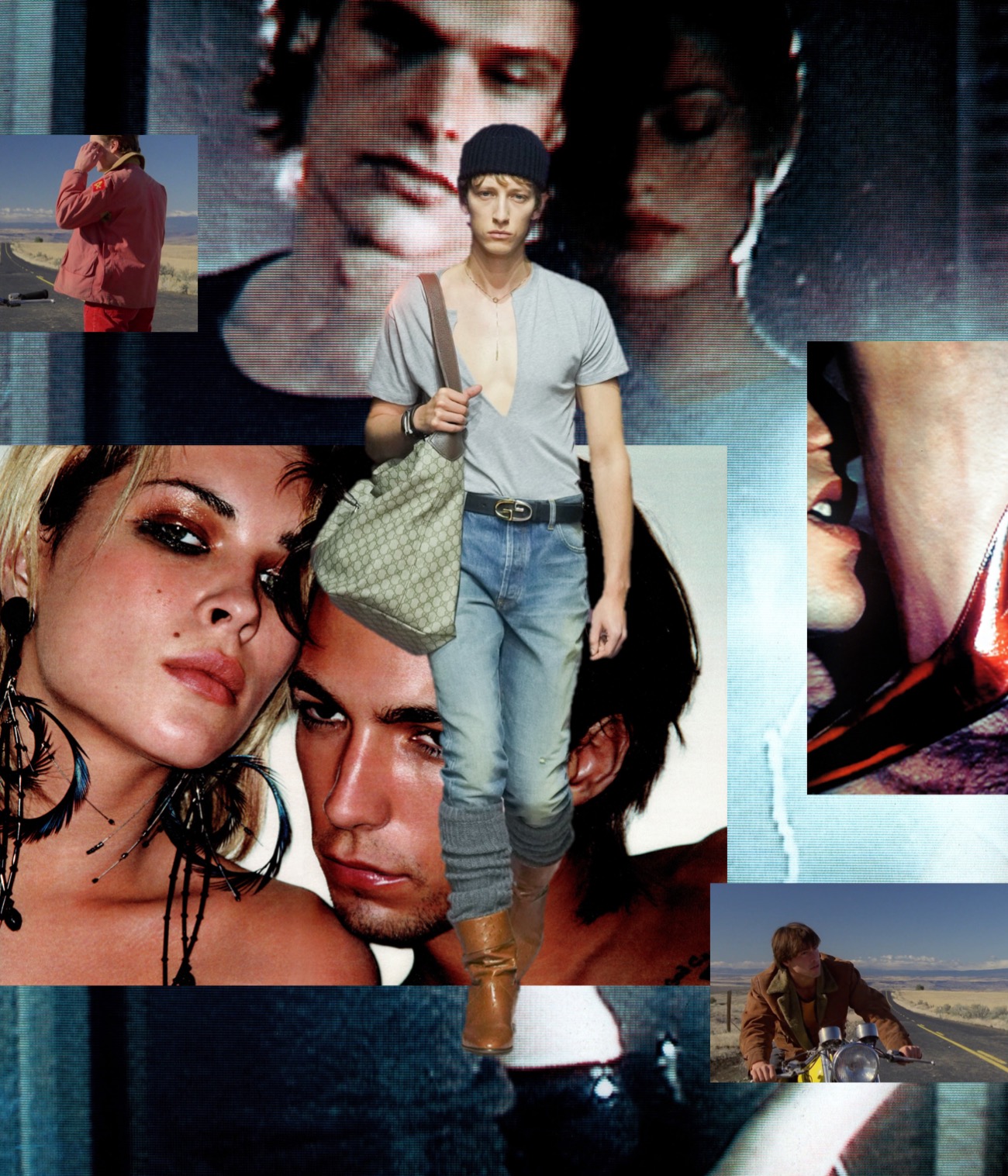
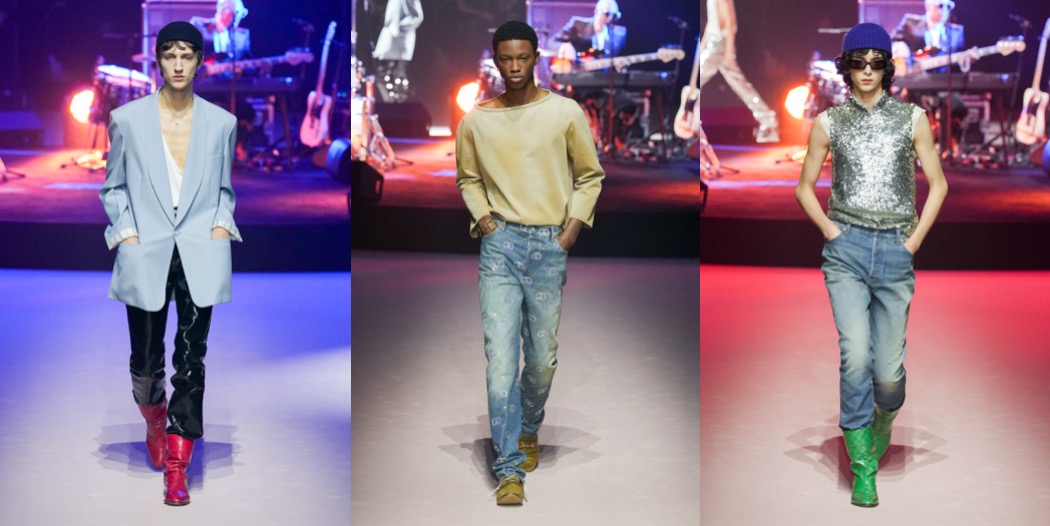
The menswear Milan Fashion Week started with the first Gucci show without Alessandro Michele’s creative direction. The designer’s abrupt exit in the end of 2022 left the brand in a confusing position. Michele’s Gucci definitely needed some rest – those last collections were just over-the-top, feeling more like a parade of costumes. Nevertheless, the designer created an inclusive wonderland with his vision for the Italian brand. And the studio-designed autumn-winter 2023 collection foreshadows the end of that colorful world that kept the industry dreaming for the last seven years. Skinny boys are in, bland indie-sleaziness is in, subtle (but very subtle) echoes of Tom Ford are in. The first look said it all: a white T-shirt with oversized chinos, From this beginning unfolded a collection that Gucci said in its notes was an act of improvisation, a freestyle “reflection of the individualities represented by the multifaceted creatives and craftsmen who inhabit the house of Gucci.” In other words, a collection that lacked overall coherence. After the opener we drifted into a section of volumized tailoring which was possibly purposefully banal. Suiting with detachable arms and legs, a rugby shirt worn above an unpicked trouser-like skirt, oversized vintage-design womenswear bags with Tom Ford era hardware and hilariously described “vintage-like” silk scarfs used ’90s-style to patch denim were more dynamic elements. We saw the occasional horse bit loafer, apparently distressed. Around halfway through, the collection began to come freighted with identity beyond the jackets featuring a 1953-issue logo boasting of outlets spanning “Florence-Rome-Milan-New York” (plus those near-ubiquitous pirate’s boots and sailor’s beanies). Volume was replaced by indie sleaze in a section epitomized by a look featuring black patent-sheened five-pocket pants, and a sheer scarlet shirt that strangely echoed the first ever look put out by Michele. The furry leopard bag and pink boots that accompanied it added a touch of hustler-ish glunge. Moto pieces, knitwear, and pastel sportswear were thrown in to evoke a purposefully peripatetic, thrown-together aesthetic. Thick socks worn over jeans is a thing to consider, though. Still, this isn’t a good moment in Gucci’s history.

Collage by Edward Kanarecki.
Don’t forget to follow Design & Culture by Ed on Instagram!
NET-A-PORTER Limited

Off To The Races. Rosie Assoulin AW23

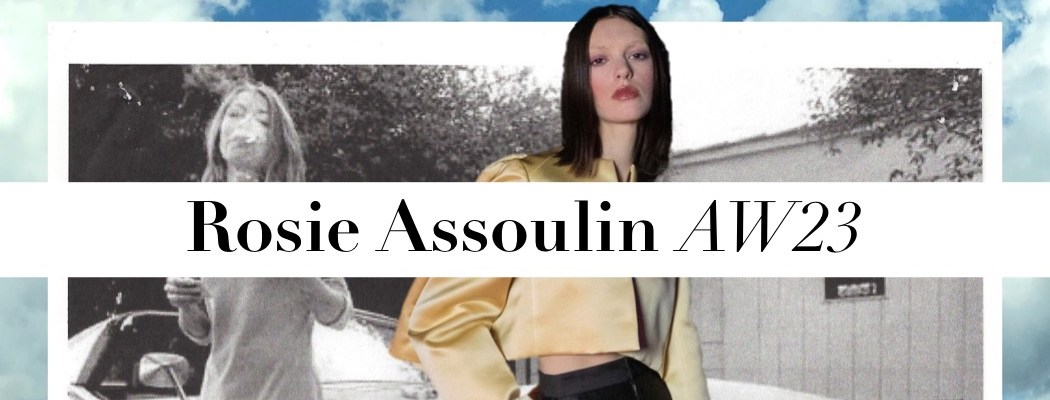
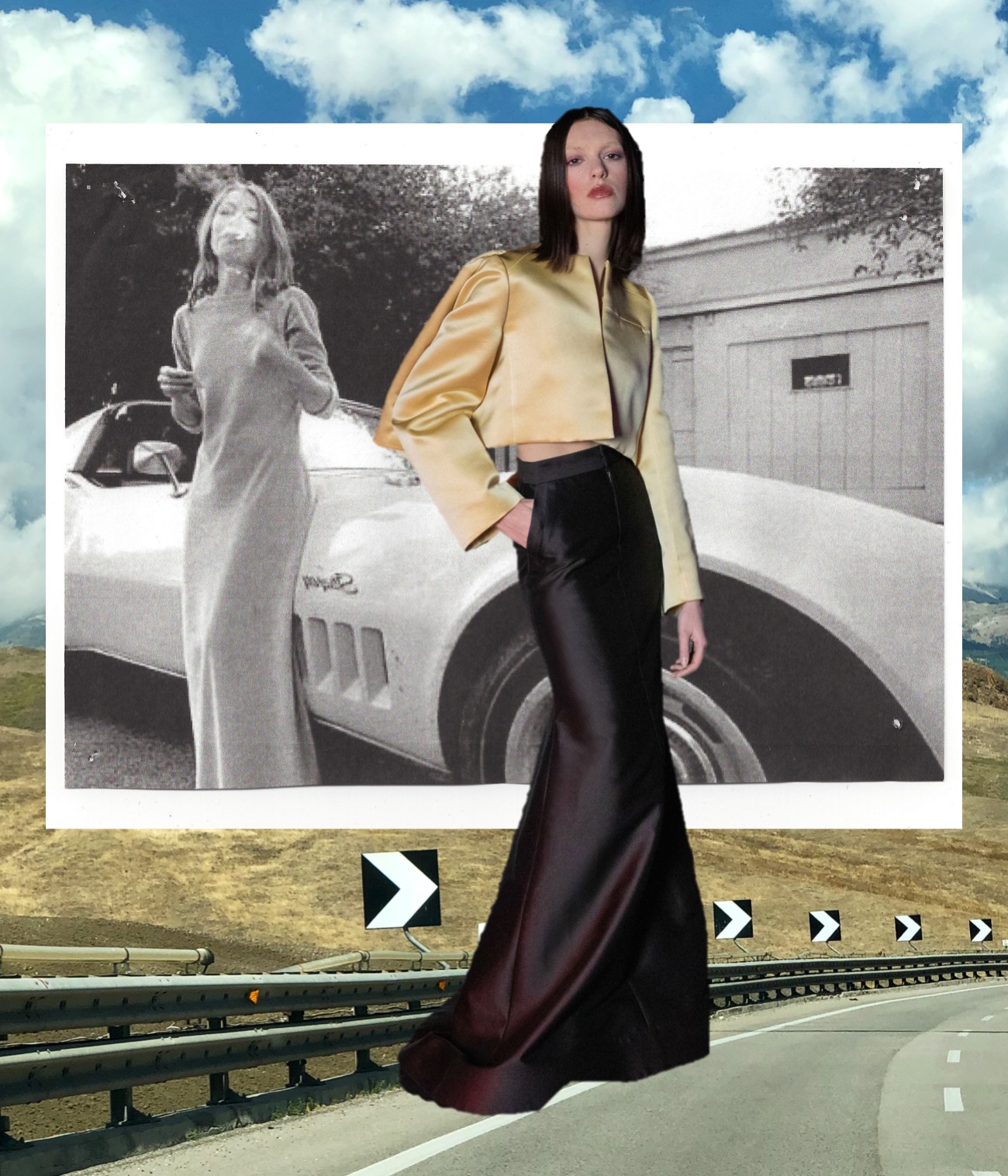
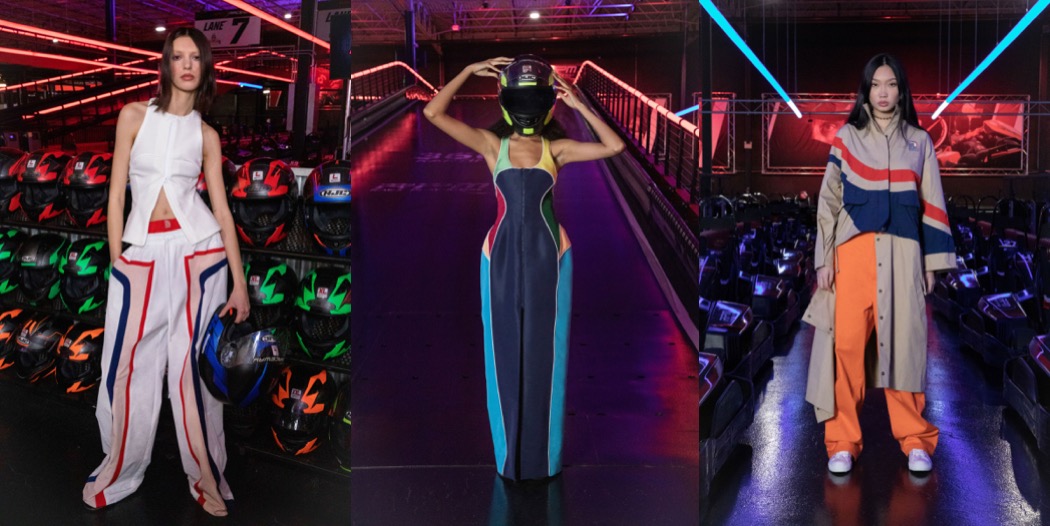
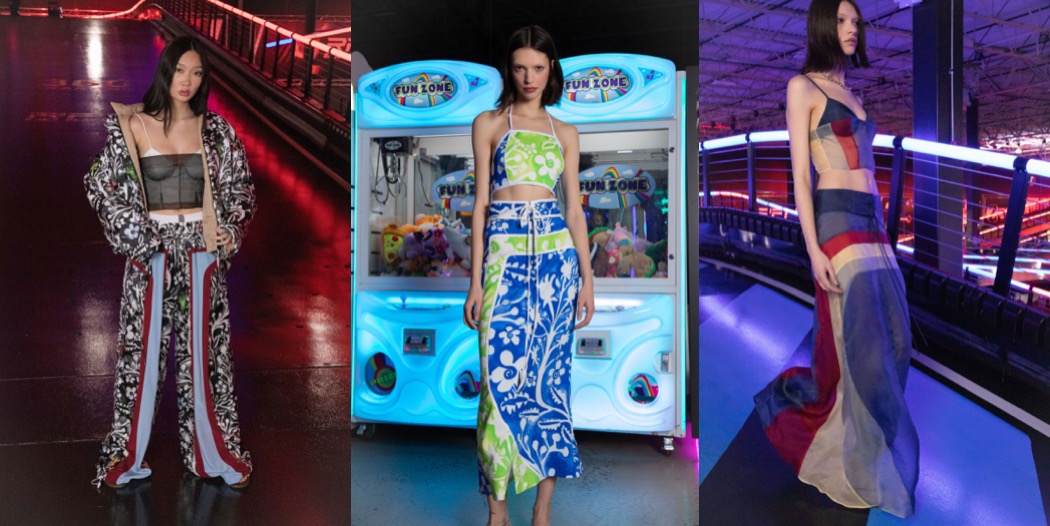
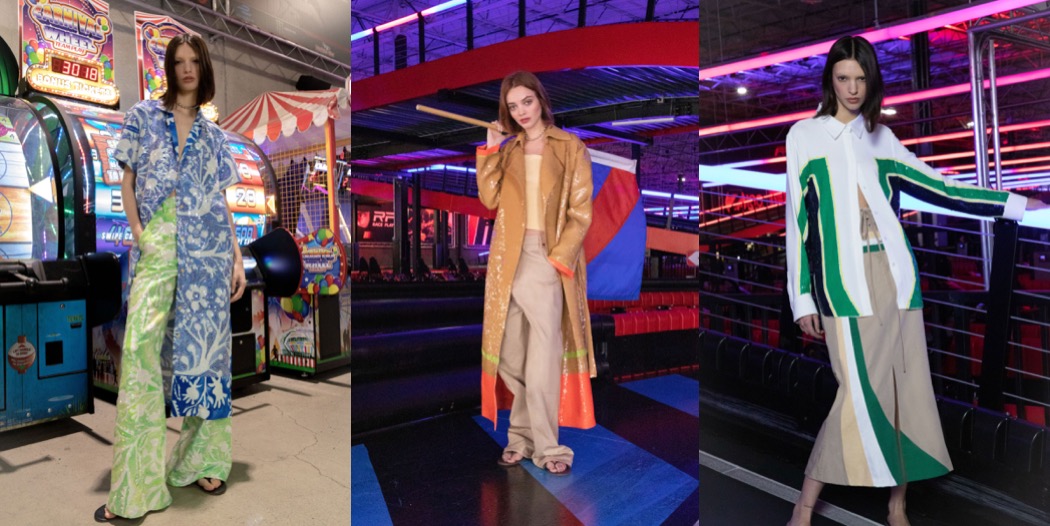
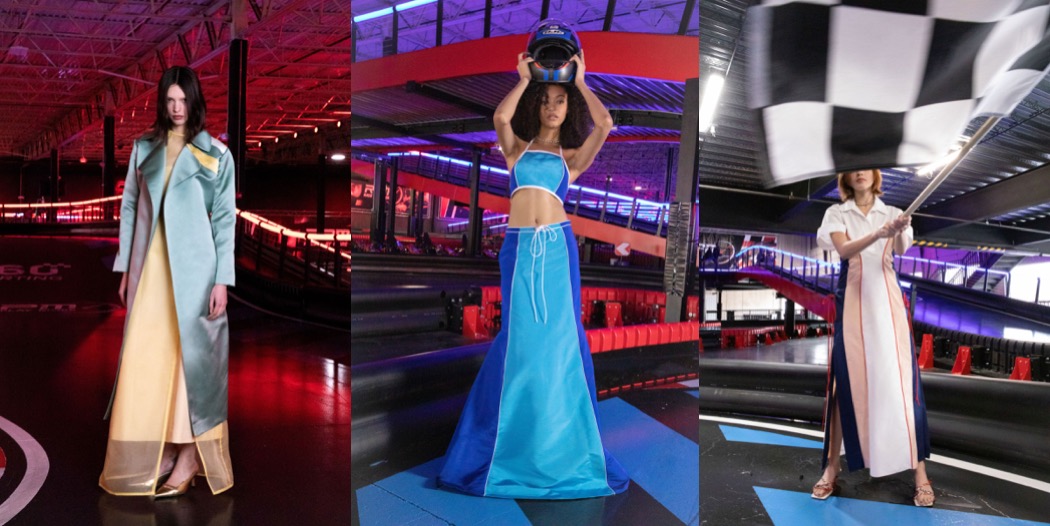
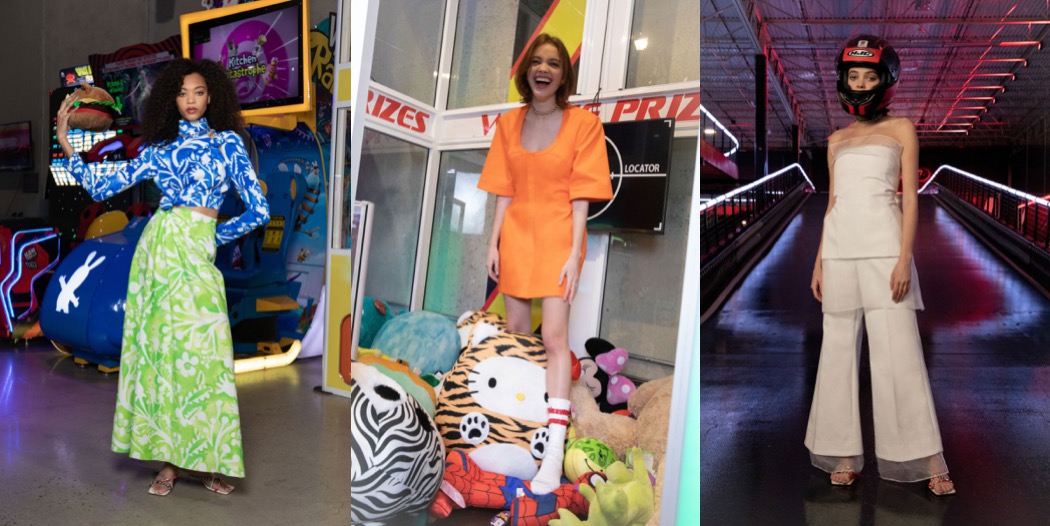
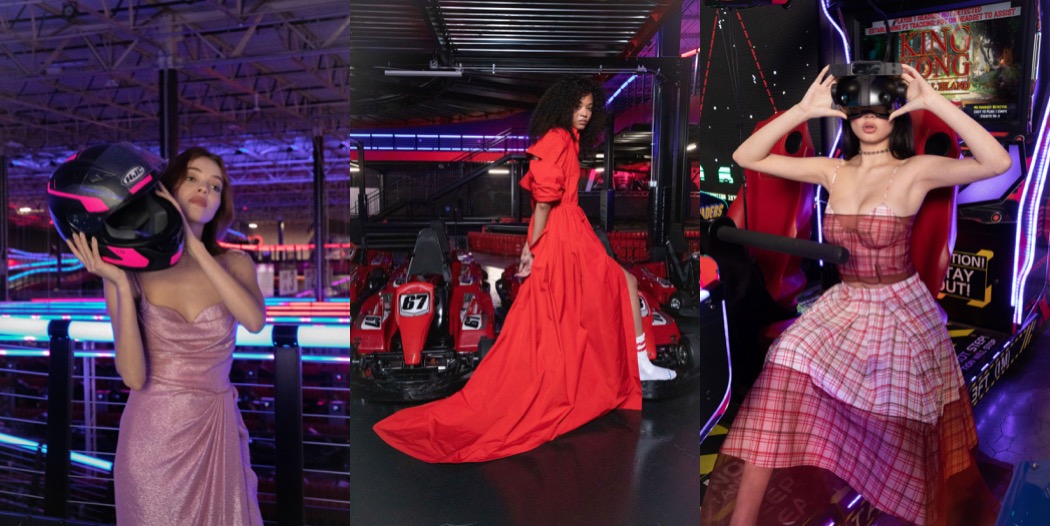
Rosie Assoulin dropped her autumn-winter 2023 look-book yesterday, and it feels like a New Year vibe shift. Usually, you would see Assoulin’s gorgeous gowns and smart daywear in an equally chic surroundings, say, a charming New York park or on the streets of a Parisian arrondissement. This time, she took us to the racetracks of New Jersey’s RPM Raceway. Inspired by her childhood memories of Delia’s catalogues (the most literal interpretation is a two-piece blue halter and maxi skirt inspired by a tankini that Assoulin vividly remembers seeing) and her grandparents’ sportswear looks, the collection orbits between the 1990s cool (cargo pants, done the Rosie way), old-school racing chic (the finale statuesque silk gown feels very Tamara Lempicka in her green Bugatti) and a signature level of sophistication that blurs the line between day and evening style (the eye-candy sequinned coat is a great example). A stripe motif appears throughout the collection – on mini skirts and matching jackets, on a semi-transparent blue and black gown – and it reads as a hybrid between ’70s graphic design and motocross. But it’s the black maxi skirt with a champagne dinner jacket with a cropped cape that is the standout: pure elegance with a wink. Assoulin’s style is multi-faceted, and this collection delivers that with a twist.

Collage by Edward Kanarecki.
Don’t forget to follow Design & Culture by Ed on Instagram!
NET-A-PORTER Limited