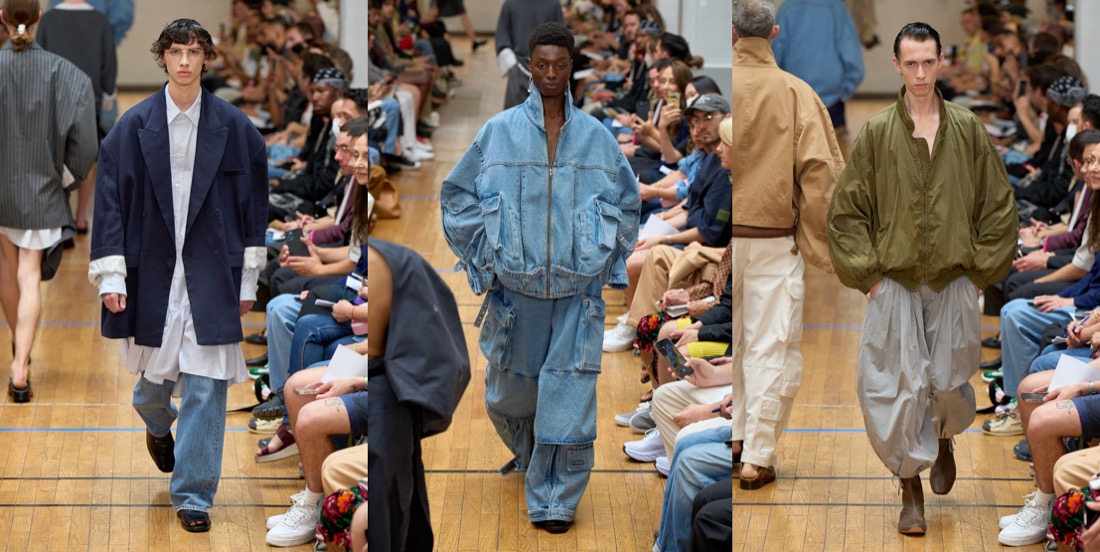
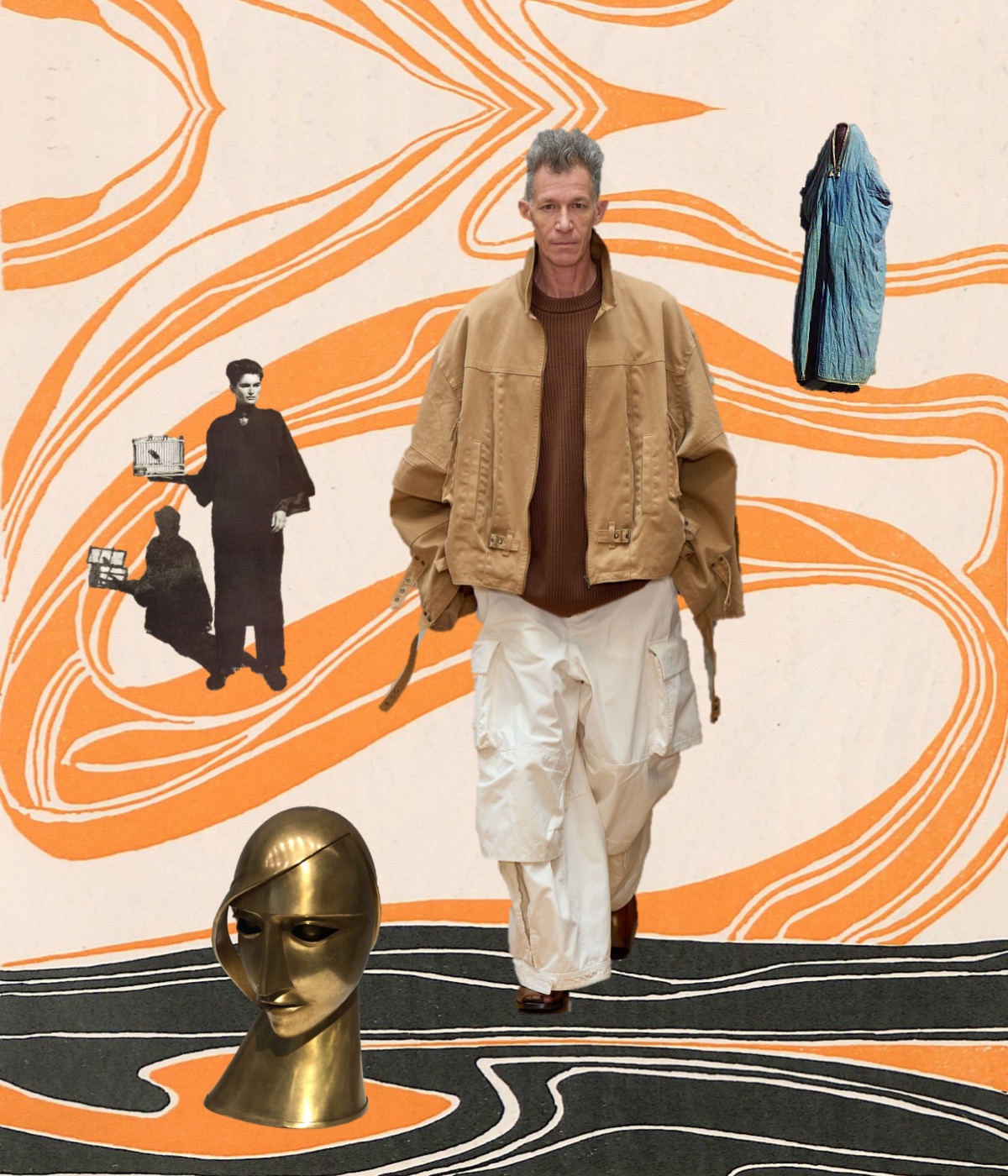
Men’s – Harmonious Sublimity. Hed Mayner SS23

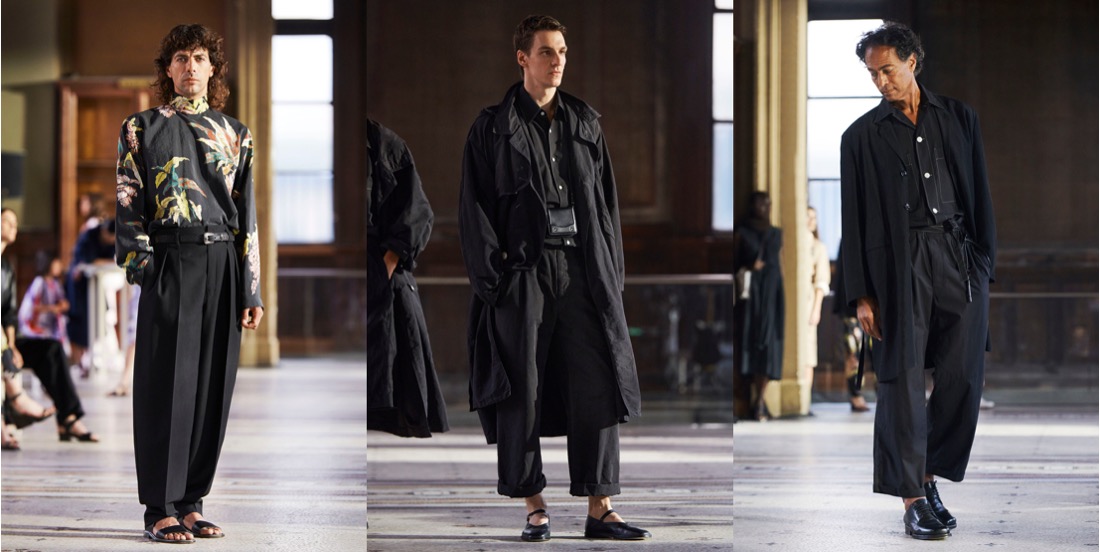
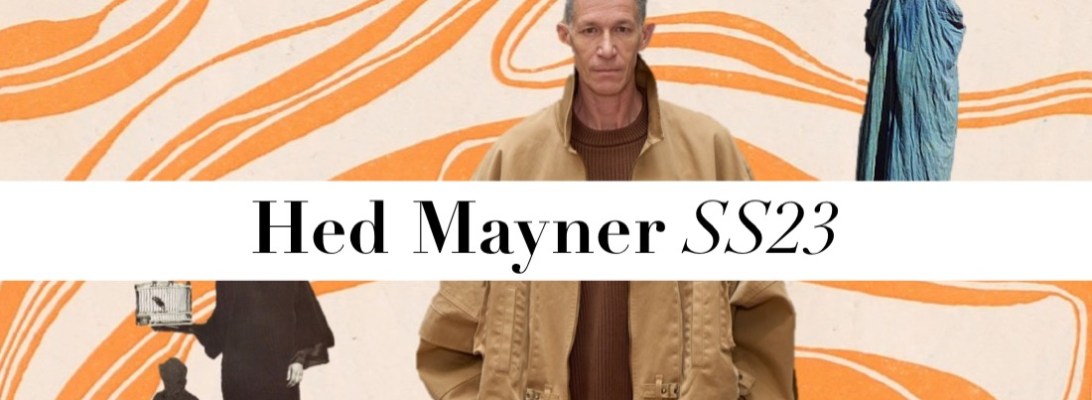
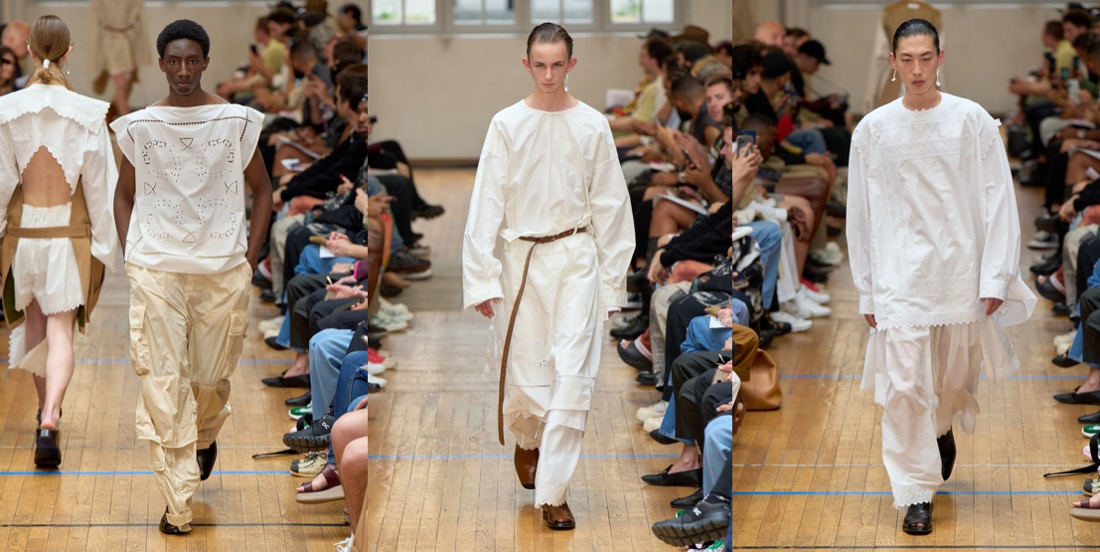
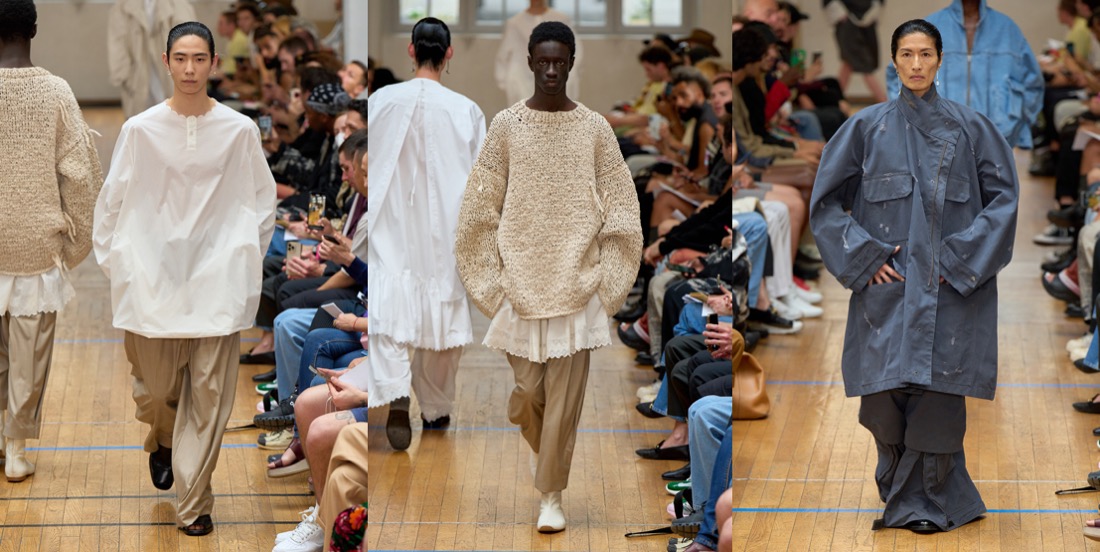
Hed Mayner‘s menswear collections are Paris Fashion Weeks’ moments of harmonious sublimity. In his notes, Mayner made it clear that he doesn’t do “overwrought statements of seasonal quirk.” Rather, season after season he revisits scaled-up proportions, honing them as a sculptor might. “I started by trying to build a silhouette that has a strong contact between front and back, and just being this two-dimensional look with a contrast,” the designer offered backstage of his spring-summer 2023 line-up. That translated into parkas, duffle coats, and jackets that looked straightforward enough from the front, until you caught the decadence of an open back. The comforts of home were the throughlines, with spoons repurposed into sculptural drop earrings and antique bed linens sourced from fleas in Paris and Tel Aviv that Mayner stonewashed, starched, and sewed into shirts. Though they were pretty, the designer said that poetry wasn’t his point. “I wanted to have elements that just look collected or found and applied on yourself, like diving into your sheets and staying there,” the designer said of a square-cut shirt in cotton embroidered with openwork garlands. Those tops and a slouchy-shouldered knit with trailing threads offered plenty of crossover appeal, though Mayner said such considerations were secondary to exploring proportions and, notably, stripping away notions of gender and status. Instead, he wanted to propose ideas of “clothes as accessories.” Even so, there were status contenders here. The midnight blue blouson springs to mind. So does a denim bomber. And, espectically, that one aviator jacket in delightful beige.
Collage by Edward Kanarecki.

NET-A-PORTER Limited

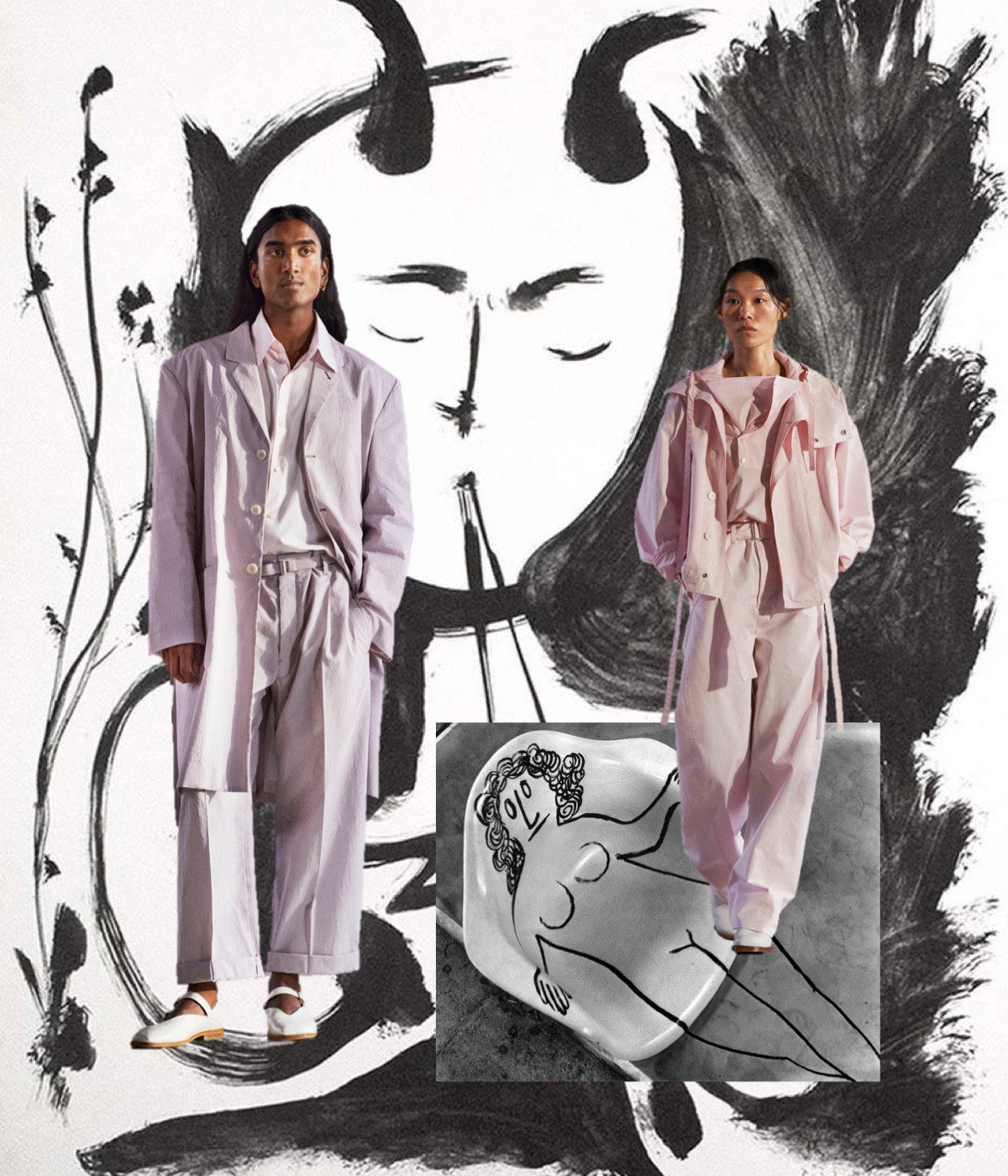
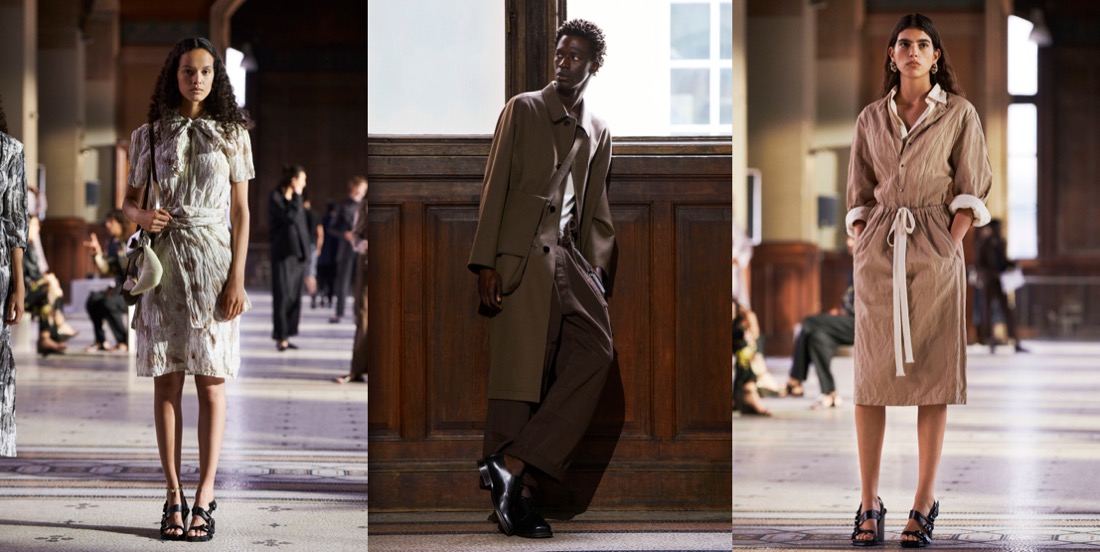
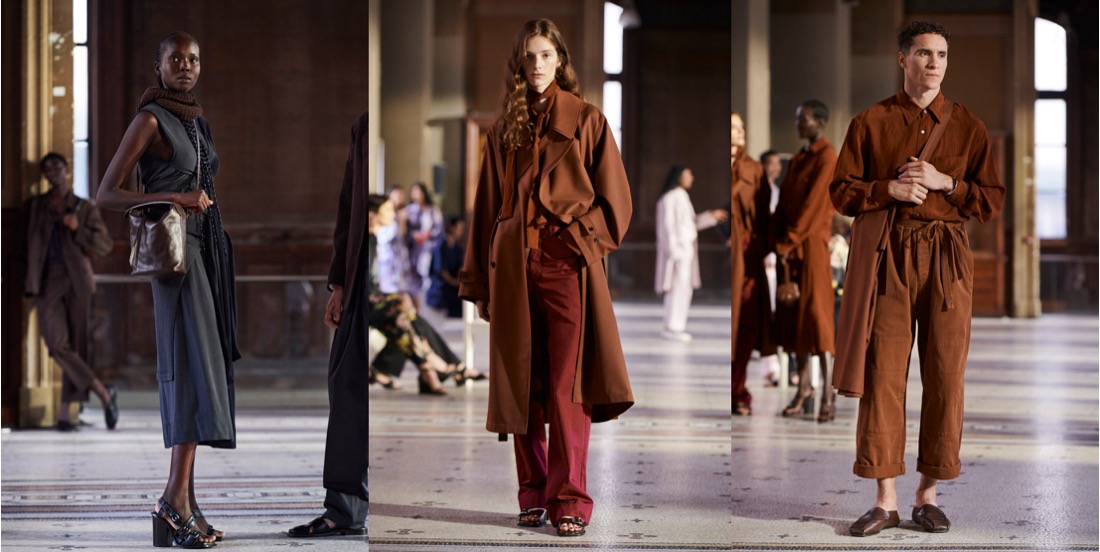
Take It Slow. Lemaire SS23

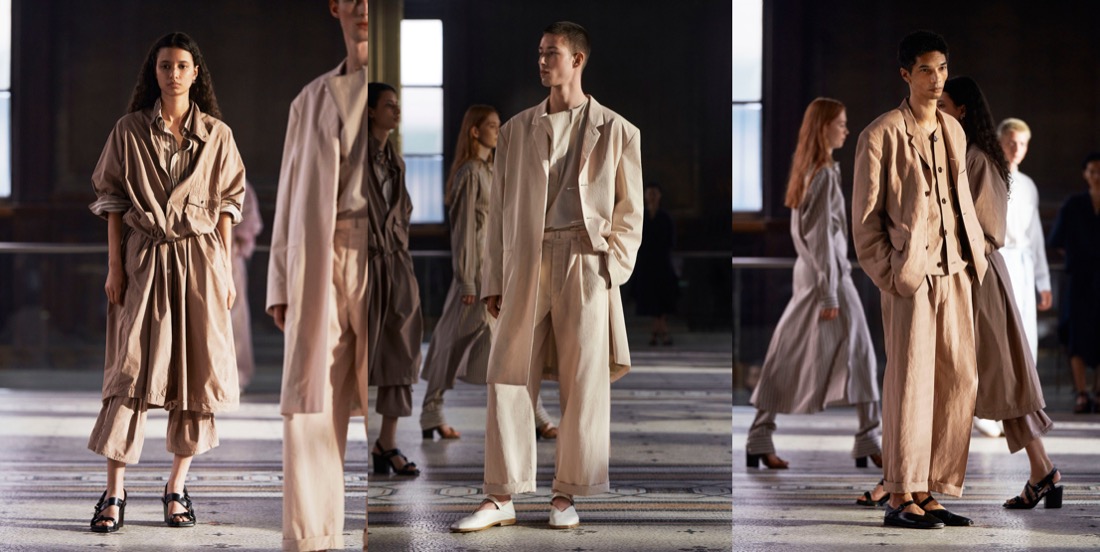
The Lemaire spring-summer 2023 presentation was a beautiful, harmonious scene. “It’s always nice to see people when they are in between things,” Christopher Lemaire said. “And people are very much themselves,” Sarah-Linh Tran added. Outside this presentation at the Musée des Arts et Métiers were clustered lots of fashion folk with no time to spare, waiting to go upstairs to see models in Lemaire acting as if they had time to kill. On the staircase a brace of male models idly swayed on their heels in top to toe monocolor stone, one wearing a crisp trench over full white pants in cotton and a split-upper slipper, the other a wide blouson over a collar-popped shirt and a multi-pleated silky pant with the same shoes. A female model in a culotte-integrating version of the outfits we’d just seen stood on the landing above. Up into the hall, there was a guy leaning on a window frame in brown blouson and work trousers with a bag strapped around his shoulder and a mini torch on his key fob. Across from him a woman in an interestingly halter-wrapped shirt and brown five pocket pants read a battered Luis Bunuel paperback. Further along another woman wore a dress and a guy wore a camp collar shirt that were both in the same hibiscus print. A female slept on a bench, warmed by the shafts of sunlight through the window, and cushioned by her softly blushing shirting and crisp cotton pants. A guy leant against a table in more pared down brown workwear reading Le Monde. At the end of the room, Ana Roxanne played mood music on multiple instruments and we saw more model groupings wearing super attractive printed pieces by the Indonesian artist Noviadi Angkasapura. This was a refreshingly straightforward collection that put the clothes on a pedestal of reality.

Collage by Edward Kanarecki.

NET-A-PORTER Limited

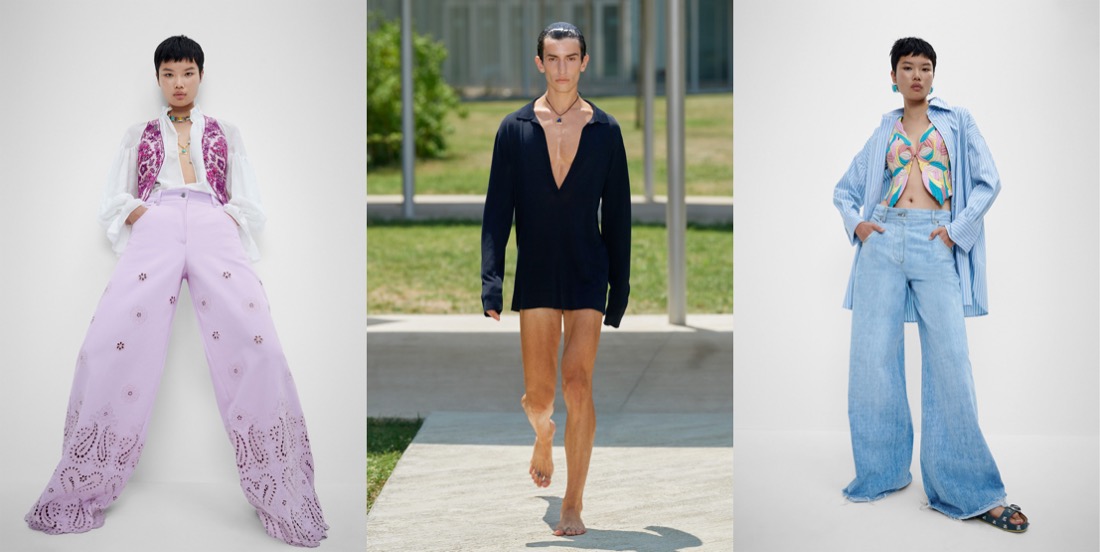
End Of An Era. Etro Men’s SS23 + Resort 2023

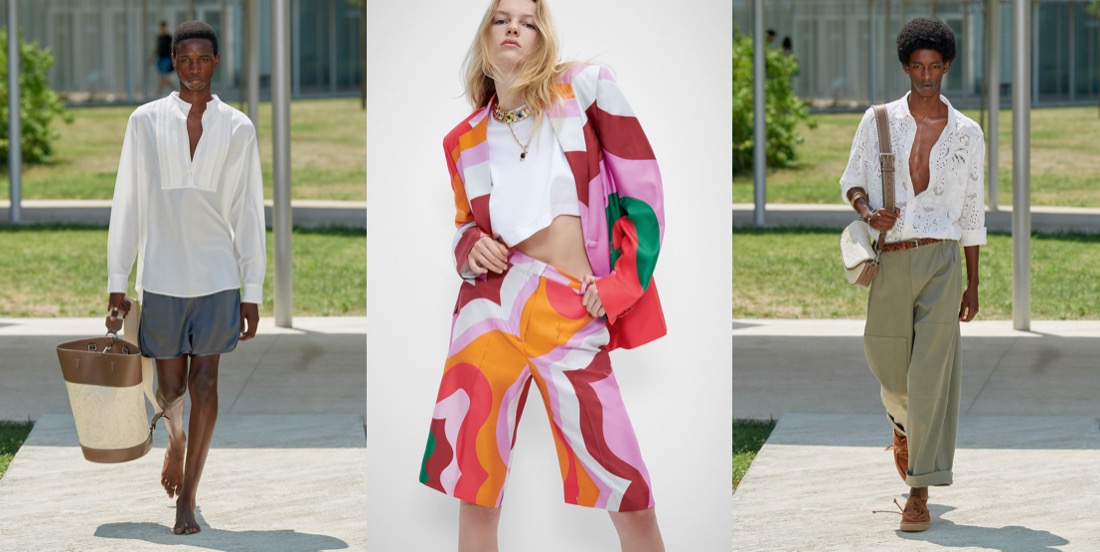
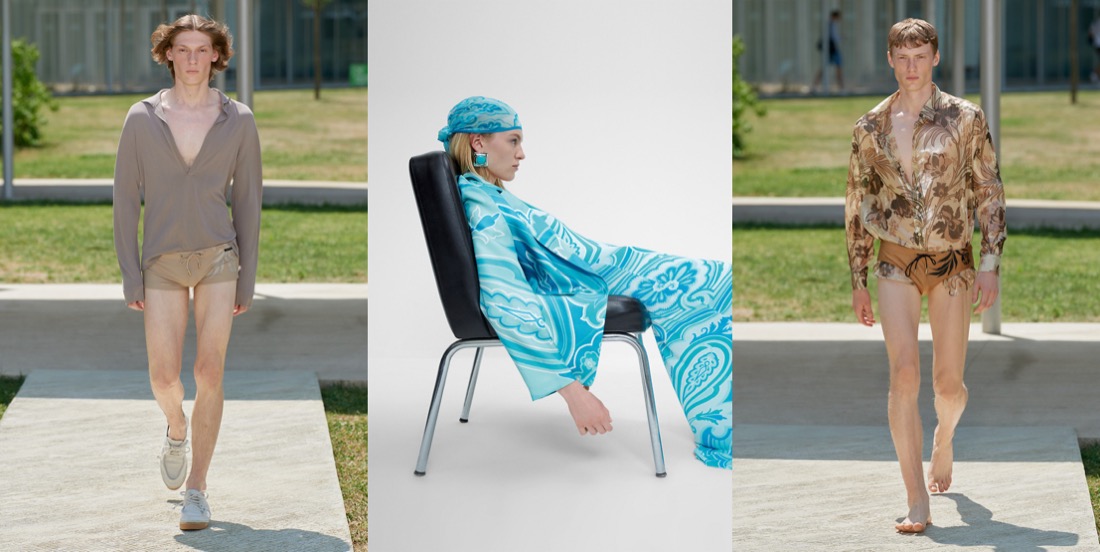
It’s end of an era at Etro: with a new creative director appointed, the Italian brand is departing from its family roots. Marco De Vincenzo is taking the lead, and will show his first collection in September. Veronica Etro and Kean Etro waved a good-bye with their last collections: women’s resort and men’s spring-summer 2023. These two line-ups were quintessentially Etro, at its best. For menswear, Kean Etro delights in layering multiple references with the ease that comes not only from experience but from true cultural curiosity. His love of literature and poetry are just some of his many interests, and this season, instead of invitations, he had actors phone each of the show’s hundreds of guests to recite a dedicated poem to each one. It was a gesture of exquisite sensitivity. “Poetry and utopia go hand in hand,” he said backstage before the show. “In its etymology, poetry simply means making, composing. I wanted to give value to the idea of creating, which shouldn’t be separated from utopia.” Quoting Oscar Wilde, he added “there’s no progress in society without utopia.” Following circadian rhythms, looks were presented in circular chromatic cadence, from morning whites through sun-at-the-zenith brights to velvety darks dotted with starry figments. Archetypal in shape – kimonos, kaftans, djellabas, wrap jackets closed by obis 0 it was elevated by what the designer called “a florilegium,” that is a plethora of sparse floral images delicately overprinted with the number 432 Hertz. “It’s the number indicating the frequency of the universe’s good vibration,” said Kean. “It’s the frequency of beauty. It’s like when you charge crystals or bio-dynamic particles with energy – I’ve used it to somehow energize the garments.” The energy-charging ritual may have worked: there was a lively feeling to the collection that propelled it forward, despite the stifling heatwave which made the air feel unnaturally still. Billowy see-through chiffon kaftans and elongated shirts and kimonos in liquid satin were worn open to reveal nude skin, as well as boxing shorts exposing bare legs. The body was perceived through mesh textures, broderie Anglaise inserts, and impalpable silks and linens. The breezy, cultivated Bohemian feel which is the Etro siblings’ signature looked vital and delicate in equal measure.

Meanwhile, for resort 2023, Veronica focused on the classic summer-version of the brand. The label’s staples – the glamorous caftan, the dressing gown duster, the flowy dress – were given a fresh interpretation. The paisley motif was blown up into a vibrant abstract rendition, printed on a long chiffon dress with butterfly sleeves, or onto a masculine bermuda suit, or again on a tight body-con number with an asymmetrical ruffled hem. Punctuating the collection with an artisanal feel, a series of crocheted pieces including an elongated mesh cardi, a handknit knotted-fringed miniskirt, and a show stopping robe/poncho exuded the haute hippy vibe that is trademark Etro. Its free spirited attitude will surely transition into Etro’s new direction.

Collage by Edward Kanarecki.

NET-A-PORTER Limited

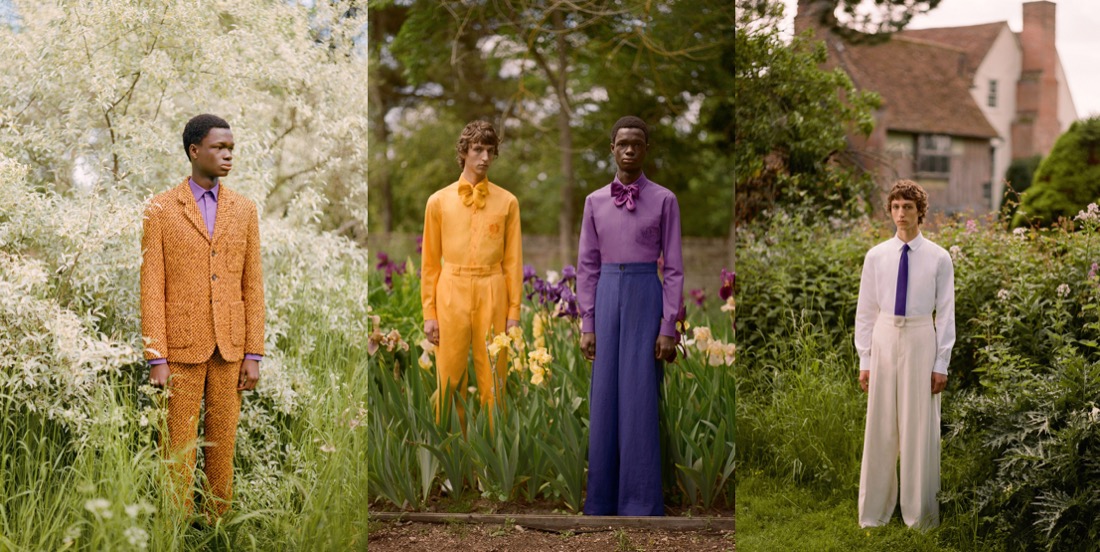
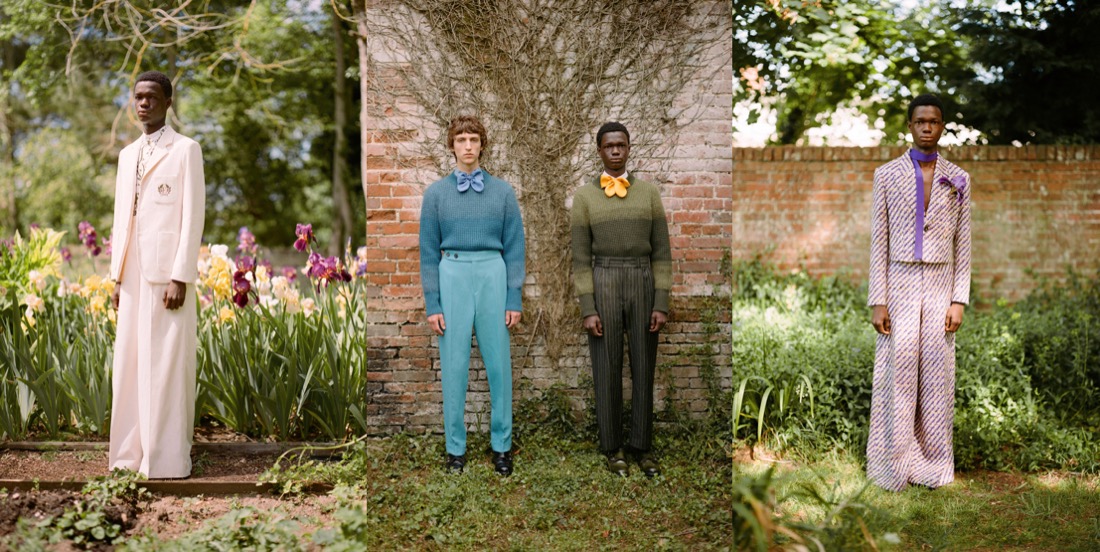
Men’s – Englishmen. Erdem SS23

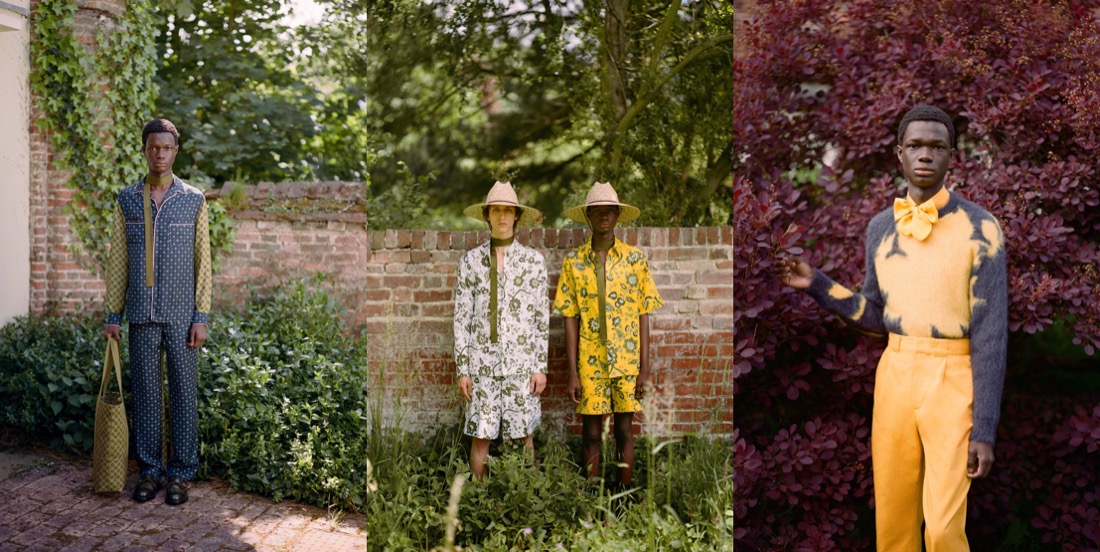
This is Erdem Moralioglu‘s second menswear season, and his vision of the Erdem man becomes more refined and clear. Handsome, young men standing in an English country garden, against beds of succulent purple and yellow flag irises. With his cinematic eye for glancingly historical biographical references, Moralioglu almost conjured a reincarnation of an everyday scene from the country life of the painter and plantsman Cedric Morris. It was shot at Benton End in rural Suffolk, Morris’s home from 1939, where he created a microcosm of an artistic avant-garde bohemian life with his lover Arthur Lett-Haines, as well as founding an art school. Lucian Freud was an early pupil. Cedric Morris, it turns out, was a friend and supplier of the society florist Constance Spry, who designed the Queen’s Coronation and who had her highly successful shop a few doors down from where the Erdem flagship is now. Connie Spry and her aristocratic clientele are all over his collection. There’s nothing like a romantic coincidence to get Moralioglu going. This one was a pure gift in terms of the colors he loves, inspiration for his boyishly foppish sense of style all the way through to the floppy, blowsy bow ties which seem almost like blooming corsages picked from Morris’s iris beds. The idea for digging into this aristocratic alternative history had actually hit him a little while ago at a Cedric Morris exhibition at the Garden Museum. Even without knowing a thing about this artist, though, you can sense the spirit of the 1940s that Erdem picked up in photos and paintings: Englishmen in hand-knitted sweaters, tweeds, shorts, and silk dressing gowns.

Collage by Edward Kanarecki.

NET-A-PORTER Limited

Arrival. Wales Bonner SS23

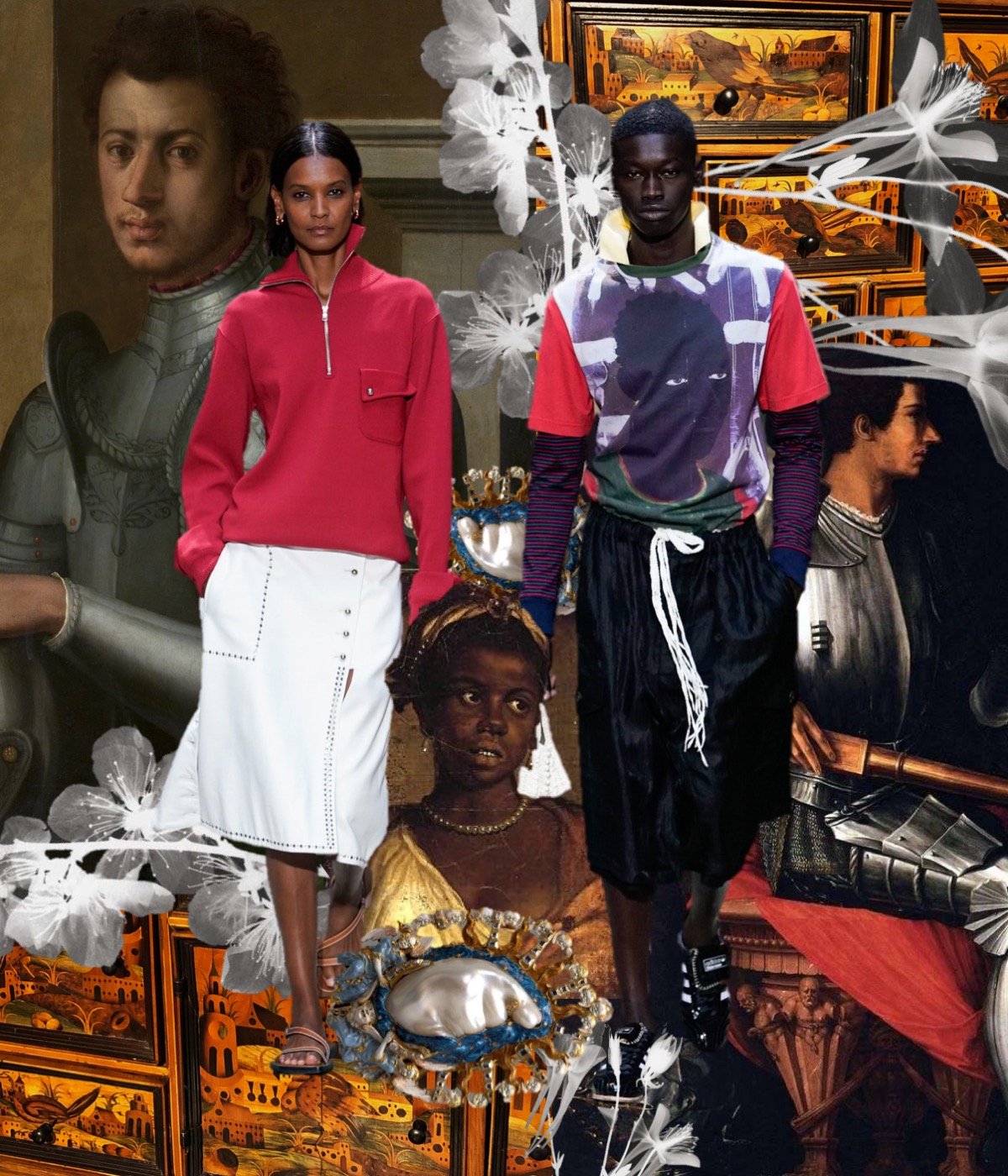
Towards the end of the press preview of this sumptuously progressive show, Grace Wales Bonner mentioned Sankofa. This bird-looking-backwards symbol of Ghana’s Akan people, she said: “means’ ‘going back to go forward.’ It is not about being nostalgic or historical. It’s about taking something from the past in order to pass it forward and make it useful for the future. And that’s the spirit of this collection.” Wales Bonner was speaking in the central courtyard of Florence’s Palazzo Medici Riccardi, a space where one Pitti Uomo executive mentioned in passing that there had never before been a live fashion show. It was as if the Palazzo had been waiting 485 years – the time since it was once home to the first Black head of state in modern Europe – to become the outbound runway for this evening’s Sankofa flightpath. Its starting cipher was Alessandro de Medici, who until his assassination in 1537 at the hand of a cousin ruled here as the first hereditary monarch of the Florentine Republic. His mother was named Simonetta da Collevecchio – aka “Soenara” – and was Black. She, history a little shakily relates, was a house servant who became mother to Alessandro after an encounter with either Duke Lorenzo (the official father) or Pope Clement VII. “I wanted to acknowledge that presence but also think about the idea of arrival,” said Wales Bonner. The building also held an additional layer of resonance relevant to her practice of excavating multifaceted manifestations of cultural intersection through garments. The palazzo was commissioned by Alessandro’s ancestor Cosimo in 1444, around the same time that he hosted the 17th ecumenical council, a global gathering of Christendom which according to historian Paul Strathern included: “Armenians and Ethiopians… other entourages included Moorish, Berber, and black African attendants.”

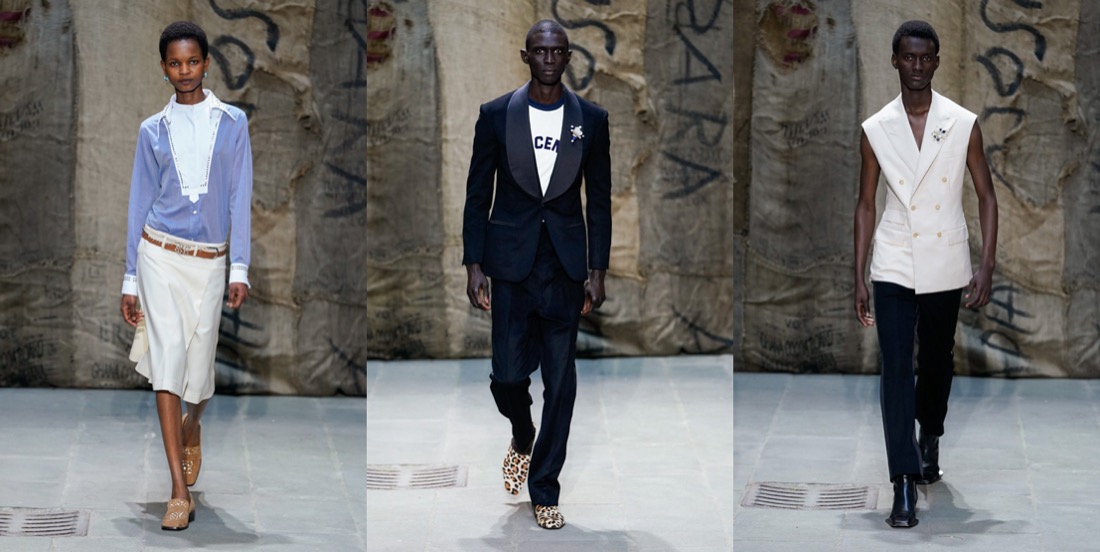
All of this context served as evidence that the building around us has played a role in the history of Black agency and participation in Renaissance Italy. It was leveled by the intervention in the Palladian architecture by the artist Ibrahim Mahama, who clad the space in a huge patchwork of hand stitched jute sacks originally used to export cocoa from his home country of Ghana – where Wales Bonner met him several months ago – into the global markets. “It was important to have an equal representation within the space,” said Wales Bonner. The opening look featured the reproduction of an artwork by Kerry James Marshall. This was another pointer towards Wales Bonner’s intention to rehang the display of menswear in Florence just as one would rehang a gallery – in order to shift the visitors’ experience. Just as effective was the slow coalescence of menswear forms – some sourced from the previously mentioned binary of contemporary European tropes of formality and informality, and others from a broader array of traditions whose boundaries were broken down by adjacency. Paris’s Charvet provided handsome robes and day-pajamas in jacquards whose patterns were drawn from Wales Bonner’s research into West African tradition. The macramé womenswear dresses were set with hand-made glass beads by Ghanaian artisans, and the heat-dryed hand-dyed jersey had been fashioned in Burkina Faso (Wales Bonner was building new trade routes between Africa and Italy, and Savile Row too). In menswear there was genre-busting back and forth between futuristic sportswear (which included a hand-made adidas shoe whose trefoil looked lacily artisanal) and Wales Bonner-directed, Anderson & Sheppard-cut tailoring in cashmere and camel hair that was de-conventionalized through emphasised shoulders and small sly acts of sartorial ‘wrongness’ that looked incontrovertibly right. So back to Sankofa. What was the backward-looking-bird returning to, in order to pass forward for the future? Said Wales Bonner: “It’s about bringing an Afro-Atlantic spirit to European luxury by honoring these traditions wherever they are. And making something hybrid or integrated through working with different people.

Collage by Edward Kanarecki.
NET-A-PORTER Limited