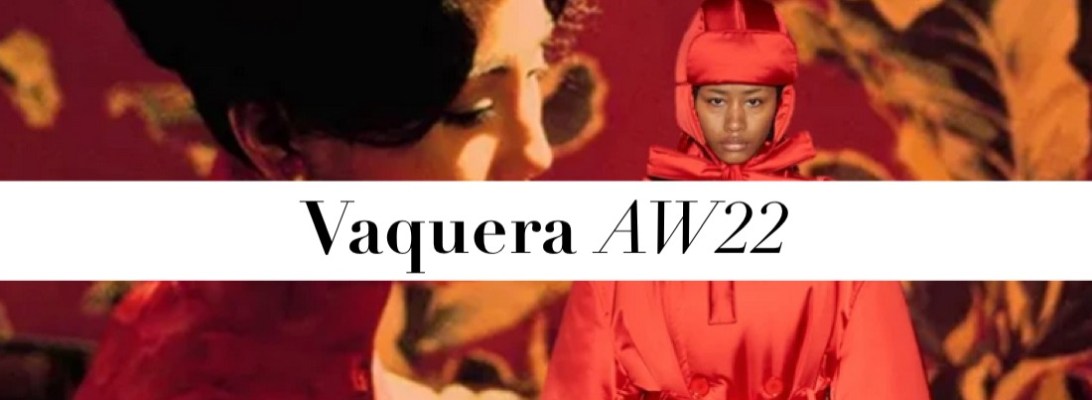
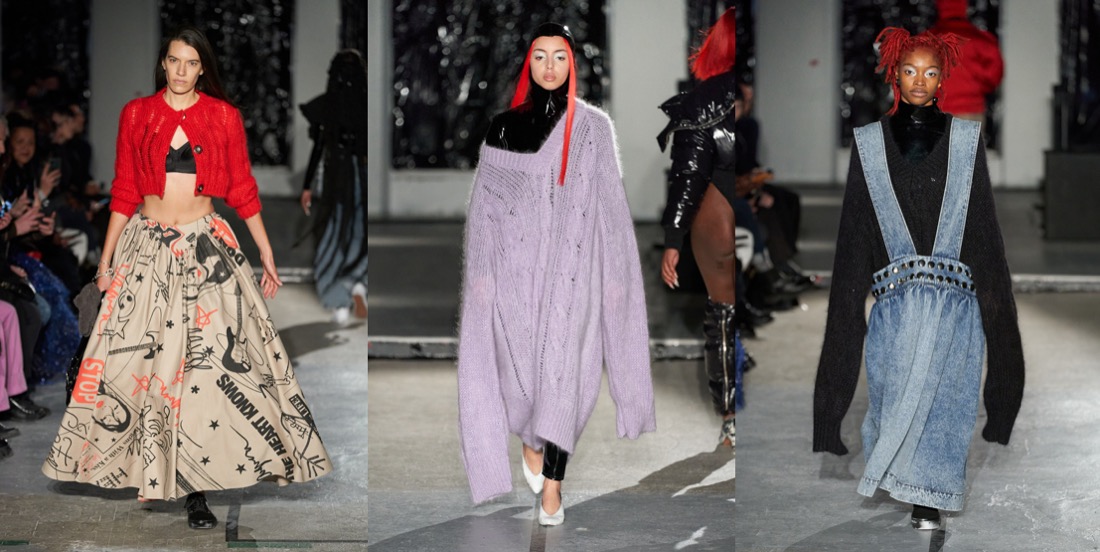
“Fashion fan fiction” is how Patric DiCaprio and Bryn Taubensee used to describe Vaquera: tribute clothes for a world obsessed with referential dress. Bringing their runway show to Paris and showing at Dover Street Market’s 35-37 space for autumn-winter 2022 is the ultimate fashion fan fiction come true. Now instead of idolizing runway legends from afar, these American designers have “started becoming the people who we idolized,” said Taubensee. Their craftsmanship has been on a steady uptick since linking with Dover Street Market Paris in early 2020, and this season they’ve made padded moto jacket puffers, tinsel-like sequin dresses, and airy angora knits that feel as high quality as they look. Bags have been developed for the second season and footwear is a collaboration with Vans alongside the same vintage shoes the brand has used for six years, repainted each season to coordinate with the collection. Love, in fact, was the driver for the Vaquera this season. Romance was never really a feeling one got at their all-bass, hurried catwalks back in New York, but a transatlantic journey, coupled with ideas of Maggie Cheung’s sensual performance in 1996’s Irma Vep, has made the Vaquera tone gentler. Now their big ruffles seem less campy, more tender. Their plaid skirts and schoolgirl jumpers feel like the clothes of teenage crushes, and their suiting is covered in professions of love. Even a hair clip reads YOU inside a jet black heart. The brand’s signature teddy, elongated into a dress, is now translucent and trimmed in white lace, an invitation to come closer, to see, and to be seen.
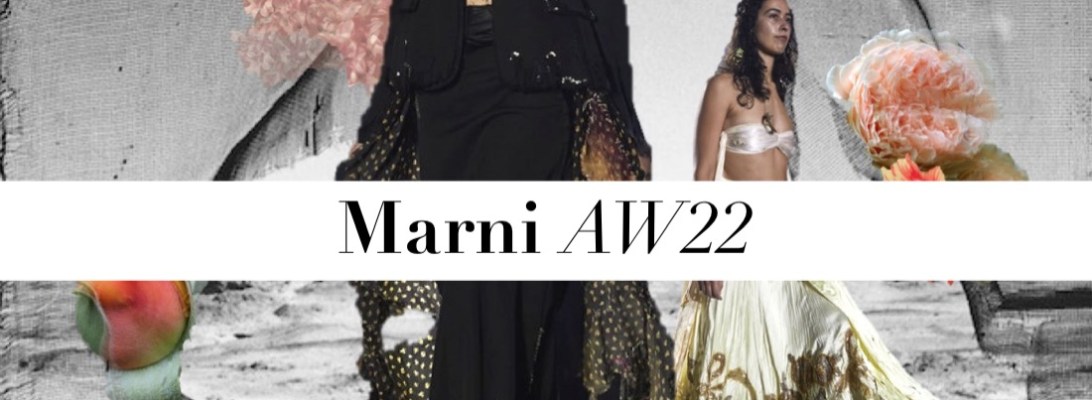
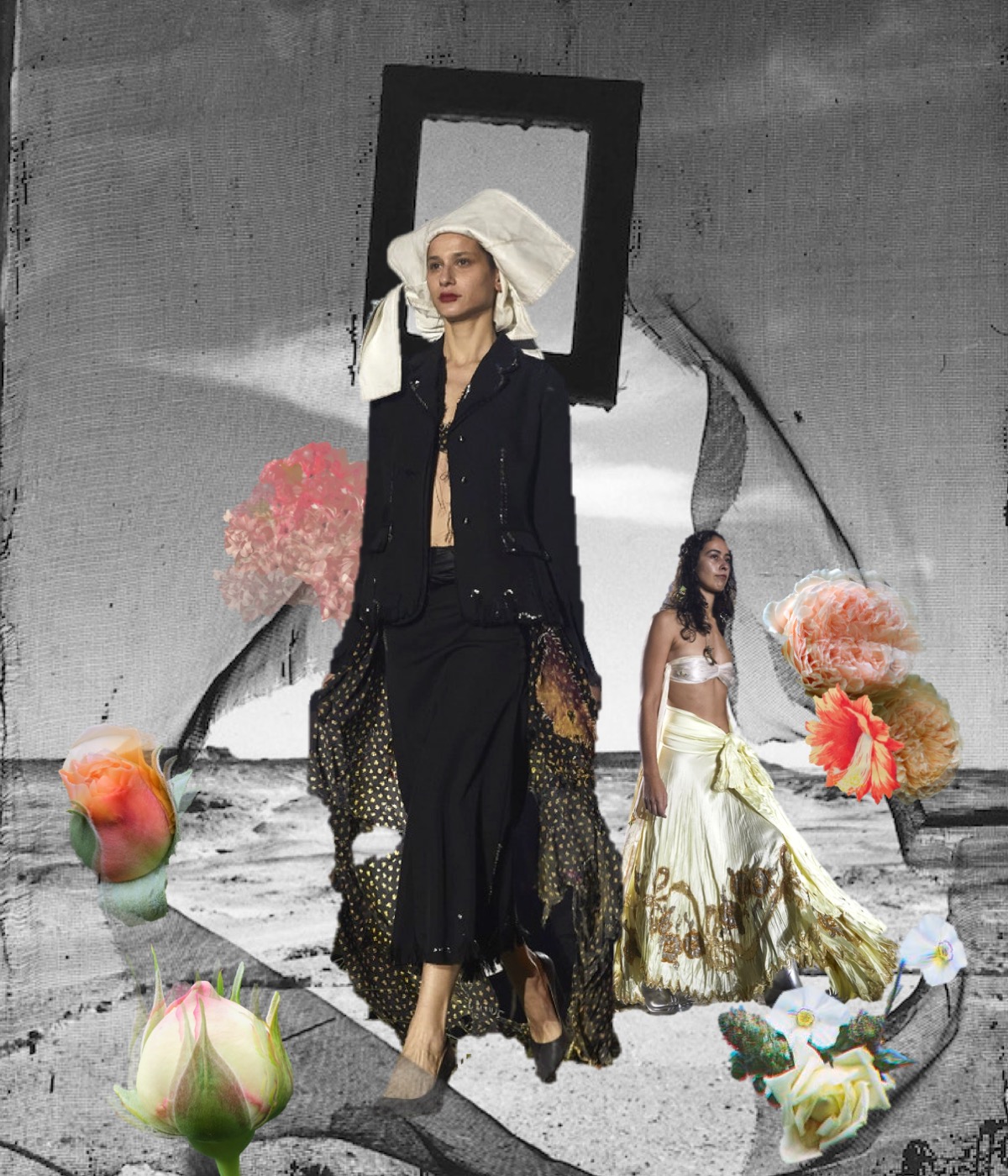
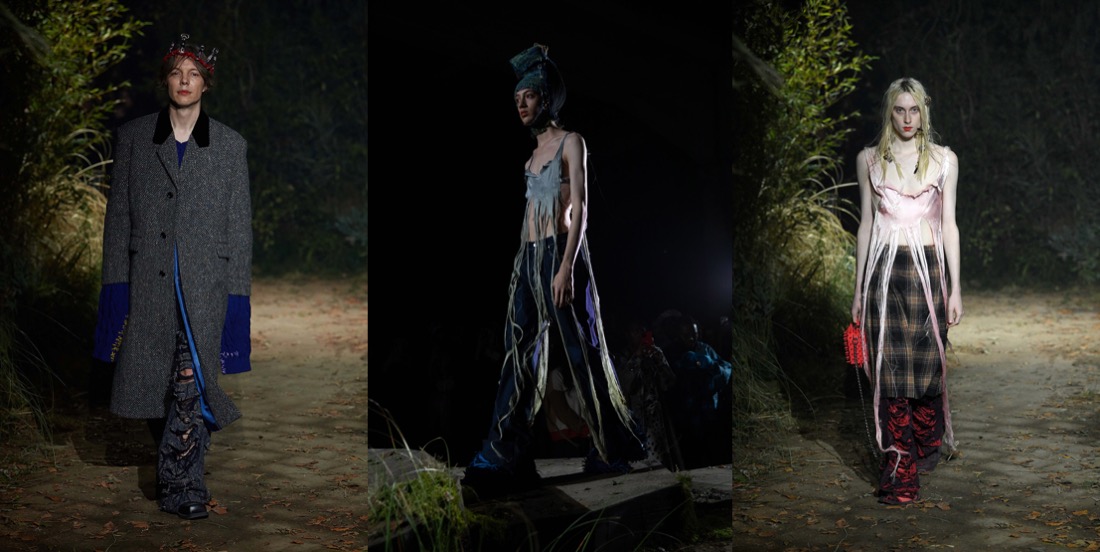
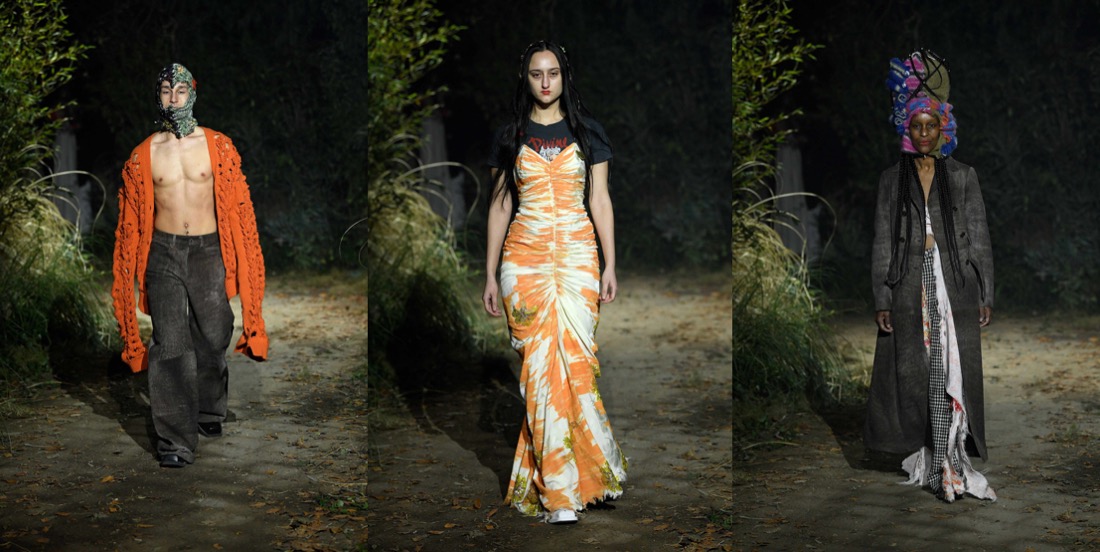
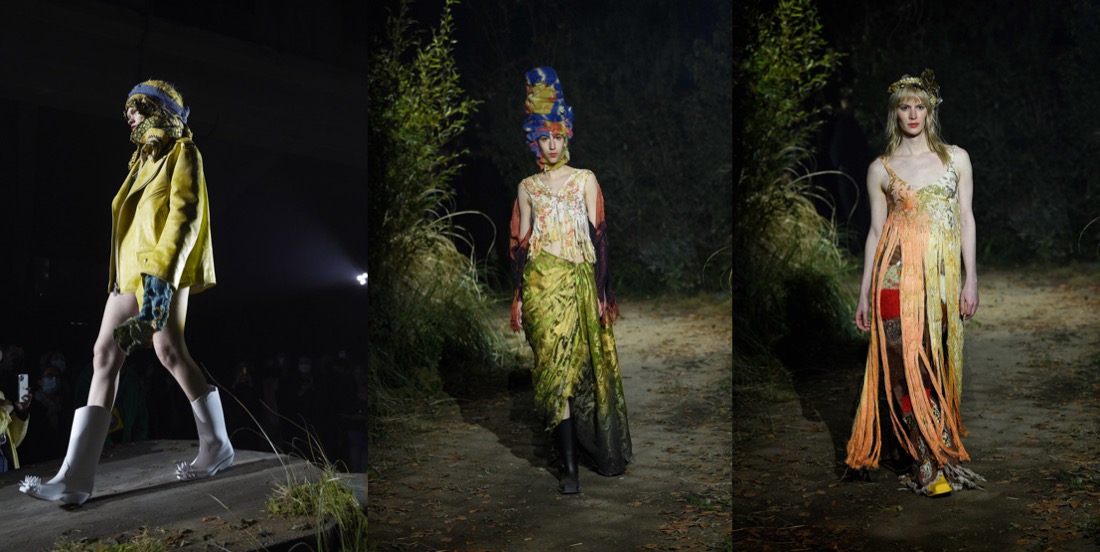
Francesco Risso’s Marni show for his autumn-winter 2022 collection, an ode to the handmade, the mended, the crafted and the tailored, was somehow fitting in the current, violent circumstances. The show’s guests definitely felt a feeling of anxiety once they saw the venue: barely lit cavernous space, fit for a rave, the entrance shrouded in foliage, enormous concrete breeze blocks where a runway would usually be, and yet more foliage framing this picture of dystopian revelry. Last season’s show, set to a soundtrack by the genius Dev Hynes and art directed by the equally genius Babak Radboy (both Dev and Babak were involved in this season’s proceedings too) was a joyful, cathartic gathering, bringing people together as physical shows returned. Then Risso offered a moving and sincere treatise on events in the fashion world an captured the moment beautifully. This time round, Risso was questioning what’s next, according to the emailed show notes. “The future came and went, leaving us alone, but together in the dark, but lighter than before,” Risso wrote. “Where do we go after? Where are we bound, beyond what binds us to each other?”
It’s become a thing for fashion to speak of community, but with Risso’s casting, it was a disparate and unconnected band of individuals who made their way via flashlight around the venue; nothing slickly and self-consciously unified about this group, wearing looks from autumn 2022 that suggested communality: anyone could be wearing anything – and who cares? They might be in dresses in washed mottled pastels which had then been patched or cut into strands or glistened with beads; long shearling coats wrapped on the bias across the body, as much naive gesture as practical fastening; irregularly checked (and snappily cut) pantsuits; full skirted deb dresses, overdyed, as if tried at home and then gone a bit wrong, but in a good way; and raggedy sweater sleeves trailing to the floor from under the cuffs of trad Crombie coats. Almost everyone was bearing some kind of crown of twine and twigs, or elaborate head wraps, which were actually jackets folded and twisted, as if in preparation for some magical, arcane ceremony (you can always on Julien d’Ys to deliver amazing headwear). Risso himself appeared in the show, his now dirty platinum hair surmounted by a fine pair of tiny horns. That he walked speaks volumes; a denial of the idea that designers have some divinely ordained remove from the same shit and the same joy that the rest of us are going through. His Marni has increasingly shifted – and now, with this show and the last, decisively so – into a world less of fanciful fashion remove, but instead reflective of all the ecstasy and confusion and disillusionment and love and kinship that we can all recognize and empathize with. It’s a pretty brave step, to not want to just keep offering up a familiar and reassuring idea of what a high-end brand can do, retreading the same ground, especially at a time when the fashion industry, despite proclaiming the need for change, has snapped back to business as usual pretty darn quick. In the end of the show, those wandering around in the dark eventually found the light. They came out blinking into the bright and glorious Milanese sunlight to an Alice in Wonderland Mad Hatter’s tea party, long tables set up in the rough hewn industrial courtyard, their tops groaning with fruit tarts and elaborate cakes and jello in hallucinogenic shades. Risso’s cast milled around, ate, laughed, chatted and hung out. Hopefully, our future will look as carefree as this moment.
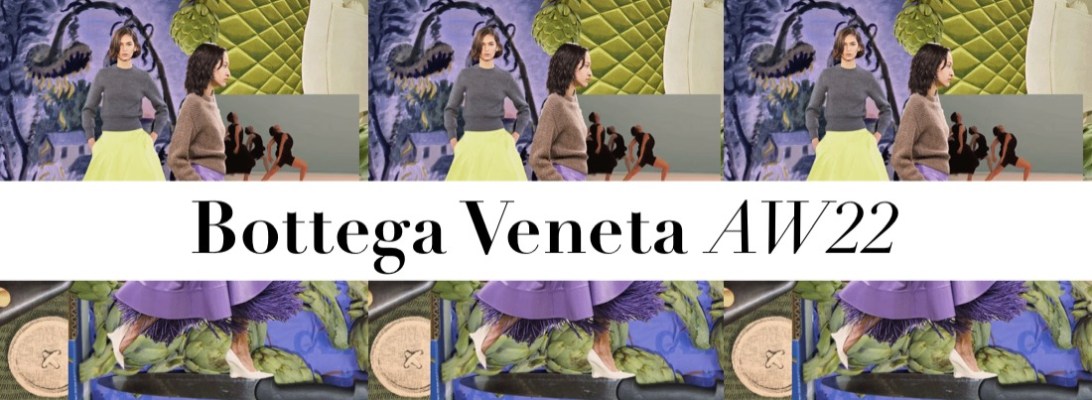
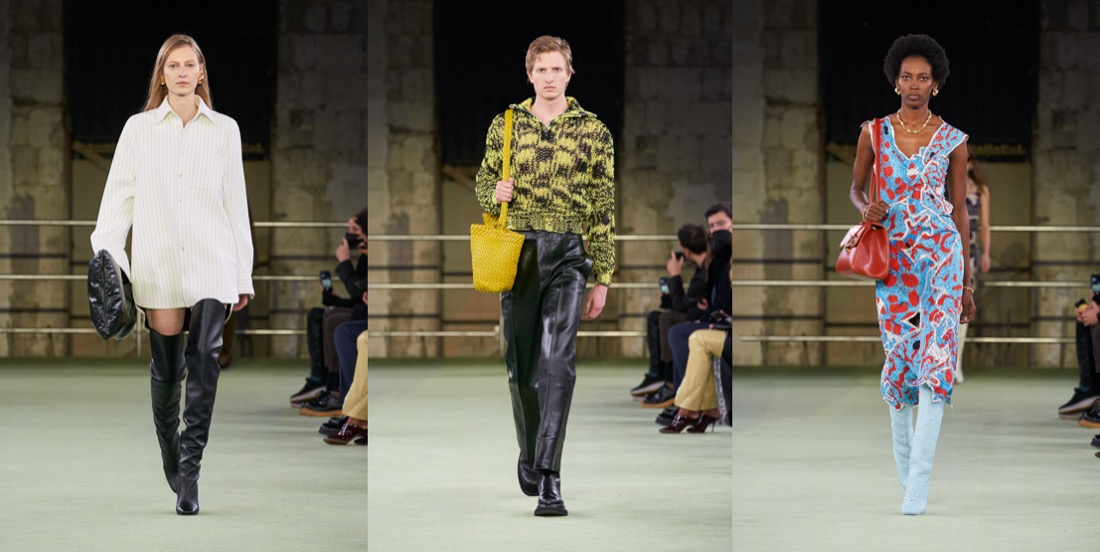
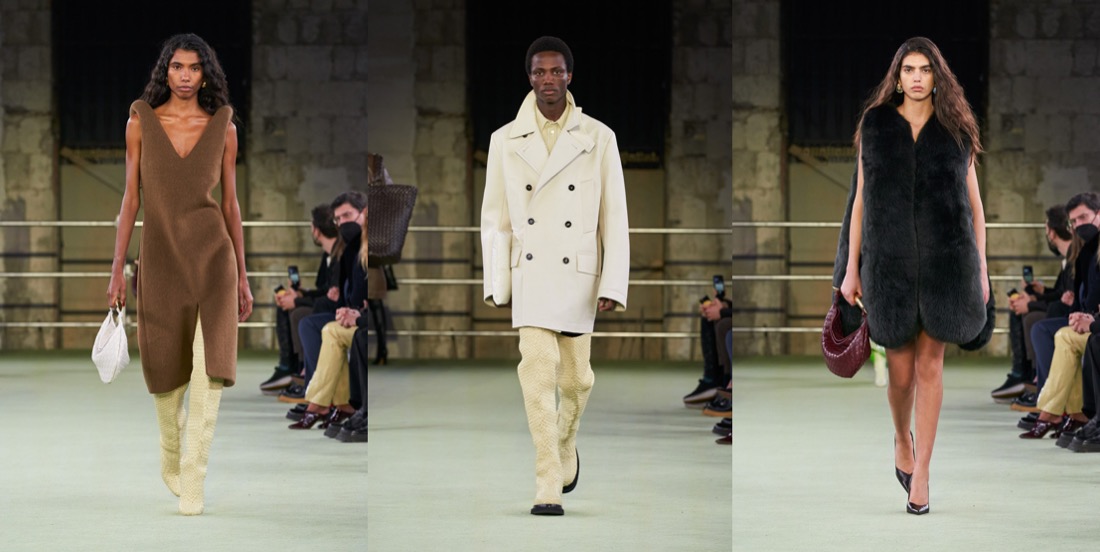
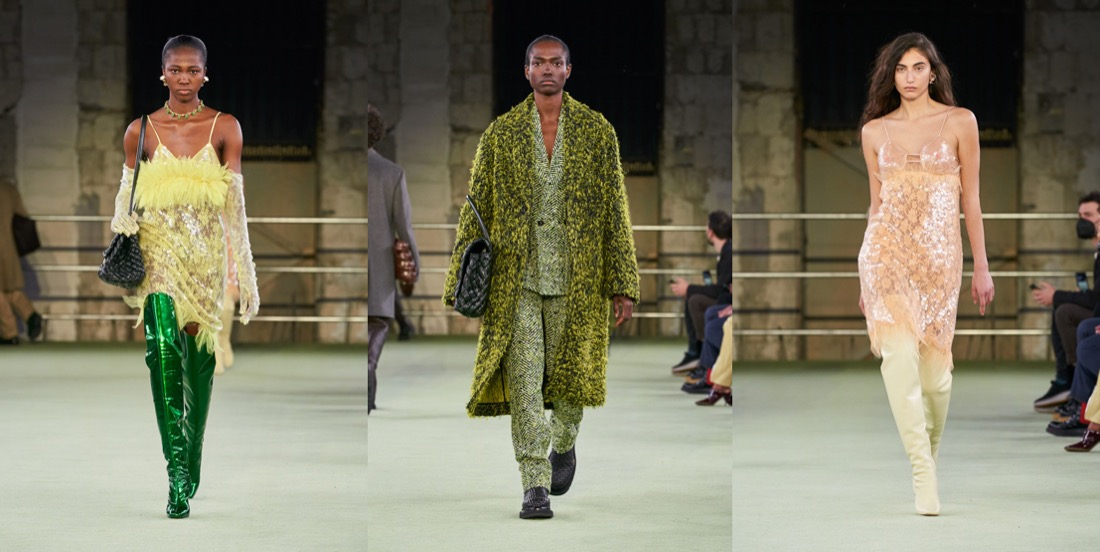
The new new Bottega Veneta, under Matthieu Blazy‘s creative direction, isn’t an abrupt aesthetical leap from Daniel Lee’s days, but definitely feels much sleeker, decluttered and sharper edit-wise. A smooth transition from Lee, who re-invented the Italian brand, to Blazy, who is one of industry’s unsung design heroes (and creatives who worked with the former behind Bottega), resulted in a debut filled with studied, somewhat subversive propositions that are more composed and toned-down than before. Blazy has the kind of track record that makes fashion people stand up straight: he interned at Balenciaga; worked for Raf Simons; what was then called Maison Martin Margiela; Céline under Phoebe Philo; Calvin Klein under Raf Simons. Fashion geeks would have delighted in recognising symbols and techniques tied to his time at those brands, which re-appeared in this collection, especially from Calvin Klein and Bottega Veneta. As a designer whose name hasn’t been formally credited until now, it was as if he was claiming his inventions.
The show opened with a white tank top and blue denim trouser entirely created in leather (!), the latter printed as an optical illusion. The ordinary-to-extraordinary idea of Blazy’s opening look fuelled a collection founded in the weird-ification and glam-ification of classics, from workwear and formal suits to cocktail and even ballroom dress codes. In the tradition of Lee, Blazy continued Bottega Veneta’s focus on the kind of fashion the industry recognises as cool: artsy in form language, intellectually informed, and with the “off” cutting and detailing that make the wrong feel right. On his runway, it had an added chilliness to it, which perhaps heightened the objective. Cases in point were enigmatic details like leather pom poms on cocktail dresses, the square leather closures on a blazer, the leather frill crinoline of a dance skirt, and those abstract crochet dresses. More pragmatic wardrobe proposals included peacoat suits and the men’s knitwear and leather. I wonder what direction will Blazy’s vision go in the next seasons.
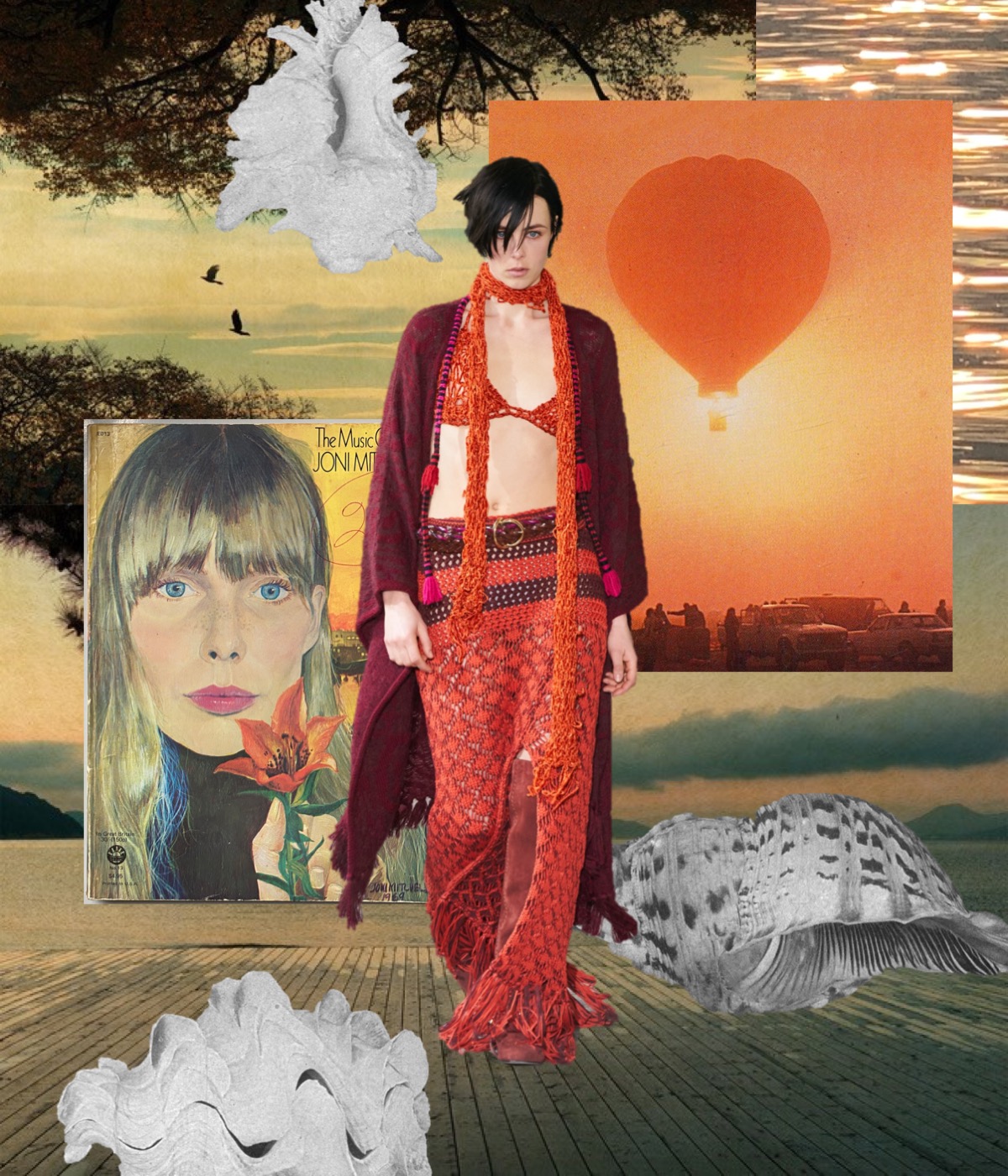
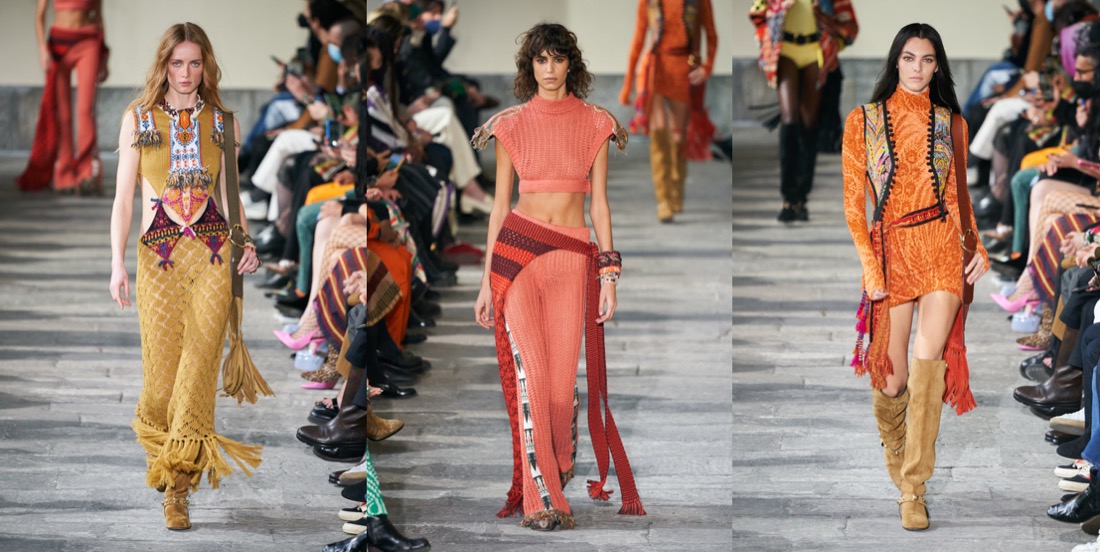
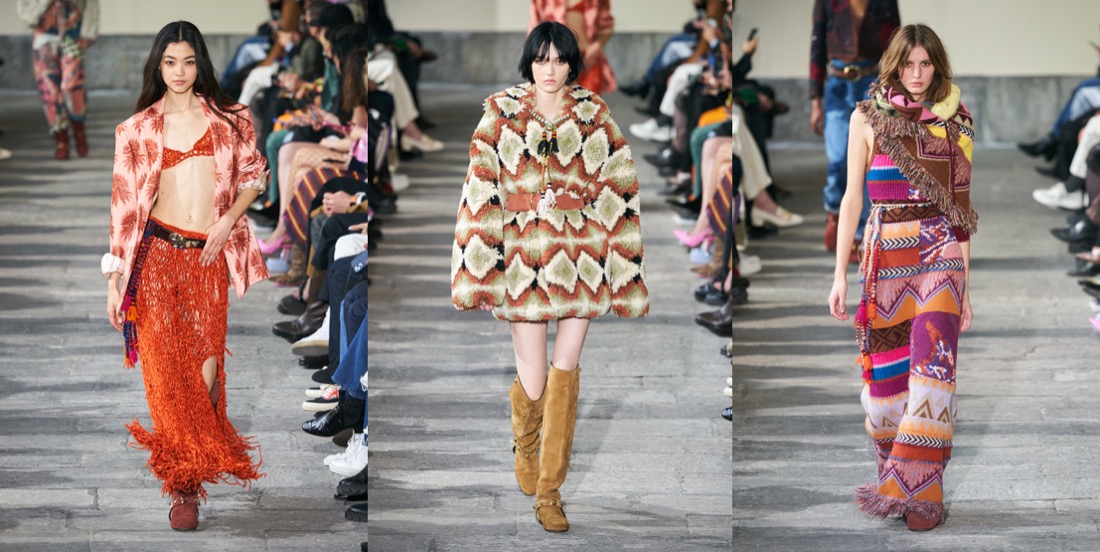
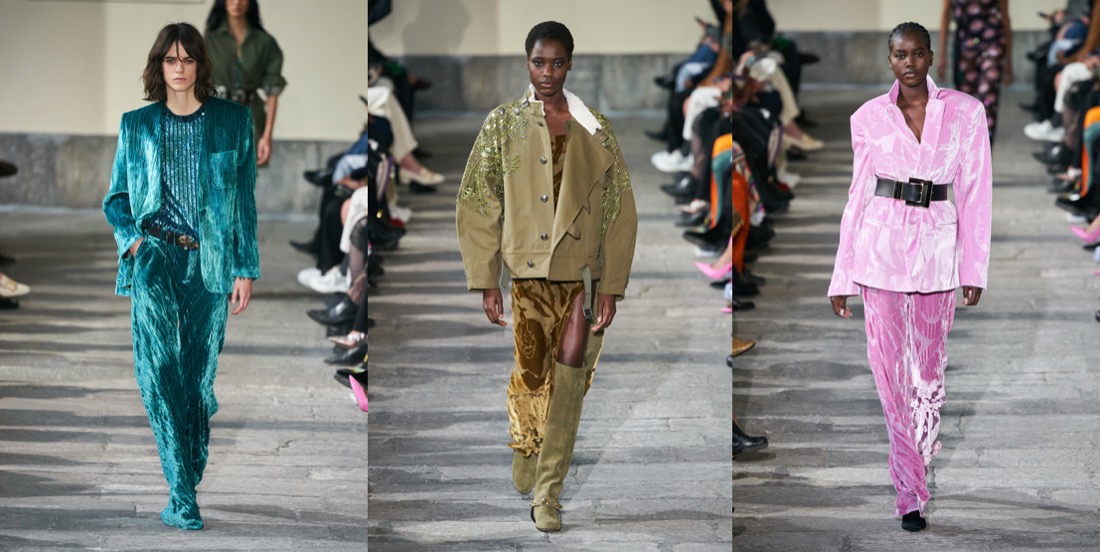
“The question I asked myself is: How can I deal with the prints in a totally new way? I wanted to go out of my body and see things from a completely different angle,” Veronica Etro explained backstage of her autumn-winter 2022 fashion show. “So I imagined aliens coming across our archive in 200 years and looking at them with micro-lenses that are sort of zooming in and blowing everything up. So it’s like zoomed heritage!” With Etro’s heritage looping back via its family-founded roots in Italy during the hippie late 1960s, to a style of shawl named after a Scottish mill town that made a massive 19th-century British Colonial fashion business out of appropriating a precious fabric whose culture belongs to Kashmir, on the border of India and Pakistan – the paisley pattern is always the given medium. Veronica Etro’s conundrum has been to contemporize and reconfigure all of that, expanding the range of what her brand can be without losing its character. “You know, Etro was a lifestyle brand,” she observed backstage. “I think the strength is that it has a strong identity, but at the same time it leaves women open to interpret and to be individual and to personalize. It’s about how we can embrace different personalities – I never wanted to make it homogeneous, to make uniforms.” This time she traveled through boho, arty-crafty knitwear to ’80s puffy-silhouetted patchwork bomber jackets to end up with suave, ’70s crushed-velvet trouser suits and slinky bias-cut black satin dresses. Some of it looked like an Italian version of Isabel Marant – and this isn’t something bad. The paisley registered in various graphic forms – super enlarged to look like an animal-print lining on a shearling aviator jacket, or deconstructed down to its “harlequin” elements, stamped in repeat on a vibrant pink velvet jacket and a semisheer, diaphanous chiffon dress.
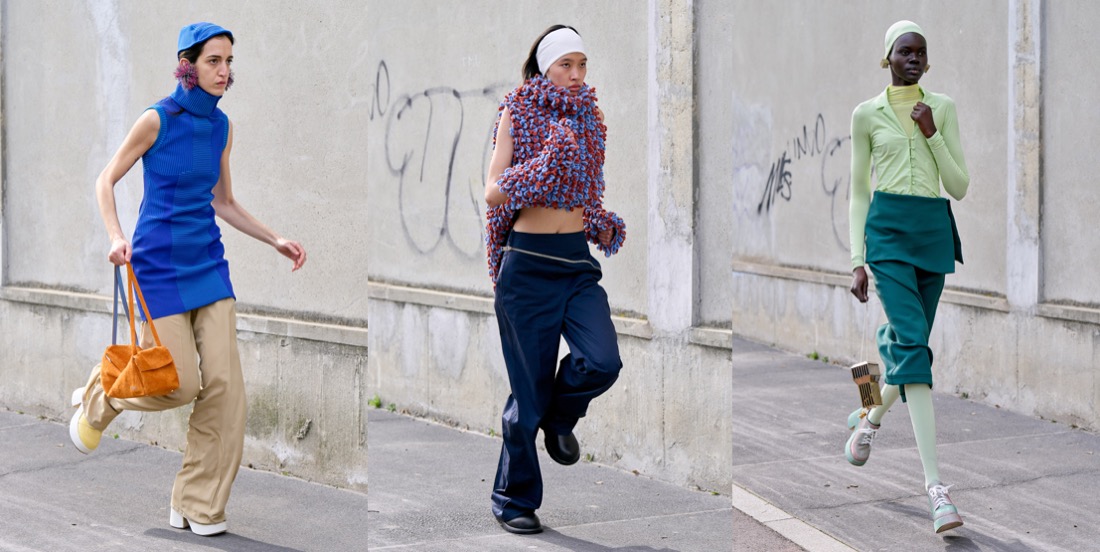
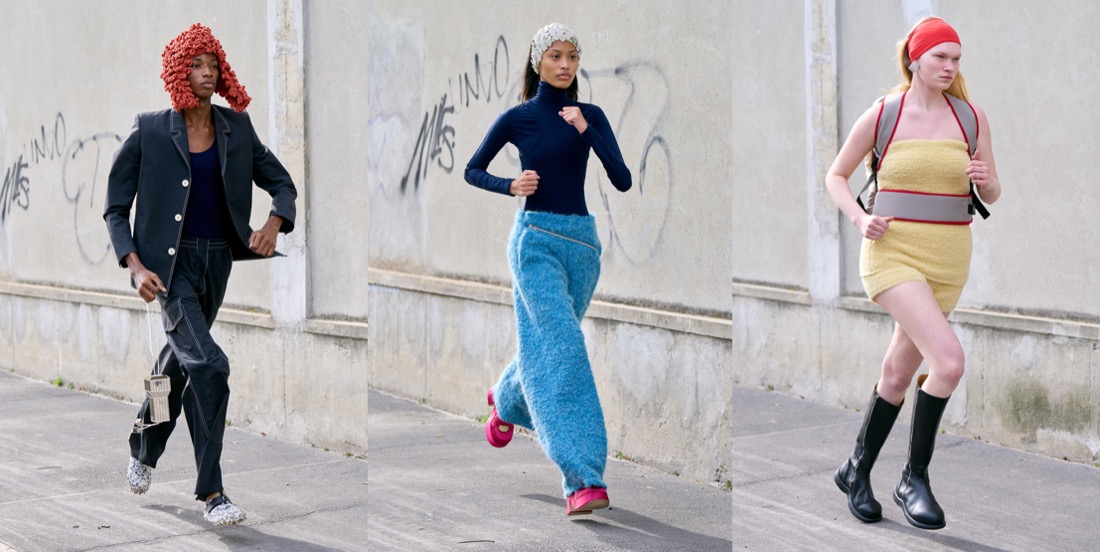
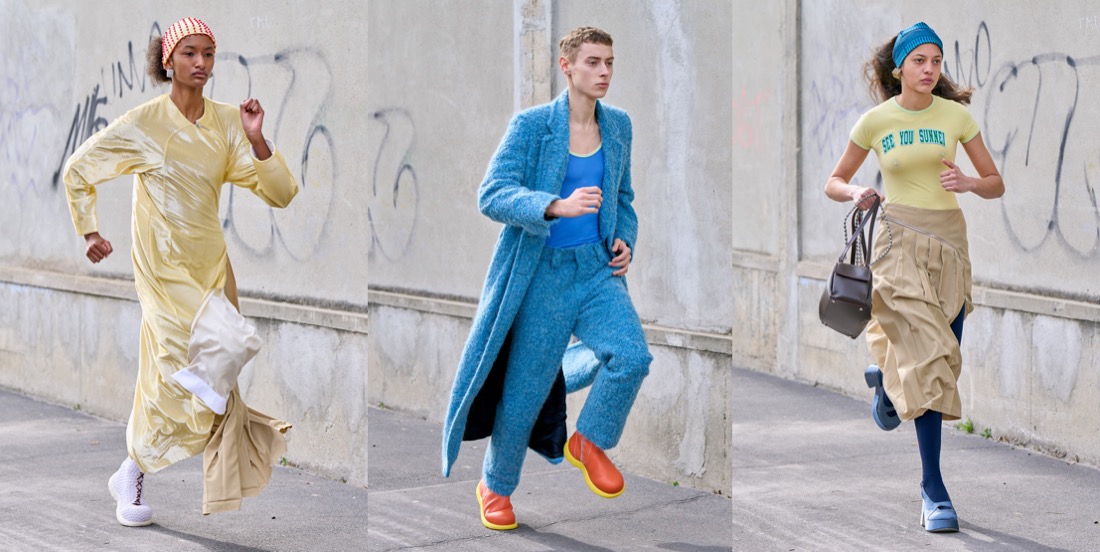
Social commentary always lurks in the background of Sunnei’s practice. The pandemic has offered Simone Rizzo and Loris Messina plenty of open questions to chew on, fashion being rich food-for-thought territory, with game-changing actions still slow to come about within the industry. For starters, fashion’s high-pitched, fast-paced beat hasn’t slowed down (even at the moment when Europe’s peace is under threat), and running from one physical show to the next has become normality again. Collateral effects of frenzy, stress and nerve-racking timetables are part of the picture, despite all the good intentions flaunted when the fashion world was in a state of pandemic shock. Their autumn-winter 2022 show seemed a good occasion for Messina and Rizzo to pick up on our collective scatterbrained state. They rallied their community in an open air set on the outskirts of Milan, where they orchestrated a sort of “performance within the performance” as they called it, with the audience commanded to stand on metal benches, facing the sidewalk near a wall of an industrial building. “We wanted to make people stop for a moment and reflect on what’s happening, especially today, which is such a delicate, disquieting moment,” said the designers. With Russia and Ukraine clashing violently, and war looming on the horizon, the mood was one of uncertainty and worry. Instead of walking, models came running along the wall, while the audience was invited to follow the show in slow motion through their iPhones. As a sort of metaphoric “crystallization of the moment,” as the designers called it, it was quite fitting. As for the collection, it was quite hard to see the details with models running at lightening speed, but the clothes looked fit for such an athletic performance. “We’ve used a new technical fabric that extends and stretches, perfect for layering,” said the designers. They riffed on their core items, “focusing on what we do best, experimenting on making our favorite shapes more extreme and radical, without detracting from their identity and character.” While keeping their offer sleek and minimal, they went quite eclectic, playing with colors and textures with a more tactile appeal on balaclava-capes in furry wool and chenille woven into wavy 3D motifs.

















 Design & Culture by Ed