Neurotic, Psychedelic, Completely Hysterical. Loewe SS22

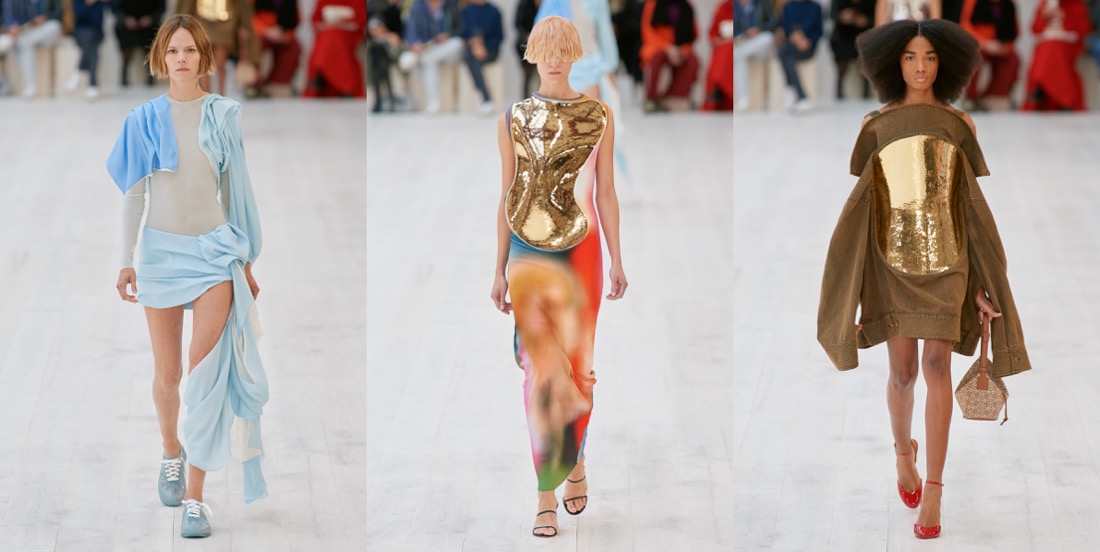
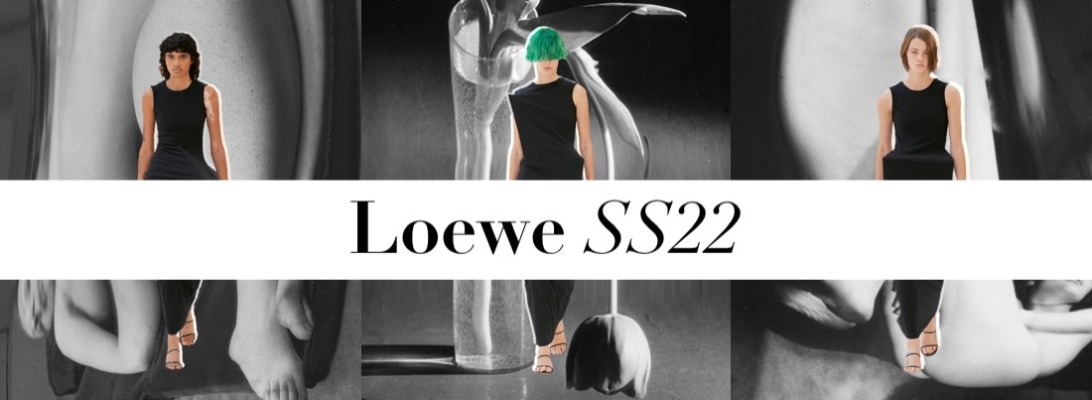
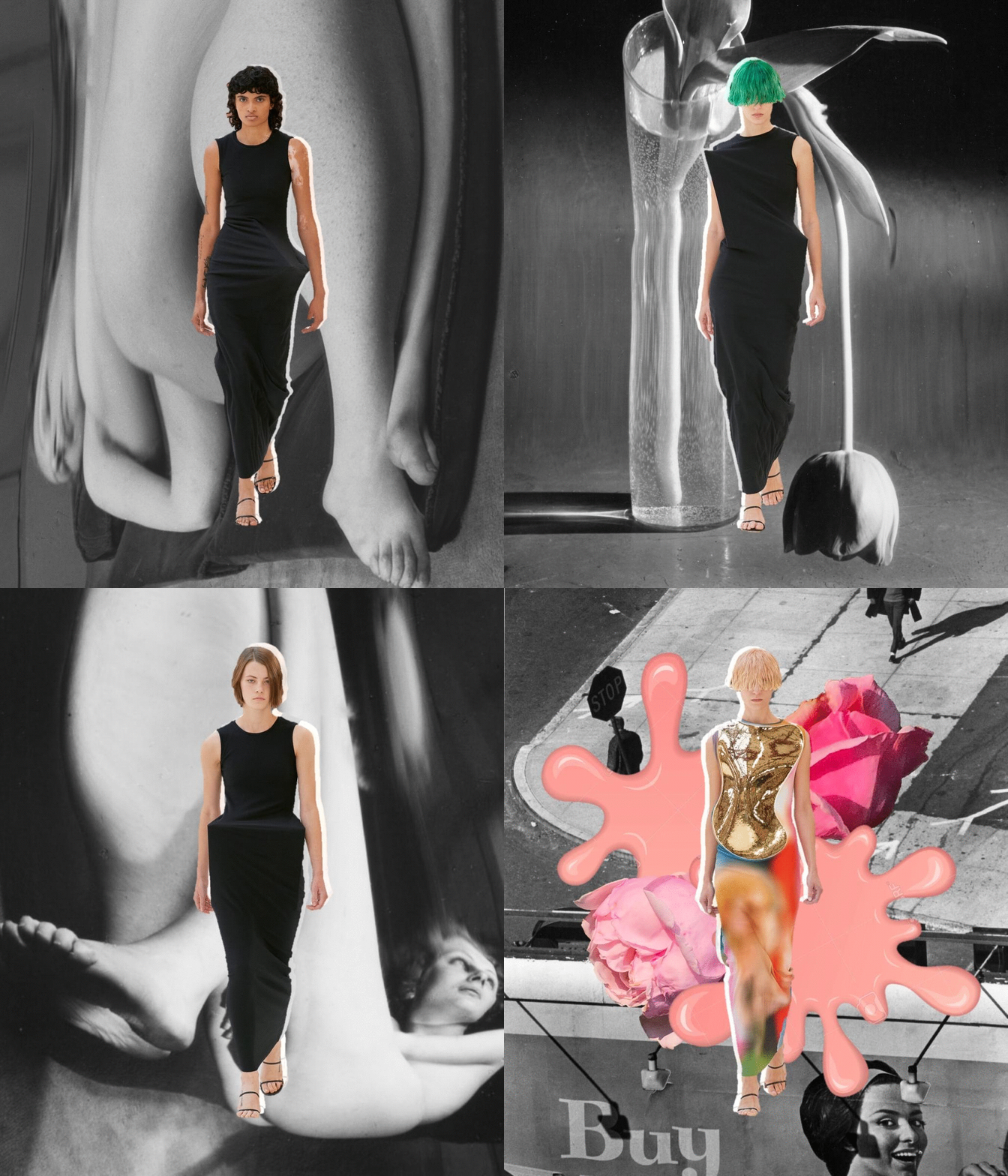
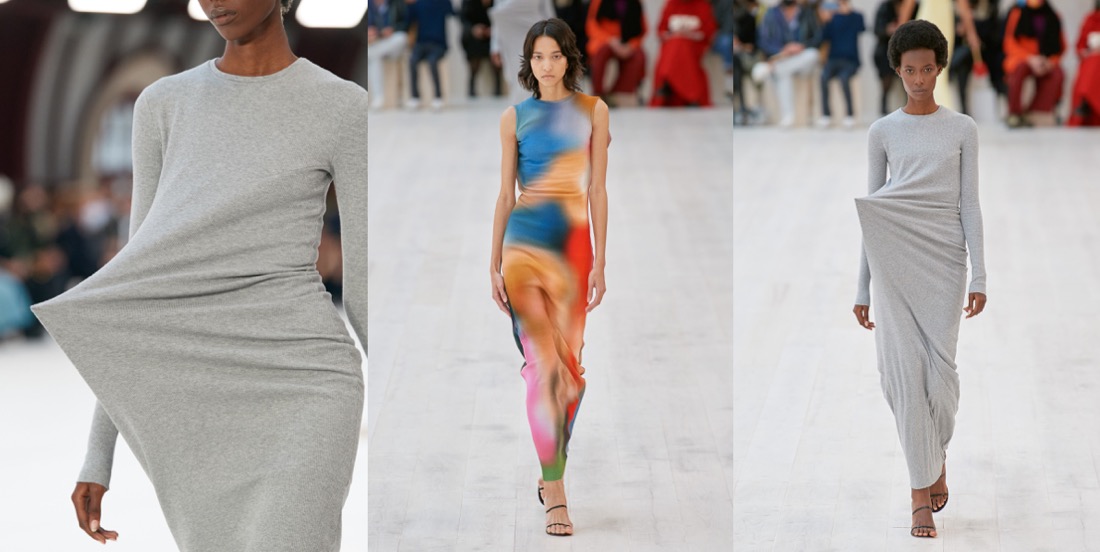
Sometimes, it’s great when nothing makes sense. “Neurotic, psychedelic, completely hysterical” are the terms describing the latest Loewe collection by Jonathan Anderson. After months of digital presentations, the designer was on a mission to mark his comeback runway show at Loewe with a massive creative change. “We’ve had the pandemic, and now we have to come out of it different,” he said. “I think it’s a moment of experimentation. If you’re going to reset after this period, you need to allow a moment to birth a new aesthetic. Start again.” It took place in a purpose-built “blank space.” No props, no artworks, no available rabbit holes of reference to divert attention: just clothes. Three long black column dresses to begin with. Minimal – except for the fact that each had a metal structure beneath, each one thrusting a different 3D geometric shape from stomach, shoulder, hip. The notorious “lumps and bumps” Comme des Garçons collection comes to mind instantly. Then three more ankle-length tube-dresses, one in a blurry pale blue and flesh-colored print; one pale gray, the next primrose yellow. So, was Anderson about to offer up an elegantly calm, relatively straightforward palate-cleansing antidote to the complexities and confusions of stepping out into the world again? Not so fast. He has a restless mind, always fighting against the too-obvious response. “In a weird way, I wanted the collection to be hysterical,” he said. “So that there’s a tension. Because this is a strange moment.” The collection had no moodboard behind, but Anderson provided one clue behind the passages of pastel blues and pinks, the swags and wraps of chiffon – and the wing-like shoulder structure that suddenly threw the collection off the straight and narrow. It was a picture of The Deposition from the Cross, painted by the Italian Mannerist artist Jacopo Pontormo in Florence 1528. Anderson liked all the “ hysteria” of the figures in the painting; something resonated. Back to the collection, there are even more exciting details to love. His fresh-start innovation combined ribbed jersey T-shirt material with golden breastplates – an echo, perhaps, of Claude Lalanne’s work for Yves Saint Laurent in the 1960s. There was an elevation of everyday fabric – white tanks terrifically teamed with chiffon balloon pants—and conceptual reworking of athletic tracksuits in taffeta. “Elevating the normal” as Anderson put it. On the feet were strappy shoes with heels surreally made from birthday candles, bottles of nail polish, a bar of soap. Bags in lavender or red were made from stiff teddy-bear fabric. Nothing made “sense” – but that was the daring and the fascination of this collection. We’re living in surreal times. Jonathan Anderson gets that, and is reflecting it back. Such experimentation with fashion is truly rare these days. Bravo to him for that.
Collage by Edward Kanarecki.
Near The Seine, Close To Nature. Chloé SS22

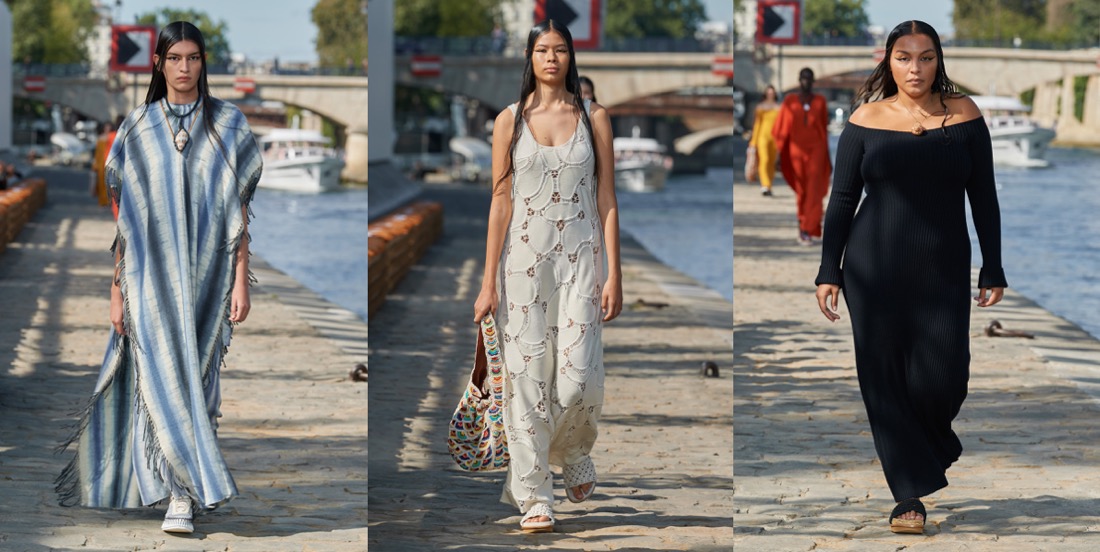
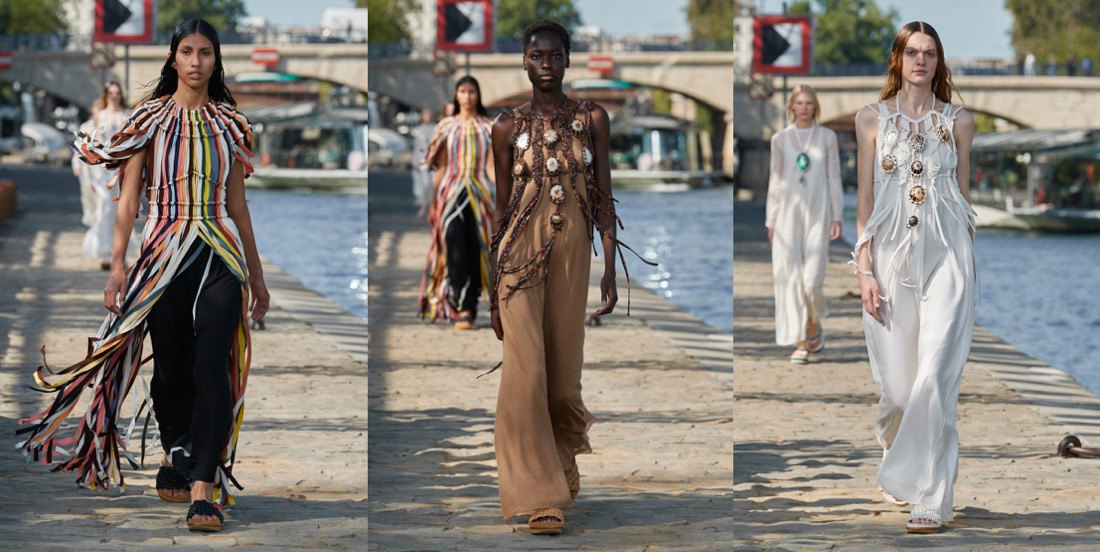
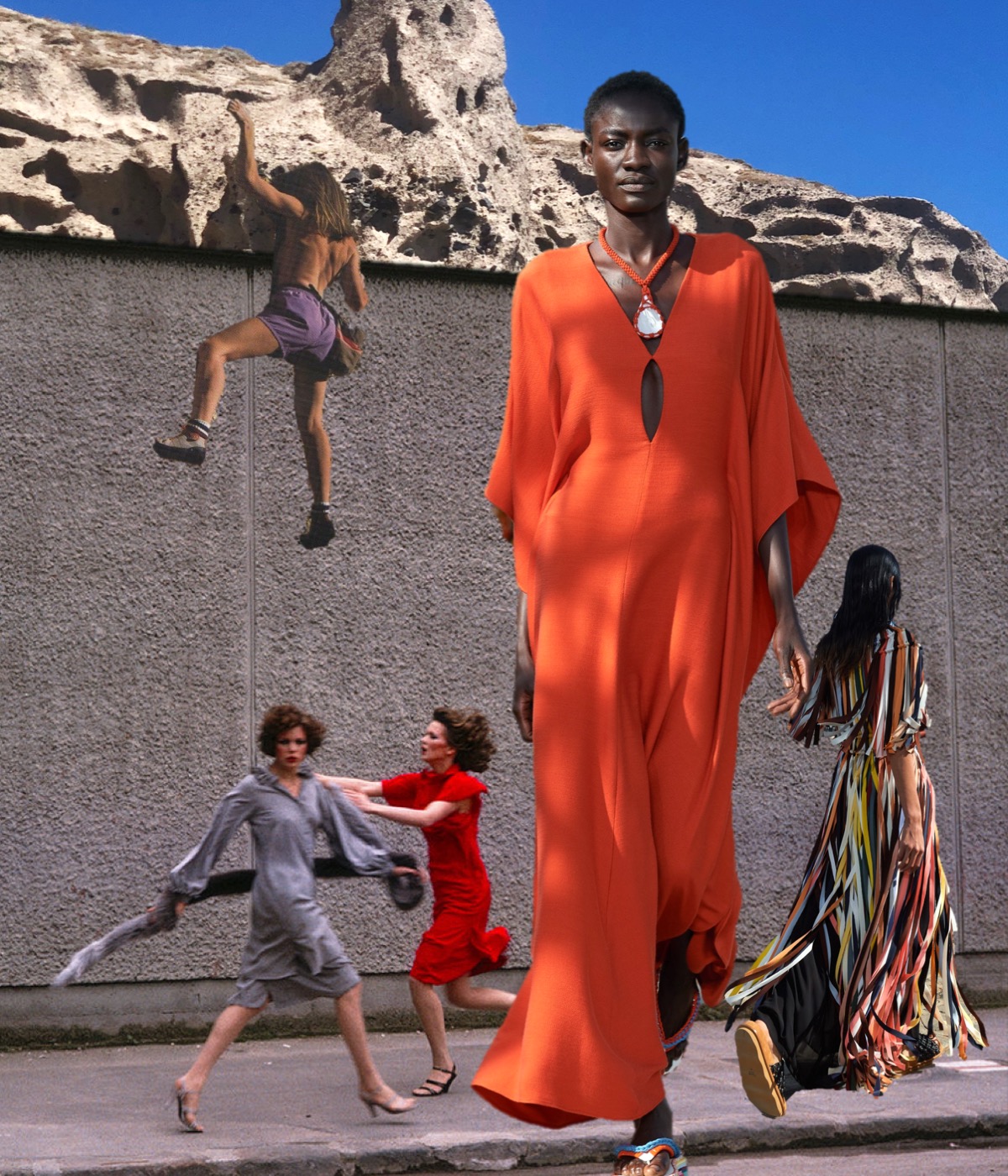
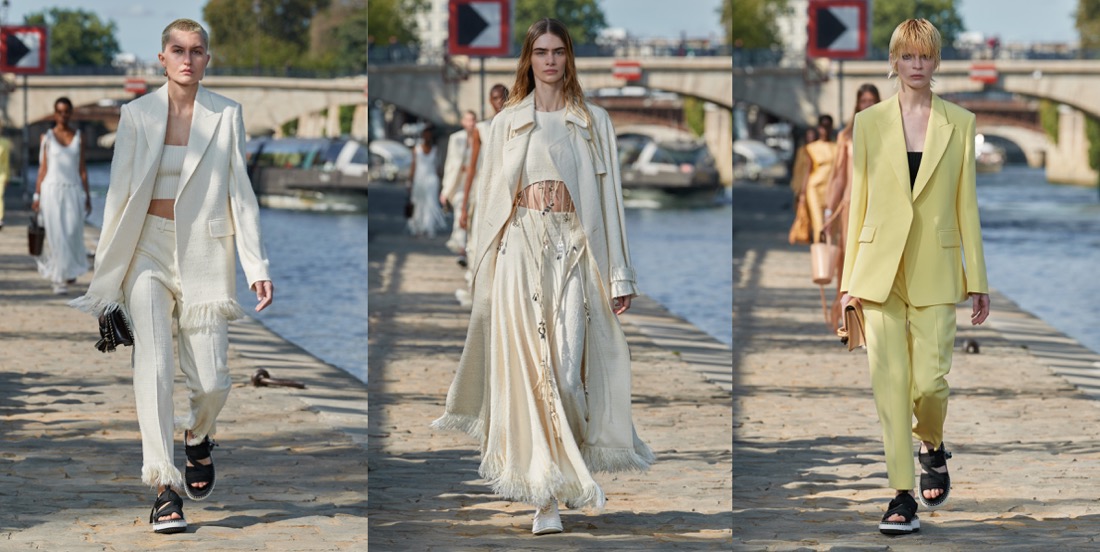
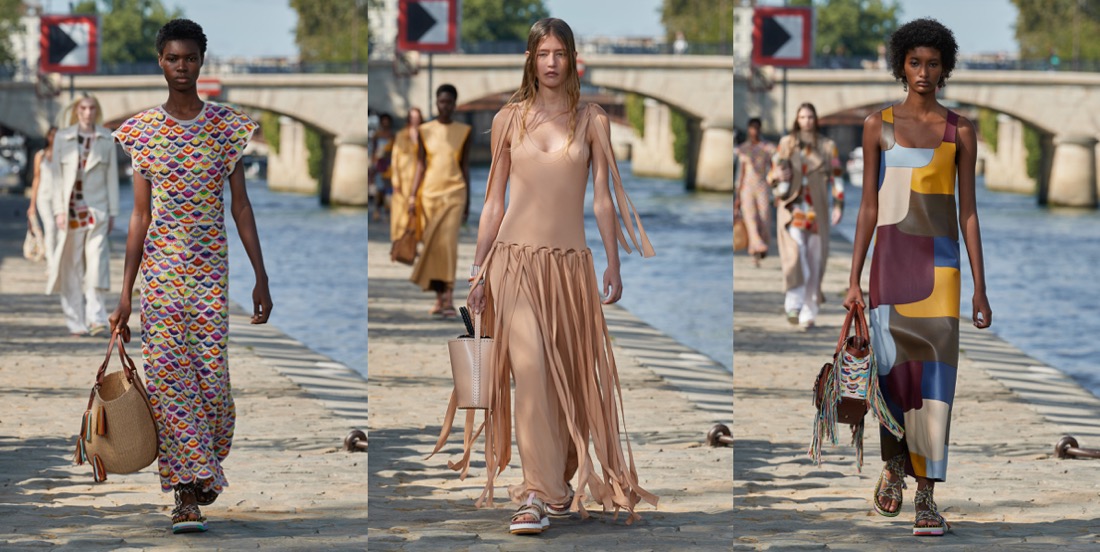
In her second season at Chloé, Gabriela Hearst convinces the Paris crowd that her take on the maison is truly worth observing and buying into. The show’s guests sat by the Seine, watching the inclusive model casting walk along the Quai de la Tournelle in brilliant sunshine. An accidental audience of Parisian passersbies and a packed riverboat made the IRL event feel even more… real. Somehow, this all felt like a very Gabriela Hearst moment, because the practice of sharing and openness is her all over. “As cheesy as it sounds, this collection is about love,” she said in a preview. “It’s really about the love of so many things: the love of craft, the love of friendship, the love of fellow humans. I literally have to memorize the many different NGOs, because I am working with so many this season.” You get the free-flowing, unforced boho spirit of what Hearst is doing with Chloé from the 31 pictures of the show. What with its summer-holiday caftans, ponchos, lacy dresses, and smattering of boyish pantsuits, the collection is fully in the tradition of the free-spirited Chloé girl brand identity that has been passed down from hand to hand by a succession of women designers, from Stella McCartney and Phoebe Philo onward. What’s very different with Hearst is, first of all, the reduced number of looks in the shows: down to 31 from sometimes more than 50. And second, the meticulous and quite formidable way she’s bringing in changes in sourcing, the supply chain, traceability, and environmental and social responsibility to a major Paris fashion brand.

All the information is documented in a Chloé press release and on its website: progress toward what all fashion houses ought to look like internally in this age of climate emergency. At points – when you consider how many women’s organizations and communities Chloé is benefiting through buying strategies around the world – it almost begins to seem possible that this work could even be marking a shift in the entire purpose of a luxury brand’s existence. One step in that direction is that the most exclusive level of Chloé luxury is now being launched as Chloé Craft – a group of products with a spiral logo, denoting, as Hearst puts it, “that only a human hand can make those pieces.” In the spring collection, those hand skills were evidenced in pieces like the petal-pattern crocheted dress and the intricately knotted streamer-harnesses made of strips of leftover fabric from seasons before – techniques created by Akanjo, a social enterprise organization in Madagascar. The chunky seashell and macramé necklaces, as well as baskets that come labeled with the name of the person who wove them, also bear the spiral branding. Shifting the needle toward causing less environmental harm primarily comes in Hearst’s creditable insistence on fabric switching. For example, there’s more linen and less cotton involved in this collection. It’s used to chic effect in the cream pieces, including a generous, Hearst-signature trench coat with a cool heft and whipstitched leather edging. And, more surprisingly, in a great indigo blue pantsuit that at first sight seemed to be denim, but was in fact a beautifully soft, supple linen. Underfoot, as well as the eco-friendly Nama trainers launched this year, a new and delightfully multicolored deep-soled Chloé flip-flop was treading the Parisian riverside quai. In fact, all the pretty pastel layers pressed into the soles were once other flip-flops. “They’re from Ocean Sole, which I’ve been wanting to work with for a long time!” Hearst declared. “It’s a Kenyan nonprofit that collects flip-flops from the ocean.” All the applause from the people of Paris, boat-trippers and fashion audience alike, was well deserved for the progress she’s pushing through.

Collage by Edward Kanarecki.
Pursuit of Beauty. Rick Owens SS22

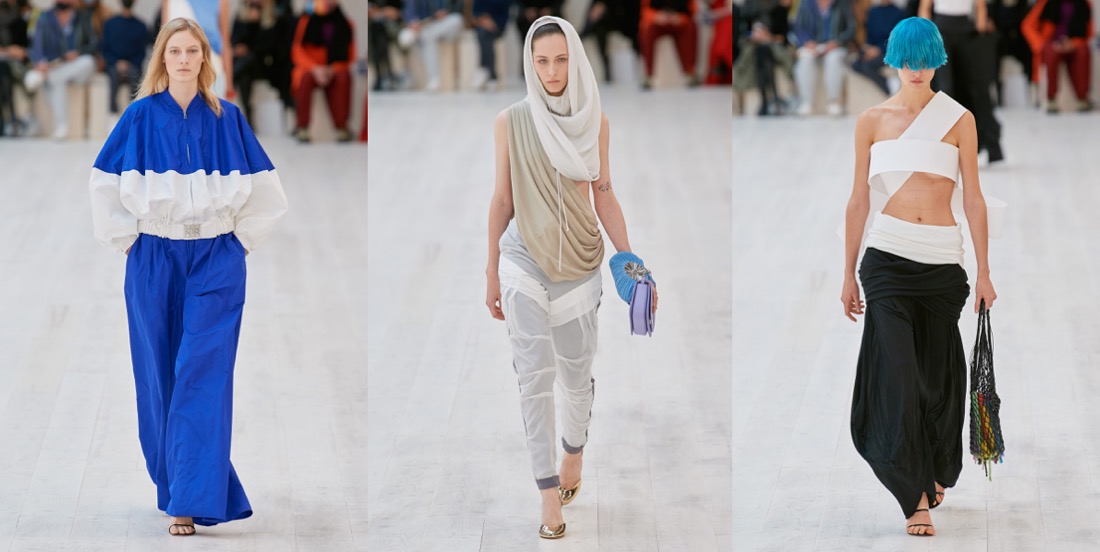
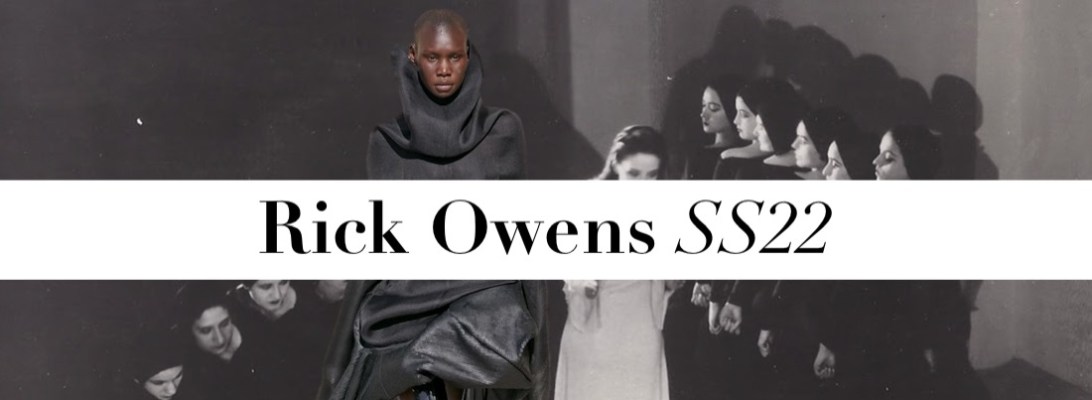
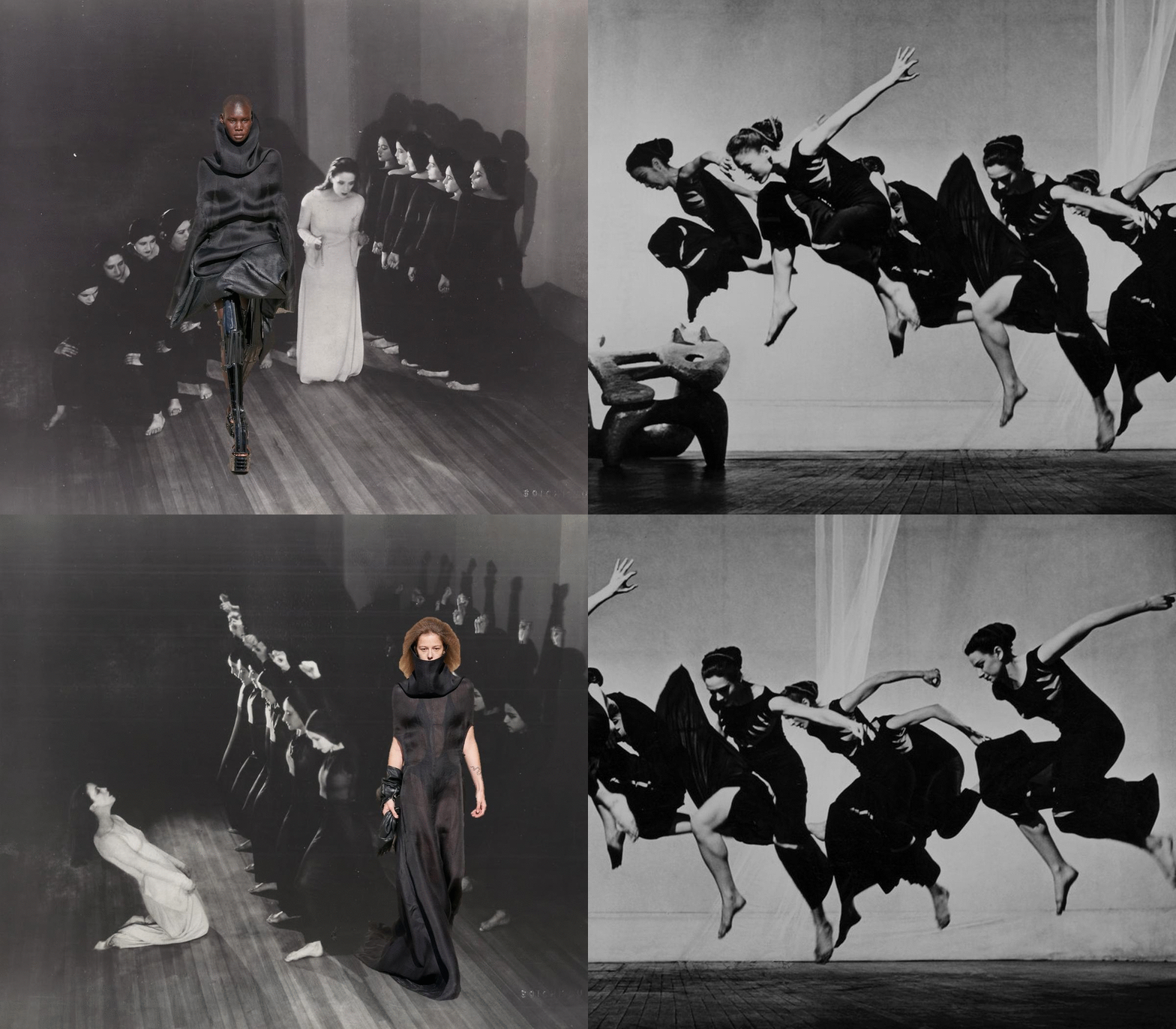
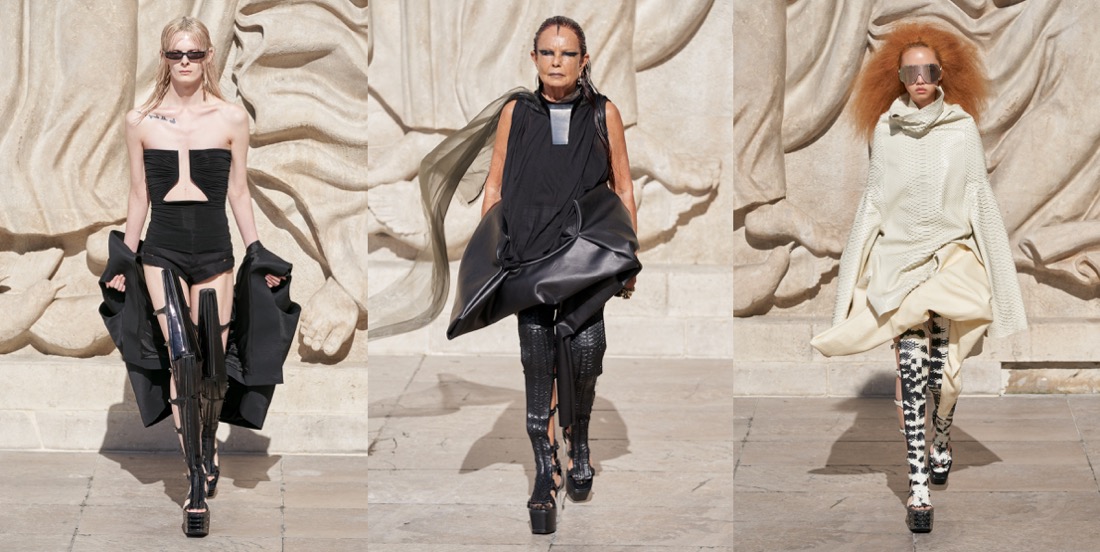
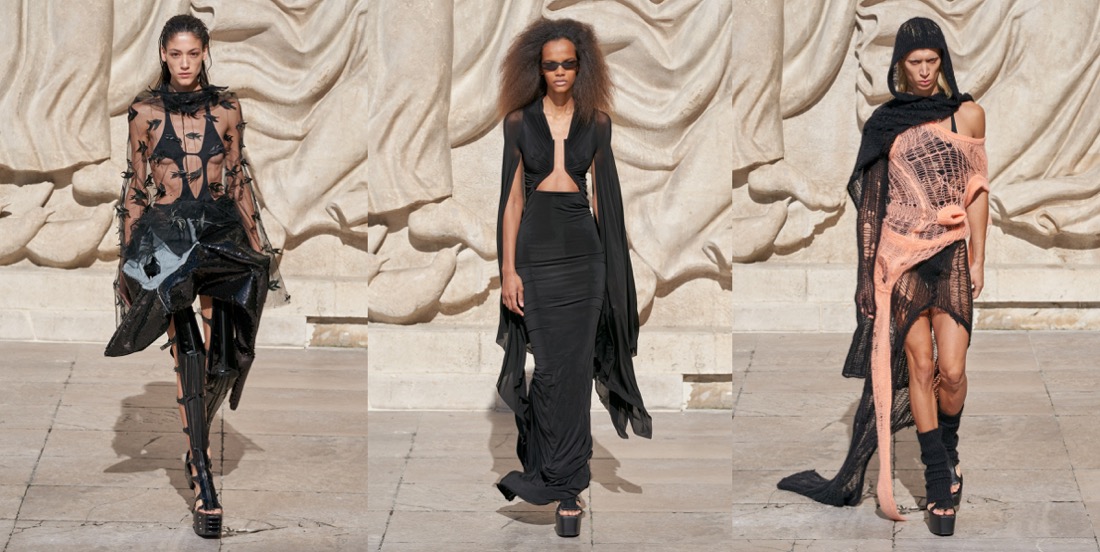
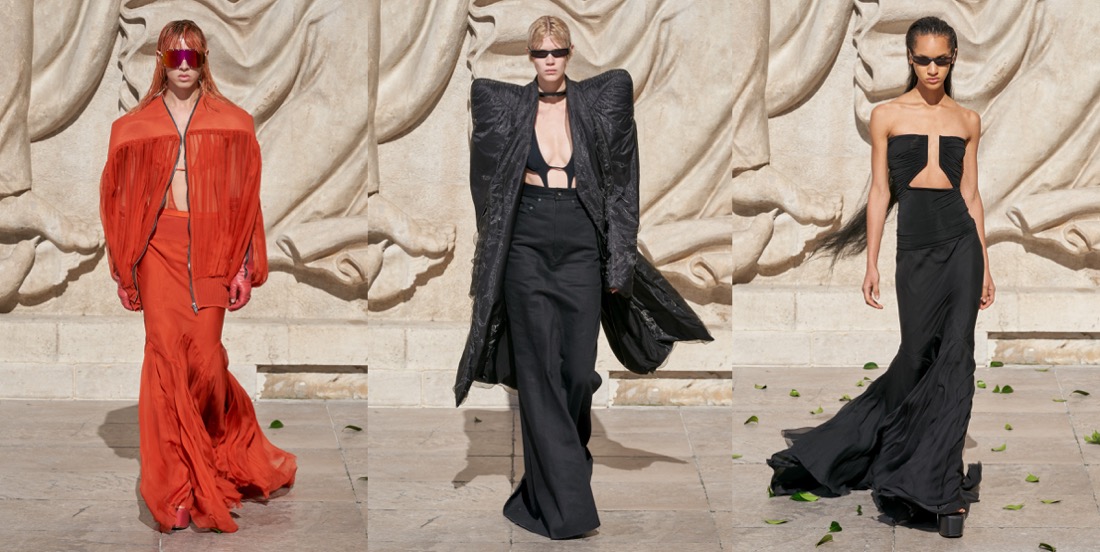
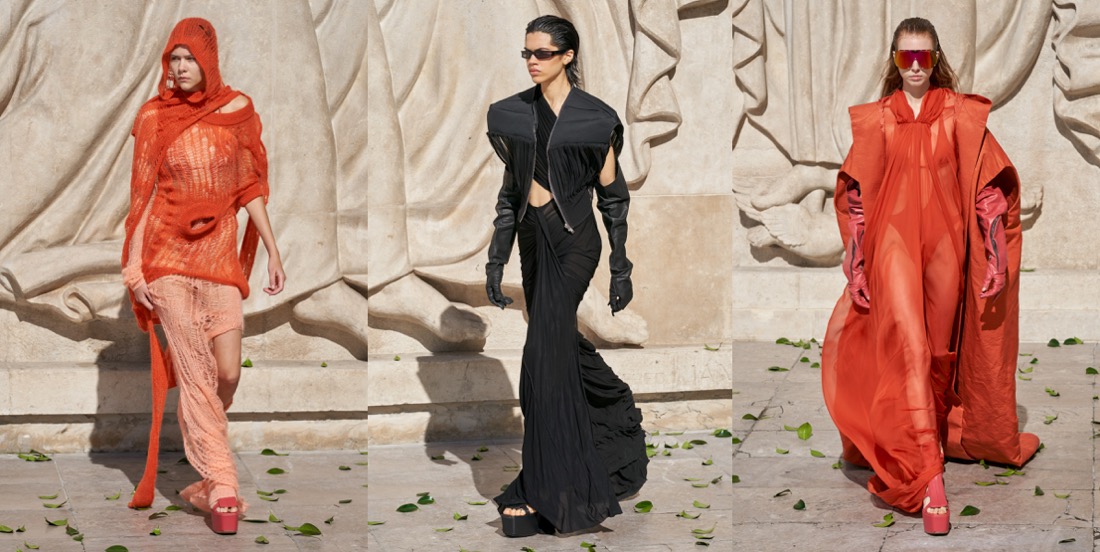
On a gloriously sunny morning, Rick Owens returned in splendour to his grand open air stomping ground at the Palais de Tokyo. It was a comeback that felt like a ritual celebration of survival – and a show of strength – both intensely personal and collectively symbolic. And who else but the high priestess Michèle Lamy, Owens’s spouse, oracle-in-chief and eternal inspiration, to head the triumphal procession? Plumes of white smoke poured from the central fountain. Two black-robed women standing high on a Deco rooftop a hundred feet above scattering something to the winds. It turned out to be “dried jasmine leaves gathered from plants on my Lido terrace, in memory of the Covid shows we had there,” wrote Owens in his show notes. A little earlier he’d explained how, for four seasons at home in Venice, “we showed, performed this ceremony in front of nobody on the beach. And it was the most bonding, beautiful thing. There was a melancholy to it, but there was also kind of this defiance: that we’re going to do our very best under the circumstances. That we’re going to strive for excellence, under any threat.” Going through that period emboldened and sharpened his philosophical resolve about why and how he would make his re-entry to Paris. Amid all the soul-searching about the raison d’être of fashion, its wastefulness and its justifications for its existence, and measuring that against all the trauma and adversity of these times, he had no doubt: this was not to be any timid or apologetic comeback. “I always considered myself somebody that would do anything in the pursuit of beauty, and to maintain a certain standard of beauty – and that was the meaning of life. So we have to flex here,” he said. Who else can signal the siren glamor of old Hollywood draping, sculpt wildly freeform shapes from haute couture materials and fuse it all together into such a modern armory of erotic power? If we’re talking about sex and body-exposure this season – and everyone is – then Rick Owens is the past-master of all that. The empowering art of his cutaways to skin never looked more faultlessly engineered, wired into bra-tops with no central fixing, structured into stretch bodysuits glimpsed through sheer layers and multi-strapped into thigh-high gladiatorial robo-boots. There was a grandeur to it as well: caped dresses with the solemn dignity of robes; his vast-shouldered leather jackets; the off-handedly cool ’30s elegance of his trailingly beautiful bias-cut skirts and dresses. Quite humbly, he put it this way: “I concentrate on making good stuff that has value, that people want to buy and that is worth it. And that is so recognizably me that you can’t get it anywhere else. I was thinking: that is the right thing to do.

Collage by Edward Kanarecki.
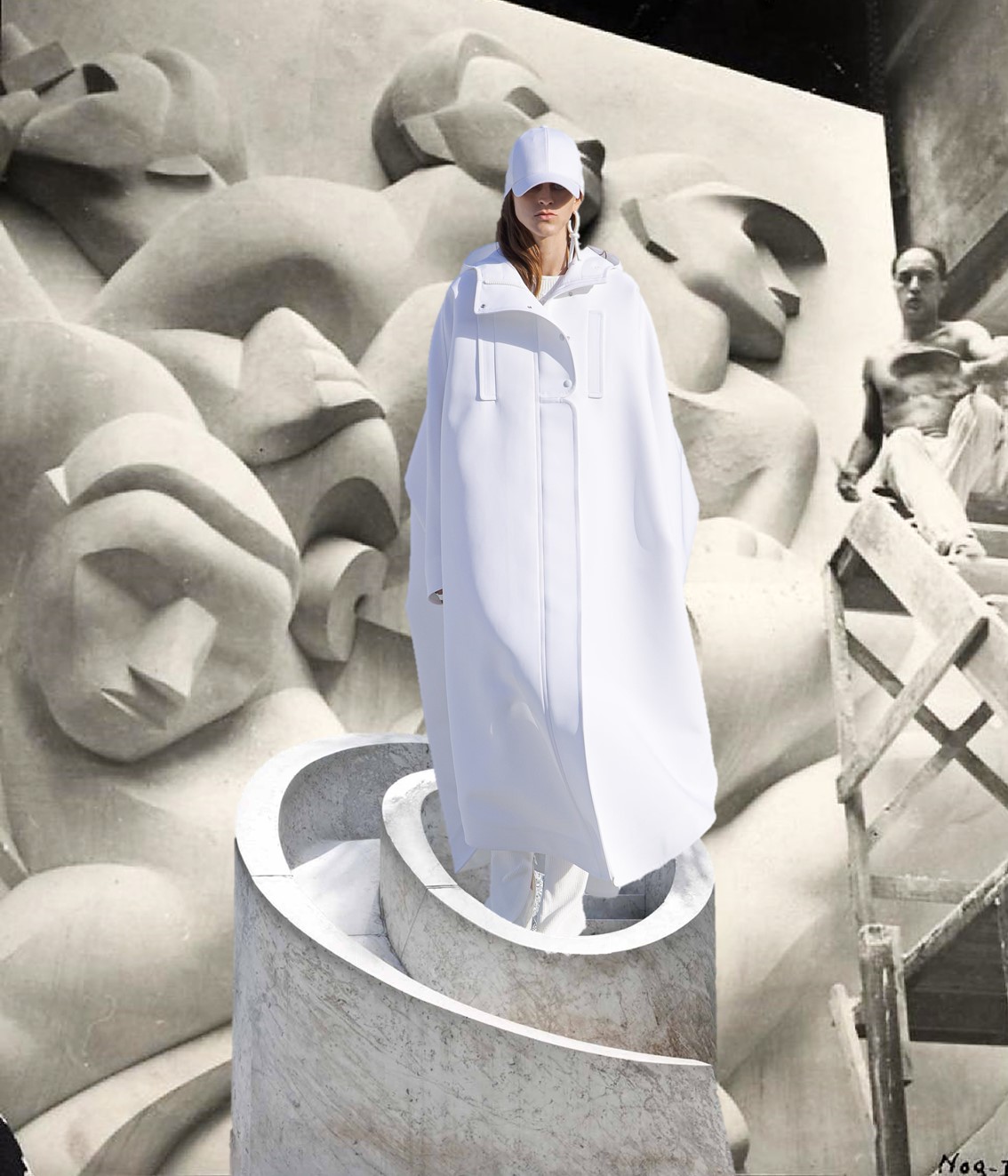
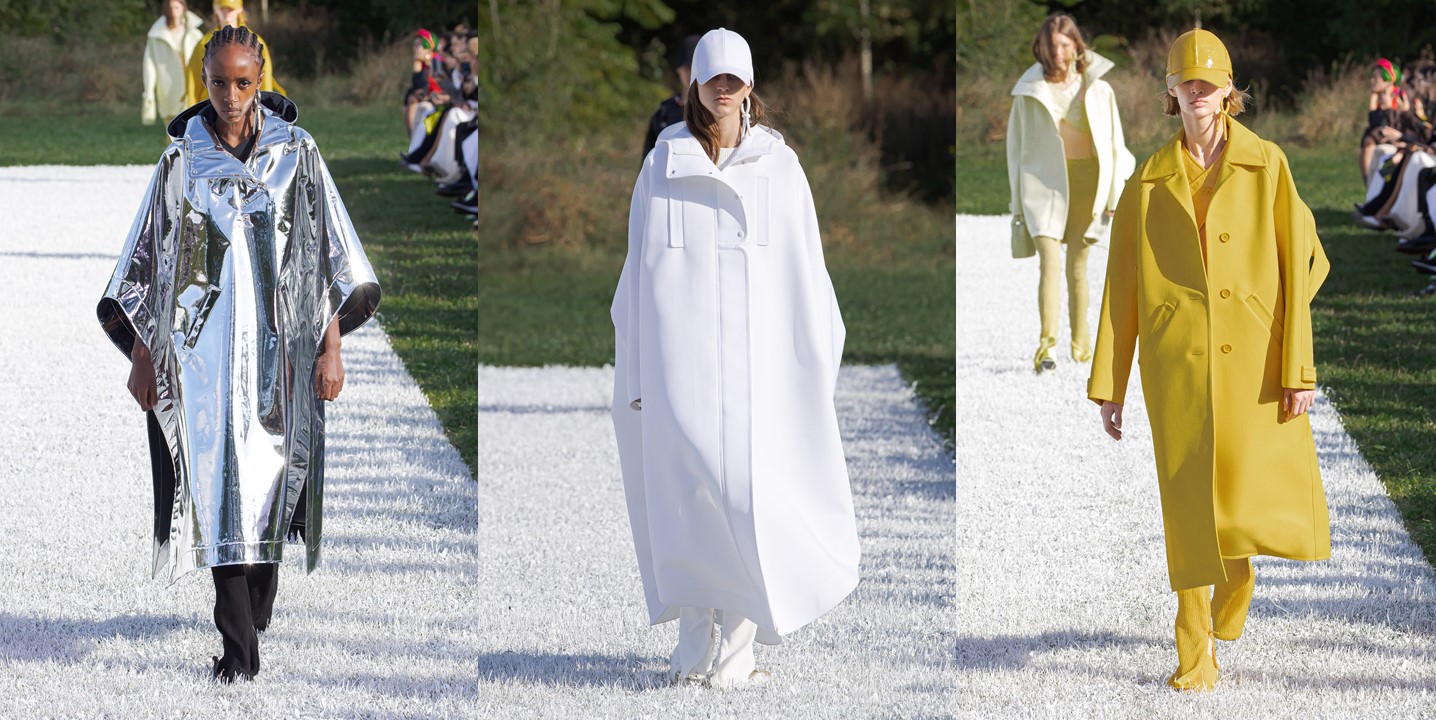
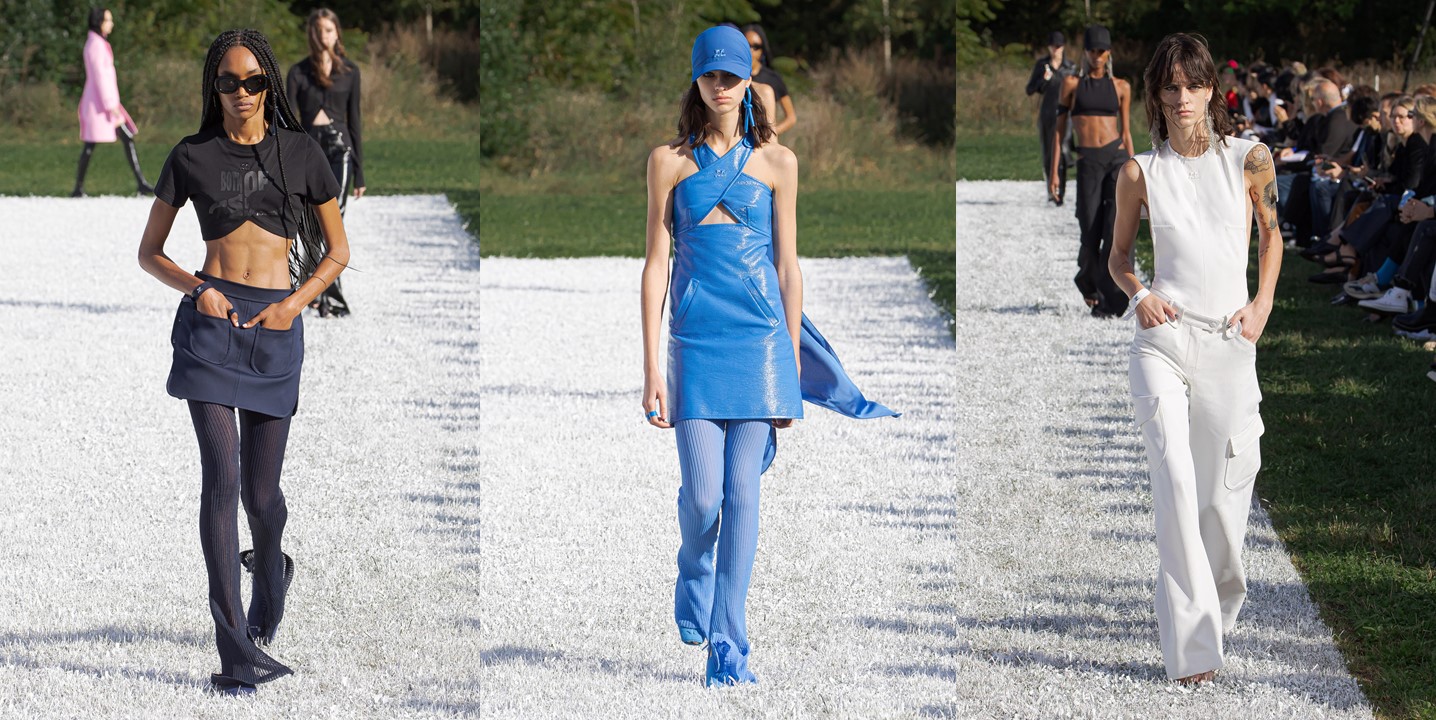
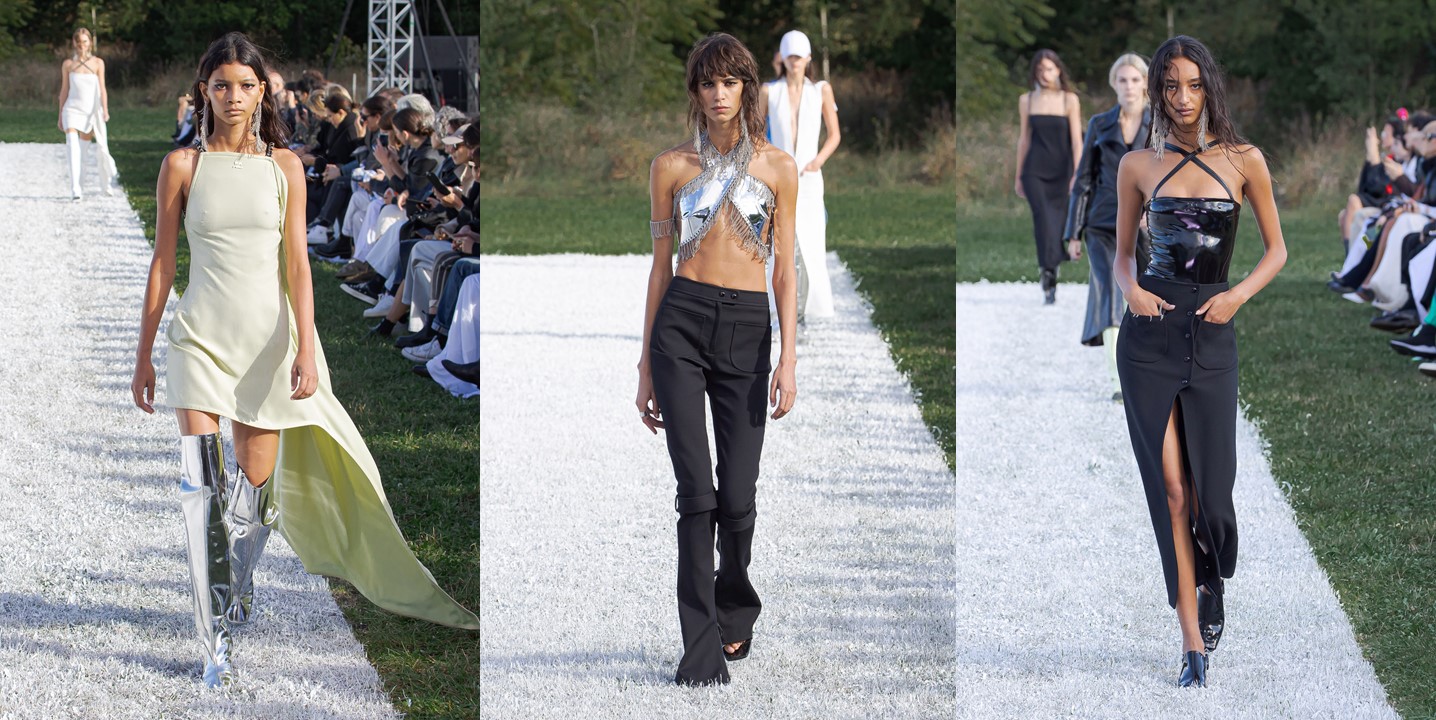
Outdoors. Courrèges SS22

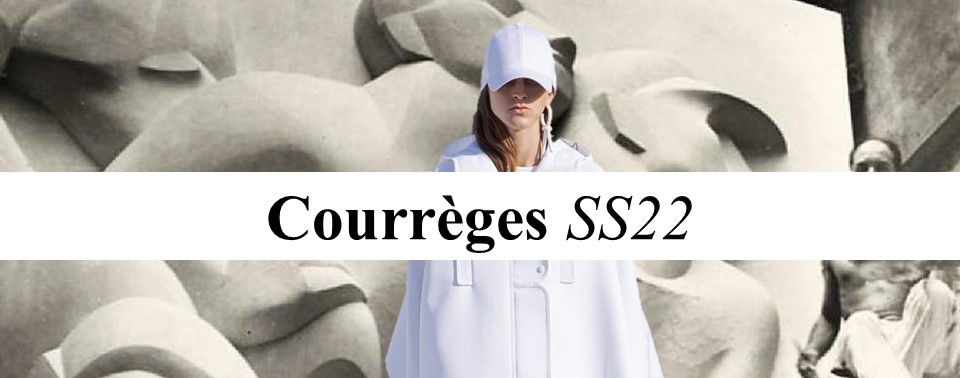
Nicolas Di Felice gradually builds his credentials at Courrèges. For the spring-summer 2022 show, the label invited its guests to Bois de Vincennes. It’s a park a long way from the center of Paris with personal meaning for him – it’s where he and his boyfriend first kissed. The wide-open space also vibed with the mood of the collection, which was space-age rave. “I wanted to work on this idea of an outdoor party,” he said in the backstage tent. On his mood board, pictures of music festival kids were juxtaposed with photos of archival pieces from the brand’s ’60s and ’70s heyday. The opening looks were ponchos of varying dimensions, rainwear being essential to the festivalgoer’s wardrobe. One was a circle, another was a triangle, and a third was a square, and all three cut a strong line as the models made their long walk around the perimeter of the square runway. Di Felice has prioritized outerwear since arriving at Courrèges a year ago, and he was proud to report that he’s already clocked a couple of his jackets in the wilds of Belleville, his neighborhood. Long ribbed-knit pants that flared over chunky-heeled sandals, A-line minis, and the label’s cropped vinyl jackets numbered among the other key pieces. “André Courrèges really wanted to put his fashion in the streets,” said Di Felice. “Everybody talks about him – the future, space age. But space age was a trend. He was a passionate guy; he just wanted to dress women.” Like founder, like creative director. Shift dresses with sternum cutouts and halter bandeaus worn over hip-slung pants were the descendants of a 1976 dress, Di Felice pointed out backstage, but they owed just as much to the arbiters of today, with their exposed abs, as they did to the iconic designer. Same for the baseball caps and shoulder-duster earrings.

Collage by Edward Kanarecki.
Chic Hero. Patou SS22

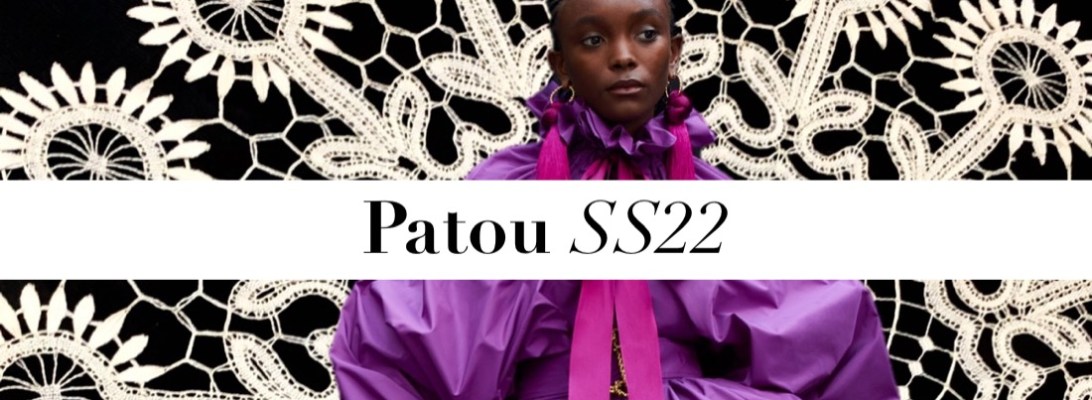
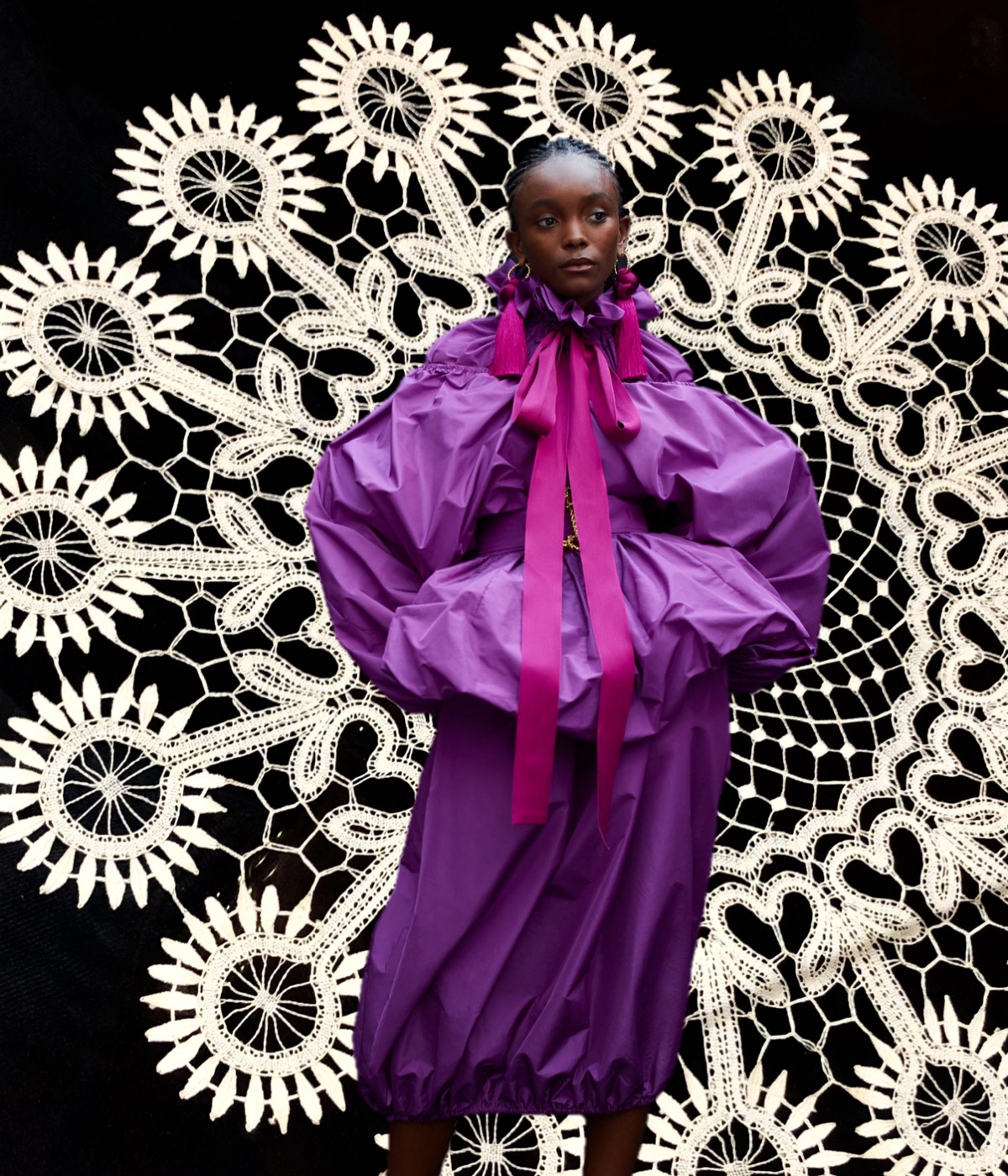
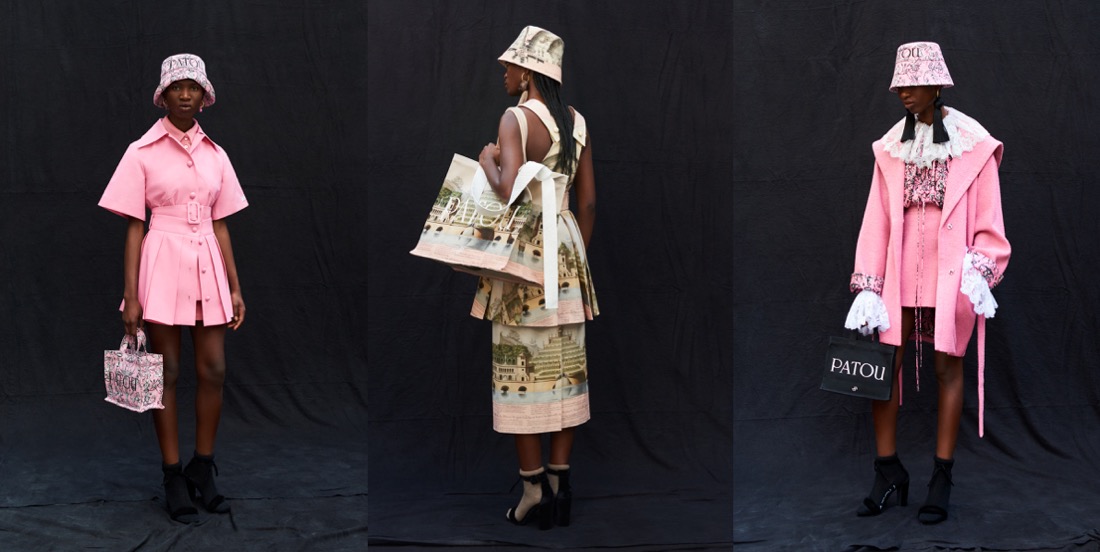
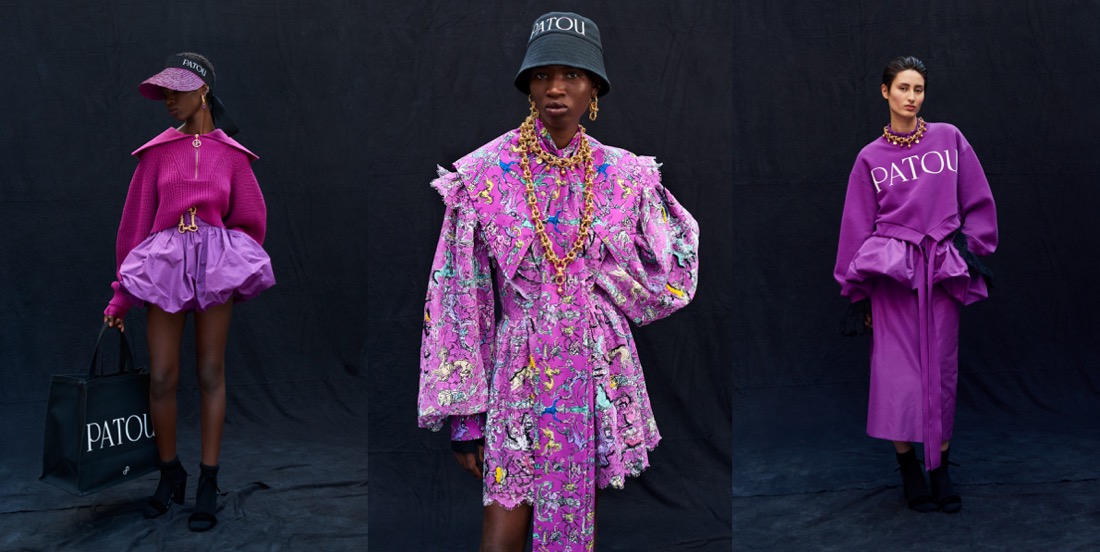
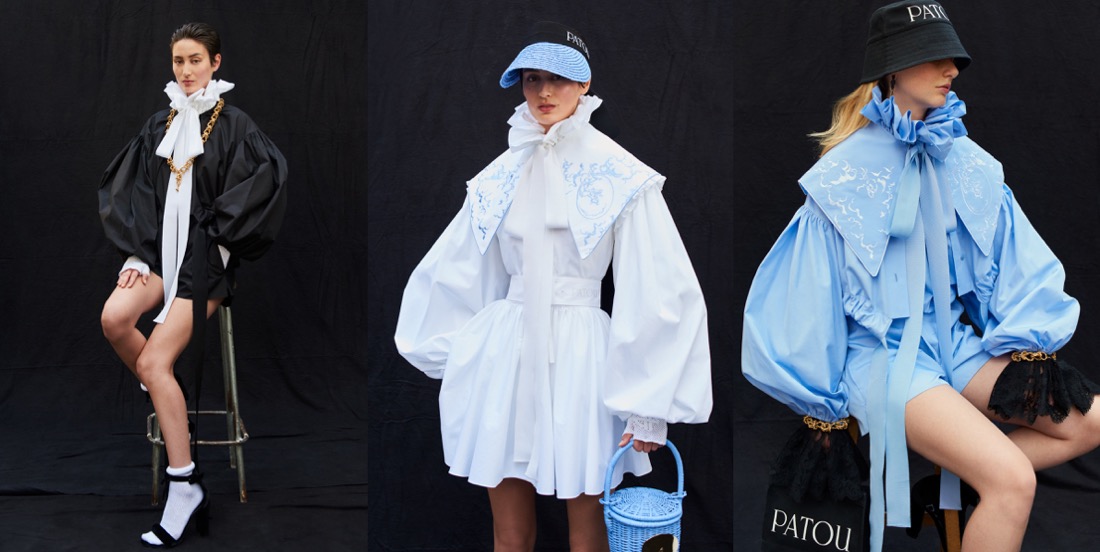
At Patou, Guillaume Henry has been taking a bit of a cavalier attitude towards spring – almost literally. “I really wanted to have this fantasy in mind,” he said. “She could be a musketeer, she could be a princess; she’s the hero of her own life. She’s not necessarily the girl waiting for her prince to come.” He remembered that when he looked out of the Patou studio during the big confinement and saw someone passing who had made an effort to wear something interesting, “I wanted to open the window and applaud.” As he riffed in his effervescent way around the static exhibition of his spring collection he said of lockdown, “I was so bored of yoga pants, you have no idea! Then things started to get better and better. And we knew that we will meet again.“ With the relaunch of Patou, Henry has managed to strike an ingeniously playful balance between exaggerated couture-heritage volumes and clothes that are self-adaptable, affordable and resourced with a care for curbing their environmental impacts. This season’s pie-frill collars, organic lace-trimmed swashbuckling sleeves, pouf-y bubble-shorts harmoniously work with Instagram and TikTok- friendly PATOU logo branding on bucket hats, bags and sweatshirts. Prints this season were sourced from the archives of the great French artist-illustrators Christian Bérard and Gustave Moreau. Keeping an haute flag flying for French fashion while making a wardrobe that girls can wear on the street, for work, at parties, or wherever they fancy is Henry’s thing.

Collage by Edward Kanarecki.