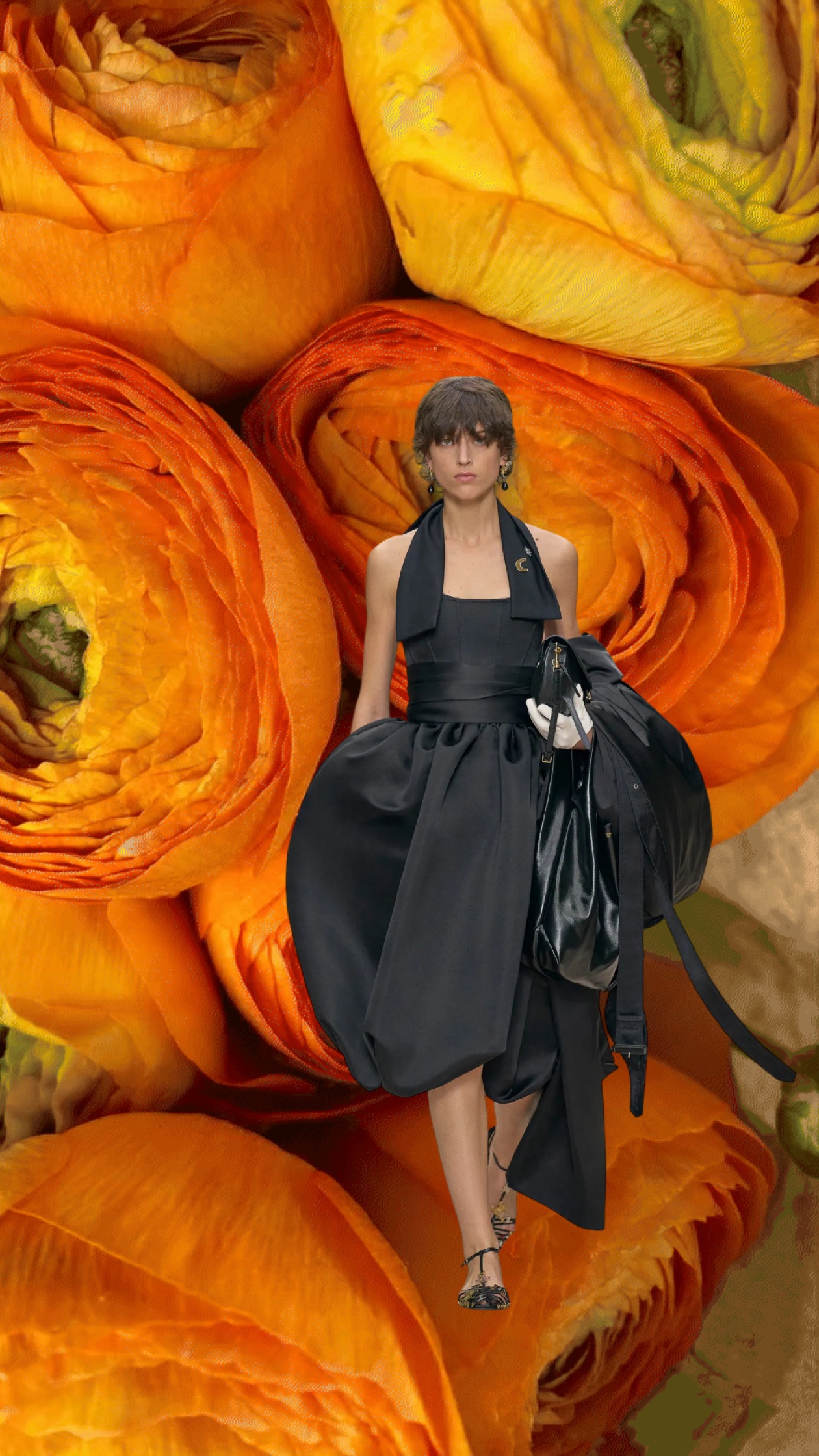
Unpopular opinion: I loved Alessandro Michele’s Valentino collection. It seems many people don’t connect with his vision for the house the way they did with his Gucci era. Rumors are already swirling that the designer may be leaving after just three seasons, but I truly hope that isn’t true – he’s only just warming up, still in a chrysalis stage of transformation.
This season, Michele toned down the theatrics, yet I felt he sublimated his signature “attic magic” into something deeply sincere, vulnerable, and ultimately chic. The collection, poignantly titled “Fireflies“, lived up to its name: the models appeared like delicate, enchanting fireflies gliding through a vast, sci-fi-esque setting.
The first look – a gathered peacock-blue blouse tied with bows at the collar and hem, paired with chartreuse satin pants whose hems hugged the heels of the model’s shoes – felt retro-tinged yet somehow modern. Equally striking were a marvelous zebra-printed blouse and a black velvet evening dress adorned with a single pink feather at the V-neck. Another standout was a pleated orange top worn with a simple pair of jeans: so innocent, effortless, and spontaneous. Lana Del Rey sat front row at the show with her family: it all made sense. They all lived happily ever after.
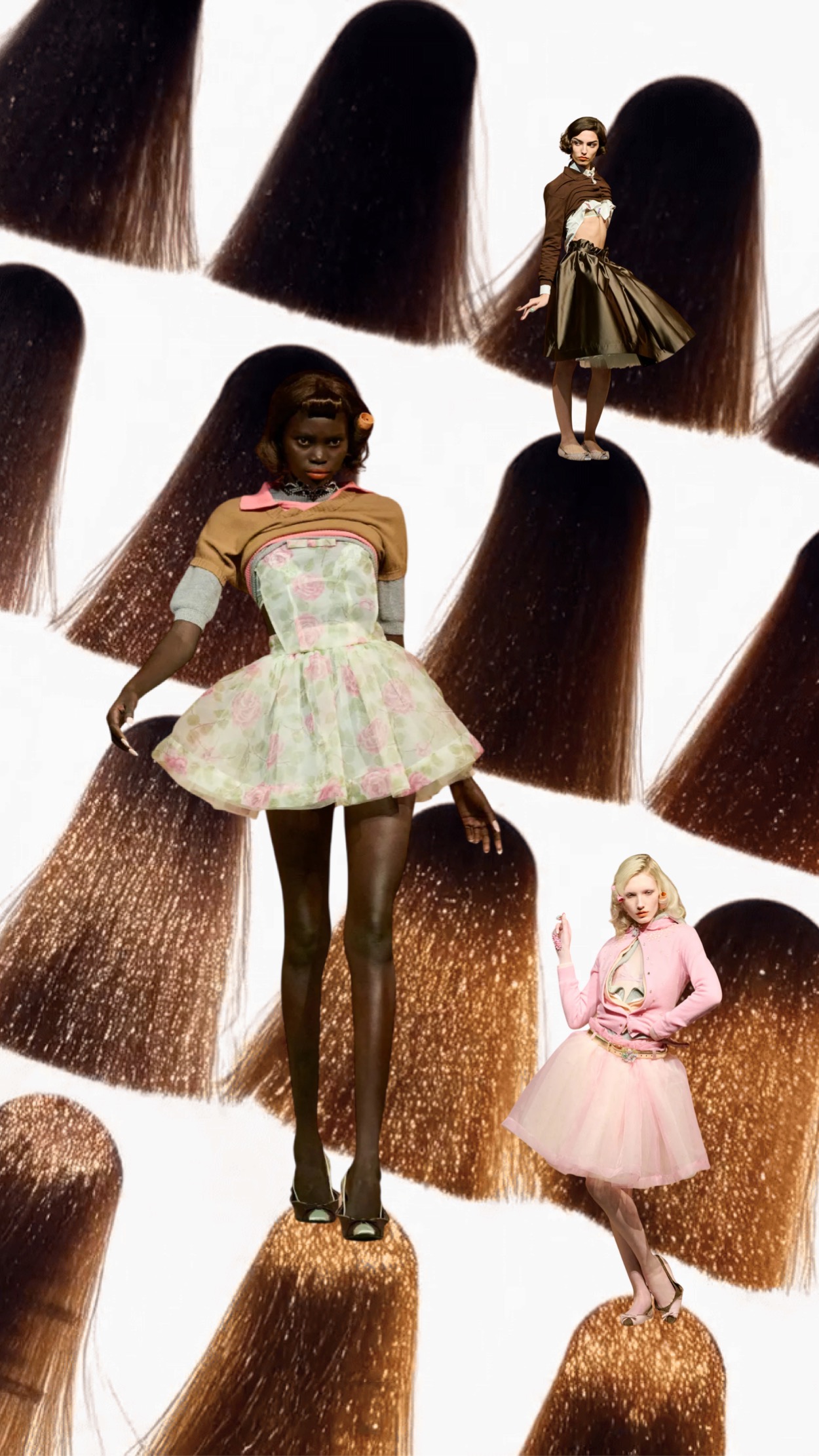
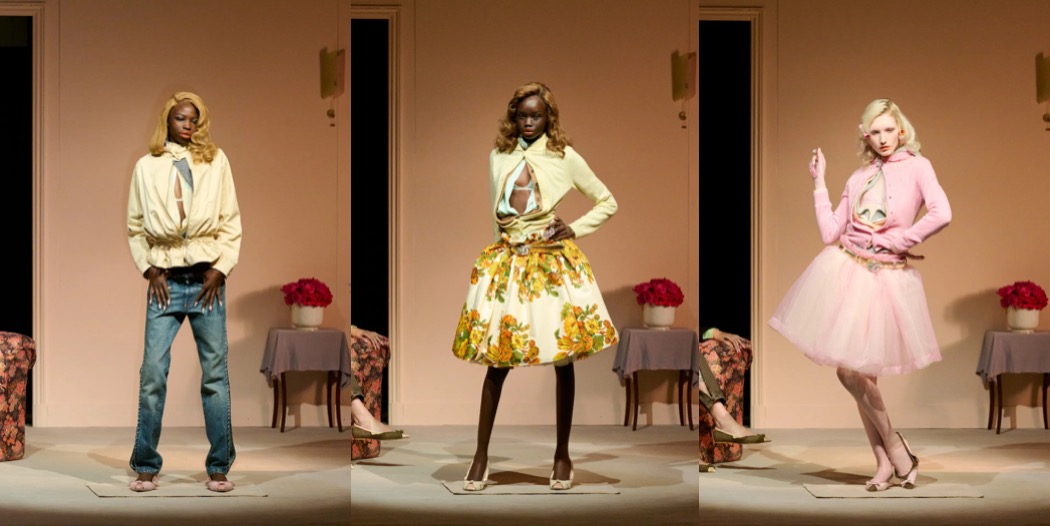
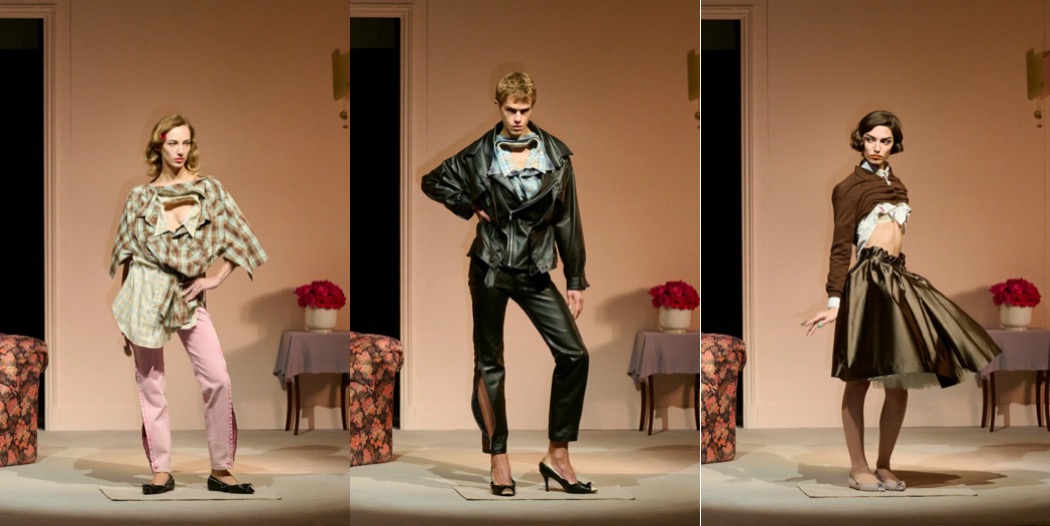
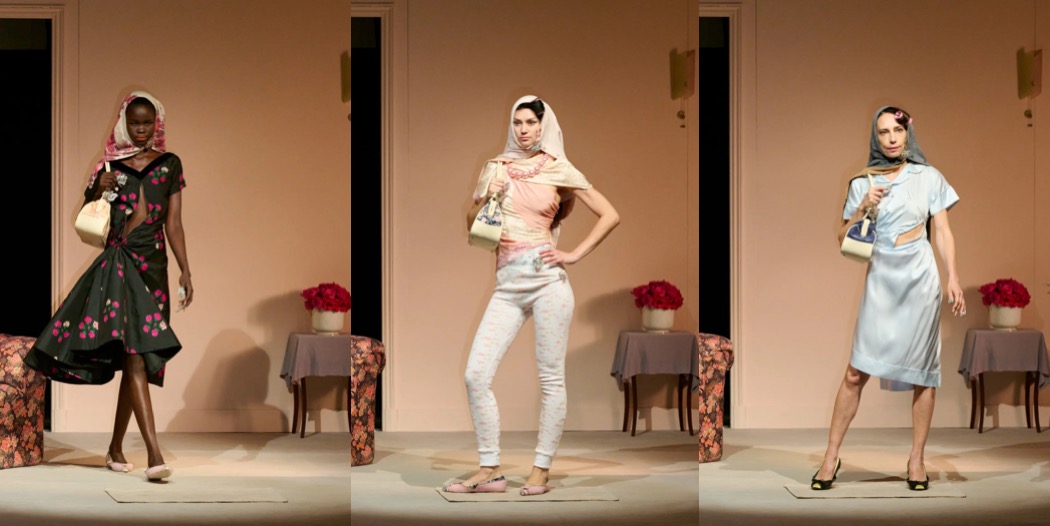
August Barron – you might remember it as All-In – is a brand that makes you feel like a pop doll. Their vintage-inspired dresses are short and cute, often slashed in the most unexpected places and finished with a cartoonish twist. No wonder Addison Rae wears them on her tour.
I loved how Benjamin Barron and Bror August Vestbø approached the theme of the housewife. Unlike Marc Jacobs, who explored that notion at Louis Vuitton back in 2010 in a Mad Men-ish way, the August Barron duo envisioned Grey Gardens’ Little Edie through a Lynchian lens. The result? High-octane drama mixed with 1950s floral skirts, heads wrapped in brooch-pinned cardigans, underpinnings peeking from beneath dresses in a chicly scandalous way, and an undercurrent of despair.
The collection – styled, of course, by Lotta Volkova – is filled with clothes that will be an absolute joy to wear all day and all night.
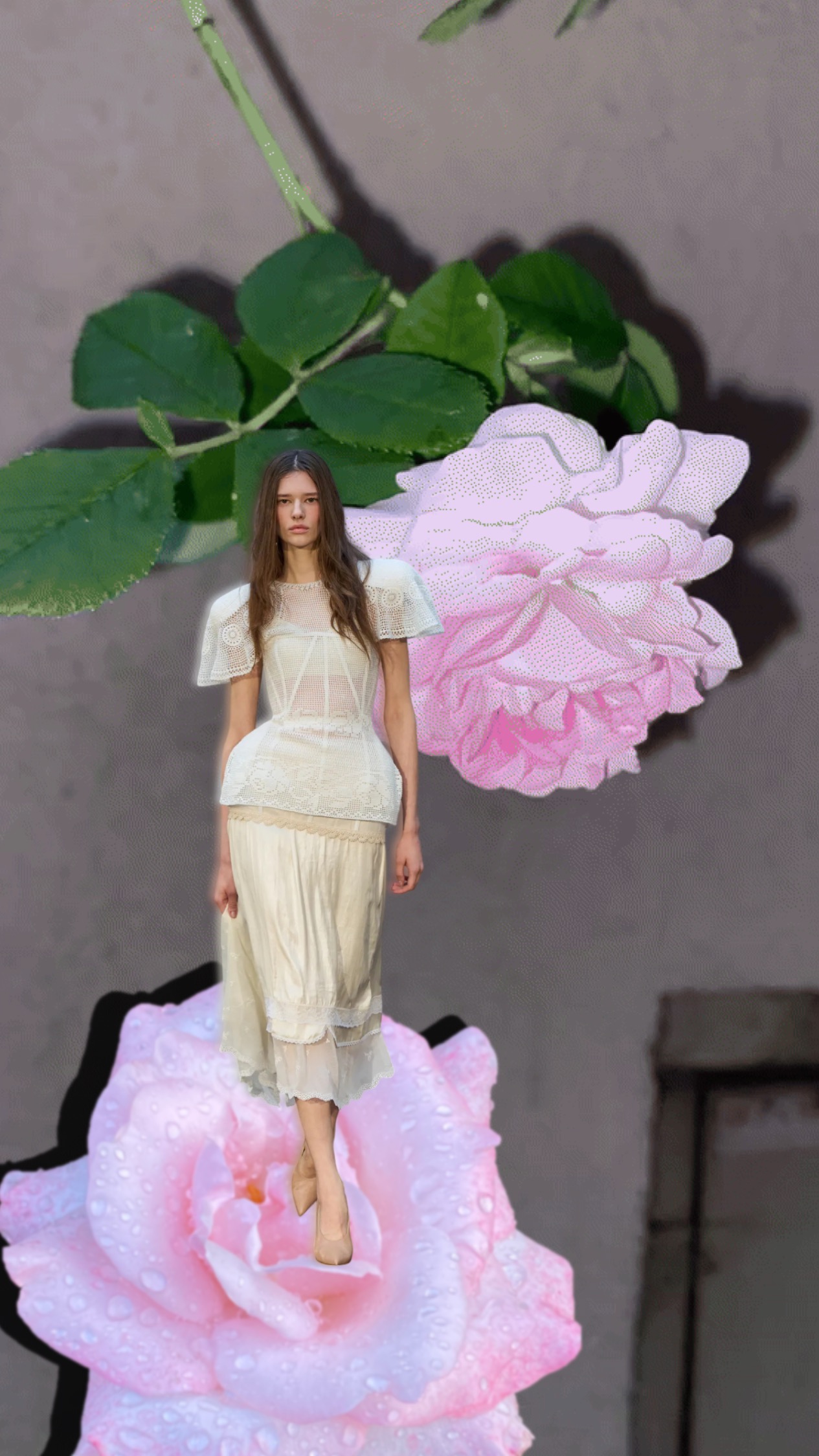
Collage by Edward Kanarecki. Don’t forget to follow Design & Culture by Ed on Instagram!
Hey, did you know about my newsletter – Ed’s Dispatch? Click here to subscribe!
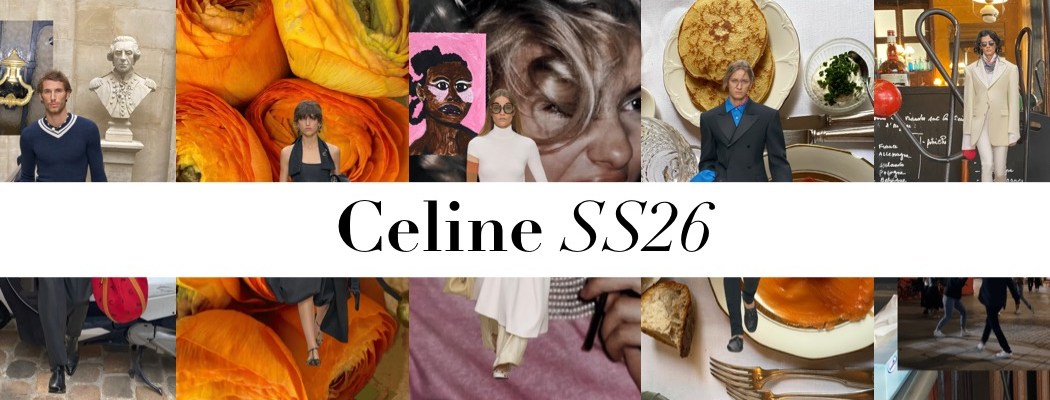
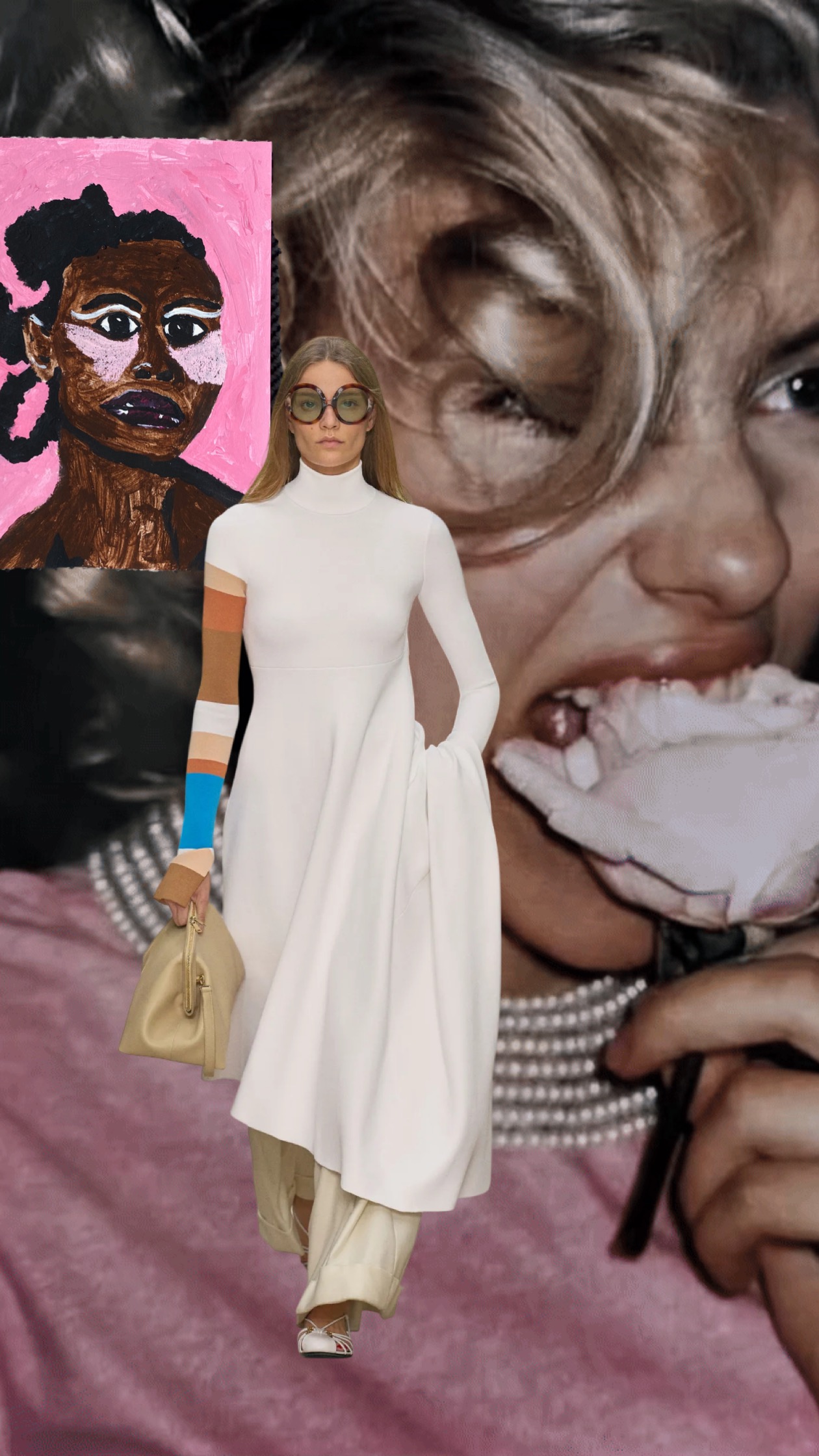
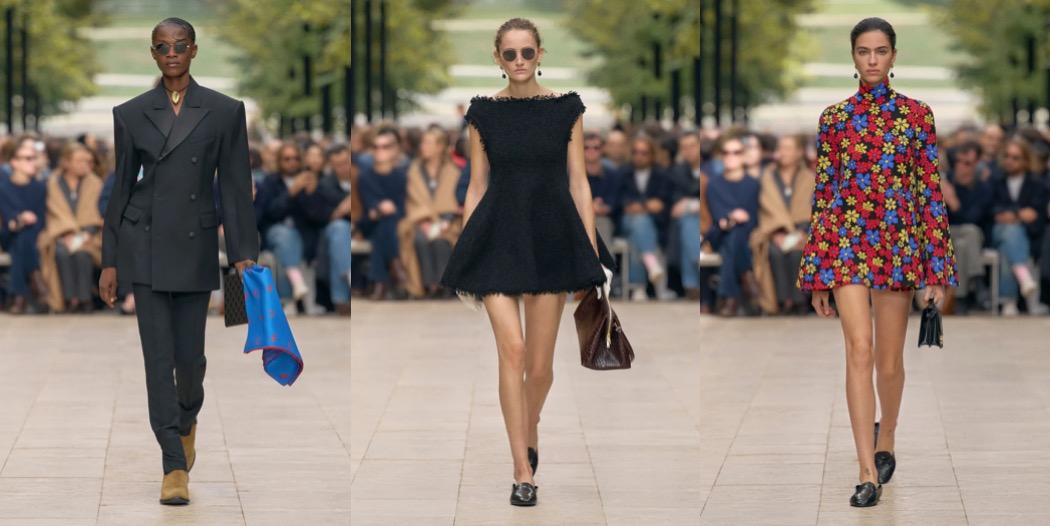
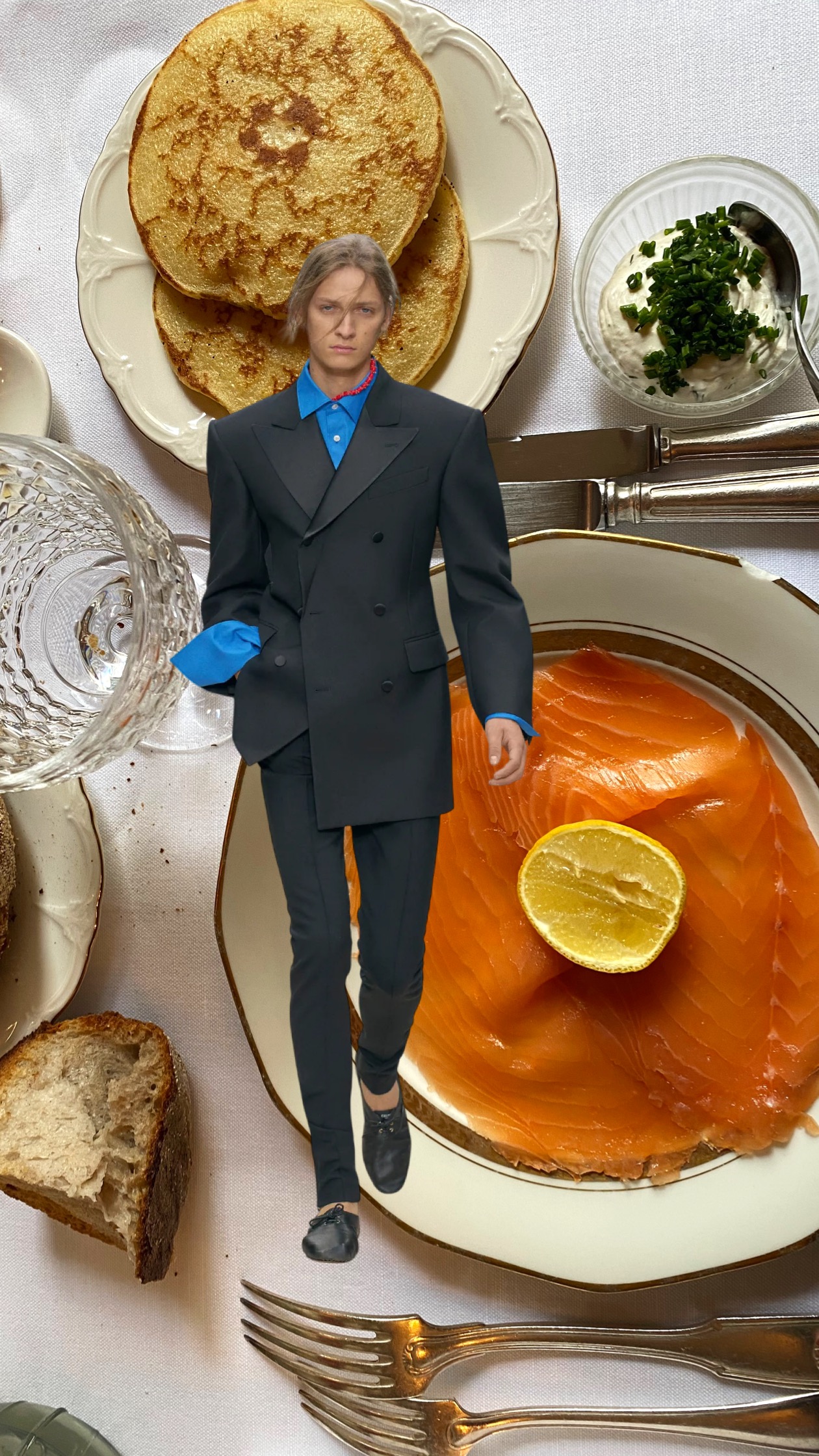
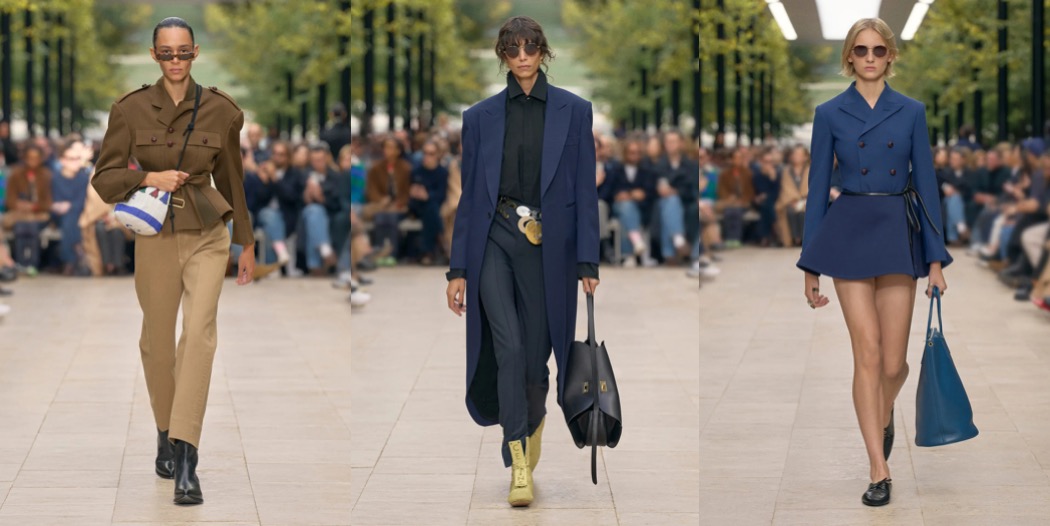
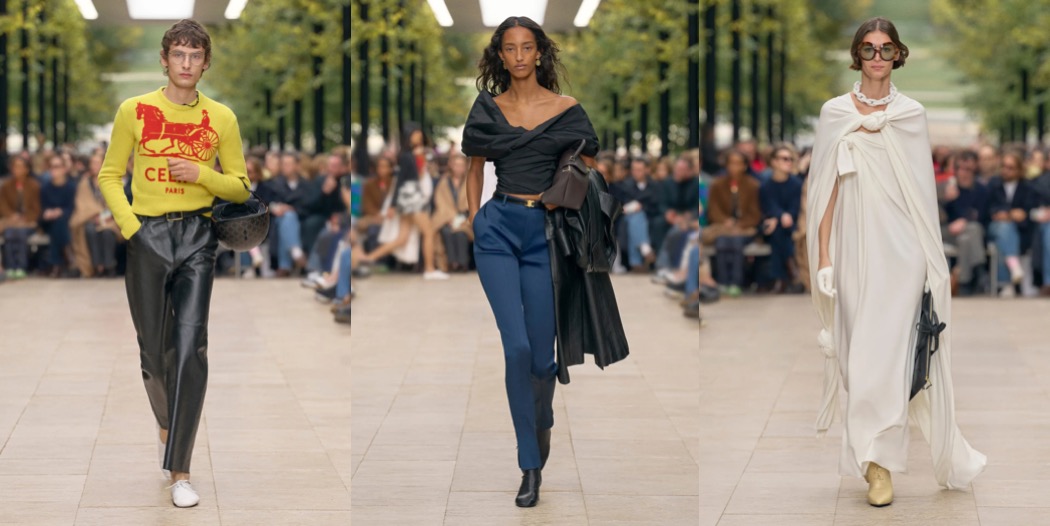
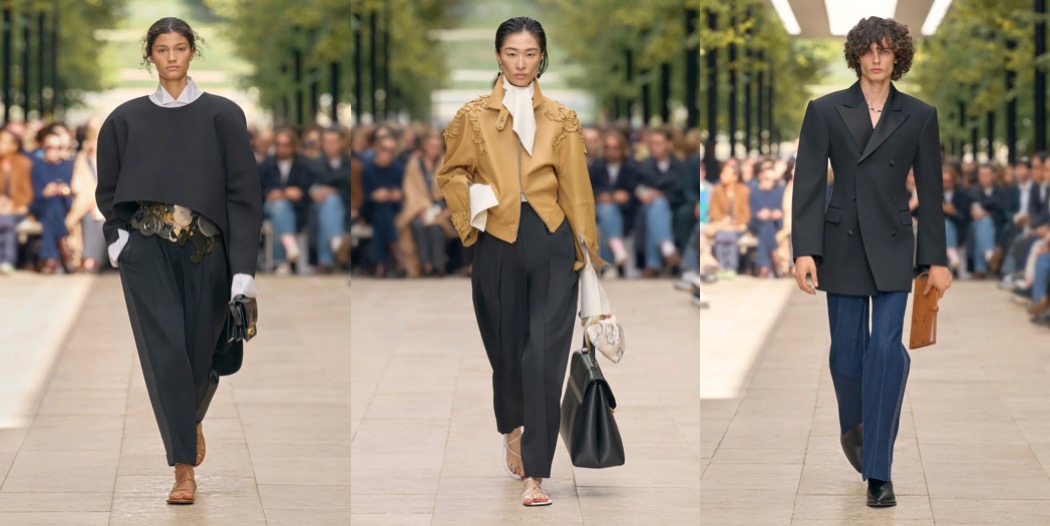
After his triumphant debut in July, Michael Rider returns with his sophomore outing for Celine – easily one of the standout collections of the season. It’s astonishing how effortlessly he navigates the maison’s most prominent style codes: Phoebe Philo’s charismatic, quirk-inflected femininity and Hedi Slimane’s slinky bourgeois sensibility with a rock-and-roll twist. As a result, he delivers a cocktail of life-affirming clothes.
Having served as Philo’s right hand during the Old Céline years, Rider understands what the brand’s clientele loves – and delivers it without resorting to grand gestures or “new era” rhetoric. Yet that doesn’t mean his personal imprint is absent. On the contrary, the well-travelled eclecticism, playful takes on preppiness, menswear-inspired silhouettes with cinched waists and elongated sleeves (very Husbands Paris actually), and his indulgent approach to accessorizing (a tribal-inspired beaded necklace styled with a crisp white shirt is a personal favorite) all bear his unmistakable, joie de vivre signature.
His “smiley” reinterpretation of the Luggage bag has clearly struck a chord – as evidenced by the ever-growing pre-order queue in the Paris boutiques that I witnessed myself. When the clothes will hit the racks, the brand might become LVMH’s big beast.
Collage by Edward Kanarecki. Don’t forget to follow Design & Culture by Ed on Instagram!
Hey, did you know about my newsletter – Ed’s Dispatch? Click here to subscribe!
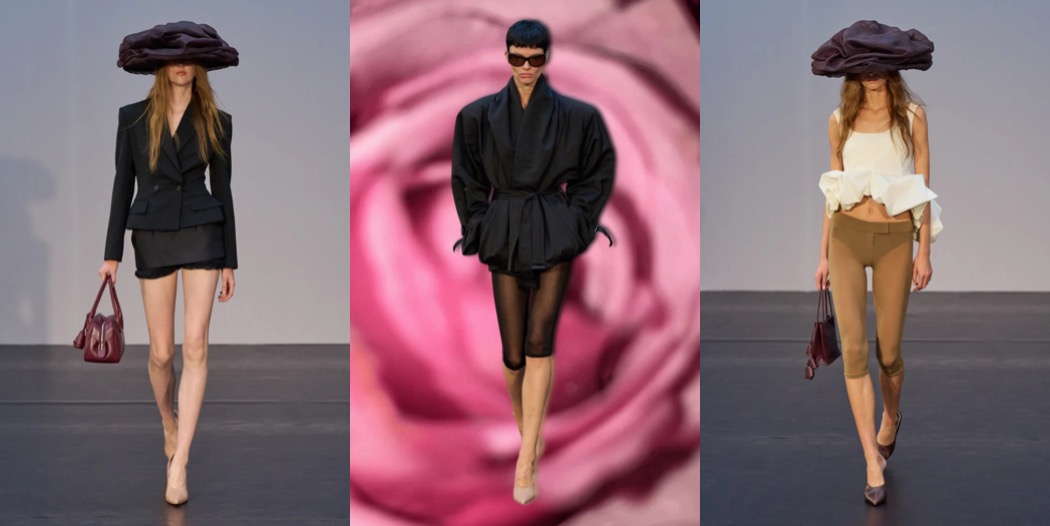
Magda Butrym‘s The Studio is a collection devoted to the intimate and sacred space where the creative process unfolds – the place where the designer feels at ease, fully in her element. It is here that she designs for her – the woman she has envisioned for over a decade. Within this sanctuary, dressing becomes a ritual of pure pleasure, self-expression, and daring beauty.
Magda’s spring–summer 2026 collection is defined by the idea of instinctive chic. It carries the deliberate sense of having just emerged from the studio — undone, spontaneous, and unconstrained. Reimagined in hyper-sensual forms and defined by abbreviated lengths, the collection exudes a palpable taste for the risqué.
Something slightly askew in an otherwise perfect look – that is where chic emerges. Hence, see-through stockings turned into pants are paired with buoyant peplum blouses; broad-shouldered, waist-cinched leather jackets are worn nonchalantly as dresses; and lingerie-inspired, lace-trimmed ensembles reveal satin underpinnings that peek seductively from beneath. Layers of lace separates create a look that is at once undone and frivolous — liberating, self-pleasing, and unapologetic. A duo of full-skirted silhouettes contrasts – yet harmonizes – like white and black swans: one paired with a silk camisole, the other with a masculine leather coat.
The cloud-like draped hats, created in collaboration with Noel Stewart, accompany most looks like cherries atop a cake, underscoring the collection’s cheeky, light-hearted redefinition of ladylikeness.
The collection’s title is not only an ode to Magda’s creative sanctuary in the heart of Warsaw but also a reference to Paulina Ołowska’s painting The Studio, which depicts a woman painter inspired not only by another woman’s body but also by her character. The warmth, vulnerability, and understanding conveyed through the female gaze – so poignantly captured by the Polish painter who sat front row at the show – set the tone for the collection’s outlook on femininity, reveling in all its unexpected twists and turns.
Drawing equally from fine art traditions and pop culture, Ołowska’s vision of women fuels Butrym’s own. The glamorous, full-skirted heroines of the artist are iconified through a lens that fuses Slavic motifs and sylvan settings with fashion-forward sharpness and cinematic allure. In her practice, Ołowska tells not only her own stories but also those of other women — a perspective that intrigues Magda, encouraging her to draw cross-generational inspiration from figures as diverse as Leonor Fini (with her surrealist visions), Deborah Turbeville (and her mysterious dames), and Sarah Lucas (and her leg-centric silhouettes). Femininity here is not constant; it is a spectrum in flux. She is many.
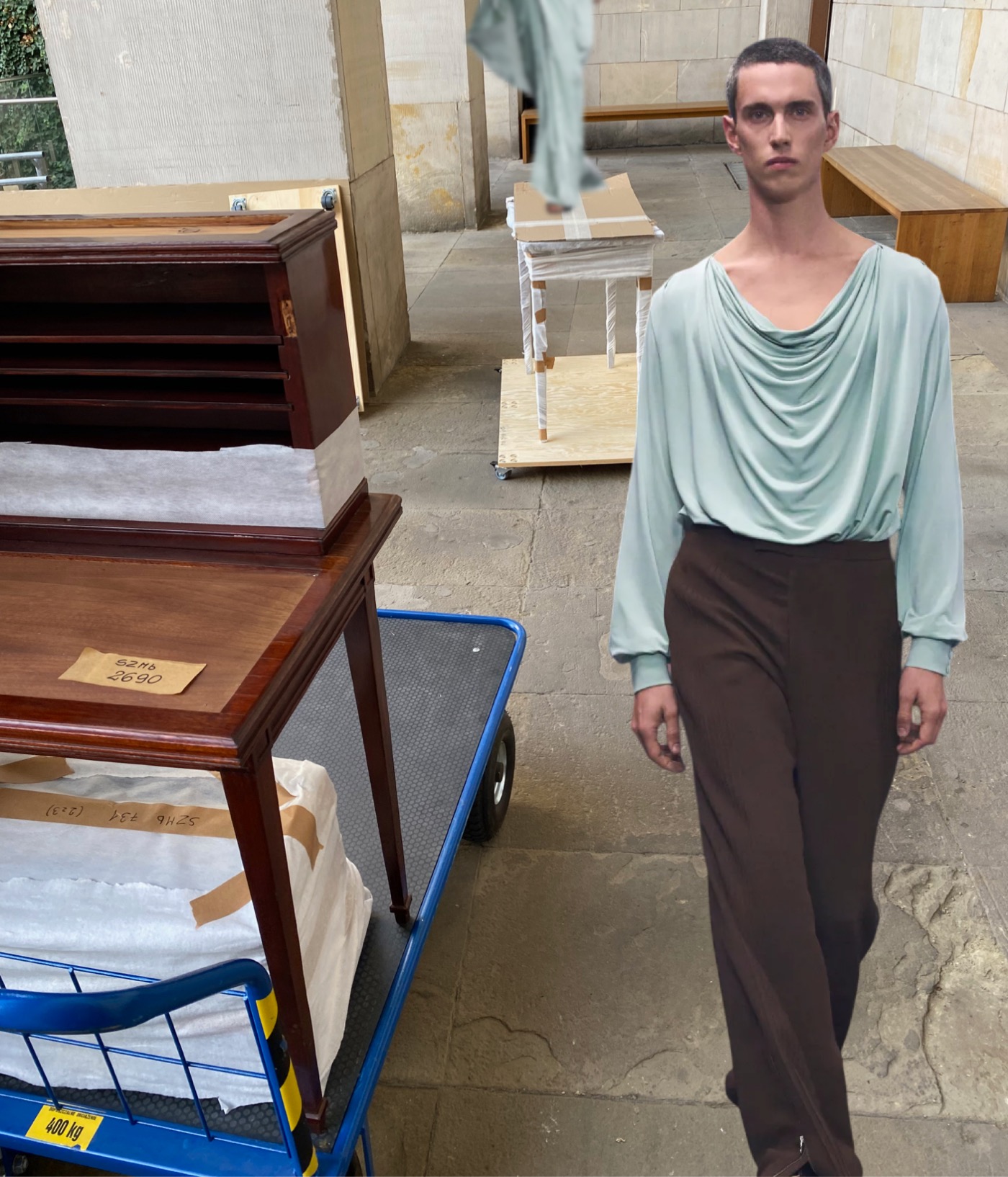
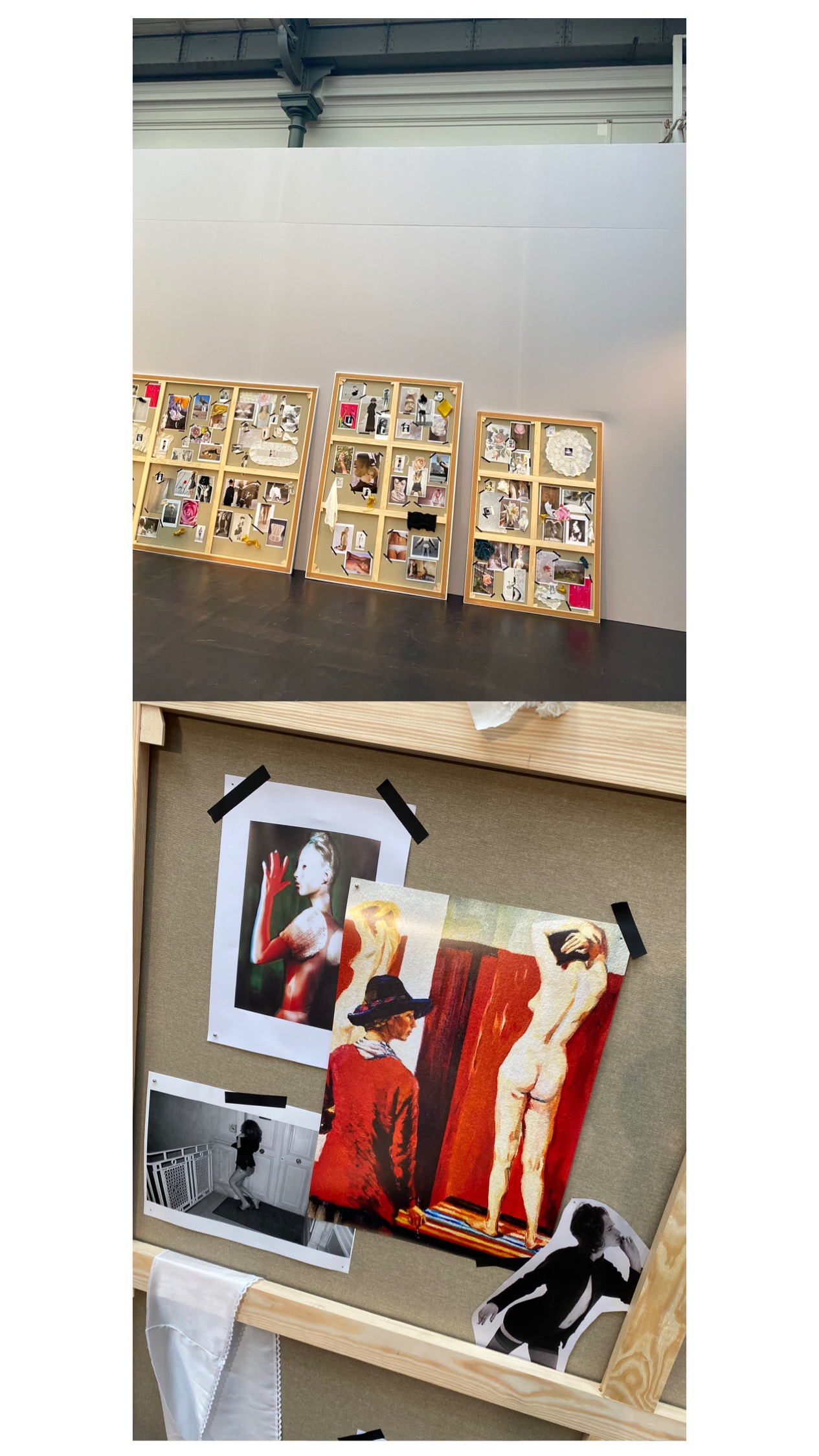
After the fashion show came a theatrical shift in setting – from runway to studio. For this occasion, I had the utmost pleasure of creating six large-format moodboards offering a rare glimpse into the creative process behind the collection, while simultaneously paying homage to Ołowska’s practice. In her extensive oeuvre, the artist often exhibited personal boards of inspiration as a form of self-retrospection – an act mirrored in Magda’s tribute.
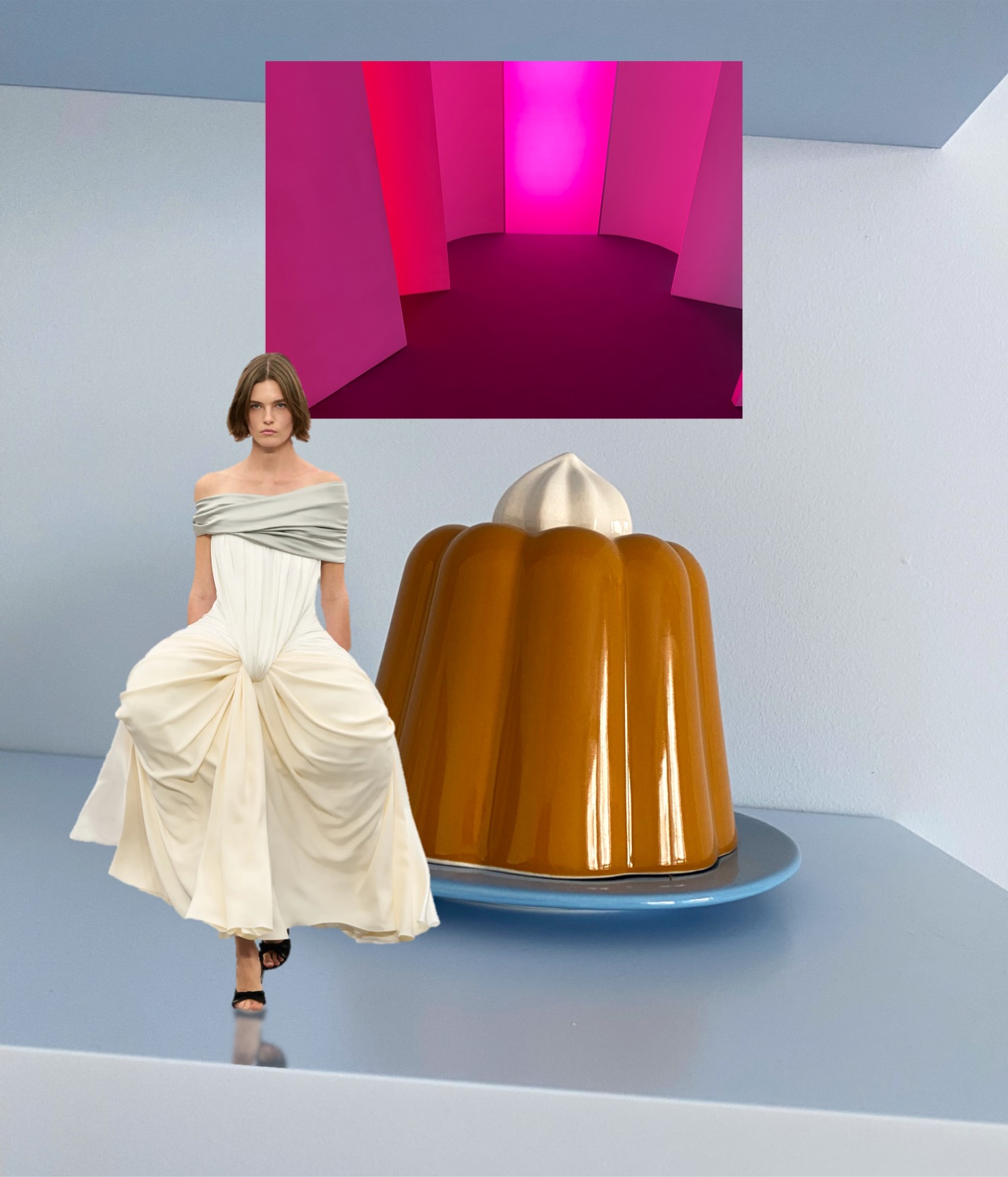
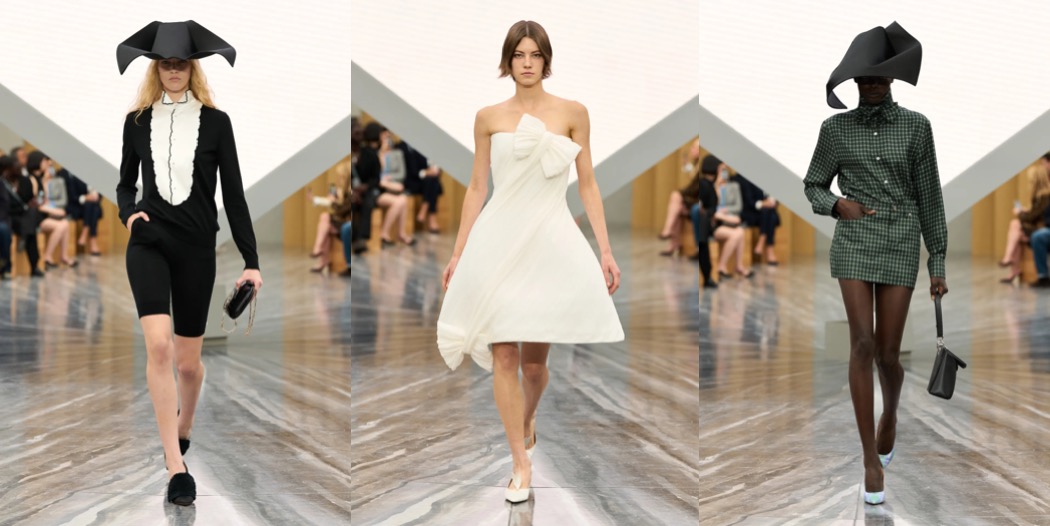
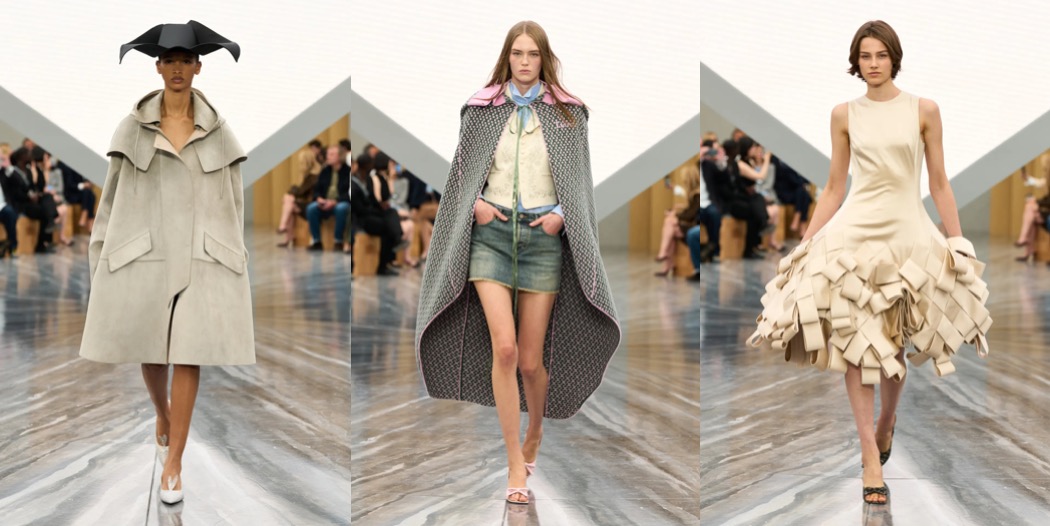
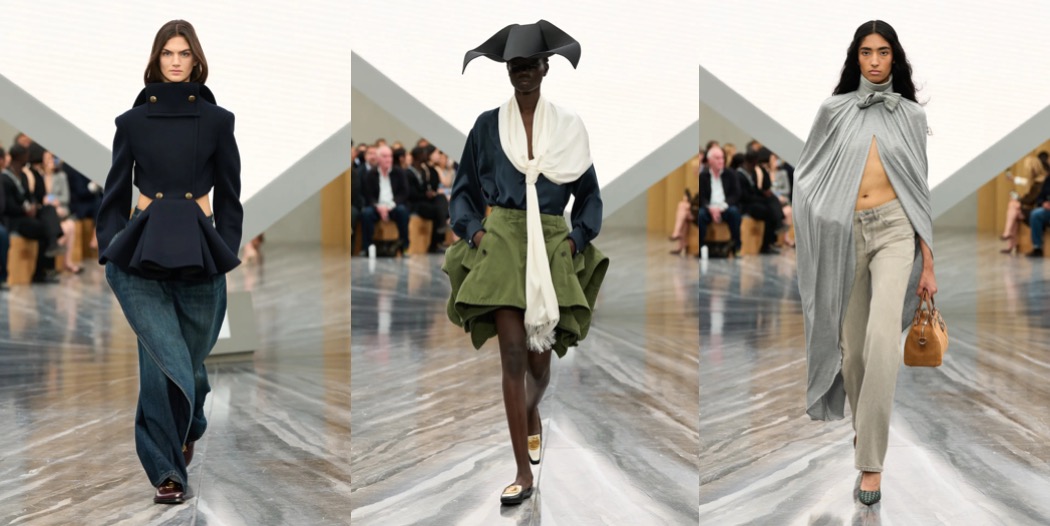
Jonathan Anderson’s highly anticipated Dior womenswear debut has arrived, and it left me not just confused, but genuinely perplexed. It is, without doubt, a peculiar collection – one that will likely puzzle former Maria Grazia Chiuri clients. Anderson challenged the very perception of what Dior represents today, moving in multiple directions at once: blending the high (the brand’s couture savoir-faire) with the low (unexpected, intentionally blunt-looking flannels), while contextually engaging with Dior’s many past designers – yet keeping the approach far less conceptual than at Loewe. Backstage, he insisted this collection was simply about clothes.
The juxtapositions were striking: an origami-shaped hat, a pleated lace high-neck blouse (visually nodding to Yves Saint Laurent’s work for the maison), cargo-like balloon pants, and flower-shaped pumps – all colliding into an ‘everything, everywhere, all at once’ overdose. But that collision is precisely Anderson’s point: a shock factor that, in retrospect, often feels uncannily right.
The seemingly levitating gowns with inflated bows? Undeniably lovely, especially in motion. But a khaki denim shirt paired with a pastel pink mini skirt a moment later? Awkward, jarringly out of place. And yet, perhaps that very sense of ‘out-of-place-ness’ is Anderson’s true power at Dior.
Collage by Edward Kanarecki. Don’t forget to follow Design & Culture by Ed on Instagram!
Hey, did you know about my newsletter – Ed’s Dispatch? Click here to subscribe!





















 Design & Culture by Ed