She’s A Goddess, Hero, A Power-Female! Schiaparelli Couture SS21

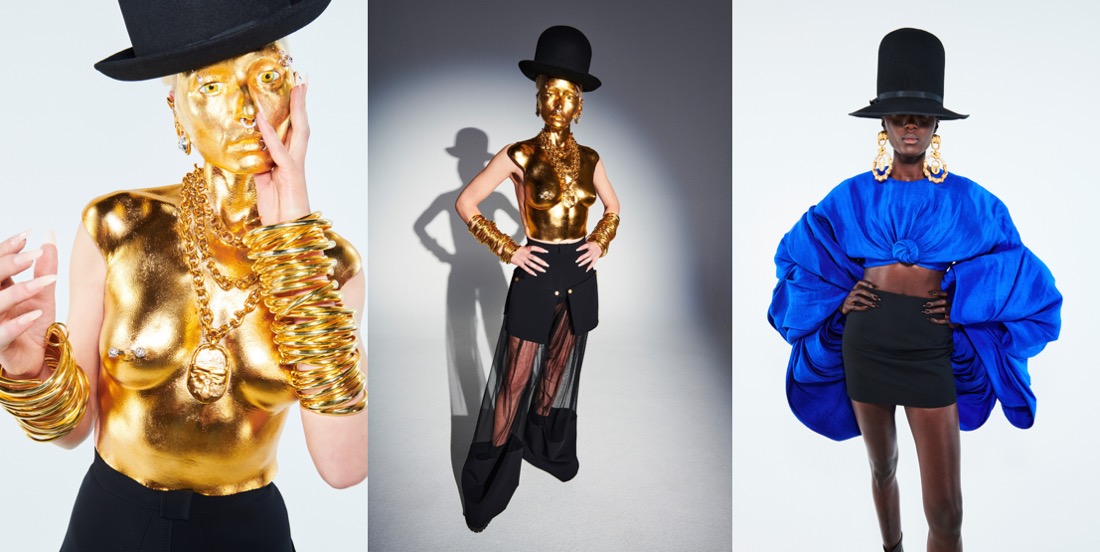
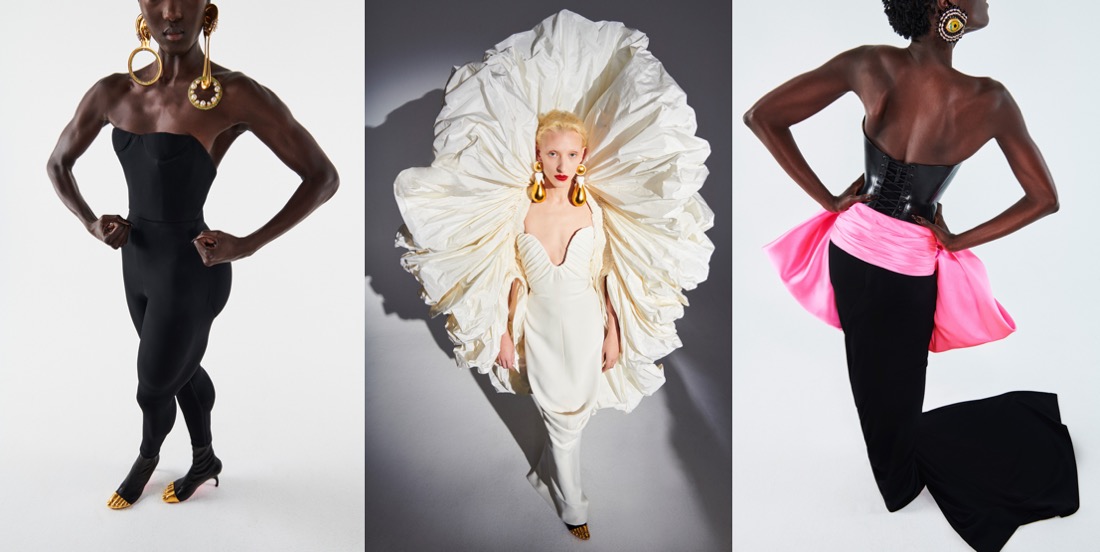
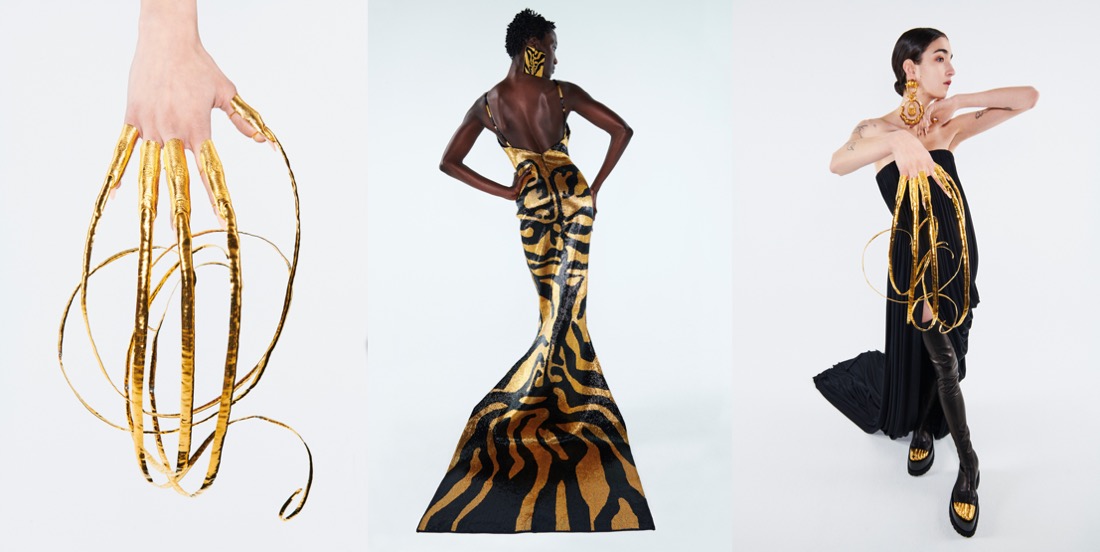
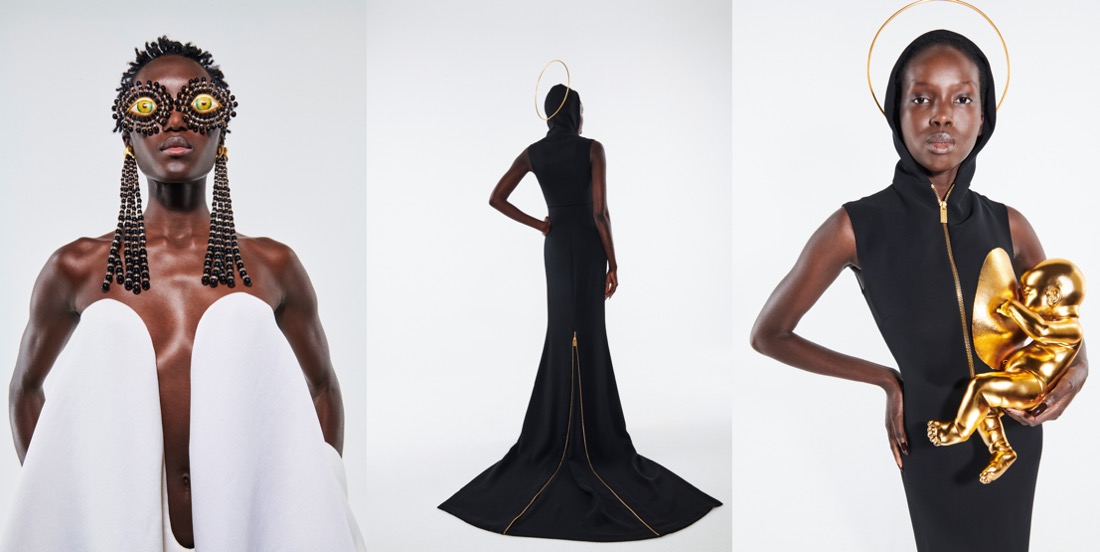
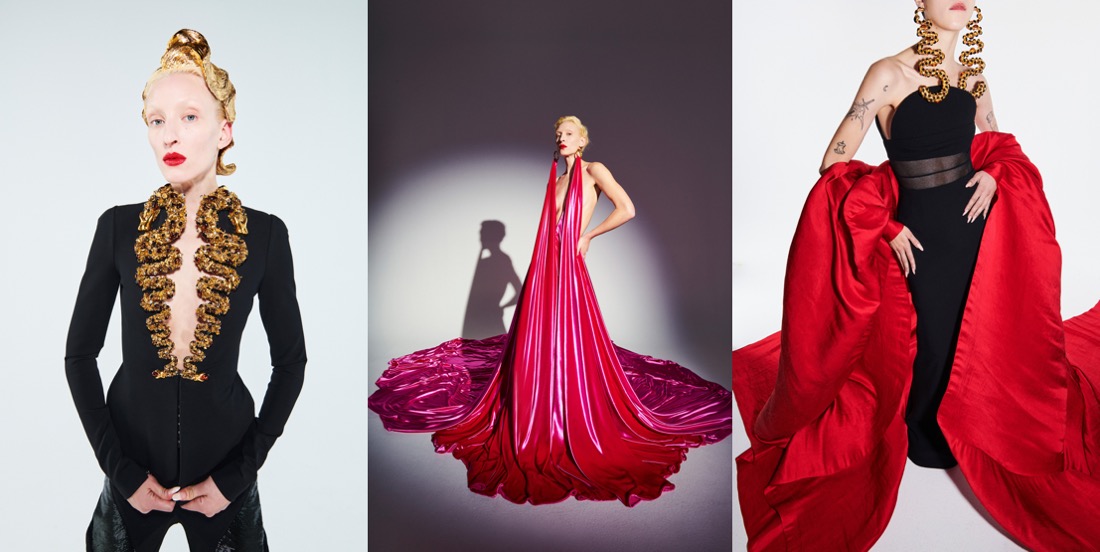
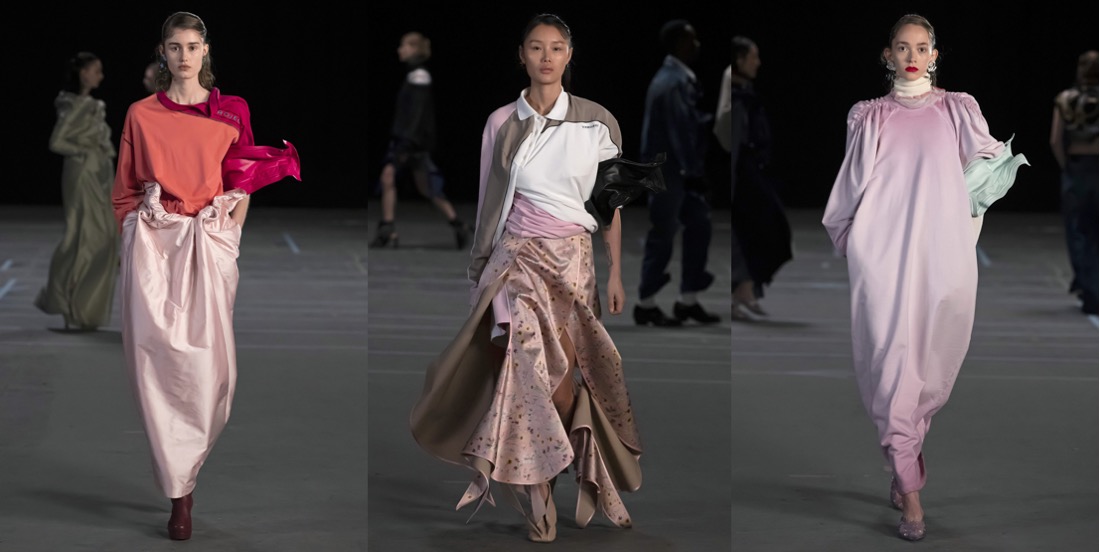
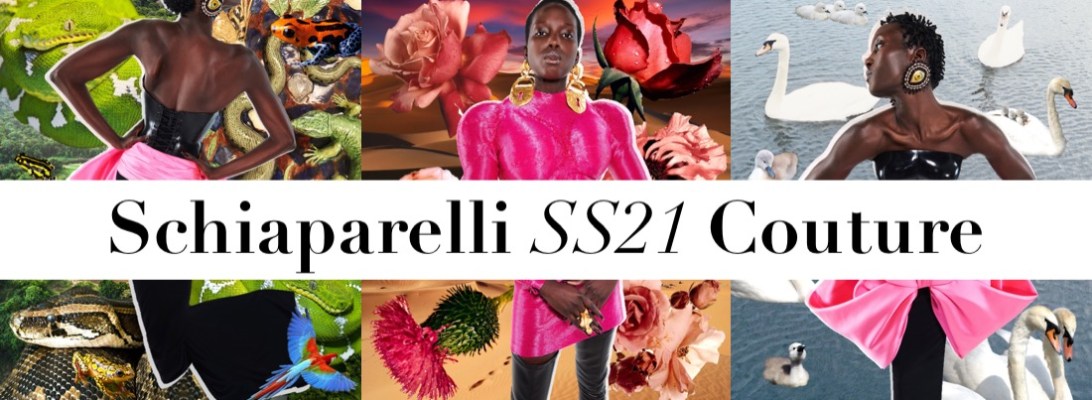
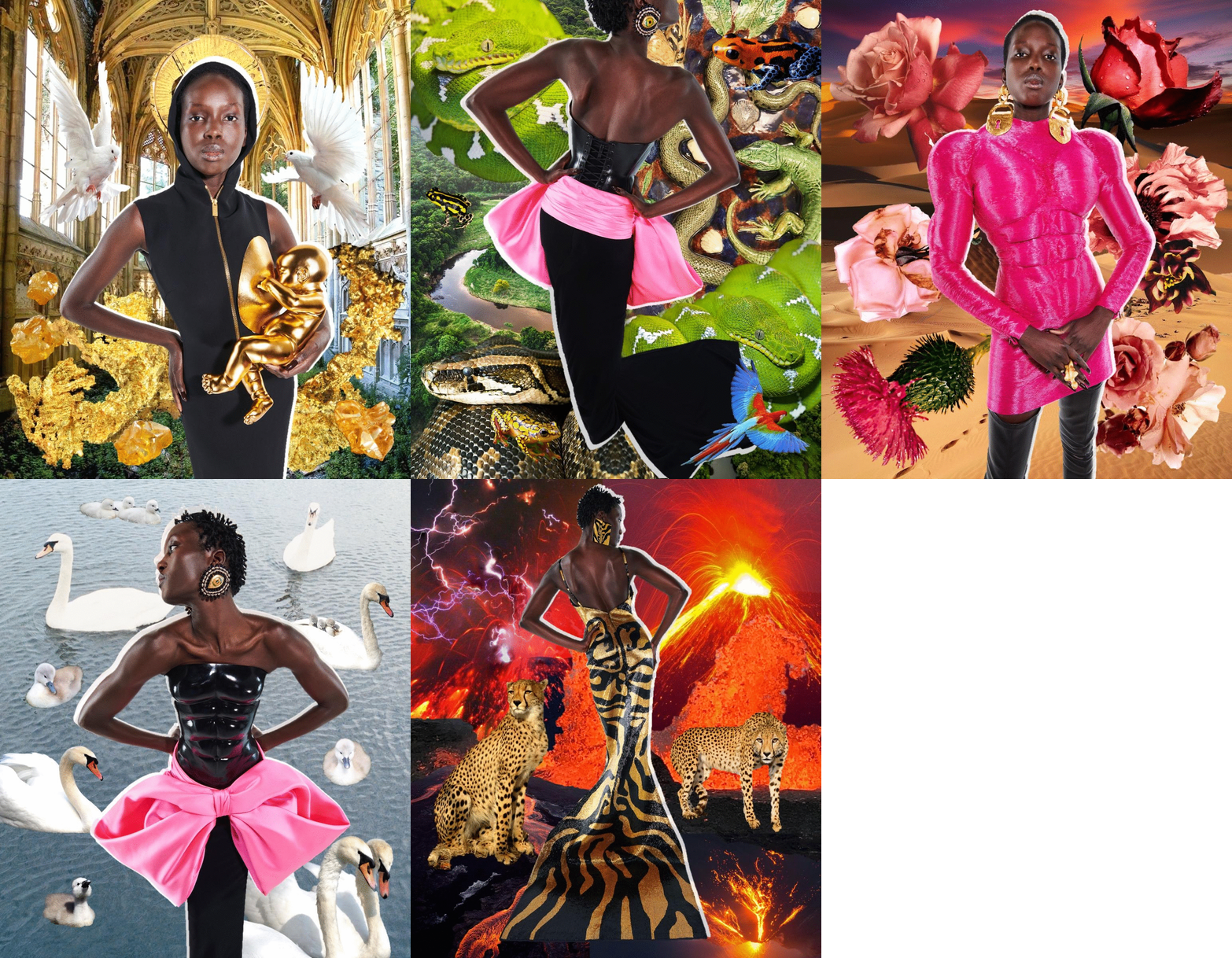
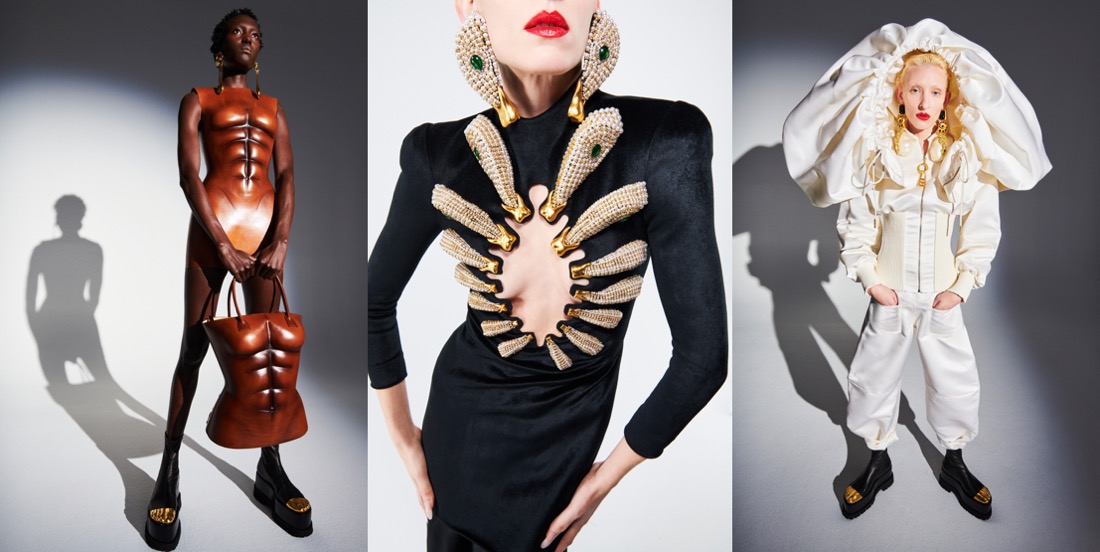
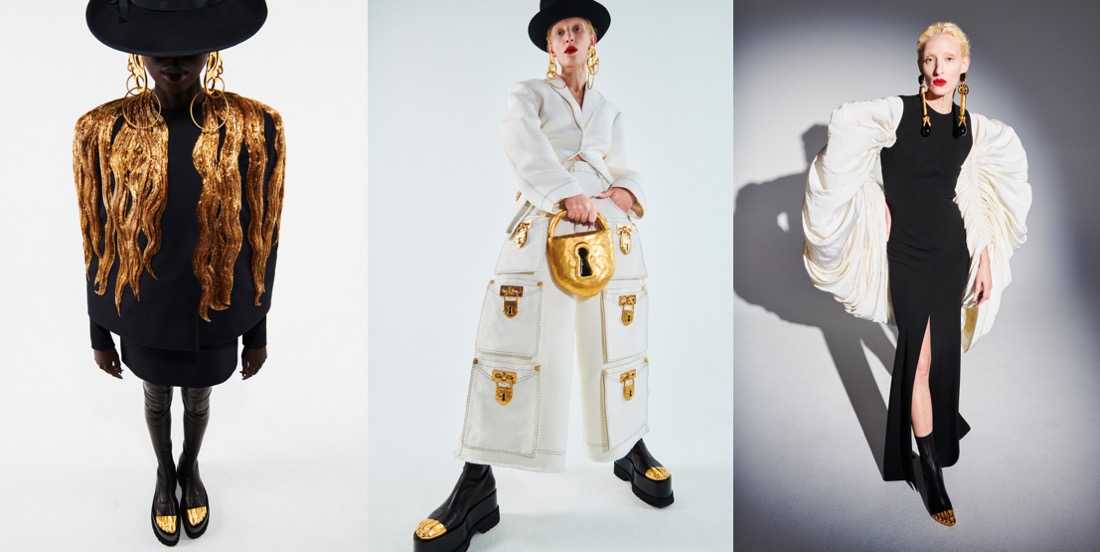
Schiaparelli and Daniel Roseberry are a match made in heaven. The way the Texas-born designer plays with Elsa Schiaparelli’s codes is so witty and intelligent – and what’s most important, he makes it his and doesn’t try to mimic the maison‘s founder as his predecessors. Spring-summer 2021 couture line-up is his best yet, and truly, it transports the viewer to a wonderland. And since Lady Gaga wore a black fitted jacket, red silk faille ball skirt and a golden dove brooch of his design to sing the national anthem at President Joe Biden’s inauguration last Wednesday, it’s clear more people will pay attention to Roseberry’s magic. “For a house like Schiaparelli,” he told Vogue, “dressing Gaga for the inauguration speaks to capturing the moment. That’s what I’m trying to do with all of our celebrity moments: to nail the zeitgeist.” Daniel’s Schiaparelli is open to big celebrity moments (Kim Kardashian West and Hunter Schafer, for instance), but it also breaks couture conventions and says ‘bye’ to the haute stuffiness once and for all. He’d been pushing the house, which was quite straitlaced before his arrival despite Elsa Schiaparelli’s famous Surrealism, in a new direction. But the eccentricities of his earlier outings were just him warming up. “Ever since I came back from lockdown, there’s been a shift for me mentally here – a focus and confidence that’s come from my relationship to my own process and to the atelier,” he said. Synthesizing his point of view, he added, “it’s just something that’s not as polite as couture typically tends to be.” If there’s one piece that says his incubation period is over, it’s a Madonna and Child breastplate, but there’s no shortage of statement-making bijoux here, from the tooth pearl earrings to the fingernail rings. “It isn’t about being too perfect for me,” Roseberry said, “but it is about shutting the moment down.” On that note, the look book opens with another super-heroine bustier, this one in glossy black finished with a prodigious bow in Schiaparelli’s signature shocking pink. A different dress in the same electric pink hue accentuates not just gym-toned abs, but trapezius muscles and biceps. “If you want to look like a cupcake, you can go somewhere else,” Roseberry said with a laugh before getting serious. “I started thinking, is there something about couture that’s sort of misogynistic, that demands or expects that a woman wants to look hyper-feminine and dainty and ‘Bridgerton’ adjacent?” He clarifies, “It’s not about being a man at all, it’s about being a jacked woman.” A stretch-fabric dress knitted with more than 200,000 Swarovski crystals will appeal to clients whose own well-maintained physiques require no surface-level enhancements. Elsewhere, Roseberry made exuberant use of volume. A black column dress with ample folded sleeves would make a spectacular red carpet dress, but he also designed a couture jean jacket and a couture parka with grand hoods. The contemporary Schiaparelli woman is no longer just an arty party-goer. Now, she’s a goddess, hero, a power-female!
Live” collage by Edward Kanarecki.

Feeling is Luxury. Lemaire AW21

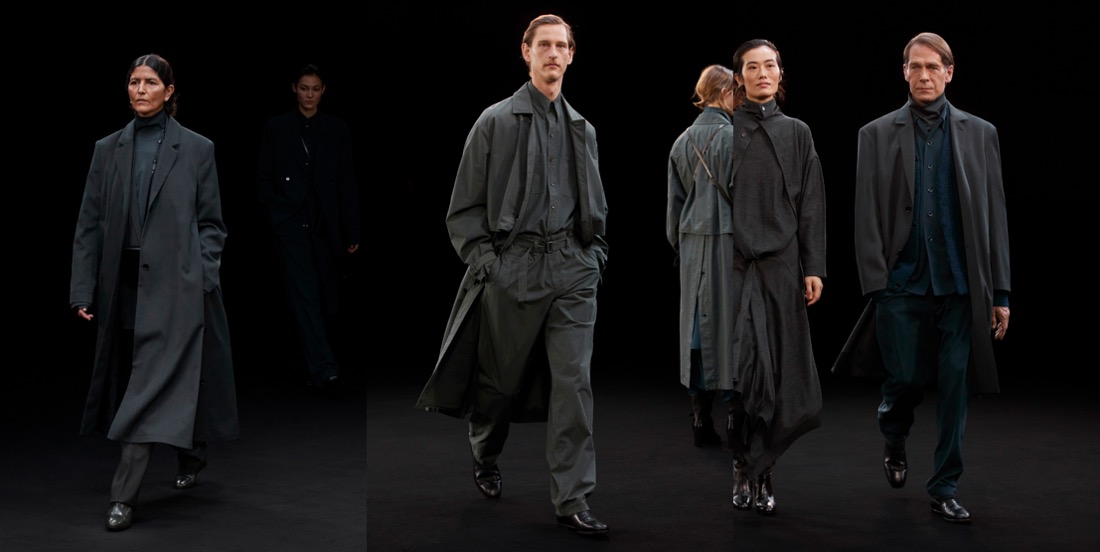
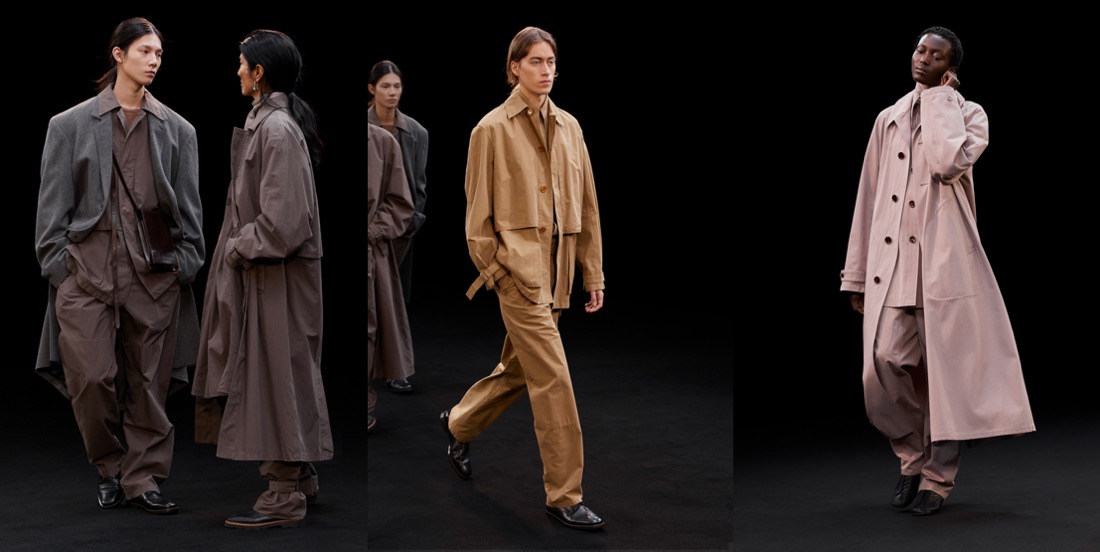
I love Lemaire and I will acknowledge this a hundred times. I just don’t know how Christophe Lemaire and Sarah Linh Tran do it every single time. This level of goodness should be illegal. The co-ed autumn-winter 2021 collection is a dream, from the clothes (drooling over each garment, really) to the model casting. Partially as a result of confinement, the designers framed the development of this collection according to shifted criteria of demand: feel was as important as look, and adaptability inside and outside our front door paramount. The result was a hierarchy of layerable garments that began with a base of pajama-like pieces in cotton, silk and fine knits, in typically evocative earthy tones. These were arranged under mid-layers of Mod inspired tailoring and workwear sourced pieces, softly rendered but structured in appearance, plus Shetland knits and turtle-necks that were themselves contained within a protective carapace of excellent outerwear choices. These included a supremely livable-in reversible shearling, and greatcoats worthy of the name. Parkas and Afghans came trimmed in Mongolian wool (those pieces are delightful…); trenches and macs featured beautiful abstract marbled print; billowing robe-coats in down or alpaca were enveloping and arresting. Tran noted her favored heel height had been reduced in slouchy uppered boots as a result of her appetite for walking as much as possible when the opportunity presented itself, while men’s footwear included commando-soled slippers and the usual impeccable boot. Bags had a pouch cut like a mitten for double usage. Tran said: “during the confinement we were fantasizing about going out into the streets of Paris, and we were inspired by the idea of the flâneur from Baudelaire; going in the street with no special agenda in mind.” Taking pleasure in a purposeless saunter is a purpose in itself, and this was a collection beautifully built to enhance mindful loitering in every milieu. Added Lemaire: “Luxury is more about how you feel in the clothes than the image you project to others: this we have always been convinced of. And it’s more relevant than ever today… the changes in the rhythm of life and our habits have encouraged us to be even more attentive.

Collage by Edward Kanarecki.

Off-Kilter Glamour. Y/Project AW21

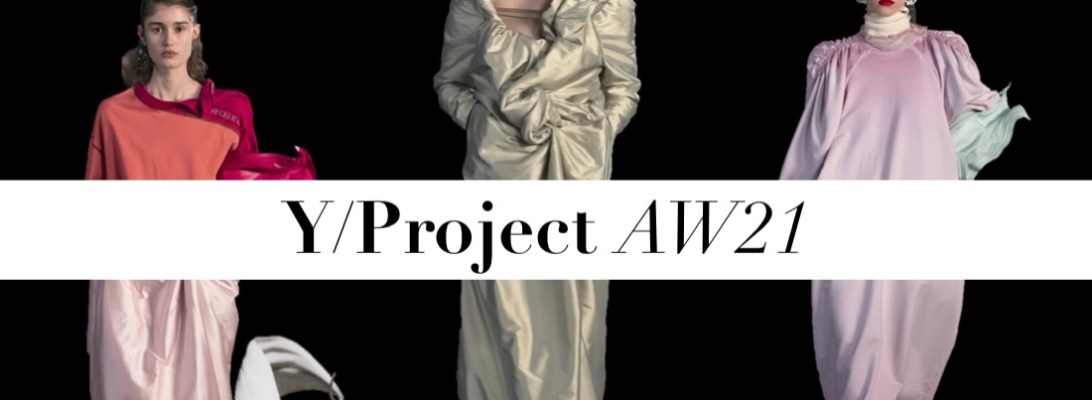
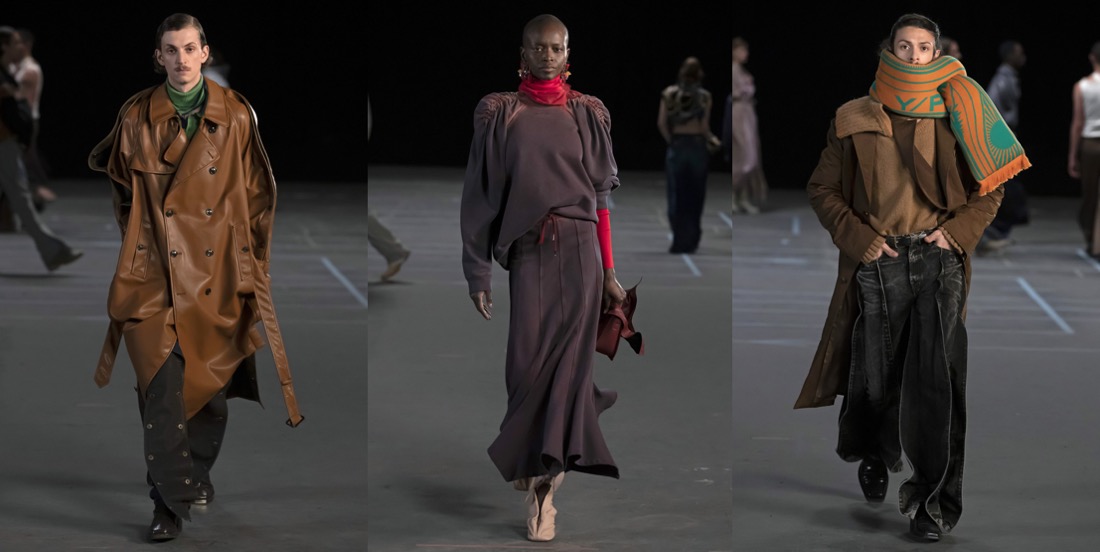
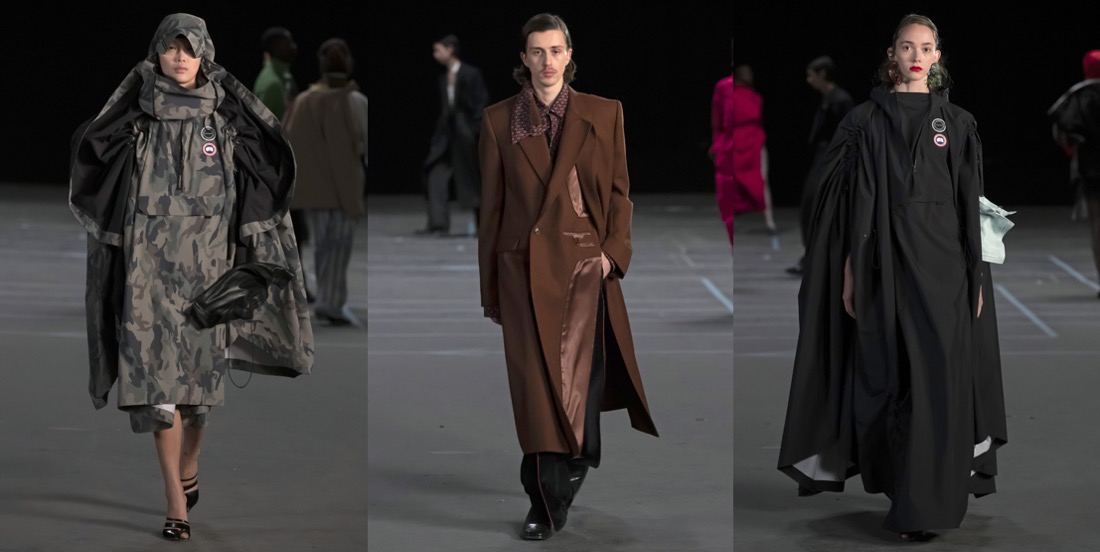
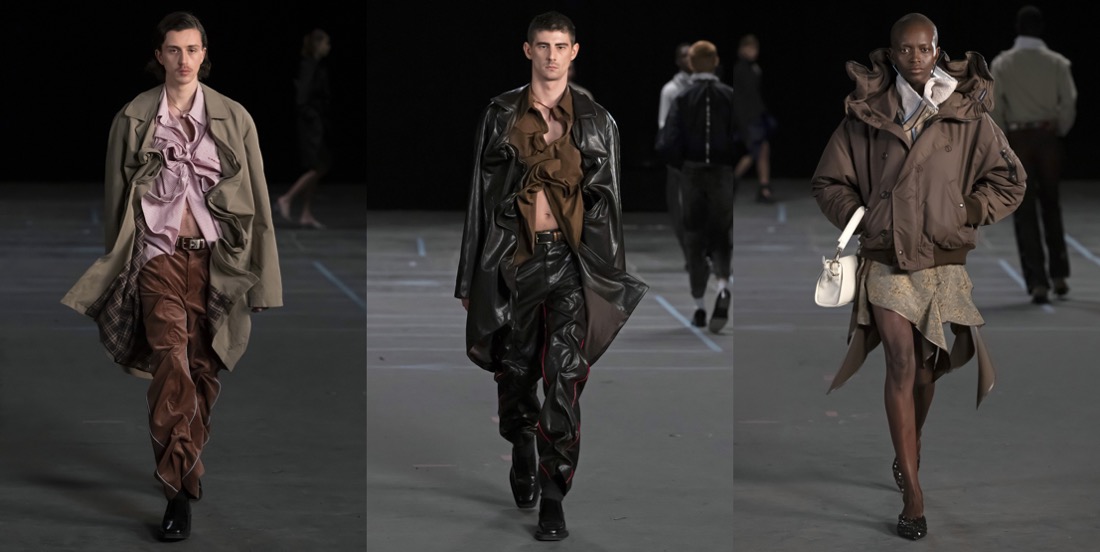
Y/Project‘s Glenn Martens makes his visual brand for the brand so distinct, that sometimes you wish he surprised with a completely new direction. But then, consistence is key to success, especially in times of global crisis. The  pandemic has pushed Martens to unify his men’sand women’s ready-to-wear collections into one. It’s a smart move for many brands. With his new post as Diesel’s creative director, showing less will allow Martens and his team time to refine their craft and push the boat out even further. But back to autumn-winter 2021: majority of the 64 looks on display are threaded with metal wiring which is integrated directly into the fabric, allowing the wearer to scrunch, swirl and bend their garments into whatever shape they desire. It’s a technique Martens introduced a few seasons ago, turning oversized shirts, opera gowns and the brand’s signature denim into ultra-versatile pieces. XXXL polo shirts circle around the models’s bodies; shirts appear frozen in a snapshot, mid-motion, like the wearer is trying to rip it off their torso. The art of distortion is Glenn’s signature – and it’s being knocked off by so, so many designers. My personal highlight of the line-up is the eveningwear, a territory Martens likes to gradually discover each season. Those draped column dresses and flowing skirts are glamorous, but in an off-kilter, Y/Project manner. The collection is tied together with the brand’s on-going collaboration with Canada Goose, which this season includes a couture-like rain cape. Topping off the look is some Cinderella-like glass slippers that are actually made of rubber, courtesy of sustainable Brazilian label Melissa.

“Live” collage by Edward Kanarecki.

Men’s – Familial Affection. Jil Sander AW21

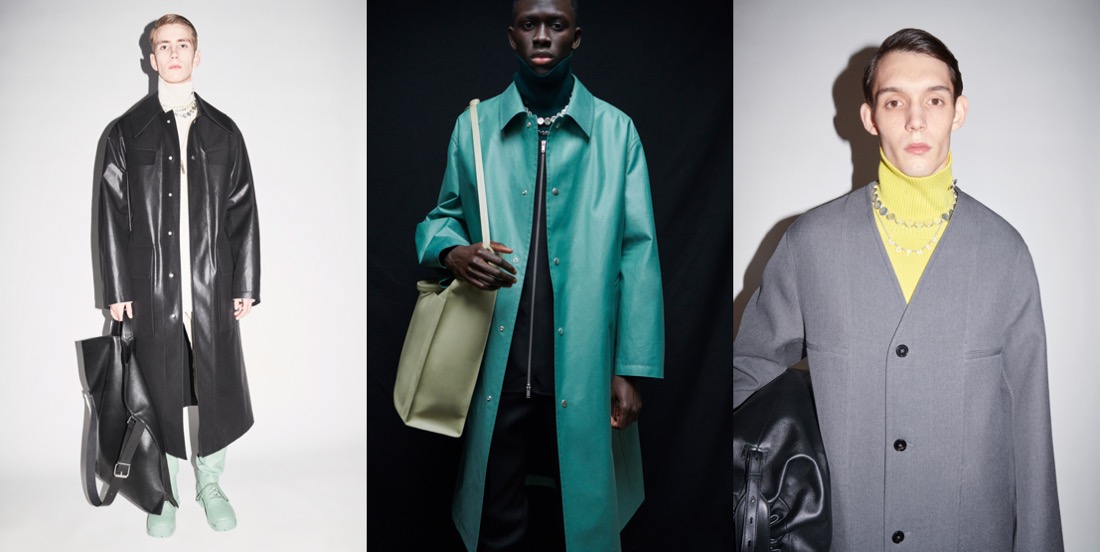
Lucie and Luke Meiers‘ soft minimalism also applies to their menswear collections at Jil Sander. This time, however, the designers seem to be a bit more serious than usual. Between their enveloping wool coats, elongated tailoring, roomy knitwear, fluid overshirts and comforting knitted collars, a more abstract interpretation of our wardrobe mindset than mere ‘comfort-wear’ took shape. Clinical wellies in dusty tonal colors evoked those worn with quarantine suits in science fiction and leather sashes easily conjured visions of spaceship uniforms. Most expressive of the feeling were woven metal necklaces and breastplates, and primitive pendants that spelled out “Mother.” References aside, the pieces spelled out the emotions of solitude and loss of familial contact the designers perceived over the time. “The letter forms are very simple. It’s the feeling he could have just found the metal and made it himself. But it’s very close on his body,” Lucie said. Sewn onto coats and knitwear were panels of frayed canvas printed with photographic portraits of flamboyant young female art students at the Bauhaus shot by Florence Henri in the 1920s. Worn by the un-eccentric young men that made up the cast, the effect wasn’t camp but very human; the male idea, perhaps, of missing a formidable female family member or friend. “It’s a show of familial affection,” Luke noted. The Meiers’ earnest design practice can feel stark or cold, but between its muted colors and themes of loneliness and longing there was an expressed emotional core to this collection that gave it warmth. “There’s a certain personal approach here. I try most of the things on, and I wear most of the pieces,” Luke said.

Collage by Edward Kanarecki.
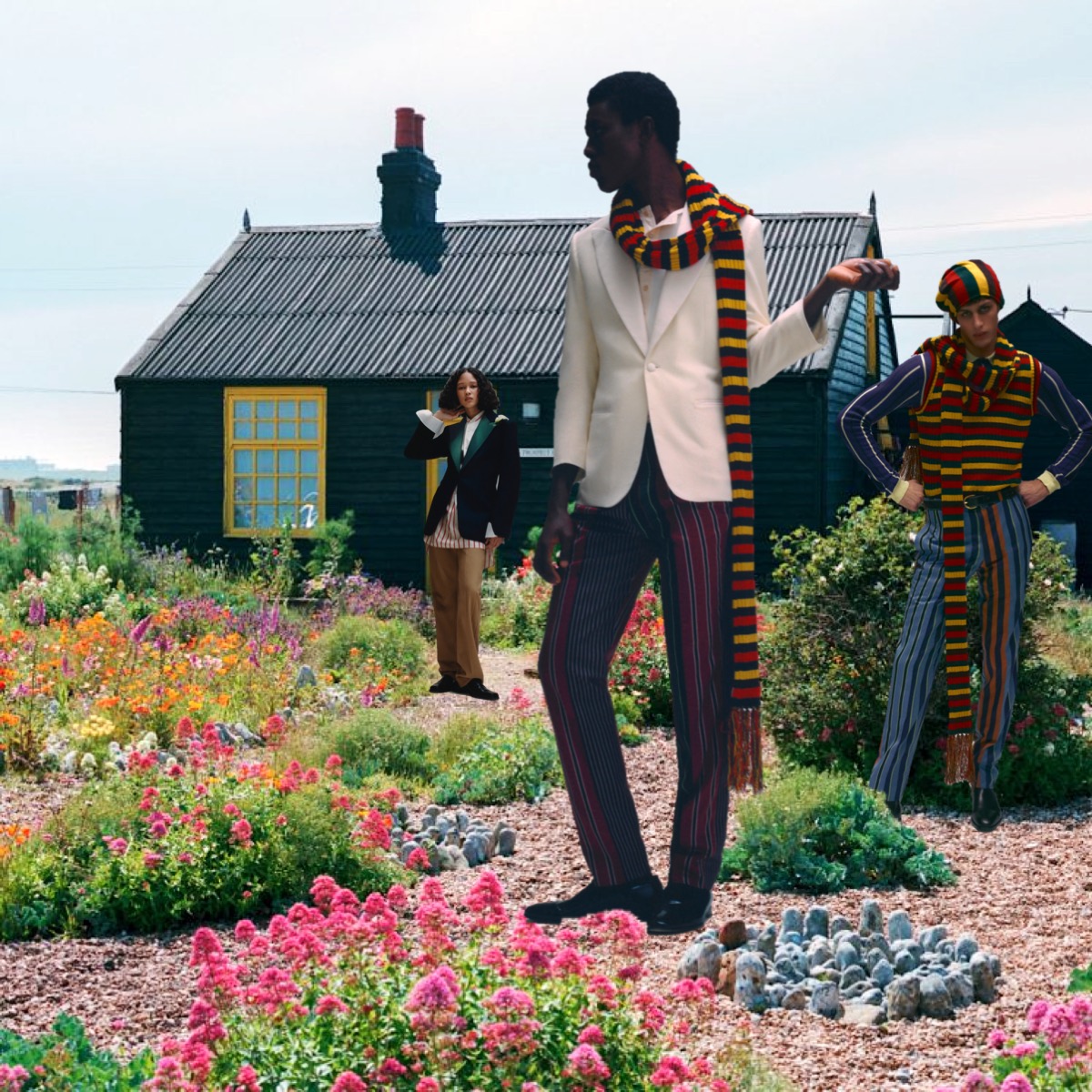
Men’s – Outsider Intellectual. Wales Bonner AW21

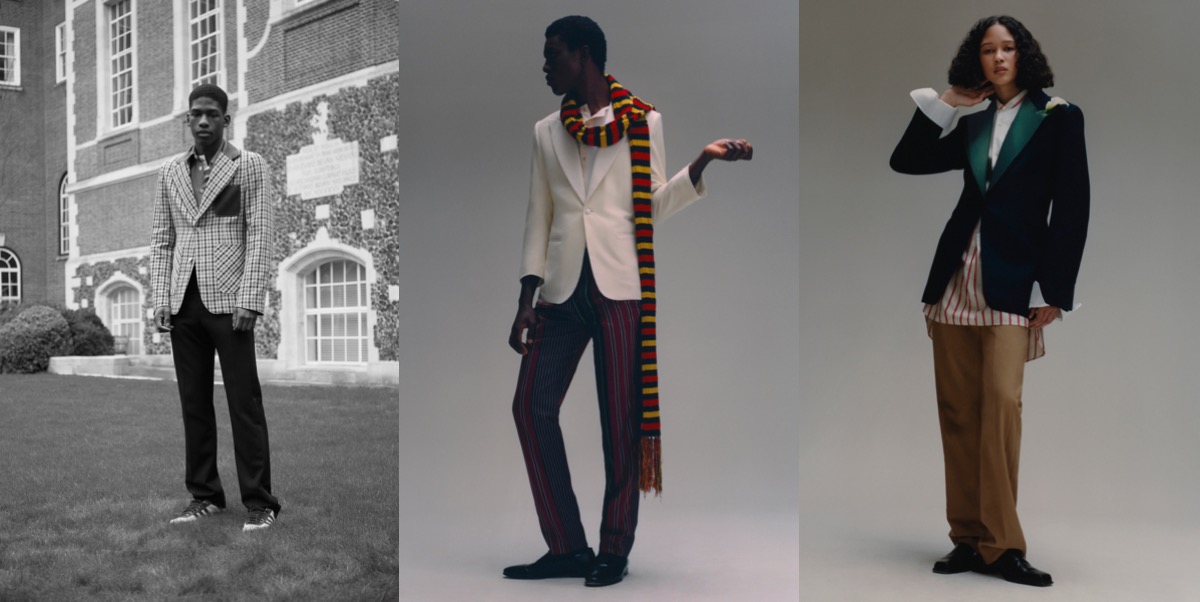
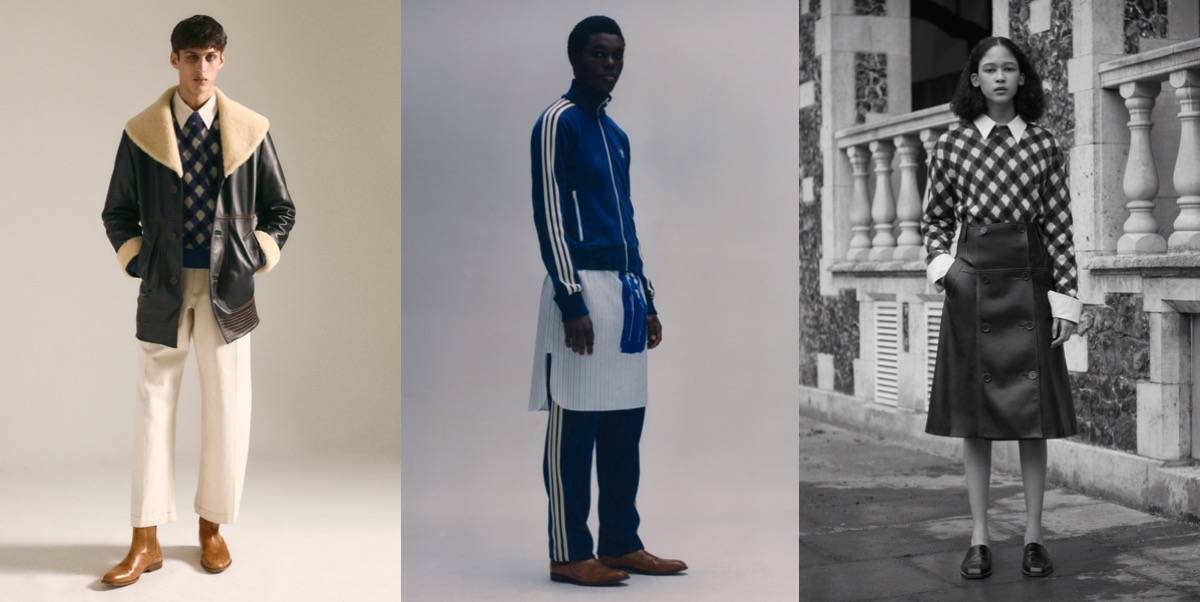
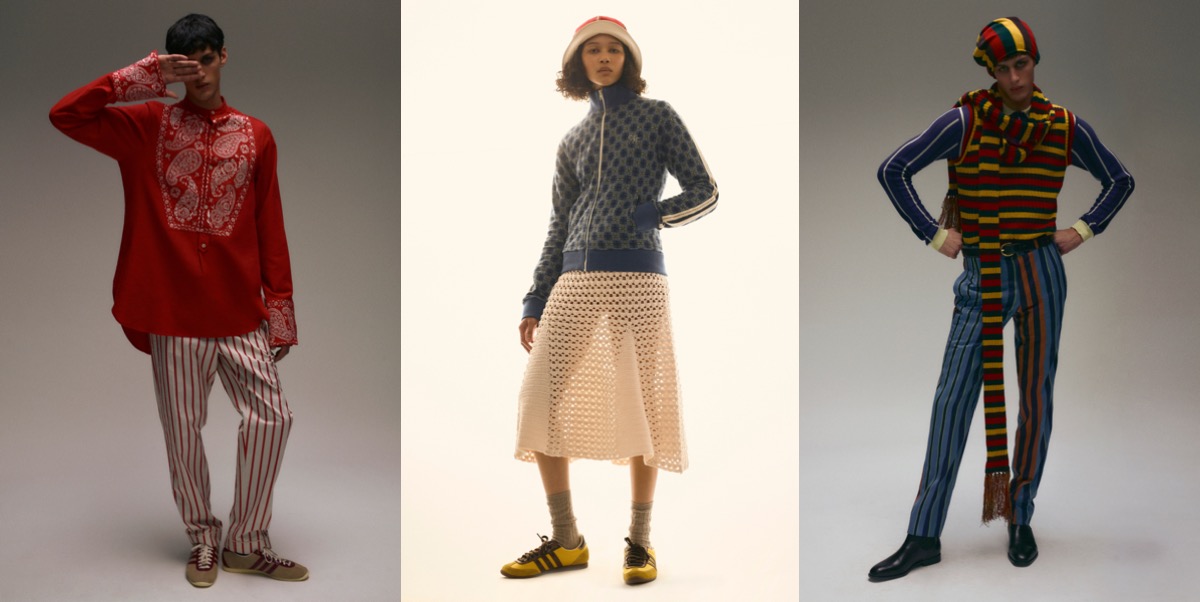
Grace Wales Bonner is one of the most convincing (and educational!) story-tellers in today’s fashion industry. Her latest collection showcased the final chapter in a trilogy, begun last January, which explores the cultural and sartorial threads that interlink Britain and the Caribbean. “This subject is the starting point for why I’m interested in creating,” said the designer, who is British born but of Jamaican heritage. “During this time I feel like I’ve really been grounding myself in this framework, and refining myself within it. These collections are about consolidating and reinforcing what is timeless to me; representing the breadth of what Wales Bonner is, and can be.” Thus far in the series the designer has looked to the second-generation Jamaicans who established London’s 1970s Lovers Rock scene to inform her designs, and then the dress of Jamaica’s dancehall and reggae stars. Here she started by exploring the wardrobes of Britain’s Black scholars in the 1980s: those who traveled from across the world to study at the likes of Oxford and Cambridge. There was a reimagining of their academic attire – of tweed blazers and knitted scarves, well-worn chinos and striped jumpers – but within that historicism, “I was thinking about how in certain spaces people create a language for themselves,” reflected the designer. “About how you might disrupt an institution from inside.” It’s a subject that has long fascinated Wales Bonner, whose brand was established with the intention of disrupting the luxury perspective, redirecting it from its often singular focus on Eurocentricity. So poets like the Barbadian Kamau Brathwaite and the Saint Lucian Derek Walcott appeared as more than just aesthetic character studies; rather, they were catalysts for considering a post-colonial movement that explored “what it is to be in another place, or from another place.” The resonant words of Braithwaite, who left Bridgetown to study at the University of Cambridge, were spoken over the immersive film directed by Jeano Edwards which accompanied the collection: “You had not come to England / You were home.” In terms of clothing, Wales Bonner imagined what she termed the wardrobe of the “outsider intellectual,” considering the structure of British traditions and wondering “within that framework, how do you create something new?” She found her answer by imbuing her distinct take on sartorial eclecticism with a gently liberated, multicultural sensibility. The designer worked with Savile Row tailors at Anderson & Sheppard on tuxedo suiting inflected with Afro-Atlantic flair and elsewhere she softened Oxford shirting, printing cotton cashmere with Jamaican “flowers of resistance” from the photograms of artist Joy Gregory. Boating striped overshirts simultaneously channeled Oxbridge classicism and West African dashikis; brushed denim was cut into crisp suits. A sense of ease was injected into even the most traditional tailoring. Woodblock prints and Indian embroidery drew on the diasporic nature of her research, and a deliberate diversity was instilled throughout. “What I was trying to connect with is a sense of expansiveness and possibility,” said Wales Bonner. “For example, in Derek Walcott’s The Gulf, he has a poem about different Indian gods. You think you’re looking at Caribbean thought, but then there are all these other influences. Once you start researching anything, you realize that nothing is simple. Nothing is one thing. So I didn’t want to make anything too neat.” That expansive notion was echoed, too, in the latest iteration of Wales Bonner’s Adidas collaboration – a partnership that has recently taken fashion by storm. “I was trying to imagine a fictional university that is a lot more multicultural,” she said of its new evolution. “Maybe what their team kits for a track program might look like.” Referring to “the origins of sportswear – when it was made in a beautiful, crafty way which feels almost tailored,” Wales Bonner leaned into Adidas’ technical resources to revive specific fabrications like ’60s jerseys and lived-in wools “to make things feel authentic,” she said. A T-shirt printed with the emblem for “Wales Bonner Adidas Originals Literary Academy” offered a tongue-in-cheek nod to the extensive footnotes which typically accompany each of the designer’s collections. But what has been proven by the sell-out success of her tracksuits and trainers is that, even without related reading, there is something uniquely compelling about Wales Bonner’s designs: the heavy-duty weight of her research injects something intangibly compelling into her clothes.

Collage by Edward Kanarecki.