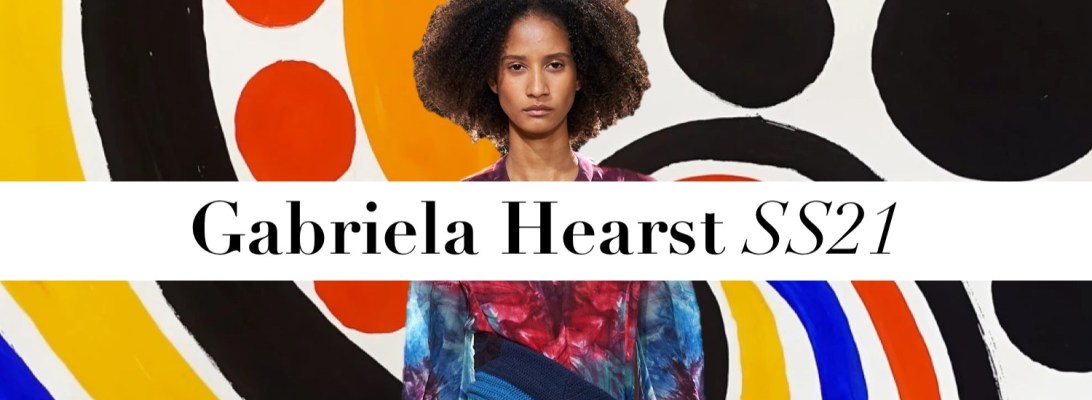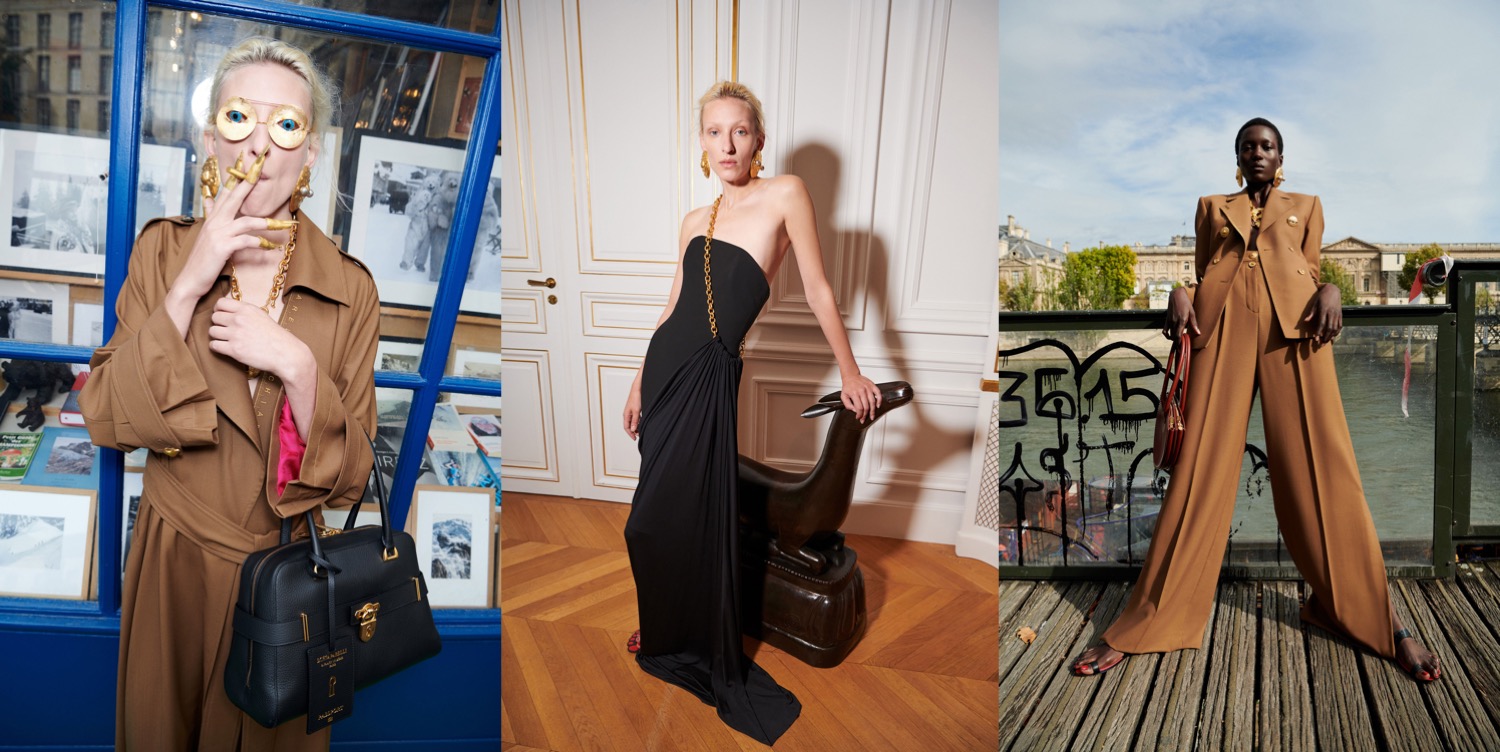
Craft. Gabriela Hearst SS21

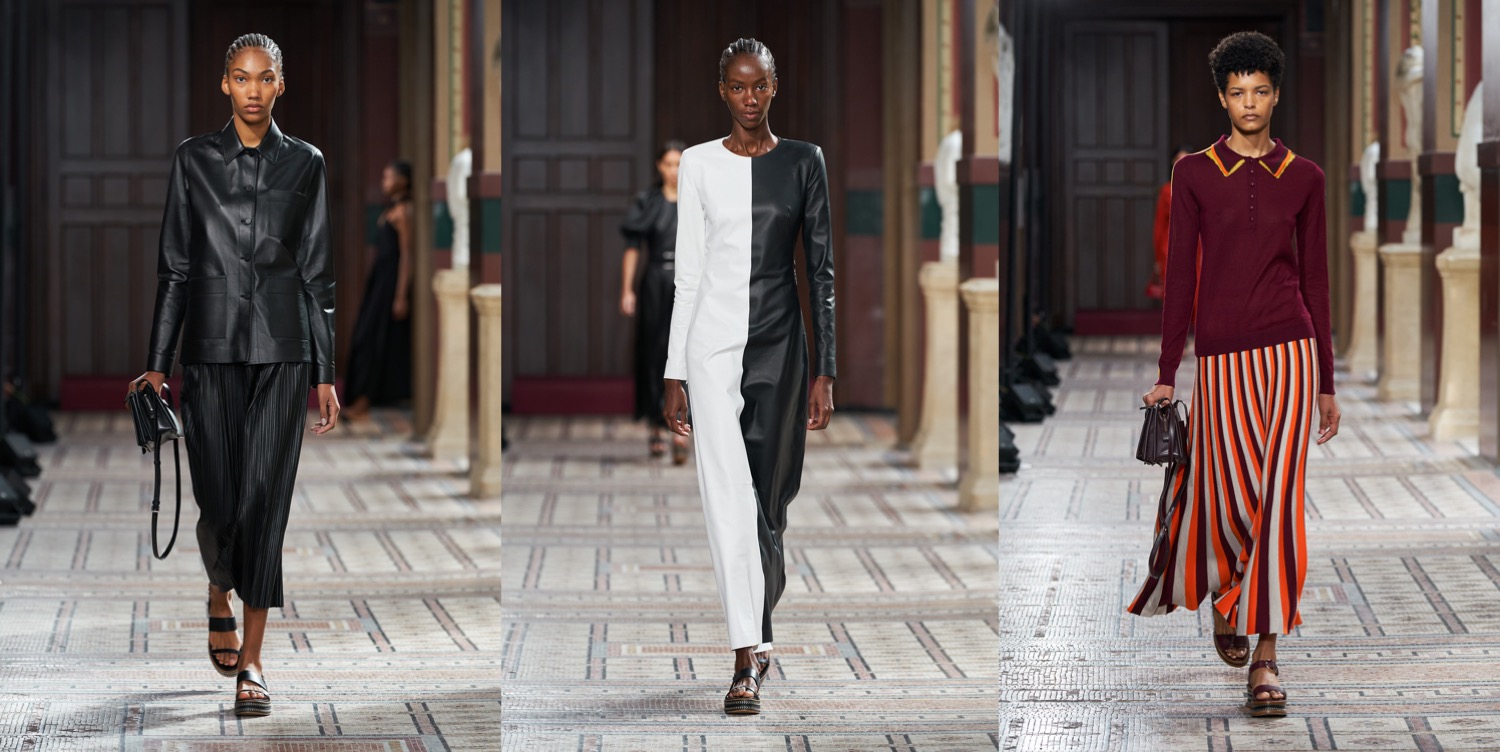
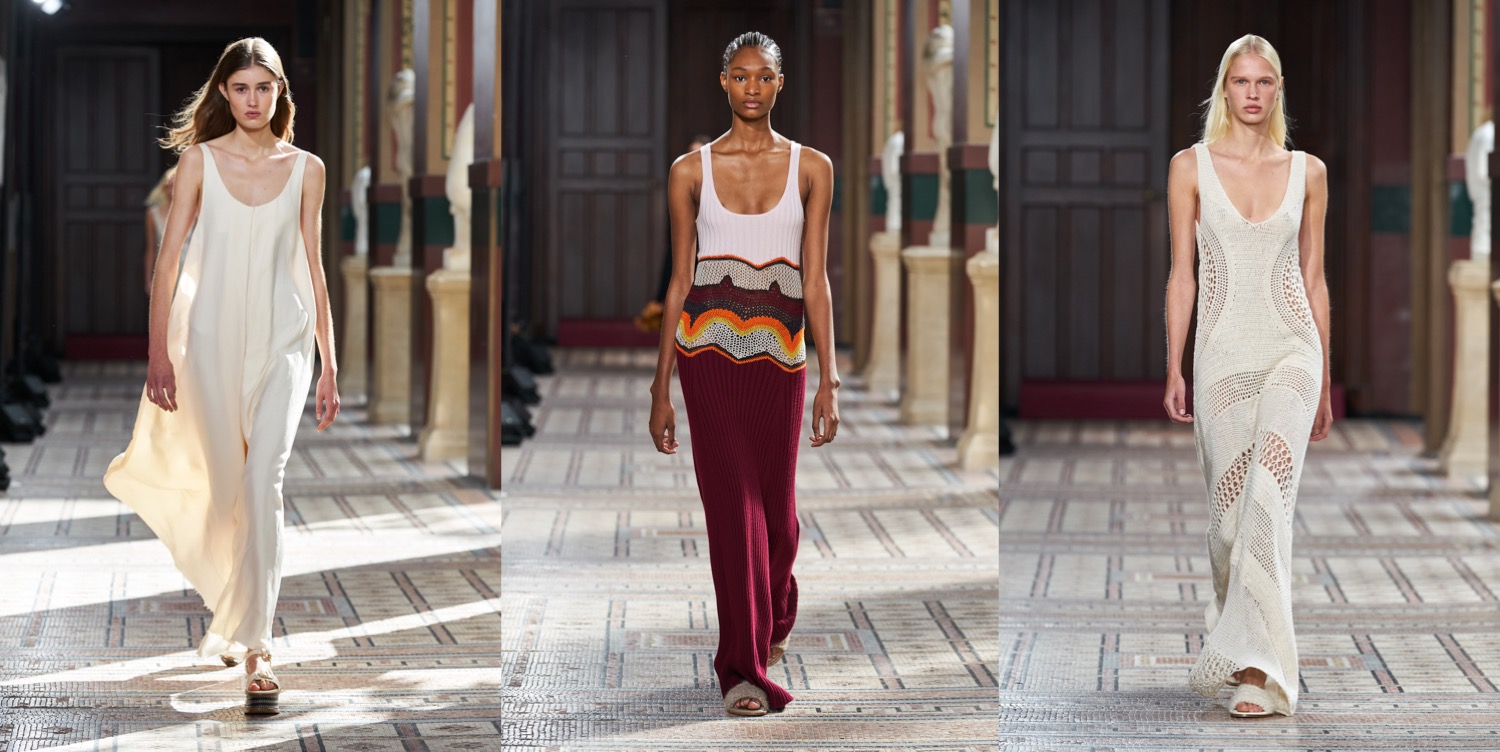
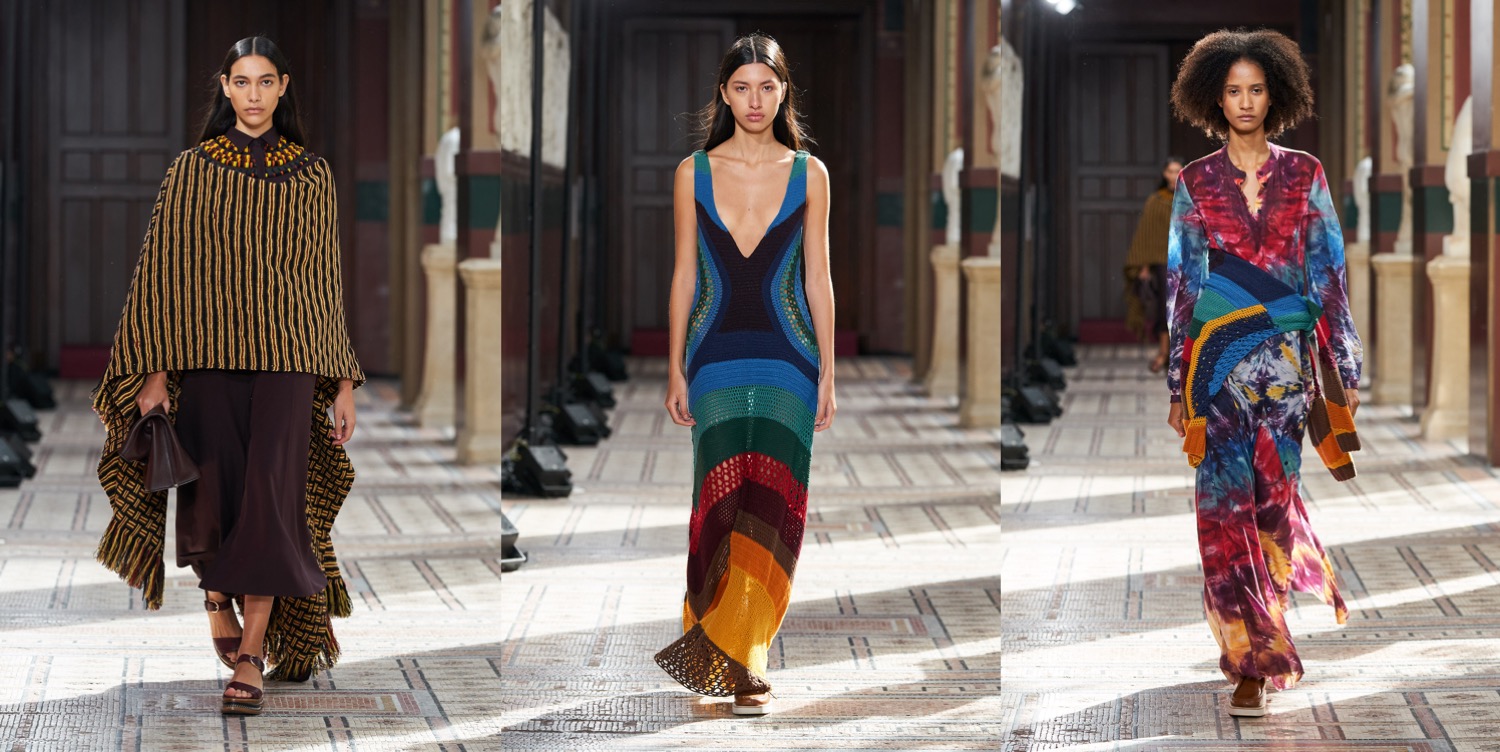
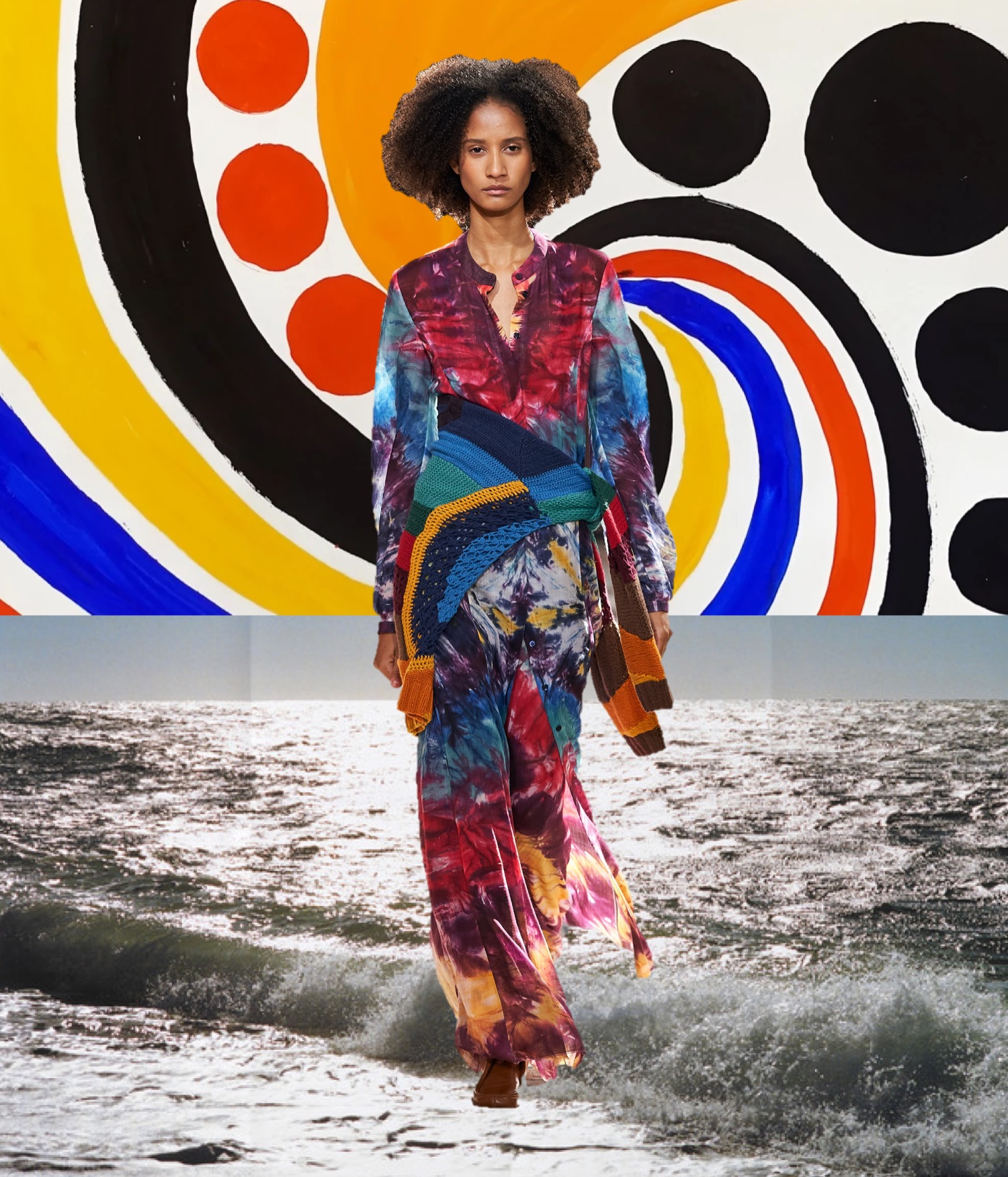
This season, Gabriela Hearst decided to show in Paris instead of New York not only to catch the spotlight in Europe, but also because it was the most sustainable and carbon-neutral thing to do – most of her samples and designs are produced in Italy. And since New York Fashion Week suffered from its cuts and was stumbling this season due to strict COVID-19 regulations, Paris really is a better option for brands like Hearst’s. “It was really important to us to push ourselves creatively, to not let the pandemic stifle us,” Hearst told Vogue. “It became the craft challenge.” The collection was a proper Gabriela Hearst line-up, relaxed, made out of top-notch materials (most from deadstock) and full of gorgeous, timeless garments. The tailoring that has made its way onto the backs of influential women like Alexandria Ocasio-Cortez, Jill Biden, and Oprah Winfrey, took a back seat. Instead, and in keeping with the themes of comfort and ease that have defined the season so far, Hearst trained her focus on knitwear: a long crocheted tank dress of many colors and its ivory sister were both striking, as were a pair of hand-knit cashmere ponchos with fringe that nearly reached the ankles in back. The collection’s genesis was a shell bracelet from Easter Island, a gift from Hearst’s mother back in January. The designer re-created it as shell trimming along the edges of circular cut-outs and on the straps of two repurposed silk dresses, making keepsakes to treasure of what were otherwise simple silhouettes. The shells led her to explorations of the golden spiral, which she reproduced in embroidered seaming details on a pair of slub linen trenches and on an aloe linen dress. Hearst knows that nothing is as important as the detail.

Collage by Edward Kanarecki.

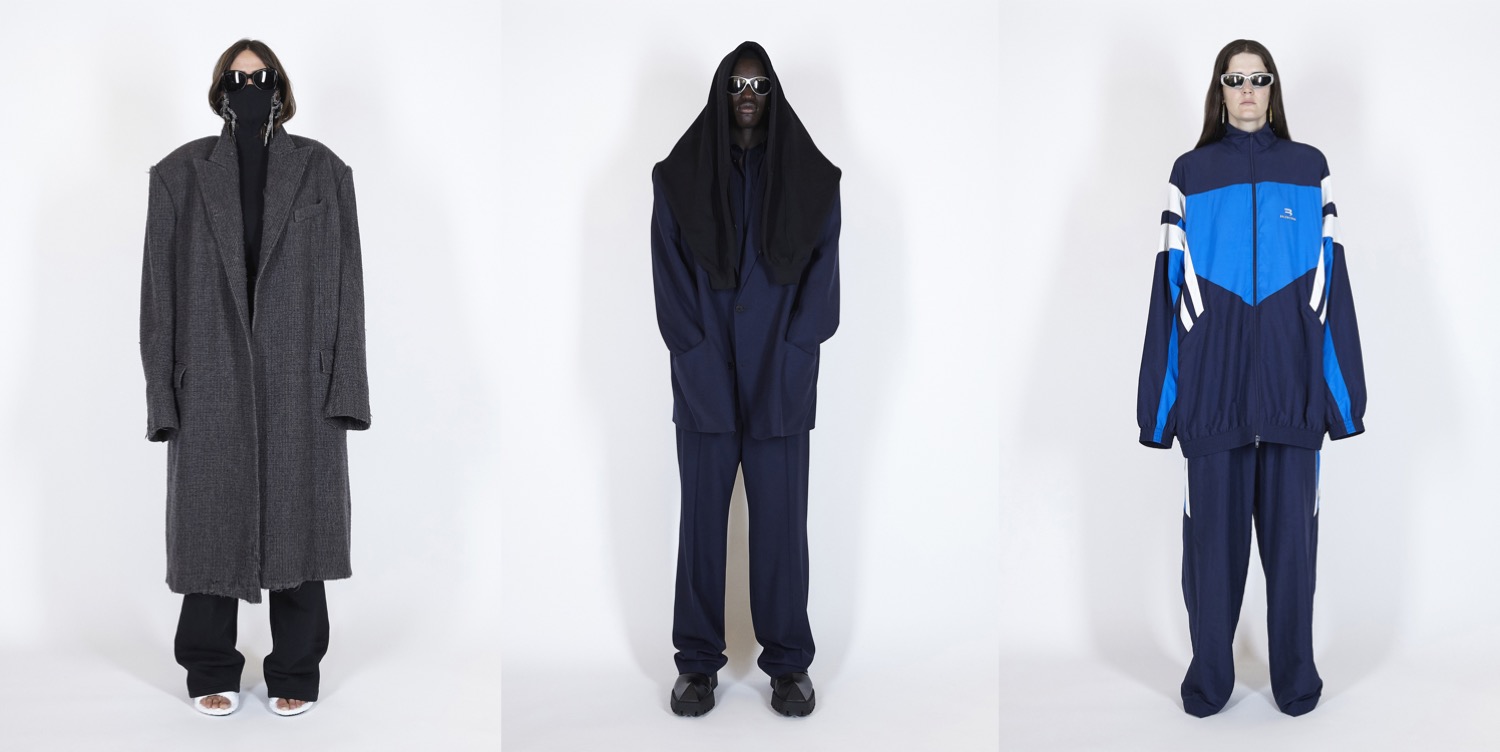
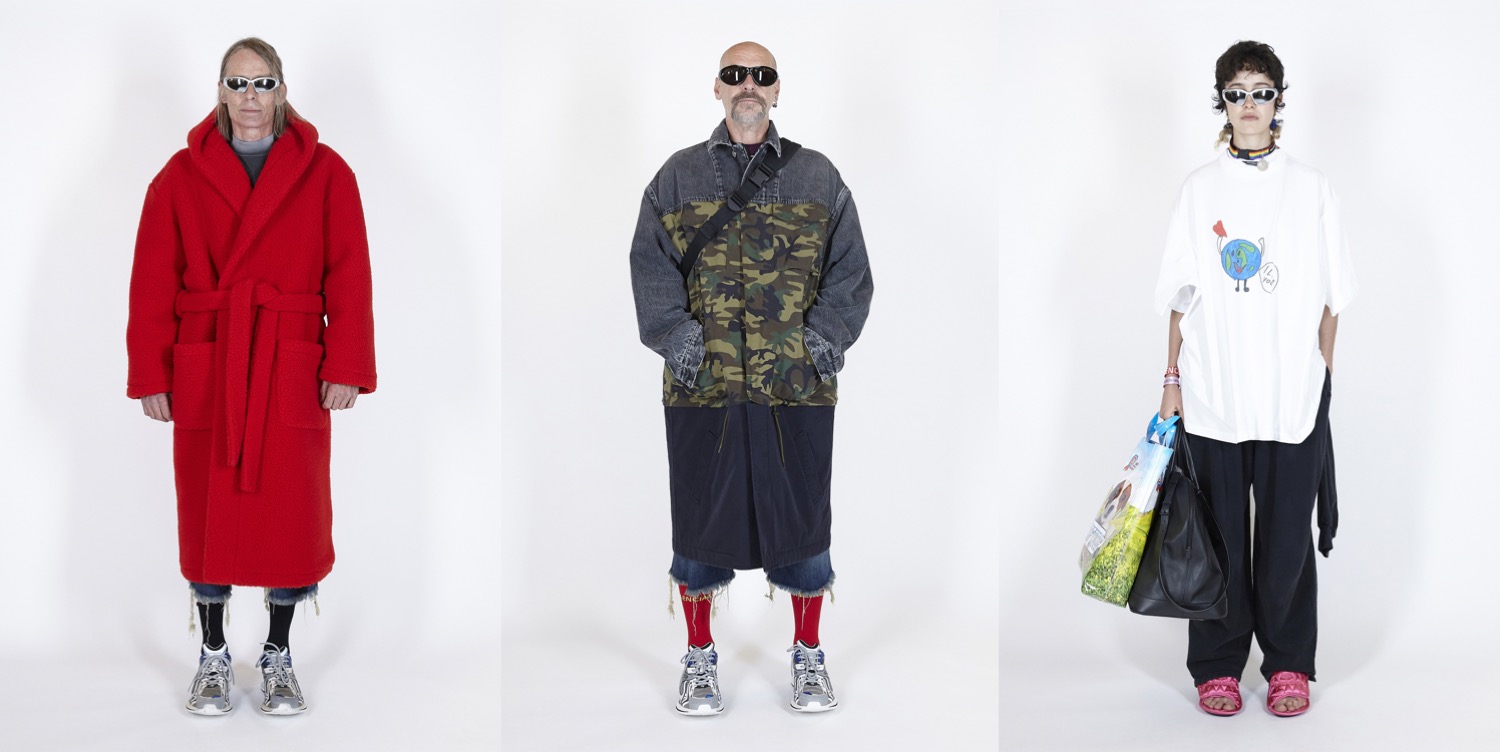
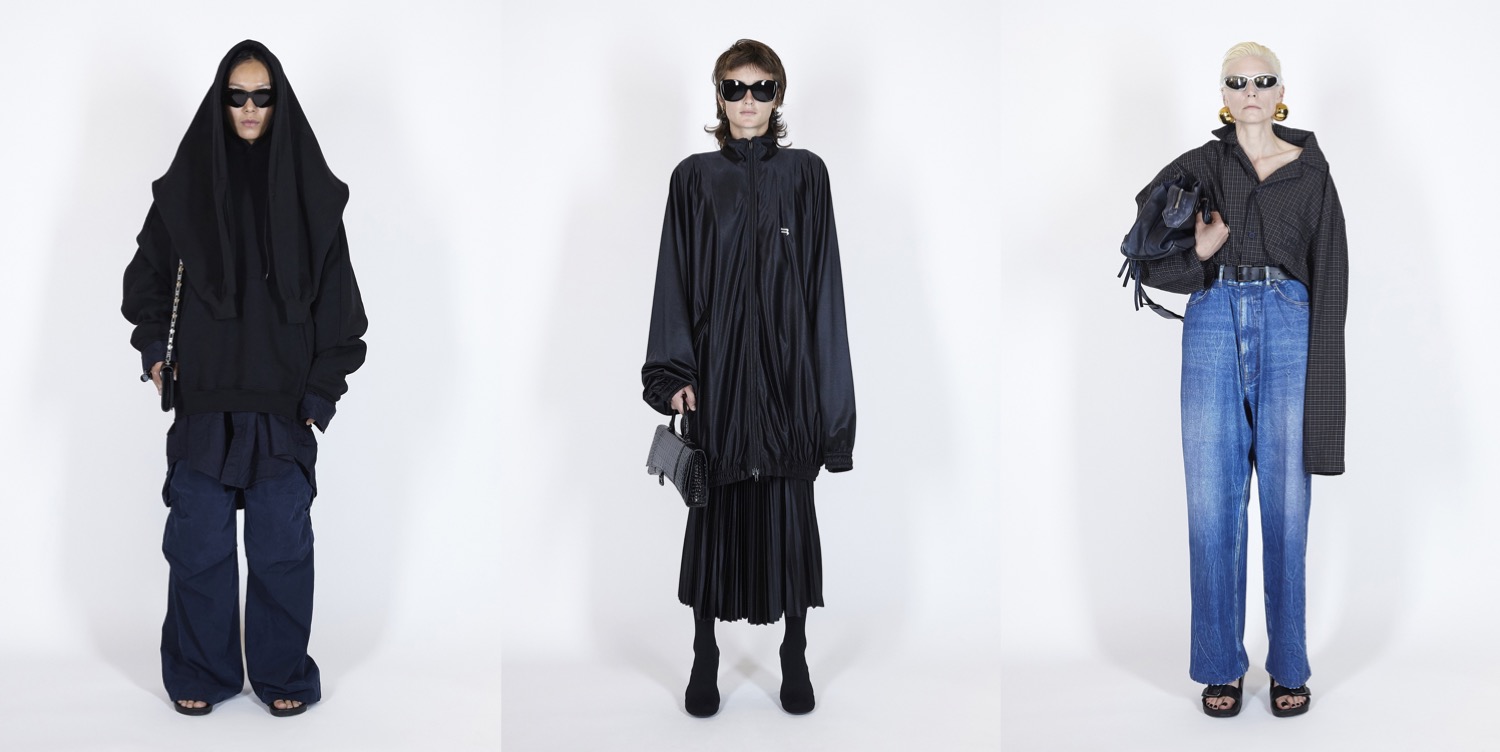
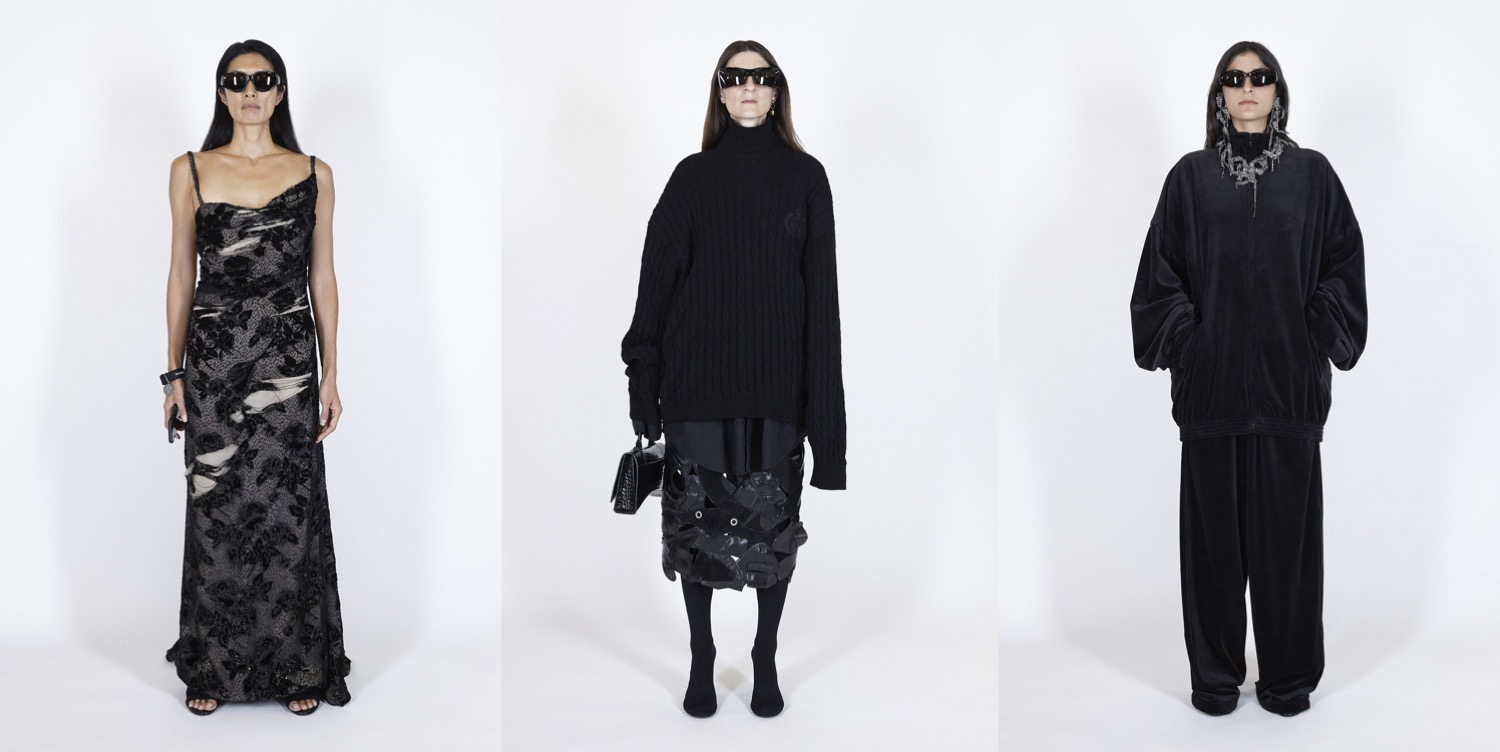
Time For Reset. Balenciaga SS21

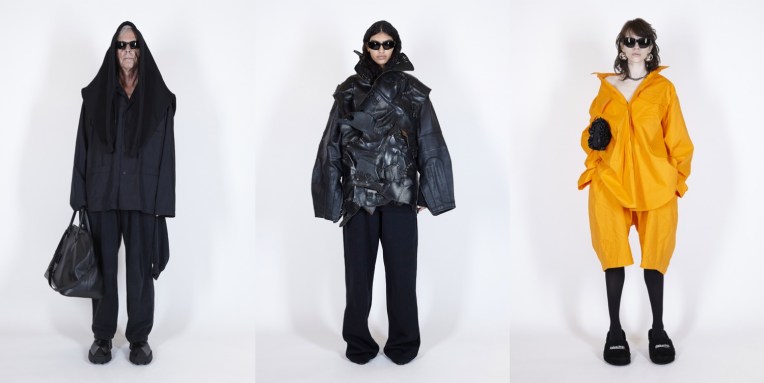
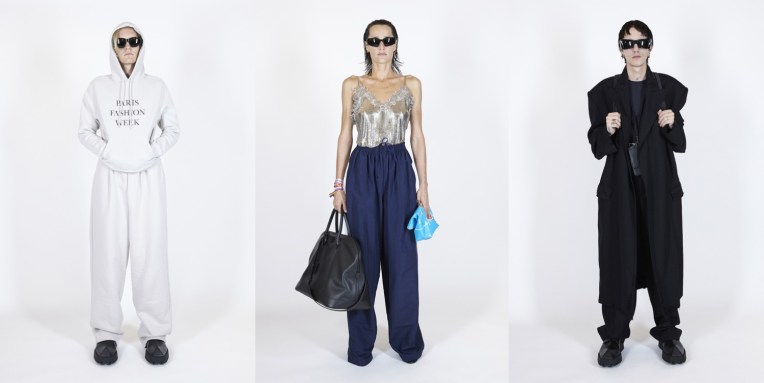
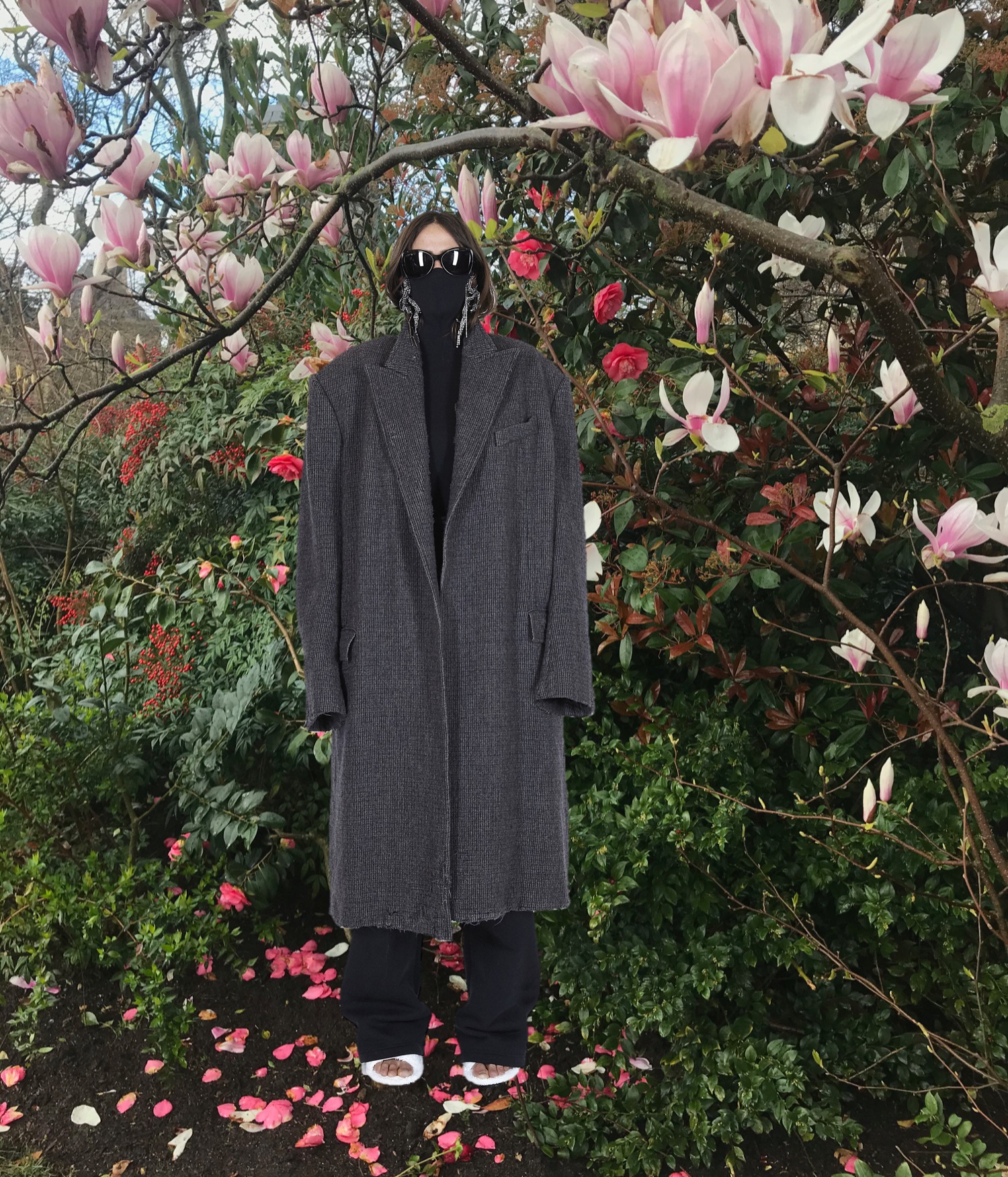
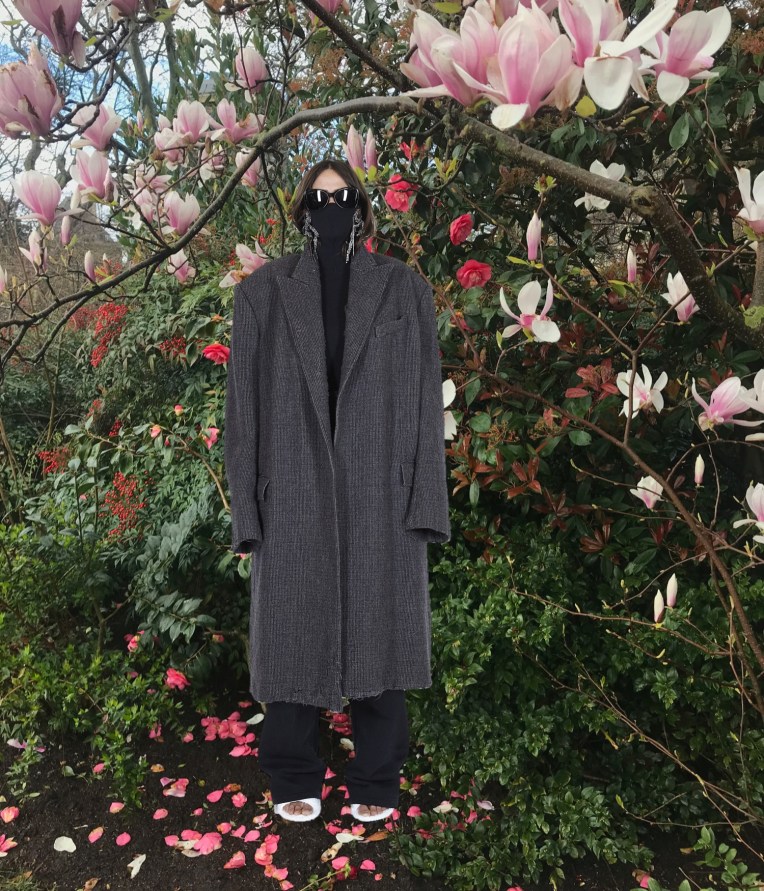
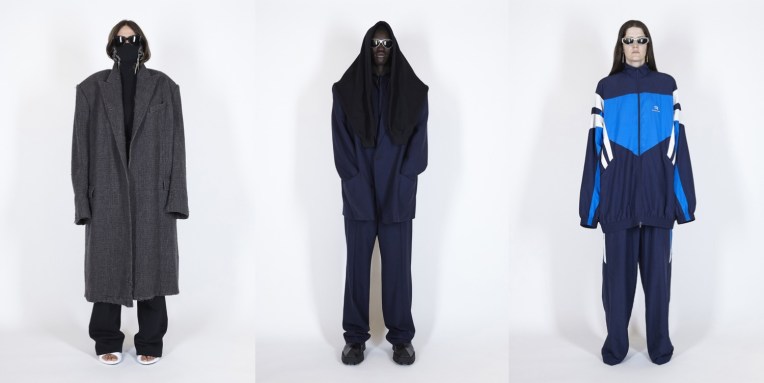
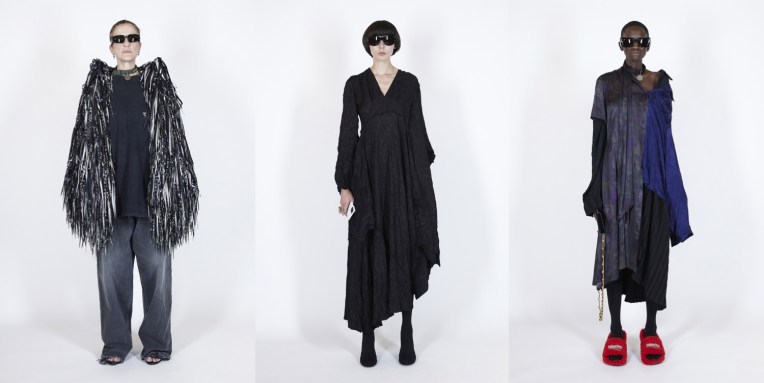
I expected to see something truly uncomfortably intriguing from Demna Gvasalia, but his latest, spring Balenciaga collection is radical in a different way. First thing you notice: it’s all about Gvasalia’s Balenciaga classics, stripped-back and simplified. And then you get it: it’s a line-up that to the bone reflects what most of us (if not all) really feel now. We need comfort. We feel secure when invisible. We don’t want to be bothered by others. And it’s great if our turtleneck can act as a mask. You can love a gorgeous, fairy-tale dress, but deep inside, under the pressure of the cracking world, a good hoodie, a big coat, and a pair of undemanding pants make us feel safe and relaxed. So, as a sort of middle finger to the industry where some still do business as usual, trying to sell a dream, Gvasalia lets us stay in the comfort zone. But then, the collection isn’t as grey and dull as it might sound. “Hope is the last thing to die. That’s the Russian saying. You know, I couldn’t wait not to do a show. It didn’t feel right with the way things are. So we’ve made a music video,” he told Vogue in a phone call from Switzerland, where he lives. “My husband recorded that ’80s track by Corey Hart, ‘I wear my sunglasses at night’—because you know, is there anything more absurdly fashion than that? It’s also allegorical. You know, where is fashion going? It’s out there, searching in the dark at the moment, not seeing…” But wait – there is nothing dystopian about this video. Gvasalia’s tribe of Balenciaga nighttime people are each captured as if heading somewhere with a purposeful step. We see them as they walk along the Rue de Rivoli, past the Tuileries gardens, embodying exactly the inimitable cool of the type of people who turn heads after dark on the streets of Paris. We clock them, we check out their clothes, how they’ve put them together, each to their own. They feel real. They are real. Demna confesses that something has change inside of him, in midst of the lockdown. The very man who plunged his fashion show audience into a terrifyingly apocalyptic show experience last season has come back with his head in a far more optimistic place. “Because some day we will be out of this.” He imagined a man who leaves the house near the site of Cristóbal’s maison – a guy, setting out in an oversized navy suit, wraparound shades, and what looks to be a sweater draped over his head (but is a ready-made Balenciaga accessory). “So,” Gvasalia related, “he walks through the night, going through lots of changes, morphing into her, him, them. And they end up meeting as friends, going to a party or a club maybe—and everyone is without masks. That’s the hope!” Pandemic-end pending, however, the film credits meticulously set out every detail of the COVID-secure measures taken to safeguard models and crew. Moreover, the impetus of the collection was “imagining how fashion will be in 2030. When thinking of the future, it’s not a Stanley Kubrick space-age vision for me. Mine is very much down to earth. Ten years from now, everything in fashion will be sustainable. No discussion, right? I think we will be reusing the clothes we have. Time makes things beautiful. I heard a quote from Martin Margiela when I was working there, about the value of ‘the trace of time’ in clothes. That touched me deeply. We keep clothes like that to death. I mean, I have a hoodie that’s 15 years old. It’s bleached out and has holes in it. But I cannot throw that away. So, I thought: In the year 2030, how will your favorite things look, aged and destroyed?” A press release specified: “93.5% of the plain materials in this collection are either certified sustainable or upcycled. 100% of the print bases have sustainable certifications.” This speaks for itself. With the resources of the Kering Group at hand, Gvasalia said, “we discovered we could do it quite easily, with the exception of the fibers that are in some of the existing fabrics. There are solutions if you look for them. There’s a need to revise things. To start a new chapter.” So, in the end, it’s not that depressing. A reset-slash-detox brings space and lets fresh air in. Gvasalia keeps on provoking the mind, even with the simplest gestures.
Collage by Edward Kanarecki.

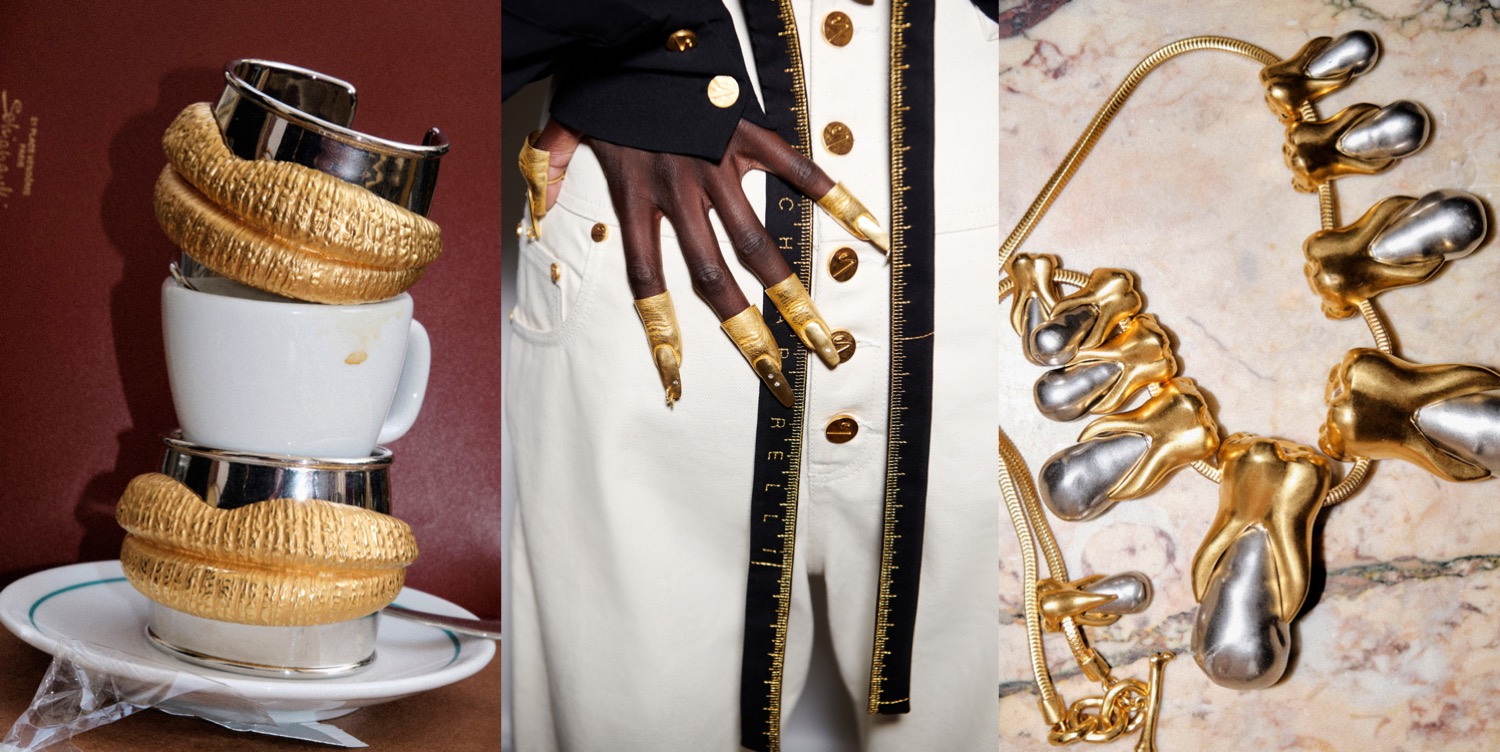
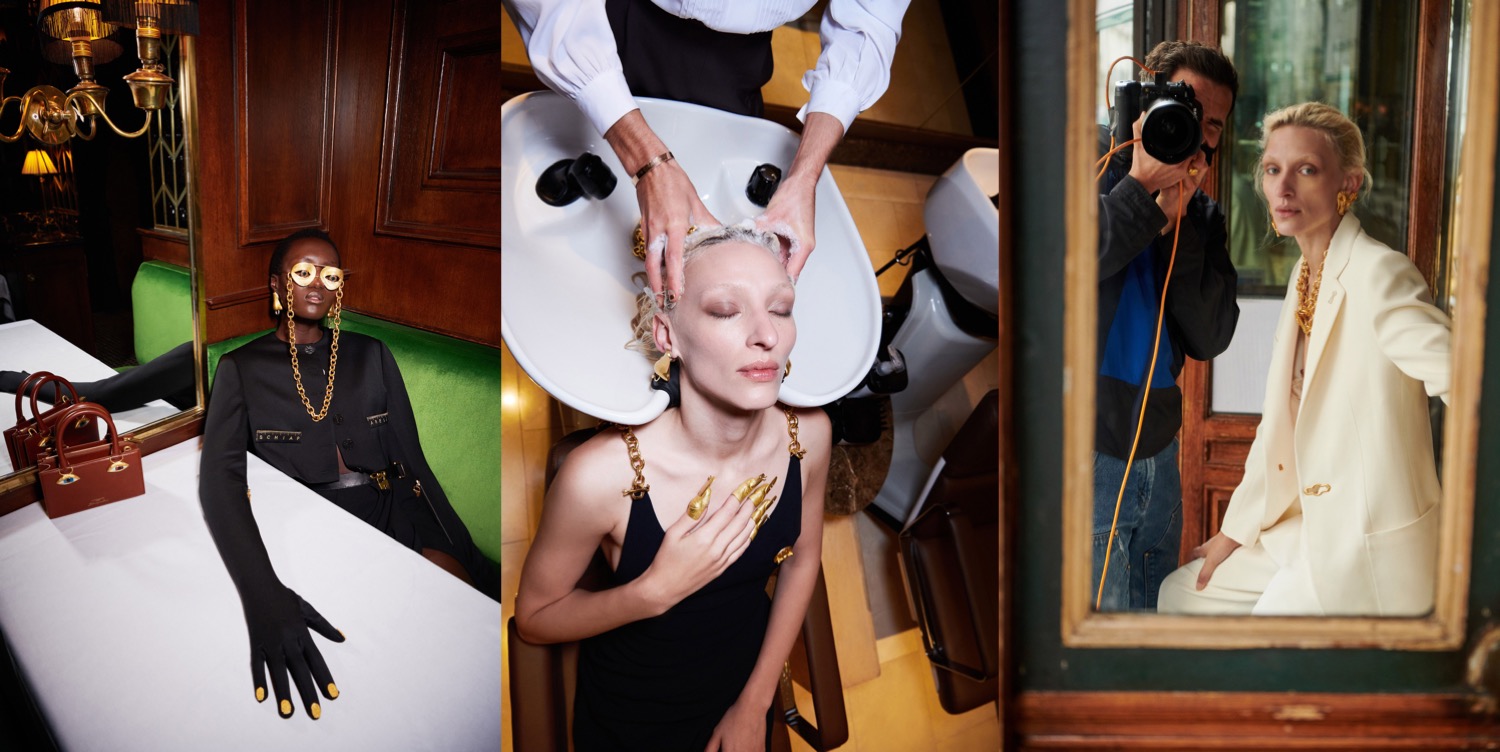
Surreal Reality. Schiaparelli SS21

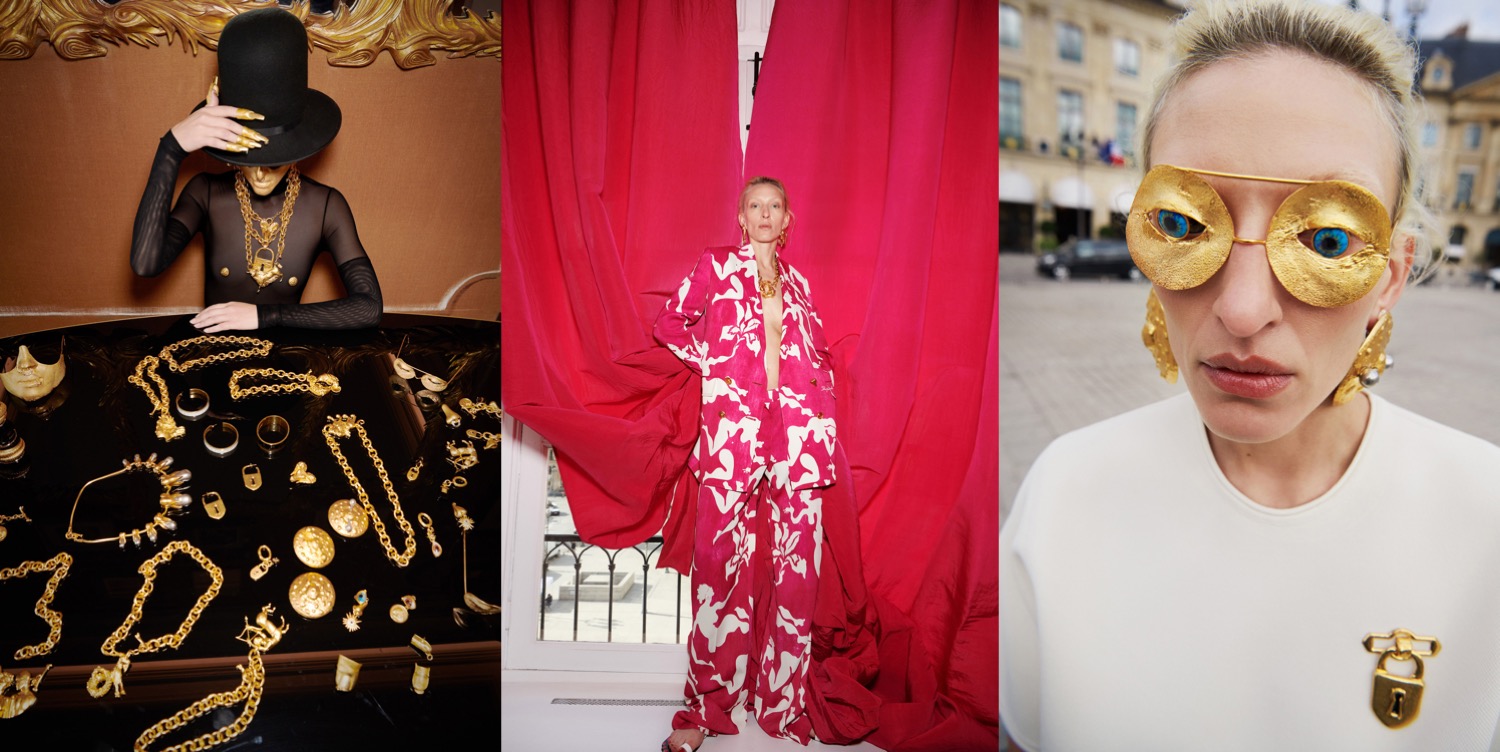
In a pretty short time, Daniel Roseberry has pushed Schiaparelli – a haute couture maison – forward to an extent in which its ready-to-wear line finally makes sense. Roseberry’s flair for the fantastic absolutely works with Elsa Schiaparelli’s aesthetic, and in the spring-summer 2021 line-up he manages to negotiate the balance between the Surrealism that was the legendary designer’s signature and the everyday. Speaking over Zoom, he said he approached the new collection with “a renewed energy to focus on what I want to say here, to capture the irony and what Schiap was about. Her legacy still lives really large, and it feels really true to this moment.” The pandemic has upended fashion. Some designers and brands are sitting this season out or playing it extra safe, counting on pajama sets and tracksuits to carry them through. Not Roseberry. In the look book photos he took himself (it’s interesting that many designers choose to photograph their collections), and in the behind-the-scenes video the brand produced, that extroversion comes across most distinctly in Roseberry’s fabulous gilded jewellery: eyeglasses with enamel eyes in the center, masks that cover nose and mouth, fingertip talons, and even nipple buttons. Those little and big, wearable artworks took Instagram by storm. The clothes are nearly as provocative. See: the white button-down with hand-painted breasts on the front, the odalisque prints on a shocking pink and white pantsuit (studies of Manet and Degas that Roseberry did himself), and the broderie anglaise with Surrealist faces picked out. There’s also a pair of minidresses, one ivory, the other black, with big inverted volumes. Roseberry took no half measures with this collection, and in this time of uncertainty and anxiety, that kind of conviction is a real turn-on – something we’ve experienced as well at Jonathan Anderson’s extraordinary Loewe.

Collage by Edward Kanarecki.
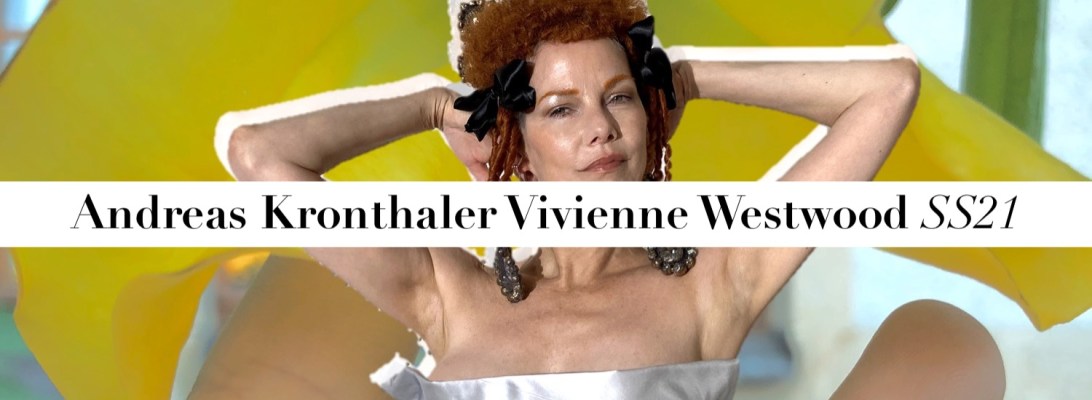
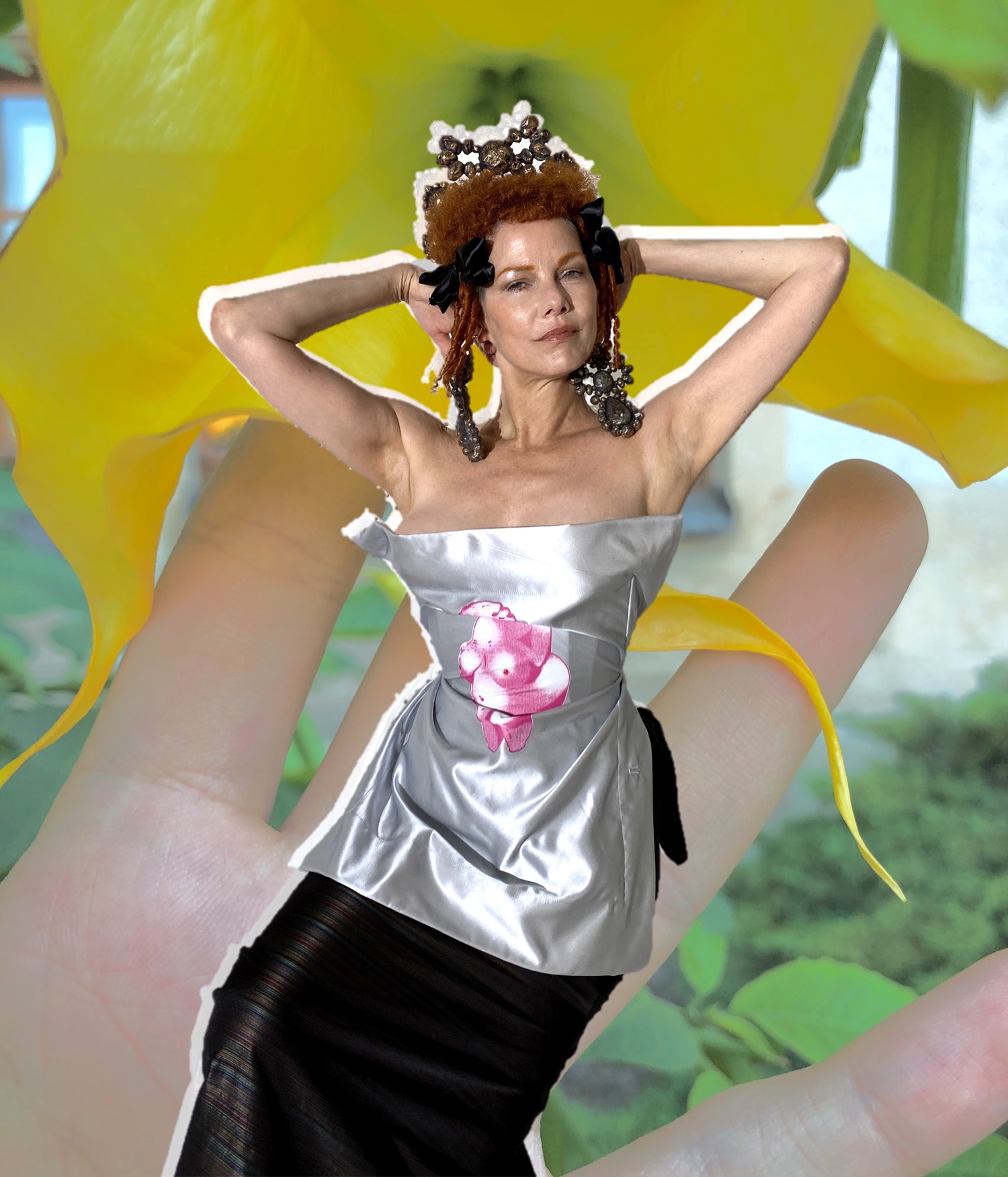
The Queen. Andreas Kronthaler Vivienne Westwood SS21

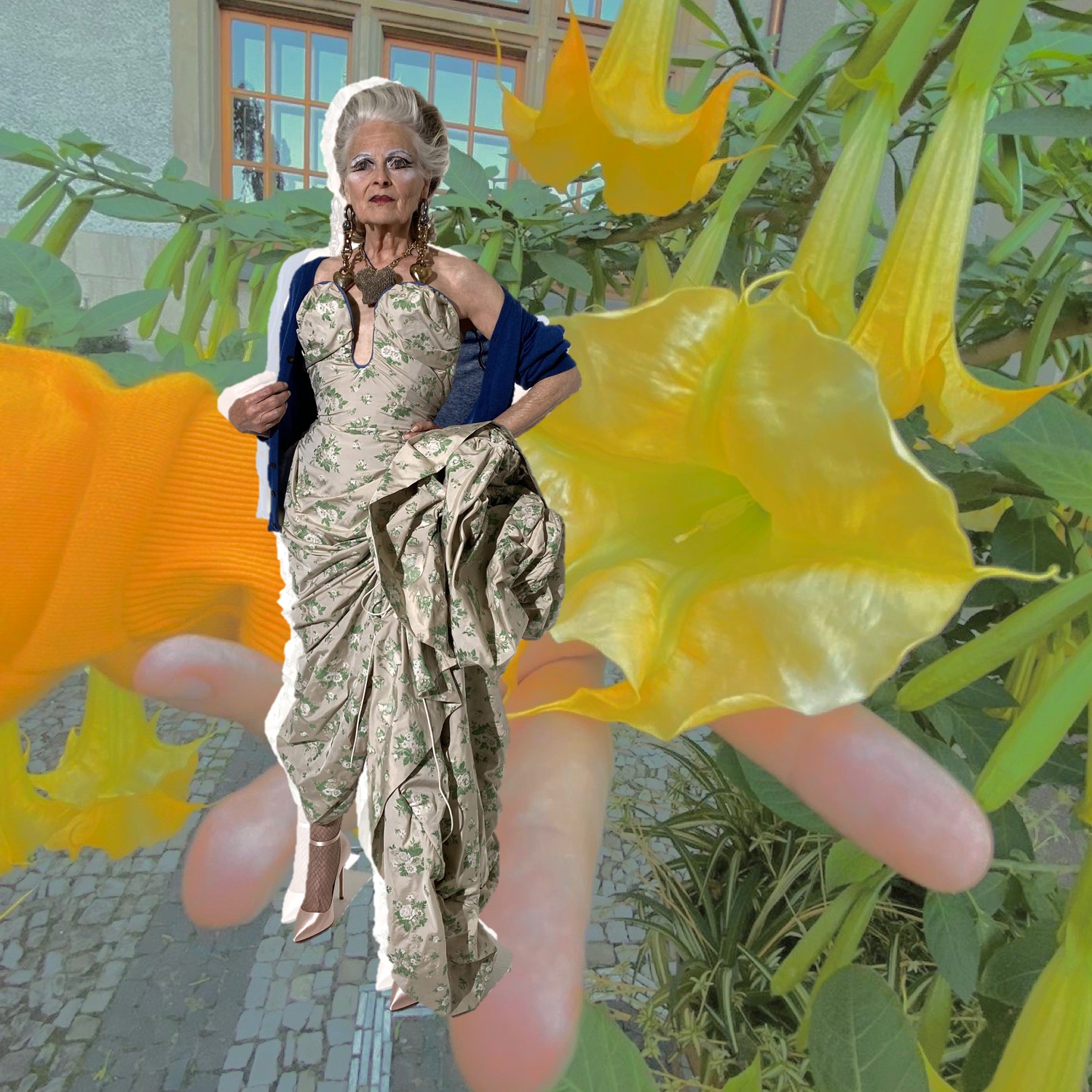
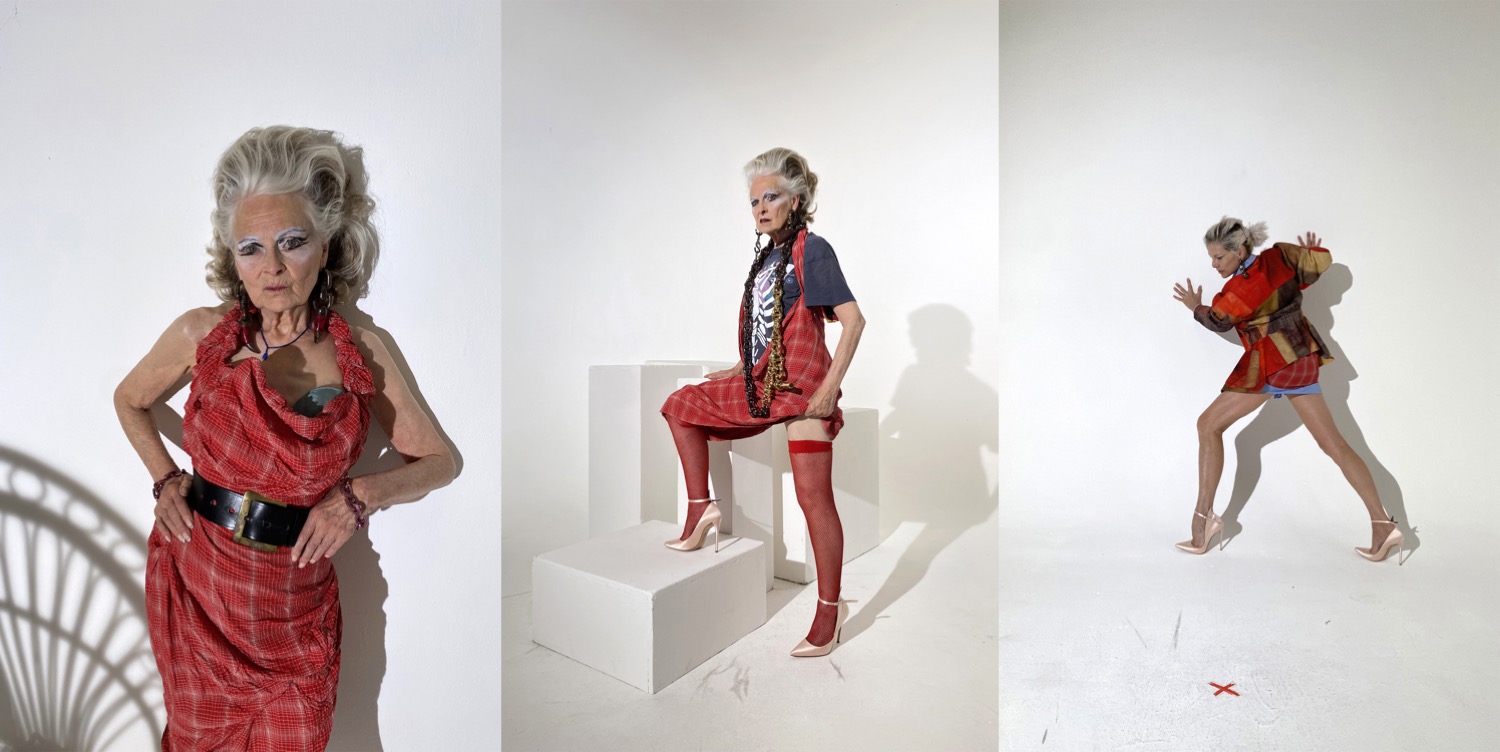
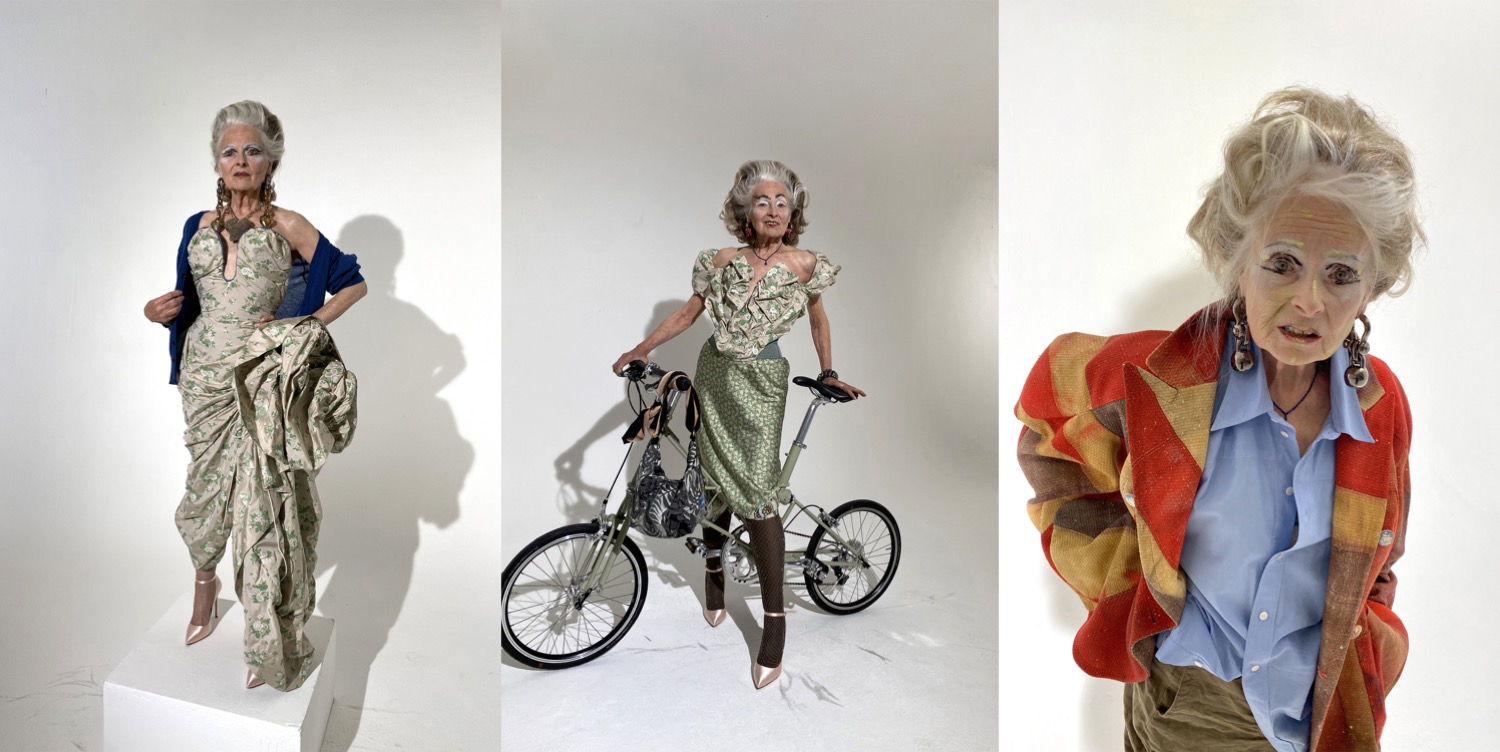
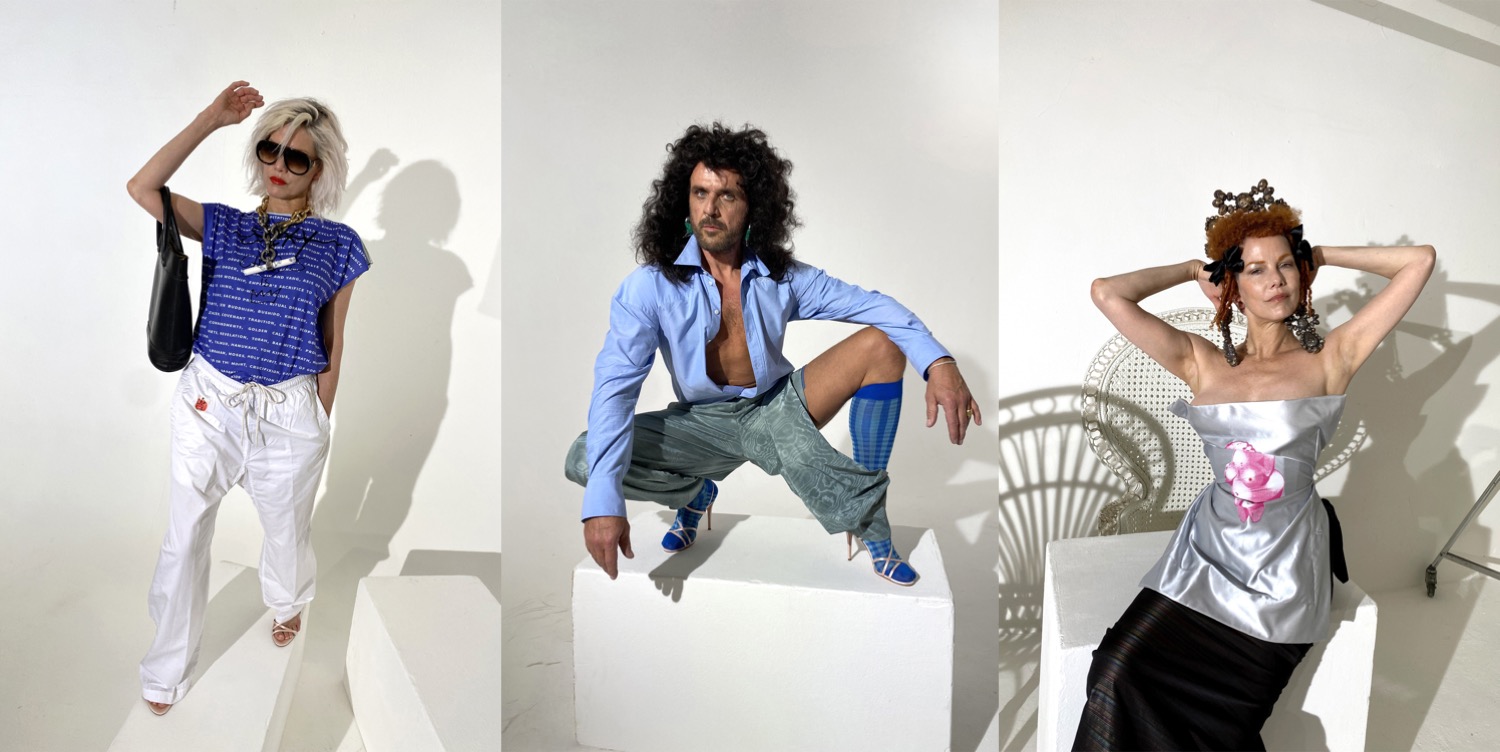
Vivienne Westwood is the queen, and Andreas Kronthaler loves to embrace that. In his homemade lockdown look book and film, Kronthaler gave Dame Viv such a powerfully Iron Lady coif he confessed that even he saw a passing resemblance. “But in the end the look we went for was more Raine Spencer,” he added over Zoom, referring to the British socialite. Perhaps it was the concentrated nature of this minimally staffed shoot – four models in all, shot by Kronthaler (who doubled as one of them) on his iPhone, with the intention of limiting as far as possible Westwood’s exposure – but it resulted in an especially intense expression of Andreas’ work to reflect that of his muse and wife. There was a lovely symmetry in the casting of Sara Stockbridge, a longtime Westwood model, who joined what looks like a fun day of dressing up. Garments to love include the Buy Local London map–print shirt worn by Stockbridge, VW in full “Acid Raine” mode, and Kronthaler in leggings and a wig that harked back to Flashdance. The clothing was as archetypally of the house as the expression was divertingly barking. Sustainable, sensational, confrontational, and uncontainable. And the look-book is a visual treat.

Collages by Edward Kanarecki.
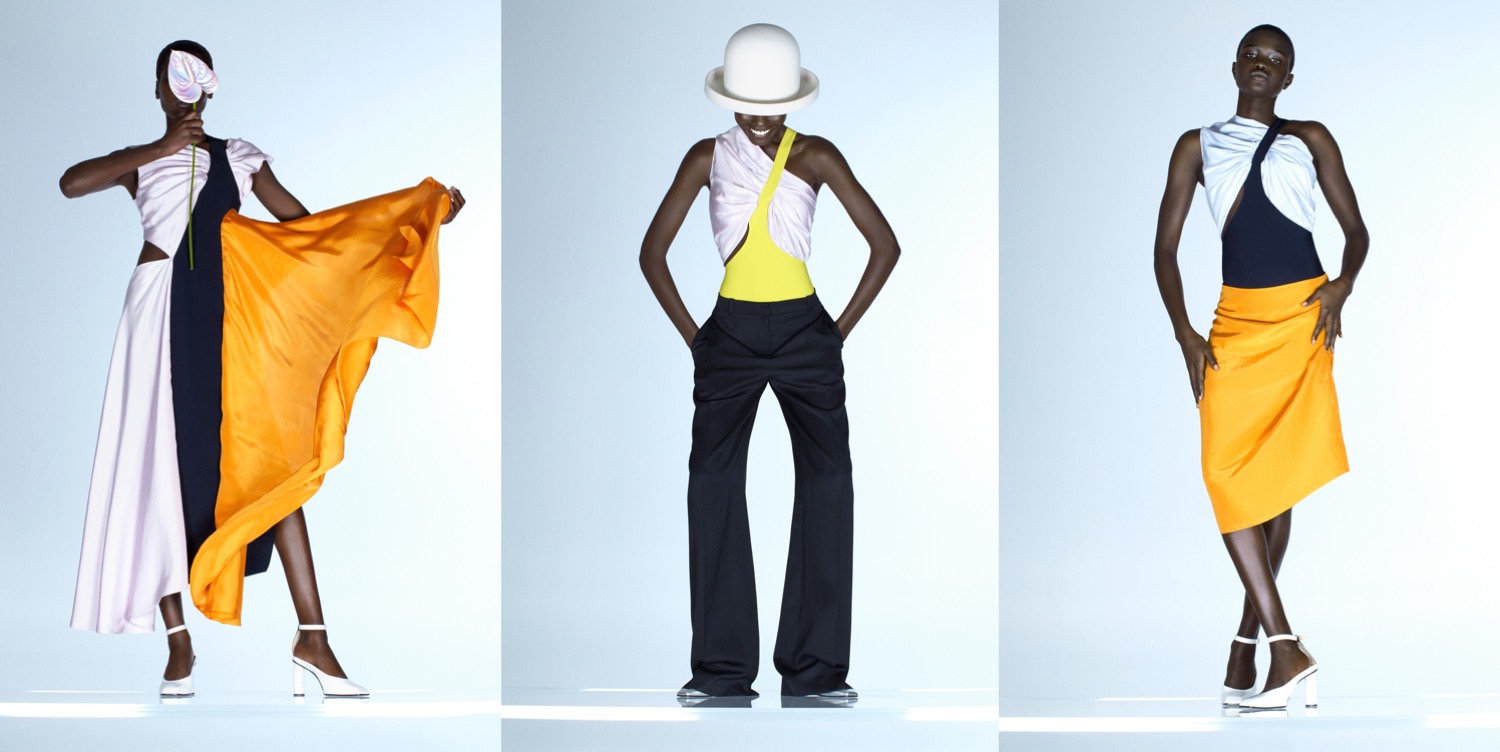
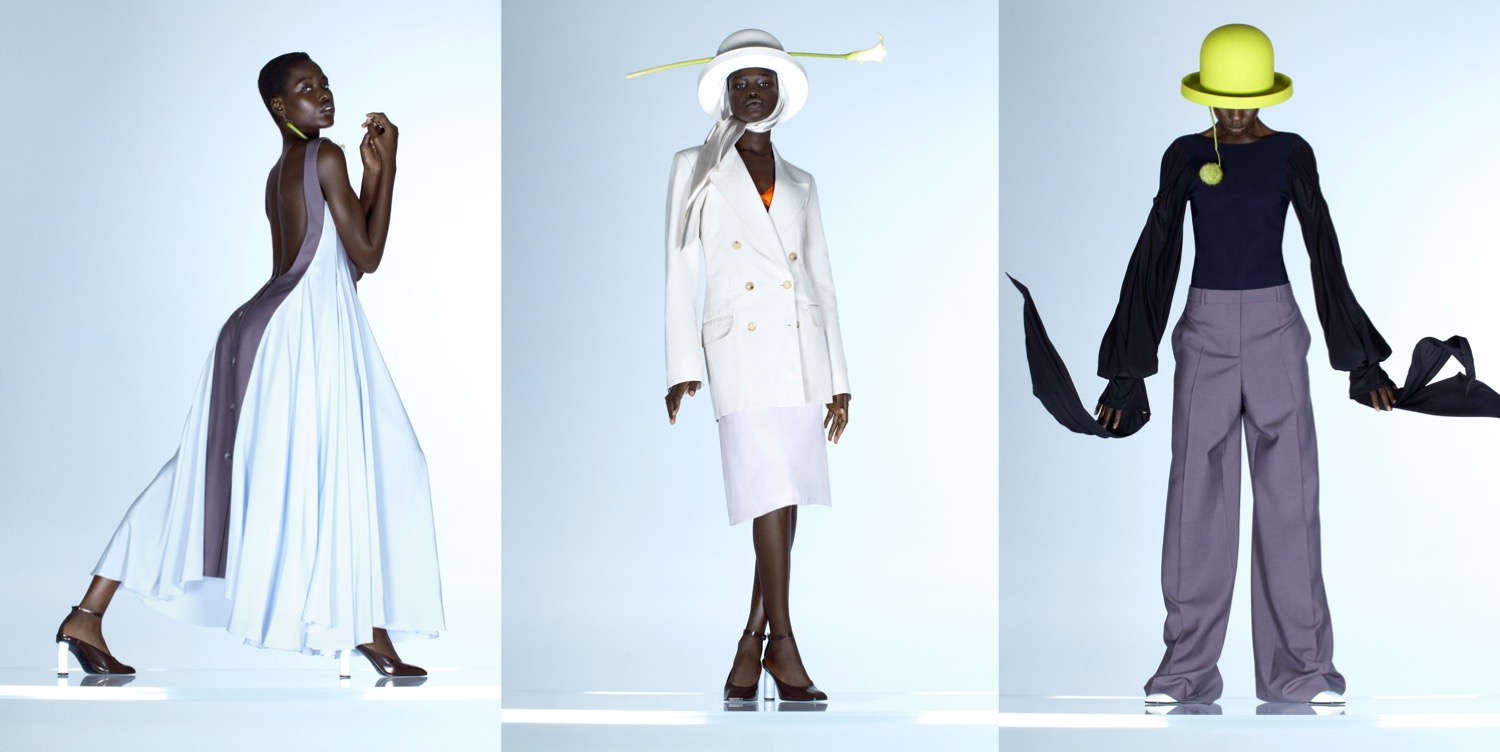
She’s A Lady. Nina Ricci SS21

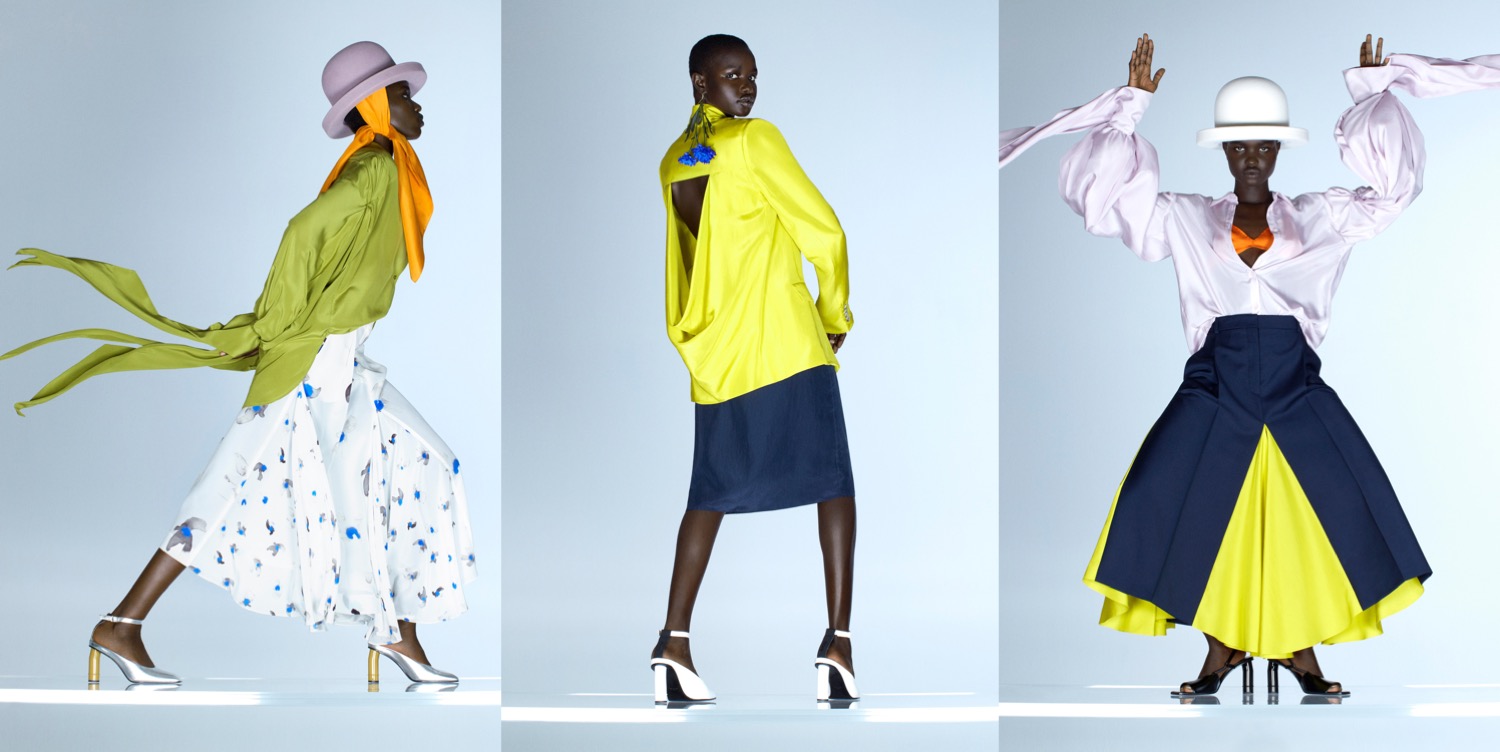
It seems that Rushemy Botter and Lisi Herrebrugh are finally finding their ground at Nina Ricci. In the storied salons of the maison‘s headquarters on rue Francois 1er, its designer duo had a generational confession to make: they use their phones for all kinds of creative tasks, including sketching. “They’re not beautiful sketches. Just quick things,” Herrebrugh noted, while her partner Botter added that he does observe “old school” procedures, too. In contrast, perhaps, to some members of the Paris establishment, these young designers’ natural relationships with their phones were what made this season’s digital show format so instinctive to them. They presented their Nina Ricci collection through the (imagined) recorded screen of an iPhone, scrolling the viewer through their research process, from Google searches to YouTube clips and exchanges on iMessage. What it didn’t reveal was the actual inspiration behind the collection: L’Air du Temps, the institutional fragrance Nina Ricci launched after the Second World War. Light and elegant, it cut a decided contrast to the dense perfumes of the old world. “It was a message of hope, optimism, and revival. That’s what we wanted to bring with this collection,” Herrebrugh said. Its flacon, designed by the Art Nouveau glass artist René Lalique, informed the cuts, colors, and movements of dresses. They had the inimitable touch of this designer duo: a splicing between the couture heritage of Nina Ricci and the swimwear techniques that are their personal obsession. The nature of that marriage – not unlike L’Air du Temps itself – is confrontational, but Herrebrugh and Botter are sticking to their guns and continuing to refine their take on Nina Ricci. “I feel like there’s a balance in this collection between our tailoring background and the codes of the house. We’re finding our own fluidity,” Herrebrugh said, referring to the menswear label they run on the side, which carries Botter’s name and earned them the Nina Ricci gig in the first place. Ironically, the most unassuming garment made the biggest impact: a tech-y pleated translucent blue blouse, which had the digital lightness expressed in the meeting between iPhones and the L’Air du Temps flacon. It was quite hypnotizing. Much like both of those inventions, the simplest designs are often the most enduring and made for a modern-day lady.
Collage by Edward Kanarecki.