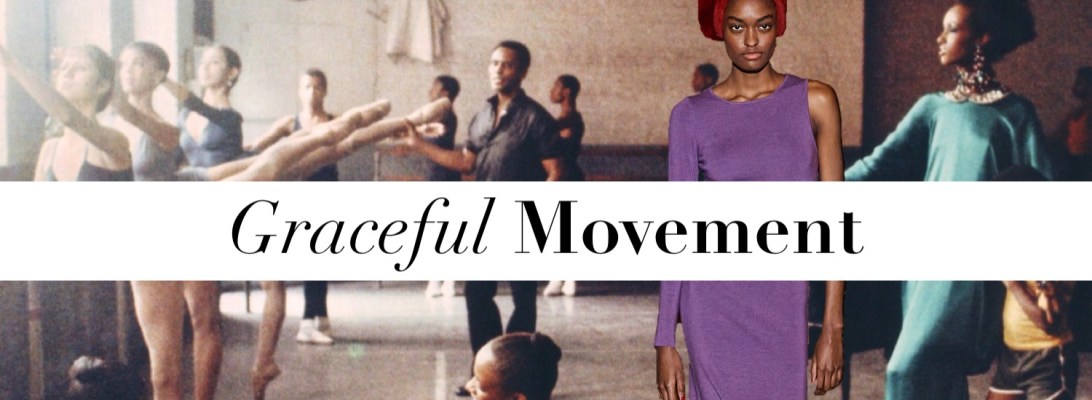
The Look – Glemaud AW20

In support for the Black community, I continue celebrating and highlighting the talented individuals that shape fashion today. Take notes! If you haven’t read my post on the Glemaud, the most exciting, New York-based knitwear label, take a look here. In the above collage, the simple, yet strikingly elegant purple knitted dress looks even more divine in Arthur Mitchell’s legendary Dance Theater of Harlem – here photographed by Lord Snowdon (and starring the one and only Iman!).

Collage by Edward Kanarecki.

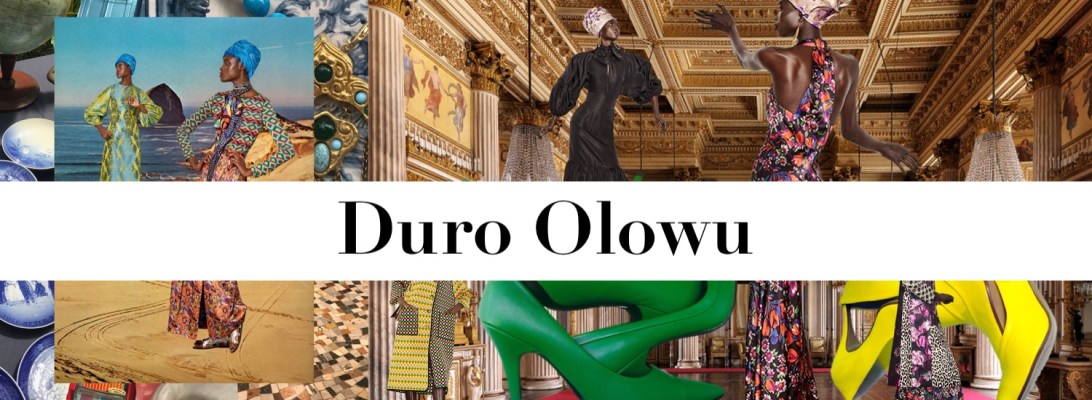
Focus On: Duro Olowu

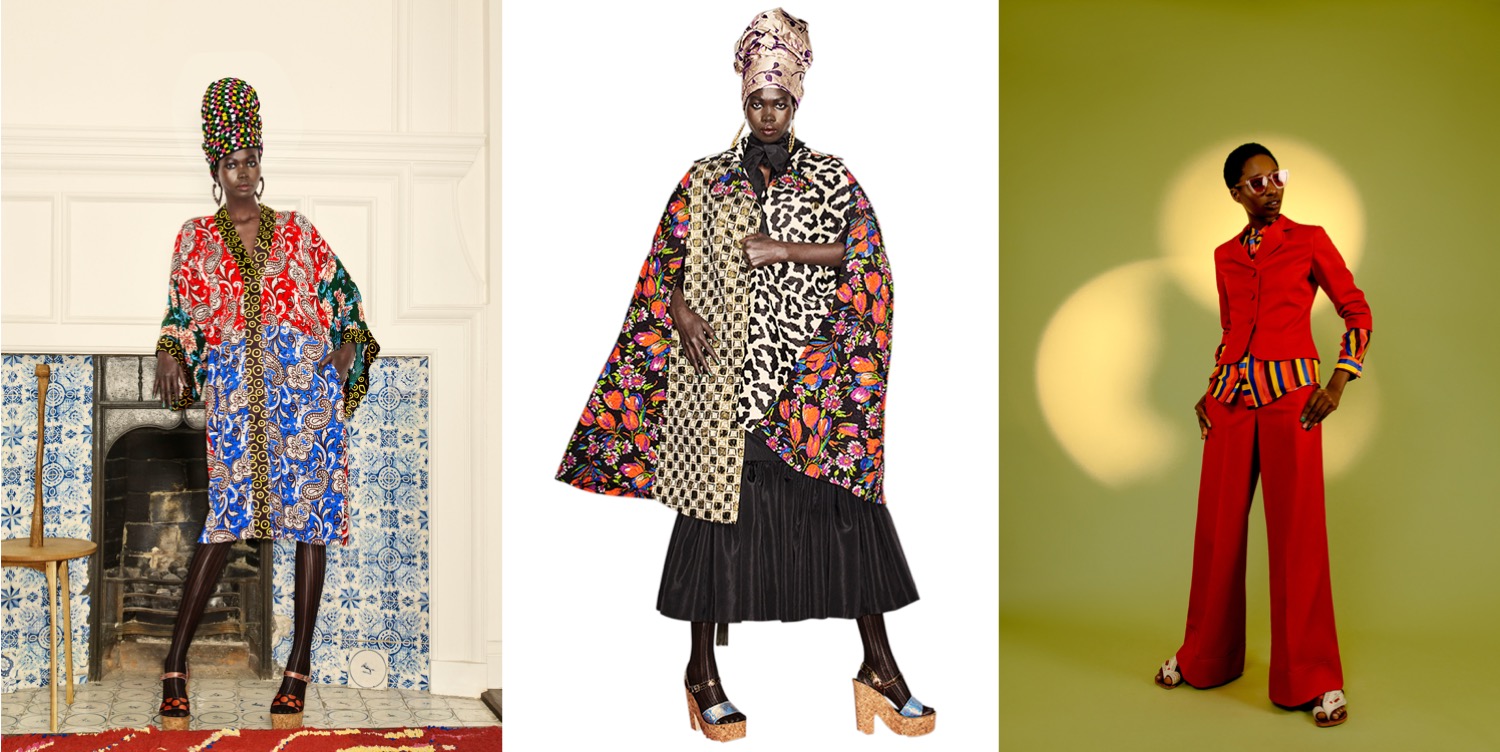
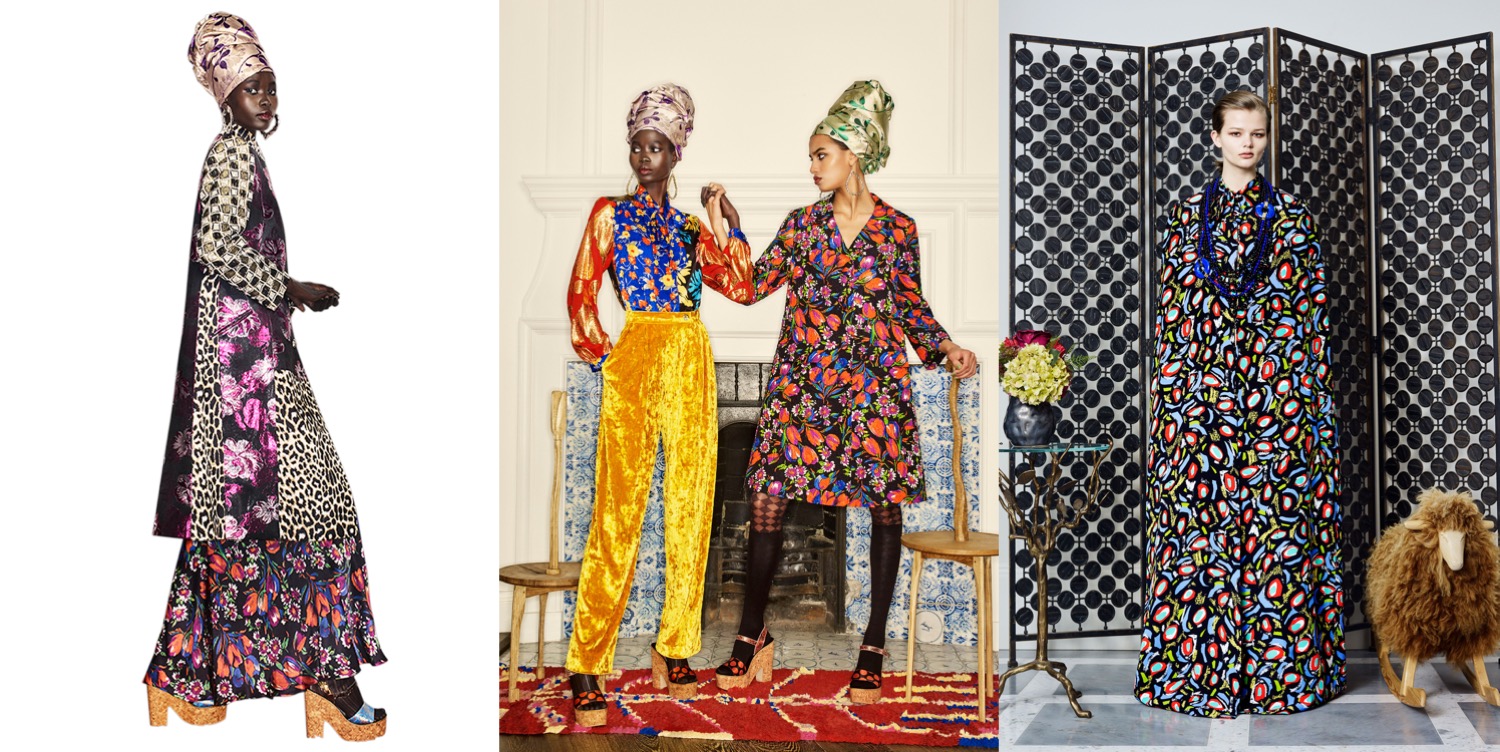
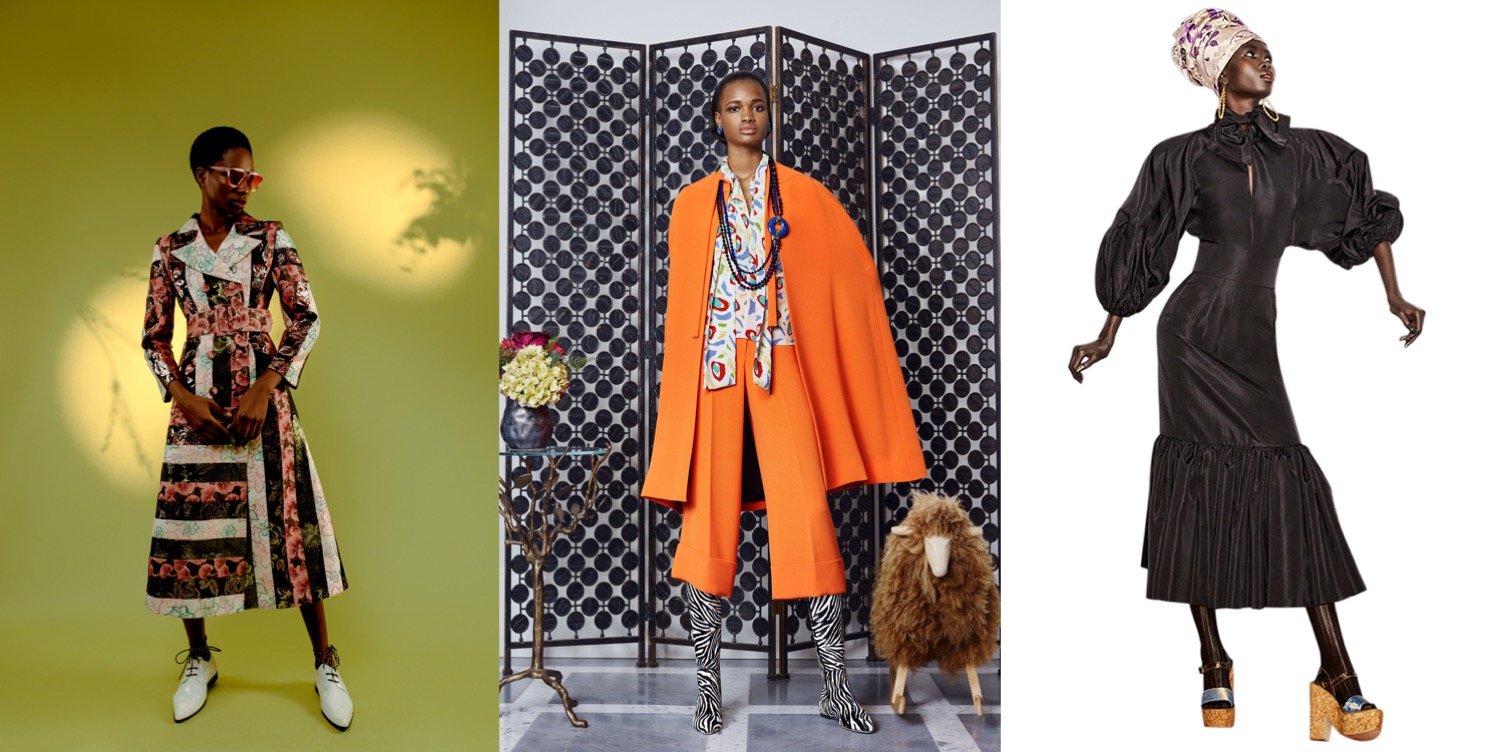
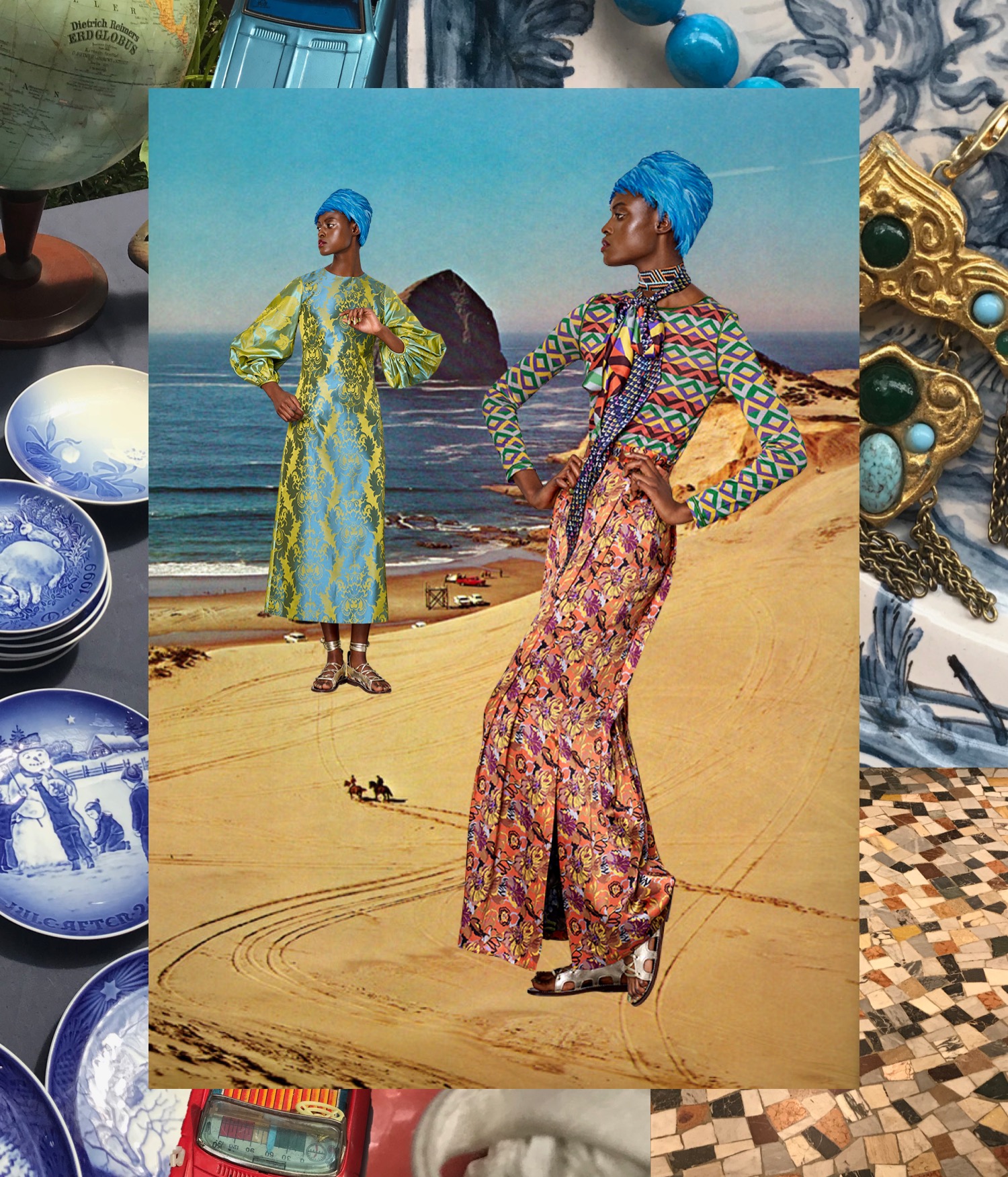
In support for the Black community, I continue celebrating and highlighting the talented individuals that shape fashion today. Take notes! Duro Olowu‘s bold fashion needs no introduction. Born in Lagos to a Nigerian father and Jamaican mother, Duro Olowu spent his childhood travelling between Nigeria and Europe. From an early age, his enthusiasm for fashion was inspired by the unexpected mix of fabrics, textures and draping techniques of the clothing worn by the women that surrounded him. The designer started his eponymous label at the end of 2004, and up to now he’s one of London’s favourite designers with a loyal, art-world-focused clientele (in a way, similar to Mona Kowalska’s now-closed cult A Détacher in New York). Alluring silhouettes, sharp tailoring, original prints juxtaposed with luxurious vintage fabrics in “off beat” yet harmonious combinations are Olowu’s signature. For spring-summer 2020 he drew on the work of Françoise Gilot, who is perhaps most famous for being Picasso’s romantic partner, though the 97-year-old French painter, art critic, and author is a creative force in her own right. Olowu came across a recently reissued collection of her travel sketches, and her colorful impressions of India, Senegal, and Italy from the late 1970s and early ’80s informed his new collection. One particularly eye-catching coat in that series was spliced with panels of pale pink made from vintage interior fabric that Olowu came across on a trip to Lille, in northern France. It was upcycling done with a sophisticated hand. Then, if you look at Olowu’s autumn-winter 2019 line-up, “cosmopolitan”, “chic” and “Afrique” were the three words that the designer used to describe the spirit the collection, which was inspired by Miriam Makeba, the fearless South African singer and civil rights activist. Makeba, who was known as Mama Africa to her fans, possessed a wardrobe that was purpose-built as a celebration of African pride at a time when her country was in the grip of apartheid. You could see her influence right off the bat, in a graphic knit coat with patch pockets and detachable snood (Makeba was rarely seen without a towering head wrap or hat). That motif was repeated to flattering effect on an A-line maxi dress that could have been pulled from her closet. The world of Olowu is eclectic and rich, and each collection tells a unique story. Induldge yourself in his idiosyncratic, feminine and timeless work by browsing his previous collections on his site. And if you’re in London, visit his boutique on 14 Masons Yard!

Collages by Edward Kanarecki, look-book photos from different Duro Olowu‘s collections.

Focus On: Thebe Magugu

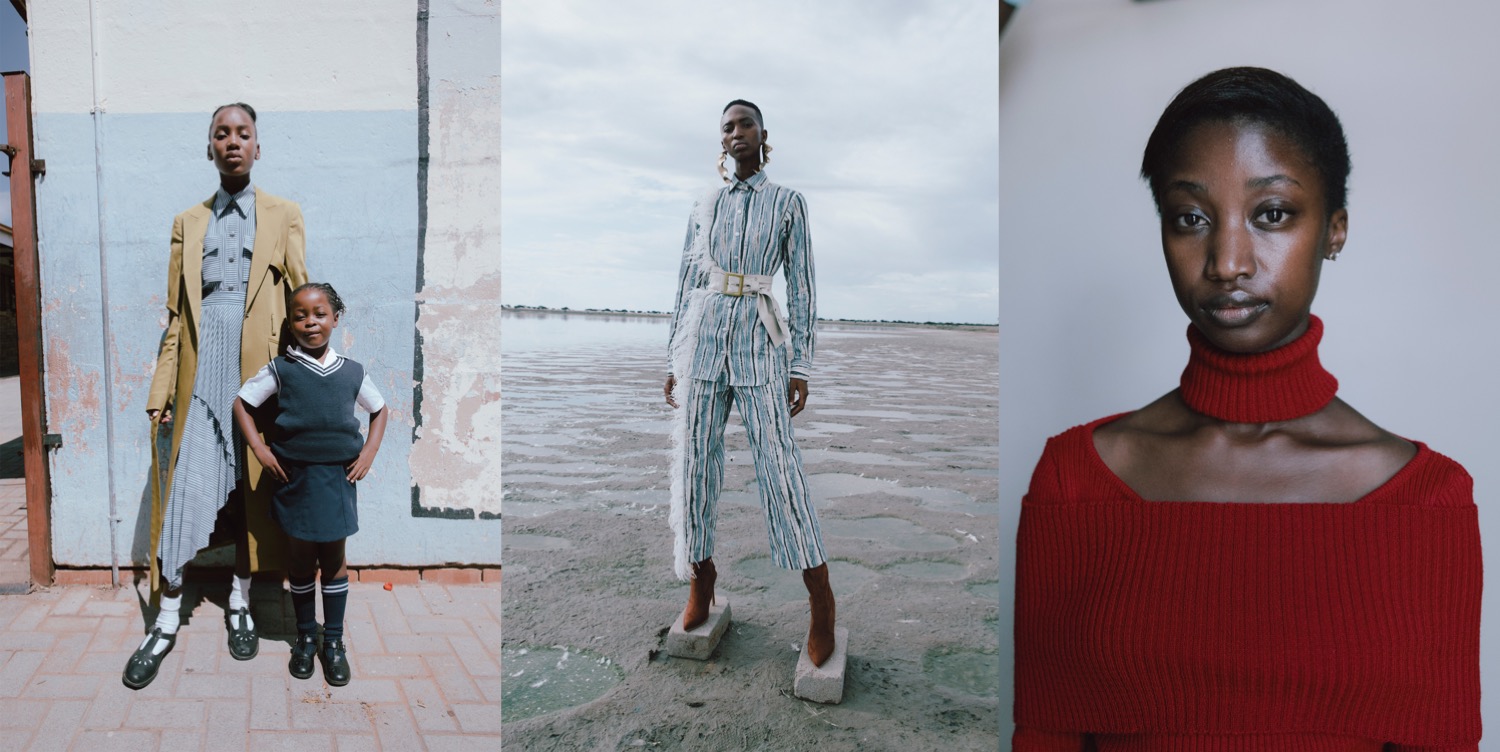
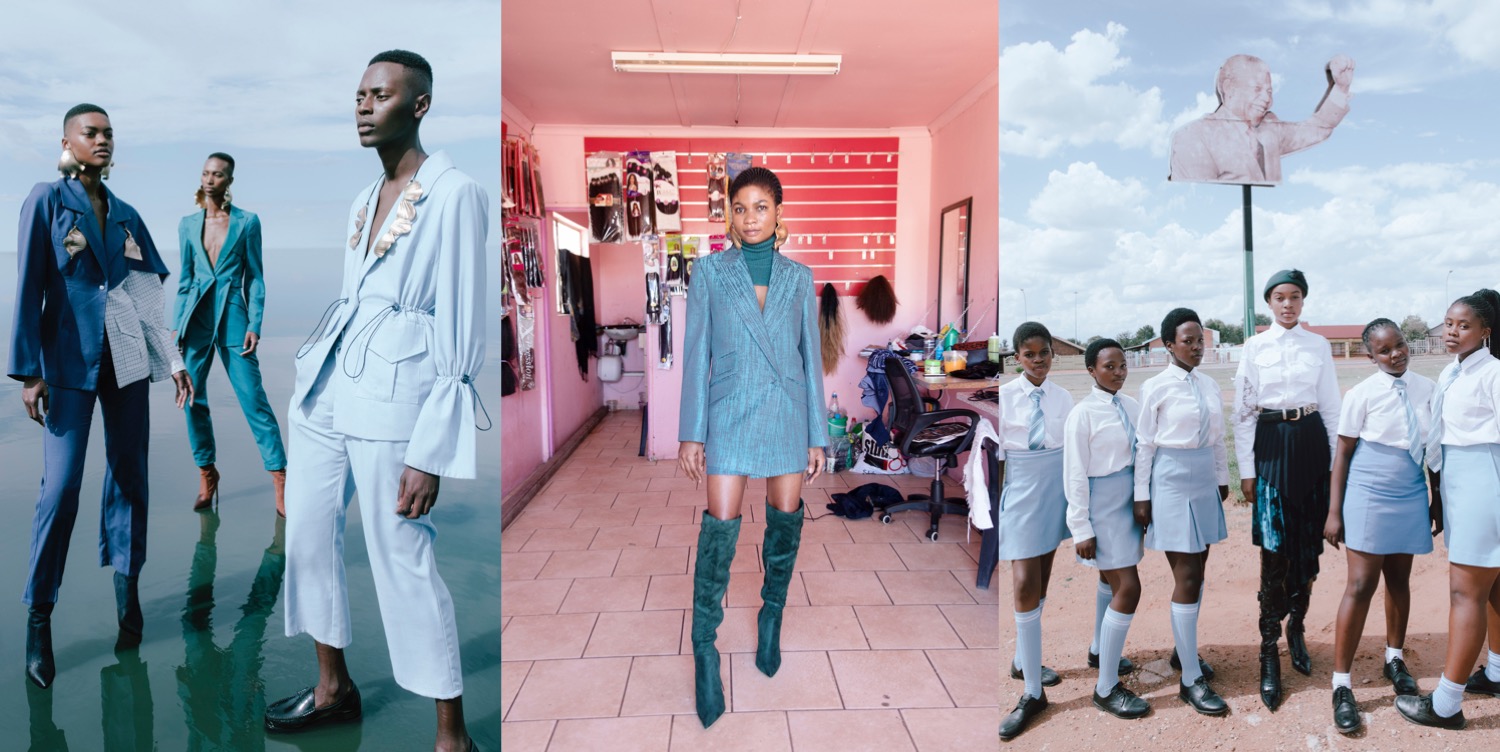
In support for the Black community, I continue celebrating and highlighting the talented individuals that shape fashion today. Take notes! Thebe Magugu staged his debut presentation at Paris fashion week after scooping the prestigious LVMH prize last autumn. The first African designer to win in the competition’s seven-year history, Magugu paid homage to his homeland with a photo exhibition entitled Ipopeng Ext, after an area in Kimberley, South Africa, the city in which he grew up. Fittingly, the name itself translates as “to beautify oneself.” Elegant and evocative portraits of Magugu’s local community lined the walls of the museum; they had been captured by two of the continent’s most celebrated young image makers: South African photographer Kristin-Lee Moolman and Sierra Leone–born stylist Ib Kamara. “These people and places were my earliest references,” said Magugu gesturing to a picture of his cousin Smangaliso posing in his neighborhood church wearing a fluffy light blue sweaterdress. Exquisite reminders of Magugu’s childhood were threaded throughout the collection, including a photoprint of his aunt’s iron roof that was abstracted to look like distressed denim on a marabou-feather-trimmed button-down with matching pants. Inspired by a retro tablecloth, the carnation-print trench coat had a characterful charm that was just as striking. Magugu’s uncle Nephtaly was pictured on a motorcycle dressed in a collared shirt that was covered in an illustration of two black women consoling each other by the Johannesburg-based artist Phathu Nembilwi. Beyond telling a very personal story, Magugu’s clothes are often a form of social commentary, particularly as it pertains to women’s rights in South Africa. As the designer explained, the print was a subtle political statement on the country’s rising femicide rate. Perhaps equally radical is Magugu’s unwavering commitment to producing in South Africa. The new logo satchel was handcrafted by artisans in Johannesburg, while his latest knitwear offerings were all made in Cape Town. Magugu is poised to export his special made-in-Africa vision across the globe.

Collage by Edward Kanarecki, photos courtesy of Thebe Magugu.

The Look – Christopher John Rogers AW20

In support for the Black community, I continue celebrating and highlighting the talented individuals that shape fashion today. I wrote about Christopher John Rogers not a while ago right here, and I must admit: I’m obsessed with his work! Here’s this gorgeous finale gown from the Brooklyn-based designer’s autumn-winter 2020 collection to brighten up your Tuesday.

Collage by Edward Kanarecki.

Balade en Méditerranée. Chanel Resort 2021

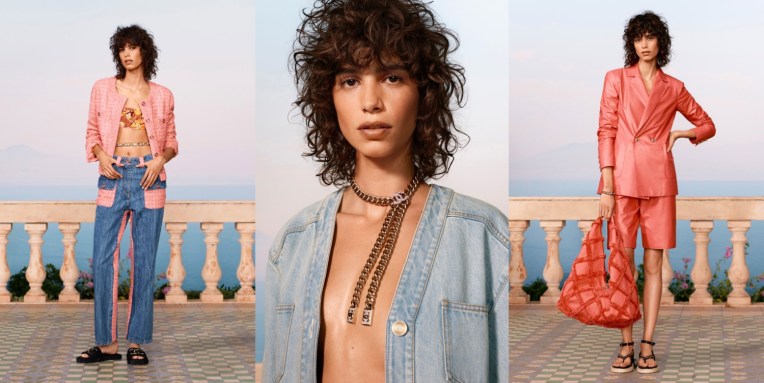
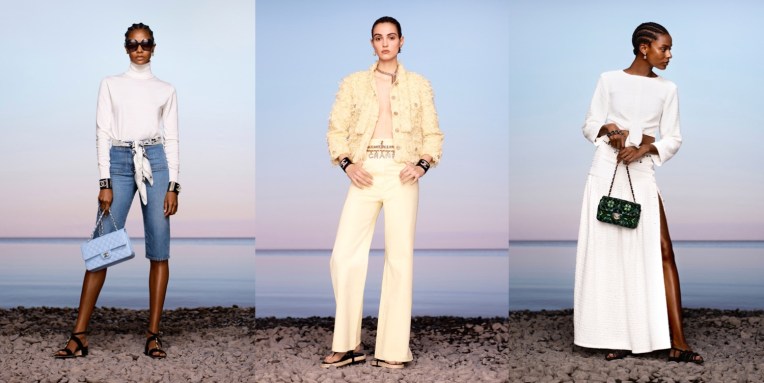
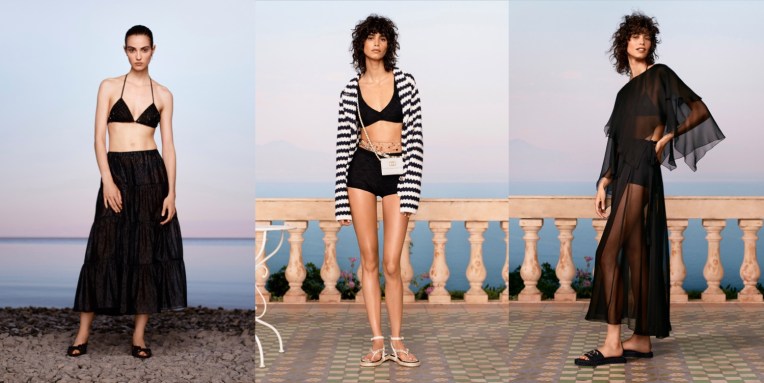
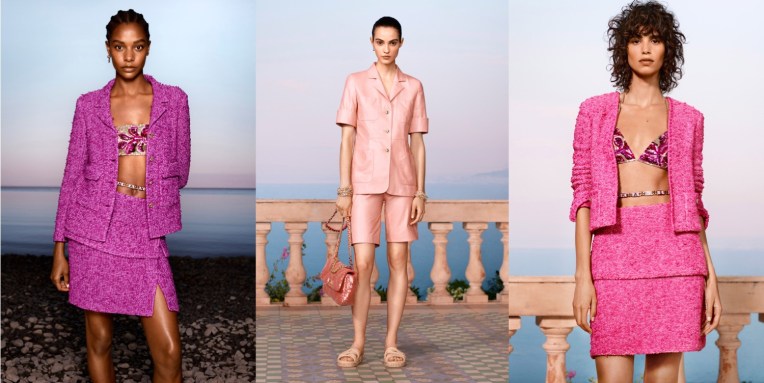
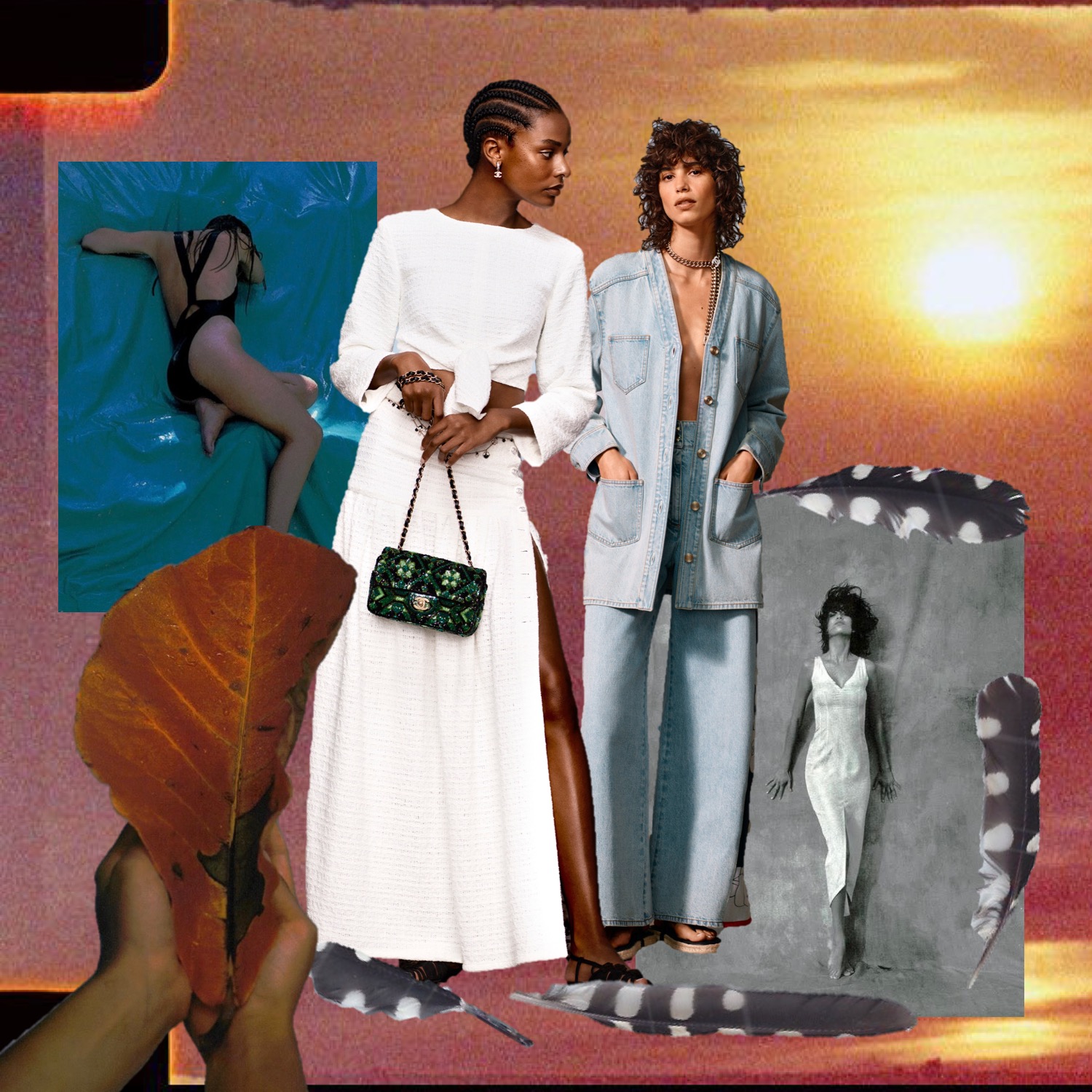
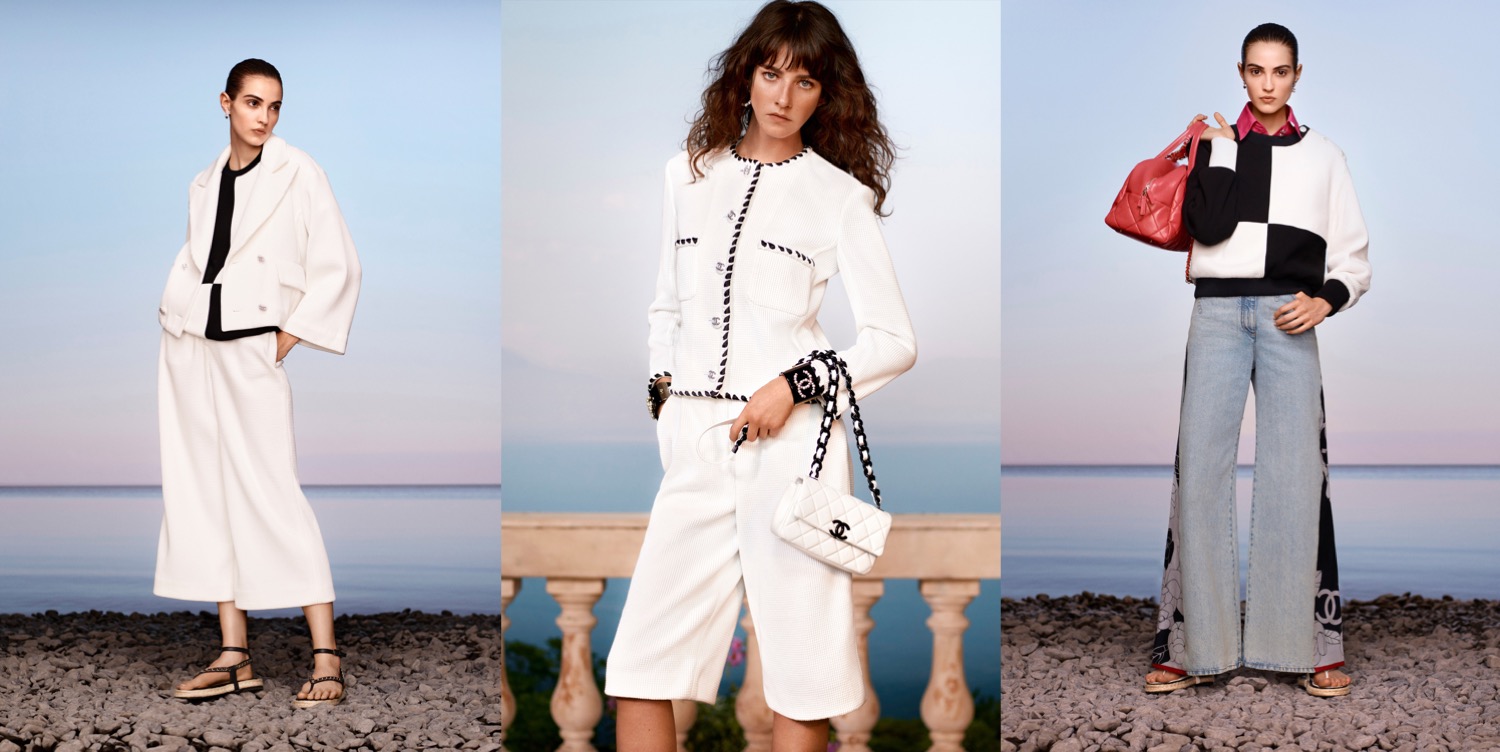
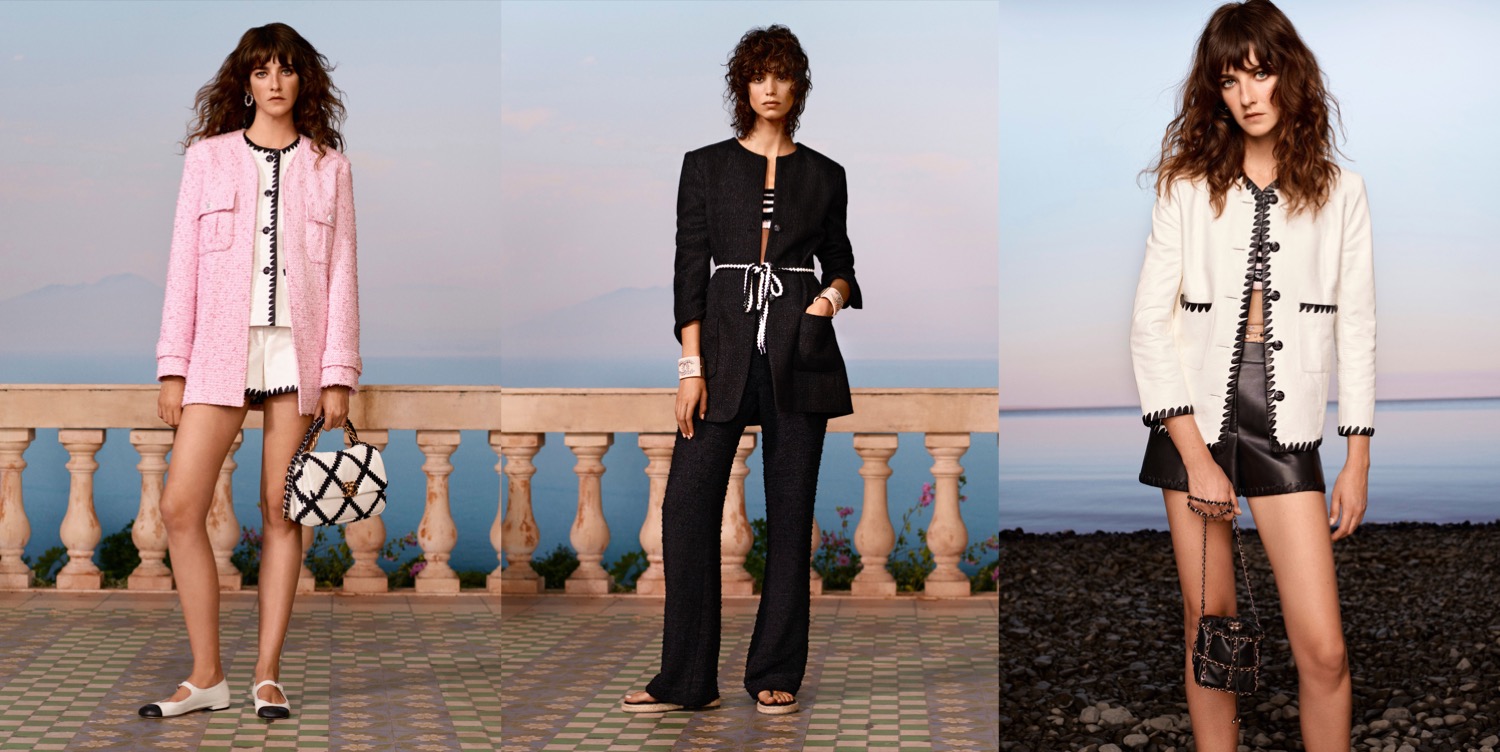
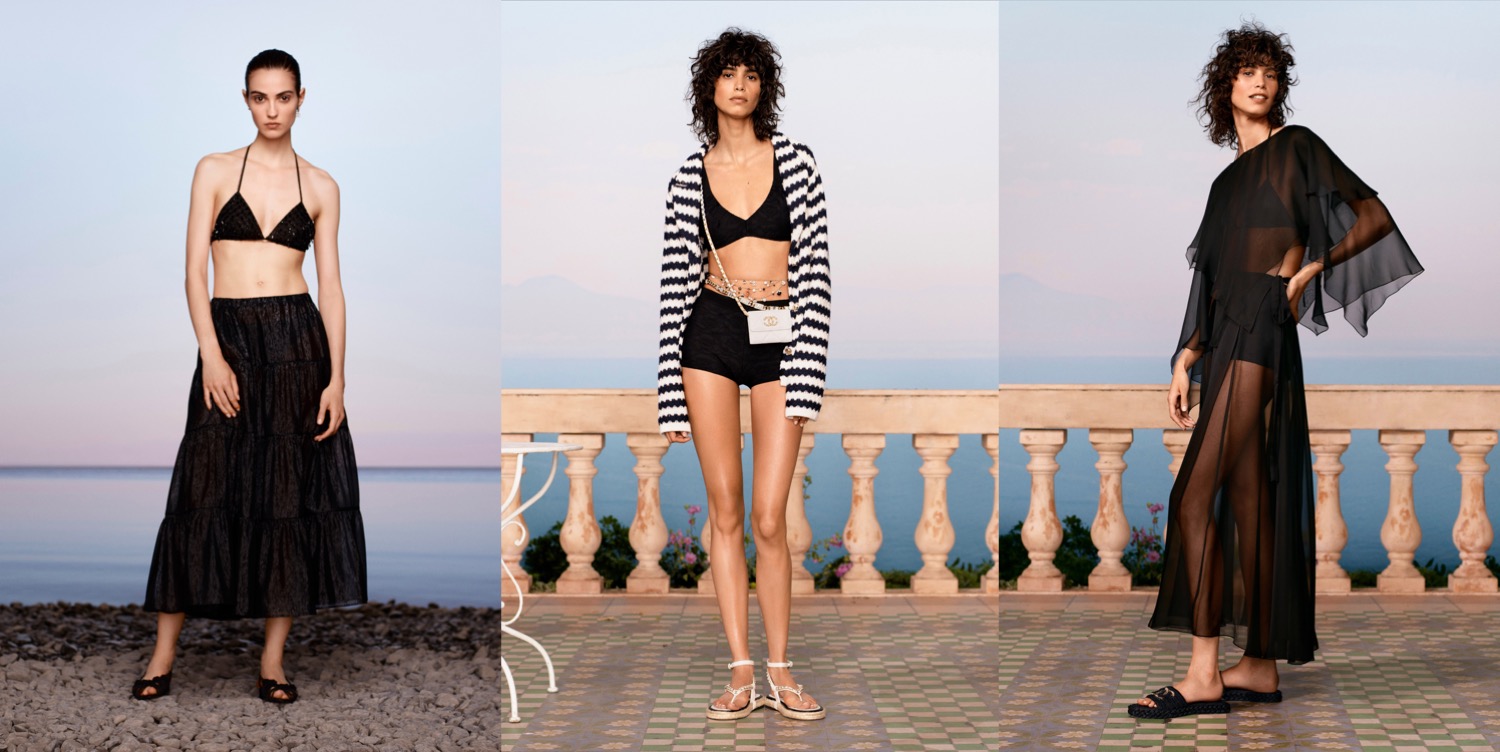
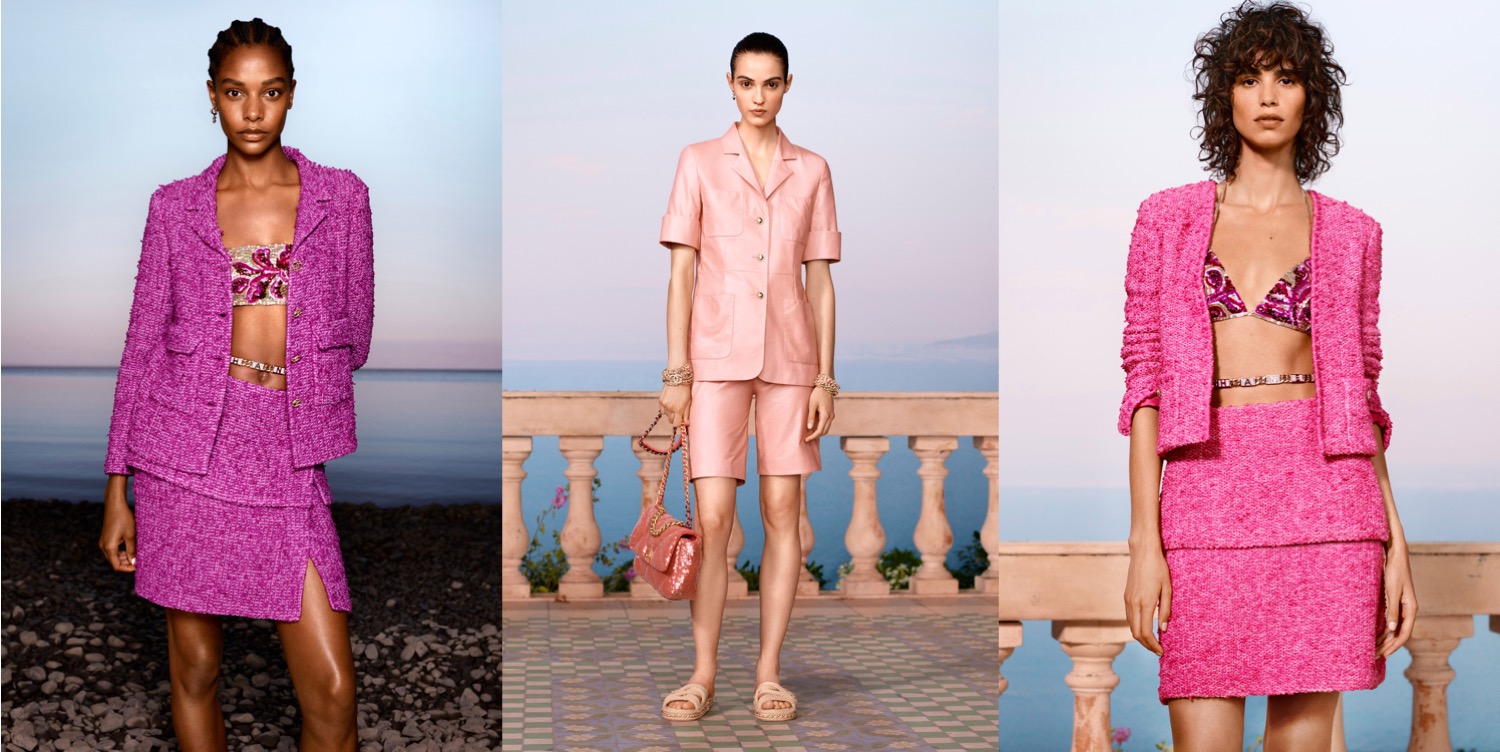
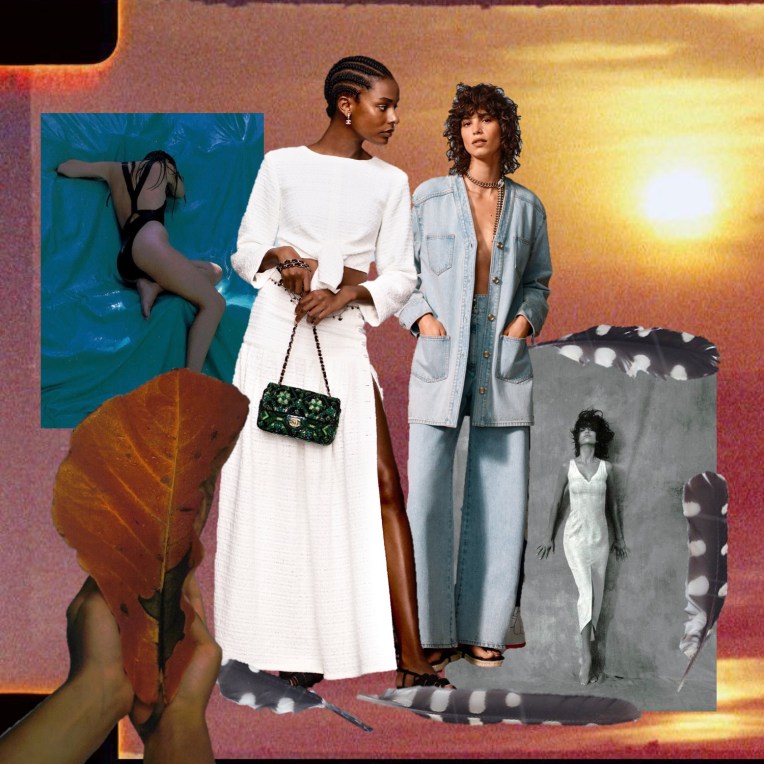
Many dreams and plans had to be thrown away to the trash bin due to coronavirus. The Chanel resort 2021 collection was originally intended to be shown on Capri, the heavenly Italian island. Virginie Viard has a hard time with the critics, but I find her work attractive and purely Chanel. She’s focused on the essentials and signatures of the house – making each collection feel truly timeless. So maybe a look-book, photographed by Karim Sadli, works just fine for those clothes. Viard spent lockdown in her French country house, a time, as she says, for “rest and family time,” that was no holiday. In addition to preparing this resort collection (which she had begun before lockdown), Viard was also working on a capsule haute couture offering, which will likewise be presented virtually. Viard returned to Paris and the Chanel studio on May 4, when the city partially reopened, but in the depths of the countryside she was thinking and dreaming, as she told me, about “summer in Capri – or the South of France,” and the kind of destination wardrobe of “easy clothes” that “a sophisticated but also cool girl would want to travel with.” Her proposal includes swimsuits to wear as bodies under cardigan jackets, wide-legged pants, or handkerchief-hemmed skirts, and no-nonsense iterations of the classic Chanel suit or saharienne jackets in cotton tweed. “There are no evening dresses, no heavy things,” says Viard, who proposes instead some day-into-night options including those bathing suits printed with scattered trompe l’oeil Chanel costume jewels and worn with skinny cardigan jackets and wide pants in a fine-gauge knit or bandeau tops embroidered by Lesage with flowering branches of bougainvillea  (the emblematic Mediterranean summer flower) that that can be worn under suits or veiled under sheer black chiffon blouses. No ground-breakers here, but I’m fine with that. It works. Also, I might say that the Chanel team had to have a closer look at Jacquemus and his mediterranean lifestyle for a while – I found echos of that light, playful sensibility in the resort offering with all the volumes, body-revealing cuts and mini-accessories. But the the most exciting thing about this collection is the least visible. Finally, at least some sustainable thinking at a house this big as Chanel. There was a new approach behind the works with supply chains compromised by the pandemic. The collection, as Viard explained to Vogue, was made using “all the fabrics we had in stock – all the buttons, all the galons – we had a shop in the studio, it was so cute!” Moreover, Viard pulled some staple pieces and accessories that are currently available in store, but that haven’t yet been shown in campaigns – among them some denim jeans and a very stylish woven wicker beach basket purse. “I love it,” reasoned Viard, “why would we have to do another one?” A silent revolution is going on in here.

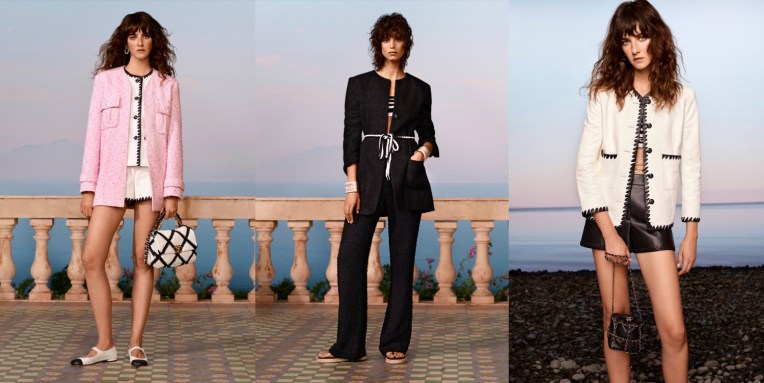
Collage by Edward Kanarecki.