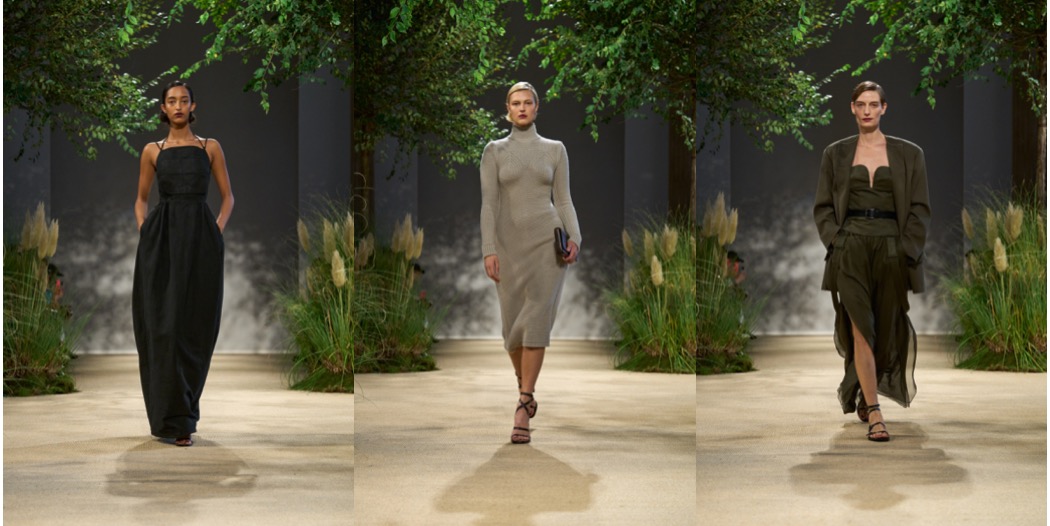
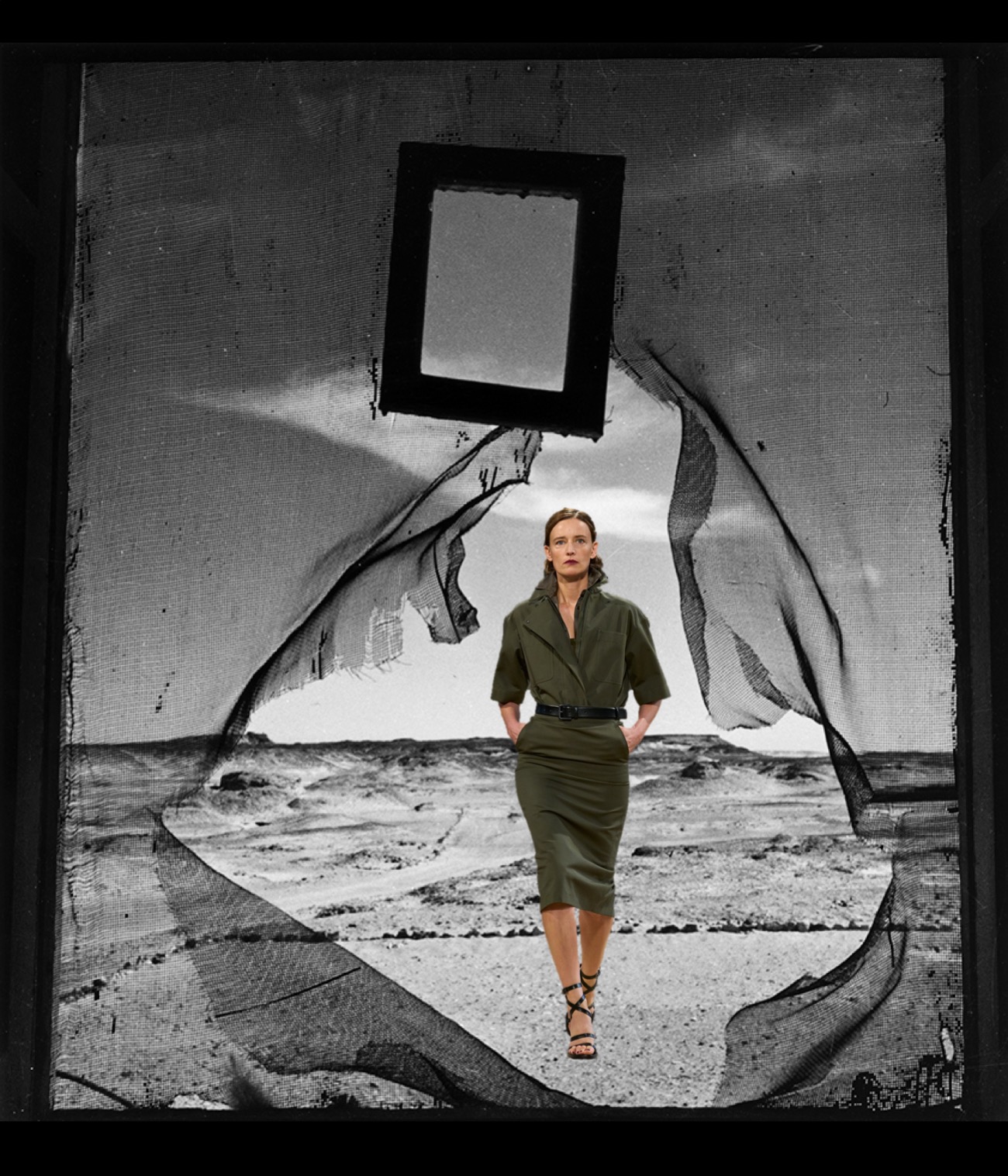
Land Girls. Max Mara SS24

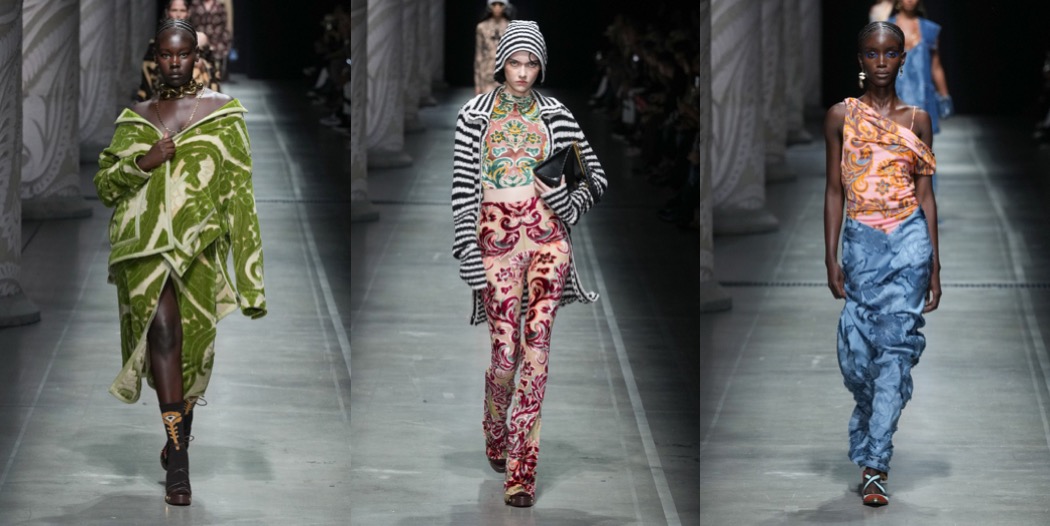
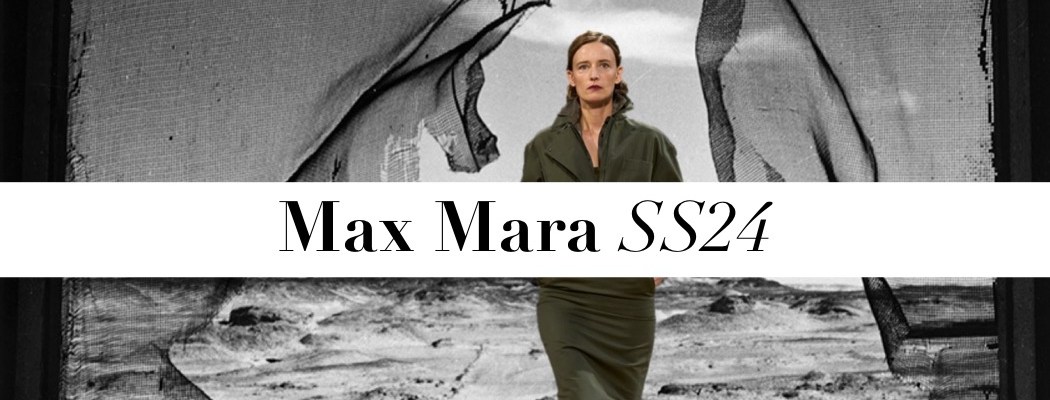
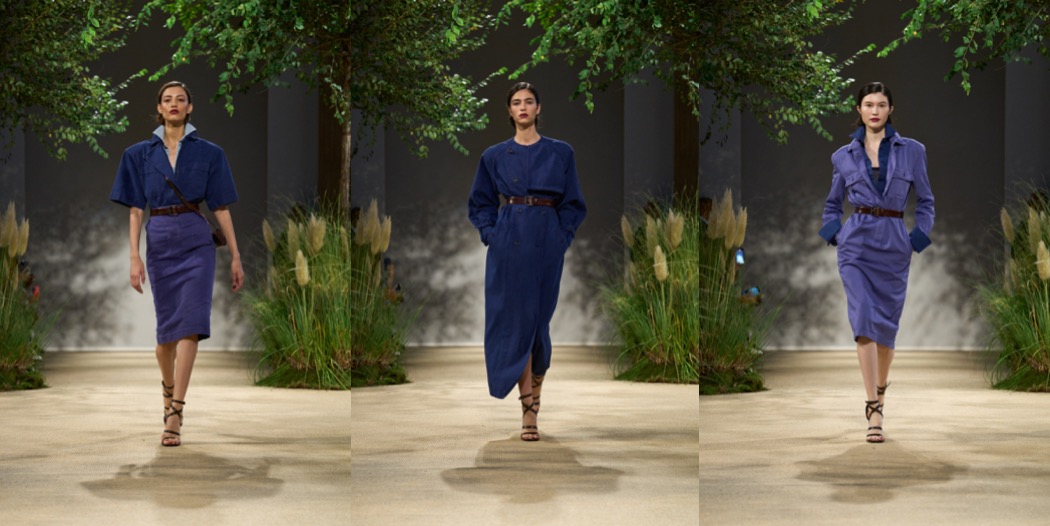
This season, we see designers reflecting on global socio-economic unrest by looking back at the war-time moments of early 20th century. That certainly happened too at Ian GriffithsMax Mara. Formed during World War I and mobilized anew for World War II, the Women’s Land Army recruited up to 80,000 females to farm while Britain’s men took up arms. Along with the women working in munitions factories, as nurses, in auxiliary military service, as air raid wardens, and in many other vital non-combatant roles besides, the so-called Land Girls were a vital part of the war effort. By fortunate necessity they also in part catalyzed the emancipatory precedent for women to take their place in the workforce. The Women’s Land Army proved a fertile source of inspiration for Griffiths. The spring-summer 2024 collection that flourished from it was cultivated rather than rustic, but it contained many authentically researched touches while also working wonderfully as a luxuriously utilitarian woman’s wardrobe for now. Bill Cunningham bleu de travail in various garment-dyed shades of cotton was applied to long Monty Don-style work jackets, backless narrow-cut apron-front pencil dresses, double-kneed narrow-cut work pants, and bellows-pocketed and epauletted shirt-skirts and overalls. The palette pivoted to rosy pinks as Griffths pruned his hemlines high with patch-pocketed hot pants under a tunic and a romper. Gorgeous leather-edged canvas gardening bags and bridle-leather binocular cases were tucked under the arms of high-waisted green blousons and washed cotton wide-lapel varieties of Max Mara’s heritage-specialism coat. A wide-gauge knit jersey in green featured irregular cotton patches on one shoulder and the opposite arm in tribute to the source-era’s make-do-and-mend ethos.
Collage by Edward Kanarecki.
Don’t forget to follow Design & Culture by Ed on Instagram! By the way, did you know that I’ve started a newsletter called Ed’s Dispatch? Click here to subscribe!
NET-A-PORTER Limited

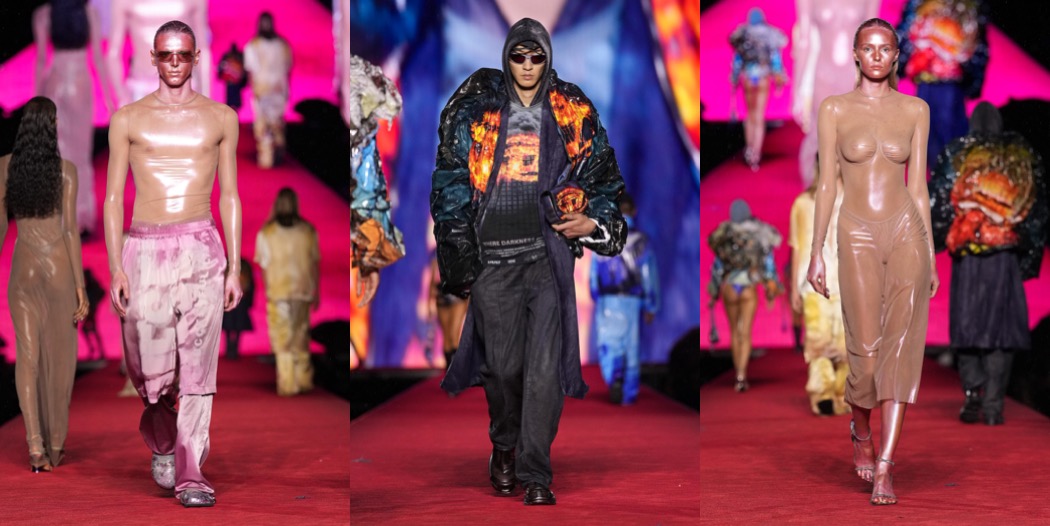
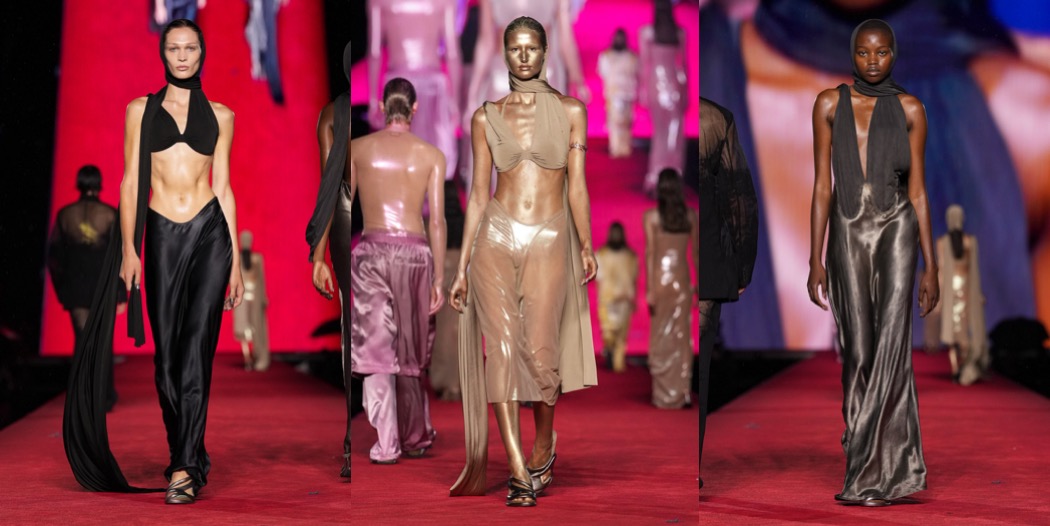
It’s a Party. Diesel SS24

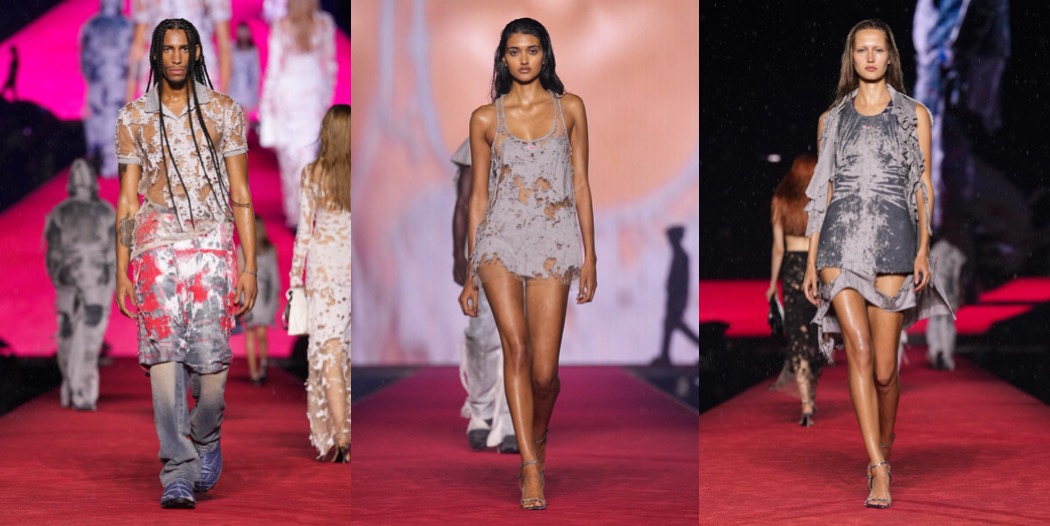
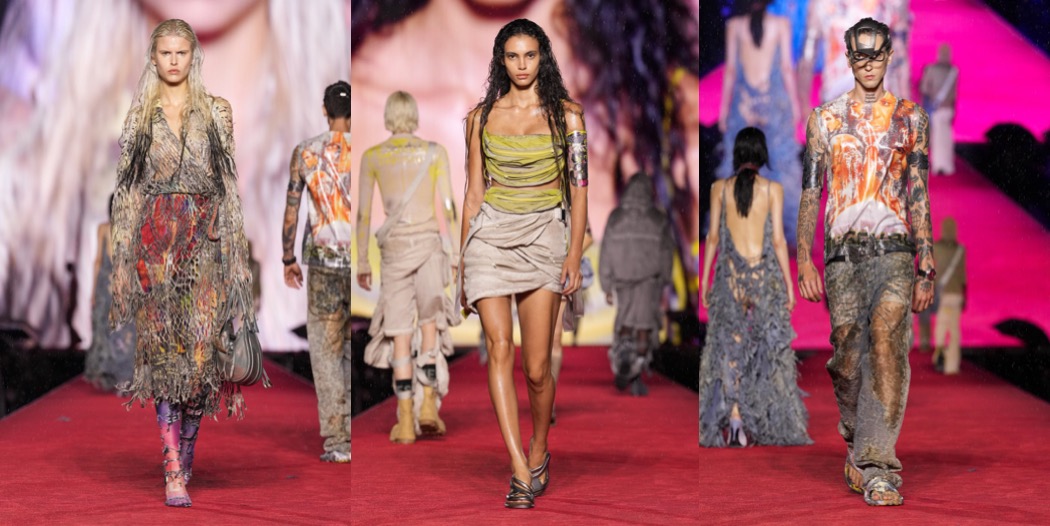
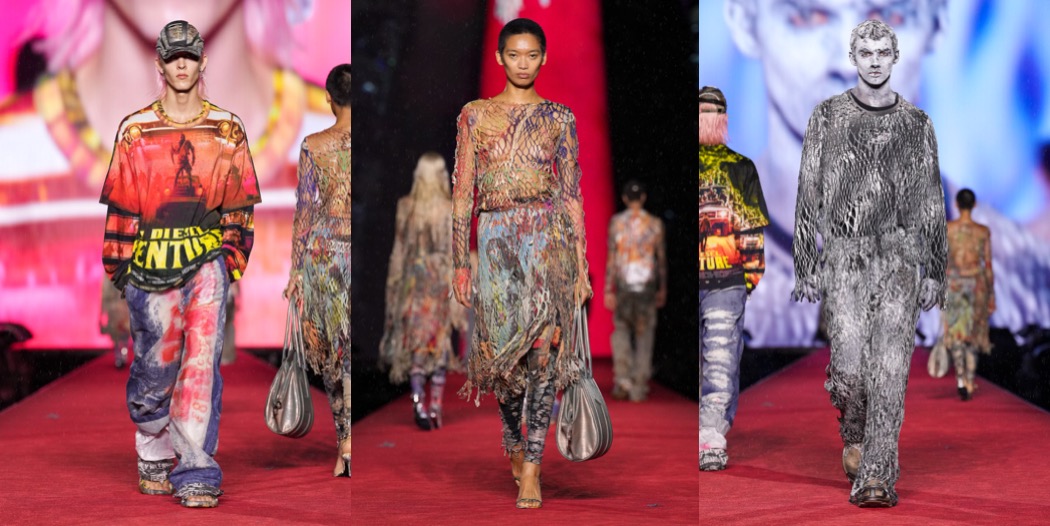
The Diesel show had a lot to say. But in the end, I thought Glenn Martens lost his focus, as the collection went in too many directions and roamed into pure entertainment. But then, Diesel is the go-to brand for hedonism. As the first models came out in his artisanal-industrial shredded and devoré denim outfits, the rain started to slice with gusto through the spotlit area above the huge runway that stretched long into the huge crowd (the free tickets that had been made available online – first to 1,500 students from Milan’s universities, then to all comers – had been snapped up in minutes). Dieselized parodies of old-school movie posters appeared on the garments, which in majority were distressed, acid-washed and double layered. Close fitting ruched jersey or lurex dresses, some of them traced with the external outline of underwear, acted as loose human pastiche of the Oscars statuette. But it also read very Mugler. Destroyed tuxedos, half red carpet and half apocalypse, were the masculine counterpoint. Artisanal pieces included dresses handmade in shredded denim or burned mesh. Several models were caked in grayish ochre mud that matched the tone of their looks. As the last model walked, statuette-esque in a flowing black silk skirt and bralette/scarf combo, the rain suddenly cleared. The finale – and then four more hours of partying – followed.

Collage by Edward Kanarecki.
Don’t forget to follow Design & Culture by Ed on Instagram! By the way, did you know that I’ve started a newsletter called Ed’s Dispatch? Click here to subscribe!
NET-A-PORTER Limited

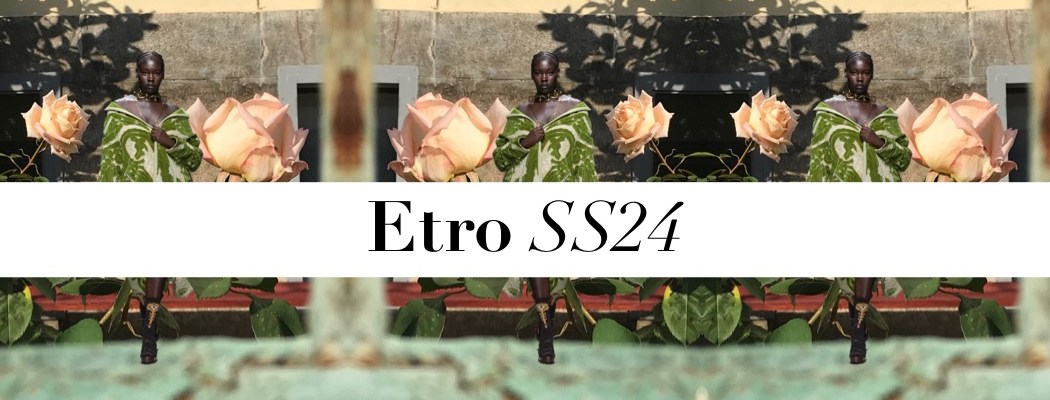
Nowhere and Everywhere. Etro SS24

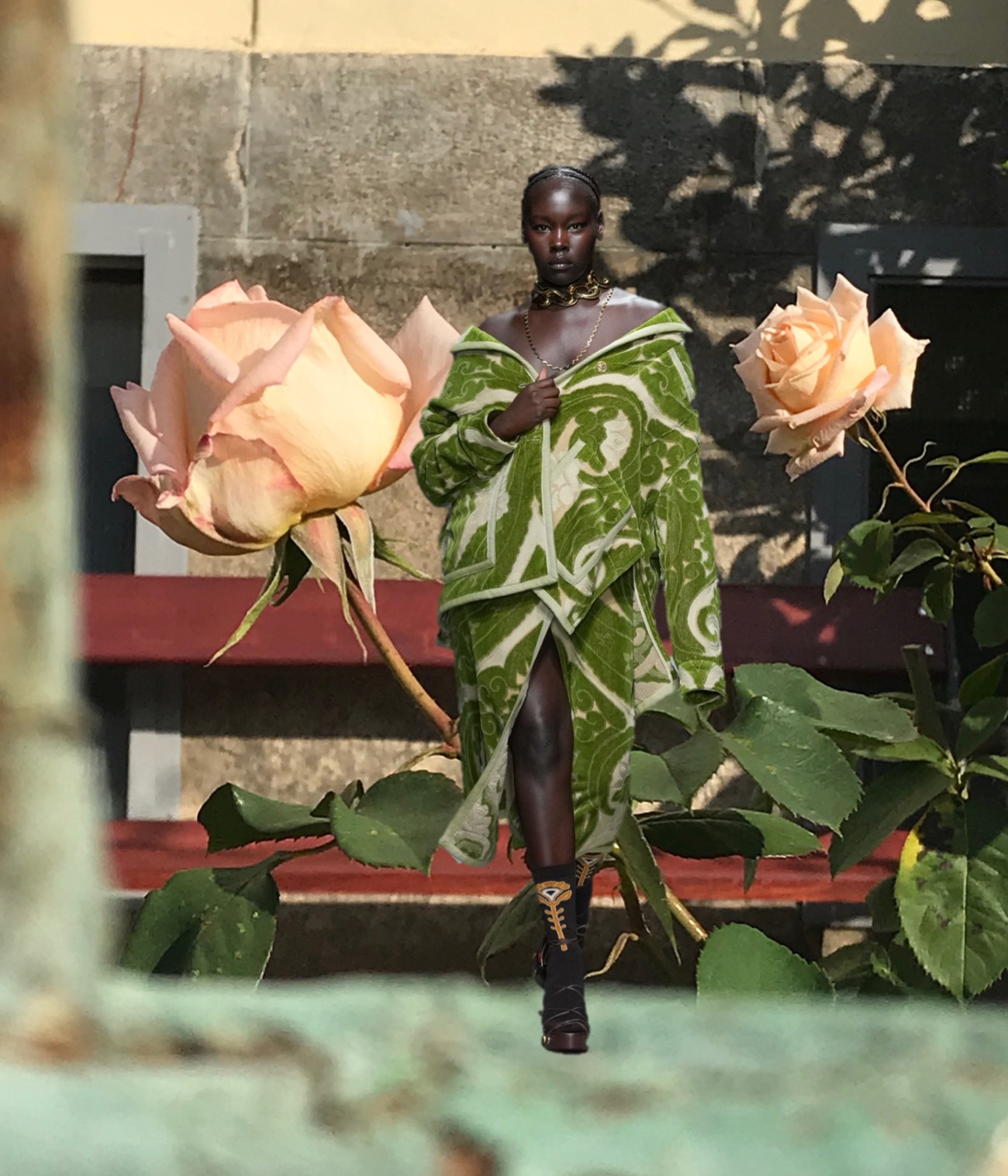
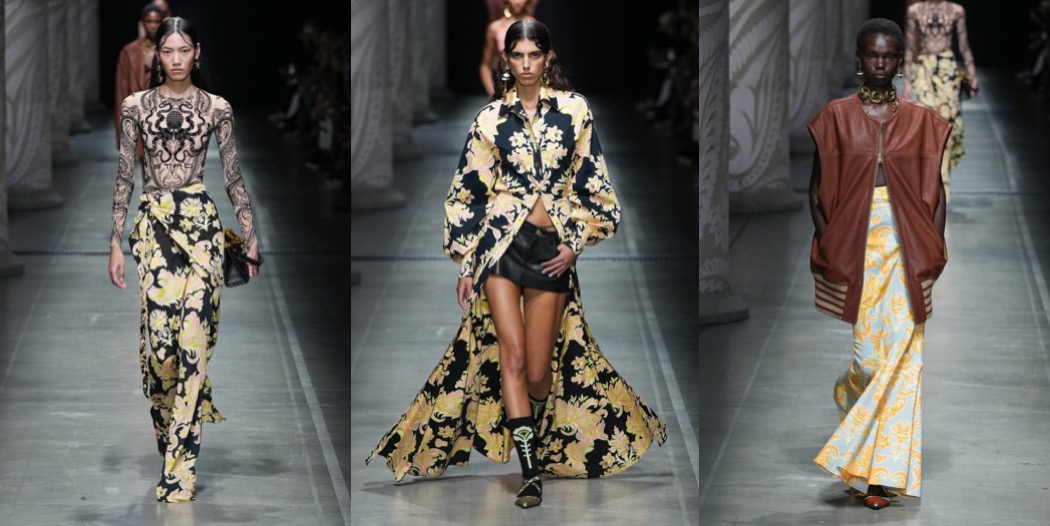
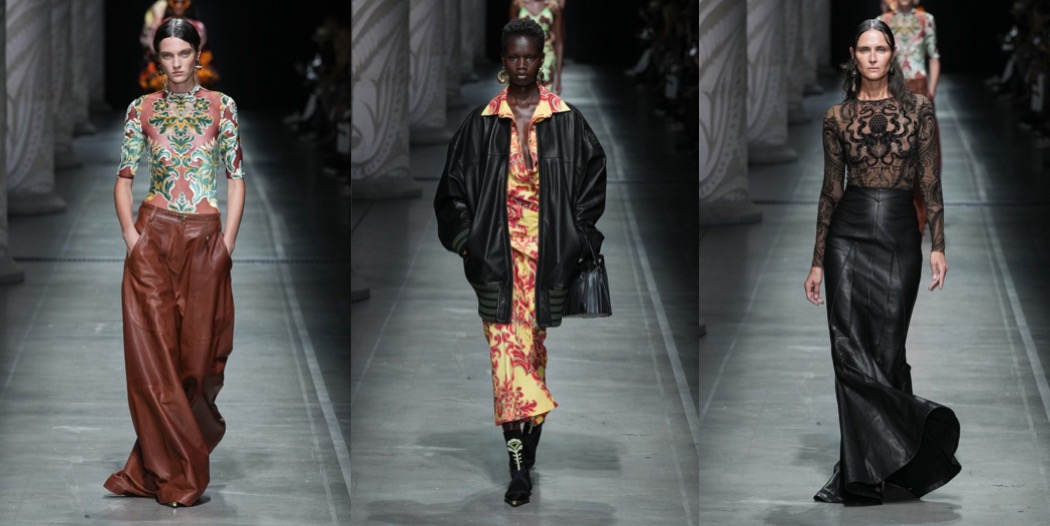
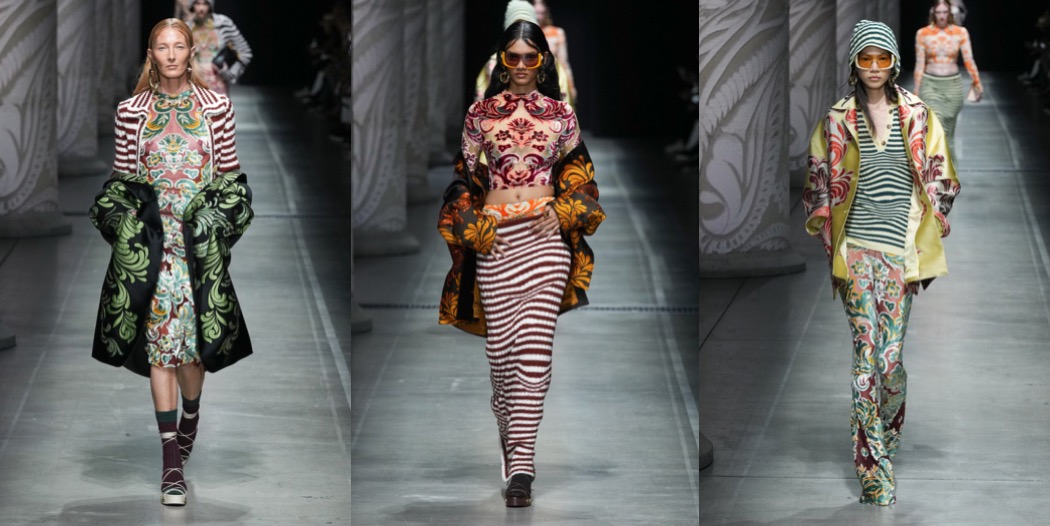
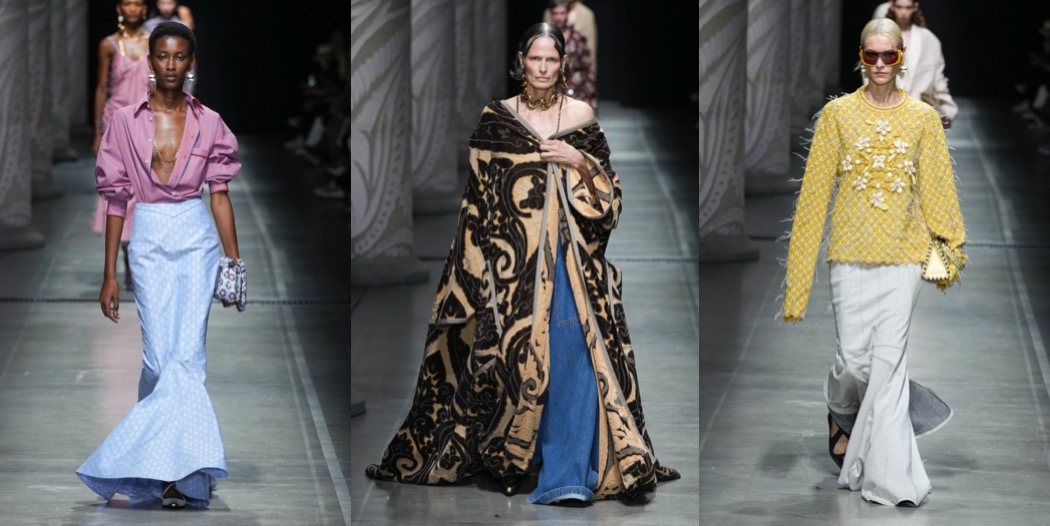
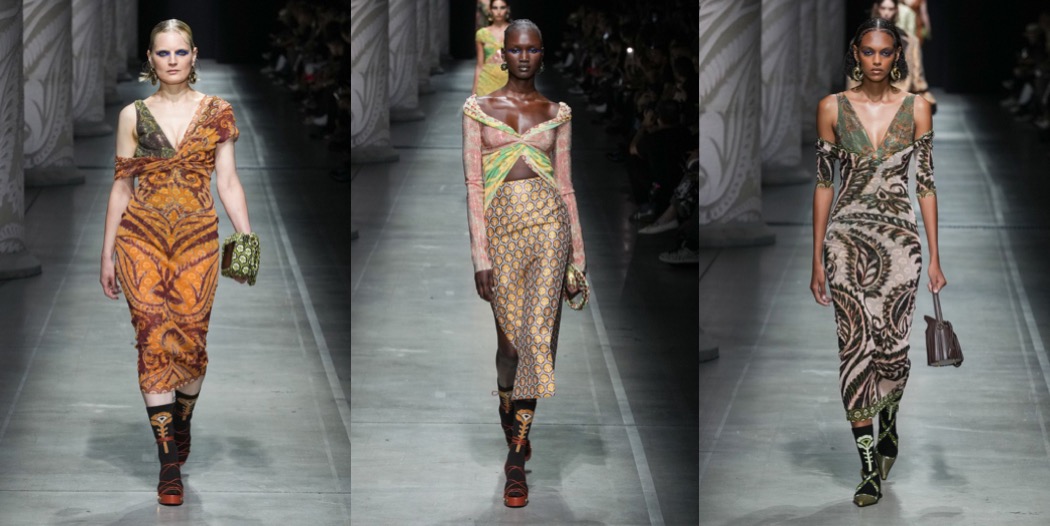
At Etro, three seasons in, Marco De Vincenzo is gradually finding his groove. He starts to navigate around the brand’s vast archive pretty well, with all its troves of rare fabrics and prints. “It’s weird how the imagination brings you to places that somehow you can’t describe,” he said. “The magic of the temples of Angkor Was, a scrap of beautiful brocade from the 18th century… the mind travels through memories and suggestions, mixing them together with no logic or rational hierarchy, and lands instinctively in fabulous places with no name.” He called his spring collection “Nowhere“. De Vincenzo’s audacity and quirk was the glue that kept the collection cohesive, despite its visual jumble of graphics and handsome textures. “But there are no citations, no recognizable attributions, everything comes to life in a magical no-place,” he said. Not afraid to confront challenging shapes (swirling trailing hems sneaking awkwardly around the ankles), unexpected juxtapositions of volumes (XXXL leather blazers worn over equally humongous tent-like strapless circle dresses) and redundant intricacies of construction (an abundance of twisting, knotting, braiding and slicing), De Vincenzo is carving a distinctive niche of cool for Etro, bending its codes into a spirited, vital, visually compelling rendition. The diverse, refined casting, sophisticated grooming and imaginative styling only added to a convincing performance.

Collage by Edward Kanarecki.
Don’t forget to follow Design & Culture by Ed on Instagram! By the way, did you know that I’ve started a newsletter called Ed’s Dispatch? Click here to subscribe!

NET-A-PORTER Limited

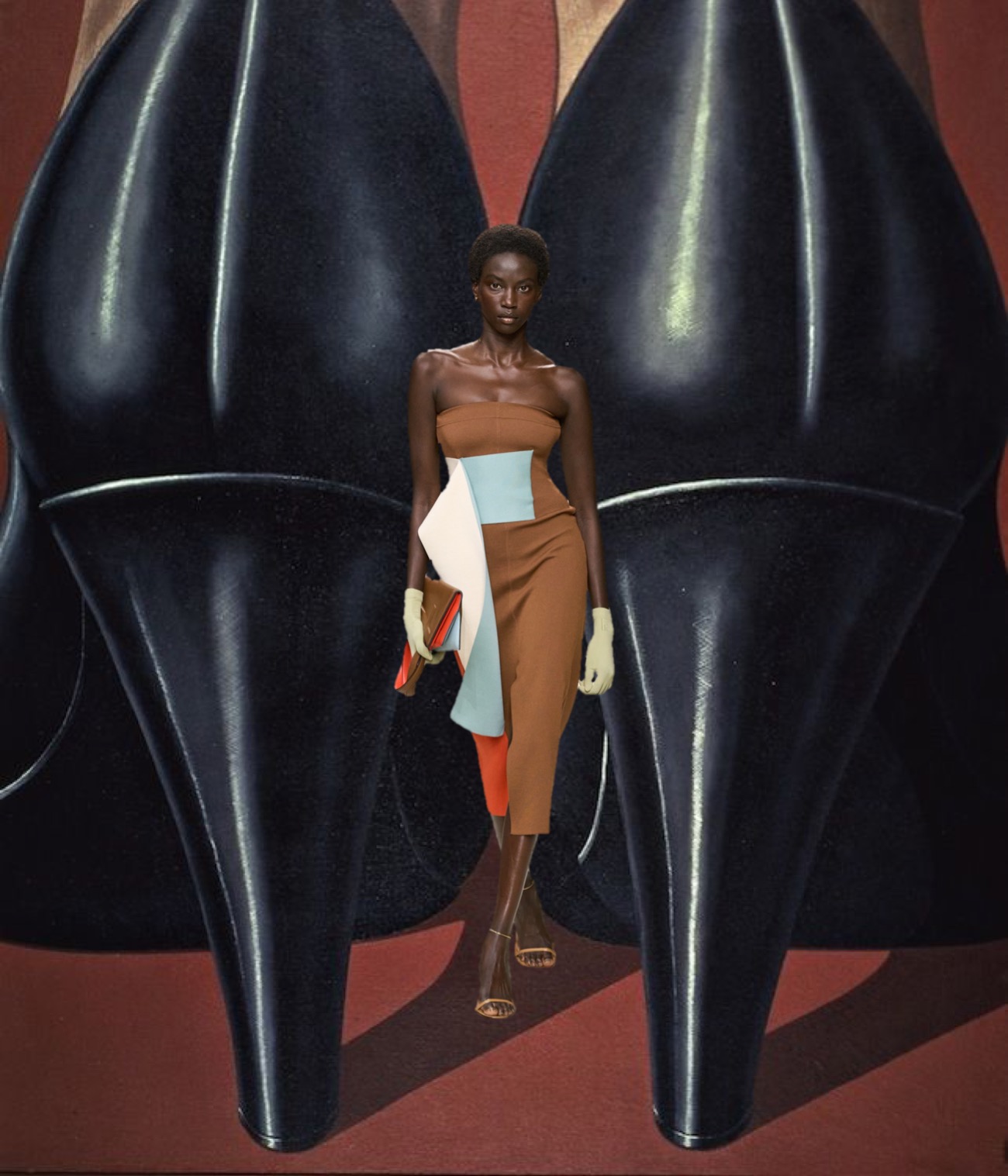
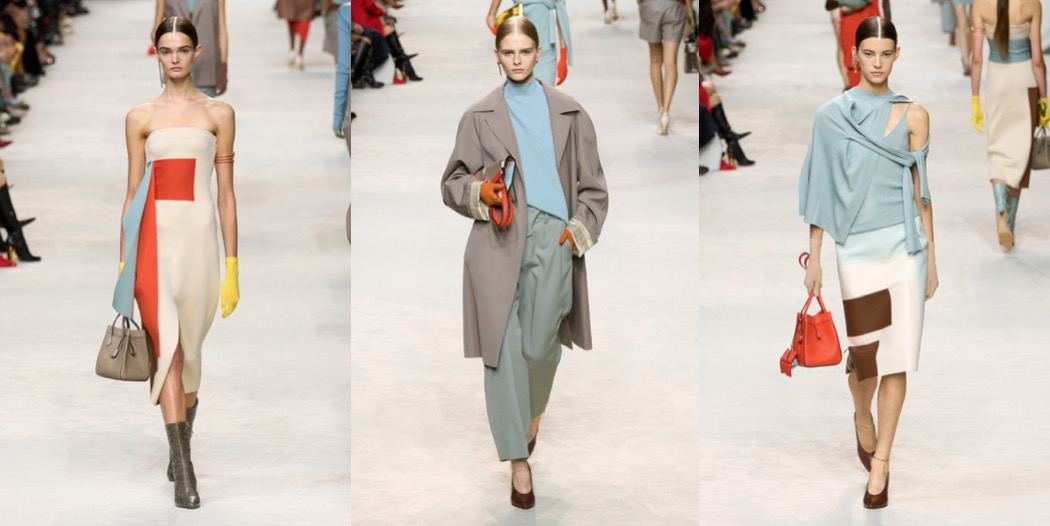
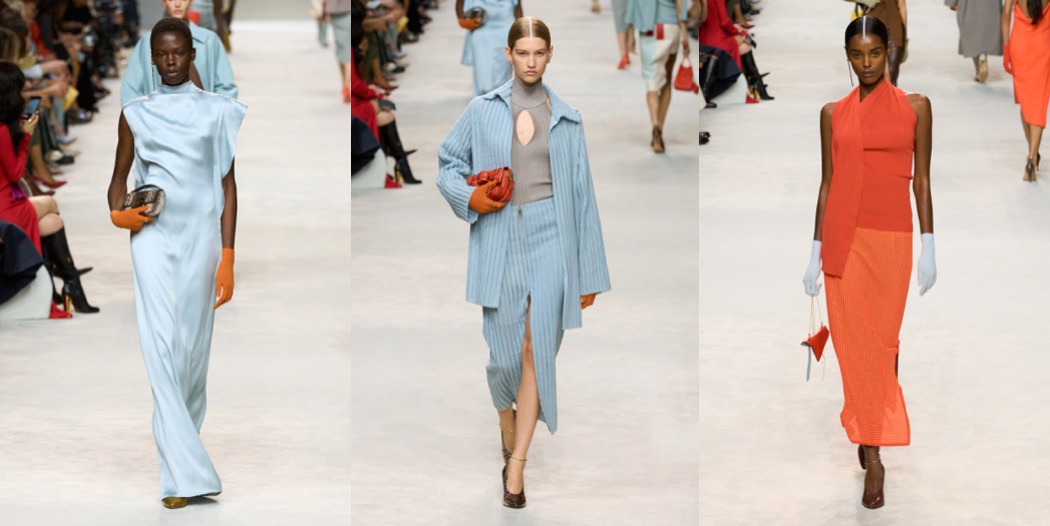
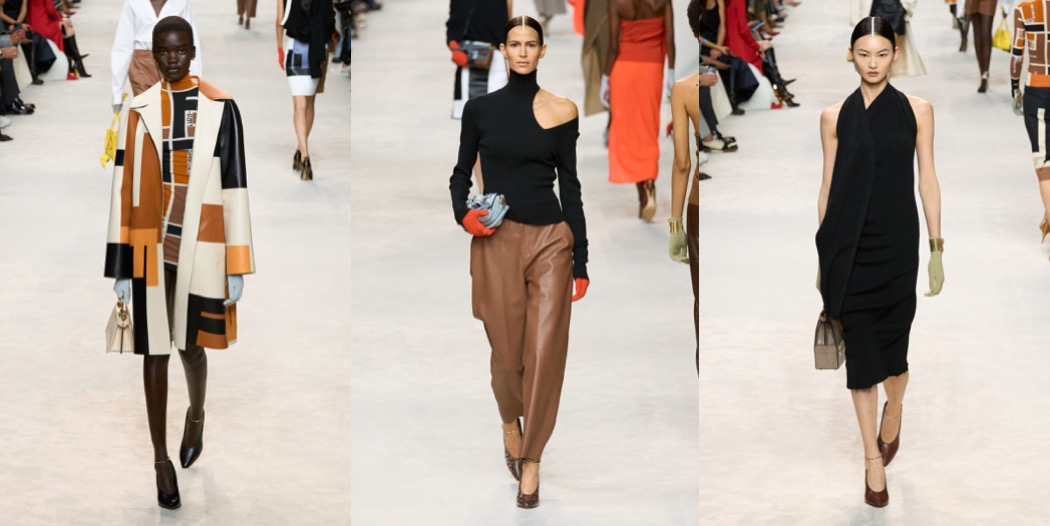
Classy. Fendi SS24

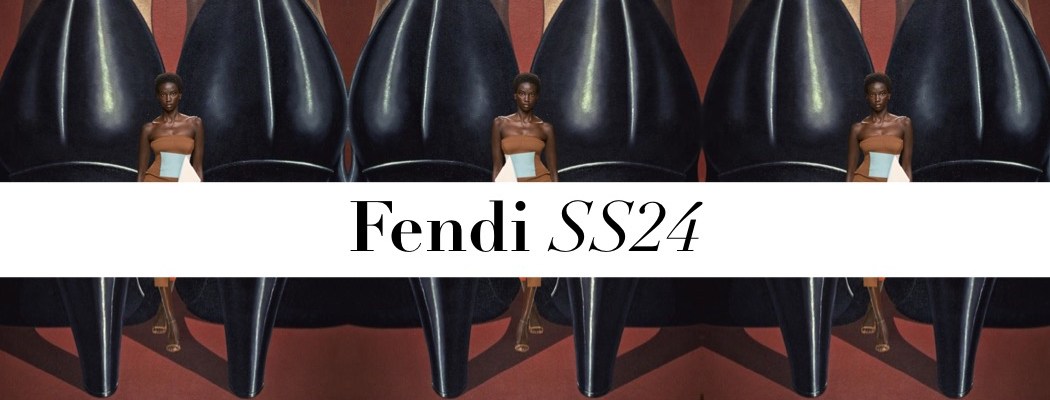
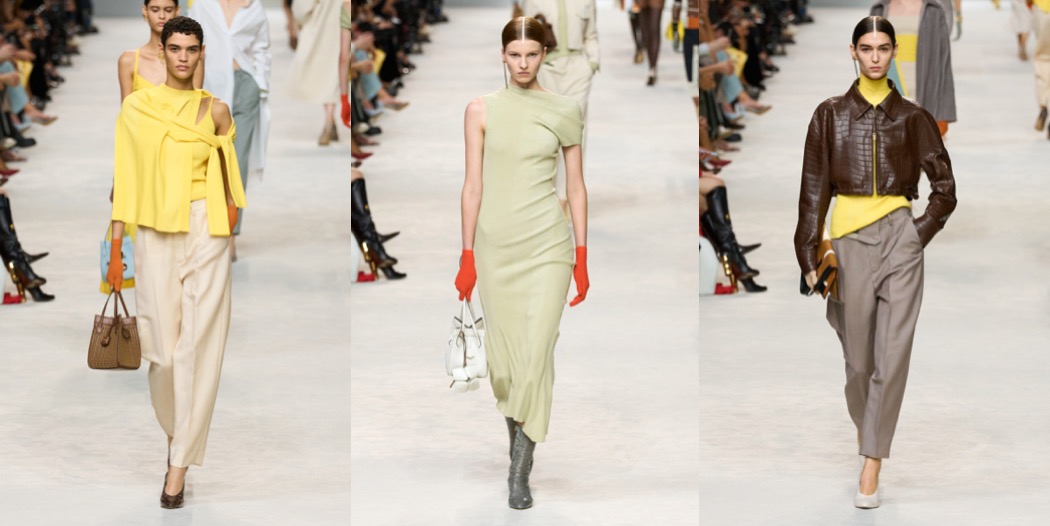
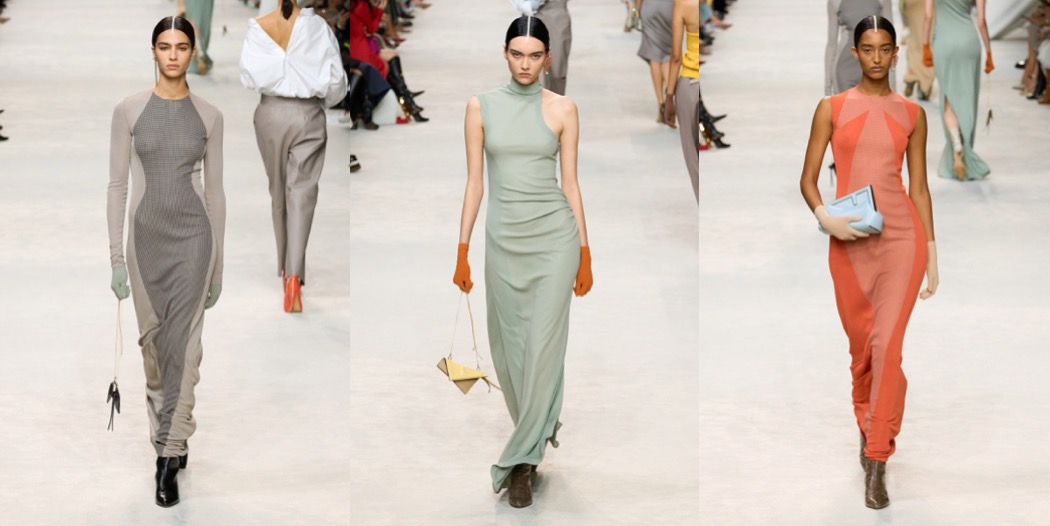
At first, I thought that Kim JonesFendi collection for spring-summer 2024 is mediocre. But when Alexander Fury wrote that this is exactly what the Fendi woman should look like, I had a second glance at it. Jones isn’t reinventing the wheel at the brand, but he’s certainly building a contemporary and very coherent vision of the house and its client. Never fussy, rather understated, but not “just” minimal. Yesterday’s chapter was informed by Karl Lagerfeld’s spring 1999 show for the house and its powerful practicality drew from the Roman women – not least the Fendis and their closest professional cohorts – with whom Jones interacts when serving this brand. His collection was acutely and minutely designed to generate impact through detail, fit and finish. Mannish mohair tailoring (including skirts) was stripped of all visible closures and fittings, then cut with arms designed to be turned up, plus waistbands switched inside out, as if snaffled from a minimalist uomo’s wardrobe. Knitwear blouses, cardigans, skirts and dresses were architecturally entangled with each other against the body, creating striking new forms from conventional ingredients. Rib knits were expanded into a sort of jumbo-jumbo shearling corduroy, slightly flocked, used in a section of oversized work shirts, coats and split skirts. A paper-like, shiny-finish linen was used to fashion a cut-away dress in the same canary yellow that featured in that Lagerfeld collection 24 years ago. Nostalgic, but not daunting; rather, nostalgia that looks towards the future.

Collage by Edward Kanarecki.
Don’t forget to follow Design & Culture by Ed on Instagram! By the way, did you know that I’ve started a newsletter called Ed’s Dispatch? Click here to subscribe!
NET-A-PORTER Limited

Late Capitalism. Conner Ives SS24

We live in the times of late capitalism. It’s also how Conner Ives entitled his spring-summer 2024 collection, which starting point was a TikTok video he stumbled across a few months ago of a girl live-blogging her experience queuing for a fashion sample sale in New York as smoke from the Canadian wildfires bathed the city in an ominous orange glow. “As much as it felt like the end of days, there was also a dark humor to it,” Ives said at a preview. “It’s the beginning of the end of the world, and we’re waiting in line at a sample sale.” “Late Capitalism” – a collection that invitates to talk more openly about the economic realities of what keeps the fashion world moving – is “a subject that makes me uncomfortable, which made me feel like it was something worth talking about,” he said. Ives is one of a generation of designers for whom sustainability is something of a given, meaning he hasn’t telegraphed his eco-credentials all that loudly in the past (although with his signature approach of lending deadstock and upcycled vintage clothes a glamorous new life, you didn’t have to dig very deep to notice it). But he now feels a greater urgency to share the various methods by which he’s carved out his own, more responsible lane. “I think part of me didn’t want to get up on my soapbox, as I wasn’t sure if anyone really cared,” Ives said, noting that in his few years of doing production at scale, he’s repurposed nearly 15,000 T-shirts destined for scrap yards, while a new partnership with Depop will see him use the platform to source bulk raw material for production. And he’s open to talking about the fact that the system still isn’t perfect. Sure, he’s made a firm commitment to only staging a runway show once a year, but he still needs to produce lookbooks in between to allow him to sell year-round and keep his business afloat. “I’m very aware there’s an irony to the ‘Late Capitalism’ collection being an answer to getting more items into stores,” he acknowledged.

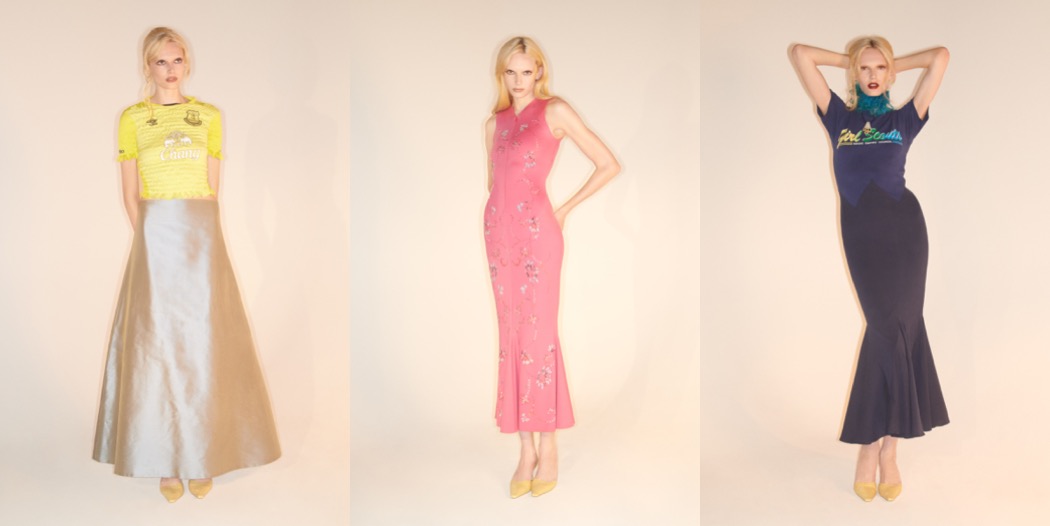
So, then, to the clothes. In his signature spirit of character-driven styling, Ives’s lookbook- photographed by Johnny Dufort, and starring the TikTok-favorite model of the moment Alex Consani – began with one of his “archetypes,” a T-shirt and skirt decorated with a swan motif as an ode to Natalie Portman’s doomed ballerina in Black Swan. Once again, there was plenty of fun to be had identifying the various figures he was paying homage to, from Charlotte York to Carmela Soprano. Ives also continued his journey of expanding out from the spliced T-shirt dresses that made his name as a fashion editor favorite, continuing to develop his tailoring and elevate his eveningwear offering. Highlights included a series of T-shirt dresses with 1930s-inspired trumpet skirts made of recycled jersey, a sheer bias-cut dress cut from baseball jersey material, and a swishy black halter gown with a mother-of-pearl shell as a belt buckle. But perhaps the most striking looks came at the end, in the form of a dazzlingly intricate dress strung together from 9,000 soda can tabs, and a slip made from cowrie shells strung together in a bias lattice. Cowrie shells, being one of the earliest forms of currency in human history as Ives pointed out, is another nod to the collection’s meditations on commerce.

Collage by Edward Kanarecki.
Don’t forget to follow Design & Culture by Ed on Instagram! By the way, did you know that I’ve started a newsletter called Ed’s Dispatch? Click here to subscribe!
NET-A-PORTER Limited