Nutico: Chocolate Leather

Let’s talk about chocolate – not the kind you eat, but the kind you wear.

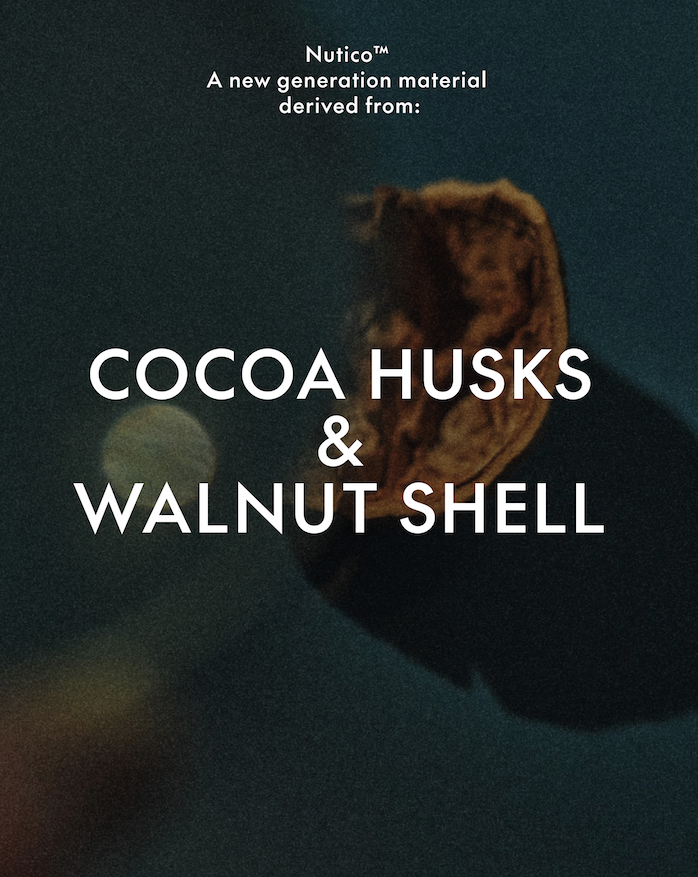
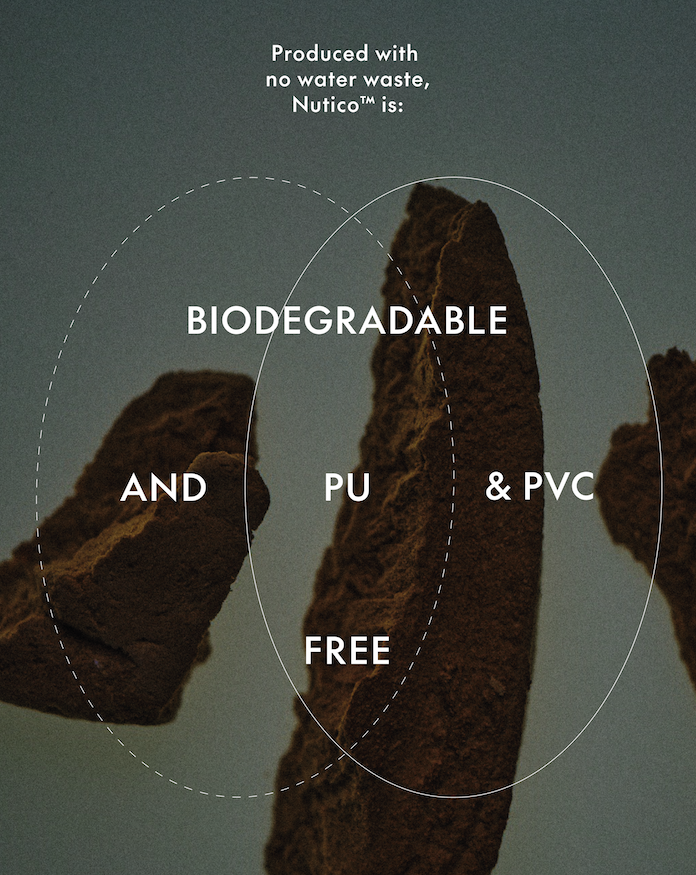
Nutico™ – the first market innovation by Bio2materials, a Warsaw-based research and development company that creates sustainable material solutions based on waste processing and biologically sourced raw materials – is a leather-like material made from cocoa husks and walnut shells. The scientists and designer behind it call it chocolate leather – and yes, it really smells faintly like chocolate.
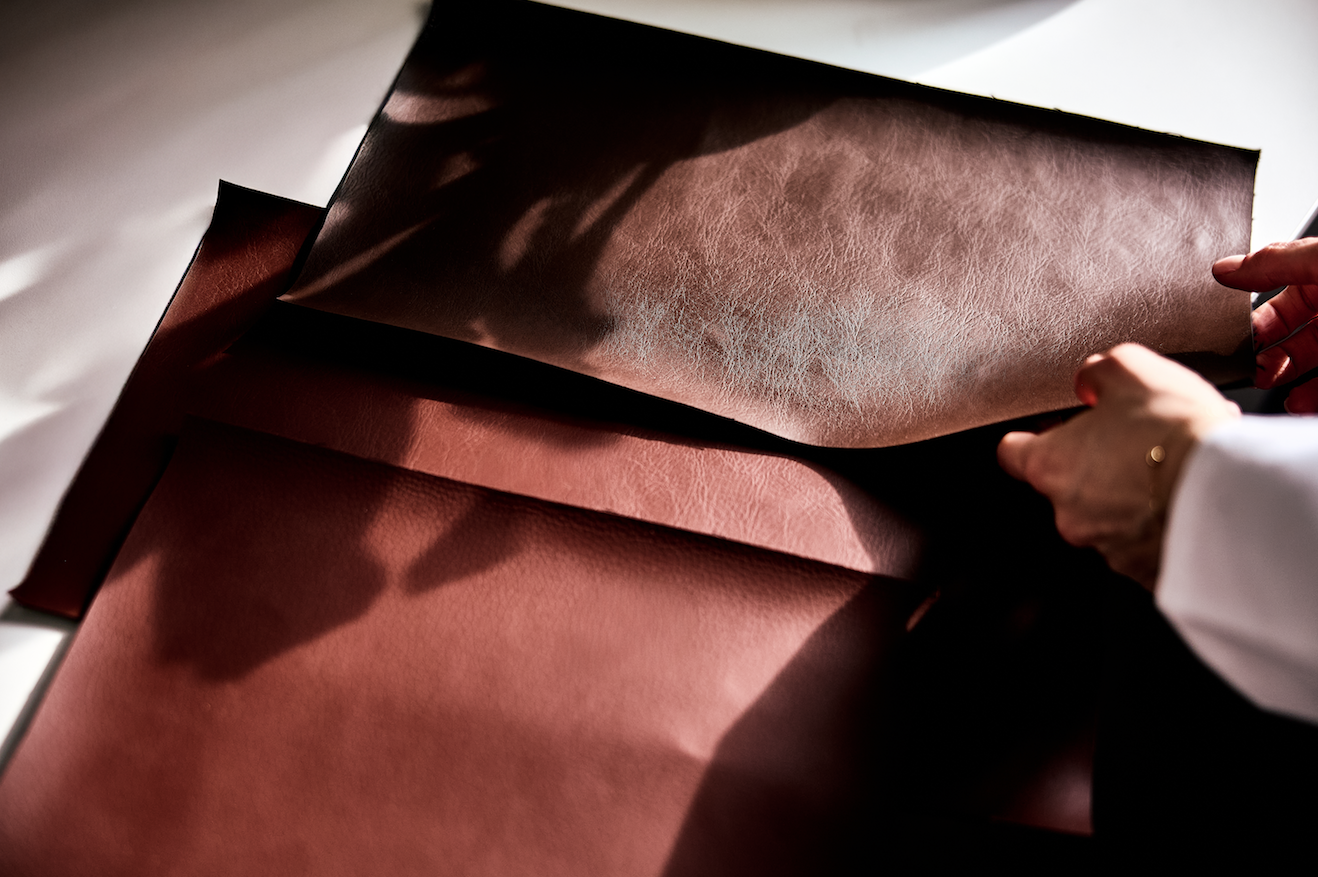
Born from years of trial, error, and a failed experiment involving apples (turns out apple leather ages faster than you’d want), Nutico is the result of thinking differently about waste. Instead of synthetic binders or water-intensive processes, Nutico is made with zero water, no polyurethane, and no PVC – just food waste, organic cotton, and some very smart chemistry.

It’s not just a material. It’s a confident rethinking of the misconception that sustainability has to compromise on beauty or durability. Soft, rich, tactile – it looks and feels like the real thing, minus the environmental guilt.

“We hope that materials like Nutico will help reduce the use of both natural leather and synthetics. But we don’t expect to eliminate them entirely – there will always be people who prefer traditional leather”,

says Katarzyna Szpicmacher, the founder of Bio2materials.
You’ll start seeing Nutico in fashion, furniture, interiors, maybe even the dashboard of your next car. It’s an investment, but that’s kind of the point – good things take time, and this one took seven years.

Nutico isn’t trying to replace leather. It’s offering a different story – one that begins with a walnut shell and ends with something worth holding onto.


Don’t forget to follow Design & Culture by Ed on Instagram!

Hey, did you know about my newsletter – Ed’s Dispatch? Click here to subscribe!

NET-A-PORTER Limited

Upside Down. Hodakova AW24

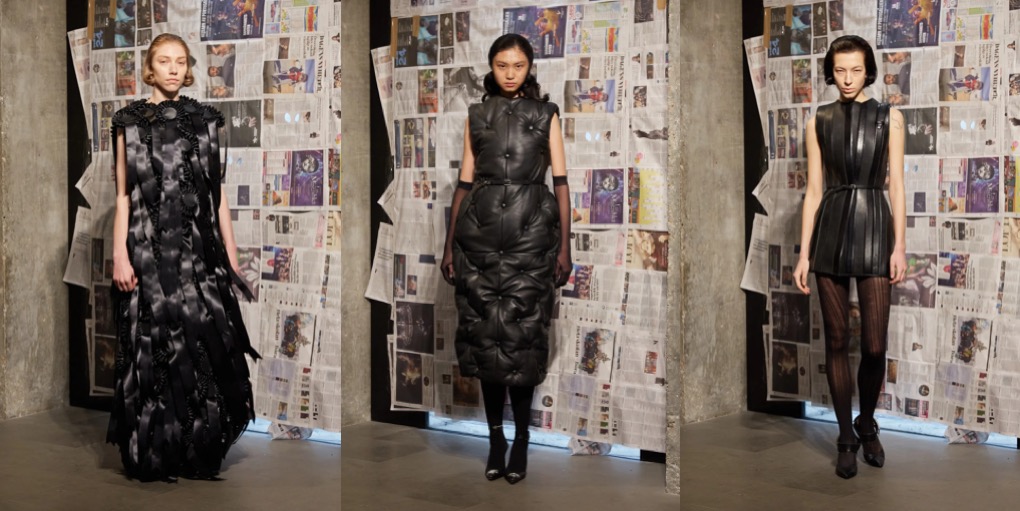
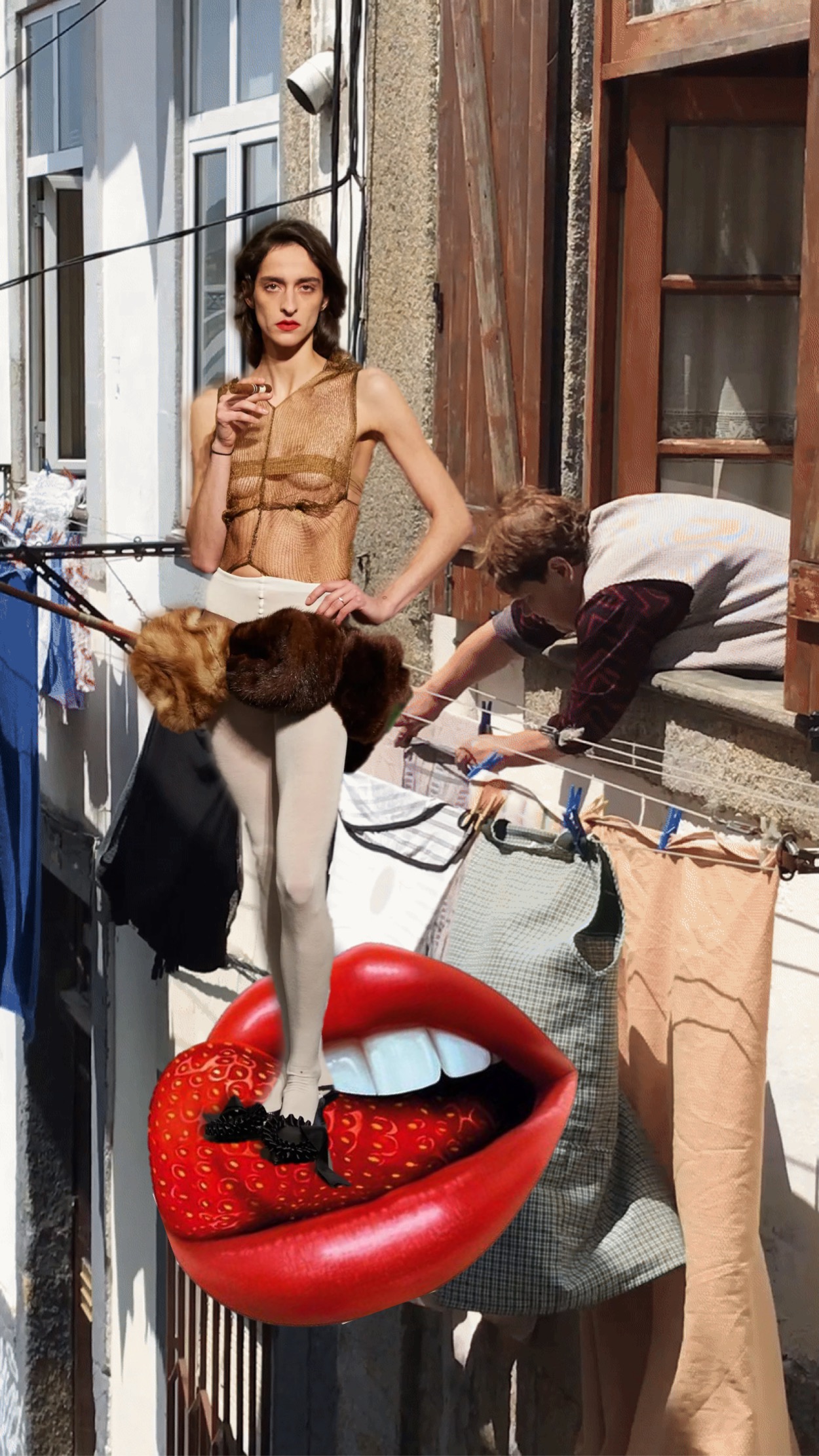
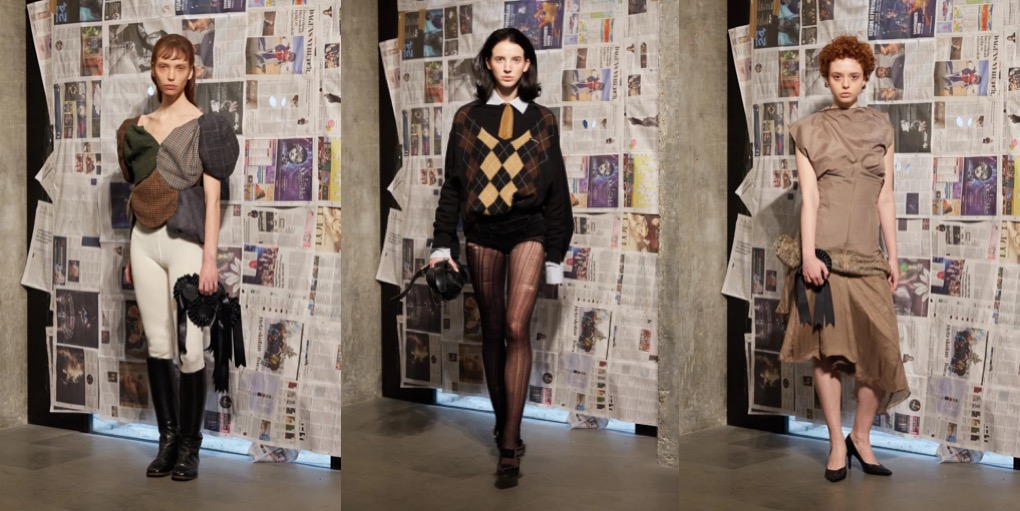
Ellen Hodakova Larsson indulges in imperfection and inventiveness. This Swede has built a practice of finding treasure where others see trash, echoing ideas of new materialism. She crafts witty, contemporary classics using already-existing materials, many of which carry a patina that only time can impart. Bras, belts, metal trays, a constellation of buttons, waistbands, and underwires have all been through her hands, turning into artisanal garments. Through her work, which often involves turning things over (see the trouser dresses) and inside out (the garments made of lining fabrics), patchworking (this season’s argyles), and accumulating, Hodakova is turning the idea of value upside down. Her bricolage pieces – often rough at the edges and with emphasis on tactility – are related to the designer’s own values and upbringing. A former competitive equestrienne, she was raised on a working farm that, she said, made her “very aware of what things cost, what you can do, how you can grow things yourself – what you can do with nothing in general.” It’s been proven over and over how limitations foster creativity, and that’s reflected in the designer’s autumn-winter 2024 collection. Smart tufted looks referenced the chesterfield sofas the designer grew up with. The attaché case that turned into a dress belonged to her father. Beret shoulders on a top and a top made of molded-metal serving trays flirted with the romance of Paris. The designer has made it a signature to crown every collection with a dress made of one object: this time, prize ribbons replaced the viral spoons and watches of last season.

Collage by Edward Kanarecki.
Don’t forget to follow Design & Culture by Ed on Instagram!

Hey, did you know about my newsletter – Ed’s Dispatch? Click here to subscribe!
NET-A-PORTER Limited

Bodies, Bodies, Bodies. Duran Lantink SS24

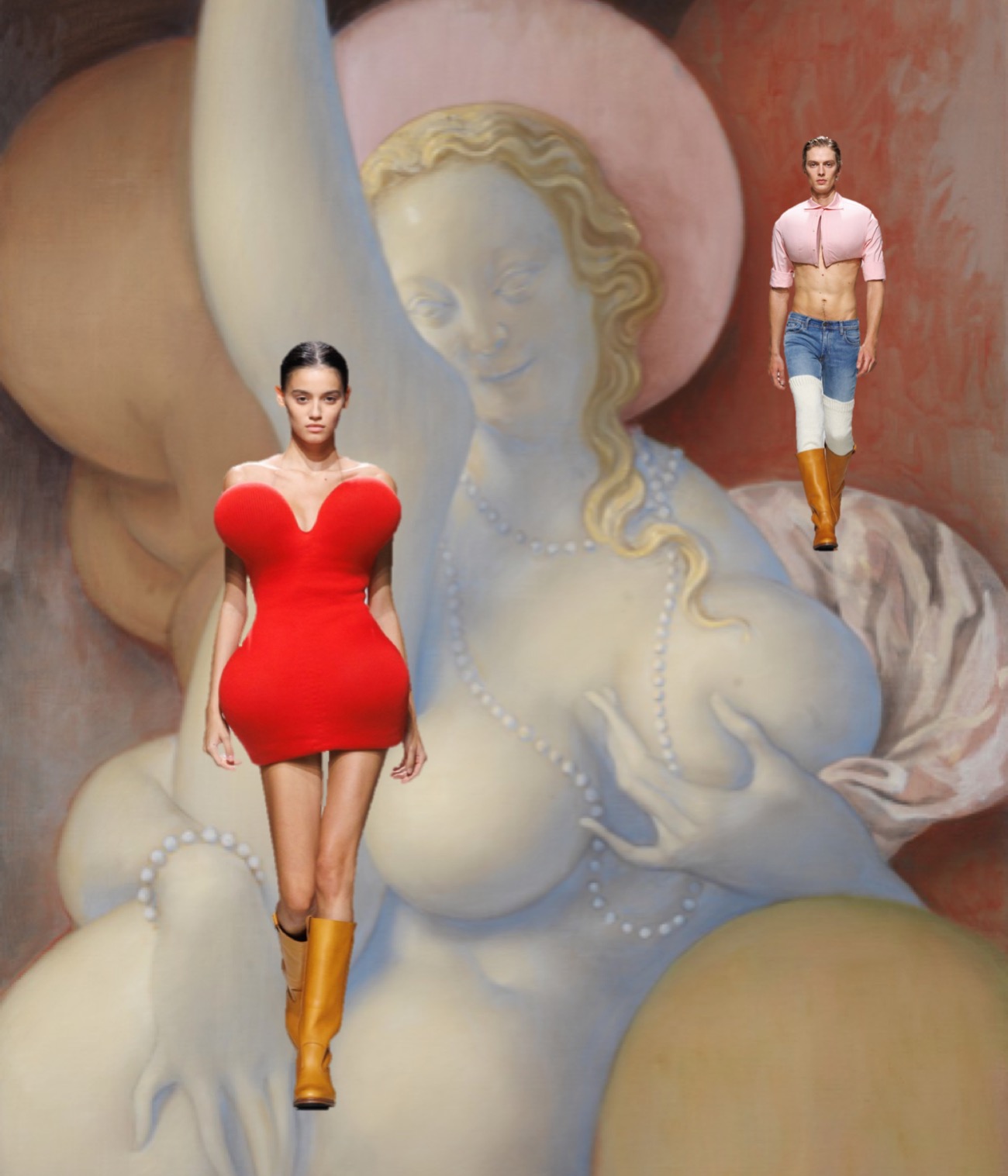
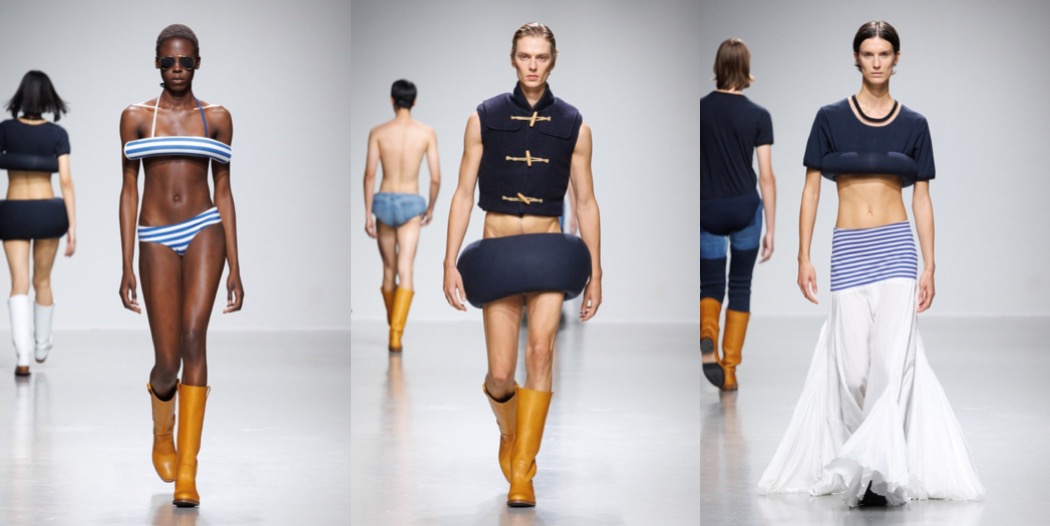
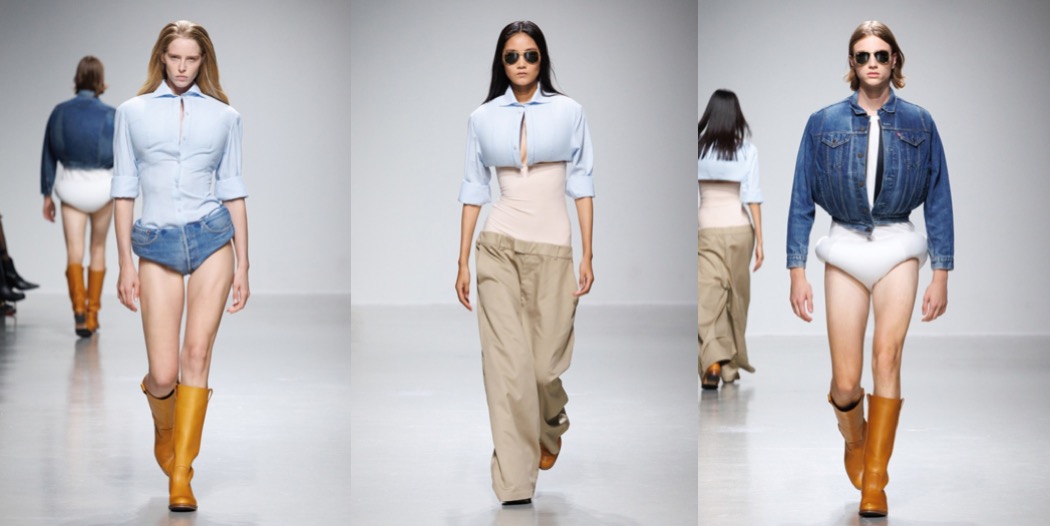
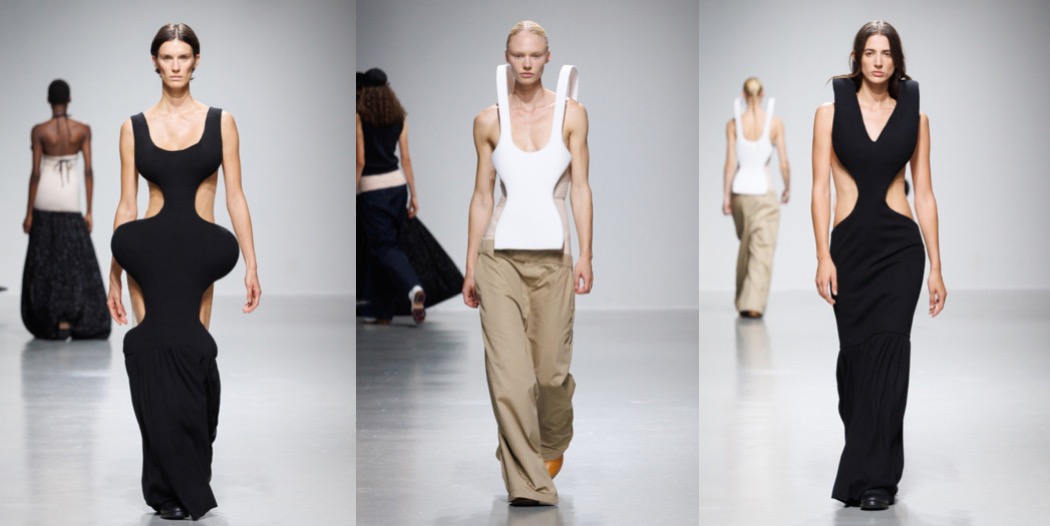
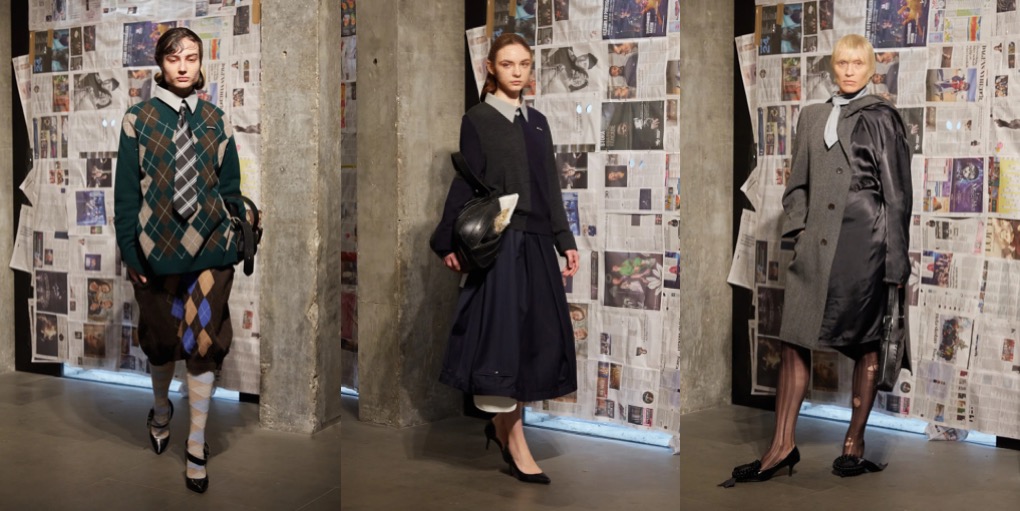
Duran Lantink’s namesake label is built around radical sustainability, and in July he won the ANDAM Special Prize for it. But for his recent fashion show in Paris, the Dutch designer somehow managed to draw attention away from the now-expected deadstock-upcycled-repurposed talking points to make a new, confident statement. “At the moment I’m really experimenting, trying to find my handwriting,” he said backstage before the show. “I started with combining clothes and pieces, and now I am really thinking about shape.” For spring-summer 2024, he sent out pneumatic, bulbous silhouettes, from a curvaceous, artificially puffed-up sheath dress (a nod to Comme Des Garçons’ legendary Lumps and Bumps” collection from 1997) to floating necklines, itsy-bitsy teeny-weeny “bubble jeans” bottoms, and tops resembling floating devices known in France as “frites”, though the show notes called them “tubular objects d’art.” A lifejacket was cleverly worked into a forest green bomber. A 19th century silk veil was paired with a traditional Dutch bonnet to become a sundress; a vintage macramé tablecloth got a similar treatment. Both were charming. Other hybrids included a cage dress made of a sliced black T-shirt, knit deadstock and a piece of a skirt worn over a white bubble top; an experiment in three-dimensionality, the designer explained. “Speedo-jeans” were another attempt at something new. Those starred the classic men’s swim briefs spliced with vintage jeans and hand-knitted leg warmers. Lantink’s focus is solidly on questioning our relationship to traditional clothing. The final number, a black hourglass cut-out dress with hook-like shoulders, was a case in point. Even before the designer revealed, post-show, that the Met Costume Institute, the V&A and the Stedelijk museum have all acquired his work for their permanent collections, this outing gave its audience plenty to think about.

Collage by Edward Kanarecki.
Don’t forget to follow Design & Culture by Ed on Instagram! By the way, did you know that I’ve started a newsletter called Ed’s Dispatch? Click here to subscribe!

NET-A-PORTER Limited

Stella’s Market. Stella McCartney SS24

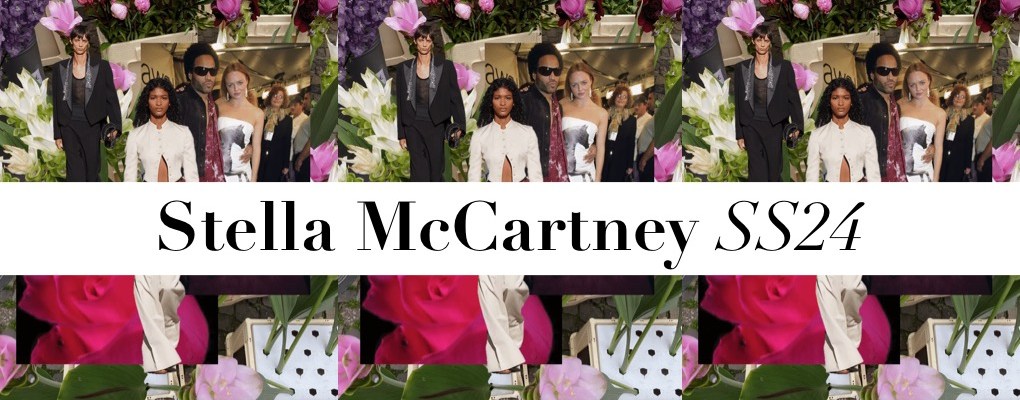
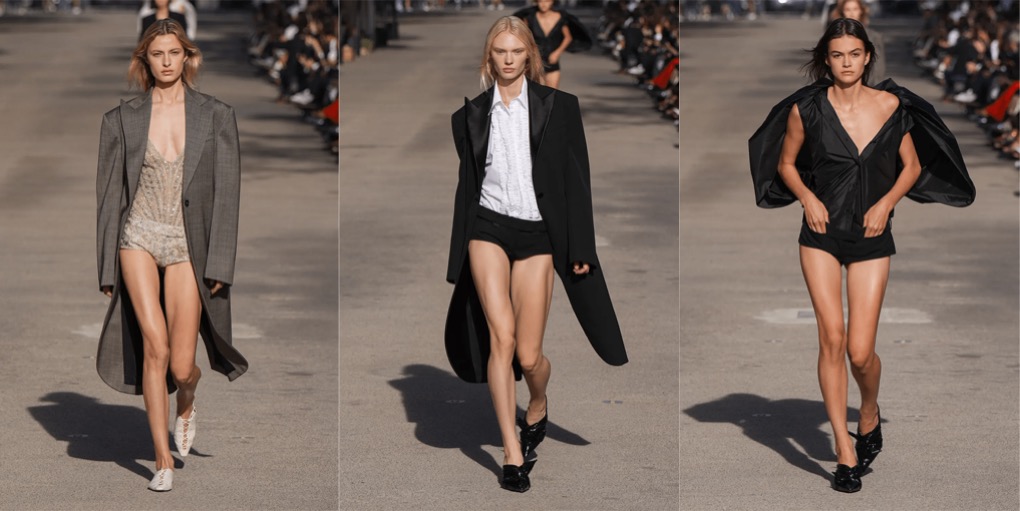
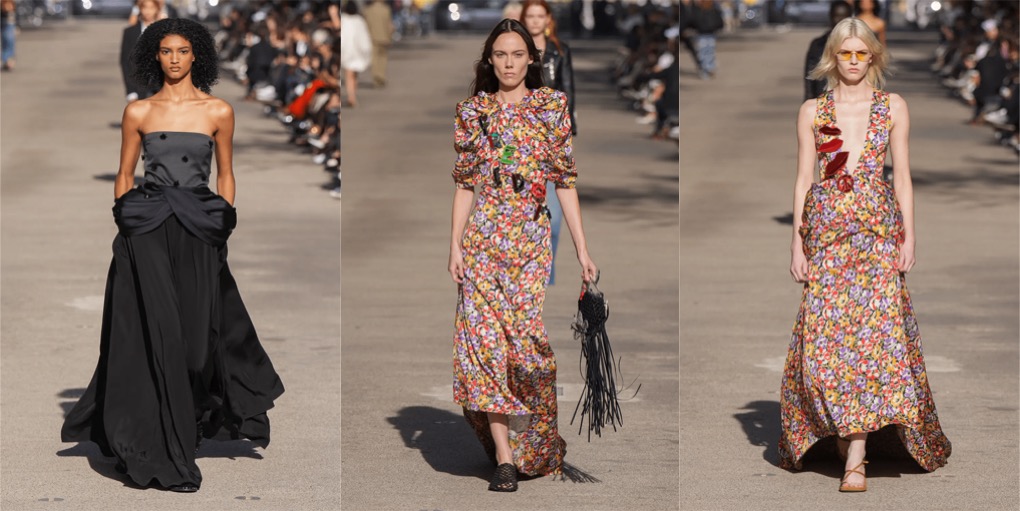
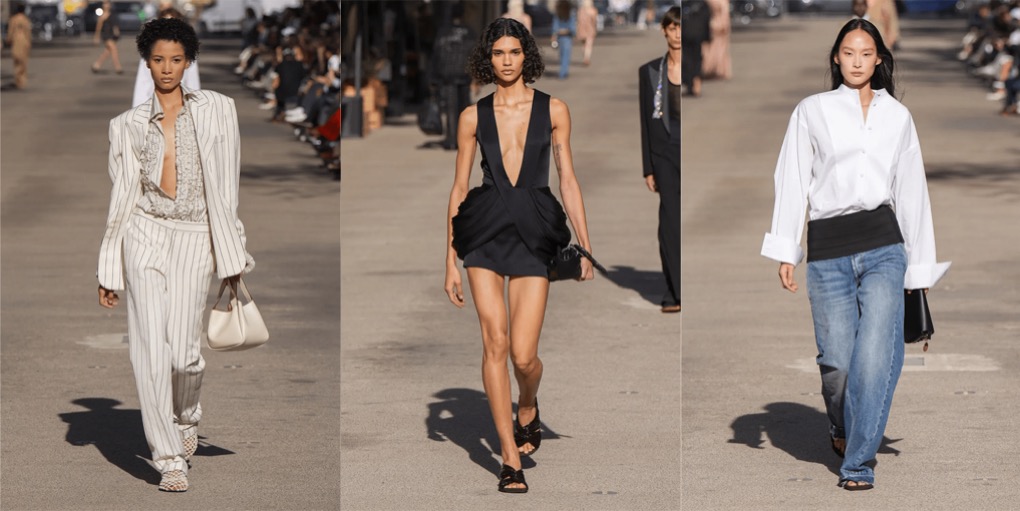
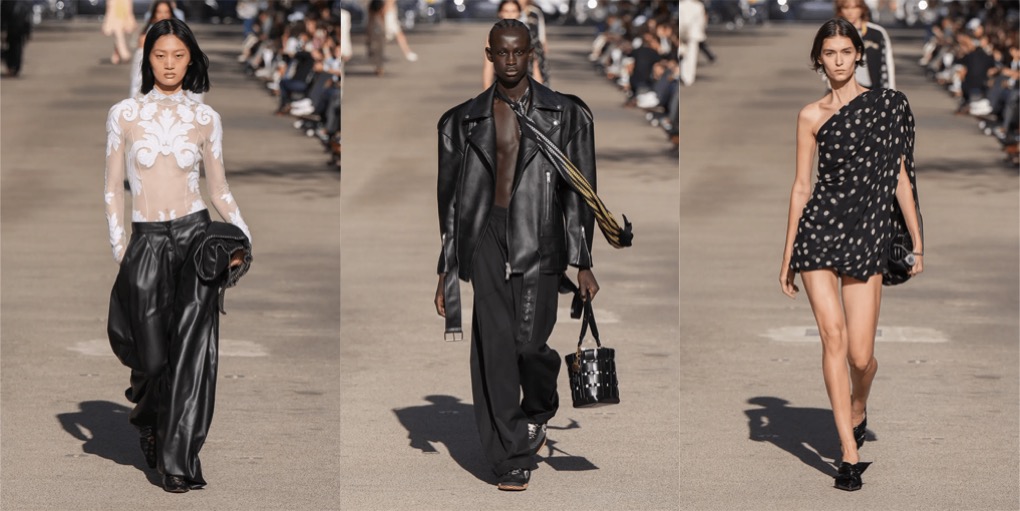
This was a very charming Stella McCartney fashion show. Along the Avenue de Saxe in the 7th arrondissement, the designer set up a temporary shop. She created Stella’s Sustainable Market: a classic Parisian marketplace lined with stalls featuring her favourite sustainable collaborators as well as nods to parents, Paul and Linda McCartney. Meanwhile, the collection – sweetly nostalgic, tinged with the 1970s, but also and referencing Stella’s 2000s fashion moments – featured 95 per cent conscious materials, the activist designer noted. “We’ve never gone that high before.” Ballooning blouses, mini dresses and bombers were made in NONA Source repurposed silk taffetas. Lead-free crystals sparkled on waistcoats, mini dresses were made of forest friendly viscose and crochet-and-mirror knits were spun from Kelsun™️ – a seaweed-based yarn. McCartney’s models walked the marketplace runway in a shared wardrobe that represented the family feeling she wanted to convey. “This was one of the first shows we’ve ever had with women and men. It was about showing that everyone can wear it, and how you say what you are through what you wear,” she said. “It doesn’t matter what gender you are. Our brand is open to everyone.”

Collage by Edward Kanarecki.
Don’t forget to follow Design & Culture by Ed on Instagram! By the way, did you know that I’ve started a newsletter called Ed’s Dispatch? Click here to subscribe!
NET-A-PORTER Limited

Power-Sensuality. Chloé SS24

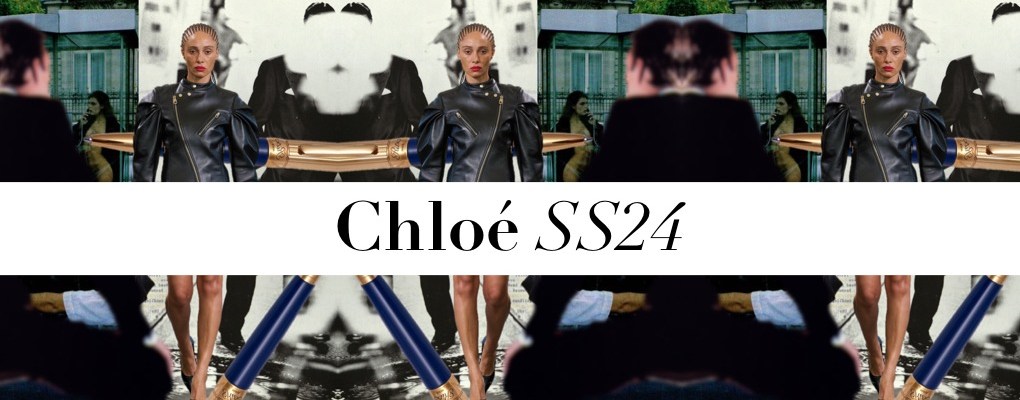
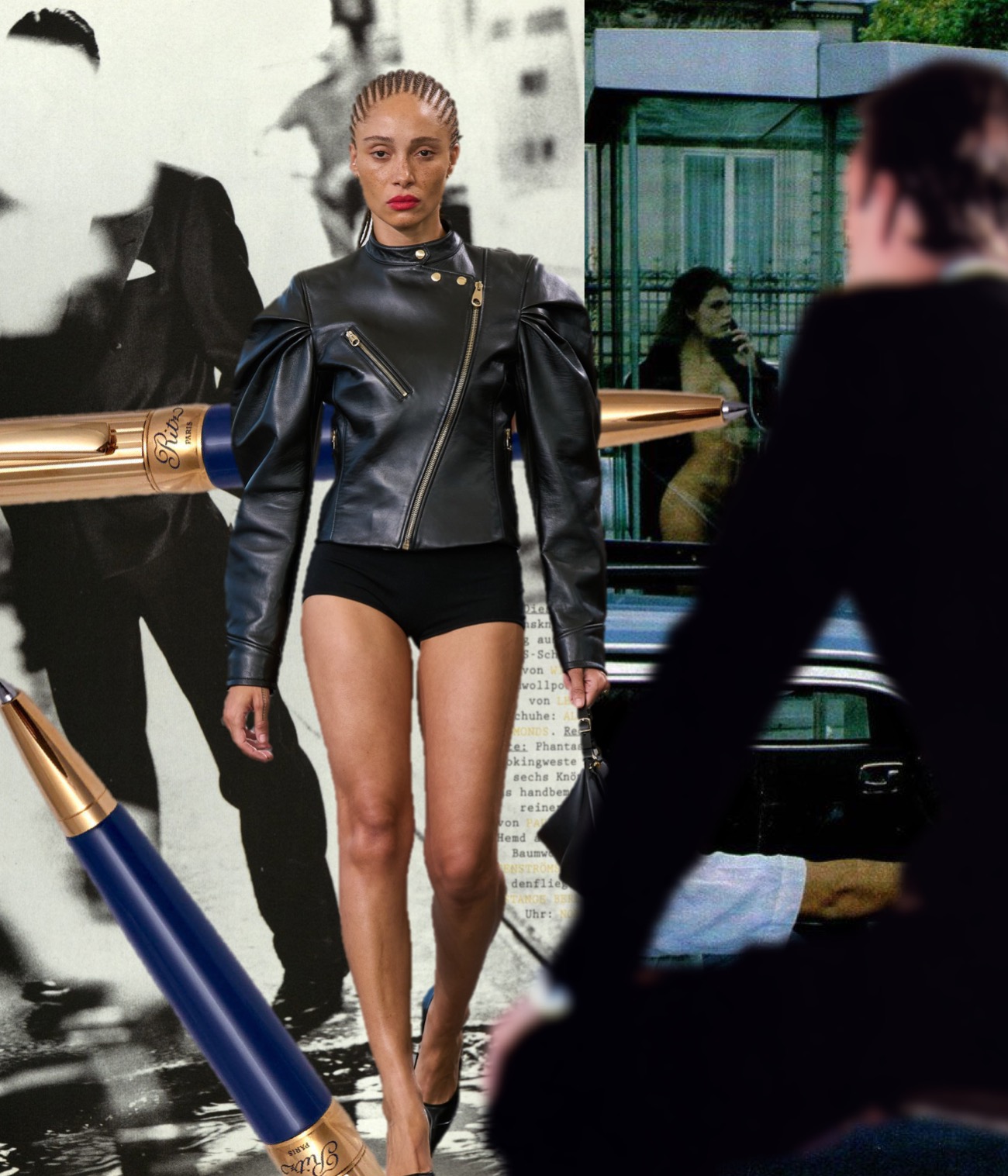
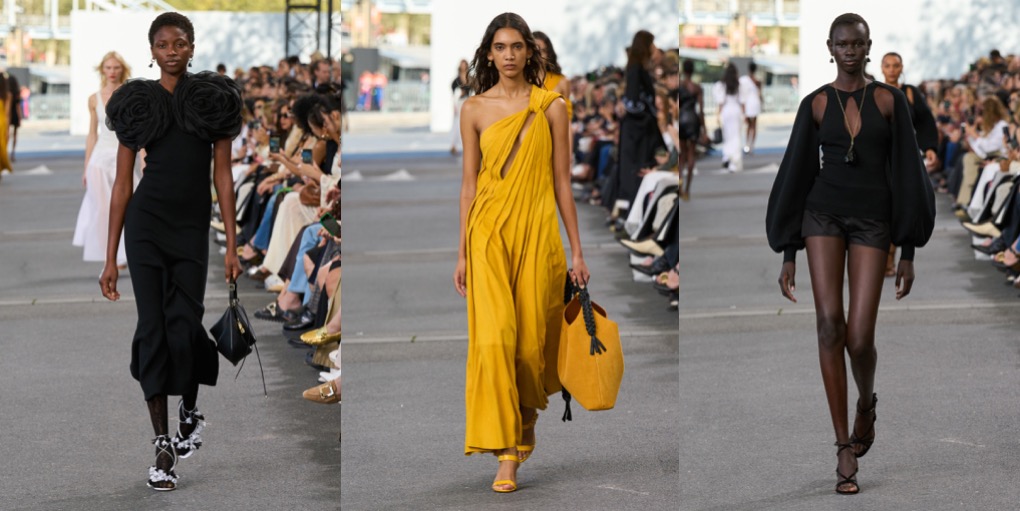
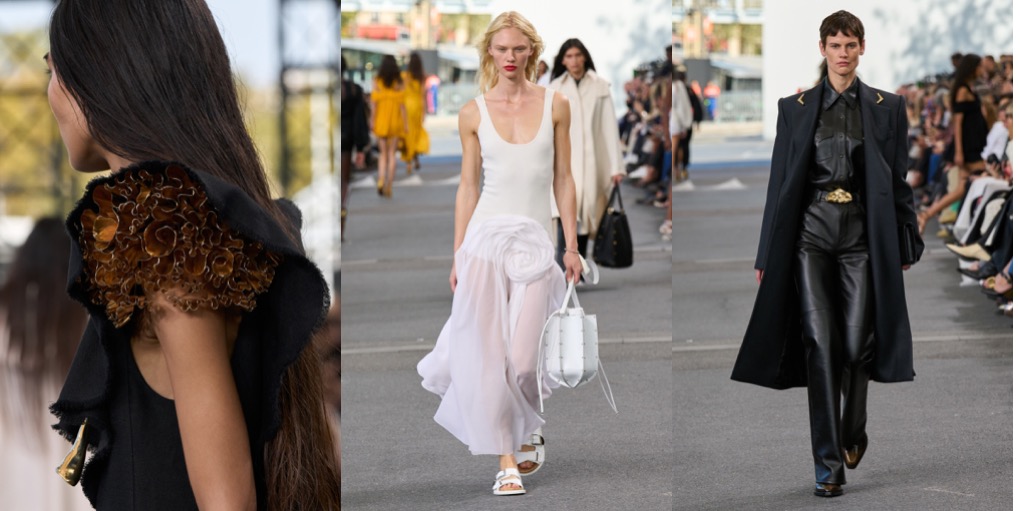
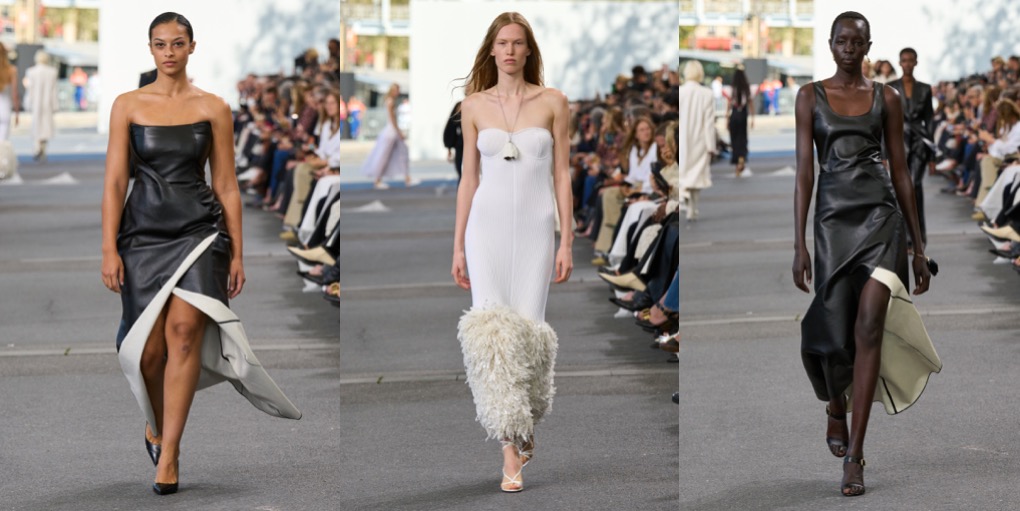
For her finale collection for Chloé, Gabriela Hearst at last showed her sexier side of the Parisian maison. Maybe if she indulged a bit more in these smooth leathers and shorter lengths, she would thrive at the brand? The spring-sumer 2024 collection didn’t reinvent Parisian chic, but it had some much-needed sensuality that lacked throughout Hearst’s tenure. But it seemed the New York-based designer wasn’t in a sorrowful mood, as the show’s ambience was lively and bright, set outside against the Seine on a warm, sunny Parisian afternoon. Hearst leaves behind a legacy of championing socially responsible designs, and her last collection continues that theme. Per the press release, consciousness is the fourth and final ingredient to achieving climate success, which continues the ideas on clean energy, regeneration and female leadership that the designer set forth in her prior collections. For Hearst, this is best symbolized by the flower and that motif was evident from the opening look, a ruffled one shoulder dress that looked like layers of petals. Other dresses reinforced the idea, with gauzy rosette swirls adorning the hips or jutting shoulders that featured undersides stuffed with blooms. For her final look, Hearst opted for a black and white leather dress, a rather serious note given that the runway shortly segued into an all out dance party, featuring a samba band. As the models danced, it seemed that while this chapter at Chloé may have ended, Hearst was leaving it with plenty of joy.

Collage by Edward Kanarecki.
Don’t forget to follow Design & Culture by Ed on Instagram! By the way, did you know that I’ve started a newsletter called Ed’s Dispatch? Click here to subscribe!
NET-A-PORTER Limited