The news of Giorgio Armani’s passing is heartbreaking. What lifts my spirit, however, is knowing that his legacy – a body of work spanning five decades – will live on forever, especially in the work of younger generations of designers who have studied Armani since their teens.
Giorgio Armani photographed by Juergen Teller for System Magazine.
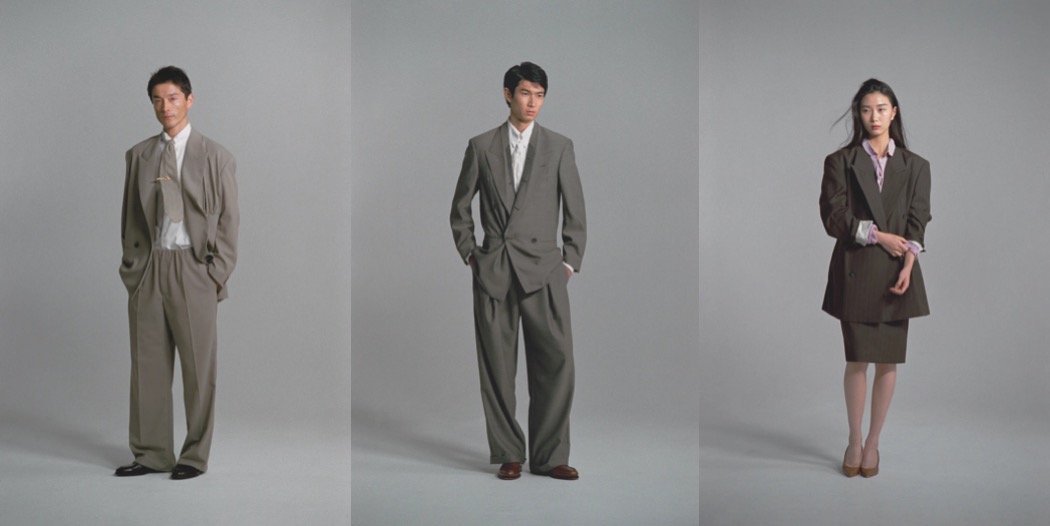
It must be some astro-numerological coincidence that yesterday Soshi Otsuki won the LVMH Prize. His Tokyo-based label, Soshiotsuki, is rooted in tailoring – one inspired by the sartorial craftsmanship of the 1980s, but filtered through a distinctly Japanese perspective. His suits, elegantly draping the body – always smooth yet refined – would surely make Mr. Armani proud.
In his delightful spring–summer 2026 collection, Otsuki mesmerizes and intrigues with nearly invisible details that make all the difference. For instance, extra fabric is built into the inside placket of a shirt to suggest a tucked-in necktie, which could be hidden or revealed depending on how it was buttoned. Deadstock kimono silk was repurposed into button-up shirts, while 1980s cotton-washi fabric was used for much of the tailoring – recalling the glamour and prosperity of Japan’s Bubble Era, a moment in time the designer enjoys riffing on.
What’s fascinating about Soshiotsuki is that the clothes don’t feel “vintage,” but utterly contemporary – and in a strikingly handsome way. That sensibility resonates with the final collections Giorgio Armani presented in recent Milan Fashion Weeks, which we were fortunate enough to witness.
Collage by Edward Kanarecki. Don’t forget to follow Design & Culture by Ed on Instagram!
Hey, did you know about my newsletter – Ed’s Dispatch? Click here to subscribe!
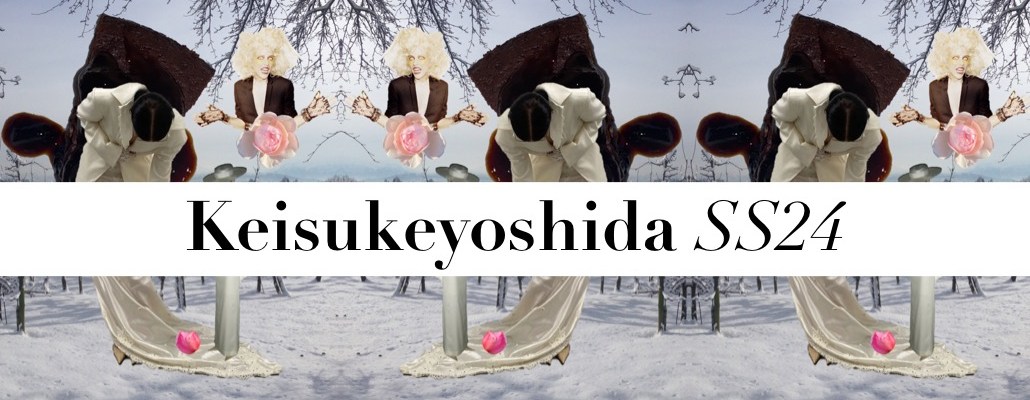
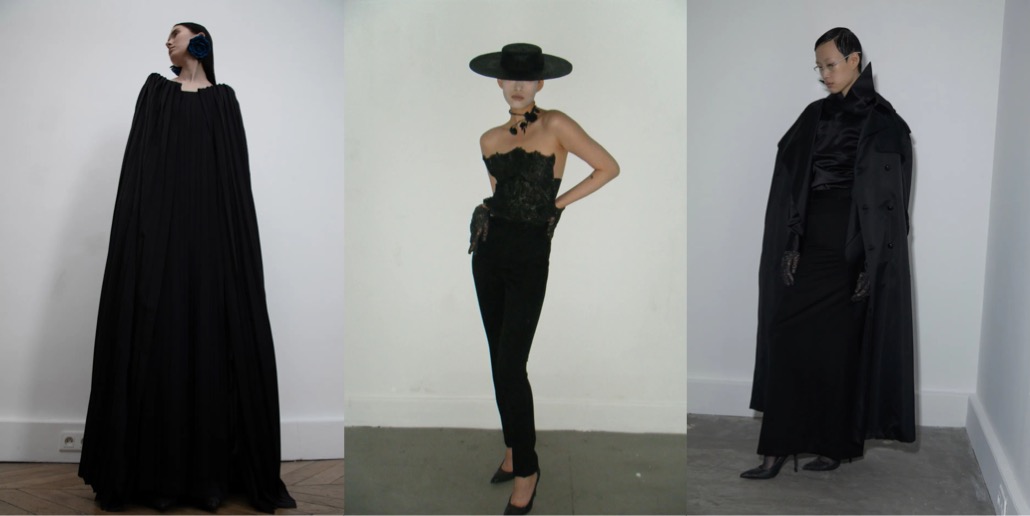
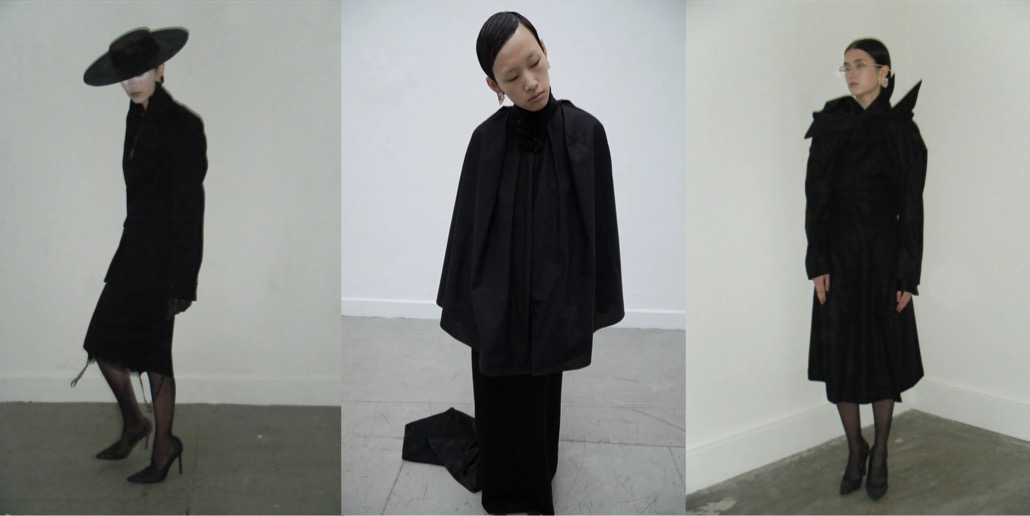
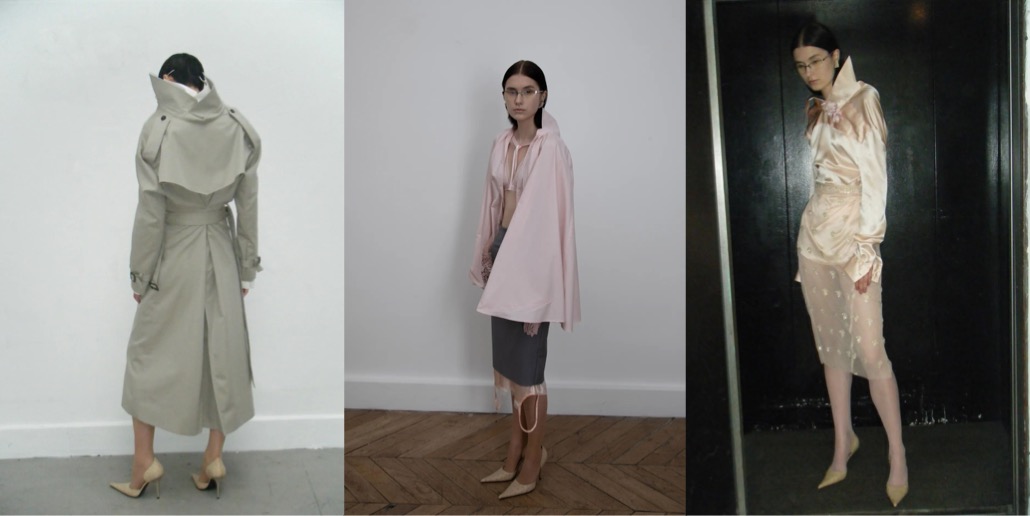
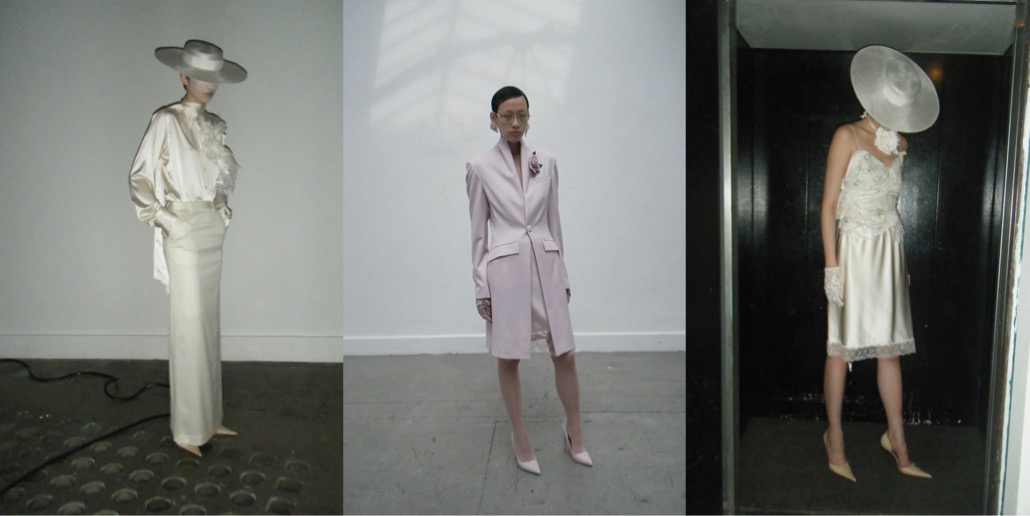
As we’re approaching 2023’s end, I wanted to spotlight one of the most intriguing emerging designers out there: Keisuke Yoshida. “I’ve had an image of this woman in my mind,” the Japanese designer said while explaining his new collection. “In my head, she’s wearing an outfit, and I can’t tell if it is a wedding dress or a mourning dress. But somehow, I know that she’s like a mother.” Last season, Yoshida’s imaginary maternal muse had been a strict, teacher-like figure with fabric clasped tight across her throat, but this time she’s come undone. Yoshida had engineered her transformation through feminine staples, using ivory silk blouses and soft, dusty pink tailoring that bared the chest, while lapels and collars were inverted or twisted so that they poked up in awkward directions, as though they’d been pulled on in a hurry. Old wedding dresses Yoshida had found in Tokyo were reworked into one-off corsets, lace gloves, and trousers, so that embellishments of pearls and sparkly lace glistered over hands or raced across the thigh, while broken ceramics served as earrings alongside seductive secretary specs. Best of all was a would-be office-appropriate pencil skirt, out of which peeked a silk camisole whose straps dangled upside down towards the ankles. Those theatrically spiky stilettos and wide-brim hats could well have evoked Irving Penn, or old photographs of Parisian couture from the 1950s, but what makes Yoshida’s work feel right for the moment are the strange quirks he sprinkles in to humanize everything, offsetting any old-world glamour or preconceived notions of feminine mystique to create something delicately twisted.
Collage by Edward Kanarecki. Don’t forget to follow Design & Culture by Ed on Instagram!
Hey, did you know about my newsletter – Ed’s Dispatch? Click here to subscribe!
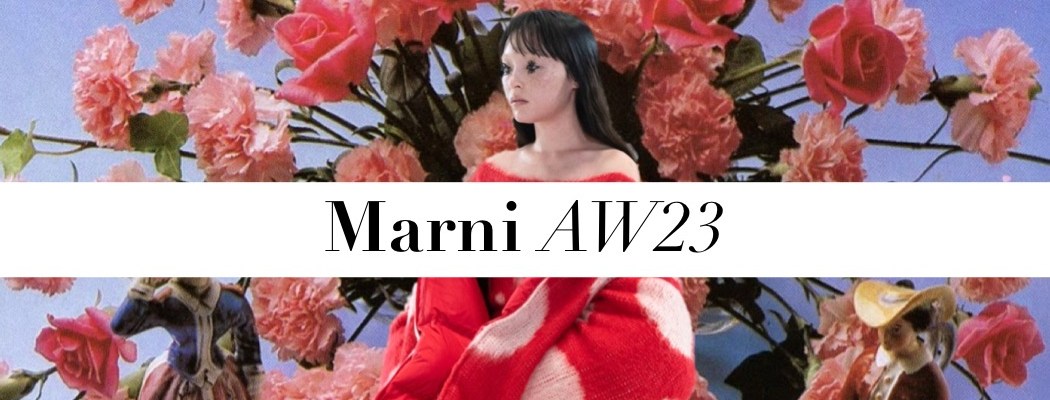
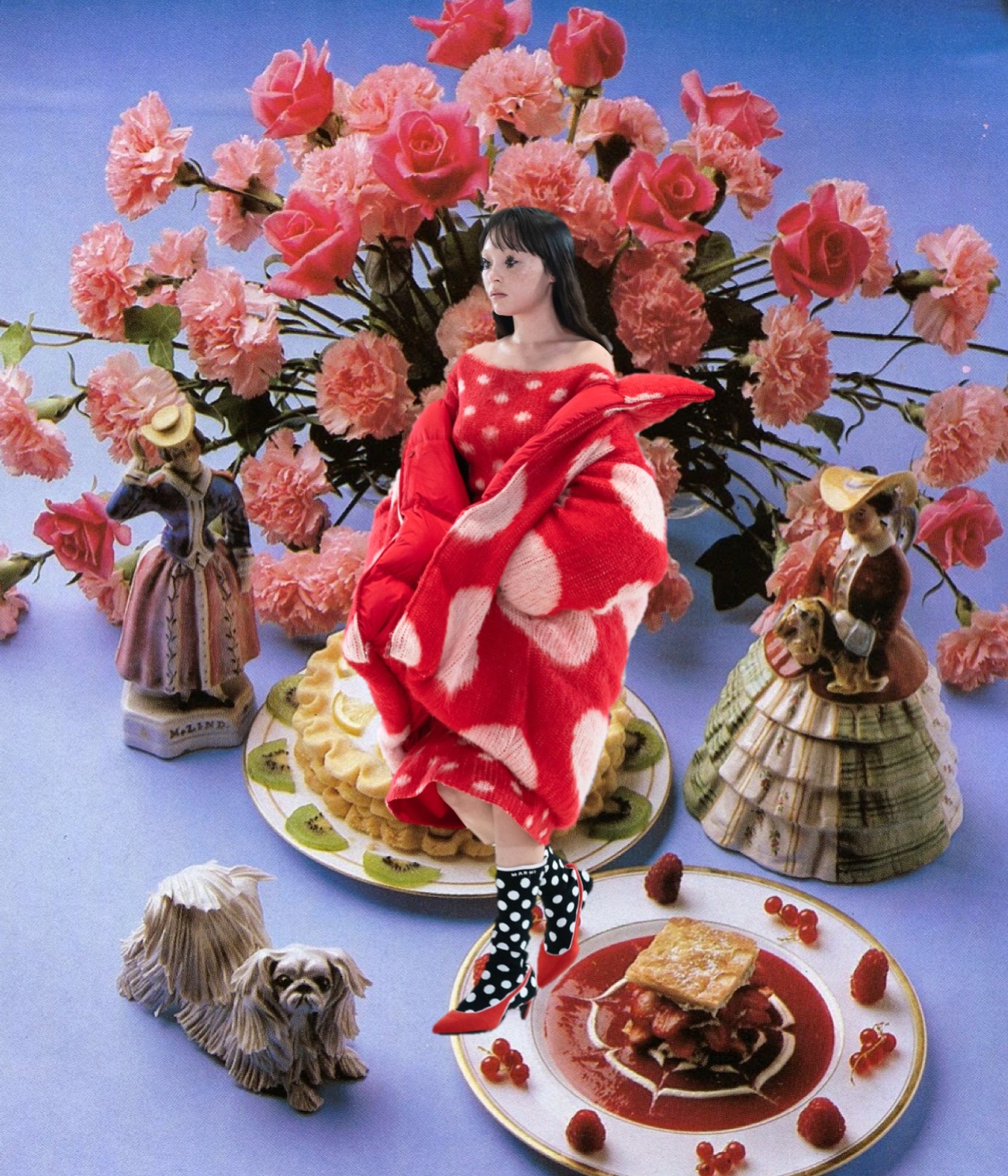
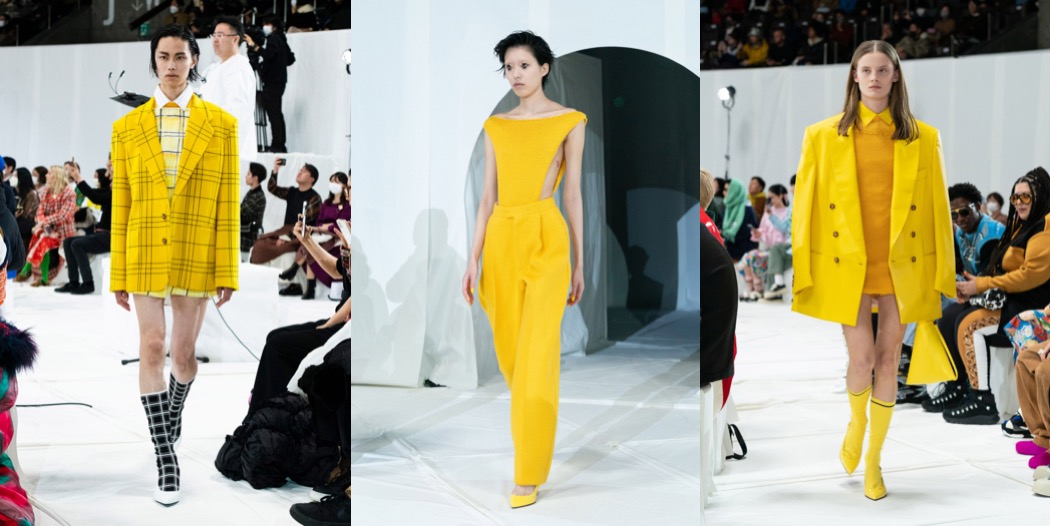
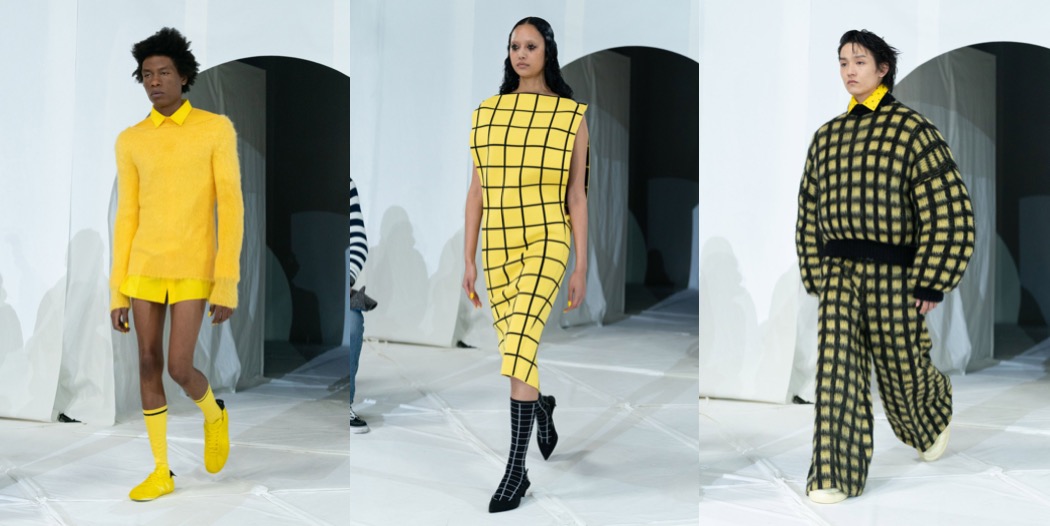
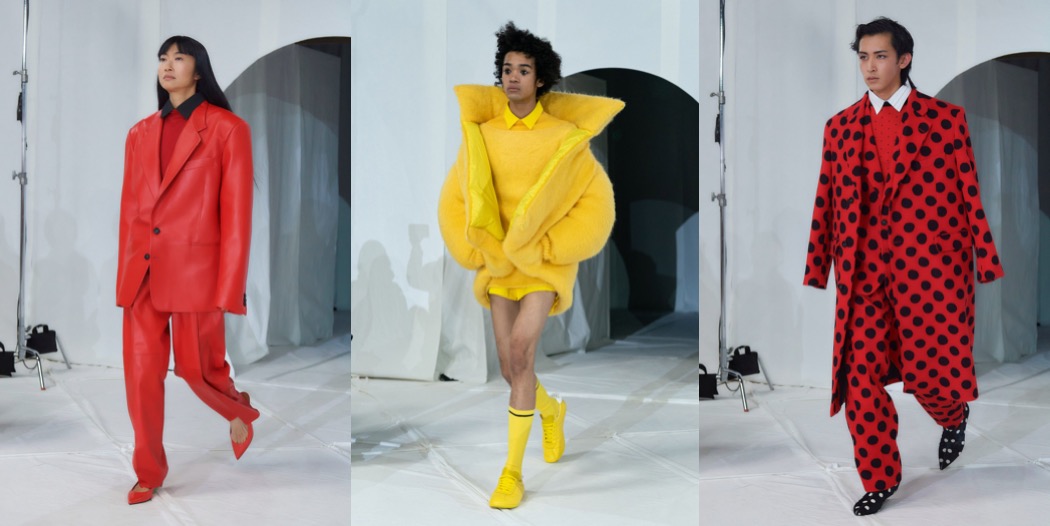
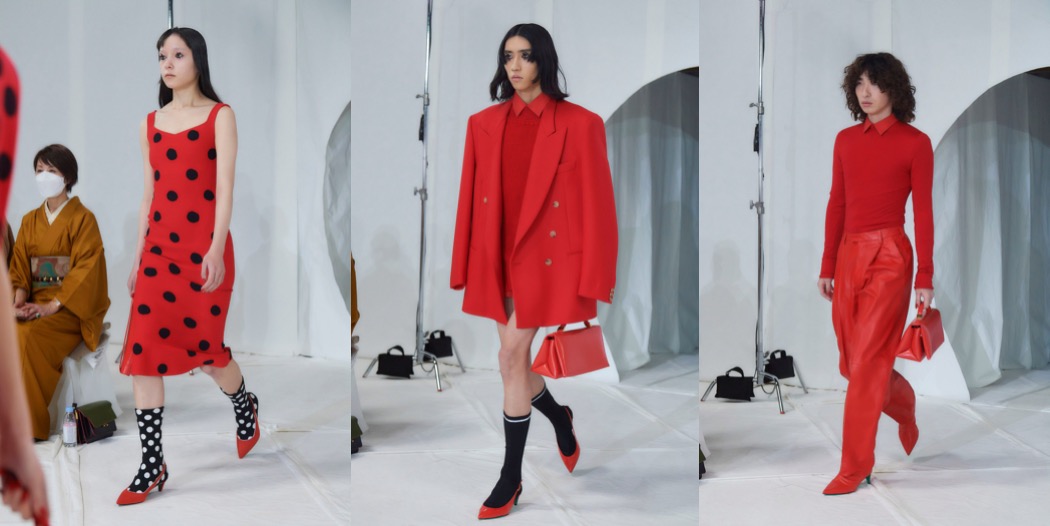
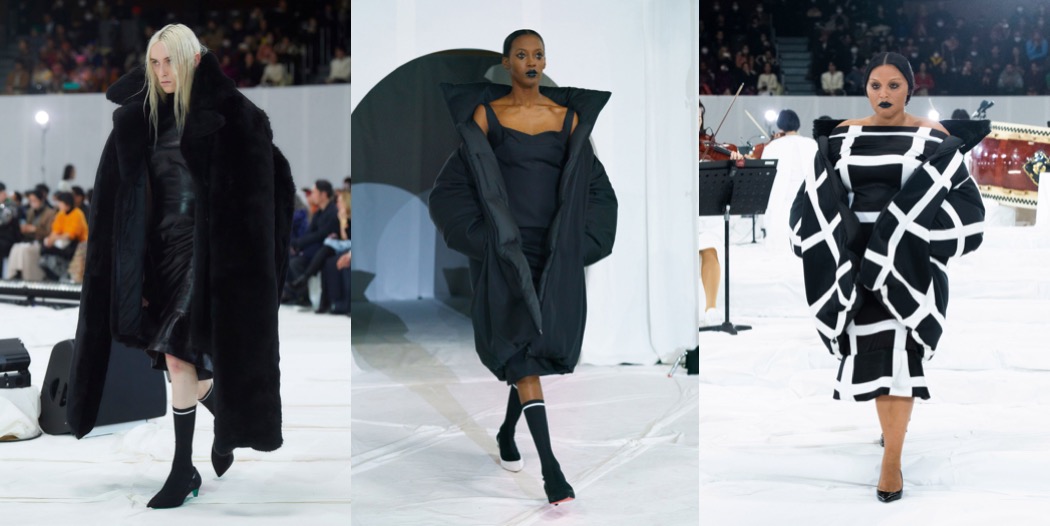
Marni‘s autumn-winter 2023 collection by Francesco Risso felt like a big shift. Not only because it was presented in Tokyo (Marni travels the world – last season, the brand opened New York Fashion Week), although that certainly became a new context for comprehending what this Italian label stands for today. The Yoyogi National Gymnasium, the fashion show’s spectacular venue, was built by the architect Kenzo Tange for the 1964 Summer Olympics. It’s a structure, as Risso pointed out, “both rigorous and intimate – it looks to the future while keeping a feel of enveloping protection, like if you were in a womb.” This way of balancing discipline and humanity, cutting-edge design and domesticity, connects with the soul-searching Risso has been doing on the meaning of making clothes. “Here in Japan I’ve found a profound sense of patience, of stillness, of respect, something that in the West I believe we’re losing.” He continued: “We’re surrounded by futility. After three years of pandemic, where we all have been vocal about the changes we wanted in the system, to slow down, etc., we’re back to square one. We are again devoured by the brutality of the algorithm.”Going back to the love he feels for his metier keeps him grounded. At the show, on each of the paper-covered seats, he left a handwritten letter whose opening line asked: “why do I make clothes?” For the Marni creative director, clothes are living creatures, they touch, breath, move; it’s a love dance, a sentimental relationship: “Because they’re our companions, and there’s more to them than just air kisses. I don’t know if I make clothes that people need, or if I make clothes that need people, or if I make clothes for the people that I urgently need to need the clothes that need them… What I do know is that today we need less and less clothes that are needless.”
White is a non-color that speaks of absence, but also of clarity. It is a carte blanche on which new words are ready to be written. Wrapping the arena in white paper spoke of a desire for simplicity, for reducing noise and distractions. But Risso is no minimalist, and even if he preached rigor and linearity, the collection had presence, density, and punch. He traded his usual slightly bonkers decorations for starker, elemental graphics, and reduced the palette to a few saturated primary colors: yellow and red playing against white and black. Every look was an all-over proposition, and for both men and women in the mostly local cast (plus Marni favorites like Paloma Elsesser and Angel Prost), silhouettes alternated between slender and form-fitting and bulky and bulbous. Tailoring was offered in oversized versions, and knitwear, a Marni forte, had fuzzy mohair surfaces, as in the jumbo round-cut piuminos that were among the collection’s standouts. The swirling, magical motifs of sirens and unicorns of previous outings were nowhere to be seen, replaced instead by kinetic grids and optical checks, and by slightly Yayoi-Kusama-esque bouncing dots of various sizes. Rectangular tunics and angular apron dresses contrasted with form-fitting, heart-shaped bustier dresses that were kept neat rather than sensual. Cocoons in padded leather or wool conveyed enveloping, comforting warmth. “It’s a collection with one foot in tradition and the other in a not-impossible future,” he said backstage. “It’s a sort of rhythmic alternation of proud normality and proud creativity.”
Collage by Edward Kanarecki. Don’t forget to follow Design & Culture by Ed on Instagram!
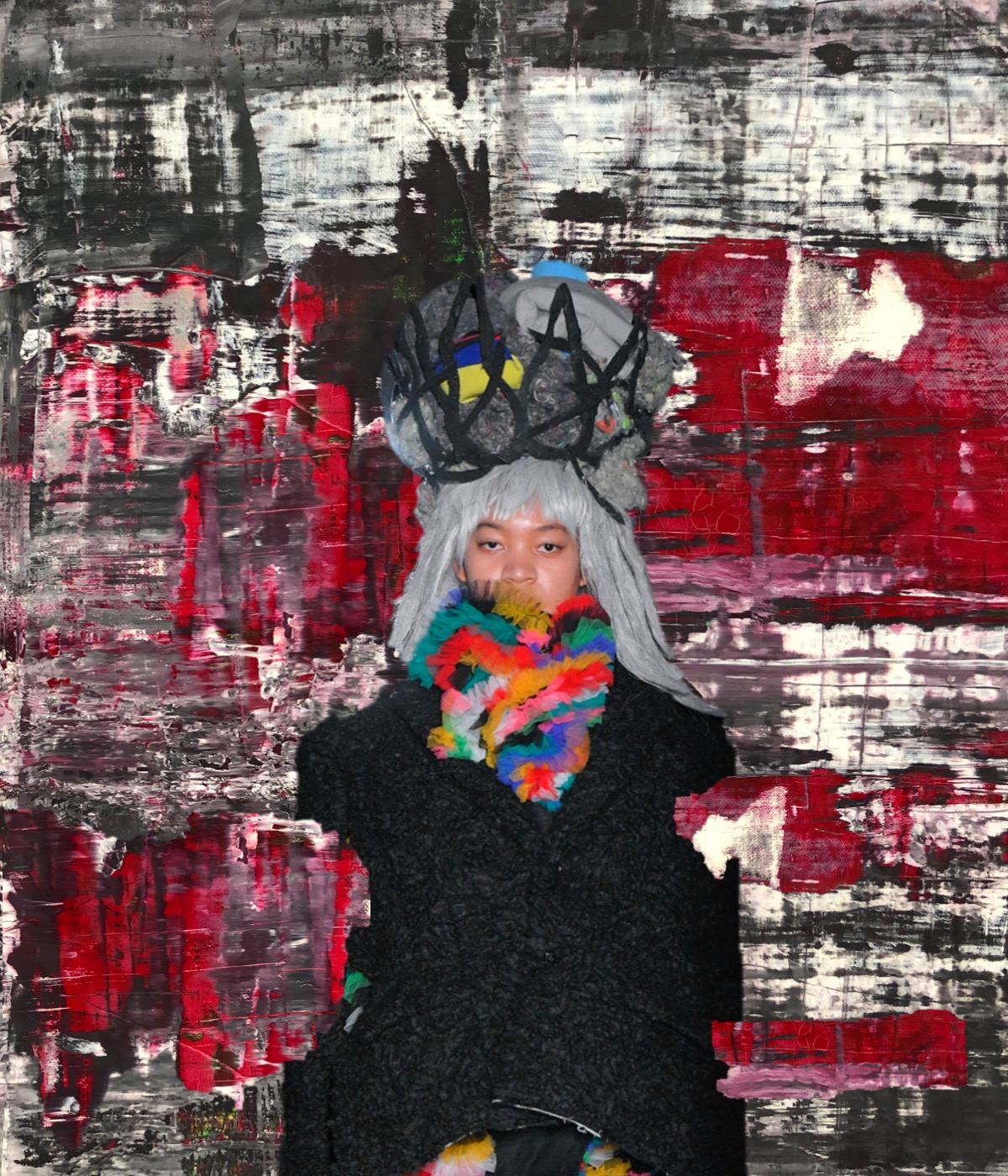
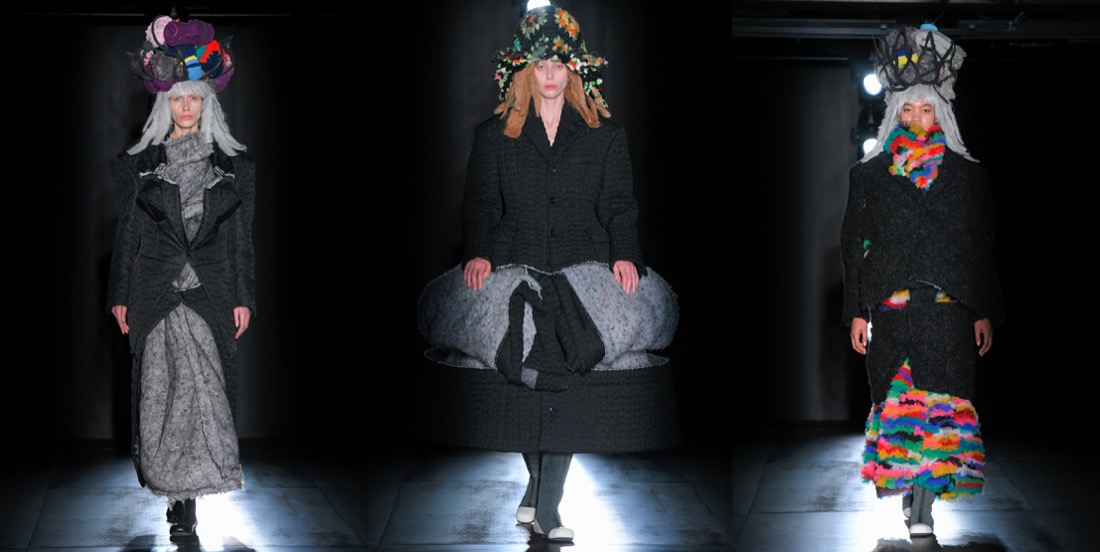
“For me, the dark beauty of the black rose symbolizes courage, resistance, and freedom”, Rei Kawakubo stated regarding her Comme des Garçons autumn-winter 2022 show presented a few days ago in Tokyo. The black rose in Irish culture is a symbol of resistance against British rule. It might be a bit hard to discern it in the Comme lineup – it only comes in, patterned on a sort of Victoriana brocade at the 12th of the 16 exits. It’s certain that anti-British imperialism in Ireland is what Kawakubo meant, though, because the haunting music – “a beautiful resistance song from Ireland, Roisin Dubh, the little black rose,” was recorded for the show by the Northern Irish slow flautist Ciaran Carlin. Possibly that’s the most political reference Kawkubo’s made in her work – it has no equivalence to the Russian invasion of Ukraine, except for the common factor of dangerously contested borders. But anyway: how to put words to her clothes? Was a sense of dark history, something primal, or even medieval going on? It seemed so to begin with anyway, what with Kawkubo’s use of thick, wadded, speckled-gray felt carpet underlay (or something similar) and headpieces created by Gary Card bulging with assortments of rough, rolled up fabrics. Other hand-crocheted floppy woollen hats had the air of bonnets, country-cottage style. Comme des Garçons hasn’t been showing outside Tokyo for two years, and Paris Fashion Week really misses its presence. Hopefully, Kawakubo (as well as Junya Watanabe and Noir Kei Ninomiya) returns to the French runway next season.
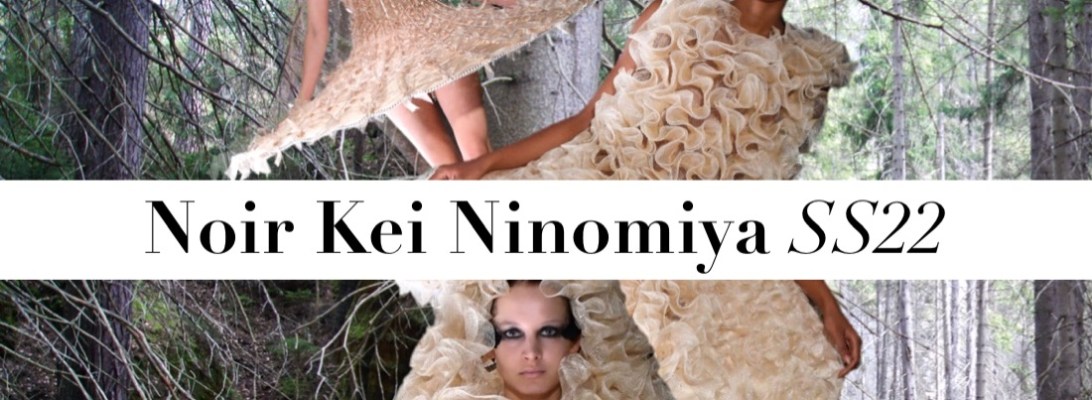
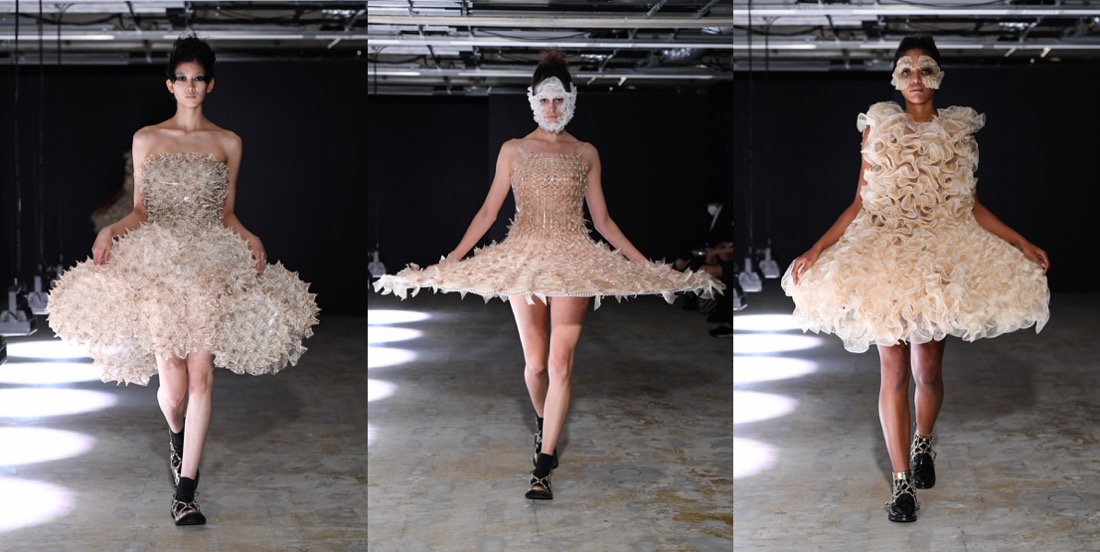
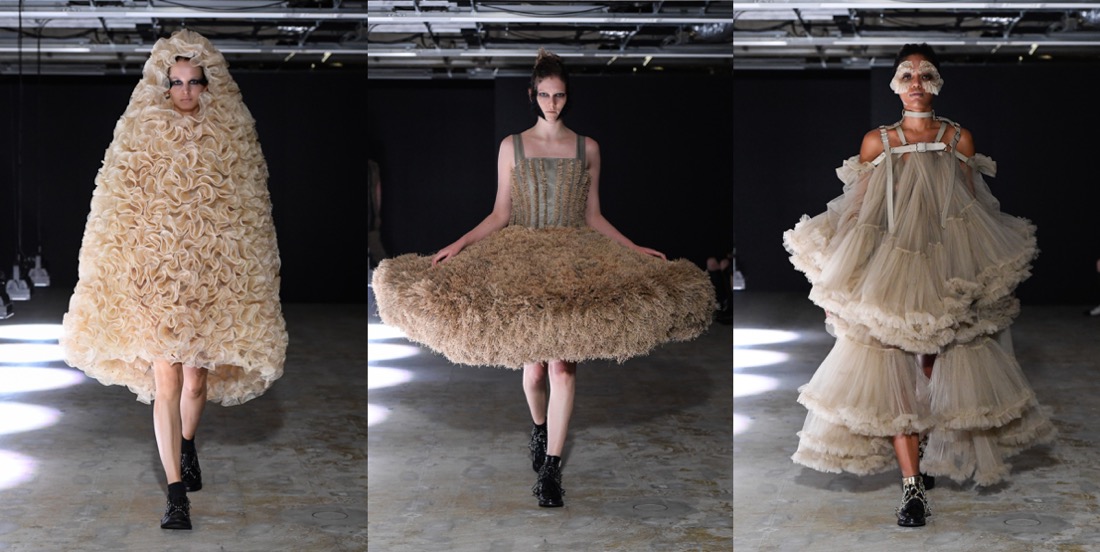
“For this collection, black is expressed through shadows,” said Kei Ninomiya in his spring-summer 2022 notes. “I wanted to express the ephemeral strength and beauty of things that are present around us although we cannot see them clearly.” The show was held in Aoyama, Tokyo, at the Commes des Garçons headquarters. Ninomiya has experimented with non-Noir color previously, most often via brilliant botanical worn installations that were absent today. Instead he expressed his notion of black’s shadow by creating a series of pieces in beige. The idea of something casting a paler shadow than itself implied a reversed polarity of some kind, and the paler procession of pieces did indeed mostly cover the still-breathtaking territory we have seen Ninomiya explore before. Sometimes, as in Look 15, they also looked to break new-for-Noir ground. Two more novelties were the use of woven hemp in rope-adjacent, wearable structures and the first written branding, beyond the garment label itself. The name of the brand was used to make rough white-on-black stripes and checks, which was fine enough on pants, shirts, and cycling shorts. When applied to a more sculptural piece, however, such as Look 9, this branding felt pretty extraneous. Noir Kei Ninomiya is a brand that doesn’t need logomania – those stunning, mushroom-y garments do the talking.














 Design & Culture by Ed