Reminiscence. Junya Watanabe SS22

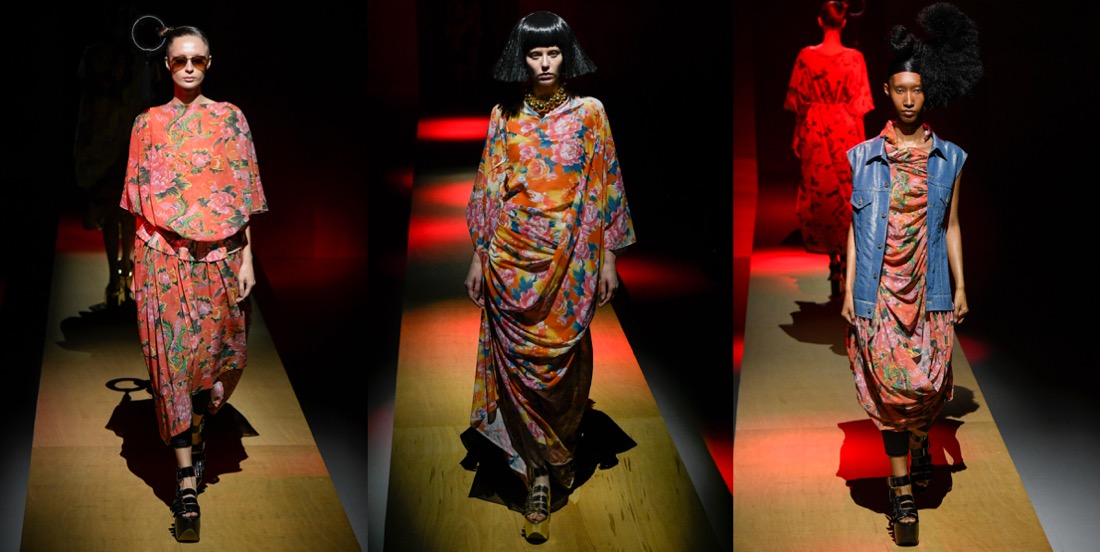
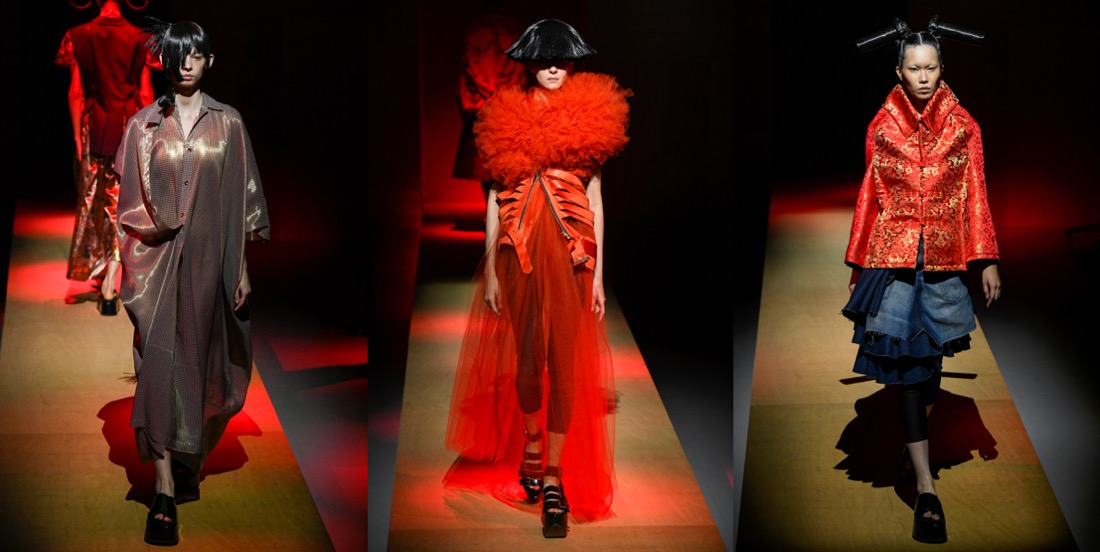
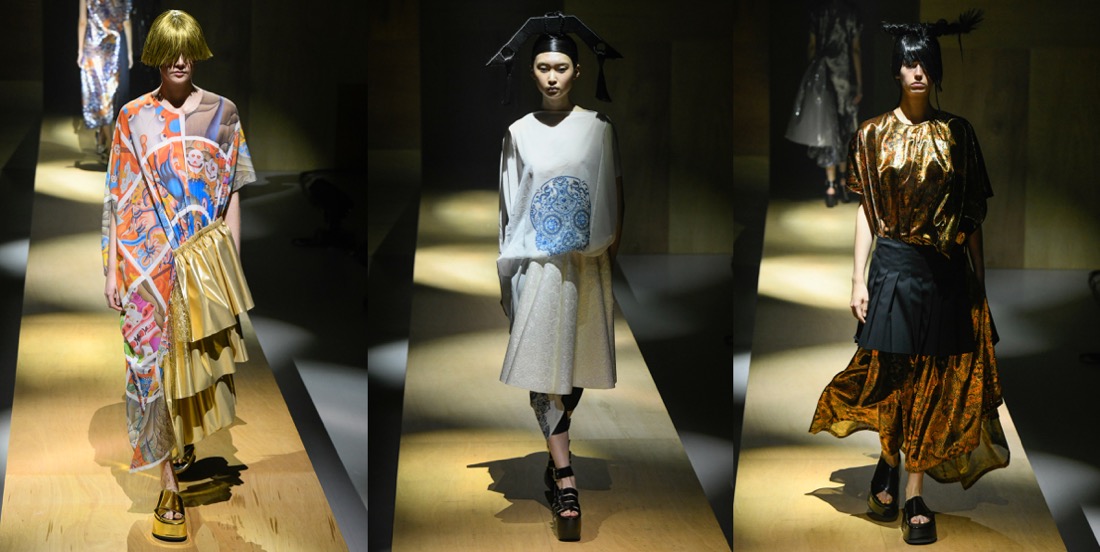
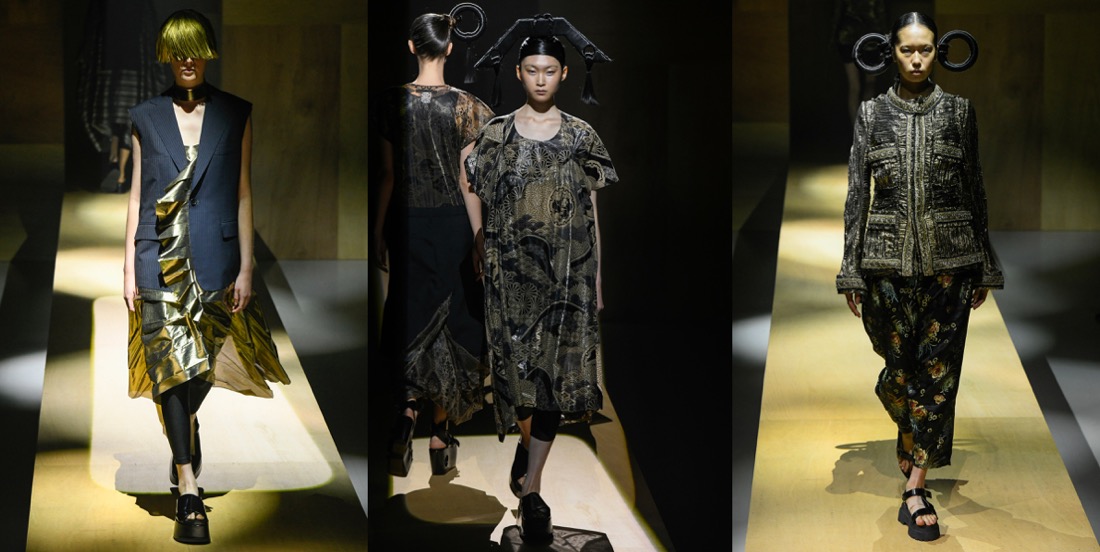
The big three names from Japan – Rei Kawakubo, Junya Watanabe and Kei Ninomiya – again skipped Paris Fashion Week, and they will probably do so until the pandemic completely winds up. From Tokyo, Watanabe treated the internet with a charming collection filled with gilded draping, filmy fabrics, disrupted tailoring and printed collaborations with Japanese, Chinese, Nepalese, and Thai contemporary artists. He called it “Eastern Reminiscence,” his term for his reminiscences of pre-pandemic travel. Looking through a collection of photojournalism that Jamie Hawkesworth, the British photographer captured in 2019 in Bhutan, India, and Kashmir, Watanabe “became nostalgic for Asia” and “the pure heart of people” he saw there. It was all there to read in the intersections of his gently-elegant folds, layers of glimmering asymmetric drapery, brocades and the fragments of biker jackets, kilts, and men’s tailored jackets. First up: a white dress printed with a skull artwork – part punk, part Chinese porcelain – by the Chinese artist Jacky Tsai, based in London. Watanabe had Japanese heroes working with him too: black-on-flesh-colored patterns in semi-translucent dresses almost as fine as second-skins were by the tattoo artist Nissaco, renowned for his geometric work. A dress with a psychedelic artwork of goldfish and stylized women’s heads came from a 1975 animation by Keiichi Tanaami, the legendary pop artist who has been working  his hallucinatory visions since the ’60s. Powerful hand-drawn black calligraphy by Wang Dongling, director of the Modern Calligraphy Study Center at the China National Academy of Arts, scrolled a Tang Dynasty poem over white dresses. Ang Tsherin Sherpa, a Tibetan artist based in California, creator of modern artworks based on traditional Tibetan thangka iconography, collaborated in orange-blue-green grid patterns sliding sideways over a draped dress. A vivid orange smock emblazoned with flowers and a painted dragon is a Thai fantasia dreamed up for Watanabe by the Bangkok-based illustrator Phannapast Taychamaythakool. It’s obvious how much mutual respect Watanabe enjoys with his creative peers who are all exploring traditions and crafts in free-wheeling, sometimes surreal parallel. The fantastically textured metallic series of evening pieces beautifully related to Jamie Hawkesworth’s photographs of golden female temple deities. This was definitely one of Junya Watanabe’s most inspired collection for a long time.
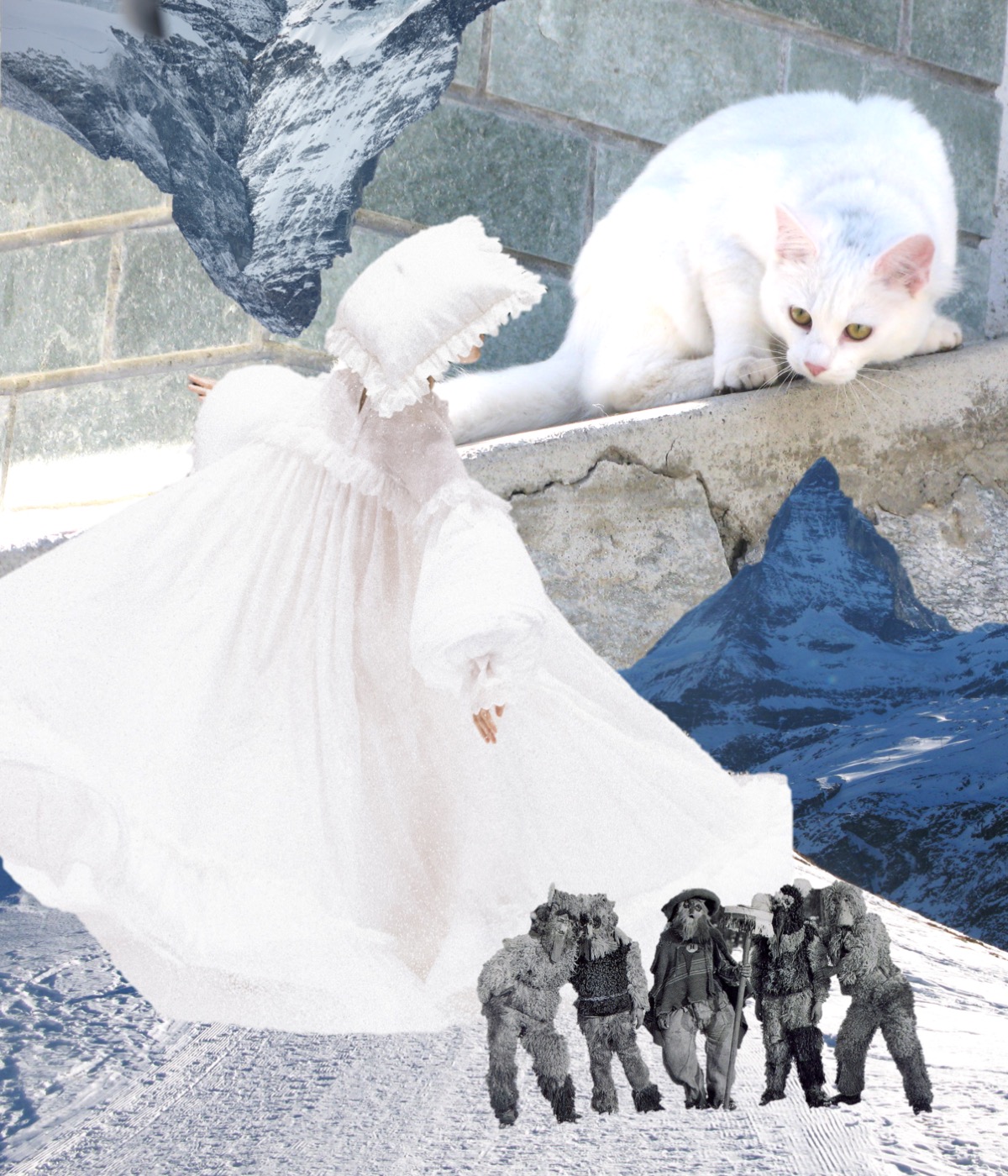
Collage by Edward Kanarecki.

Randomness. Comme Des Garçons SS22

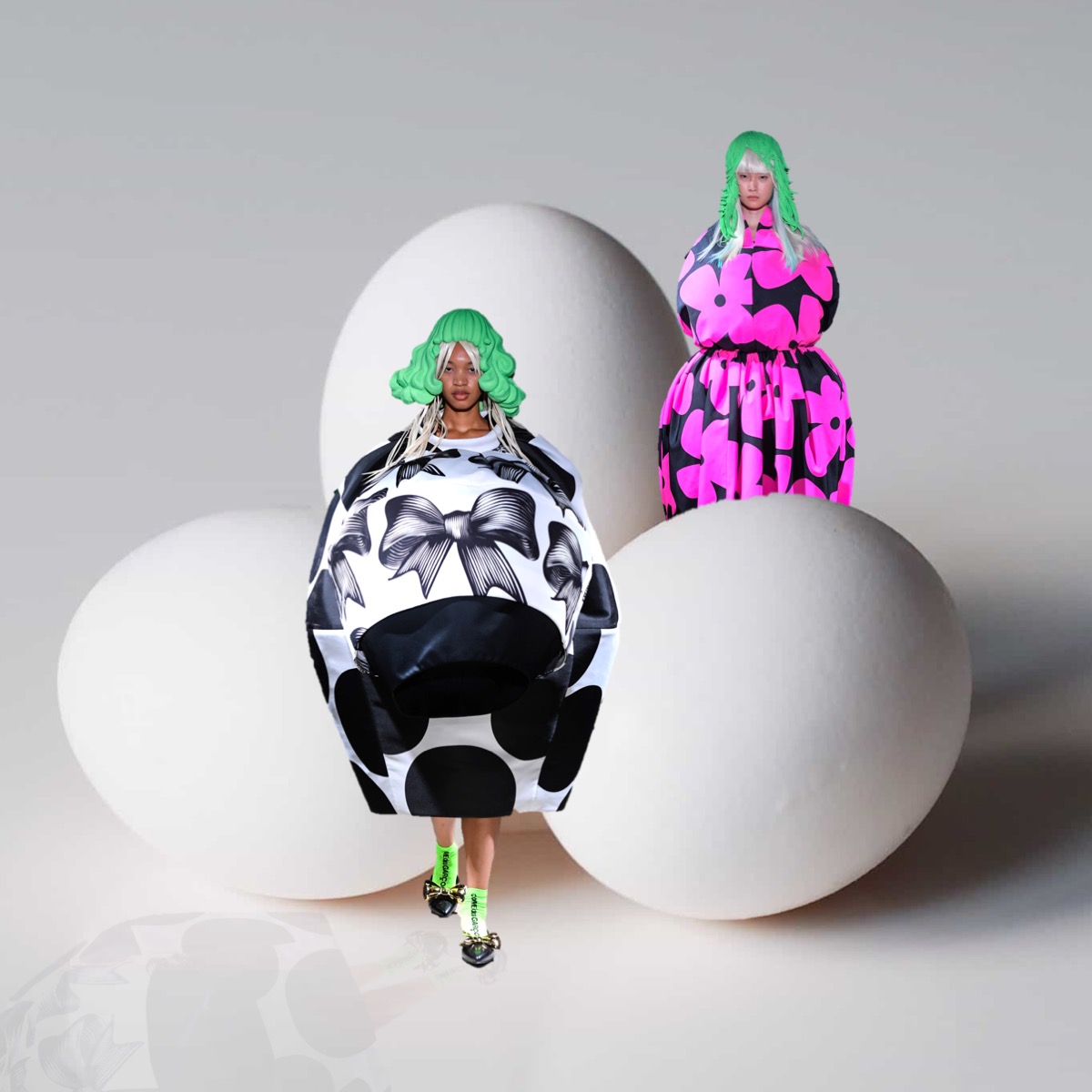
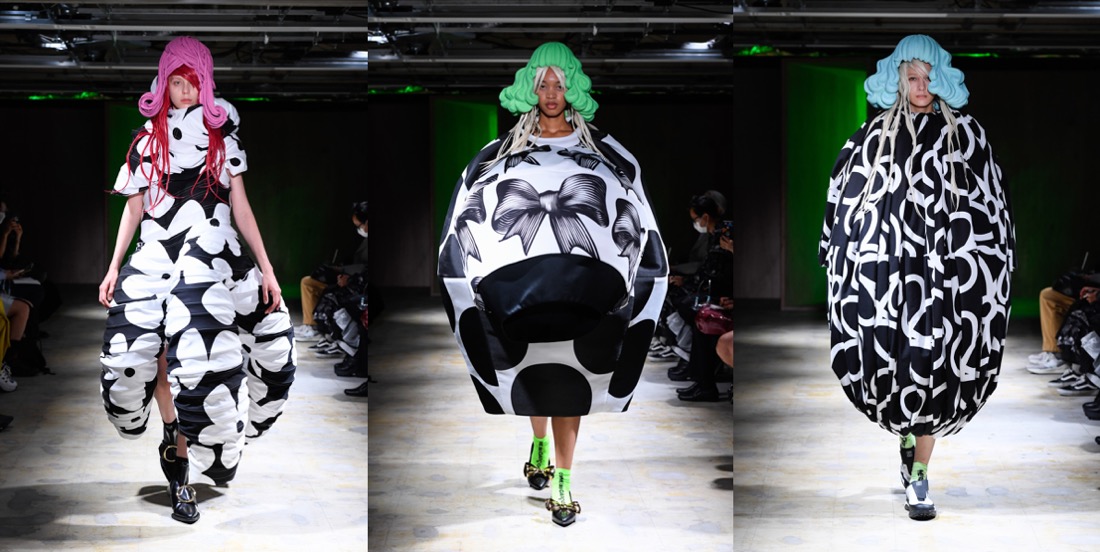
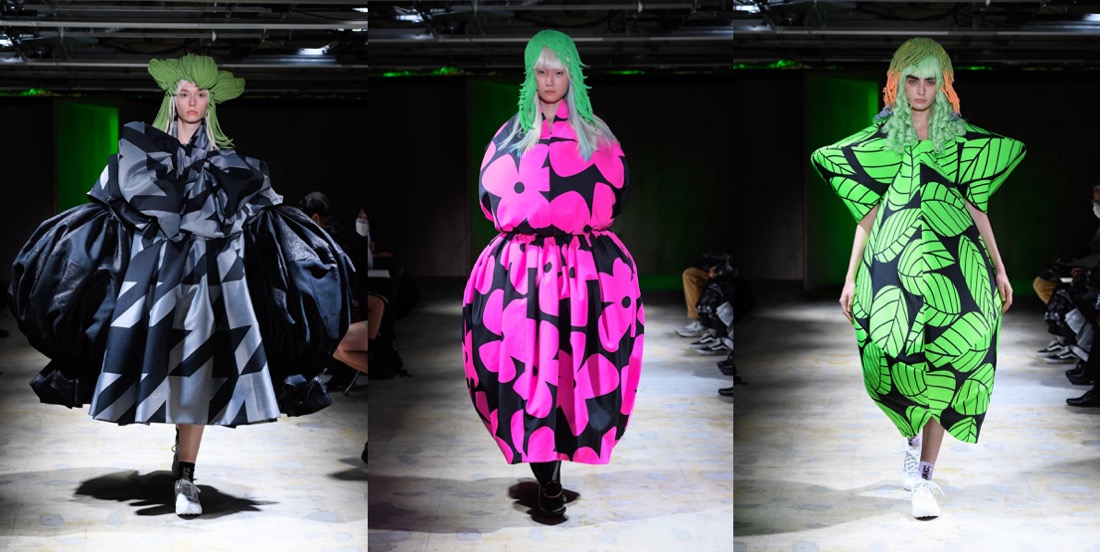
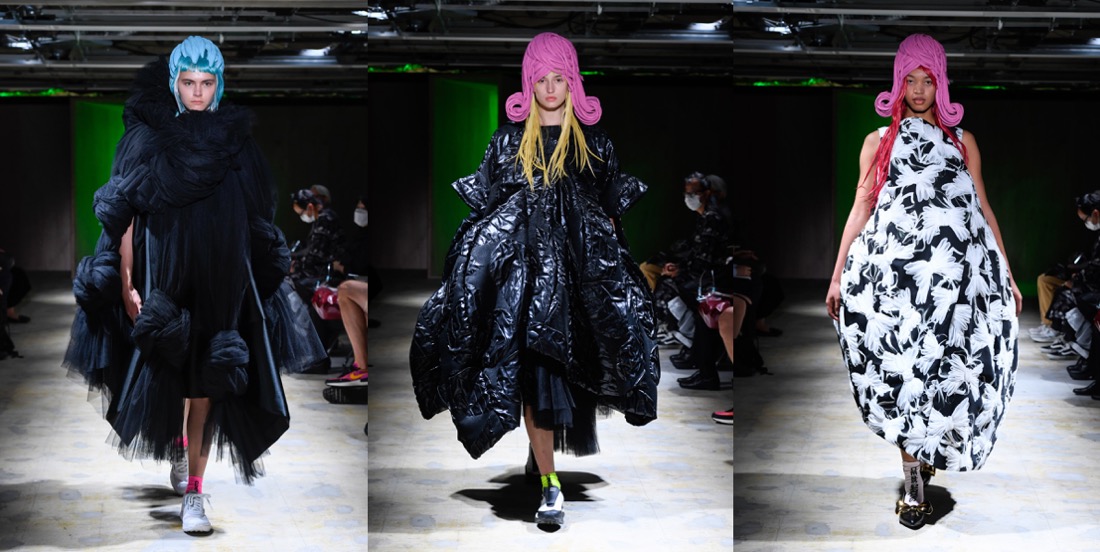
Livestreamed from Tokyo, Rei Kawakubo went for her signature giant portable Comme Des Garçons sculptures this season, imprinted with exaggerated flowers, leaves and bows. There were huge shapes, which meant models had to squeeze or shuffle sideways to emerge through a door onto a set. It didn’t feel like one of Kawakubo’s dystopian, apocalyptic moments in which she has seemed to sound a warning about bad things coming. Was her popping-out scenario closer to suggesting a feeling of rebirth, re-emergence, maybe? If so, it’s into a world where – as other fashion designers have been saying – nothing makes sense. Randomness, surrealism and absurdity are registering as part of the mood of 2021. Kawakubo, in confronting her “present state of mind” went large, very, very large, occupying space in ways that no women is meant to (though to be honest, vast art-fashion structures have been her safe space for experimenting for years). She certainly met her own criterion of avoiding making clothes. Comme “dresses” were presented as abstract perambulating 3-D fabric structures, topped off with pastiches of plastic cartoon girly wigs by Gary Card. Some of them had a sort of curved prow; several had net-filled cones spurting from their backs; some were ovoid, another was a 3-D black trashbag flower. Eventually there was an impression of the weight of furnishing fabric and swishing curtain swags. In the end there was a piece that seemed to have entirely merged a woman with a comfy black and white upholstered armchair. Paris Fashion Week missed having the Comme de Garçons show to contemplate at a time when fashion needs fearless innovators to take it forward. Kawakubo sets an example for all: a designer who has been independent for a lifetime and is still pushing.

Collage by Edward Kanarecki.
Metal Couture. Noir Kei Ninomiya AW21

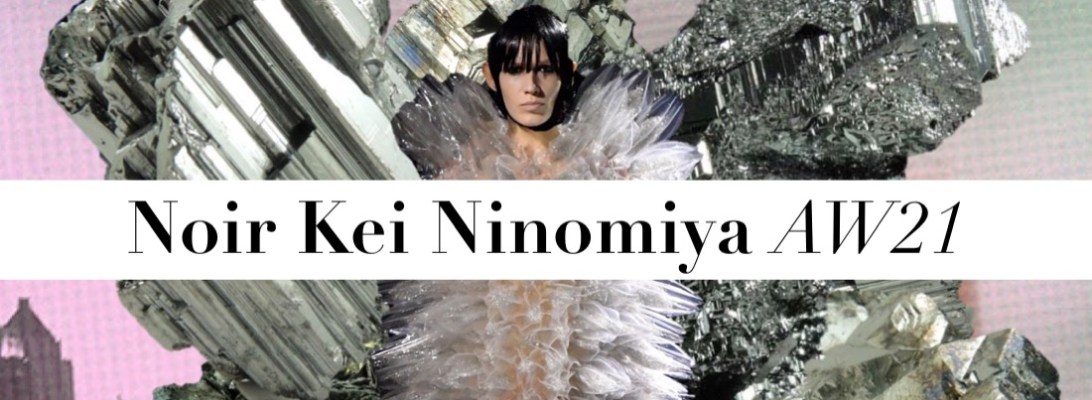
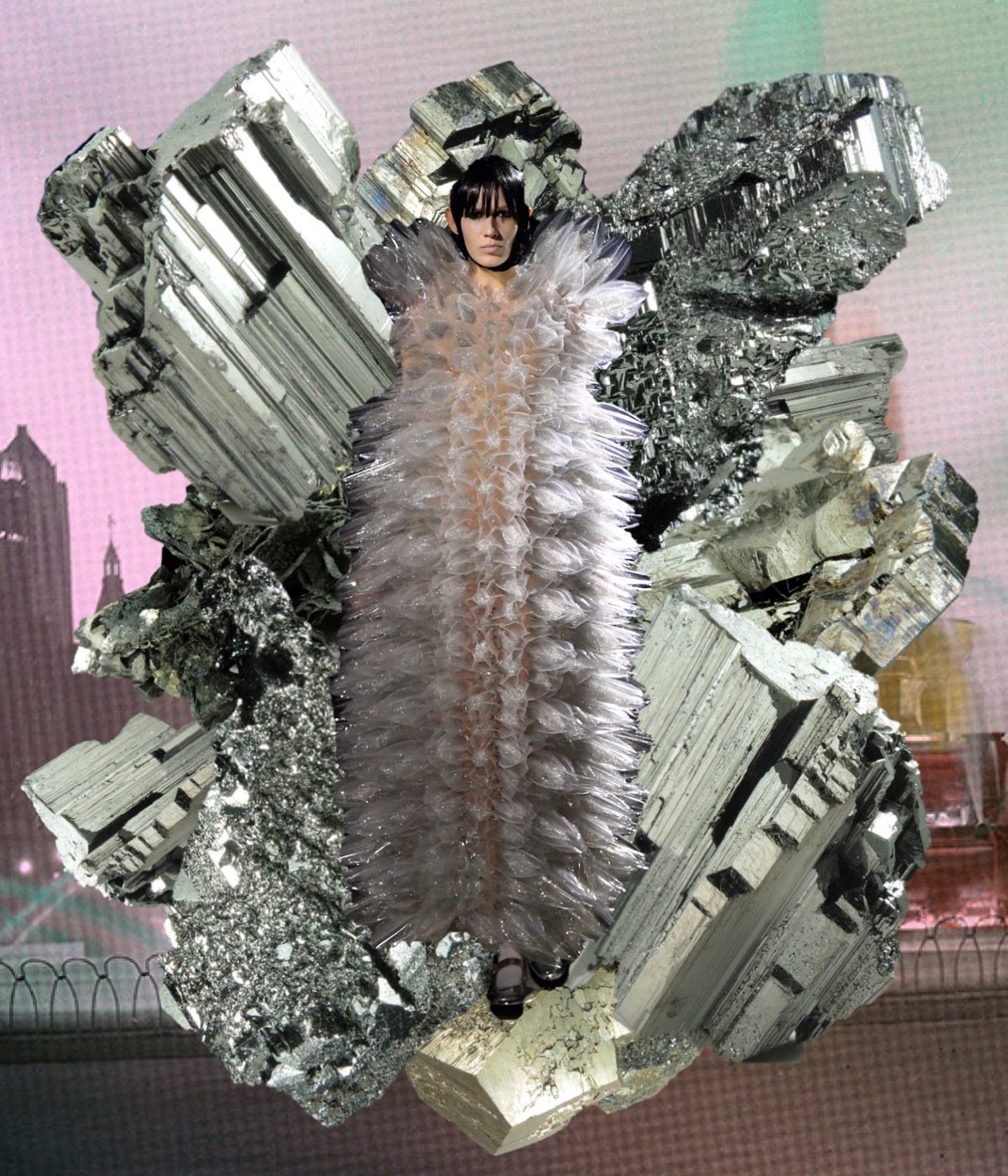
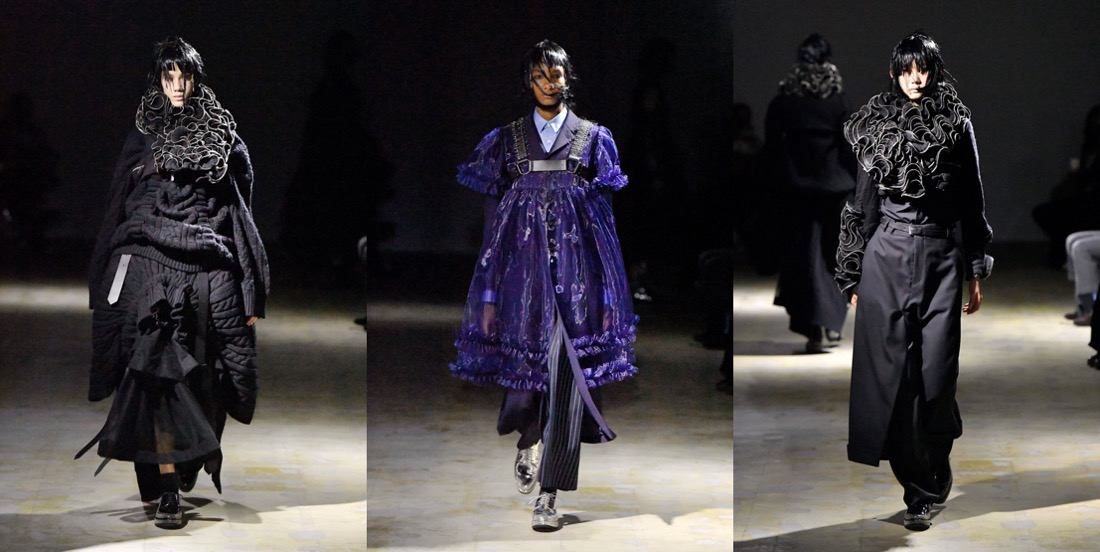
Entitled “Metal Couture“, Noir Kei Ninomiya‘s collection was all about excitingly unfamiliar silhouettes and extraordinary surfaces. This season, however, the designer takes a more aggressive approach. Those first looks featuring thin, stainless-steel spikes felt like an exaggerated, haute take on social distancing. The cylinder forms of tufty organza also seemed to say: ‘don’t bother me’. Black clusters of puckered organza (sea sponge–ish) look so tactile you wish you could actually touch them yourself to judge whether they are soft or razor sharp. Kei Ninomiya is a genius in creating organic-like garments that are both challenging and so, so intriguing.

Collage by Edward Kanarecki.
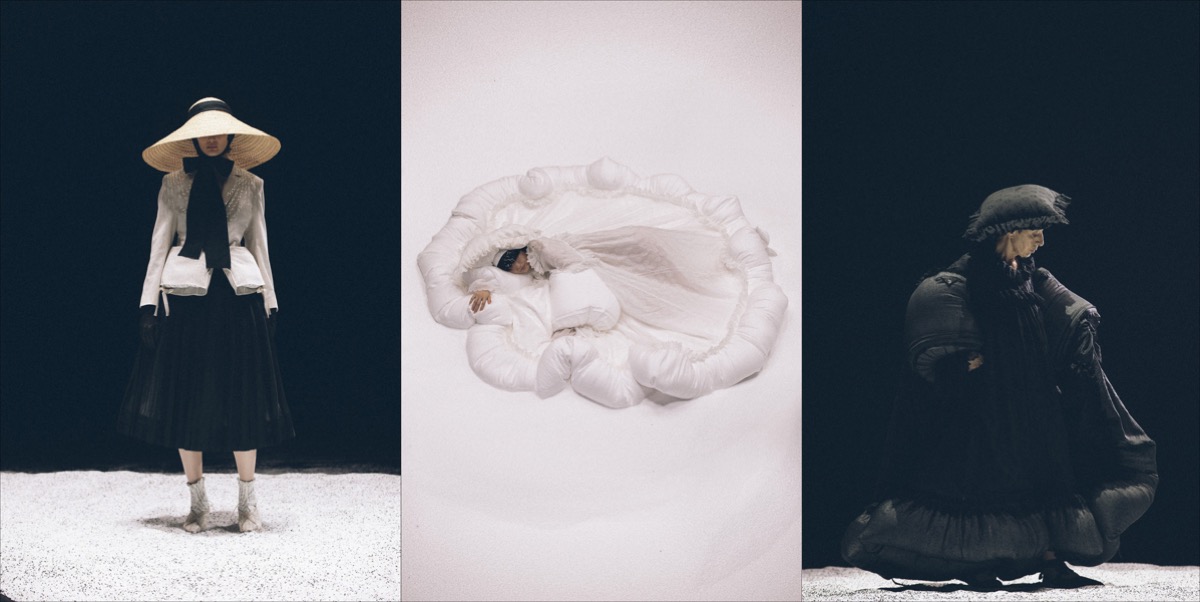
Monochrome Serenity. Comme Des Garçons AW21

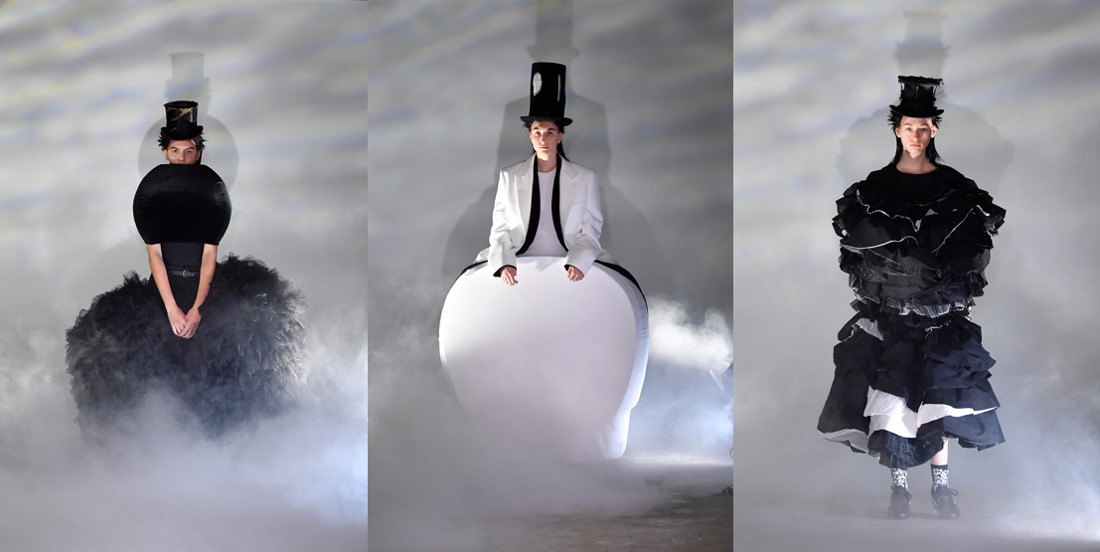
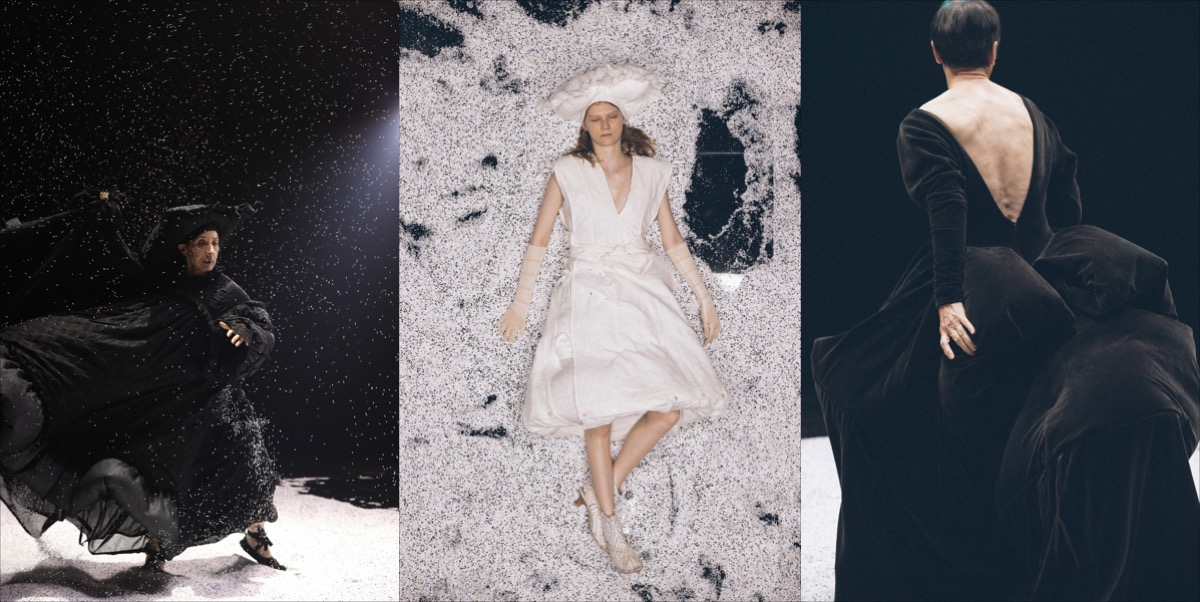
In the Comme des Garçons autumn-winter 2021 fashion show images coming straight from Tokyo, Rei Kawakubo‘s models looked as if they were walking clouds. “I needed to take one breath on the monochrome“, the designer summed up in her always-enigmatic manner. Monochrome is Kawakubo’s original signature. In the early 1980s, right at the start of her showing in Paris, Rei’s uncompromising use of black was deemed “shocking” and “conceptual” – especially in contrast to all the bold colours used by Montana or Saint Laurent at the time. Here, the designer seems to push it to extremes, creating wearable, layered-up sculptures which were kept in a rigorous black-and-white palette. With the addition of the rakish stovepipe hats made in collaboration with Ibrahim Kamara, the billowy dresses and voluminous coats played with romantic, Victorian styles. Comme des Garçons’ “monochrome serenity” definitely comes from an escapist place, breaking away from the global, lockdown routine. The longer you look at those pieces, the more beautiful things are revealed.

“Live” collage by Edward Kanarecki.

Motional. Beautiful People SS21

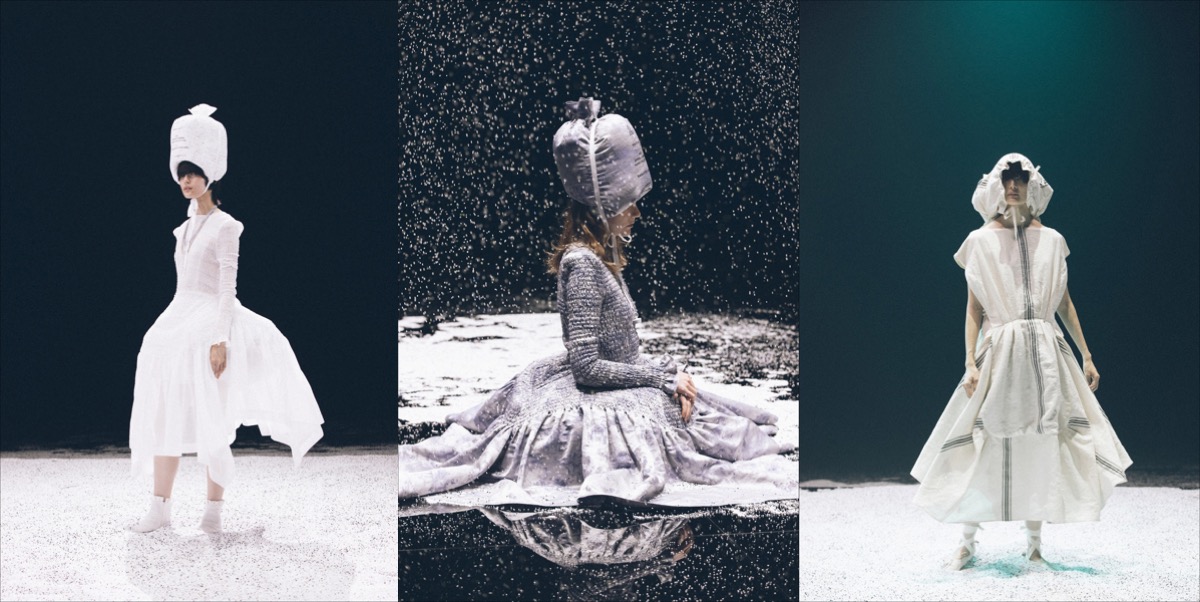
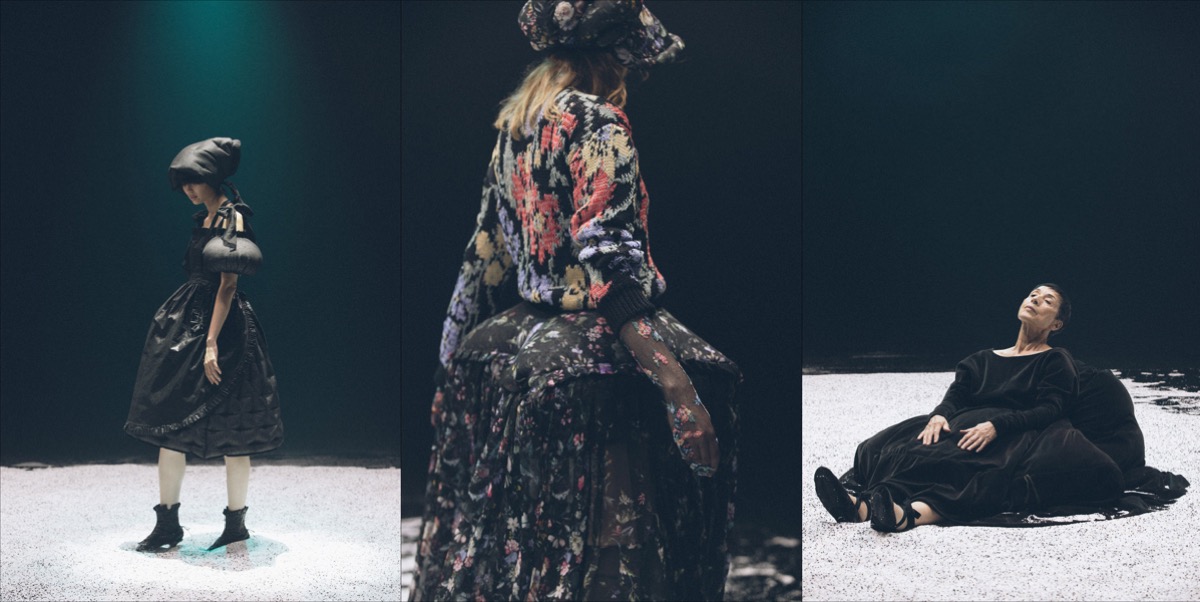
Hidenori Kumakiri creates shape-shifting garments at his Tokyo-slash-Paris-based label, Beautiful People. The former Comme des Garçons pattern-cutter makes classic clothes bordering with fantastical volumes, a mix of femininity and 1950s couture sensibility combined with the Japanese avant-garde. The brand presented the spring summer 2021 Side-C Vol.5 Motional collection, which explores today’s world, where we are stuck in our homes, and overwhelmed by emotions, with a striking film directed by Takahiro Igarashi. The collection sends message of optimism and rebirth, with the bustle-like shapes, and big and flowing volumes. “Side C, the transformative look at classics that focuses on the layers and the in-betweens of clothing, finds another dimension: a flowing, dynamic one. By creating an interconnecting system of pockets inside the garments, and filling them with small beads, movable silhouettes are created. The beads flow as the body moves, sits or stands, allowing for endless reconfigurations. A skirt turns into a couch, a dress into an armchair, only to revert back to what it was,” the press note says. The result is a look at the classics and the layers in between the clothing – a collection filled with an interconnecting system of pockets inside each look which allows them to be filled with small beads. With each movement, the shape and volume of each look changes into an endless array of silhouettes. And when topped off with pillow-like hats, there’s another nod to home and the familiar elements of our humble abode. Incredible.

Collage by Edward Kanarecki.