Think Pink. Noir Kei Ninomiya SS21

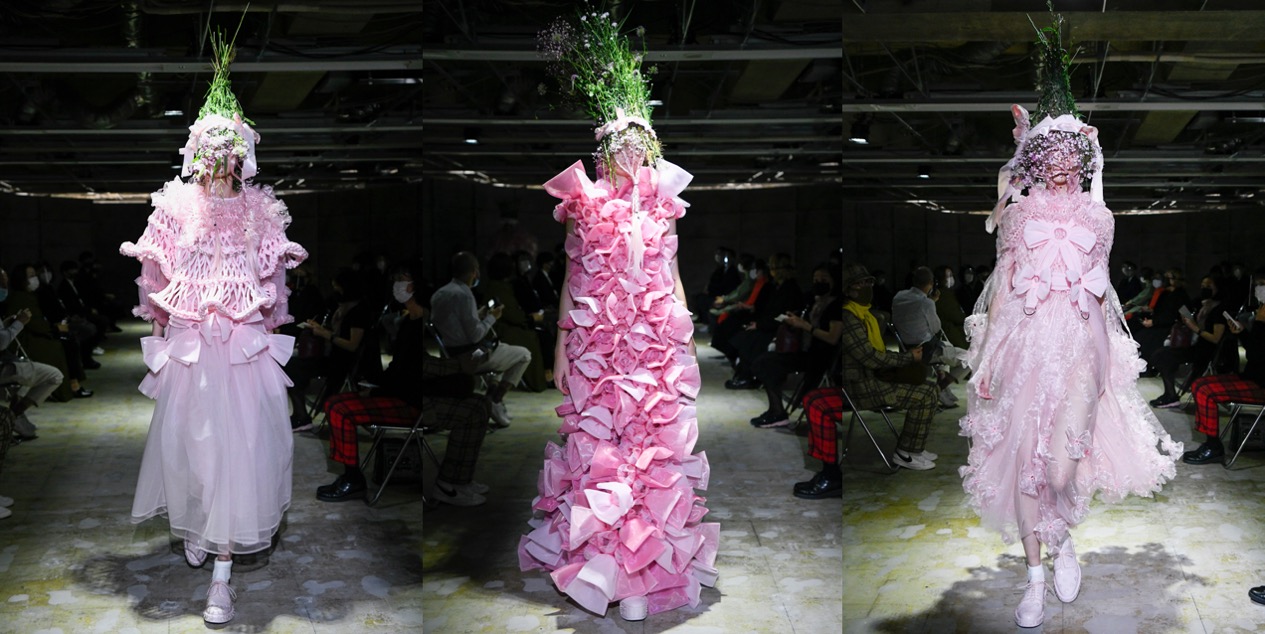
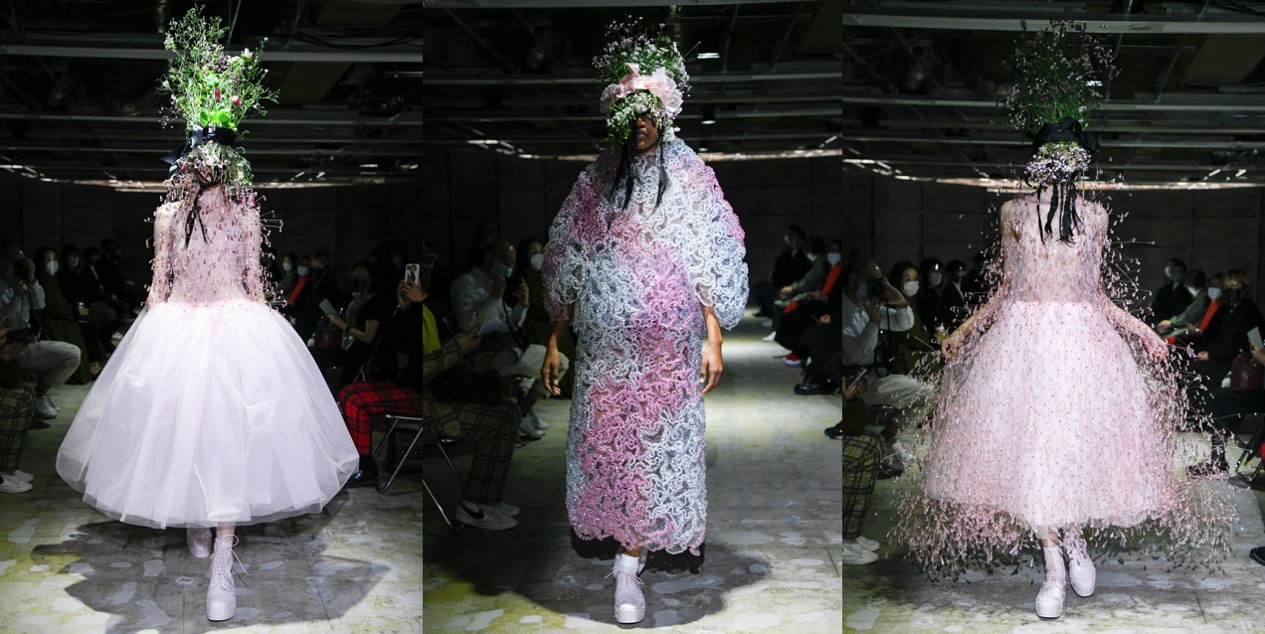
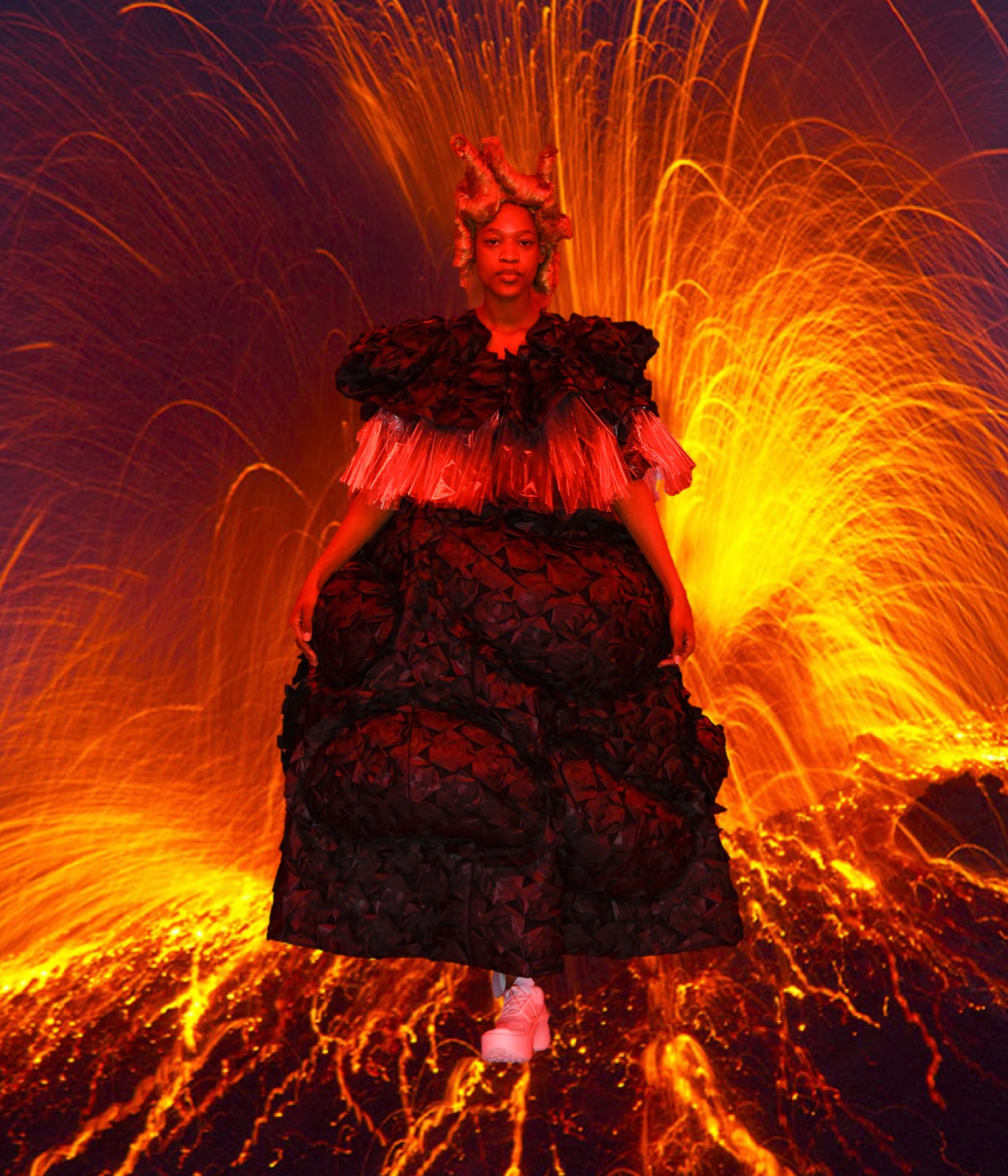
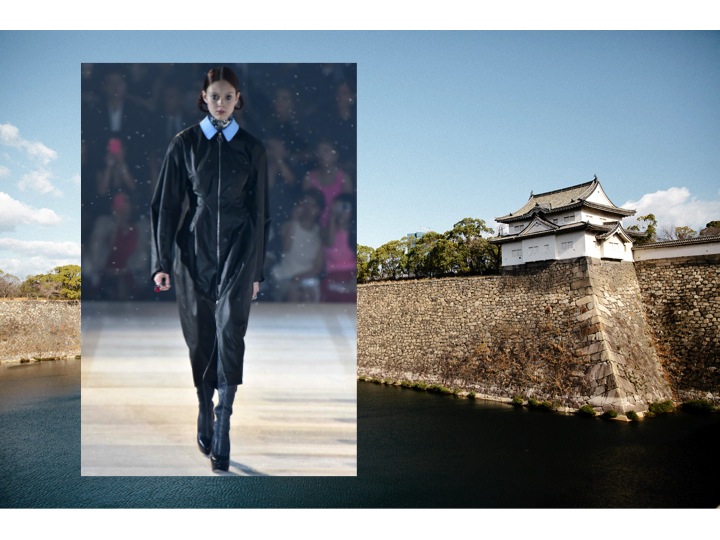
Extraordinary – that’s how one might describe Noir Kei Ninomiya’s garments. Most of them are sew-free constructions – he prefers rivets, snaps, or grommets – and for spring-summer 2021, we’ve got a series of handmade hyper-extravagant dresses, all of which would be perfect for a Björk album cover or a Nick Knight shoot. While Ninomiya usually stays close to his favourite palette of black, here we’ve got a deslightful splash of bubble-gum pink. Is this a sign of hope for a troubled world? The designer leaves it to your interpretation. Grandiosely modern silhouettes were delineated in materials that included wire, pearls, PVC, chain, a symphony of polyester fabrications, ribbon, satin, cotton, wool, three types of leather, and taffeta, with which the amazing aura-haze of the last look was constructed. Note the four varieties of this-season’s collaboration with the Prada-owned English shoemaker Church’s. These florally studded footwear options are the most straightforward way, along with his biker jackets, to buy into the Ninomiya aesthetic. Love!

Collage by Edward Kanarecki.

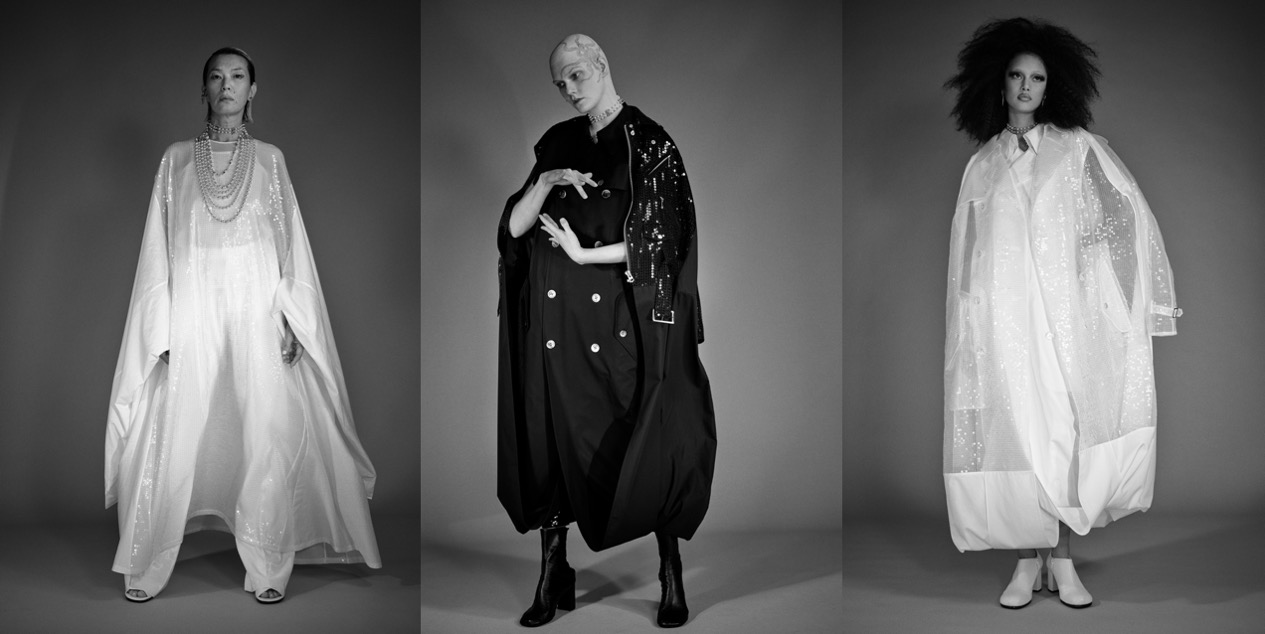
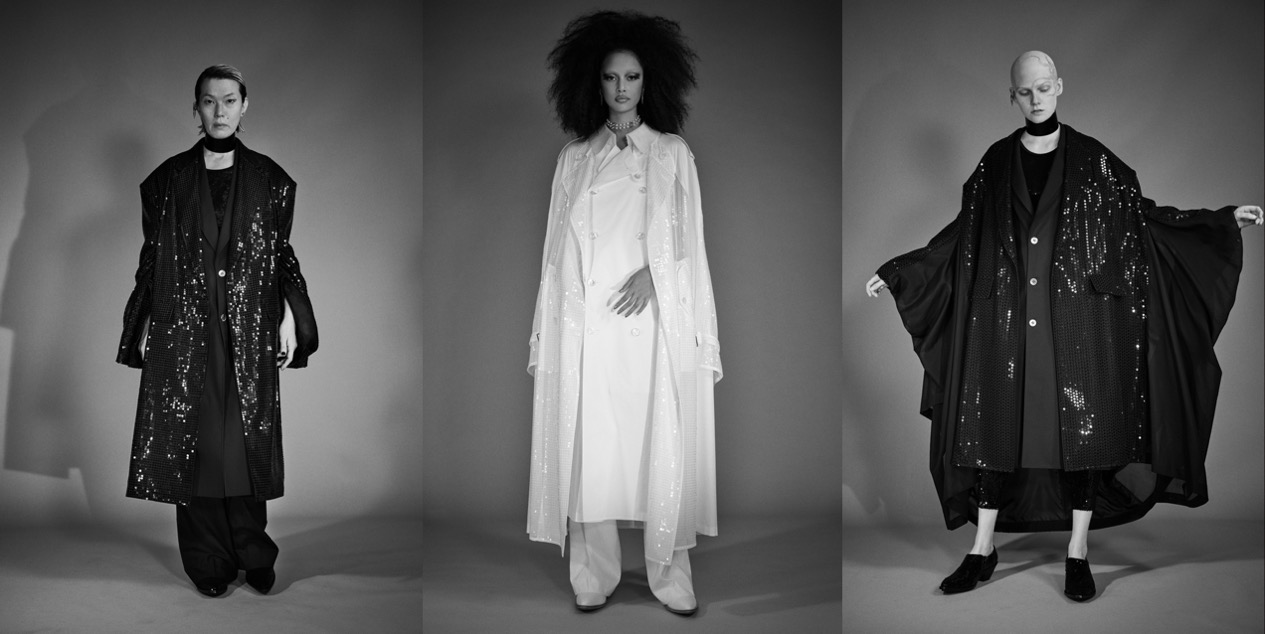
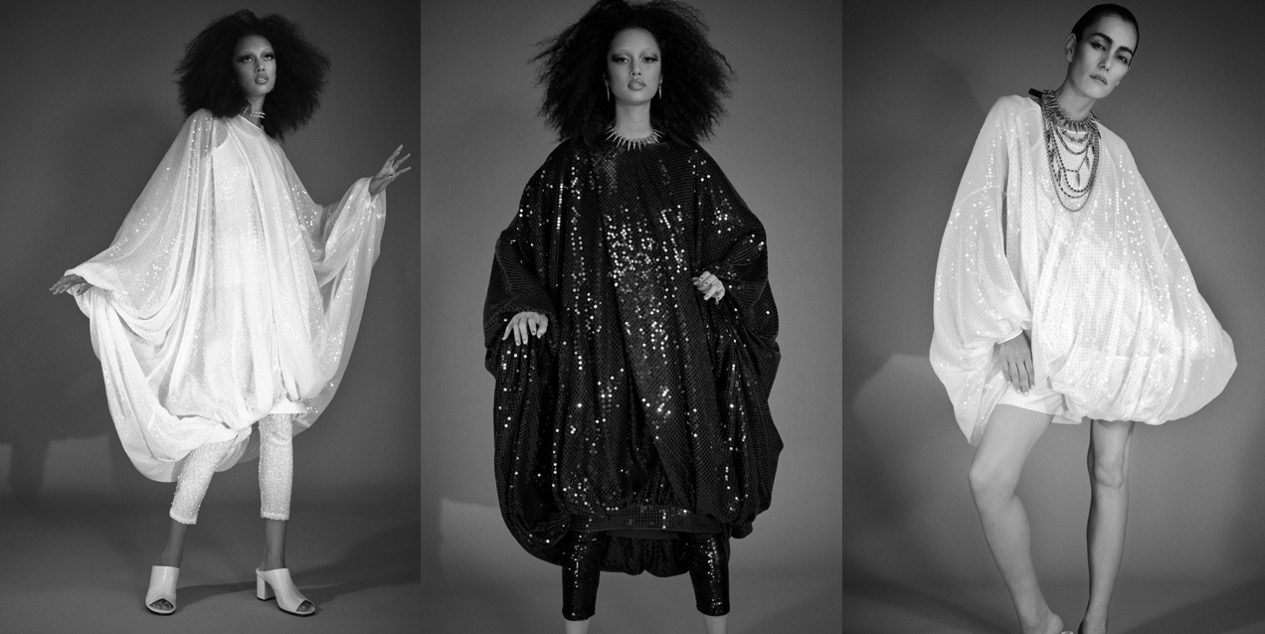
Disco Noir. Junya Watanabe SS21

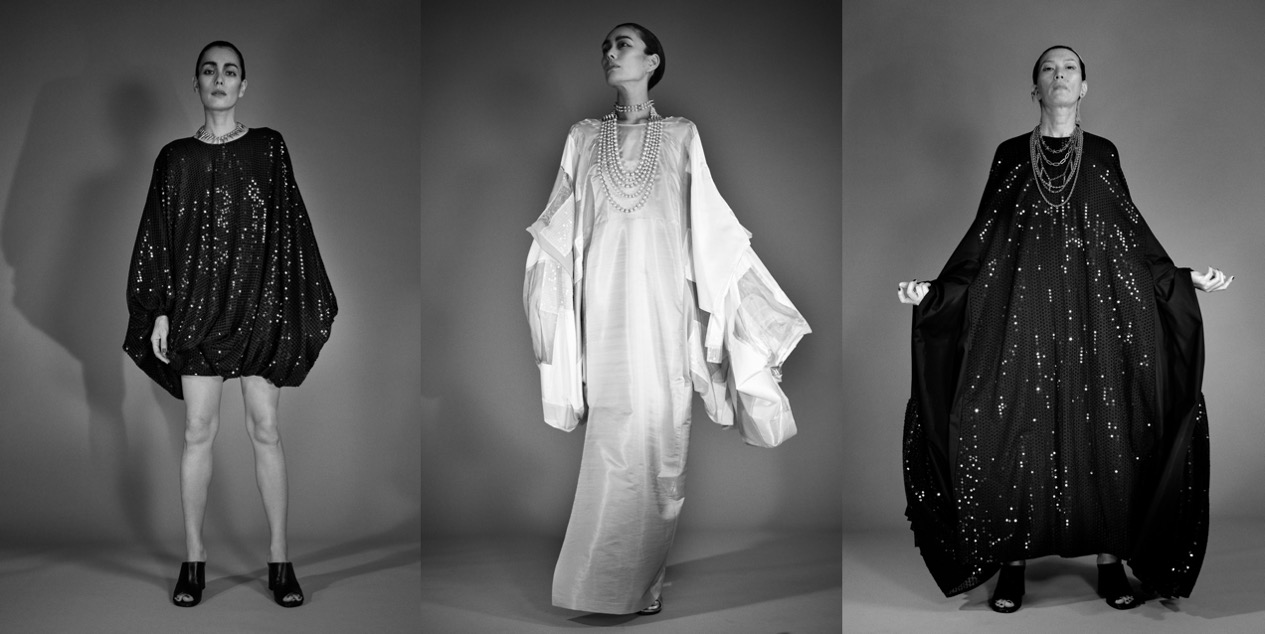
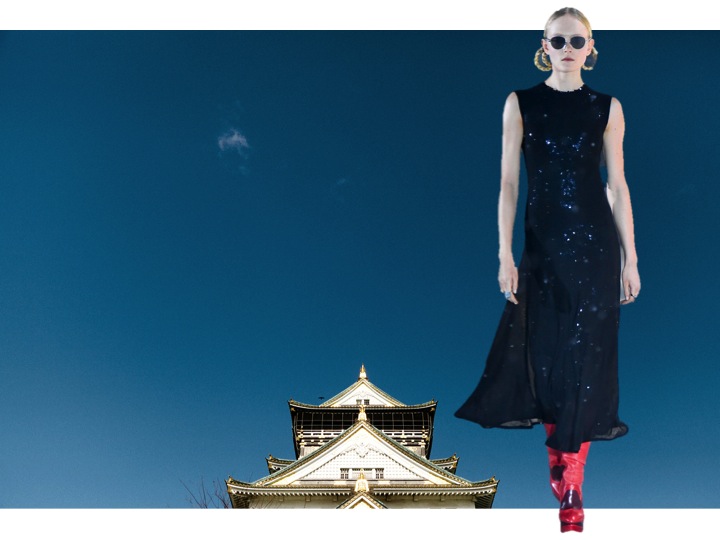
Disco is having a rebirth in music – just think of Jessie Ware, Róisín Murphy or Dua Lipa’s latest records. During lockdown, we’ve all dreamed of a care-free party, so no wonder why some designers chose this escapist, joyful theme for the spring-summer 2021 collections.  Discussing his latest outing, Junya Watanabe’s press notes said, “It is a collection that reproduces the costumes worn by the stars in my memories. My memories are monochrome, and I created a photo session with four fictional stars.” The black and white images feature an assortment of apparently black or white looks, plus one or two more in silver. Nearly all of them are sparkling with sequins dresses that get the party started. The 1960s A-line gowns that close the look book, but also the trenchcoats that are integral to Watanabe’s oeuvre, have a disco noir feeling about them. Last season Watanabe paid punkish tribute to Debbie Harry. Though the Spangles may owe a debt to the Supremes, these muses are more abstract. In its spotlighting of sequins, the collection feels of a piece with earlier Watanabe shows that had singular focal points of their own, like army fatigues and puffers. His new season clothes have an easy-to-wear aspect that many have keyed into in this COVID year. I’s a whole lot of caftan-like shapes and leggings, essentially and a stripped-down outing by house standards. The most complex shapes were the coats whose hems looped up, creating generous volumes. But in tricking everything out in spangles Watanabe turned the concept of #WFH-wear on its head. Comfort, he gets. Hibernation? Not so much. Sequins are associated with happier times. If and when the world opens up, Watanabe’s women will be ready to loose themselves on the dancefloor.

Collage by Edward Kanarecki.

Dissonance. Comme Des Garçons SS21

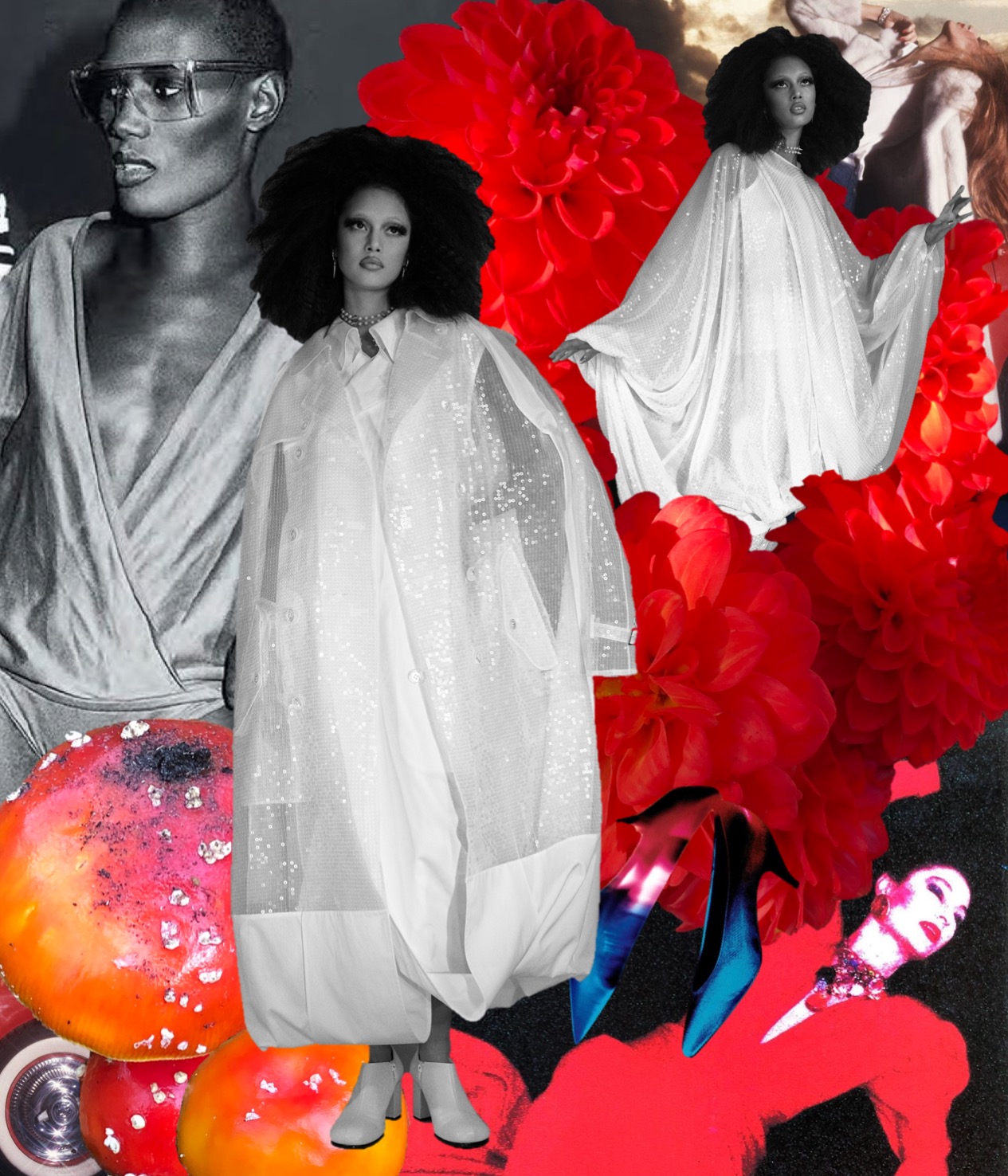
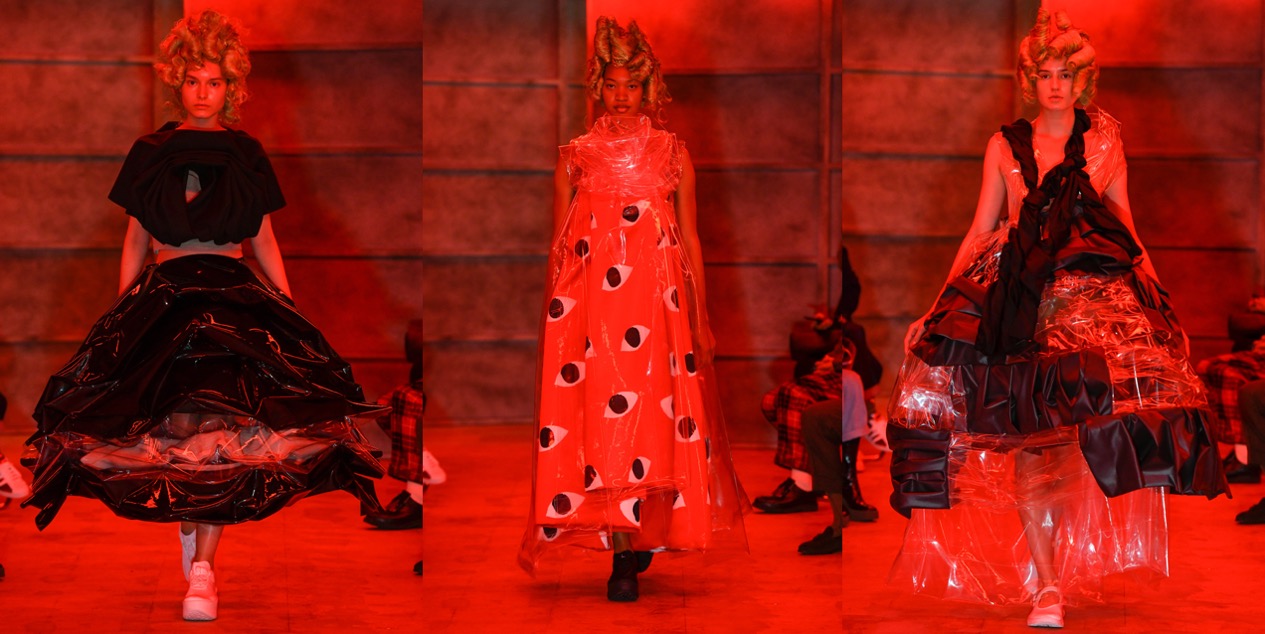
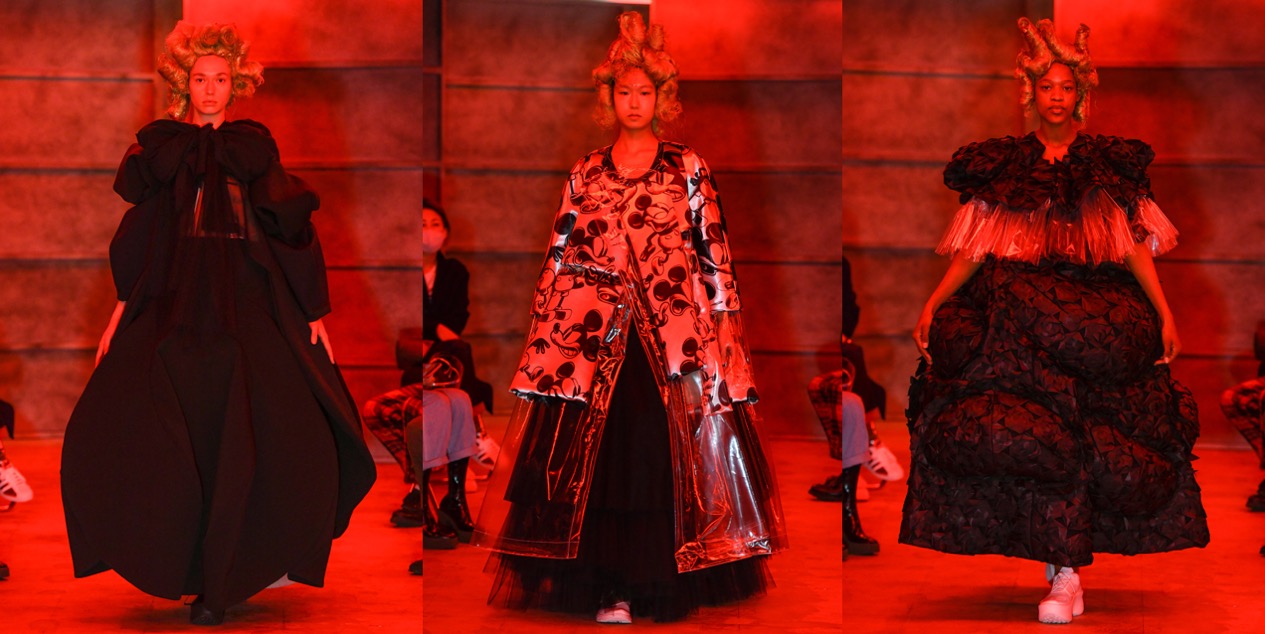
Paris Fashion Week felt incomplete without the Japanese avant-garde. From Tokyo, where all the Comme des Garçons family of designers have been showing, an email suggested that Rei Kawakubo has been striving to arrive at a creative resolution for designing in the midst of the existential plight that we’re all suffering. Dissonance was her theme: “The human brain always looks for harmony and logic. When logic is denied, when there is dissonance a powerful moment is created which leads you to feel an inner turmoil and tension that can lead to finding positive change and progress.” Any note of hope is gratefully received in these times of chaos. Discerned through the red light of her set – surely a signifier of the hellish state of the world, which at the same time made it hard to look at the garments in detail – her prescription for survival seemed threaded through with a playful, ironic sense of humor. Voluminous shapes, crinolines, bubbles, cloaks, and trapezoid coats came covered in plastic film. Then, what was Kawakubo up to, playing with Mickey Mouse and the Japanese Bearbrick teddy bear toy? Cutely reassuring representations of childhood innocence to cling to in our times of trouble, perhaps. The designer even messed around with the CdG heart logo, designed by Filip Pagowski back in the 1980s. The thing about Kawakubo is that her work brilliantly captures so many dissonant ideas at the same time. A phrase in her notes said she was interested in disrupting “the spirit of couture” with “illogical combinations and juxtapositions.” You sense she likes both the romance and glitter of couture and being punk with it, though – and this time, it almost felt like she’d had fun with it.

Collage by Edward Kanarecki.
Big Red. Valentino Pre-Fall 2019

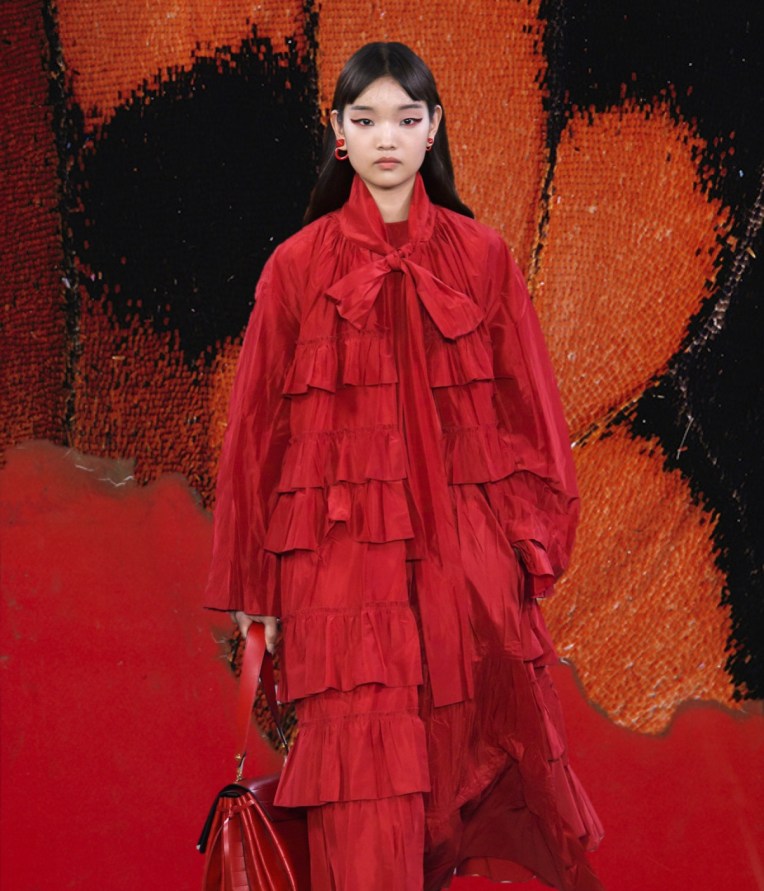
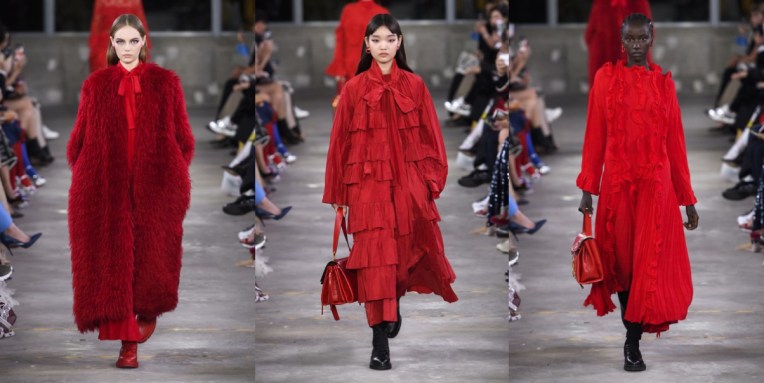
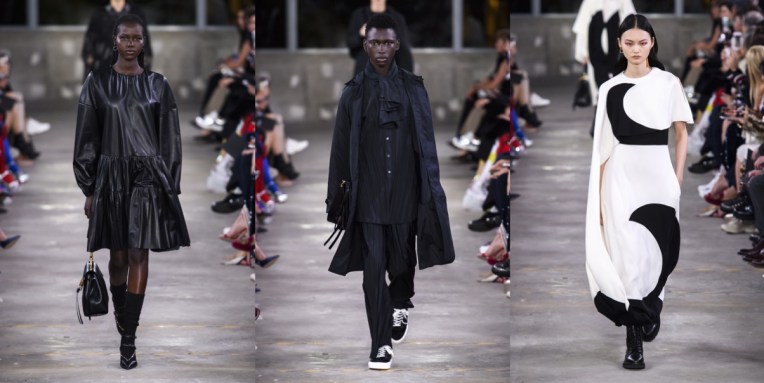
While some designers (well, I specifically think about the two that landed in every industry news headline last week) fail to understand and respect other cultures than theirs, Valentino’s Pierpaolo Piccioli doesn’t have that problem. His pre-fall 2018 collection for both, women and men, was presented in Tokyo a few days ago and it was far, far away from getting trapped in stereotypical thinking. The first dozen of looks was a punch of red: parkas, furs, florals, duvet jackets, sheer frocks, shirts, loosely fitted pants, everything in red. The next 30 or 40 looks were mostly black or white, with a few pastel exceptions. The closing looks – made for the red carpet – were all about red, again. But we’re speaking of Valentino red, which is a deep and absorbing shade. Lots and lots of tulle and silk was used for each of these evening gowns. And they did look exquisite, couture-level. Shortly, it seemed to be a regular Valentino collection that could be equally presented in Paris, New York or Rome. That was Piccioli’s goal: to show that today’s Valentino is an international brand, suited for women and men from very different destinations. Still, there were some Japan-related hints behind the collection. They were subtle and well-balanced. Piccioli is drawn to the Japanese art of kintsugi, of repairing the cracks of broken porcelain with a molten gold effect that adds new layers of beauty, “so the most broken pieces become the most precious—the opposite to Western culture. Time adds something to beauty.” Did he mean the ever-changing codes of Valentino? Or maybe that was a light metaphor for the art of autumn layering the designer mastered so well this season? Pierpaolo was also moved by this one aspect of Japanese culture that is extremely alive especially today – specifically “the symbolic act of dressing up. People in the street dress like a ceremony, like a ritual”. Other than Moncler, the designer did two more special collaborations this season – both with Japanese visionaries of their own crafts. Renaissance art appeared in the purses produced in collaboration with Undercover’s Jun Takahashi, which will only be sold in Valentino’s Tokyo flagship store. The playfully surreal self-portraiture of the 21-year-old artist Izumi Miyazaki appeared on loose dresses and parkas – it certainly brought more vigour to the line-up. It’s not the first time when I say this: Valentino blooms with Pierpaolo in charge of it.
Collage by Edward Kanarecki.

Tokyo. Dior Pre-Fall’15

Slide6

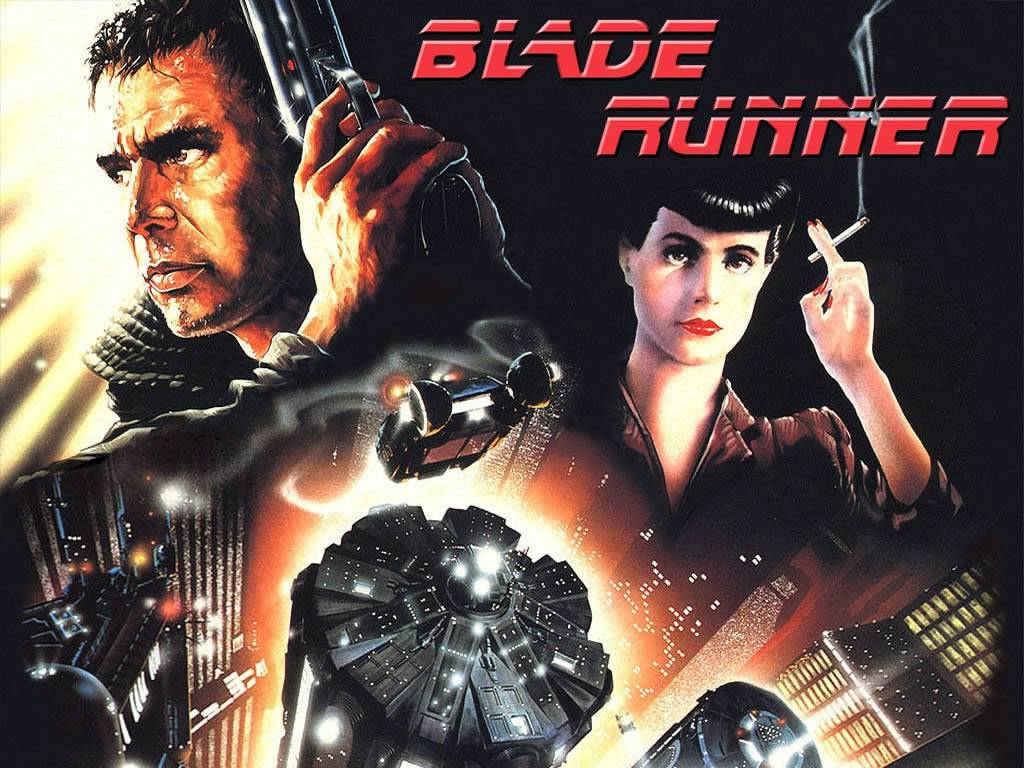
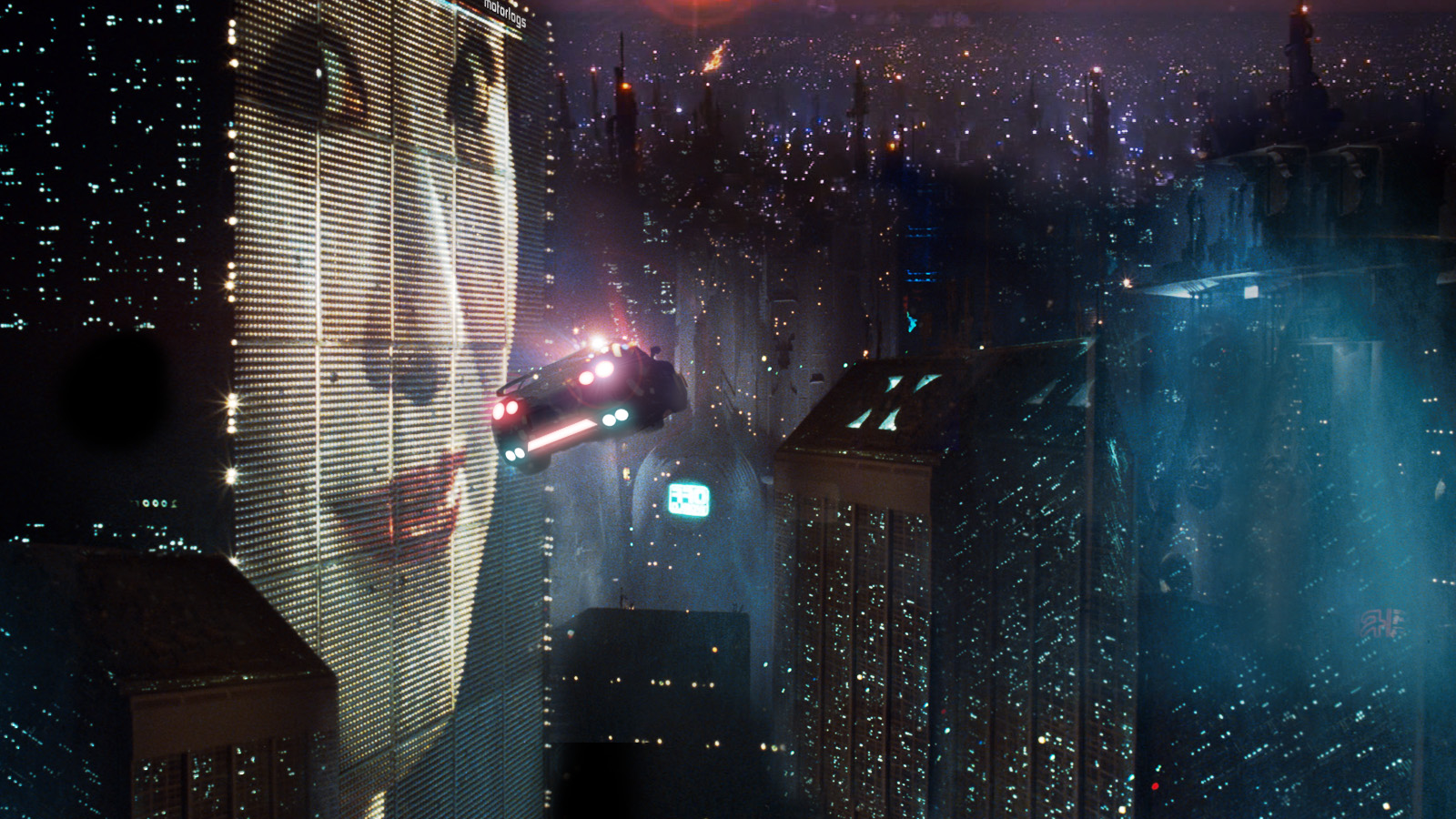
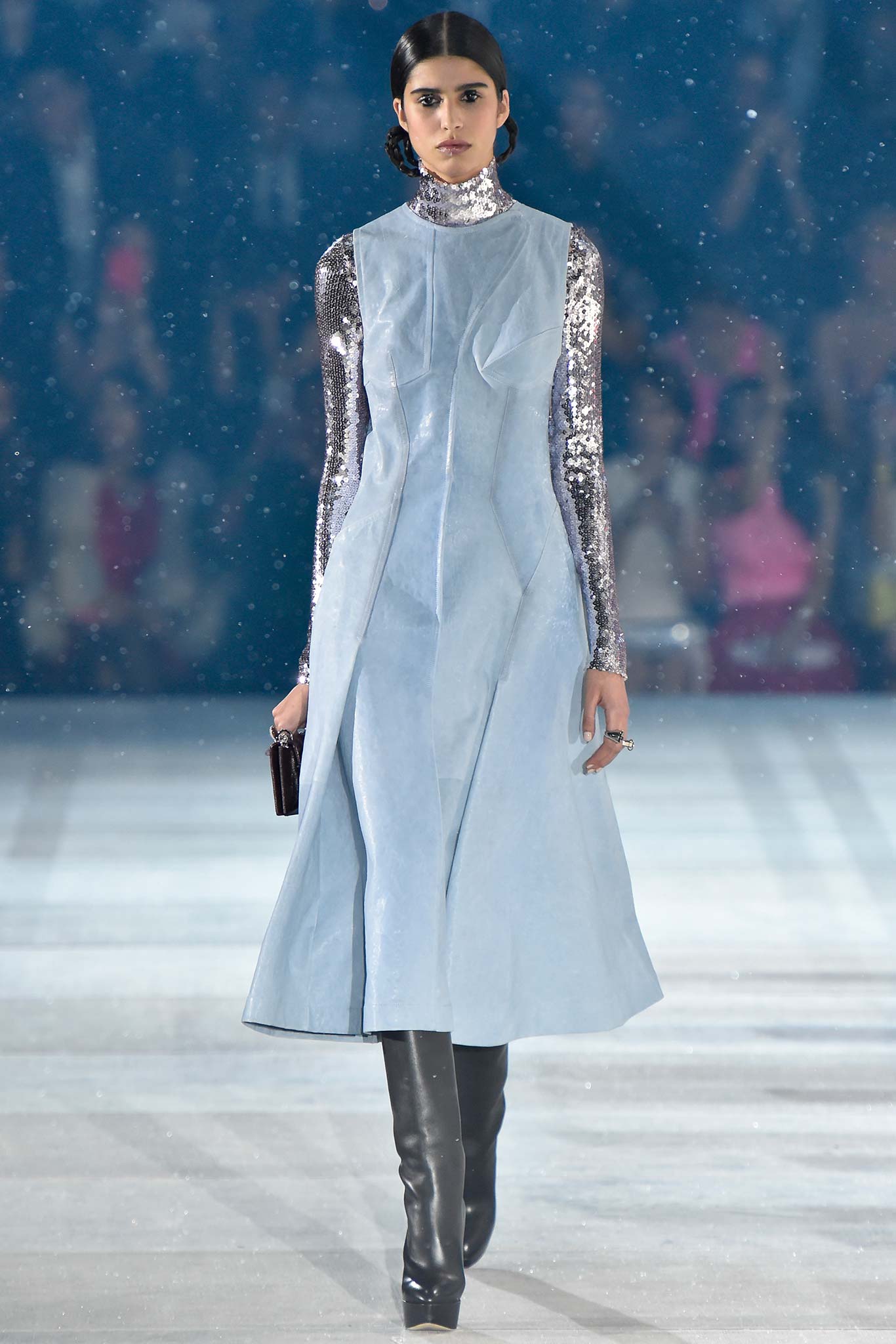
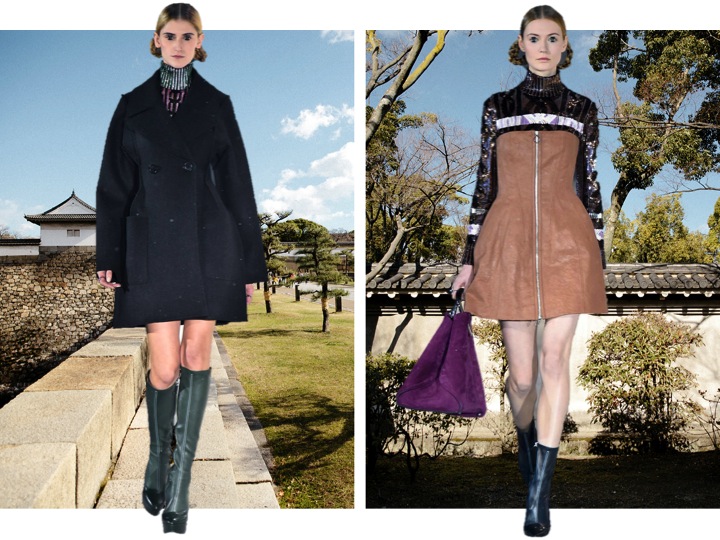
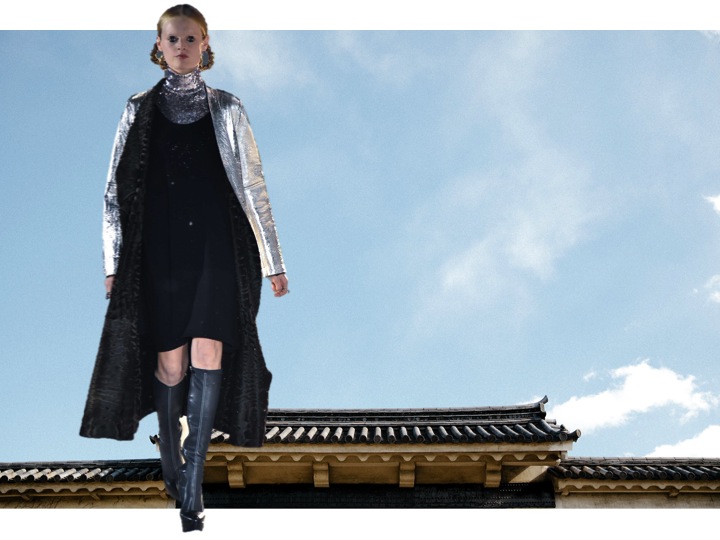
Raf Simons seems to have two personalities- one at his namesake label for men, where he doesn’t care about the rules; another at Dior, where he definitely obeys the bosses. Last season (SS15), in my opinion was trash. I truly couldn’t understand it. It felt like Simons explained it only by “oh, look, it’s like this, but look at those couture embroideries”… yawn. Come on, who cares about embroideries, if the clothes are so boring? Thankfully, Dior thought of something new for the house, which was smart. The pre-fall 2015 which was presented few days ago was organised in Tokyo- the place were Dior has it’s boutiques on nearly every street. Commercially, this is genius for the house. But for fashion? Raf Simons had his model walk zigzags in a huge sumo wrestling arena, inspired by the scenes of Ridley Scott’s Blade Runner movie. With fuses of futuristic influences (that badly reminded me of Paco Rabanne gold years) like silver sequined turtlenecks, jacquard motifs and wax cotton coats, Simons brought a lifey twist into his Dior timeline. And what’s interesting although the fact the show was in Tokyo, Japan, we didn’t notice even one kimono, manga print or anything of Japanese stereotypical fashion. Definitely, Raf looked at Japanese woman of the future- stomper boots, wide trousers and clean lines with neon elements. Plus, corn-rows and super kawaii eye-brows. Personally, I have no offend to Raf Simons- sometimes, he is just not on the point. However, this dynamic show proved one thing: not only that Raf has better and worse days in his life, but also that Tokyo is an amazing, energetic city of fashion.

blade-runner-2-movie

078-blade-runner-theredlist

dior_aw15_tokyo_0079

Slide7

dior_aw15_tokyo_0130

Slide8

dior_aw15_tokyo_0475

Slide9

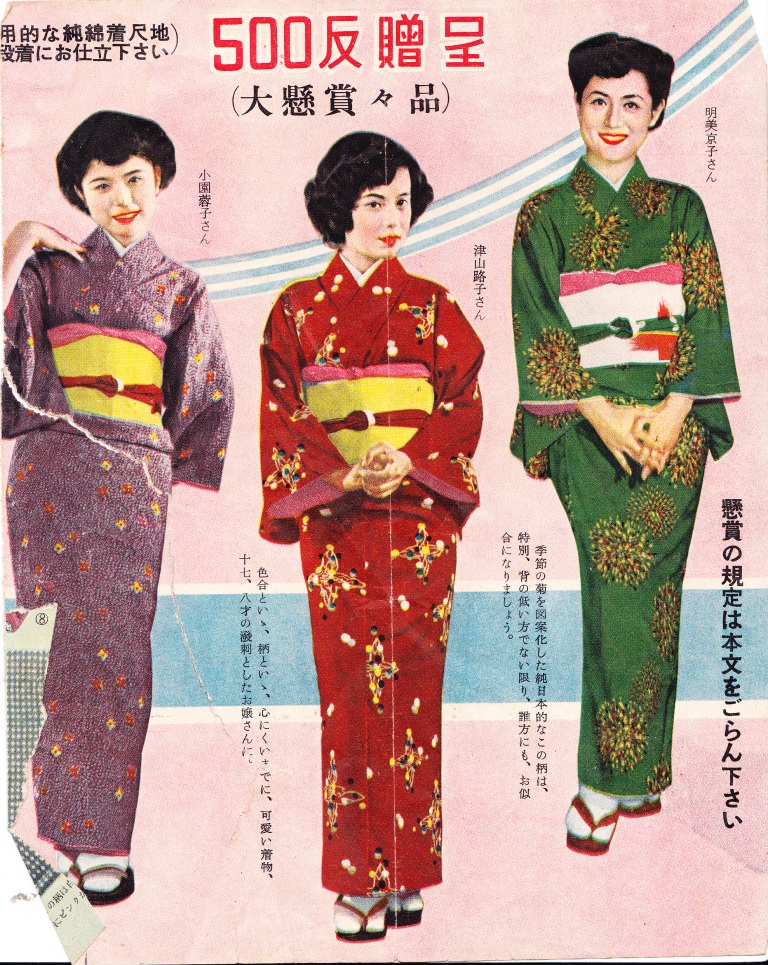
Just to be in the Japan mood- here are some amazing vintage posters from Wafu Works…

1950's japanese bride 2

cards_0008

1950's kimono

cards_0003