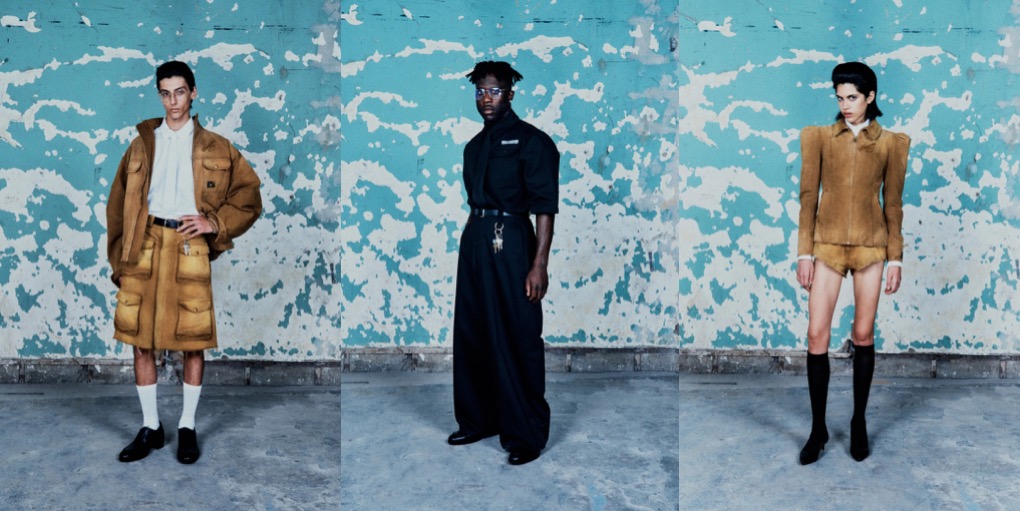
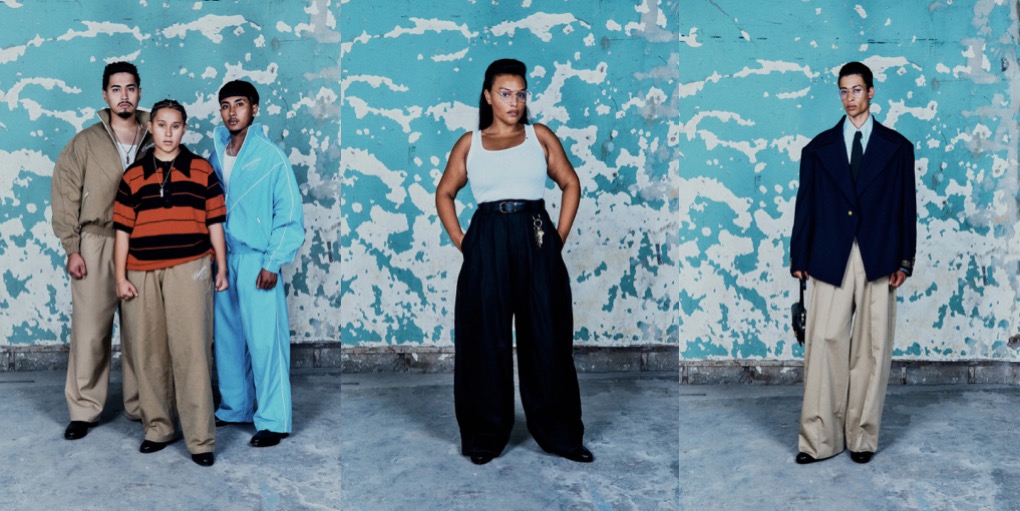
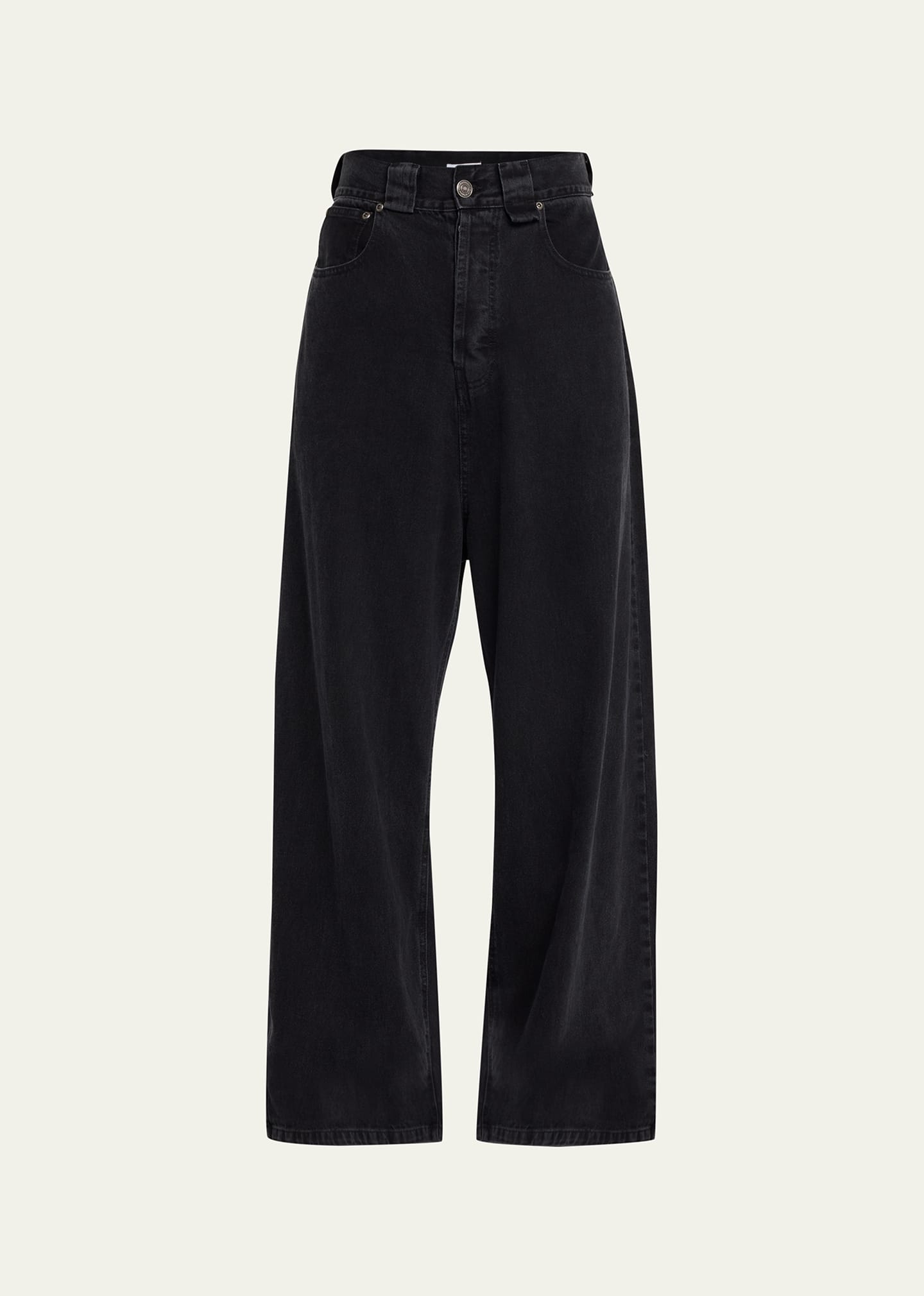
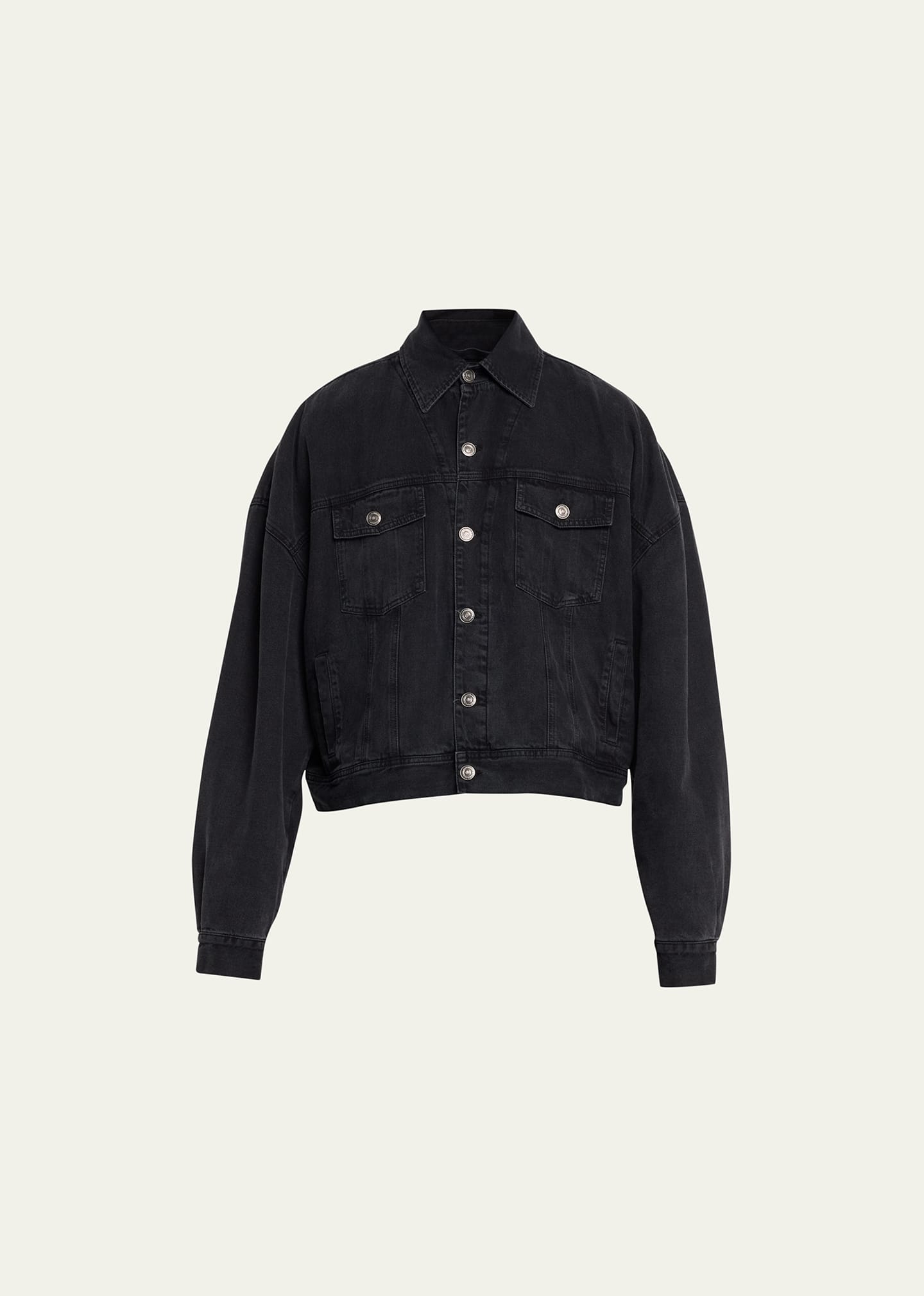
In New York, brands either do clothes for the sake of clothes or create fashion that has a meaning (but then the “clothes-making” part often stumbles). Willy Chavarria is a rare example of a designer who does both seamlessly, creating garments that are amazingly tailored but also give you real food for thought. In his spring-summer 2025 fashion show, the models walked out, in a single file, with the American flag as the monumental backdrop. What came across was a voluminous yet exact silhouette that was a callback to the uniforms of the American working class – hotel workers, concierges, construction people, foremen. And so there were balloon sleeves on classic zip-up jackets, tonal shirt and tie combos, cotton duck work fabric turned into tailored Victorian jackets with princess sleeves or baggy cargo skirts, and really good denim pieces . Many of the looks were accessorized with a set of keys – and a little crucifix – dangling from a belt loop. Within the context of the show it seemed like a plea for America – or rather “América“, as the collection was titled – to be more like the promised land everyone imagines it to be. “This [season] is all about power to the people,” Chavarría said. “It’s this country through the voice of the immigrants, and the people who make this motherfucker run.”
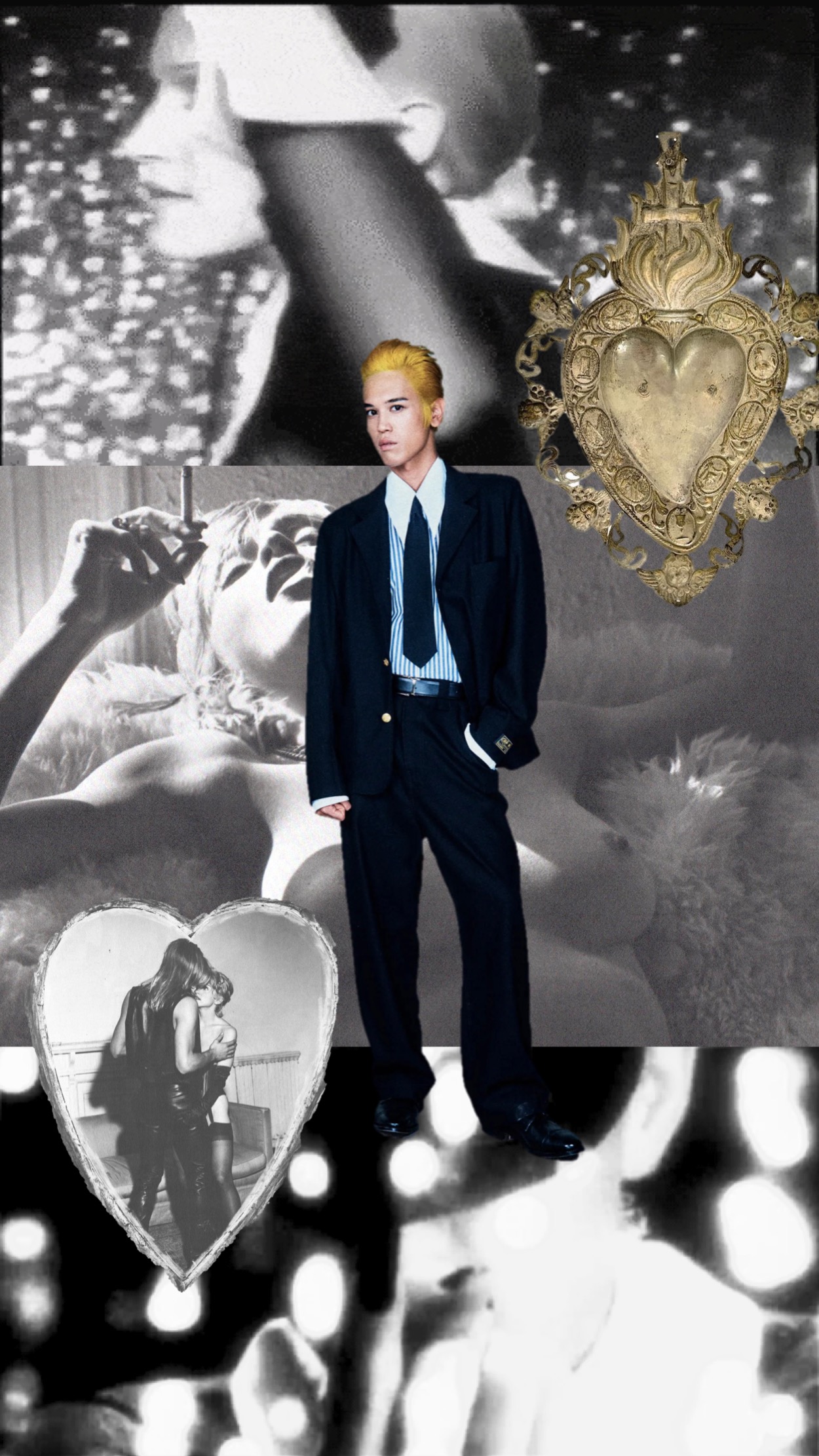
Collage by Edward Kanarecki. Don’t forget to follow Design & Culture by Ed on Instagram!
Hey, did you know about my newsletter – Ed’s Dispatch? Click here to subscribe!
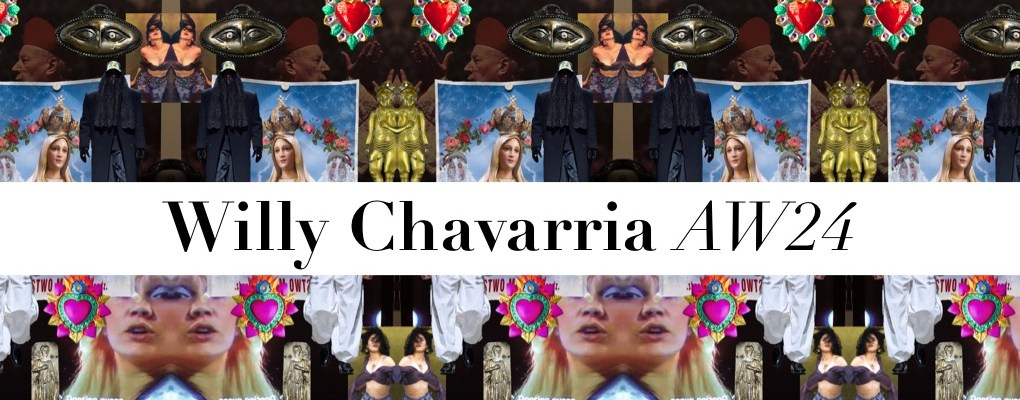
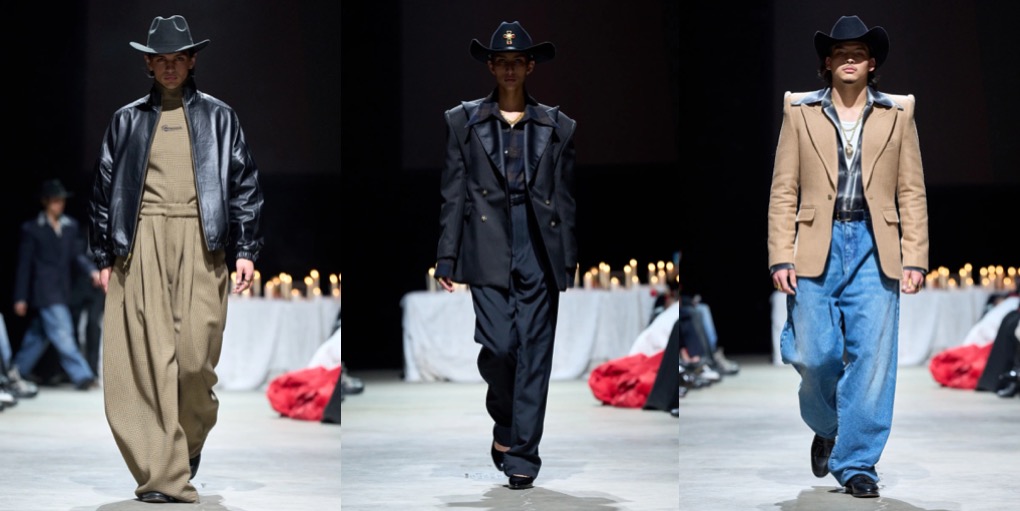
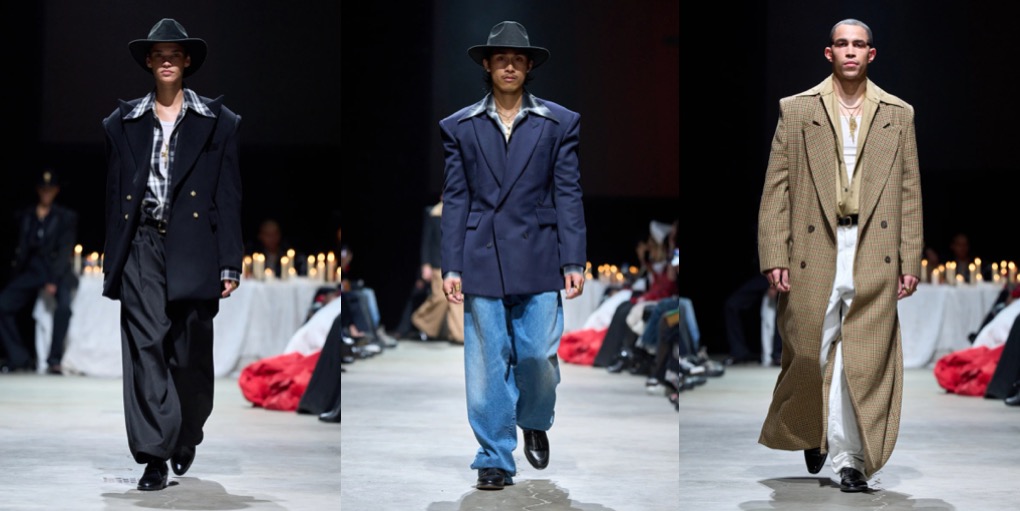
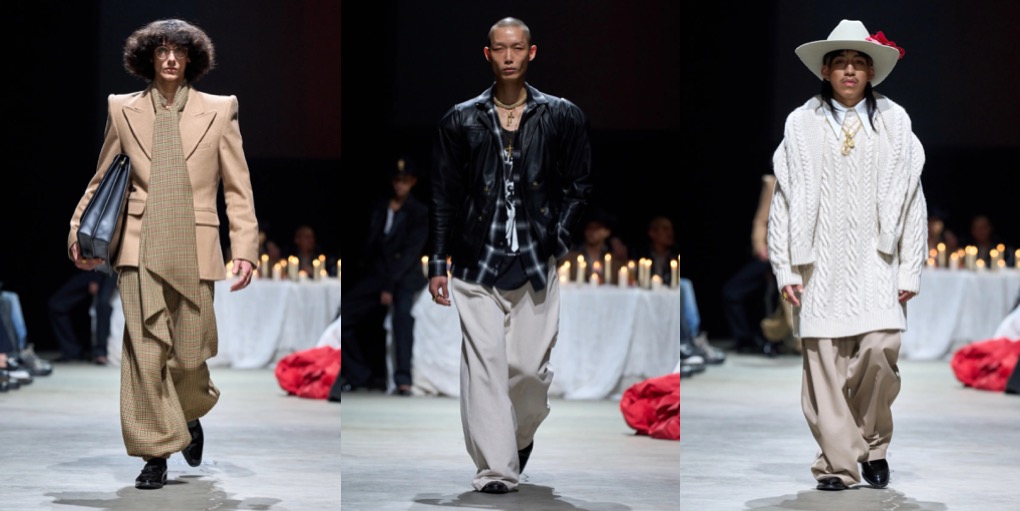
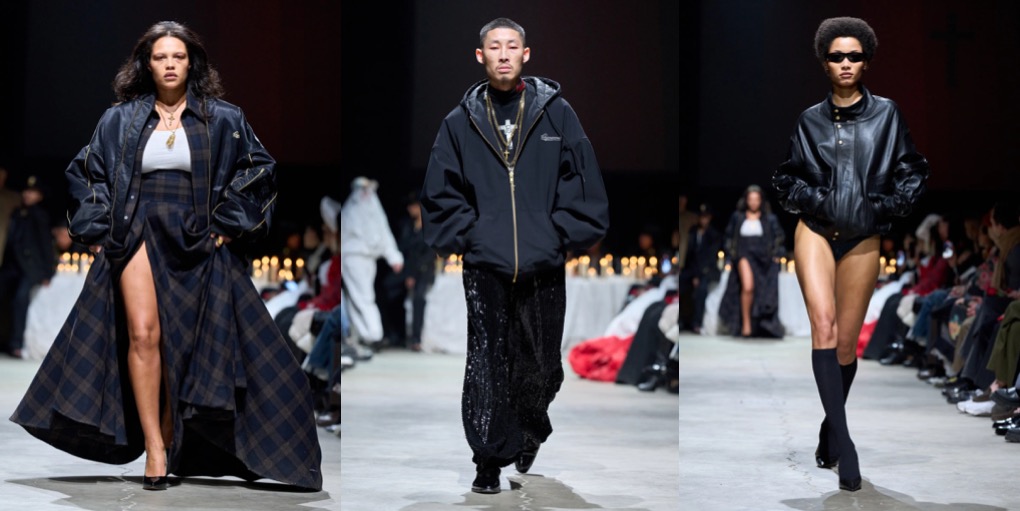
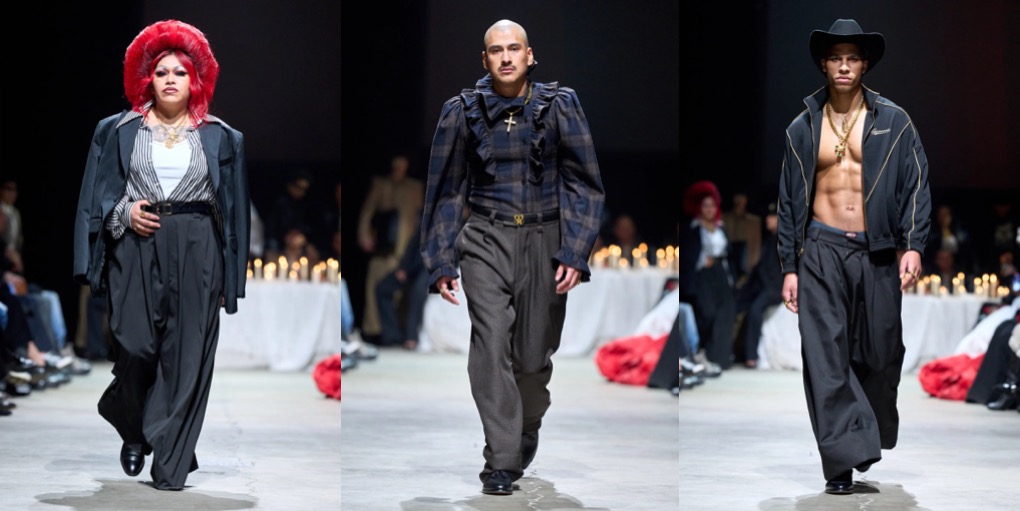
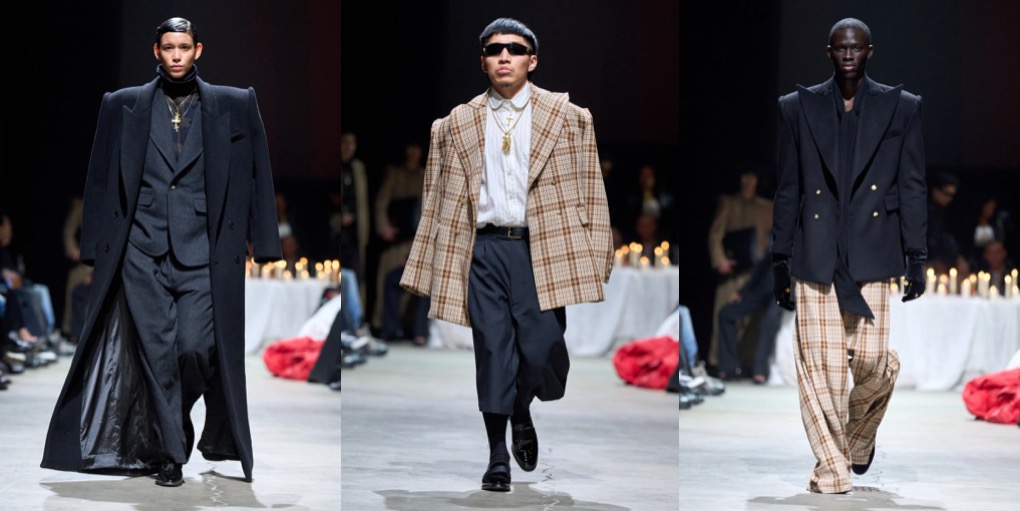
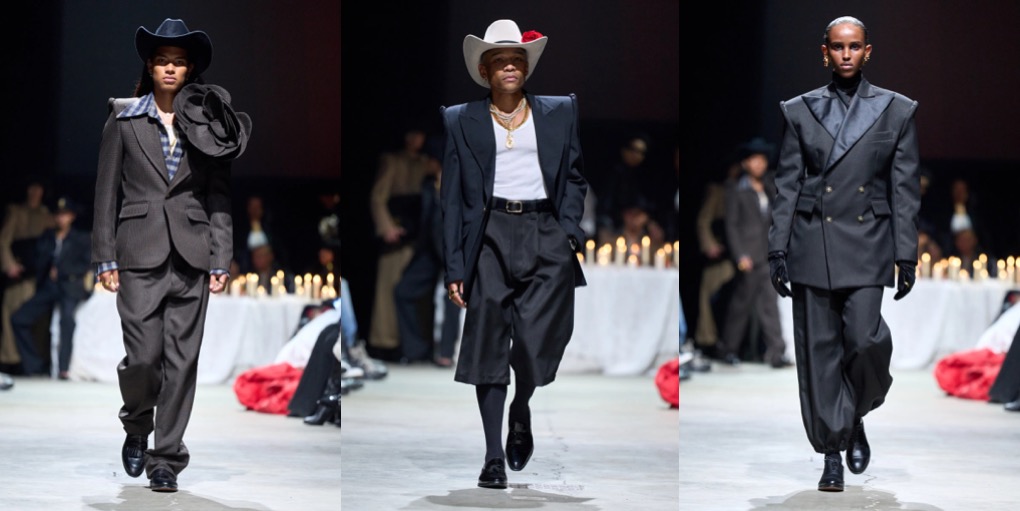
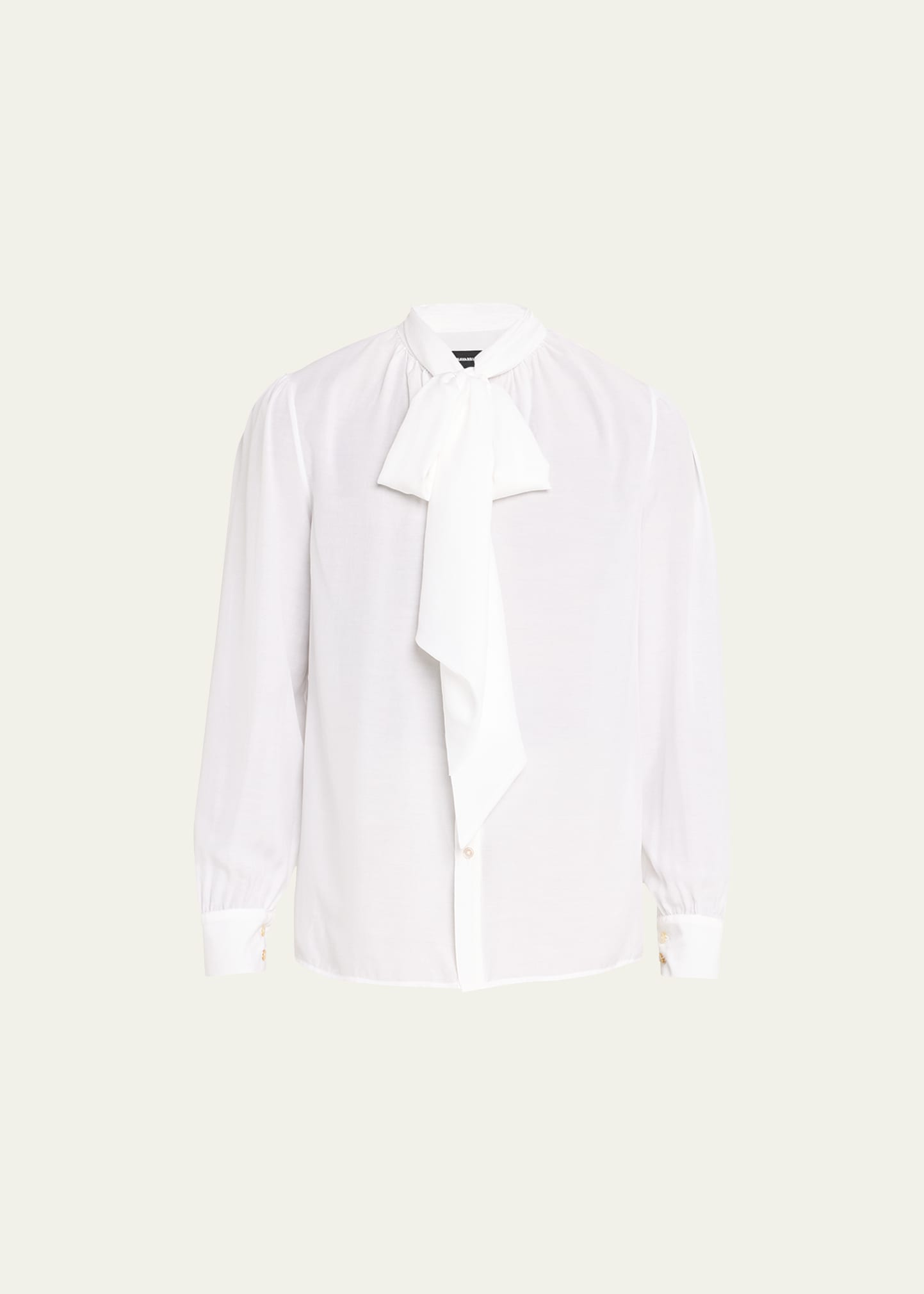
Willy Chavarría‘s fashion show was so far the strongest moment of this New York Fashion Week. It started with a film, titled Safe from Harm, played on a screen behind a long table covered in a white lace tablecloth and filled with altar and votive candles like an offering. Directed by Chavarría, the film told a story of support and safety. As a diverse array of characters moved from space to space in an old house, working out, cooking, dressing up, letting emotions out, and comforting one another, it was a family affair. As the film came to a close, models emerged on the runway, seemingly stepping straight off the screen. This was a much-needed moment of action amidst all the overly minimalist, dead-serious shows in New York. For autumn-winter 2024, Chavarría expanded his sartorial vocabulary, borrowing from the particular glamour of the 1980s British upper crust, especially through his use of luxe plaid and houndstooth wools which he contrasted with leather jackets and biker details. The way the designer executed his signature jacket with an extra-wide shoulder worn with a houndstooth pussy bow blouse is just sublime. Highlights of the collection: black and white lace veils worn under caps and styled with either a black, over-sized coat or an all-white tracksuit. Chavarría subverts the codes of Catholic imagination like no other contemporary designer. As the models reached the end of the runway, they arranged themselves behind the aforementioned table, like an updated version of The Last Supper, with Chavarría himself taking the final position in the middle after the finale bow. After the applause died down and the models exited the runway, there was a sudden silence, and everyone remained in their seats, as if expecting an encore. Then, a second round of rapturous applause erupted. The reign of Willy Chavarría is really just getting started.
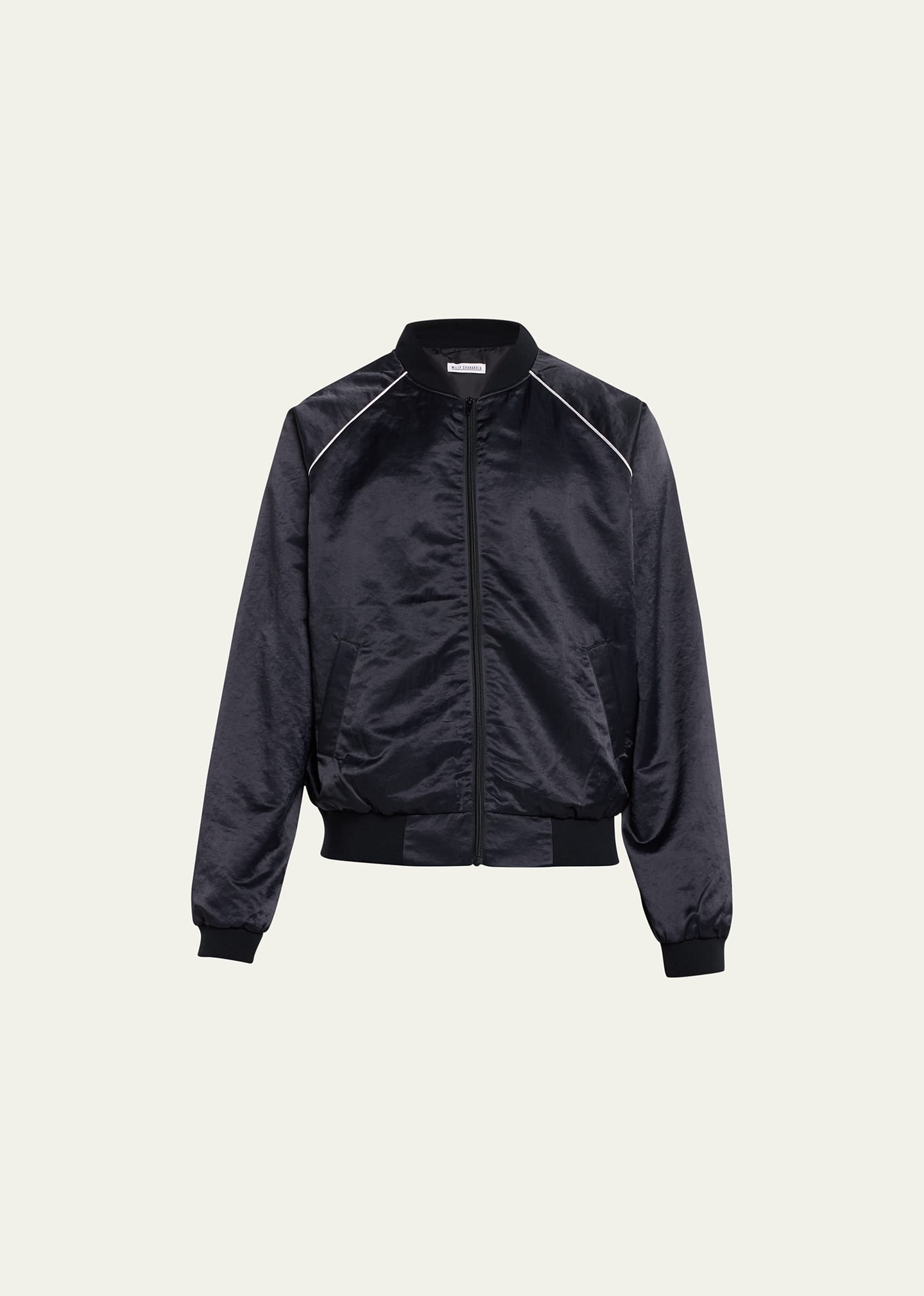
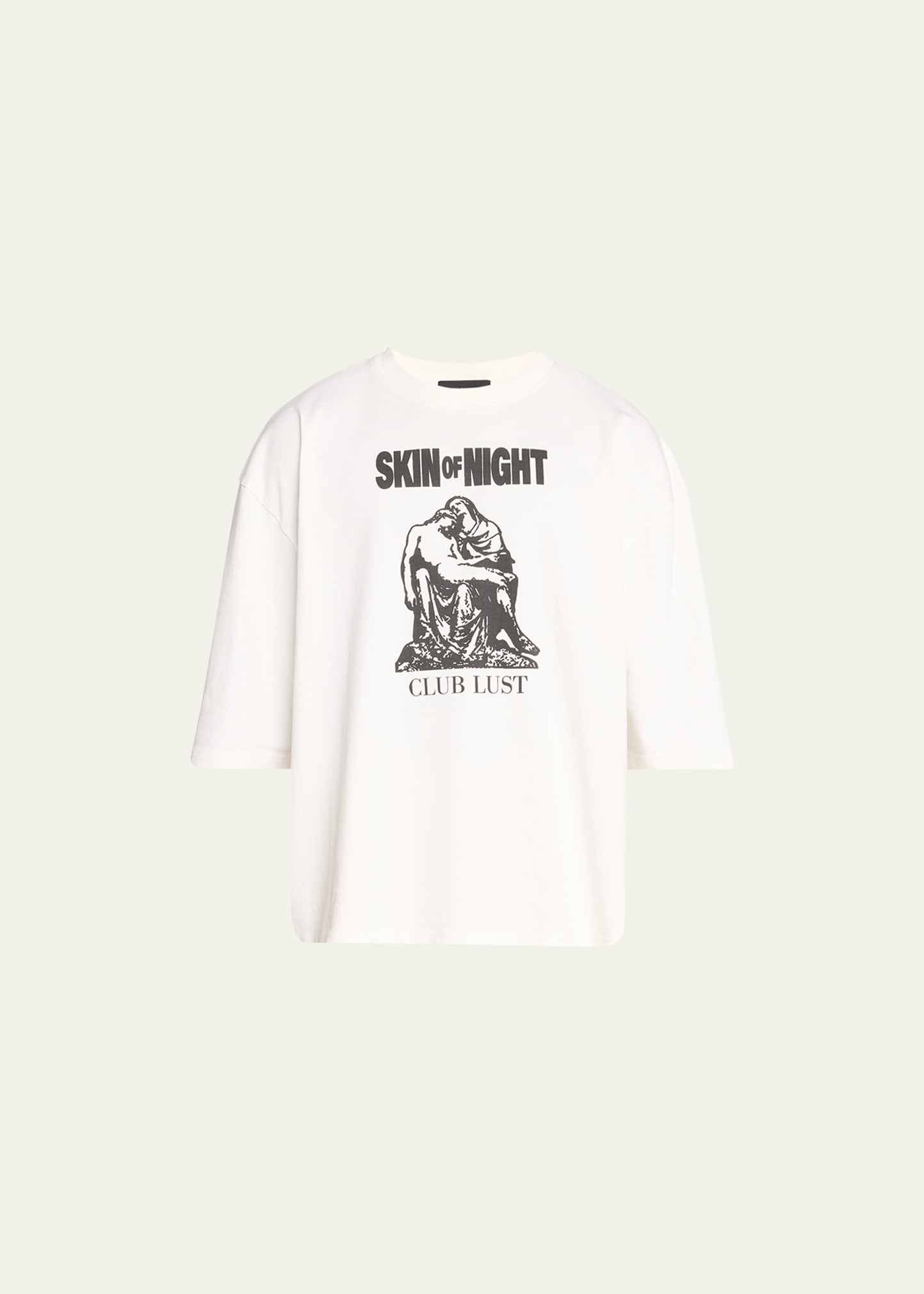
Need some Willy Chavarría action in your wardrobe?
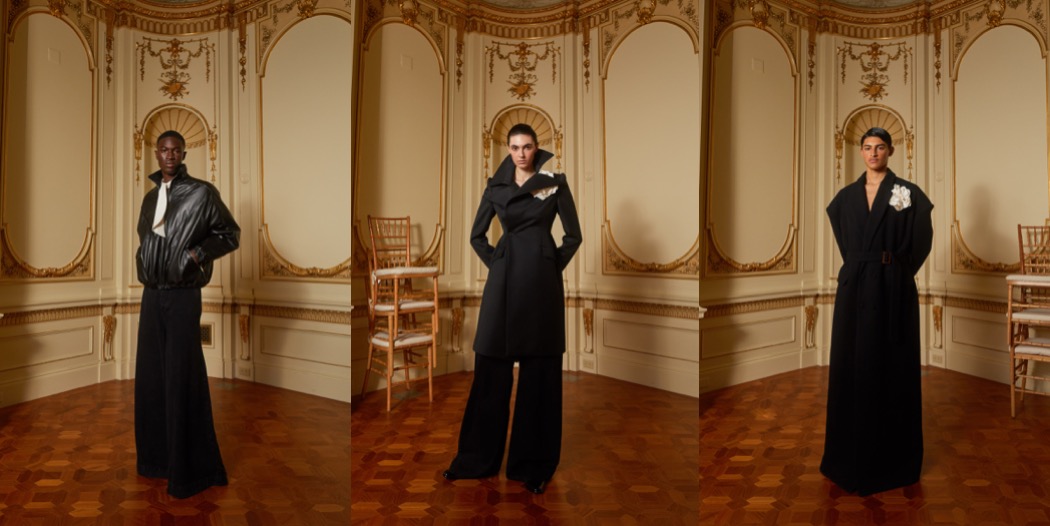
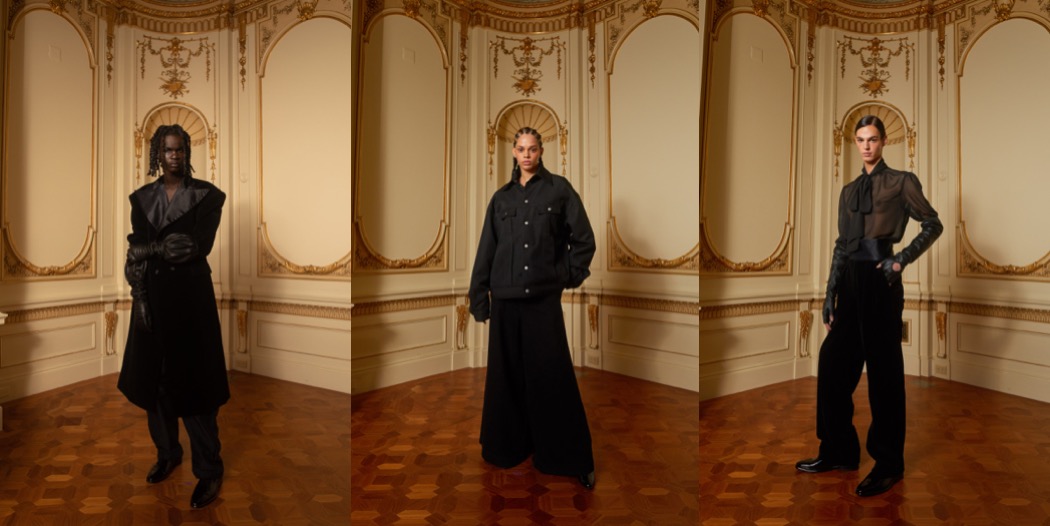
In Willy Chavarria‘s fashion show, models of all genders descended the grand staircase at the Cooper Hewitt museum looking absolutely beatific. The first look was an airy silk blouse with a pussy bow, tucked into Chavarria’s characteristically wide silk satin trousers. But it was the second look, a black trench coat with a nipped waist and a dramatically curved lapel collar that half-covered an oversized white gardenia pin and perfectly framed the model’s face that set the tone for the devastating beauty that followed. “Something I’ve been thinking about over the last few shows is really making sure that I’m learning and growing and not just delivering a new season,” Chavarria explained. “Not just thinking ‘okay, I got a new season, a new color palette,’ It’s more like, what is the climate of the world at this given moment?” Unsurprisingly the answer to that question led him to think about protection. “It’s a story of love and protection,” the designer said. A few pieces recalled mourning attire of the late 19th century, especially the slim jacket-dresses with gathered empire waists, and the dress worn by Doria Wood for their performance. The all-black collection was punctuated by shots of white. White shirts were cut from a stiffer textured oxford cloth rather than lighter poplin. They had dramatic oversized bows that held their folds and ties. Italian velvet was cut into a double breasted jacket with a contrasting satin lapel – its shoulders extending past the natural shoulder line but in a gentler curved shape rather than the angular shapes of seasons past. Another velvet jacket was lined in white satin which extended into the contrasting lapels. Although the show had a decided eveningwear focus, there were traditional ready-to-wear pieces in the mix and they retained the romantic mood of the collection. An oversized polo shirt in black satin was tucked into jet-black Dickies (an ongoing collaboration). A black denim jacket had a delicate gather in the back, and a heavyweight work jacket and matching pants were paired with one of the oxford cloth shirts with exaggerated bows at the neck. There was a sort of elegance in Chavarria’s refusal to fully embrace the rules of formal dressing. The offering might have looked similar to this recent Saint Laurent collection, but it’s coming from a totally different place.
Collage by Edward Kanarecki. Don’t forget to follow Design & Culture by Ed on Instagram!
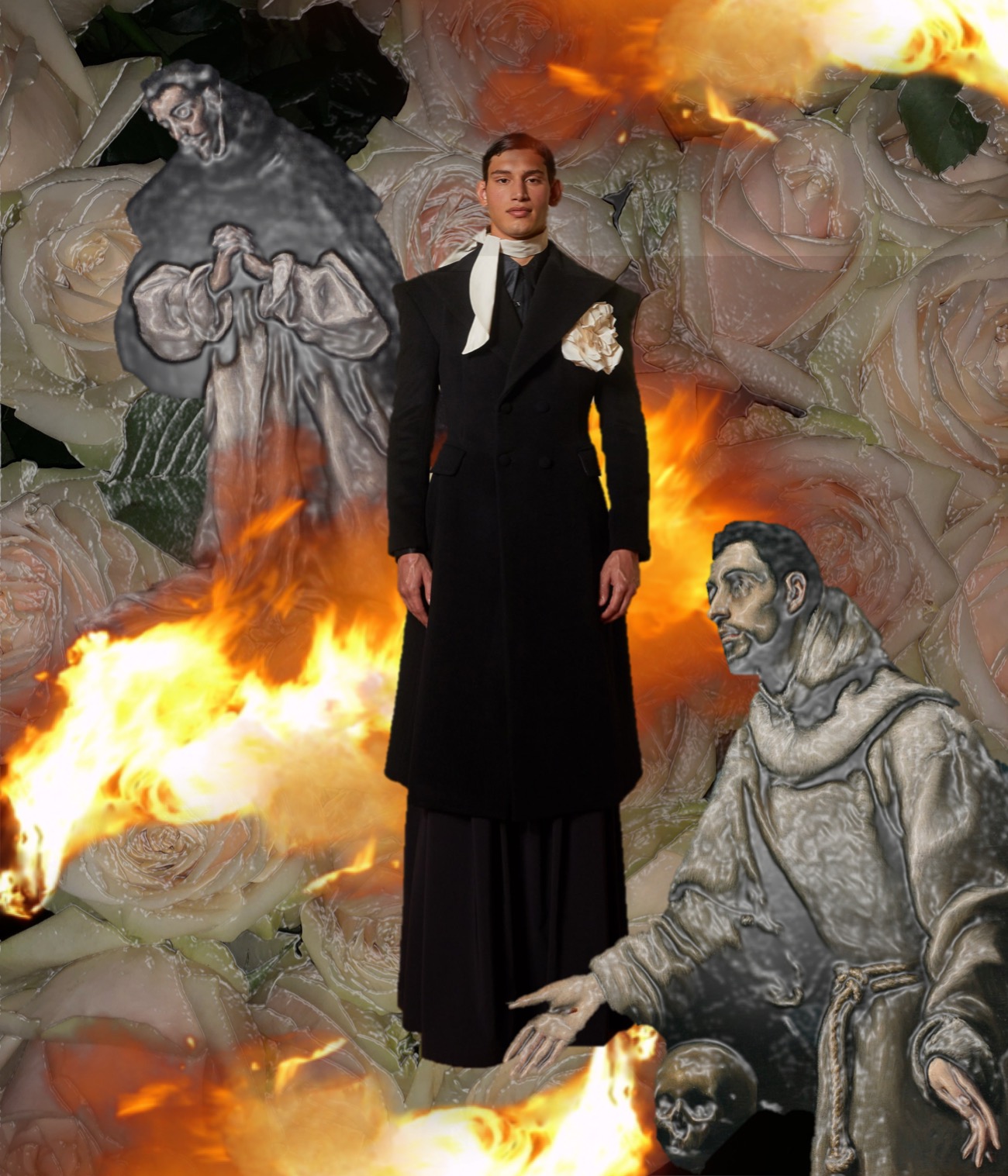
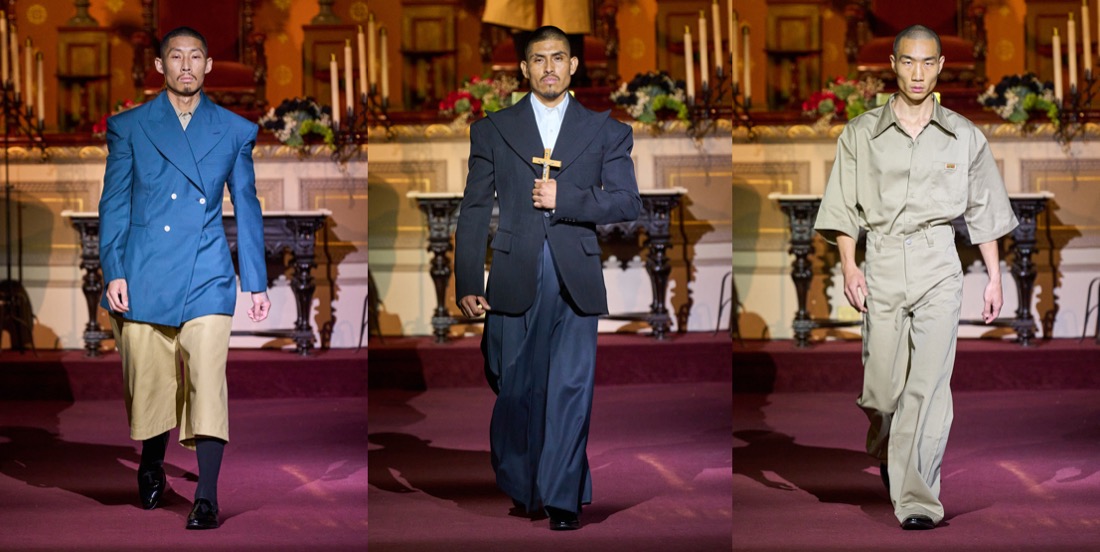
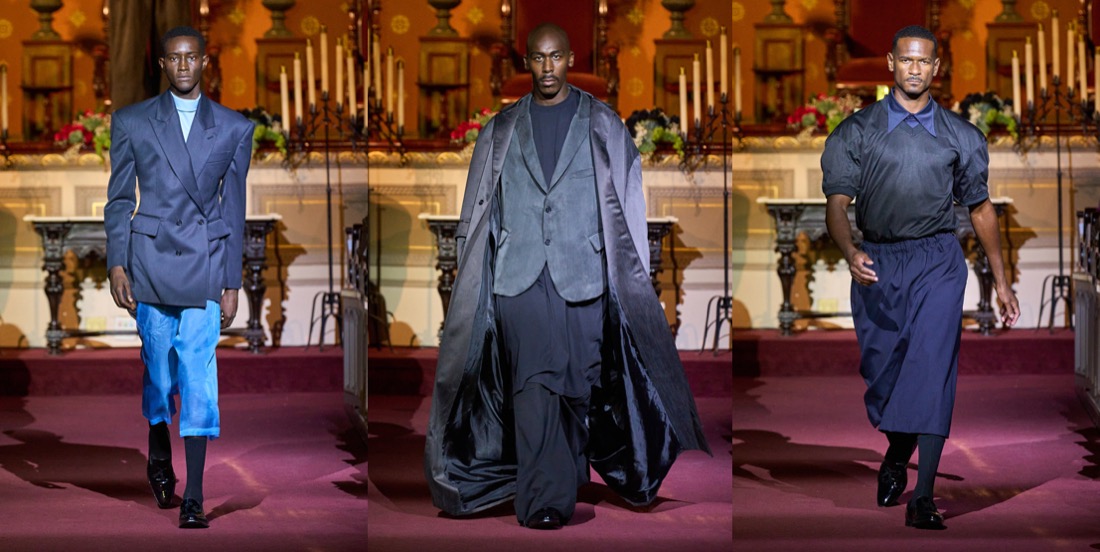
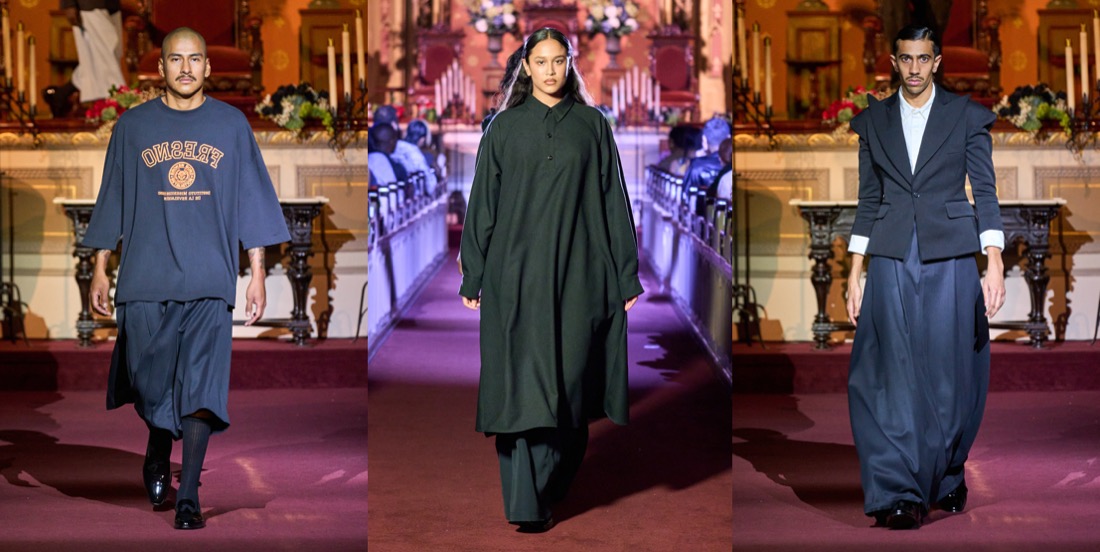
Willy Chavarria took us to church (the Marble Collegiate Church in New York, to be precise) for a show that mixed his signature larger-than-life silhouettes with exquisite tailoring. It opened with a beautiful song performed a cappella in Spanish by Dorian Wood about the way borders keep us separated, which could be read literally but Chavarria meant it more metaphorically. “The song is about the division in our world,” he explained backstage afterward. “If you noticed in the show, the actors were divided by ethnicity, and that was not only to represent the division that we are experiencing, but to show the solidarity within the culture. To show the strength of people when they’re unified.” First, a group of men wearing extra-long T-shirts and Dickies walked out and placed bunches of roses on the altar. The first look was a navy tailored jacket with strong, wide shoulder pads that were situated ever so slightly beyond the natural line of the body, which worked to create a great amount of tension against the extra-long lapels that extended past the top of the torso. Its intersecting lines alluded to the Chi Ro symbol, also called a Christogram. The model, who wore a collared shirt and pleated wide-leg trousers as well, carried a cross at the center of his chest with one hand.
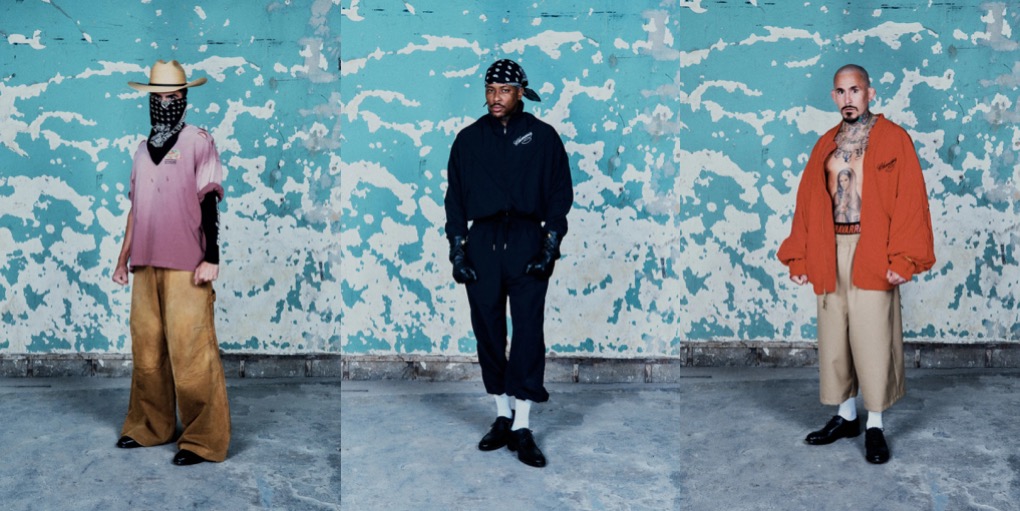
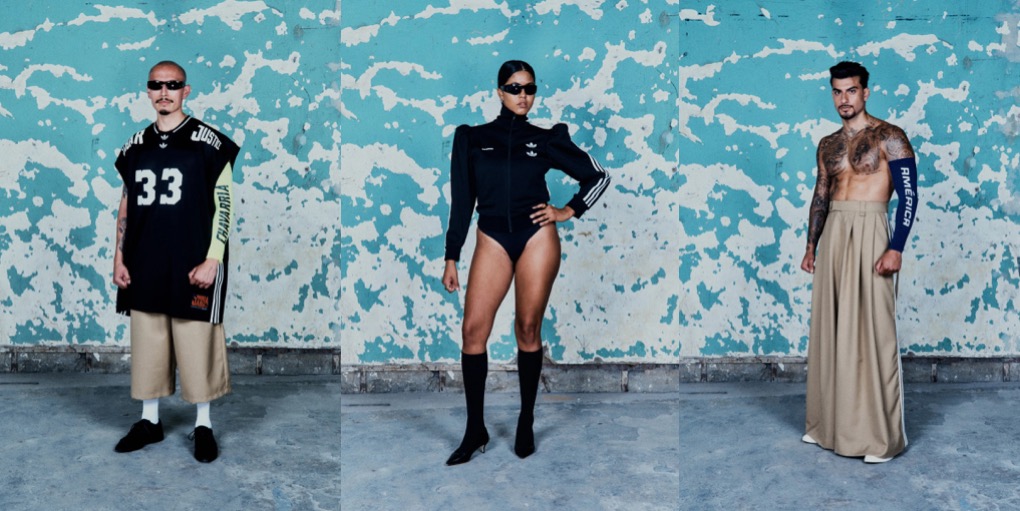
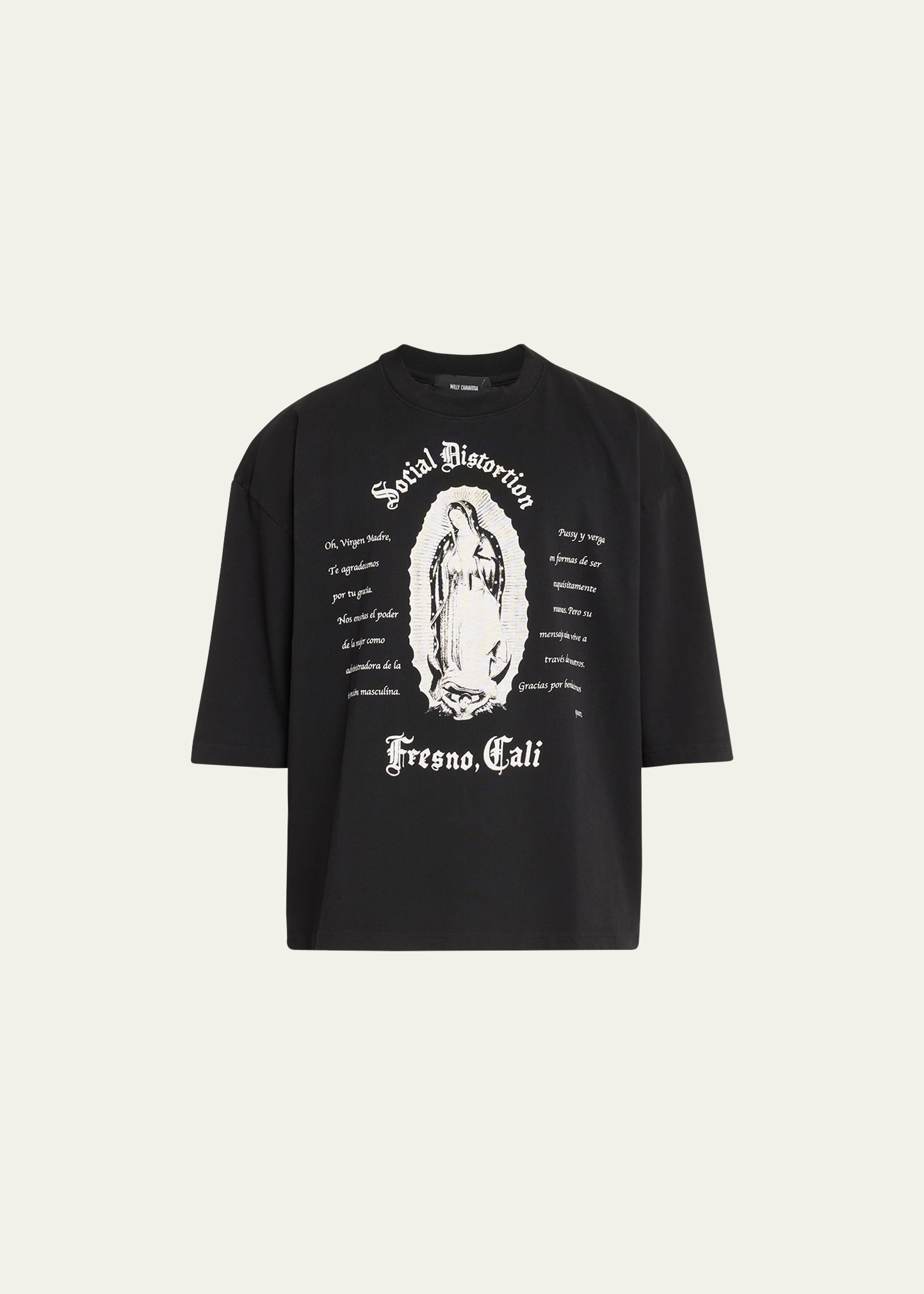
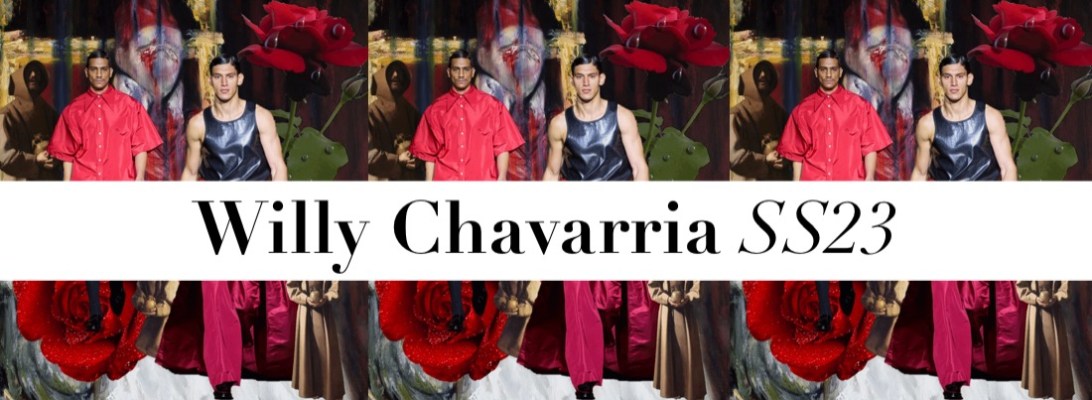
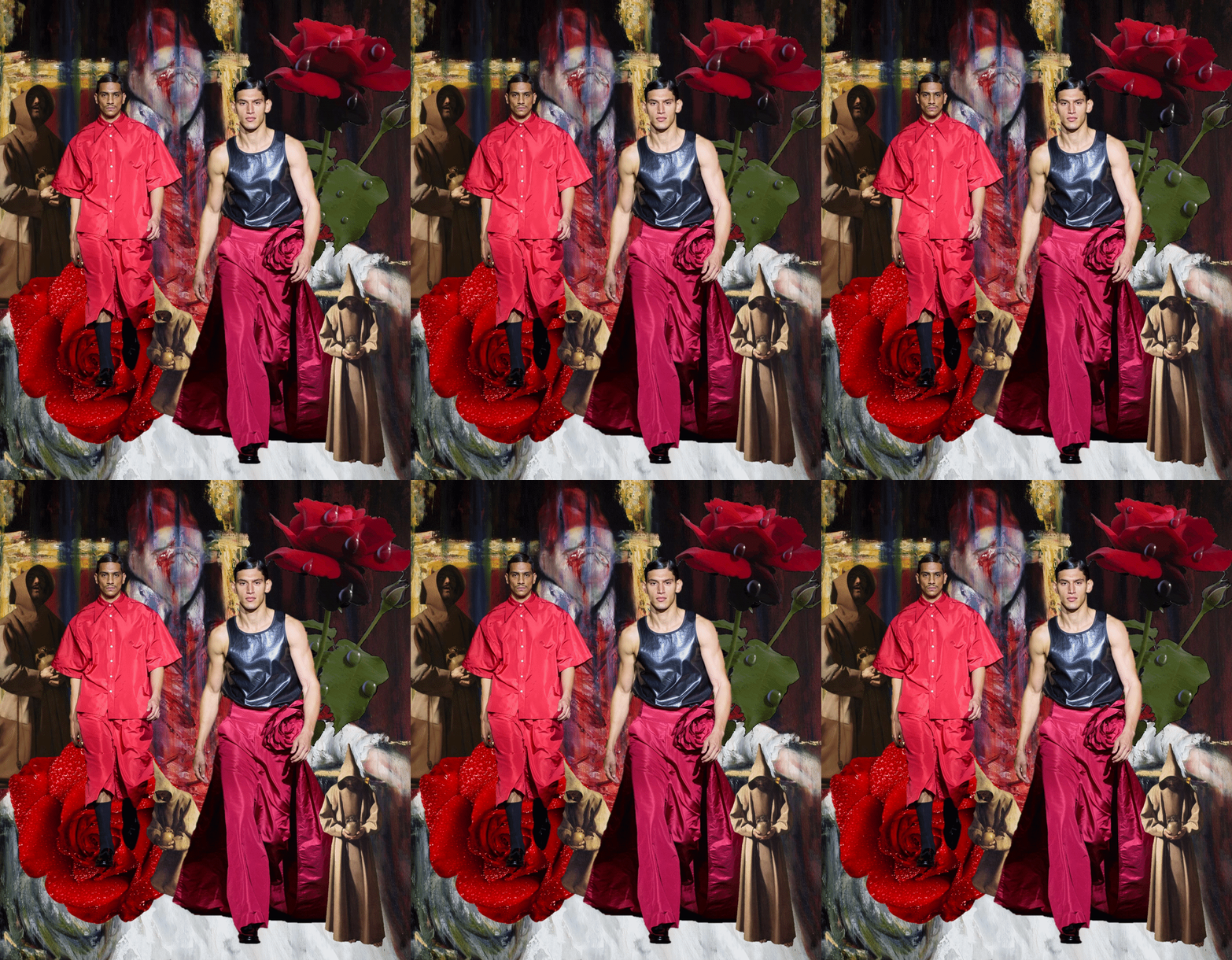
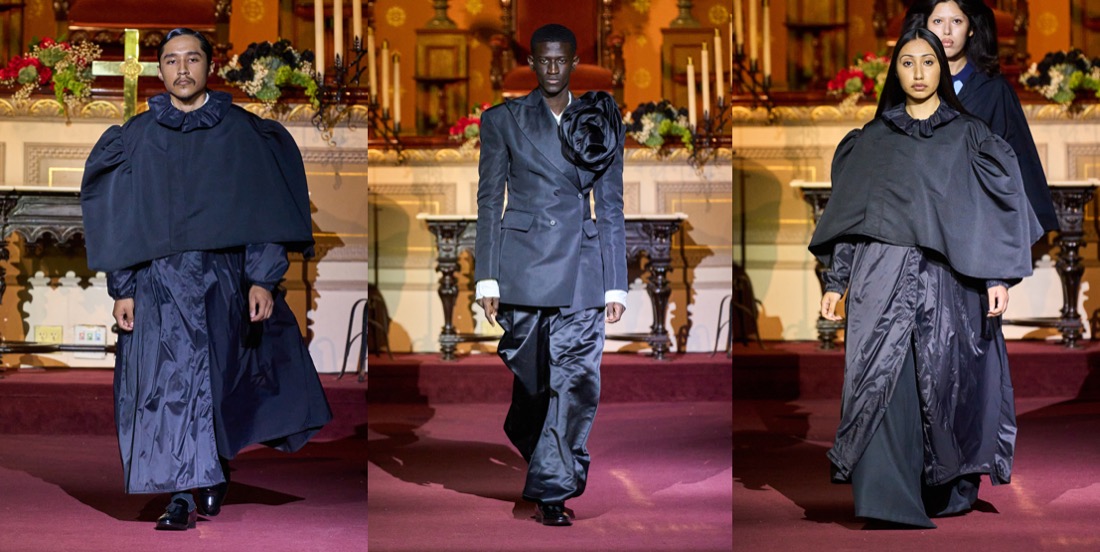
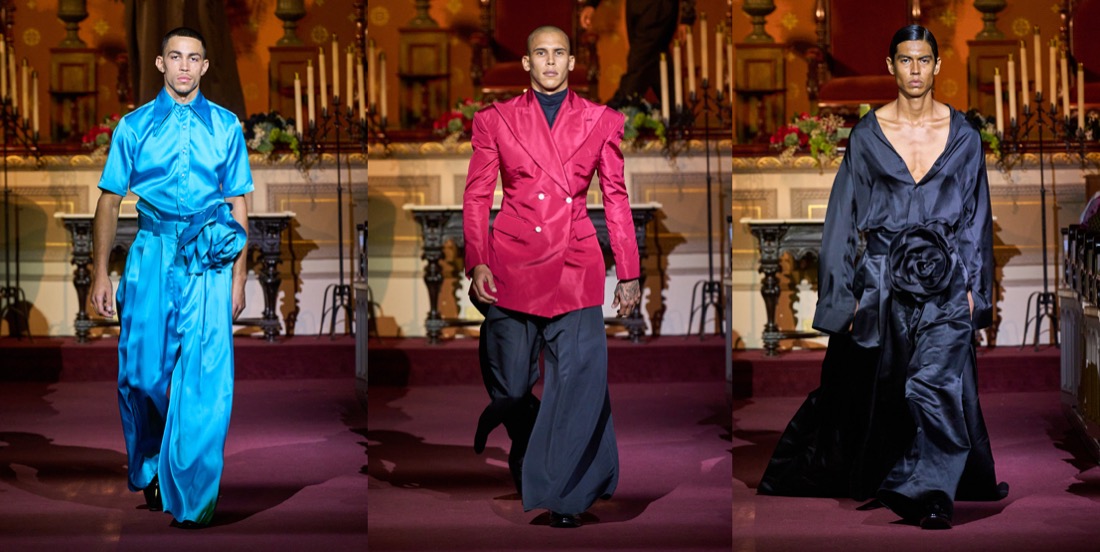
Chavarria, who recently won the National Design Award for Fashion Design, has always favored volume and extra-large silhouettes as a way to “reclaim [the] space that has been taken” from people of color, but there was a new level of softness and sensuality woven through his collection this time around. Though it was always played against more traditionally American masculine elements like varsity logo T-shirts and football jerseys, which he turned into short, princess-sleeve tops and layered over short-sleeve button-down shirts and paired with a skirt. Men wearing robes and dresses has been normalized on menswear runways, but it was interesting to see how, in the context of a church, the silhouettes completely changed meaning and were imbued with a sensibility that hinted at both a uniform as well as tradition. “The first piece I did [for the collection] I called the altar-boy cape, and I just had it on a mannequin in my studio for a long time as the rest of the collection came about, so it’s funny that the collection became as spiritually tied as it ended up being,” said the designer. The capes were worn by both male and female models who came out in a group halfway through the show. The absolute star of the show was a group of gorgeous fine-tailored pieces, like the slightly asymmetrical double-breasted silk tuxedo jacket with a giant fabric rose on the left shoulder, worn with fluid satin trousers. The rose also appeared on red silk taffeta trousers, complete with a ball gown–esque train and paired with a black leather tank, and again on a pair of extra-wide black satin trousers and matching button-down shirt, worn open at the chest and falling off the shoulders. “I felt like this was a show about good and evil,” the designer added. “Coming from a religious background, I’ve always been a firm believer that good out-wins evil, [but] I felt like there’s almost a loss of God right now in the world.” If it’s true that God is love and beauty, then this fashion show took us a little closer to heaven.
Collage by Edward Kanarecki. Don’t forget to follow Design & Culture by Ed on Instagram!








 Design & Culture by Ed