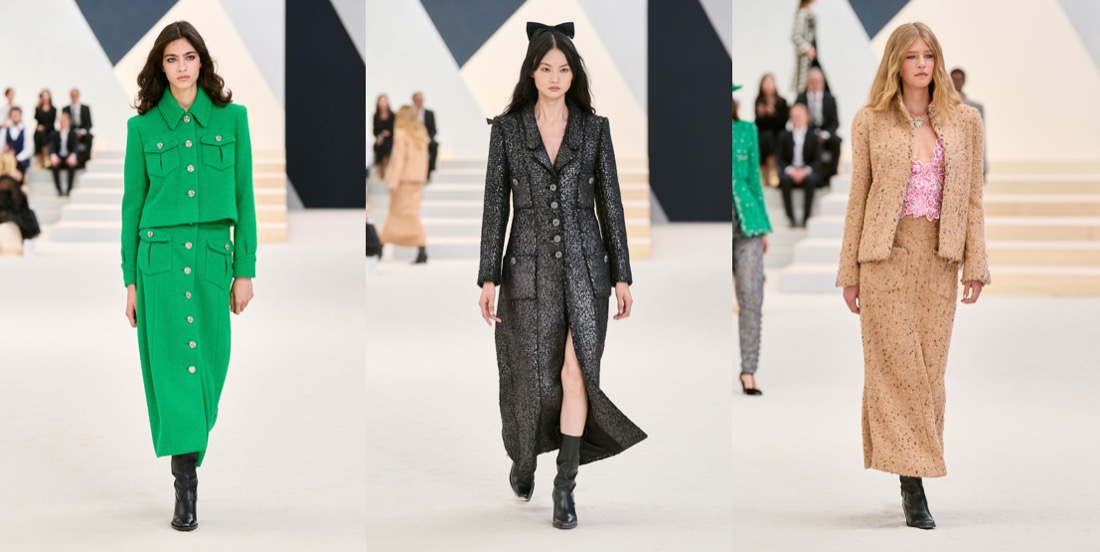
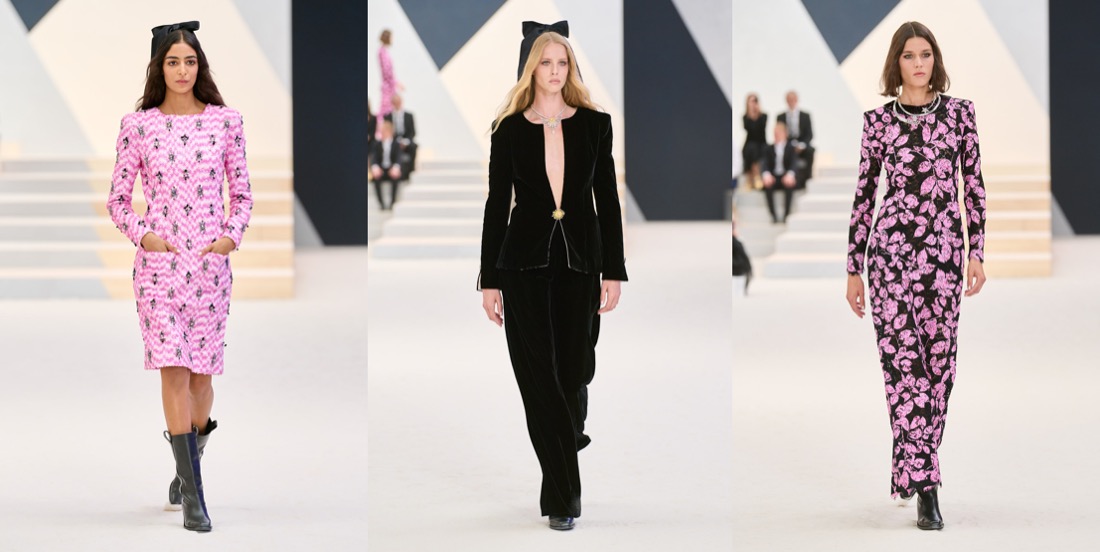
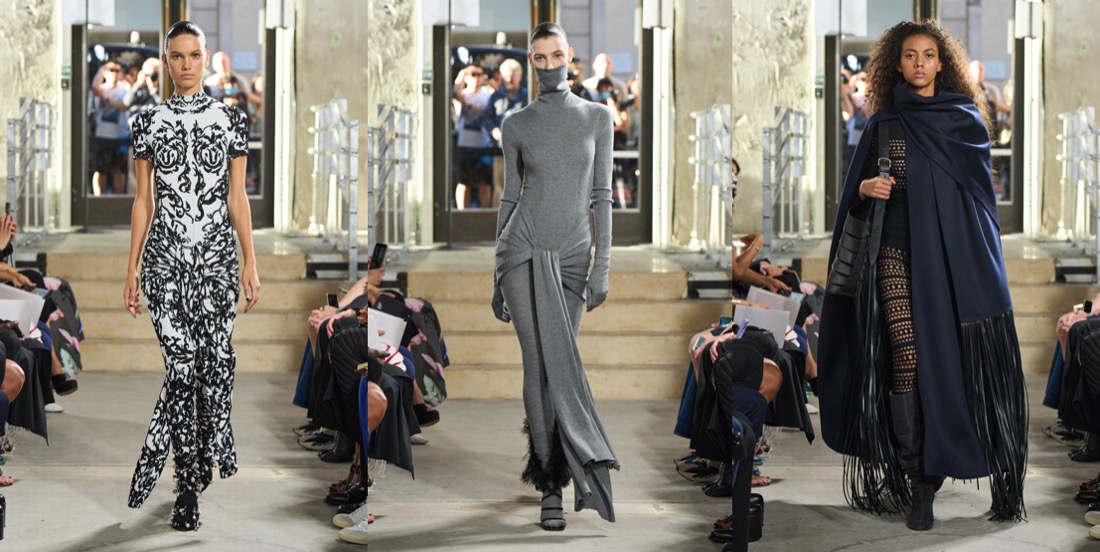
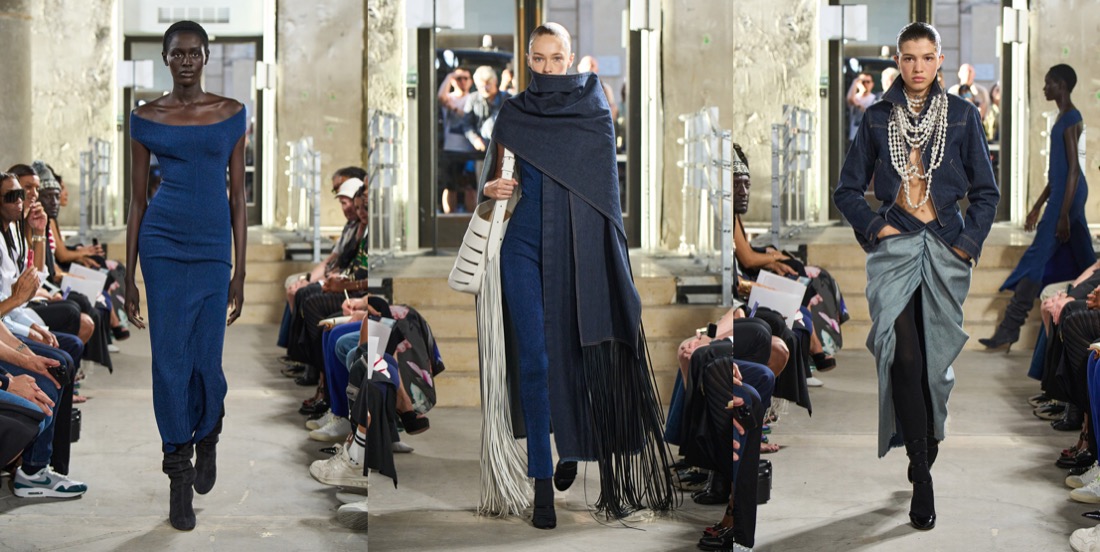
The Beginning. Valentino AW22 Couture

Amada mia, amore mio! Ah! ah!

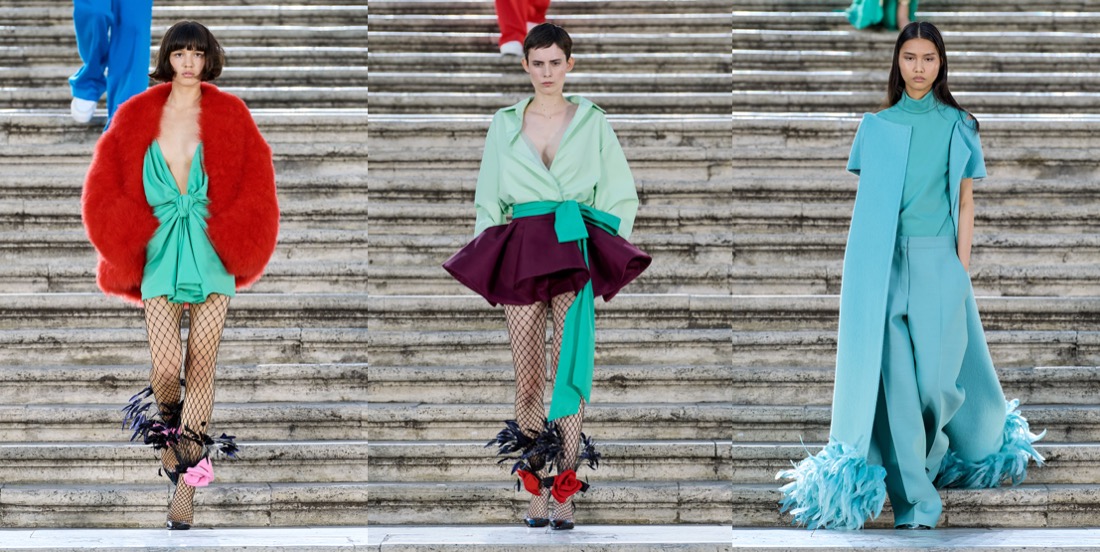
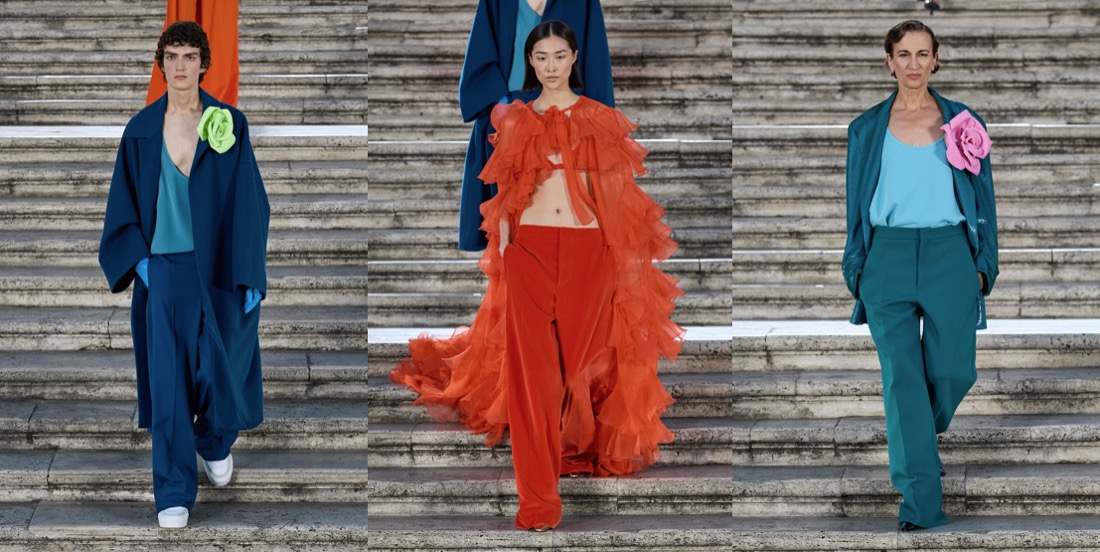
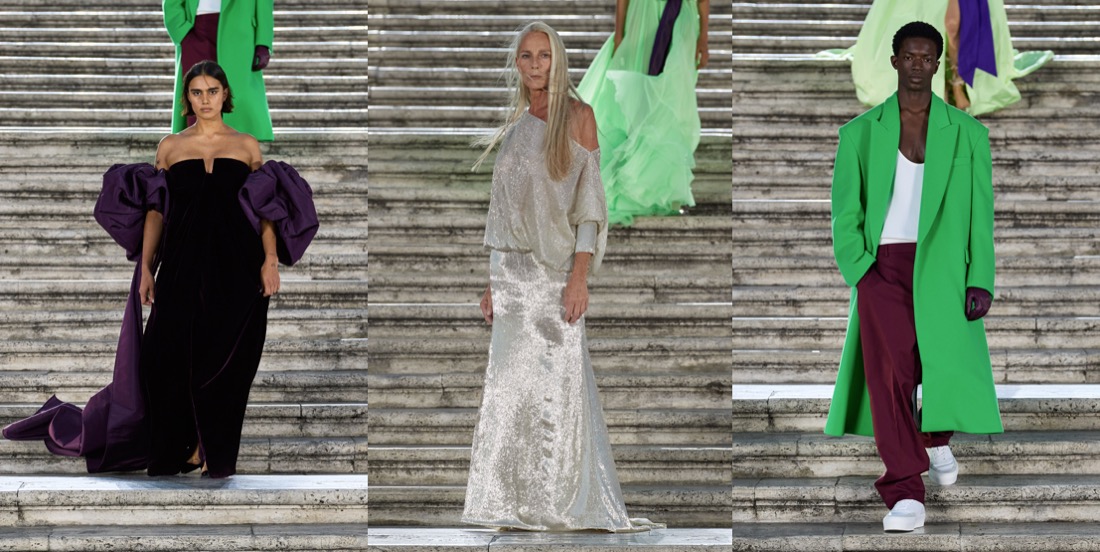
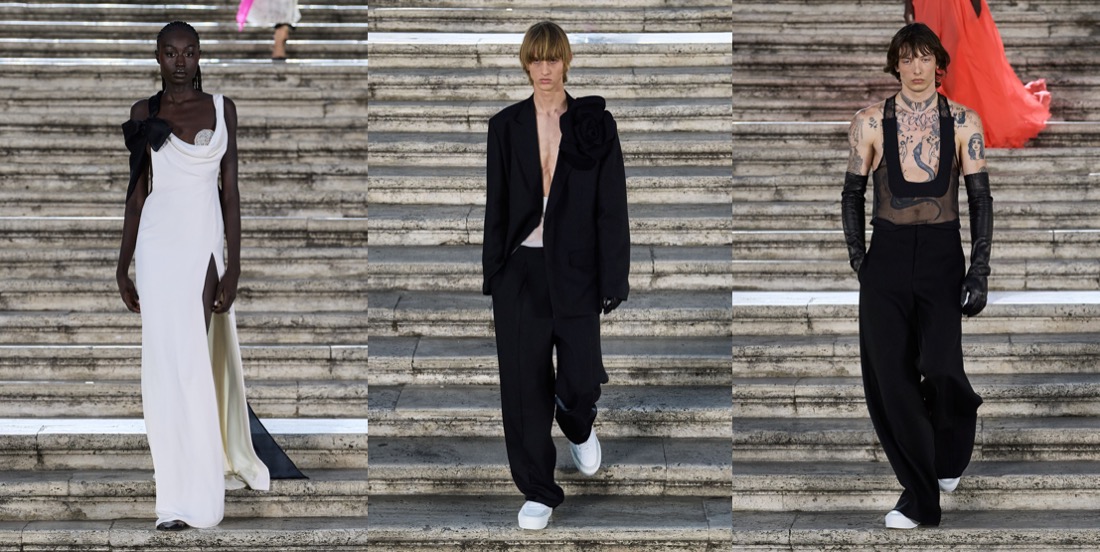
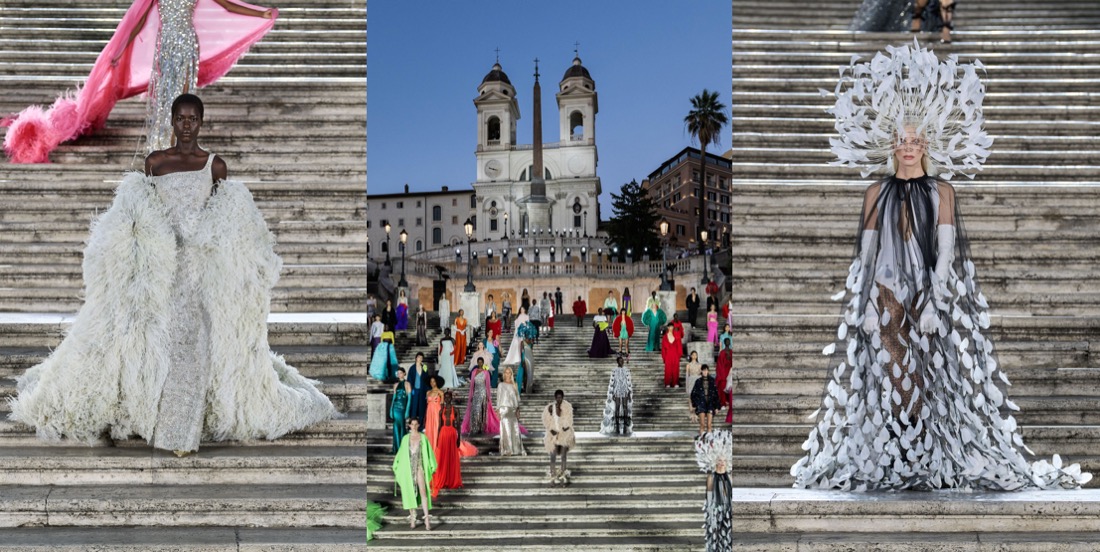
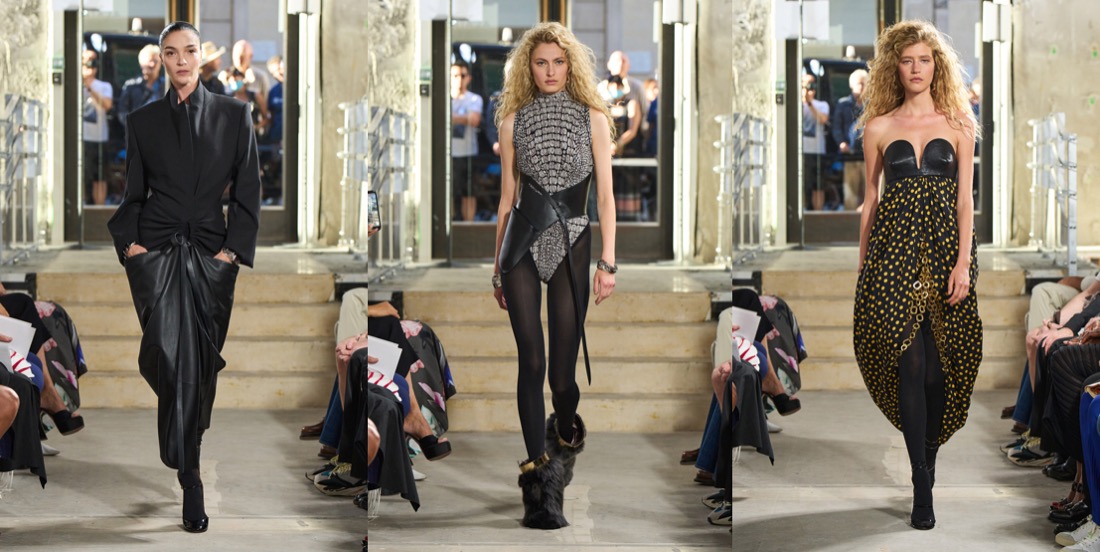
For Valentino’s spectacular autumn/winter 2022 haute couture show, creative director Pierpaolo Piccioli returned to Rome, where Valentino Garavani founded the storied maison back in 1959. Otherworldly bodies descending from the Spanish Steps in the golden evening sun, the romantic voice of Labrinth echoing from beneath the Trinità dei Monti… well, that was a scene. “I start from the finale, always,” Pierpaolo Piccioli said during a preview in Paris days before the show. “What I have in mind is these liquid, colourful drops coming down from the Steps, the volumes light and in movement.” He titled his show The Beginning: a return to the city where Valentino Garavani founded his maison, a place that has moved with the winds of change since the dawn of time. Like Piccioli’s Valentino, Rome’s codes may remain the same but its values are in eternal evolution. That was the sentiment behind a show he envisioned as “a conversation with Valentino” across the past, the present and the future. Piccioli had been dreaming of doing a show on the 18th-century steps. “It’s very personal. The last time Valentino did a show on the Spanish Steps was in the 1990s. It was a different moment in fashion. It was about lifestyle and the perfection of beauty, the glamour, the supermodels,” he reflected. “I wanted to get the spirit of Valentino – the joie de vivre – because I think it’s the only way of making beauty resilient to the time. On the other hand, there’s a picture I want to deliver, which is different from what it was 45 years ago. It’s the picture of what we live in. The Spanish Steps are the same, the atelier is the same, and in the end, clothes are clothes. I like to keep the rituals of haute couture. But the real difference is in the casting – in the humans – that can tell stories and witness a different moment in this world. I want to empower them and give them a voice and the opportunity to tell their own stories.

Piccioli’s approach to the show manifested in a collection that didn’t just poeticise the decades-long legacy of Valentino Garavani, but his own contributions to the house. Rather than pursuing newness, he reflected on what Valentino stands for after 14 years under his own artistic directorship (and 23 years as an employee). Unless you’d spent those years under a rock, you’d immediately recognise the resplendent volumes of his dresses, suits and coats, the hypnotising hues of his gem colours, and the drama of his plumed headpieces bouncing like jellyfish in the stream of the Roman evening breeze. “I wanted to do a reflection about how much of myself is in Valentino, and how much of Valentino is in my identity,” he said. “It’s everything I’ve already done but in a different place.” Piccioli’s era at Valentino has followed a time of political divide when the progressive values he fights for – the diversity, inclusivity and self-expression represented in his casting – are contrasted by a rise of reactionary ideas that has only become terrifyingly evident with recent American Supreme Court rulings. In that sense, moments like the Spanish Steps show – these grand gestures of beauty – are a kind of activism on his part. It may be wrapped in majestically coloured taffeta, three-dimensional geometric plumage painstakingly made to evoke Roman mosaics, or voluminous hand-sequined suits, but at the core of Piccioli’s haute couture is a dream that cuts deeper than mind-blowing craftsmanship. “I believe that it’s my responsibility as a fashion designer to bear witness to the times we’re living in,” he said. “I think that beauty has the power to break through, touch people and their conscience. Taking a radical posture through a strong narration and through images of a world that’s changing has an impact, and gives visibility to values that have to be protected. I believe fashion can be political.” With the likes of Naomi Campbell and Anne Hathaway on the front row the show was testament to the global impact of the new age of haute couture that Piccioli has spearheaded in recent years. But as illustrated by the people who joined them – Valentino’s co-founder Giancarlo Giammetti, Piccioli’s family, and their dog Miranda – it’s a success achieved through a grounded approach to the industry, to the mainstream fame he has gained, and everything that comes with it. At the heart of Piccioli’s progression-driven age of Valentino are a realness, friendliness and ease that remain his greatest assets.

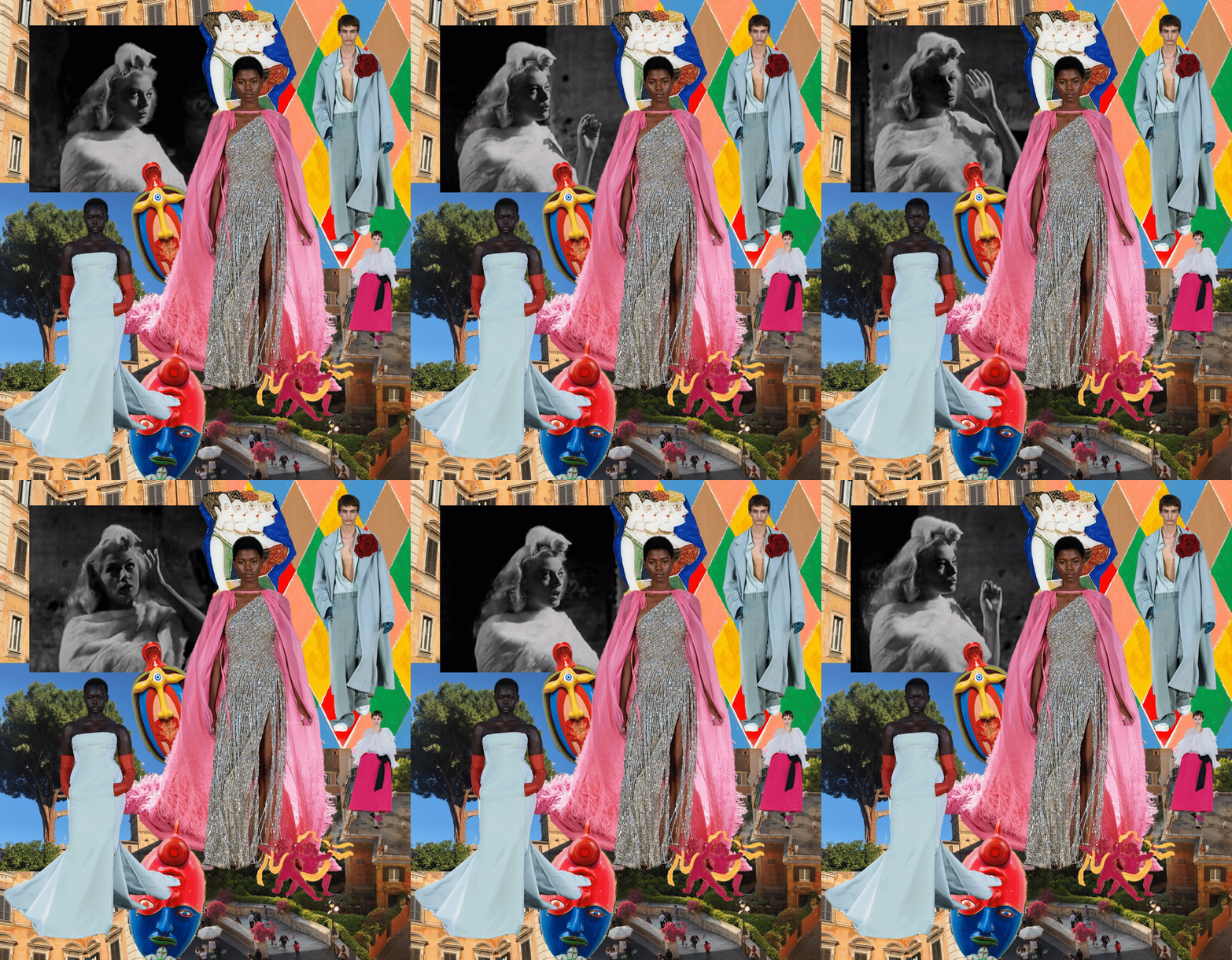
Collage by Edward Kanarecki.
NET-A-PORTER Limited

Clean and Sleek. Fendi AW22 Couture

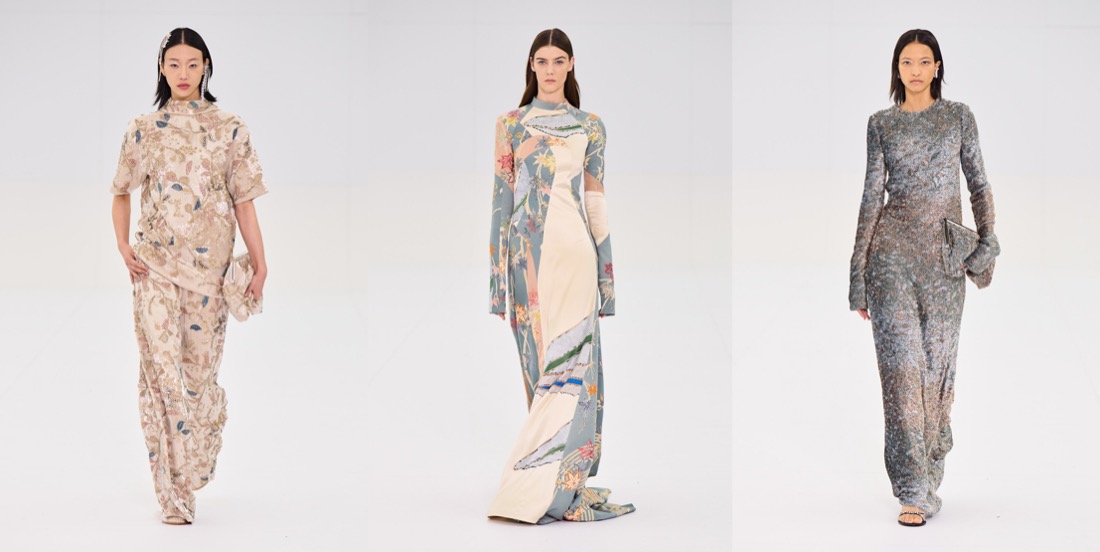
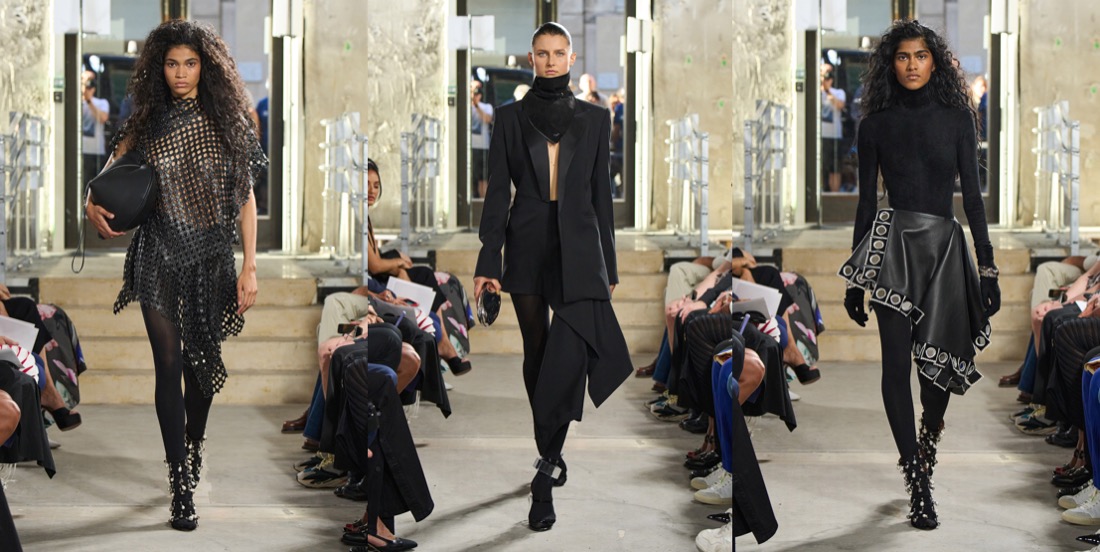
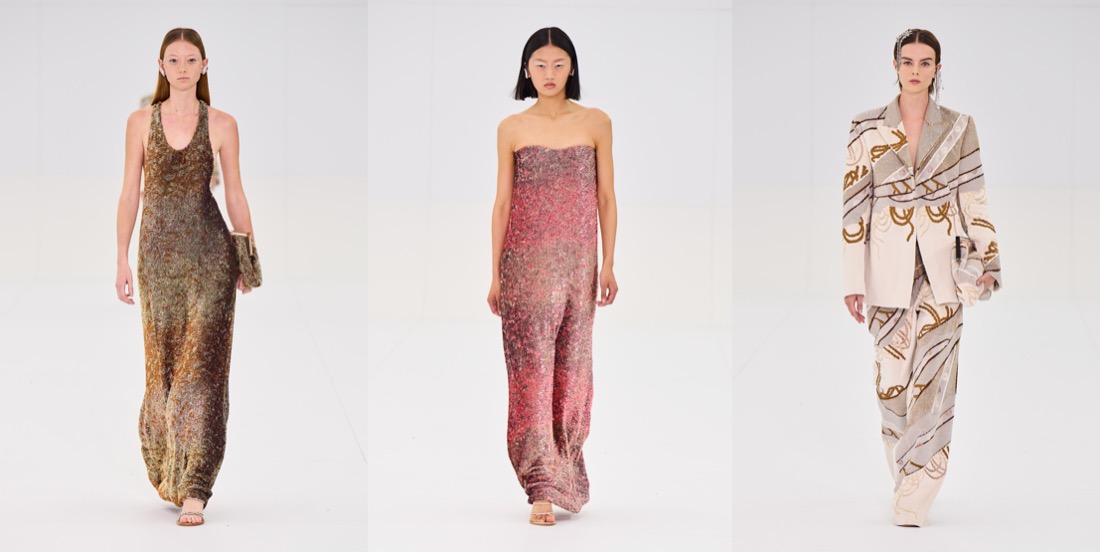
This haute couture season, it seemed that the collections’ backdrops were as important as the clothes. Immense theatralization of the fashion show was a recurring theme, from Schiaparelli to Margiela. So it was quite refreshing to see the total white-cube space as Fendi’s venue. But did Kim Jones‘ couture line-up stand up for itself? “Luxury is the ease of a t-shirt in a very expensive dress.” Karl Lagerfeld coined this permanently true aphorism – one of the sparkling fashion quotes he dashed off in a zillion interviews. Kim Jones didn’t drop it into backstage conversation about his Fendi haute couture collection, but he might’ve, since essentially what he sent out met the Lagerfeldian standard of t-shirt-y elegance; a show of uncomplicated, minimal dressing realized in the most expensive of materials. For starter, a trio of Max-Mara-like looks, two tailored trouser suits and a long turtleneck sweater dress with a slashed skirt and sash in a Vicuna brown. Then came tailoring, and a molded bustier in paler shades of slightly pink-tinged beige: Fendi’s specialty calf leather. And then, calmly on with the abbreviated lines of the t-shirt dressing. There were slim tank dresses, made of rolled metallic bugle-beads, asymmetrical long-sleeved patchworks of Japanese silk kimono fabric commissioned by Jones from traditional makers in Kyoto, and beaded deco-style pajamas. Jones explained in a preview that the pair of outstandingly lovely shimmery silver sequinned bias cut slip dresses had been made from swatches Karl Lagerfeld had commissioned which had been archived and never used. For the finale there were a few spicier, sheer “nude” dresses. In overall, it all looked like a proper couture collection. Not sure it felt like a Fendi one, though, even with all the subtle Lagerfeld references.

Collage by Edward Kanarecki.

NET-A-PORTER Limited

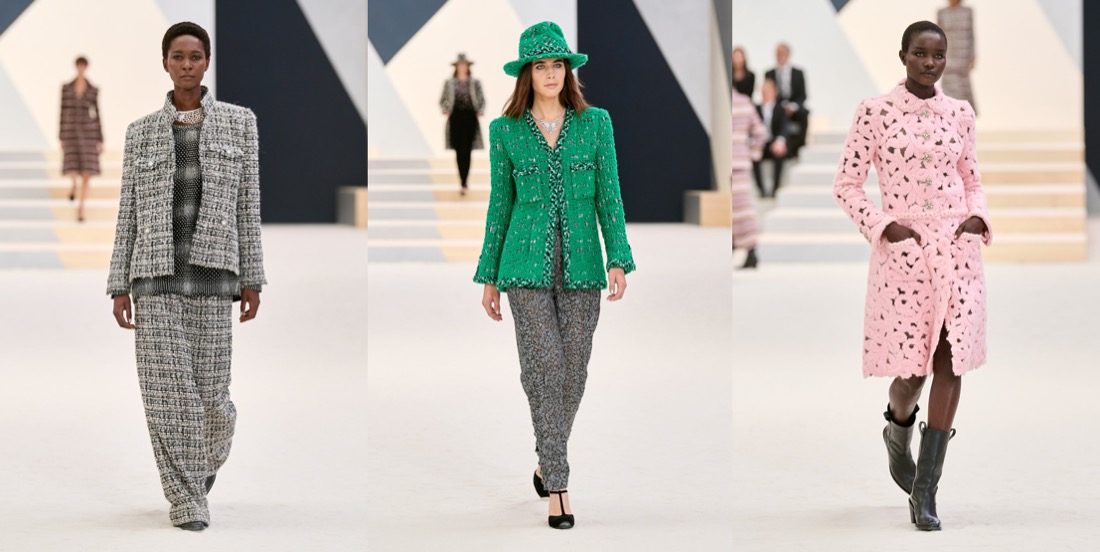
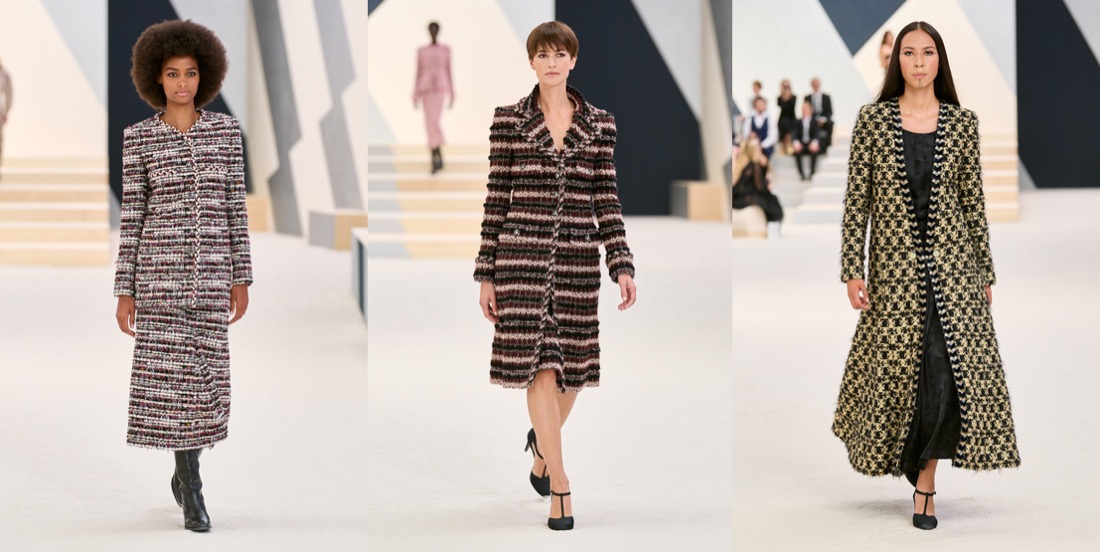
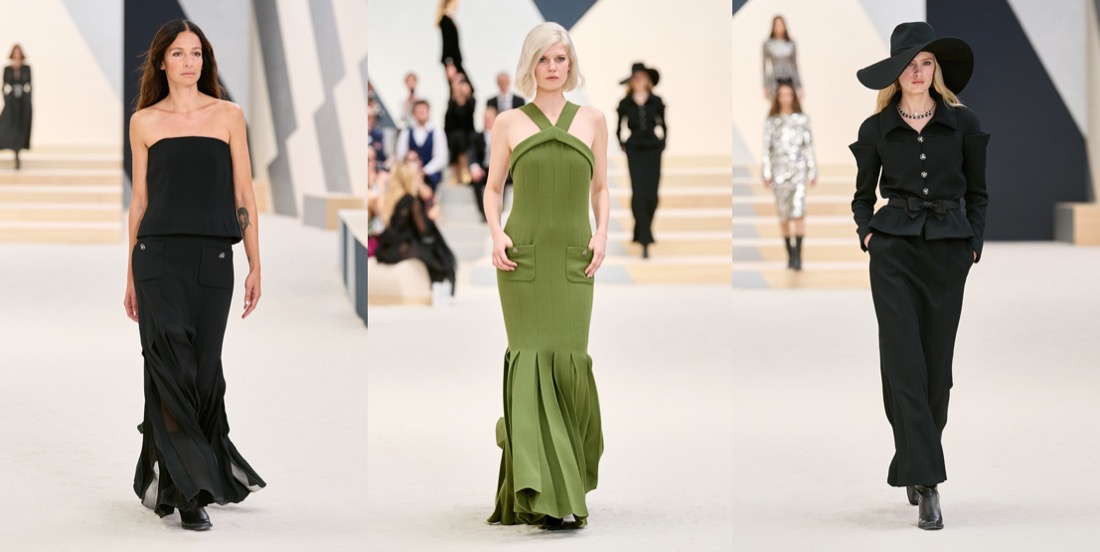
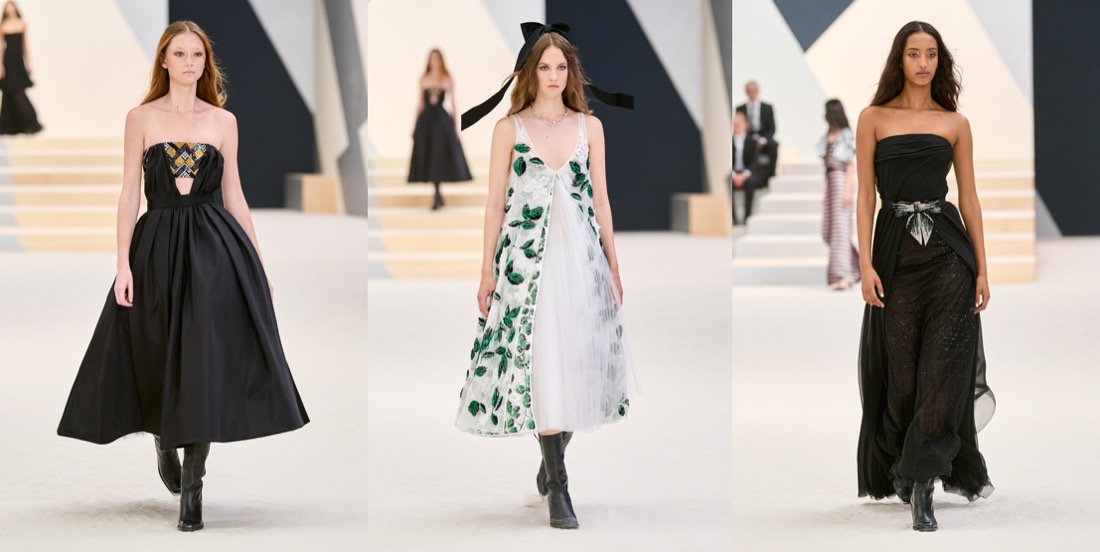
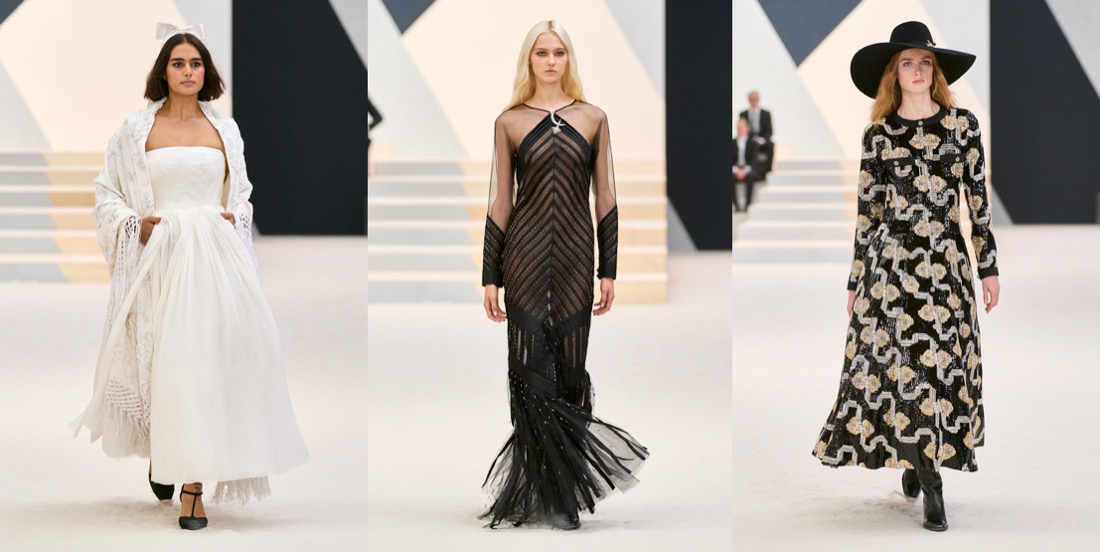
Move Beautifully. Chanel AW22 Couture

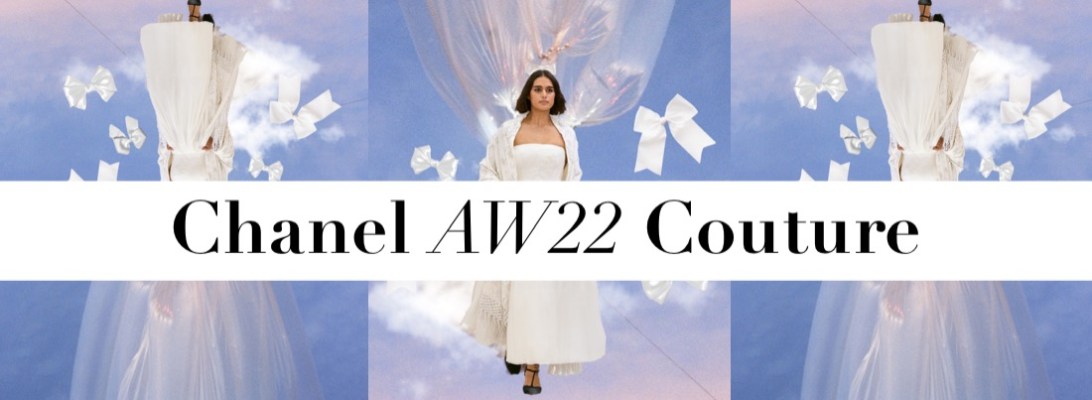
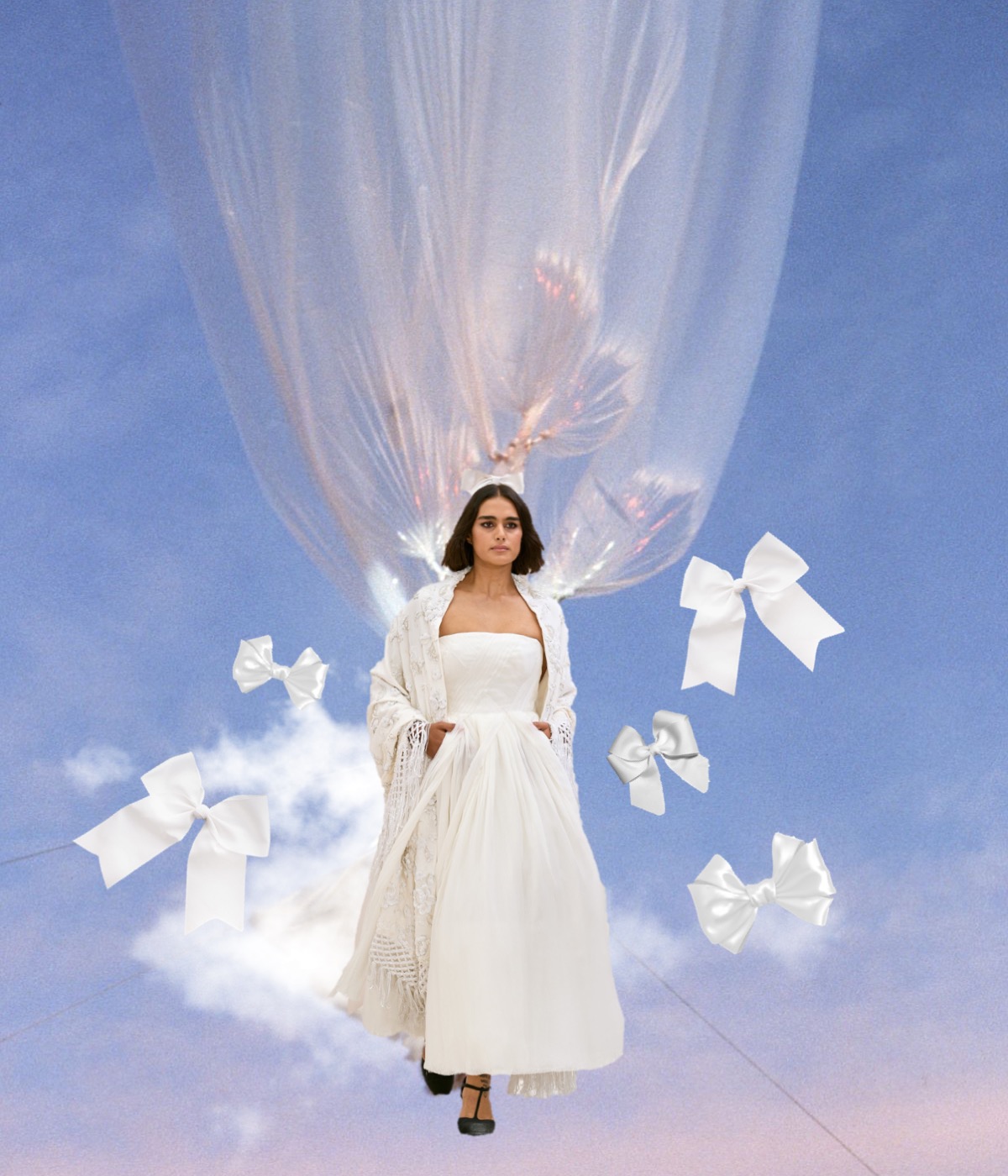
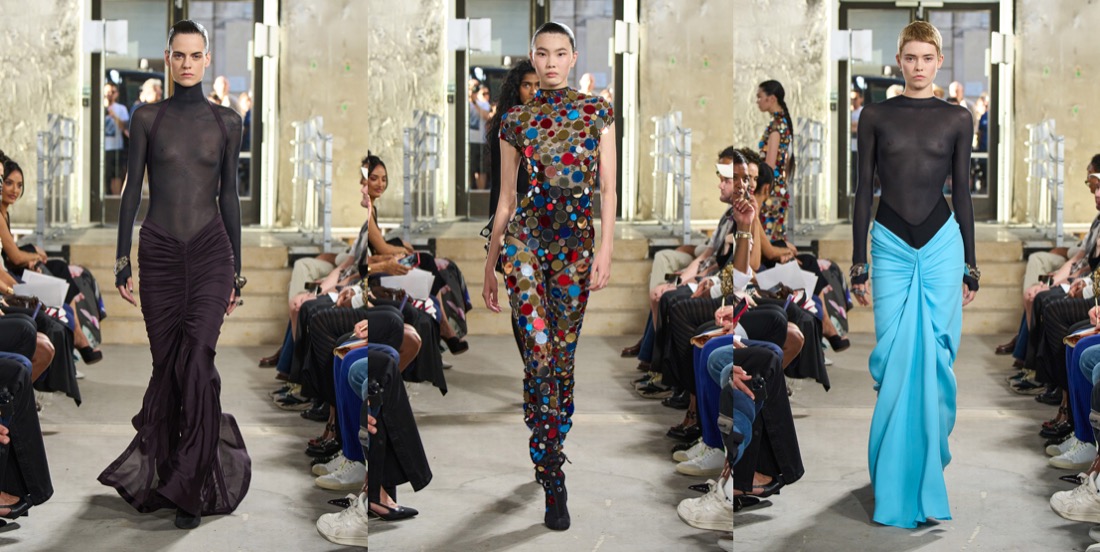
This Chanel haute couture certainly won’t appear in fashion history books, but it did please the eye. For Virginie Viard, her collections reflect the pragmatic needs and desires of the house’s clients and her own eclectic but never fantastical sources of inspiration. Not for Viard the sweeping statements of her mentor Karl Lagerfeld, who might impose a powerful new silhouette on practically every look in a collection, but instead a sense of gentle evolution and a myriad of references and inspiration sparks that might range (as in this collection) from a blinding memory of Inès de Fressange dressed by Lagerfeld in a jacket of bright grass green and shocking pink (for a 1988 Chanel couture show, when Viard first joined the house), to a shot of Fred Astaire in cinematic action, the tails of his white tie evening coat caught flaring out in mid-dance move, to a 19th century shot of a real-life Annie Oakley, to archive Chanel references from slouchy 1920s day suits to slithery 1930s gowns to prim 1960s tailoring, to Lagerfeld’s vividly impressionistic sketches from the 2000s. None of these references, however, are used by Viard literally, but instead serve as starting points for outfits that evolve with the input of the textile designers and makers who weave those extraordinary painterly tweeds, and the dressmakers who understand how to make perfect pleats that “move beautifully,” as guest Sigourney Weaver enthused, “and are just so elegant.” That Astaire flare, for instance, might translate into the kick at the hem of a calf length skirt, the Oakley image into a dirndl skirt with practical pockets that encourage a certain assertive body language, the ’30s house archive references into slinky evening dresses deftly cut to fall straight to the floor when standing still, but that break into swirling movement below the knee when the wearer walks. To set the scene, Viard reached out again to the artist Xavier Veilhan who created a Constructivist set for the spring couture collection. This time, Veilhan built a series of structures that formed a symbolic landscape (arches, bullseye targets, mobiles, cubes of bubblegum pink recycled plastics) in the sandy outdoor stadium of the equestrian L’Étrier de Paris center in the Bois de Boulogne. Guests walked through or around these structures before moving indoors to more sand and a set of kinetic color blocks in black, white, sand yellow, and gray. This gently suggested something of the art deco flavor to the drop-waisted dresses and linear shapes that appeared in some looks in the collection. The symphonic soundtrack, created by Viard’s friend Sébastien Tellier, was set to a video projected on a giant screen as a backdrop to the parade of girls, an impressionistic clip that featured an varied cast including Charlotte Casiraghi and Pharrell Williams. That eclecticism continued with the clothes, showcasing amazing textiles – lace painted in resin; a shower of embroidered leaves on a white tulle trapeze dress, shadowing a print of the same motif underneath; an all-over deco print on a bell-skirted coat dress that on closer inspection turned out have been entirely beaded in sequins by Lesage; or tufts of ostrich plumes painstakingly applied to black chiffon and glimpsed through the openings in a streamlined trench coat of textured black tweed.

Collage by Edward Kanarecki.

NET-A-PORTER Limited

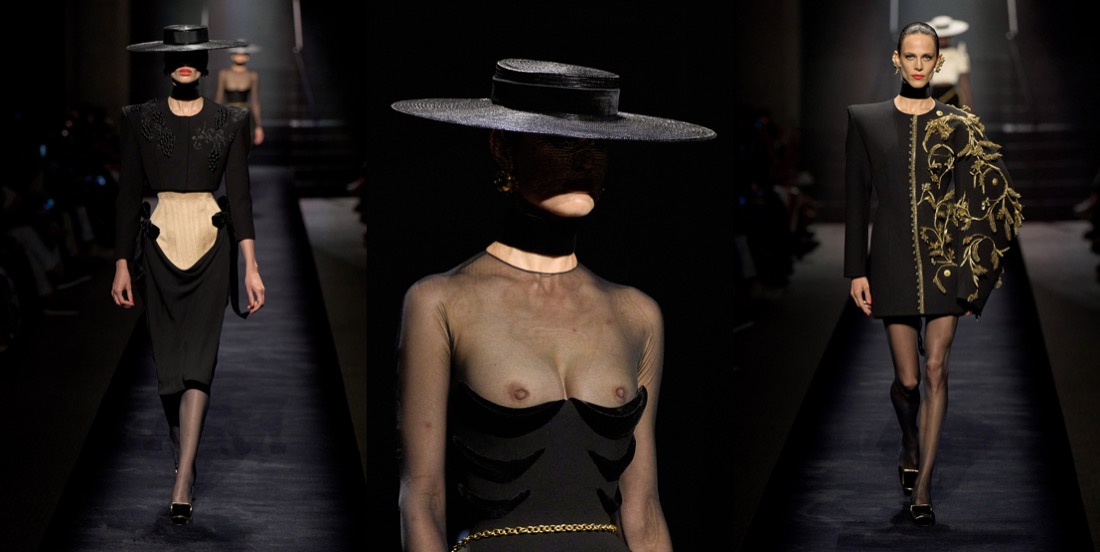
Big Feelings. Schiaparelli AW22 Couture

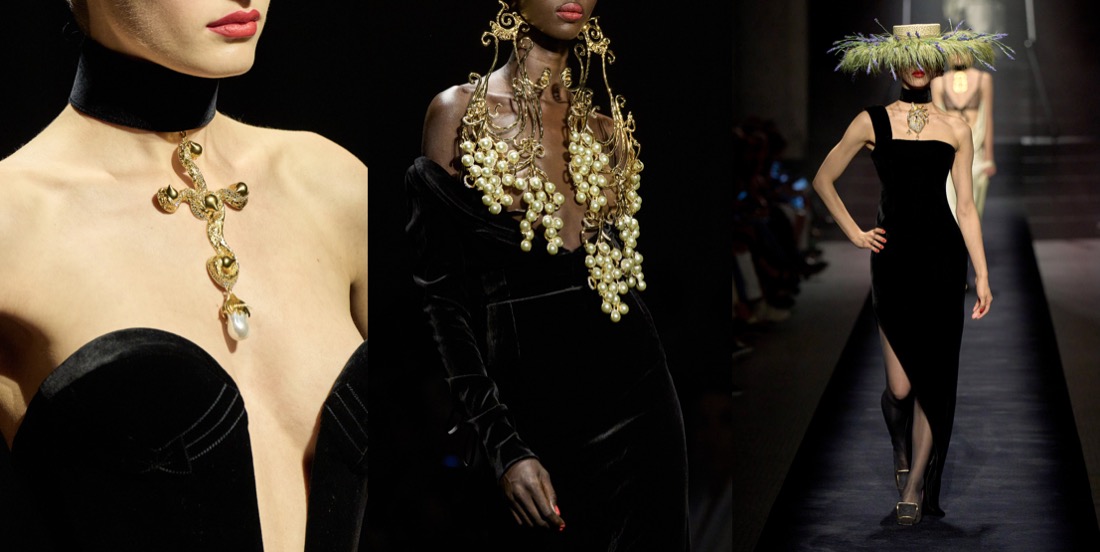
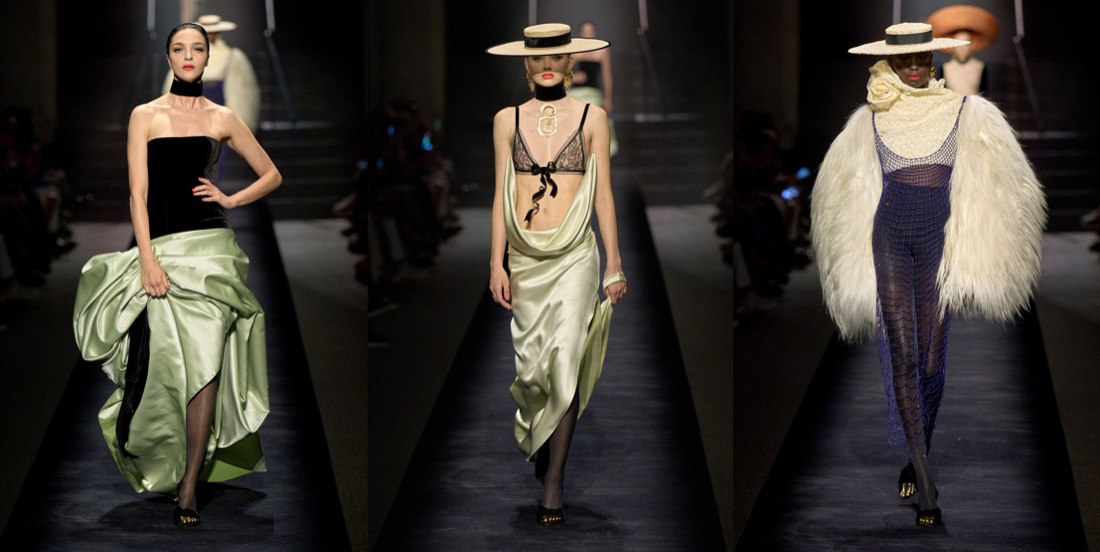
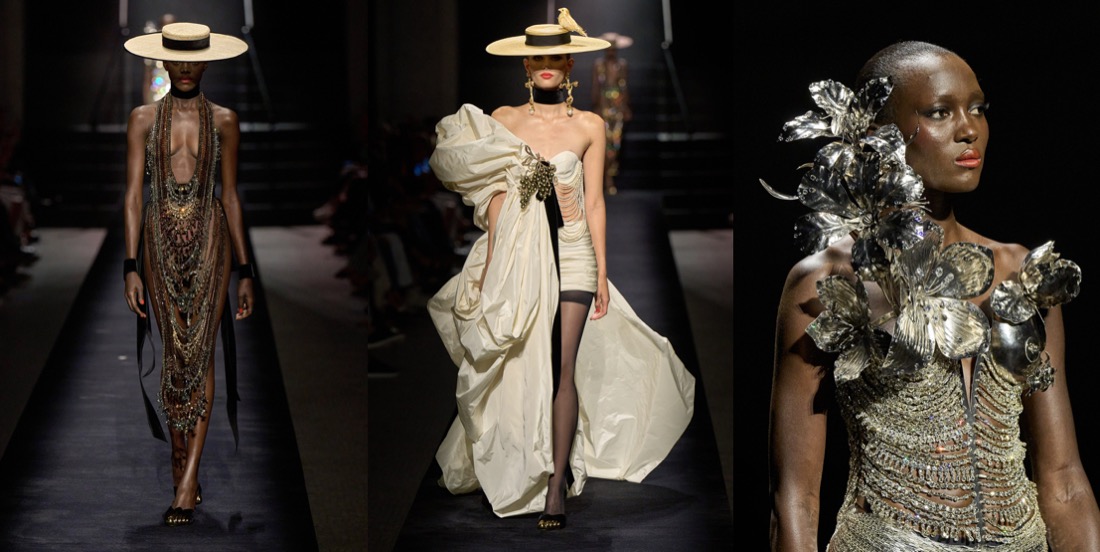
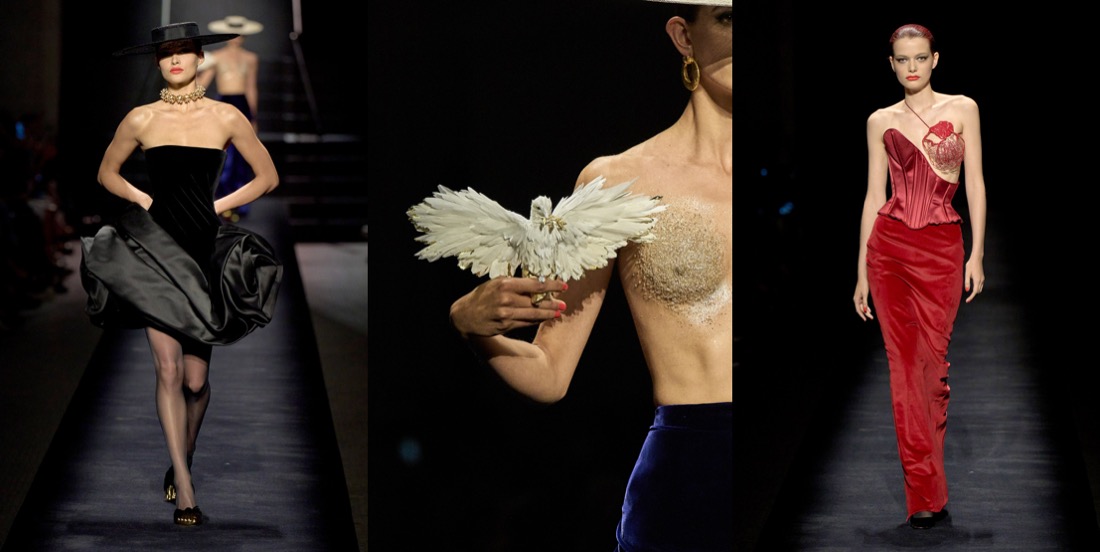
Shocking! The Surreal World of Elsa Schiaparelli,” the high-impact exhibition opening this week at the Musée des Arts Décoratifs, includes pieces that fellow designers – among them Yves Saint Laurent, Jean Paul Gaultier, Azzedine Alaïa, and Christian Lacroix – created in homage to the house’s founding genius. For this season’s Schiaparelli haute couture collection, Daniel Roseberry, the house’s artistic director, took this idea of “being in conversation with the people who had been so inspired by her.” Earlier this year Roseberry had an in-person conversation with Lacroix himself, “which was really inspiring,” as Roseberry noted during final fittings on the eve of his show. “We talked about color, we talked about volume. We talked about Arles, and for him it meant black bulls, white horses, and the gold of the sun, which just kept ringing in my ear. It was probably, for him, a passing conversation, but for me it felt like someone plugged me into the wall a little bit, and I wanted to make a collection that brought me back to the kind of fashion that I fell in love with and that period of fashion that feels, in retrospect, very naive in a way.” And so Roseberry evoked the euphoria of Christian Lacroix’s 1987 debut collection with its giddy pouf silhouette, bustles, gigot sleeves, coruscating toreador embroideries, and severe matador hats. For Roseberry, ’80s nostalgia is in the air. But the collection was also informed, as Roseberry confided, “by the way Elsa dressed herself,” which meant rigorous tailoring. That was exemplified by the coatdress worn by Carolyn Murphy with trompe l’oeil drawers for pockets – a detail that Salvador Dalí himself conceived for Schiap and now a piece that will go directly from the runway to the museum exhibition – and what Roseberry described as “this sort of sensual body-conscious and body-obsessed eveningwear, everything built around the bustier and the corset.” Some sprouted with floral displays inspired by Carolyne Roehm’s book A Passion for Flowers, a copy of which sat on Roseberry’s grandmother’s coffee table when he was an impressionable boy. Seen up close these were remarkable triumphs of embroidery – sunflowers and roses and lavender fronds crafted from hand-painted and sequined silk and even leather molded onto the back of spoons to create the petals. They instantly reminded me of Yves Saint Laurent’s spectacular spring-summer 1988 couture show, where jackets became tableau vivants of sunflowers and irises. A simple black velvet evening dress that looked like one of Roseberry’s dramatic fashion sketches come to life was brought into Schiaparelli’s madcap world thanks to a pair of earrings dripping bunches of golden grapes and so heavy that they had to be secured with a discreet tiara hair band. Meanwhile, Stephen Jones’s magnificent wide-brimmed hats bristled with what looked like fields of wheat that on close inspection turned out to have been simulated with glycerinated ostrich feathers. It was all, as Roseberry himself promised, a “mash-up between something that felt incredibly modern and then also wildly romantic.” Hopeful doves of peace (another YSL reference) brought some much-needed optimism to 2022’s disturbing state of things. All of it certainly left the audience on a high.

Collage by Edward Kanarecki.

NET-A-PORTER Limited

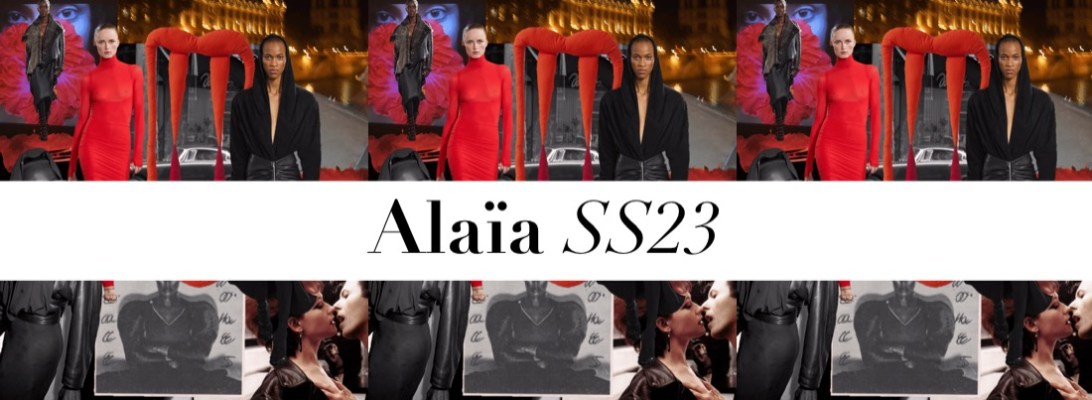
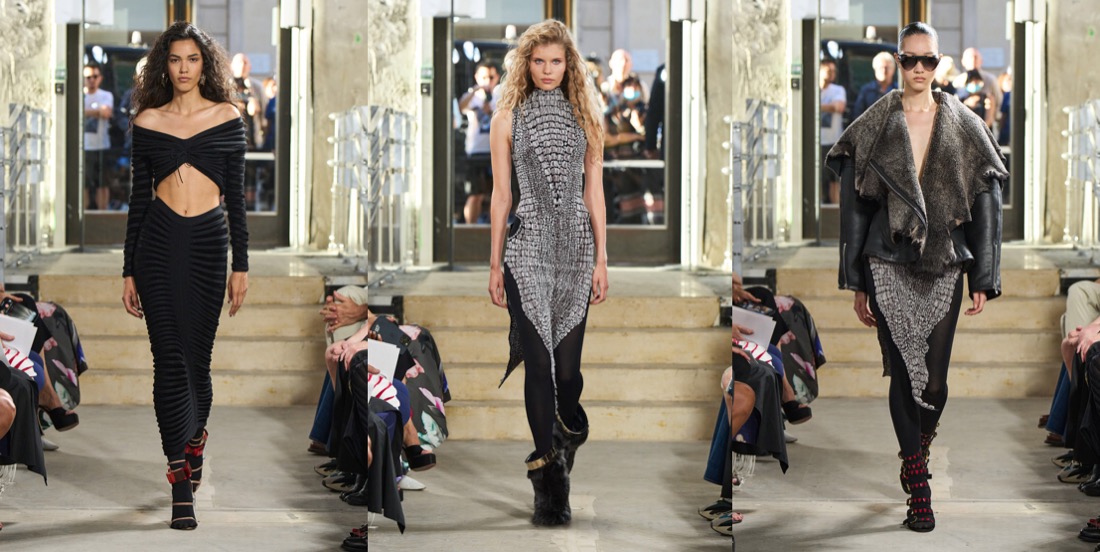
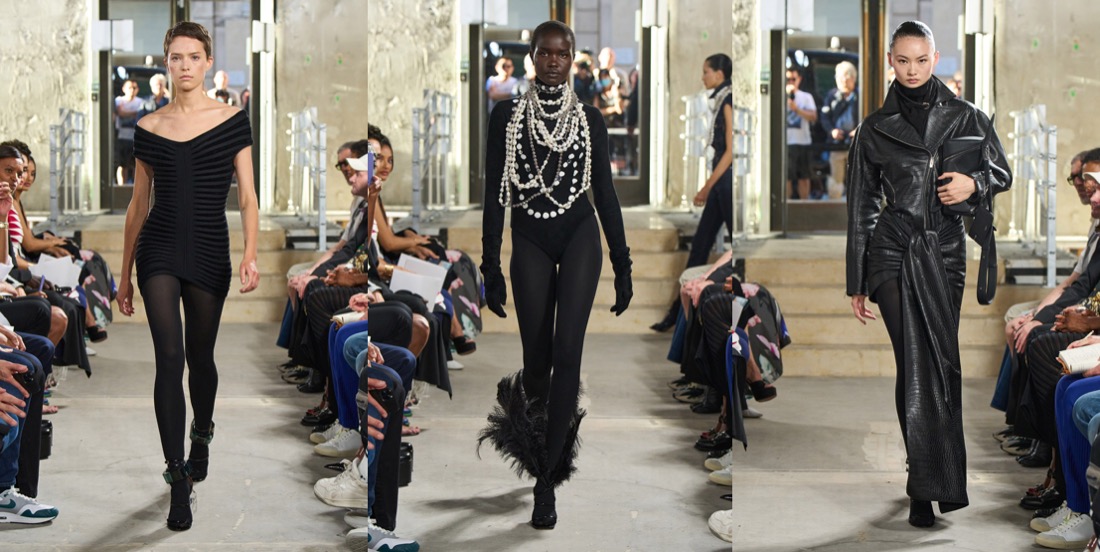
Rough And Elegant. Alaïa SS23

This is Pieter Mulier‘s third season for Alaïa. The Belgian designer has already proved that he understands the codes of Azzedine Alaïa, and is capable to convey them to a contemporary audience with grace, sophistication and refinement. The spring-summer 2023 fashion show, which opened the haute couture week in Paris, was, however, the designer’s most turbulent line-up. It seems that Mulier wanted to tackle far too many Alaïa themes and in the end, the collection read as overcharged and, well, messy. Of course, each garment put separate is a masterful work of artistry and tailoring – we are speaking of Monsieur Alaïa’s studio know-how – but the overall of the collection needed an edit. But let’s start from the beginning.

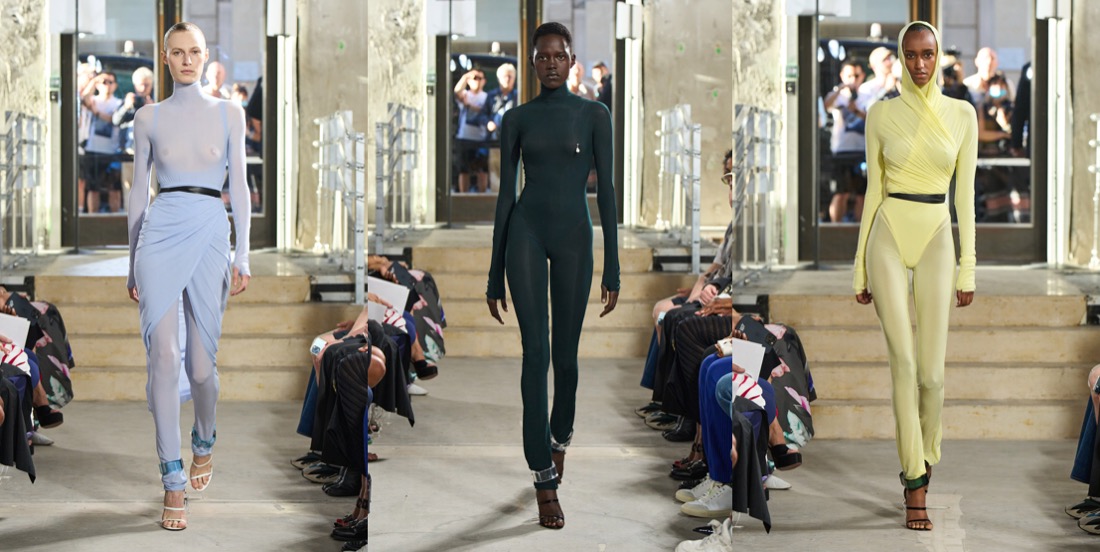
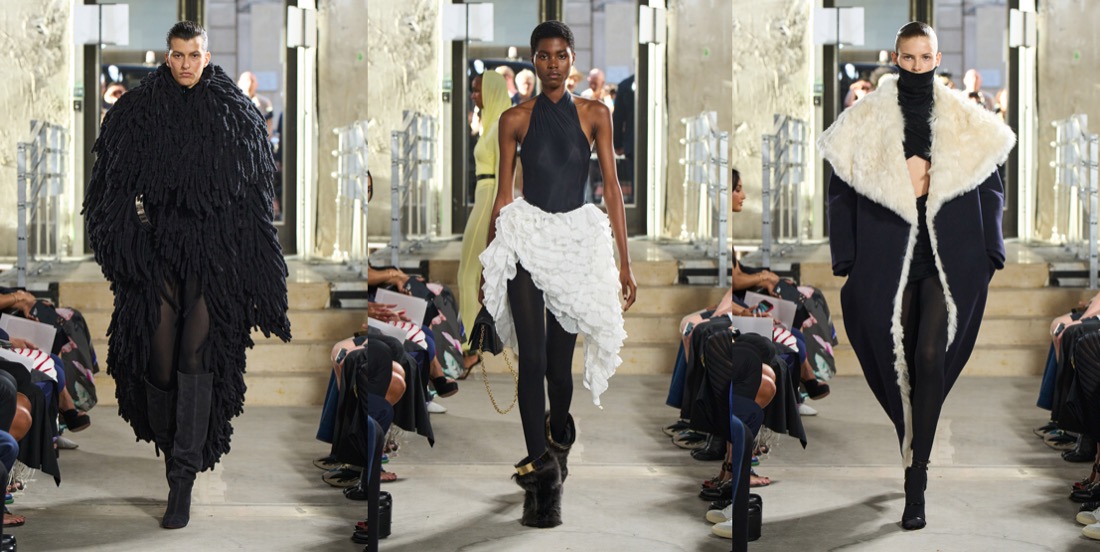
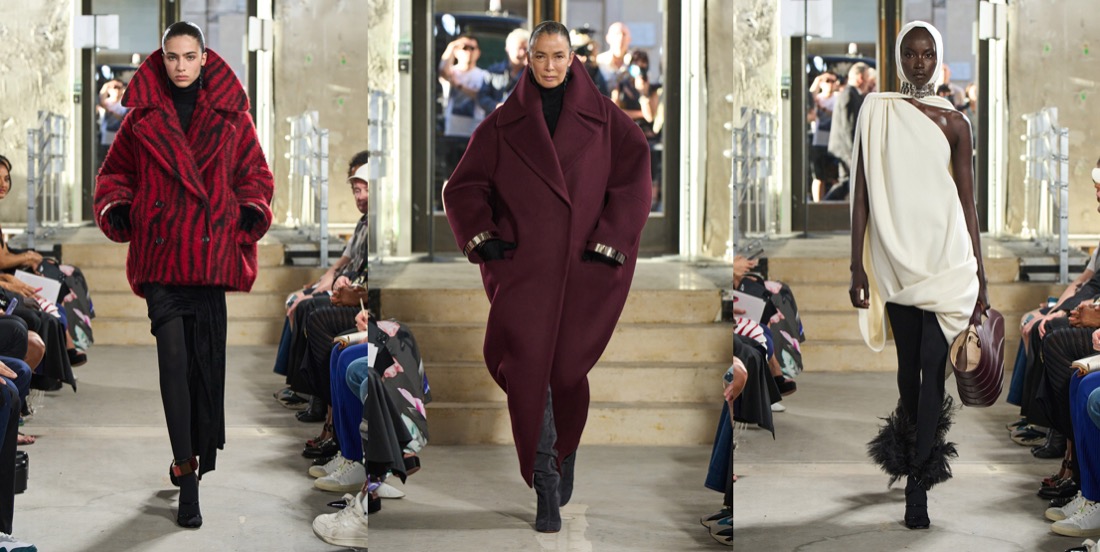
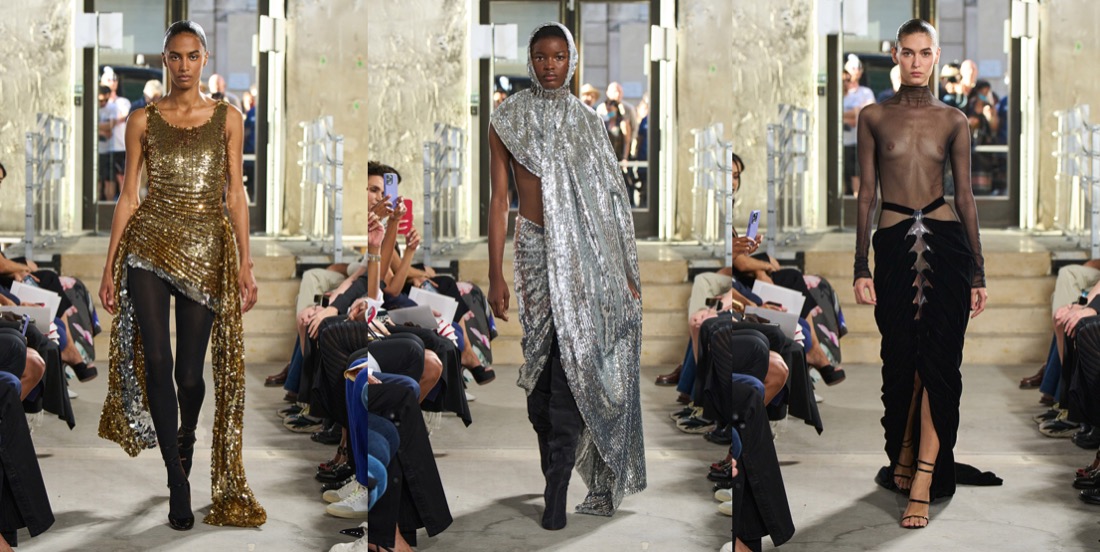
Mulier invited people to the unfinished space that will be the new Alaia store on the Faubourg St. Honoré – an architectural work-in-progress that he saw as the perfect foil for the feeling of his third collection: “something rough and something elegant at the same time.” It crackled with energy; the models collectively channeling a modern vision of the glamazonian power of female physicality that was born in this house in the ’80s. As if to emphasize that it’s dressing the body he’s talking about, Mulier opened with second-skin almost-sheer stretch silk layered bodysuits, the first with a single trompe l’oeil pearl-drop nipple “piercing.” What followed flowed into all kinds of sophisticated twists and turns of draping, wrapping, ruching, and knotting, interspersed with the kind of anatomical knitted body-dresses that are an Alaia wonder. Eyes fell to the footwear: long-haired boots cuffed with huge metallic bangles on cubic lucite heels; black lacquer stiletto heels in the shape of a naked woman’s legs. Mulier has an instinct for the extreme accessory which chimes with today’s hunger for the surreal. The chunky bangles, his own invention, are bound to trigger bounty-hunters, but the suggestive stilettos were reissued Azzedine originals from 1992. Mulier said he’d never had the chance to explore drape in his former jobs (at Christian Dior and Calvin Klein), but if that was ever an ambition, he’s come to the right place. Alaia is staffed with people who have a spectacular and nuanced repertoire of technical skills which enable Mulier to model ideas in 3-D; to make dresses that rely on asymmetry, hip-ruching, suspension, and the North African influences which Alaia used as a source of innovation.

Mulier said he’d been “obsessed with a 1984 show, which not many people know, because Azzedine was basically draping with viscose, and also draping with leather.” In emulating the latter – the leather and shearling – he left edges raw and invented a version of perforated black leather – almost like paillettes – to make a rough-edged t-shirt and tiny skirt that Tina Turner would have worked to the max. The knack of it was to make the complex look almost spontaneous. Again, the craftsmanship amazed, yet the the final result unfortunately felt heavy. There’s a sense that Mulier is learning on the job all the time, and finding the creative balance between respecting the brand’s codes and his own vision of contemporary relevance. It takes time for people to get to know and understand each other in any house where there’s an atelier. The spectacularly erotic finale dress – this one would make Azzedine proud. Somehow, it consisted of a black velvet skirt, suspended from a ribbon-belt, the central drape radiating, by some magic, from a line of vertical geometric transparent paillettes. And on the top, a sheer black long sleeve bodysuit. It looked astonishing enough, walking sinuously towards you, but the real impact of this genius construct was in the back. The draped swoop of the skirt dipped down just a fraction below the line of the bodysuit. Above it was the belt, tied nonchalantly in a bow. As I’ve mentioned earlier: the new Alaïa keeps the extremely high standards of garment-construction. I just wish Mulier would introduce some much-needed lightness to his work, so that these exquisite looks could truly speak, and not fight for space. That’s one of Monsieur Azzedine’s main ethoses: find the right balance.

Collage by Edward Kanarecki.
NET-A-PORTER Limited