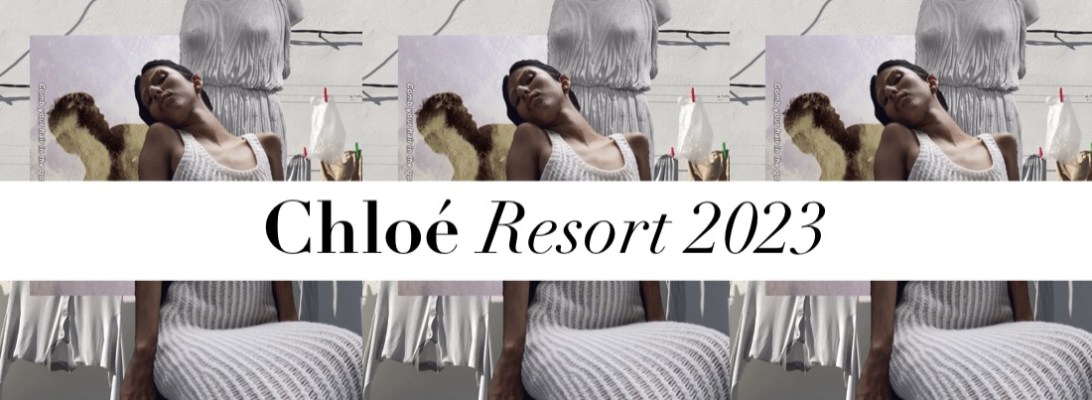
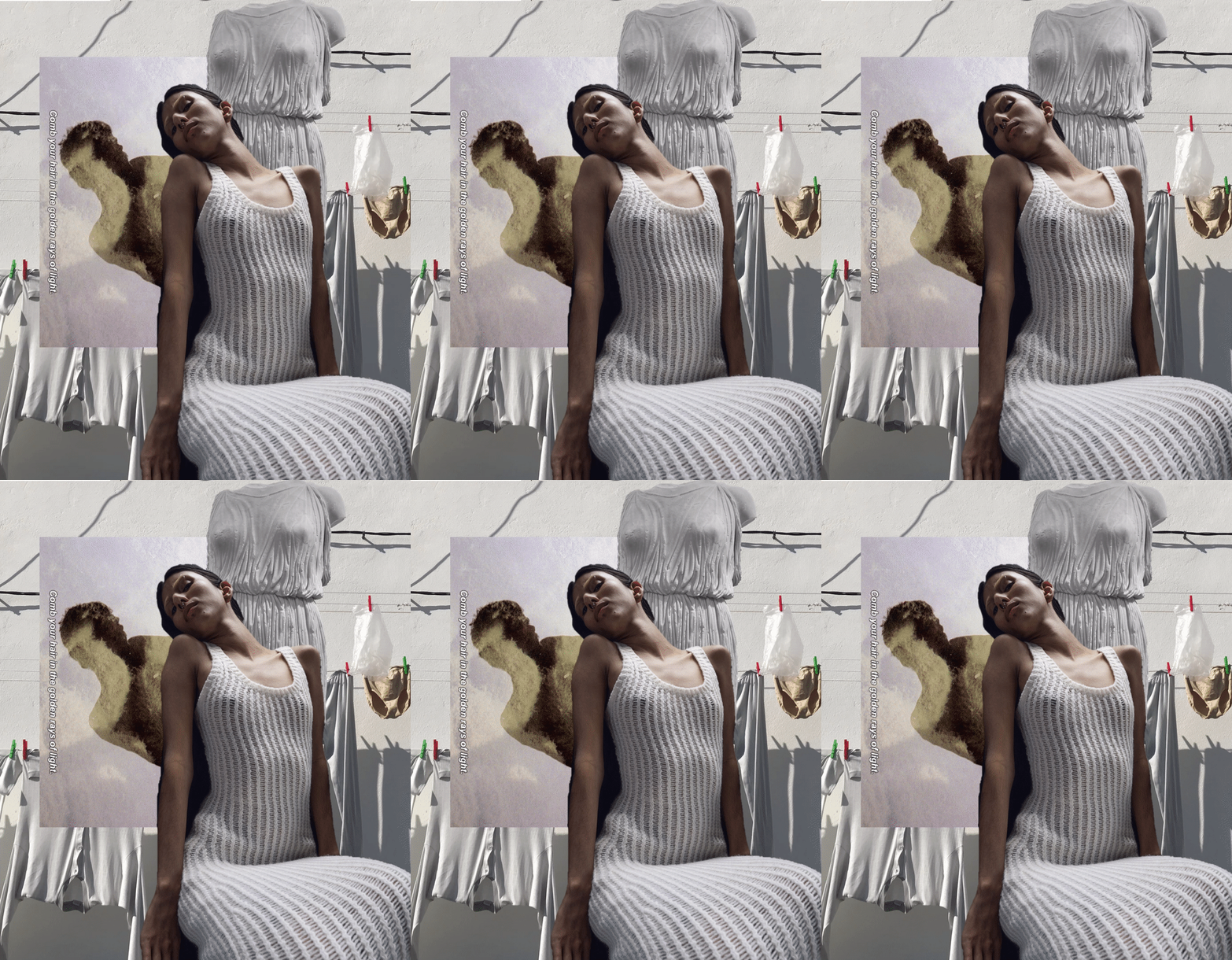
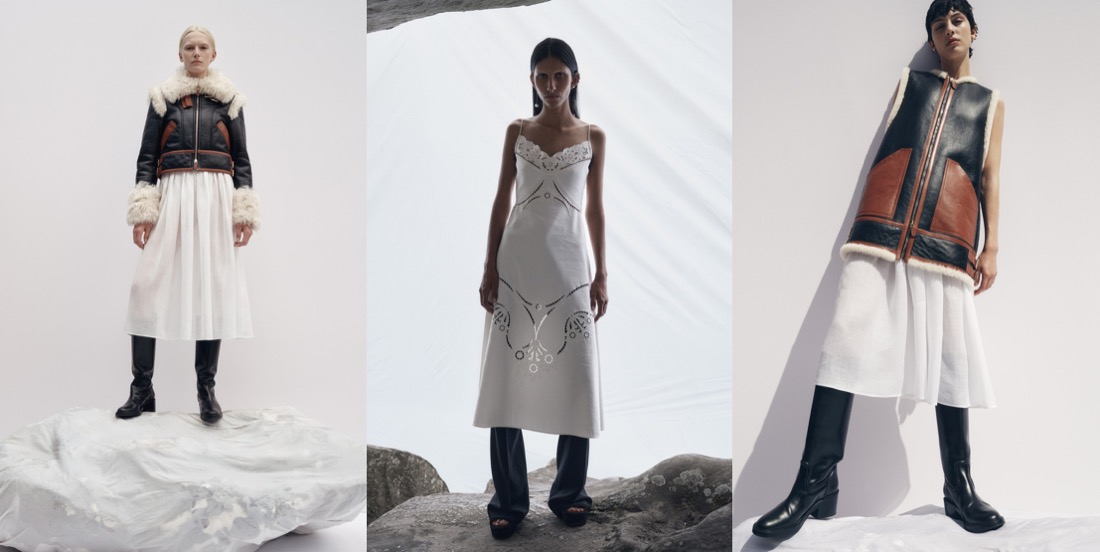
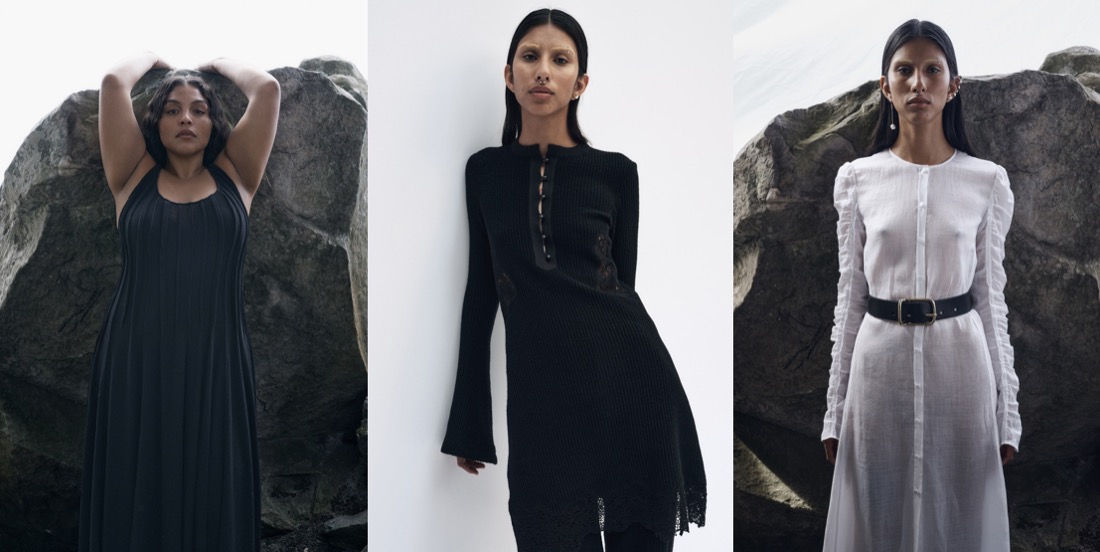
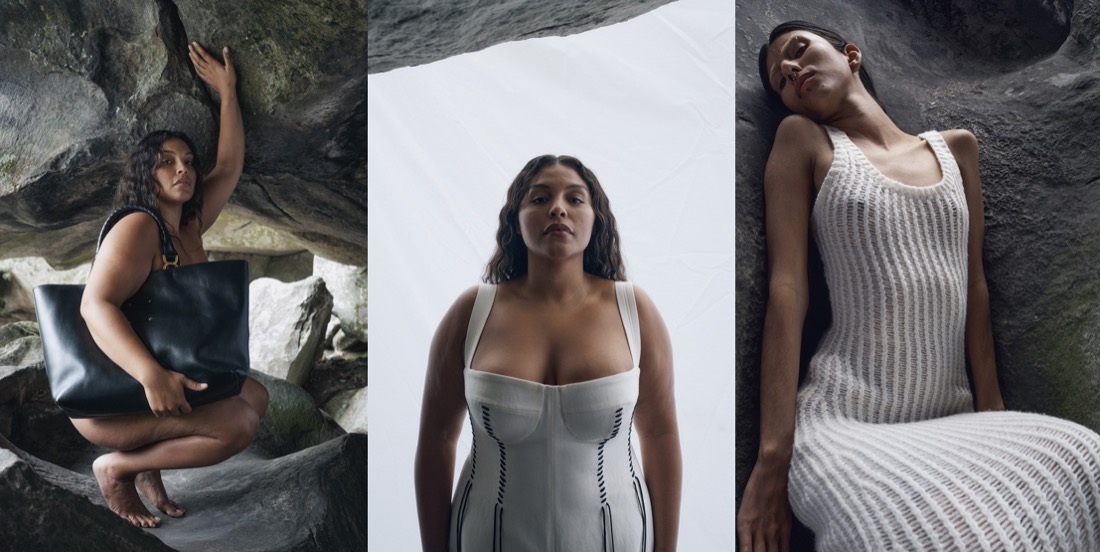
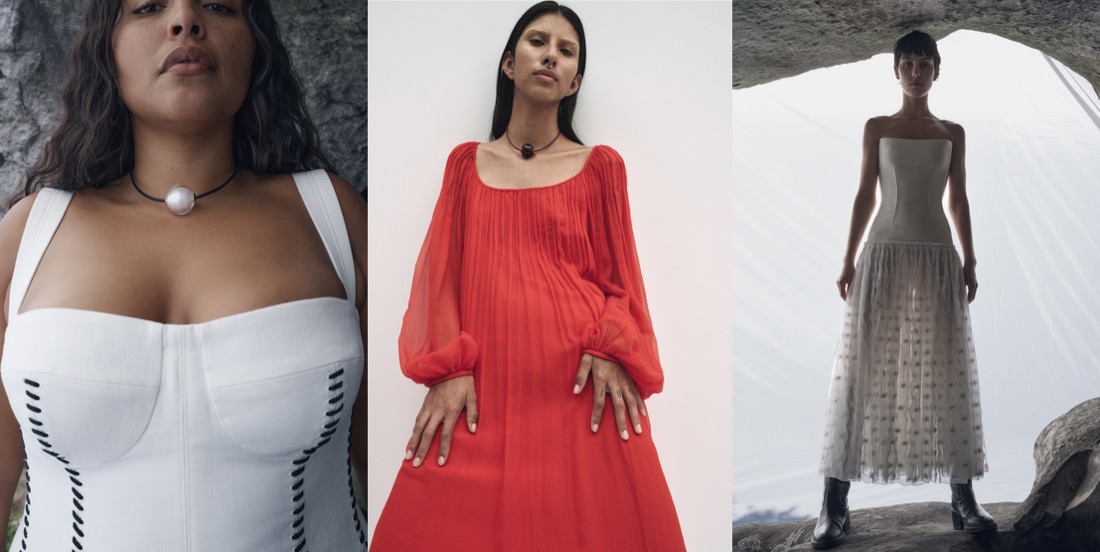
To create a responsible brand in the 2020s entails more than choosing sustainable materials and cutting down on manufacturing and shipping costs. As Gabriela Hearst, the creative director of Chloé sees it, building awareness into the marketing plan is part of the process. “The problems fashion has are the problems that all industries have,” she said. “The world’s energy supply is 85% from fossil fuels, and if we don’t eliminate that situation we’re really walking into suicide. All these alternate energy sources – wind power, solar panels – don’t have the capacity.” Fusion, Hearst explained, could make up the difference as we wean ourselves off of oil. “In a nutshell,” she said, “fusion is how stars are made. It’s the energy that moves the universe.” She promised “a much bigger experience of it,” at the Paris show in September. Here, the fusion lesson consisted of broderie anglaise and laser cut leather in the form of stars and a night sky palette of strictly black and white, save for a single red dress with a scoop neck and full poet sleeves. She credited Joel Cohen’s recent adaptation of The Tragedy of Macbeth for the corset shape of dresses accented with knotted leatherwork evocative of medieval chainmail, and leather jackets and vests patchwork paneled like armor. The novelties this season were twofold. First, she collaborated with Barbour, the British outerwear company renowned for its waxed jackets, on a trench ruffles details and on a poncho, a shape she has a soft spot for. The denim corset dress, duster coat, button-front vest, and a-line skirt are the results of a project Hearst dreamed up with the California jeans expert Adriano Goldschmeid. They’re composed of 87% recycled cotton and 13% hemp; that’s an earth-friendly equation. The only thing that Heart could work on – and that’s something she started last season – is her aesthetical direction for Chloé. Should this brand really be all about minimalism? Monastic and prim? There’s no need for another Jil Sander or The Row.
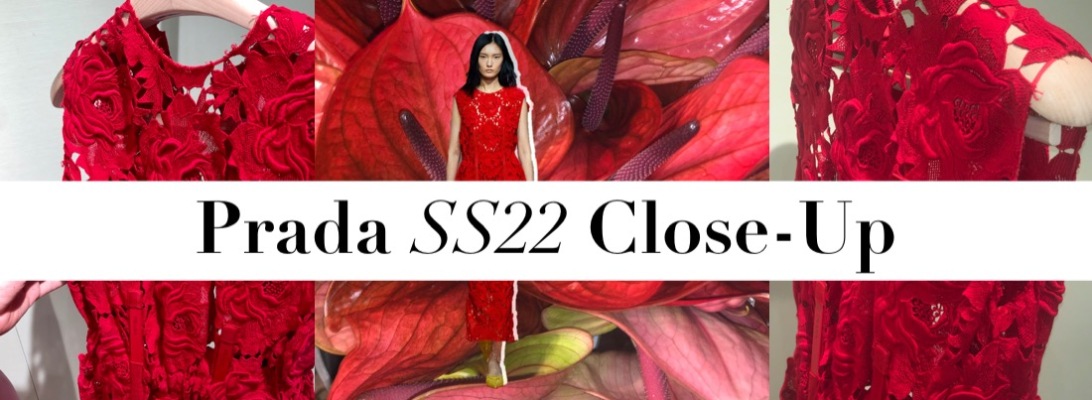
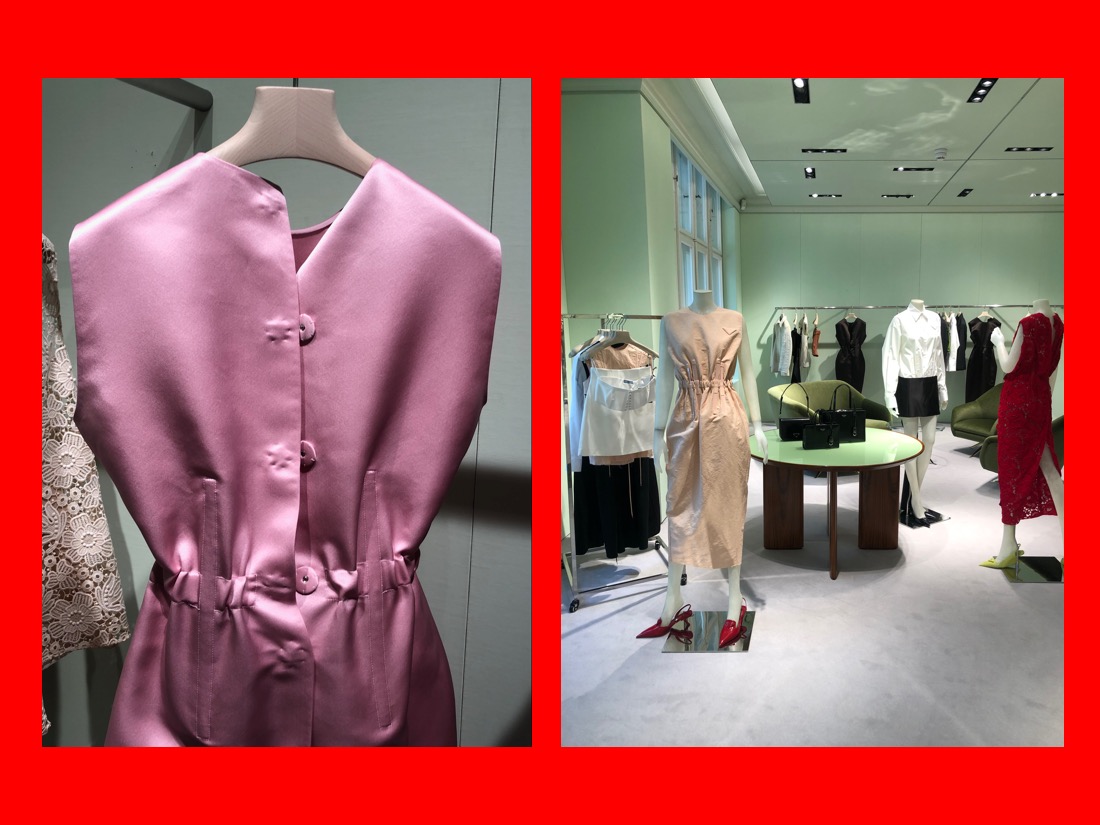
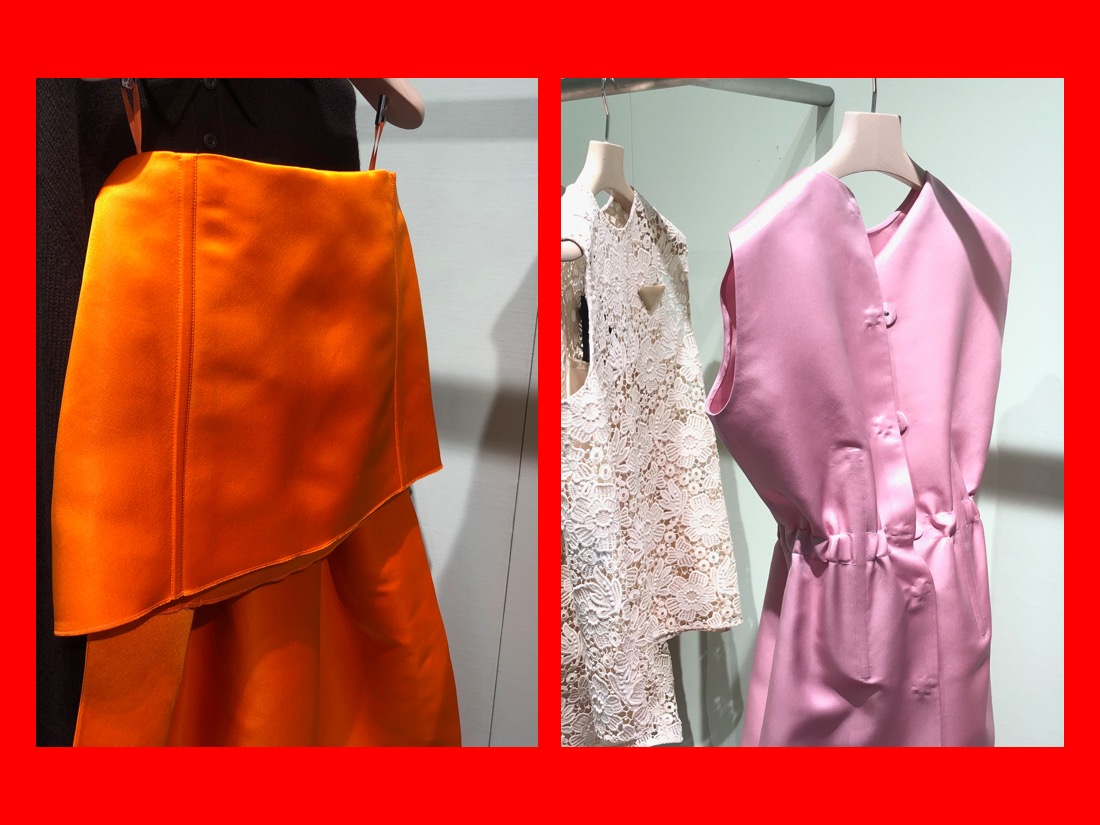
Last week, during my trip to Berlin, I finally had the chance to see Prada‘s spring-summer 2022 collection IRL at the brand’s flagship on Ku’damm. And, oh boy, these garments are so much better when you actually see them up close! The romance of up-scaled lace, the vibrance of neon silks, the beauty of vintage-y leathers. And of course, the masterful construction of each piece – which you truly comprehend once you touch them. “Seduction, Stripped Down” is the name Miuccia Prada and Raf Simons gave to their third, co-designed collection. In her notes, Prada said, “We thought of words like elegant – but this feels so old-fashioned. Really, it’s about a language of seduction that always leads back to the body. Using these ideas, these references to historical pieces, the collection is an investigation of what they mean today.” The historical ideas in question are the familiar tropes of womanhood, like bra cups and corsetry boning, made unconventional by how they were presented: on simple, even plain, sweaters or as details on denim coats. Duchesse satin sheaths read as almost demure until the dresses turn to reveal they are unbuttoned to the lower back, exposing peekaboo flashes of lingerie. The long evening column also got a rethink; it’s sliced above the knee, but a bow in back is extended to the floor. “That feels modern,” Simons stated in the collection’s press-notes. It really is!
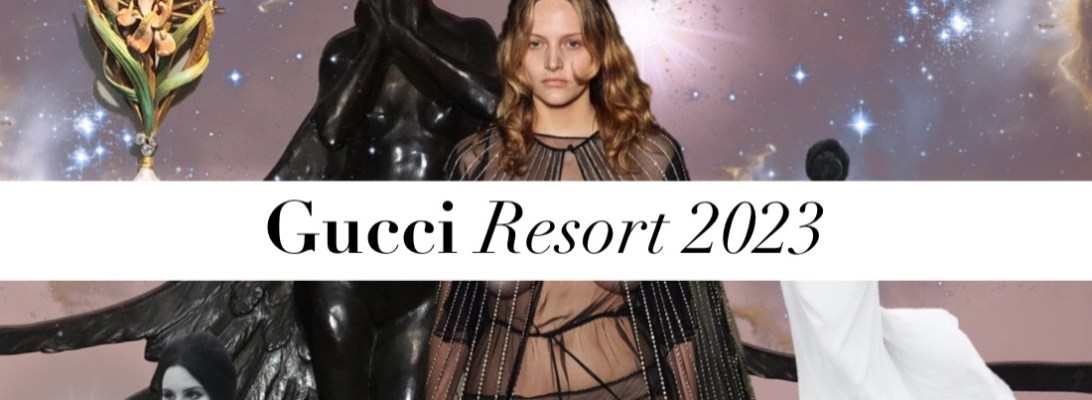
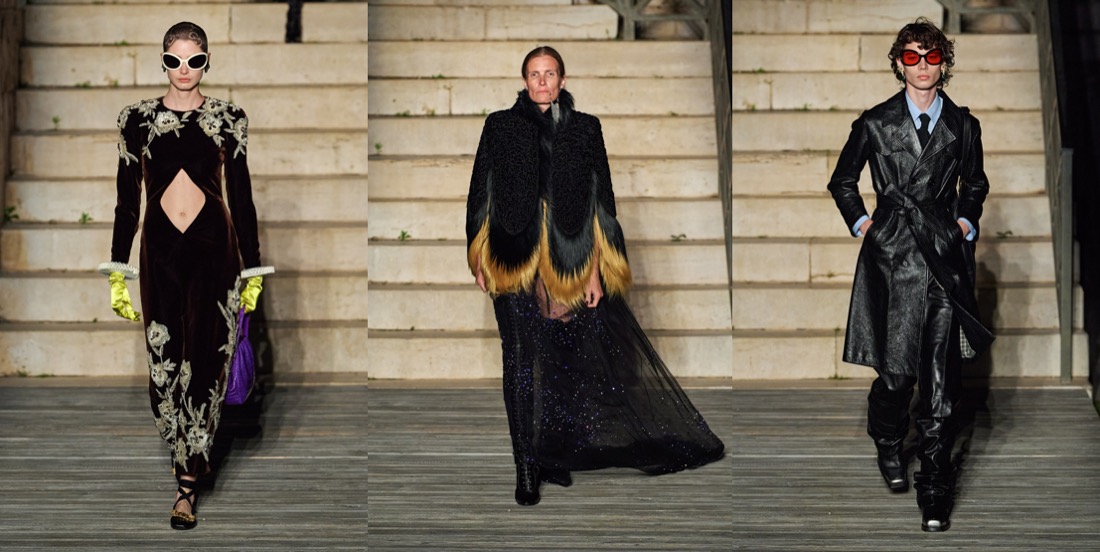
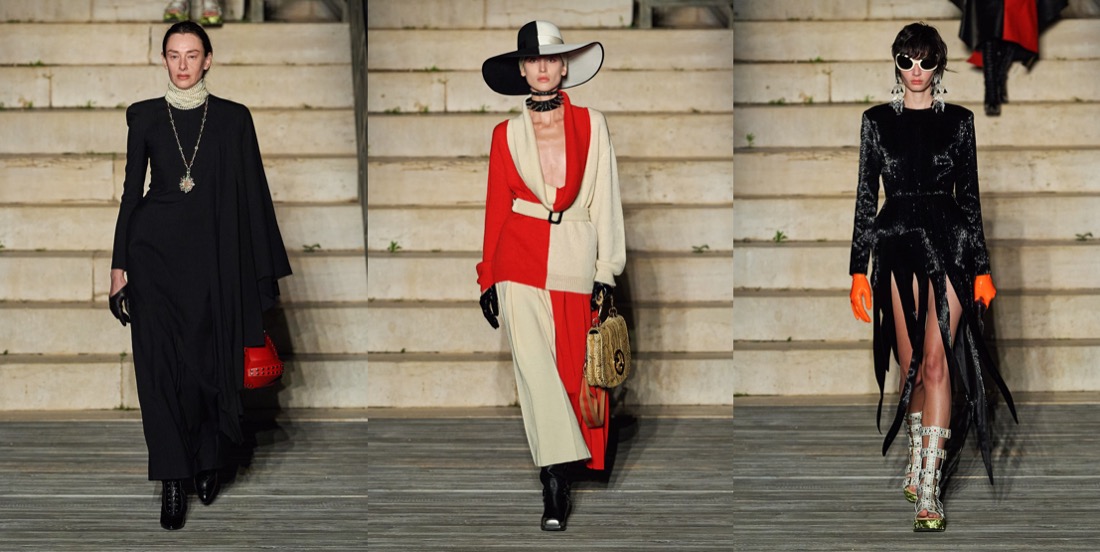
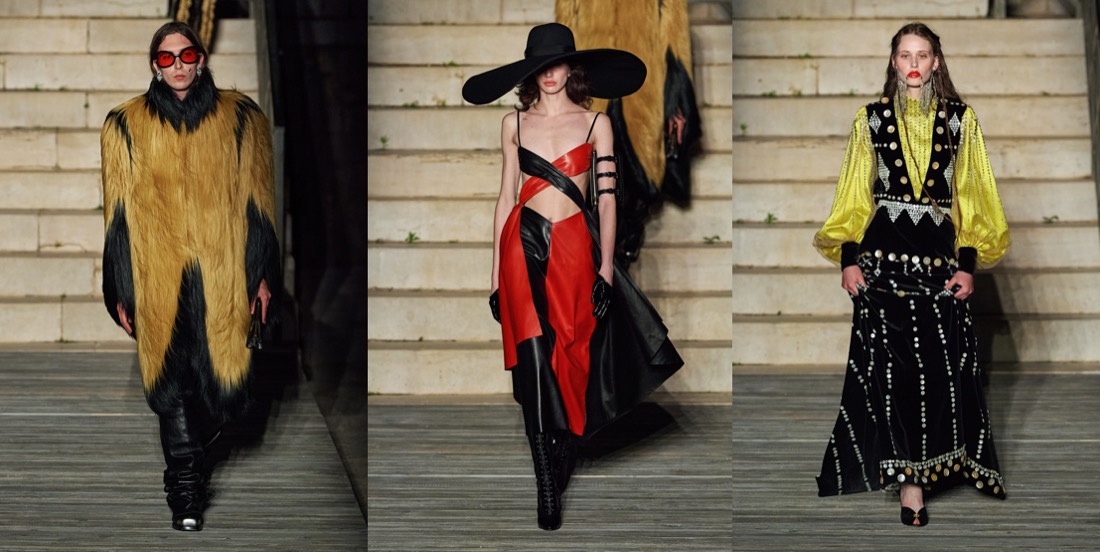
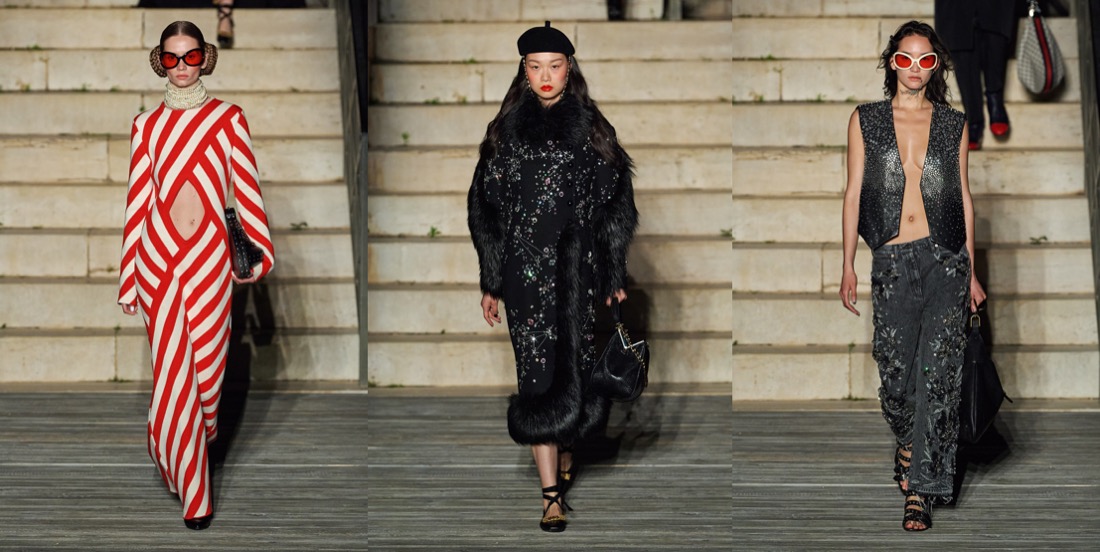
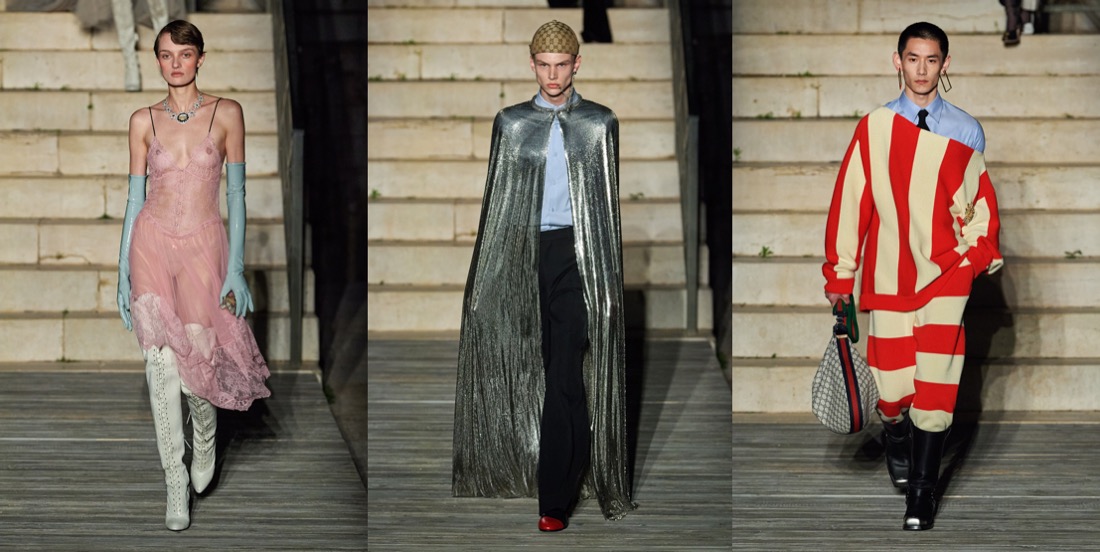
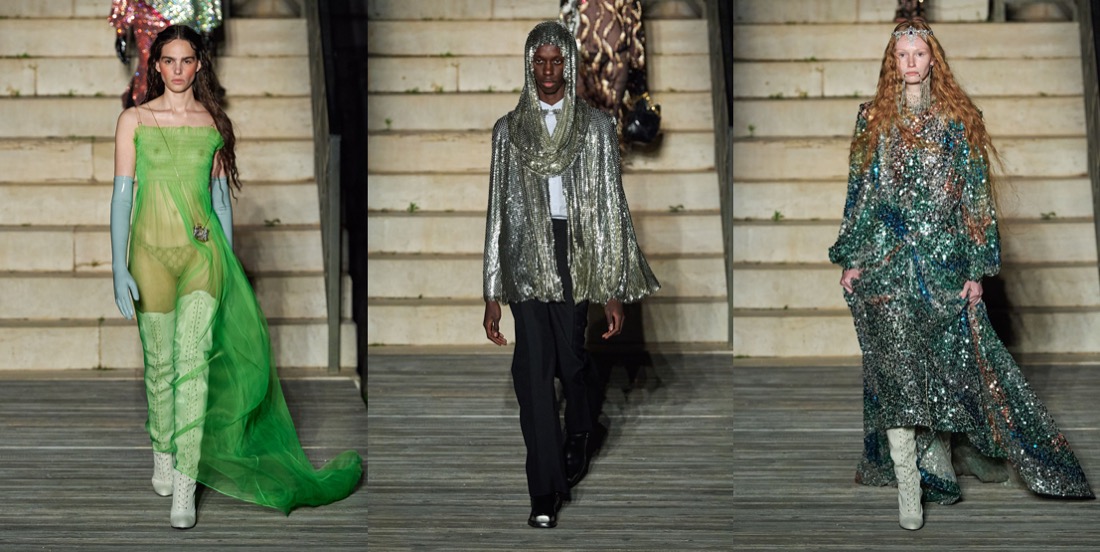
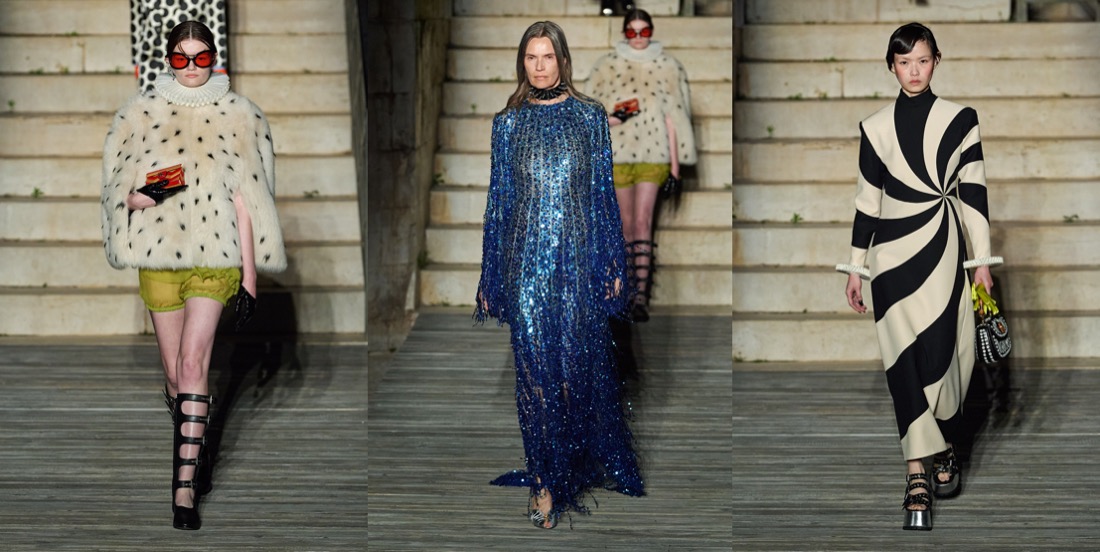
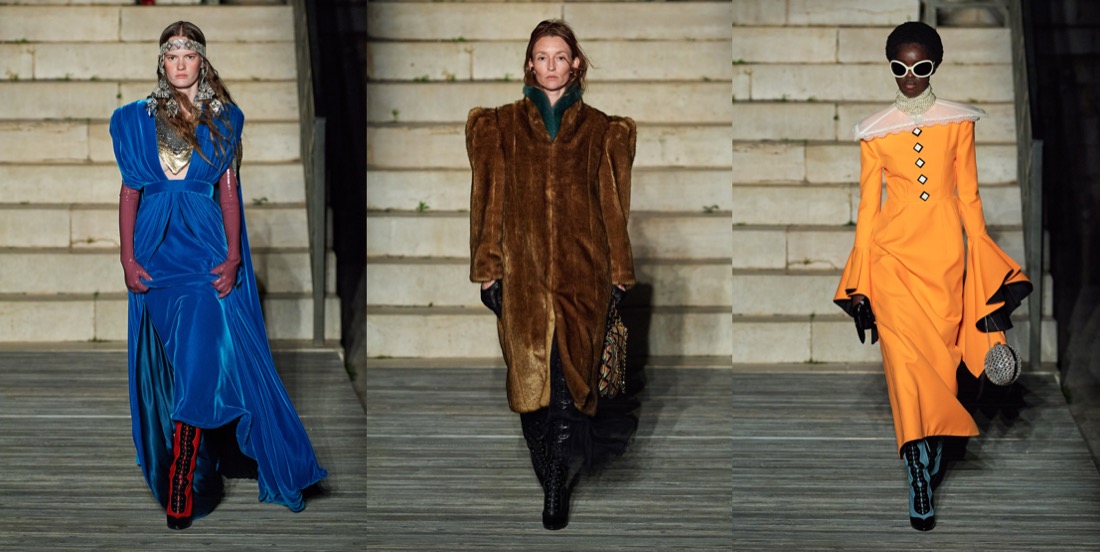
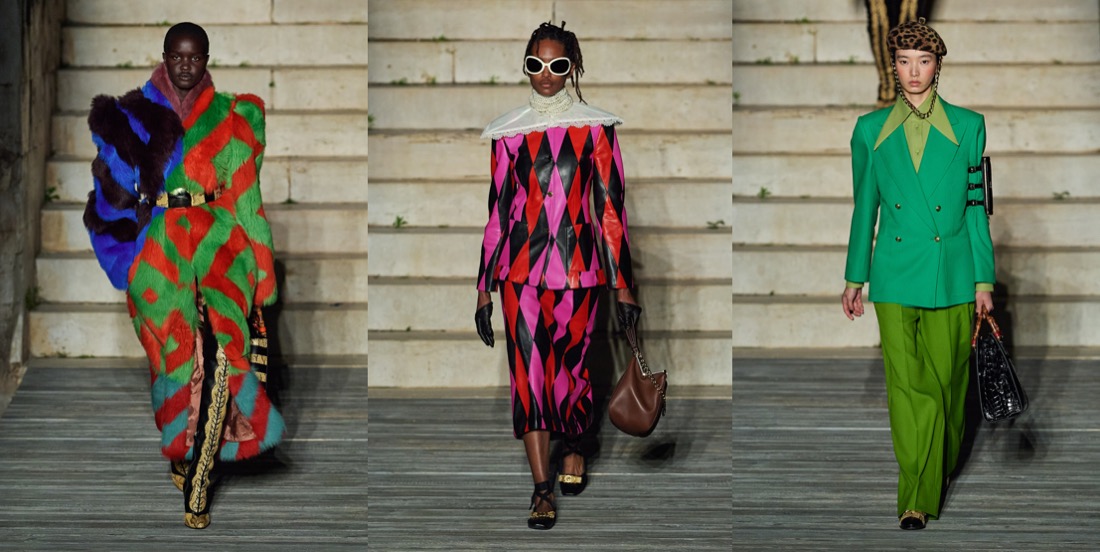
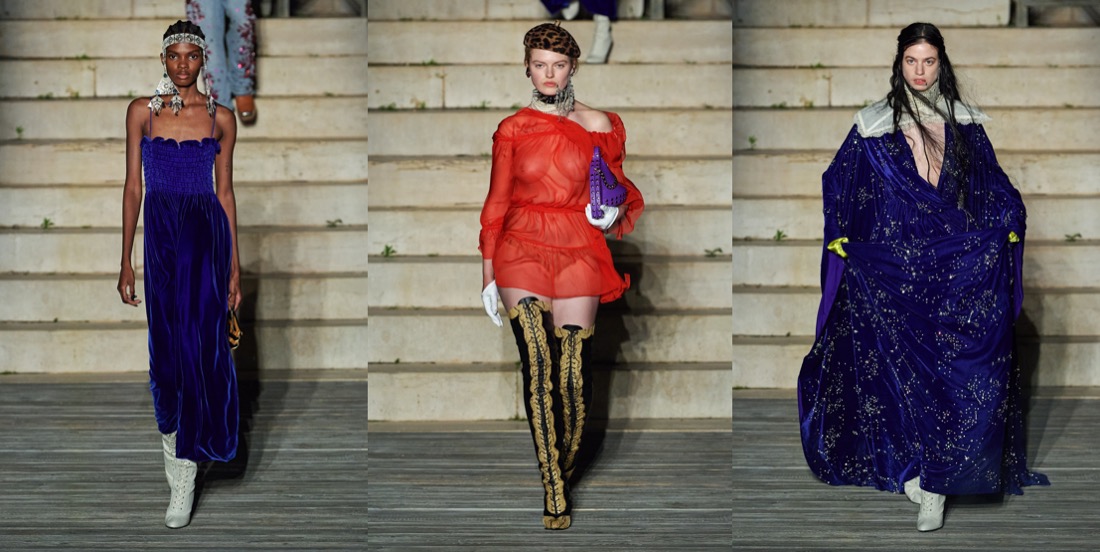
Once upon a time (last Monday), a tribe of cosmic goddesses and priests landed in Puglia and inhabited Castel del Monte – the extraordinary, 13th century castle that actually looks like an alien spaceship. All thanks to Gucci and its resort 2023 fashion show event. Alessandro Michele’s line of reasoning has never been linear. The collections he creates are prismatic affairs, as visually diverse as they are infused by meanings sometimes impervious to easy deciphering. His fascination for layered references and his love of history make him a collector of objects and memories, an archivist of galaxies of images. Not surprisingly, he called this collection “Cosmogonies“. At Gucci, Michele has brought his collections to places of esoteric, disquieting charm – the Promenade des Alycamps in Arles, an ancient necropolis, or Rome’s Musei Capitolini overlooking the Fori Imperiali, where archeological remains give off vibes of splendor and decay. But as far as magical thinking goes, Castel del Monte surely upstages his previous settings. In the castle’s timelessly edgy construction, the number eight was obsessively repeated as an arcane bearer of meaning. It goes without saying that Michele was drawn to the genius loci of this rather setting. “I was looking for a place which gave grace to the mythological,” he explained. “It’s a site where measurements and proportions cross each other as if by magic – the same way measurements of collars and jackets can be somehow magical.” For Michele, the mystery of Castel del Monte resonates with the enigmatic genesis of his creativity, “which operates through the need of putting together constellations of signs and symbols.” Michele’s collections seem to be part of a complex, well orchestrated flux of consciousness, gelled into attractive visual dénouements. While widely Instagram-compelling and immediate, they’re often substantiated by high-falutin, erudite citations. The idea of “cosmogonies of constellations” was born after a reading of German philosopher Hannah Arendt’s essay on Walter Benjamin, whose library was confiscated by the Gestapo, leaving him unable to access to the eclectic network of other people’s thoughts that nurtured his entire oeuvre.
Michele has often built on the tension and vitality of the past to write his own version of the present. “Clothes are mediums, strata of languages,” he said. “Today, ‘making fashion’ doesn’t mean just being a tailor, or chronicling just a one-dimensional narration. Putting together a collection has to do with talking about your idea of the world, because fashion is deeply connected to life and to humanity. Fashion isn’t just a hieroglyph that only élites can understand. It’s about life, it speaks a multitude of idioms, it’s like a huge choir from which nobody has to be excluded. It’s like being at sea, in the ocean, and casting out someone or something is not being fair to the complexity of life.” The designer’s journey this season manifested in a show intended “as a rave,” he explained, where his skills as a costume designer were boosted by the theatricality exuded by the location. “I thought the castle shouldn’t be kept shrouded in silence, but had to be lived and celebrated as it probably was when it was built, a sort of California, the Silicon Valley of the time.” Under a serendipitous full moon, his constellation of characters paraded around the fortress, lit by projections of stars and galaxies. While the idea of cosmogony was only tangentially translated into actual shapes or decorations, the designer’s recurrent theme of metamorphosis was hinted at through unobtrusive prosthetic insertions in some dresses, and also by an unrelenting, flowing panoply of divergences. Chatelaines and go-go girls, demure bourgeois ladies and spectacular nocturnal creatures, long-limbed lovers of bondage sheathed in thigh-high, laced-up stiletto-boots and romantic heroïnes swathed in yards of velvet—it was a feast of coherent discordances, tied together by historical references (portrait collars, plissé gorgets, crusaders’ capes, trains, and medieval crinolines) and by the “incendiary shimmer,” as he called it, of luminous textures under the light. “Women have often worn constellations on their bodies,” Michele said in a sort of conceptual pirouette. “Just think of Marilyn Monroe’s famous last dress studded with crystals; she looked like the beautiful tail of an impalpable comet.” What comes around goes around, but no one performs past-to-present magic quite like Michele.
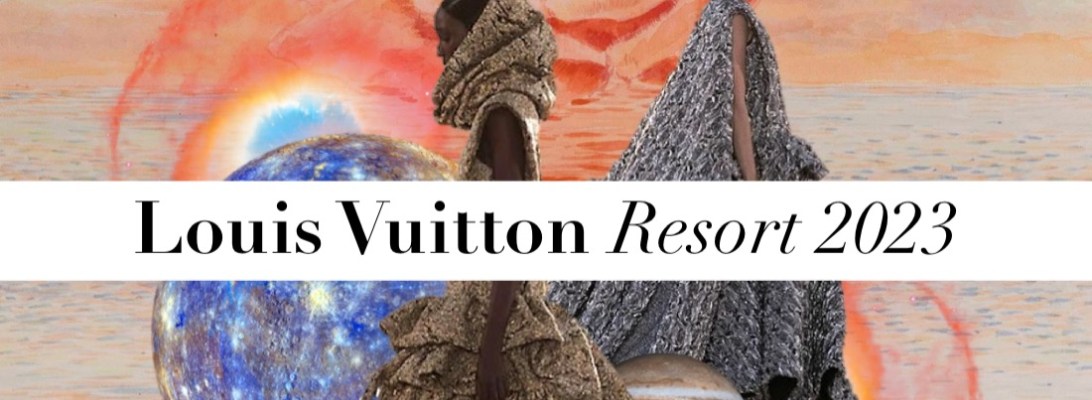
It’s been a while since I truly enjoyed a Louis Vuitton collection by Nicolas Ghesquière. Something clicked again for me. The collection was a powerful ode to goddesses – of the past, present and future. The resort 2023 line-up – presented in La Jolla, California – was a wonderful reminder of how forever-forward this Parisian designer is.
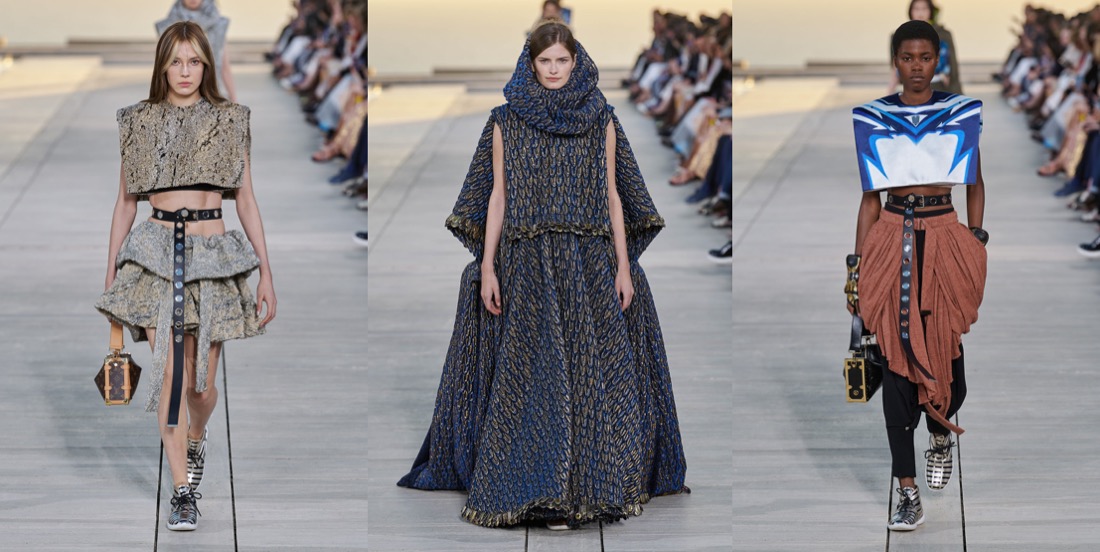
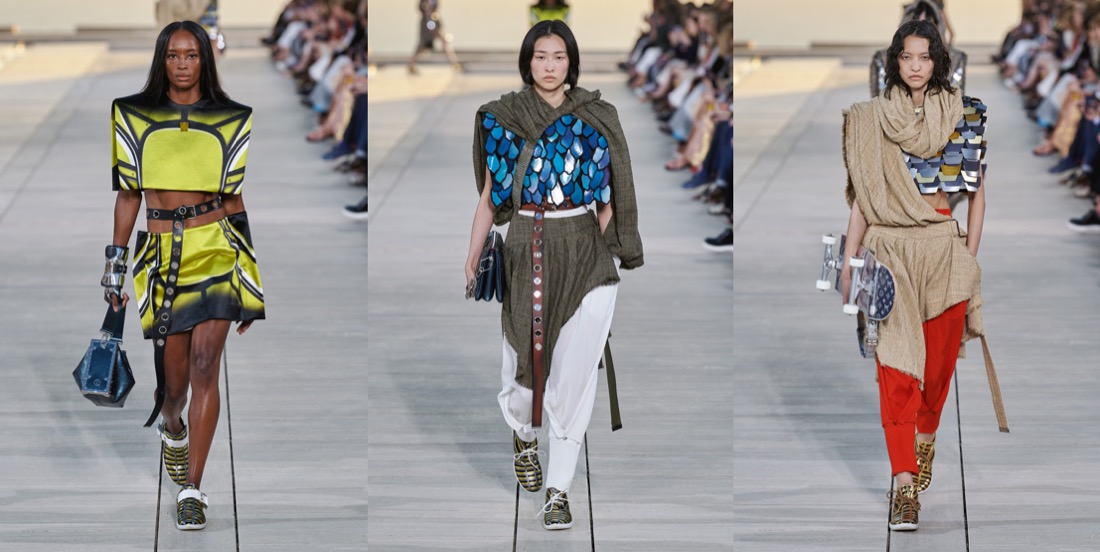
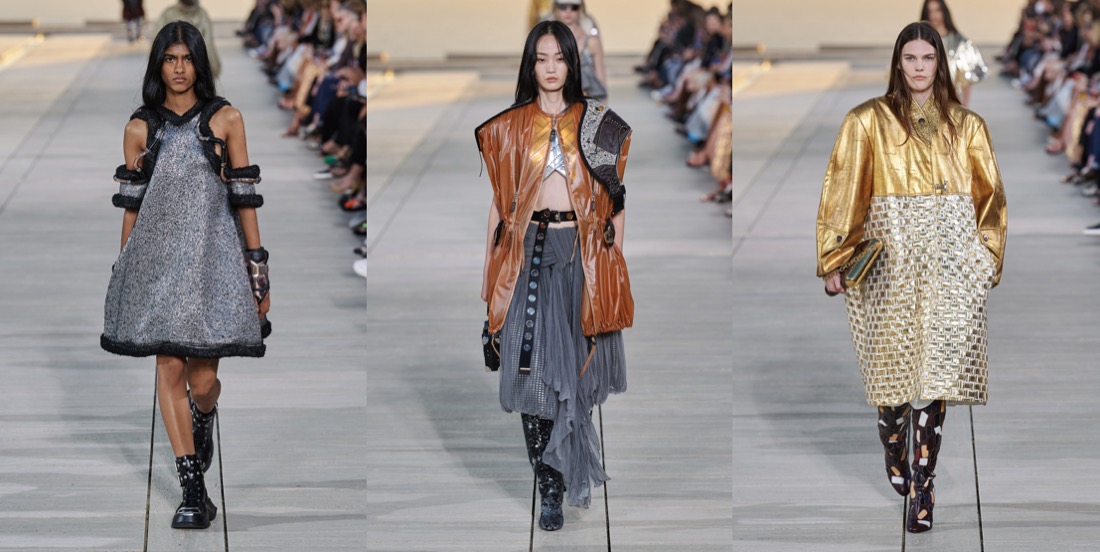
His two post-pandemic Paris shows and the one shown in USA, form a sort of trilogy, starting in the 19th century, making a pitstop in the ’90s of his own post-adolescence, and zooming off into a utopian future. At all three Ghesquière has set out to break down dress codes and build up complex silhouettes. And here’s another Vuitton epic: Ghesquière has made a tradition of staging his cruise shows at architectural marvels. John Lautner’s Bob Hope House in Palm Spring, Oscar Niemeyer’s Niteroi Museum in Rio de Janeiro, I. M. Pei’s Miho Museum outside Kyoto, and now the Louis Kahn-designed Salk Institute in La Jolla. Kahn’s masterpiece, its monumentality is matched by its humanity, but Ghesquière was as switched on by its setting as by its Brutalist concrete. “The guest of honor for the show is the sun,” he said poetically. “The elements are invited.” This was a collection about playing with those elements. He chose metallic fabrics and embellishments that reflected the setting sun, some as glassy as mirrors, and other materials that offered protection from it, wrapping long swathes of linen, for example, around the head and across the body. Other pieces lifted design details from water sports; the airbrushed colors of half tops and boxy short skirts apparently came from jet skis. Ghesquière is a designer whose collections are minutely pored over and studied, and some of these gestures looked like callbacks to earlier seasons, only amplified, maximal where he used to be minimal and streamlined. The show began and ended with a bang. The opening dresses, one more voluminous than the next, were cut from robust jacquards (he compared them to molten lava) that looked like they really could’ve repelled enemy fire. The effect was almost stately, but for the soft-soled sneakers they padded out on. At the finish came a trio of jackets with enormous sculpted collars as shiny as armor perched above tinsel sleeves. These were extraordinary: imaginative and otherworldy. Ghesquière was firing on all creative cylinders here, creating a positive feedback loop. You left wanting to be one of his Amazon superheroine goddesses.
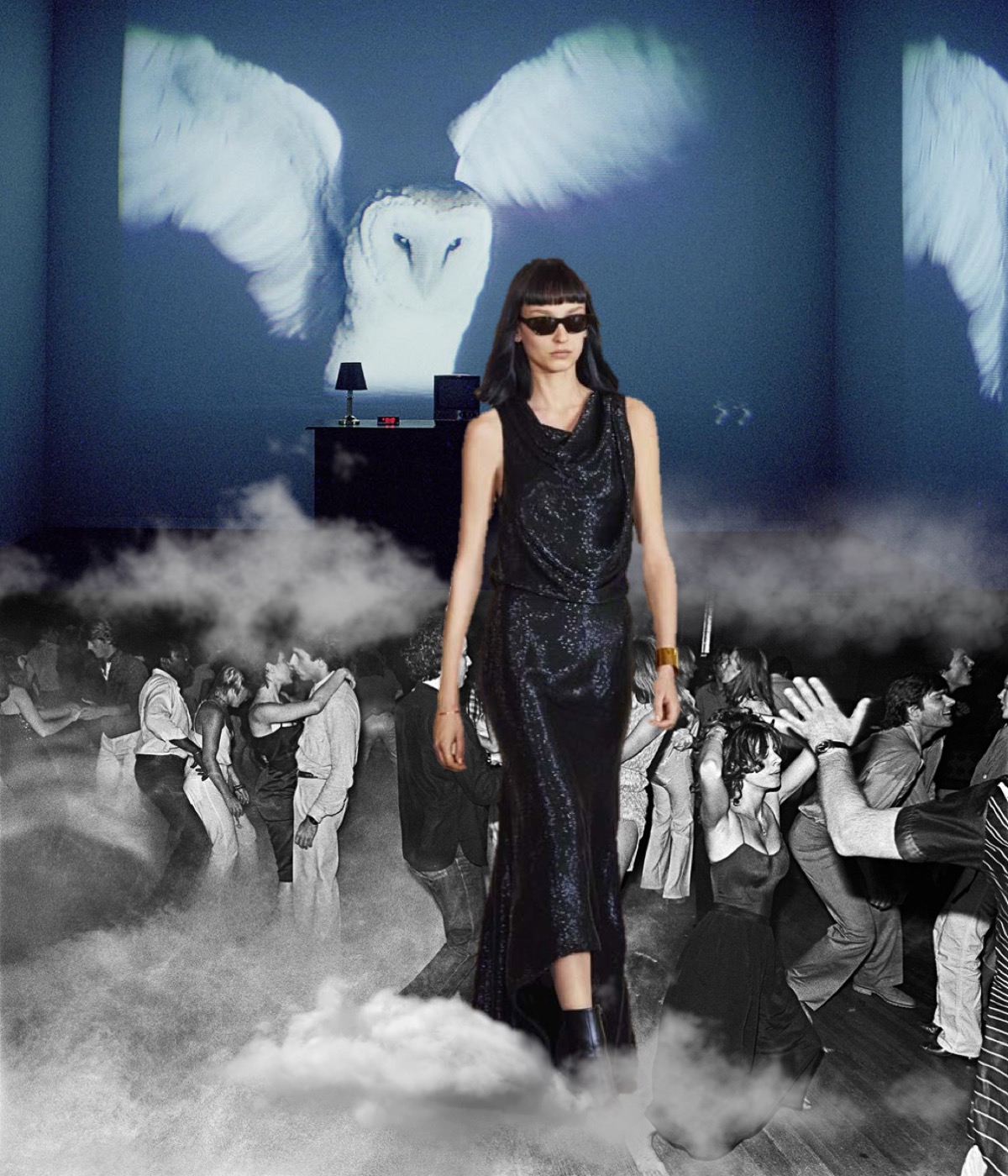
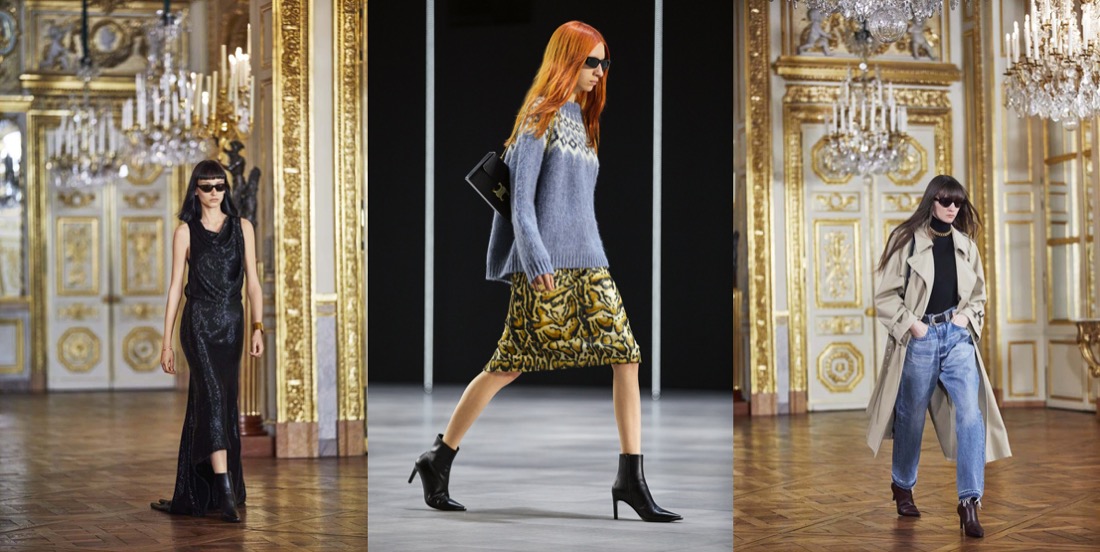
Last week, Hedi Slimane has presented his autumn-winter 2022 collection for Celine, which he chose to stage in two historical monuments in Paris, the Hôtel de la Marine and the the Hôtel National des Invalide. Entitled “Dans Paris“, the show was filmed by Slimane, off the usual Paris Fashion Week schedule and starred Kaia Gerber. Looking at the first half of the collection, you’d be forgiven for thinking that Slimane opted to pare down any notion of extravagance – a tricky feat given the opulent settings. Strolling below the golden ceilings came jeans and everyday wardrobe staples like a cream roll-neck jumper, a jersey zip-up and an oversized grey hoodie so large it extended into a dress. As club sounds pulsated louder throughout the show (provided by NYC-based artist Hennessey), as did the clothes, seemingly coming alive with every beat. Suddenly, sharp heels, sparkly party dresses and gold embellishments weaved their way into the line-up of everyday wear. But, like the dark corners of any sexy, exclusive Parisian nightclub, these pieces weren’t thrust in faces, rather intermingled with the simpler pieces. As usual with Slimane’s Celine, it’s not about novelty, but refining the timeless (and quintessentially Parisian) wardrobe.















 Design & Culture by Ed