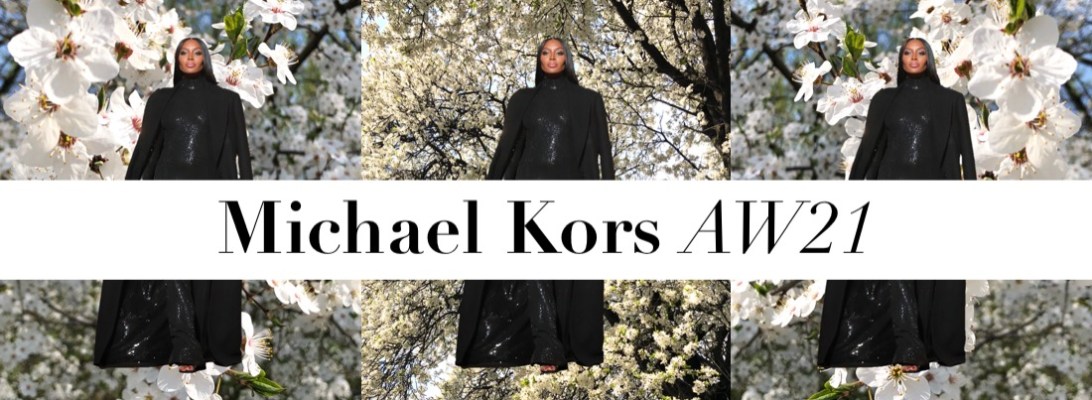
Timelessness. Michael Kors AW21

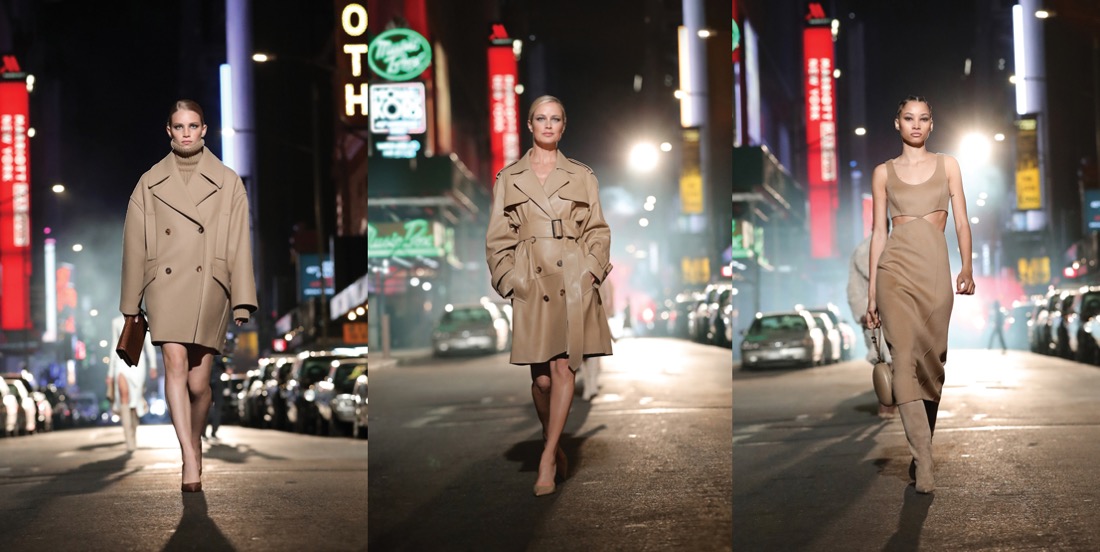
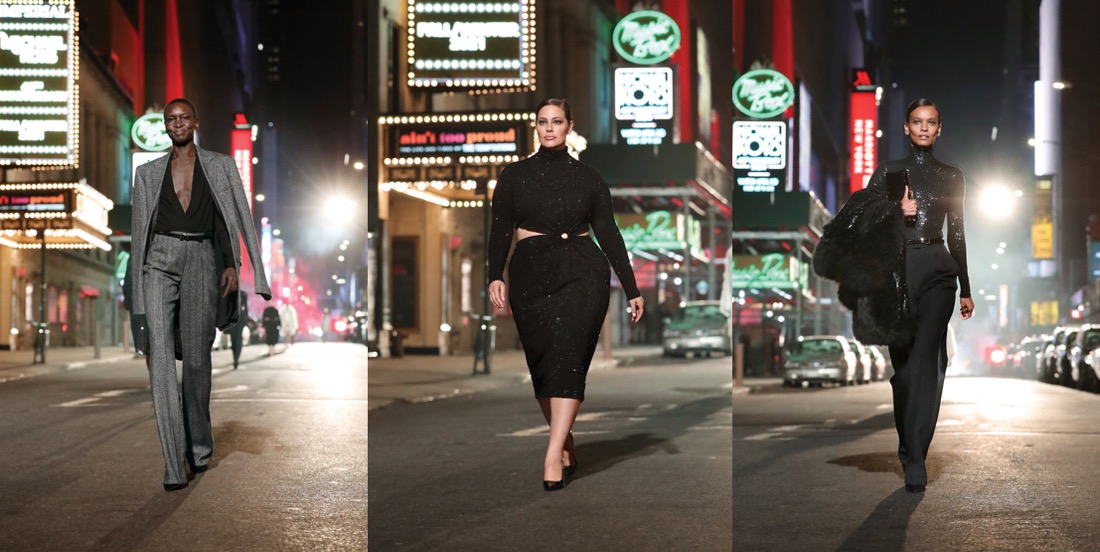
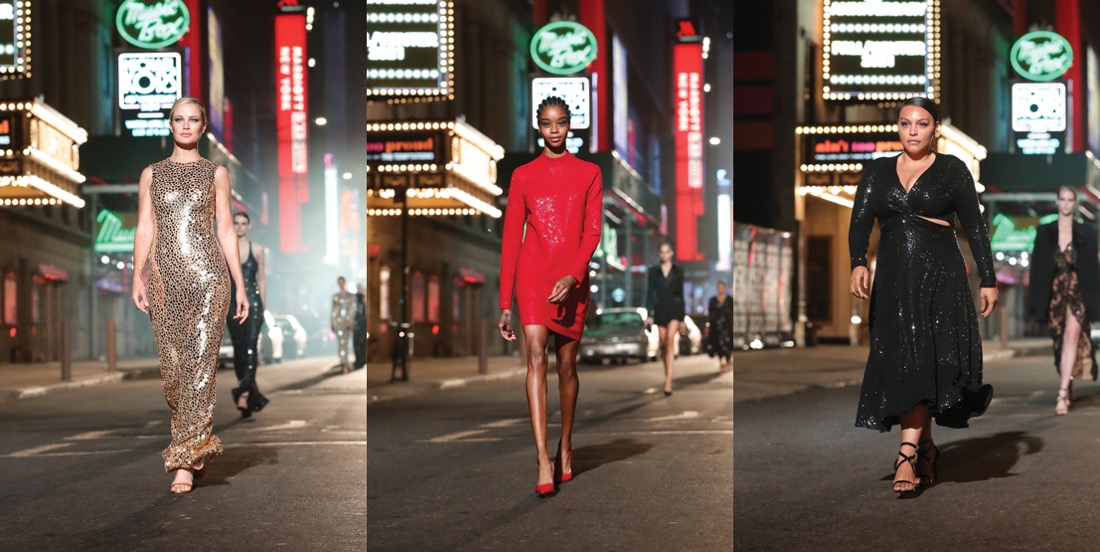
I might not be a Michael Kors fan, but his latest collection (celebratin the brand’s 40th anniversary) is so great. It’s the old, good Kors of the late 1980s and early 90s, adapted to contemporary times (well, maybe specifically the re-emergence times that will come sooner or later). How do you sum up a four-decade career in 63 looks during a pandemy? In an audienceless show, you’ve got Naomi Campbell, Helena Christensen, Carolyn Murphy, and Shalom Harlow vamping down New York’s 45th Street in evening sequins and double-face cashmere. The designer told Vogue that in the downtime of the pandemic, he’d gone searching for the “connective threads” of 40 years. “Certainly timelessness is something we’ve always prided ourselves in, something that I think our customers really appreciate.” One season he gives his runway a timely Mad Men gloss, another it gets a Studio 54 spin, but his collections are always optimistic, always unshakably him. Much of what he did first, American fashion now takes for granted. Bare legs in winter. The unexpected combination of a rhinestone-encrusted cocktail dress and a man’s topcoat. A city-country mix. An evening number with streamlined athleticism, a maillot with leather straps and matching heels. “Extremes of opulence and glamour with simplicity and ease” is how he summed up his approach. In a year when the Costume Institute is showcasing American fashion for the first time in decades it seems important to recognize that much of what we think of as American sportswear is Kors-ian sportswear. Considering our collective experience of the last 13 months, back on 45th Street Kors put the emphasis on opulence and glamour. “People are going to want to step out, get dressed up – in certain instances get overdressed. Girls are going out for a hamburger in cocktail dresses and high heels.” This was his bid to clothe them for those reemergence moments. Maybe in a red patent leather balmacaan, a “cotton ball of a shearling coat,” or a glossy black puffer cape. Or perhaps in a hand-sequined silk jersey gown in gold under a pavement-sweeping camel cashmere coat. And always with a spiky pump or slingback.
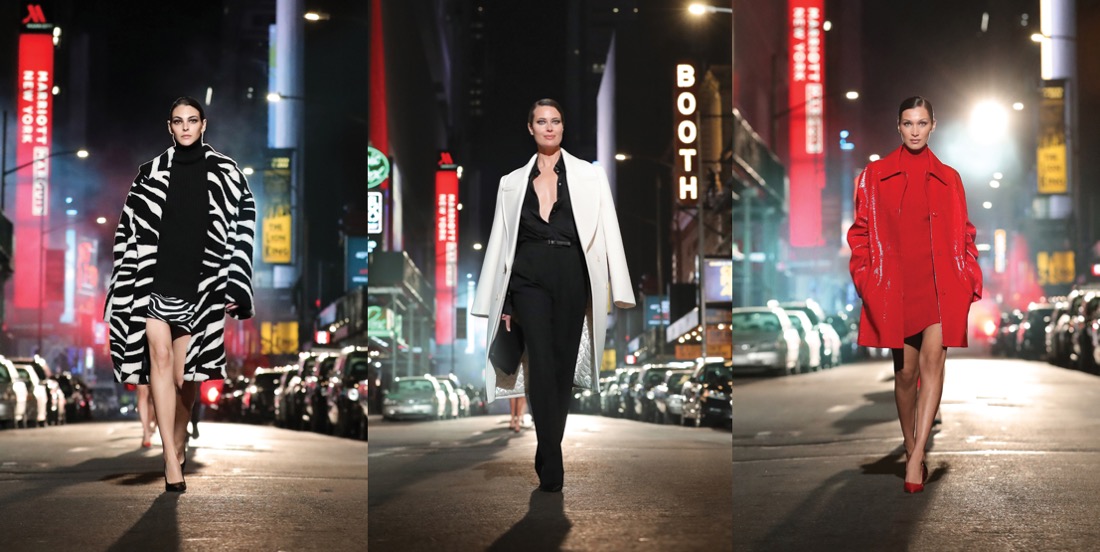
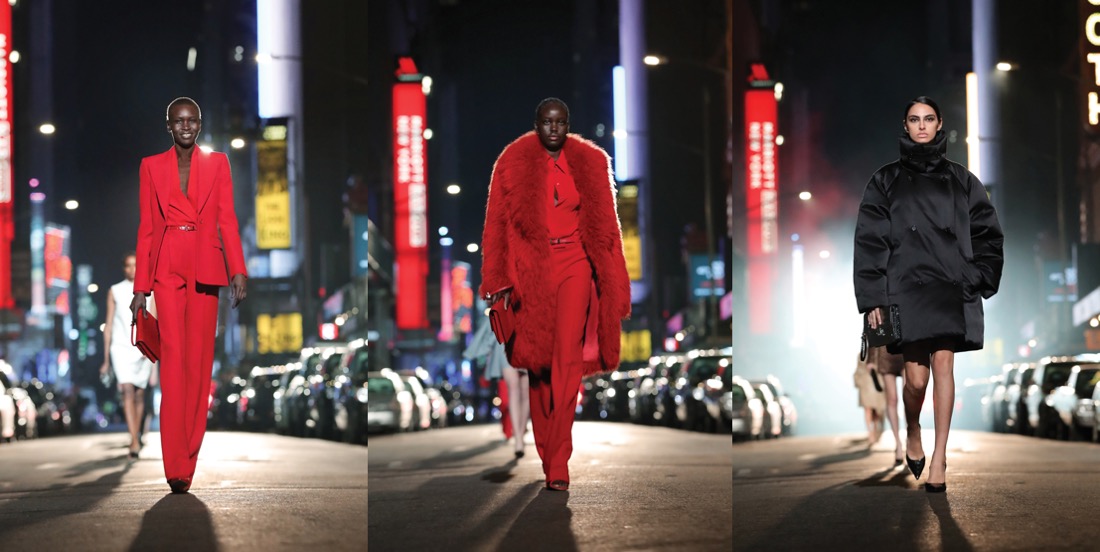
“Live” collage by Edward Kanarecki.
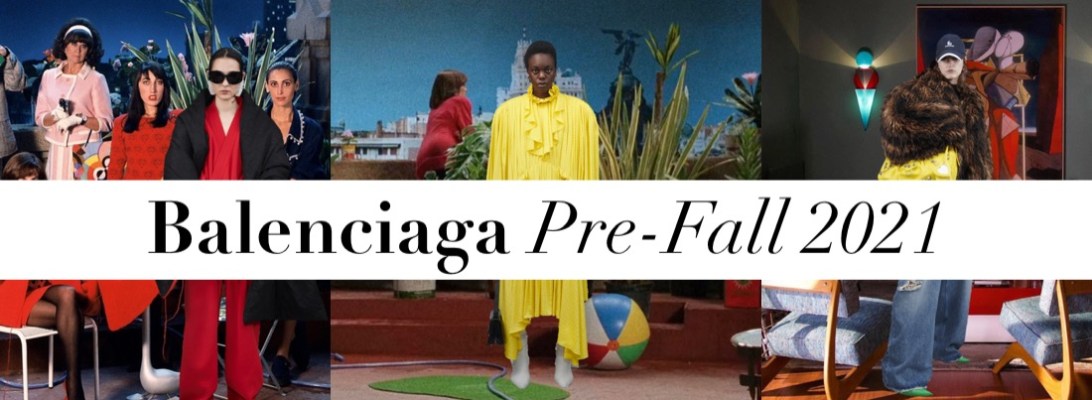
Feel Good. Balenciaga Pre-Fall 2021

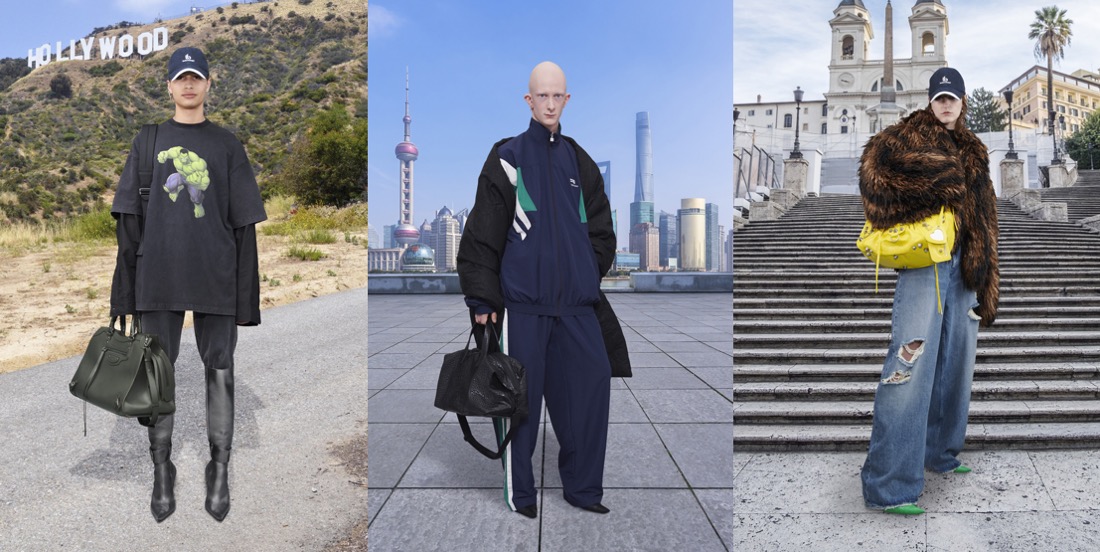
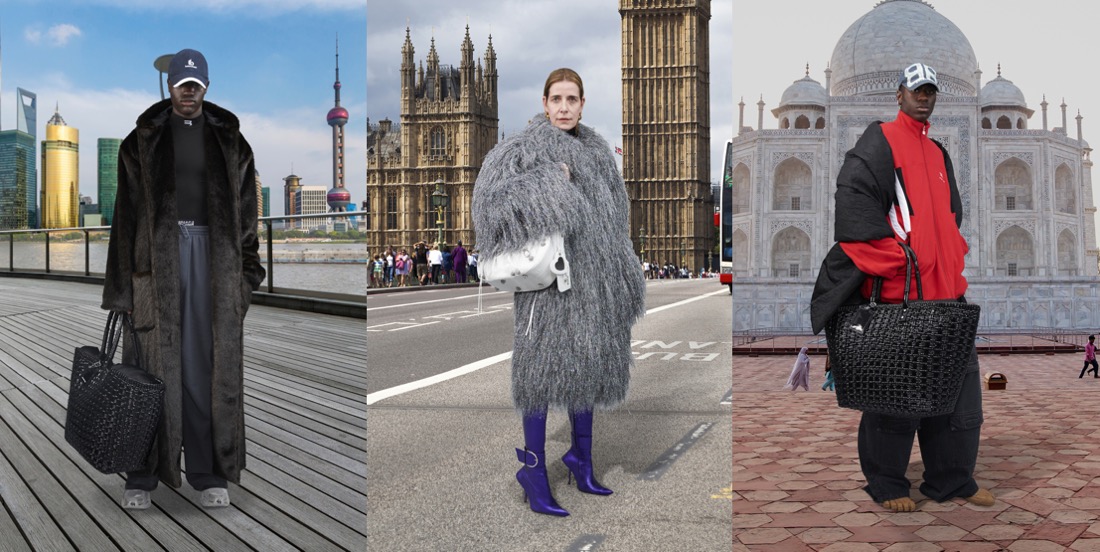
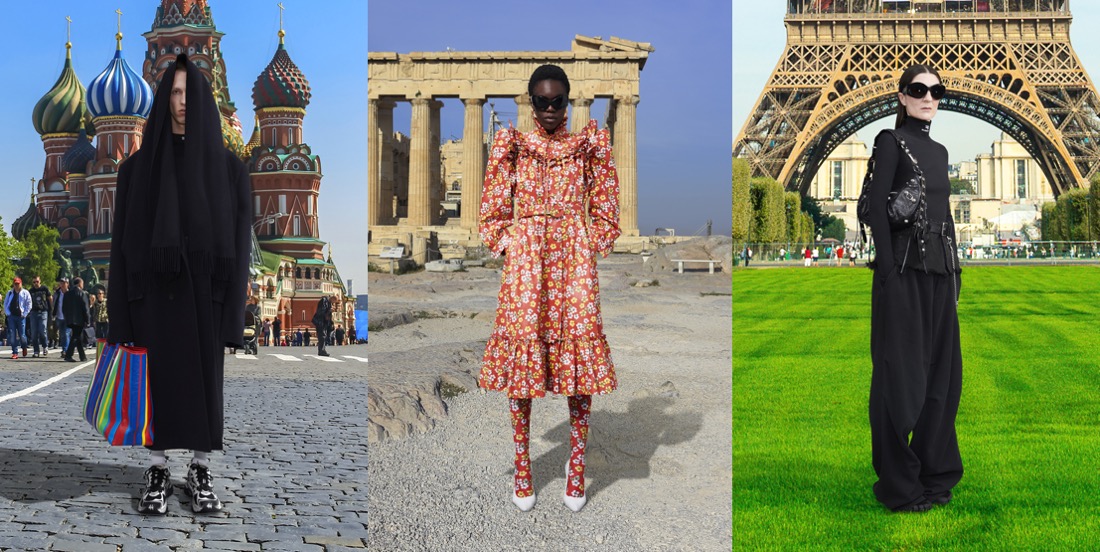
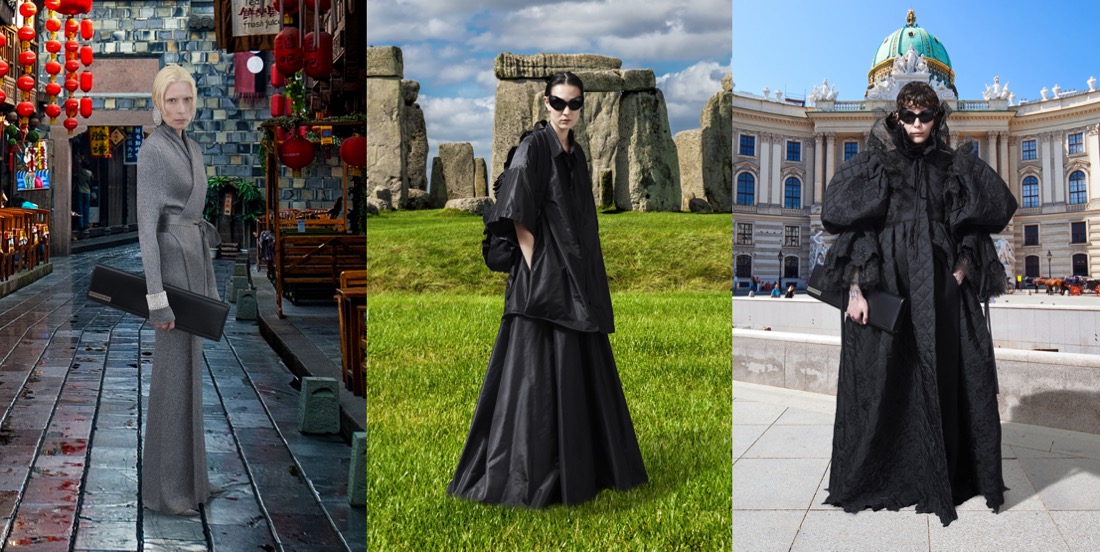
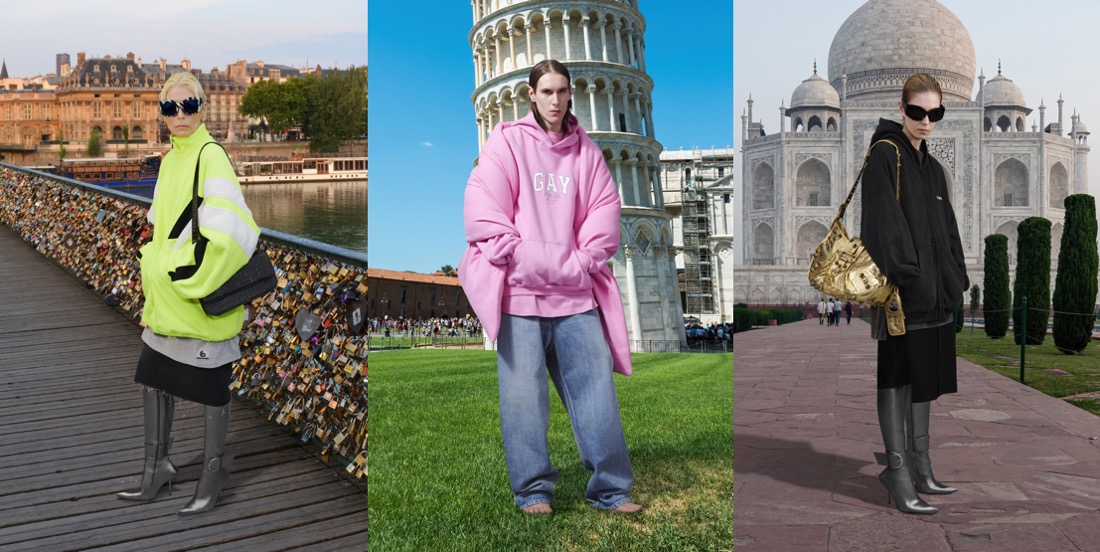
There’s always irony to what Demna Gvasalia does. You can tune into the pre-fall 2021 “Feel Good” Balenciaga video and not see any fashion at all – just a stock compilation of heart-warming running horses, kittens, children, and dreamy landscapes. But the most radical content in this Balenciaga outing is actually invisible to the eye. “When I started this collection,” Gvasalia told Vogue, “I said only show me sustainable fabrics. I don’t want to look at anything else.” So everything here, beginning with the pink hoodie to the black dramatic puffed-sleeve gownlike silhouette at the end, is made from recycled and otherwise certifiably okay materials. That’s big from a brand as powerful and as influential as Balenciaga, one of the major fashion actors of the universe which calls on suppliers who do significant volumes business with them. “As creative directors, asking for this causes a chain reaction, and we have to use it,” Gvasalia continued. Taking action on absolving shoppers’ anxieties about the damaging consequences of how their clothes are made ought to be the norm. Gvasalia promises that what’s gone into this collection isn’t a one-off gesture – because who isn’t suspicious of the greenwashing promo tricks of fashion these days? He started asking for better, more sustainable alternatives a while back, he attests, and began putting some of them into the collection in September. Now to the clothes: a photoshopped lookbook, posed against a wish-we-were-there travelogue of the famous backdrops of the world. Design-wise, there are just as many familiar Balenciaga-universe destinations here: the oversize hoodies, sweatshirts, tailoring; tweaked takes on signature floral-print dresses; recycled leather and denim things; magnified utility-worker jackets. A lot of the garments, Gvasalia said, are constructed as joined-together all-in-one pieces “trompe l’oeil, so what you see isn’t what you get. A lot of dresses which are actually coats.” So, too his lookalike ‘furs,’ which aren’t either animal pelts or petrochemical fakes. A brown chubby jacket and a coat are the results of hundreds of hours of chopping up and embroidering recycled cotton. They’re lavishly time-consuming hand-made pieces. Obviously, Gvasalia is keeping his creative powder dry for the long-deferred launch of the Balenciaga haute couture collection that he’ll show sometime this summer, pandemic willing. Meantime, predictive minds might leap to the elegant silhouette in black – full length, balloon sleeved, quilted and lace-trimmed drama that Gvasalia swears was inspired by the shape of Princess Diana’s wedding dress. It’s actually a coat. “ She’s wearing a t-shirt and jeans under that.” The Gay Pride hoodie worn with the padded stole (consciously a Demna-for-Balenciaga adaptation from Cristobal’s matching ensembles for couture customers) is another highlight of the collection. “I’m gay. I grew up in a society where I couldn’t have worn that, and there are places in the world that you cannot today,” the designer said. “It’s important to push through against homophobia. I’m not someone who goes out in the street and shouts. But this is the political fashion activism I can do.”

“Live” collage by Edward Kanarecki.

Daydream. Celine AW21

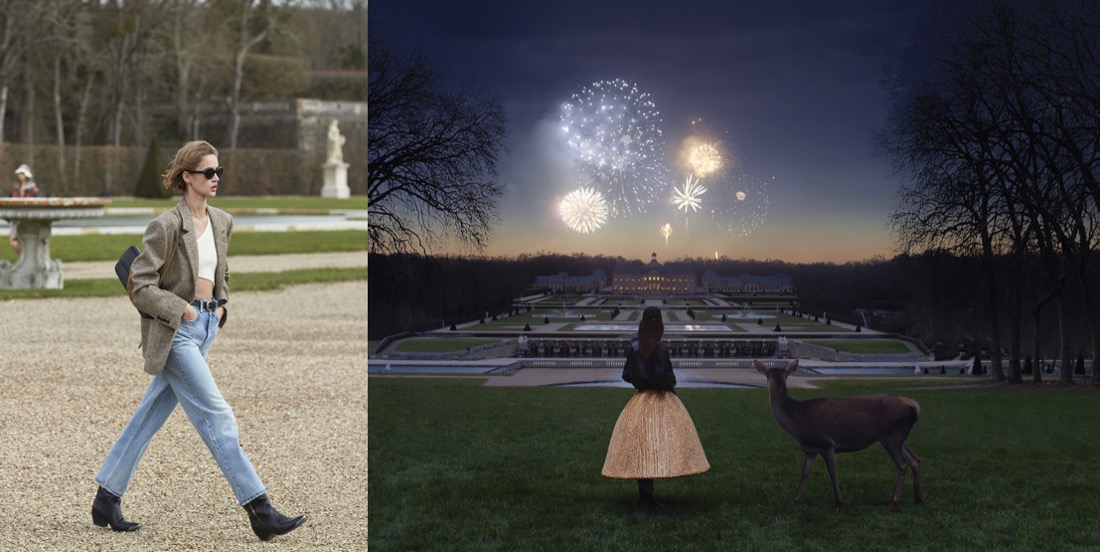
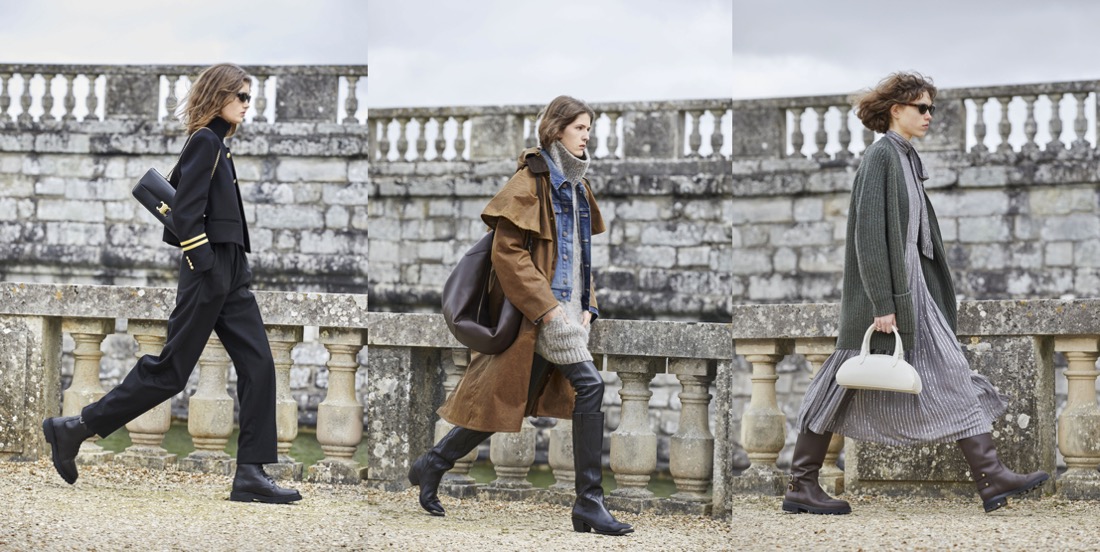
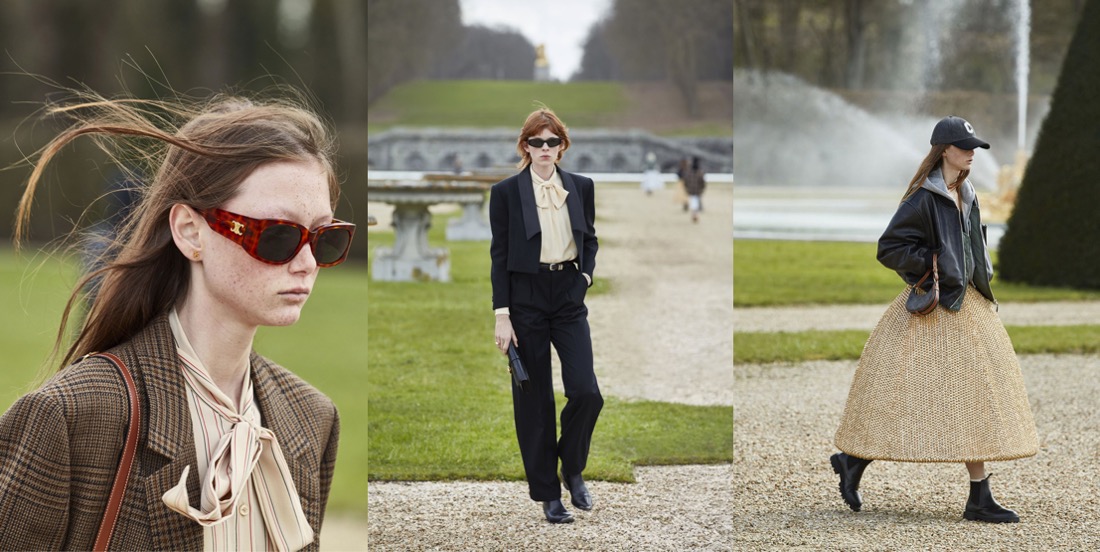
Hedi Slimane wouldn’t be himself if he wasn’t obsessed with youth – even for a moment. But there was something unexpectedly intriguing about his Celine vision of lockdown-era teenagers, who are totally fed up with the real world and induldge in fancy, Disney-like daydreaming. Definitely, the collection’s video was a highlight. The audienceless show was set amongst the breathtaking gardens of the Château Vaux-le-Vicomte, some 55 kilometers outside Paris. The always-sad Hedi girls walked casually past the exquisite formal fountains and pools landscaped centuries ago by André Le Nôtre. It’s landed as a sequel to the last Celine menswear show, in which Slimane’s young chevaliers roamed the battlements of the Château Chambord in the Loire valley. Clothes-wise, this collection was rather usual Slimane offering. Traditionally, the uniform Parisian wardrobe is paced out and remixed in that on-point manner that has made French girl-style the envy of the world. It’s that knack of pairing something posh that might have belonged to your mom or dad with something casual. Throwing on a tweed hacking jacket or trench coat with exactly the right cut of bashed-up old jeans is also always a good idea. The new additions included nods to princess wardrobe: a heavily embellished ball-skirt worn with a heavy leather biker jacket, for instance. There was a line in Slimane’s show notes which alluded to a “utopian parade and melancholic daydream of youth interrupted.” It ran after quotes from Baudelaire, Paul Verlaine, and Arthur Rimbaud – France’s decadent, libertine poets eternally famed for exalting the excess and pain of misspent youth. In a time when parties, clubs, festivals, and events have been banned for so long, the show ended with a shift to a fairy-tale scenario. A girl in a glittering, hand-beaded crinoline stood looking toward the chateau with fireworks exploding in the sky. There was a deer by her side, a tear on her cheek. There’ll be nowhere for the princess to wear that couture-ish crinoline yet – definitely not in locked-down Europe. Let her dream, at least.

“Live” collage by Edward Kanarecki.
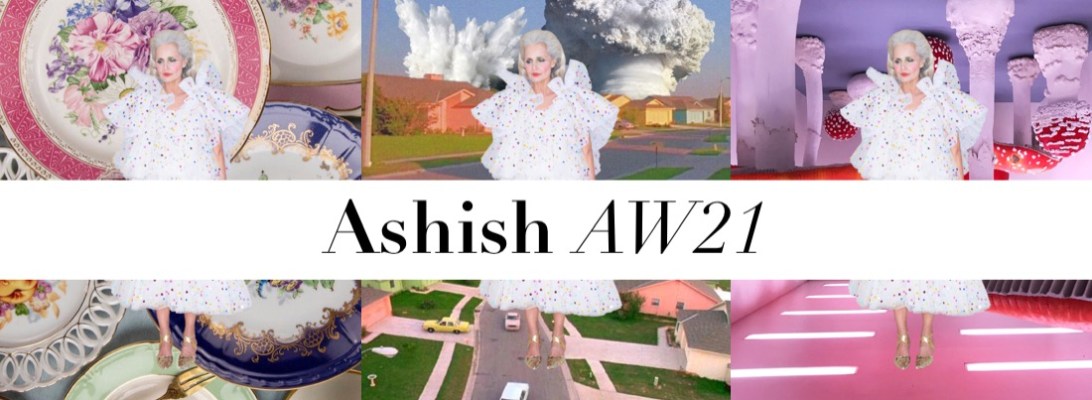
Domestic Glam. Ashish AW21

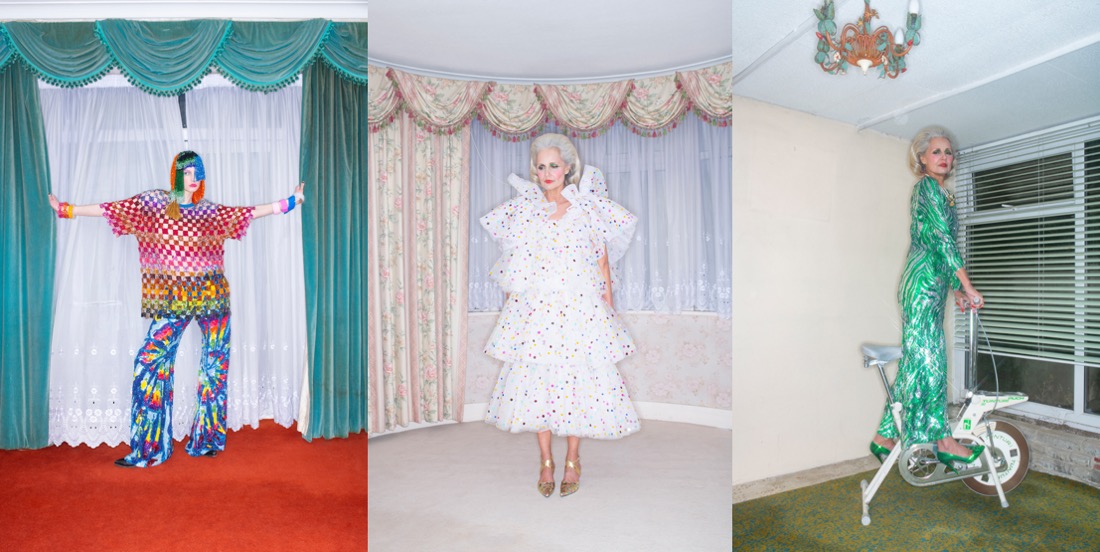
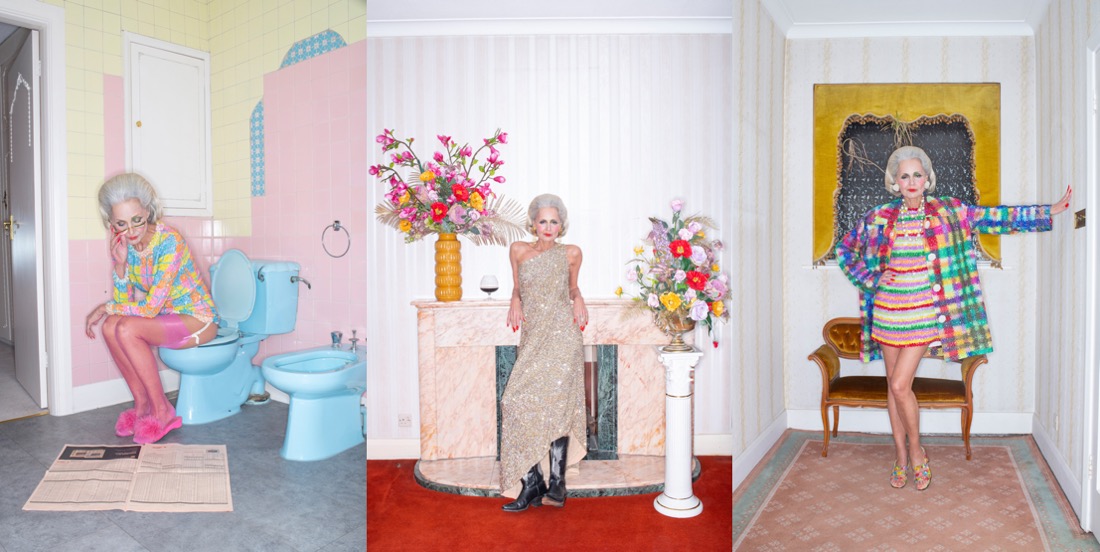
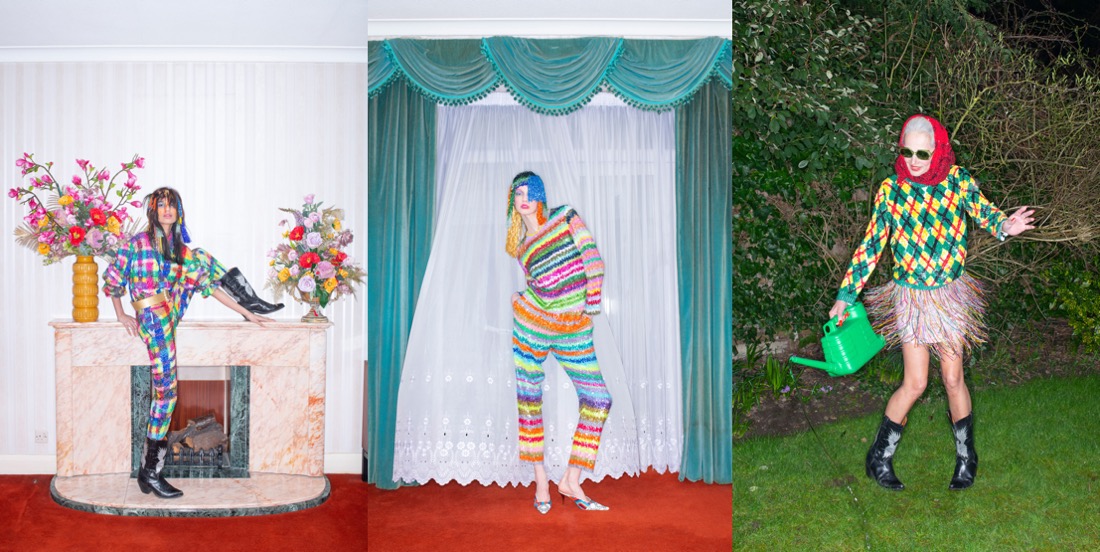
Brands and designers throw around the ‘stay-at-home-glam’ term for a year now, but most of the time it just feels forced and like a desperate attempt to sell eveningwear. However in case of Ashish‘ autumn-winter 2021, this notion of glamour in times of global pandemy is honest and at last makes sense. Ashish Gupta has the solution to fashion’s sweatpant-mania: simply offer garments that enable the consolatory comfort that we’ve grown fond of in isolation, combined with the communal joyfulness we’re aching to emanate. This collection fabulously demonstrates that comfort and joy can be mutually inclusive and mutually enhancing. When he was a student at Central Saint Martins, Gupta said he picked up this excellent line: “An evening gown should feel as comfortable as a T-shirt, and a T-shirt should feel as special as an evening gown.” And while he can’t recall where the line came from, he explained, “I’ve always carried it with me. So I always design my clothes to not be physically restrictive in any way. Even things that look body-con are cut on the bias and are super soft. Everything has pockets and zips, and there is never any corsetry; I think you should wear clothes you can slip out of very quickly and easily.” Shot in glamorous Finchley here in London, and impressively intricate to consider on the rail in Gupta’s house, this specific collection also seemed deeply easy to quickly get into, both as wearer and watcher. Gupta said the formula of its creation was to consider patterns and visible textures that have, through their history, the power to generate positive and comforting associations – “like when I think of tie-dye, I always think of beaches and holidays” – and then go to town on them via the sequin sequencer. The joyful result is the product of intense labor: a tie-dye long sleeve, for instance, took two Ashish employees two weeks to embroider by hand, once the exact order of sequins had been drawn and sorted. This collection also ran riotous gamut across the spectrum of so-called formalwear and so-called casualwear, two other categories whose perceived opposition seems increasingly anachronistic and redundant. Happily enhanced by these fantastic Sam McKnight wigs, this was a collection in which every piece of every look was made to enable joy and comfort in most conceivable circumstances. If these ’20s really are going to roar, Ashish is bringing the noise.

“Live” collage by Edward Kanarecki.

Walking Amulets. Stella Jean AW21

Stella Jean is the pioneer of ethical fashion, long before it became the new standard in the fashion industry. Moreover, Jean doesn’t shy away from controversy or important causes. She has been a fierce spokesperson bringing awareness of racial inequalities in the Italian fashion system to the fore, pushing the industry to answer tough questions and to bring about effective change. In her practice as a fashion designer, her commitment to celebrating multiculturalism and the creative contribution of minorities and marginalized communities in her collections goes back a long way. Her label was actually born out of her desire to pay homage to her Haitian-Italian roots. For autumn-winter 2021, she partnered with the Food and Agriculture Organization of the United Nations (FAO). Through its Women’s Committee, she teamed up with the Mountain Partnership Products initiative (MPP), which provides technical and financial support to small communities of producers and artisans in remote rural and mountain areas around the world. Jean was introduced to the work of Kyrgyz women from Barskoon, a settlement at 1,750 meters elevation in the northeast of Kyrgyzstan. The area is known for inlaid felt carpets and wall hangings traditionally handcrafted by women, using techniques passed down from generations. “When I saw all that beauty, the richness of the colors, the symbology, the history behind this culture, I was blown away,” Jean told Vogue on a Zoom call from her home in Rome. “These women are custodians of a naturally circular economy, totally equitable, and with the lowest environmental impact.” Jean connected remotely with the Topchu artisanal collective there with MPP’s support. Working with a local designer based in Bishkek, she came up with a capsule collection of five pieces featuring Kyrgyz embroidery in felt work. Jean chose simple shapes that can be easily replicated; artisans in Italy cut the patterns and sent them to Kyrgyzstan, where they were embroidered by the Topchu women. Once embroidered, the pieces were sent back to Italy to be assembled. “From next season, the collective can work on the patterns as they wish, creating new items that can be sold and bear profit,” she explained. “The patterns are not mine; I don’t own them. And the beautiful felted decorations have only been loaned to us – they’re theirs. The Kyrgyz women can source textiles locally, producing independently from outside partnerships. We’re not their saviors. We just have to accompany them, and then let them go find their own path. I think this a healthy, participatory way to look at globalization.” Jean integrated the Topchu collaboration into her collection beautifully, while also continuing to support a network of women artisans in the Umbria region, who made specially commissioned pieces, like a fabulous fringed wool poncho handcrafted with imaginative 3D ornamentations. For their part, the Kyrgyz artisans worked on simple wardrobe staples, energizing them with their vibrant decorations in saturated colors. The capsule comprises five looks: A sweeping hooded cape and a slim city coat in Prince of Wales checks were both embroidered with colorful motifs of birds and flowers in a mountainous landscape, and an oversized striped cotton shirt was decorated with long-legged herons. The pièces de résistance were two gorgeous skirts – one fitted, the other cut in a trapeze shape- both embroidered all over with the Shyrdak motifs traditionally handcrafted on felt carpets. “Their symbology is ancient,” said Jean. “It brings prosperity and good luck. Those skirts, they’re almost like walking amulets.”

Collage by Edward Kanarecki.