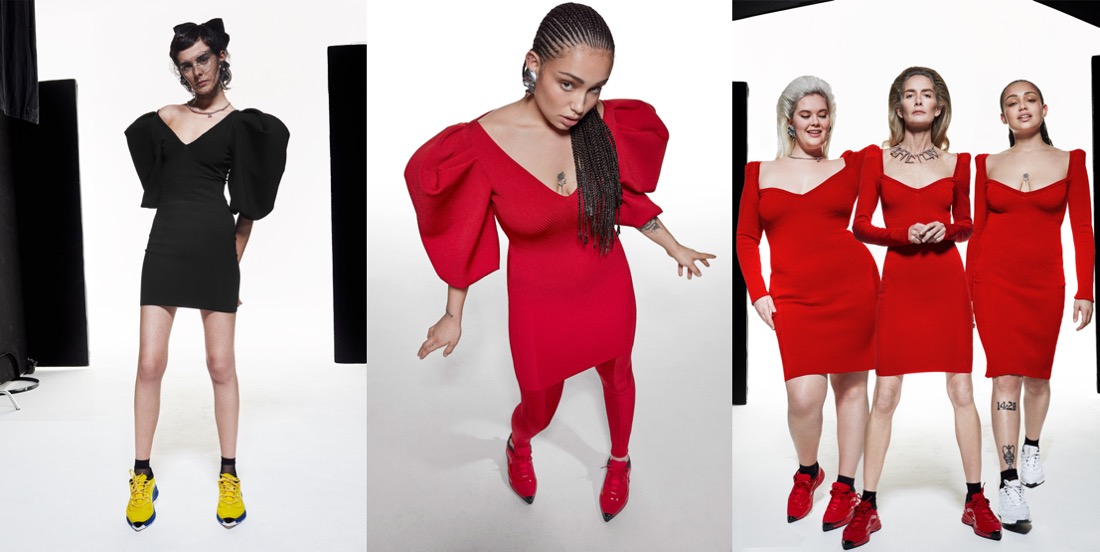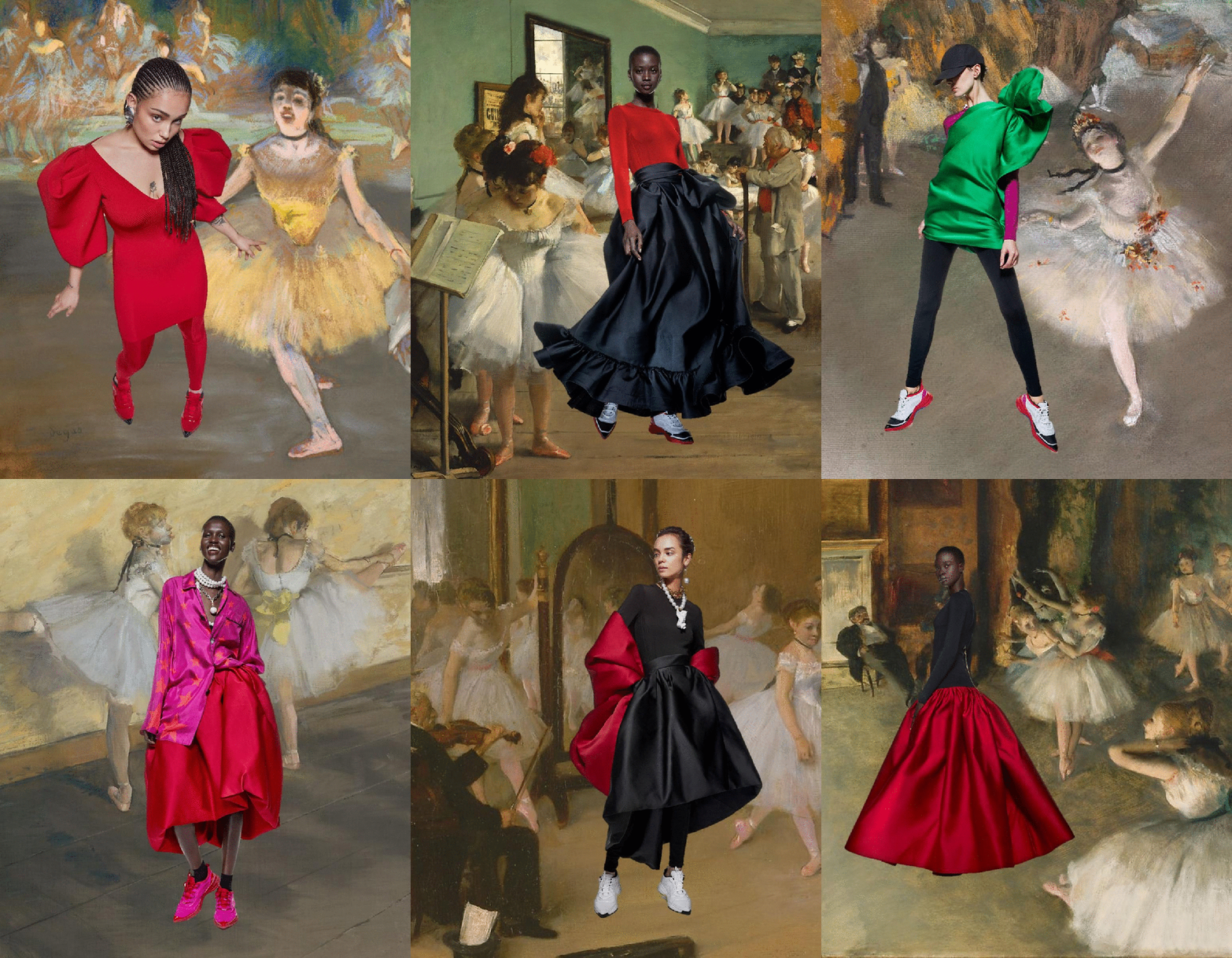
His & Hers. The Row AW21

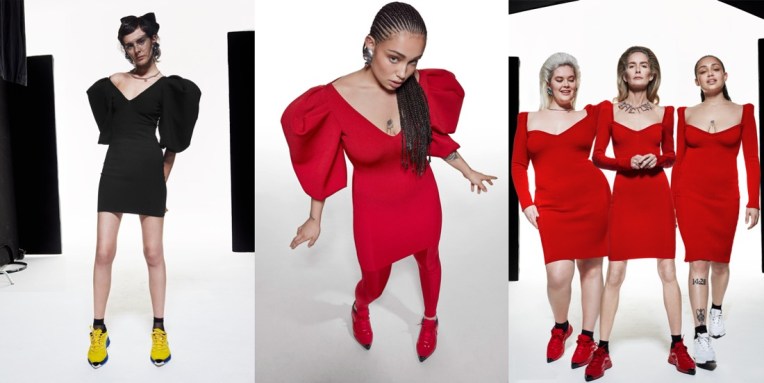
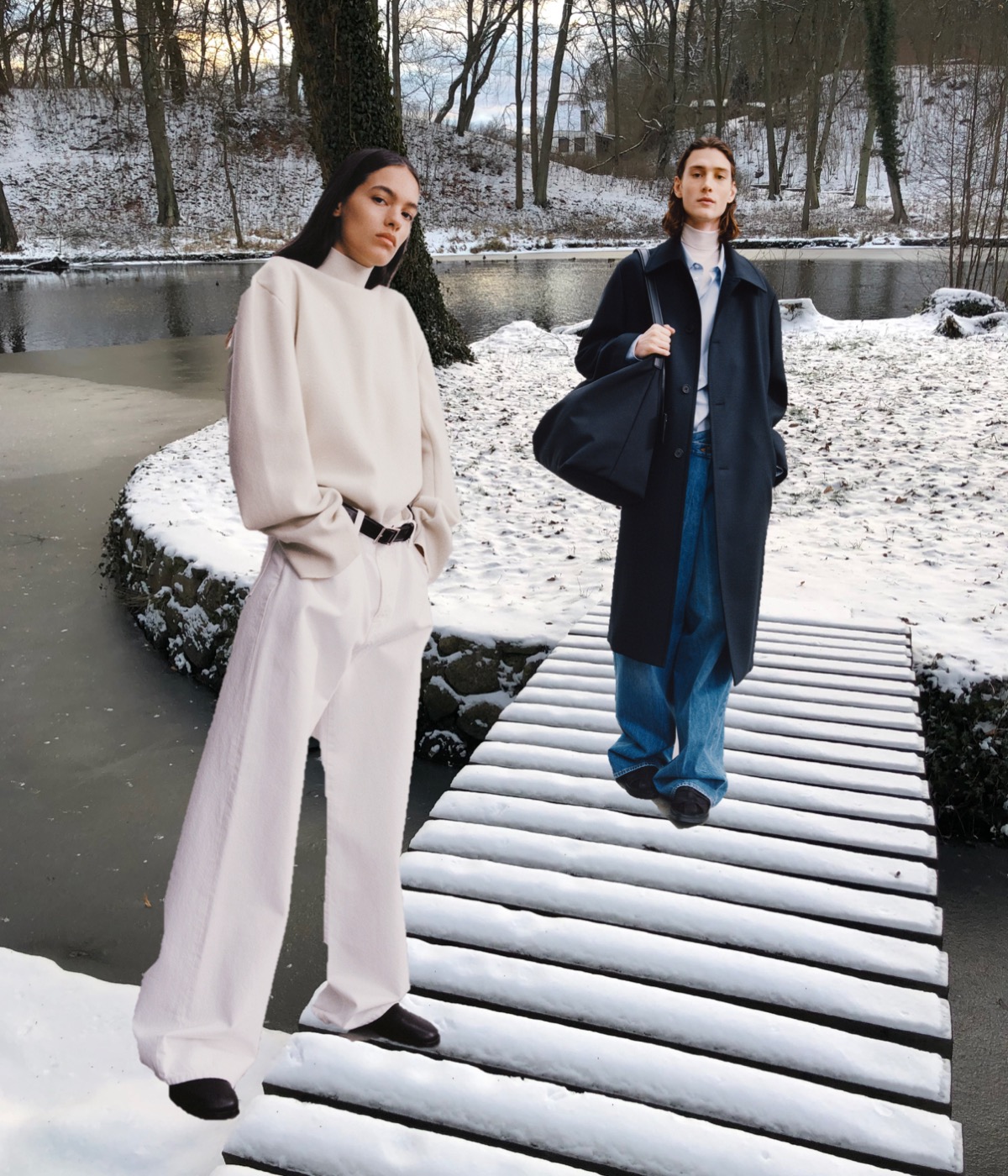
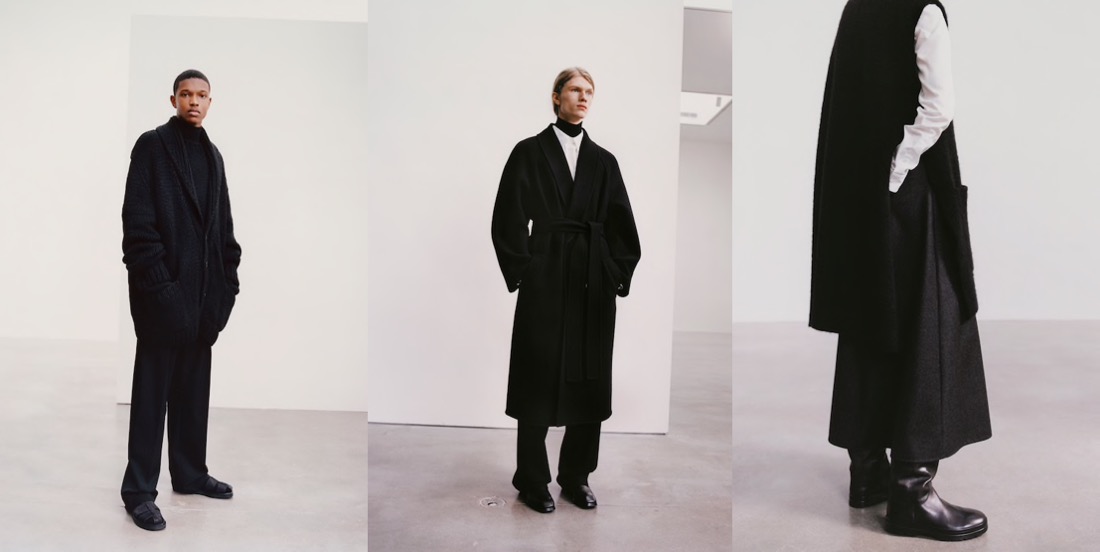
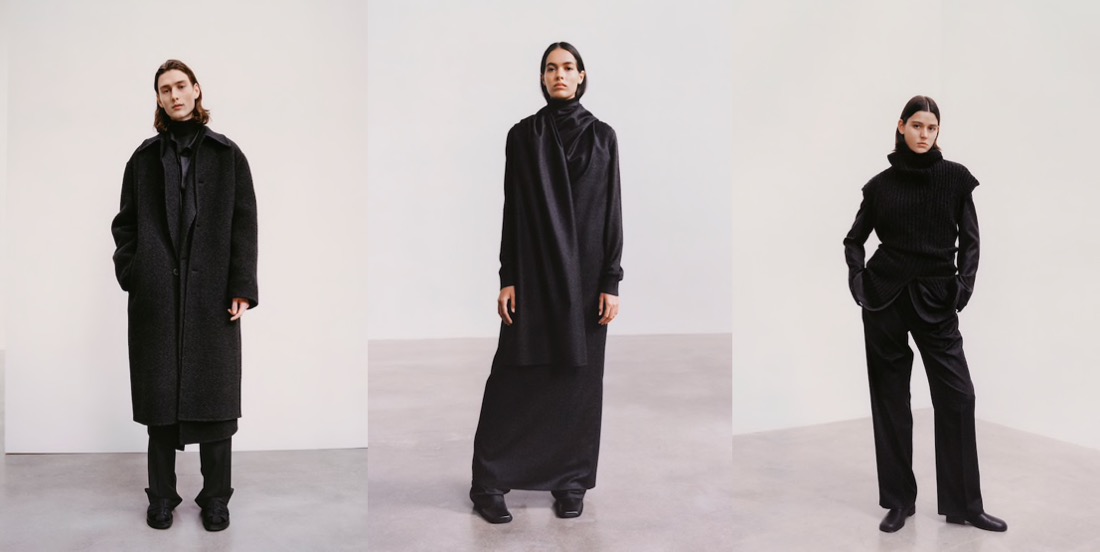
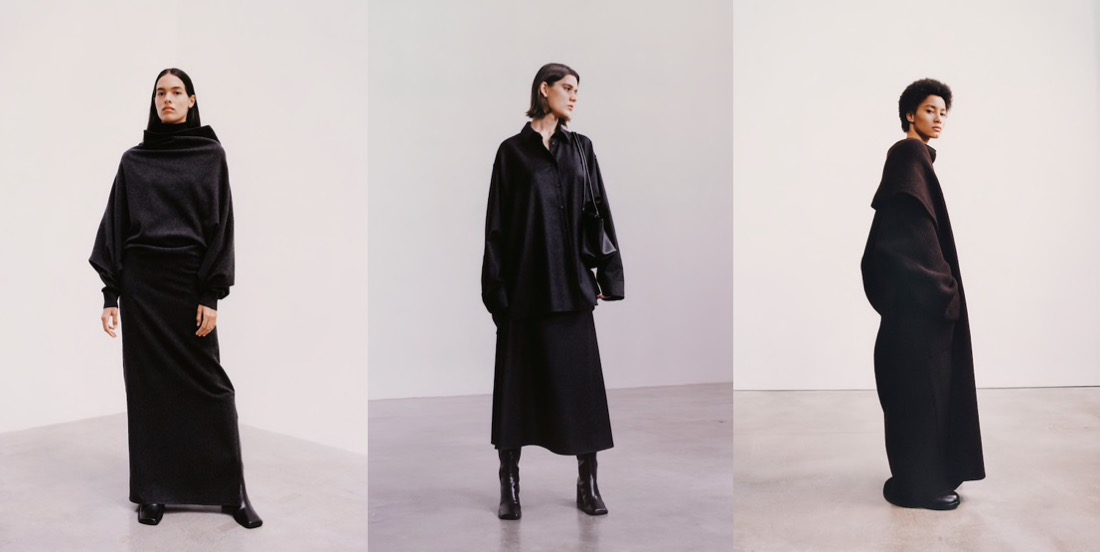
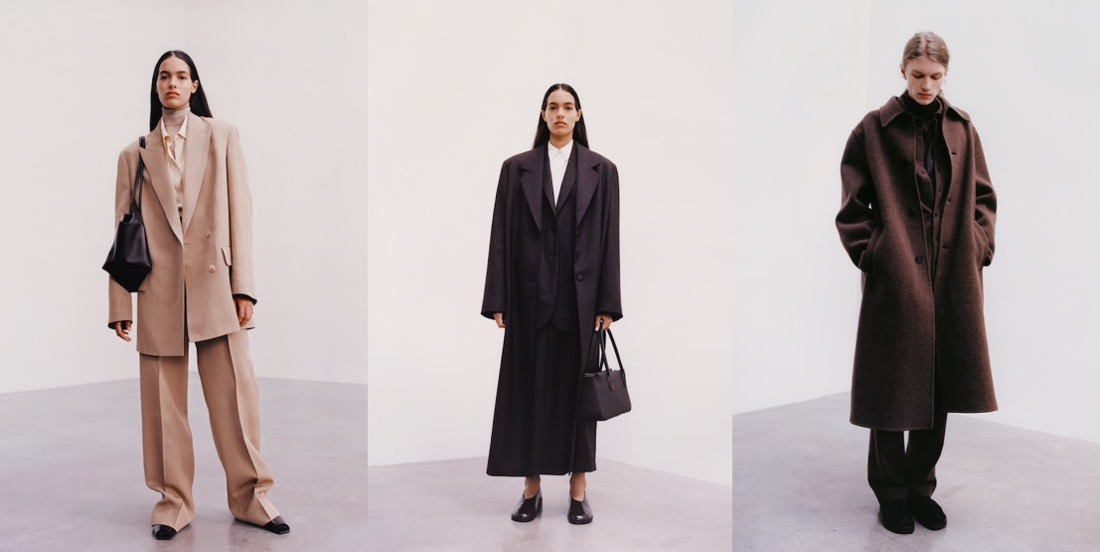
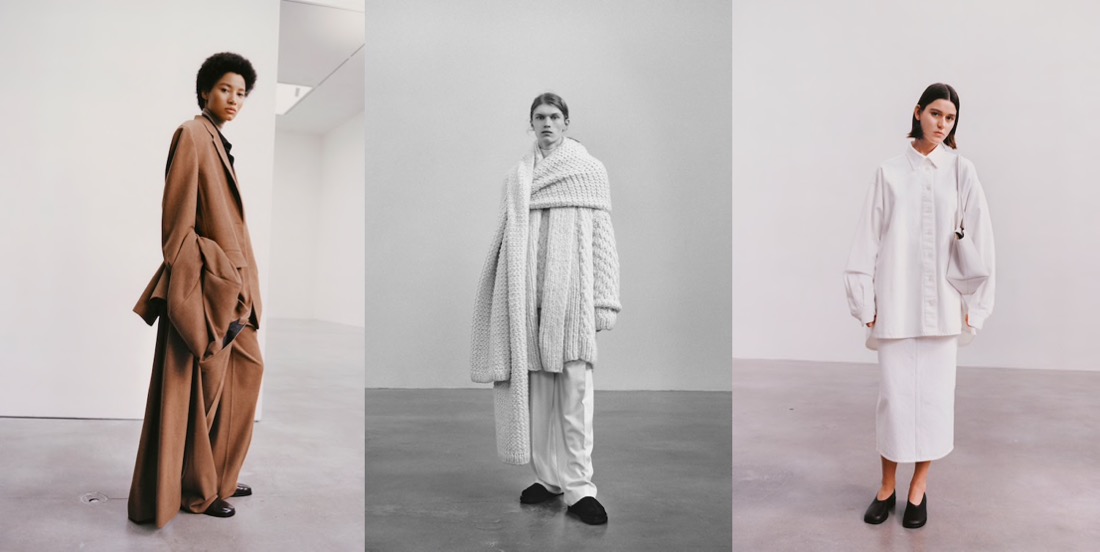
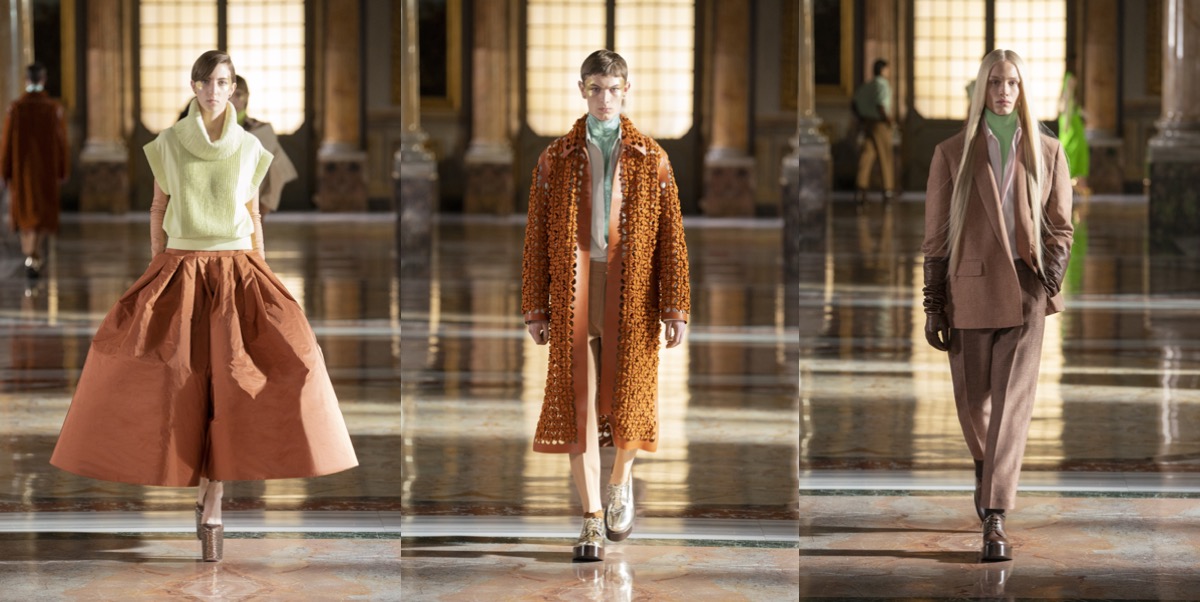
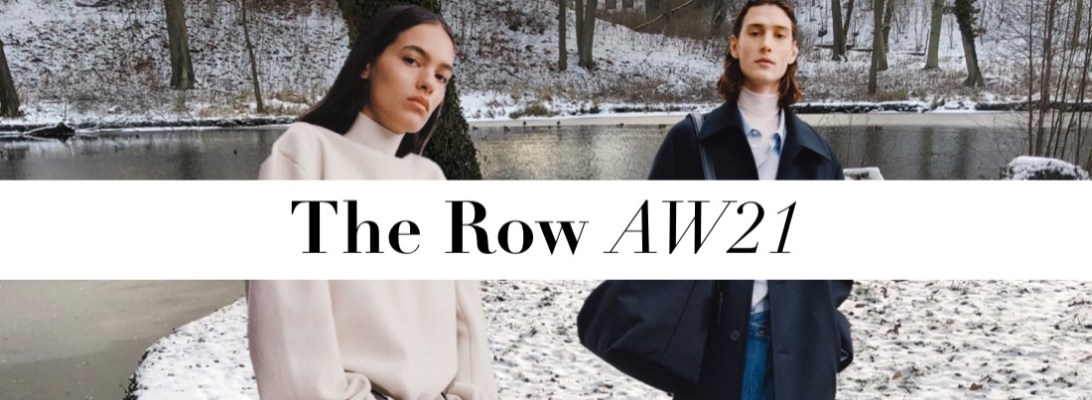
Seeing both The Row womenswear and menswear in one collection makes so much sense. Ashley and Mary-Kate Olsens‘ autumn-winter 2021 collection is like the full picture of their luxe minimalism world, now shared by her and him. The designers decided to modify their showing schedule, skipping New York Fashion Week altogether and showing in January and June. One of the reasons is logistics and sustainability. Both the women’s and men’s collections are rooted in minimal tailoring and they share materials across them; these include the double-felted wool of outerwear, wool flannel for suits, and a textural knit that they call fur cashmere, all of them subtly luxurious. Of course, the collection is delightful – and feels like detoxicating palette cleanse after all the couture fantasy we’ve experienced last week. Their autumn suiting is strong across both genders. The women’s jackets come with removable shoulder pads, as does a mock-neck, midi-length cashmere dress. Alongside the tailoring, they showed wrapped shapes, emphasizing comfort and warmth. A male model looks practically cocooned in a three-piece fur cashmere set. Amid the oversized proportions and the swaddled forms, a button-down with short three-quarter-length sleeves worn with washed linen wool pants that taper at the ankles stands out. On the accessories front sturdy burnished-leather rain boots in a range of lengths look like top sellers in the making. They’ve also added a nylon tote to their handbag offering. Comfort and practicality have become important talking points in the last year as the pandemic has impacted the industry in so many ways. The Olsens are taking on those conversations – and the one about collection timing, too – but they’re doing so in their usual elegant, refined way.

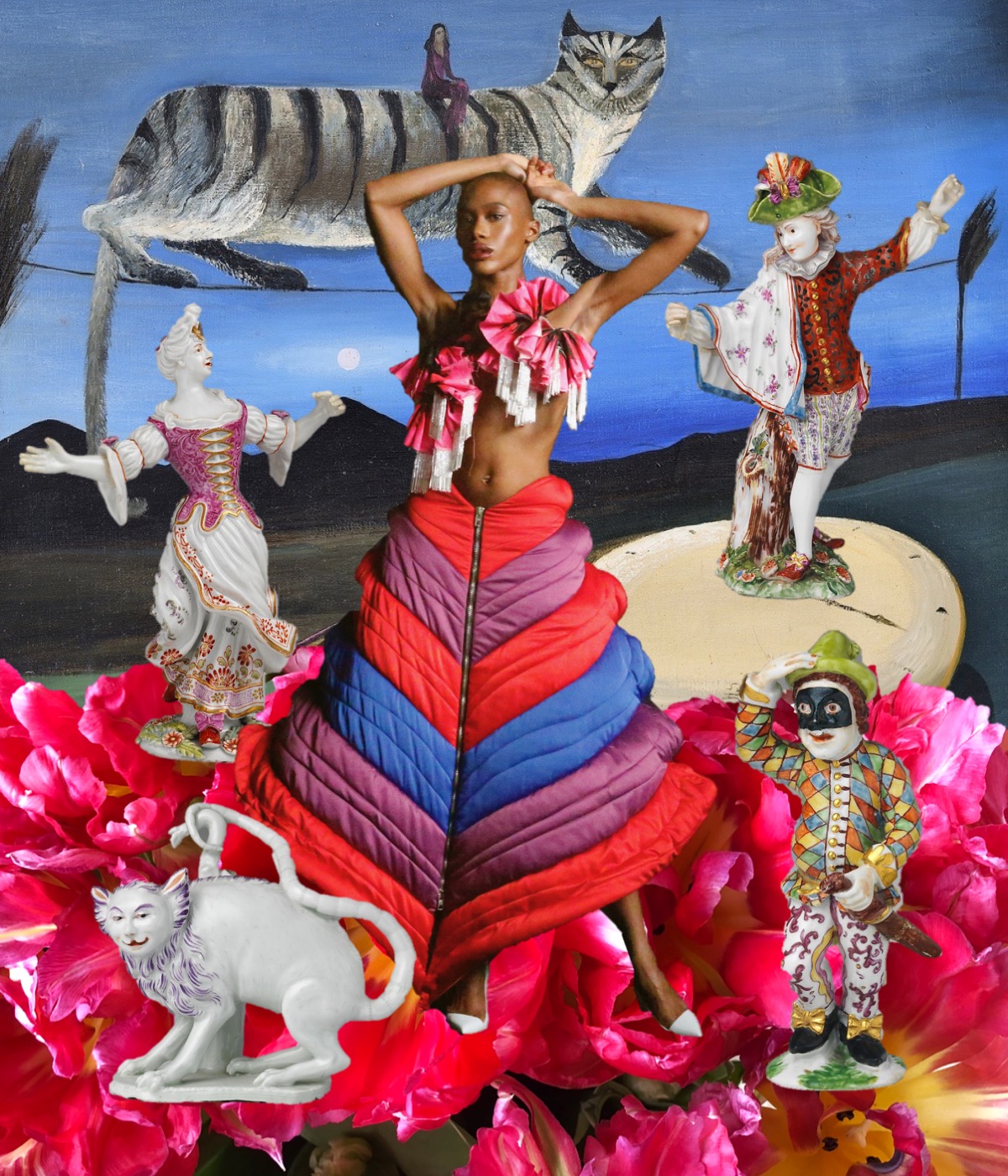
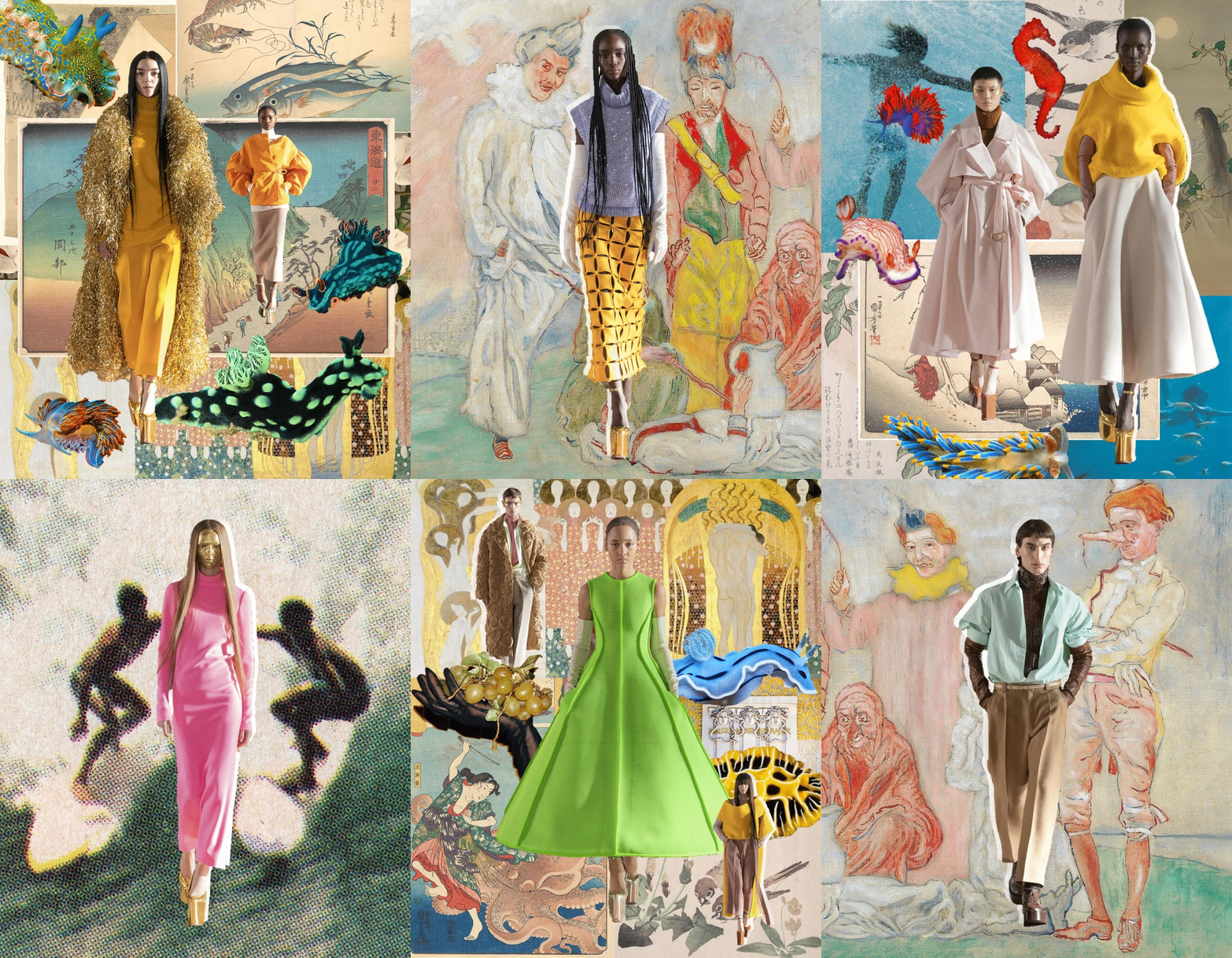
Collage by Edward Kanarecki.

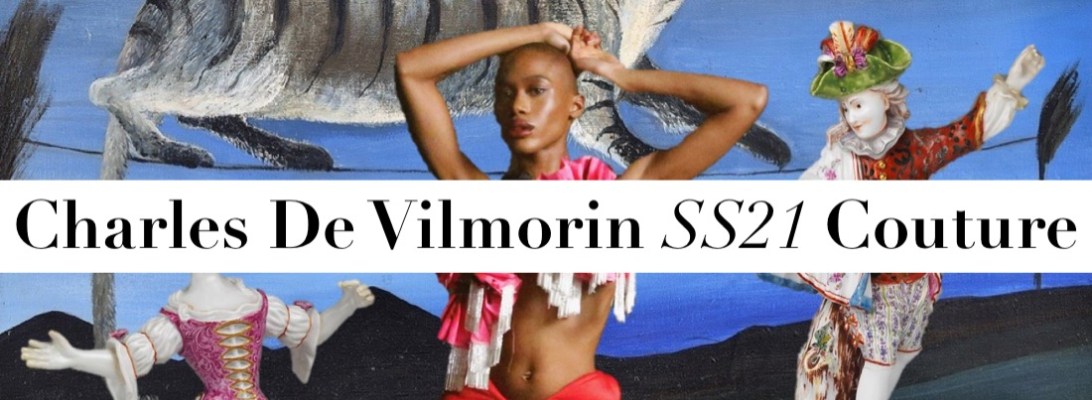
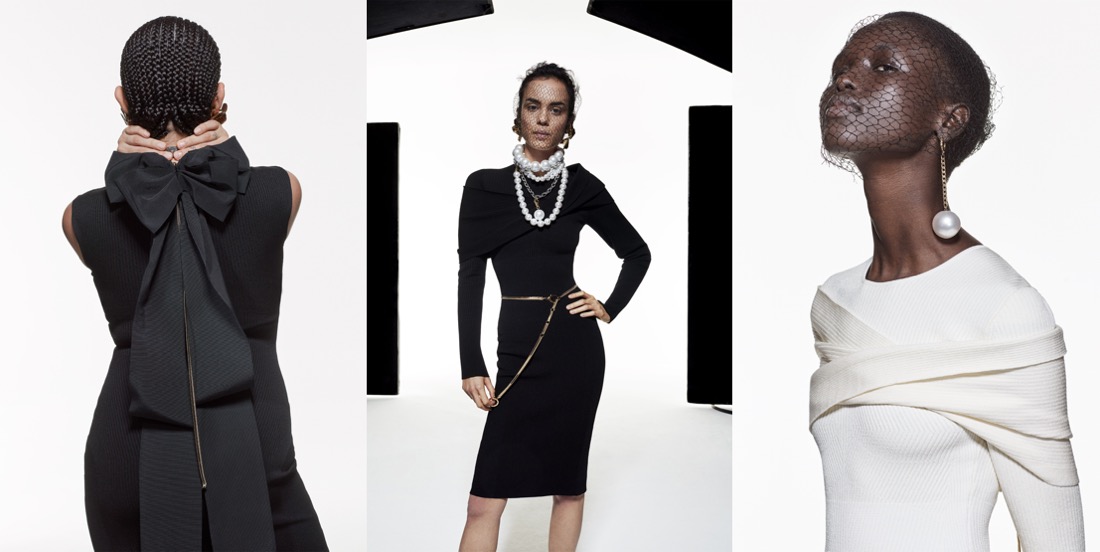
Be Bold, Be Extra. Charles De Vilmorin Couture SS21

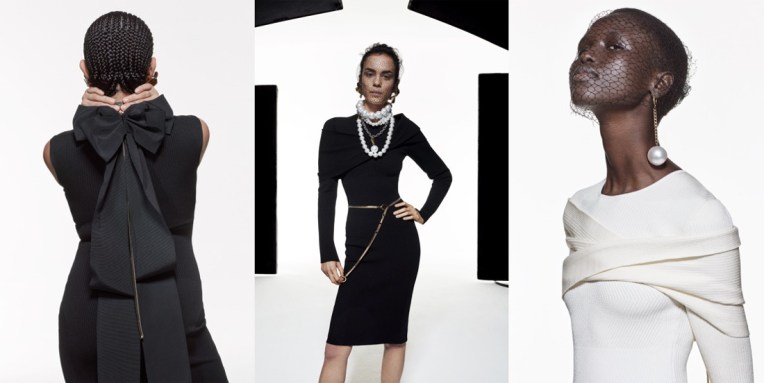
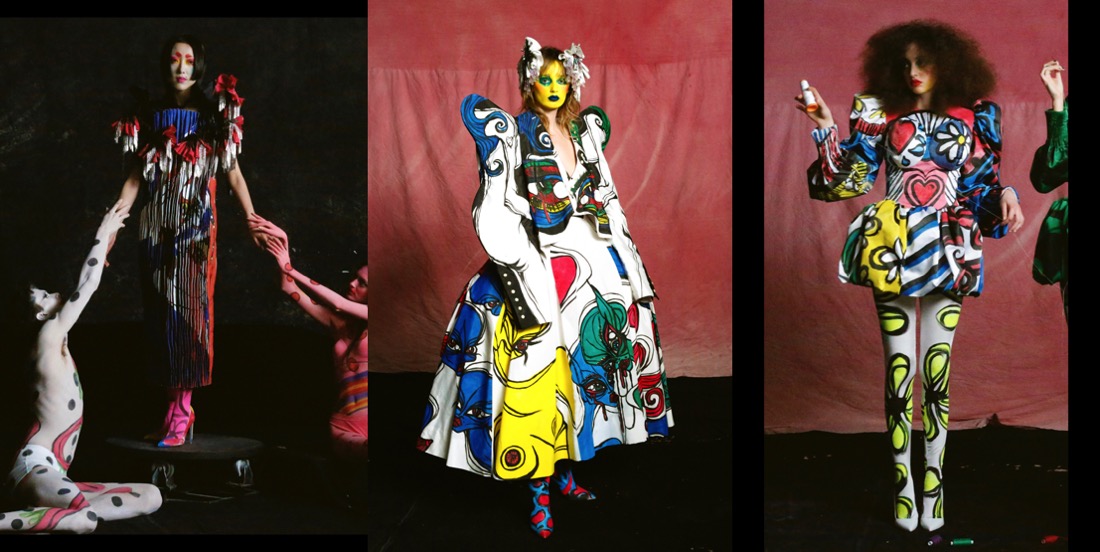
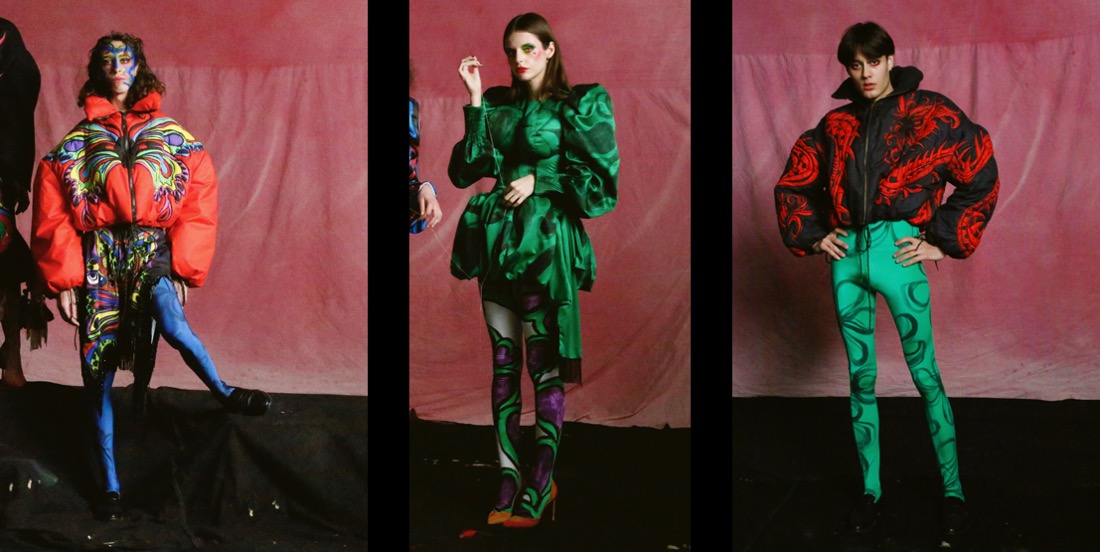
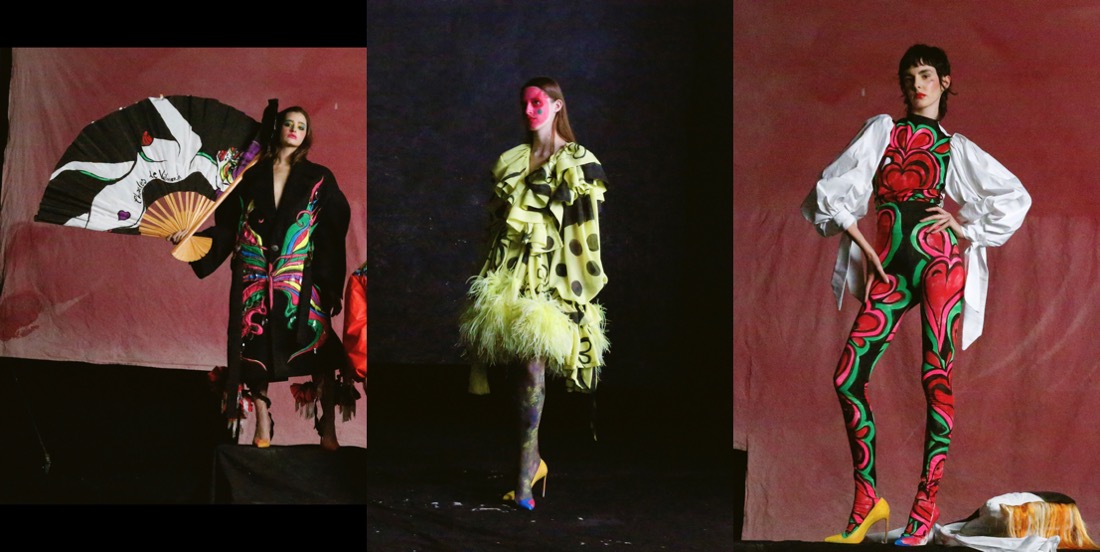
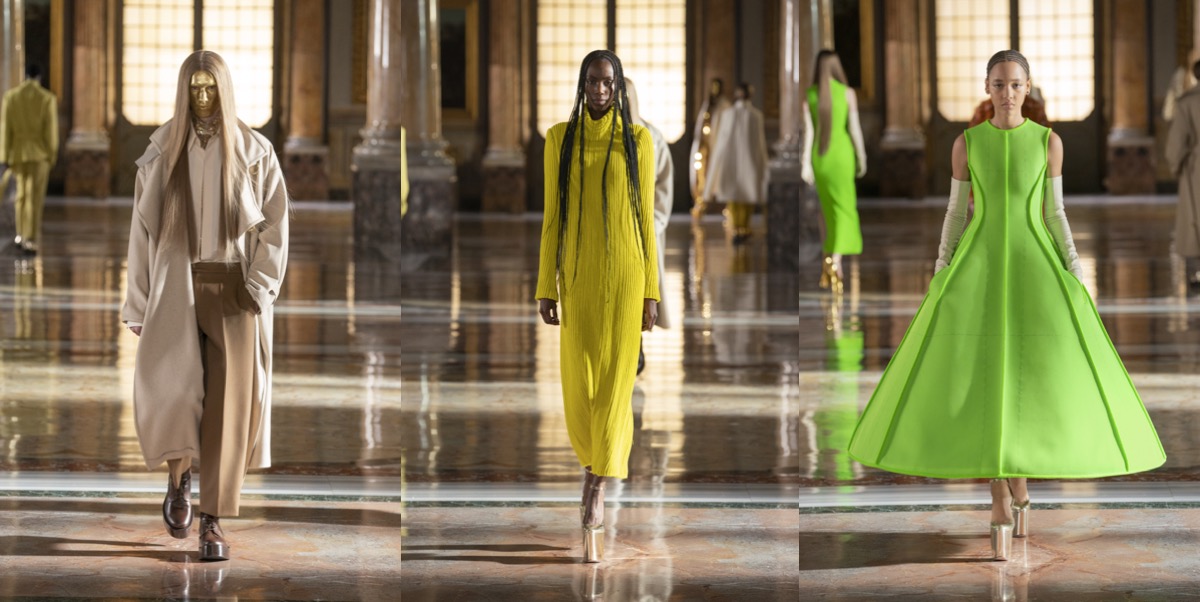
Couture is changing, and the best sign of that is the appearance of new, young talents. When Charles de Vilmorin launched his first collection after graduating from design school last year, no less a French fashion legend than Jean-Charles de Castelbajac was singing his praises: “Charles designs his dreams, paints his creations on the skin as on paper – and these silhouettes transform his muses into psychedelic conquerors…. His future is passionate.” Then, in December, Jean Paul Gaultier sponsored the young designer’s guest appearance on the Paris haute couture calendar. His spring-summer 2021 debut was virtual, but there’s no arguing that De Vilmorin is enjoying a charmed rise. The exuberantly patchworked puffer jackets of his first collection evoked Niki de Saint Phalle’s iconic Nanas. He must feel a connection with the artist. In the video he made this season with Studio L’Etiquette, De Vilmorin operates a paint gun, an obvious reference to the shooting paintings of the early 1960s with which De Saint Phalle made her name. The late artist attached buckets of paint to her canvases, then invited people to shoot at them; the paint would splatter all over her work when the bullets hit. De Vilmorin’s technique is more controlled, but his Instagram account reveals that he did paint his textiles by hand before they were assembled into the 11 looks in this collection. Flowers, butterflies, and psychedelic nudes are his chosen motifs, and the silhouettes, which are worn by all genders in the video, are playful. He likes a puffed sleeve and a full skirt and sprays of feathers at the hem of a dress. The short film stars De Vilmorin’s friends, and he says he keeps them in his mind when he’s designing. “You don’t need a special occasion to wear something extra,” he insisted. Hope to see more of his bold fashion in the near future!

Collage by Edward Kanarecki.

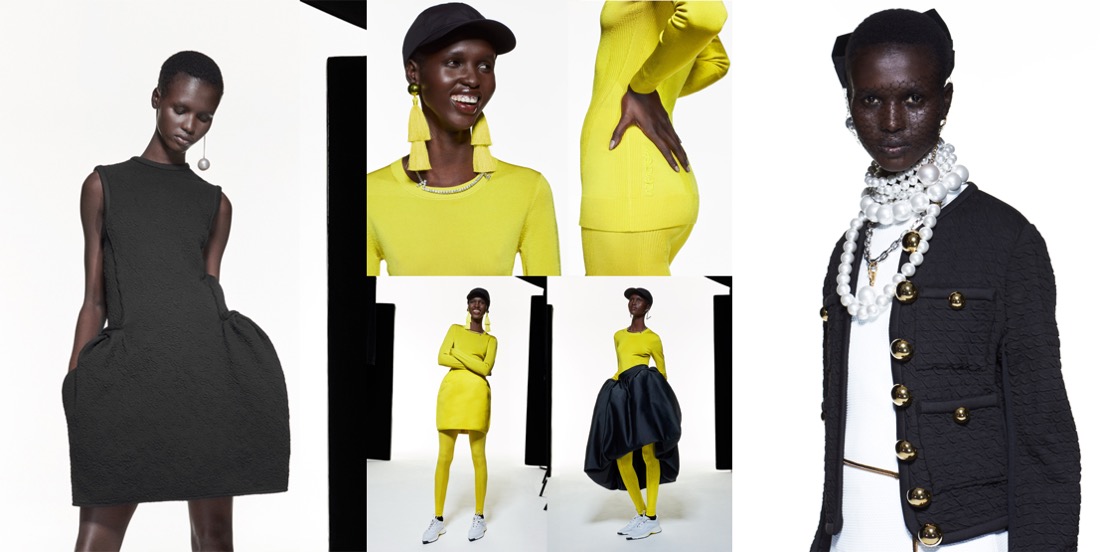
My Body. AZ Factory SS21

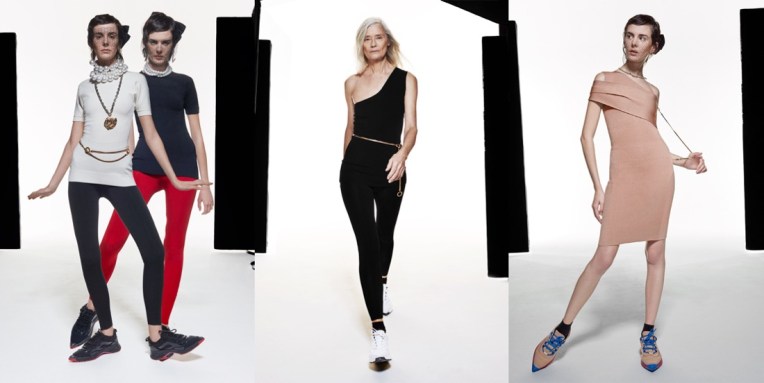
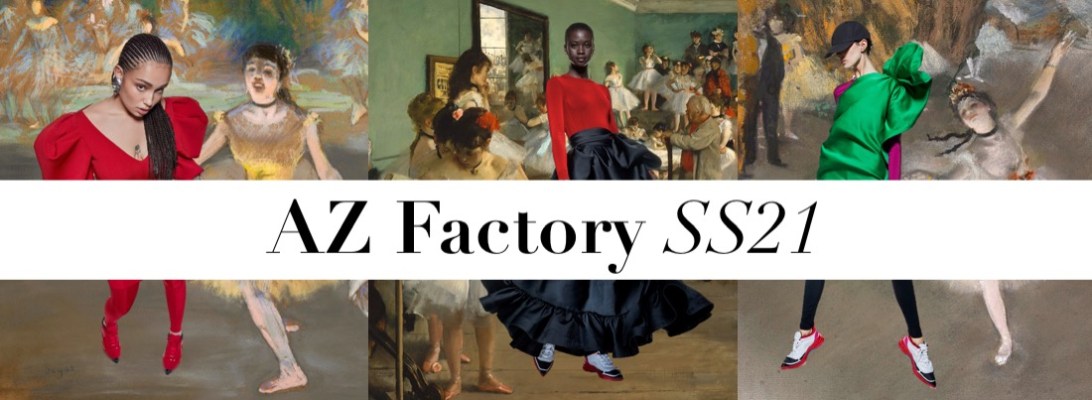
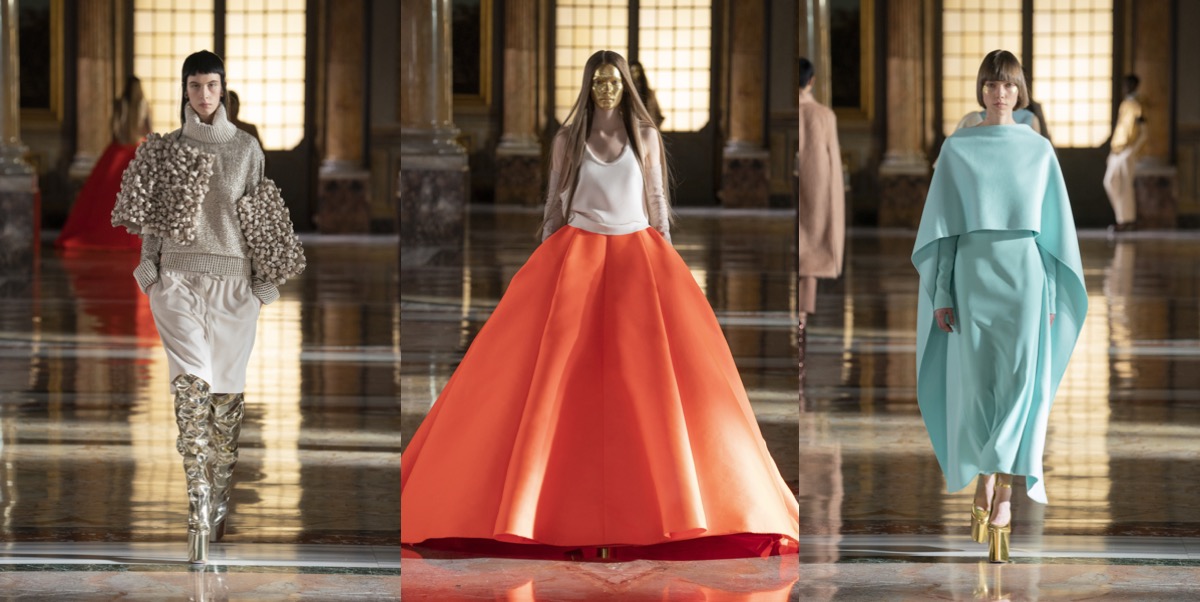
Alber Elbaz is back in fashion! Oh, how I missed his fabulous, perfectly imperfect dresses, joyous colour palettes and chic femininity he delivered at Lanvin. Five years after an abrupt exit from the Parisian maison, he returns with his own brand, which won’t be playing along the industry’s dusty rules. His debut AZ Factory collection, which is part spring-summer 2021 ready-to-wear (available now on Net-A-Porter, Farfetch and the label’s site), part couture, proves Elbaz truly reconsidered many things before starting his new venture. “I was doing a lot of observation,” he told Vogue. “I needed to run away. Somehow, I didn’t want to do any more pre-collections, post-collections. I had to question the present, and the future. I had so many questions: the world, women, technology, needs changed…so how is the industry going to change?” He’s embraced tech; he’s stepped up to environmental-responsibility, he’s taking on body-positivity – all things that seemed like far-off improbabilities in 2016, when he took a break from fashion. After taking a good look around – pending his time teaching, reading, visiting Silicon Valley, listening to women friends, researching new fabric technologies, he concluded there’s a place for a totally modernized approach to fashion. “I was thinking: What is the purpose of design today? Thinking, but not being intellectual. How can I help women? I wanted to work on new technology to develop some smart fabrics with factories [to make] beautiful, purposeful, and solution-driven fashion. That is for everyone.” The first offering from AZ Factory is “My Body,” a set of dresses engineered to consider the ergonomics of all shapes and sizes. Its implications are super-modern, practical, empathetic – and kind. “I saw for five years, women I met for lunch how much women were struggling with their weight, and sometimes that was hard to watch,” Elbaz said. “ Even in the ’50s, [fashion said:] ‘This is right, and this is wrong.’ I think that there is no wrong! I took a subject that is taboo, that you almost don’t want to talk about, but I said: Yes I will. We’re not here to transform women; we’re here to hug them.” His dream, he explained, was “to build a magical dress that was made of knitwear: an anatomical knit. There are areas that are a bit thicker, areas that are finer. I released the tension in the skirt, so you can walk faster, or dance if you wish.” AZ Factory has all the flourishes and colorful quirks his fans will easily recognize from his Lanvin days – the volumes and prints he so fluently dashes off from his pen. But this time, rather than going in the French haute couture party-gown direction, the ideas are sprung from athleticism and servicing real life. Developing his own bespoke fabric has made him break the wasteful old fashion-y habit of splurging on multiple options. “I said: Be strict with yourself!” he laughed. “I’ll do one jogging suit in seven colors and a few duchesse skirts in recycled nylon.” It can all be hand washed, too, thus eliminating dry cleaning impacts (and bills), while cutting down on washing machine water and electricity use. Just one thing I’m not sure of are the pointy-toe sneakers. But in overall, everything works really well. It adds up to a new way of doing things, that’s for sure: a far cry from catwalks and shows, a break with some of the bad old habits of fashion, and a leap to launch purely online. “And everything is 230 to 1,200 euros!” Elbaz concluded. A price point which is much, much lower than the one at Lanvin, for instance. It’s a new space in between, where something with design integrity and modern thinking is finally happening. Welcome back indeed, Alber.

Get your hands on the first AZ Factory must-haves: AZ Factory stretch-knit leggings, AZ Factory stretch-knit top, AZ Factory stretch-knit mini dress & AZ Factory stretch-knit bodysuit.

“Live” collage by Edward Kanarecki.

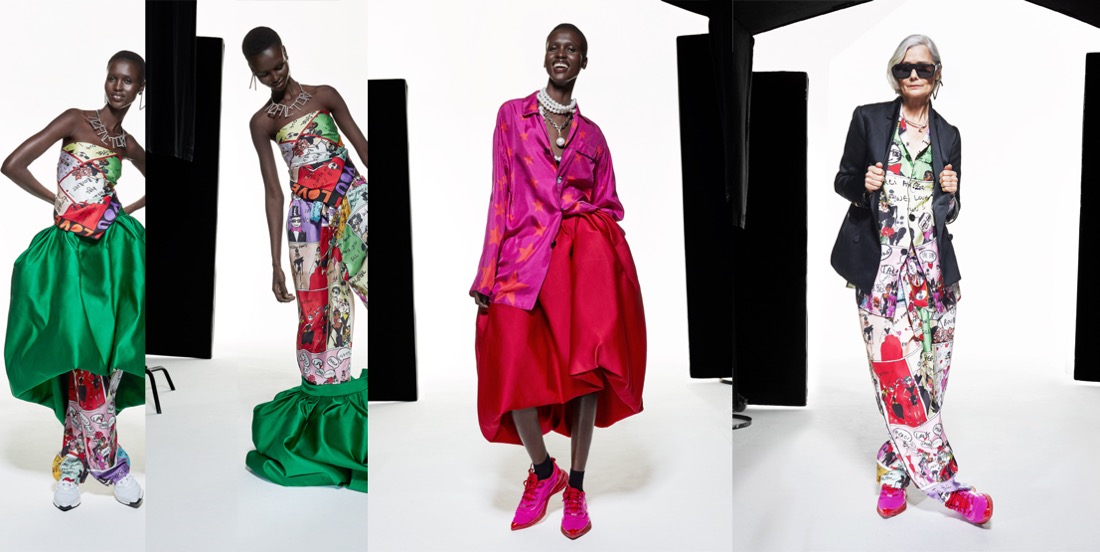
Statuesque Beauty. Valentino Couture SS21

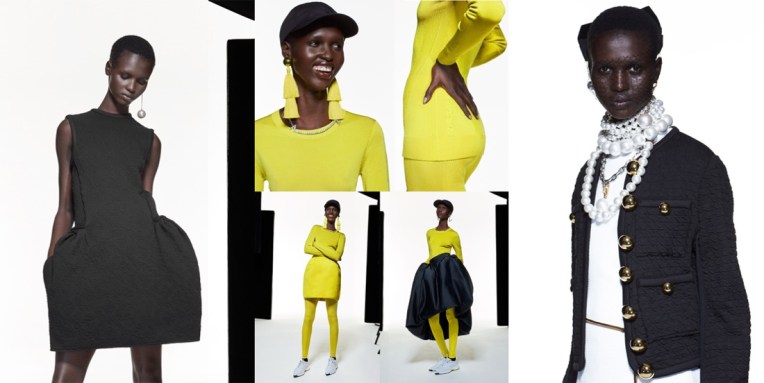
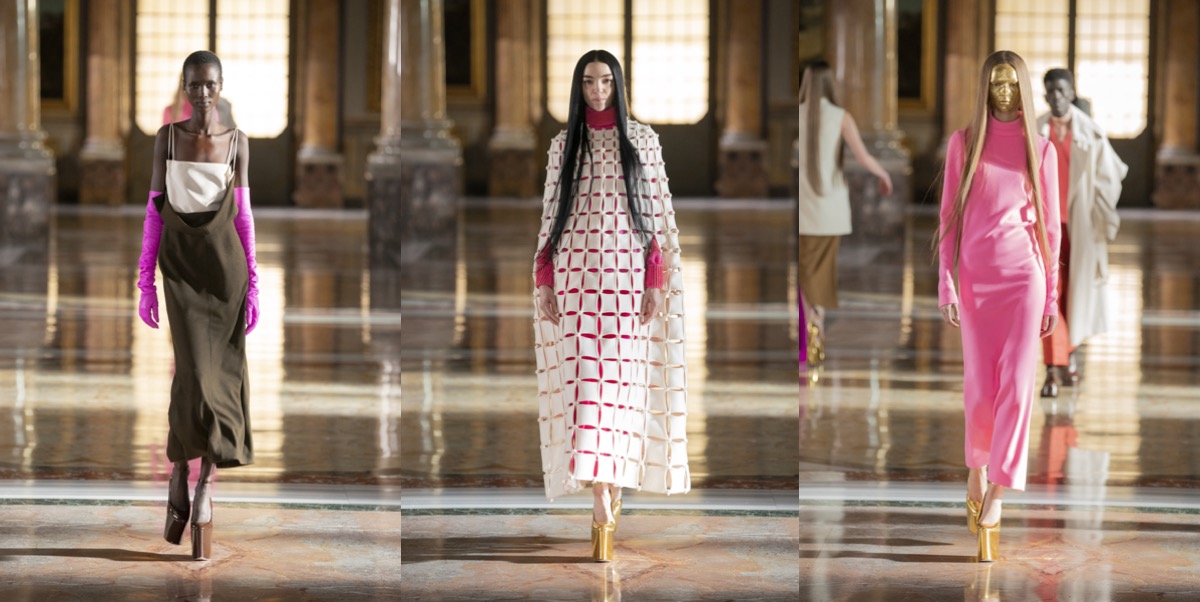
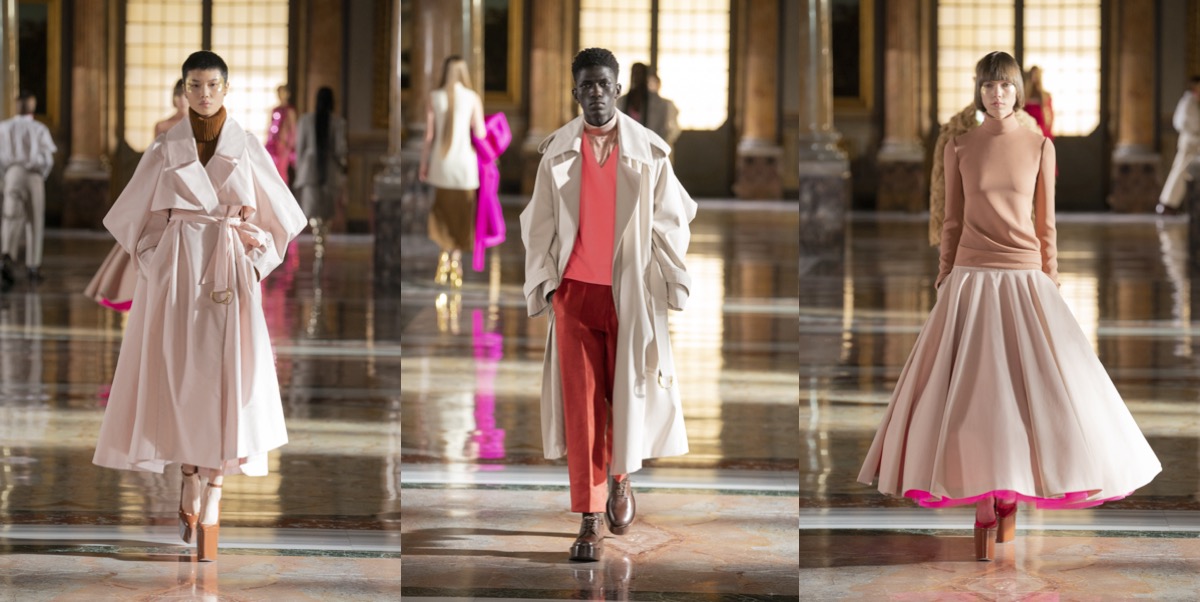
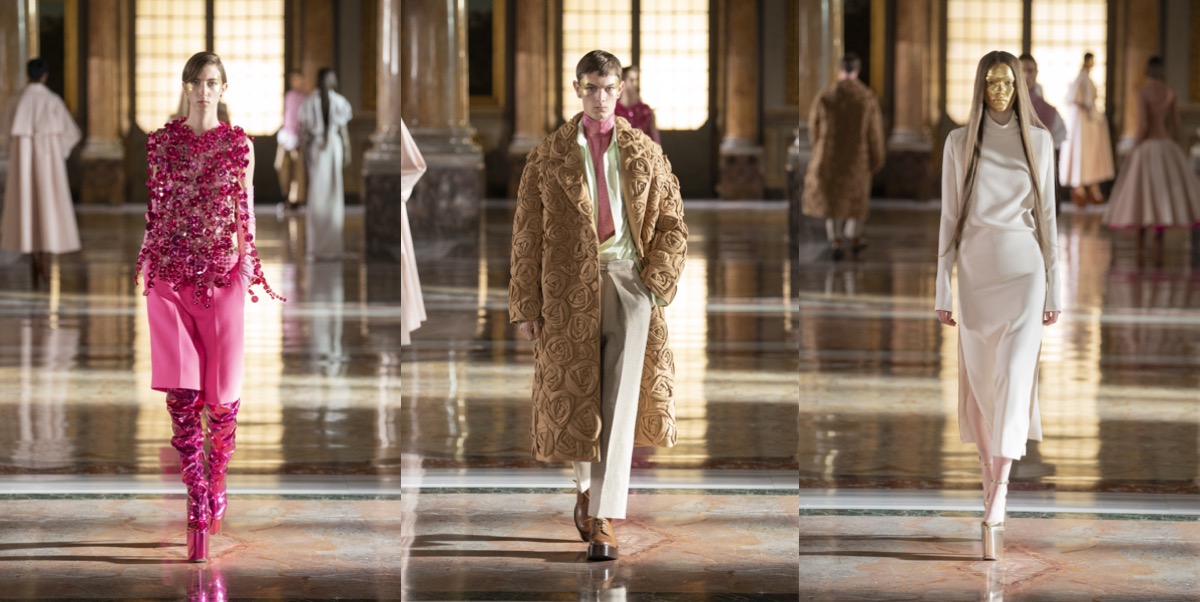
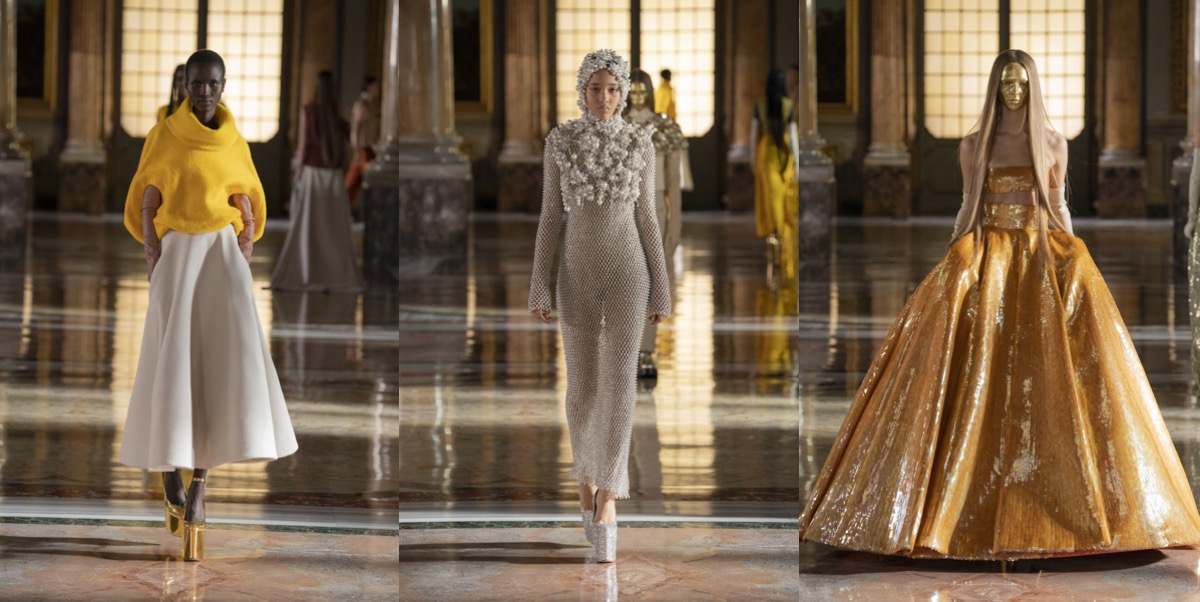
Pierpaolo Piccioli is (again) the king of haute couture. With his Valentino spring-summer 2021 collection, he proves that the most elaborate and intricately detailed ball gown of his is equally couture as a seamless, sculpture-like cape (“I don’t want to call it that. It’s not a caftan, or a poncho. It’s a shape!”) with not even one sequin or embellishment. This season, the designer floated towards haute minimalism, which was all about lean sharpness and elevated boldness. It was just so, so, so beautiful and inspiring to see. “It’s more about pieces that will give an effortlessness,” Piccioli said. “The narrative of the collection is the collection itself. No stories. Nothing figurative. I wanted to work on surfaces, not in a decorative sense, but workmanship which becomes the surface itself.” Along came garments that (also crassly) might ordinarily be classified as hoodies, sweaters, shirts, board shorts, and camisoles, acting as foils for amazing lattice-worked coats and sculptural capes. “I think elegance is not about ‘good taste’” said Piccioli. “It’s a bit daring.” And along came men, which was a big treat. At Valentino, “it’s for the very first time,” Piccioli shrugged. “But couture is for people. I don’t care about gendered (fashion). It’s an inspiration which is fluid, no-boundaries: a trench coat is for men and women.” And what a trench coat: structured so that the volume of the sleeves somehow continued seamlessly into a generous, chic storm-flap in the back of the coat. Only haute couture experts can pull off that sort of thing. It used to be that every haute couture look was conceived as a sacred kind of unit. Gone are those days. Now Piccioli is more motivated to make a white poplin shirt, which he showed with a long oyster-colored skirt that appeared narrow in the front, yet flared to a train in back in one of the show’s most arresting moments. “It’s a shirt, a fantastic shirt. Of course you can wear it like this, or any other way. And the skirt is timeless.” Piccioli is right: we’re thankfully long past the time when audiences might work themselves into a pearl-clutching froth at the sight of male models wandering an haute couture runway. Far more to the point is keeping the practice of haute couture relevant to the moment we’re living in. As many of haute couture’s old-world conventions drop away, what remains to be valued is the coalition of high craft and social insight. Piccioli spent a long time reflecting on that in the last months. “To me, the essence of couture,” he said, “is the ritual, the process, the care, the humanity. That’s what makes couture timeless, special.” Summing up: meraviglioso!

“Live” collage by Edward Kanarecki.
She’s A Goddess, Hero, A Power-Female! Schiaparelli Couture SS21

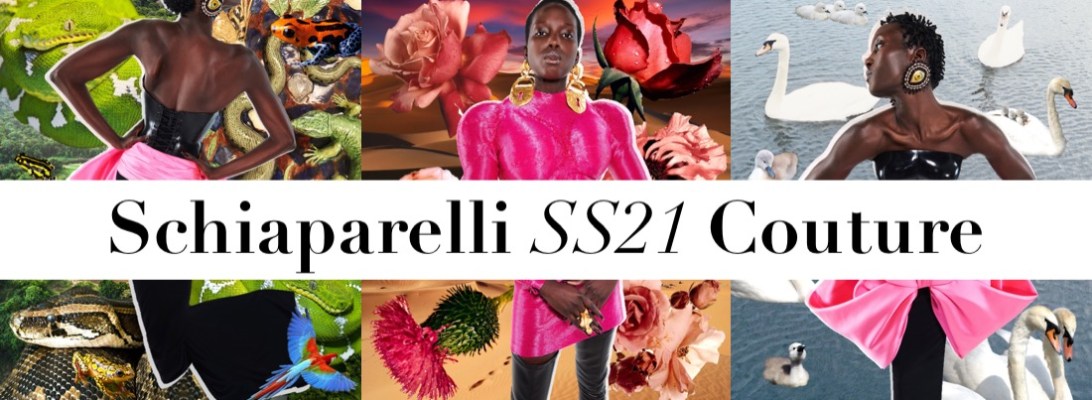
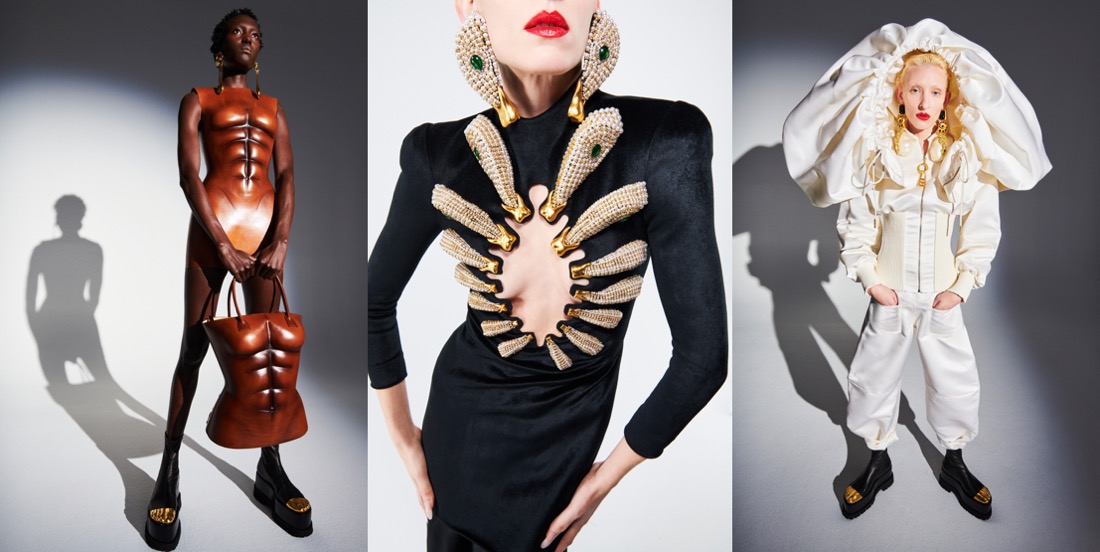
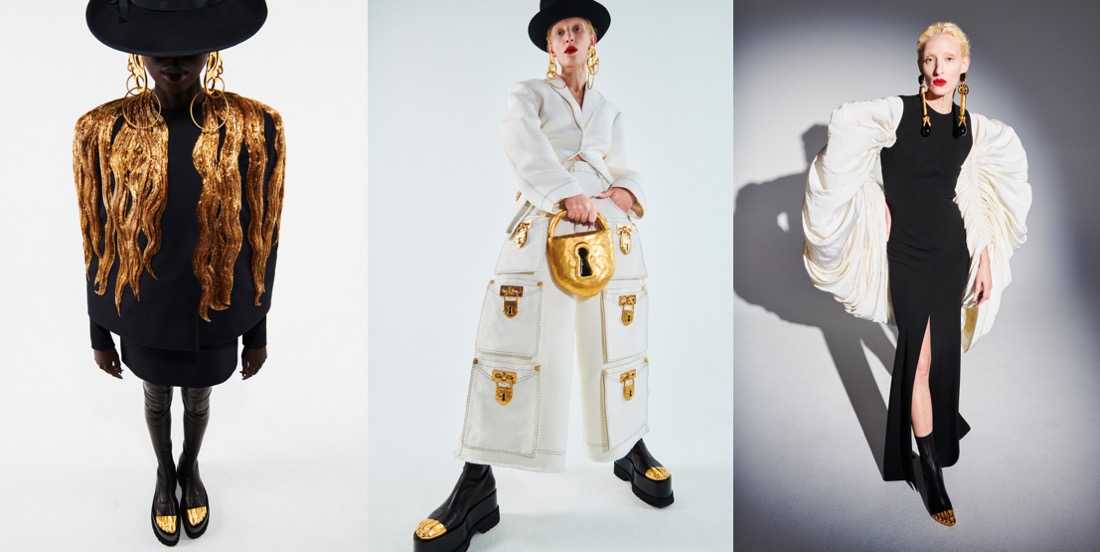
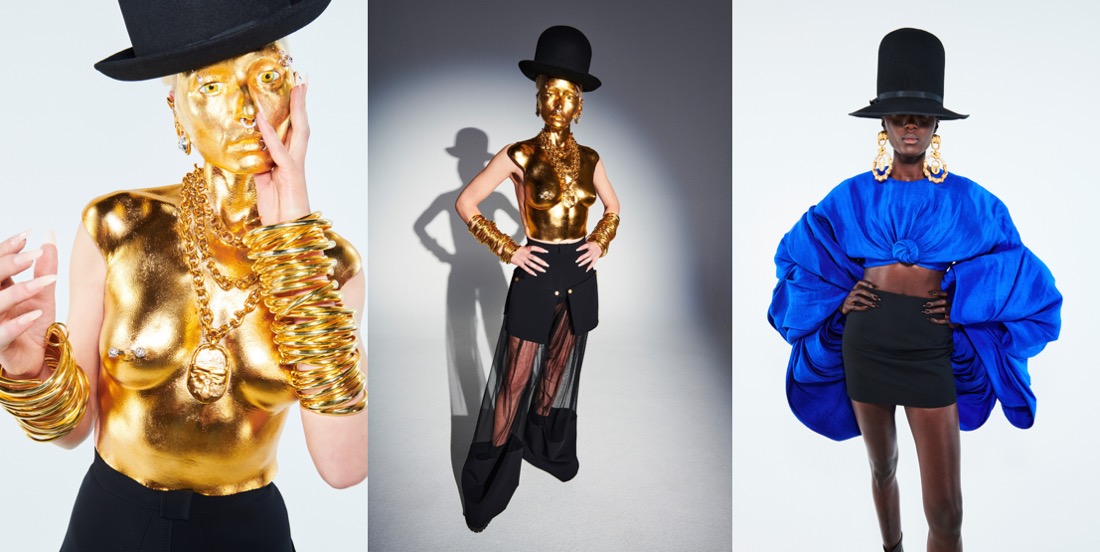
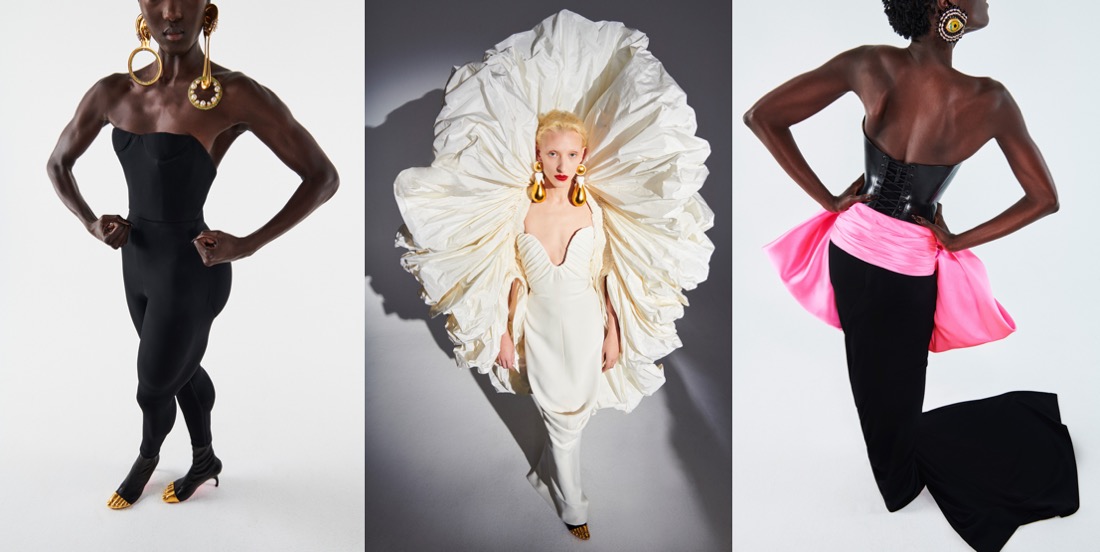
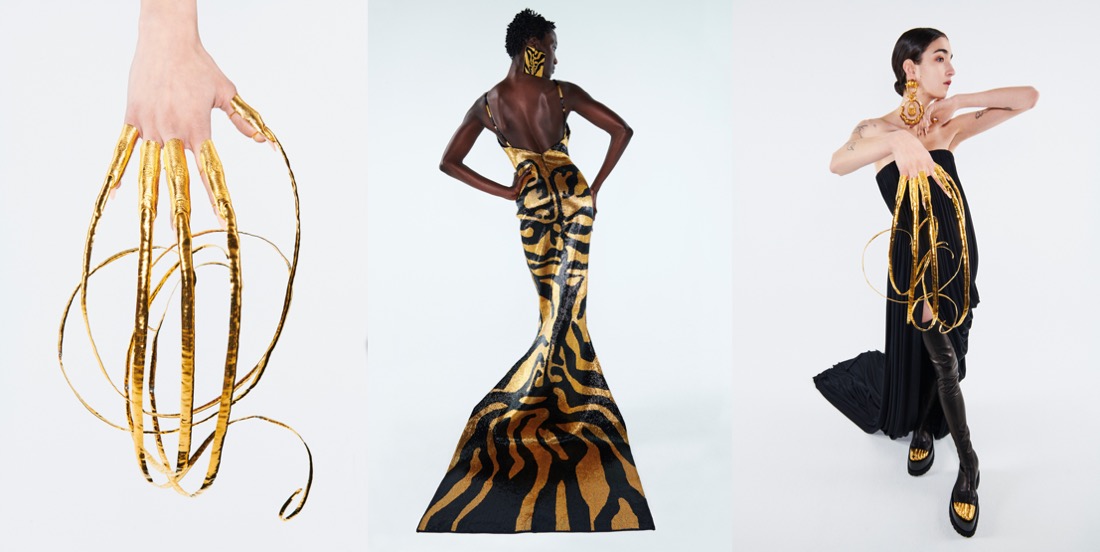
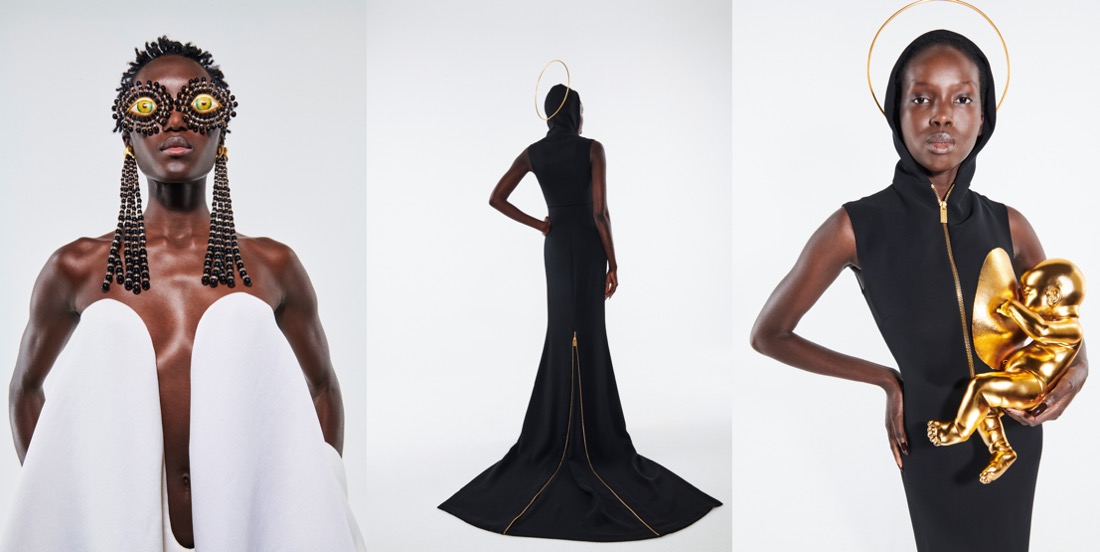
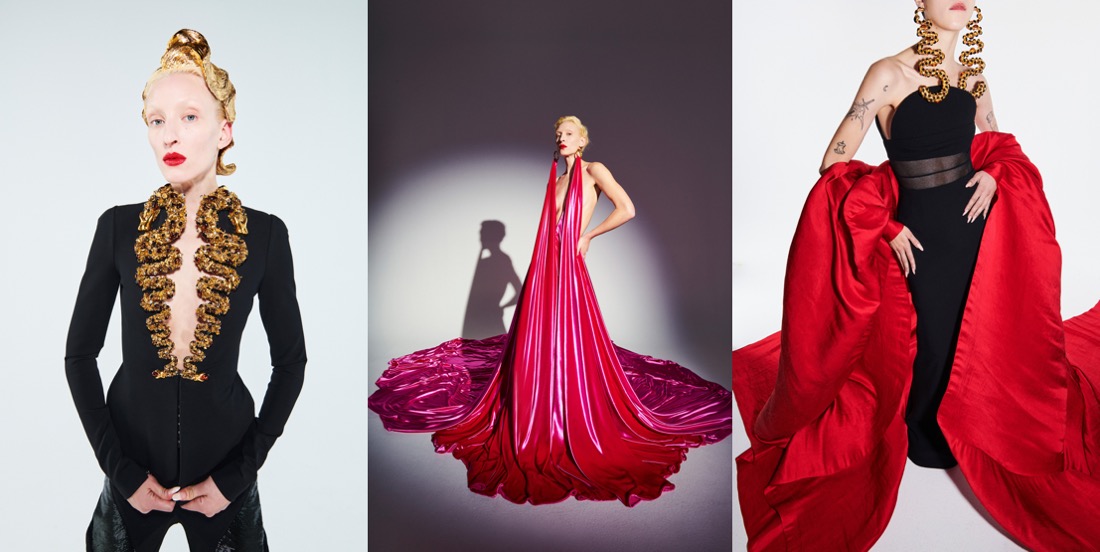
Schiaparelli and Daniel Roseberry are a match made in heaven. The way the Texas-born designer plays with Elsa Schiaparelli’s codes is so witty and intelligent – and what’s most important, he makes it his and doesn’t try to mimic the maison‘s founder as his predecessors. Spring-summer 2021 couture line-up is his best yet, and truly, it transports the viewer to a wonderland. And since Lady Gaga wore a black fitted jacket, red silk faille ball skirt and a golden dove brooch of his design to sing the national anthem at President Joe Biden’s inauguration last Wednesday, it’s clear more people will pay attention to Roseberry’s magic. “For a house like Schiaparelli,” he told Vogue, “dressing Gaga for the inauguration speaks to capturing the moment. That’s what I’m trying to do with all of our celebrity moments: to nail the zeitgeist.” Daniel’s Schiaparelli is open to big celebrity moments (Kim Kardashian West and Hunter Schafer, for instance), but it also breaks couture conventions and says ‘bye’ to the haute stuffiness once and for all. He’d been pushing the house, which was quite straitlaced before his arrival despite Elsa Schiaparelli’s famous Surrealism, in a new direction. But the eccentricities of his earlier outings were just him warming up. “Ever since I came back from lockdown, there’s been a shift for me mentally here – a focus and confidence that’s come from my relationship to my own process and to the atelier,” he said. Synthesizing his point of view, he added, “it’s just something that’s not as polite as couture typically tends to be.” If there’s one piece that says his incubation period is over, it’s a Madonna and Child breastplate, but there’s no shortage of statement-making bijoux here, from the tooth pearl earrings to the fingernail rings. “It isn’t about being too perfect for me,” Roseberry said, “but it is about shutting the moment down.” On that note, the look book opens with another super-heroine bustier, this one in glossy black finished with a prodigious bow in Schiaparelli’s signature shocking pink. A different dress in the same electric pink hue accentuates not just gym-toned abs, but trapezius muscles and biceps. “If you want to look like a cupcake, you can go somewhere else,” Roseberry said with a laugh before getting serious. “I started thinking, is there something about couture that’s sort of misogynistic, that demands or expects that a woman wants to look hyper-feminine and dainty and ‘Bridgerton’ adjacent?” He clarifies, “It’s not about being a man at all, it’s about being a jacked woman.” A stretch-fabric dress knitted with more than 200,000 Swarovski crystals will appeal to clients whose own well-maintained physiques require no surface-level enhancements. Elsewhere, Roseberry made exuberant use of volume. A black column dress with ample folded sleeves would make a spectacular red carpet dress, but he also designed a couture jean jacket and a couture parka with grand hoods. The contemporary Schiaparelli woman is no longer just an arty party-goer. Now, she’s a goddess, hero, a power-female!
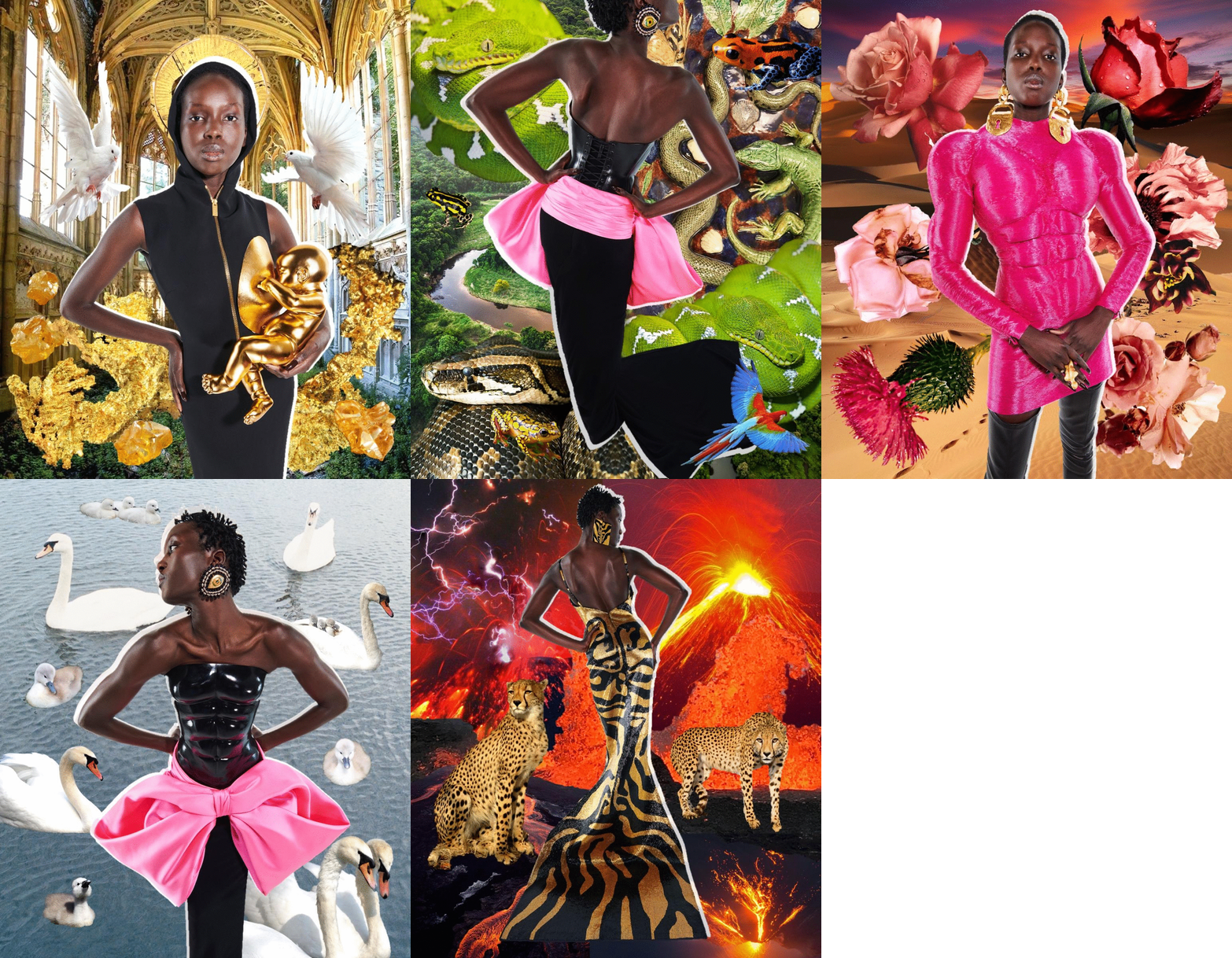
Live” collage by Edward Kanarecki.