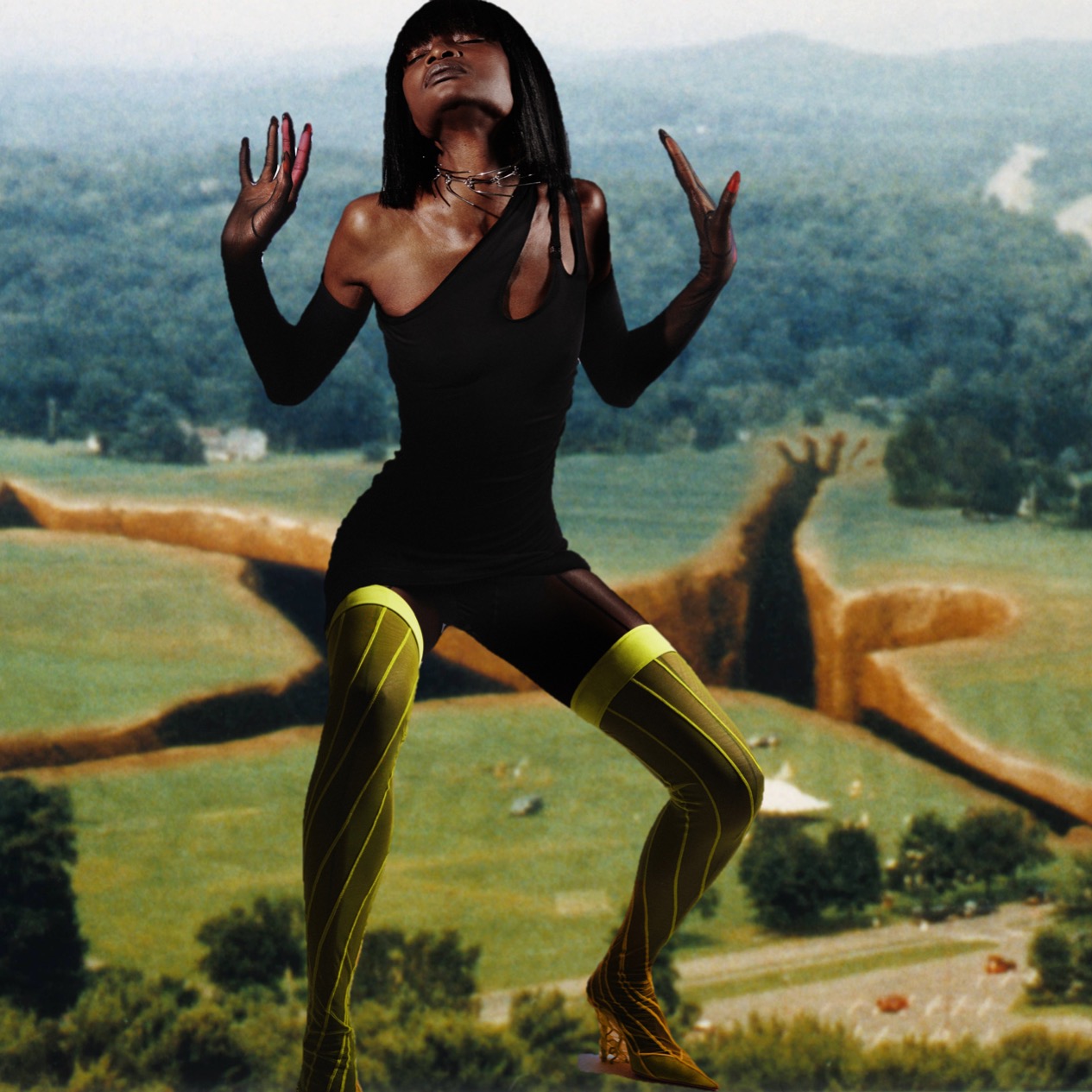
God Is A Woman. Mugler SS21 (1)

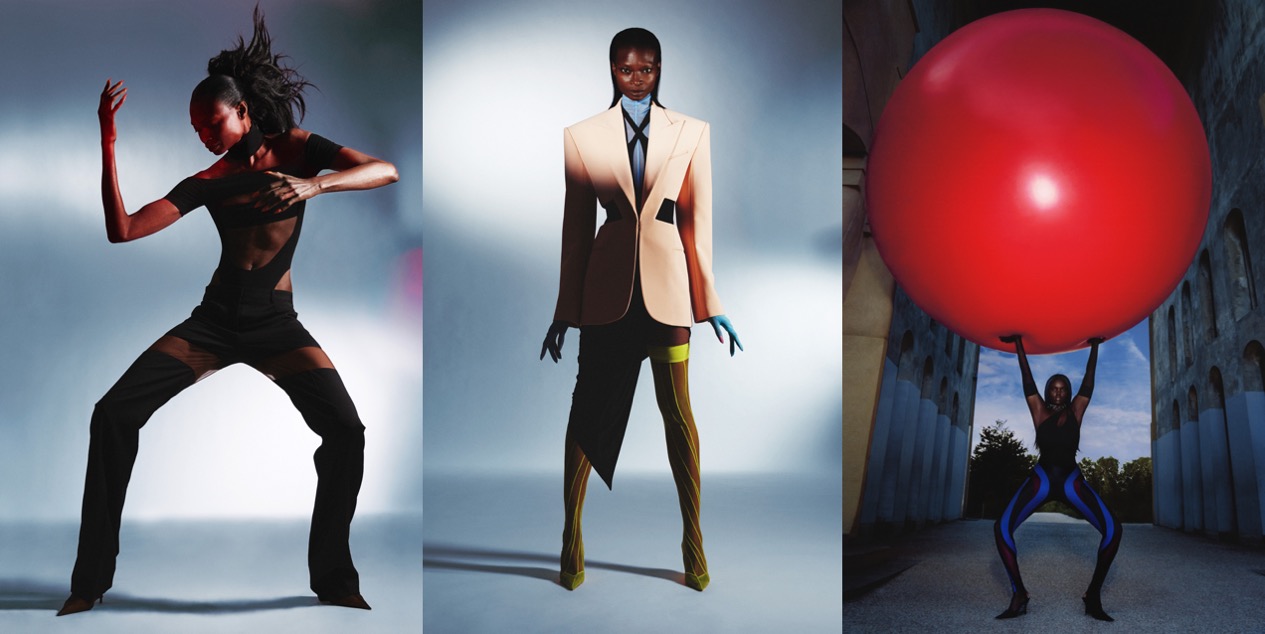
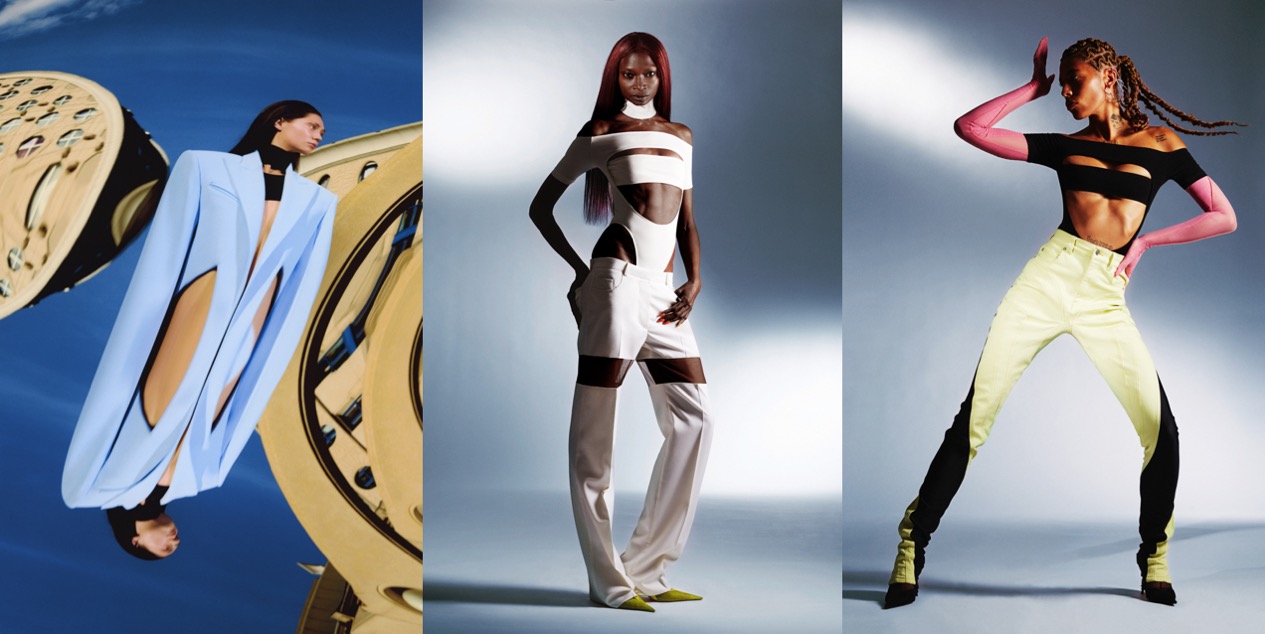
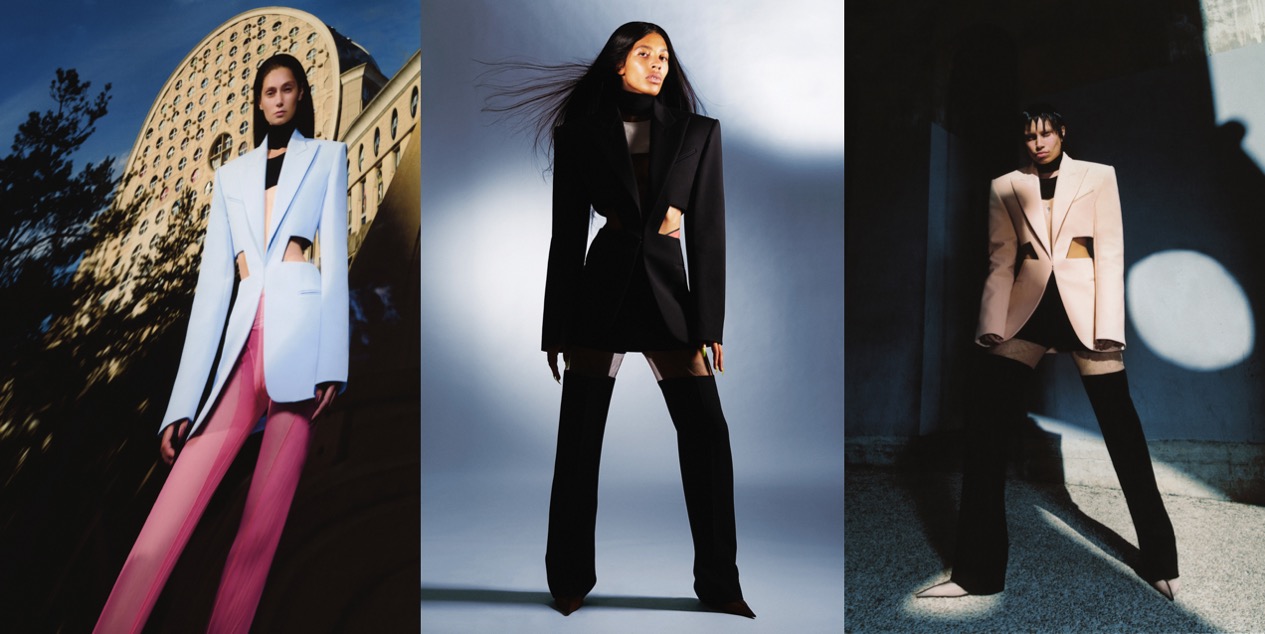
God is a woman, and she’s wearing Mugler. Casey Cadwallader‘s vision for the brand is empowering, inclusive and boldly feminine. That’s again demonstrated in his spring-summer 2021 collection, which wasn’t presented during Paris Fashion Week, but as an off-the-schedule sci-fi video starring Bella Hadid and friends of the label. Cadwallader pointed out the increasing importance of music videos in the absence of live performances. He’s working on clothes for those apparently, too – just think Miley Cyrus, Cardi B and Caroline Polachek! In fact, about half of his time is spent on VIP requests. The other 50% he expends on the label’s ready-to-wear, but he’s not exactly playing it safe with this category either. “I felt it was time to deal with the fantasy side of Mugler,” he said, referring to the house founder’s infamous collections of the 1990s. There’s the hyper-sexy clothes, and then there’s the way he’s going about making them. Cadwallader is putting a lot of effort into sourcing more sustainable materials. He says those bodystockings will be constructed with 100% recycled lycra by autumn 2021. And he’s also working at lowering the prices of pieces like the twisting-seam jeans he designed for his first Mugler collection two years ago and the Lycra and illusion tulle leggings and tops that he likens to “complex puzzles” of couture pattern-making. “There’s energy in young people that want to buy Mugler,” he said. That jibes with the trend toward body-conscious – and body-positive! – collections we saw this season at brands like Fendi and Eckhaus Latta. Also, what’s new – Mugler is moving to a see-now-buy-now model starting in February. This capsule collection is a “prelude” of that outing. Many brands failed with this business-mode, but who knows, a brand like Mugler might really pull it off.

Collage by Edward Kanarecki.

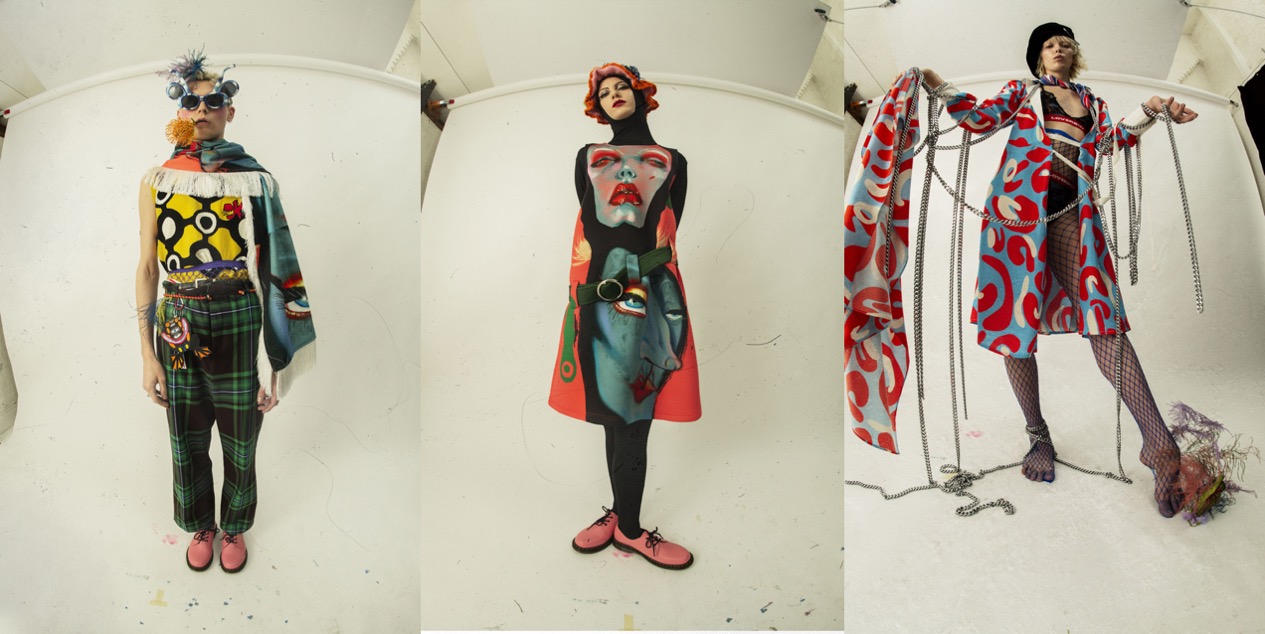
Healing. Charles Jeffrey Loverboy SS21

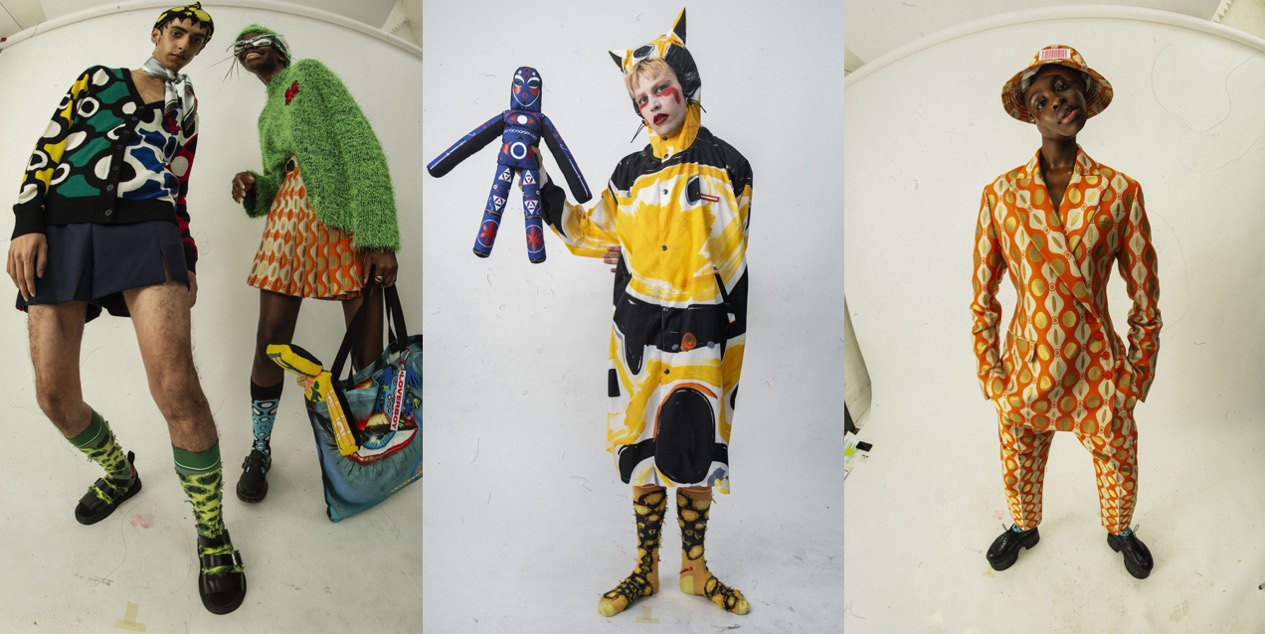
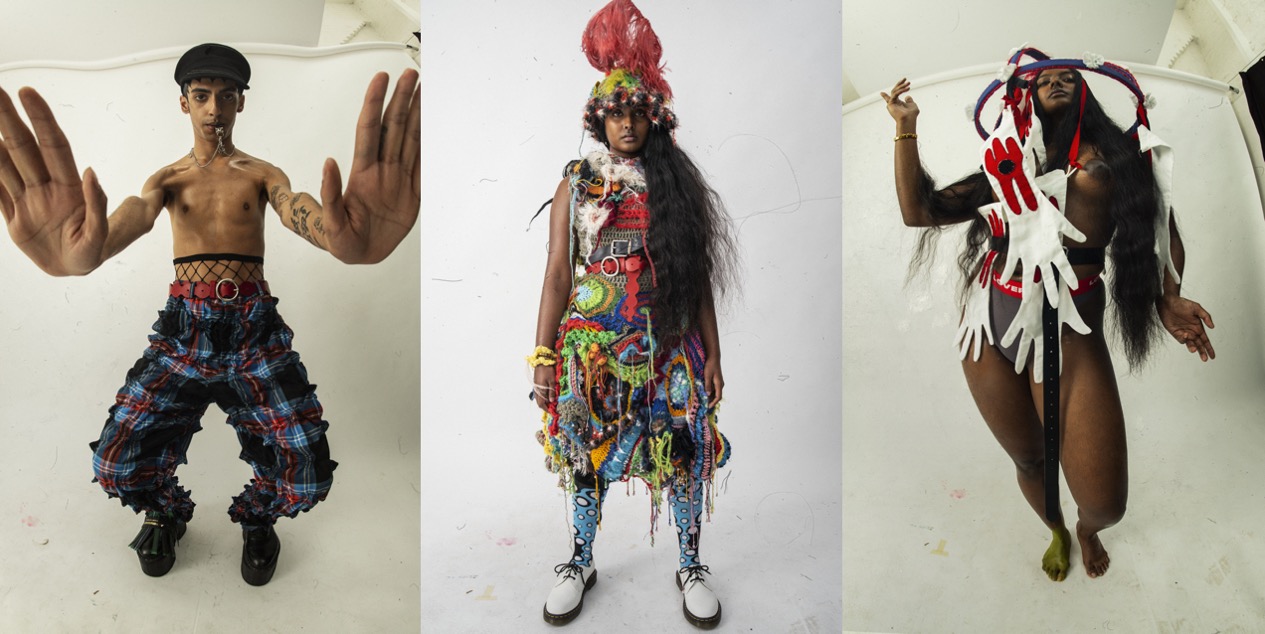
Sometimes all we really want is fantasy, care-free-ness and uplifting escapism. Charles Jeffrey Loverboy‘s spring-summer 2021 collection ticks all of the boxes, plus one more: it’s wearable. Charles Jeffrey’s line-up is a kind of frieze of young fashion’s crazy-joyful fight against fear. Here they are, the expansive Loverboy family, captured in 64 pictures by Tim Walker, a work that’s also printed in a 16-foot long concertina souvenir of the times. “I wanted it to be a physical representation of a stream of consciousness,” says Jeffrey. “It kind of represents my brain as I was thinking on long walks to the studio during lockdown. Taking up space, that’s what we do in a Loverboy show. But now that has gone, stopped. I was thinking: What does it look like when we’re all keeping away from each other?” It ended up as the Healing, a wild celebration of sexiness, inclusion, and craft-y life-forces, with Jeffrey acting as an invoker-provoker of good against evil. “Loverboy was always a community that came together in a club, but also a digital community of friends who’ve gravitated towards us. There are a lot of really amazing people in here,” he says, describing them in his press communiqué as “our queer family captured in defiant joy.” “It was originally nicknamed the Emergency Collection in the studio,” he remembers. “Then, everyone had to go home, except me. There was this panic.” On his solitary  daily walks, the Scottish folk tradition enacted by the Burryman (“costumes that ward off evil”) suddenly popped into Jeffrey’s head. That got his creative synapses jumping. “Our interns, god bless them, had started with us bright-eyed, bushy-tailed, and excited about working on the collection. I didn’t want to take that experience away from them, so we set a craft project they could work on remotely.” Community, Health, and Hope are the emblems in the Loverboy panels of protective armor, embroidered by interns in isolation. The contradictions between enforced separation and the need to feel united simultaneously sent Jeffrey down a rabbit-warren of research into “warning signs in nature.” Out of the search engine popped the vivid clashing colors and patterns in the collection, inspired by poison dart frogs, blue-ringed octopi, puss moth caterpillars, hickory tussock moths, and marbled cone snails. “Well, poisonous markings in nature are also very bright and attractive. That weird interplay felt really instinctive to me as a person who works with color. How it can ward people off, but also brings them together.” The pathway from there to healing went via chromotherapy – but practically, it’s just there quite obviously and visually in all the eye-dancing Loverboy energy radiating from multicolored knits, tartans, and psychedelic prints. There may be no physical spaces for the rituals of clubbing or fashion performances right now, but never mind. Despite the troubled times, there still exist the territorial rights to identity and psychic freedom that the Loverboy generation has mapped out – the progress, as Jeffrey puts it, “from emergency, terror, and jittering-anguish to elation, sex, communion.

Collage by Edward Kanarecki.
Poland in 2020.

On Thursday, Poland’s (UN)Constitutional Tribunal (an equivalent to the Supreme Court in USA) ruled to outlaw abortions due to fetal defects, making the country’s ban on abortion almost total. As of now, Poland will only allow abortion in cases of rape, incest, or danger to the pregnant person’s life (note: even these cases are being hindered, and the ruling party aims to outlaw all kinds of abortions!), making the country one of the most hostile places in Europe for reproductive rights. The topic of abortion has been attacked by the ruling party for years, but now they are taking advantage of the pandemic, doing whatever they want. This is an attack on human rights. An attack on women. Disappointing, devastating and frustrating. I can’t believe where this country is heading to. Read more about the protests happening across the country here.

Artwork by Barbara Kruger – the poster was meant for the Pro-Choice march that occurred on April 9th, 1989 in Washington D.C. Utterly relevant in 2020 Poland.

Think Pink. Noir Kei Ninomiya SS21

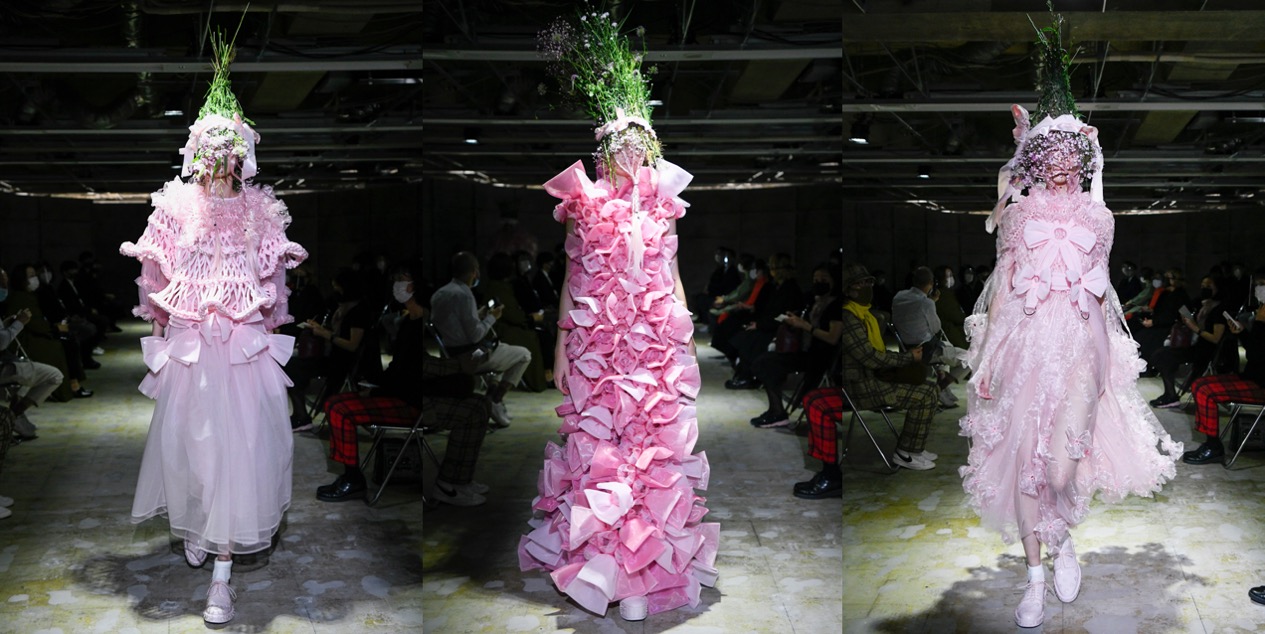
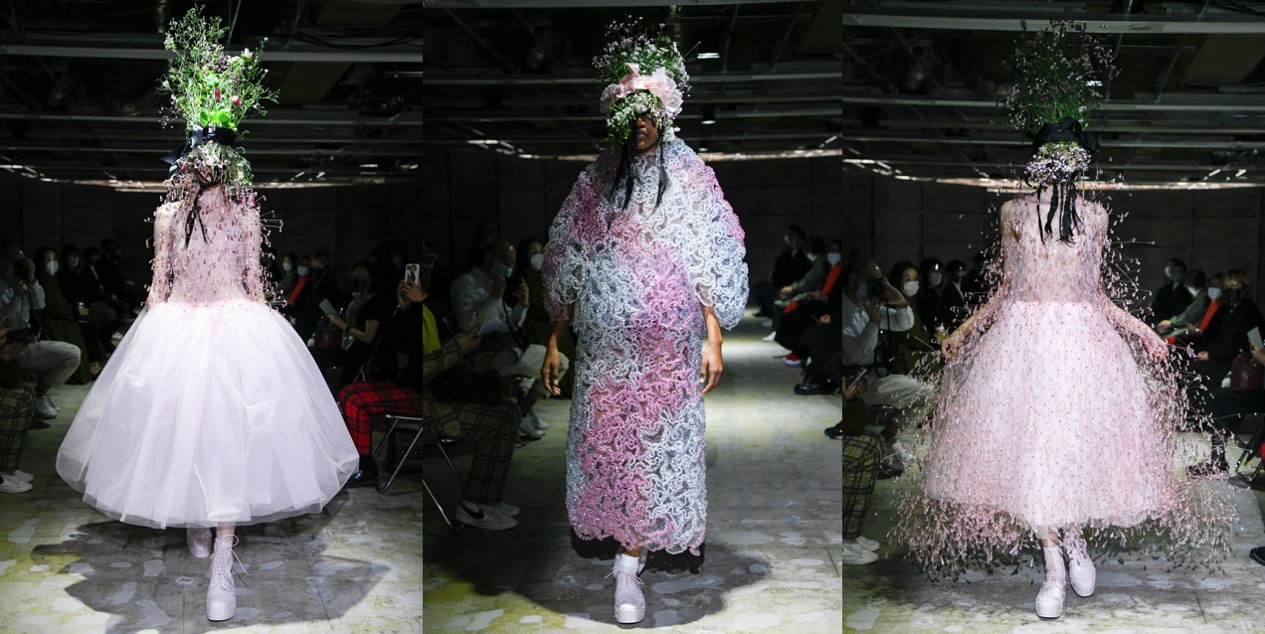
Extraordinary – that’s how one might describe Noir Kei Ninomiya’s garments. Most of them are sew-free constructions – he prefers rivets, snaps, or grommets – and for spring-summer 2021, we’ve got a series of handmade hyper-extravagant dresses, all of which would be perfect for a Björk album cover or a Nick Knight shoot. While Ninomiya usually stays close to his favourite palette of black, here we’ve got a deslightful splash of bubble-gum pink. Is this a sign of hope for a troubled world? The designer leaves it to your interpretation. Grandiosely modern silhouettes were delineated in materials that included wire, pearls, PVC, chain, a symphony of polyester fabrications, ribbon, satin, cotton, wool, three types of leather, and taffeta, with which the amazing aura-haze of the last look was constructed. Note the four varieties of this-season’s collaboration with the Prada-owned English shoemaker Church’s. These florally studded footwear options are the most straightforward way, along with his biker jackets, to buy into the Ninomiya aesthetic. Love!

Collage by Edward Kanarecki.
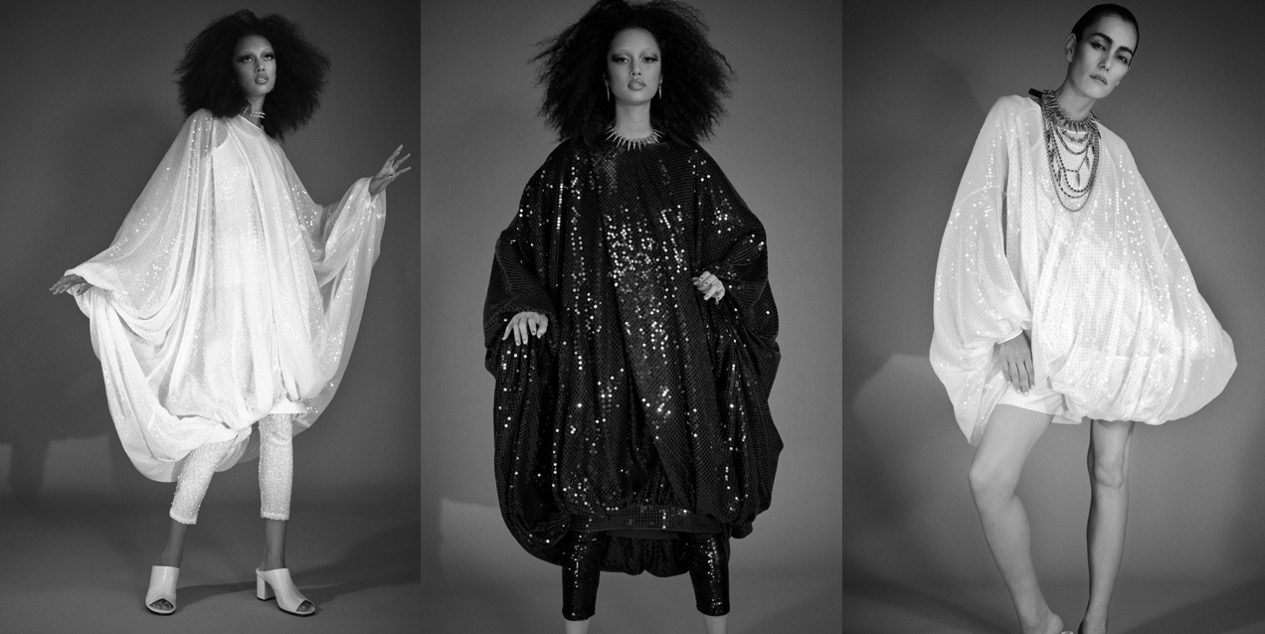
Disco Noir. Junya Watanabe SS21

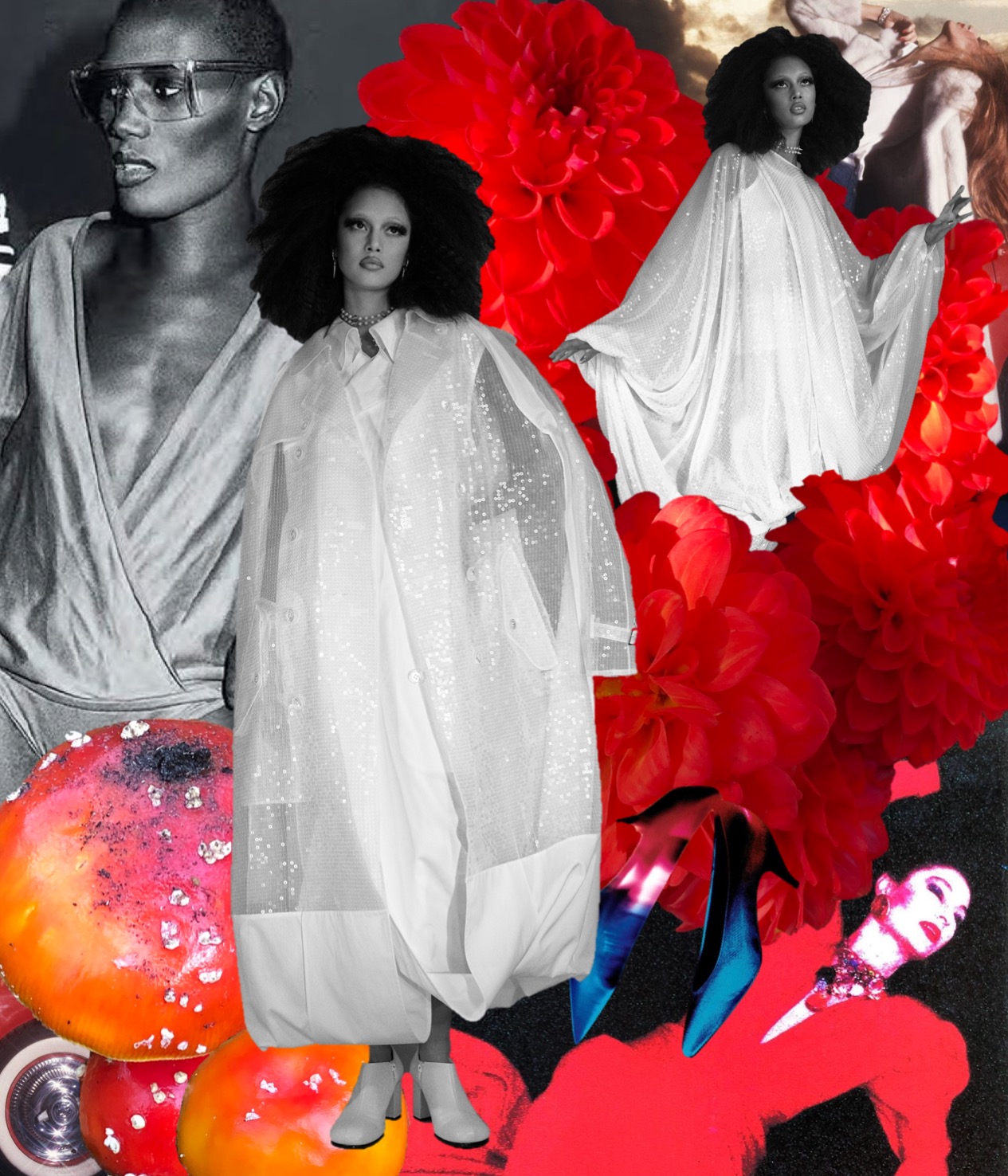
Disco is having a rebirth in music – just think of Jessie Ware, Róisín Murphy or Dua Lipa’s latest records. During lockdown, we’ve all dreamed of a care-free party, so no wonder why some designers chose this escapist, joyful theme for the spring-summer 2021 collections.  Discussing his latest outing, Junya Watanabe’s press notes said, “It is a collection that reproduces the costumes worn by the stars in my memories. My memories are monochrome, and I created a photo session with four fictional stars.” The black and white images feature an assortment of apparently black or white looks, plus one or two more in silver. Nearly all of them are sparkling with sequins dresses that get the party started. The 1960s A-line gowns that close the look book, but also the trenchcoats that are integral to Watanabe’s oeuvre, have a disco noir feeling about them. Last season Watanabe paid punkish tribute to Debbie Harry. Though the Spangles may owe a debt to the Supremes, these muses are more abstract. In its spotlighting of sequins, the collection feels of a piece with earlier Watanabe shows that had singular focal points of their own, like army fatigues and puffers. His new season clothes have an easy-to-wear aspect that many have keyed into in this COVID year. I’s a whole lot of caftan-like shapes and leggings, essentially and a stripped-down outing by house standards. The most complex shapes were the coats whose hems looped up, creating generous volumes. But in tricking everything out in spangles Watanabe turned the concept of #WFH-wear on its head. Comfort, he gets. Hibernation? Not so much. Sequins are associated with happier times. If and when the world opens up, Watanabe’s women will be ready to loose themselves on the dancefloor.

Collage by Edward Kanarecki.