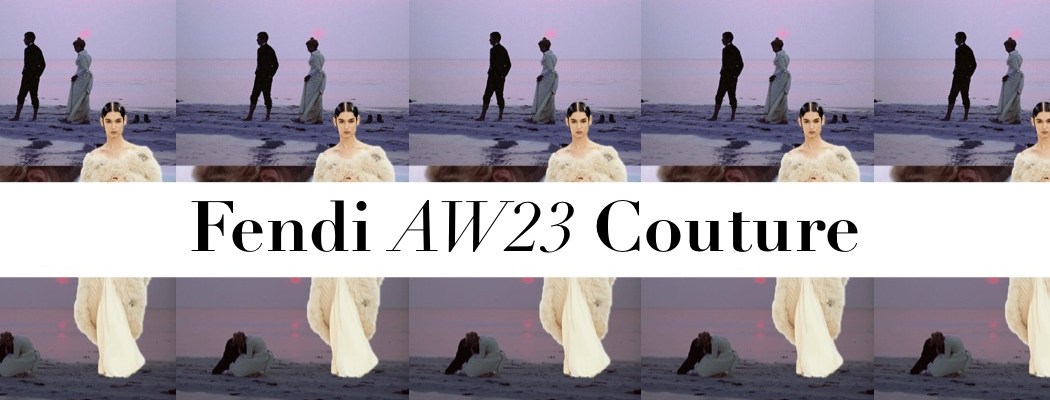
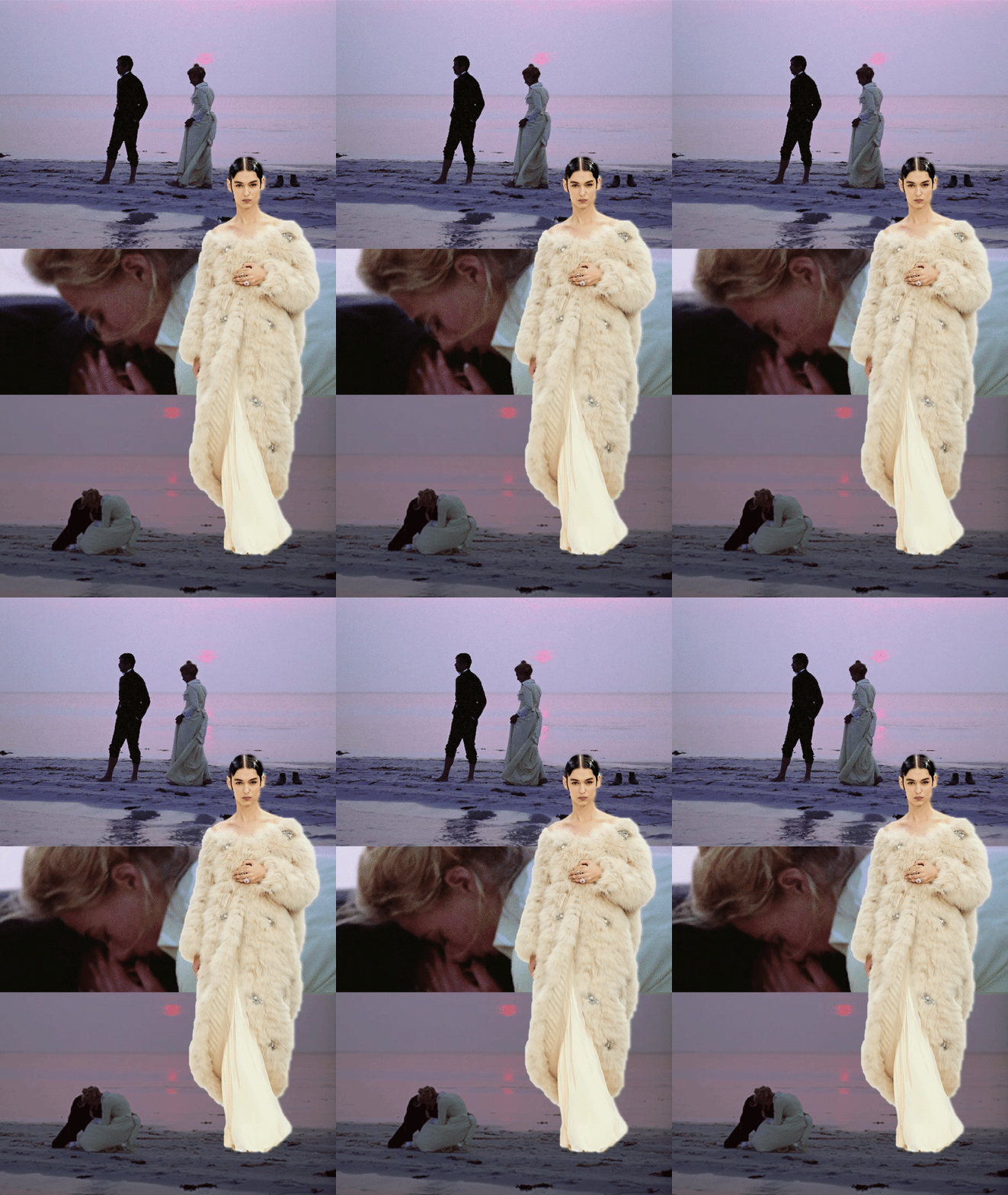
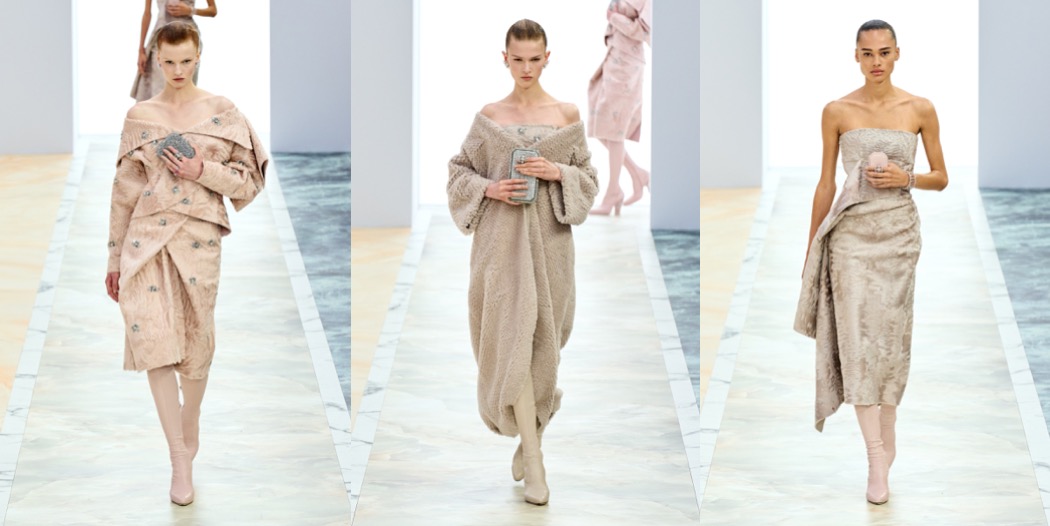
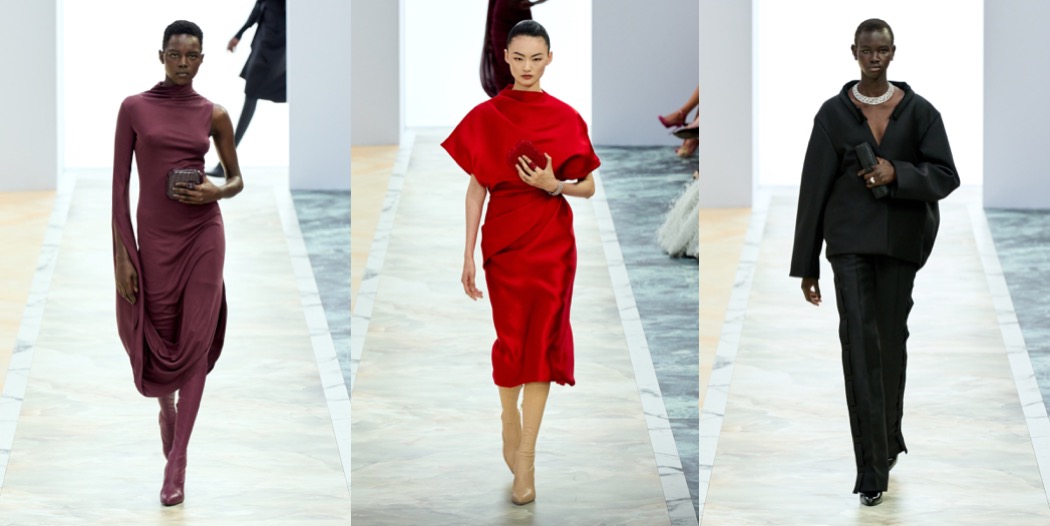
Kim Jones placed the creative synergy between himself and Delfina Delletrez at the heart of his Fendi haute couture show, and it worked: the collection felt assured and strong, comparing to his last attempts at the brand. “I started with looking at Delfina’s Fendi high jewelry, which she’s done for the first time,” he said. His palette flowed “in almost an organic way, with colors and embroideries based around the hues of natural stones, rubies and sapphires,” he added. “It’s the idea of the silhouette being ‘nothing’, but everything at the same time.” This collection didn’t reinvent the wheel, but it had couture clarity that can subtly compare with Pierpaolo Piccioli’s couture work at Valentino. The aesthetic Jones established is based around draped, wrapped, shapes – 1990s minimalist aesthetics merged with echoes of the statuary of ancient Rome, where Fendi is based. This season’s iteration became his canvas for the launch of Delletrez’s 30-piece collection of Fendi precious jewels. The models walked around a marble floored quadrangle, a scenographic impression of Fendi’s headquarters in Rome. Most were clutching a version of a Fendi bag – small rectangular leather jewelry boxes. Delfina’s distinctive diamond earrings, brooches, and necklaces shone from the runway. “Everything is very fluid,” she explained, showing how she created draped, asymmetrical shapes, studded with pink spinels and yellow diamonds, ingeniously incorporating tiny geometric plays on the Fendi logo.
Collage by Edward Kanarecki. Don’t forget to follow Design & Culture by Ed on Instagram! By the way, did you know that I’ve started a newsletter called Ed’s Dispatch? Click here to subscribe!
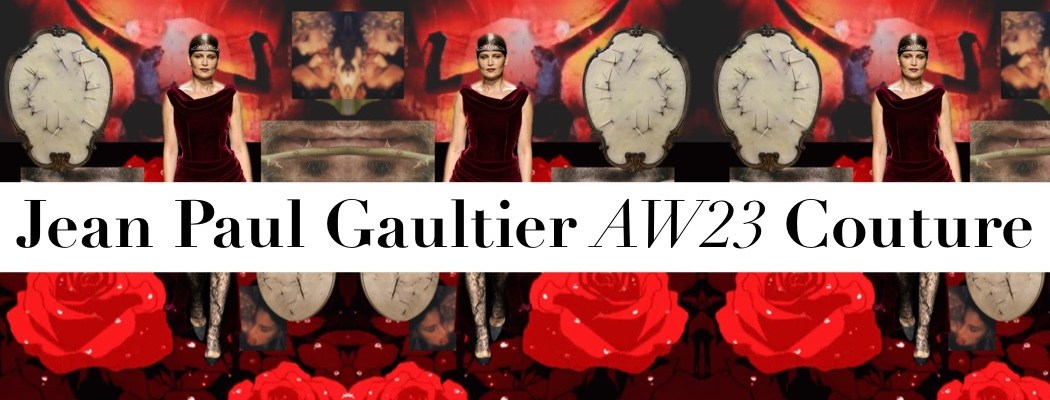
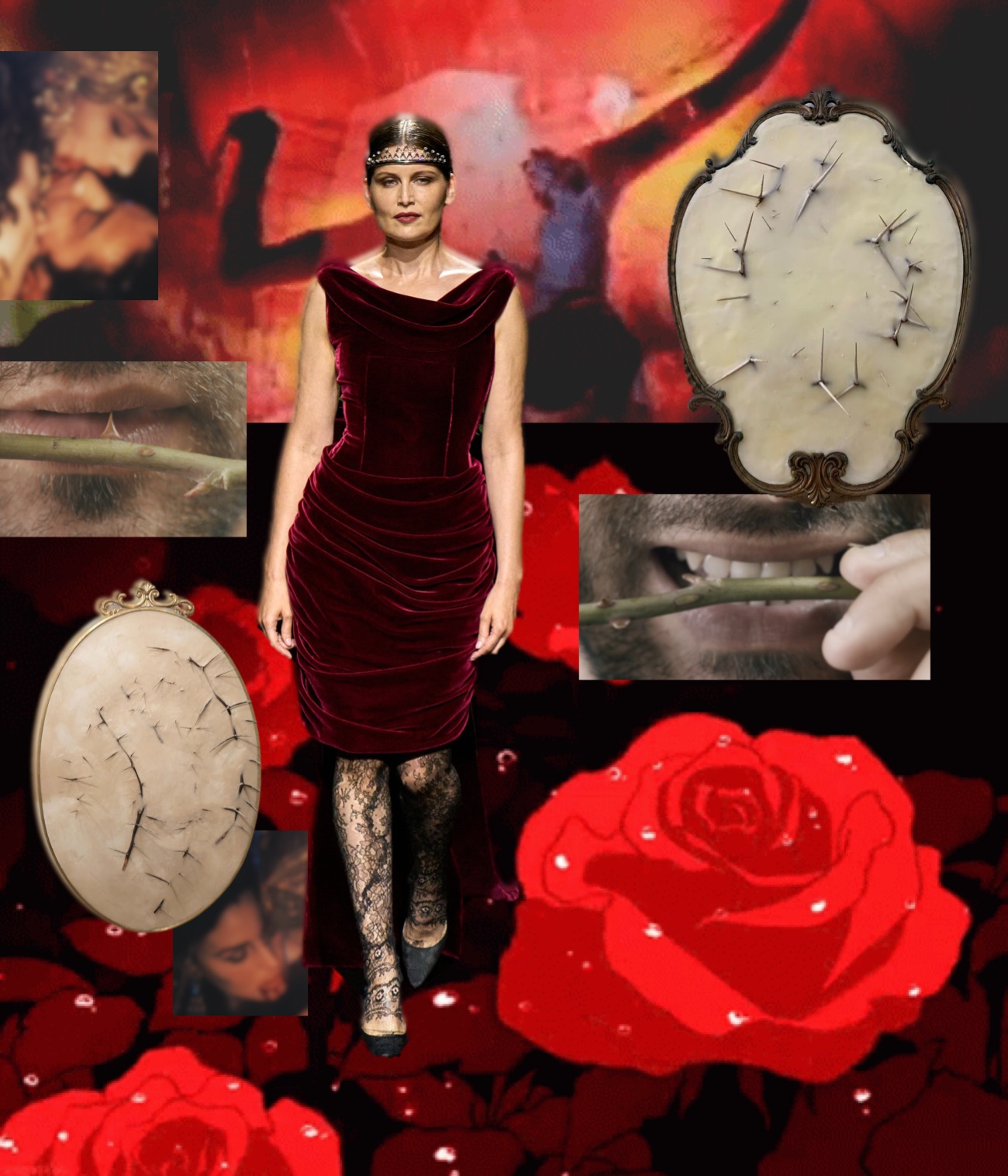
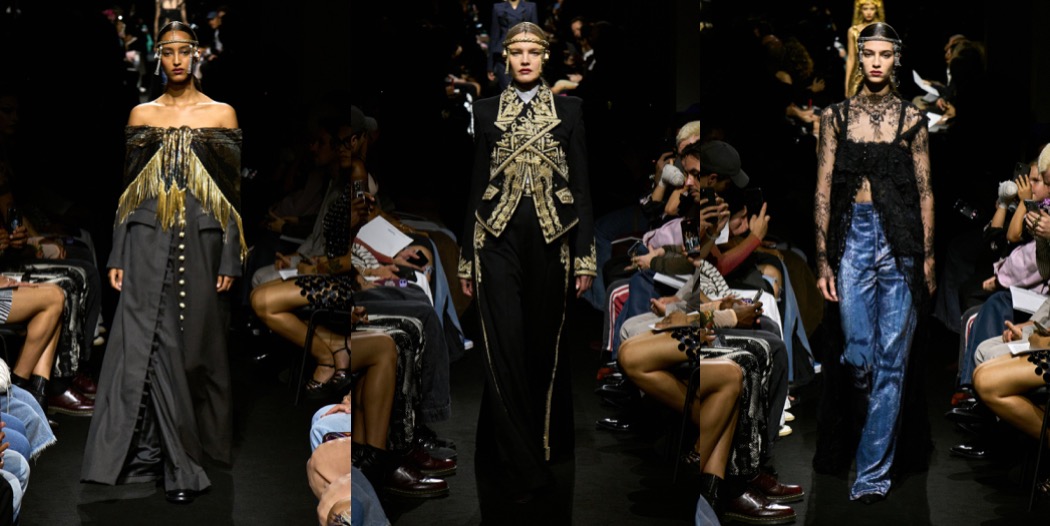
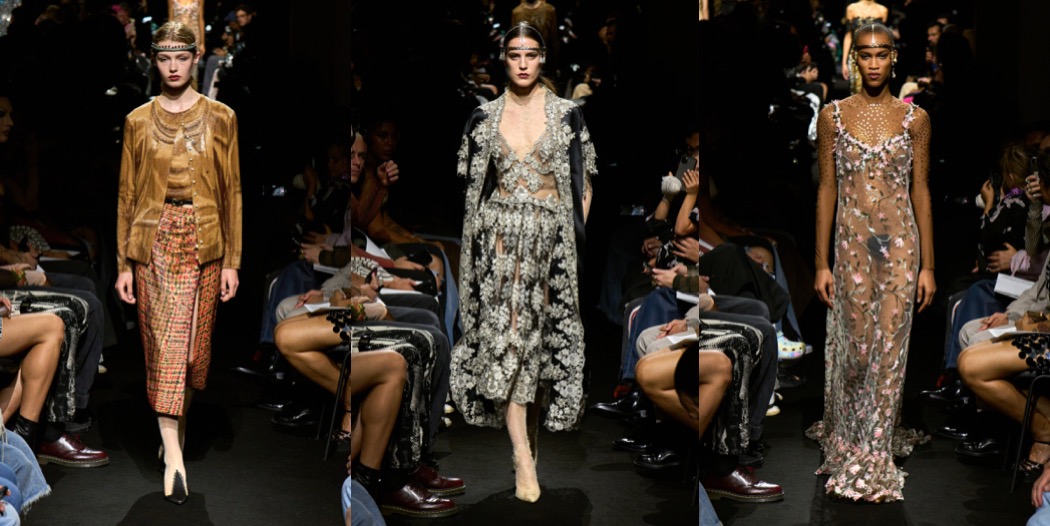
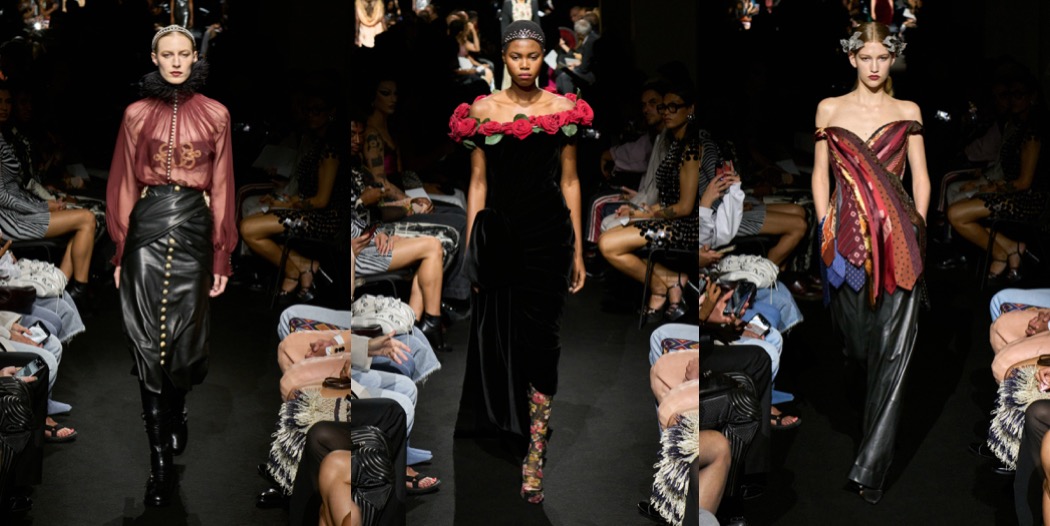
The guest designer gigs at Jean Paul Gaultier have become one of the best moments of haute couture fashion weeks. Julien Dossena‘s take on the couturier’s legacy was definitely a triumph. (Paco) Rabanne’s creative director wanted to achieve “a feeling of characters you pass in the street in Paris,” he said. “I wanted to make all of them queens, each with a different crown.” The honor of being able to bring his interpretation to the work of a national treasure of French couture couldn’t have been more sincerely felt. “Jean Paul was the first designer I ever saw on TV when I was very young. Watching him, I understood for the first time: oh, fashion can be a job! What he did (became) infused into my cultural background in general.” Over lunch with his idol, Dossena discovered that Gaultier had known Paco Rabanne, who had recently passed away. “He asked me to make something to honor him. But I had from him this complete sense of freedom. There’s this feeling in the couture ateliers that anything can be done.”
At Rabanne, Dossena’s ability to modernize chainmail and turn it into new techniques in zillions of ways has been one of the hallmarks of his talent – that, and the slant on bohemian glamour that frequently comes through his collections. His unmistakable double-salute to Gaultier and Rabanne was to whip up a replica of the famous pointy-bra dress from Gaultier’s first collection in 1984 in silver chainmail. But the dimension of Gaultier’s work which sparked Dossena’s imagination the most was his street-observation and inclusiveness – decades before it became fashionable. “Jean Paul was really the first to treat fashion as almost sociology, watching what people wear in the street, expressing communities in his shows. Joyously mixing people together.” Dossena’s presentation of chic-ified looks included a pinstriped trouser suit and a lace dress over a pair of trompe l’oeil beaded jeans with sweeping trains. Mid-way, in a stunning moment that spoke dramatically to the beauty of human togetherness, he draped shining gold and silver swathes of chainmail to connect pairs of models – a man apparently carrying a woman’s train, and two individualistic goddess warriors, each symbolizing a different culture. There were references to Gaultier’s giant trapper hat, to the sweeping floor length coats in his “Rabbi Chic” collection, and to off-the shoulder lace he used in his “La Concierge est Dans l’Escalier” show. Dossena said he’d deeply related to Gaultier’s habit of trawling flea-markets for vintage finds – a route into developing rich techniques. Part-way, there was a dress made of Irish-crochet lace, embroidered with gold paillettes meticulously made to look vintage. There was a peach satin lingerie dress layered over black lace, a floral lace apron worn over tailoring. And just as you thought Dossena might have missed a little something of the subversive wit that got Gaultier permanently labeled the Enfant Terrible of French fashion, sure enough, there it was. Clearly glimpsed through a couple of sheer dresses, a pair of trompe l’oeil embroideries of pubic hair. Sitting in the front row, Jean Paul Gaultier raised his eyebrows and chuckled as they passed by.
Collage by Edward Kanarecki. Don’t forget to follow Design & Culture by Ed on Instagram! By the way, did you know that I’ve started a newsletter called Ed’s Dispatch? Click here to subscribe!
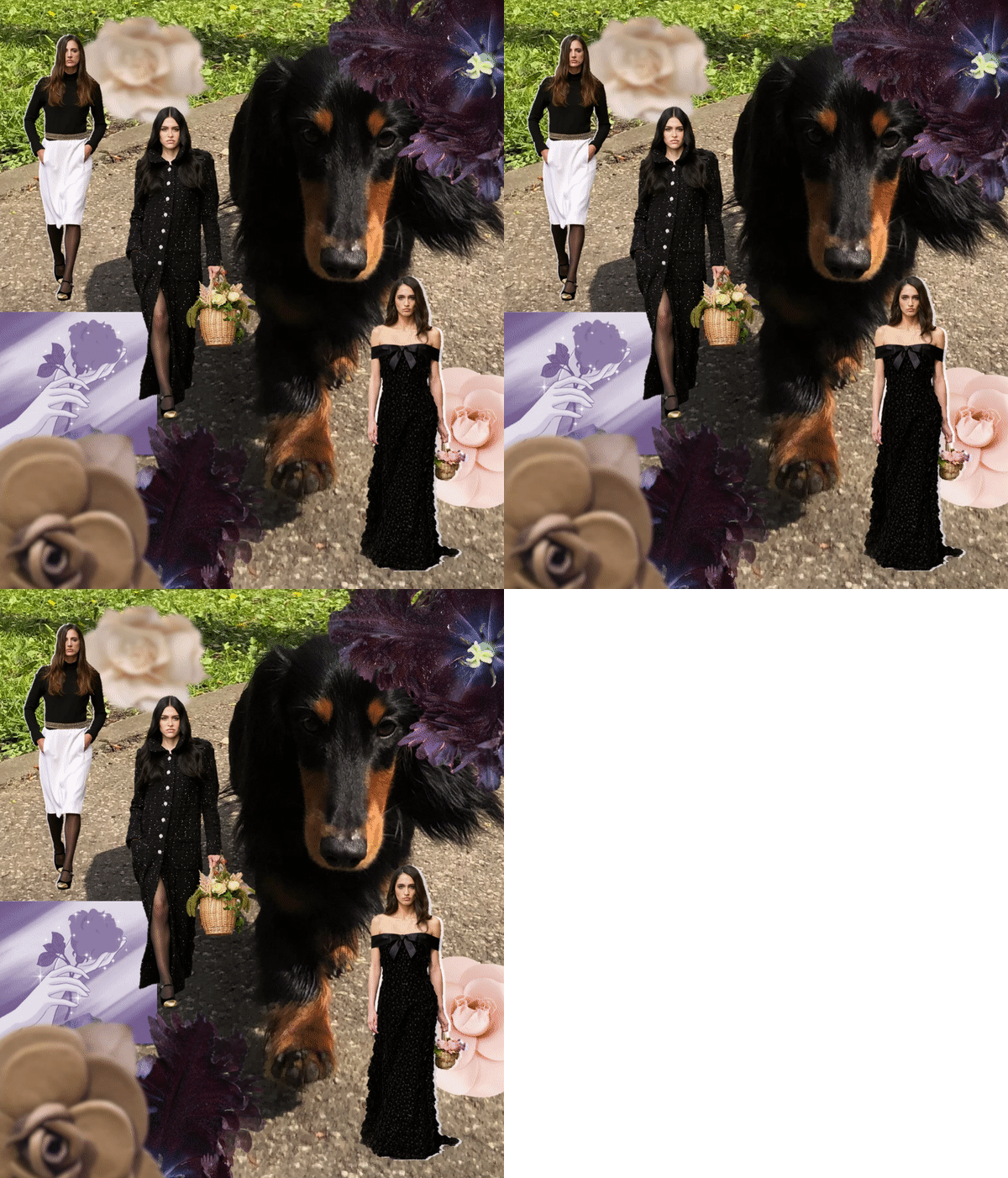
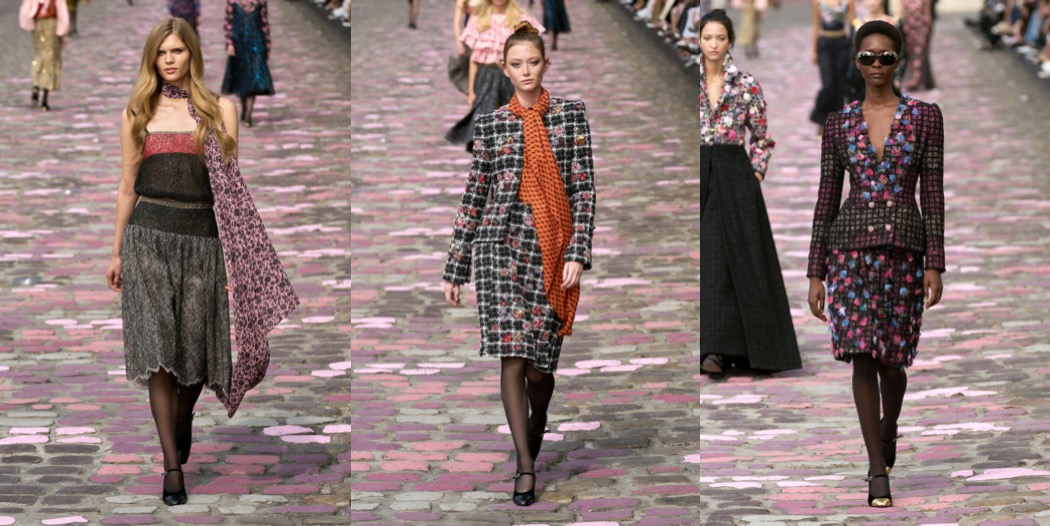
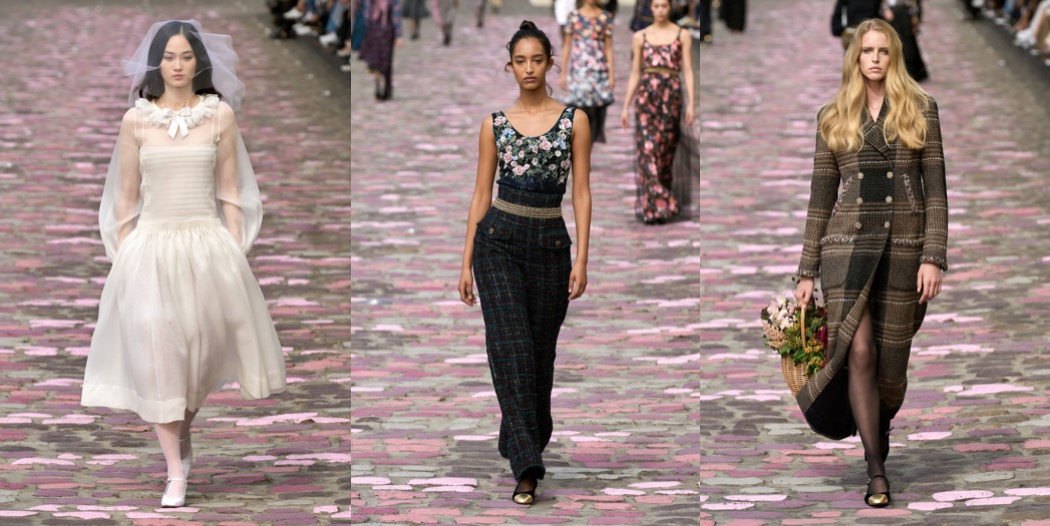
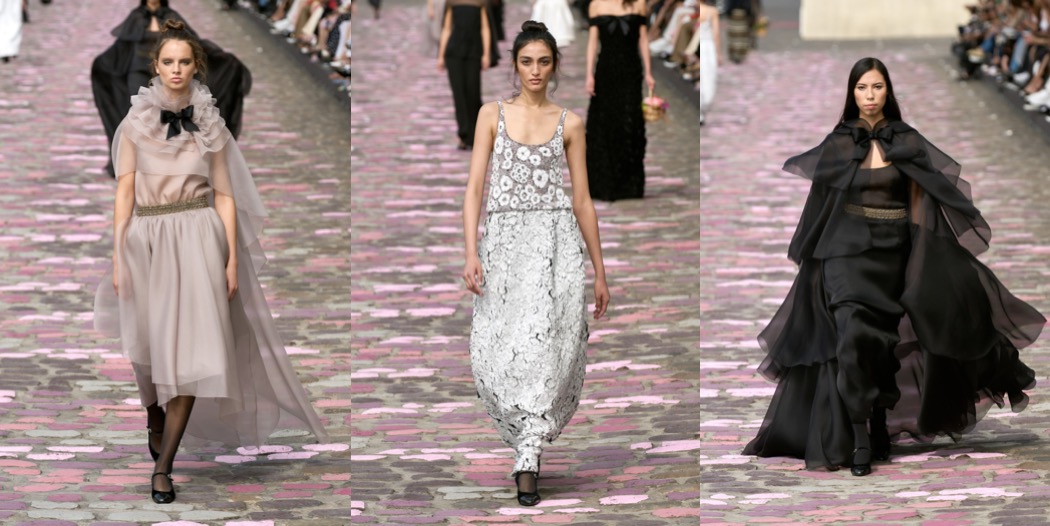
Virginie Viard‘s autumn-winter 2023 collection for Chanel was her best haute couture moment ever. It was just so charming, effortless and simply beautiful. Inspired by a Parisian allure, the collection unveils a portrait of a delicate yet bold femininity. But the creative director also managed to present couture in a new, refreshing light. Lead by Caroline De Maigret, the models strolled nonchalantly in their block-heeled Mary Janes, just as if wearing haute couture to walk the dog or pick up some flowers at the market were most the most normal thing in the world. Showed on the riverbanks of the Seine, the garments were adorned with embroidered fruits and flowers motifs reminiscent of the still-lives dear to pictural arts. Silhouettes played with masculine codes, mixing together rigour and asymmetry, a self-confident and discreet figure. Among them was a navy flecked tweed coat dress which stood out because of its edging of pale chiffon ruffles because what you’re also craving to see at Chanel haute couture is the wonder of its savoir-faire. These techniques need to be seen close up, and explained in detail to understand the skills, the hours and the arcane refinements of the materials. At a distance, some of it did shine out across the quai: the gilded, patinated surface of a skirt suit, the 3D chiffon flowers in a dress glimpsed inside a plain coat, more flowers embroidered in multicolored sequins on the eveningwear. In the finale, a pale café-au-lait chiffon party dress was lightly whipped into ruffles at the neck and finished with a black bow – a youthful confection that could only come from the Chanel’s atelier flou.
Collage by Edward Kanarecki. Don’t forget to follow Design & Culture by Ed on Instagram! By the way, did you know that I’ve started a newsletter called Ed’s Dispatch? Click here to subscribe!
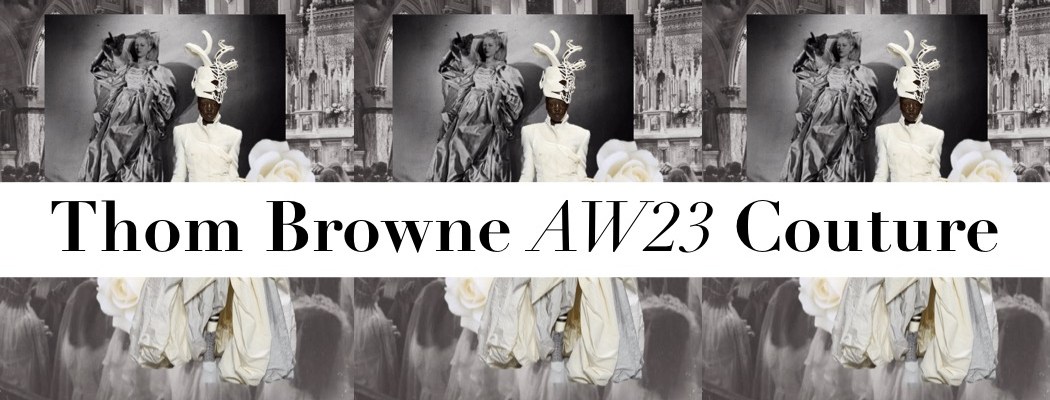
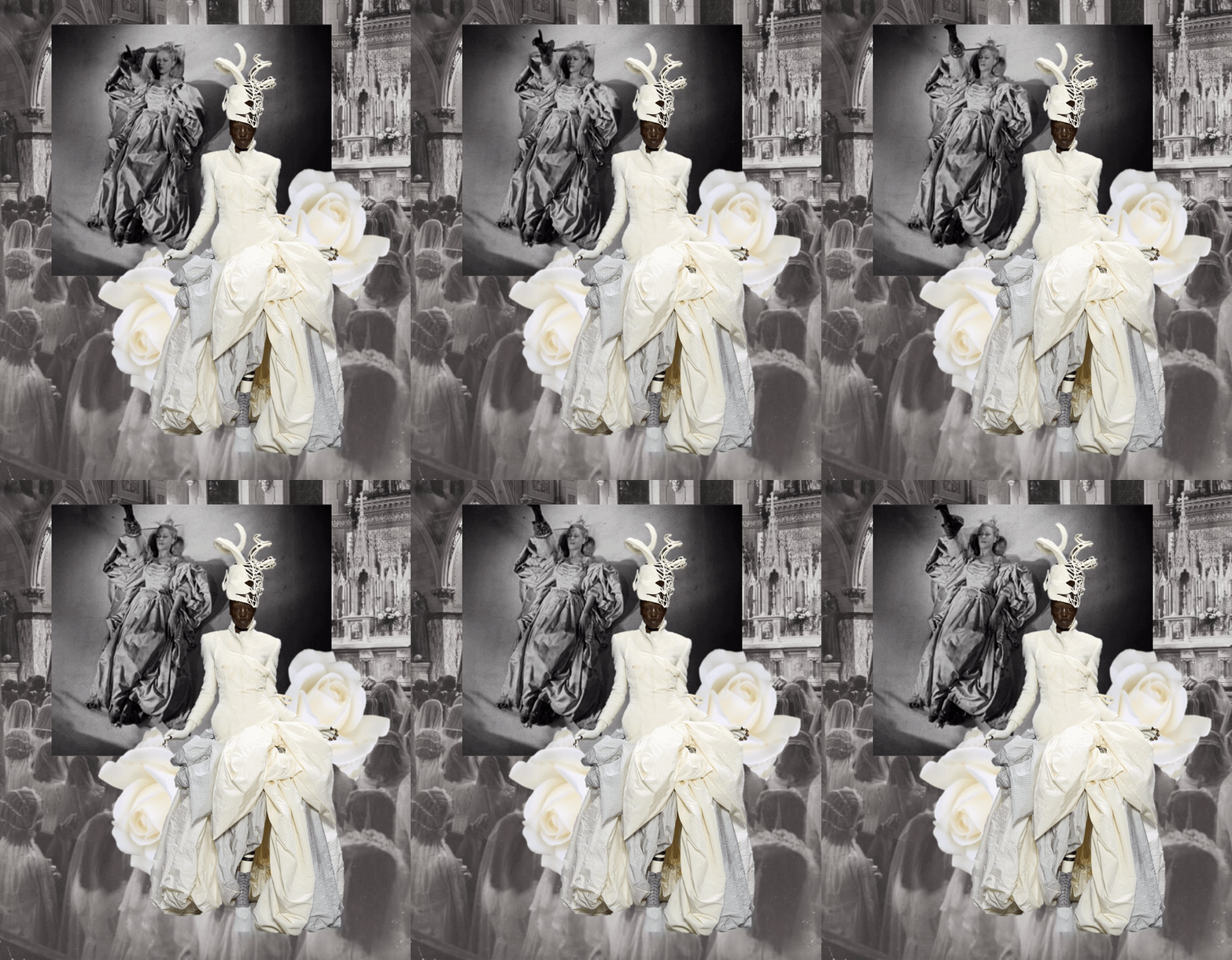
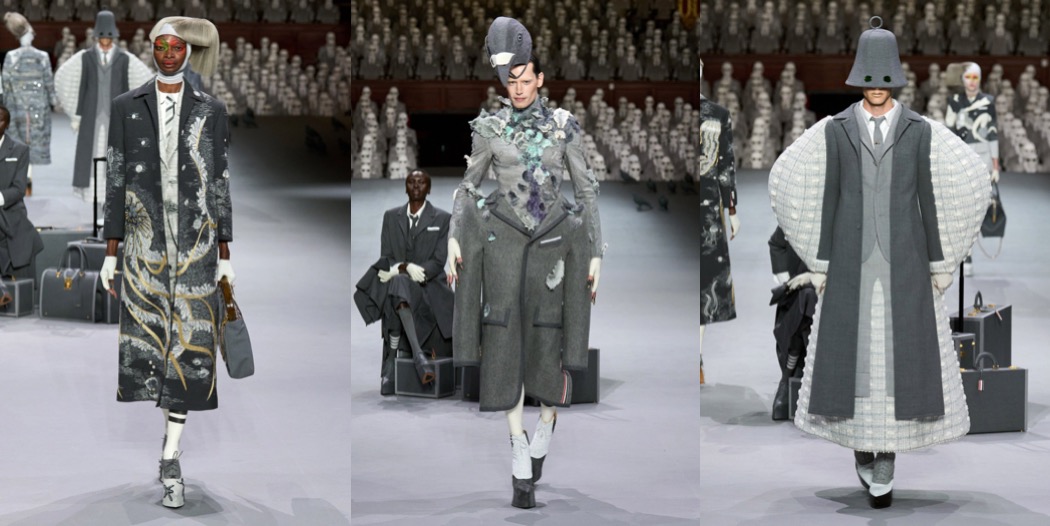
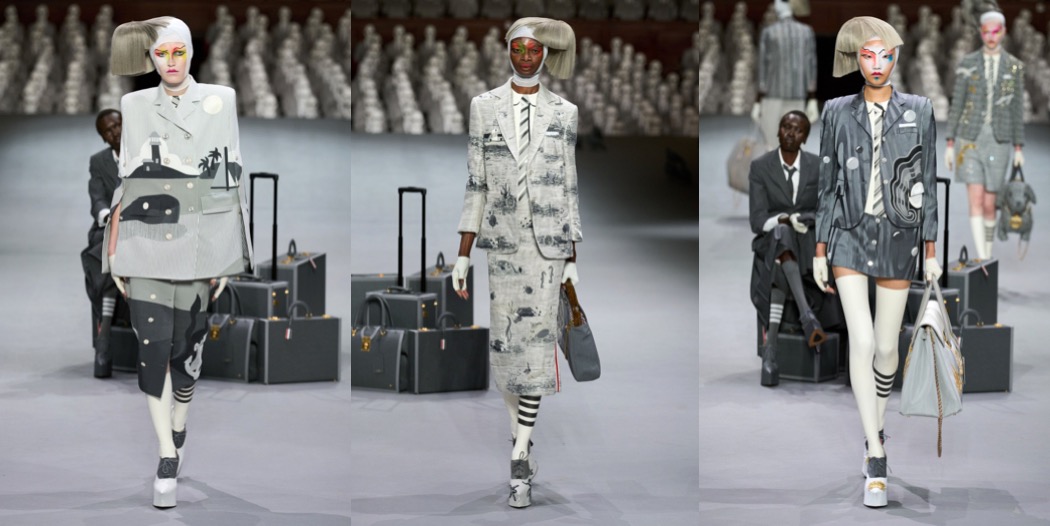
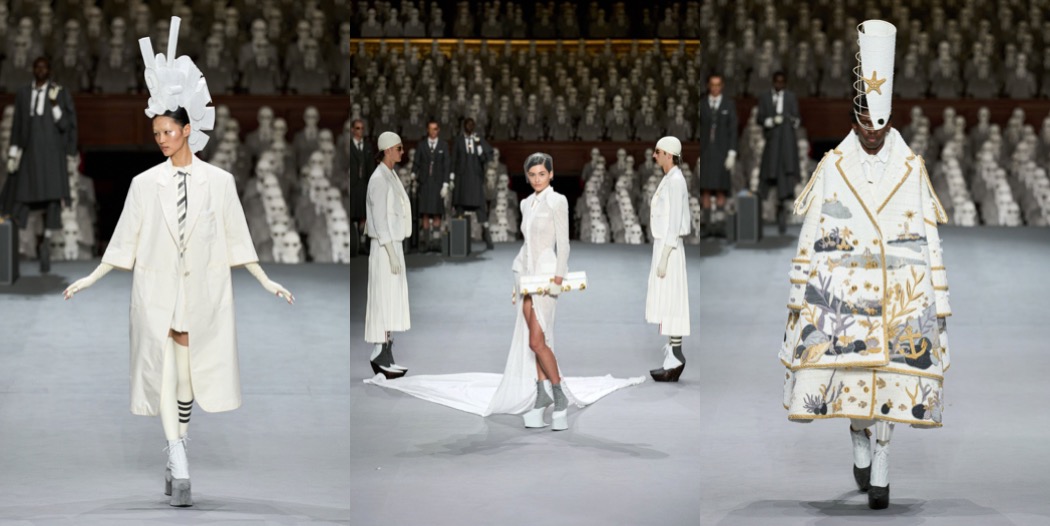
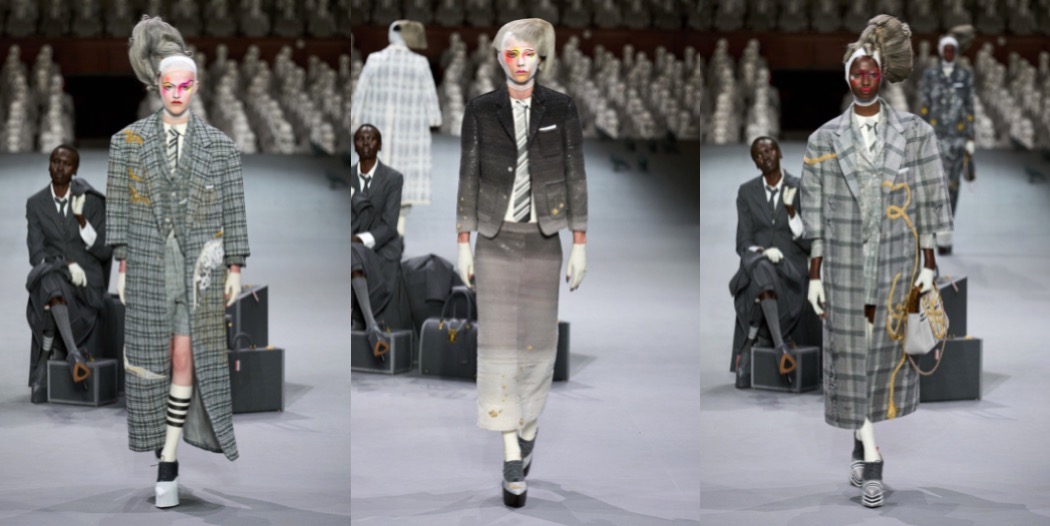
It’s quite shocking that Thom Browne officially showed couture just now. Pretty much every collection he has presented in the last couple of seasons is haute level. His entrance into the Parisian schedule couldn’t be more dramatic. The audience were seated on the stage of Garnier Opera house. Then the curtain went up. And they gasped at the sight: the red and gold auditorium was entirely populated by three thousand black and white cut-out illustrations of someone who looked very much like Thom himself. You had to wonder: was there to be something autobiographical in the formal introduction as a couturier he was about to make on this storied stage? Well, there was definitely a momentous sense of occasion in it for him. “It’s really special – the idea of taking almost American sportswear, the tailoring we do, and bringing it into a couture setting,” he said. “I thought it was important, even in representing American fashion.” The collection was heavily costume-y and theatrical in every possible sense. To the strains of Visage’s “Fade to Grey,”Alek Wek walked up the aisle and onto the stage wearing – what else – a gray Thom Browne jacket and kilt. She sat on a pile of gray luggage, and things commenced around her. There were Thom Browne gray suits and coats in multitudes, all strictly narrow in silhouette, but each almost a vignette in itself. There were patchworks of small country town landscapes, and seasides with sailboats. There were elaborate brocades, Prince of Wales checks, coats and short-suits embroidered with silver and gold sequined stripes. One coat had a pattern of 3D clouds woven into it.
Strange symbolic people began to come and go. Eleven characters dressed as bells, with bell-hats and enormous swollen patchworked coats and bells as spurs on their heels. Pigeon-people – one being Jordan Roth – in feathery bodysuits emerging from huge hip-level blazers. The drama took sinister turns. Bells on the soundtrack began to take on a funereal tone. A woman in extravagant black Edwardiana visited and left. And then another, in white. Ultimately, there was a visitation of someone in a white sequined coat, with a conceptual train on their head. Stephen Jones had obviously been working overtime, too. Then finally, a bride in a white coat-dress. Browne related the script, a dark psychodrama with a happy ending. “The main character was sitting at the station, thinking about her life and not being very happy. And then all of a sudden she sees all of her fantasies walking in,” he related. “She was planning on drowning in her sorrows. So that was the reason for all the underwater kind of things – the preppy East Coast iconography that I play with all the time. But then she realizes her life was actually better than she thought. So she didn’t get on the train.” Hard to be sure, but it seemed like a very American story about redemption and triumph – over depression and set-back. In any case, Browne was beaming.
Collage by Edward Kanarecki. Don’t forget to follow Design & Culture by Ed on Instagram! By the way, did you know that I’ve started a newsletter called Ed’s Dispatch? Click here to subscribe!
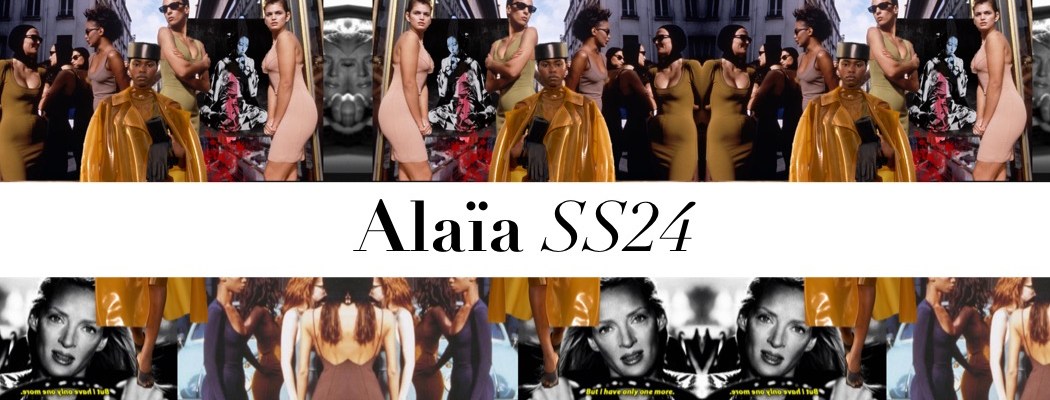
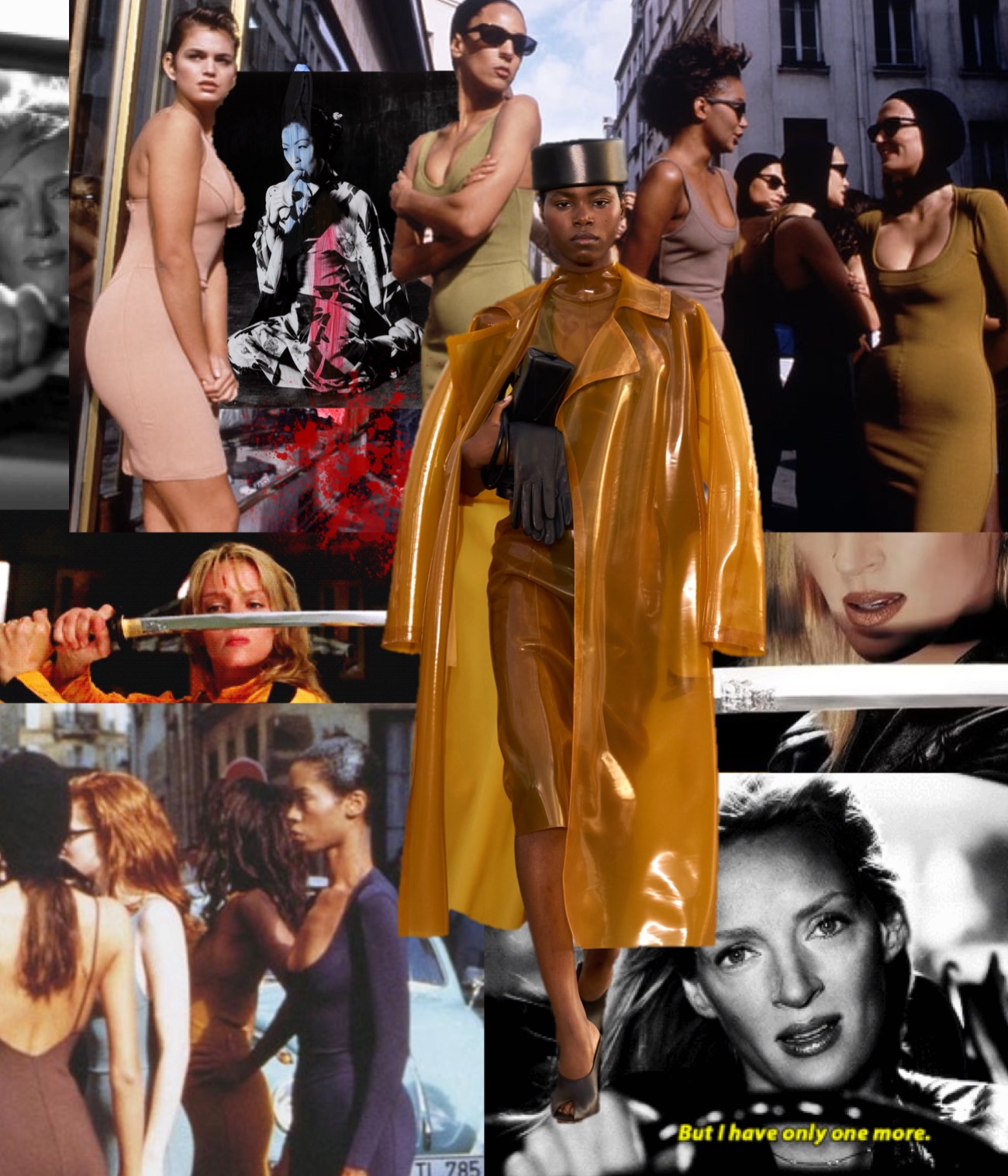
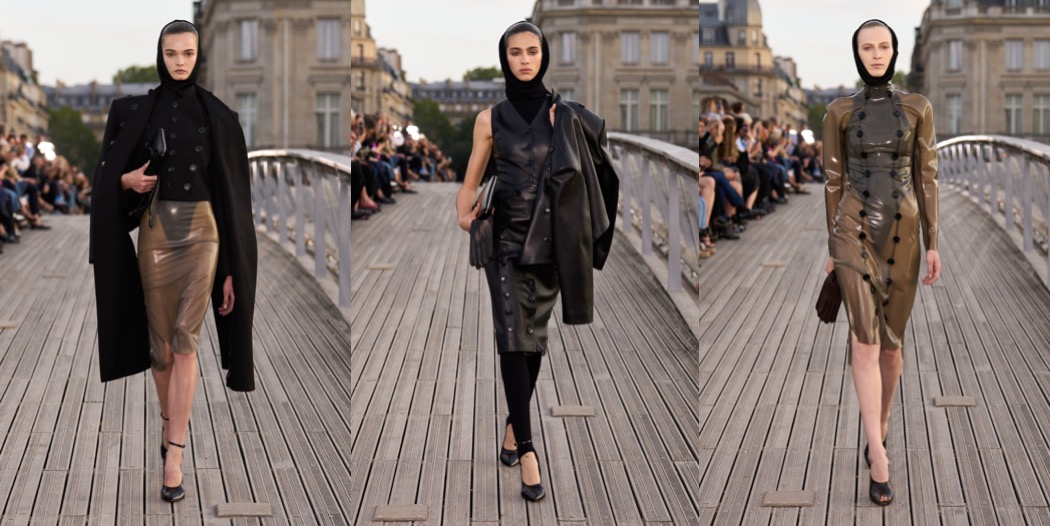
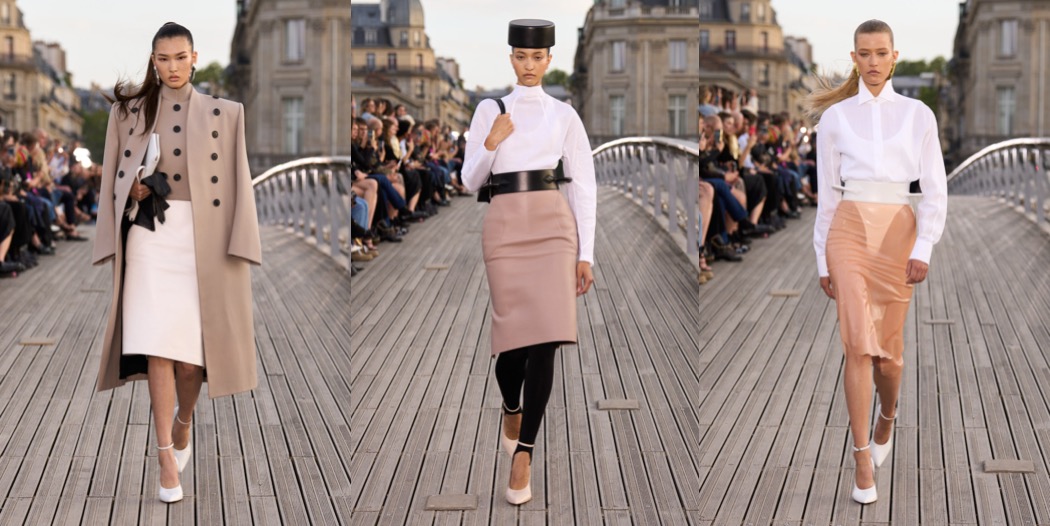
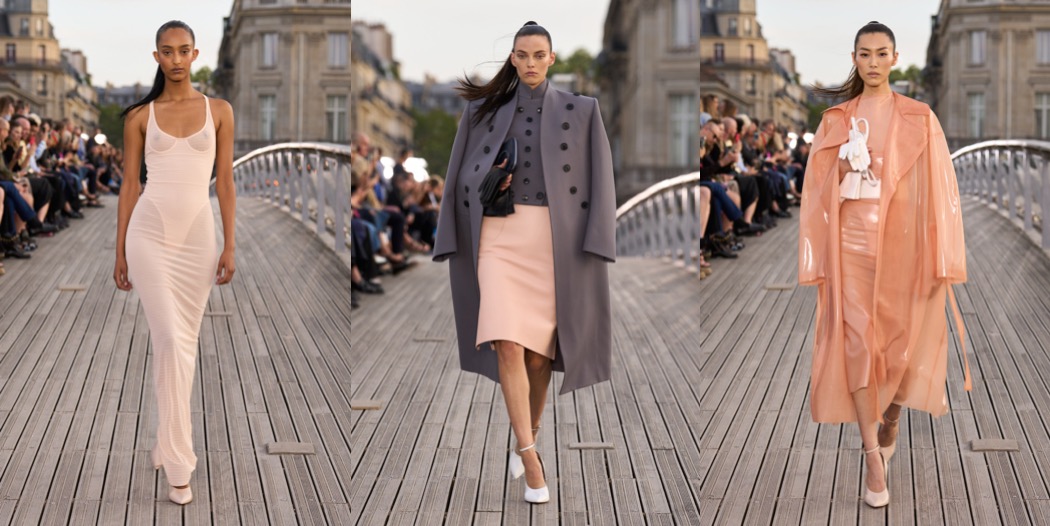
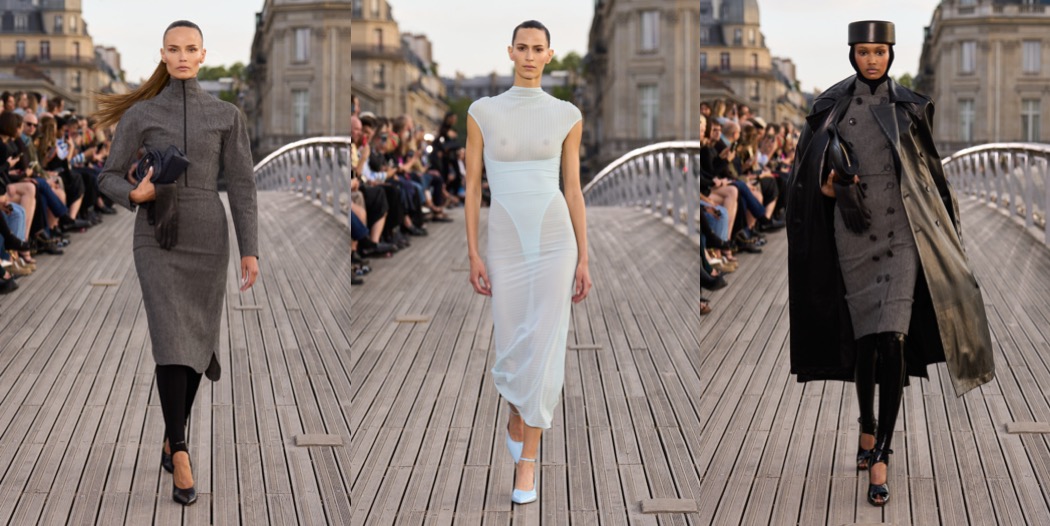
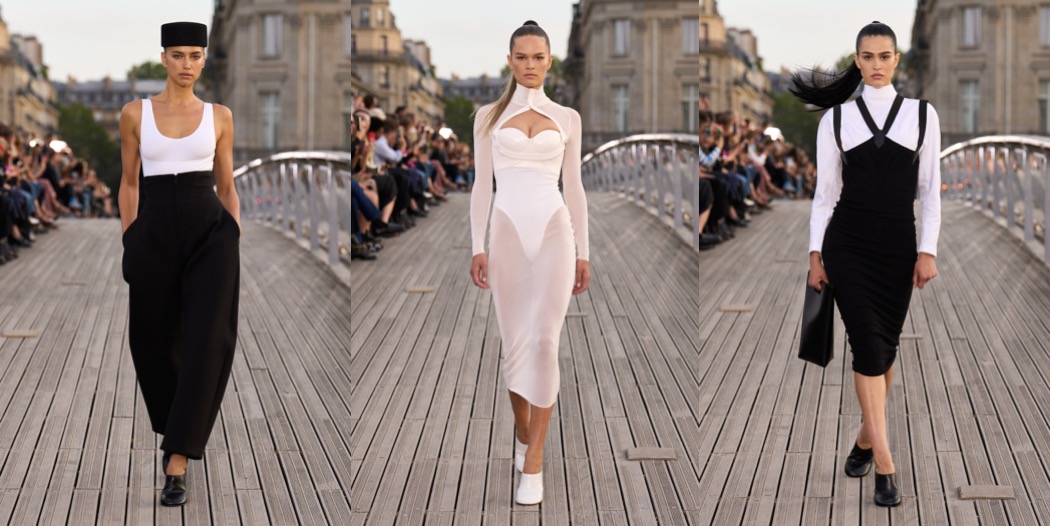
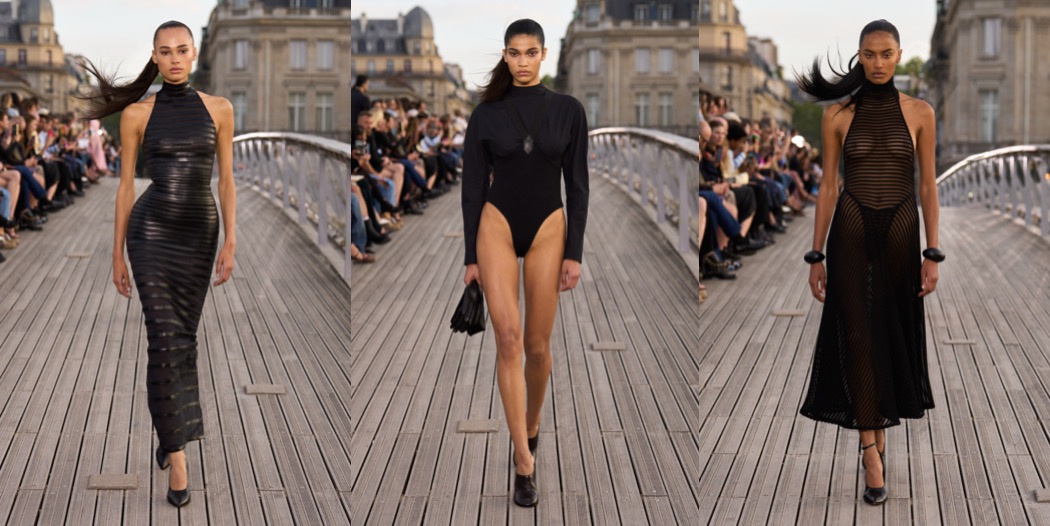
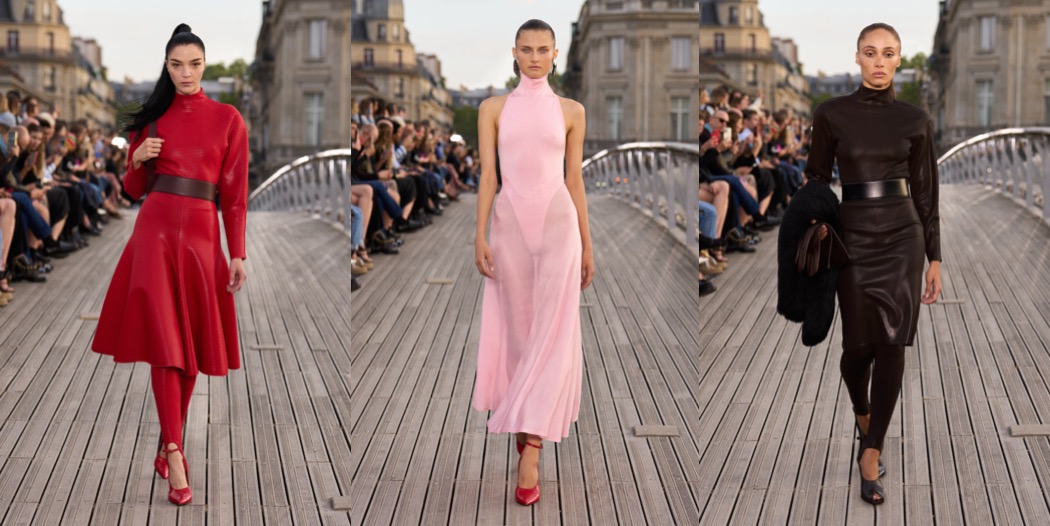
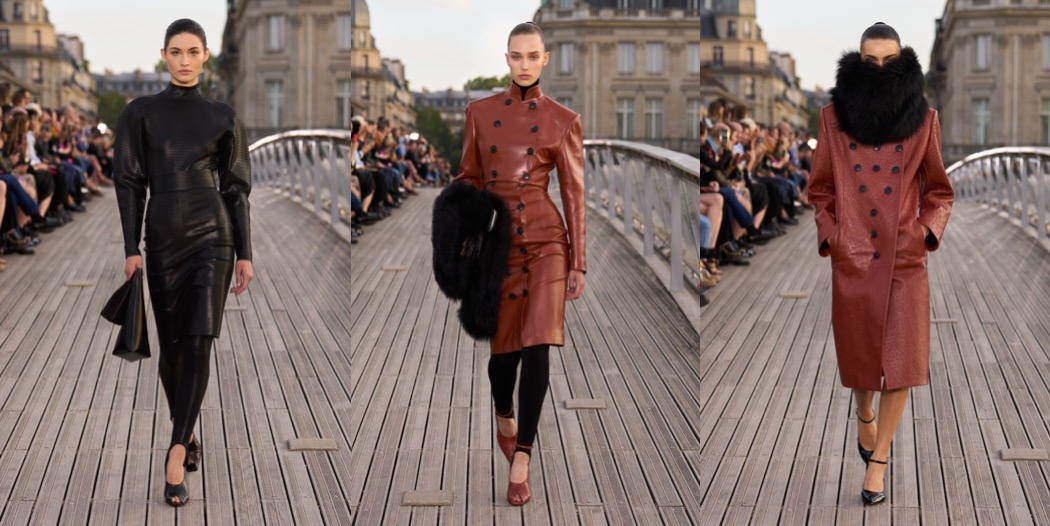
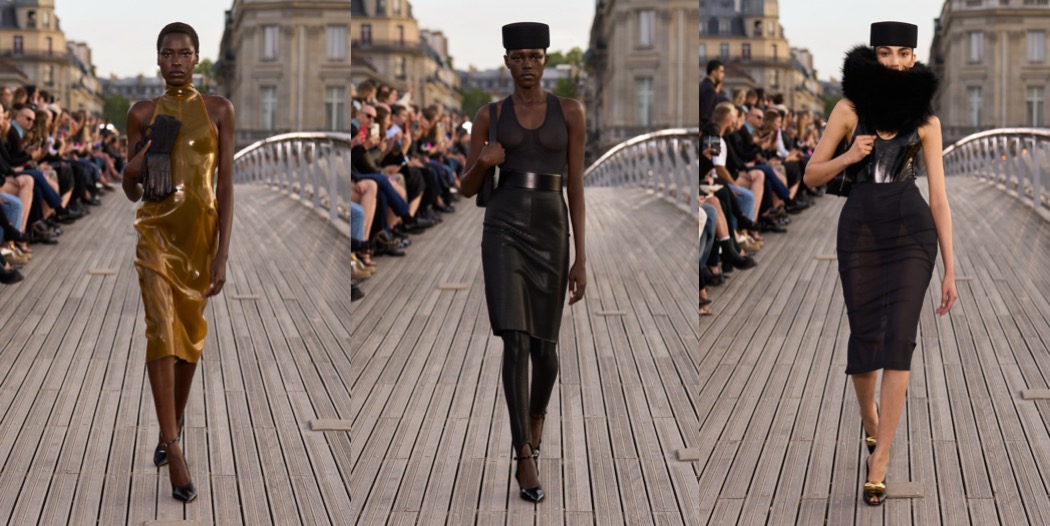
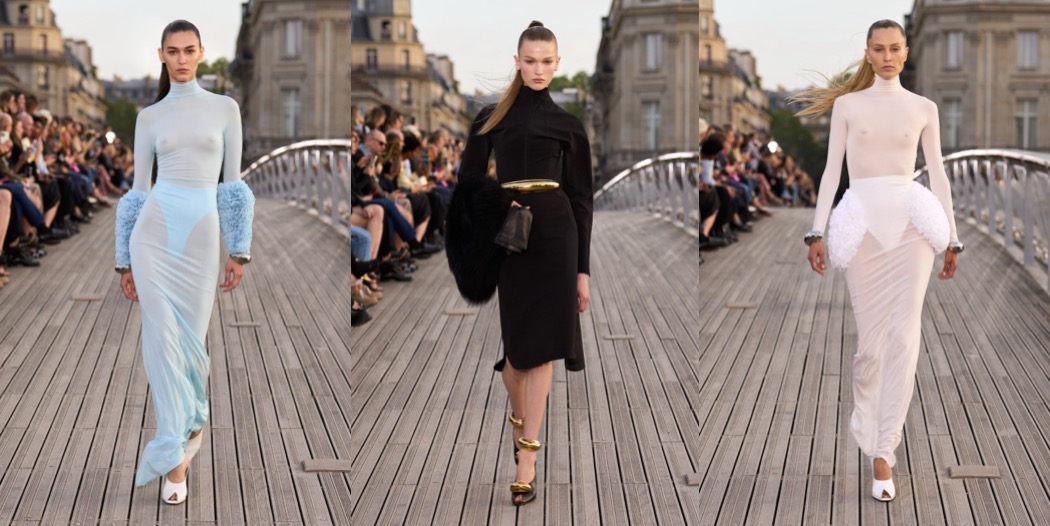
The latest Alaïa collection by Pieter Mulier is hot, sexy, F-A-S-H-I-O-N. In another words, a perfect start of haute couture week, which quite ironically happens in the midst of one of the most tumultuous moments in France’s contemporary history. Taking place over a footbridge across the Seine, the fashion show couldn’t have been more public – a strong contrast to the intimacy of Mulier’s last presentation, which he held in his own apartment in Antwerp. “For me, that’s what it is about,” he declared afterward. “It’s about extremes. You know Alaia is high heels or flats.” The bridge bristles with lovers’ padlocks bolted to its handrails. It seemed an apt environmental accessory to the unabashedly sexualized, latex and visible-thong clad vision of women Mulier was unleashing on the world. “It’s the next step in what I want to say about Alaïa,” he said. “Not fetish – that’s not a good word – but it’s personal obsessions that I wanted to do in a way that other people didn’t. Using latex, using leather in a different way. Creating a silhouette that’s very feminine, but yet quite different than what you see today.”
Kinky fashion has its own long Parisian tradition – there’s nothing new in seeing the proposal of chic bourgeois women in immaculate tailoring who also happen to be displaying underwear. These male-gaze luxury fashion tropes have a 50-year history that goes back as far as Yves Saint Laurent and Helmut Newton. The 21st-century set of questions for Mulier center more on how to handle the empathetic argument that Alaïa always made for glorifying the physicality of womanhood; how to claim it as his own, and make it relevant in his own time. Indeed ‘time’ was the overarching theme Mulier was talking about—in the sense of the time it had taken to mould and tailor the silhouettes and add obsessive details, “like 35 buttons on a coat.” You could see the time-consuming techniques lavished, say, on the opaque-sheer splicing of horizontal bands of strips of leather and gauzy fabric, winding in varying widths down a floor-length dress. The tailoring was nipped to the narrowest of pencil skirts; the taut knitwear engineered to expose the thonged bodysuits that are, of course, Alaïa-central. If you’re looking for a revenge wardrobe, Mulier has it sorted out for you.
Collage by Edward Kanarecki. Don’t forget to follow Design & Culture by Ed on Instagram! By the way, did you know that I’ve started a newsletter called Ed’s Dispatch? Click here to subscribe!