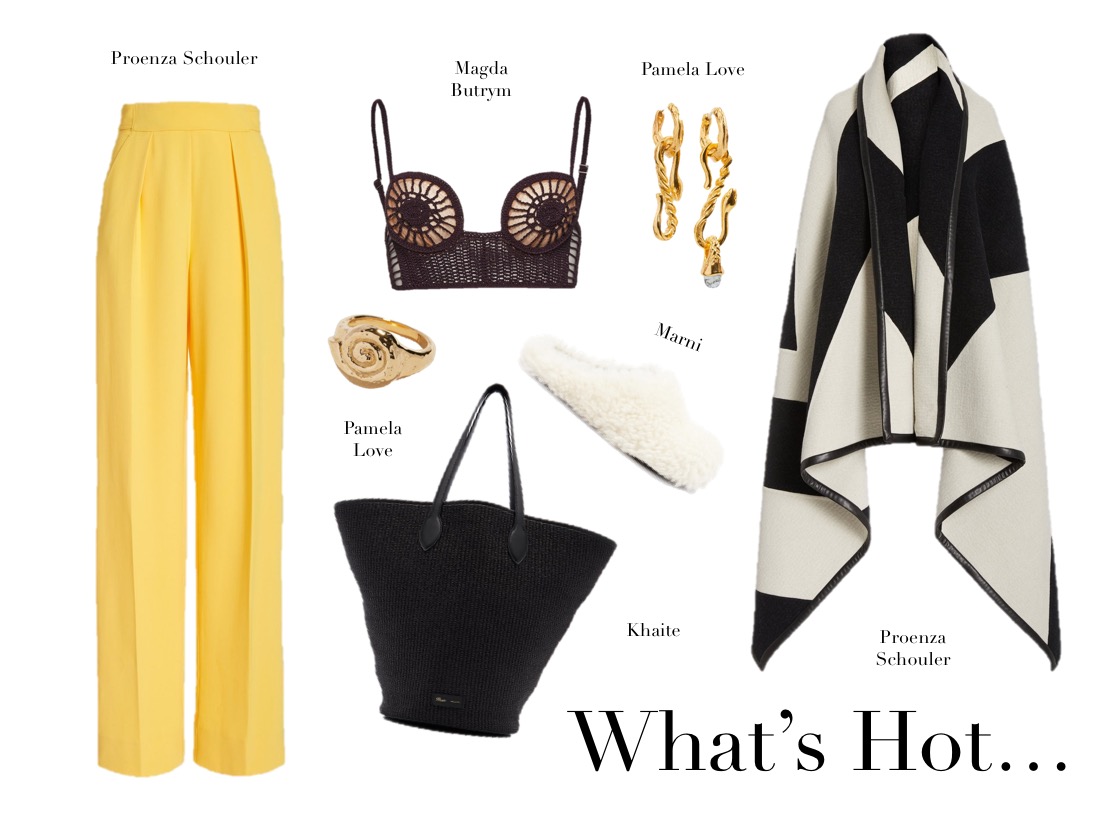
What’s Hot (8.7.21)

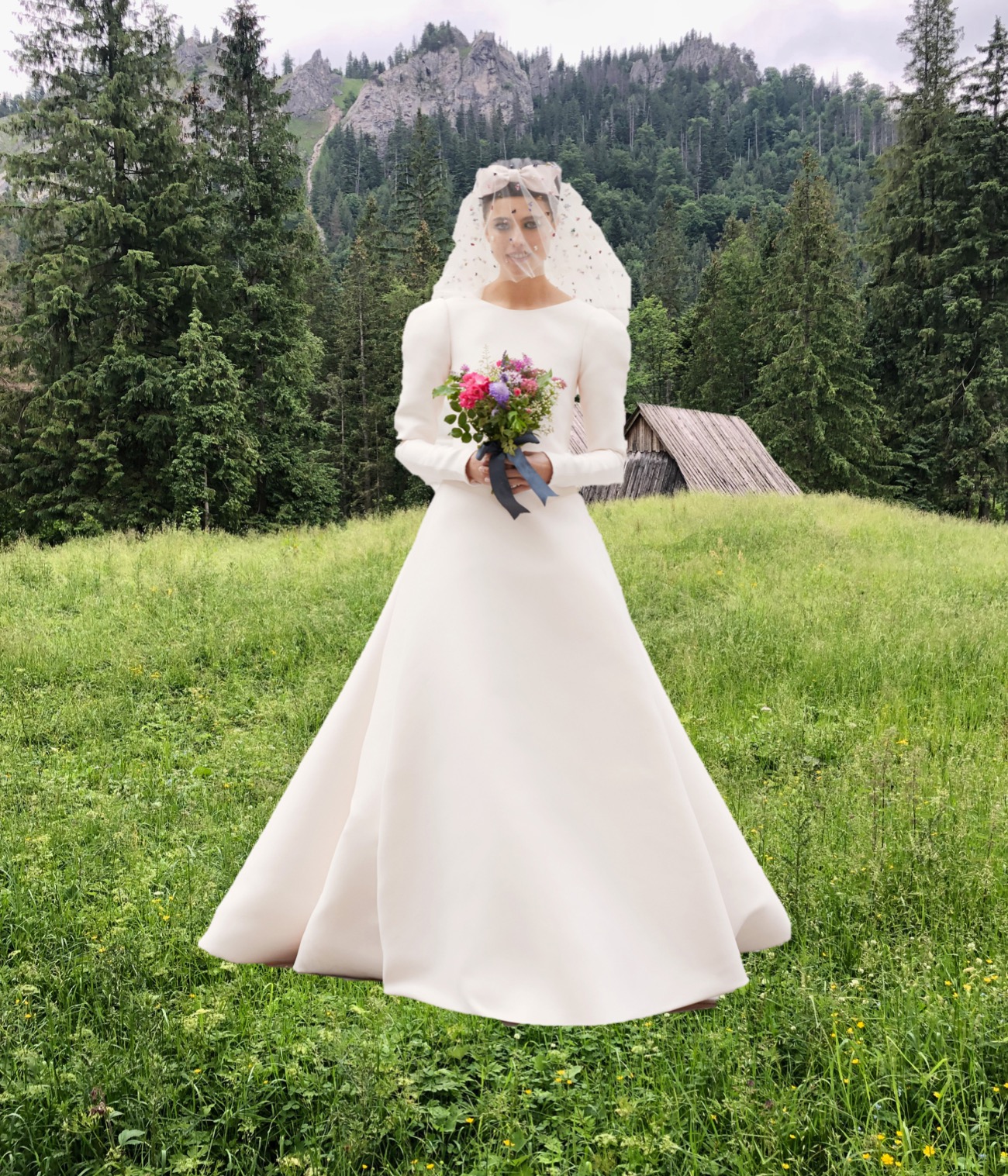
This was a Chanel haute couture collection that left me with a rather mild impression. It was proper, properly pretty. When she began thinking about the autumn-winter 2021 line-up, Virginie Viard was struck by a series of photographs of the arch modernist Gabrielle “Coco” Chanel dressed in throwback 19th-century bustles and crinolines for some of the society costume balls that were all the rage in the 1930s. In that menacing era, these parties might have been a form of escapism, but as we now look to a post-pandemic future, and as Paris couture week unfurls in a flurry of dinners and in-person gatherings, Viard’s gentle romanticism suggests level-headed optimism instead. Viard also spoke of two women artists, the acclaimed Impressionist Berthe Morisot, sister-in-law of Manet, and the Cubist Marie Laurencin, a key figure in the cultural landscape of Jazz Age Paris, whose delicately colored works include a portrait of the young Coco Chanel herself. These painterly inspirations came together in a collection characterized by a lightness of touch. Viard encouraged some truly remarkable work from the great embroidery houses of Paris, including Lesage, Cécile Henri, Atelier Emmanuelle Vernoux, and Atelier Montex, and the feather and flower designers Lemarié. These masters cleverly emulated an Impressionist’s bold, impasto paint strokes à la Van Gogh, or delicate pointillist dabs à la Seurat to create small works of art evoking gardens of rose blooms or fringes of dahlia petals. Lemarié’s incredible gardenia-strewn cardigan jacket, crafted from feather strands, took 2,000 hours of expert handwork as Viard pointed out during a studio preview. That airy spirit continues in the quirky way Viard marries bouffant skirts or even suits with delicate bustiers of pale pink broderie anglaise or chalky lace, and lingerie-light chiffon and lace camisoles and bloomers that she aptly calls her “little deshabilles.” As the girls lined up backstage in the galleries of the Palais Galliera museum, currently hosting the exhibition Gabrielle Chanel: Fashion Manifesto, Viard’s clothes suddenly found themselves in dialog with Coco Chanel originals from the 1920s and ’30s, a garden of handcrafted beauty.
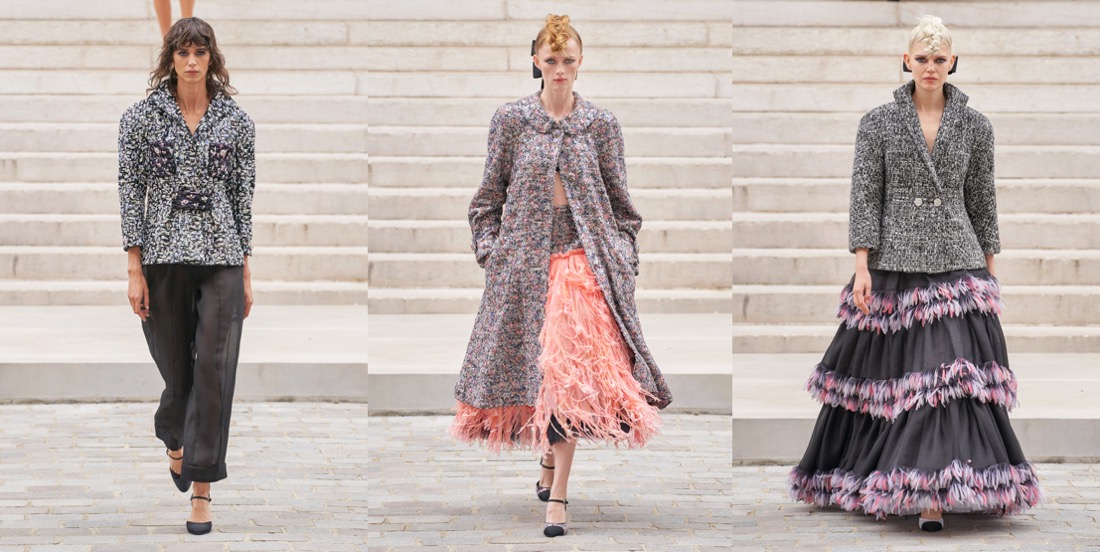
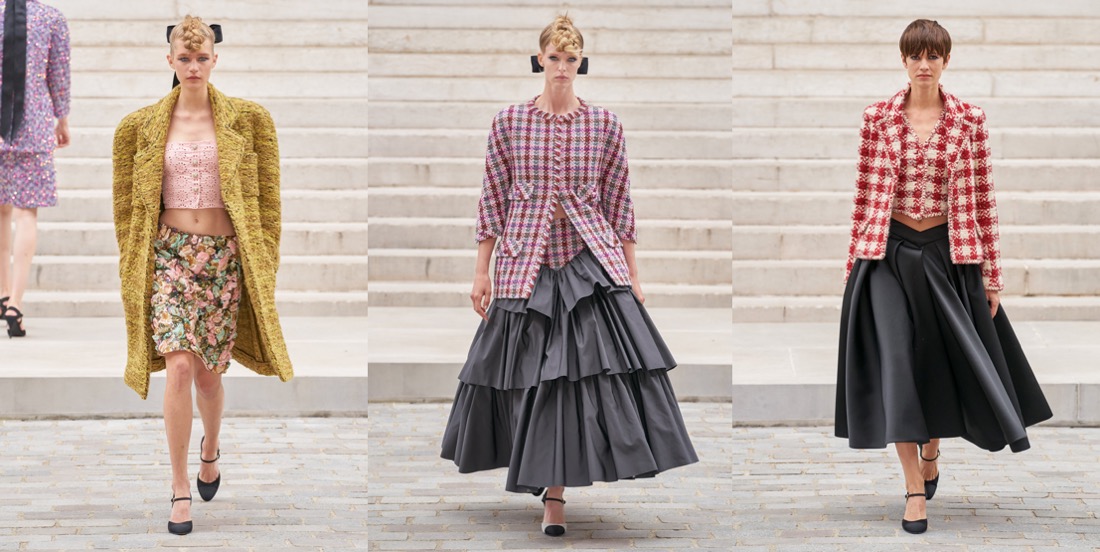
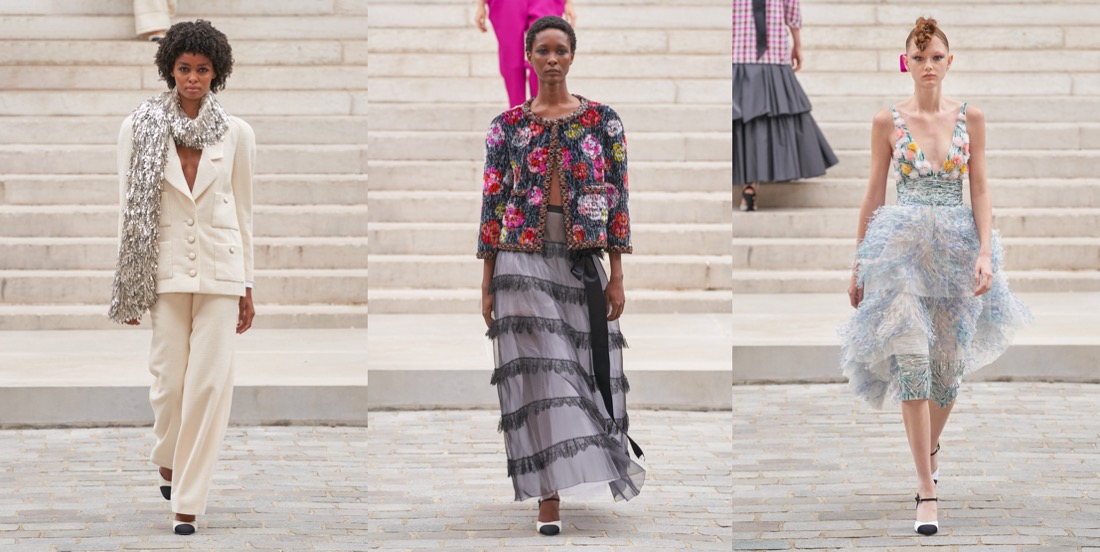
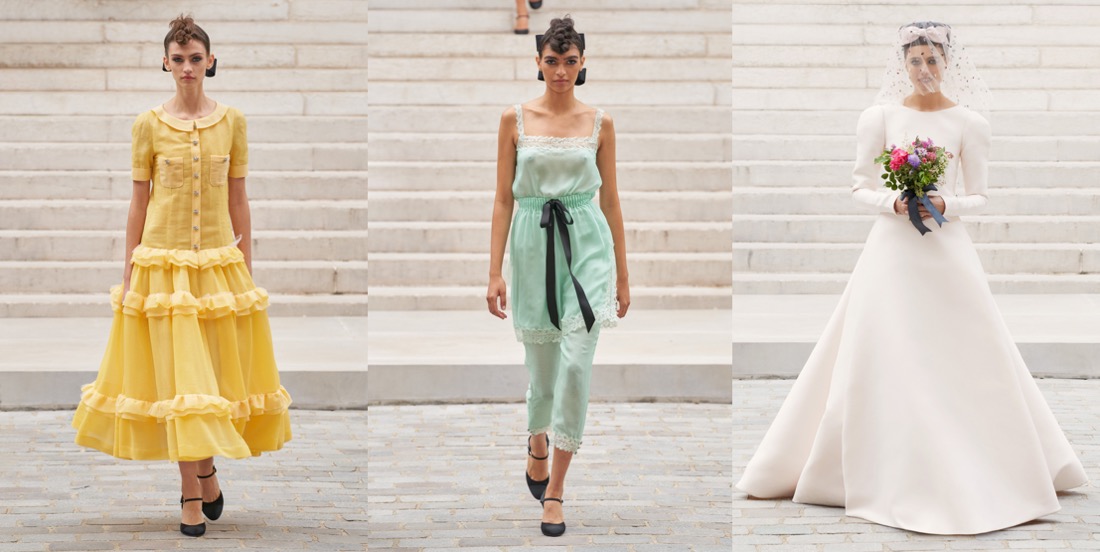
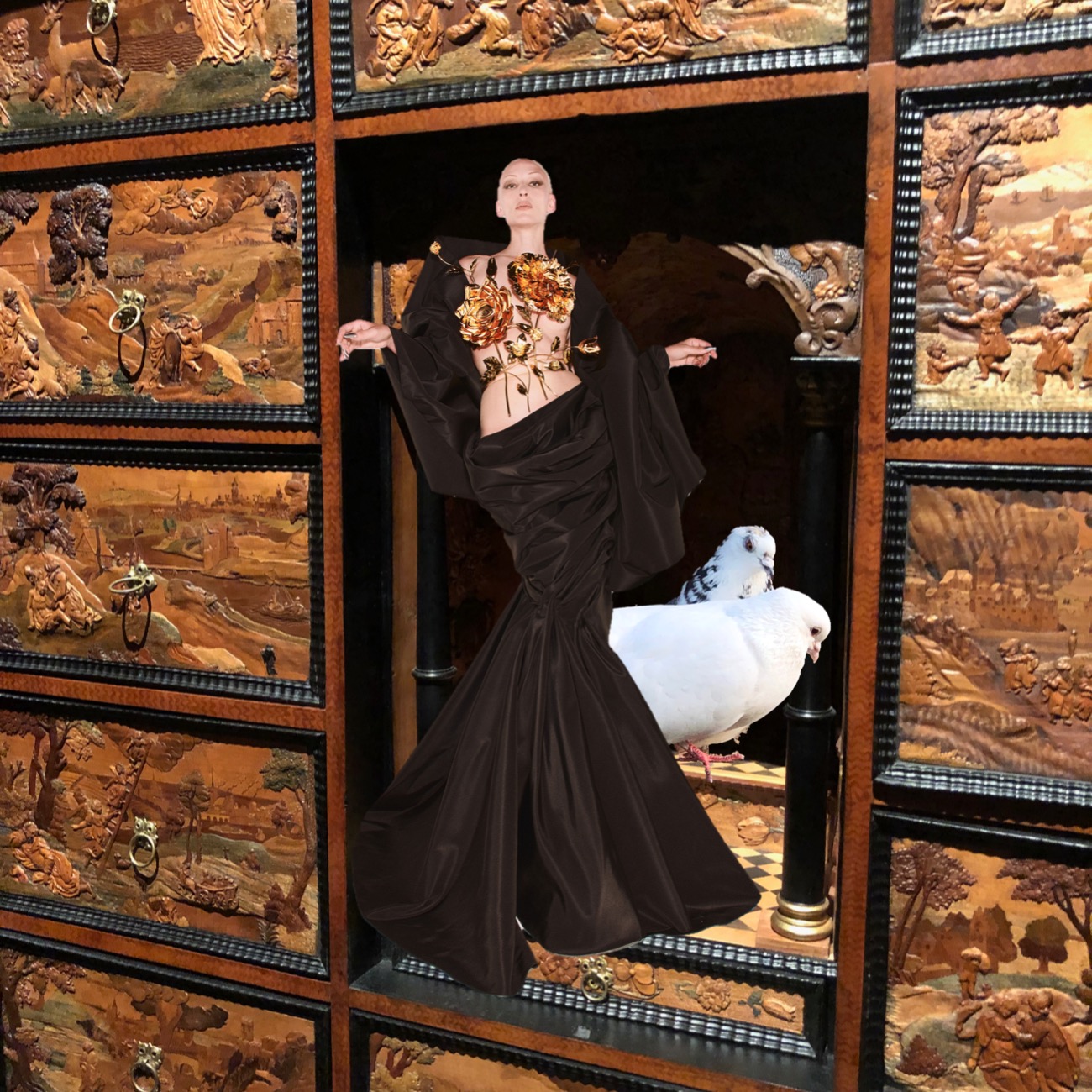
Collage by Edward Kanarecki.


Since the much-mourned passing of Azzedine Alaïa in 2017, the maison was lead by the monsieur’s studio and largely focused on delivering beautiful tribute re-editions. In the beginning of 2021, however, the brand decided to go forward. Stepping onto the Rue de Moussy on Sunday with a debut collection honoring the legacy of Alaïa was a statement which radiated both respect and confidence from Pieter Mulier. Of course, the location couldn’t be more symbolic. Redolent of the culture revered by insiders – it’s the street on which Alaïa opened his first boutique (which up to now is also the label’s studio) and is home now to the Azzedine Alaïa Foundation. Mulier’s arrival came with the serendipitous energy of timing: the fact that right now, there could hardly be anything more relevant, more new, to young women than the post-pandemic surge in desire for ‘body-conscious’ dressing. The term itself was coined to describe the visceral uniqueness of Alaia’s work almost 40 years ago. “For me, it’s about how to explain the codes [Alaïa invented] to a new generation,” said Mulier. All those codes were embodied in the sinuous and slinky dresses, the flippy black skirts, the draped hoods, the flowing silk capes, the black leather – everything using all the techniques of incredible knitwear, body-sculpting cut, and house fabrics. “I wanted to make it democratic again,” is the way Mulier put it, pointing out the cross-references with, say, the leggings “that everyone wears today” or, no doubt, hoodies. But in Alaïa-world, these things are transformed into objects of the utmost sophistication: leggings that are a hybrid of cycling shorts and stockings, head-drapes that become almost goddess-like. “I wanted it to be the opposite of sportswear,” said Mulier emphatically. It’s creating fashion with an ultra-glamour that also has “ease” that he finds interesting. “They don’t like the word ‘sexual’ here, but I do. Because to me, this is the only house in the world which is sexual without being vulgar. It’s actually about pure beauty, and working on the body, which I have never seen anywhere else.”
Mulier left his last job at Calvin Klein in 2018, in the aftermath of the departure of Raf Simons, and he said he spent a long time feeling demoralized by the industry. “I thought I wouldn’t do fashion any more. After New York, I really thought it was finished for me,” he said. Though he didn’t have a public profile, Mulier was well known as a highly experienced professional who’d been Simons’s right hand in womenswear at Christian Dior and Jil Sander before that. Several companies came courting, but he was in no frame of mind to pitch his fortunes in with big business again. “I took a long break. I really wanted something small. Something human-scale.” And that is what Azzedine Alaïa, the house, presented. Although owned by the luxury conglomerate Richemont, the house in Paris is still more or less family-scale, populated by the experts who worked with Alaïa and have continued producing the collections since he died. “There’s stuff here I didn’t know was possible,” Mulier exclaimed, pointing out a strapless, corseted black leather dress. “We moulded it out of triple-layer leather, from one hide.” To some pieces, like the iconic perforated leather belt – part of the famous house output for decades – he added his own iridescent twist: “I wanted to put it in the show from the beginning. We found a leather with reflective film, like a mirror. I thought that modernized it in a second,” he said. “That’s the gesture I like: that you don’t touch too much because it’s already perfect. Just with little things.” In the IRL event, there was loud applause from the audience as Mulier ran out to give one embrace to Alaïa’s life-partner Christoph von Weyhe, and another to his own, the designer Matthieu Blazy. It felt like a passing of the flame to a new-generation safe pair of hands who comes with no plan to trample over too many of the boundaries set by the man who famously and stubbornly went against the pressure of industry norms that didn’t make sense to him. For Mulier, that applied to his skeptical approach to all things social media. “I don’t think it’s a house made for social media, even though I’m on it myself,” he observed. “It’s such a small brand, like an artwork that I want to take care of. We’ll build a family slowly.”


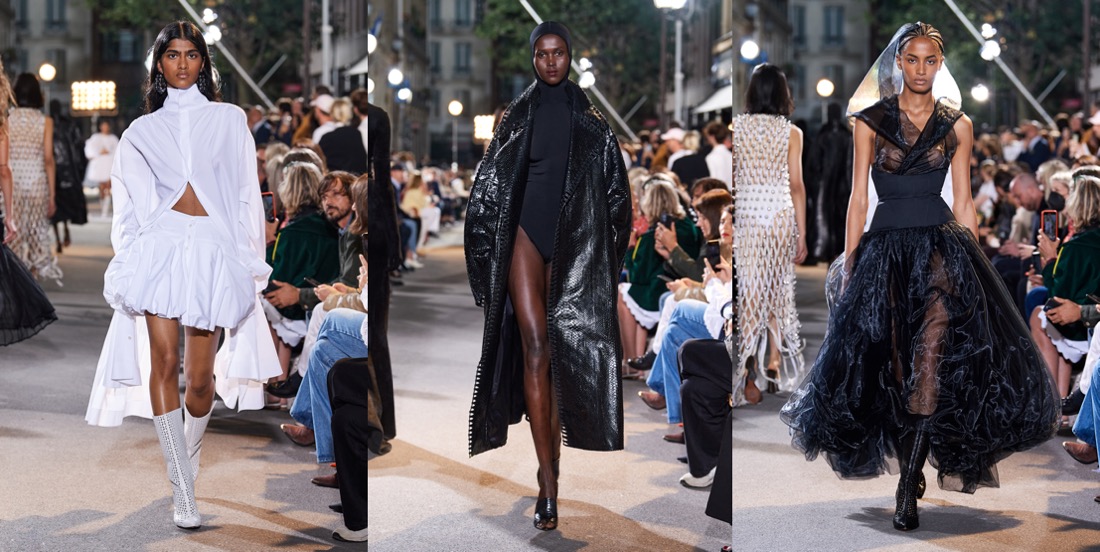

“Live” collage by Edward Kanarecki.

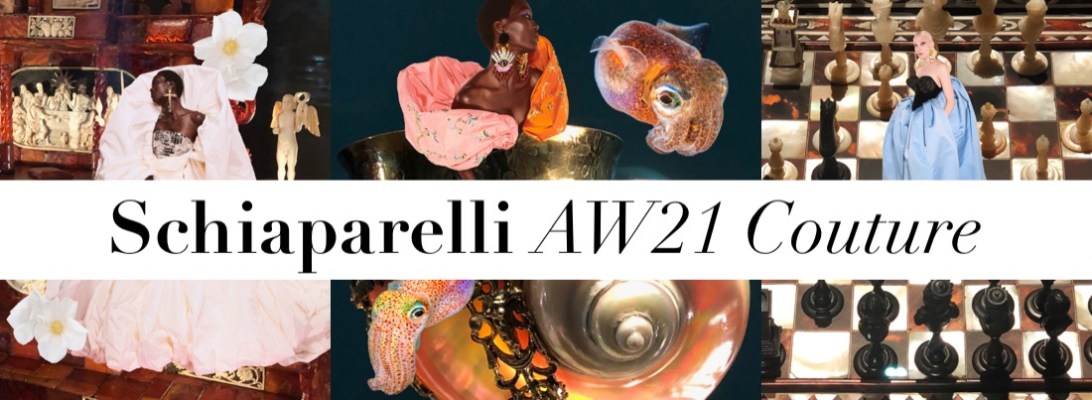
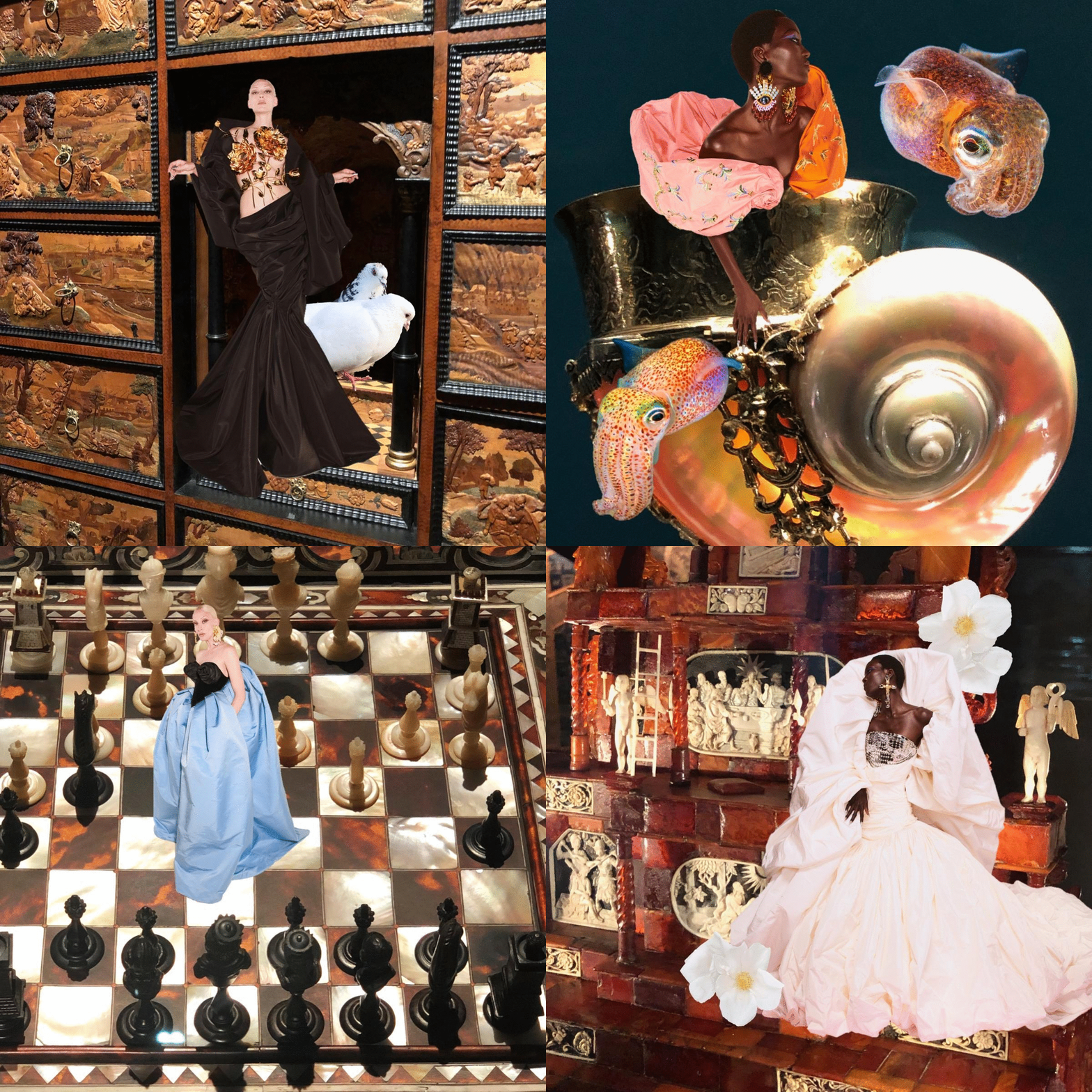
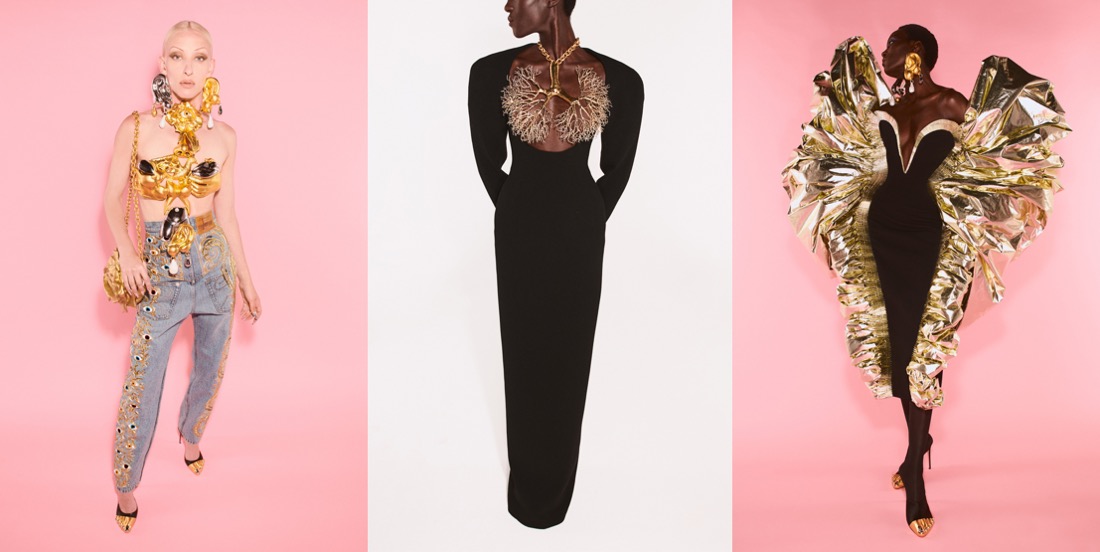
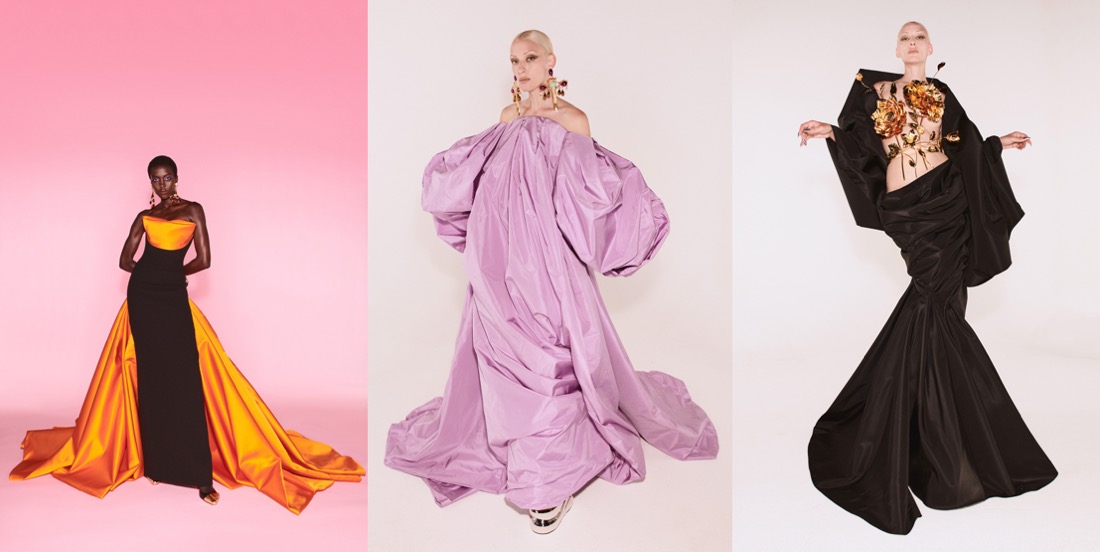
“In difficult times fashion is always outrageous“, Elsa Schiaparelli once said. Daniel Roseberry believes so as well – his latest, fabulously dramatic haute couture collection for Schiaparelli is the best proof for that. Visitors at the brand’s Place Vendôme salons are greeted by a lavish wedding gown. Typically, couture shows end with the bride, but Daniel Roseberry gave pride of place to the dress constructed from 70 meters of white cartridge pleated taffeta. “We’ve had so many requests from clients who come looking for this irreverent grandeur that we’ve been doing,” he said. Roseberry’s bride is not the shy, retiring type, but she is representative of what the designer described as the “new kind of prettiness” he was after this season. If this collection is as intense as his past outings, it’s a shade or two less irreverent. There are none of the molded leather six-pack abs corsets that were the defining looks of his last couture, for example. He came at prettiness in several different ways. Following on from that entrance-making bride is a salon devoted to embroidered jackets. These borrow as much from Lacroix and Jean Paul Gaultier as they do from Schiaparelli, with their curvaceous shapes, Versailles colors, and cone bra references. One black jacket blooms with pink silk roses, an ode to a collaboration between Schiap and Jean Cocteau circa 1937. Others are embellished with decades-old gold Schiaparelli threads that the embroiderer Lesage had saved in its stockpiles. All of them are trophies, perhaps especially the denim jacket that’s patch-worked from 11 pairs of used Levi’s sourced at a local vintage store – the very essence of haute friperie. Where this season’s jackets have a delicious propriety, a sculpted gold flower corset worn with a skirt barely clinging to the hips, and a scoop-front dress with a breastplate made of gold-dipped bronchi – the lungs being a locus of our attention in the pandemic – are more provocative. A silver bustier is accessorized by a fringed stole made from shredded black garbage bags, of all things. That’s couture heresy – and fabulously so. For the dessert, a cocktail dress punctuated by a shocking pink rose, a strapless black gown featuring a bust-line shaped like fiery orange lips with a matching train, and a voluminous infanta gown in a shade of lavender Roseberry said that he’s never used before. In his two years at Schiaparelli, he’s only doubled-down on the surreal glamour this historic house is known for. Turns out, he’s very good at pretty, too.


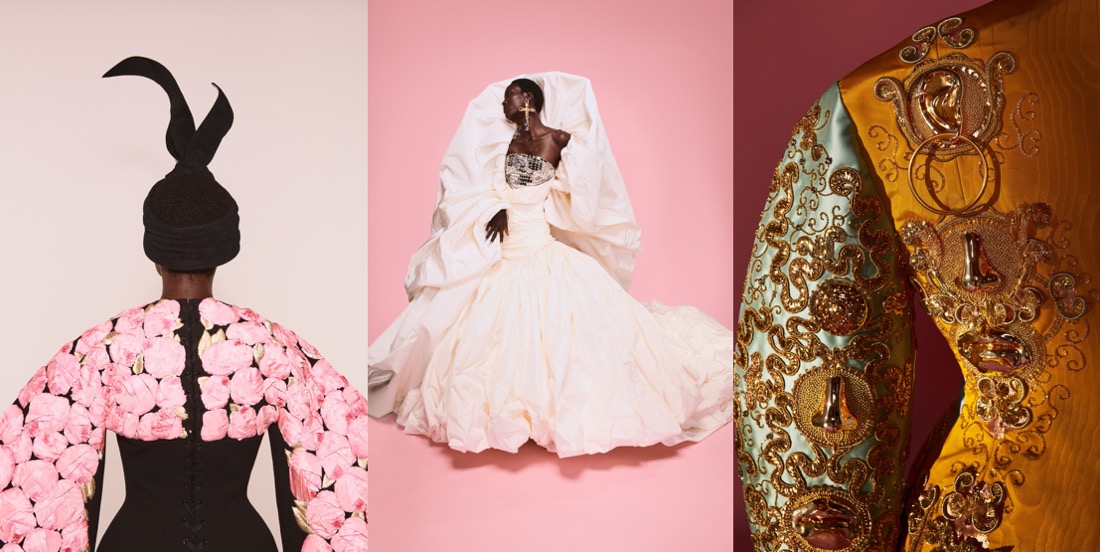

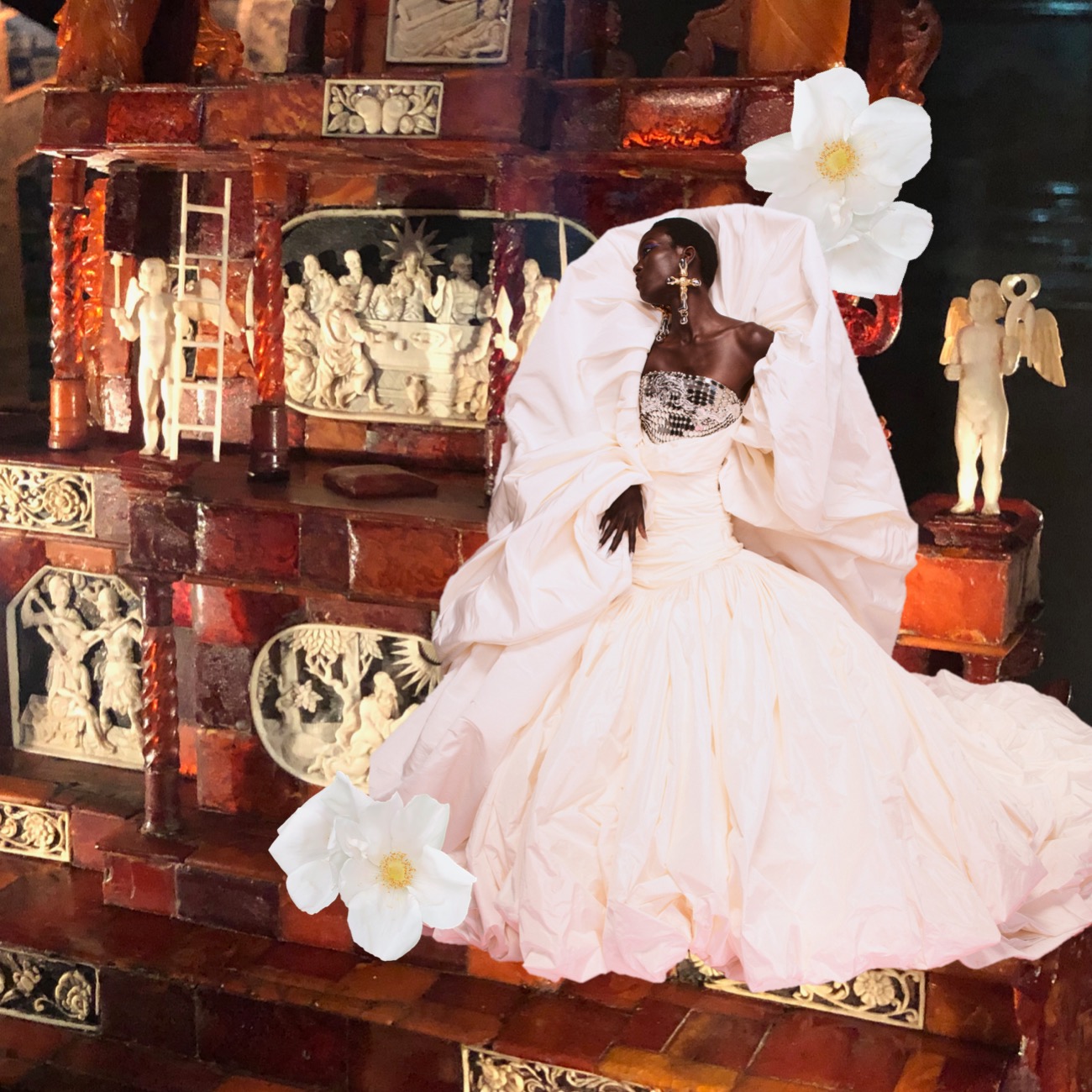
Collages by Edward Kanarecki.
 Design & Culture by Ed