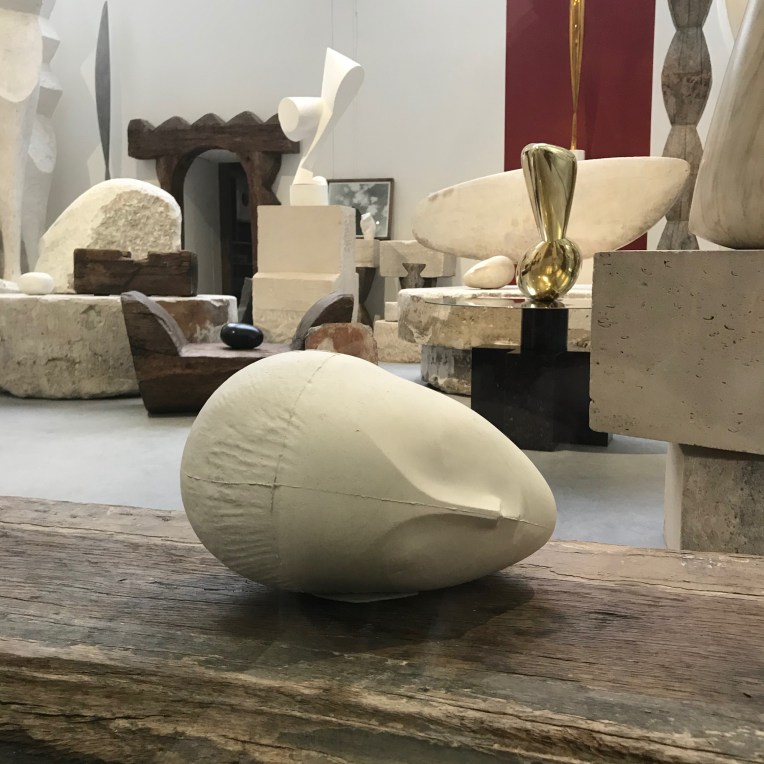
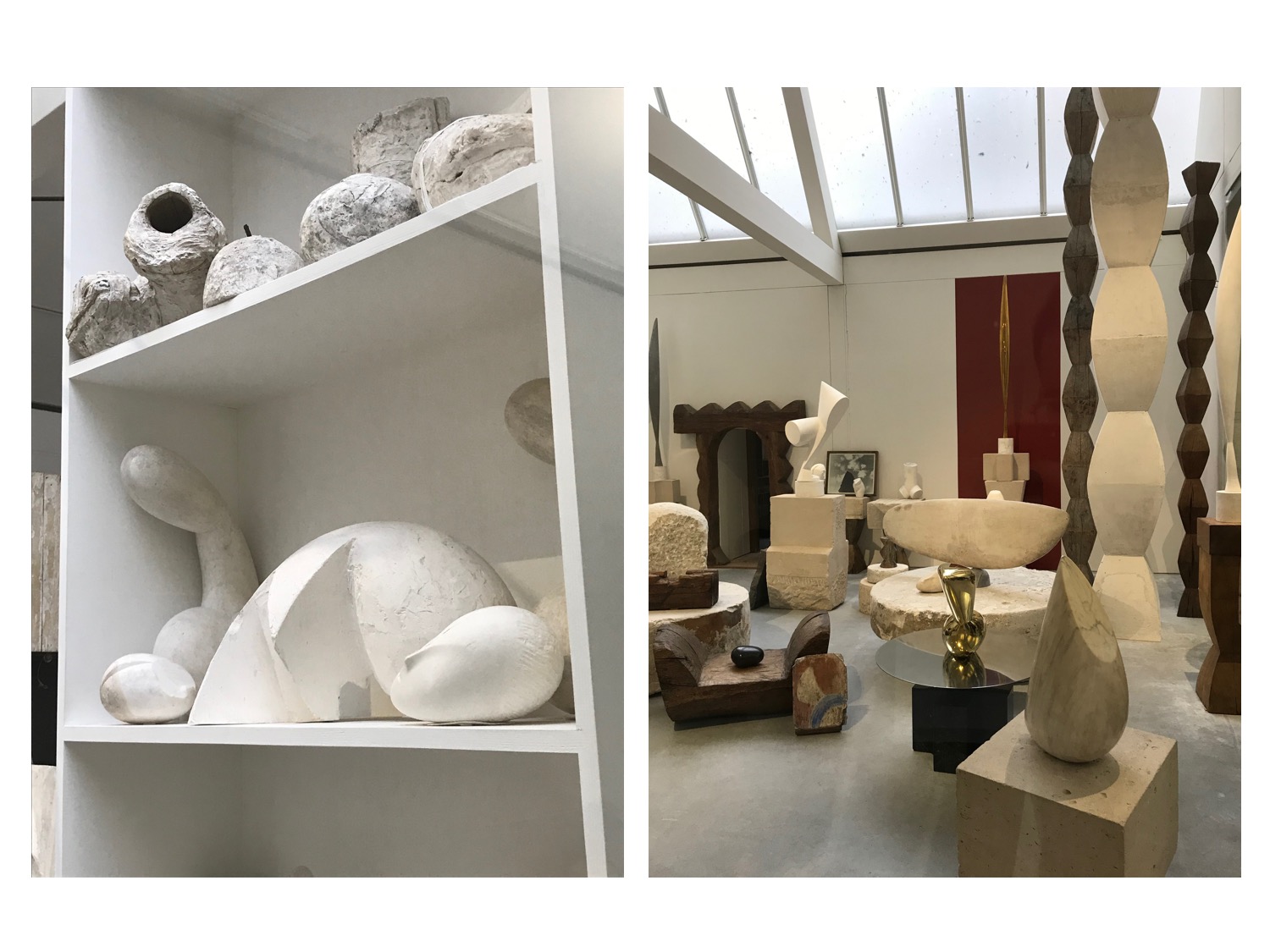
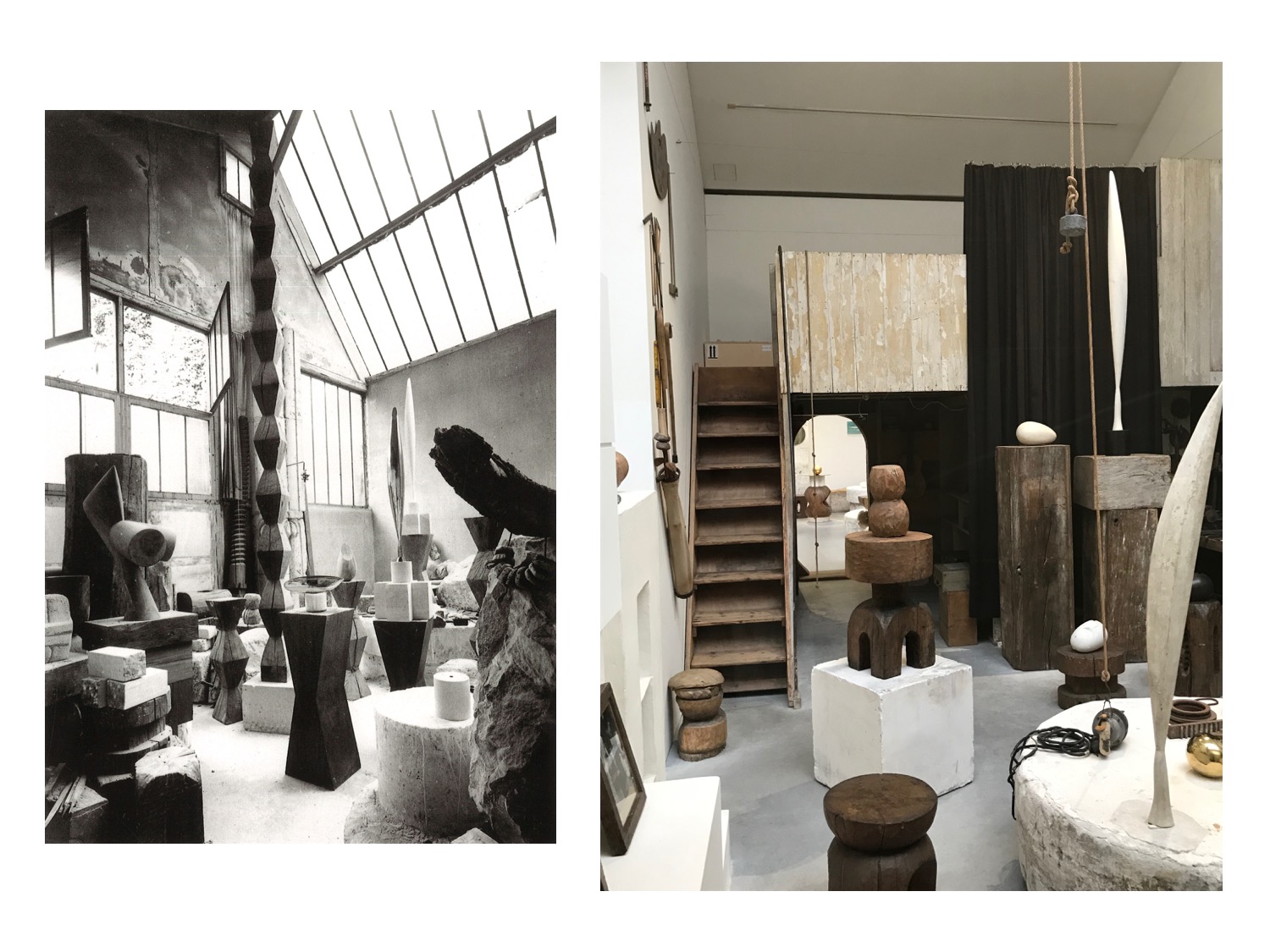
This place was on my “must see” list for a while. Finally, I visited Centre Pompidou’s Atelier Brancusi – a standalone pavillon dedicated to Constantin Brancusi‘s work. Born in Romania in 1876, Brancusi lived and worked in Paris from 1904 until his death in 1957, and this is where he produced most of his forever-inspiring work. In his will, he bequeathed his entire studio to the French state. Brancusi considered the relationship between sculptures and the space they occupied to be of crucial importance. In the 1910s, by laying sculptures out in a close spatial relationship, he created new works within the studio which he called “mobile groups“, stressing the importance of the connections between the works themselves and the possibilities of each for moving around within the group. In the next decades, the studio became an exhibition space for his work, and a work of art in its own right: a body consisting of cells that all generated each other. This experience of looking from within the studio at each of the sculptures, thus perceiving a group of spatial relationships, led Brancusi to revise their positions every day to achieve the unity he felt most apposite.At the end of his life, Brancusi stopped creating sculptures and focused solely on their relationship within the studio. This proximity became so fundamental that the artist no longer wanted to exhibit, and when he sold a work, he replaced it with plaster copy so as not to destroy the unity of the group. The present reconstruction, built by the architect Renzo Piano, is presented as a museum space containing the studio. Piano’s problem lay in making the space open to the public while respecting the artist’s wishes. While the architect did not attempt to recreate the intimacy of the original, he preserved the idea of a protected, interiorised space where visitors are isolated from the street and the piazza, in particular by an enclosed garden, from which part of the studio can be seen through a glass wall. I’ve spent there about 30 minutes, trying to absorb as much as possible with my eyes. And I went out feeling as relaxed as after a lovely spa.
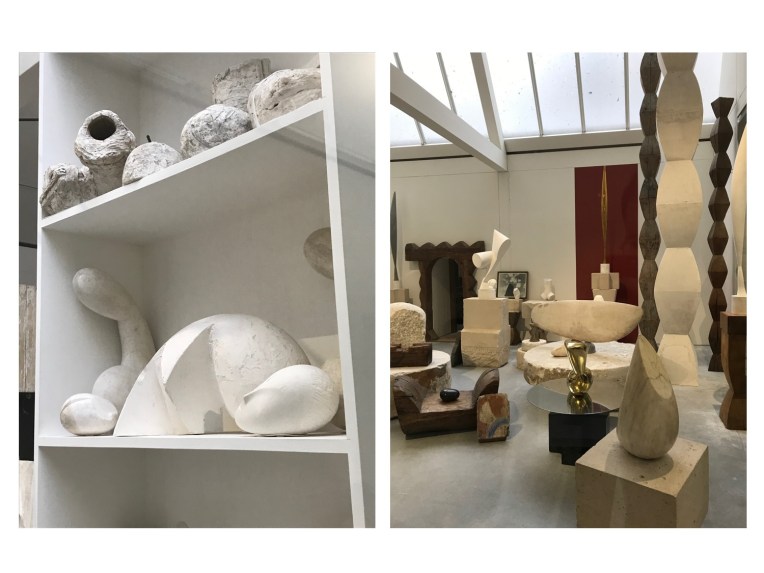
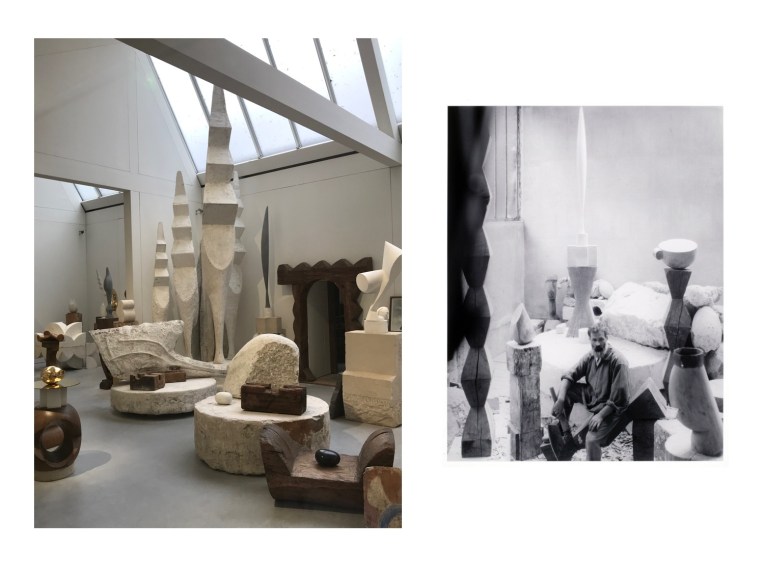
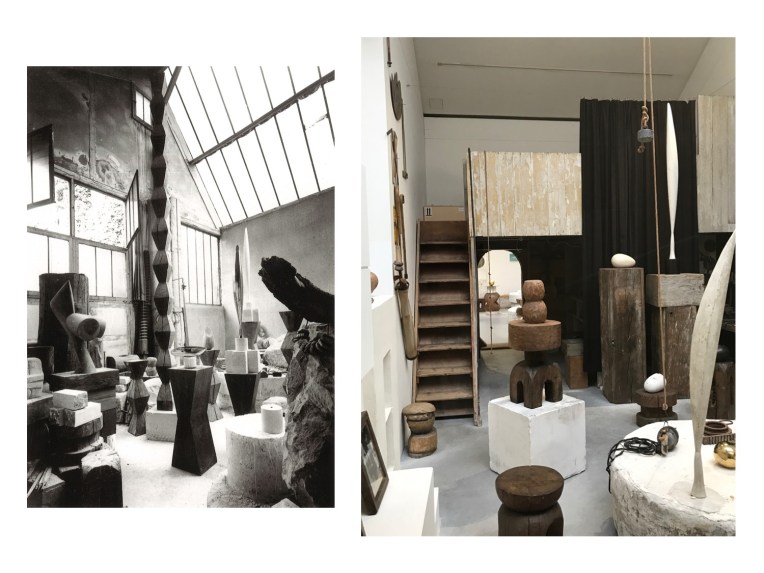

Photos of the exhibition by Edward Kanarecki.
(P.S. If you are inspired by my Parisian coverage, I’m really happy about, but please have in mind that now isn’t a safe time for any sorts of travelling. Stay at home!)








 Design & Culture by Ed