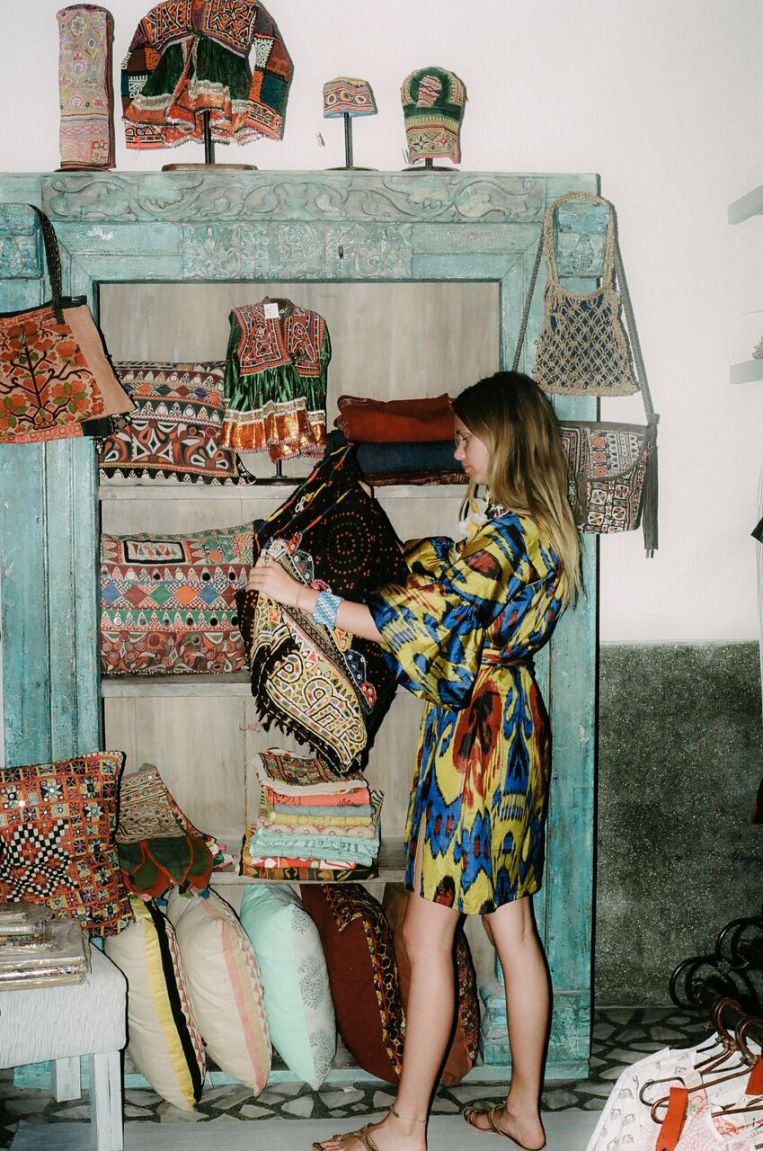
Zazi Vintage

1494237165827

You will thank me later for telling you about Zazi Vintage. Although Jeanne Zizi Margot de Kroon‘s label is based in Berlin, the Dutch entrepreneur has a global vision to share. She quitted modelling industry after her great disillusion with the fashion world’s unethical approach towards sweat-shop production and decided to oppose chain stores’ and big companies’ continous expoitation of female workers. With the founder’s focus on sustainability and women empowerment, Zazi Vintage respects and embraces traditional clothe-making, using rejected fabrics and old materials. The brand’s seasonless pieces are made by local women from distant places. From the most intricately embroidered Suzani coats from Tajikistan to Ikat woven dresses made by  Saheli women, these pieces aren’t just precious and one-of-a-kind additions to a  wardrobe. Zazi Vintage, with support of Institute for Philanthropy and Humanitarian Development, helps girls fund education and continue their incredible work.

Learn more about Zazi Vintage on their site – click here.

Photos by Stefan Dotter.

Acne Studios in Berlin

IMG_0375

It’s impossible not to love Acne Studios for at least two reasons: it’s edgy, yet wearable clothing, and remarkable store designs across the world. Although the one on Potsdammer Straße in Berlin isn’t the newest addition to Acne family, it’s a place where you want to stay for longer. Like in an art gallery, the wide, metallic tables display Acne’s sculptural wedges and arty sandals. One-of-a-kind chairs, piles of signature, pink shoe-boxes, industrial ceiling lamps: the store reflects the multi-faceted chcarecter of Jonny Johnasson‘s aesthetic. As the current menswear collection features a lot of lovely pastel pink (like the rubber sole of the shoes I’m trying below), one of the sellers wore a pair of pants in a matching colour. “Boys should wear more pink!” he said. Indeed!

Potsdamer Straße 87 / Berlin

Marubi Ramen in Berlin

IMG_0401

First of all, I have never been to Japan, so I don’t know how the real, real ramen soup tastes. I’ve watched The Ramen Girl (a sophisticated comedy about a woman searching for direction in her life through training to be a ramen chef under a tyrannical ramen master, mind you) and I realise that Europeans have a very wide and imaginative view on ramen’s taste. But I think that Berlin’s Marubi is a spot, where the authentic ramen might be served. Prepared in four ways (beef, pork, shrimp or vegetarian), their warm bowl of Japanese goodness tastes simply delicious. Located in Mitte, the place seems to be out of the local fuss – no fancy interior, no big media appearance. Just ramen. And a equally great selection of dim-sum and gyoza dumplings.

GmbH

1182148

Who? Serhat Isik, Benjamin Alexander Huseby and their intriguing collaborators.

Where? Looking at the clothes, there’s only one guess – Berlin, of course.

What? According to the designers behind this off-beat label, “in German, GmbH means a company of financial limited liability, which is the German equivalent to ‘ltd.’ or ‘Inc.’ – the most common standard legal form of any German company. We didn’t really want to use our own names; as we don’t want the main focus to be on us. And it also reflects or design process. GmbH is so neutral it can mean anything and nothing at the same time.”

1190621

Why? GmbH origins from the German capital’s famous clubbing culture, but also, the diversity of this city. The clothes are not only modelled by the designers’ friends – Serhat and Benjamin are inspired by the way they dress, both for everyday and a night-out. What’s interesting, majority of the label’s one-of-a-kind products is made of deadstock materials. Over-sized jackets, PVC pants and technical fabric t-shirts are just a few of the essentials GmbH produces and sells.

No, you aren’t wrong – one of the models starring in GmbH’s new season look-book is Stefano Pilati.

slide1-kopia