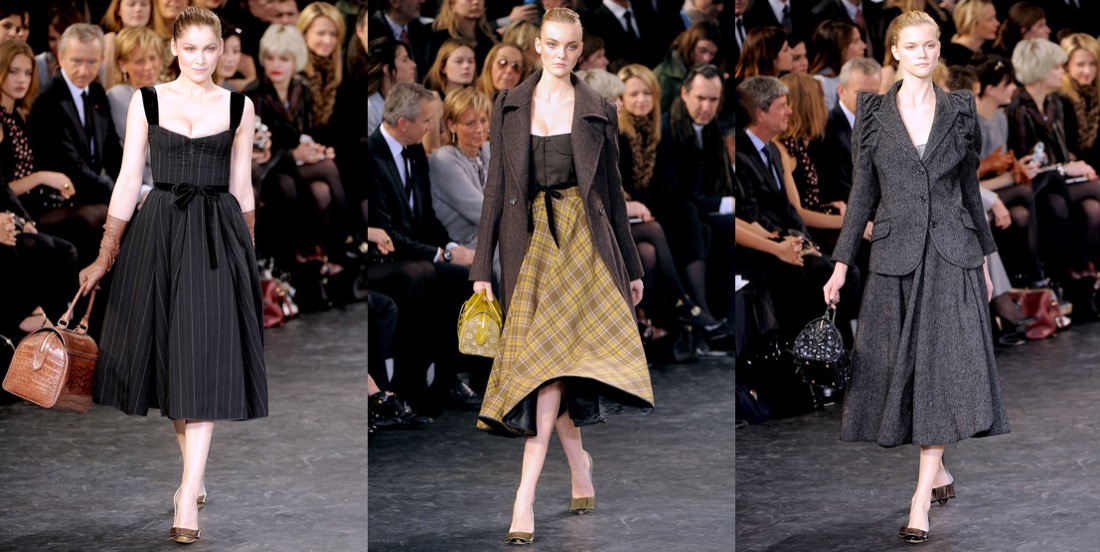
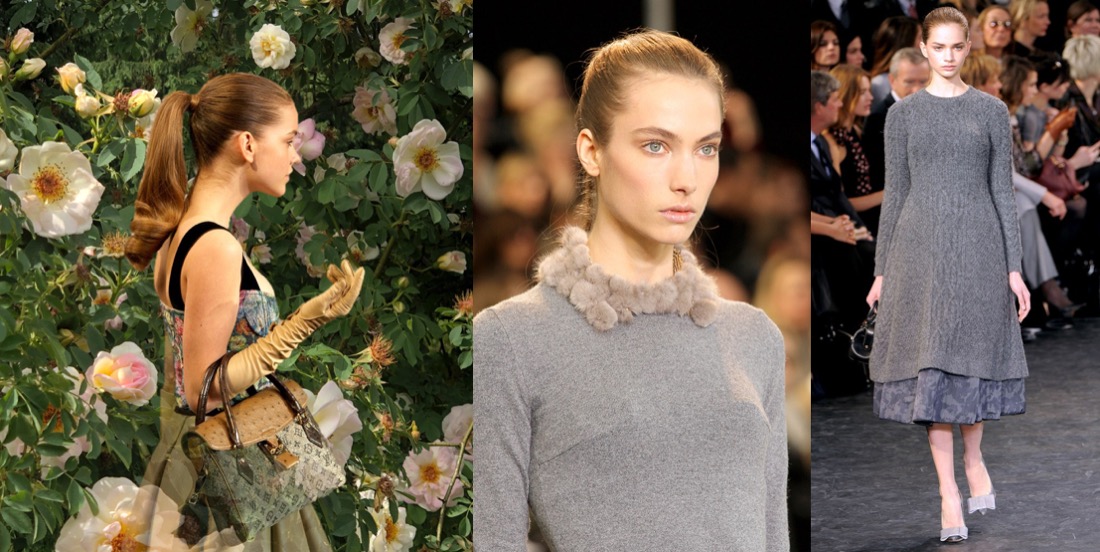
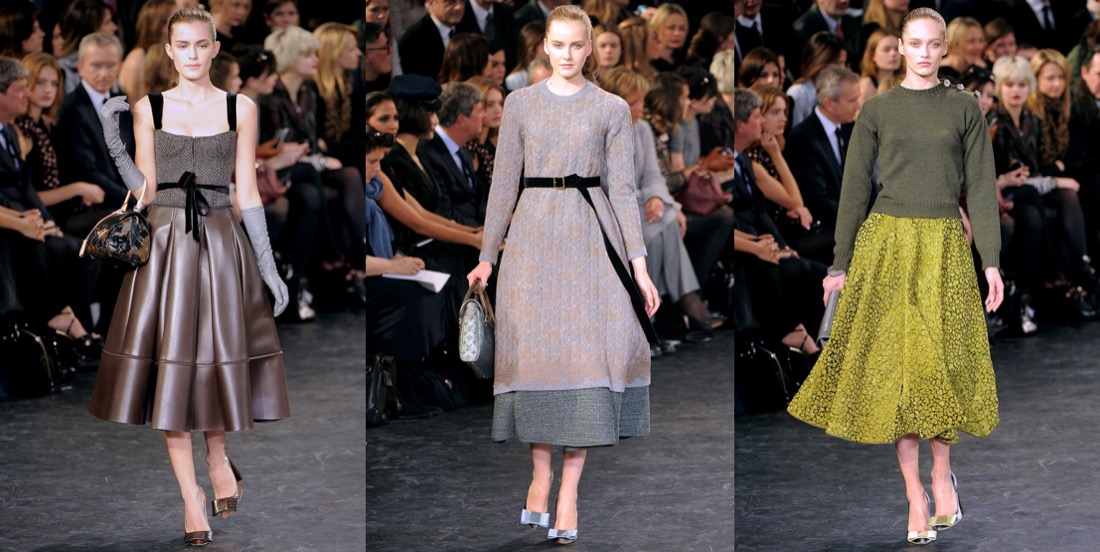
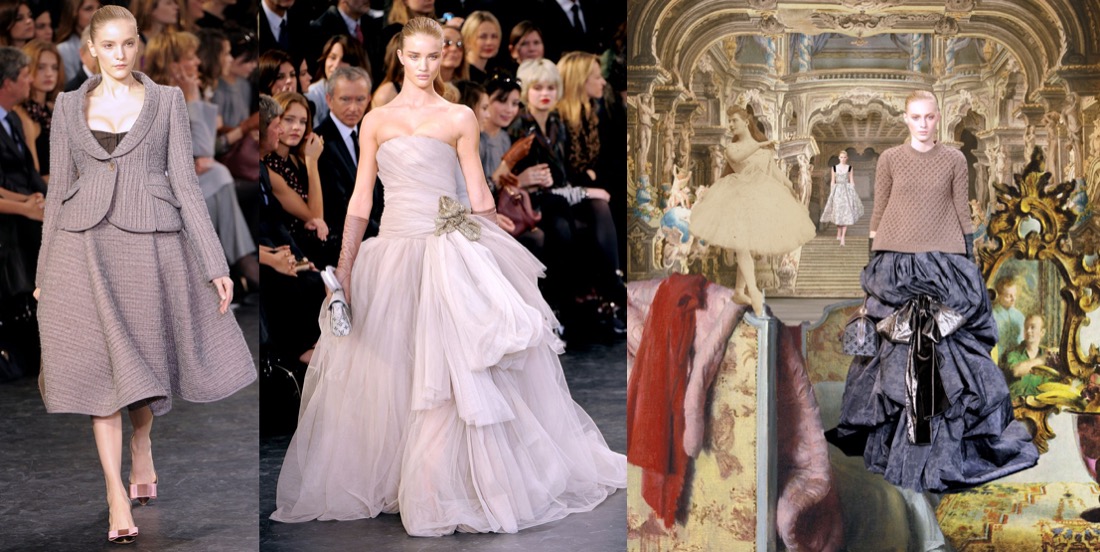
There are those collections in fashion history that just get better with time. For a while now, I’m absolutely obsessed with Louis Vuitton‘s autumn-winter 2010 – one of the best collections created by Marc Jacobs for the French maison. “And God Created Woman” announced the program, bringing up thoughts of the era of the young Bardot, of fifties-sixties wasp waists, and circle skirts. At the time, Mad Men was on everyone’s minds and TV screens (those were the pre-Netflix times…), and that same season, Miuccia Prada also went for the retro ultra-femininity. Jacobs’ collection was stark contrast casting-wise (lets not forget 2010 was peak time of the super-skinny-model standard) as the designer called on Laetitia Casta, Bar Refaeli, Catherine McNeil, Karolina Kurkova, and finally Elle Macpherson, all women whose physical attributes have acted as a disqualification for fashion show participation for years. The rehabilitation of the embonpoint was done with refinement. Marc framed it more as a fresh, feminine, ingenue look, with hair scraped back into high, bouncy B.B. ponytails; clean makeup; and square-toed, block-heeled pumps trimmed with flat bows. The show swung along prettily as a fountain sprayed and jolly fifties movie music played in the middle of the tented courtyard, creating that quintessentially Parisian atmosphere, a sense of all being right in the best of all possible cities to be appreciated as a woman. Not only the lady-like silhouette was the main focus – the charming details and trimmings exemplified the LV knack for classy detail, as in fur buttons, collars and glittery heels. I sometimes really miss Marc’s Louis Vuitton…
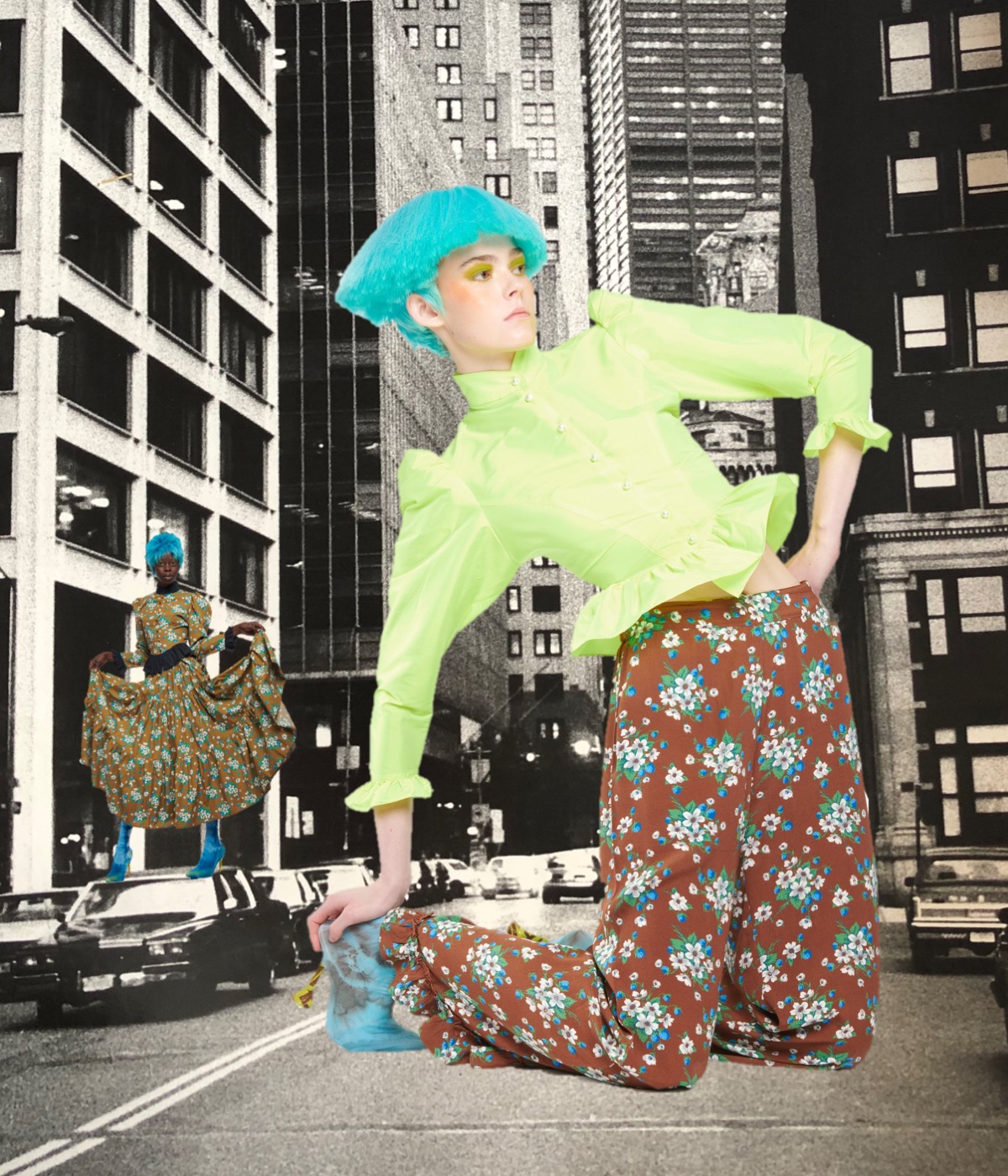
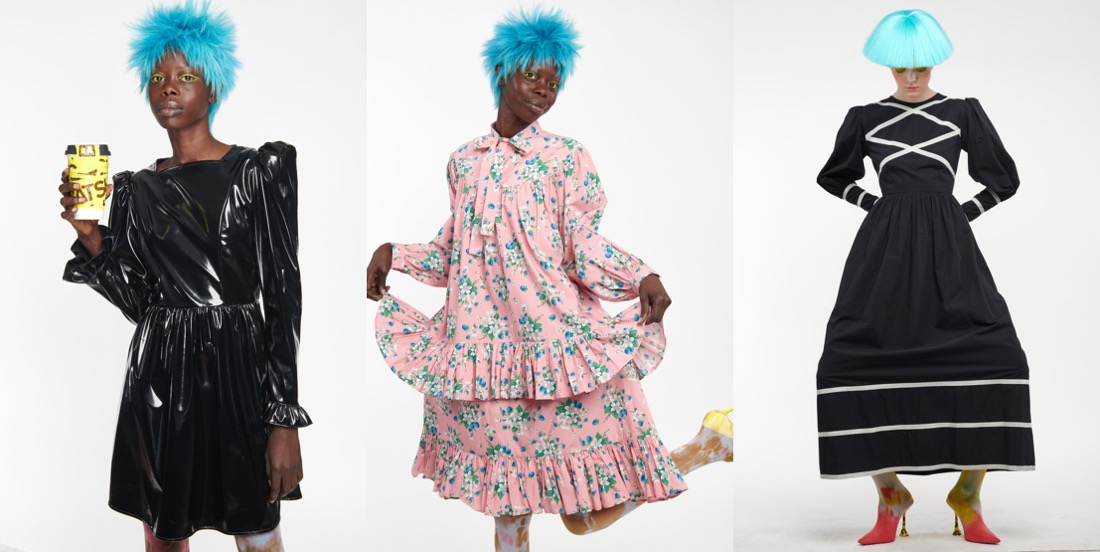
The heartbeat of Batsheva has always been designer Batsheva Hay herself. She started her brand making clothing she would like to wear, then friends in New York propelled her personal designs into an organically thriving business. In the four years since, Hay’s operation has grown immensely, with global stockists and categories like homewear, accessories, and fun collaborations. In Manhattan, she’s moved out of her home office and taken over two spaces in New York’s Garment District: one holds her studio and design team, just down the hall a room overflows with floral prints, ruffle dresses, and tiny tchotchkes in Hay’s ditsy patterns. How can a brand so personal evolve and succeed as its orbit grows beyond its iconoclastic founder? The good news is Hay is always – and has always been – willing to share her weirdness. Even if she holds up a block print checkerboard print, a bustier maxi dress in black, or a tank dress as items that don’t jibe with her personal style, she is quick to find ways a Batsheva acolyte could incorporate them into their wardrobe. Layering remains key. New dress shapes like a mod babydoll in black eyelet and a ’70s-inspired, A-line shirtdress broaden the offering and edge it, just maybe, into more quote-unquote normal clothing territory. Of course even a Batsheva basic comes with a little cheeky wink. Her chambray shirts and white blouses are predicated on giant pouf sleeves and adorned with excess eyelet ruffle trim. There is a new pajama set and a continuation of her pantaloons and ruffle-trim trousers, now in dusty caramel florals and navy moiré. The tenor of this off-beat, easy and somehow glamorous clothing feels right as we kiss 2021 goodbye and look forward to the first (we hope) good new year in a while.
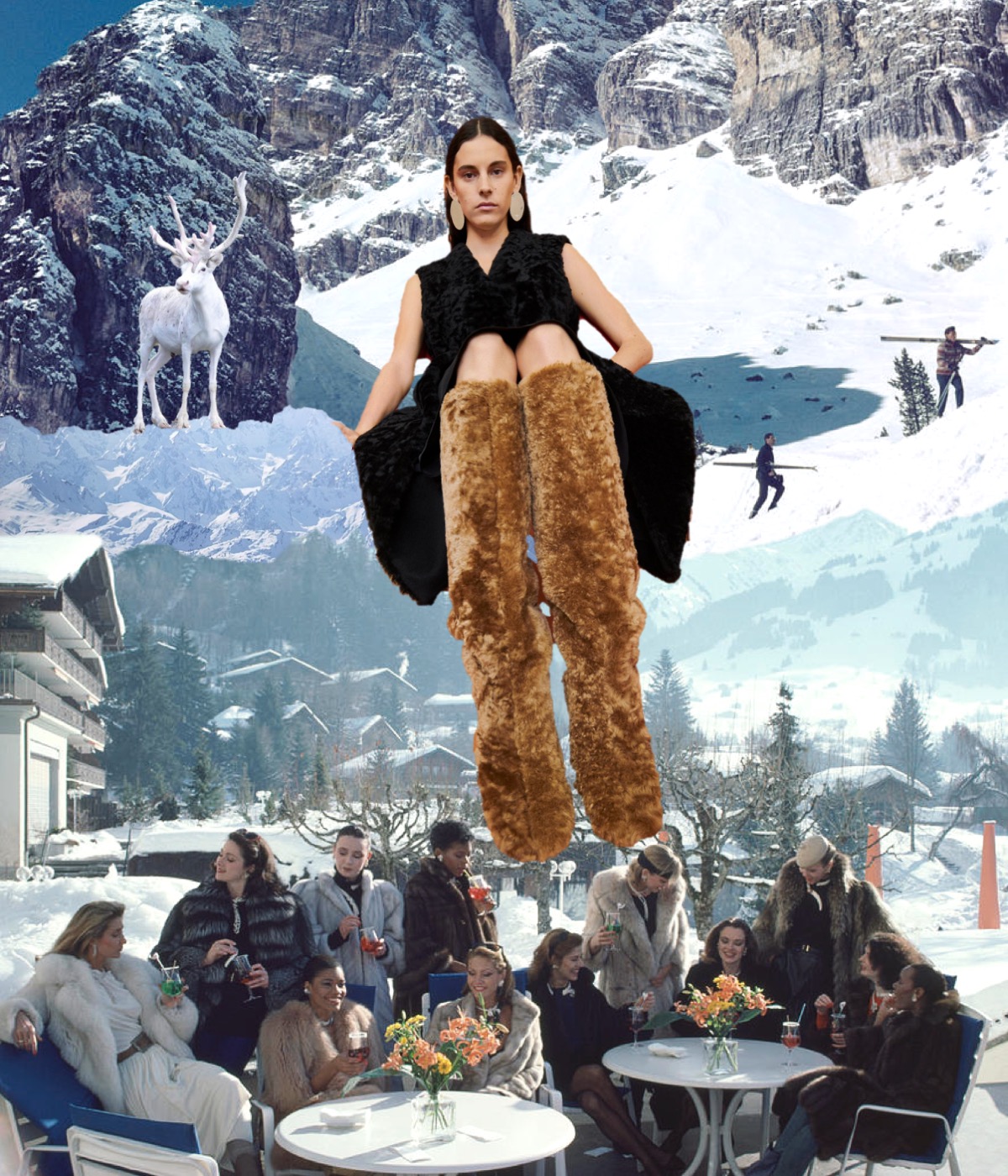
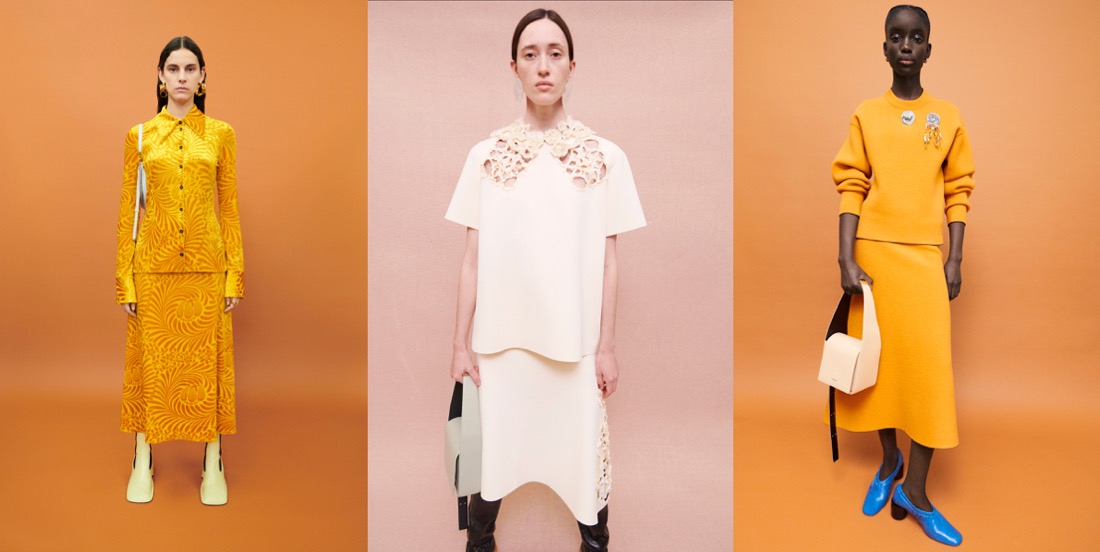
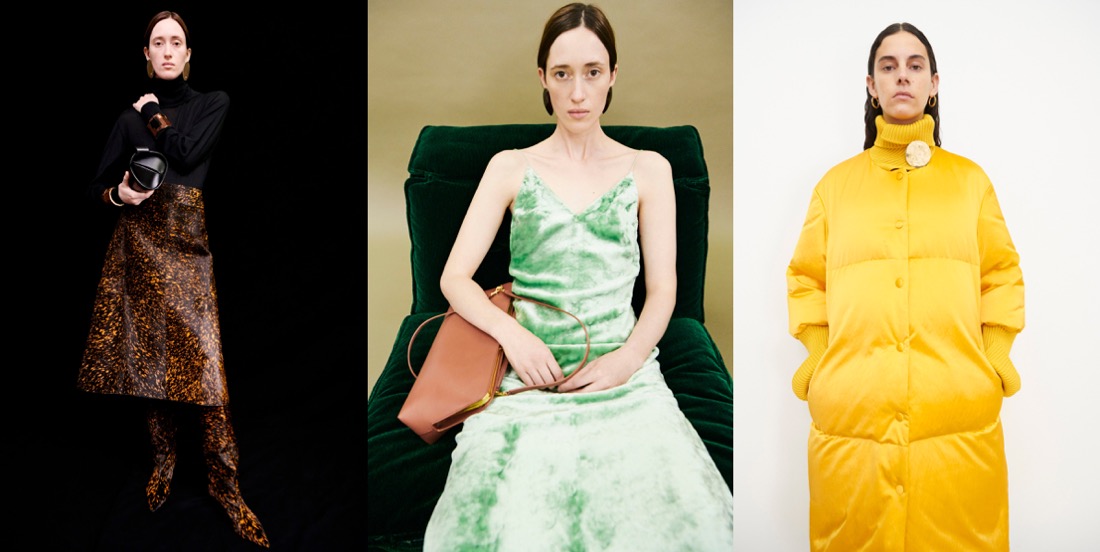
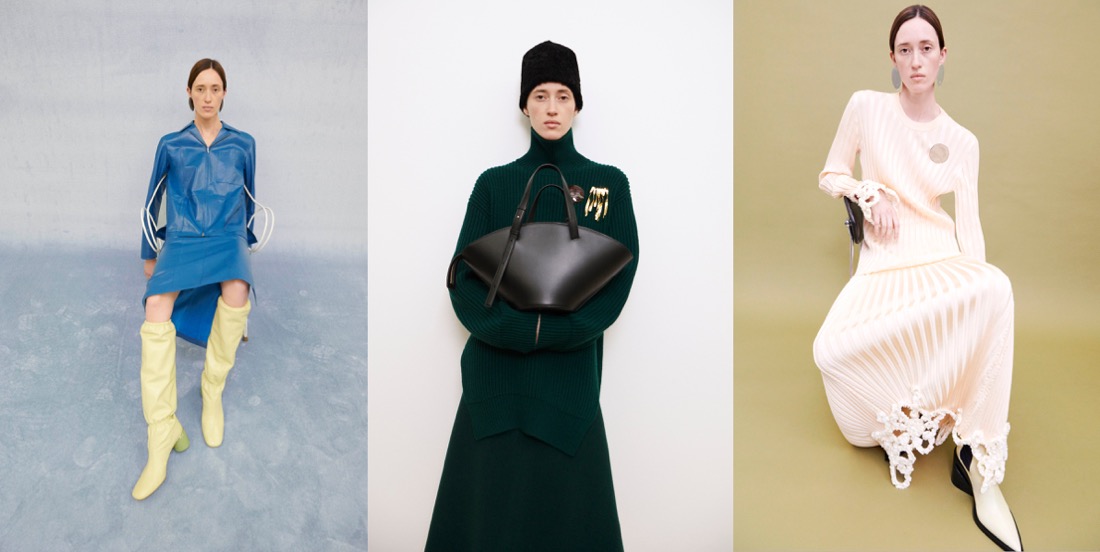
The celebration of individuality is what drives creatively Luke and Lucie Meier at Jil Sander. “For us it’s really important, the idea of working around the character,” they told Vogue during a preview of the pre-fall 2022 line-up. “The person in its humanity and uniqueness is at the center of our creativity.” What the Meiers have brought to Jil Sander is a progressive yet thoughtful approach, articulated with intelligence in a narrative both consistent and nuanced. Their repertoire is expanding; whimsy and eccentric flair now embellish their disciplined, exacting range. “We’re not considering stereotypes, rather multifaceted attitudes and personalities. Human beings are complex animals,” they said, suggesting that inspiration finds its way through a texture of emotions and connections, leaving excessive analyzing in the background. “We’ve been thinking a lot about our friends, people we know, even ourselves, all the different emotions we’ve been through. So it just felt right to be almost more impulsive, to indulge the spur of the moment, enjoying a certain freshness and lightness.” The collection was bookended by two similar looks, both two-piece propositions – a sharp-cut top/skirt ensemble in ivory double-faced matte viscose knit, compact and sculptural; and a turtleneck/skirt combination in off-white ribbed wool. Beautifully embroidered with sequined crochet intarsia at the collar, on the sides, or at the hem, they draw attention to the decorative as a subtext to Jil Sander’s sartorial clarity. “Both looks have a chandelier kind of shape, they look rather decadent. It’s nice to offer something special, less ordinary.” The offering’s standouts exuded the boldness and confidence of one-of-a-kind pieces. Among the noteworthy examples: an exquisite bias-cut evening dress in soft undyed silk in a pearly shade of ivory, its skirt opening up in a corolla shape garlanded with long silky fringes; a cocooning wrap coat in spongy wool in a delicate hue of eau-de-Nil, jacquarded with a curlicued abstract motif, a bavolet at the back sporting twirled fringes made from the yarn; and a sharp-cut skirt suit in black double-faced wool, embroidered with an inserted guipure piece breaking the severity of the design. And of course, lets not forget about the teddy-bear boots. Those will sell out fast. “It’s about eclectic elegance and strong individuality,” is how the designers summed up this brilliant collection.
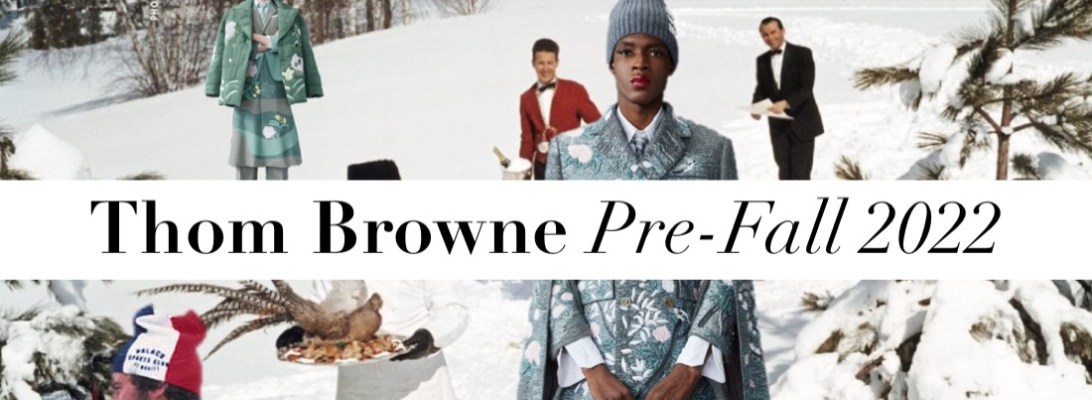
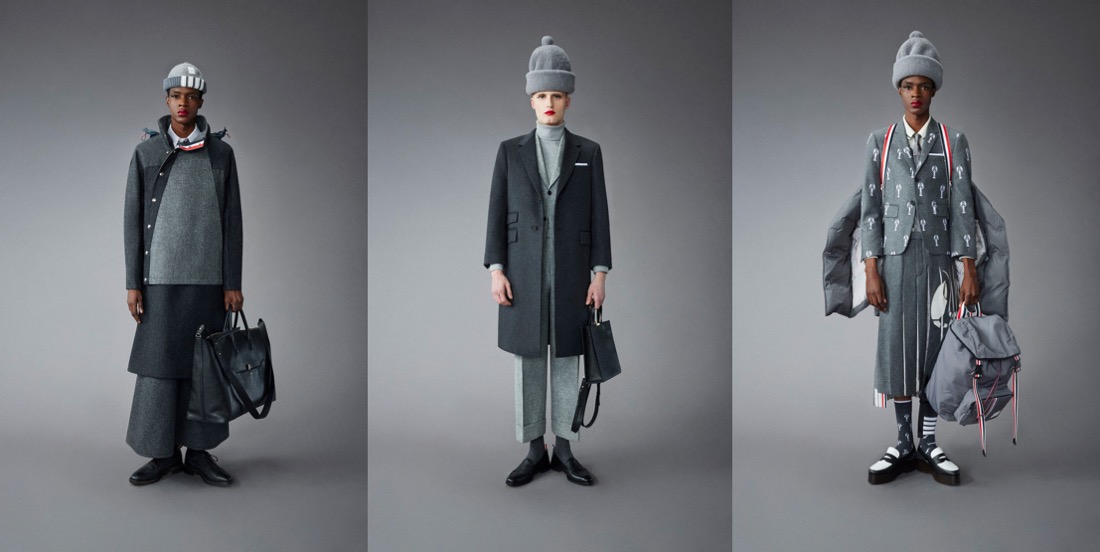
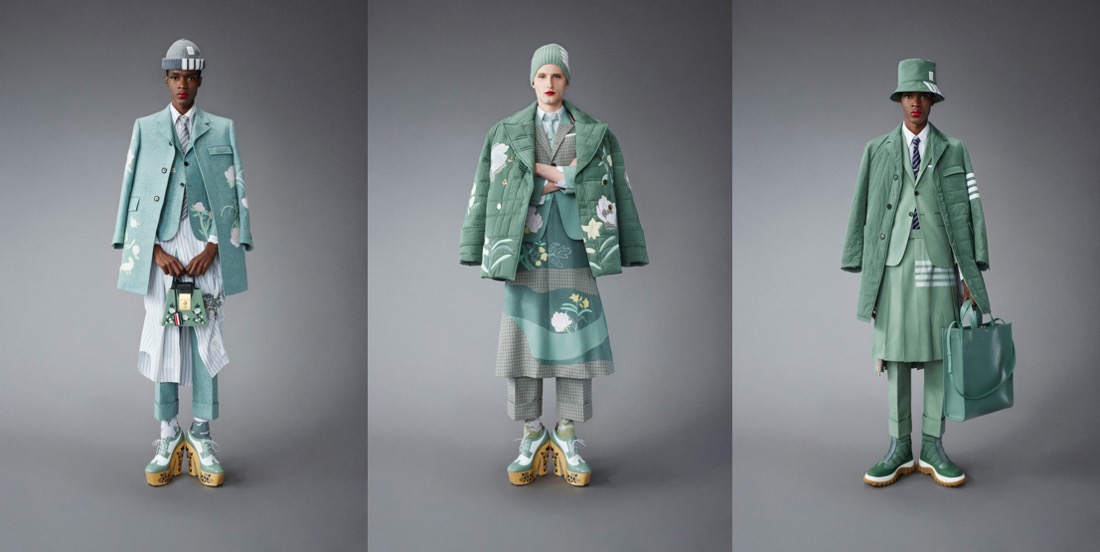
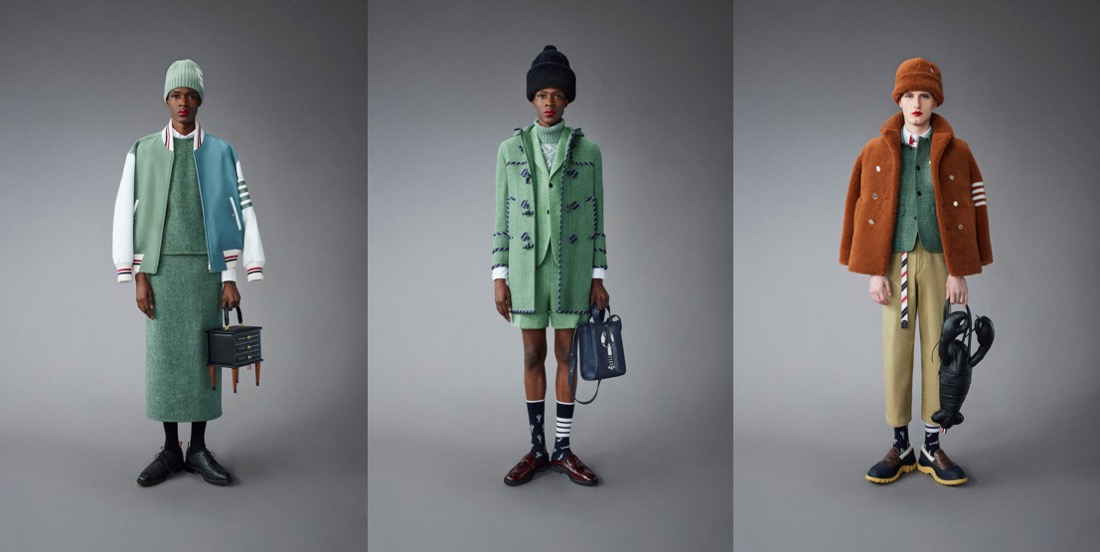
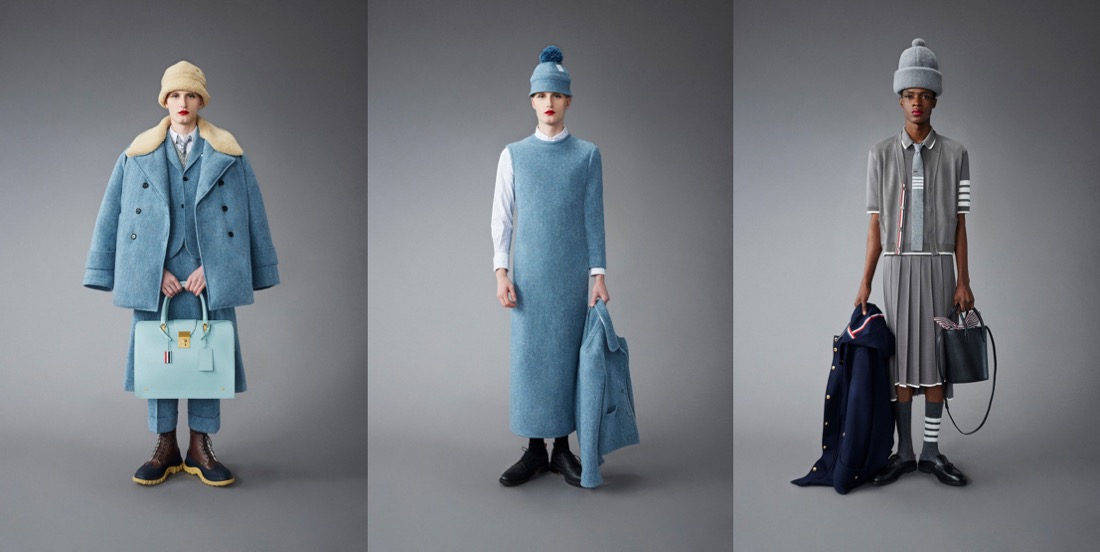
For pre-fall 2022, Thom Browne‘s models sport inches-long falsies and tote leather lobster bags and backpacks in a display that is so provocatively Surrealist it recalls Elsa Schiaparelli’s daring 1937 dress with a crustacean across the crotch. Browne’s version relies less on the obvious pun of that exoskeletal creature – he says the lobster is just the latest of the animals he has welcomed into his zoo – and more an examination of the beauty of skirting on men. It’s a continuation of ideas he started nearly 20 years ago but have taken hold of late, with Dan Levy and Lee Pace wearing Browne’s skirts on the red carpet. This season he’s constructed half-pleated, half-straight versions of his classic kilt, worn with “one-and-a-half”–breasted blazers with self-tipped seams and covered buttons. Modular dresses in melton wool carry over from the spring 2022 collection, now in warm dove gray and mossy celadon. A selection of slim, sexy black-tie options, from midi-skirts to short suits, close out the collection. Saving the best for last, there are also jade green floral intarsias. Those of us who have followed Browne for the past two decades may think that he’s tapped all his personal references, but a wise designer always leaves himself room for more. Just before the pandemic hit, Browne and his partner, Andrew Bolton, purchased a new home in Manhattan, which they spent two years renovating. This fall they finally moved in, and their central aesthetic compromise was the hand-painted jade green floral wallpaper above their bed. The same flowers are cut in furs and wools, winding up on overcoats and embroidered into jackets. “I don’t think I’ve ever done anything as personal,” Brown summed up. The couple’s home, he says, will be off-limits to design mags, but this simple shared gesture is open to everyone to try on and try out. If the pandemic has taught us anything, it’s that who you spend your life with matters.
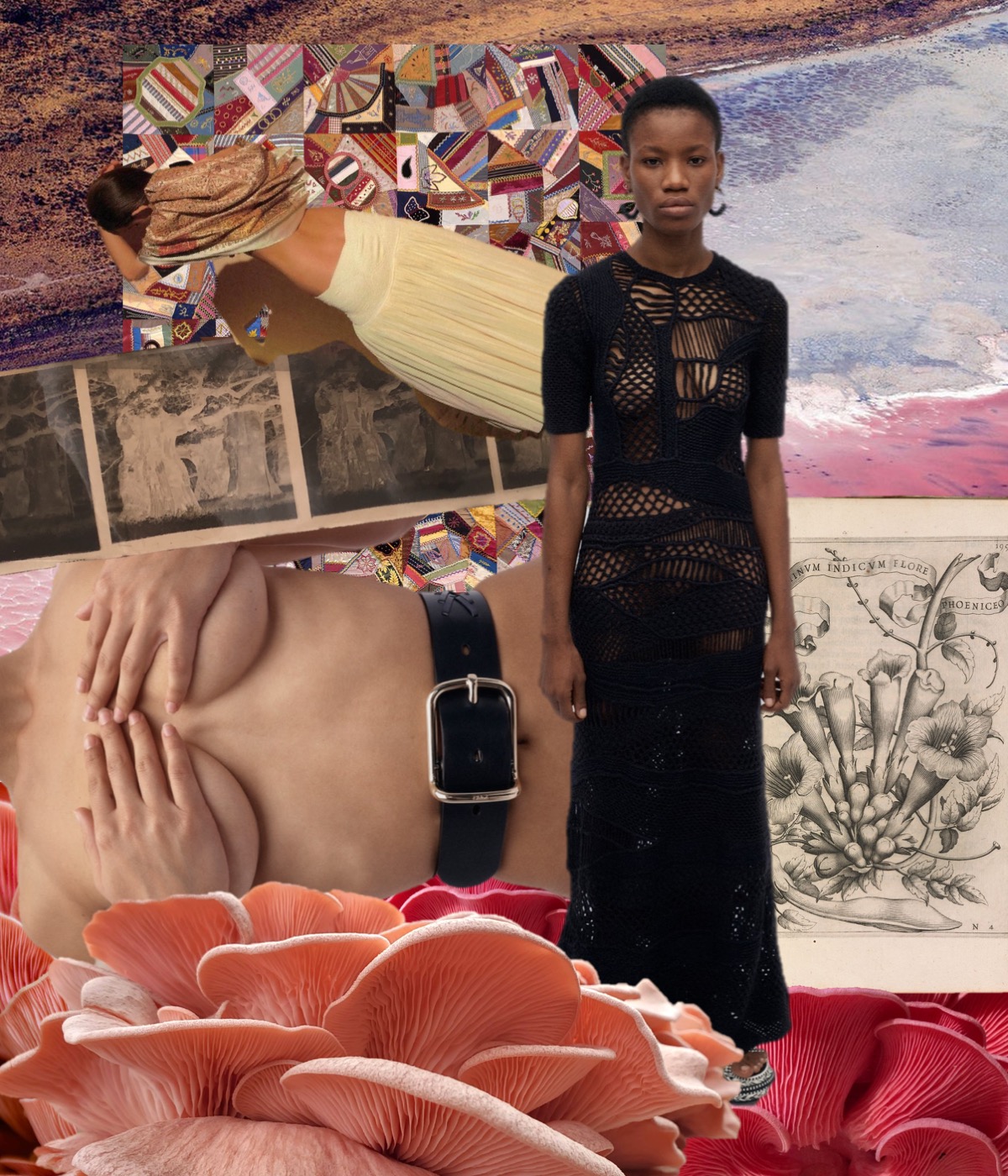
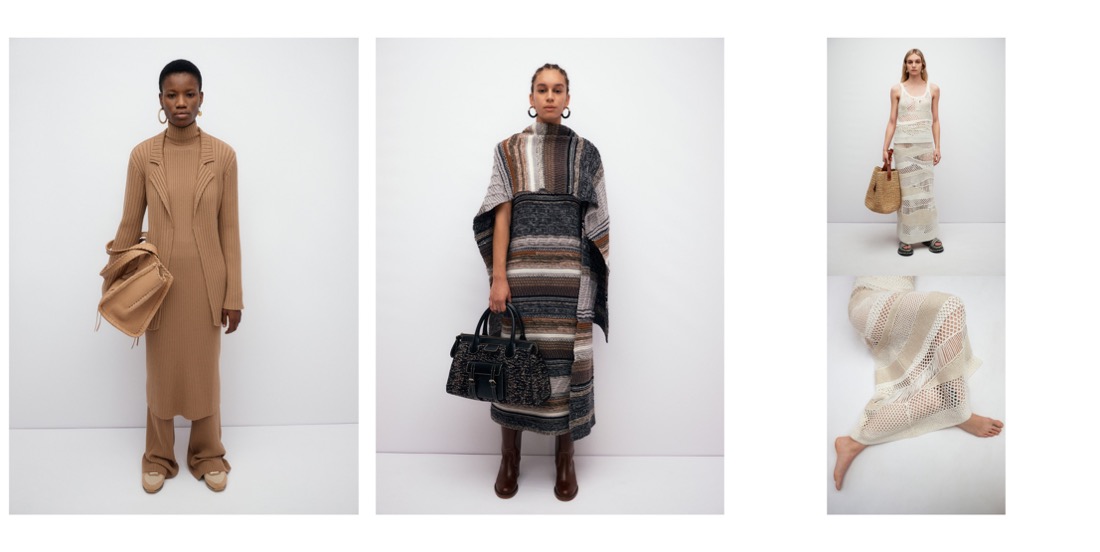
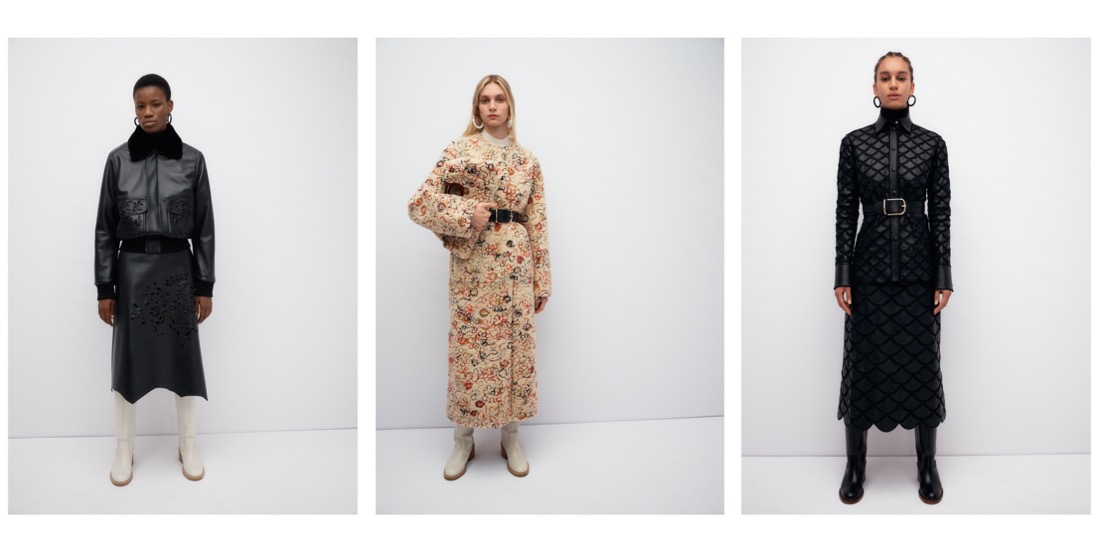
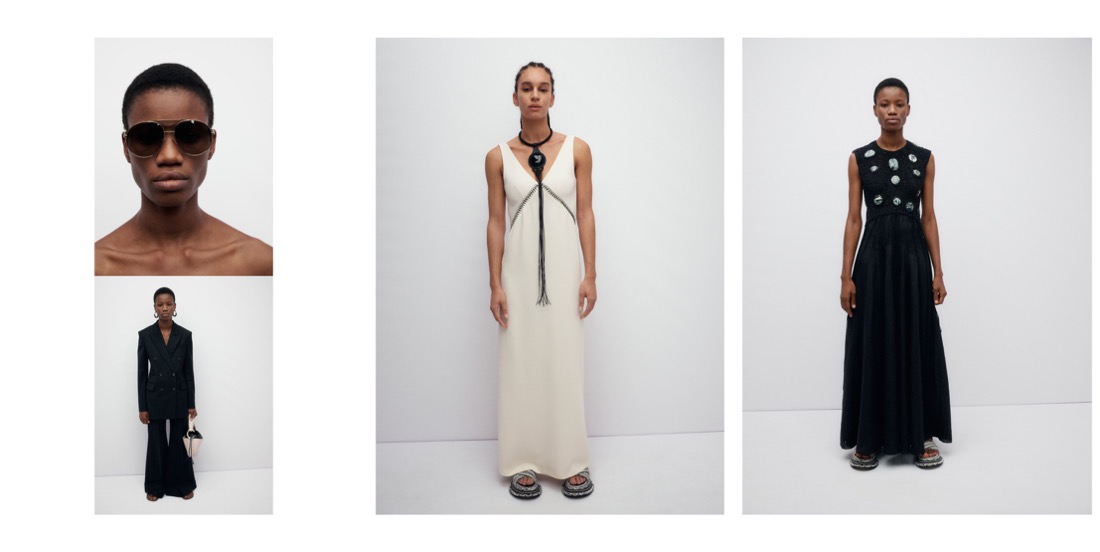
It’s nearly a year since Gabriela Hearst took Chloé under her wings, and it’s quite unbelievable how many sustainability goals the designer has already achieved. And those aren’t just words – numbers and statistics don’t lie. “To give you the exact facts, 70% of the product offer since I came in became lower impact. Compared to my first collection, (what) we did is up 40%”, she summed up. Women who are living under a cloud of post-COP26 anxiety might take some cheer from how openly Hearst is tackling the environmental and social problems inflicted by the workings of the fashion industry. The way she speaks of it, implementing the changes that lie within her power is as much her purpose as the mission to dress women in Chloé clothes. “Empathy, collaboration, lower impact – the right values need to come to the forefront. Collectively we at Chloé are working toward weaving that into the DNA of the company.” The clarity of style she’s brought to the house has become completely visible four seasons in. It’s streamlined and slick, a grown-up boho look infused with classic Chloé-isms and her own handcrafted, macraméd, whipstitched energy. She’s carefully corralled all the legacies that women designers have imprinted on the brand for decades: the reputation for a boot-cut, ’70s-ish pantsuit that Stella McCartney laid down; the balloon-y broderie anglaise sleeves that Phoebe Philo played with; and Chloé founder Gaby Aghion’s scalloped edges and taste for pinkish orange, the color of the Egyptian desert of her childhood. Meanwhile Chloé’s horsey heritage is a natural for Hearst, who brings her own Uruguayan ranch upbringing to her feeling for caped coats, French-style riding boots, and the thick leather girth strap she’s turned into a belt. “I love this buckle that I found in the archive from Hannah MacGibbon’s time,” she said. “We oversized it.” It all looks a lot like Hearst herself: tall, strong silhouettes; a practical modern vigor; a touch of the hippie sophisticate. Yet the main imprint she’s stamping on Chloé is in becoming one of the very few luxury fashion creative directors who are making it impossible to detach the conversation about pretty clothes from talking about what’s in them and how they are made. Moving rapidly along the vectors of transparent reporting, partnerships with women’s employment projects, environmental certifications, Chloé’s freshly acquired B Corp status, and new membership in the Ellen MacArthur Foundation (which champions circularity) – and shining a light onto the multitude of fashion’s hidden processes – is a business that continually brings up more questions.
Hearst is happy to point to several achievements in this collection. Botanical dyes are part of it—like the shade of Gaby Aghion pinkish orange in the merino wool skirt-and-sweater set. There’s also biodegradable denim, which Hearst cut into a pair of high-waist flares and a matching jacket. “This is the third season we’ve been working with Adriano Goldschmied [the legendary denim expert] on this project to resolve circular denim, following the Jeans Redesign Guidelines published by the Ellen MacArthur Foundation,” she said. The production of the new Chloé jeans eliminates rivets, which never break down, and the fabric is a mix of 70% recycled cotton and 30% hemp, “which is grown in France. Hemp and linen cultivation emit less greenhouse gases and require less water compared to cotton,” she noted. But to vegan and vegetarian customers – and anyone who’s read recent reports about fashion’s links with cattle farming and deforestation in Brazil – the noticeable amount of leather in the collection will raise eyebrows. “From the point of view of sustainability, I have a very specific position about leather,” argues Hearst. “Leather is biowaste of the meat industry. I am very against industrialization of meat – I’m really against the way livestock is being industrialized. I don’t think we can afford eating a high-meat-protein diet, and definitely don’t recommend it.” But while she accepts that moving toward plant-based diets “is better for the environment,” from her perspective, “the truth is nobody’s killing the animal for the leather. The price of leather is going down and people are wasting it.” That in itself creates an environmental disposal situation. “What are we going to do with the leather, other than just use it?”
The Chloé press release states how the sourcing of the Chloé leathers is certified by the Leather Working Group, which is “an international organization made up of stakeholders across the leather supply chain, working to promote environmental best practice within leather manufacturing and related industries.” The organization looks into the operations of tanneries, “meaning that the leather process is done properly, meaning not wasting water and not using harsh chemicals,” as Hearst puts it. Around 75% of the leather handbag offering is sourced from Leather Working Group–certified tanneries. Nevertheless, there is always further to look into. A report in The Guardian on November 29 spotlighted research by Stand.earth, a supply-chain research company partnered by the Slow Factory and Model Activist, showing that the Leather Working Group’s remit stops at capturing what happens in tanneries and slaughterhouses. Its visibility doesn’t reach back to what happens at the farm level, and therefore “does not ascertain whether hides are linked to deforestation.” Under normal practice, hides come into tanneries from multiple sources and are often mixed up, meaning that fashion brands – across luxury and mass manufacturing alike – are “at risk” of unknowingly buying into the destruction of the Amazon rain forest with the finished product. “As many Amazon leaders have warned,” the Slow Factory writes on its Instagram page, “this is a human rights/climate/biodiversity/public health crisis with consequences for the entire world.” That’s a much vaster issue than Chloé. It spreads across the entire industry and puts question marks over every leather bag, shoe, and coat we buy (it’s also an issue in the auto industry, which is the second-largest user of leather after fashion.) Only diligent and widespread normalization of tracing and labeling, and the development of sounder alternatives, can solve this. Knowing Gabriela Hearst, she’ll be among the first to step up to working on finding those answers.













 Design & Culture by Ed