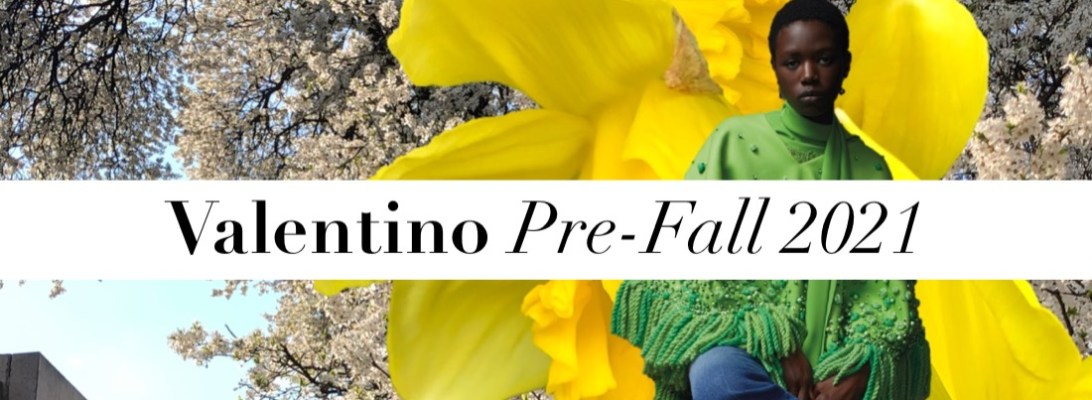
Re-Signification. Valentino Pre-Fall 2021

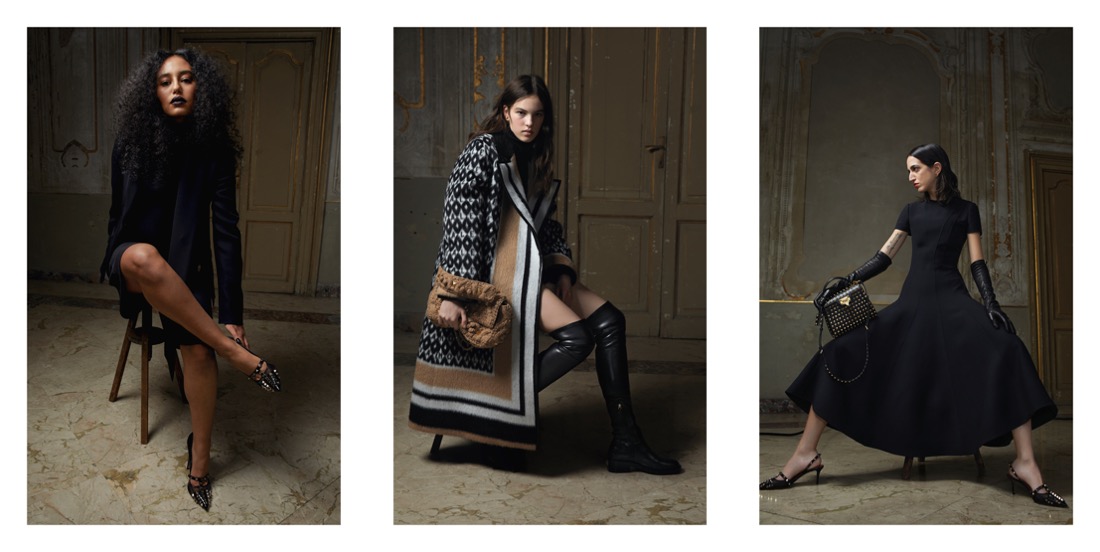
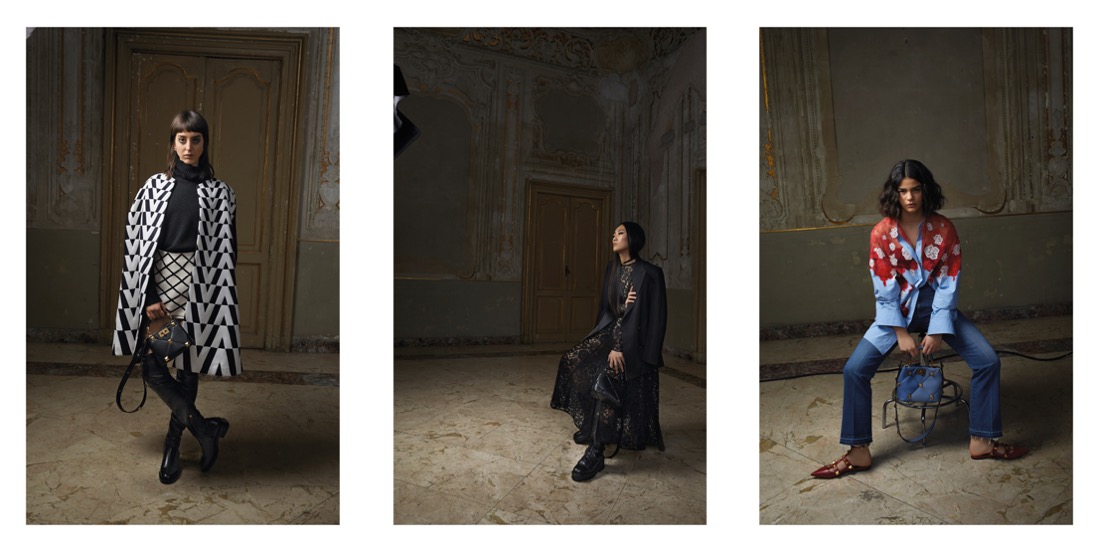
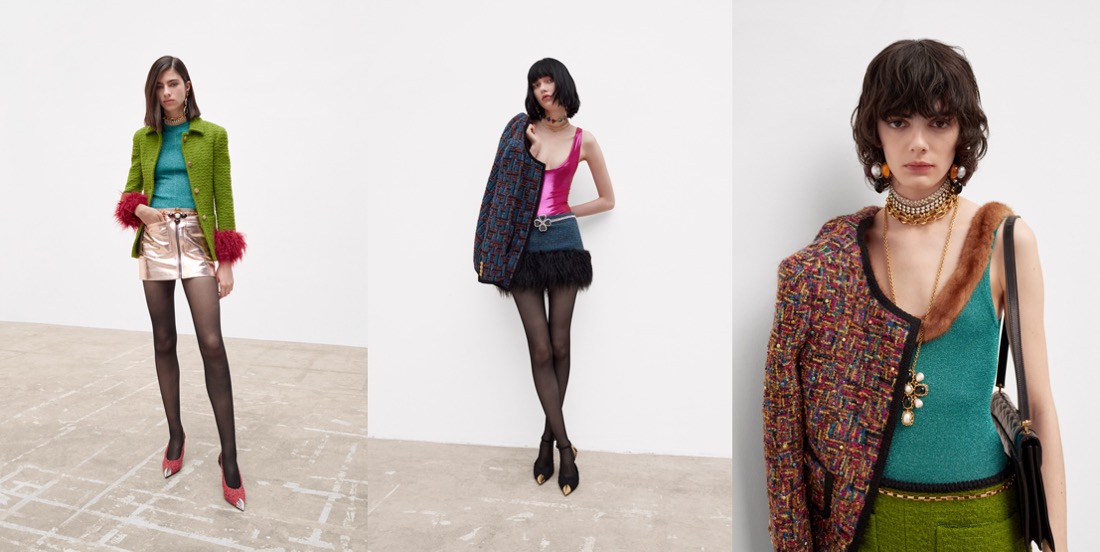
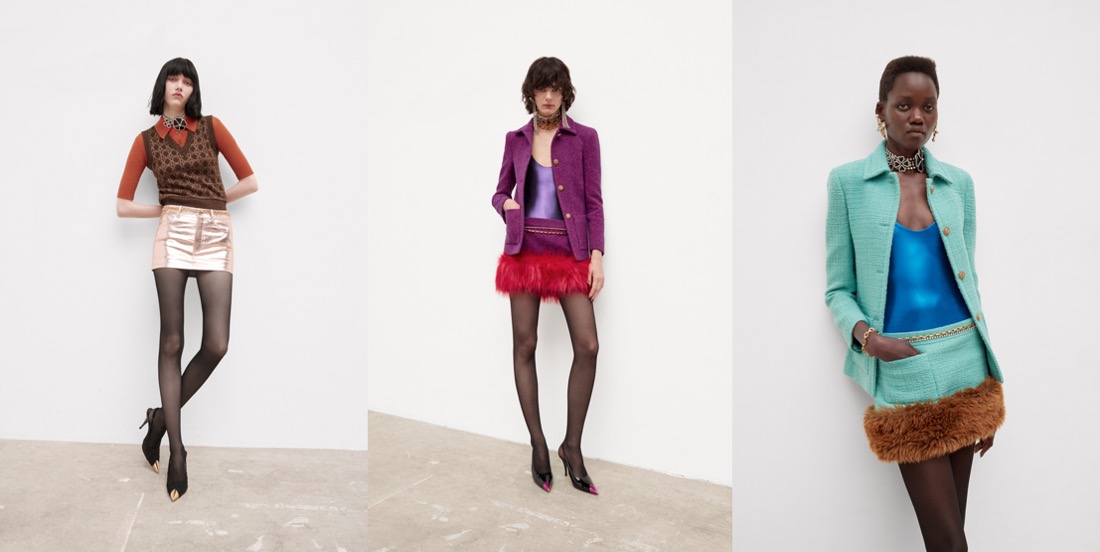
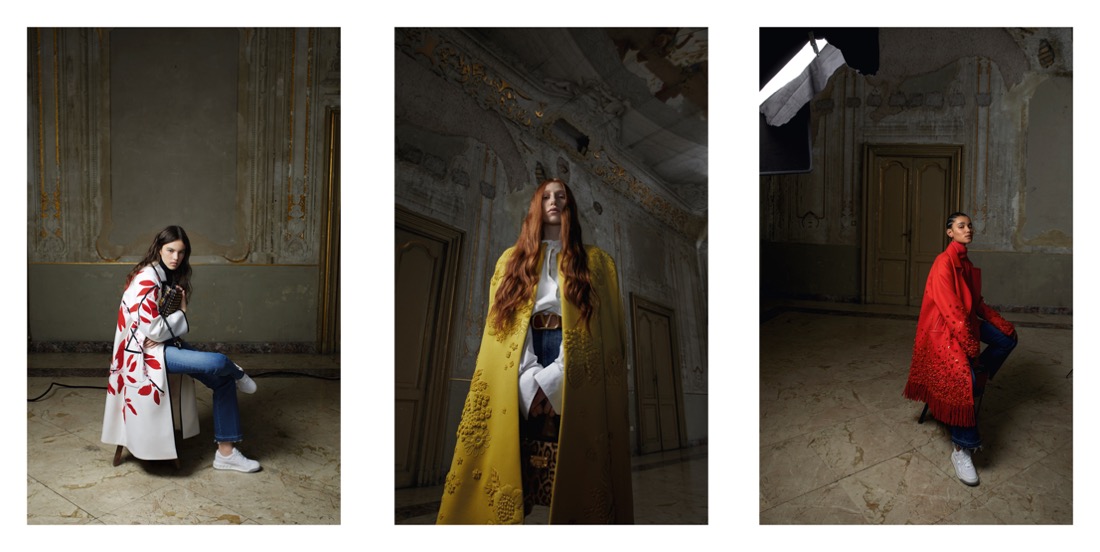
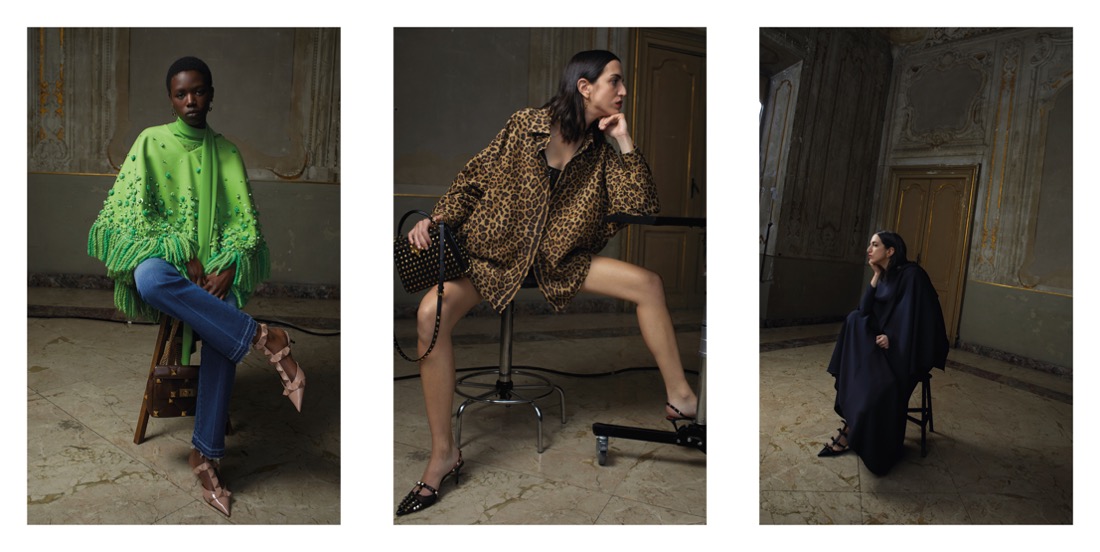
Pierpaolo Piccioli is busy keeping Valentino’s re-signification going, the line of thought about identity, humanity, and radicalism around which he’s been tailoring his practice since last year. “Today, more than ever, aesthetics are determined by identity,” the designer told Vogue while discussing his pre-fall 2021 collection. “To make Valentino’s codes and values pertinent for today, I want to keep a firm hold on its identity while shifting its signifiers, giving them a new attribution.” What does that mean, exactly? “It means giving a more human dimension to Valentino’s lexicon, less obviously glamorous,” Piccioli said. “Not because I condemn red carpet glamour, but because today, there’s the need of a new warmth, of more humanity. So you have to open up those codes, giving them new life and the freedom to speak through more personal, individual interpretations.” And what is more individual, personal, and human than a portrait? For pre-fall Piccioli lensed the look book himself, with a cast of Italian beauties not all of whom are models, but rather friends and young women “with something to say,” he explained. The collection was intended as a series of individual pieces underlining the unique, non-clichéd humanity of each woman and her non-stereotyped representation of femininity. “The way I approached the shoot was a metaphor of what I’m doing at Valentino,” explained Piccioli. “Models for me are individuals, ‘persone’. This is a moment in time where humanity is paramount. The whole cultural discourse about inclusivity, accepting and enhancing diversities, and the freedom of expressing oneself – it’s just about putting humanity front and center as a non-negotiable social, political, and personal value.” Shot in an empty yet decadent Roman palazzo, with chiaroscuro light giving each image a painterly, metaphysical aura, the collection paid a telling homage to Valentino’s culture of couture, even if it consisted mostly of daywear. Dégradé embroideries in macro sequins, wool knots, and beads; handmade taffeta and lace intarsia; bouillonné rosettes and thread-made appliqués; embellishments made through a complex carving techniques – these and other couture flourishes were lavished on clean-cut coats and capes in double cashmere, everyday pieces of luxurious ease. Red roses, an homage to the famous Valentino flamingo dress, were stitched on a sweatshirt in vermilion cady, while a simple shirt in crisp pale blue poplin was inlaid with individually cut florals selected from different types of see-through lace. Summing up, Valentino’s ready-to-wear hasn’t been in such a good place as now for years.
“Live” collage by Edward Kanarecki.

Cocteau And Coco. Chanel Resort 2022

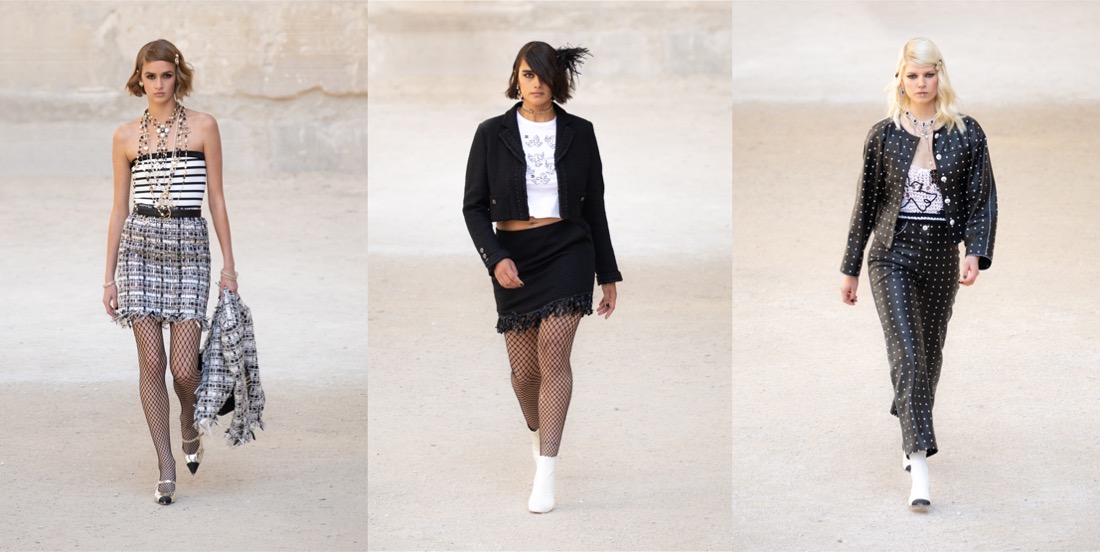
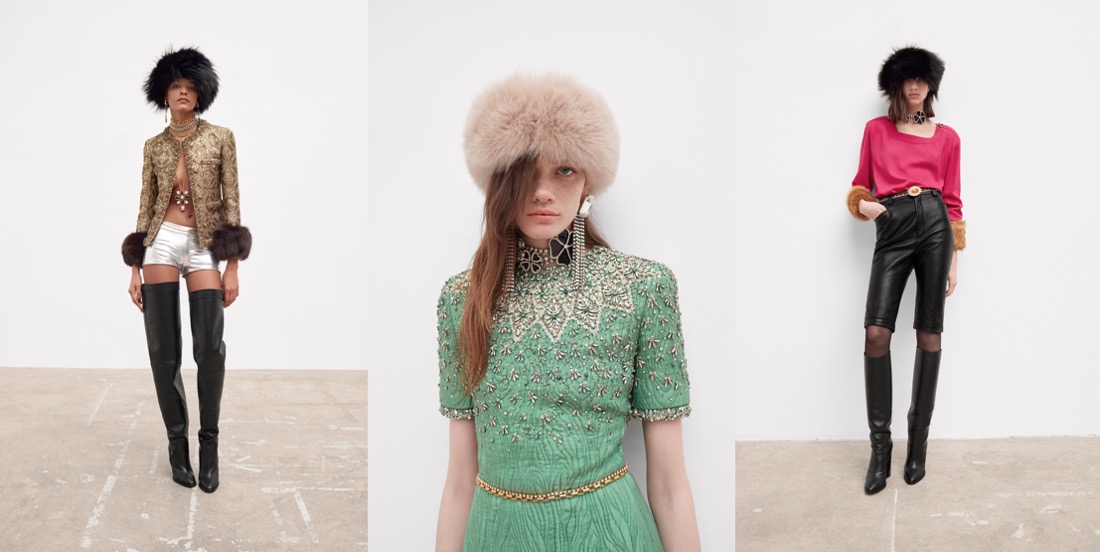
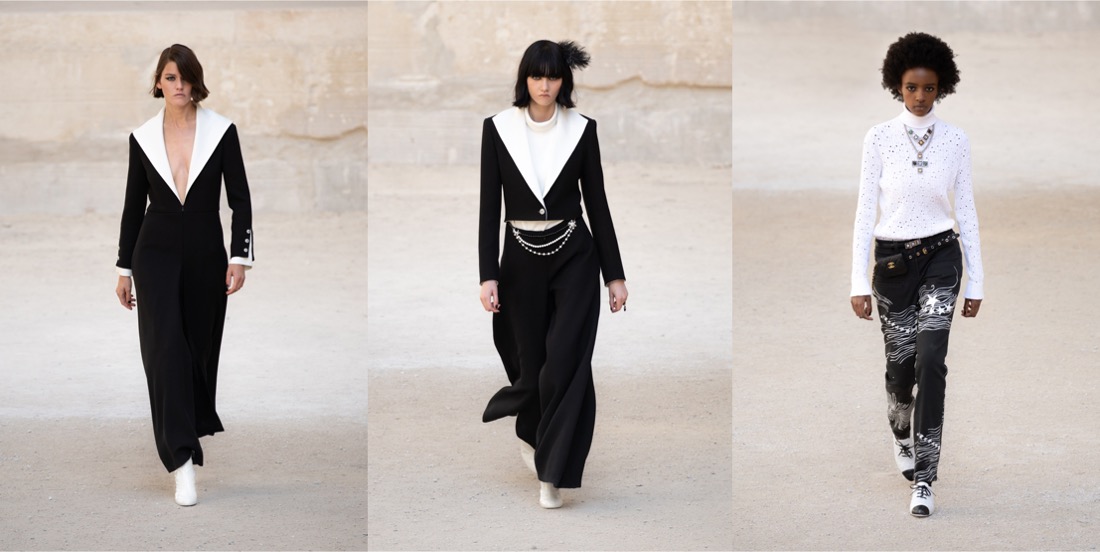
Virginie Viard‘s Chanel is like a sinusoid – one time it’s bizarrely unedited and clumsy, and then it’s fantastically light and super chic. Her resort 2022 has both, although the latter fortunately prevails. The fashion show was a digital, cultural trip, where the clothes worked really well. Viard sought inspiration in Provence, the most beautiful region in the south of France lapped by the marshy Camargue and crowned by the hills of Les Baux-de-Provence, considered one of the area’s loveliest villages. Specifically, she set the collection in the Carrières de Lumières (Quarries of Light) in Les Baux, a series of chalky, cave-like rooms – the spaces left behind after centuries of excavations. In 1960, however, Jean Cocteau – the artist, poet, and filmmaker who cast a long shadow across the worlds of culture and style in 20th century France – used these quarries as a setting for his hauntingly beautiful movie The Testament of Orpheus. It’s “so modern, so fresh, and so strong,” says Viard, who watched the movie, which features Cocteau himself, with cameos from his lover Jean Marais, Pablo Picasso, and Yul Brynner, among others, as she began working on the season. “The movie really inspired the collection,” Viard added. “When I came to see the quarry again – I’d been years ago, before it was used for the son et lumiere – I saw that the clothes had to be strong, and black and white. Otherwise we could be in Petra or Egypt. I love ruffles for the couture,” she continued, “but I thought it would not look modern here. Coco Chanel counted Jean Cocteau amongst her intimates; he produced some evocative portraits of her and illustrations of her clothes, and in turn she costumed productions of his plays AntigoneOrpheus, and Oedipus Rex. The friends would often hang out in Chanel’s daytime apartment on the Rue Cambon, and Viard was excited to read the letters that Cocteau sent to Chanel. The apartment has recently emerged from an extensive restoration, and Viard sought inspiration in the very personal bestiary that Chanel assembled there: The lions for that famous Leo, camels, doves of peace, fauns, and the female sphinxes that all appear in objects and sculptures in the apartment have been reimagined as graphic prints on denim with a hand-painted look, and as lucky charms used as embroidery in the new collection.

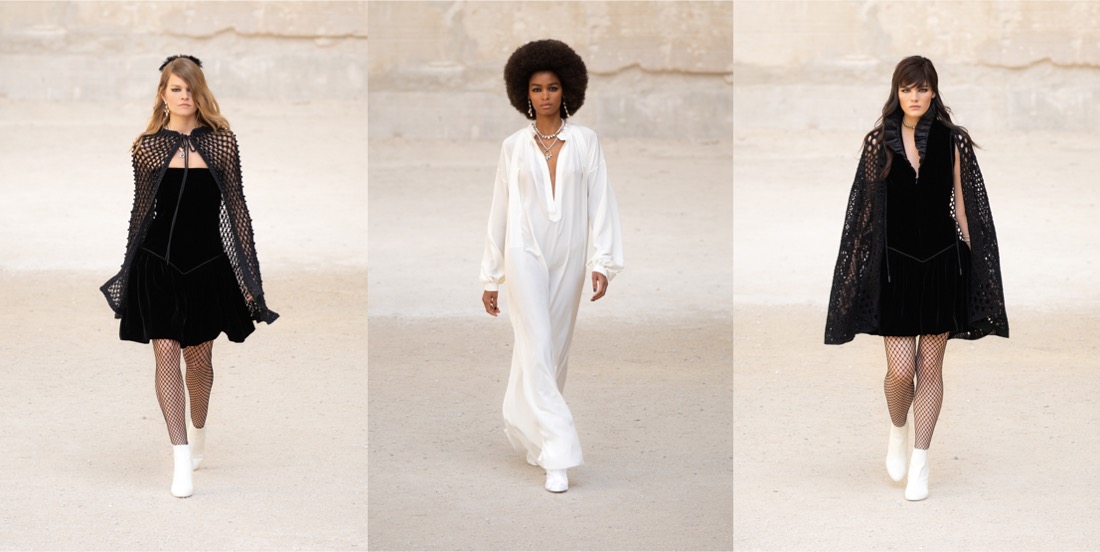
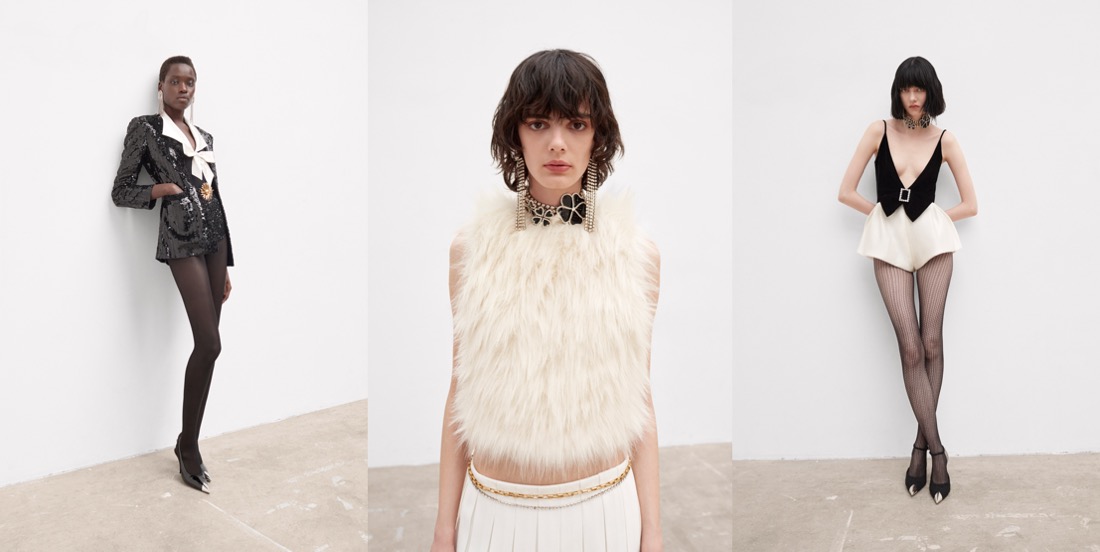
In this cocktail of references, Viard as well worked with both Mod and Punk references: striking black and white miniskirts, suits and coat dresses trellised with window pane blocks of small concrete beads, and styling flourishes like fishnet stockings had a Mod sensibility. Accessories including zippered leather holster belts worn at the waist or thigh, handbag chain suspenders, and dog collars read as Punk, as did details like the rock and roll leather fringing on a shimmy dress, and the raw finishing used to hem the skirts and cuffs of caviar tweed suits and crochet minidresses (a Jean Cocteau sketch of a 1920s fringed Chanel dress was the starting point for these designs). The late Stella Tennant’s patrician Punk attitude inspired the lip piercing jewelry, as did Ines and Vinoodh’s photographs of the model Lola in Chanel’s apartment; Viard was thinking of a memorable Mario Testino image of Tennant dressed as a punk with her ball-gowned grandmother, the Duchess of Devonshire, at Chatsworth, her family’s storied stately home. Meanwhile the graphic suits—with a new jacket silhouette featuring a bloused body and fitted peplum—were drawn with the definite lines of Cocteau’s ink brush and pen drawings. There was more softness in the collection in ivory lace dresses scattered with embroidered good luck charms, and wide-legged, high-waisted white linen pants and cotton sweatshirting dresses embroidered with the wild flowers of Provence – lavender, thyme, Cosmos daisies, ranunculus, blue felicia, and scabious, among others. The only colors in the collection appear in 100% sustainable tweeds created by the embroiderer Lesage in what Viard described as a “Cézanne” palette, and used for skimpy, rough-fringed minisuits. For the finale, the short black velvet dresses, each worn with crochet and macramé capes, provided a theatrical flourish of which Cocteau would surely approve. And there’s a pragmatic reason for all those white ankle boots: “It’s better not to have a long black dress or black shoes if you are walking in a quarry all day!” confided Viard with a laugh.

“Live” collage by Edward Kanarecki.

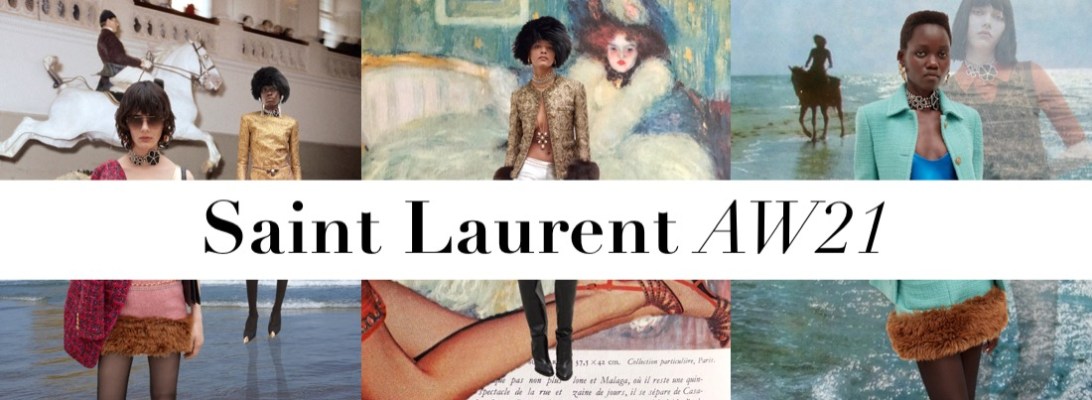
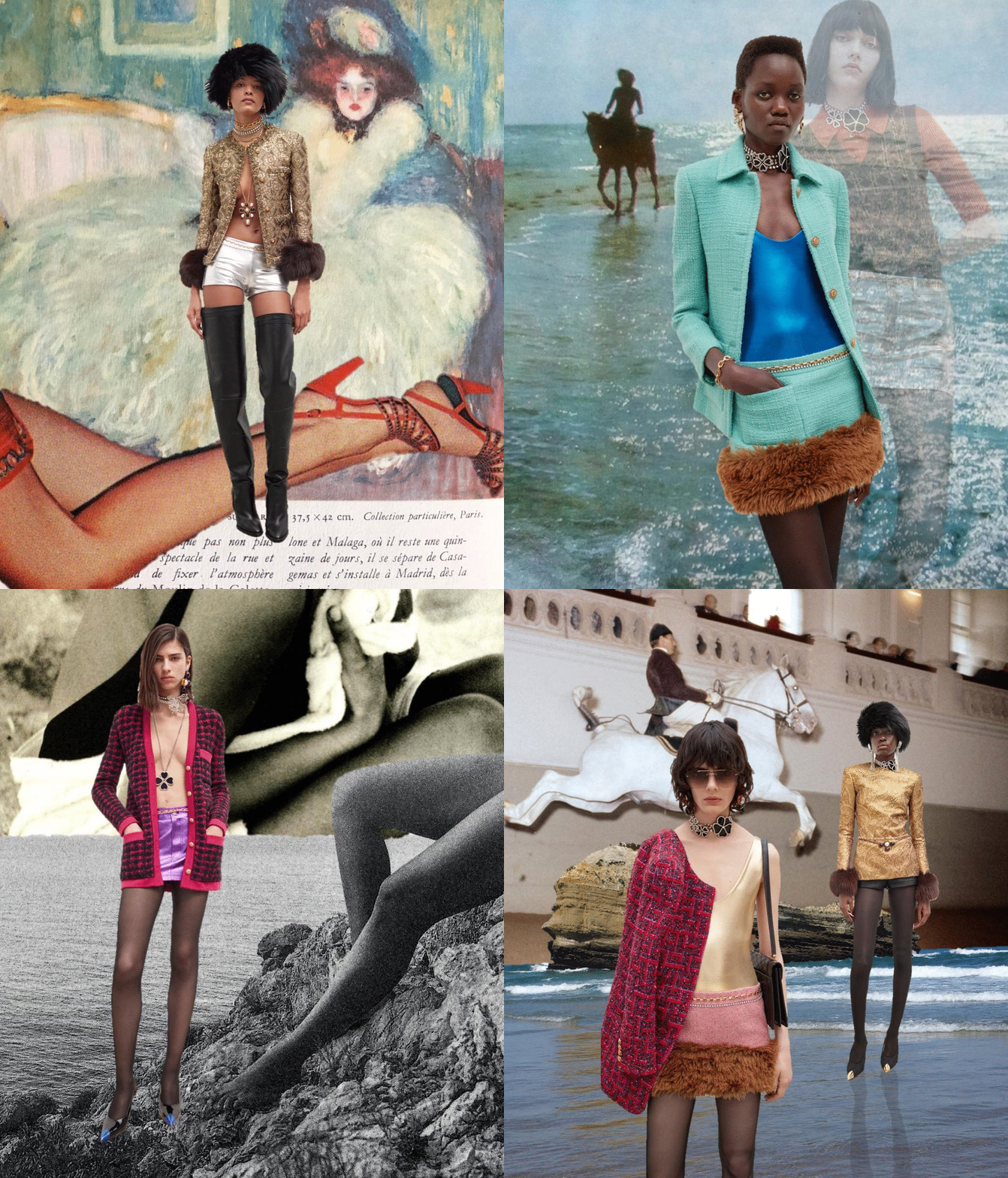
Contrasts Are Sexy. Saint Laurent AW21

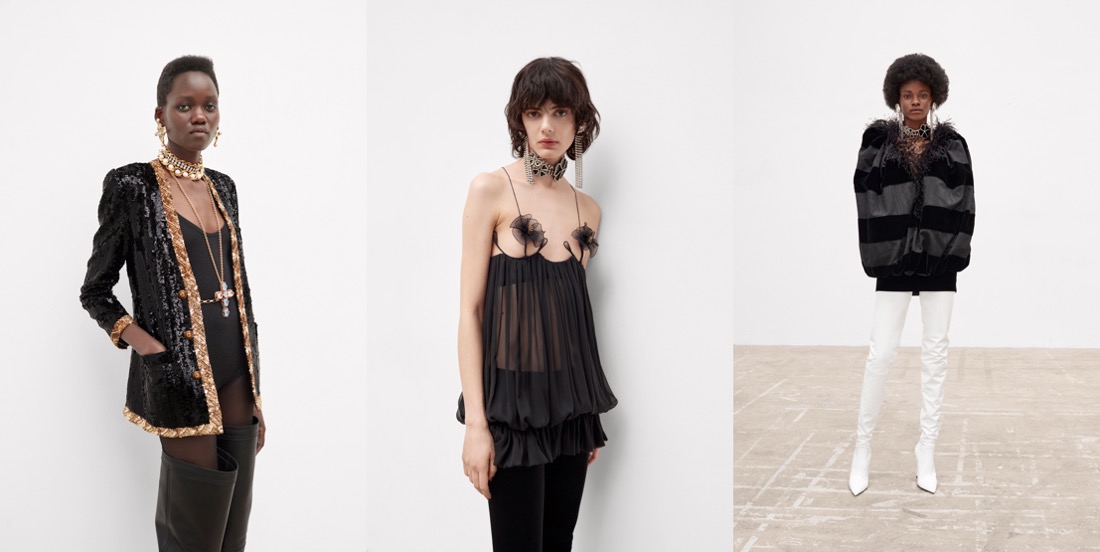
Anthony Vaccarello’s autumn-winter 2021 Saint Laurent collection was all about contrasts: luxury and kitsch, polished and raw, elegance and trash. There was even a stark contrast between the sultry clothes the designer delivered and the (rather very) windy runway venue. Against the most jaw-dropping of backdrops (of what looked like Iceland), with ice glaciers, crashing waves, and a volcanic, black beach, Vaccarello’s girls, looking like badass rock chicks, are shown striding as if on some fantastic odyssey. “When I was thinking about this collection, I had this place in mind, like a movie director,” Vaccarello said on a call to preview his collection. “It’s the idea of a girl in a landscape where she doesn’t belong. I knew I wanted a wintry location,” he went on to say, “one which showed how strong nature is; how we are really nothing next to it, how ephemeral we are. It’s not a place where anyone is going skiing, but Saint Laurent should do something that’s like a dream: What the F?! Why is she there?” The question of why this winter’s Saint Laurent woman is indeed there is left hanging somewhere in the movie’s moody overcast skies. Every season Vaccarello’s exploration of the YSL archive has a welcome air of mystery to it; there has never been any literal, first-degree rehashing of the back catalog’s greatest hits on his watch. This time round, he was drawn to Monsieur Saint Laurent’s classically elegant mid ’60s tailleurs rendered in menswear fabrics. He ratcheted up the cool factor by cutting the jackets lean and sinuous and then matching the length of their hems to his very-mini-skirts. Then he swapped out Saint Laurent’s then preferred monochromatic palette with a fabulously opulent and in your face array of violet, cobalt, gold, and chartreuse: “It’s the shapes of the ’60s with the colors of the ’80s,” Vaccarello said by way of explanation. Finishing the looks off, he slipped gleaming metallic stretch bodysuits or the tiniest of leather miniskirts under the tailoring. Then he loaded up on the bijoux – chandelier earrings, strasse bracelets, and chokers with a four-leaf-clover motif, something else sourced from the archive. It would be remiss not to mention the ultra-long leather boots or the wickedly pointy metal-tipped heels. Watching Mica Argañaraz navigate a stony cliff edge in them gives a whole new meaning to the appellation “rock goddess.” Also, she really seemed not to care for the cold, breezy wind. “I am doing things for the present; I don’t know what the future will be,” said Vaccarello on the subject of re-emergence fashion. “I want Saint Laurent to be more light and playful, but… it’s not just about going out to bars and parties. Life can’t just be when it’s bad we are all in black and pajamas and when it’s good we are in slutty dresses. After the last couple of years we can’t just go back, otherwise we will lose what we all lived through.” In other words, when you helm a house which has long had a reputation for both exuberance and chicness, how do you take it forward in a very big world? You let the fashion fly, but also keep it down to earth. “Fashion should be something you don’t take too seriously,” he continued. “Especially now, when nothing is really necessary. It’s good to laugh about life.

“Live” collage by Edward Kanarecki.

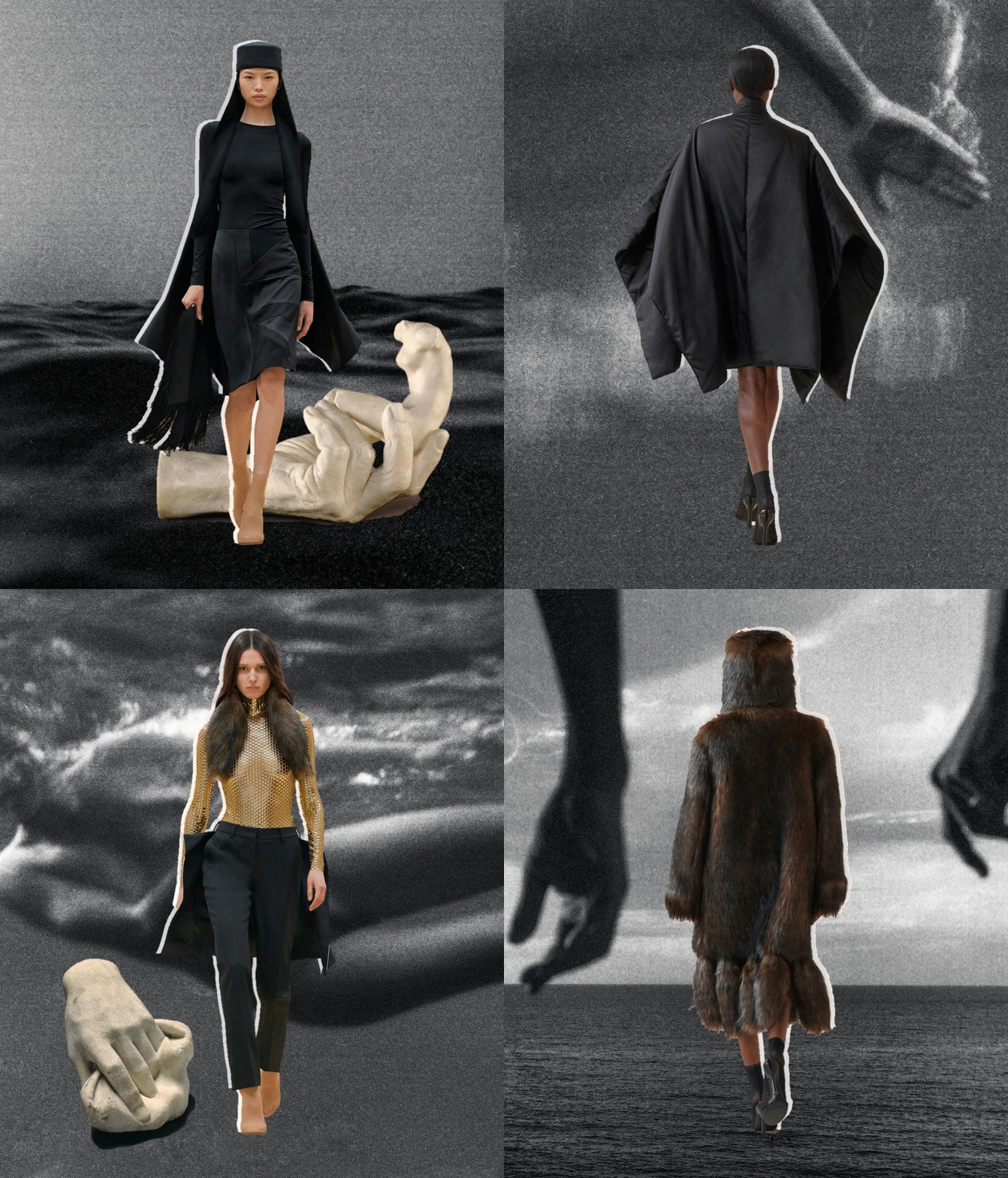
Femininity Now. Burberry AW21

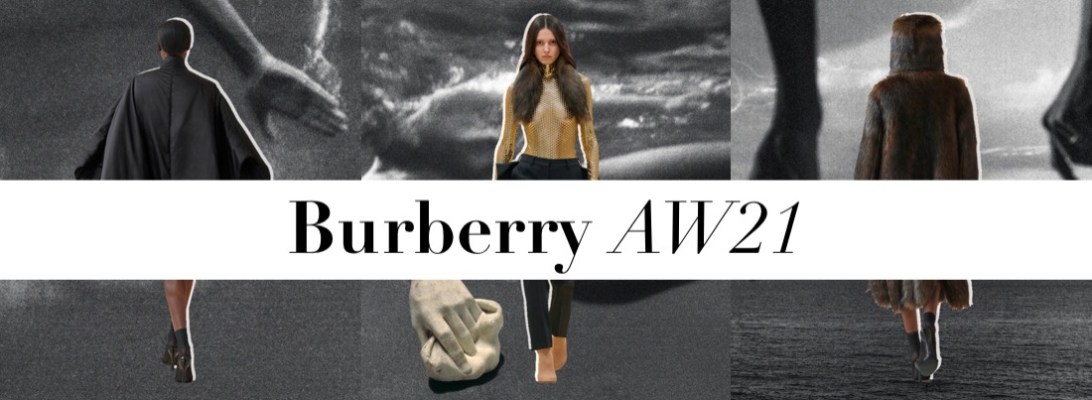
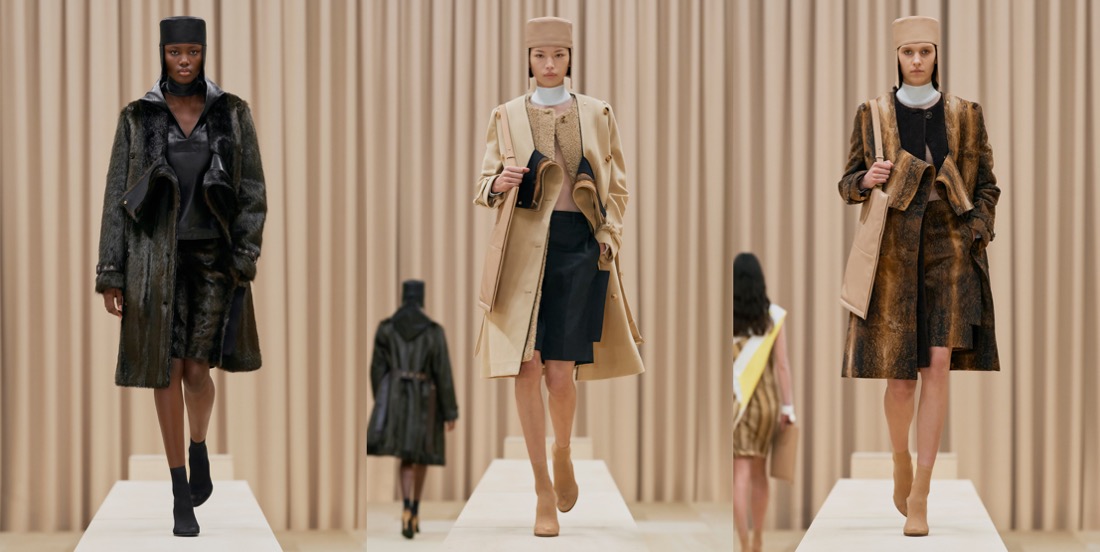
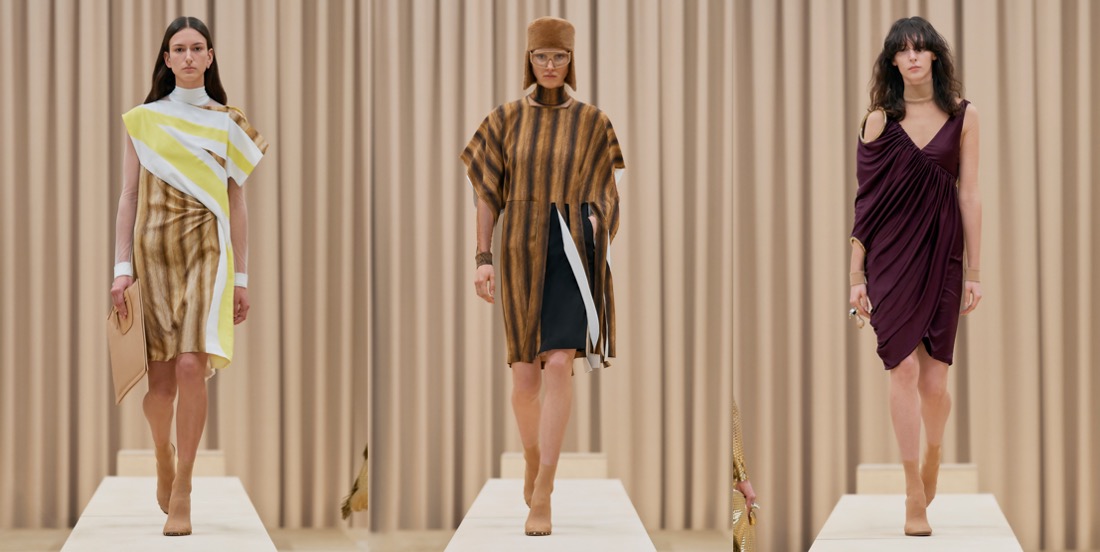
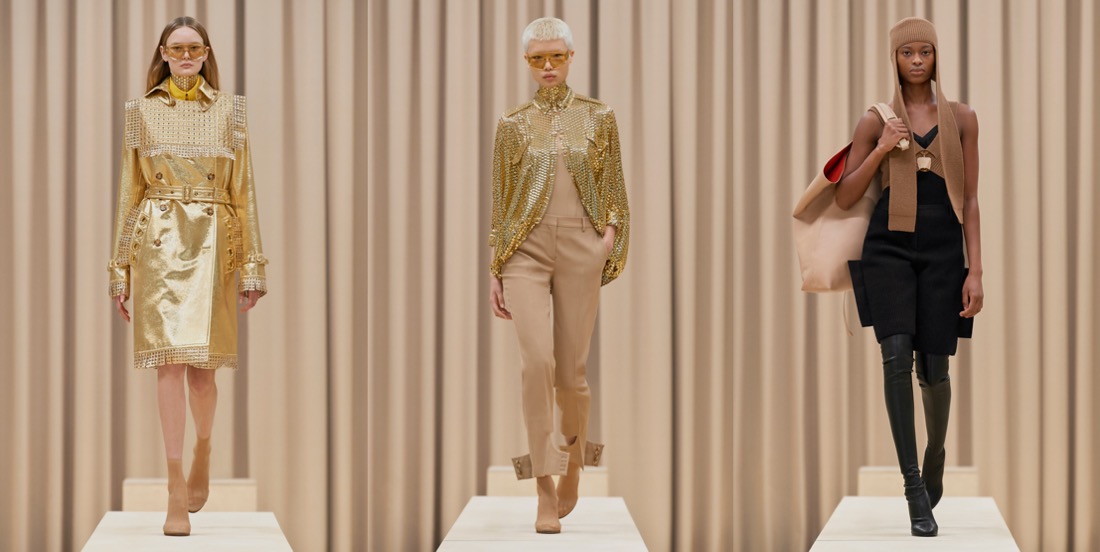
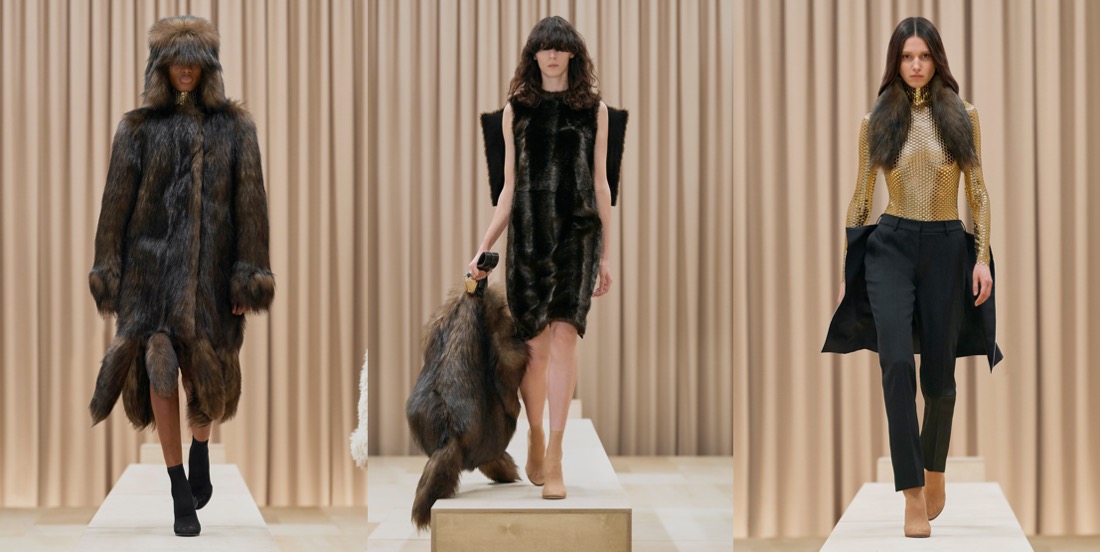
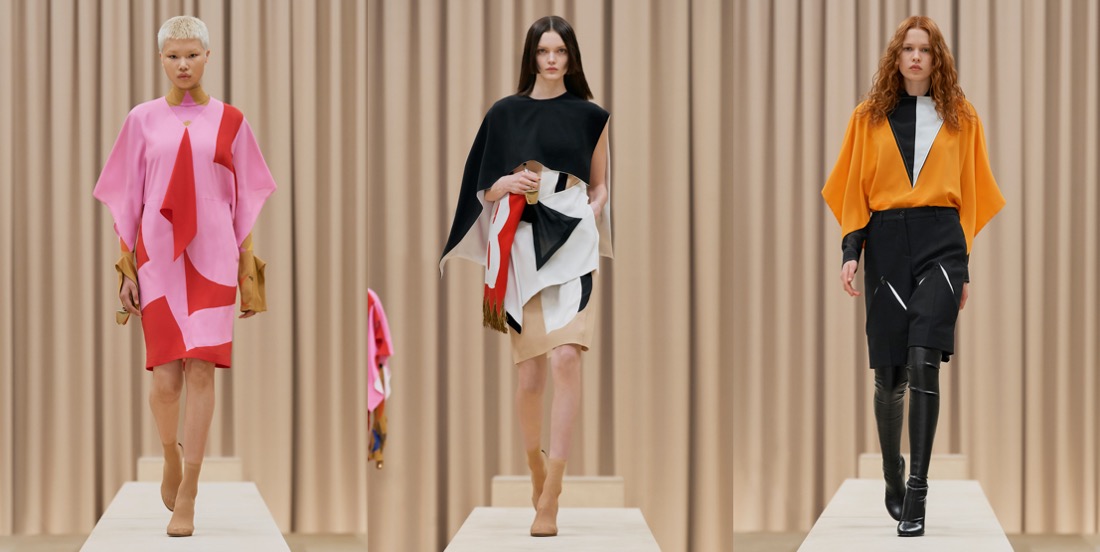
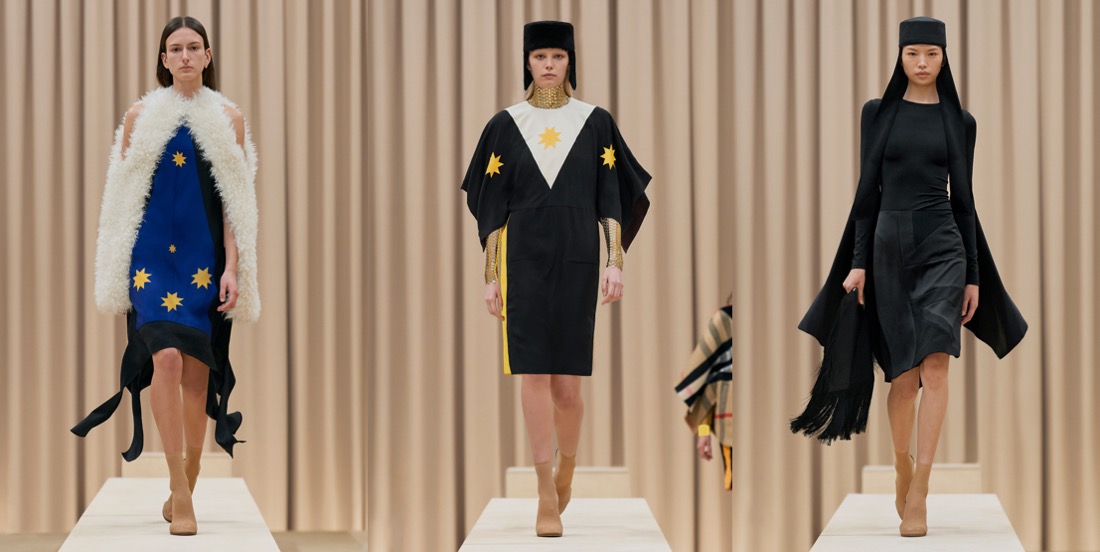
To some designers, the slowed down pace forced by the pandemic does wonders. Riccardo Tisci‘s latest collection for Burberry is his best yet for the British brand. The autumn-winter 2021 line-up reminds of Tisci’s early work at Givenchy: dark, well-edited, elegant, and perfectly balancing the feminine and the powerful. “Re-thinking a lot” was how he described his pandemic experience. “I had time to slow down. The fashion business is very fast. It’s a huge company. I was ticking boxes, and I was like, ‘Okay, stop.’ ” Rather than over-saturating his runway with multiple market categories and menswear, Tisci presented a focused women’s collection rooted in the ferocious and sensual but viable glamour that is his (slightly forgotten by the public) signature. “Slowly we’ve built an identity, and I realized my identity was very strong within the label,” he said, evaluating his tenure at the house. “It’s the most free collection I’ve done at Burberry.” Tisci expressed it through references to the clothes historically worn in nature, most specifically around the turn of the last century. “Through history, the costume of people going to the forest has been very ‘child-designed’: a naïve outline, but made much more sensual,” he said, explaining his approach to the idea. The ease and adaptability represented by those garments inspired dresses constructed as if from squares sewn together, and transformative takes on tailoring which could be de- and reconstructed by the wearer using closing techniques. There was an arts-and-craftsy character to the collection, backed up by manipulated flag and astronomy motifs and the lashings of eco faux-fur that drove home Tisci’s nature-centric message. His post-pandemic mindset had discovered a kindred spirit in the naturalist movements of the late 19th and early 20th centuries, which informed the collection. Fueled by the malaise of the fin-de-siècle, it was a time when instinct and whim were put above rationalism and materialism, when artists felt the call of the wild, and sought to de-program themselves from the rules of society. Before the show, Burberry released a video of a British-ly diverse crew of women reflecting on the meaning of femininity now. And the spoken-word show-opener by the British performer Shygirl, who starred as “Mother Nature,” was an homage to the waves of liberation and celebrations of identity washing over contemporary culture today. “It’s very sexy, I think, but without being vulgar. Femininity is something I really wanted to achieve at Burberry when I arrived, because it’s a very masculine company,” Tisci said, referring to the trench-tastic roots of the house. As with the progressive young generations to which his videos paid tribute, authenticity is key. For Burberry, it’s found in a menswear-y character that its female clientele probably expects. For Tisci, it’s the sensual and almost athletic glitz in which he excels. This collection showed that the two can co-exist on the same runway. As he said, “I feel like I’m starting to see my vocabulary at Burberry.” Finally.

“Live” collage by Edward Kanarecki.
Timelessness. Michael Kors AW21

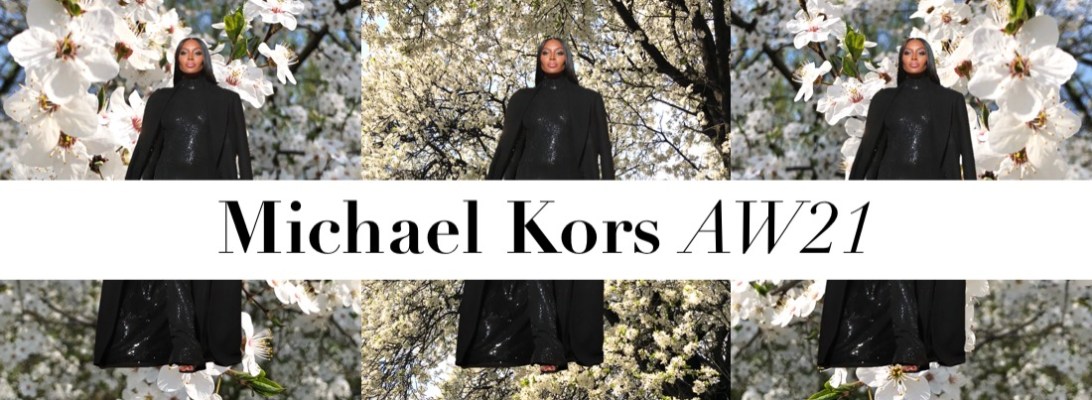
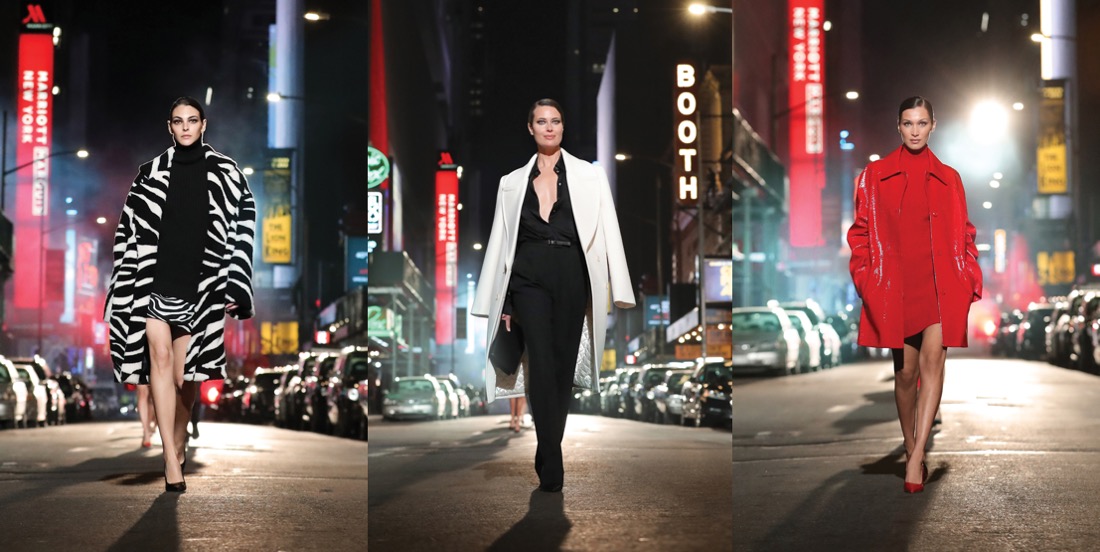
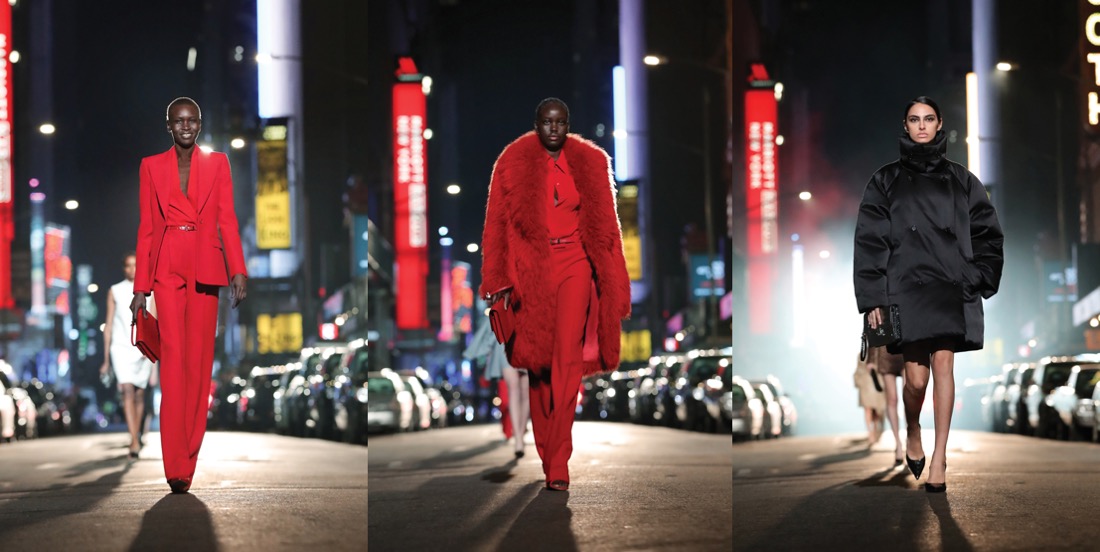
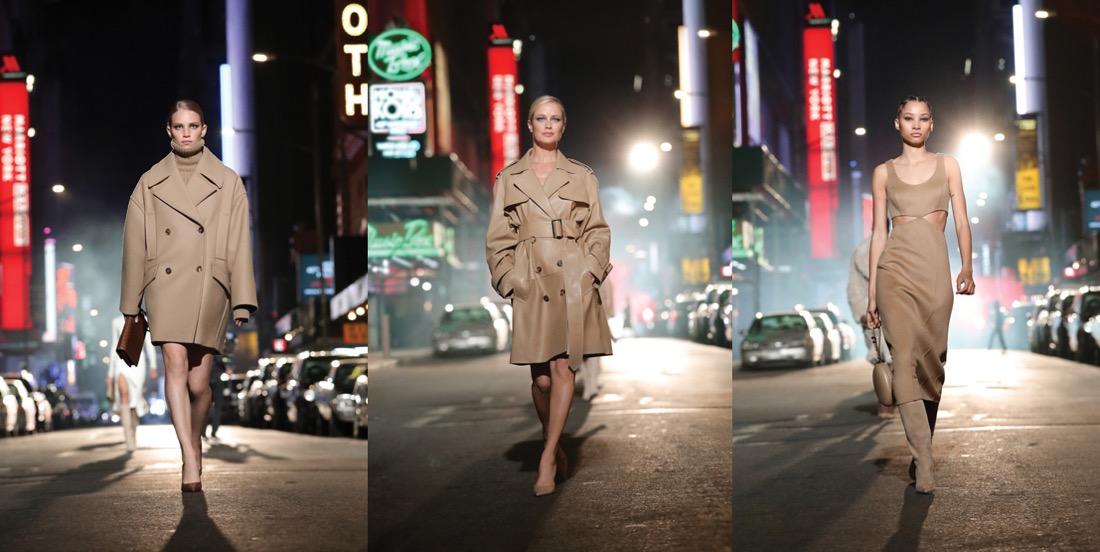
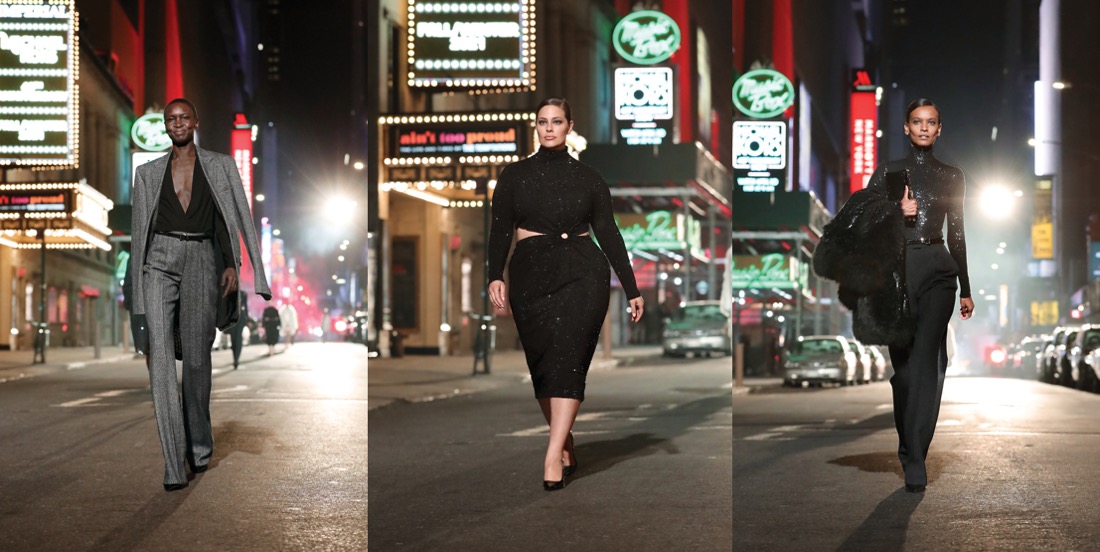
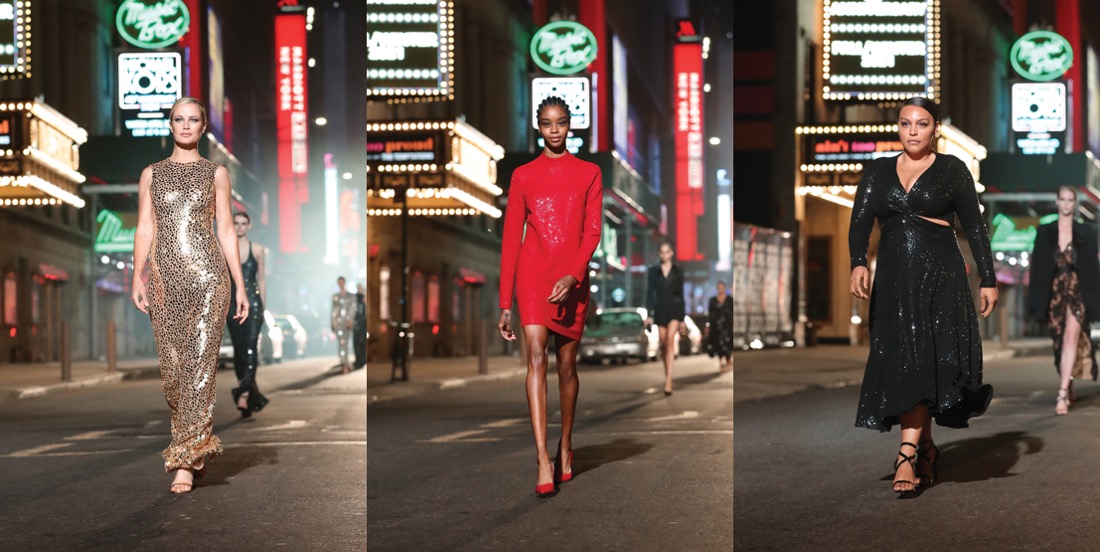
I might not be a Michael Kors fan, but his latest collection (celebratin the brand’s 40th anniversary) is so great. It’s the old, good Kors of the late 1980s and early 90s, adapted to contemporary times (well, maybe specifically the re-emergence times that will come sooner or later). How do you sum up a four-decade career in 63 looks during a pandemy? In an audienceless show, you’ve got Naomi Campbell, Helena Christensen, Carolyn Murphy, and Shalom Harlow vamping down New York’s 45th Street in evening sequins and double-face cashmere. The designer told Vogue that in the downtime of the pandemic, he’d gone searching for the “connective threads” of 40 years. “Certainly timelessness is something we’ve always prided ourselves in, something that I think our customers really appreciate.” One season he gives his runway a timely Mad Men gloss, another it gets a Studio 54 spin, but his collections are always optimistic, always unshakably him. Much of what he did first, American fashion now takes for granted. Bare legs in winter. The unexpected combination of a rhinestone-encrusted cocktail dress and a man’s topcoat. A city-country mix. An evening number with streamlined athleticism, a maillot with leather straps and matching heels. “Extremes of opulence and glamour with simplicity and ease” is how he summed up his approach. In a year when the Costume Institute is showcasing American fashion for the first time in decades it seems important to recognize that much of what we think of as American sportswear is Kors-ian sportswear. Considering our collective experience of the last 13 months, back on 45th Street Kors put the emphasis on opulence and glamour. “People are going to want to step out, get dressed up – in certain instances get overdressed. Girls are going out for a hamburger in cocktail dresses and high heels.” This was his bid to clothe them for those reemergence moments. Maybe in a red patent leather balmacaan, a “cotton ball of a shearling coat,” or a glossy black puffer cape. Or perhaps in a hand-sequined silk jersey gown in gold under a pavement-sweeping camel cashmere coat. And always with a spiky pump or slingback.

“Live” collage by Edward Kanarecki.