Feel Good. Balenciaga Pre-Fall 2021

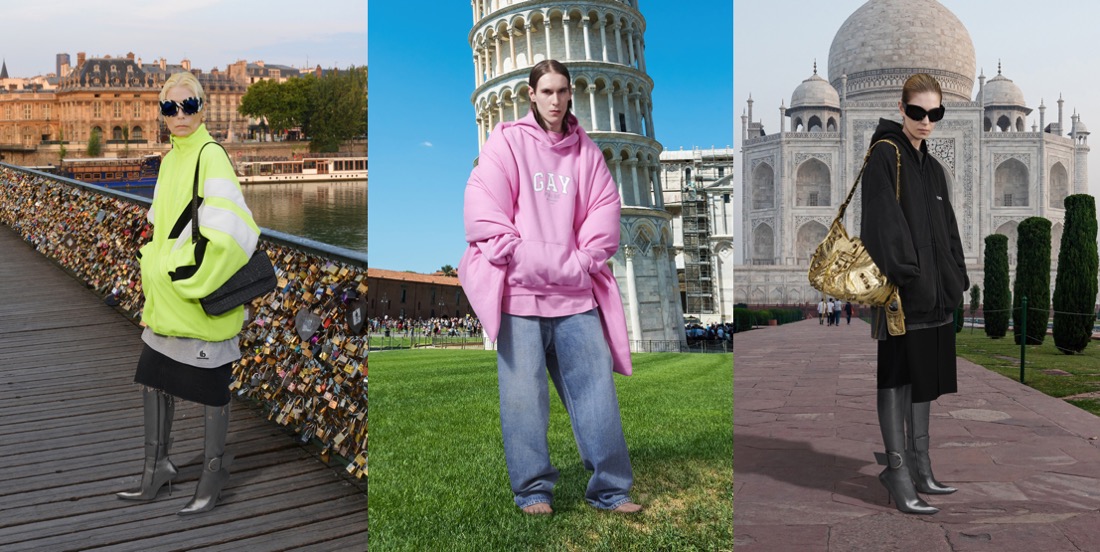
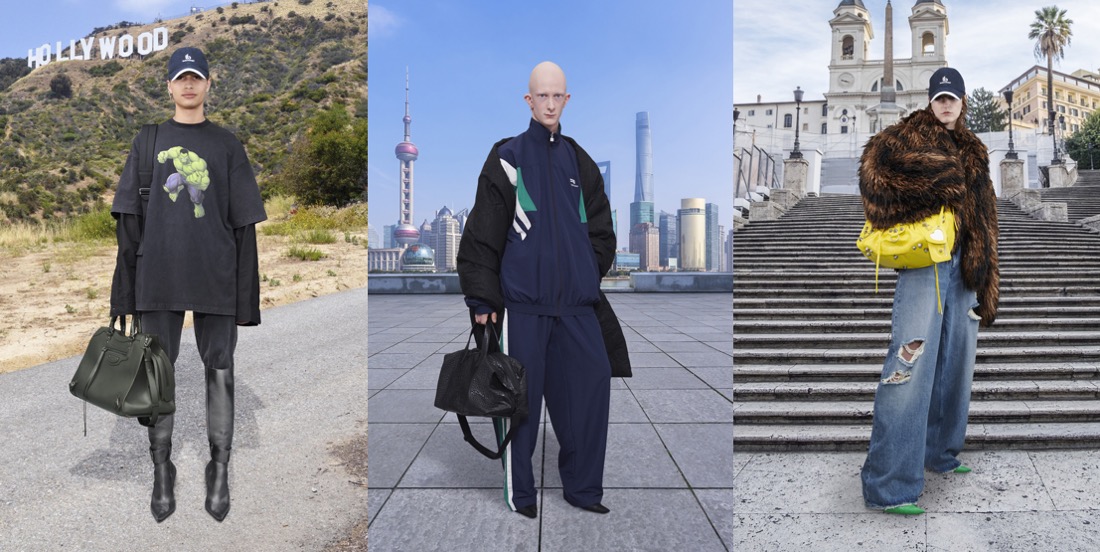
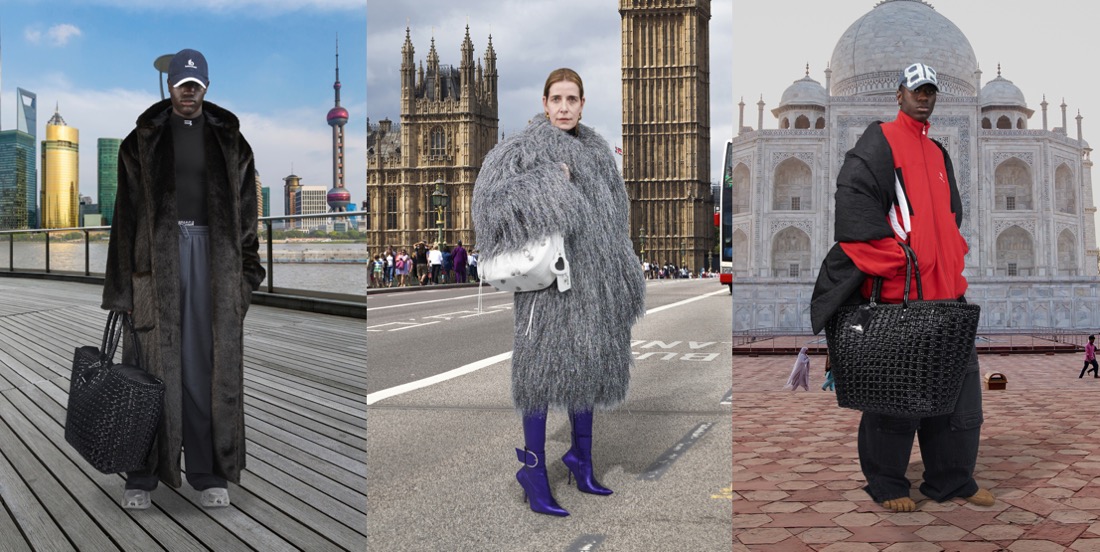
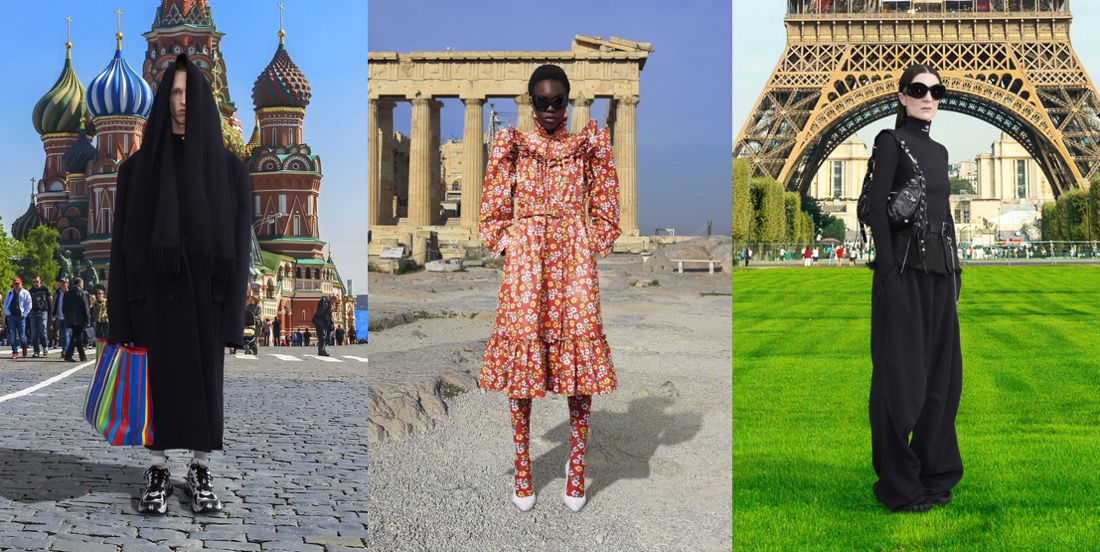
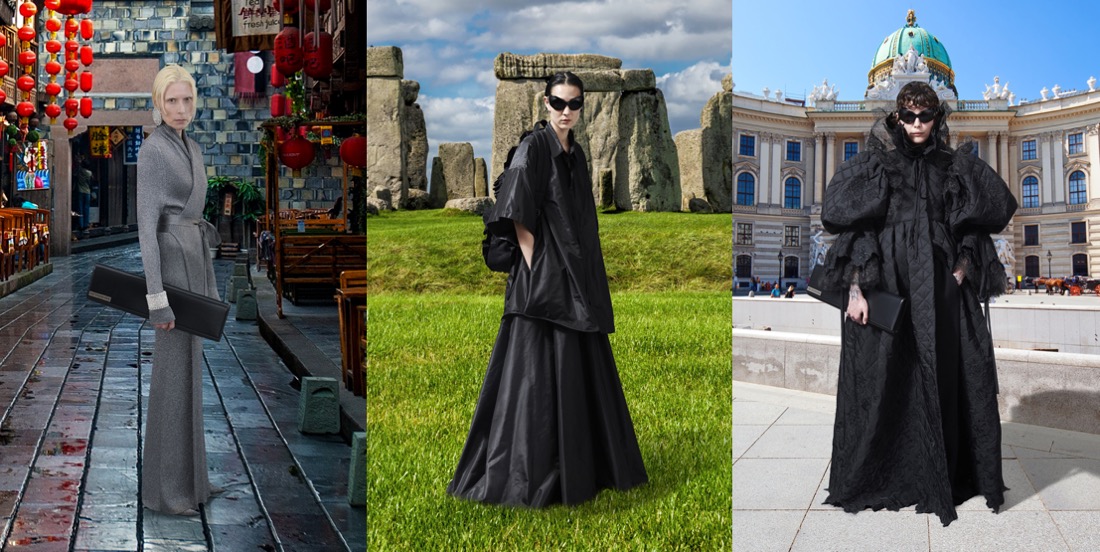
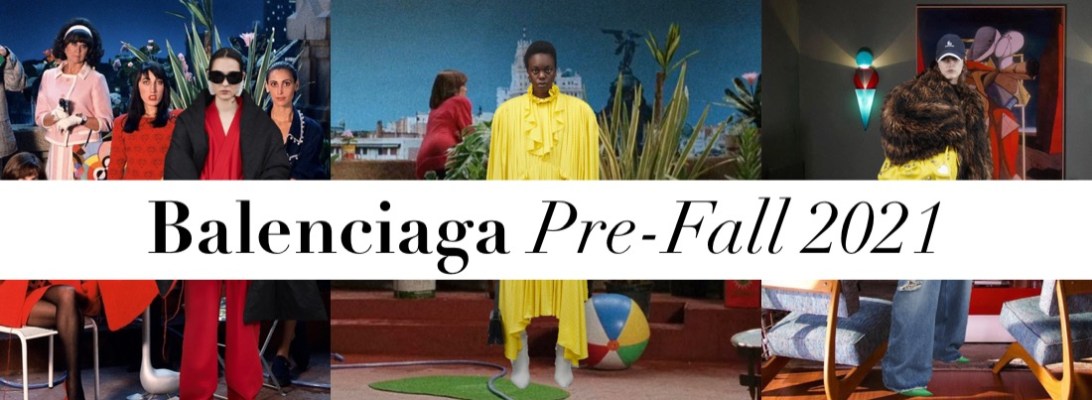
There’s always irony to what Demna Gvasalia does. You can tune into the pre-fall 2021 “Feel Good” Balenciaga video and not see any fashion at all – just a stock compilation of heart-warming running horses, kittens, children, and dreamy landscapes. But the most radical content in this Balenciaga outing is actually invisible to the eye. “When I started this collection,” Gvasalia told Vogue, “I said only show me sustainable fabrics. I don’t want to look at anything else.” So everything here, beginning with the pink hoodie to the black dramatic puffed-sleeve gownlike silhouette at the end, is made from recycled and otherwise certifiably okay materials. That’s big from a brand as powerful and as influential as Balenciaga, one of the major fashion actors of the universe which calls on suppliers who do significant volumes business with them. “As creative directors, asking for this causes a chain reaction, and we have to use it,” Gvasalia continued. Taking action on absolving shoppers’ anxieties about the damaging consequences of how their clothes are made ought to be the norm. Gvasalia promises that what’s gone into this collection isn’t a one-off gesture – because who isn’t suspicious of the greenwashing promo tricks of fashion these days? He started asking for better, more sustainable alternatives a while back, he attests, and began putting some of them into the collection in September. Now to the clothes: a photoshopped lookbook, posed against a wish-we-were-there travelogue of the famous backdrops of the world. Design-wise, there are just as many familiar Balenciaga-universe destinations here: the oversize hoodies, sweatshirts, tailoring; tweaked takes on signature floral-print dresses; recycled leather and denim things; magnified utility-worker jackets. A lot of the garments, Gvasalia said, are constructed as joined-together all-in-one pieces “trompe l’oeil, so what you see isn’t what you get. A lot of dresses which are actually coats.” So, too his lookalike ‘furs,’ which aren’t either animal pelts or petrochemical fakes. A brown chubby jacket and a coat are the results of hundreds of hours of chopping up and embroidering recycled cotton. They’re lavishly time-consuming hand-made pieces. Obviously, Gvasalia is keeping his creative powder dry for the long-deferred launch of the Balenciaga haute couture collection that he’ll show sometime this summer, pandemic willing. Meantime, predictive minds might leap to the elegant silhouette in black – full length, balloon sleeved, quilted and lace-trimmed drama that Gvasalia swears was inspired by the shape of Princess Diana’s wedding dress. It’s actually a coat. “ She’s wearing a t-shirt and jeans under that.” The Gay Pride hoodie worn with the padded stole (consciously a Demna-for-Balenciaga adaptation from Cristobal’s matching ensembles for couture customers) is another highlight of the collection. “I’m gay. I grew up in a society where I couldn’t have worn that, and there are places in the world that you cannot today,” the designer said. “It’s important to push through against homophobia. I’m not someone who goes out in the street and shouts. But this is the political fashion activism I can do.

“Live” collage by Edward Kanarecki.

Men’s – Forever Timeless. Bode AW21

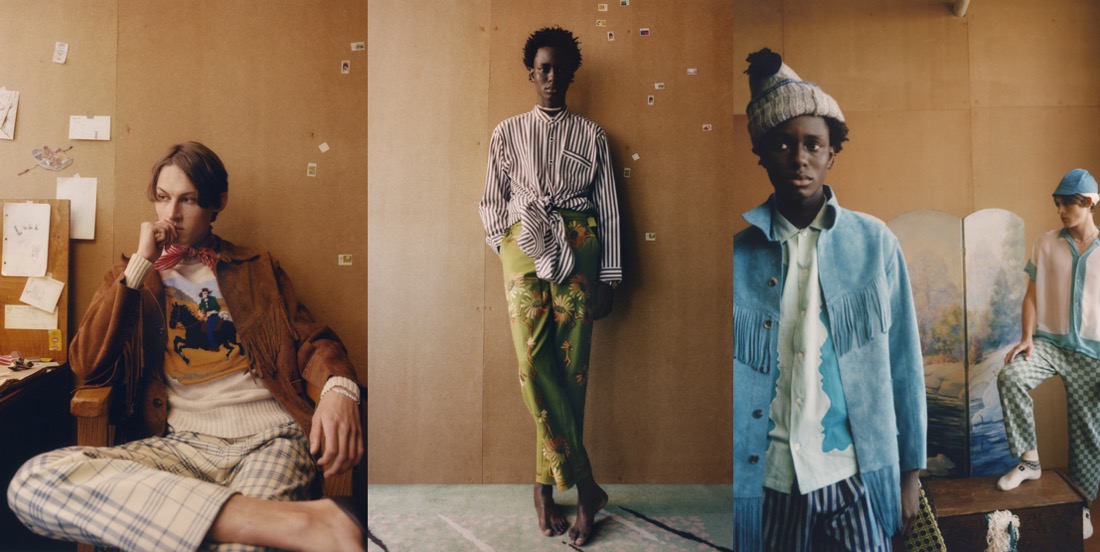
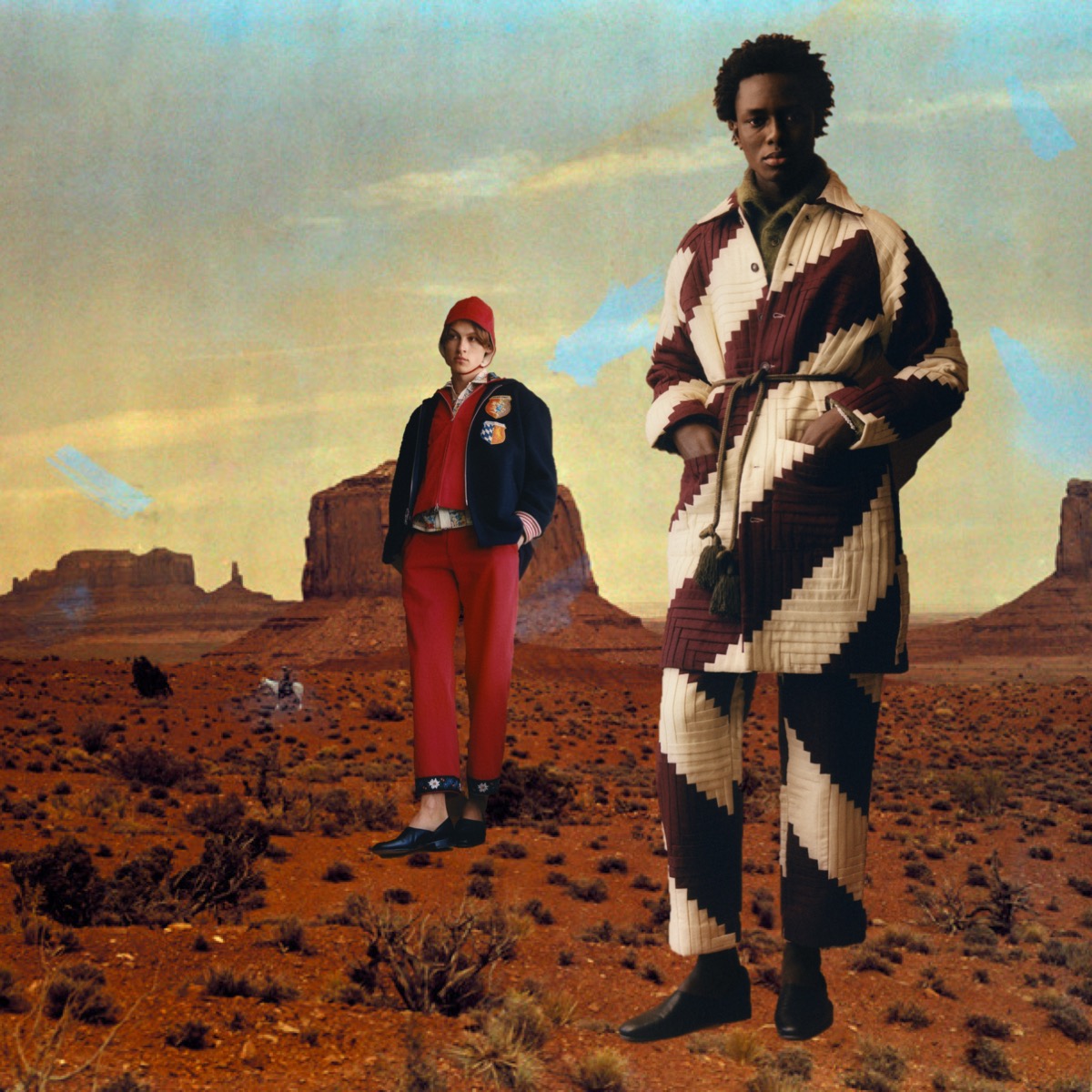
Autumn-winter 2021 marks the first collection Bode has shown since lockdown, though it’s technically spring (arriving in stores this month) and autumn rolled together. For the occasion, Emily Bode invited New York-based editors into what appeared to be a teenage boy’s 1960s bedroom, preserved in all its clutter. Newspapers and LIFE magazines were scattered on the tables; a vintage Monopoly set was splayed on the floor; desks were pinned with comic strips and old photos; and, of course, there were clothes everywhere: spilling out of a hamper, piled on the floor, dangling from coat hooks, draped over the bed. Each item was painstakingly arranged by Bode and her team, but it was a convincing replica of her uncle Bill’s college dorm room at the University of Vermont (or at least Bode’s impression of it, based on his recollection). In 1969, he tricked his parents into thinking he was back at school when in fact he was taking a year off to explore the East Coast, race cars, and play games. Bode explained it was also the last year before Bill’s wife, Mahri, came into the picture; they met in 1970, married, and were together up until 2019, when Mahri passed away. Suddenly, 2020 was Bill’s first “year off” from the life he knew, and he found himself reminiscing about 1969 again. Bode related his story of love, loss, and reflection to our own “year off” during the pandemic. Sifting through the piles, you could find all the familiar Bode-isms: silk button-downs with prints lifted from vintage postcards and handkerchiefs; embroidered camp shirts that are the expert work of Indian artisans; patchworked merino suits, an evolution of her quilted jackets; and her most refined knits yet, from a space-dyed pullover to a stunning hand-crocheted cardigan. A few pieces nodded to Bill and Mahri, like a souvenir jacket with a pug embroidered on the back, while others seemed happily arbitrary: an intarsia’d camel sweater, a pair of shorts chain-stitched with line drawings and funny phrases, a sweater crocheted with 3-D grapes. A small group of tailored pieces trimmed with rows of real pearl buttons spoke to Bode’s particular passion for preserving crafts and techniques. She bought them in bulk from a closed-down button factory in the Midwest, and pointed out how each was individually hand-carved, hand-sanded, and one-of-a-kind. They may have been thrown away or relegated to some dusty warehouse if Bode hadn’t purchased them; the same could be said of the quilts, table cloths, and scraps of fabric piling up in her Brooklyn studio.

If it’s tempting to lump Bode in with other “sustainable” or “upcycled” brands, it’s actually more of a coincidence that some of her materials – not all – were already made. Bode cares about sustaining traditions and stories, not just reducing her carbon footprint, and she understands her role as an employer. She couldn’t have scaled her business to its current size if she hadn’t found a pragmatic, sustainable way to mass-produce certain garments with new materials, like her camp shirts and chore jackets, nor would she have been able to hire her teams of craftspeople in India, Peru, and New York (many designers canceled their orders in Garment District factories during the pandemic, but Bode made it a point to support them.) Bode’s brand-new tailoring shop, located next to her flagship in the formerly-turquoise Classic Coffee Shop, is a more apt reflection of her sustainability ethos. Her tailors will alter your brand-new Bode suit or mend an old quilted jacket. Even if you just picked up your first Bode shirt next door, there’s a comfort in knowing you don’t have to be precious about wearing it; when the time comes, someone will be there to fix it up. On the long list of things that separate Bode from her peers (and her many imitators) is that she absolutely intends for her clothes to be worn – and would rather fix the hole in your shirt than sell you a new one.

Collage by Edward Kanarecki.

Aria. Gucci AW21

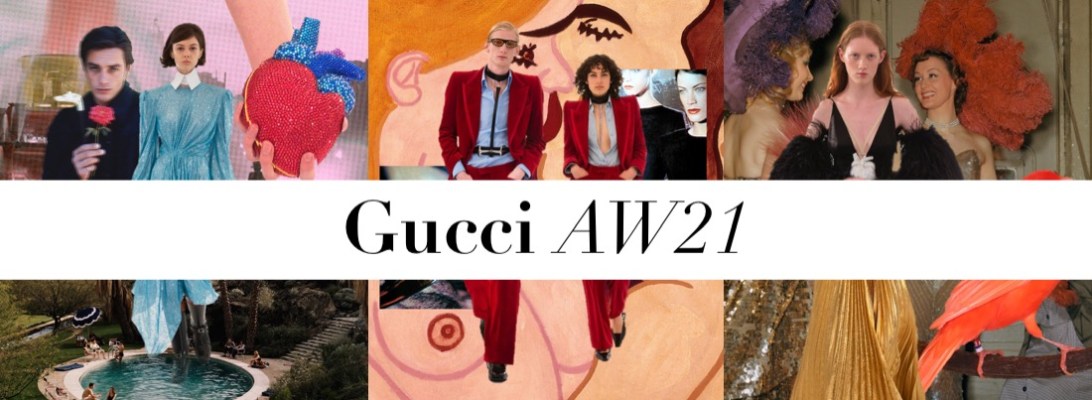
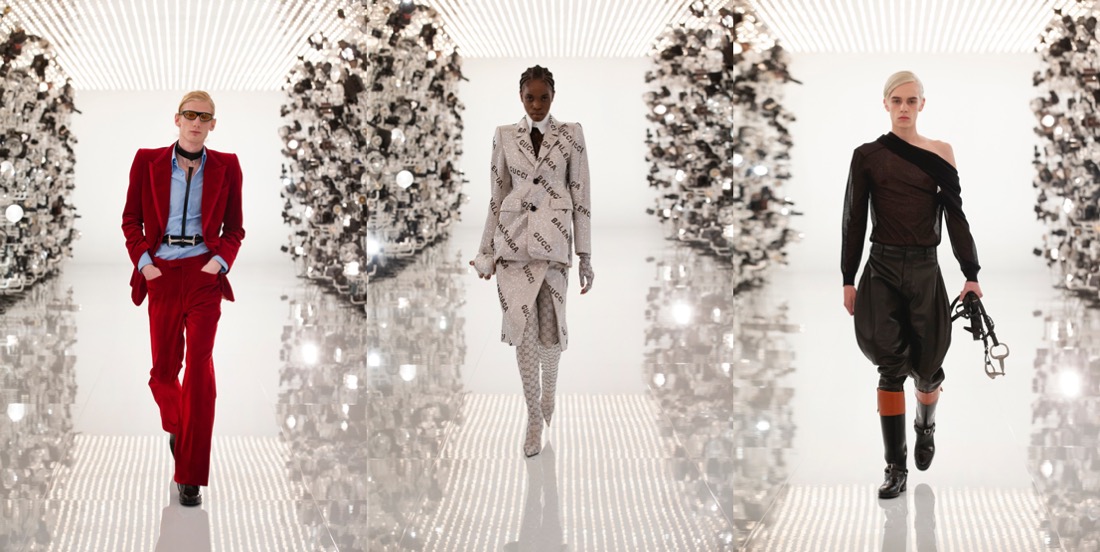
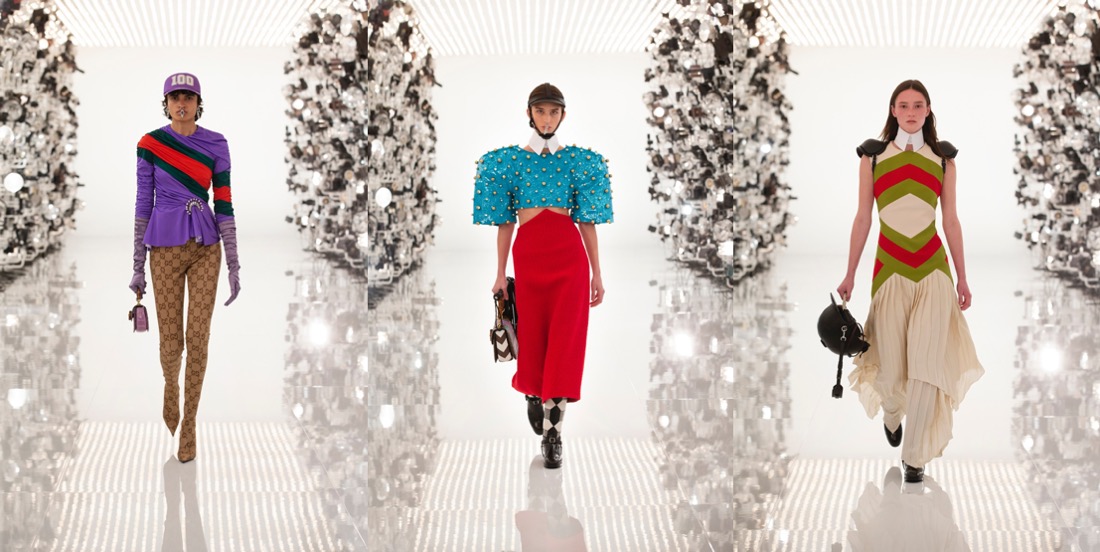
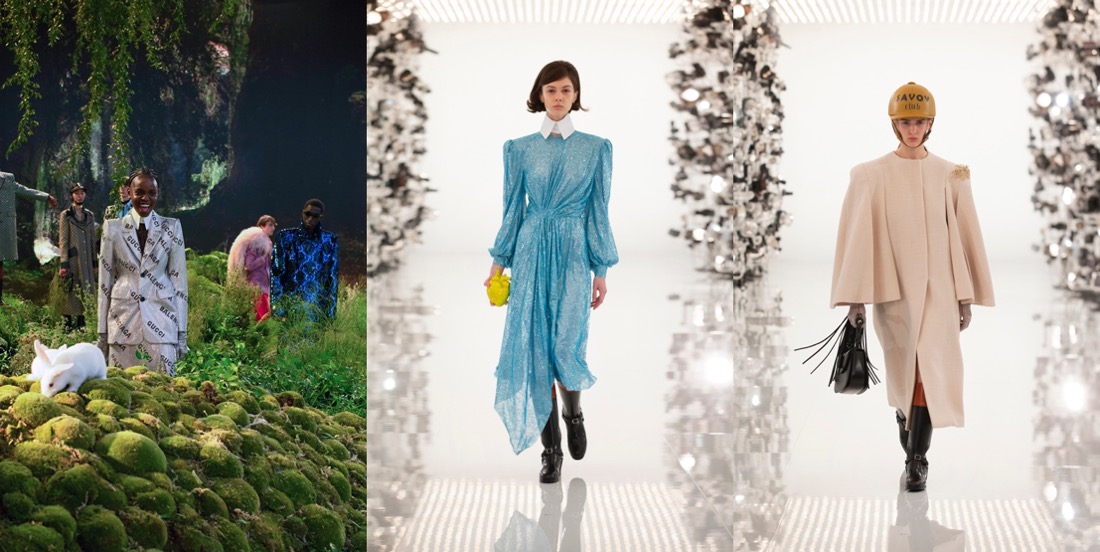
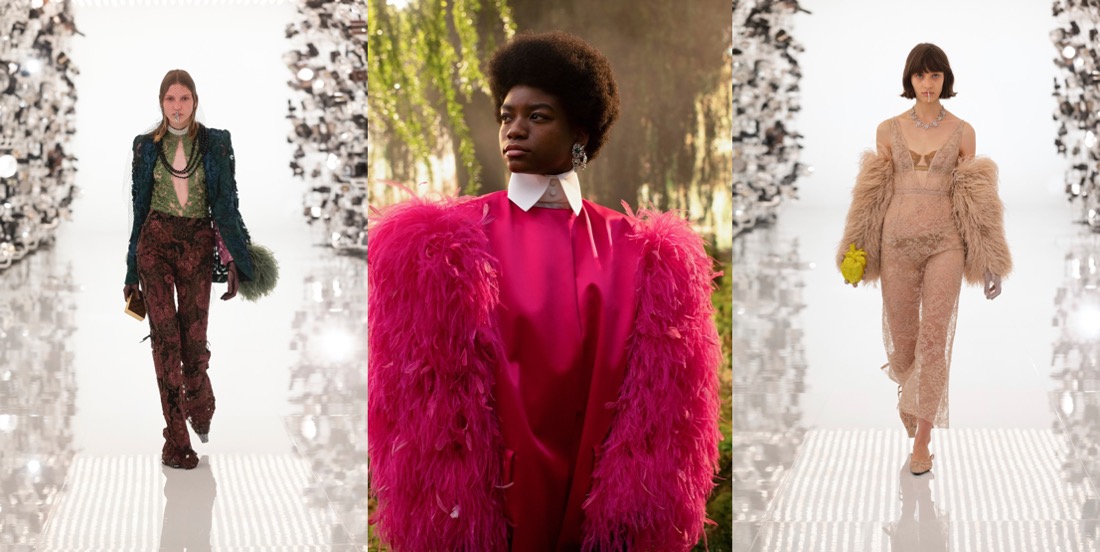
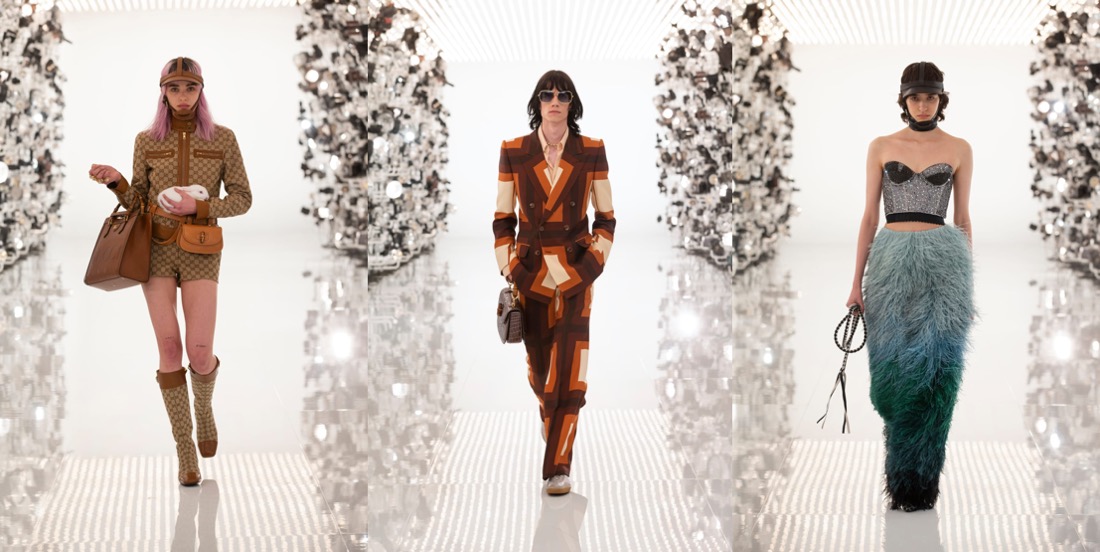
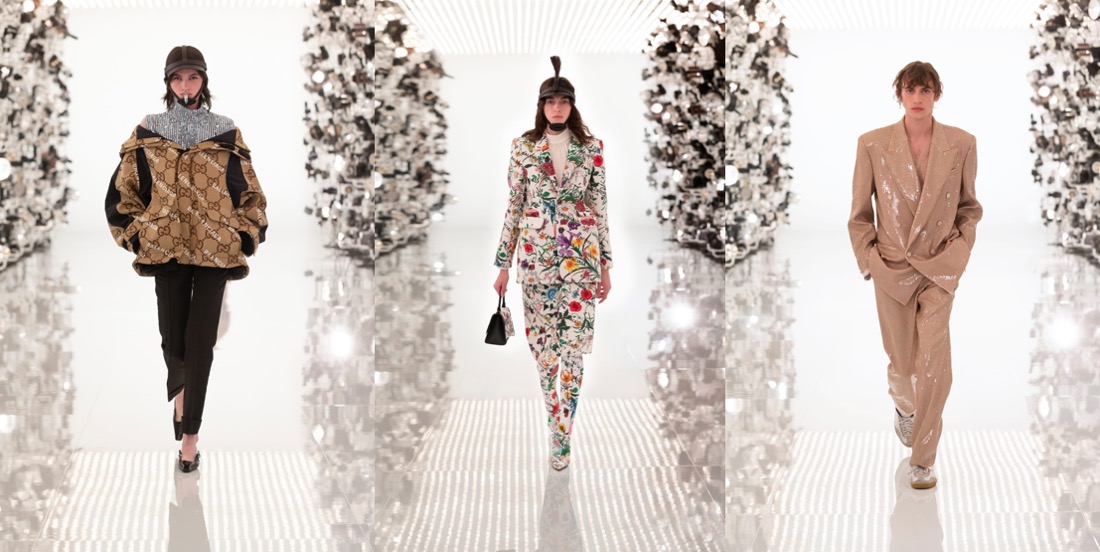
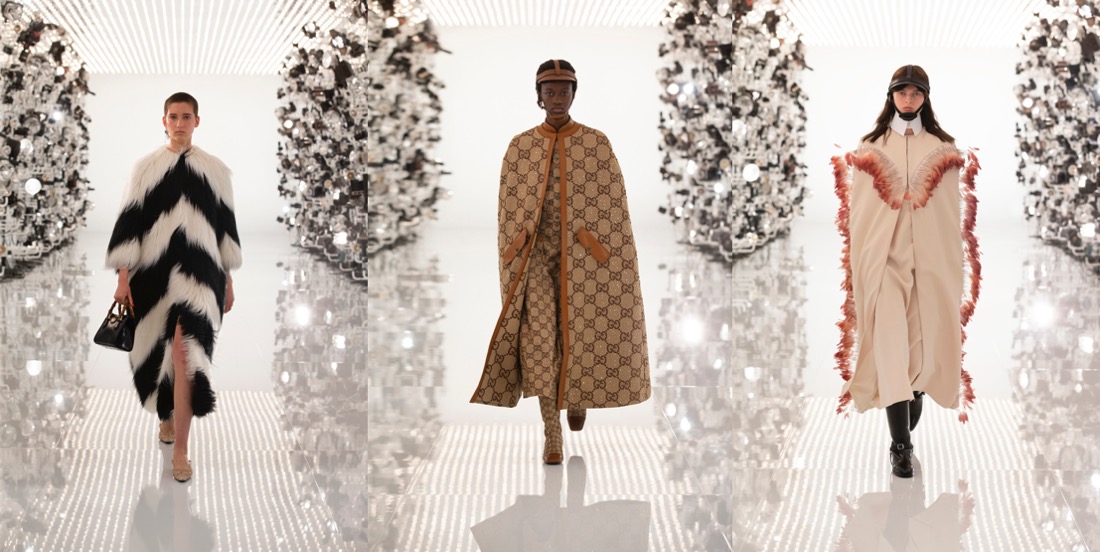
Gucci turns 100 this year, and Alessandro Michele’s new collection is a very bold and sexy celebration of that milestone. Not unexpectedly it reexamines the house’s history. Michele picked up on Gucci’s equestrian codes, giving them a fetishistic spin – one model cracked their whip as they made their way down the runway. He also reprised one of Tom Ford’s greatest hits, the red velvet tuxedo from autumn-winter 1996, with tweaks including new, more pronounced shoulders, a leather harness, and versions for both men and women. More surprising were the pieces that Michele “quoted” from Demna Gvasalia’s Balenciaga, another brand in the Kering stable. As the show began and social media started pinging with chatter about the collaboration, a press representative clarified that this was not in fact one of fashion’s familiar hookups but rather the first output from Michele’s so-called hacking lab. With Gvasalia’s permission, Michele used some of the Balenciaga designer’s iconic shapes and symbols, including the padded hip jacket from 2016 and spring 2017’s spandex peplum top and leggings. All these things mixed and mingled with his own symbols (glitter for day, copious amounts of marabou, and anatomical heart minaudières encrusted with rhinestones) alongside a vital new emphasis on classic tailoring. In that hacking, Michele has something in common with the sample-loving musicians on his soundtrack (from Lil Pump’s “Gucci Gang” to Die Antwoord and Dita Von Teese’s “Gucci Coochie). But it’s a rarer occurrence in fashion, a point made clear by a written statement from François-Henri Pinault, Kering’s chairman and CEO: “I have seen how [Alessandro and Demna’s] innovative, inclusive, and iconoclastic visions are aligned with the expectations and desires of people today,” he said. “Those visions are reflected not only in their creative offerings but also in their ability to raise questions about our times and its conventions.” The industry will be watching how, with whom, and where this concept goes next. Gucci is as pop as fashion brands can be. Michele gets that on a fundamental level, and he understandably relishes that he’s a culture maker as much as a designer of clothes and accessories. “Young people look at the brand as a platform, a place. They visualize Gucci a million different ways, a million different times,” he told Vogue. Hence the music video he made with his friend, the filmmaker Floria Sigismondi. After walking the gauntlet of old-fashioned cameras that lined the runway, like superstars working a red carpet, the models paused in a darkened anteroom before pouring out into an imaginary forest where they cavorted with white horses, peacocks, and cockatoos. The film closes with one of those crystalized heart minaudières lifting into the air. It’s a post-pandemic dreamscape. And finally, a great example of a fashion (show) film.

“Live” collage by Edward Kanarecki.
Daydream. Celine AW21

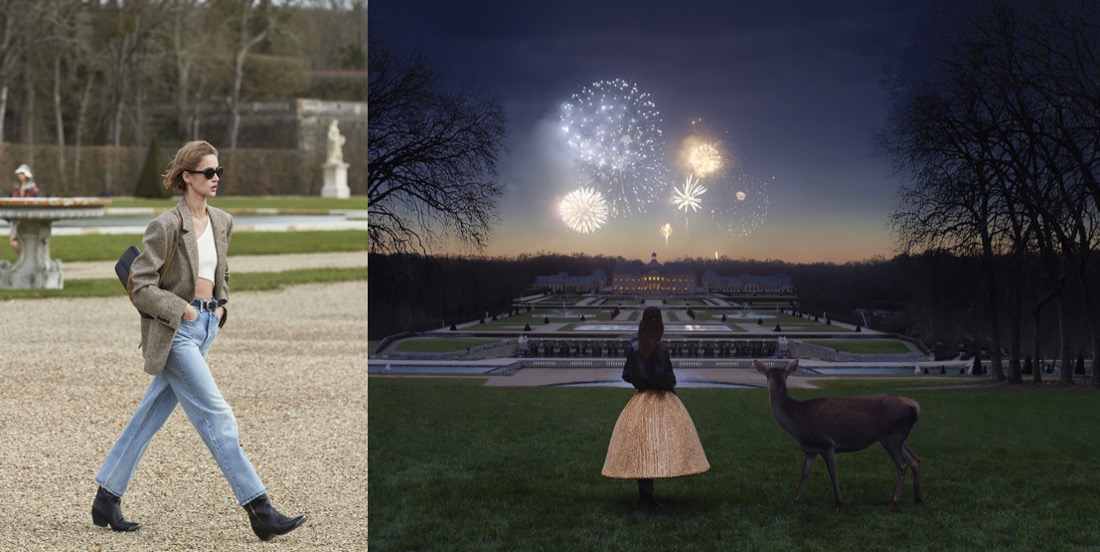
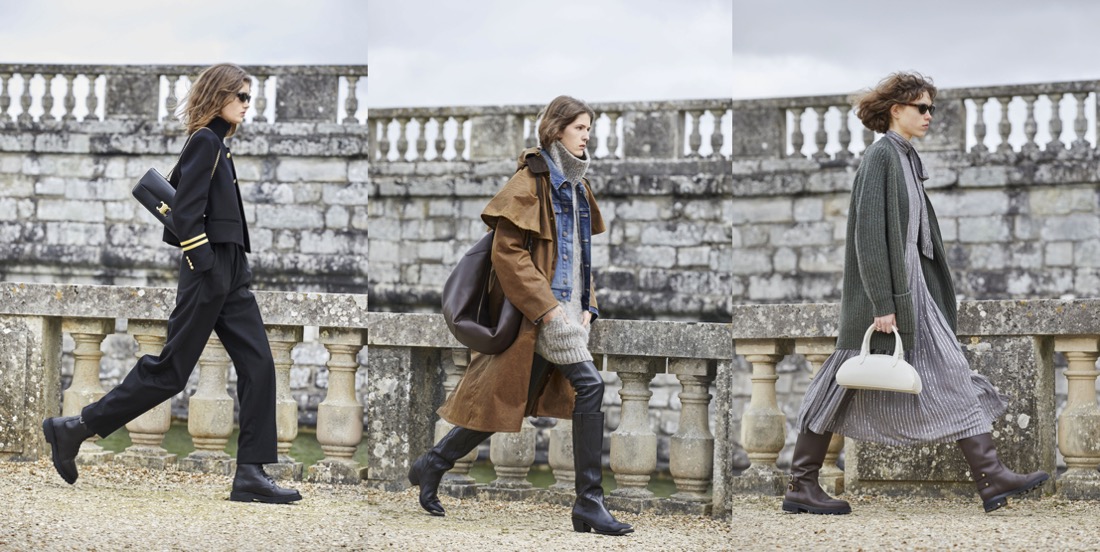
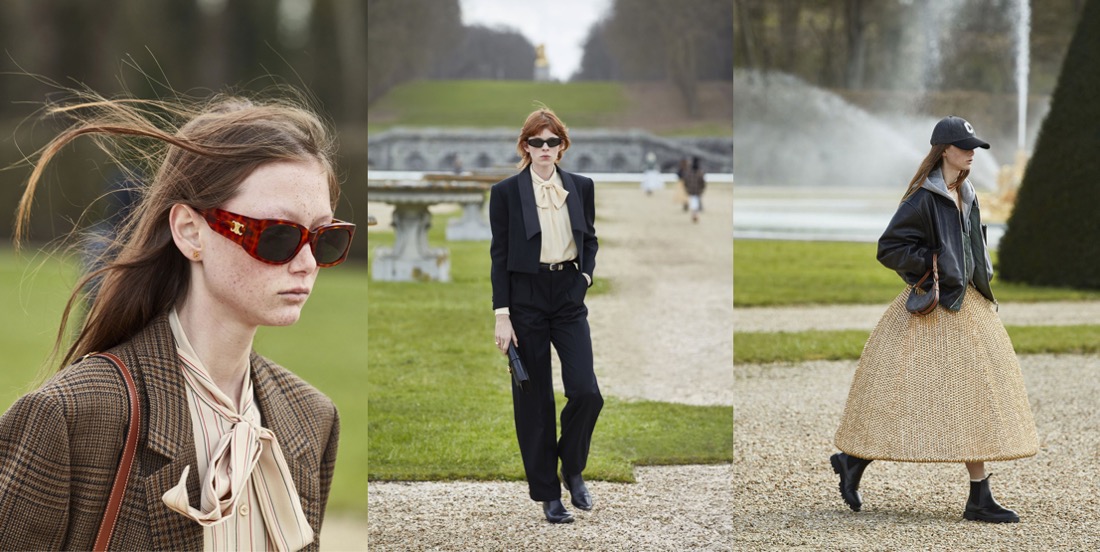
Hedi Slimane wouldn’t be himself if he wasn’t obsessed with youth – even for a moment. But there was something unexpectedly intriguing about his Celine vision of lockdown-era teenagers, who are totally fed up with the real world and induldge in fancy, Disney-like daydreaming. Definitely, the collection’s video was a highlight. The audienceless show was set amongst the breathtaking gardens of the Château Vaux-le-Vicomte, some 55 kilometers outside Paris. The always-sad Hedi girls walked casually past the exquisite formal fountains and pools landscaped centuries ago by André Le Nôtre. It’s landed as a sequel to the last Celine menswear show, in which Slimane’s young chevaliers roamed the battlements of the Château Chambord in the Loire valley. Clothes-wise, this collection was rather usual Slimane offering. Traditionally, the uniform Parisian wardrobe is paced out and remixed in that on-point manner that has made French girl-style the envy of the world. It’s that knack of pairing something posh that might have belonged to your mom or dad with something casual. Throwing on a tweed hacking jacket or trench coat with exactly the right cut of bashed-up old jeans is also always a good idea. The new additions included nods to princess wardrobe: a heavily embellished ball-skirt worn with a heavy leather biker jacket, for instance. There was a line in Slimane’s show notes which alluded to a “utopian parade and melancholic daydream of youth interrupted.” It ran after quotes from Baudelaire, Paul Verlaine, and Arthur Rimbaud – France’s decadent, libertine poets eternally famed for exalting the excess and pain of misspent youth. In a time when parties, clubs, festivals, and events have been banned for so long, the show ended with a shift to a fairy-tale scenario. A girl in a glittering, hand-beaded crinoline stood looking toward the chateau with fireworks exploding in the sky. There was a deer by her side, a tear on her cheek. There’ll be nowhere for the princess to wear that couture-ish crinoline yet – definitely not in locked-down Europe. Let her dream, at least.

“Live” collage by Edward Kanarecki.

Domestic Glam. Ashish AW21

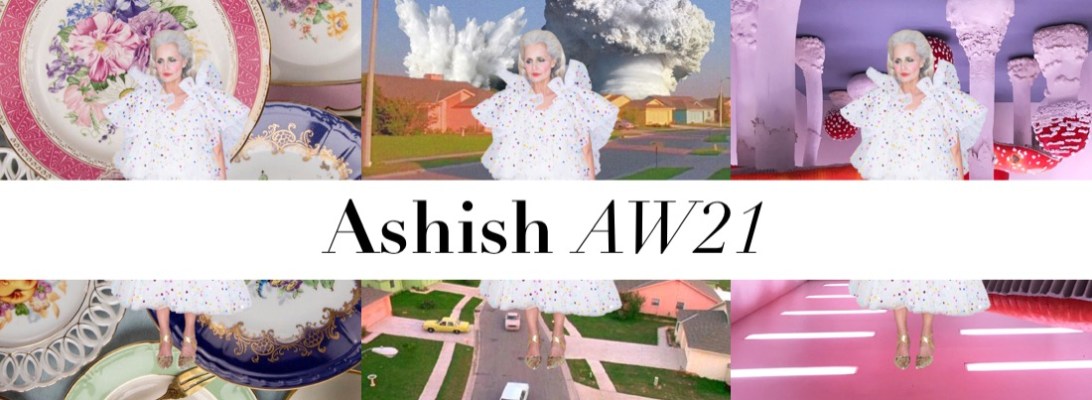
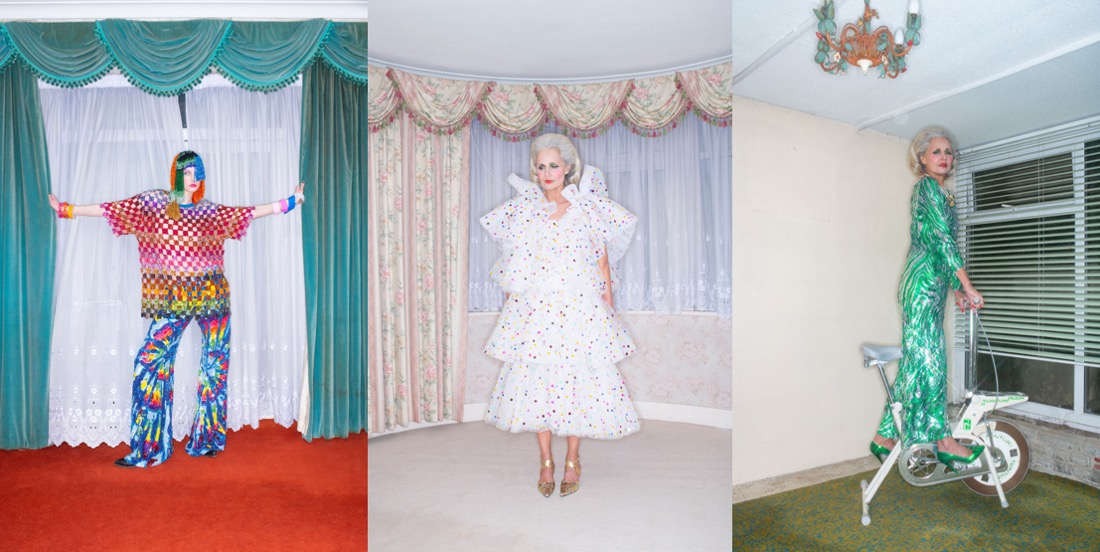
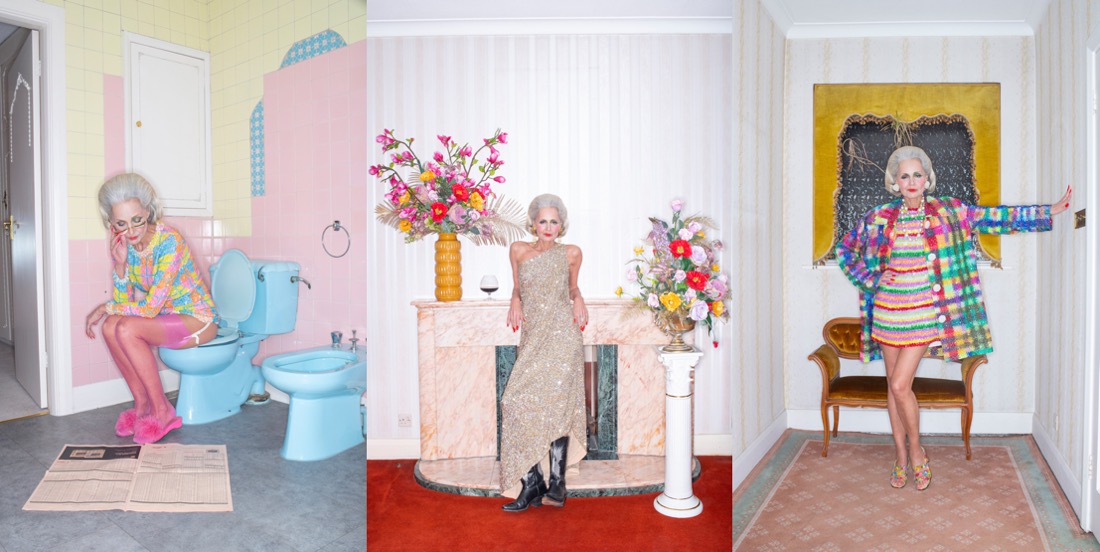
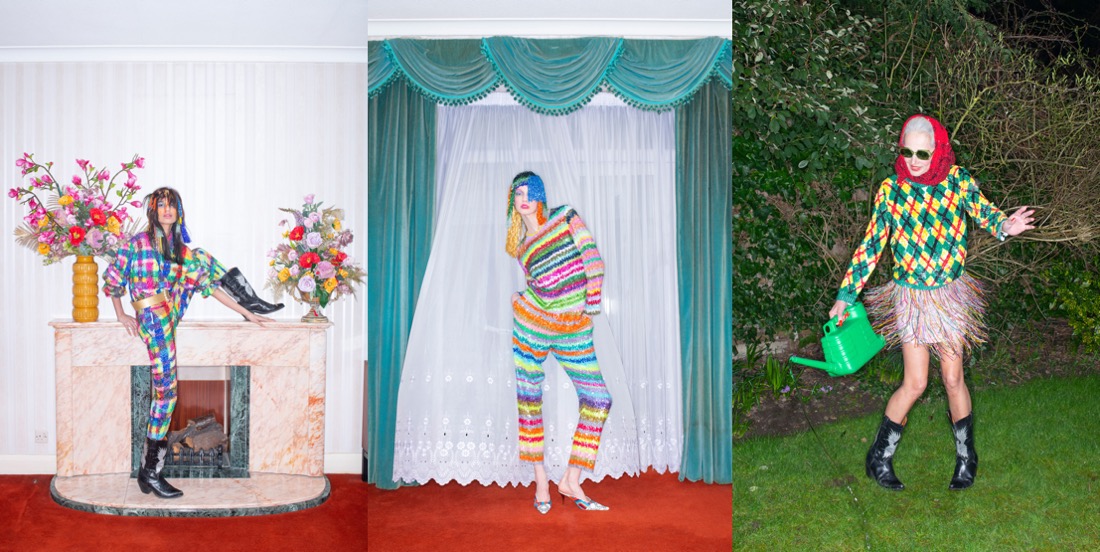
Brands and designers throw around the ‘stay-at-home-glam’ term for a year now, but most of the time it just feels forced and like a desperate attempt to sell eveningwear. However in case of Ashish‘ autumn-winter 2021, this notion of glamour in times of global pandemy is honest and at last makes sense. Ashish Gupta has the solution to fashion’s sweatpant-mania: simply offer garments that enable the consolatory comfort that we’ve grown fond of in isolation, combined with the communal joyfulness we’re aching to emanate. This collection fabulously demonstrates that comfort and joy can be mutually inclusive and mutually enhancing. When he was a student at Central Saint Martins, Gupta said he picked up this excellent line: “An evening gown should feel as comfortable as a T-shirt, and a T-shirt should feel as special as an evening gown.” And while he can’t recall where the line came from, he explained, “I’ve always carried it with me. So I always design my clothes to not be physically restrictive in any way. Even things that look body-con are cut on the bias and are super soft. Everything has pockets and zips, and there is never any corsetry; I think you should wear clothes you can slip out of very quickly and easily.” Shot in glamorous Finchley here in London, and impressively intricate to consider on the rail in Gupta’s house, this specific collection also seemed deeply easy to quickly get into, both as wearer and watcher. Gupta said the formula of its creation was to consider patterns and visible textures that have, through their history, the power to generate positive and comforting associations – “like when I think of tie-dye, I always think of beaches and holidays” – and then go to town on them via the sequin sequencer. The joyful result is the product of intense labor: a tie-dye long sleeve, for instance, took two Ashish employees two weeks to embroider by hand, once the exact order of sequins had been drawn and sorted. This collection also ran riotous gamut across the spectrum of so-called formalwear and so-called casualwear, two other categories whose perceived opposition seems increasingly anachronistic and redundant. Happily enhanced by these fantastic Sam McKnight wigs, this was a collection in which every piece of every look was made to enable joy and comfort in most conceivable circumstances. If these ’20s really are going to roar, Ashish is bringing the noise.

“Live” collage by Edward Kanarecki.