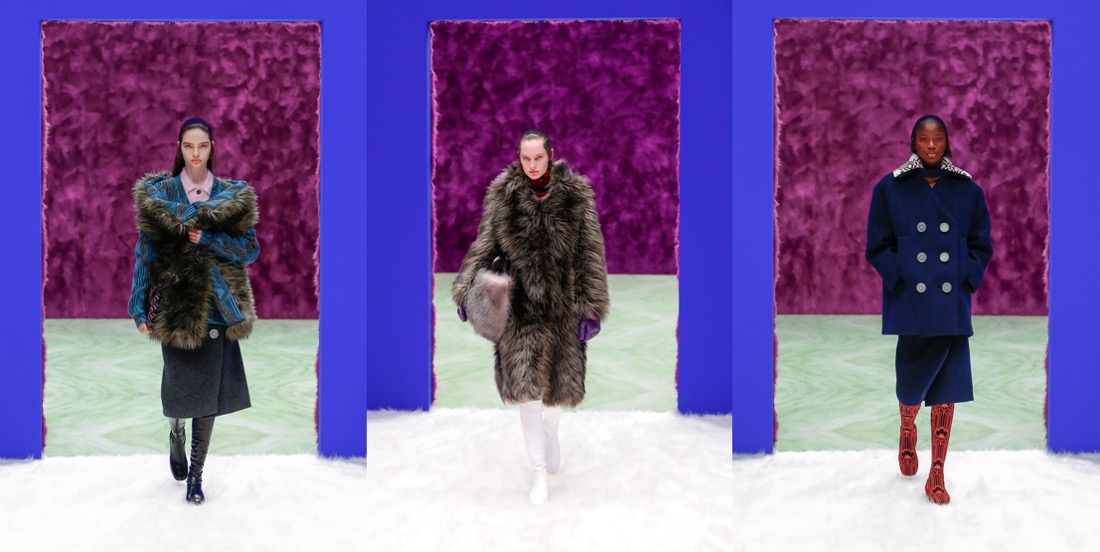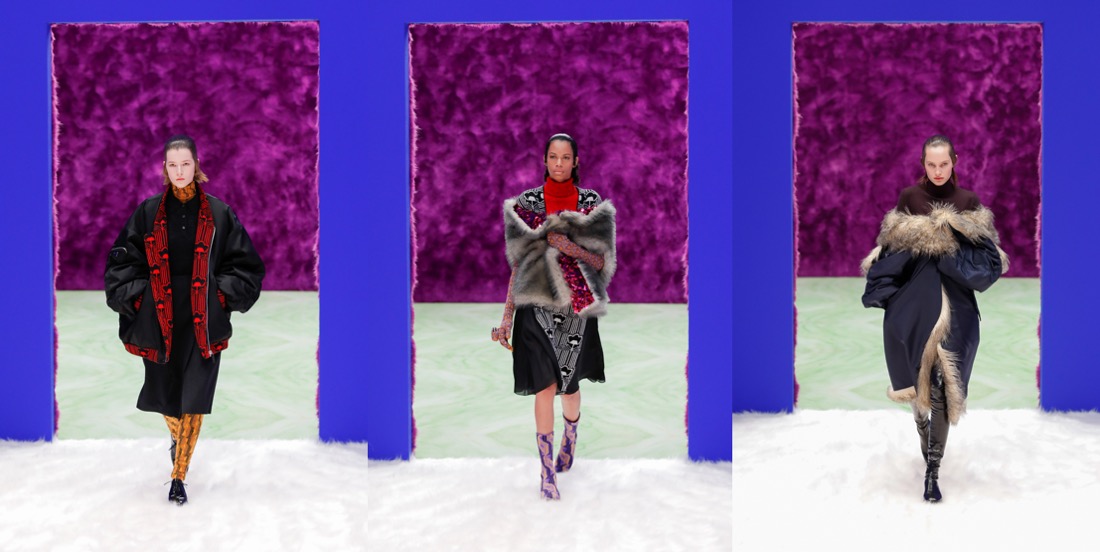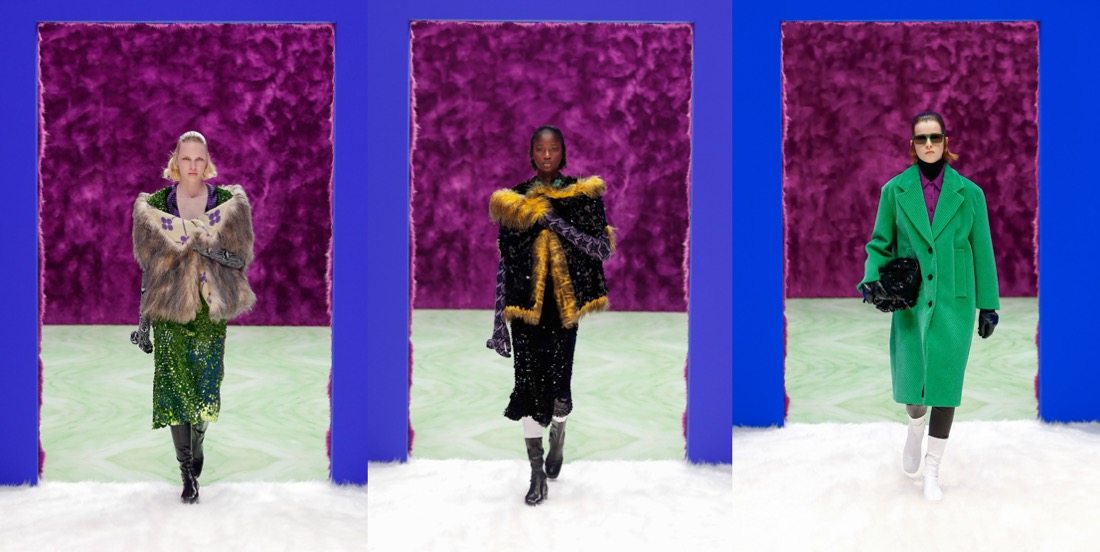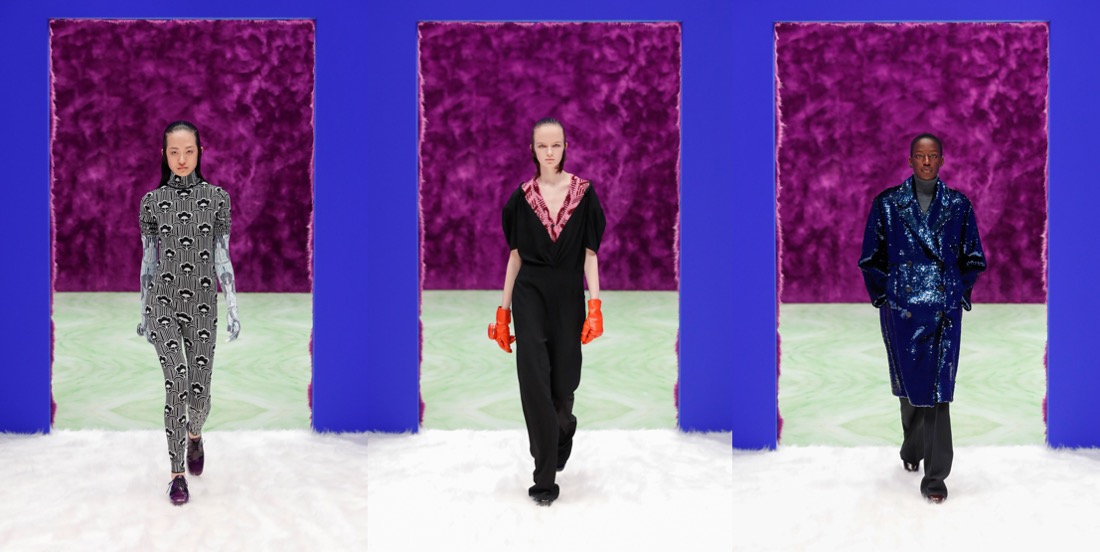
Easy Opulence. Prada AW21

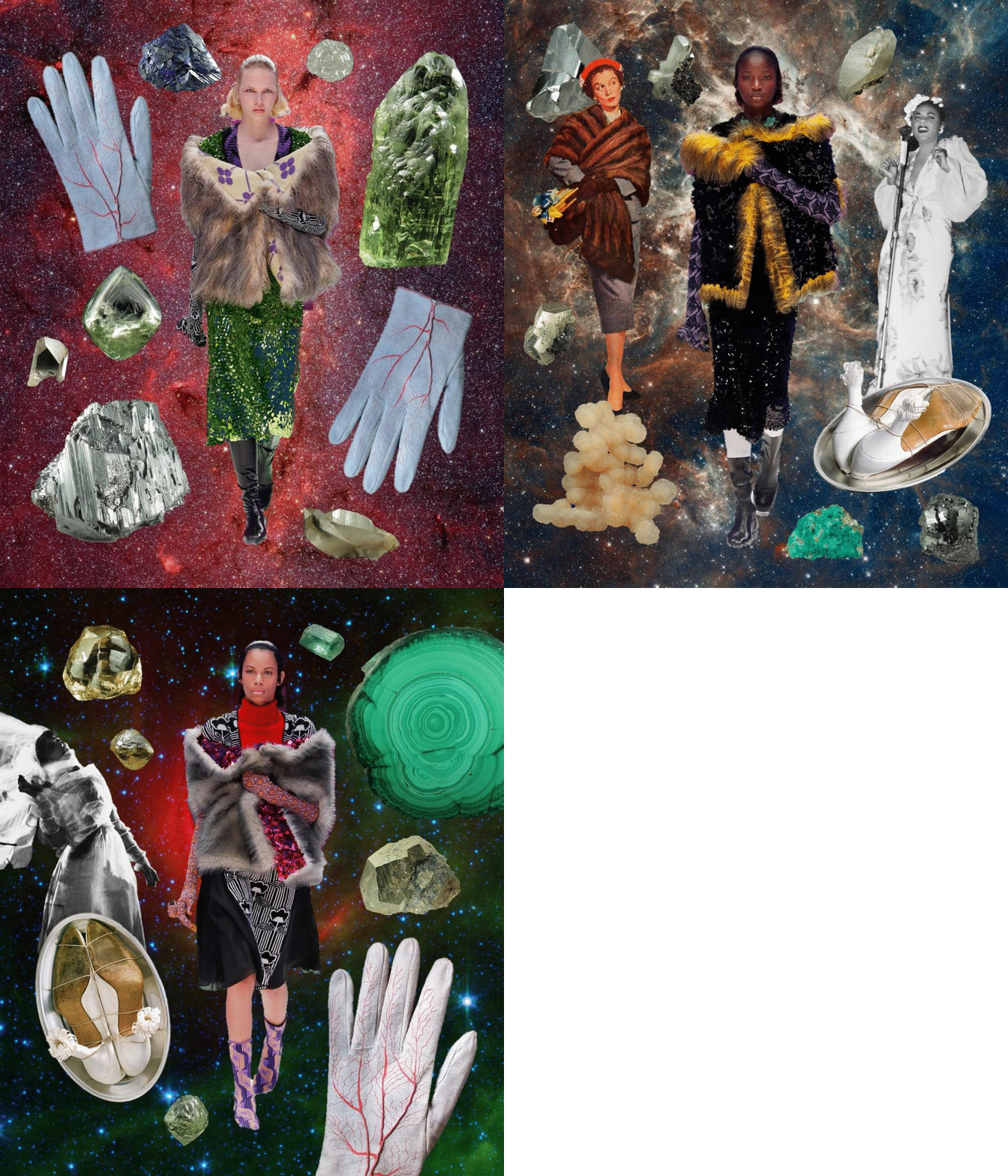
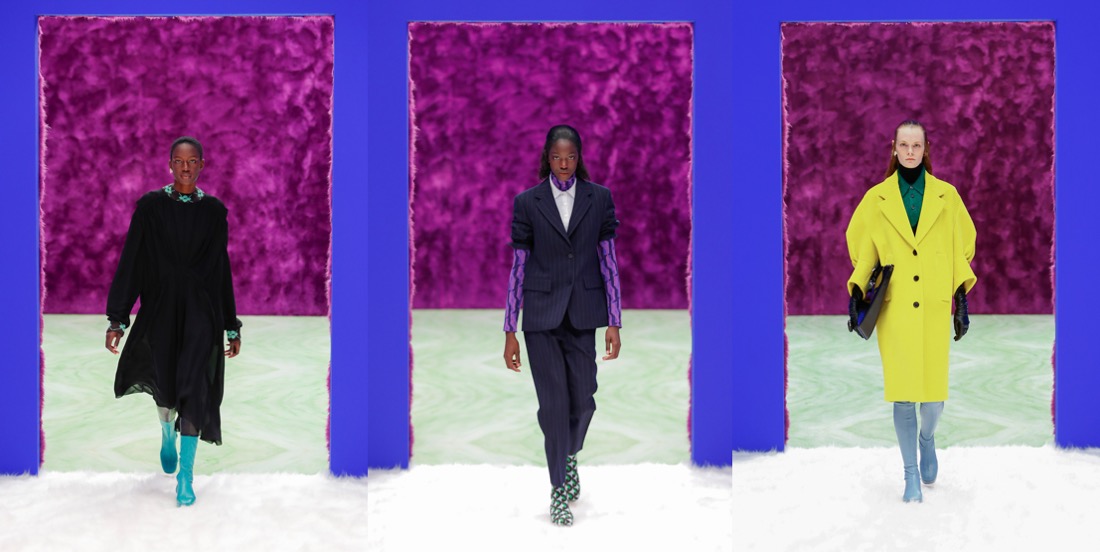
Miuccia Prada and Raf Simons‘ joined vision for Prada starts to unravel. It’s elusive, enigmatic and far from straightforward – and what’s most important, exciting. Autumn-winter 2021 is the second full season coming from those two brilliant fashion minds, and while the debut left many hungry for more, the latest line-up has the virtual audience in awe. Adjusting to the idea that “normal” isn’t coming back took all of us longer than it probably should have. But whatever shape the world takes when we re-emerge, there’s a collective feeling of hope that’s new. At a small press conference after the Q&A (which featured Prada lovers and collaborators like Marc Jacobs, Hunter Schafer and Rem Koolhaas) Miuccia said, “optimism is mounting.” Reason? The inevitable brightening of moods as winter ends and spring begins, or the pleasures that Prada and Simons are finding in collaboration. “It feels natural,” Simons said of their partnership. “At the same time, of course, it’s challenging, but I expected that. And I wanted it to be, otherwise I wouldn’t have come.” Together, these factors produced a collection with a tantalizing sense of glamour. It glimmered most clearly in the rectangular double-sided wraps – paillettes on one side, faux fur on the other – that models clutched to their breasts in a gesture “of protection, but also of elegance.” One such wrap was worn over a matching black paillette dress which itself was layered over the second-skin jacquard knits that appeared in many of the looks. In its endorsement of these foundational knits, the collection was a showcase for the key way the pandemic is changing fashion. Ease is the flip side of elegance: In 2021, in contrast to the past, both are integral; and women seem unlikely to sacrifice the former for the latter. “Ease and movement were very important to us,” Simons confirmed. This is a positive development, especially because Prada and Simons were able to manage it while also reigniting a fashion spark that a year of online living has otherwise made dormant. A few of the compelling ways to celebrate our reemergence here included a drop-shoulder, puff-sleeve coat in electric yellow and green, a chesterfield in midnight sequins, and a clutch coat in faux fur. It’s easy opulence, fit for our times.

“Live” collage by Edward Kanarecki.

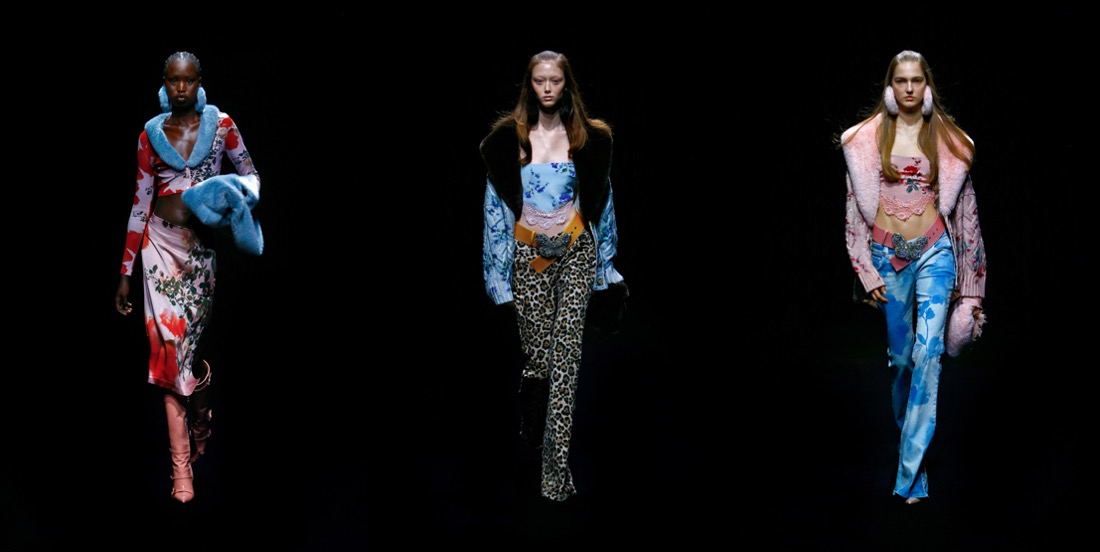
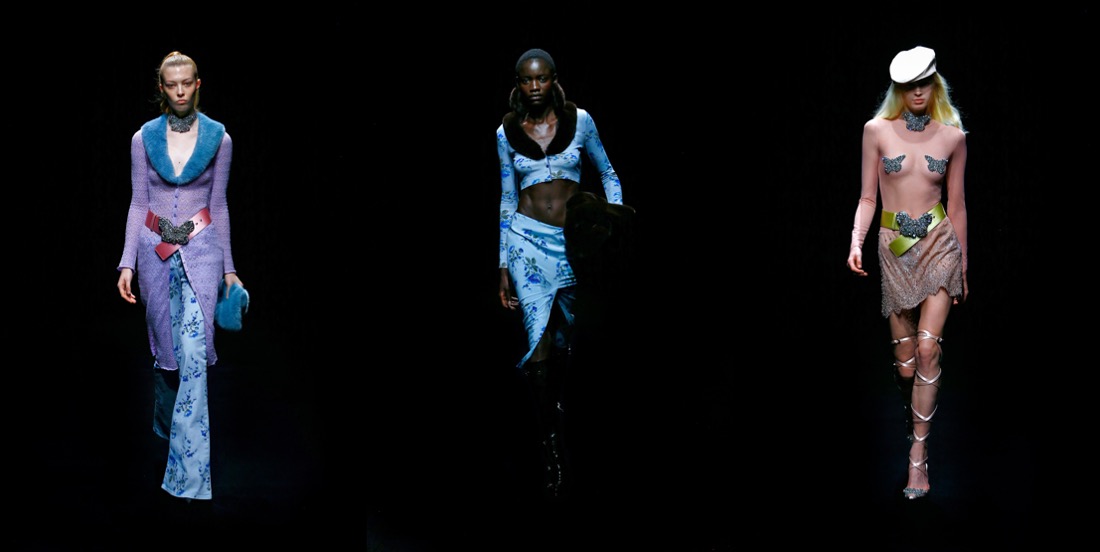
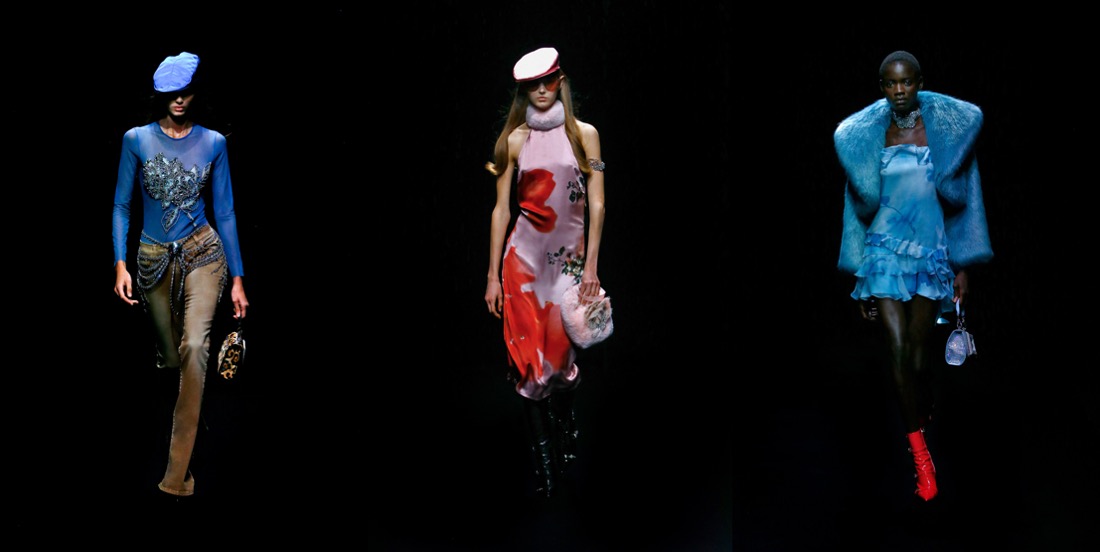
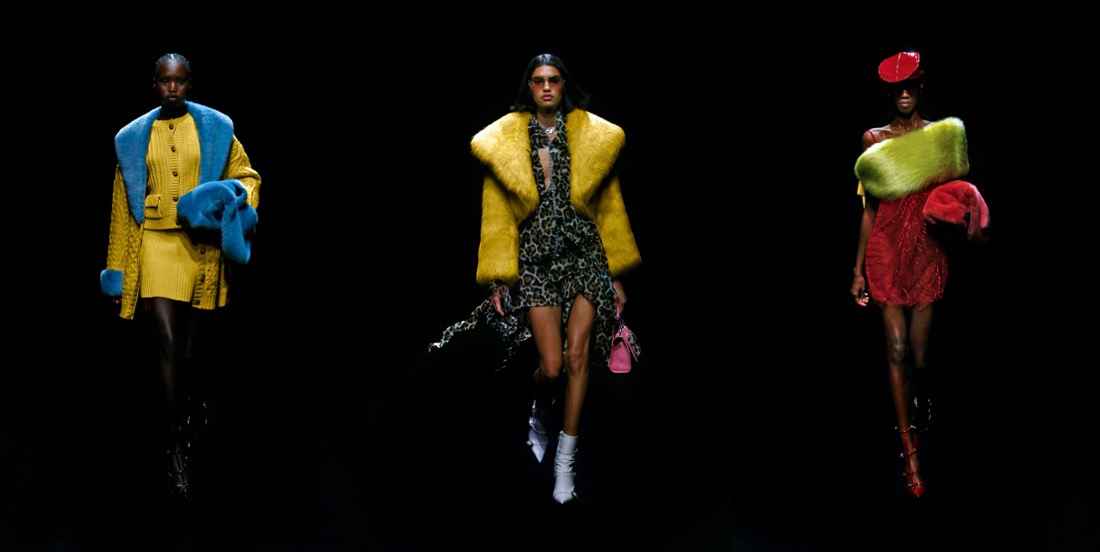
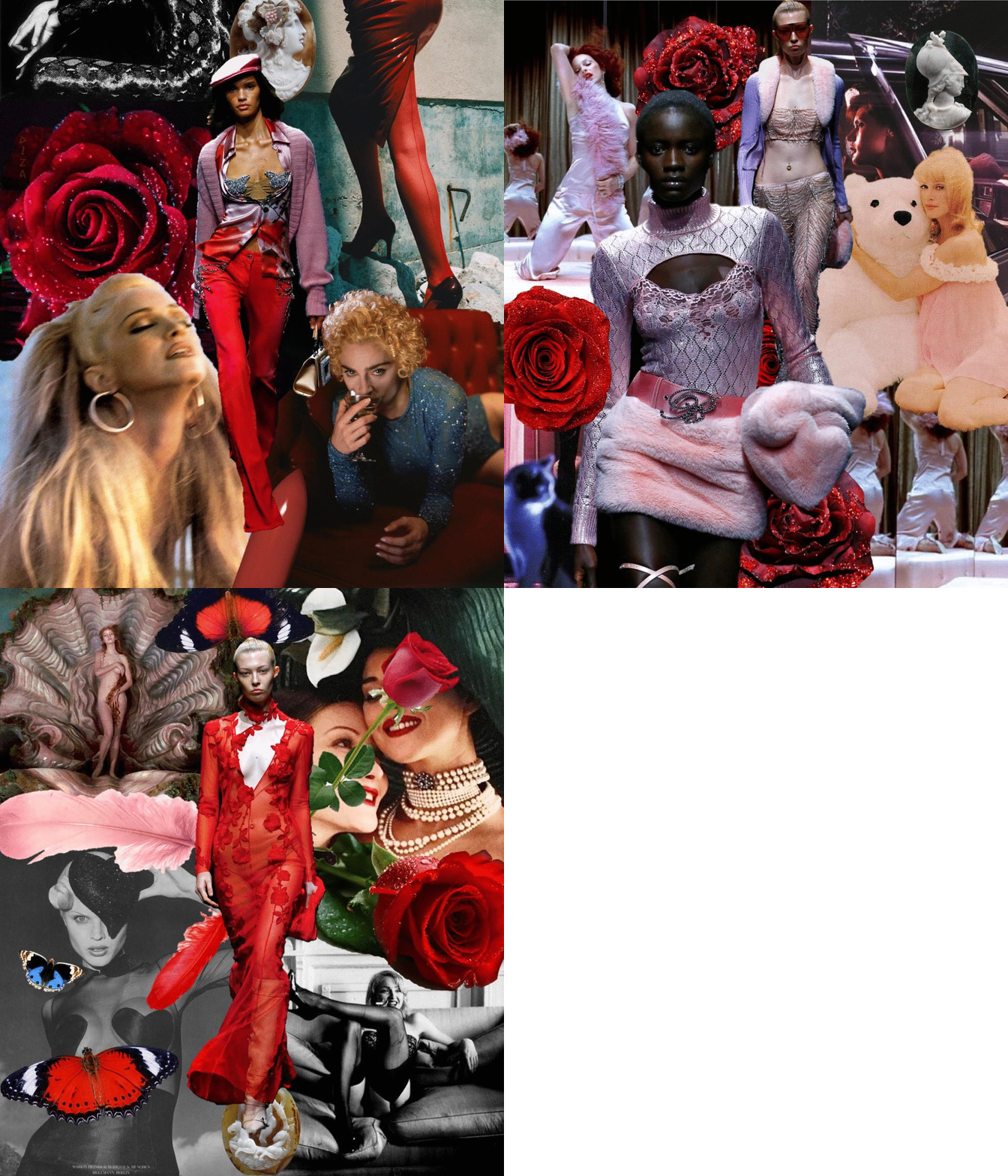
Hot Confidence. Blumarine AW21

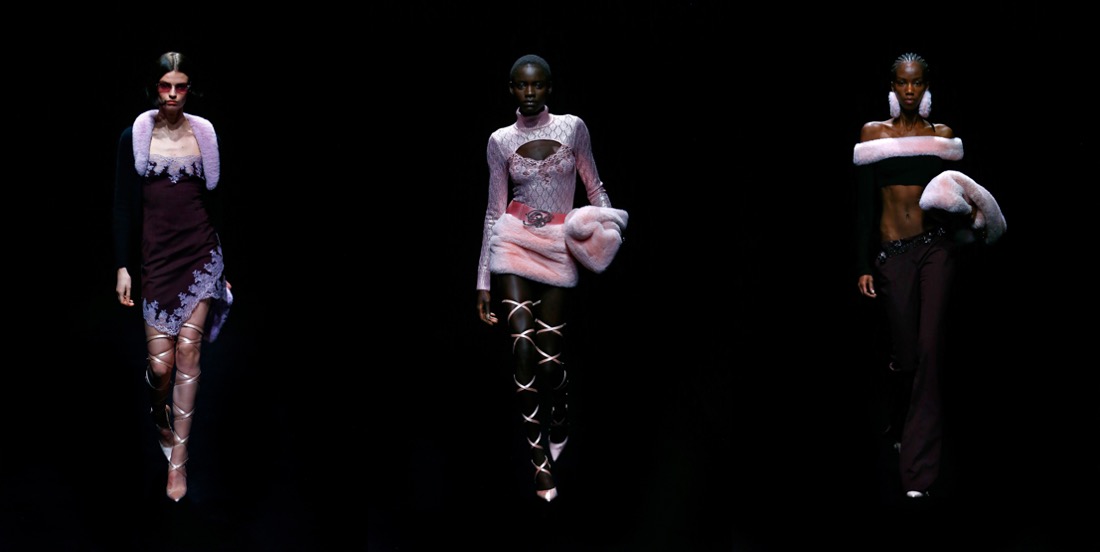
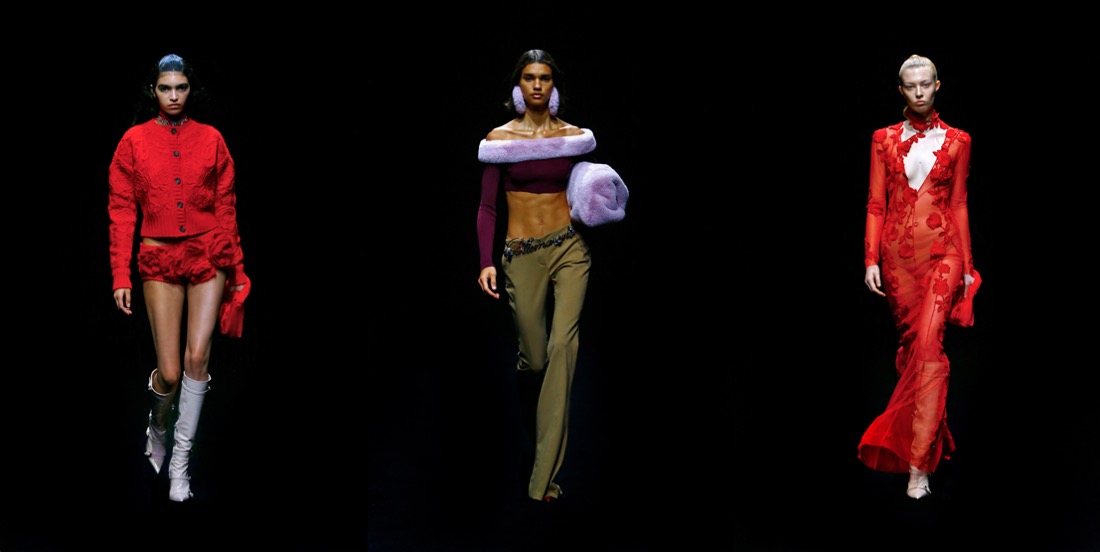
Blumarine is hot! While nobody really paid attention to Nicola Brognano‘s debut last season, it was clear that he (with Lotta Volkova’s styling help) has a plan for this Italian brand that once was the synonym of sexy glamour. “I’ve always been fond of Blumarine since I was a kid, Vogue Italia issues were treasured in my mother’s bridal atelier,” Brognano said during a visit to the set where the fall video was being filmed. “I still remember vividly the Blumarine advertising campaigns shot by Helmut Newton in the ’90s, they were fabulous!” That was the label’s heyday. Making it pertinent for today’s sought-after young audience, winning not only their social media attention but also their spending power is the challenge the designer has to face. He might succeed – he ticks all the boxes. For autumn-winter 2021, Brognano looked at his teenage heroines, Britney Spears and Paris Hilton and their early aughts excesses. He was a huge fan. The collection screamed Madonna-meets-Steven-Meisel-‘Sex’-Book as well. “My Blumarine is more dirty, bitchy, sexier,” he said. It definitely seems to have the punch celebrities respond to. Ariana Grande, Rihanna, and Dua Lipa have all asked for clothes, or for the impossibly high stilettos with crisscrossing full-leg straps that are becoming a hit. If Brognano knows how to put the power of stardom to good use, but he’s also business savvy. The ultra-short draped minidresses in candy colors can be covered up by cozy oversized cable-knitted cardis with fake-fur collars. Elongated crocheted-wool vests had a thrifty feel; they were see-through enough to look sexy without being too revealing. Nostalgic Blumarine fans weren’t neglected either; the everlasting roses motif was abundantly represented, digitally abstracted in liquid watercolor prints or knitted in sprouting 3D rosettes on cropped wool sweaters paired with matching briefs. Denims were totally Britney – low-slung, extra tight, bell-bottomed, and studded with crystals (properly kitschy!). Brognano’s Blumarine is firing up.

“Live” collage by Edward Kanarecki.
Proper Classics. Fendi AW21

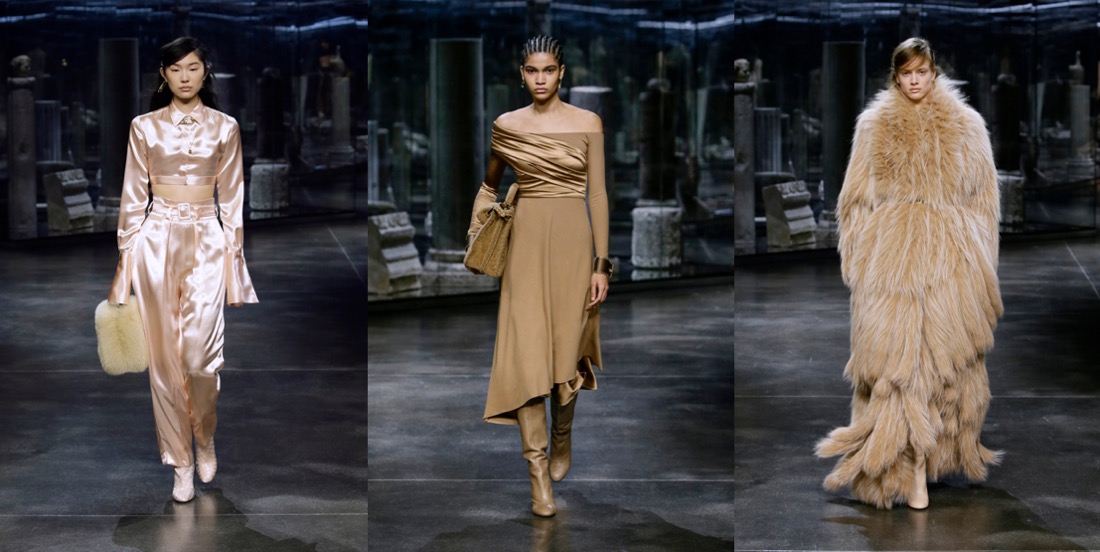
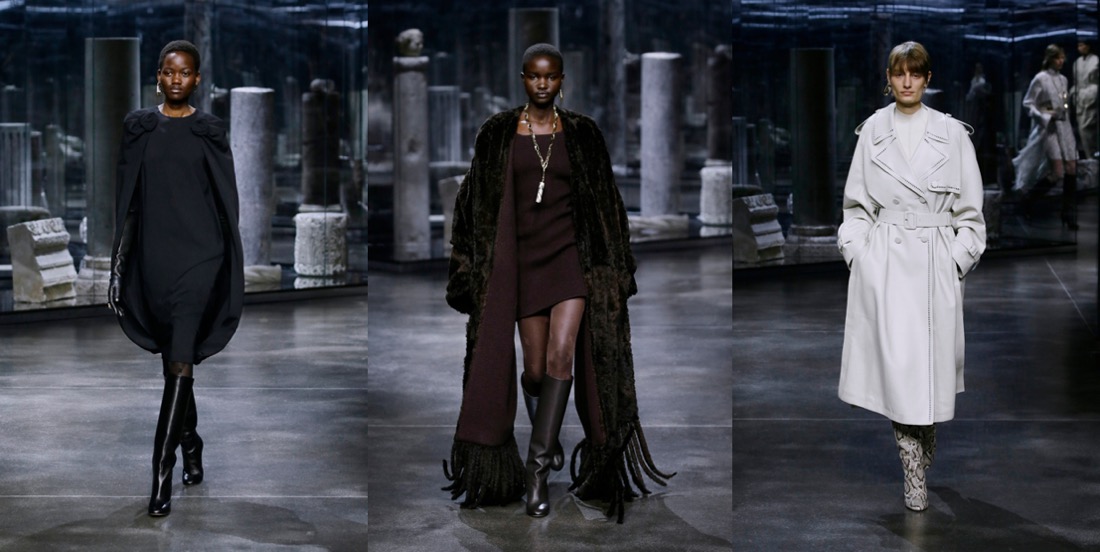
Kim Jones‘ first collection for Fendi, which was a haute couture line-up starring the designer’s friends like Demi Moore, Kate Moss and Naomi Campbell, polarised the audience. Surprisingly, his ready-to-wear debut wasn’t such noteworthy event – no big names among the models, and instead of some sort of Insta-extravaganza, we’ve seen a very classic, proper Fendi collection. Wisely, Jones neither committed himself to reflecting every aspect of the Fendi story, nor contained himself to narrowly defined elements of it. Instead he allowed the collection to unfold for the watcher as the city unfolds for the visitor, a multitude that coalesces towards the impression of a whole. The looks were all in neutral shades, both to reflect the mineral colors of the city and the organic shades that have dominated in Fendi’s history. Spaghetti-fringed furs in contrasting herringbone, striped silk shirting, and the opening loose-sleeved suede bonded mink evoked the period of Fendi’s first great flowering under the stewardship of the founders’ five daughters Paola, Anna, Franca, Carla, and Alda. It was they who recruited Karl Lagerfeld in 1965, and his great influence was stamped most clearly in a soft tote whose F-framed handle evoked his famous ‘Fun Fur’ of that period. Significantly, many pieces were punctuated with the 1981 ‘Karligraphy’ monogram. The biggest innovation here was the way the topic of fur was handled. The grandest fur on show was a long-haired fox whose raw material had been upcycled from previous pieces. Jones said of upcycled fur “that it is probably more challenging to work with for the artisans, but they enjoy being challenged.” He also pointed to the abundance of by-product shearling and added that his approach in this regard is to balance two questions: “What does the customer want and what can we do ethically?” Maybe this collection wasn’t overly charismatic or loud, but I bet it will do well in the stores next autumn.

Collage by Edward Kanarecki.
Dichotomies Of A Dancer. Erdem AW21

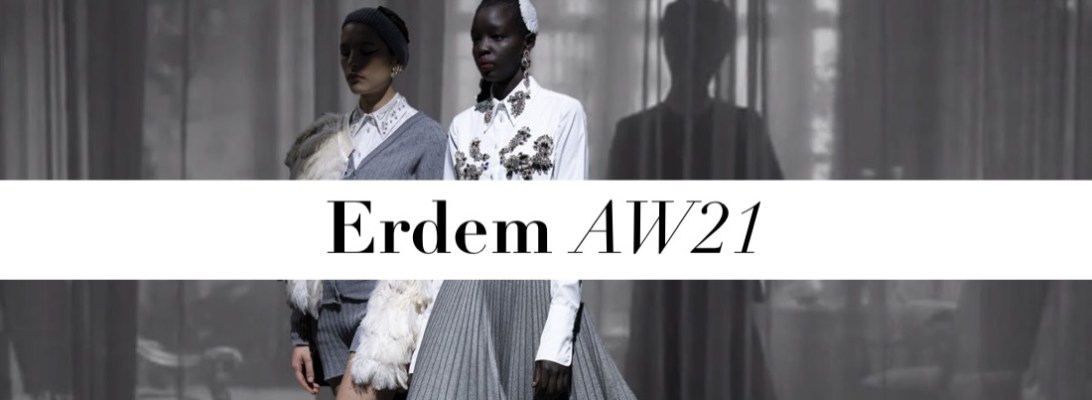
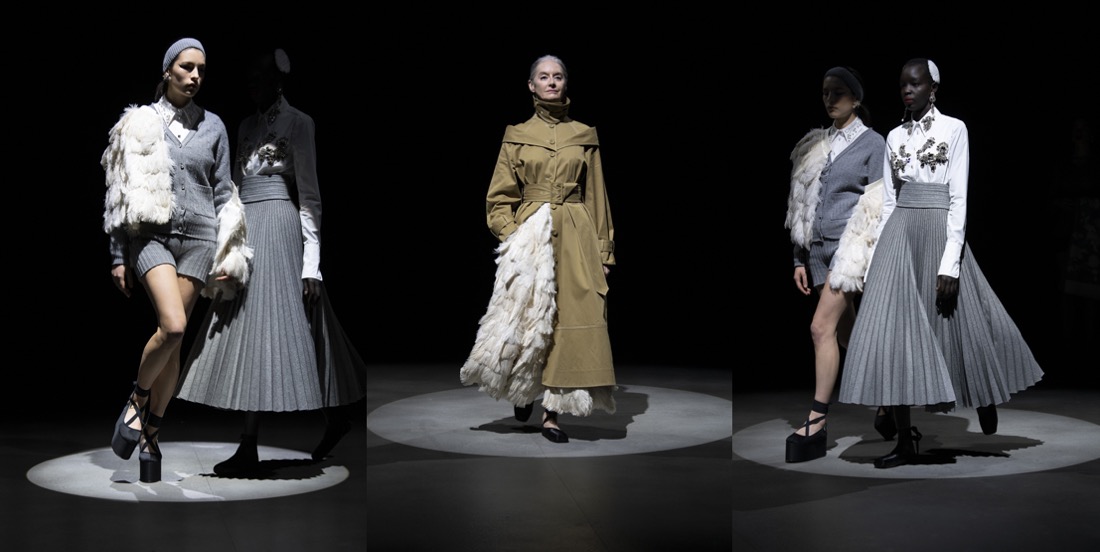
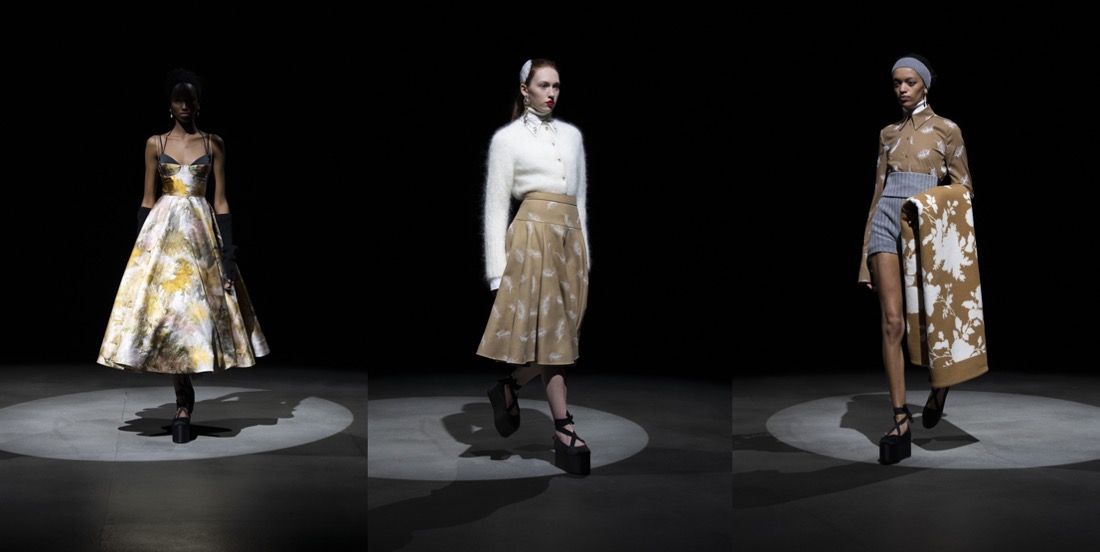
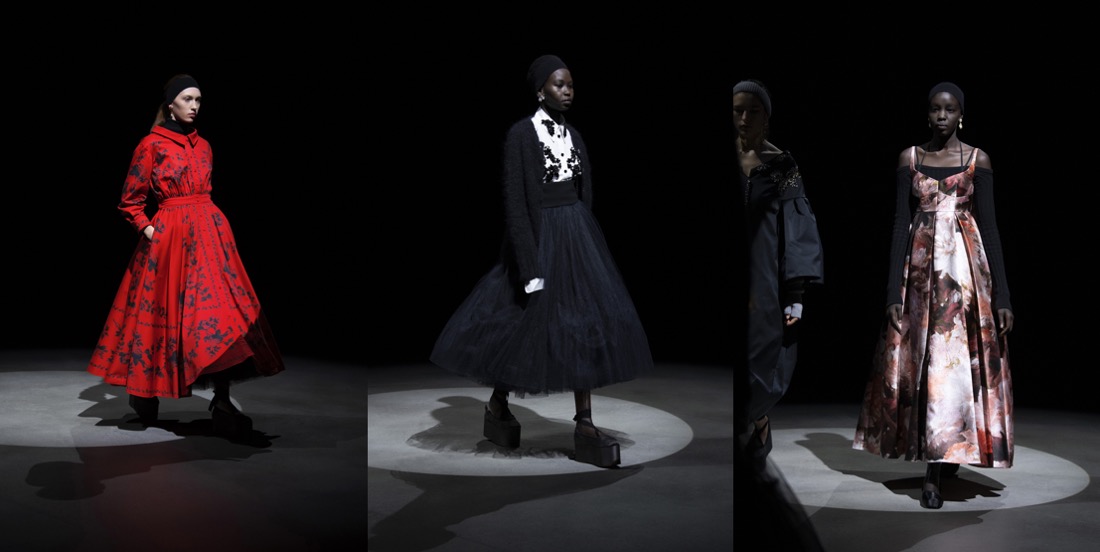
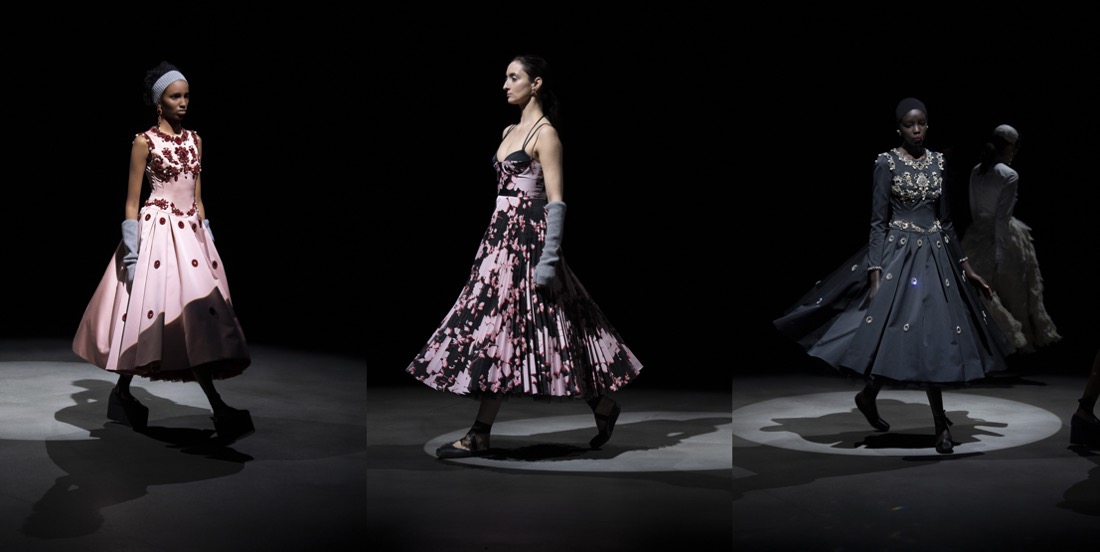
Erdem Moralioglu delivered a mesmerising collection. He is at heart a dramatist, forever living for theatrical moments. Conceived in the realm of ballet, his Erdem autumn-winter 2021 collection freeze-framed a dancer’s wardrobe between the stages of rehearsal and performance. “When I was working at the Royal Opera House, that was the moment I found so exciting: the dancers shifting around, criss-crossing, half-dressed in what they wear during the day and half-dressed in their costumes,” he said on a video call with Vogue, recalling Corybantic Games, the ballet he created costumes for in 2018. Incidentally, the contrast between a ballerina’s everyday dancewear and her ornate costumes served as a rather poetic illustration of our impending transition from domestic dressing to dressing up. The exquisiteness of feather-embroidered 1940s jackets, Swan Lake headpieces and plumed skirts, giant opera gowns daubed in night-time florals, and jewel-encrusted shirts came as no surprise. The gray ribbed knitwear fashioned into dramatic skirts that moved like pleats, into softly cinching cummerbunds, and body-conscious tops that had the elegance of eveningwear but the tactility of the comfort-wear of lockdown. With similar duality, he elevated ballet slippers onto stilted platforms that gave his silhouette an air of fetish. Perhaps that feeling was spurred by the narrative that underpinned his story: the relationship between Rudolf Nureyev and prima ballerina Margot Fonteyn, whose on- and off-stage wardrobe also informed proceedings. “The contrasts, the dichotomies of a dancer… that Hitchcockian self-possession and drive for perfection,” Moralioglu paused. “I find the psychology of it interesting.” Perfecting a look – a sculpted sleeve, a nipped-in waist, a little plumed hat, a pair of neat red slippers – seems shocking in our home-bound reality. It was pleasant to be reminded of that feeling.

Collage by Edward Kanarecki.

In Folklore We Trust. Chopova Lowena AW21

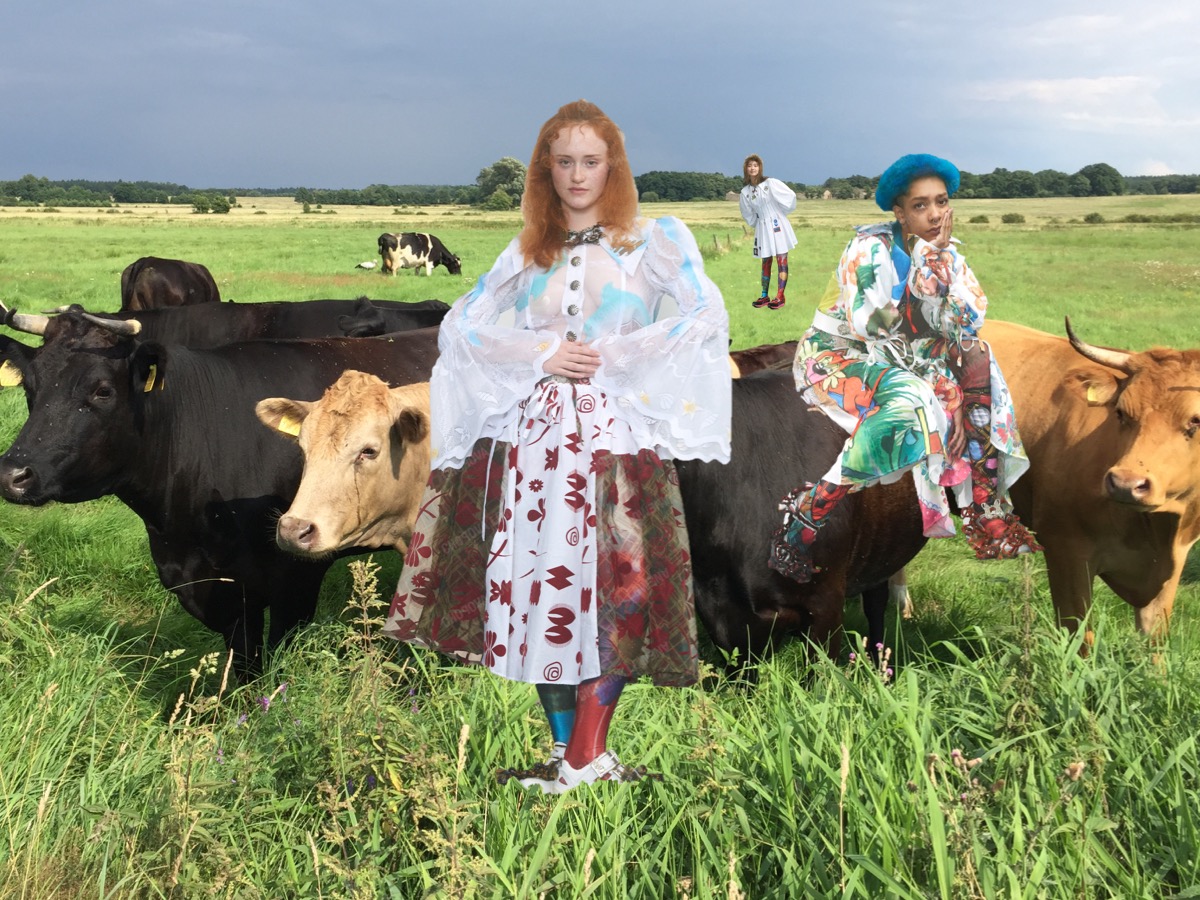
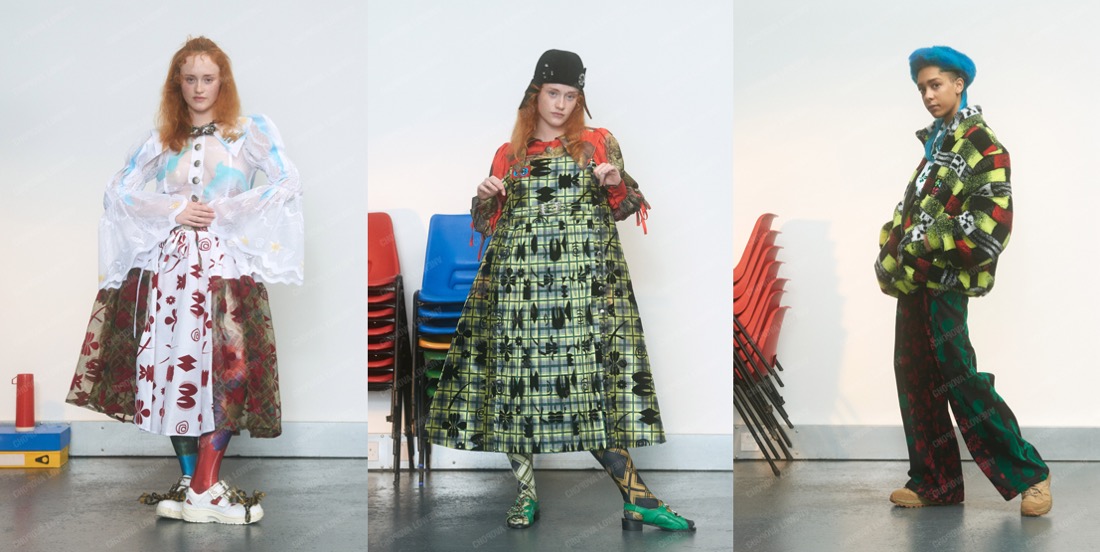
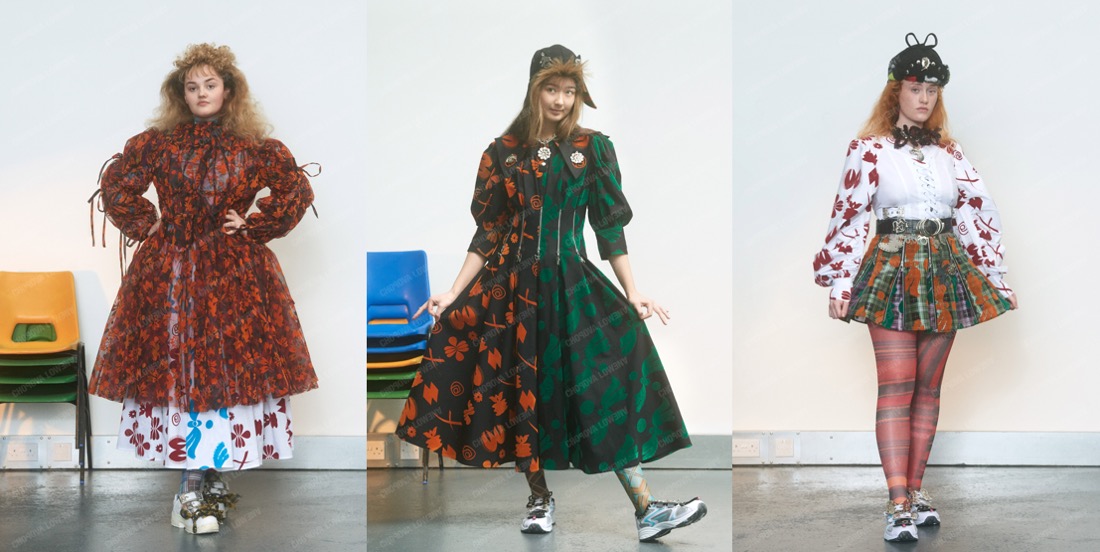
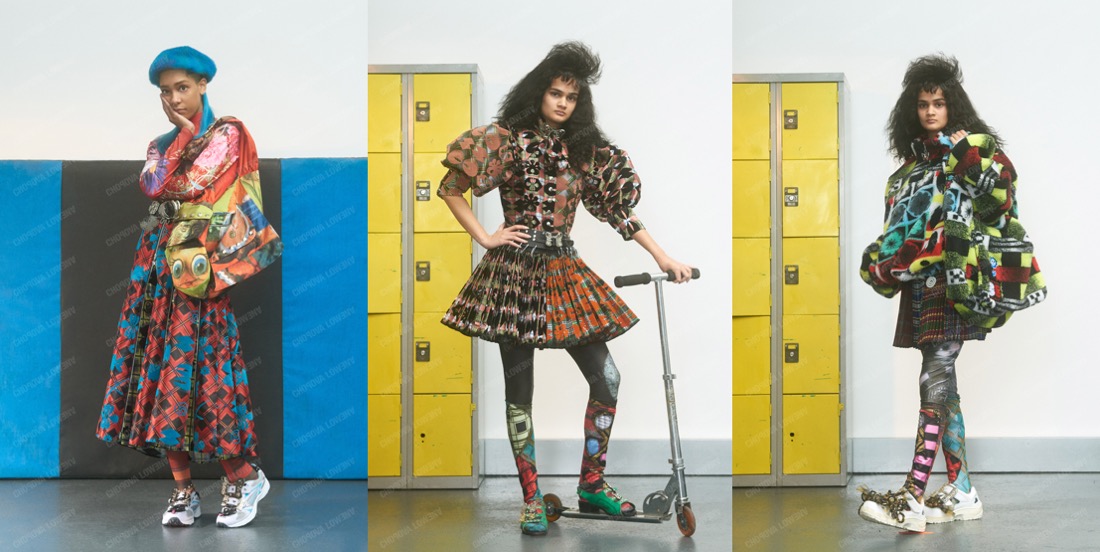
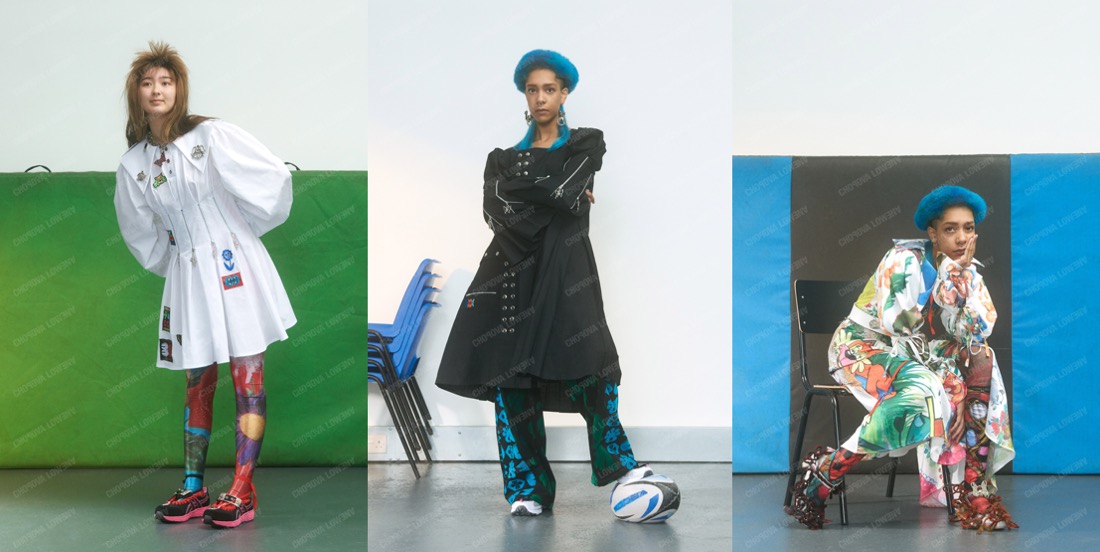
In London, the new-gen designers thrive. Emma Chopova and Laura Lowena, the design duo behind Chopova Lowena, have always fused traditional folklore with sportswear, and this season they keep on building their style vocabulary. For autumn/winter 2021, they put emphasis on the ‘uniform’. “We were looking at the tension and strictness of school uniforms, but then the freedom of the vigour, colour and nature of horse jockeys and their riding attire,” they say of the brand’s most “challenging” collection yet. The designers traditionally use deadstock material sourced from Bulgaria, and this season they’ve added in some new fabrics and techniques. “We’ve used an appliqué, which is more like the horse jockey shirts… graphic shapes.” Buttons, meanwhile, were sourced from the biggest English button factory remaining in Nottingham. Having sewn about “70 per cent of the collection”, while adapting to “making linings and patterns”, the pair is making resilience and adaptability a cornerstone of their rising, sustainability-forward brand. Also, love the voluminous, patchworked dresses with ruffled sleeves!

Collage by Edward Kanarecki.