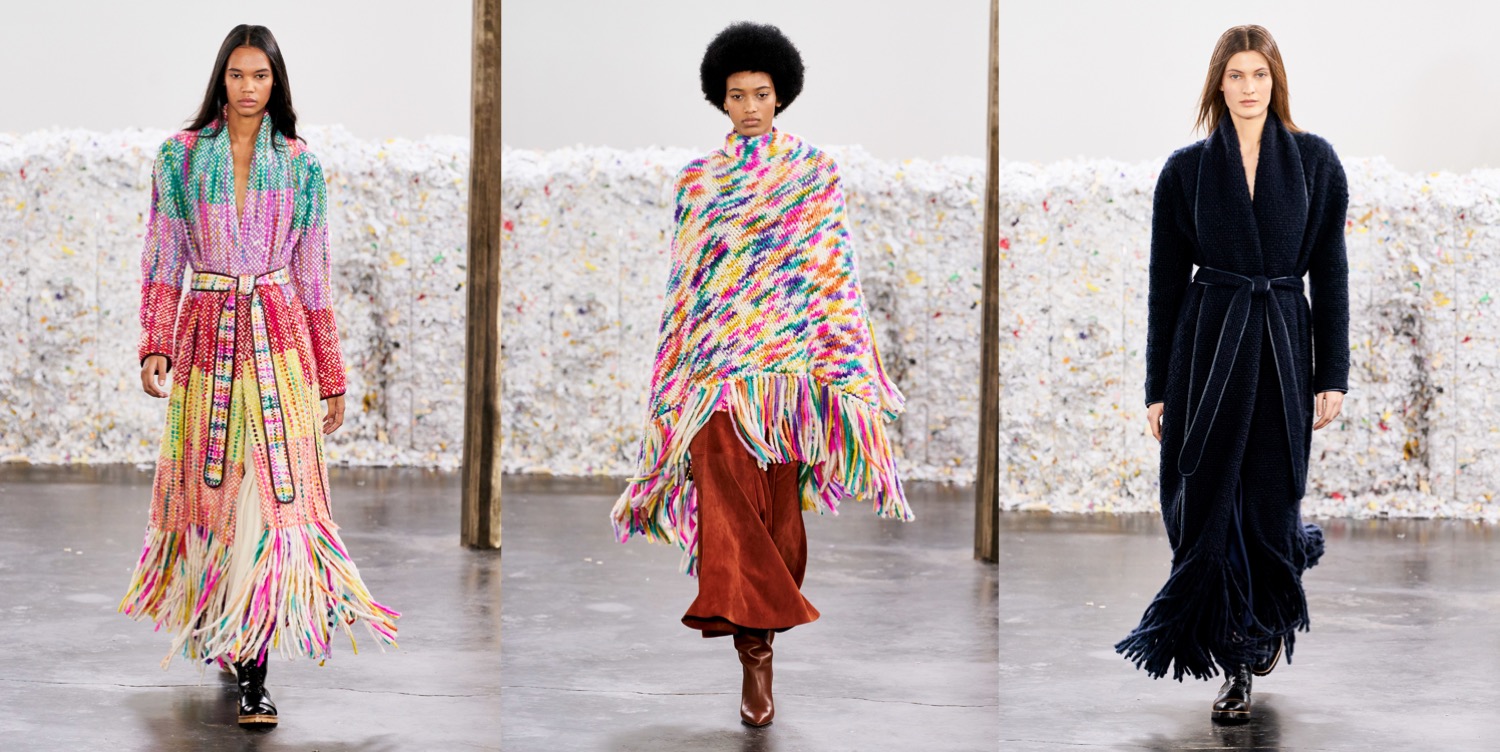
Dracula. Rodarte AW20

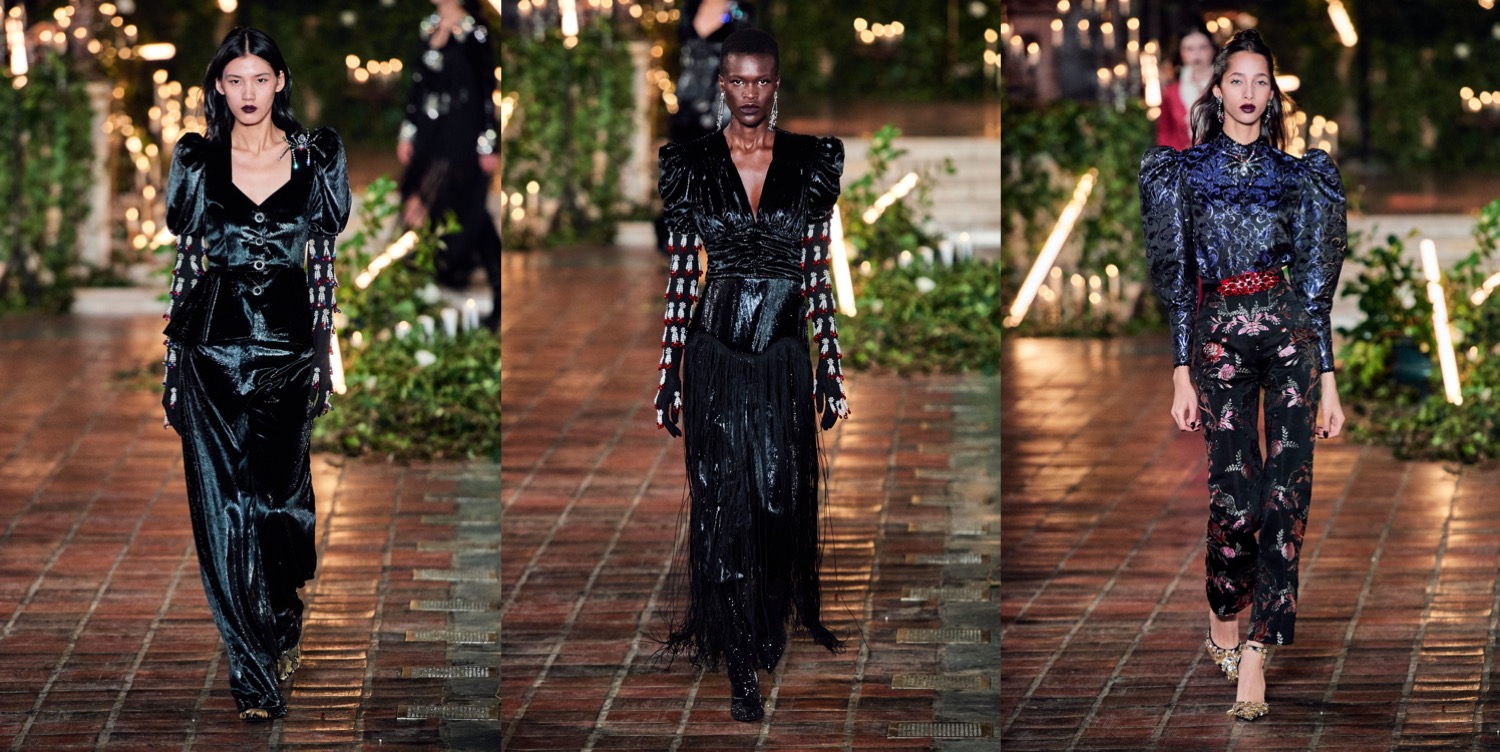
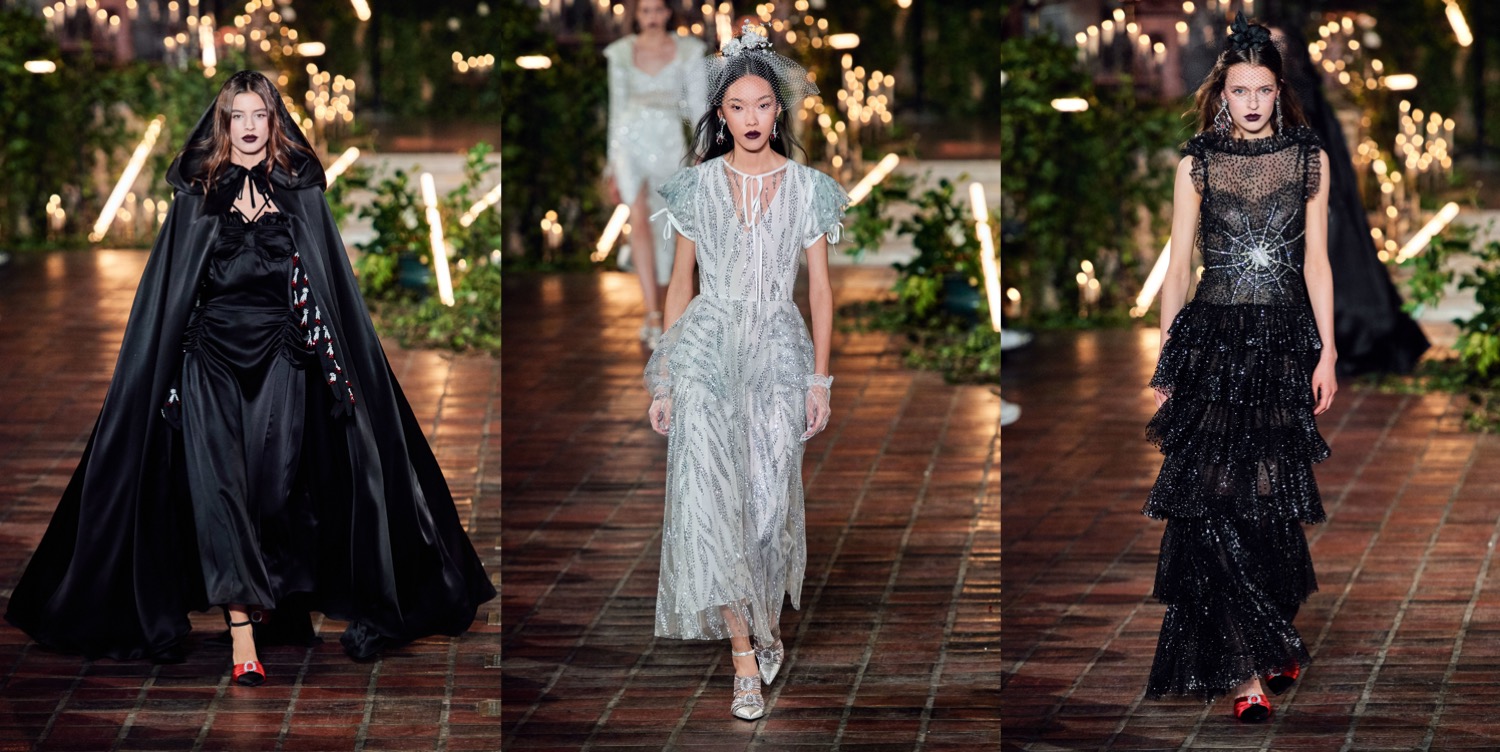
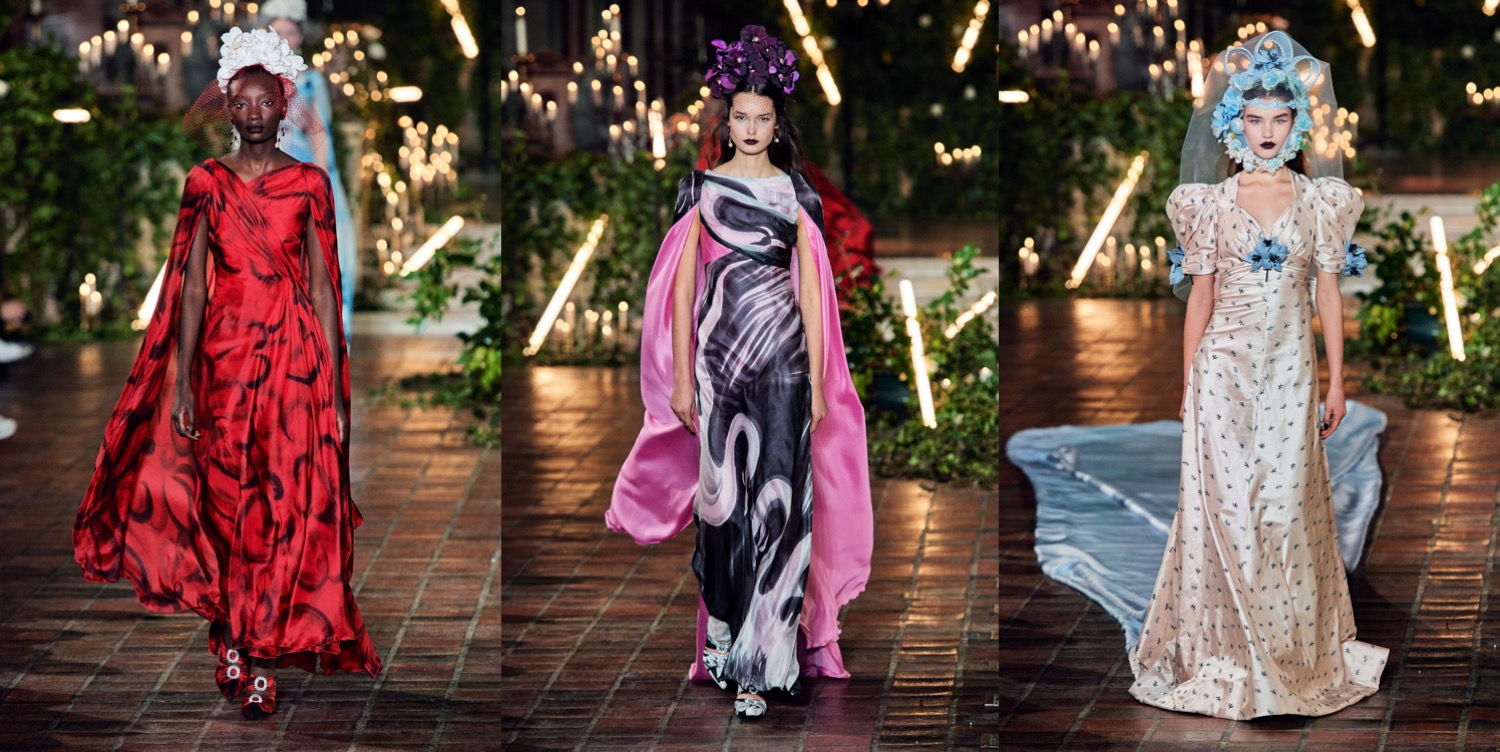
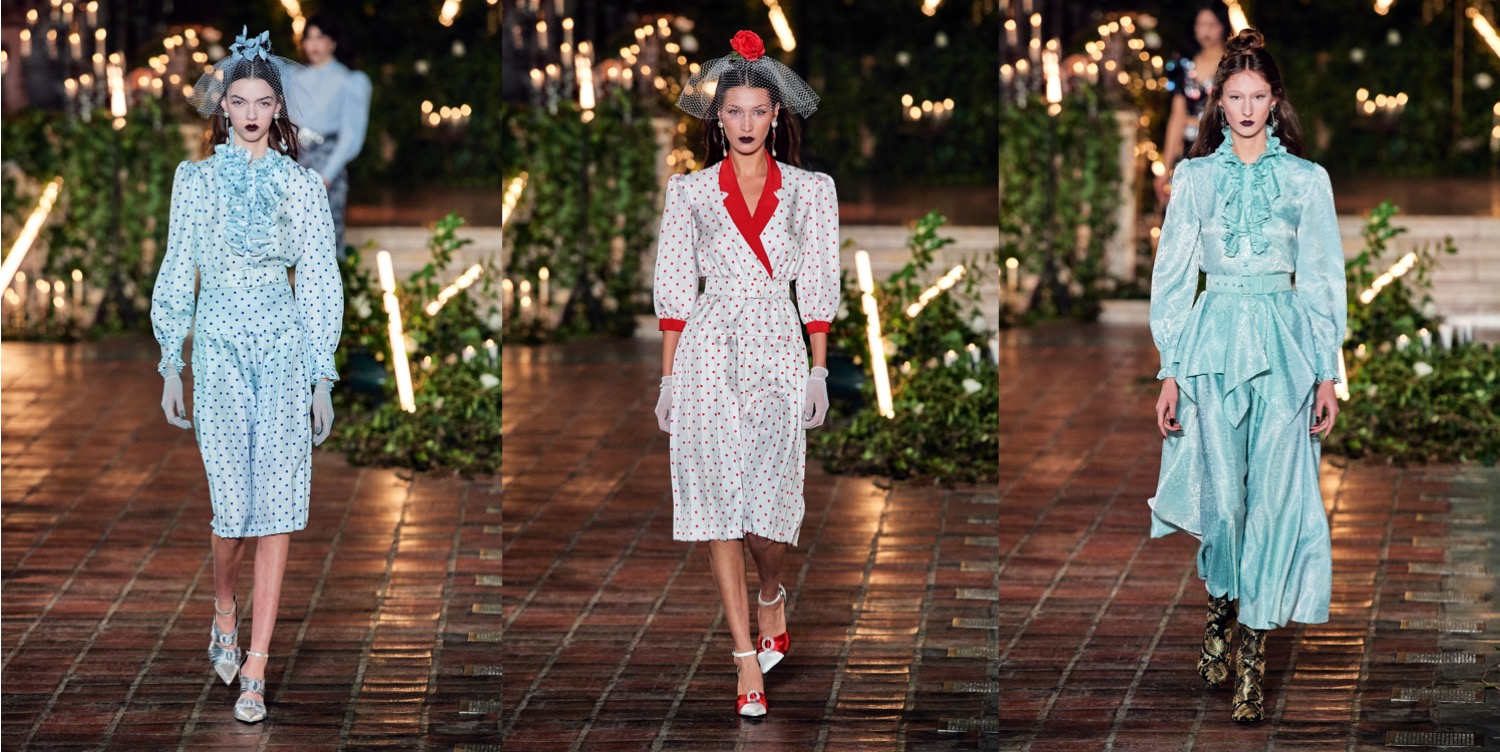
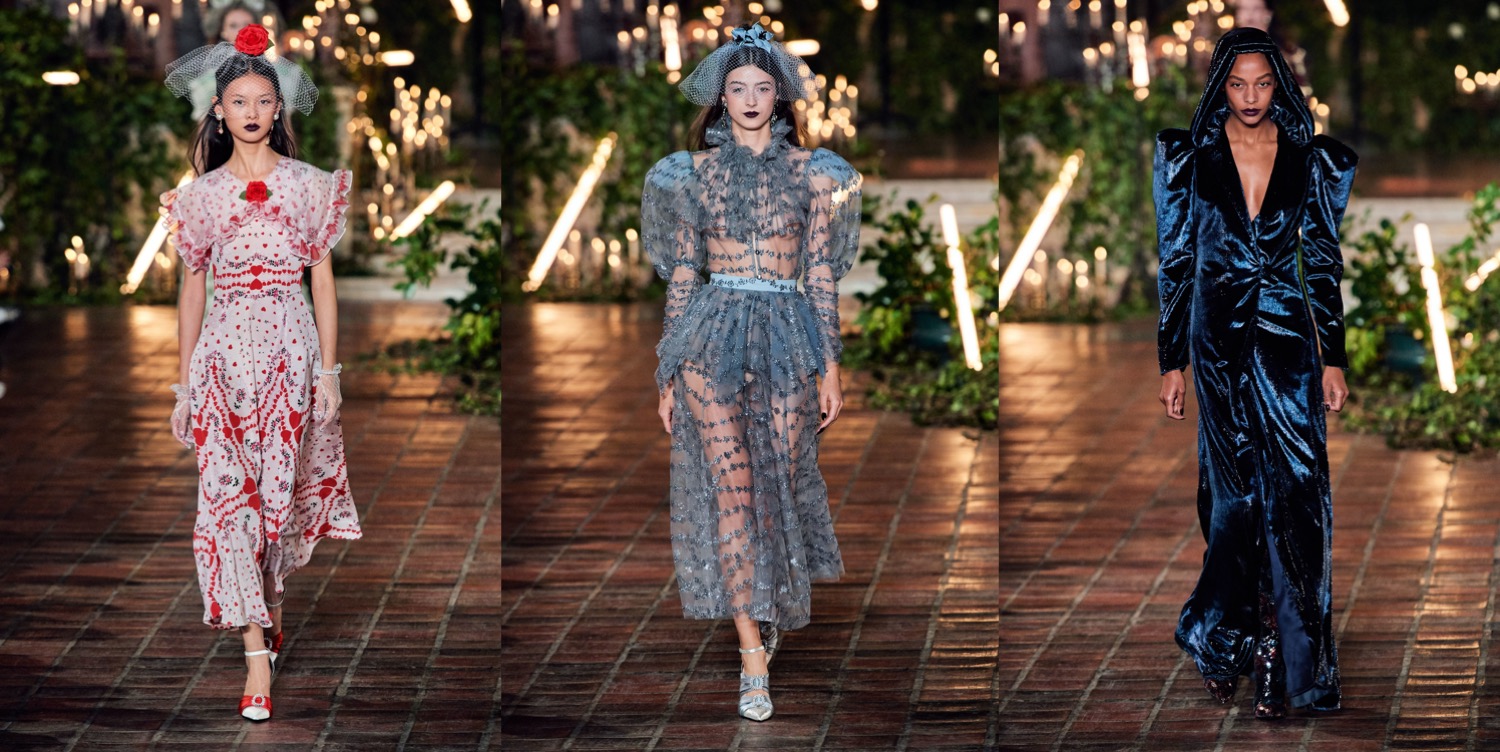
Bram Stoker’s 1897 novel „Dracula” inspired Francis Ford Coppola’s cult 1992 adaptation of the book, starring Winona Ryderand Keanu Reeves and featuring costumes by the legendary Eiko Ishioka. Kate and Laura Mulleavy’s autumn-winter 2020 Rodarte collection riffed on Coppola’s movie (and Ishioka’s costumes), but the result wasn’t a literal, gothic line-up. The location of the show – the dimly lit St. Bartholomew’s church in New York’s Midtown – provided a mysterious stage as the Mulleavys sent their army of ethereally chic undead out. The first part of the collection was about the pretty prey of Dracula: think cheerful polka dot day dresses, all over-sequined looks, draped blouses and pouf sleeves which all elaborated on 1940s-inspired silhouettes. Suddenly, the collection doubled down on the sweetness. Things got seriously dark – a sparkly midnight blue hooded cape, black fringes that looked like the tendrils of witches’ hair, cobweb embellishments, blood red. It was about witnessing the transformation of prey into predator, which was exactly the point. The show’s closer: a dreamy gown with big shoulders, blue flowers and a floor-sweeping, liquid-like veil. The vampire’s bride? Or the queen of the immortals? Designers seem to avoid scenarios for their collections – the fear of falling into the cliché trap – but at Rodarte, story-telling always works well.
Collage by Edward Kanarecki.
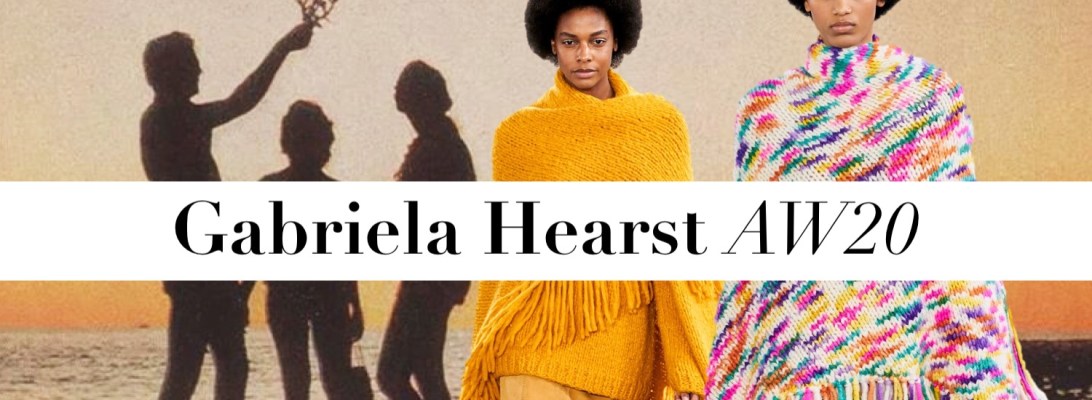
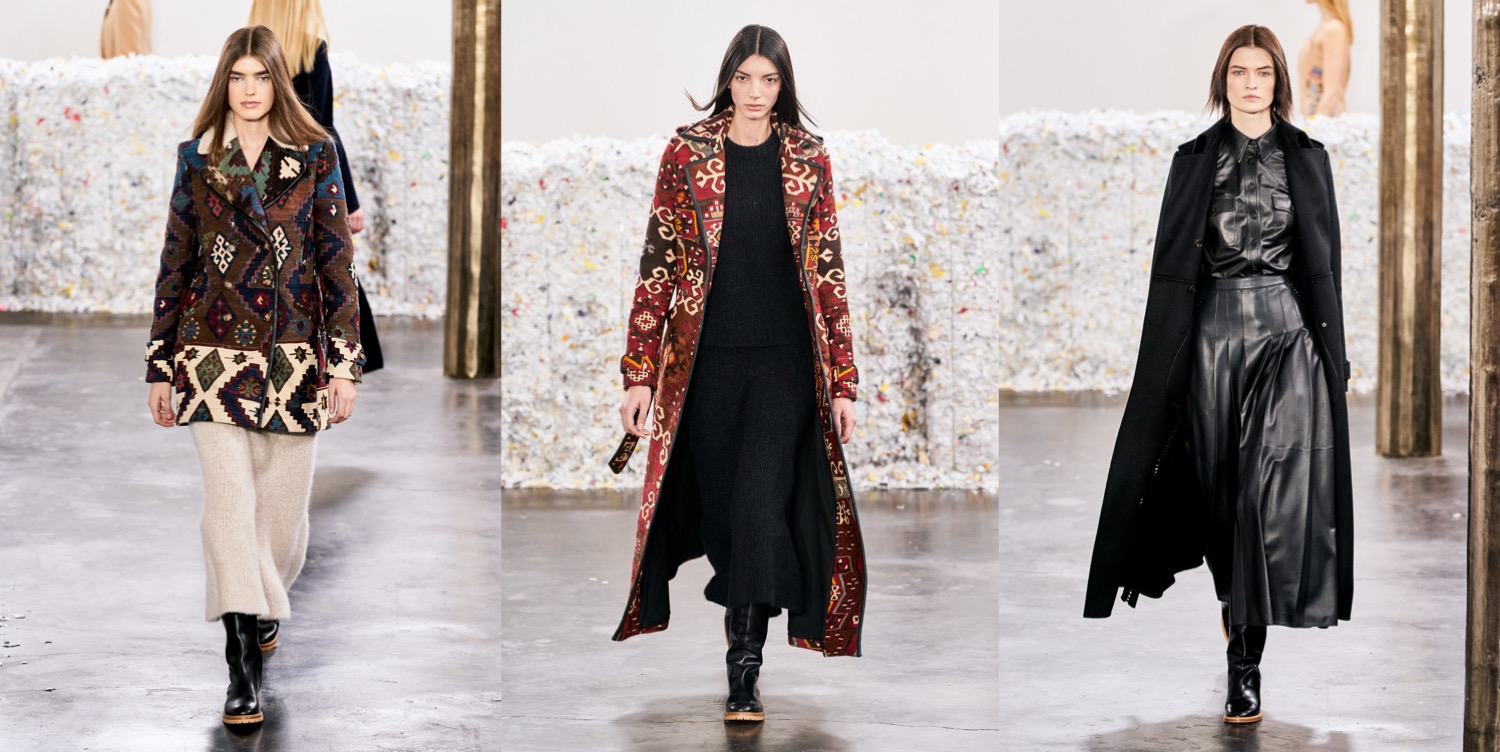
Sustainability (For Real). Gabriela Hearst AW20

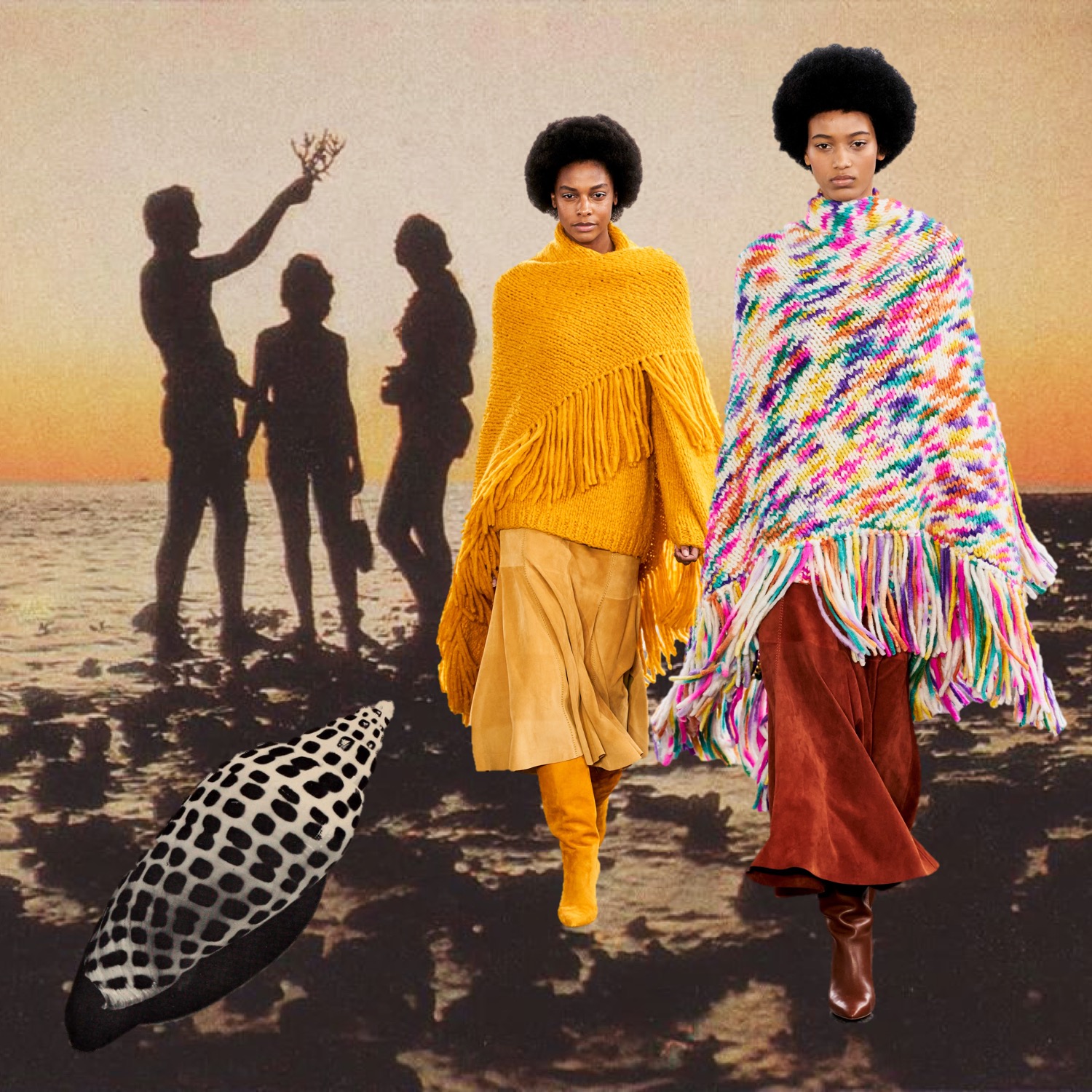
Gabriela Hearst’s autumn-winter 2020 line-up was beautiful. And it managed to be really sustainably made, without making a fuss about it. For Hearst, enviroinment is a priority. And she can translate that passion into luxurious, softly minimal, super high quality clothes. Antique remnants of Turkish rugs were puzzled together in outerwear pieces lined with cashmere. The hand-made knitwear was done by Manos Del Uruguay, the non-profit cooperative female artisans, and Magdalena Koluch, a New York-based knitter – the multi-colored, fringed poncho is one of the many gorgeous results that came from this collaboration. Existing pieces of cashmere outerwear were deconstructed and re-assembled with blanket stitch creating a fantastic colour block pattern. Most of the used wools in this collection were re-printed and reused to create new pieces. Gabriela and her team really pushed the envelope this season in terms of sustainable fashion and creating out of waste products, and simultaneously made it look refined. Just see the biscuity, cashmere corduroy tailoring or the flowing eveningwear. Delightful!

Collage by Edward Kanarecki.

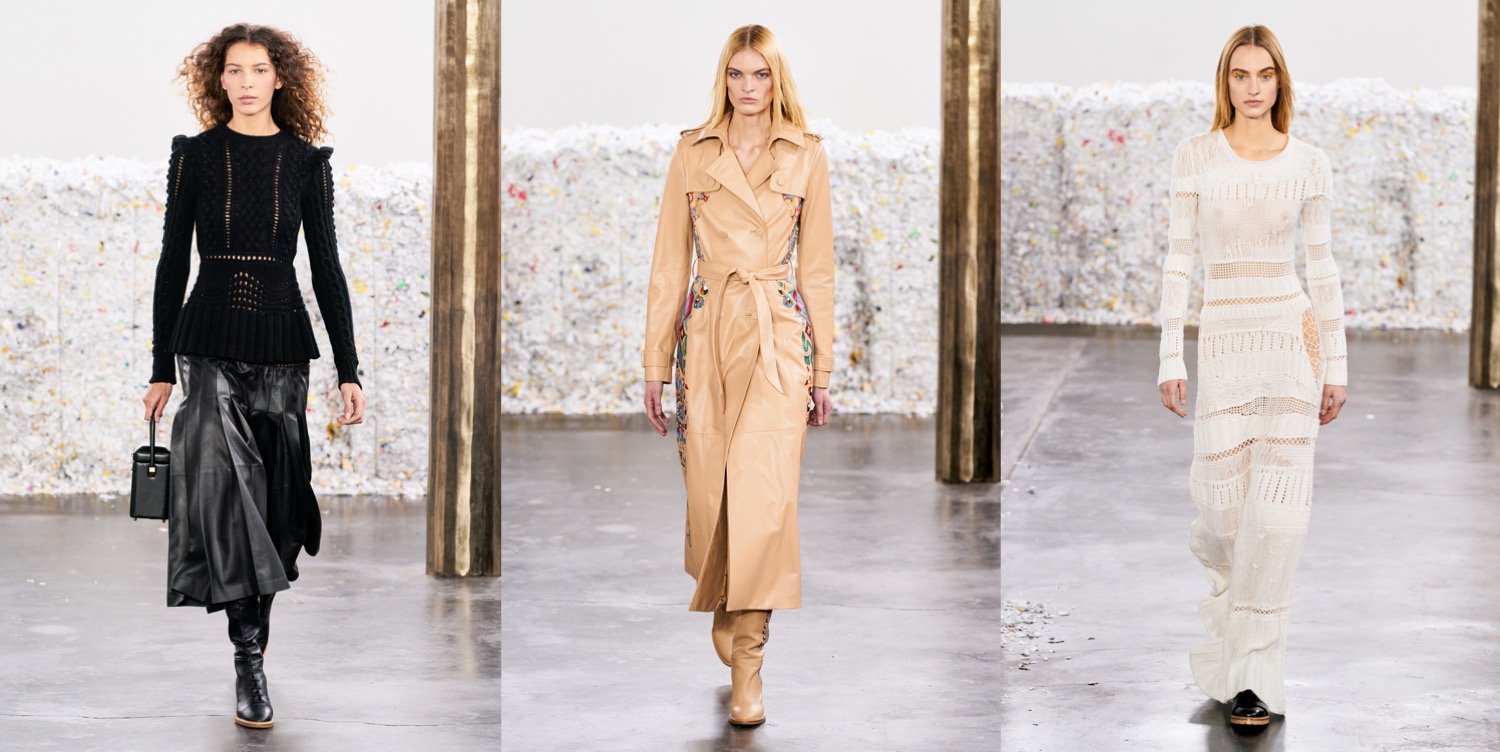
Monumental Lightness. The Row AW20

Slajd1

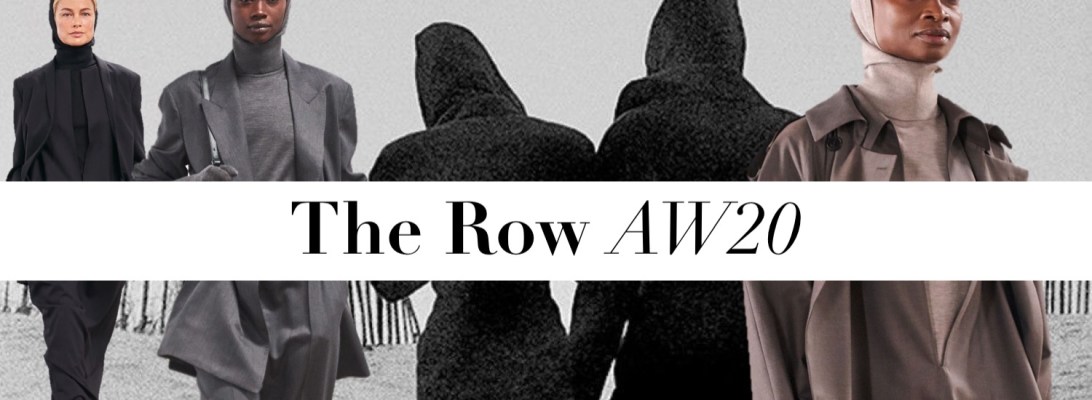
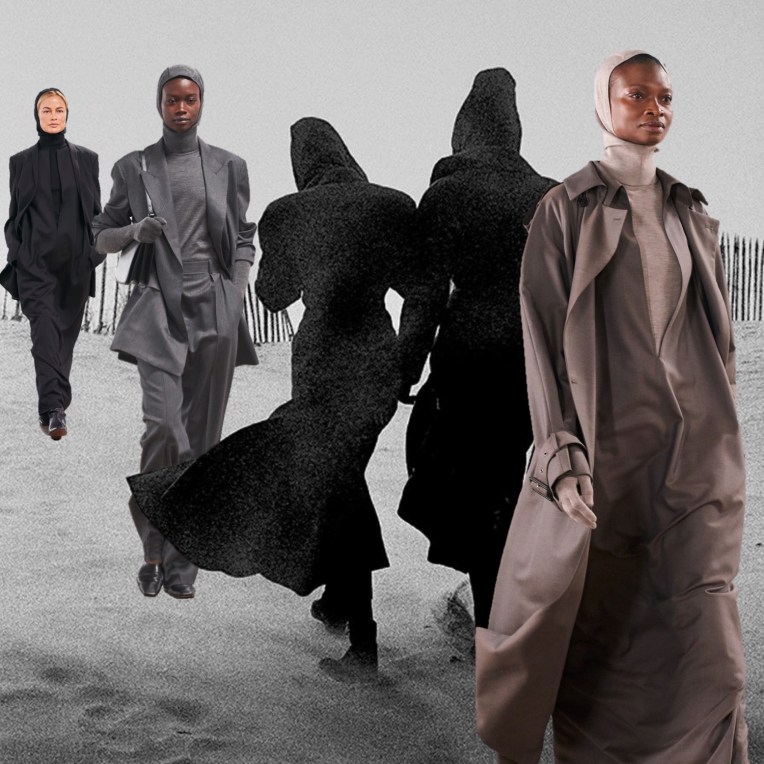
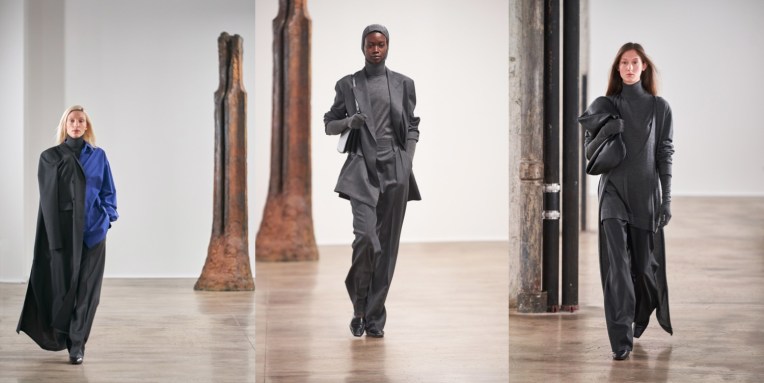
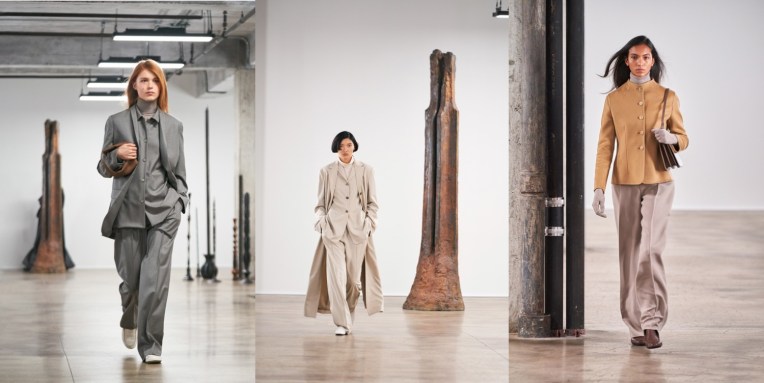
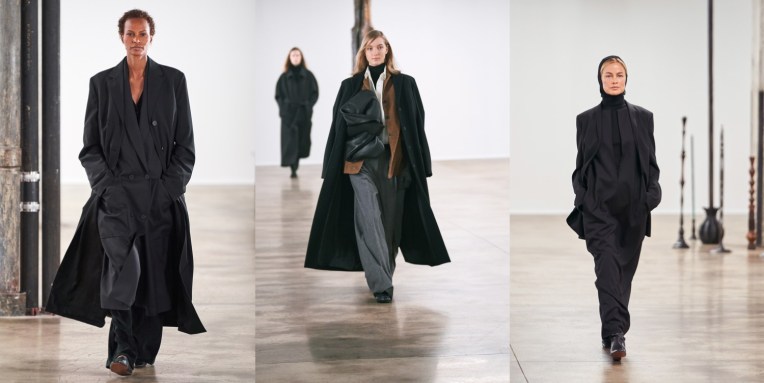
In the sea of meaningless or overly sophisticated (which, in the end, means the same as meaningless…) collections in New York this season, The Row stuns with confidence and actual sense of real desire put upon us, the viewers. As the models skimmed quickly by in flat slippers and boots, the thrill behind Ashley and Mary-Kate Olsen’s line-up was in the finesse of the cuts, precise but relaxed, especially with the addition of turtlenecks layered under silk button-downs or worn solo under jackets. The tailoring is refined and subtle in shilhouette, and the outerwear is a sure winner of the season. It’s quite clear that the designers looked at Martin Margiela’s Hermès for inspiration – especially the layered knits and long, grey gloves that seemed to blur with the clothes. But I’m fine with that. An installation of sculptures by Beverly Pepper, an American artist who worked in stone, corten steel, and iron until she was 97, was the centerpiece at The Row’s show. Pepper died just last week, and the New York Times’s obituary described her as a “sculptor of monumental lightness.” The Olsens’ work definitely identifies with that description.

asdfgh

Collage by Edward Kanarecki.

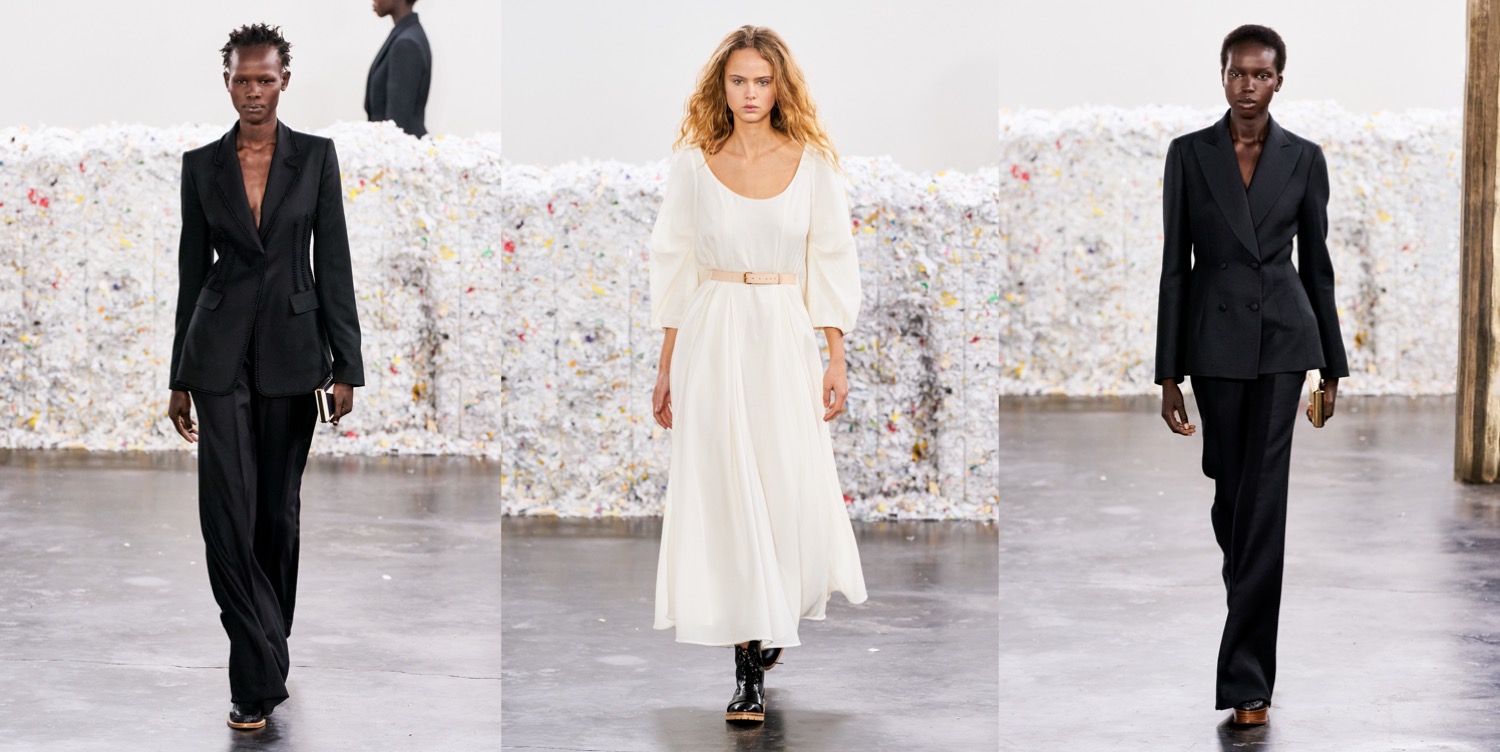
Dutch Heritage. Sies Marjan AW20

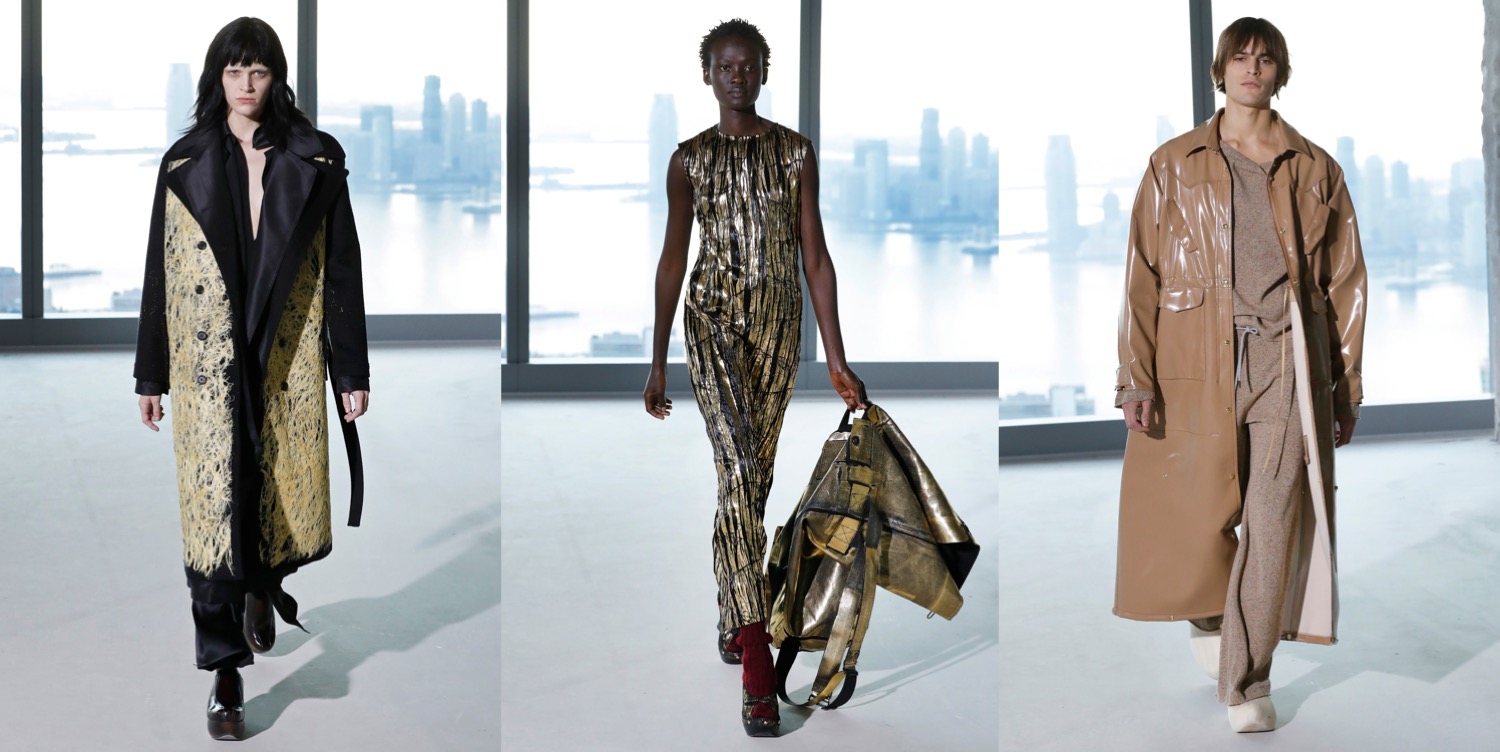
This was one of the best collections coming from Sander Lak’s Sies Marjan to date. The designer is known for his incredible skills in colour combinations, and this time he nailed it with the earthy tones, gorgeous metallics and warm nude palette. The shoes – which were inspired by the traditional wooden, clogs from Netherlands – hinted that the designer might have thought of the masterful colours used by Dutch masters. And you can really see Vermeer, Ruisdael and Ter Borch in these mixes of browns, yellows and greens. Another factor that shaped the collection? Later this month, New York’s Guggenheim Museum will host Rem Koolhaas’s “Countryside: The Future” exhibition. The exhibit is a radical break from the fine art displays typically housed inside the Frank Lloyd Wright–designed rotunda. Instead of art, per se, it will exhibit scientific and cultural research collected by Koolhaas and his AMO team relating to the broad idea of the countryside and all its functions. Sies Marjan is one of the exhibition’s sponsors, and to mark the partnership between the brand, the museum, and Koolhaas, Lak themed his autumn-winter 2020 collection around ideas of the countryside. After a year-long deep-dive into the broadest notions of the theme, he went down material paths, collaborating with Cornell University on plant dyeing techniques that produced the floral patterns in the collection through hammering leaves directly onto fiber. A Dutch artist, Claudy Jongstra, lent her sustainable wool material made from sheeps’ sheddings to shaggy blue-green vests and blankets. A raffia-like material on a black top is actually made from plant roots engineered by artist Diana Scherer to grow in specific patterns. These natural textile developments lent a beautiful connection to the Earth within Lak’s collection. He continued this rawness in his produced fabrics by screen printing a gold film onto cotton twills and a mossy fil coupé. It’s rare to see a collection filled with so much thought – and looking this easy! In the end of the day, we’ve got some very genuine clothes for both women and men.

Collage by Edward Kanarecki.

Boundary Free Globalism. Area AW20

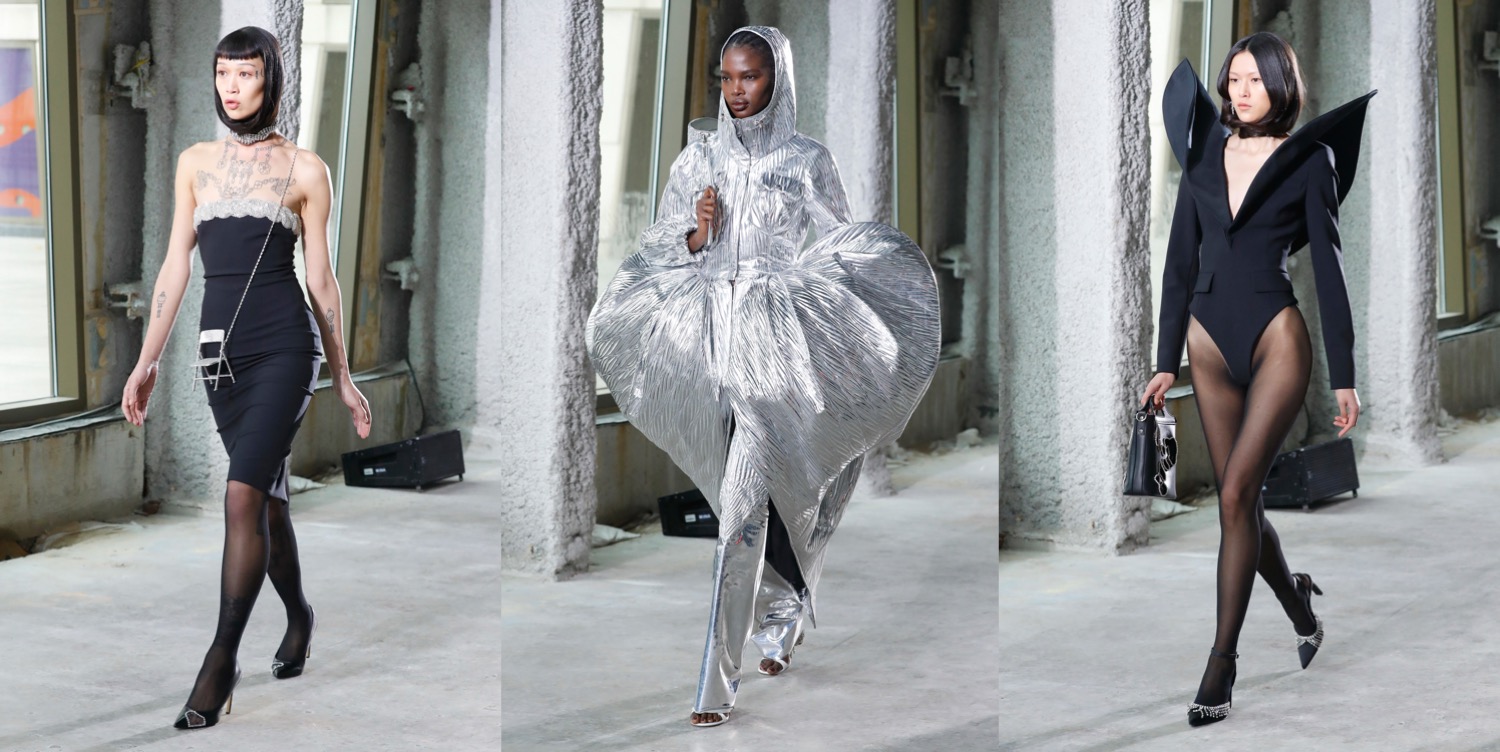
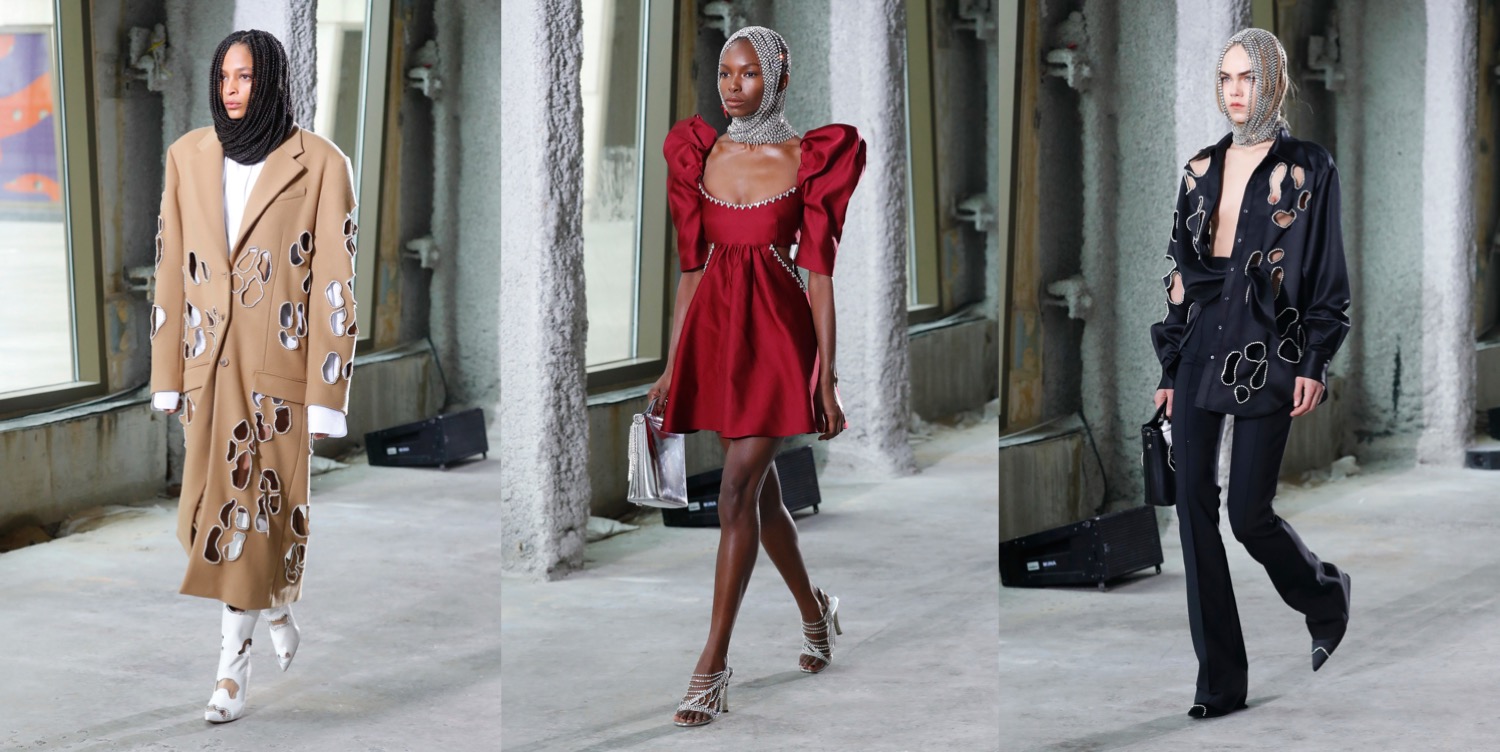
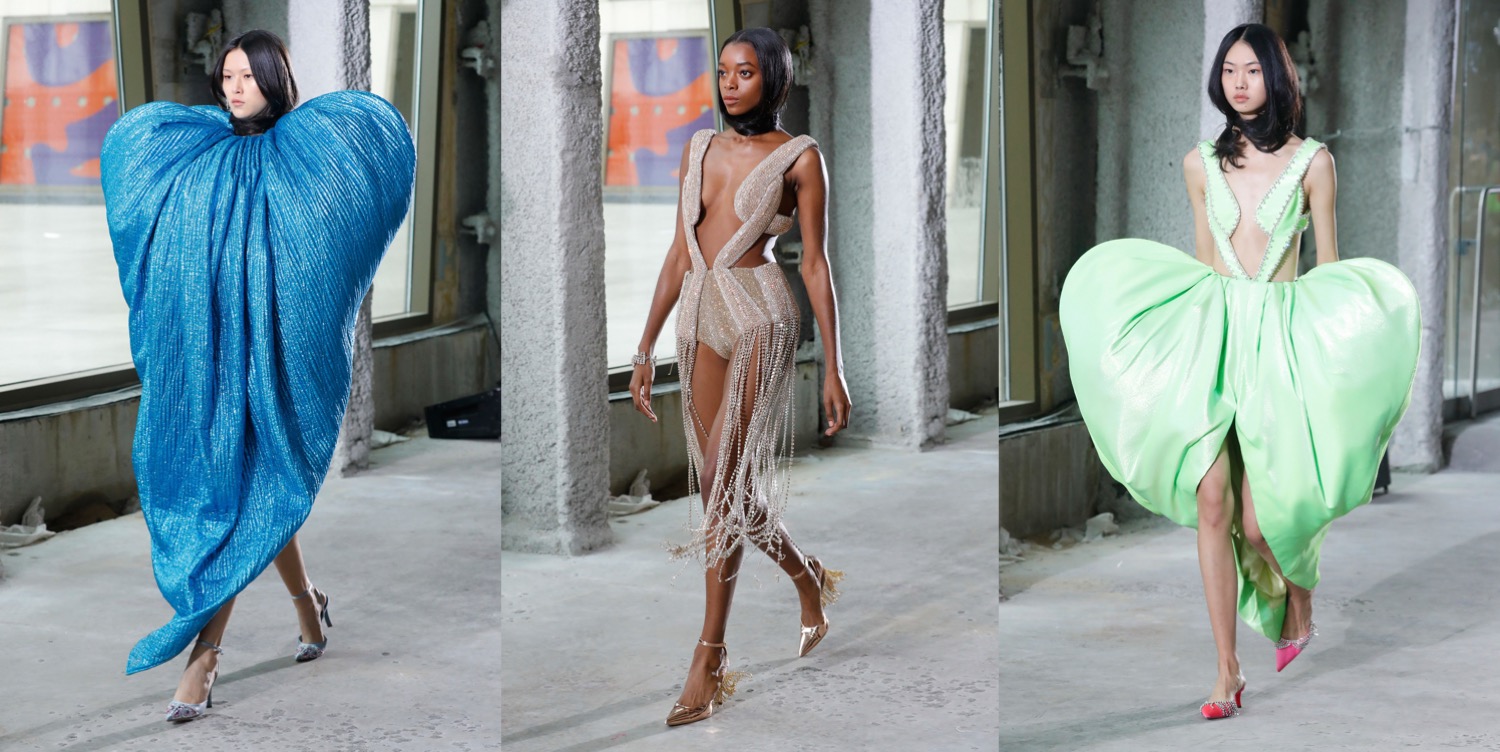
Finally, somebody brought life back to the sleepy first days of New York fashion week. You can always count on Area’s Beckett Fogg and Piotrek Panszczyk to deliver something unexpected, fun and bold. And intelligent. The duo’s The autumn-winter 2020 line-up was one of their most intensive yet, exploring fabrics, history, new technologies, collaboration, and cultural impact through garments that truly do not look like anything else on the market. Fogg and Panszczyk began their research this season with their venue, The Africa Center. The nonprofit cultural hub and museum was moved to the Upper East Side’s Museum Mile almost 10 years ago, but development stalled when funding fell out. The brand has inked a partnership with the center in the hopes of spotlighting African culture and craft in the USA. Weaving techniques native to Africa helped inform the show’s opening looks, too, but an Area collection is never just about one thing. There was plenty of other references: Japanese tropical postcards, the pleating and draping of Madame Grès, leather costumes by Eiko Ishioka for Francis Ford Coppola’s Dracula, interior design by the New York–based duo Myreality (the chair bags!) and Romeo Gigli’s heart motifs. Most important is the idea of boundary-free globalism. As designers, the pair pull inspiration from wherever they please, but what makes their clothing so interesting is the way they melt these ideas together in a spectacular alchemy. It’s reflective of the way they see the world, and how they see New York in particular: a borderless community of free spirits. Clothes-wise, those are garments for the daring ones who love being extra 24/7, that’s for sure. But then, some of the pieces put separate – like knitwear, tailoring and coats, all pimped up with rhinestones – are great for everyday style. I wish some big musician finally discovered Area and wore their extraordinary garments on tours and the red carpet.

Collage by Edward Kanarecki.