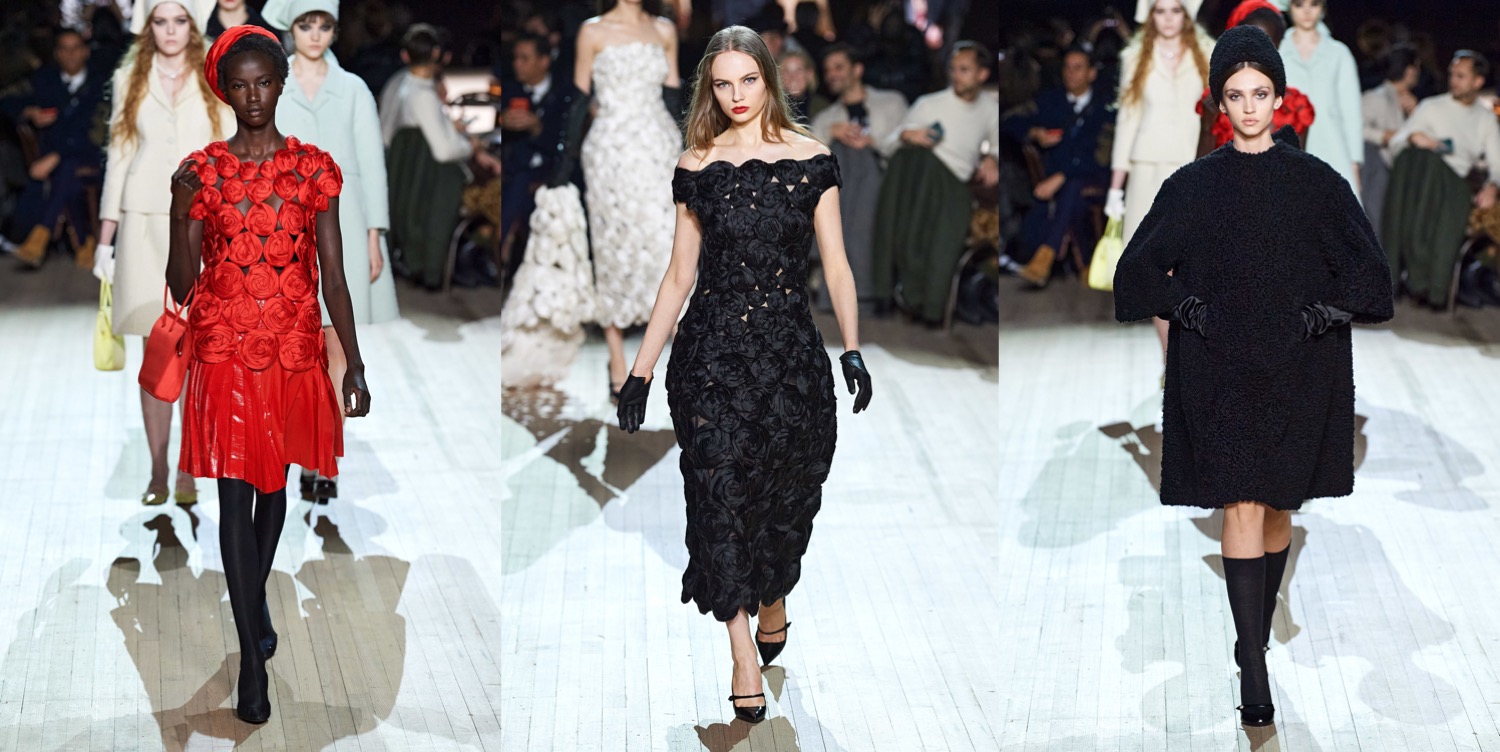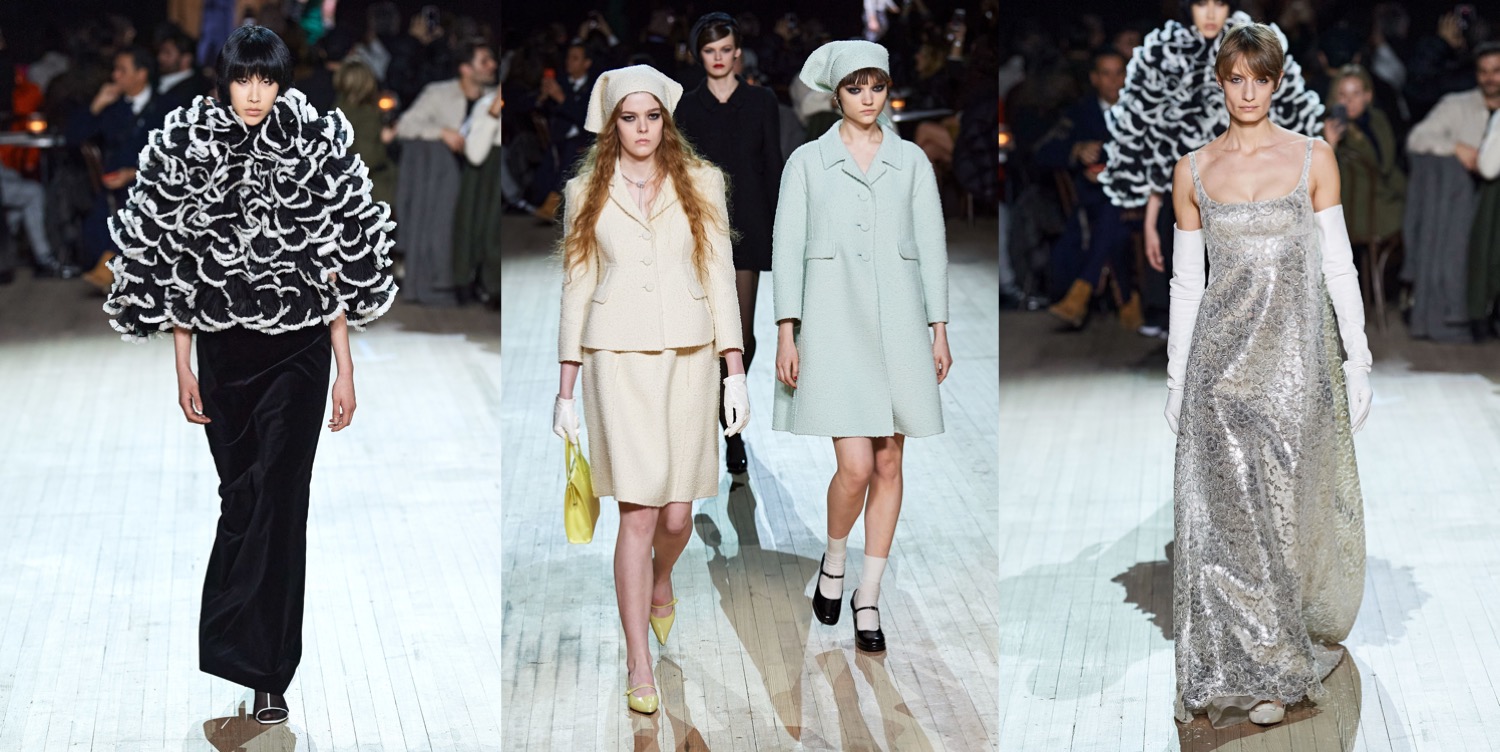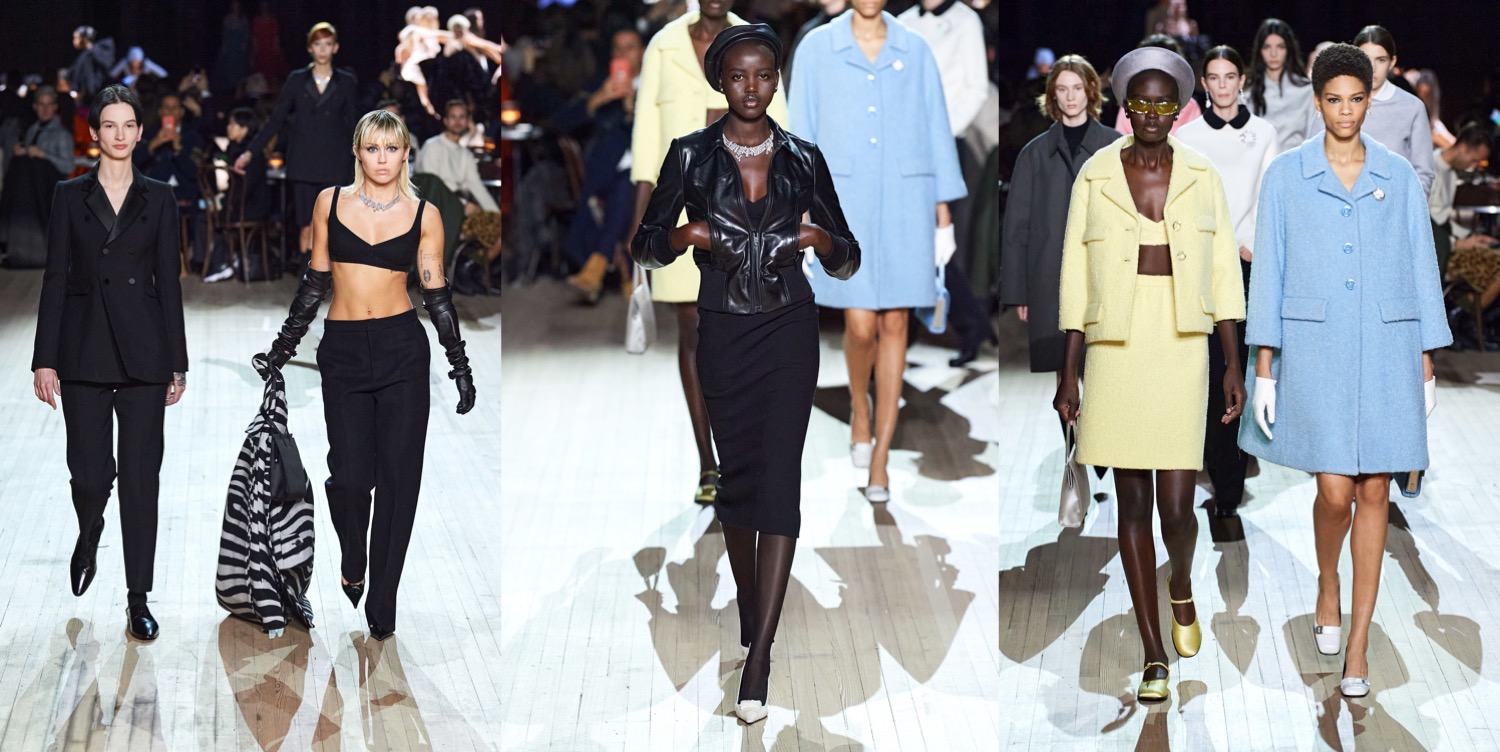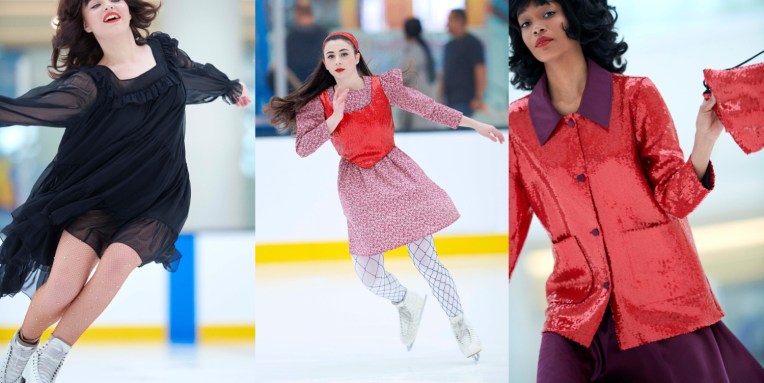
Personal. Dilara Findikoglu AW20

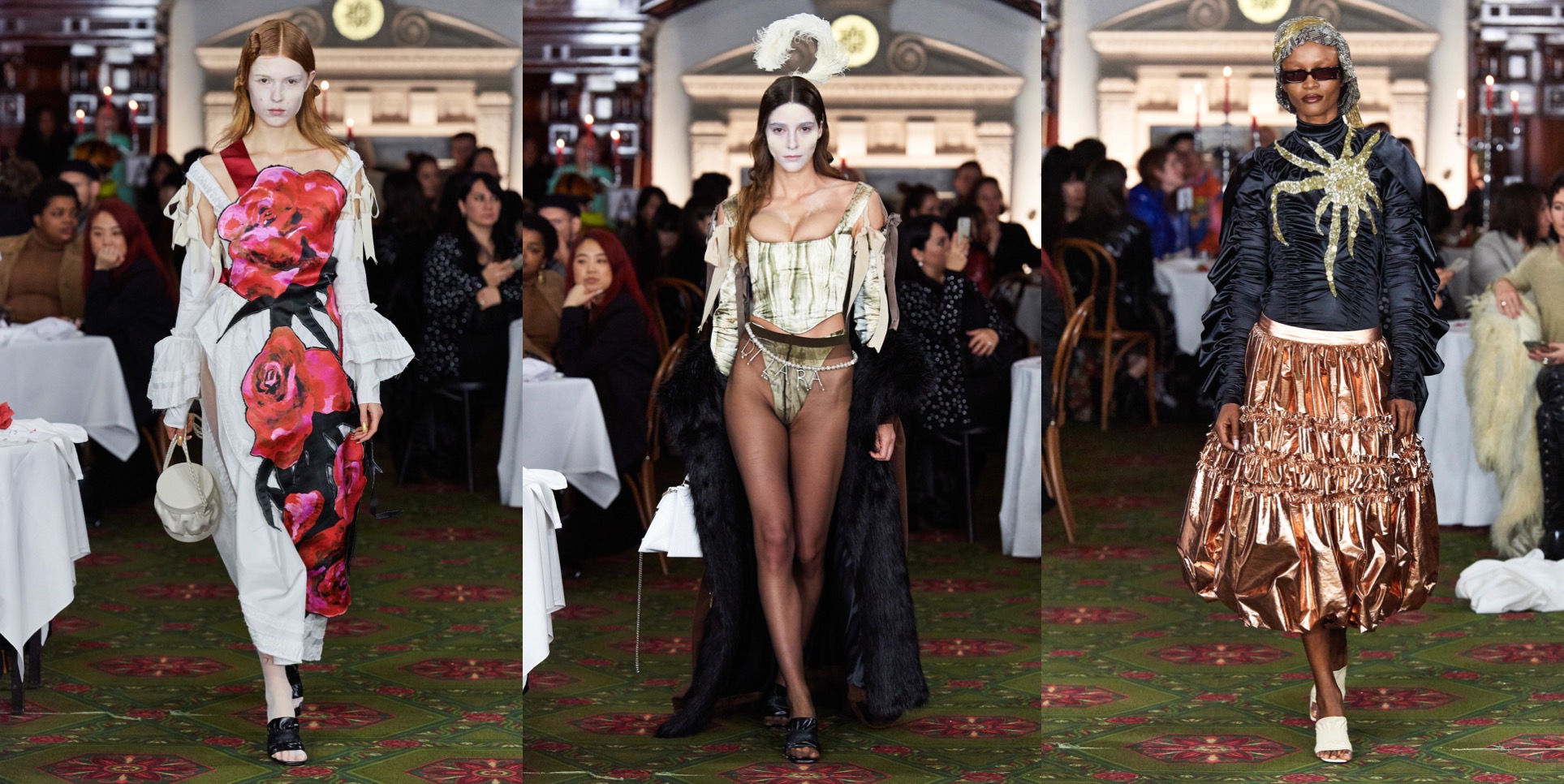
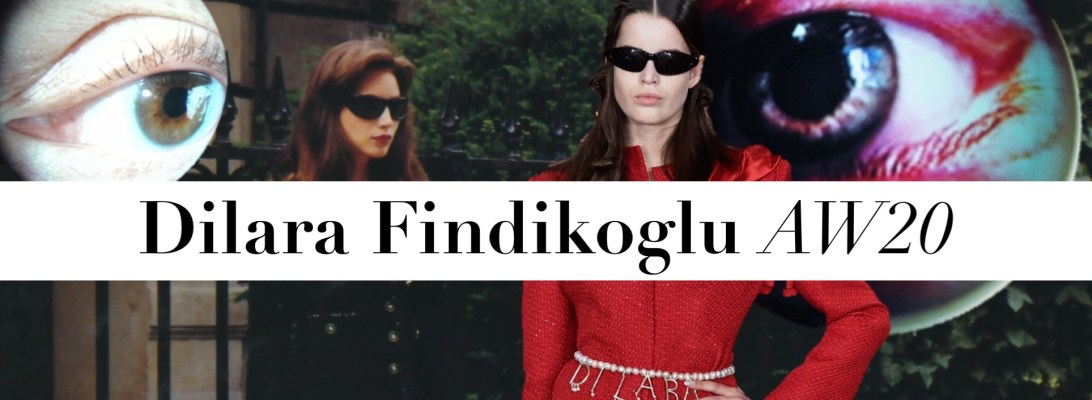
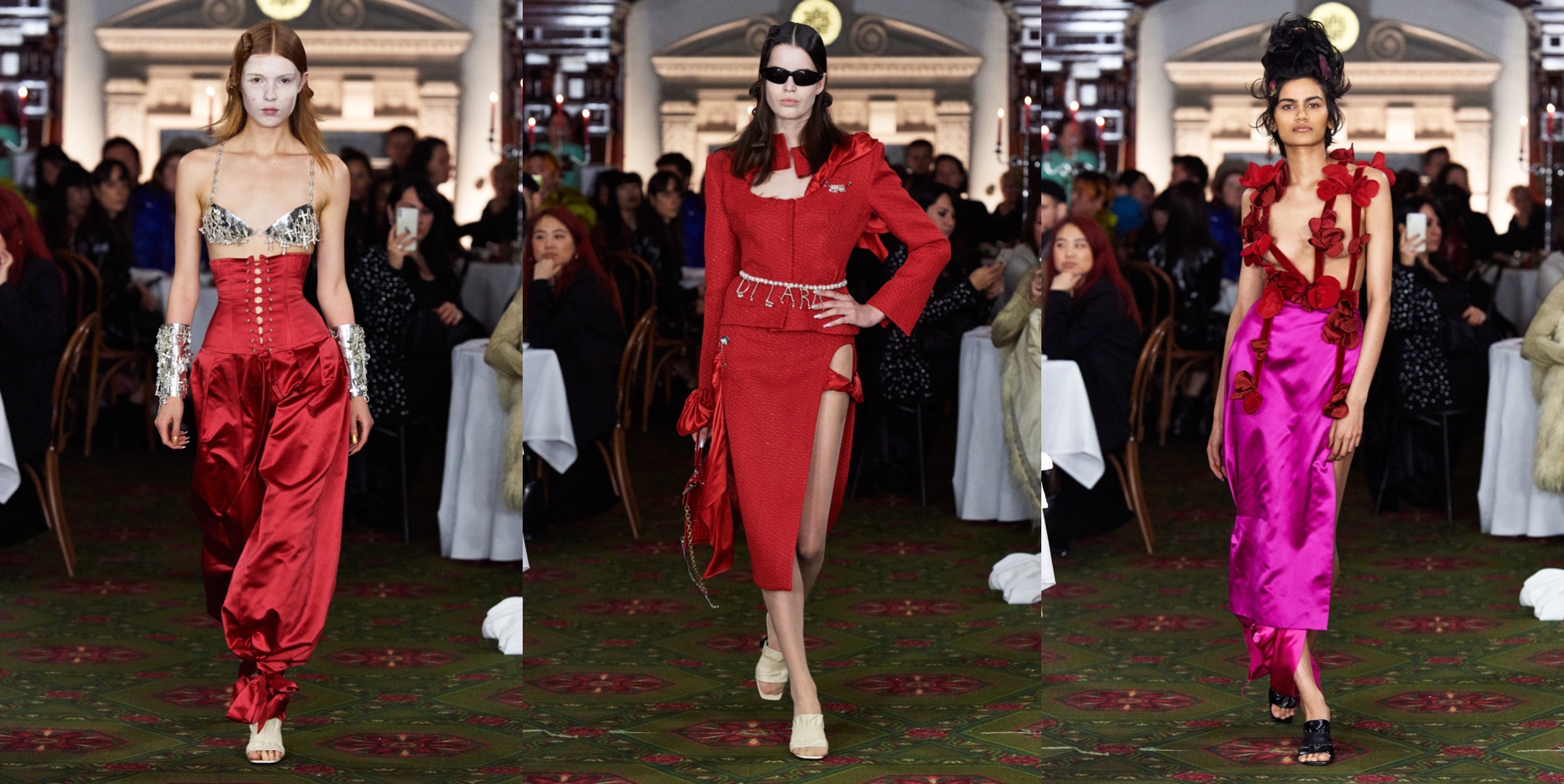
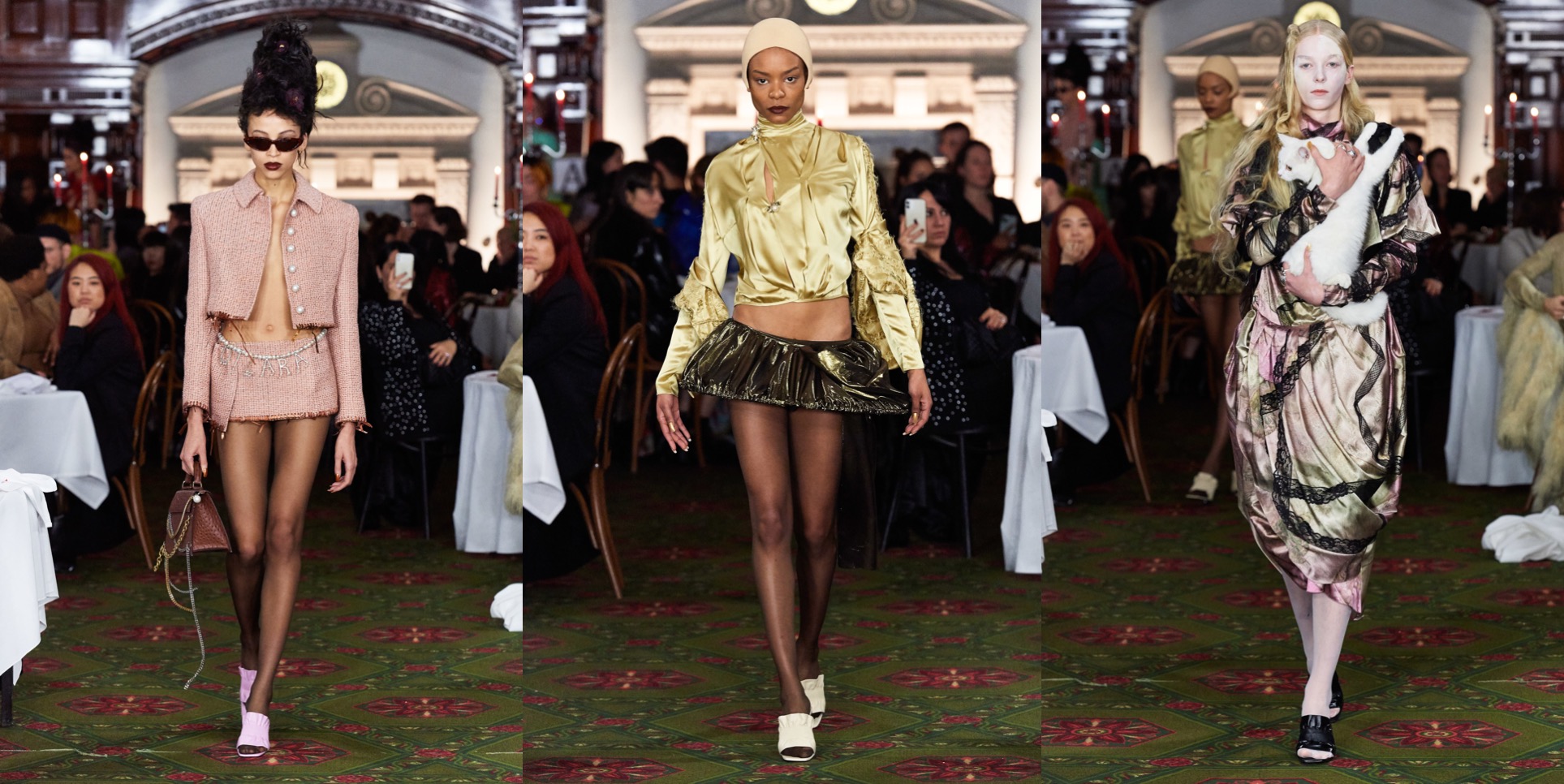
Dilara Findikoglu is a designer who injects cultural commentary into each of her collections, having spoken out about climate change, women’s rights, marriage equality and gender disparity in recent seasons. For autumn-winter 2020, she’s speaking out for herself. Backstage, Findikoglu explained how events in her personal life led her into a deep introspection. She psychoanalyzed herself in this collection, christening her models into two sects: light Dilara and dark Dilara. The division didn’t exactly correlate to a color palette or silhouette, but was more about mood. As is her habit, each look was named. Here are some of the most brilliant looks: “Mother” was a blooming harness top in fuchsia with a red, slashed-away maxi skirt. “Self Destruction” was a viciously ruched dress that appeared on the runway on a model holding a white cat. “Borderline” was a ruched black bodysuit, “Insecurity” was strips of silver fabric with floral appliques worn with a bridal veil that came after “Future”, a similar ensemble cut out of blood red fabric. A crimson tweedy skirt suit with a logo belt was called “Gabrielle” (as in Chanel). “Enfant Terrible”, long-sleeved corset top with low-slung skirt, would work for day job goths, as would “Real World”, Findikoglu’s version of a business suit with pointed breasts darted into its vest and high-cut briefs stitched into the trouser. Pretty much always (if we aren’t speaking of anonymous, fast-fashion studios, of course) a designer’s collection is somehow autobiographical and personal, but in case of Findikoglu, this really blurs the lines between fashion and psychology.
Collage by Edward Kanarecki.
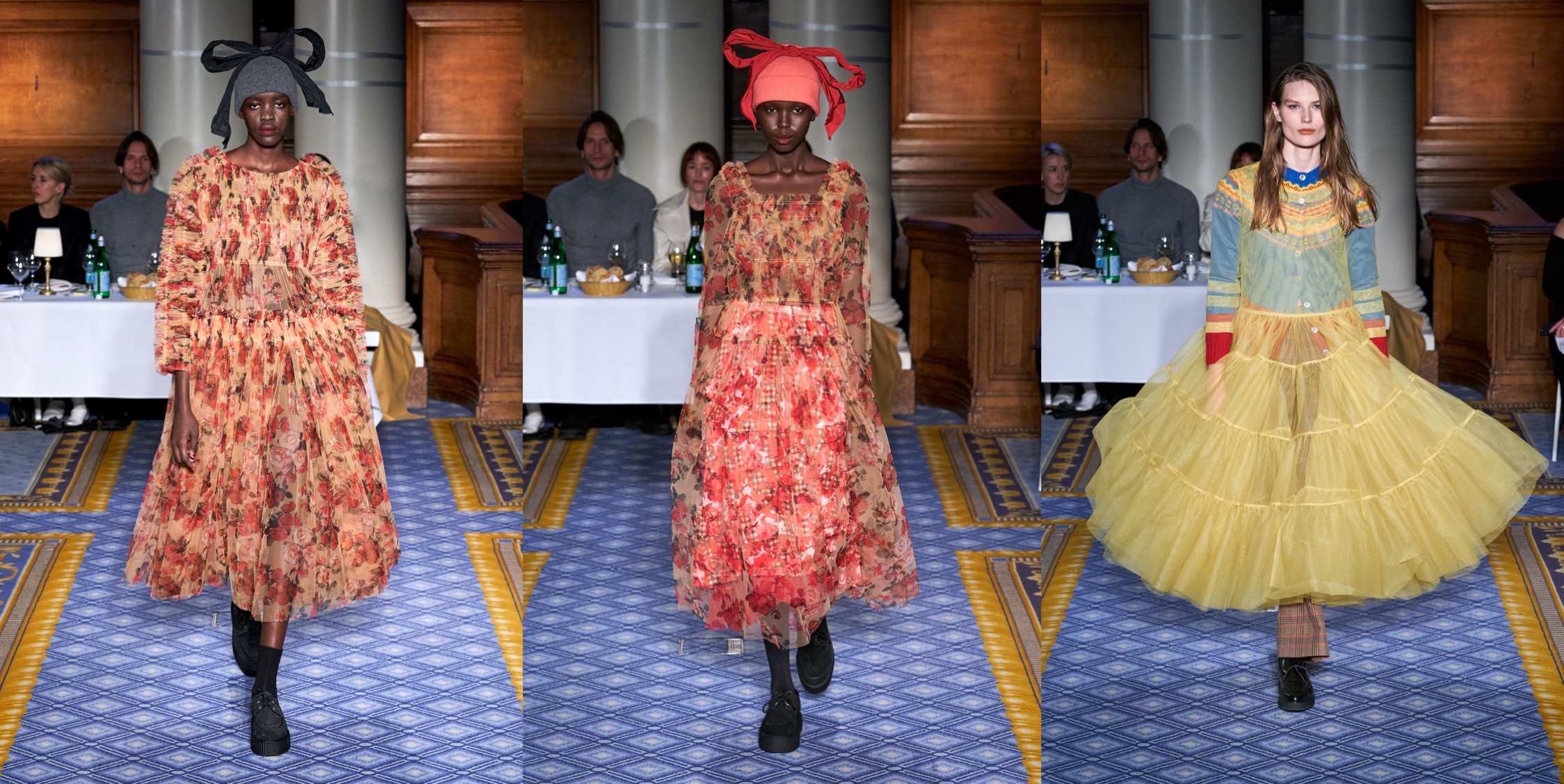
Your Inner Child. Molly Goddard AW20

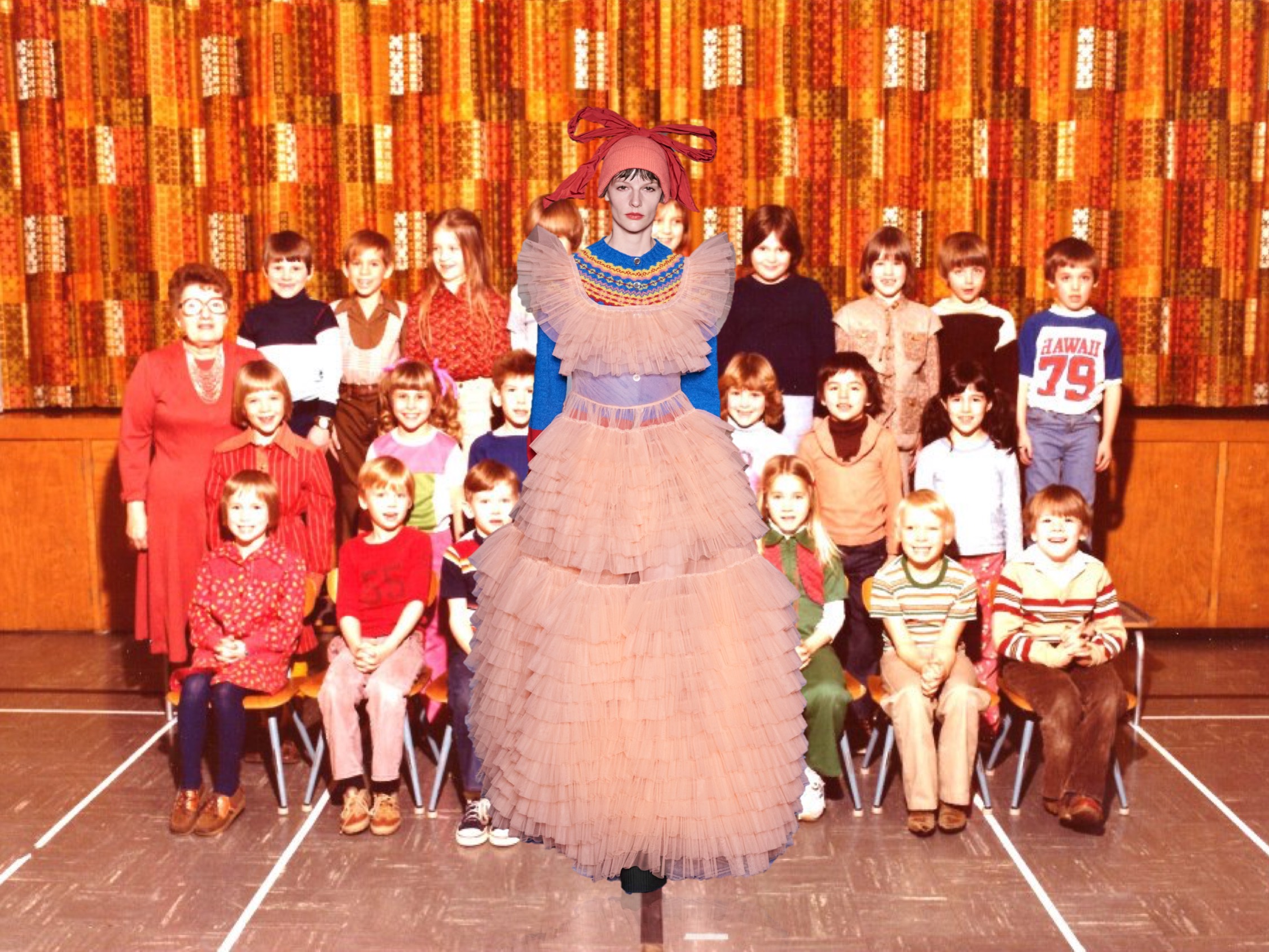
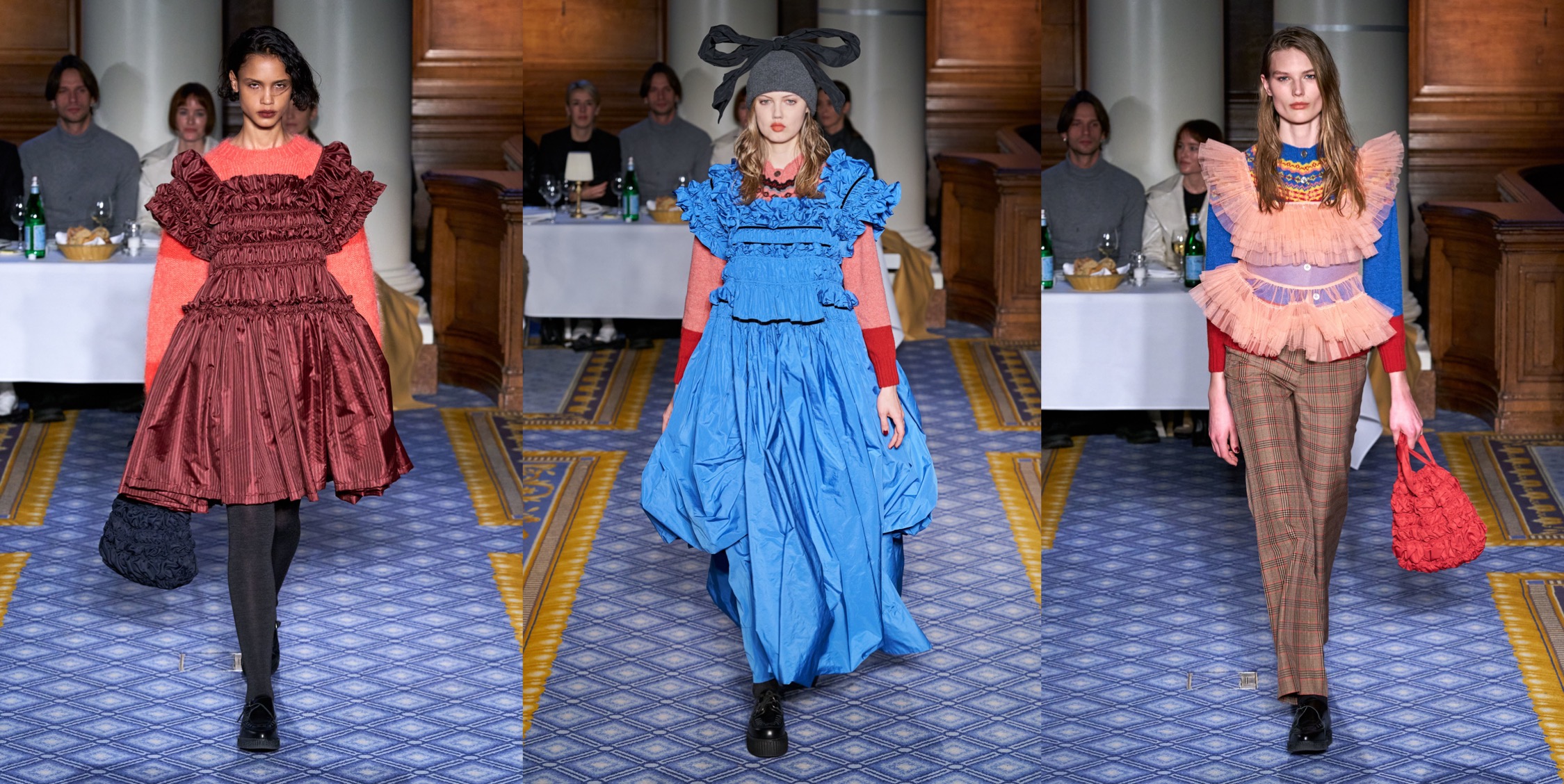
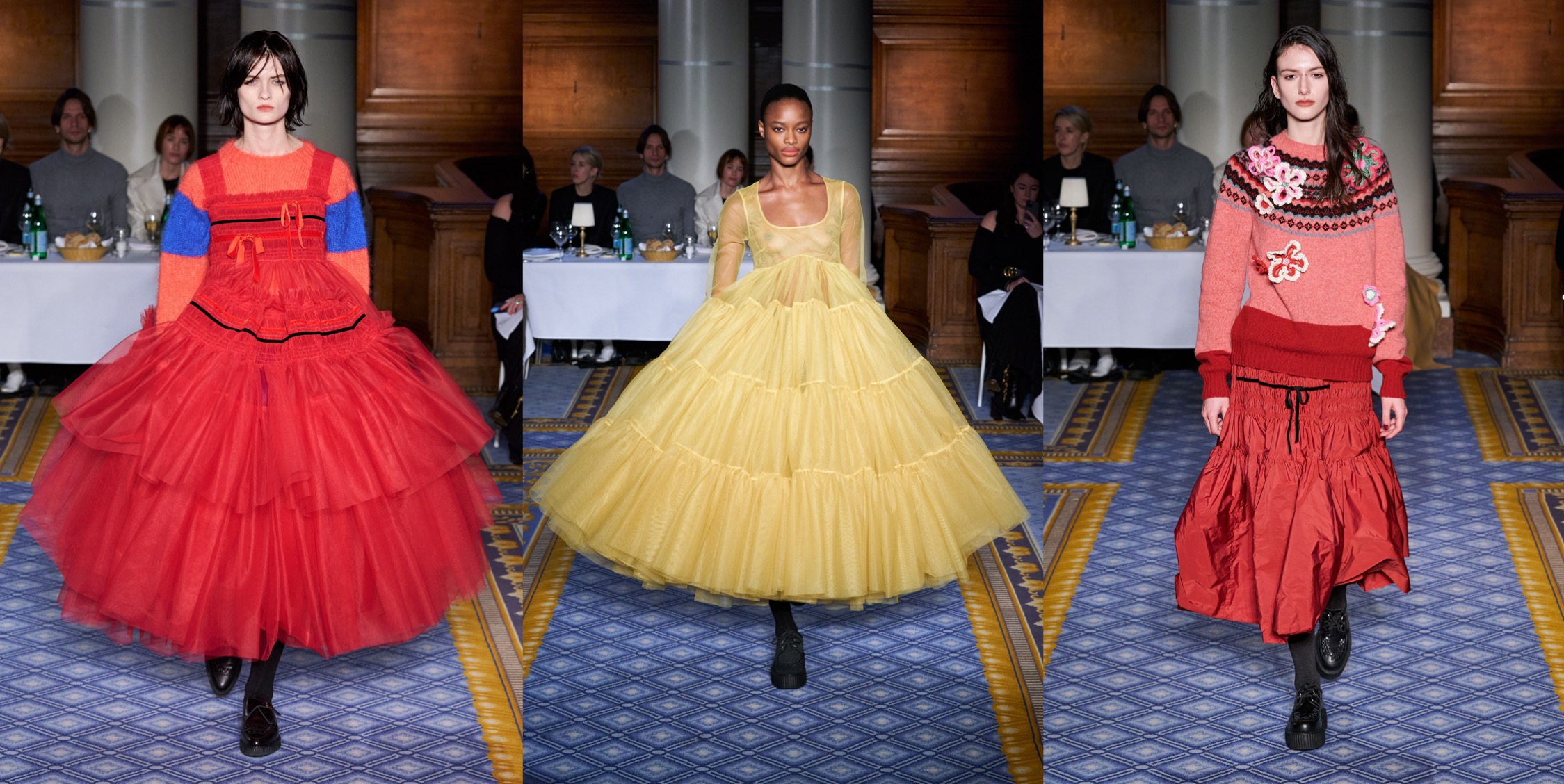
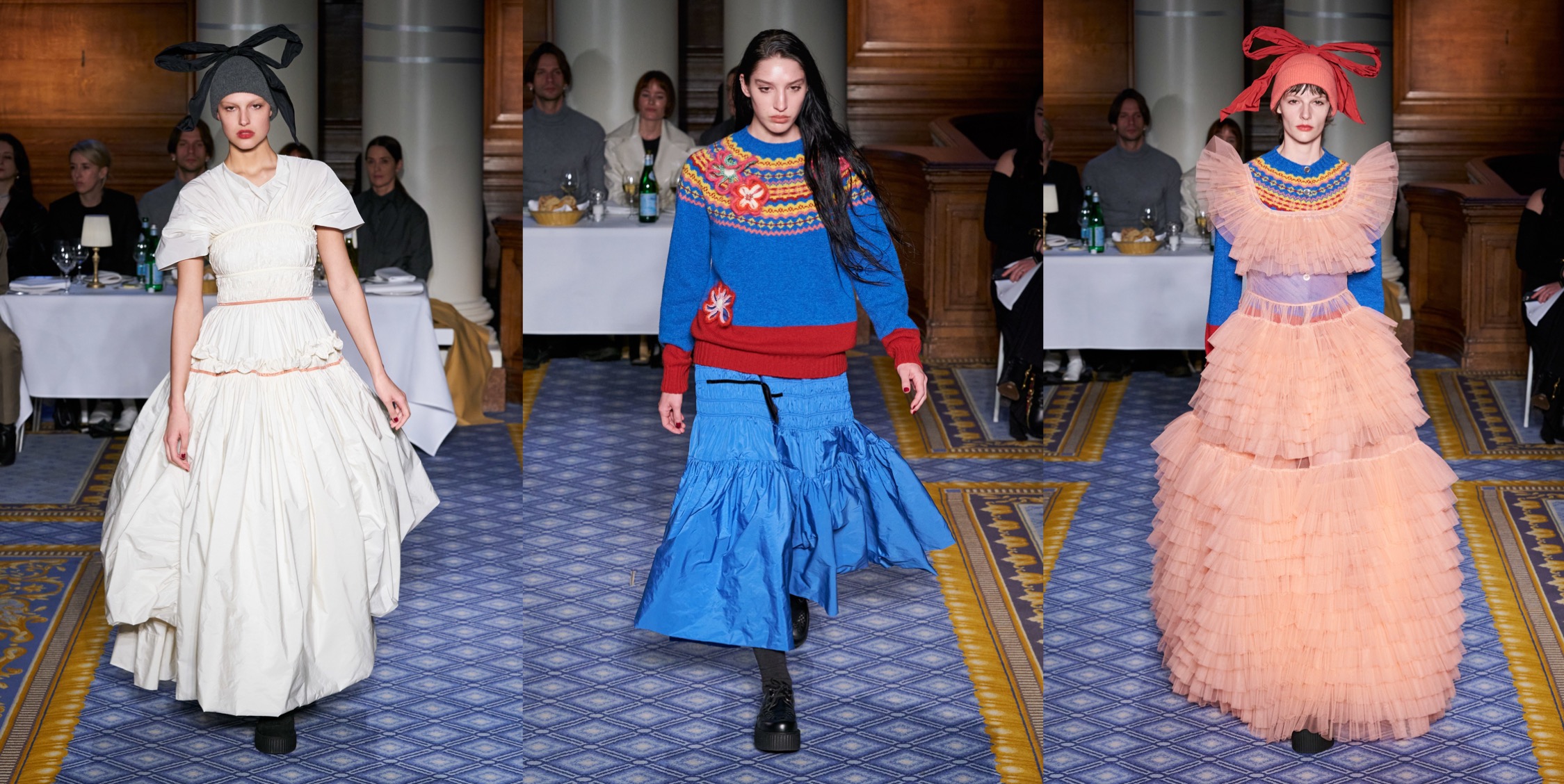
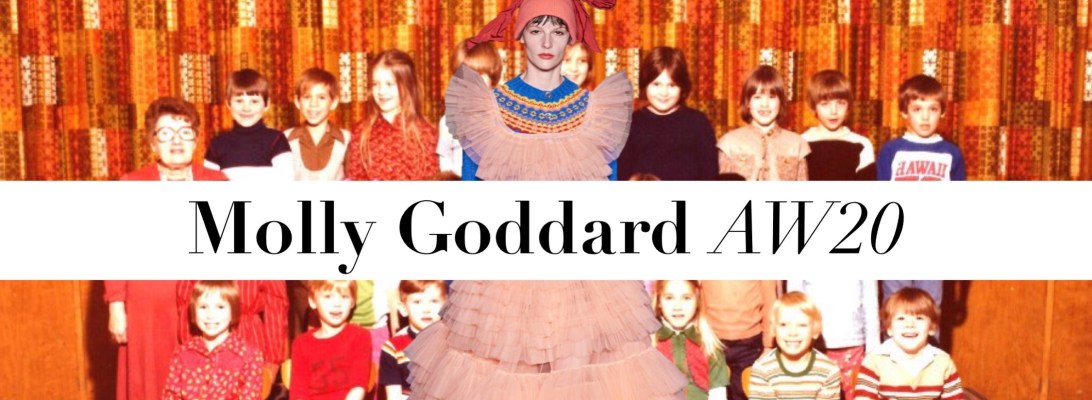
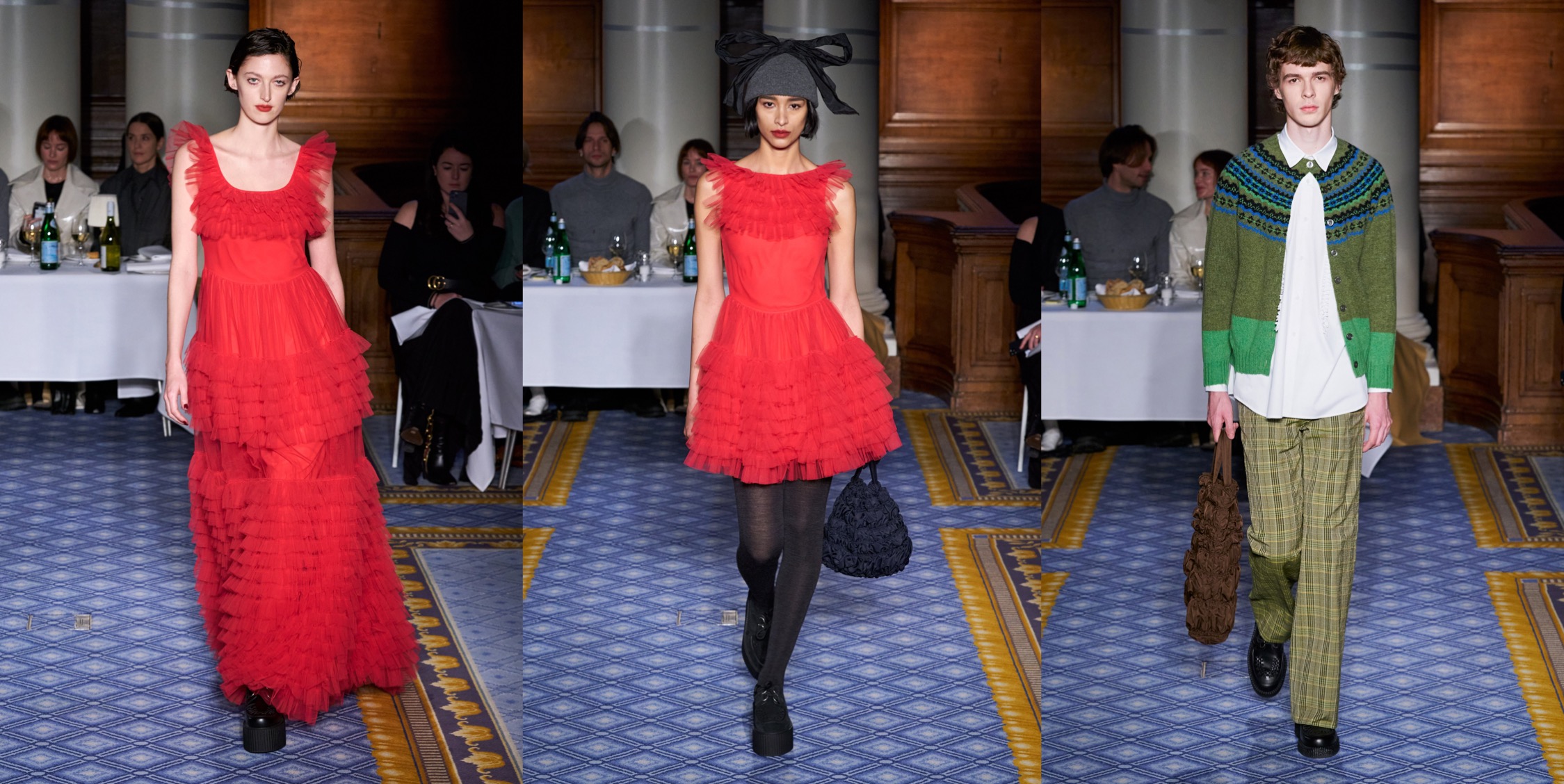
Freeing your inner child through fashion began this season at Alessandro Michele’s Gucci menswear and recently has also appeared at one of my favourite labels in London – Molly Goddard. In lieu of a press release, Goddard sent out a throwback London street style photo as the explainer for her new collection. First published in Fruits, the cult Japanese magazine, back in 1992, the image features just the kind of cool-looking dad and daughter duo you’d expect find on bohemian Portobello Road: him in distressed denim-on-denim and a baker boy hat, his insanely cute sidekick dressed in a tiny ruffled skirt over jeans and a chunky knit sweater. “The little girl is me!” said Goddard backstage at the autumn-winter 2020 show. “I remember those times growing up in Notting Hill so fondly, and really wanting to get dressed up for the market and all the characters who lived there.” In this joyful line-up, you could trace the influence of her toddler self, starting with an exploding blue taffeta dress that was layered over a salmon pink cardigan and worn with chunky creepers, then topped off with a beanie hat that was topped with a giant bow (the accessory of the season is here!). Then, things got even better: Molly’s signature tulle dresses in crayon kept on growing in size, while her sense of layering made it all look somehow… wearable. Goddard showed menswear for the first time this season, largely inspired by her musician-turned-fashion-PR boyfriend Tom Shickle. “He always moans that there’s nothing for him to wear, so I made a suit,” said Goddard, laughing. The retro-leaning checkered tailoring she created had a nerdy sway about it, something you could imagine Jarvis Cocker might have worn in the 1990s. One of these Fair Isle cardigans, please!

Collage by Edward Kanarecki.

Beauty, Promise, Sparkle and Grit. Marc Jacobs AW20

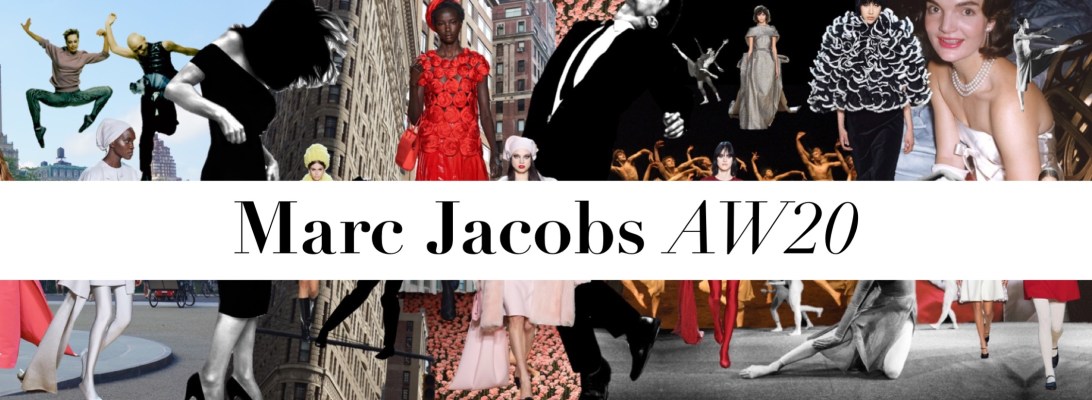
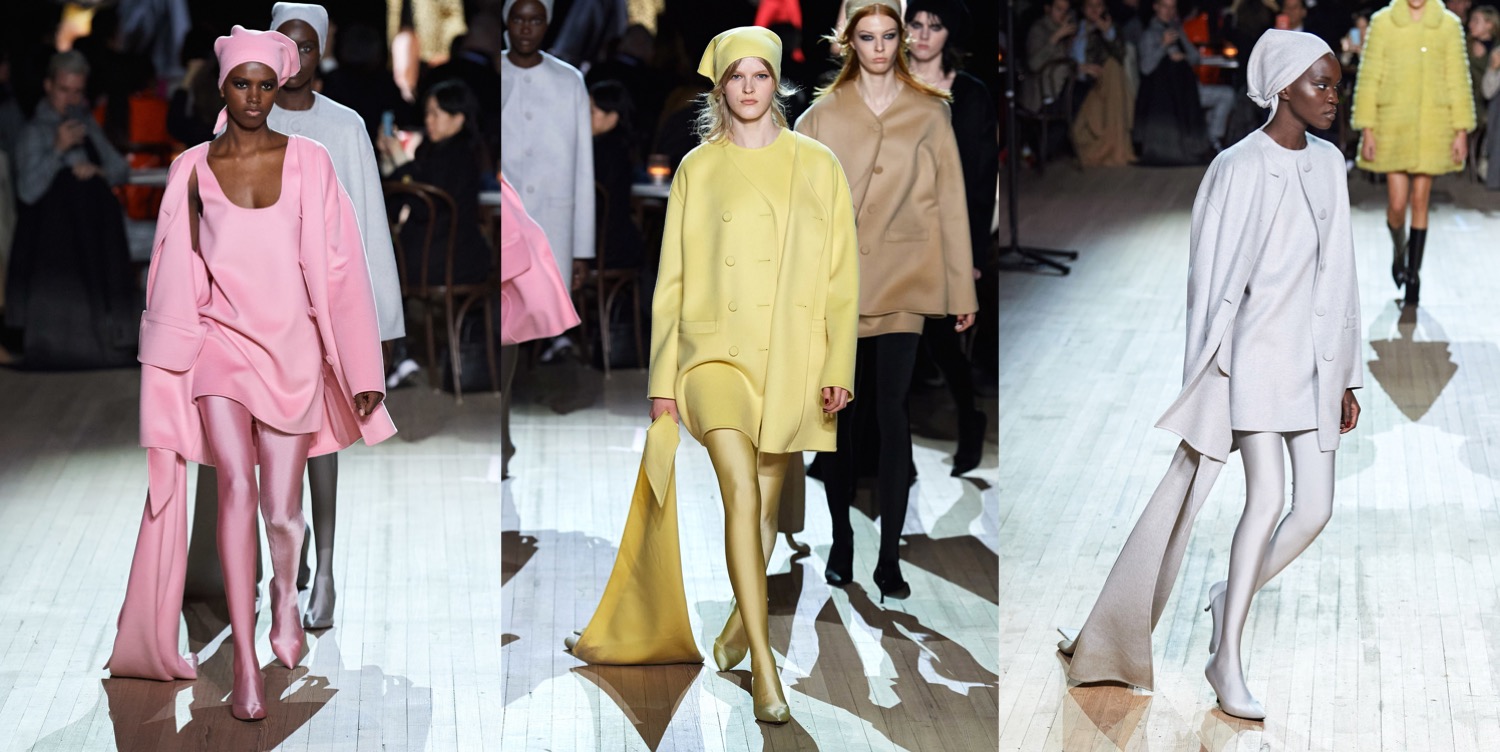
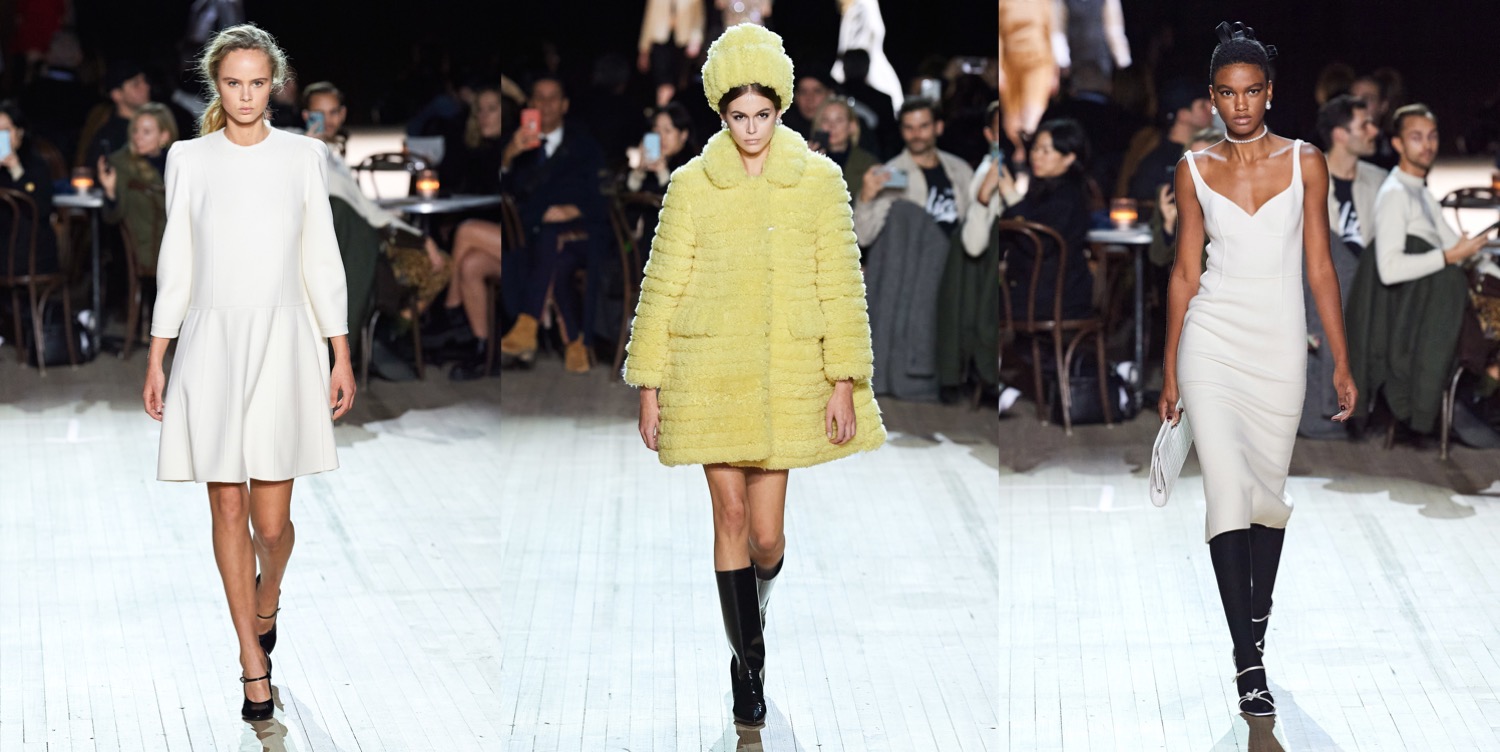
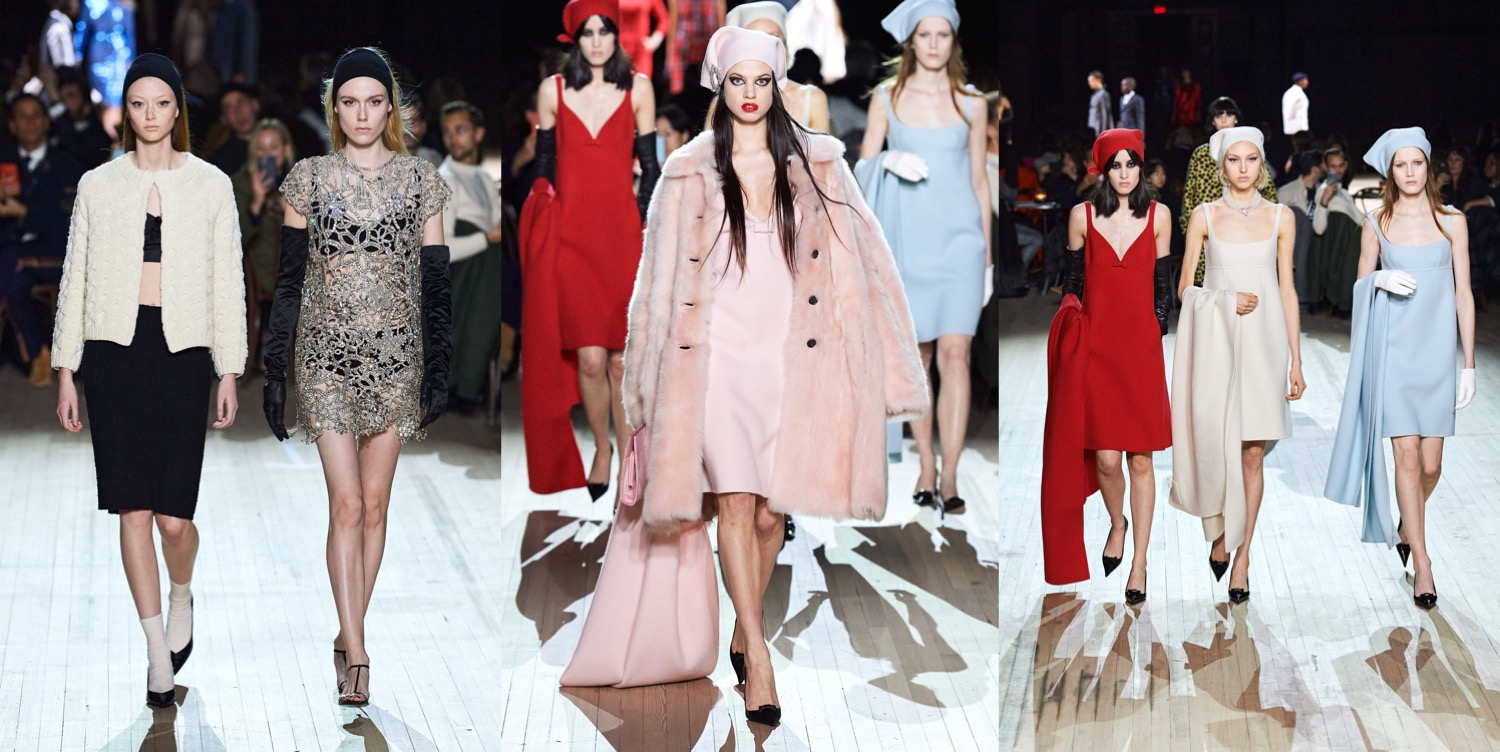
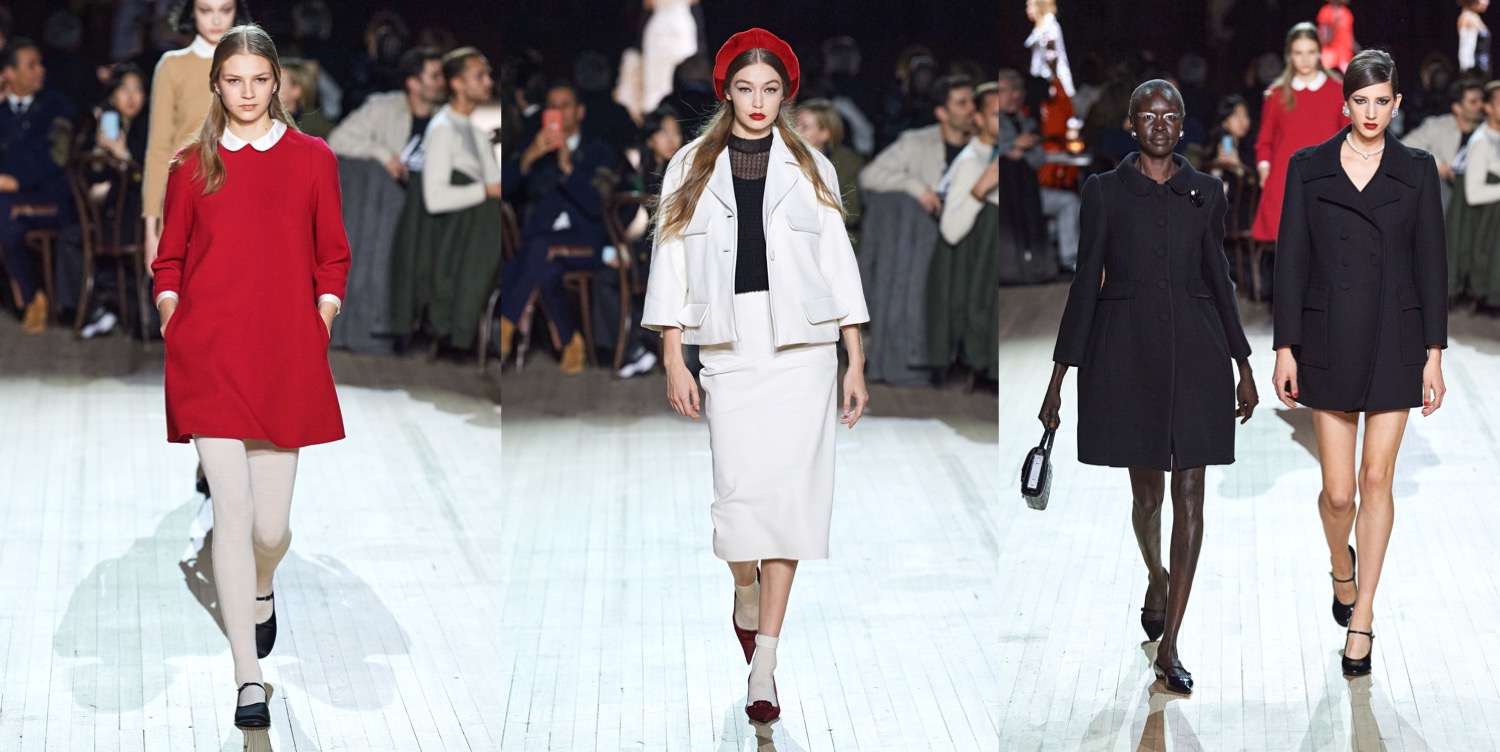
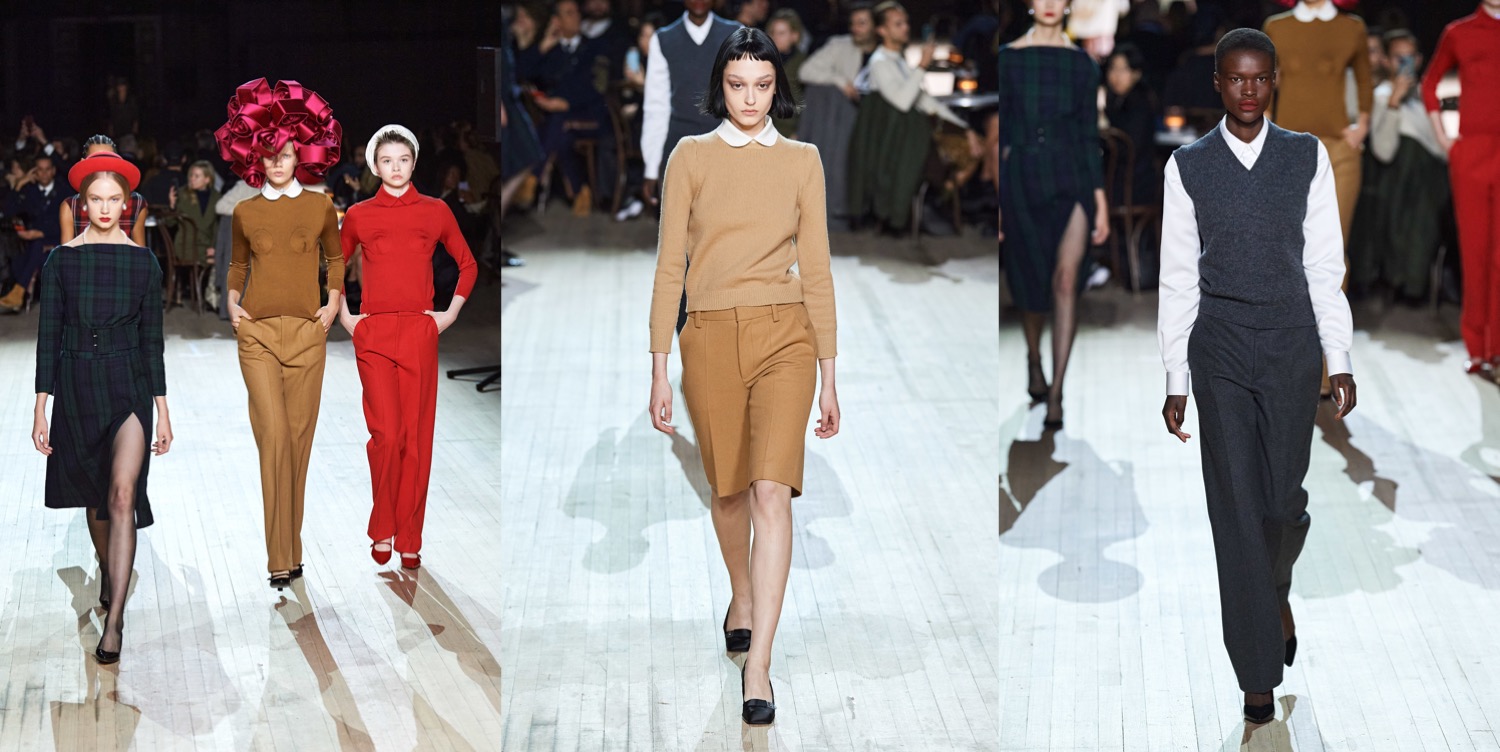
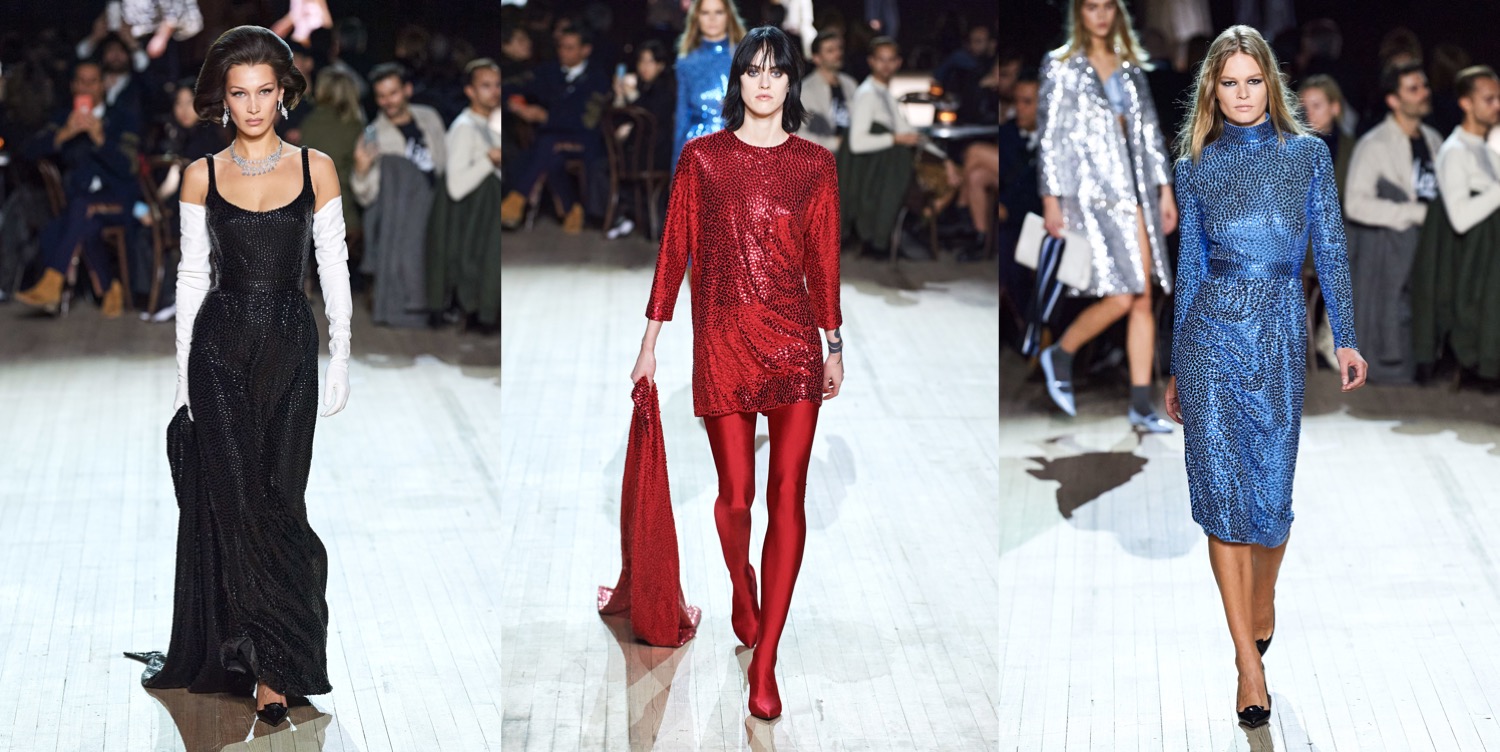
It’s rare I’m rewatching fashion show videos. But in case of Marc Jacobs’ autumn-winter 2020, I think I’ve seen it like five times already. It’s so brilliant. It’s nothing new that Jacobs closes New York fashion week with a vivid finale. But this season, it was even better. The runway featured a dance performance choreographed by Karole Armitage, New York’s „punk ballerina”, with the catwalk staged like a bistro. At some point it was hard to tell who’s the model and who’s the dancer (everybody was dressed in Jacobs), and that was the intention: beauty in chaos, told through powerful movement. Infinitely inspired by his heroes of the past and present, it is style in which different people dress at the various stages, ages and times in their lives that provokes Marc’s love for fashion and possibilities of what it can be. The designer especially had the fading image of disappearing New York in his mind – forever mythical and chic with its „beauty, promise, sparkle and grit”. As a departure from last season’s lamboyance, free spirit and color, this collection emphasizes restraint, quality of fabrics, make and proportion – valuing simplicity and timelessness above all. Jackie Kennedy’s evening dresses, pearls, refined daywear and headscarf looks were a big inspiration, just as the slinky minimalism of New York’s 90s aesthetic (which, of course, was shaped by people like Marc). Each look has its elegant charm, whether we’re speaking of white-collared dresses with above-the-knee lenght, pieces made from draped roses, classic peacoats or the marvelous gowns, inspired with couture masters. What truly stuns in this line-up is the way Jacobs brougt so much relevance and modernity out of nostalgia – literally everything is fit for 2020 here. I think it’s clear who’s (again) the winner or NYFW. And, what’s worth noting, not because other shows were dull and Jacobs was entertaining. We’ve seen some great collections this week – I’m thinking of The Row, Rodarte, Area and few others –  but Marc’s felt definitely the most alive and emotional (and, simultaneously, completely wearable!).

Collage by Edward Kanarecki.
Prairie Dress on Ice. Batsheva AW20

Slajd1-kopia 12

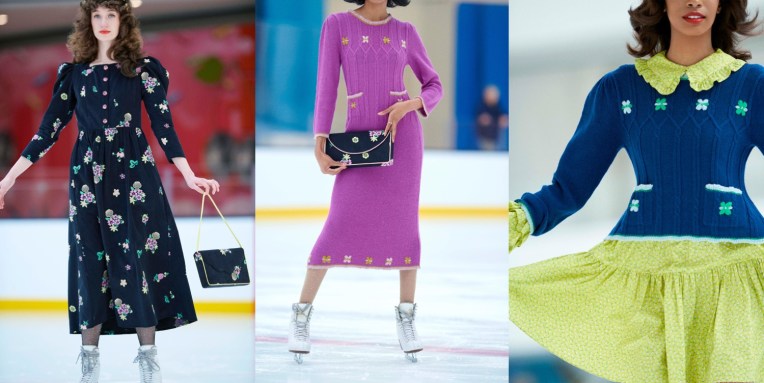
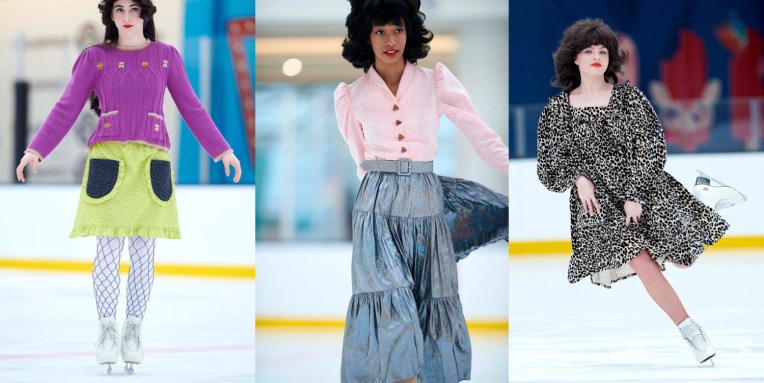
There’s no street style in New York without the Batsheva dress. Batsheva Hay‘s prairie look has trickled down to other, local brands’ repertoire, which just reassures her success. The designer expands, trying out new things. The autumn-winter 2020 collection  had no runway, but a look-book featuring… figure skaters. Batsheva and her husband, Alexei, had conspired to shoot this collection guerrilla style in the American Dream mall, and stumbled upon a figure skating competition on the day they went to scout locations. “Part of what I’m always trying to prove is the wearability of my clothes,” she said, “and athletic movement is the definitive wearability test.” The skaters spin, twirl and jump in Hay’s chiffons, cottons, and custom flower pot embroideries, frozen mid-gesture by the camera. It’s intentionally not glamorous (and definitely not Tonya Harding) and the styling is kooky in its spontaneous way. For the season, the designer brings in evening-worthy sparkles, vintage flocked wool trenches and a red bustier “going out” top. It’s proper hot. For prairie girls not ready to give up their pastoral vibes, Hay offers ruffle V-front dresses and smocks, as well as velvet leopard with a wider, less Victorian neckline – this one is my personal favourite. Sounds (and looks) like lots of fun.

sssddd-kopiafffggghhh

Collage by Edward Kanarecki.
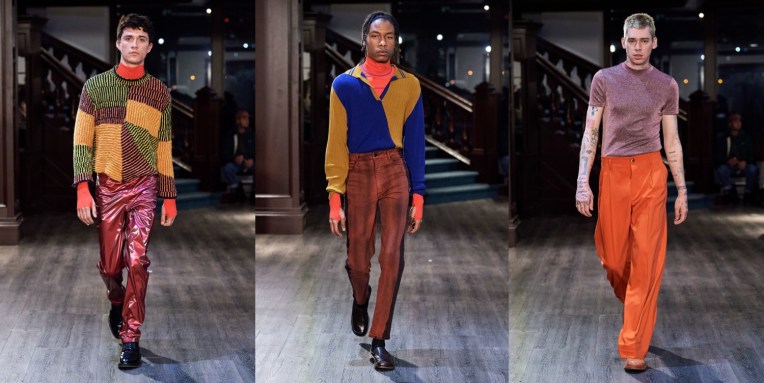
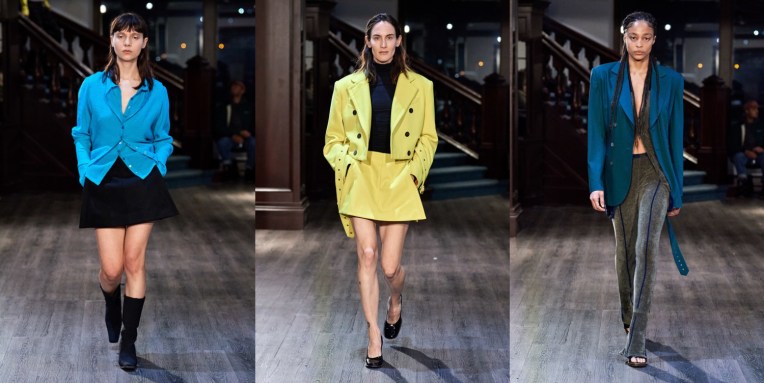
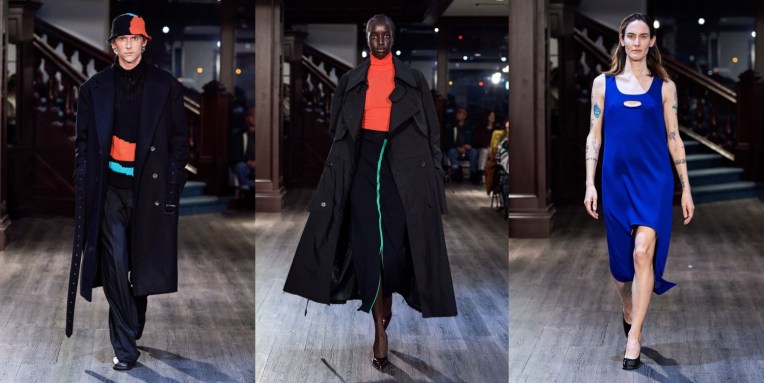
Soft Experimental. Eckhaus Latta AW20

Slajd1-kopia 5

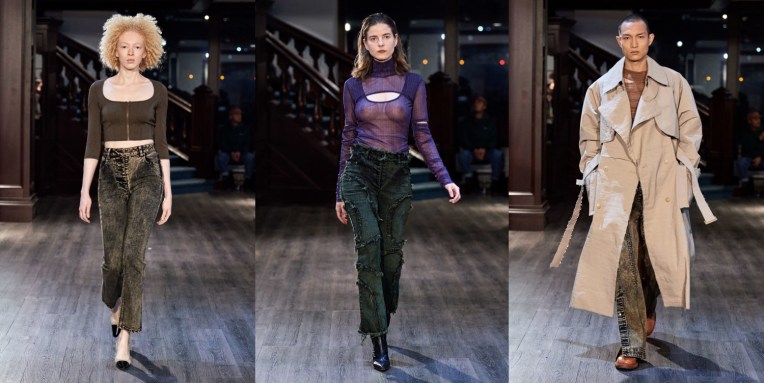
Mike Eckhaus and Zoe Latta were working through a bunch of ideas this season – colored acid-washed and “experimental” distressed denim, as they put it after their Eckhaus Latta show; boxy tailoring paired with either super-abbreviated skirts or languid, flared trousers; liquid fabric effects. As is typical for this New York-based label, the clothes were gently (rather than aggressively) challenging, with most of the novelty to be found in the occasional so-odd-its-good proportion, the unexpected finish on a garment, or the painterly quality of the garments’ surfaces (take the sweater knit with what looked like brushstrokes of bold color or jeans with a watercolor-y acid wash). Everything, even the purposefully frayed pieces, was executed with a lot of polish – and that, Latta and Eckhaus said, was the real story here. As Latta noted, they were posing “existential questions” to themselves, like, “What are we doing here?” and “Why are we making any of this?” that they answered by focusing on craft. The goal, they said, was for every piece in this collection to have a long life cycle, whether that means one wearer using a garment over many years, or several wearers enjoying the same piece. “Whatever we made,” Latta elaborated, “we wanted it to last.” Another sustainability step they took was partnering with resale site The RealReal to source footwear for the runway. Give an existing shoe a life, instead of making dozens of prototypes and samples is a great idea. But also, Mike and Zoe have always been more interested in producing clothes for varying types of people to integrate into their lives and wardrobes as they please than they have been in creating a brand uniform. Seeing all different shoes on the models highlighted the designers’ commitment to designing collections that can be interpreted in a variety of ways.

asdfSlajd5g

Collage by Edward Kanarecki.