Back To Office (Someday). Louis Vuitton Resort 2021

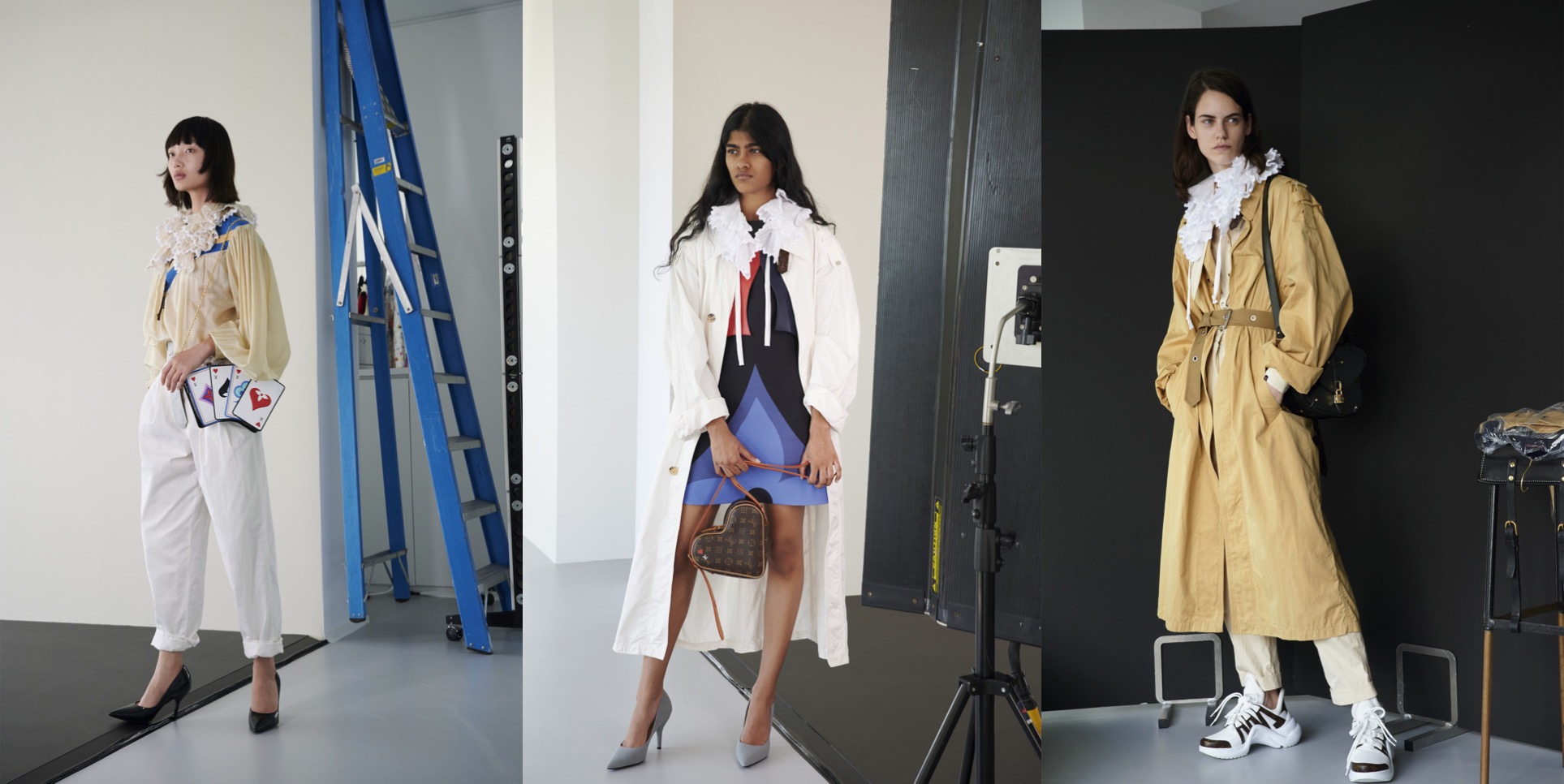
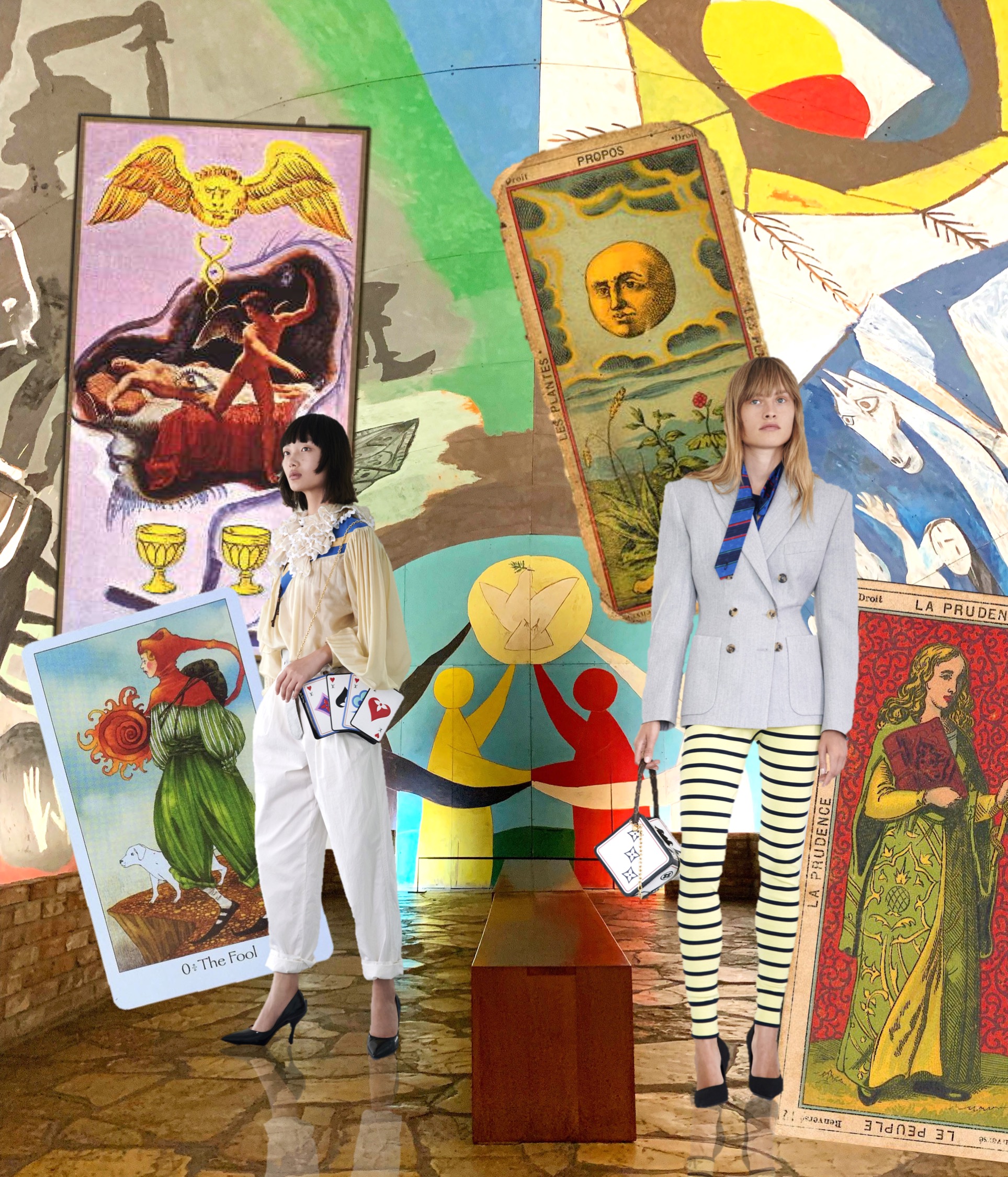
For many people still working from home, the word “office” sounds abstract. Tailoring isn’t a novelty in the resort 2021 collections, but only the Louis Vuitton line-up by Nicholas Ghesquière makes you think that some day, the “business” dress-code will come back to our lives and replace the lazy Zoom homewear. Emphasizing the more everyday, less editorial aspect of his ready-to-wear, the look-book was shot on location in Louis Vuitton’s Paris headquarters. A photocopier stands at attention in the opening shot, and exit signs and fire doors appear in the background of others. The promise of gorgeous hourglass blazers and chic silk blouses makes the longing for “back to life” life even more intense… but this wasn’t the only aspect of the collection (which, by the way, was good without any far-fetched venue location). “I looked somewhere that has been calling out to me for a long time, somewhere I hadn’t taken the time to go back to. It was like a reset to uncover one inspiration after another, to imagine the next steps and how to create and work within this new context. I took the time to explore my creative identity and prepare the future.” Confronted with the unknowns of the coronavirus and the crushing recession it precipitated, designers have been revisiting their past successes. Nicolas Ghesquière is among them, though the search for lost time is not only a quarantine pursuit for him. On his autumn-winter 2020 runway, with the then as-yet uncanceled Met Gala and its theme of “Fashion and Duration” still on the horizon, Ghesquière held up a mirror to his own work. For this resort collection, he followed similar guidelines – lifting cargo pants from one collection and frilly rococo collars from another, and reuniting with the blouson shapes of the 1980s he likes – with results that read more easier than his runway outings typically do. Additionally, running through the collection is a playing-card leitmotif. When asked, Ghesquière claimed “the tarot” as his favorite card game, “because it can be used in many different ways. And the cards are full of symbols.” Nonetheless, he made effective use of the clubs, diamonds, hearts, and spades of the playing-card deck. They bear more than a passing resemblance to the elements of the Louis Vuitton monogram, which Ghesquière made the most of by hybridizing them and then either adding them as decorative details on bags, or supersizing them as color-blocked patterns on streamlined mini and maxi dresses.

Collage by Edward Kanarecki.
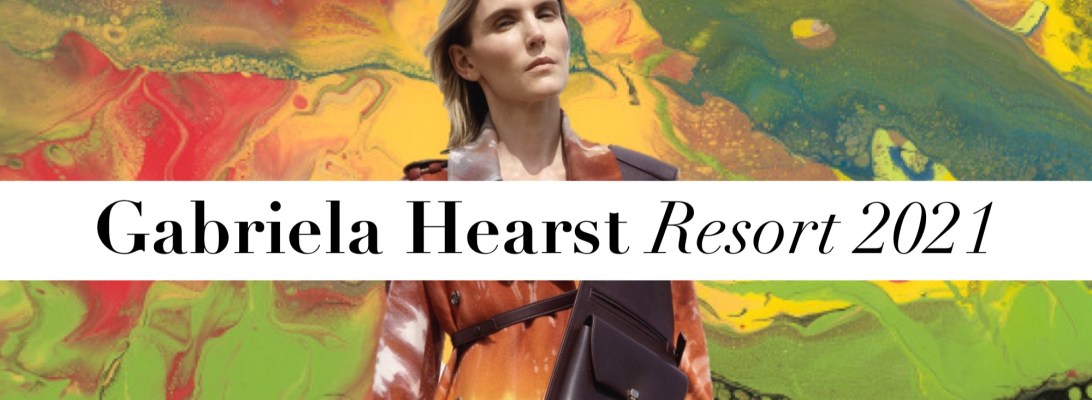
Sustainable Practice. Gabriela Hearst Resort 2021

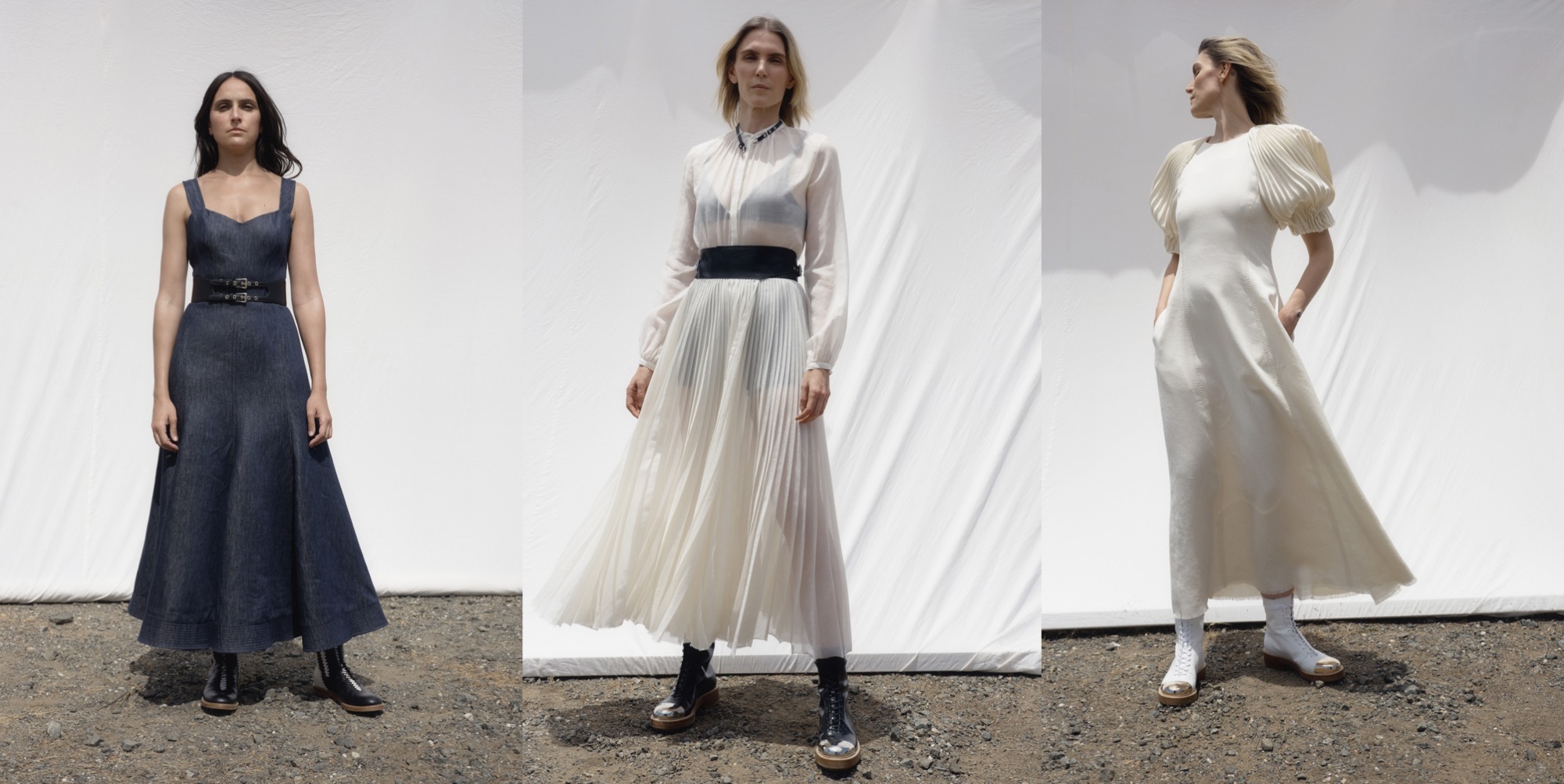
With every season, I’m enjoying Gabriela Hearst‘s collections more and more – and the entire process of sustainability that occurs backstage of every single garment she produces makes the brand even more worth of you attention. Hearst sent over a resort 2021 box to the press with about 35 fabric swatches, one more sumptuous than the next, and many of them recovered from deadstock supplies. Hearst’s plan is to prove the mutual compatibility of luxury and sustainability, the thinking being that the more you normalize the likes of repurposed silk cotton voile and recycled stretch polyester, the more you problematize materials such as standard issue cotton and polyester, which require obscene amounts of water to grow, and virgin plastic to manufacture, repsectively. That said, there’s nothing normal in the least about Hearst’s materials. You need only brush your hand against the multi-ply of her handknit cashmere sweaters or take a longing glance at the fiery tie-dyed cashmere flannel of a coat. The designer produced a short Zoe Ghertner-lensed video for the collection in the California desert in which she appears alongside her sister, riding a horse bareback. On the voiceover Hearst says, “my sustainable practice is exactly what that word is: it’s a practice. You never achieve perfection, but you have to start. We don’t have an option.” The spring line-up’s ultimate stars are a black leather trench with hand-painted white leather lace “stripes” down its back, and another coat in that fire tie-dye, with a spectacular matching blanket shawl. Rounding it out is Hearst’s minimalist tailoring, made a little less minimal this season with a knotting detail on the lapel, and dresses and separates in cotton voile and denim-look linen with elevating metal-trimmed leather collar details and belts. Her new boots come with metal toe caps that took her seasons to get right. It’s a wardrobe for some good times ahead. “We have to dream,” she says.

Collage by Edward Kanarecki.
Honesty and Intelligence. Prada Resort 2021 + Men’s SS21

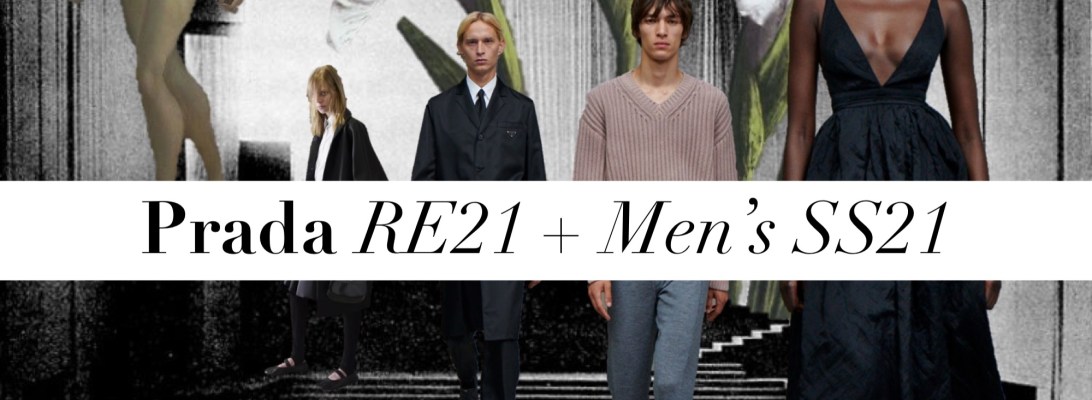
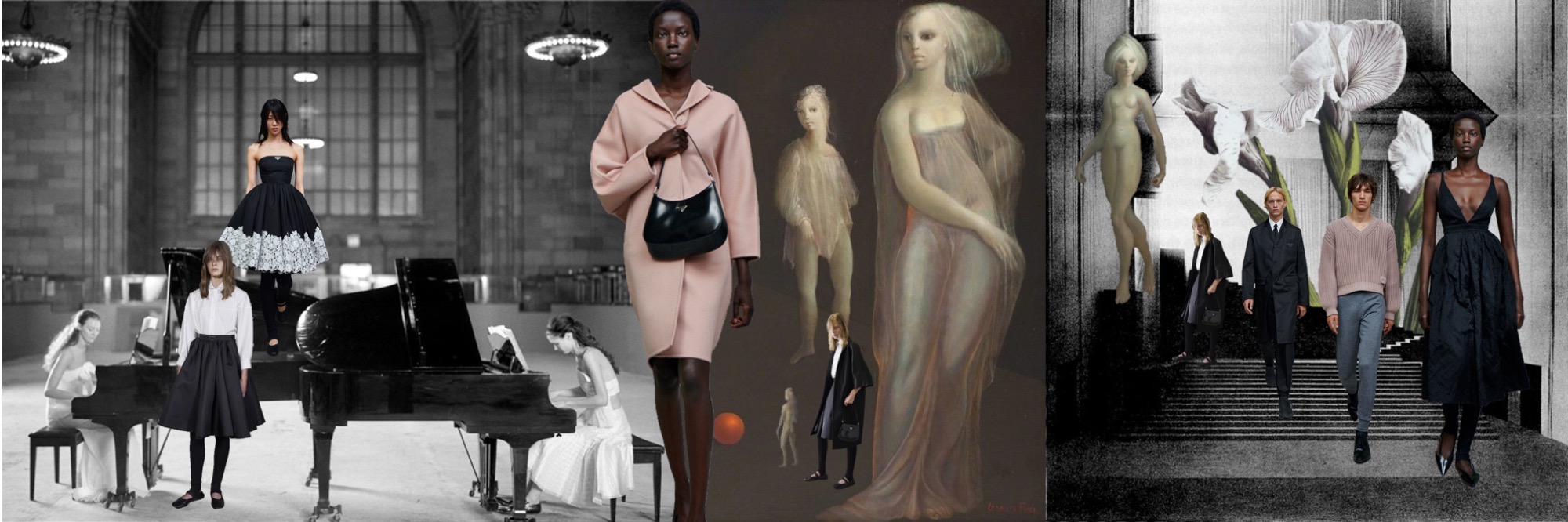
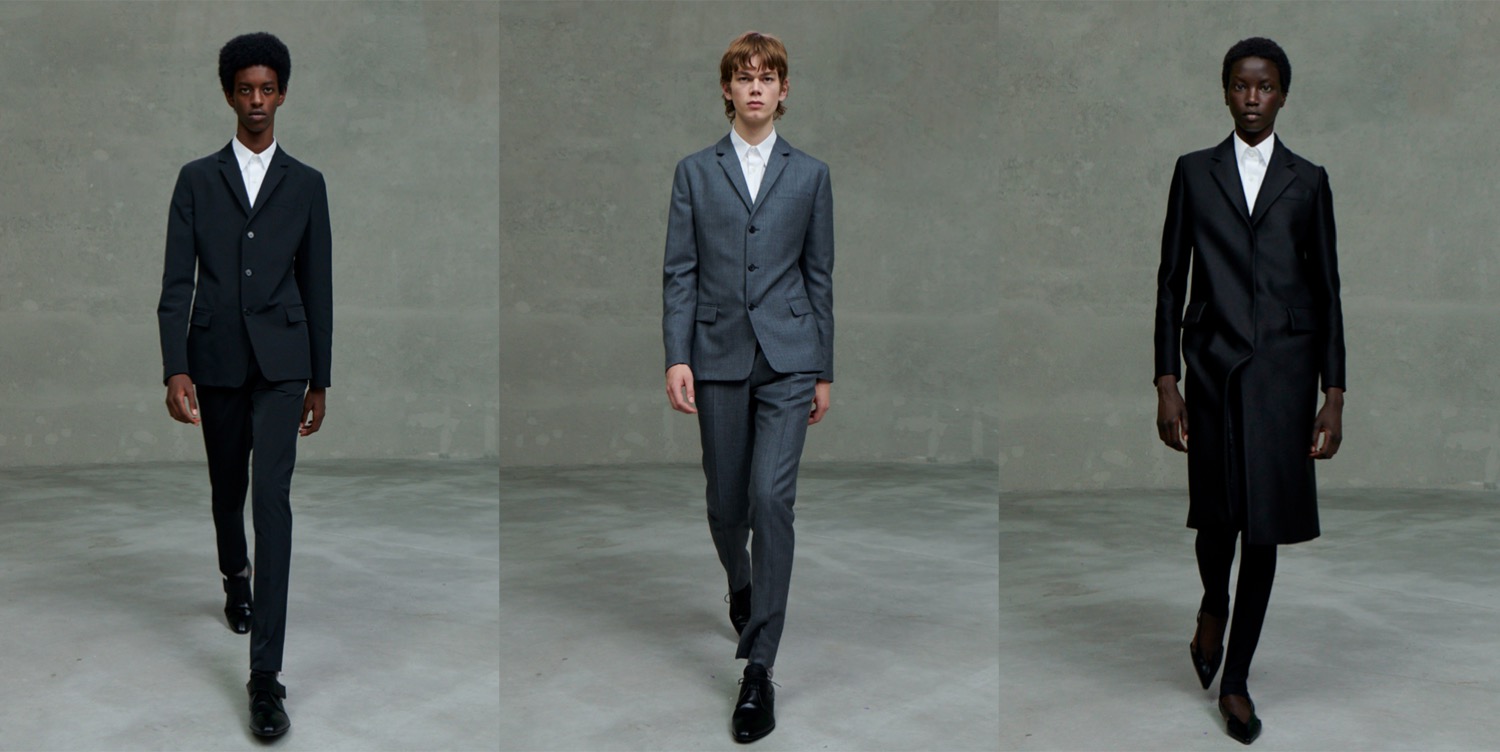
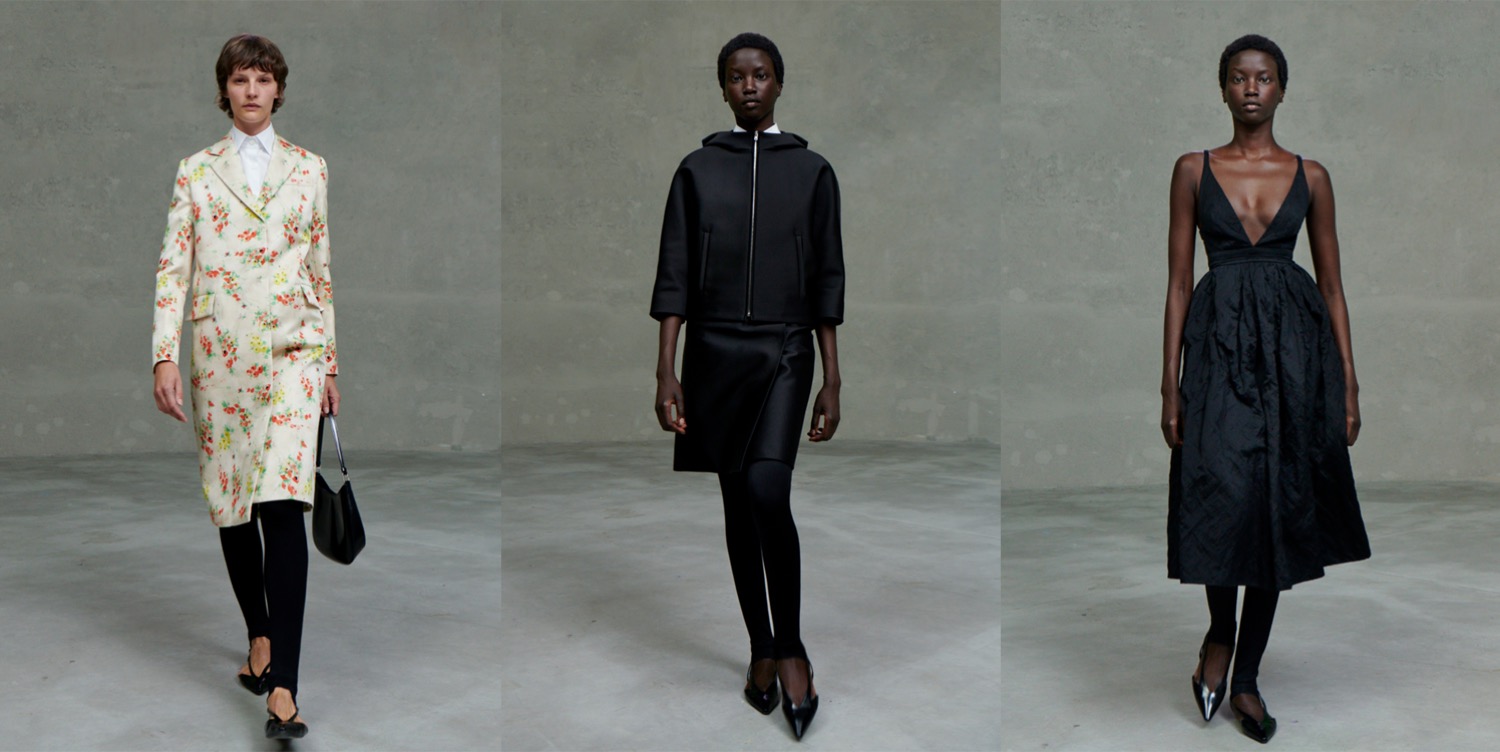
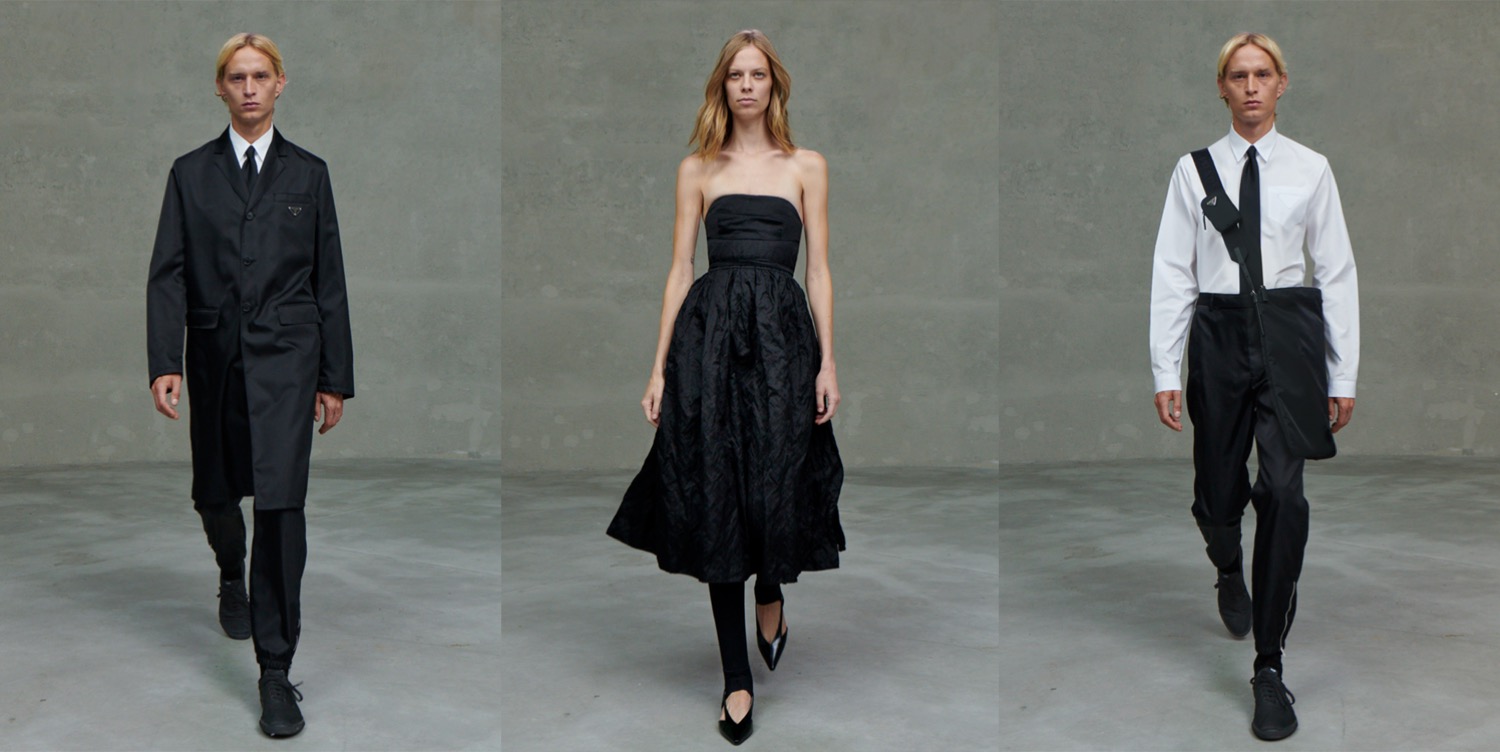
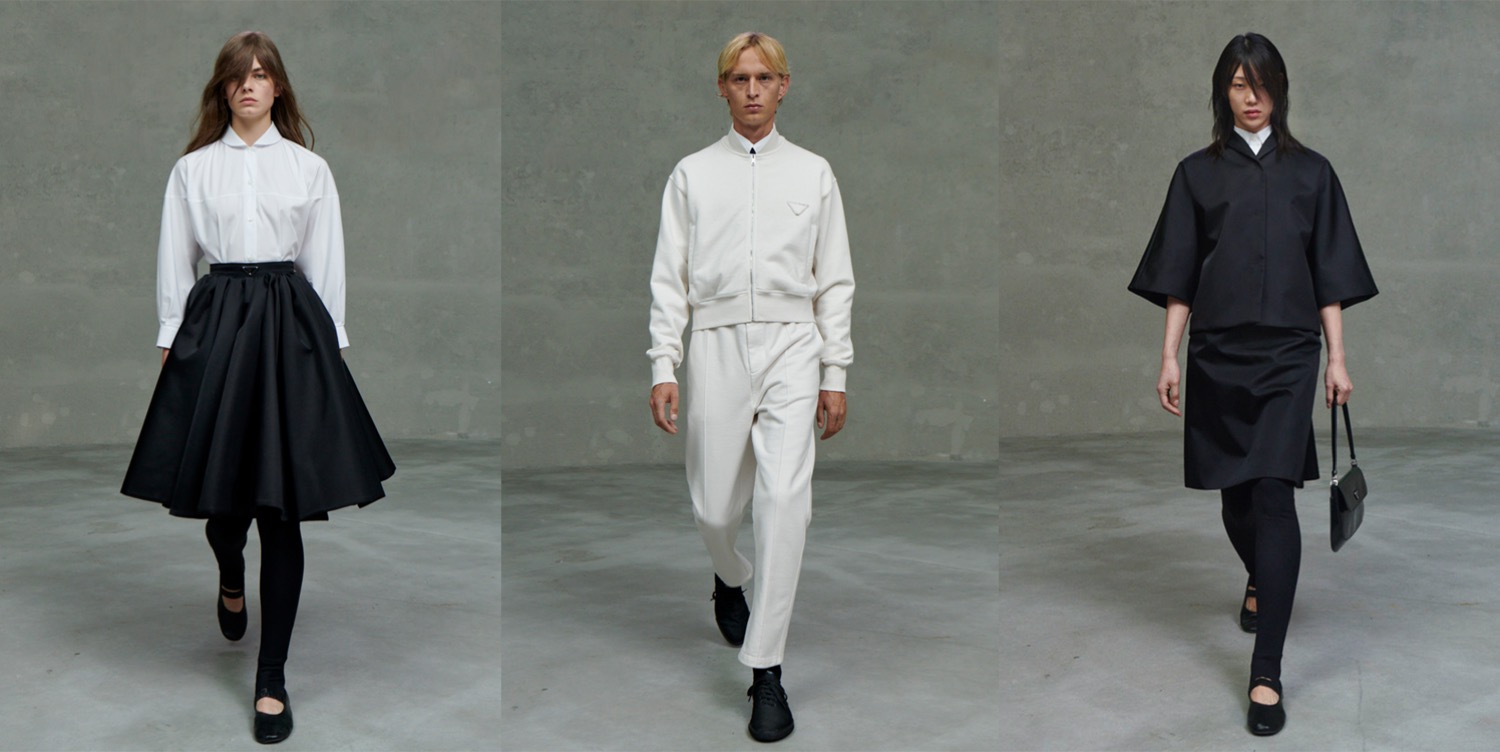
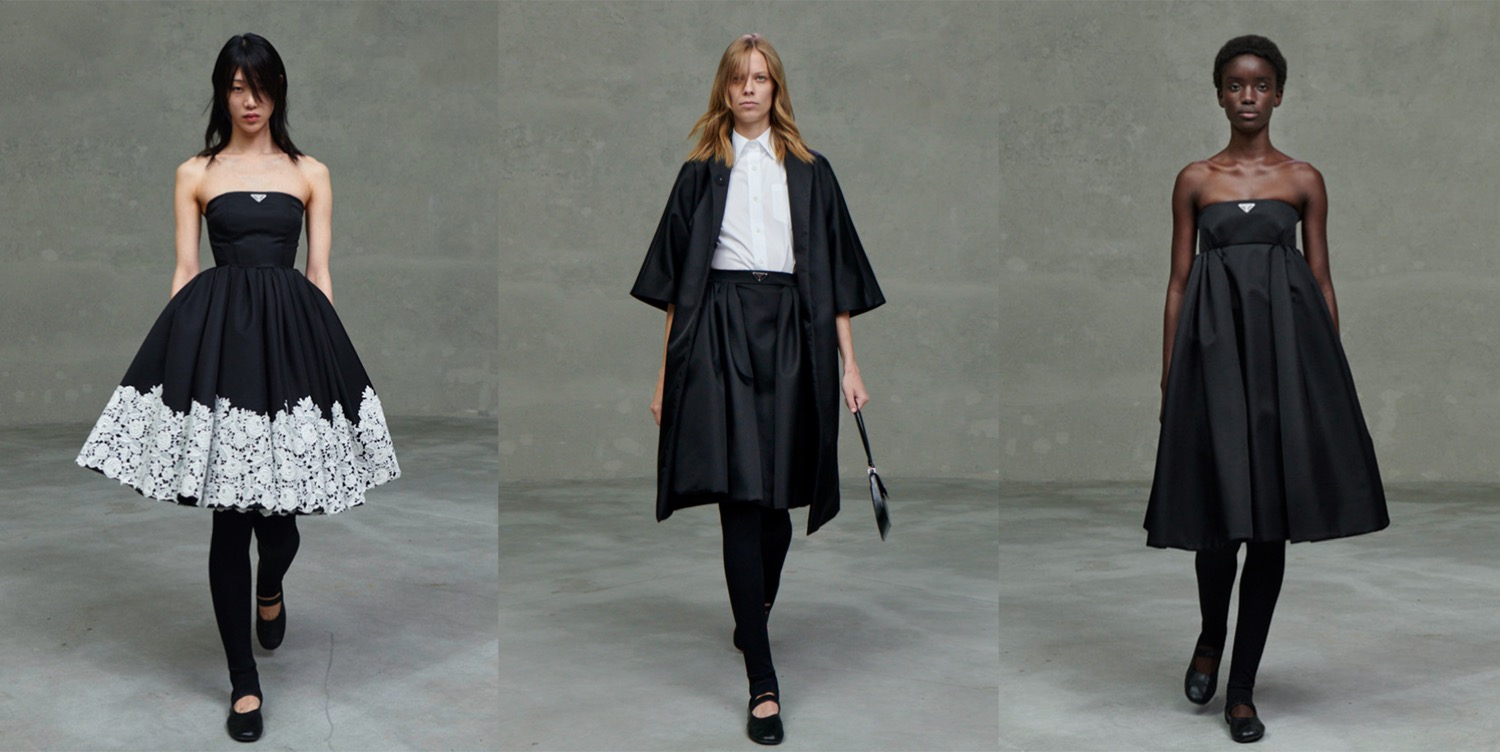
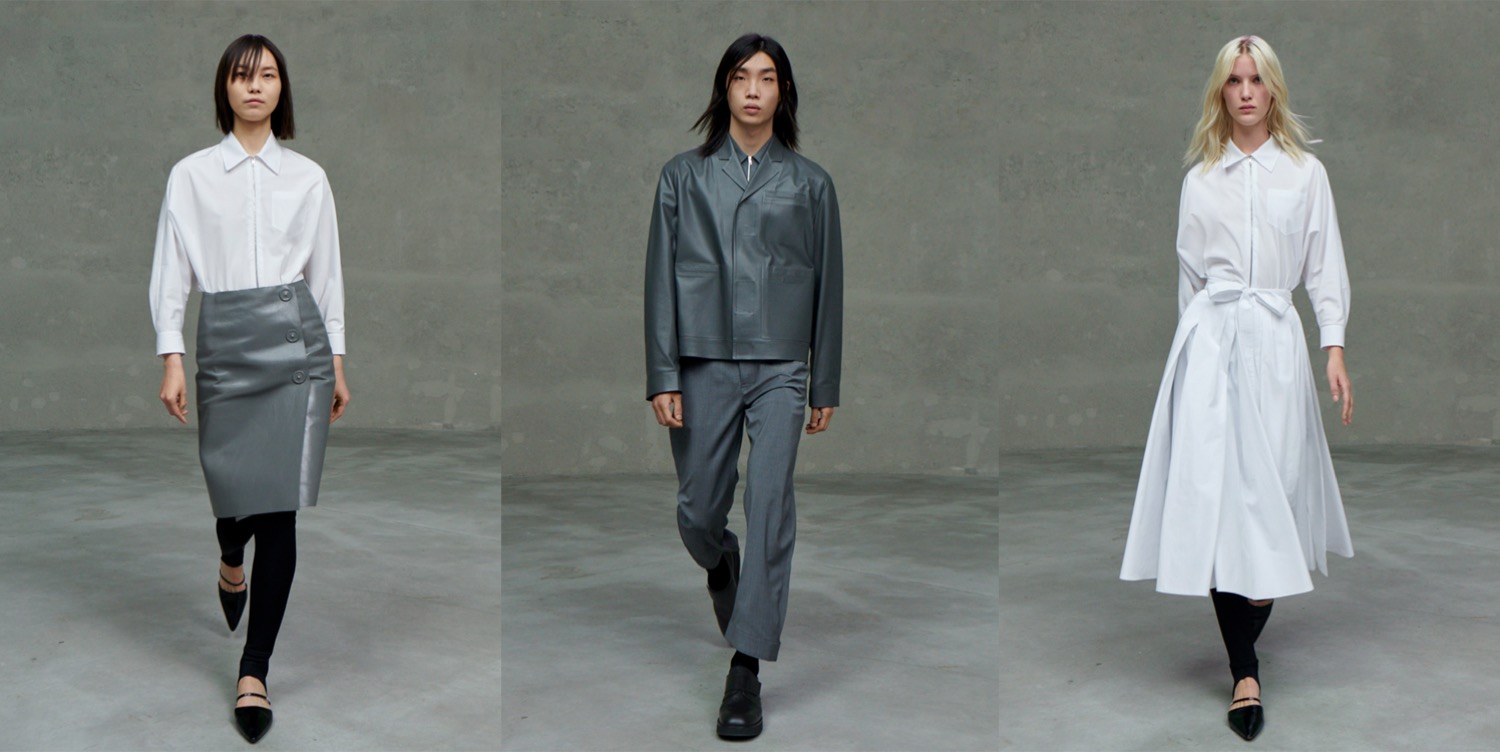
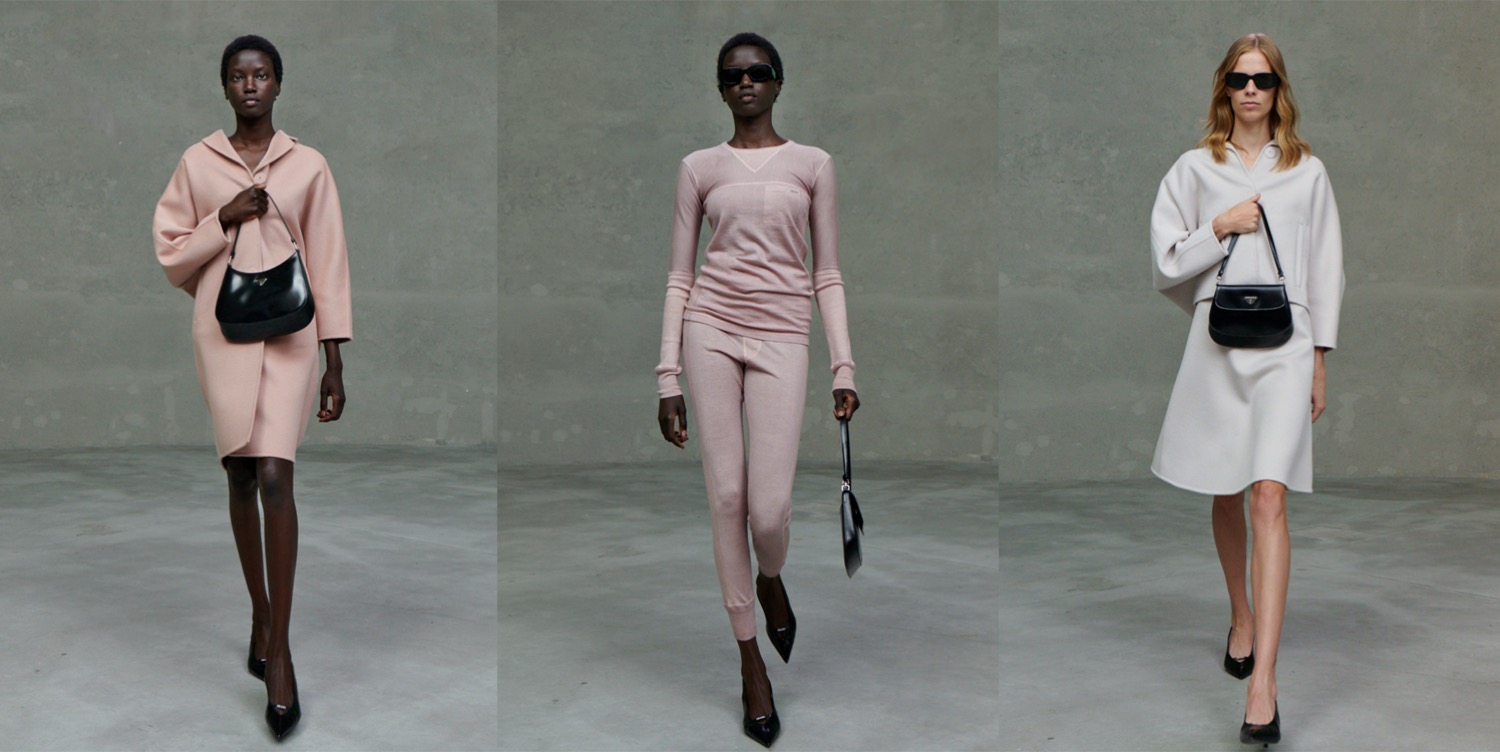
In her last solo “show”, before Raf Simons enters the role of co-creative designer in the September collection (I really, really, really can’t wait for this match to finally happen!), Miuccia Prada delivered a collection that was absolutely 100% Prada vocabulary. “As times become increasingly complex, clothes become straightforward, unostentatious, machines for living and tools for action and activity.” So said the press notes for The Show That Never Happened, which was a digitally delivered group installation of five Prada-facing films by Willy Vanderperre, Juergen Teller, Joanna Piotrowska, Martine Syms, and Terence Nance. They were all made at the Fondazione Prada, the company’s museum of contemporary art collection and the place of all Prada events. The film – which ran consecutively with the addition of a quick final walk at the end before Mrs. Prada’s usual fleeting, half-lateral bow – came to 11 minutes, the ideal duration of a live fashion show. The collection was all about pure elegance, simplicity and a sort of detox from fashion noise. Many looks were identical to Miuccia’s autumn-winter 1995 show, which forever became the image of 90s Prada. Architectural, 1950s silhouettes mixed with a touch of feminine cliché (of course, done in Prada’s ugly chic manner) for resort, and smart, business ready tailoring with a touch of nylon for men’s summer – ta-da, a collection that really got me obsessed in the last few weeks of digital presentations. The press release continued with more food for thought chez Miuccia: “I think that our job as fashion designers is to create clothes for people, that is the honesty of it. That is really the value of our job – to create beautiful, intelligent clothes. This season, we focused on that idea: It is about clothes, about giving value to pieces. The clothes are simple, but with the concept of simplicity as an antidote to useless complication. This is a moment that requires some seriousness, a moment to think and to reflect on things. What do we do, what is fashion for, what are we here for? What can fashion contribute to a community?” As Prada and her peers (plus Raf Simons, of course!) work to anticipate how change alters the specifications of taste and clothes it will be fascinating to watch the architecture of fashion change too.

Collage by Edward Kanarecki.

As Always, It’s Perfect. Lemaire SS21

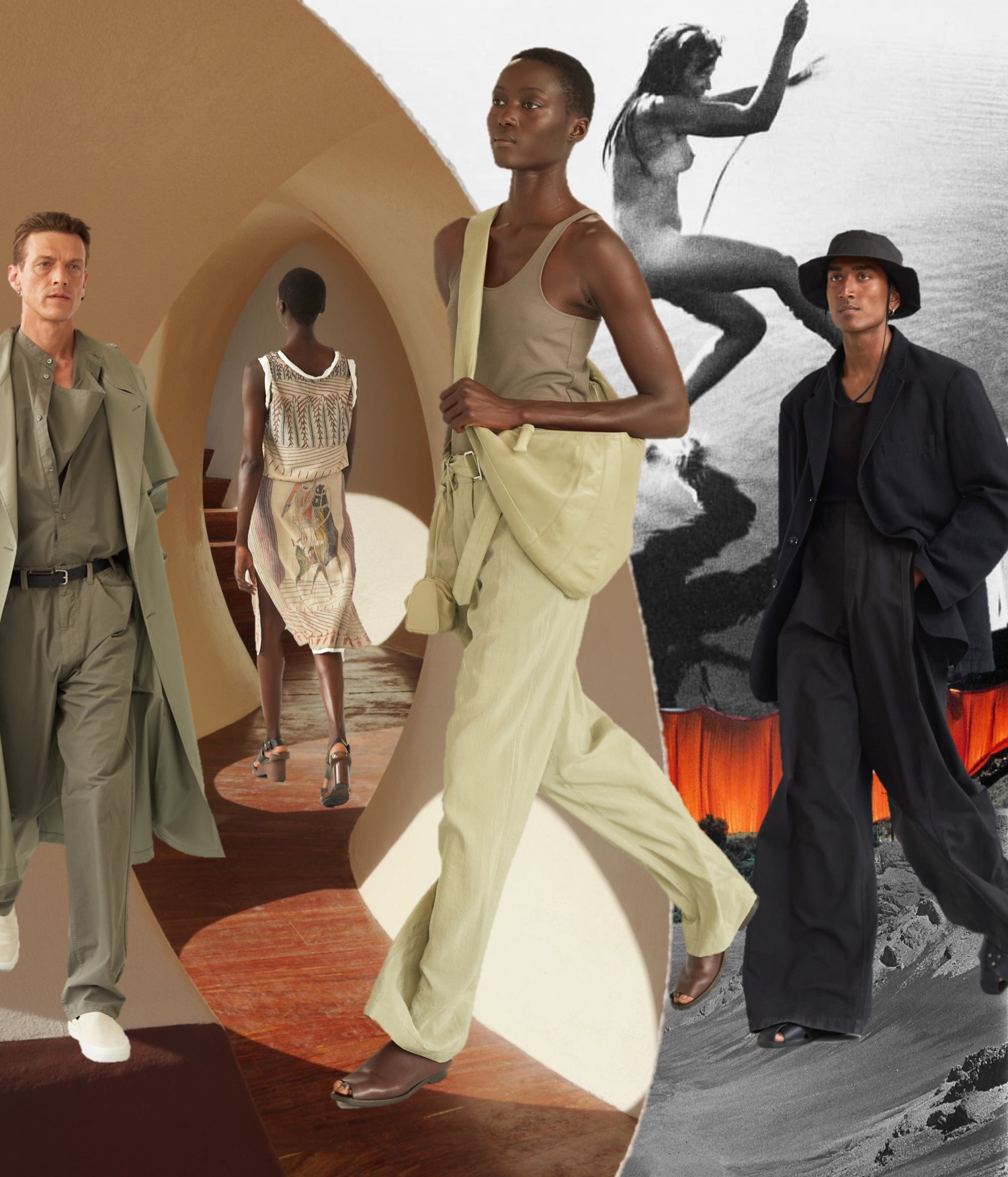
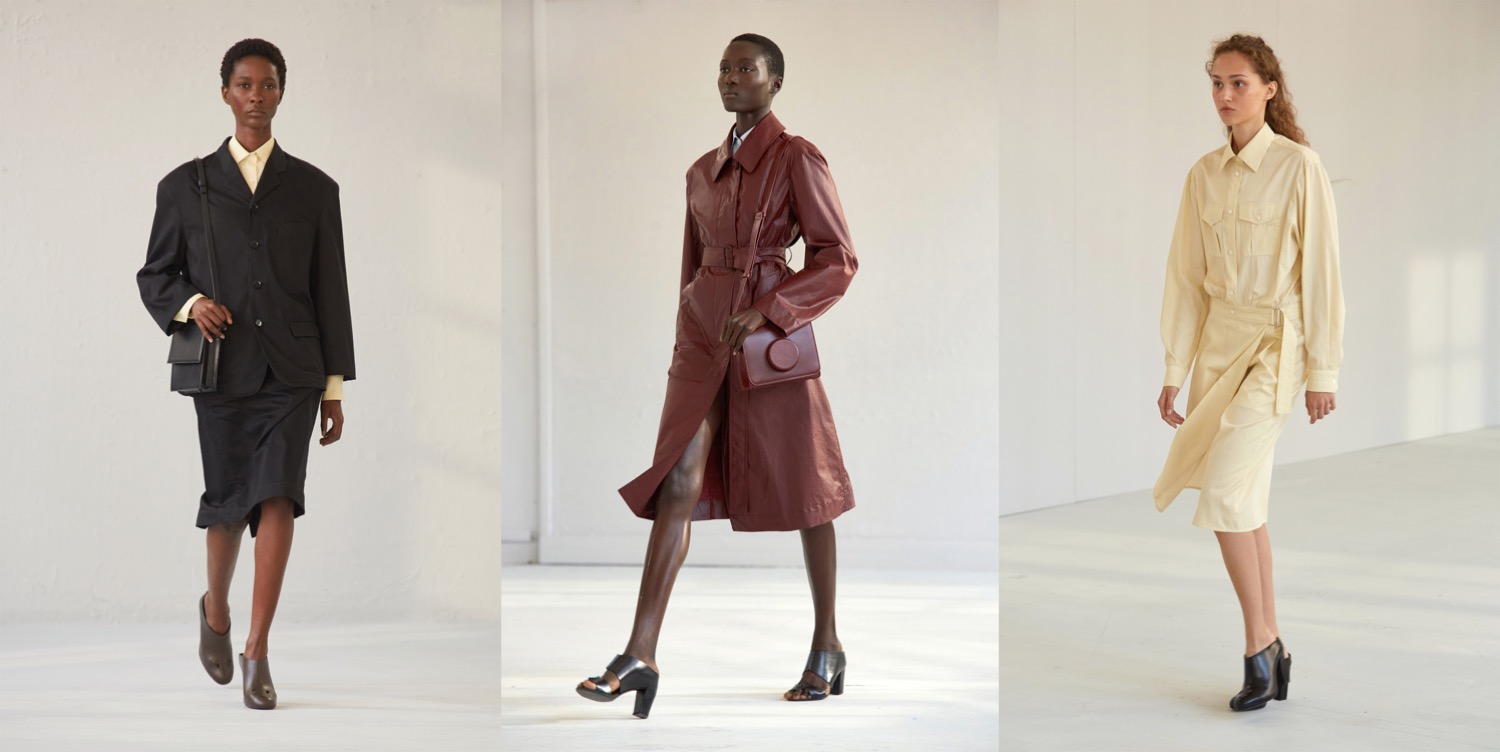
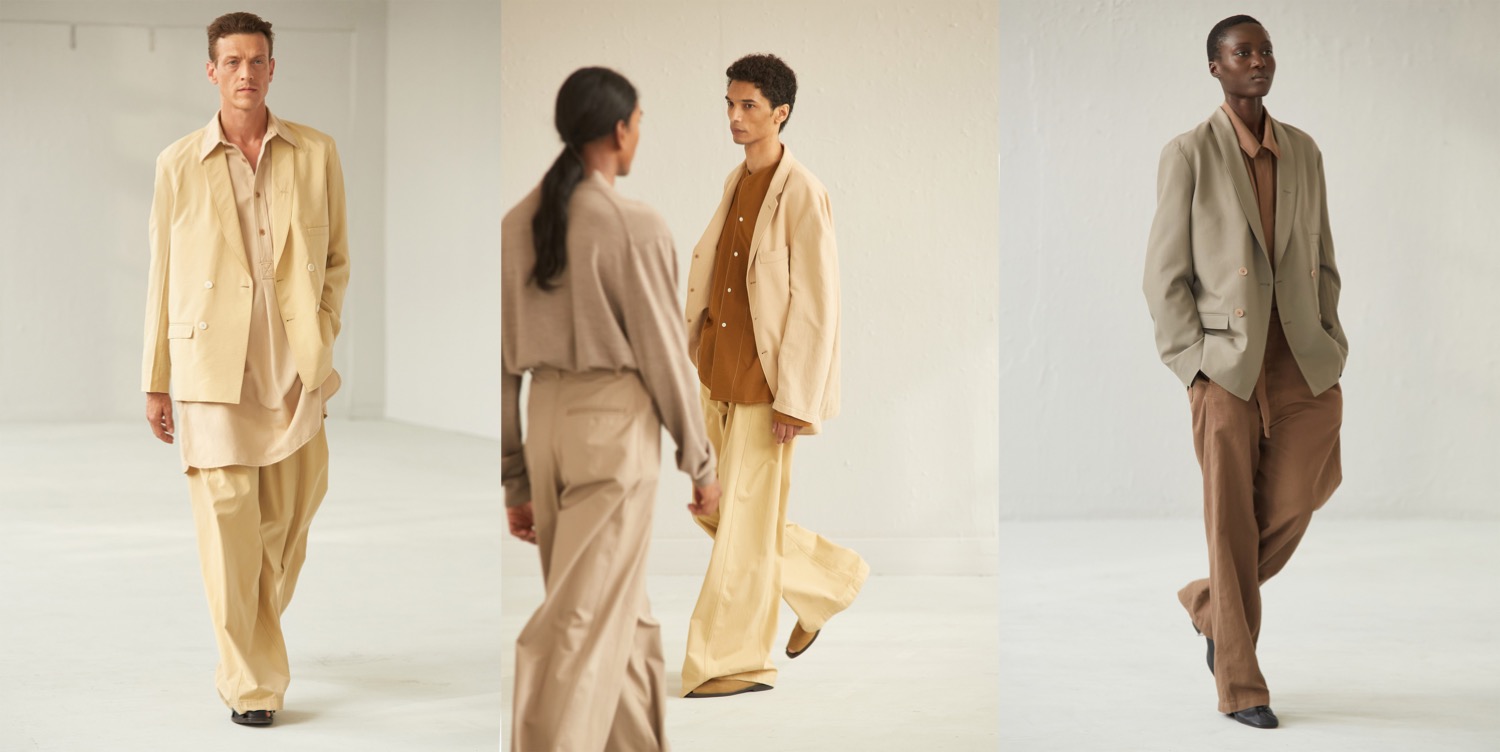
I don’t know how Christophe Lemaire and Sarah Linh Tran do it, but their collections always reasonate with me the most in terms of ready-to-wear. I can be obsessed with the most over-the-top dress and feel inspired by the most thoroughly planned visual production. But in terms of clothes, my heart belongs to Lemaire. Their spring-summer 2021 presentation, of course audience-less, is co-ed, as the designers depart from men’s and women’s division. Also, from now on, we will see their collections twice a year, during men’s fashion weeks. “We’ve been frustrated for a while by the timing of the schedule,” said Lemaire. “You know, showing the pre-collection for women together with the men’s and then waiting two months to show the second half of the women’s collection. For many different reasons it was complicated and frustrating for production and also buyers. So it’s obvious that this was an opportunity to show everything together, even though it was a big challenge for the team to develop the collection in time.” Well, it’s as effortlessly refined as usual – no marks of backstage rush visible. One of the ways they met that challenge, said Tran, was by working more closely than ever before. She added: “The men’s team and the women’s team worked hand-in-hand, choosing fabrics and colors in common… we focused on what was common between the man and the woman, and then we added more specifically women’s volumes and more specific men’s volumes.” The result was a highly coherent collection in which that commonality was evident but resulted in subtle gradations and hints of contrast, rather than the monotony of a monogamously unisex collection. As evinced in the lookbook shots where womenswear and menswear looks are shown in the same frame, a close affinity looks like complementary dressing rather than couple-coupling. There was a stirring marine green, a palest of yellow, a dash of denim. Many of the garments were in a kaleidoscope of neutrals – shades of clay, ochre, wheat – whose delicate differences became apparent and increasingly rich the more attention you paid to them. Men wore smocks and women boxy suiting either plain or in a beautiful Martin Ramirez landscape print. Tran concluded: “we build the collection as a wardrobe. The idea of being able to enrich the wardrobe is very pertinent to us.” Lemaire’s newly co-ed articulation shows that the designers do what they realy feel like is the most suitable for them – and this even more strenghtens mine – and other fans’ – love for the Parisian label.

Collage by Edward Kanarecki.

Men’s – Kim Meets Amoako. Dior SS21

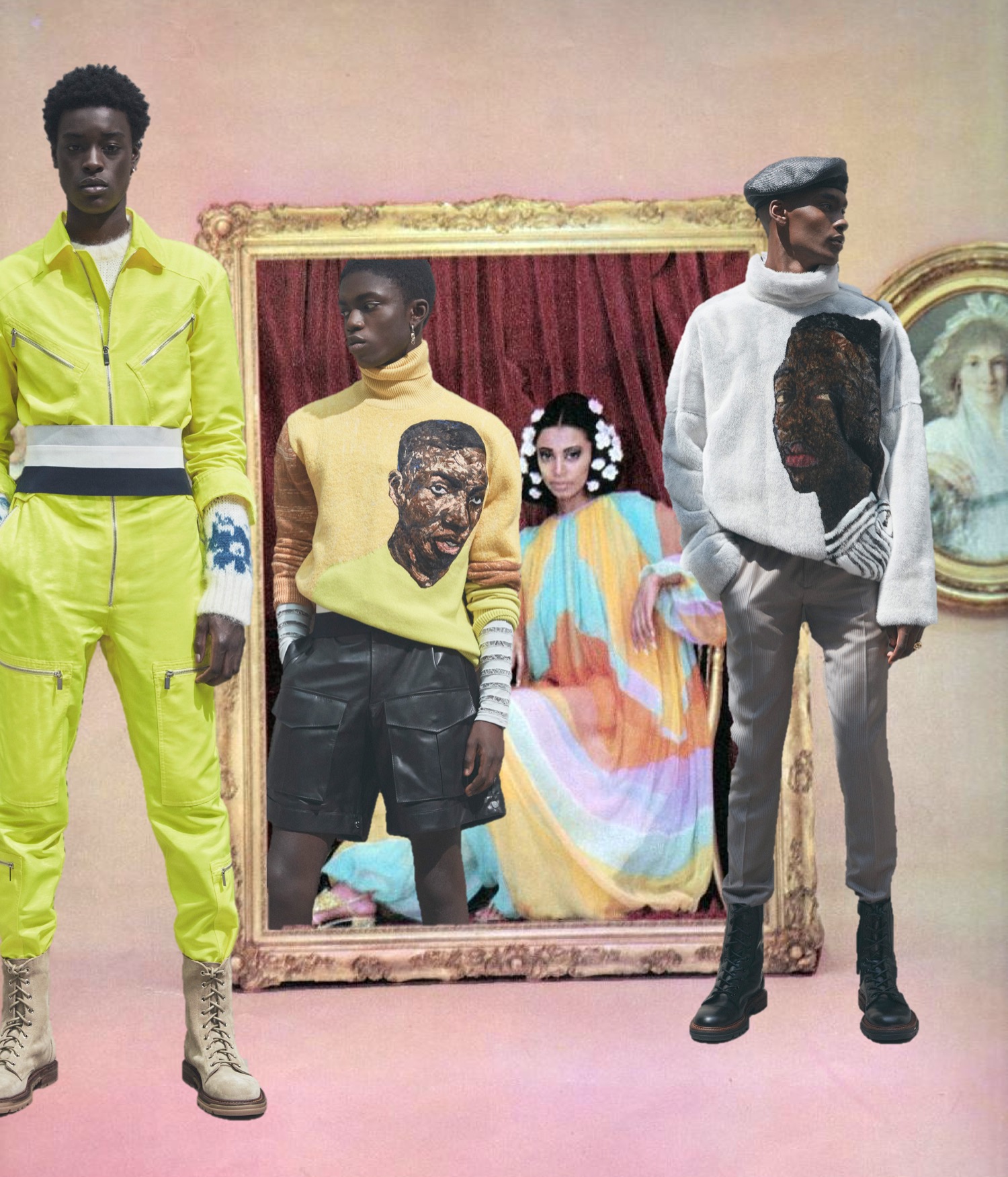
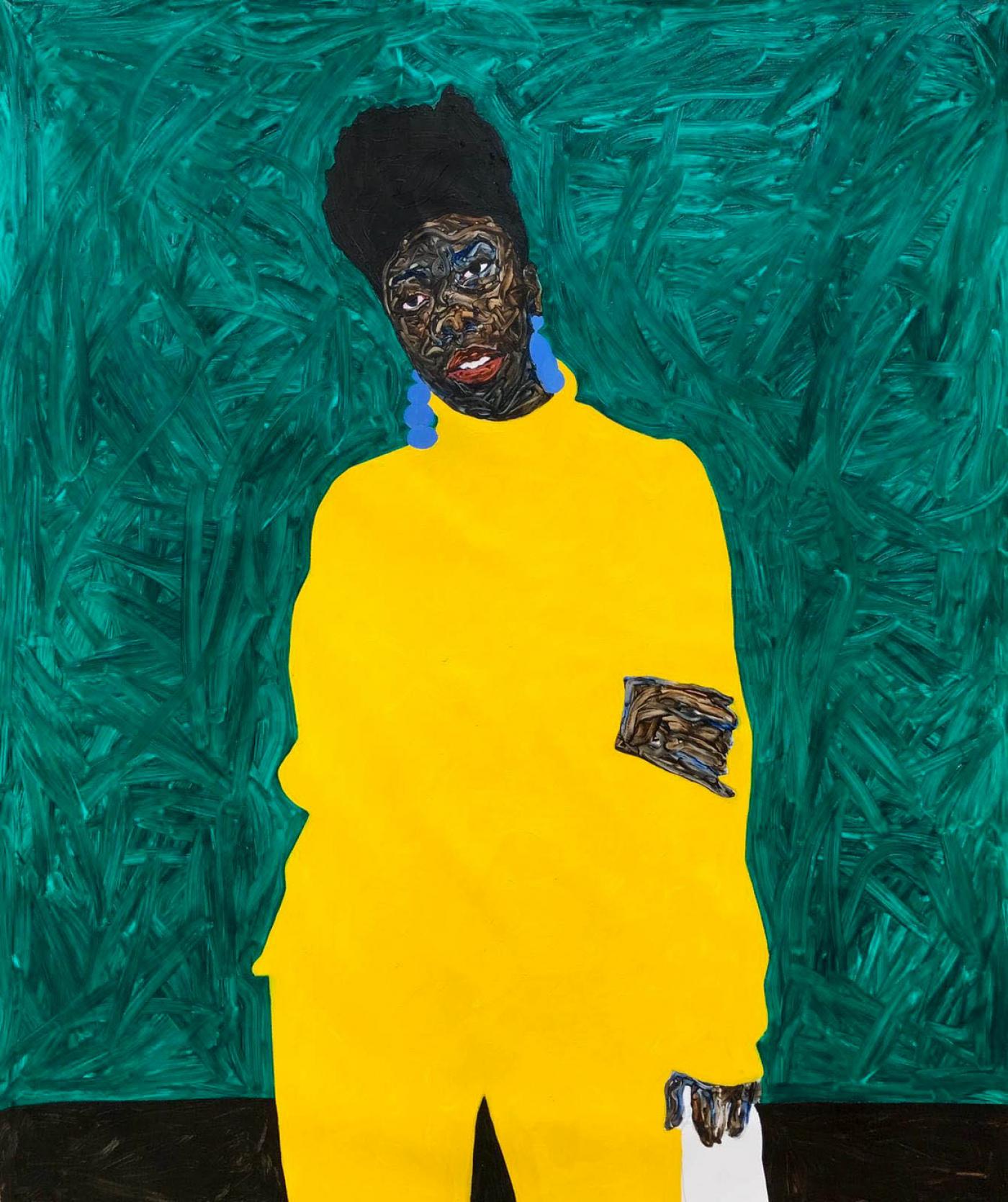
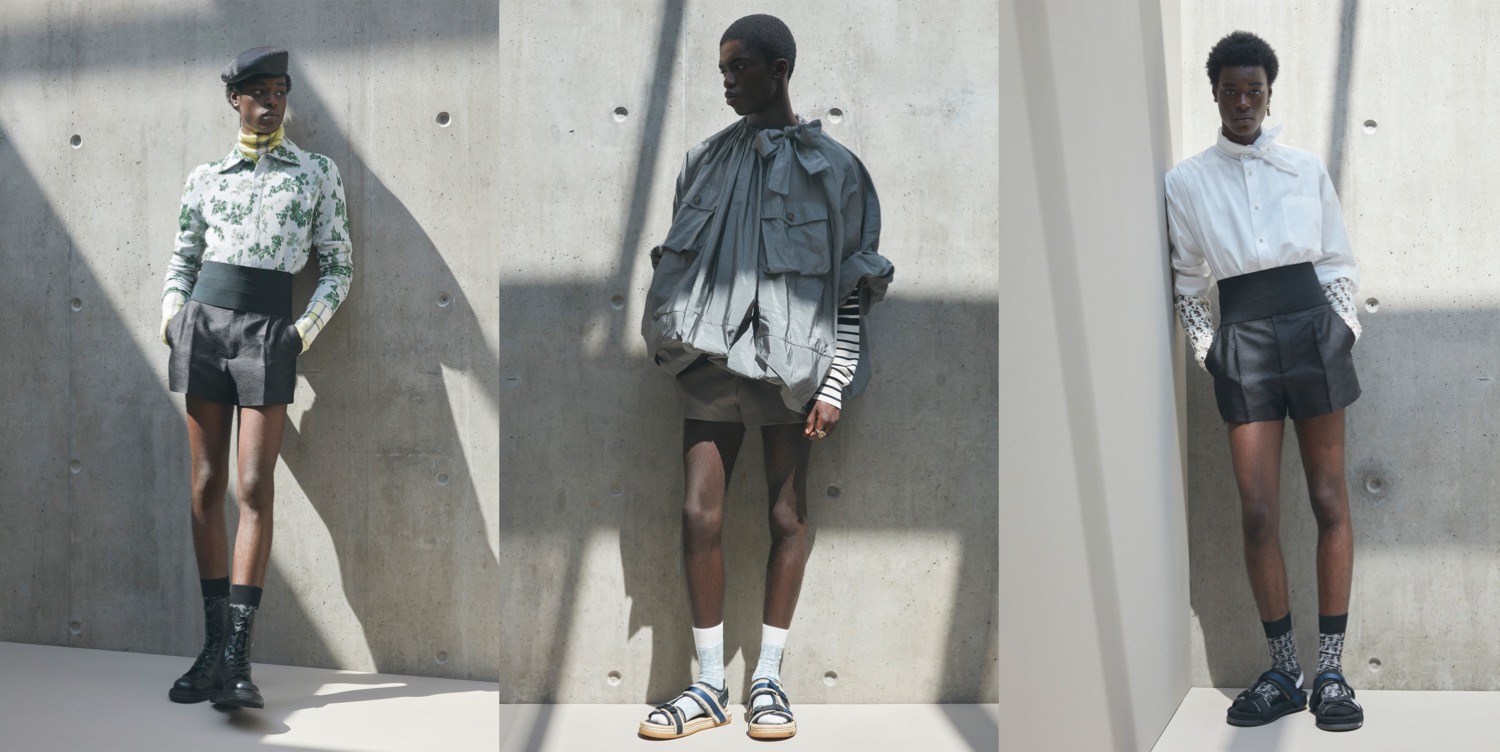
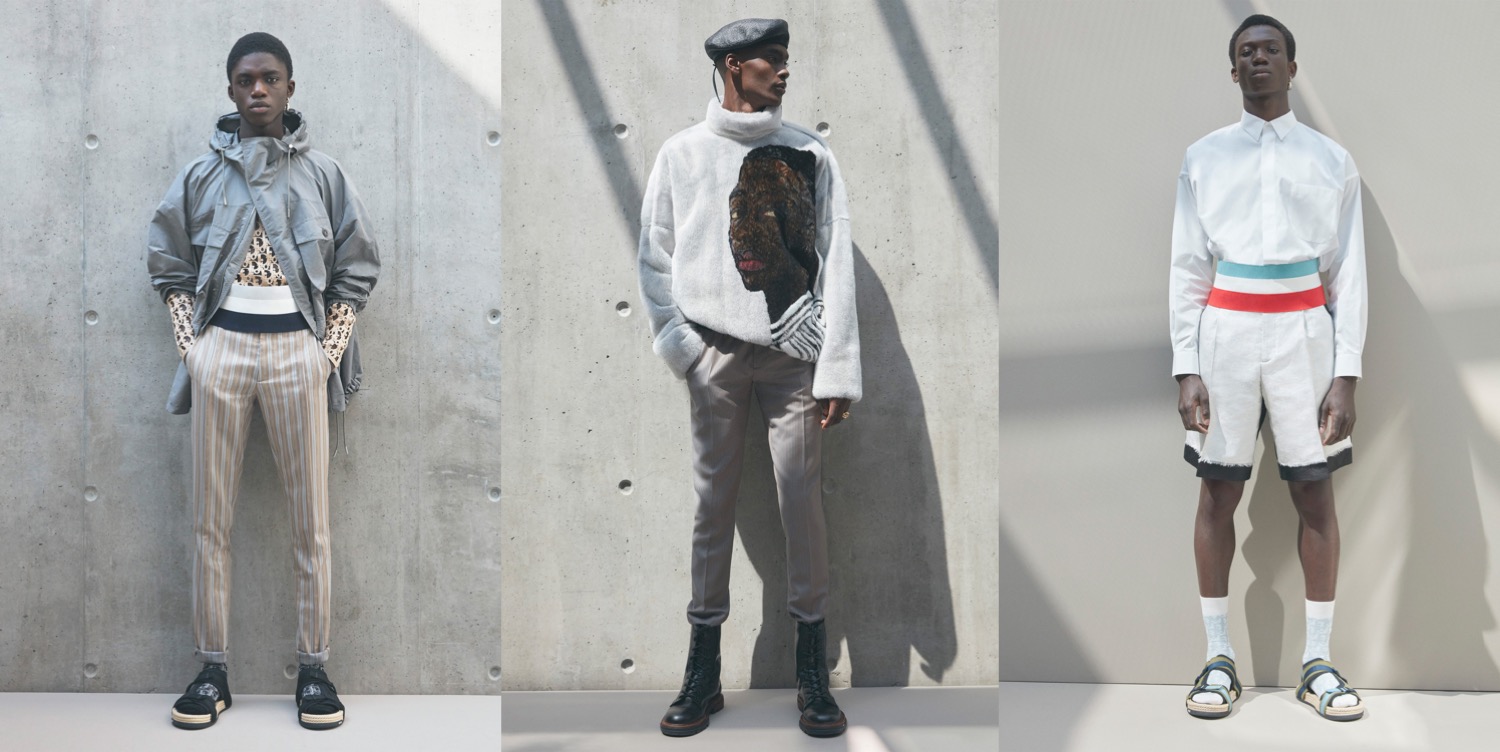
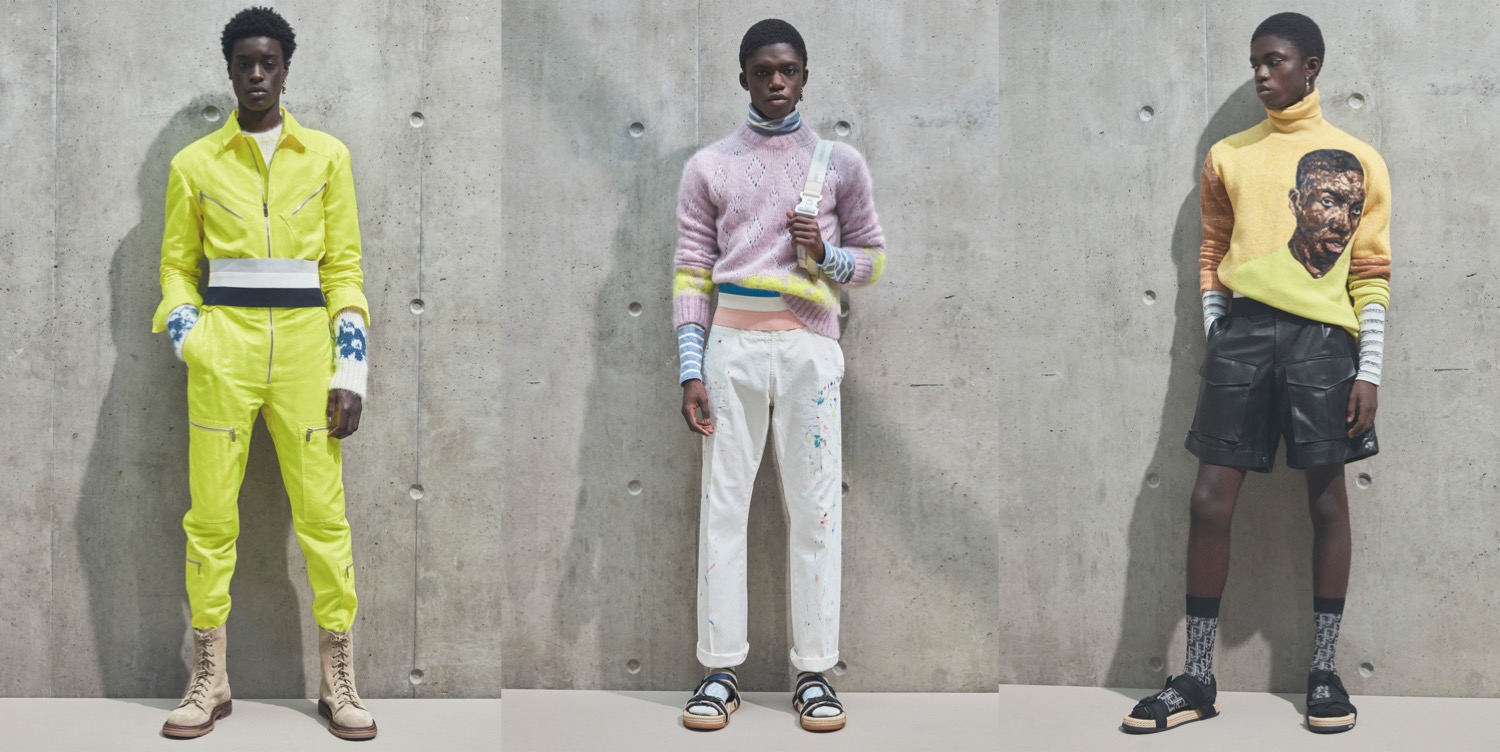
While the digital fashion month of men’s spring-summer 2020 collections is full of sleepy look-books, there are some line-ups that make my heart skip a beat. I was quite on fence with Kim Jones‘ menswear at Dior, but the new collection is brilliant. And it redefines the word “collaboration” in 2020. Jones invited the 36-year-old Ghanaian artist Amoako Boafo, whose stunning huge-scale portraits of Black subjects – partly richly finger-painted – have a skyrocketing reputation in the contemporary art world. “It’s a portrait of an artist who I greatly admire,” Jones said. “[The gallerist] Mera Rubell introduced me to Amoako last year in Miami. I really loved his work and wanted to work with him because of my own links to Africa. He lives between Vienna, where he studied, Ghana, and Chicago. So we sat down and discussed.” The first results – a collection fusing Boafo’s art with Dior artisanship, a look book, and a documentary film shot at the artist’s studio in Accra and at Jones’ home in London- are launched in a more intimate, in-depth and intelligent way than could possibly have come across in front of the usual roar of the crowd and show hustle of the Paris collections. In the video, Boafo is in his studio in Ghana as he paints and describes how he captures friends and family, “and people who create spaces for others to exist.” He speaks about the flat colors he uses to silhouette his figures, and, he explains, “how fashion inspires my work. I tend to look at characters who have that sense of style.” Friends hanging at Boafo’s place are wearing pieces from the collection, and the artist is working in a faded wallpaper print Dior Men shirt, whose pattern has bounced back in a creative arc from portrait to garment. The collection is smaller and more edited than it would have been – which actually works better than nearly 100 looks shows Dior has every season. Jones was working out of his Notting Hill house with a small team and long distance with Dior ateliers in France to get it done over the past months. The result: clothes saturated with uplifting color and print, which pinpoint Boafo’s signatures within the language the designer has established for a Dior man. Celebrating and platforming Boafo’s work for a luxury fashion market meant, among other things, transferring the tactile energy of his finger-painted heads into two intensely embroidered sweaters. The pattern from a semi-sheer fil coupé jacquard shirt sprang from a close-up Jones had taken of Boafo’s brush work. He also lifted subtle inspiration from haute couture – the gray taffeta blouson being a renewed, more youthful and summery iteration of the opera coat which opened his last show.

Still, even without the Black Lives Matter uprising which is fundamentally changing the way all institutions are being interrogated now, a collaboration like this was always going to demand detailed explanation. This one is tooled differently from the usual artist-brand collab. Behind it is an exchange with Dior which was stipulated by Boafo. “He said he didn’t want a royalty [for himself], but help to build a foundation for young artists in Accra,” Jones said. A donation made by Christian Dior (the sum was not specified) backs up Boafo’s activism. In using the leverage of his market power to lift up African art and artists, he is one of the new generation of Black artists who believe in the transformative empowerment of cultural education. In May, Boafo raised $190,000 (three times the estimate) with an online auction of his painting, Aurore Iradukunda, to benefit the Museum of the African Diaspora in San Francisco. The initiative will consist of a building that will host Boafo’s studio, a residence, and an artist-run gallery, supporting young artists in Ghana and their studio practice. “The change needed right now is to support young people through college and training to give everyone equal opportunities,” Jones said. The focus of this project is close to his heart, and, he says, to part of his own upbringing as the son of a hydrogeologist who worked throughout the continent. “We moved to Ethiopia when I was around three years old, spent time living there, and then moved around east Africa and then Botswana. I’ve kept going back for the rest of my life.” Underlying his motivation – using Dior’s fashion broadcasting capabilities to enlighten a broad audience about the vitality of contemporary African art, as well as facilitating a project with cash – is a quieter salute to Jones’s father, who recently passed away. “The fact that we are working with Amoako Boafo, from Ghana, which was one of my father’s favorite African countries is,” he said, “a fitting tribute to the man who introduced me to Africa and the world.”

Collage by Edward Kanarecki; artworks by Amoako Boafo.