


Barely a year old, Rachel Scott’s brand, Diotima, is both a rich collaboration with and an homage to her home country, Jamaica. At her hands, crochet – crafted by a group of female artisans in Jamaica – is reimagined to unique effect and paired with coolly slouched tailoring. One thing that’s impressive about Scott is how she manages to make an oversized grandpa suit fit in with a barely-there crochet dress akin to a fishing net. She blends sexy and prim to interesting effect. This season, her new crochet dress is basically a tank top with really elongated straps, a waistband, and hand-applied crystals. The model wears it with nothing underneath, but a slip skirt would fit in just fine. The best suit is made from a laminated woven textile with a crochet appliqué on the leg; you get both a clash of textures and a flash of upper thigh. Scott has collaborated with Nadia Huggins, an artist from St. Vincent who takes arresting underwater photographs. They created a “Tropiques” print featuring a sea urchin, sand dollar, and snake on a soft woven fabric. “She thinks of her whole project as creating a new Caribbean archive and one that has a new subjectivity,” Scott says. In a typically cheeky move, one of the dresses totally covers the model from neck to wrist to ankle, save for a crochet panel across the bust and a super-high leg slit, but she also offers the print in more demure button-downs and a shin-length skirt. The sea motif continues in the use of moire and a sea urchin corset. Scott describes a pair of pants modeled after cricket uniforms, with shell-like pads on the knees, as a continuation of the Caribbean influences.


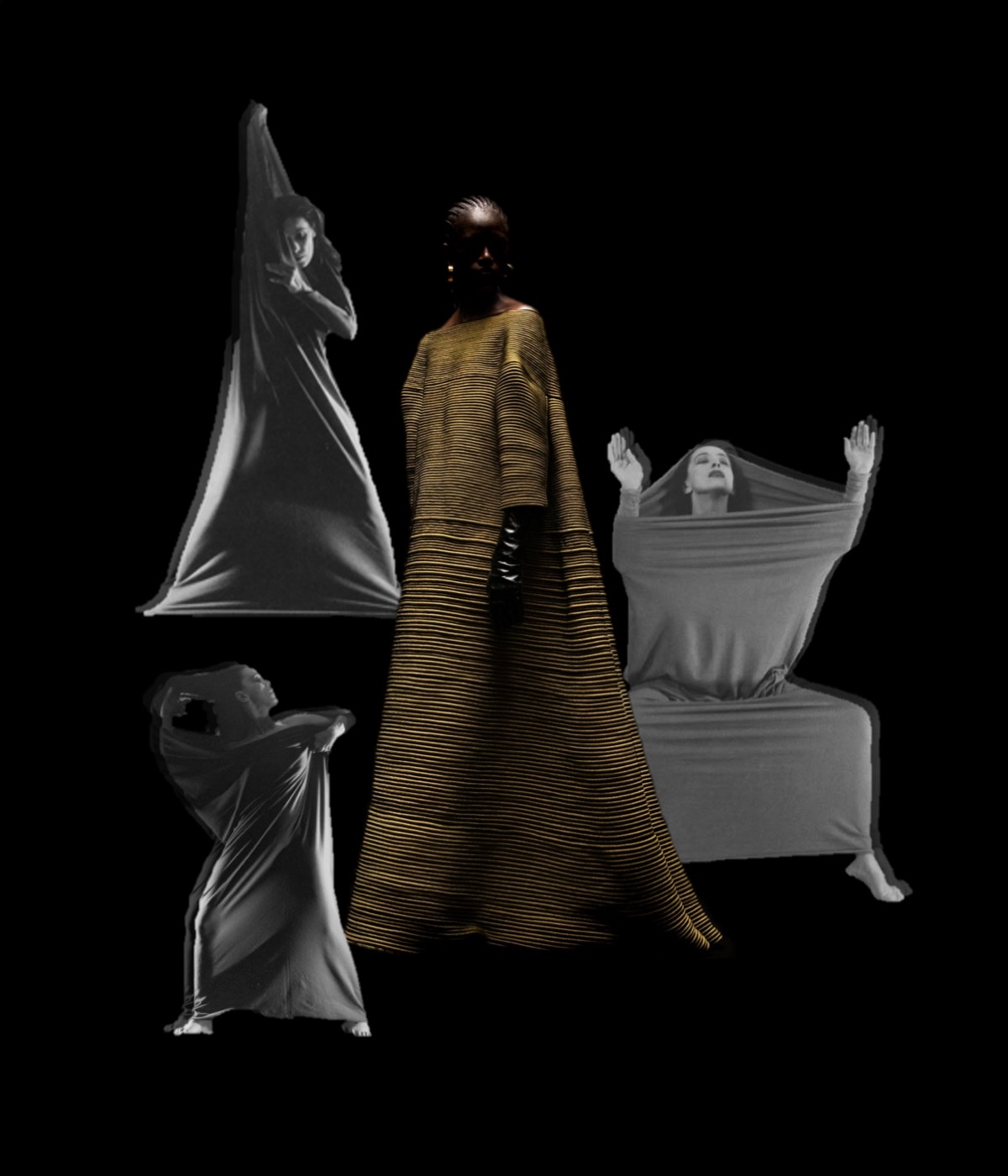
Collage by Edward Kanarecki.





 Design & Culture by Ed