Regal. Emilia Wickstead AW21

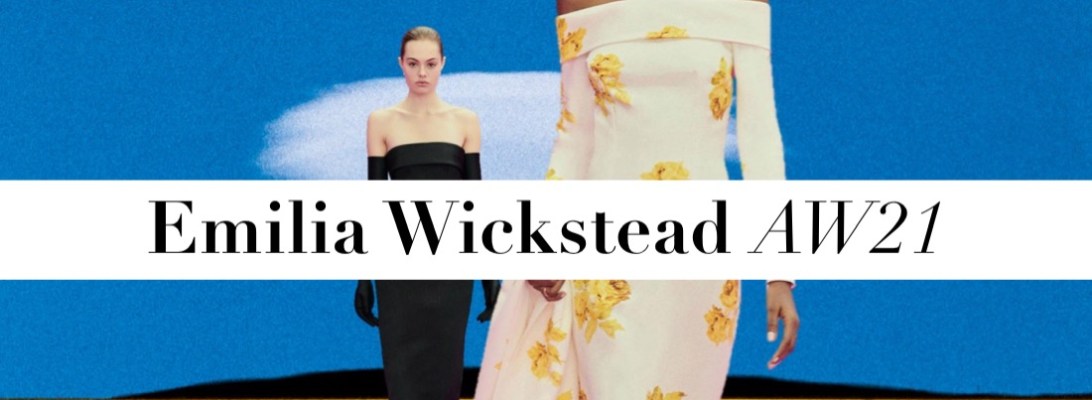
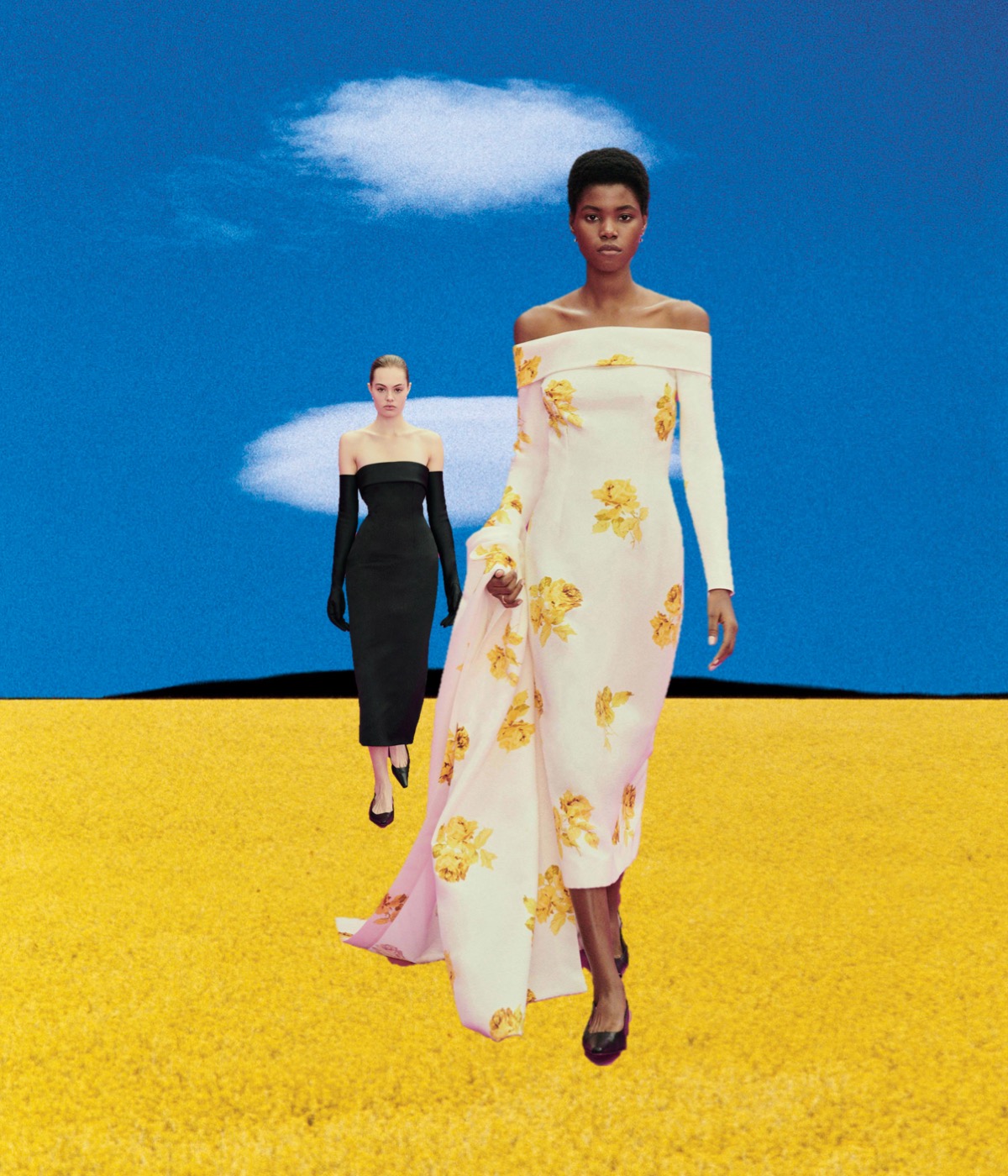
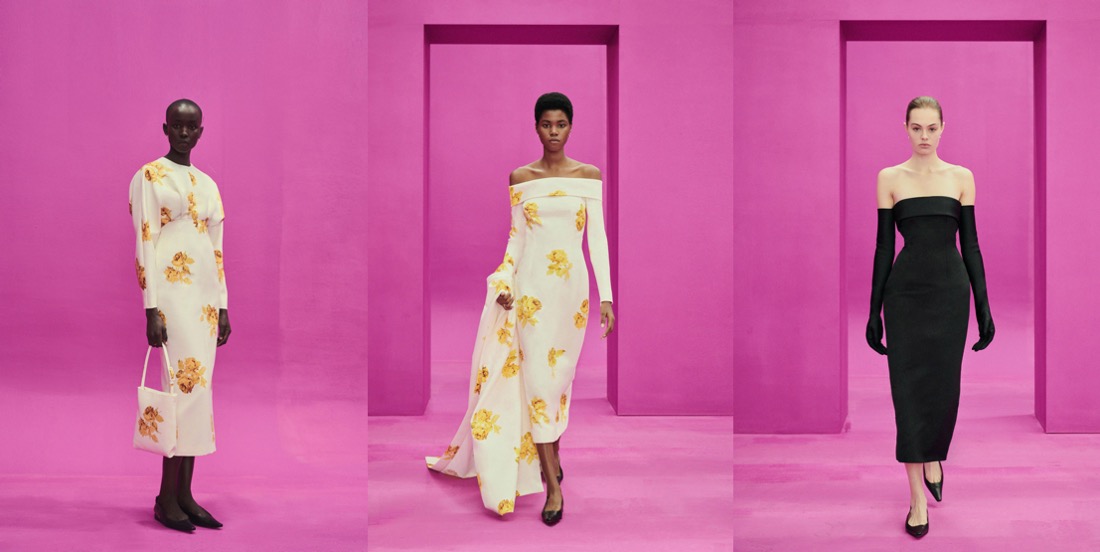
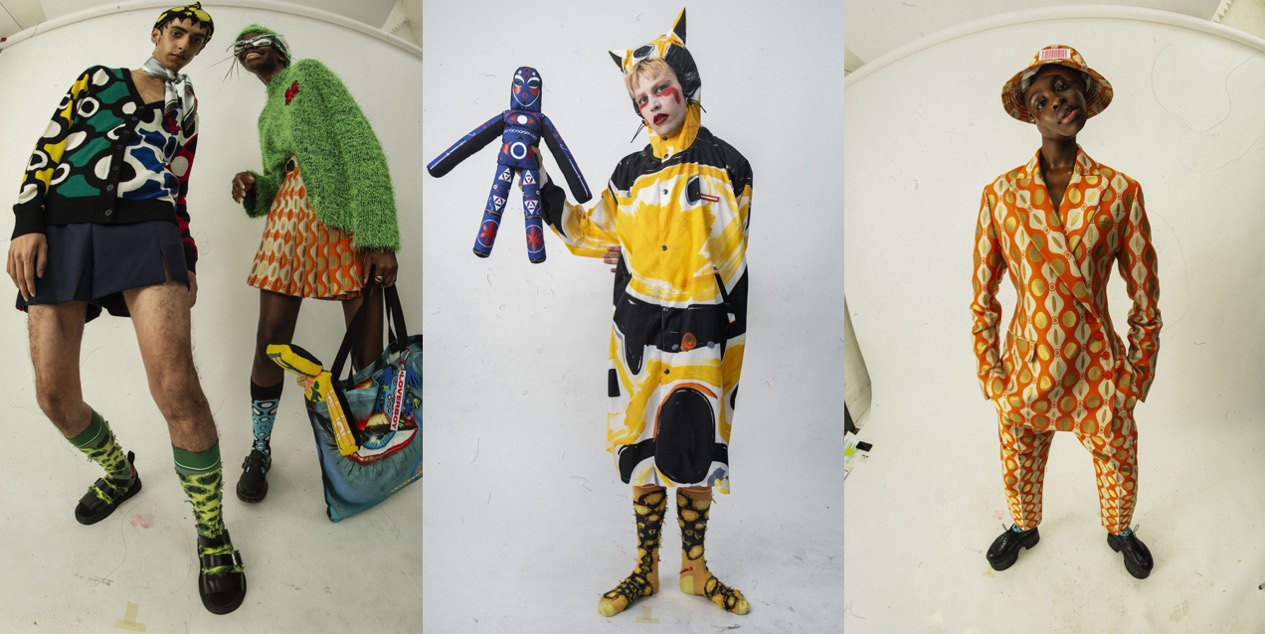
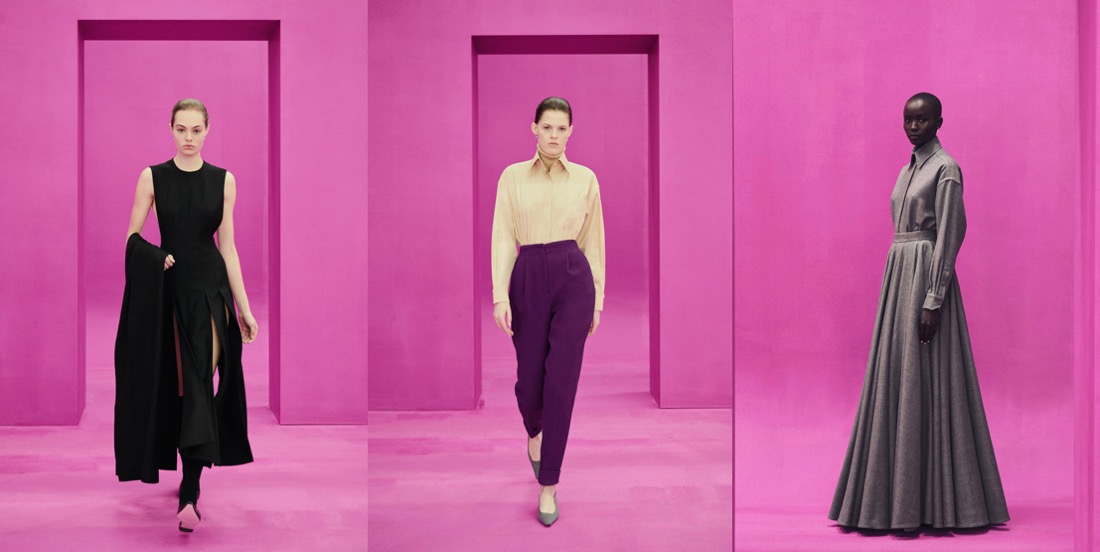
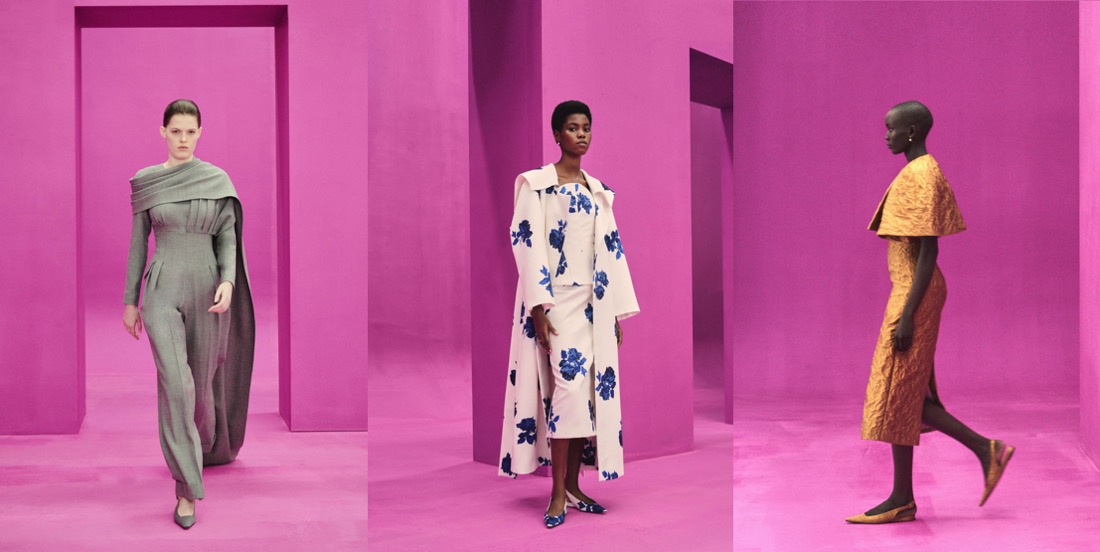
I’ve slept on most of Emilia Wickstead‘s career – majority of her collections felt too preppy, too controlled for me – but the autumn-winter 2021 line-up is quite something. This season, I feel like most brands and designer lean on styling too much, and in case of Wickstead, we see actual clothes, which are proof of excellent cut and tailoring. From the caped coats and suits to wonderfully refined eveningwear filled with couture-ish, lady-like silhouttes for day and evening, this is a regal, yet contemporary wardrobe for a modern-day dame. You know, that kind of Agatha Christie character, but living in social media times. And really, that woman doesn’t have a single pair of sweats on her racks. She will wear one of those shoulder-revealing dresses, in classy black or timeless florals, to a Zoom meeting (or a socially distanced five o’clock). I sense some Prada influences here and there, like the cut-out, pleated skirts especially, and that sort of elegant strictness, but those are equally signatures original to Wickstead.

Collage by Edward Kanarecki.

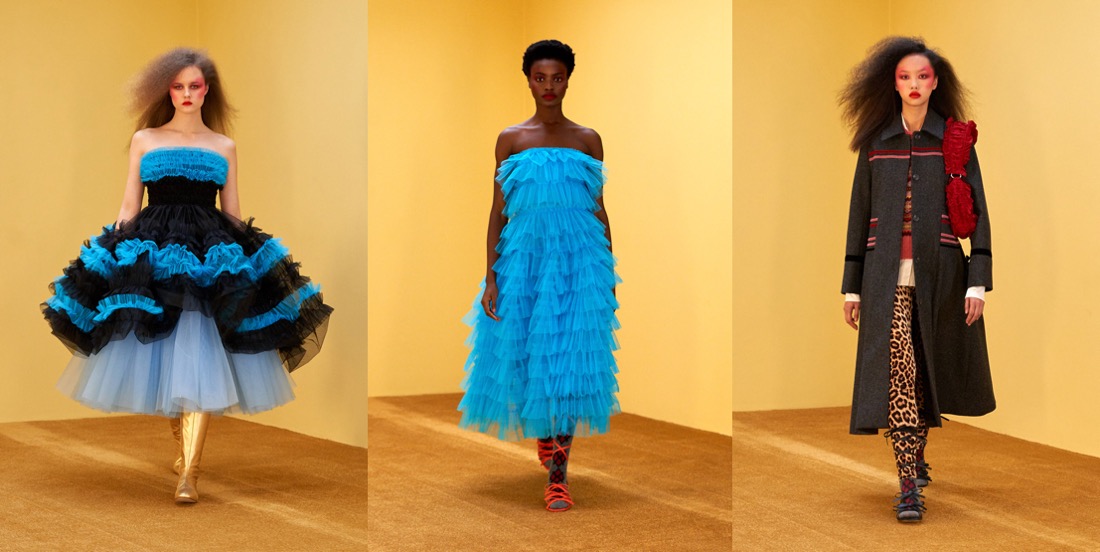
The Joy Of Dressing Up. Molly Goddard AW21

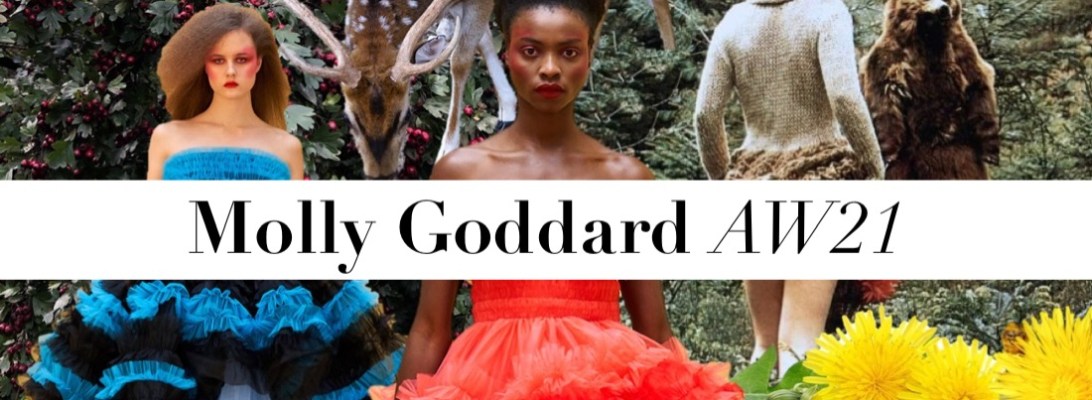
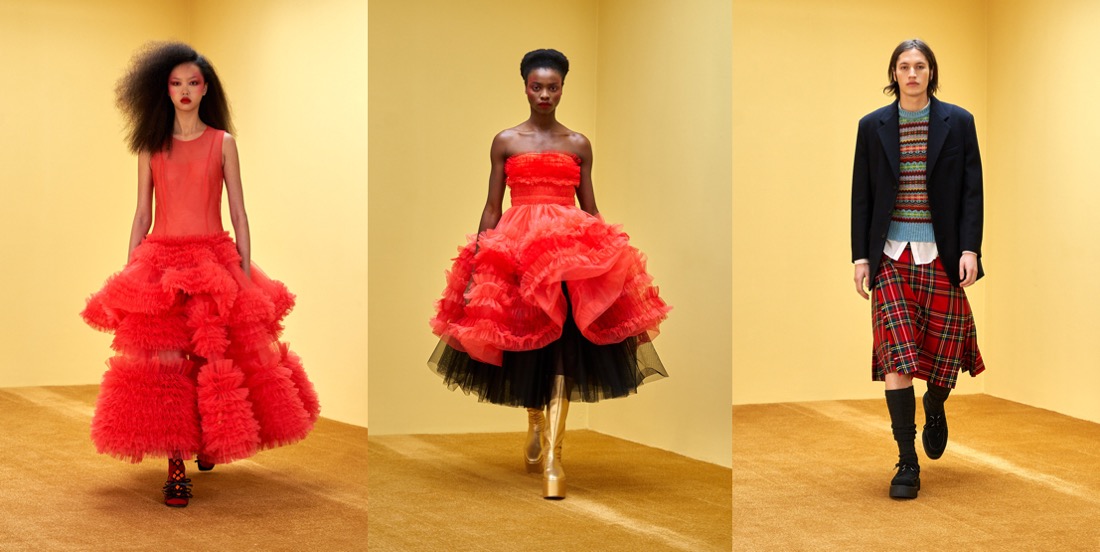
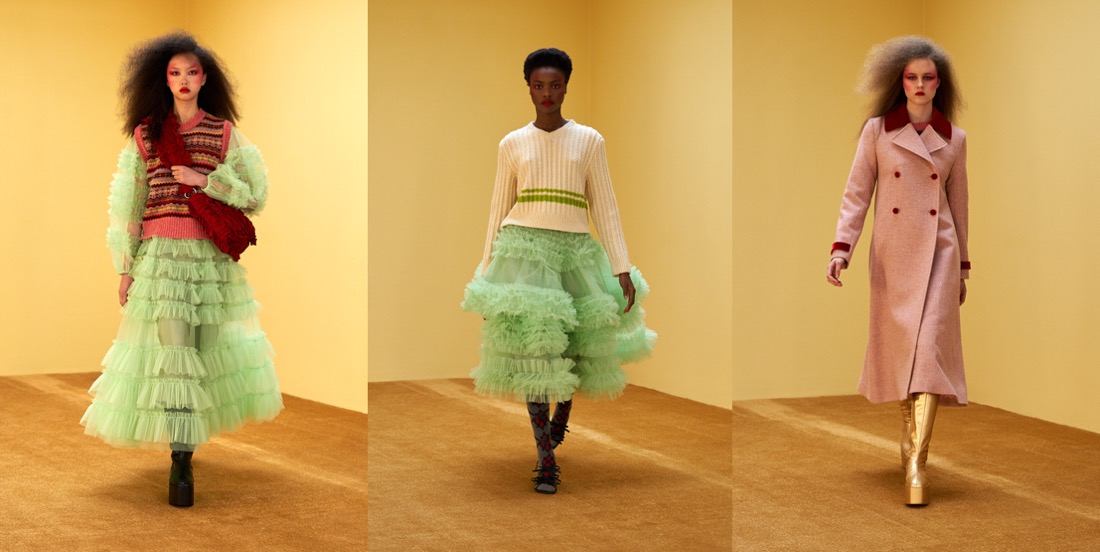
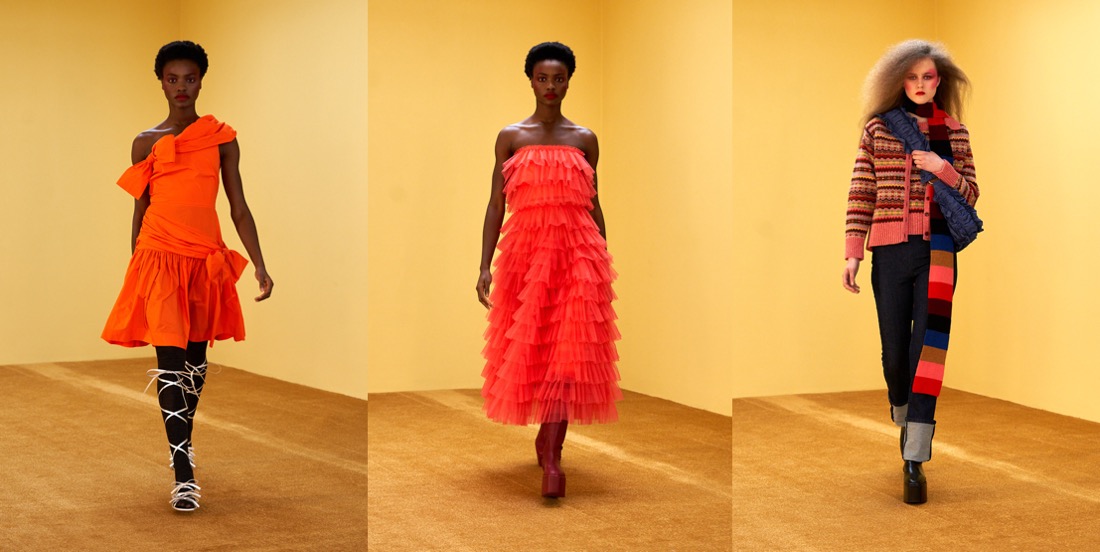
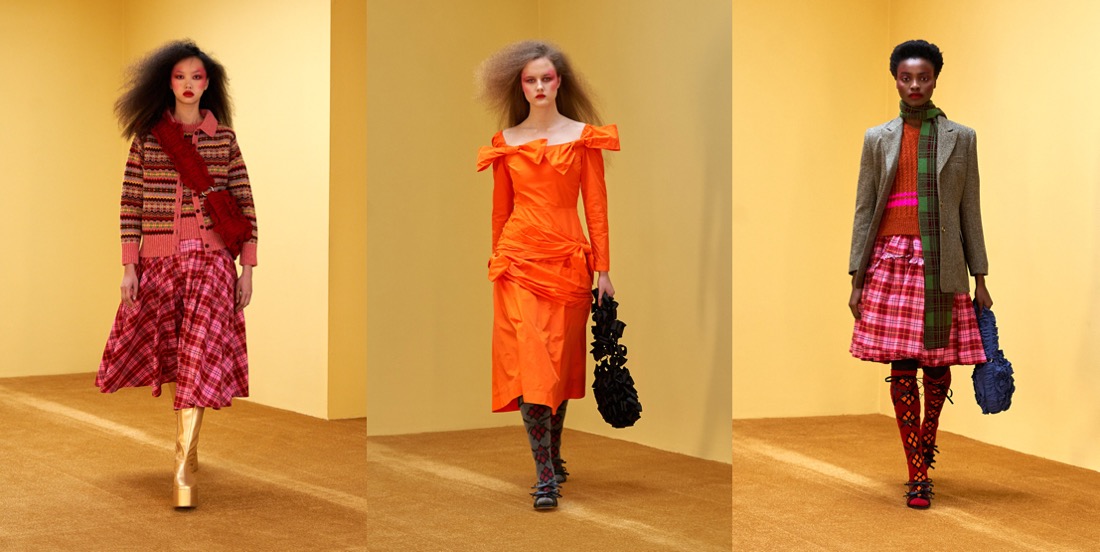
Finally – a collection I genuinely loved this season! Despite the obvious limitations of the moment, Molly Goddard delivered a phenomenal collection. Since the UK went into lockdown for the second time this winter, the designer has been forging ahead with her eponymous label, recently dropping a capsule of exquisite bridal dresses that’s primed for the current boom in micro weddings. And all that at eight-and-half months pregnant (congratulations!). “This collection was maybe the toughest to put together because of all the restrictions,” said Goddard, speaking via Zoom with Vogue from her home in West London. “There was so much uncertainty even in the logistics, but that didn’t stop us from taking risks. In a way, I think we really went for it.” Goddard is well known for her daring otherworldly confections, though this season she took to honing the down-to-earth signatures in her repertoire. She leaned into the quirky Britishisms that make her work sing, starting with an extended offering of her adorable Fair Isle sweaters for both men and women. Goddard takes pride in the fact that much of the collection is manufactured in the UK, and for autumn-winter 2021 she worked with a Scottish factory to produce traditional tartan kilts that looked especially good on the male model in her virtual fashion show, paired with colorful knits. Though it was hard to ignore the joyful exuberance of the tulle evening dresses in her lineup – she opened and closed the show with two especially flirty strapless numbers – the dry, taffeta frocks with angular bows were just as attention-grabbing layered over raw denim pants for day or with knee-high metallic boots for party time.

Collage by Edward Kanarecki.
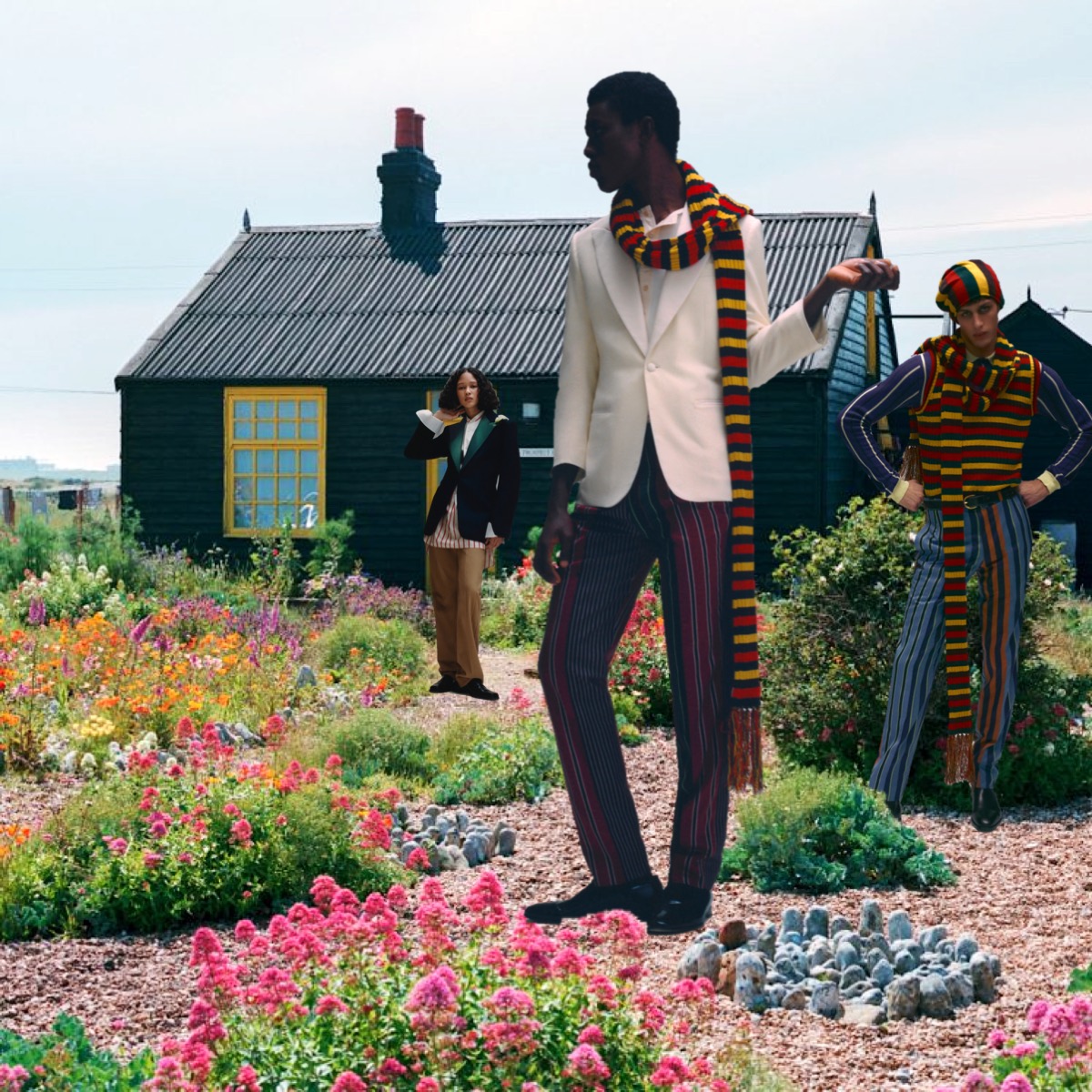
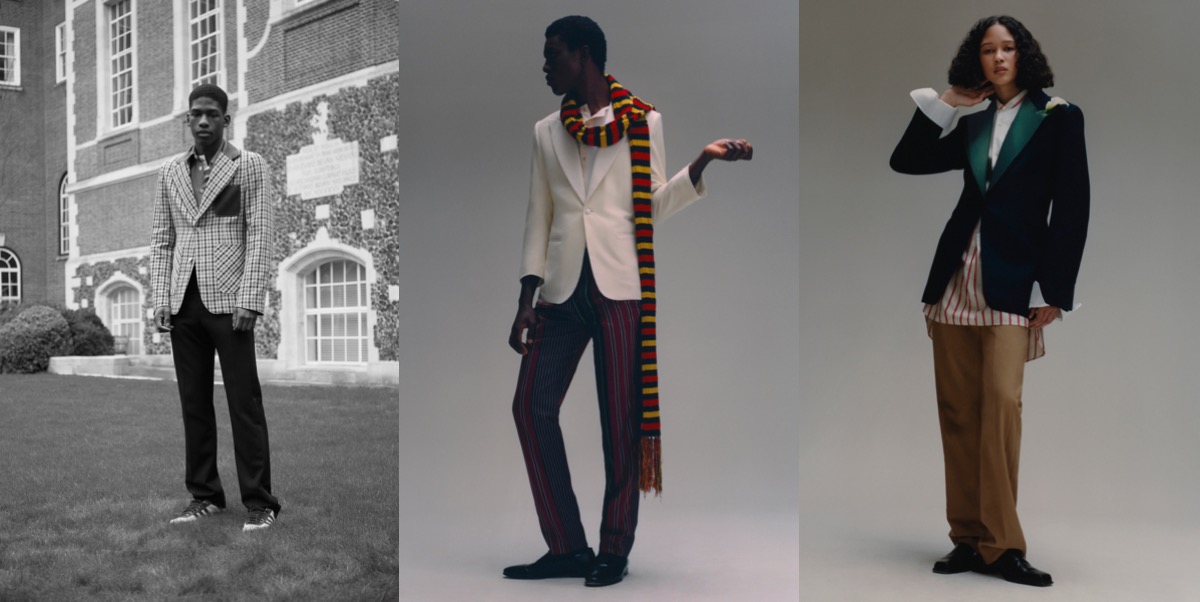
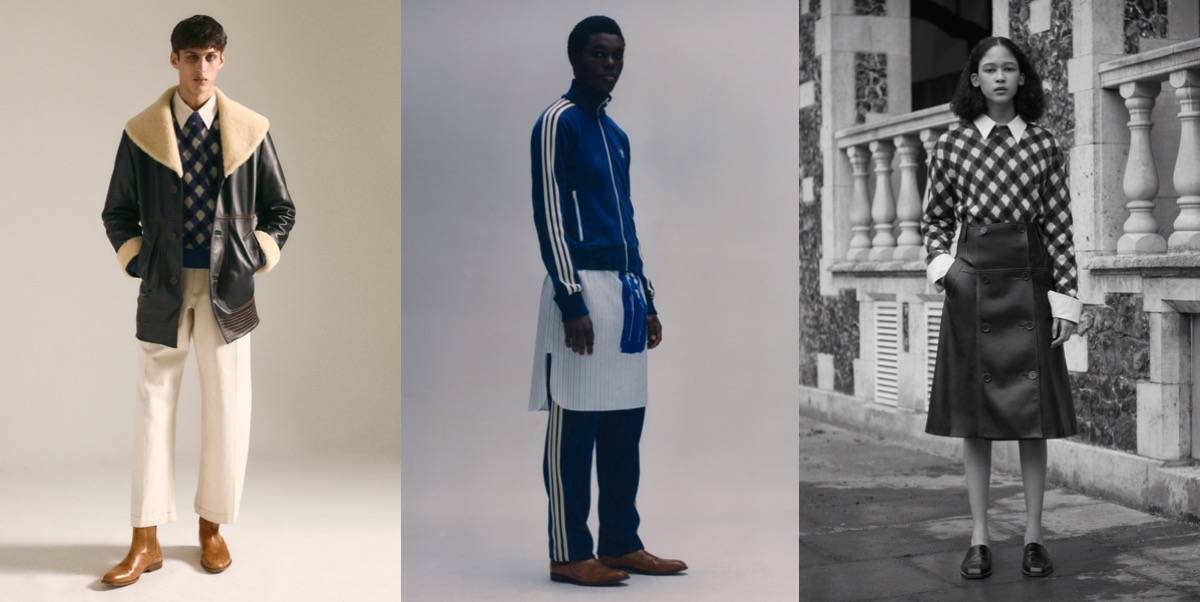
Men’s – Outsider Intellectual. Wales Bonner AW21

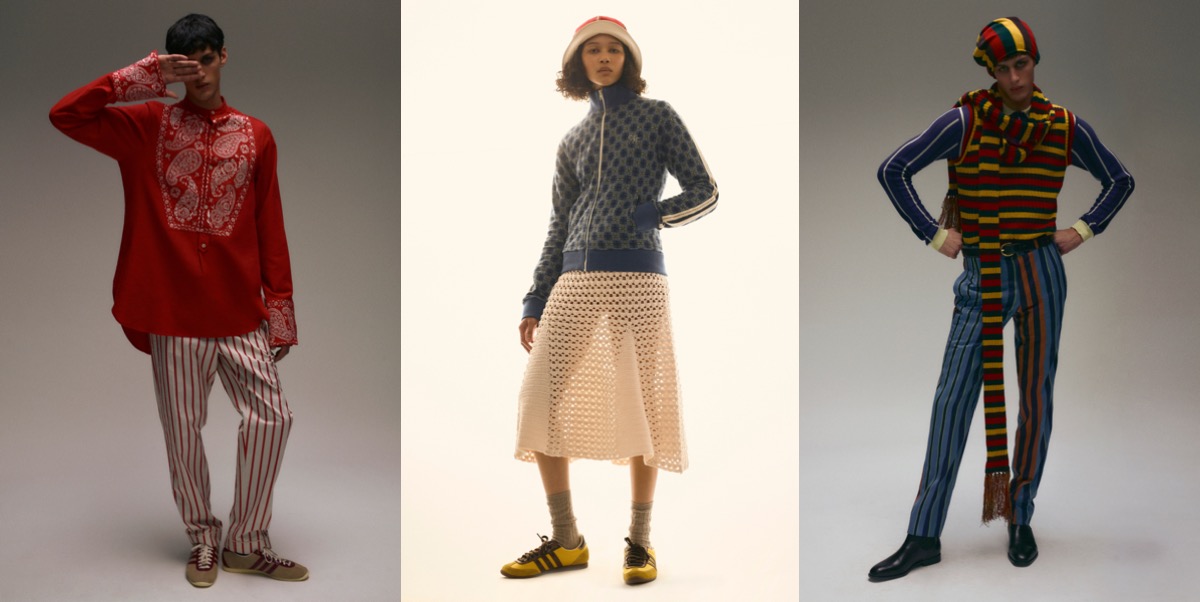
Grace Wales Bonner is one of the most convincing (and educational!) story-tellers in today’s fashion industry. Her latest collection showcased the final chapter in a trilogy, begun last January, which explores the cultural and sartorial threads that interlink Britain and the Caribbean. “This subject is the starting point for why I’m interested in creating,” said the designer, who is British born but of Jamaican heritage. “During this time I feel like I’ve really been grounding myself in this framework, and refining myself within it. These collections are about consolidating and reinforcing what is timeless to me; representing the breadth of what Wales Bonner is, and can be.” Thus far in the series the designer has looked to the second-generation Jamaicans who established London’s 1970s Lovers Rock scene to inform her designs, and then the dress of Jamaica’s dancehall and reggae stars. Here she started by exploring the wardrobes of Britain’s Black scholars in the 1980s: those who traveled from across the world to study at the likes of Oxford and Cambridge. There was a reimagining of their academic attire – of tweed blazers and knitted scarves, well-worn chinos and striped jumpers – but within that historicism, “I was thinking about how in certain spaces people create a language for themselves,” reflected the designer. “About how you might disrupt an institution from inside.” It’s a subject that has long fascinated Wales Bonner, whose brand was established with the intention of disrupting the luxury perspective, redirecting it from its often singular focus on Eurocentricity. So poets like the Barbadian Kamau Brathwaite and the Saint Lucian Derek Walcott appeared as more than just aesthetic character studies; rather, they were catalysts for considering a post-colonial movement that explored “what it is to be in another place, or from another place.” The resonant words of Braithwaite, who left Bridgetown to study at the University of Cambridge, were spoken over the immersive film directed by Jeano Edwards which accompanied the collection: “You had not come to England / You were home.” In terms of clothing, Wales Bonner imagined what she termed the wardrobe of the “outsider intellectual,” considering the structure of British traditions and wondering “within that framework, how do you create something new?” She found her answer by imbuing her distinct take on sartorial eclecticism with a gently liberated, multicultural sensibility. The designer worked with Savile Row tailors at Anderson & Sheppard on tuxedo suiting inflected with Afro-Atlantic flair and elsewhere she softened Oxford shirting, printing cotton cashmere with Jamaican “flowers of resistance” from the photograms of artist Joy Gregory. Boating striped overshirts simultaneously channeled Oxbridge classicism and West African dashikis; brushed denim was cut into crisp suits. A sense of ease was injected into even the most traditional tailoring. Woodblock prints and Indian embroidery drew on the diasporic nature of her research, and a deliberate diversity was instilled throughout. “What I was trying to connect with is a sense of expansiveness and possibility,” said Wales Bonner. “For example, in Derek Walcott’s The Gulf, he has a poem about different Indian gods. You think you’re looking at Caribbean thought, but then there are all these other influences. Once you start researching anything, you realize that nothing is simple. Nothing is one thing. So I didn’t want to make anything too neat.” That expansive notion was echoed, too, in the latest iteration of Wales Bonner’s Adidas collaboration – a partnership that has recently taken fashion by storm. “I was trying to imagine a fictional university that is a lot more multicultural,” she said of its new evolution. “Maybe what their team kits for a track program might look like.” Referring to “the origins of sportswear – when it was made in a beautiful, crafty way which feels almost tailored,” Wales Bonner leaned into Adidas’ technical resources to revive specific fabrications like ’60s jerseys and lived-in wools “to make things feel authentic,” she said. A T-shirt printed with the emblem for “Wales Bonner Adidas Originals Literary Academy” offered a tongue-in-cheek nod to the extensive footnotes which typically accompany each of the designer’s collections. But what has been proven by the sell-out success of her tracksuits and trainers is that, even without related reading, there is something uniquely compelling about Wales Bonner’s designs: the heavy-duty weight of her research injects something intangibly compelling into her clothes.

Collage by Edward Kanarecki.
Men’s – Real and Fun. JW Anderson AW21

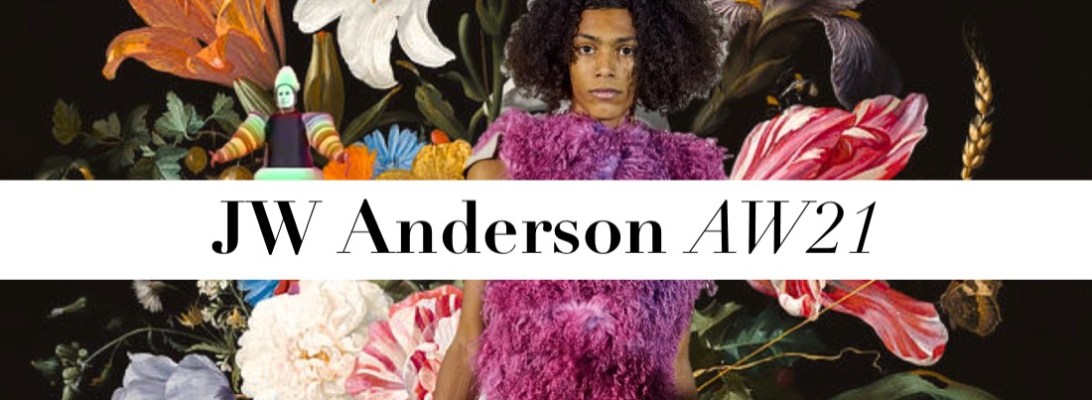
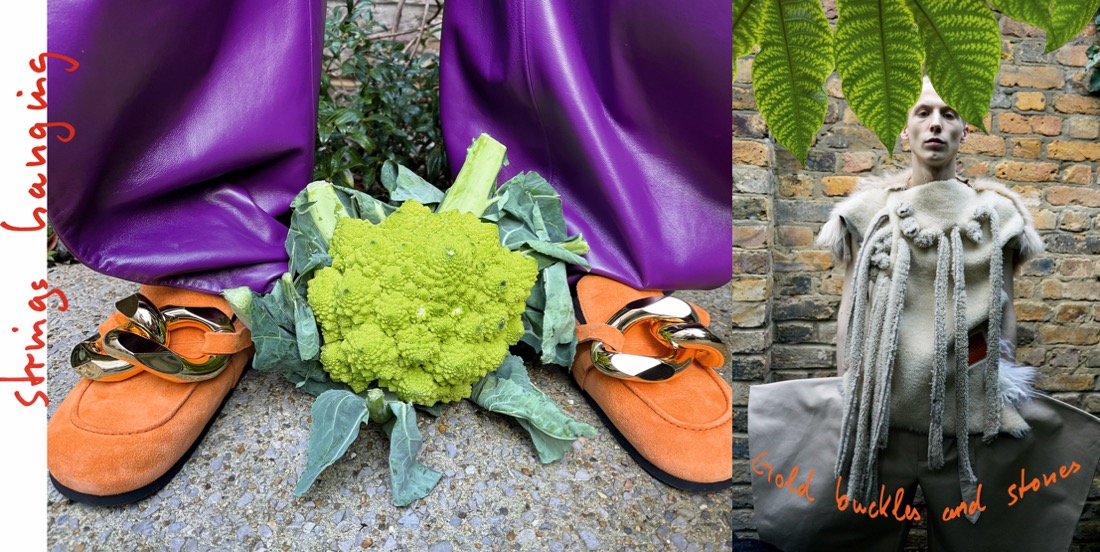
Jonathan Anderson working with Juergen Teller? That’s a match I’m living for. JW Anderson‘s autumn-winter 2021 collection for men (and pre-fall 2021 for women) has been photographed by Teller in London, in his distinct, easy, spontaneous manner. The process basically reflected what Anderson wanted to achieve this season with the garments. “I felt it was better to start the year with something lighter and less calculated,” he declared on a Zoom call with Vogue. “At the beginning of 2021 I wanted something that’s reality. A reality check.” Reality? Well, now that reality’s gone mad, the hilarious antics going on in Anderson’s new set of look-book-posters are a reasonable enough response to the zeitgeist. There’s Sophie Okonedo, who played Charlotte Wells, the mental hospital patient with multiple personality disorder in Ratched, acting up with a gourd, a pumpkin, and an armful of berries, and a trio of male models doing things with cabbage, cauliflower, and an assortment of house plants. To add to the silliness, the handwritten captions are all nonsensically mixed up. “It’s a lot to do with being straightforward, and that’s why I wanted to use Juergen,” Anderson opined. “He’s so good at showing a sharp reality without any fuss.” As usual with JW Anderson, eclectic matchings are the key. Follow the vegetables: ever so cute as crocheted radishes on a sweater, or embroidered on a hoodie; suggestive as great big prints of gourds and a random peach – yet also inspired by Anderson’s interest in 17th century Dutch still lifes, and the work of the British painter William Nicholson. An existential, speculative rabbit-hole, this one: “Why do we glorify something as simple as a lemon or a radish? Is it meditative?” he asks, rhetorically. “So we turned that idea into patterns and iconography. I like this idea of humor in clothing. Squashes on jeans. A peach in the middle of a sweater. Something that makes you grin. Because fashion is meant to make you think, or dream.” Then, the extreme trousering. Follow those upended isosceles triangular trouser legs, and you’re off down the warren leading to Dada and Surrealist costume, the Cabaret Voltaire and Bauhaus theater, if you please. Or perhaps to bump into the checkerboard patterns that the extraordinary gender non-conforming anti-fascist Surrealist Claude Cahoun photographed herself wearing. Those shape experiments are a bold “no, no” to stay-at-home sweats. “I spent so much time last year admiring people ‘doing’,” Anderson says. It’s reinvigorated his belief in craft, in making things himself, in the way he did when he started his brand at the age of 24. “Because I think the world is starting to change. I think this isn’t a time for shock – I think we want reality, honesty, to be stimulated in a way that isn’t sensationalized.

“Live” collage by Edward Kanarecki.

Healing. Charles Jeffrey Loverboy SS21
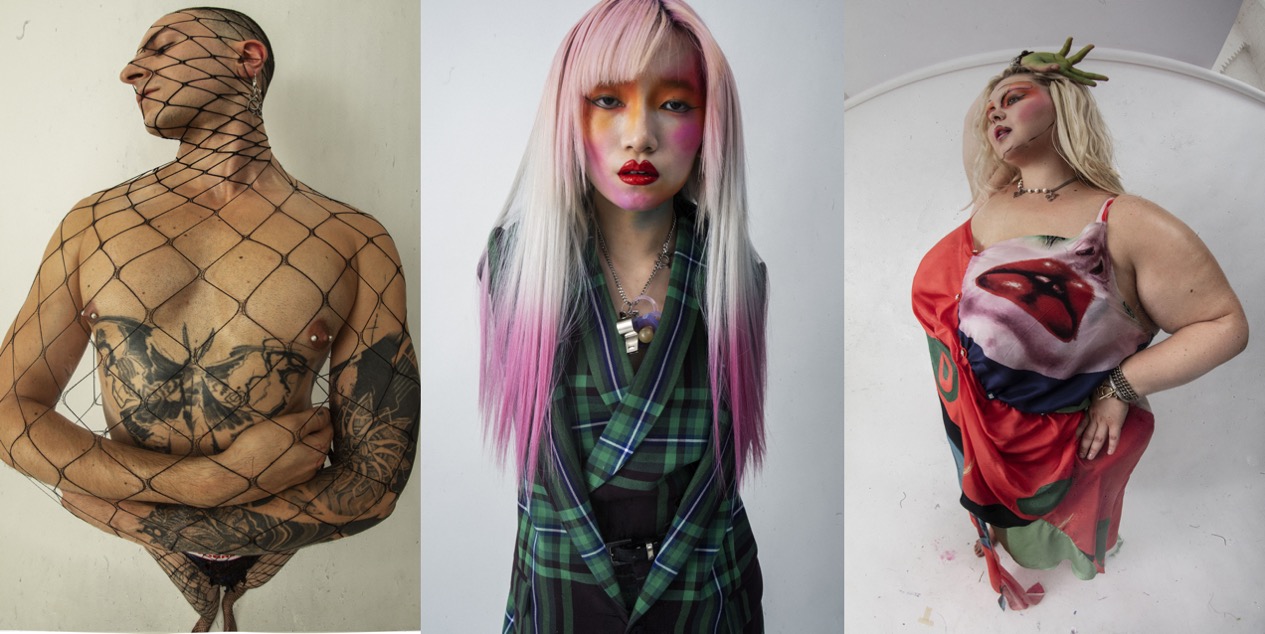
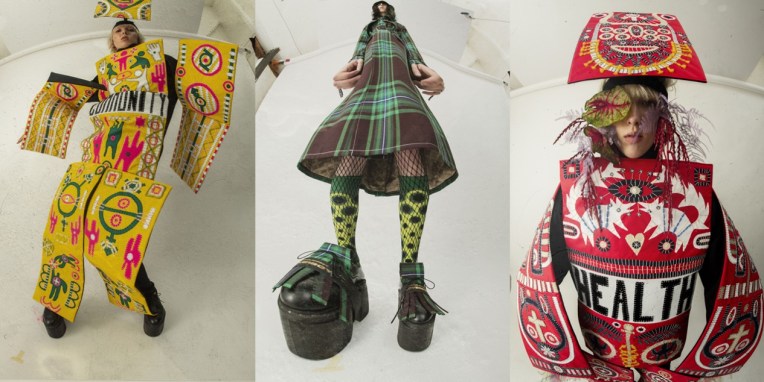
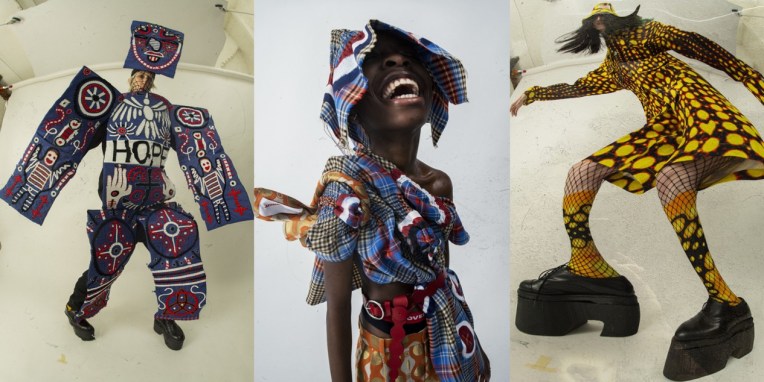
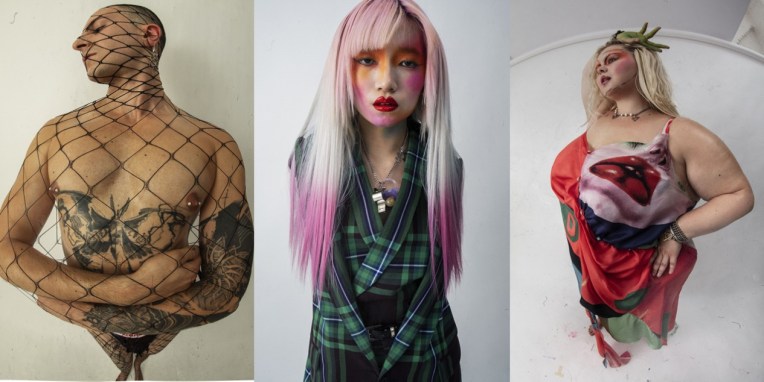
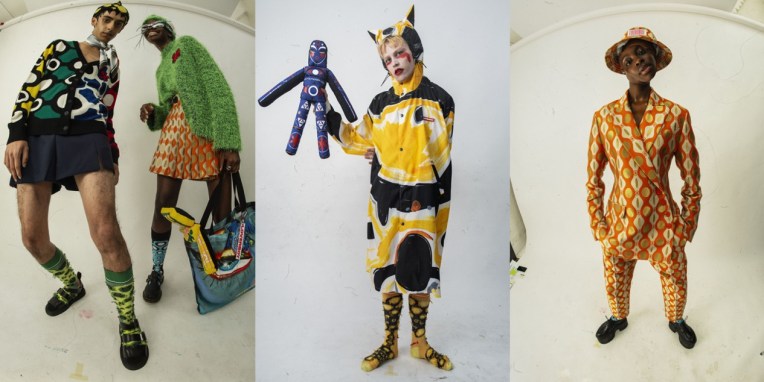
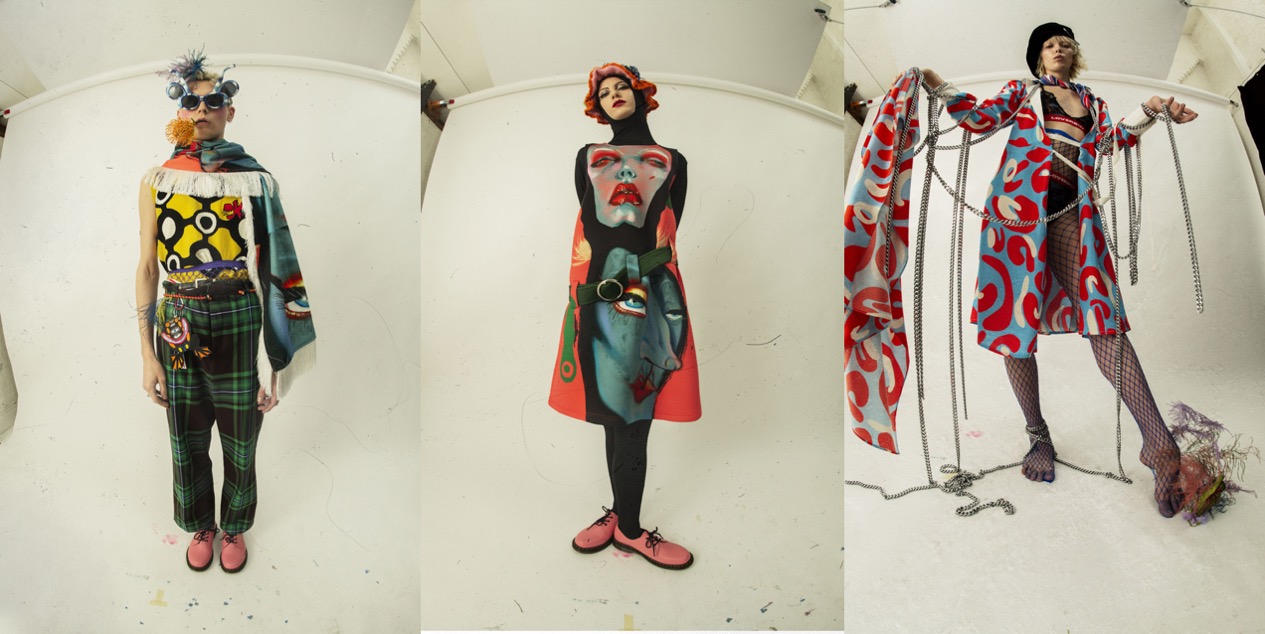
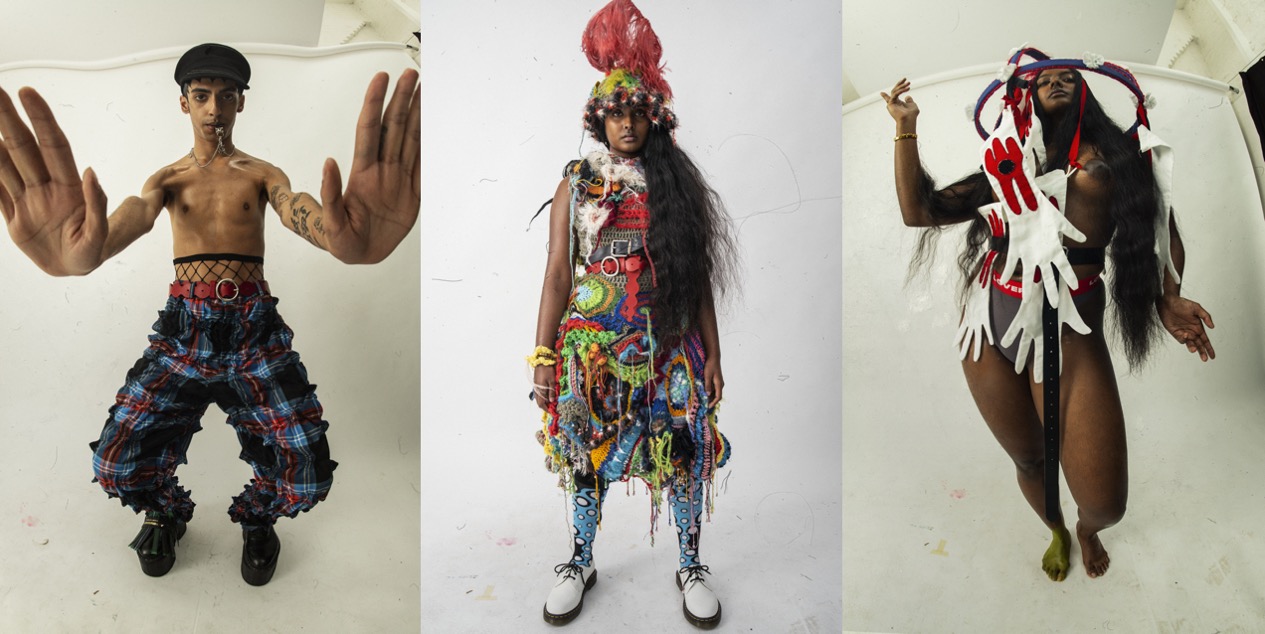
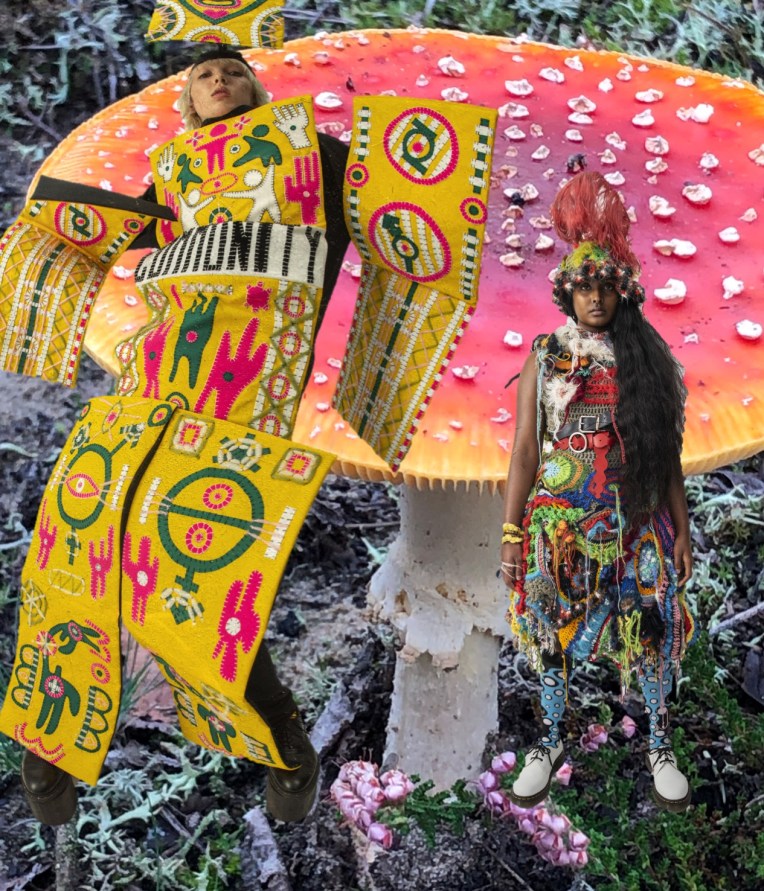
Sometimes all we really want is fantasy, care-free-ness and uplifting escapism. Charles Jeffrey Loverboy‘s spring-summer 2021 collection ticks all of the boxes, plus one more: it’s wearable. Charles Jeffrey’s line-up is a kind of frieze of young fashion’s crazy-joyful fight against fear. Here they are, the expansive Loverboy family, captured in 64 pictures by Tim Walker, a work that’s also printed in a 16-foot long concertina souvenir of the times. “I wanted it to be a physical representation of a stream of consciousness,” says Jeffrey. “It kind of represents my brain as I was thinking on long walks to the studio during lockdown. Taking up space, that’s what we do in a Loverboy show. But now that has gone, stopped. I was thinking: What does it look like when we’re all keeping away from each other?” It ended up as the Healing, a wild celebration of sexiness, inclusion, and craft-y life-forces, with Jeffrey acting as an invoker-provoker of good against evil. “Loverboy was always a community that came together in a club, but also a digital community of friends who’ve gravitated towards us. There are a lot of really amazing people in here,” he says, describing them in his press communiqué as “our queer family captured in defiant joy.” “It was originally nicknamed the Emergency Collection in the studio,” he remembers. “Then, everyone had to go home, except me. There was this panic.” On his solitary  daily walks, the Scottish folk tradition enacted by the Burryman (“costumes that ward off evil”) suddenly popped into Jeffrey’s head. That got his creative synapses jumping. “Our interns, god bless them, had started with us bright-eyed, bushy-tailed, and excited about working on the collection. I didn’t want to take that experience away from them, so we set a craft project they could work on remotely.” Community, Health, and Hope are the emblems in the Loverboy panels of protective armor, embroidered by interns in isolation. The contradictions between enforced separation and the need to feel united simultaneously sent Jeffrey down a rabbit-warren of research into “warning signs in nature.” Out of the search engine popped the vivid clashing colors and patterns in the collection, inspired by poison dart frogs, blue-ringed octopi, puss moth caterpillars, hickory tussock moths, and marbled cone snails. “Well, poisonous markings in nature are also very bright and attractive. That weird interplay felt really instinctive to me as a person who works with color. How it can ward people off, but also brings them together.” The pathway from there to healing went via chromotherapy – but practically, it’s just there quite obviously and visually in all the eye-dancing Loverboy energy radiating from multicolored knits, tartans, and psychedelic prints. There may be no physical spaces for the rituals of clubbing or fashion performances right now, but never mind. Despite the troubled times, there still exist the territorial rights to identity and psychic freedom that the Loverboy generation has mapped out – the progress, as Jeffrey puts it, “from emergency, terror, and jittering-anguish to elation, sex, communion.

Collage by Edward Kanarecki.