Healing. Charles Jeffrey Loverboy SS21

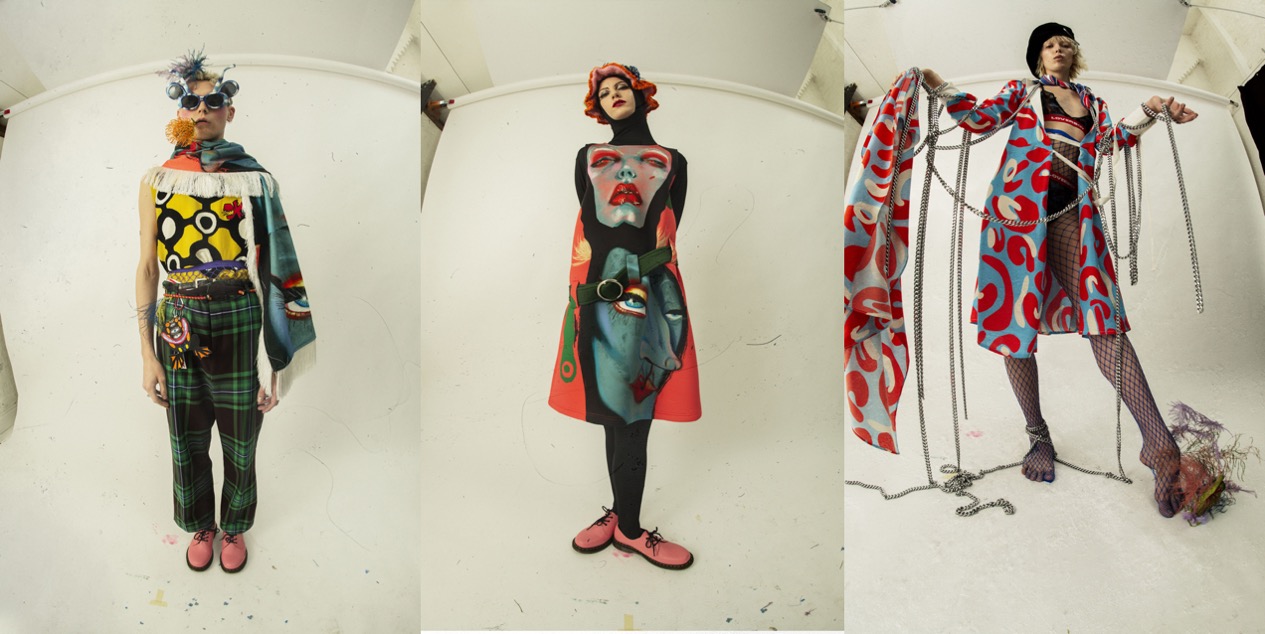
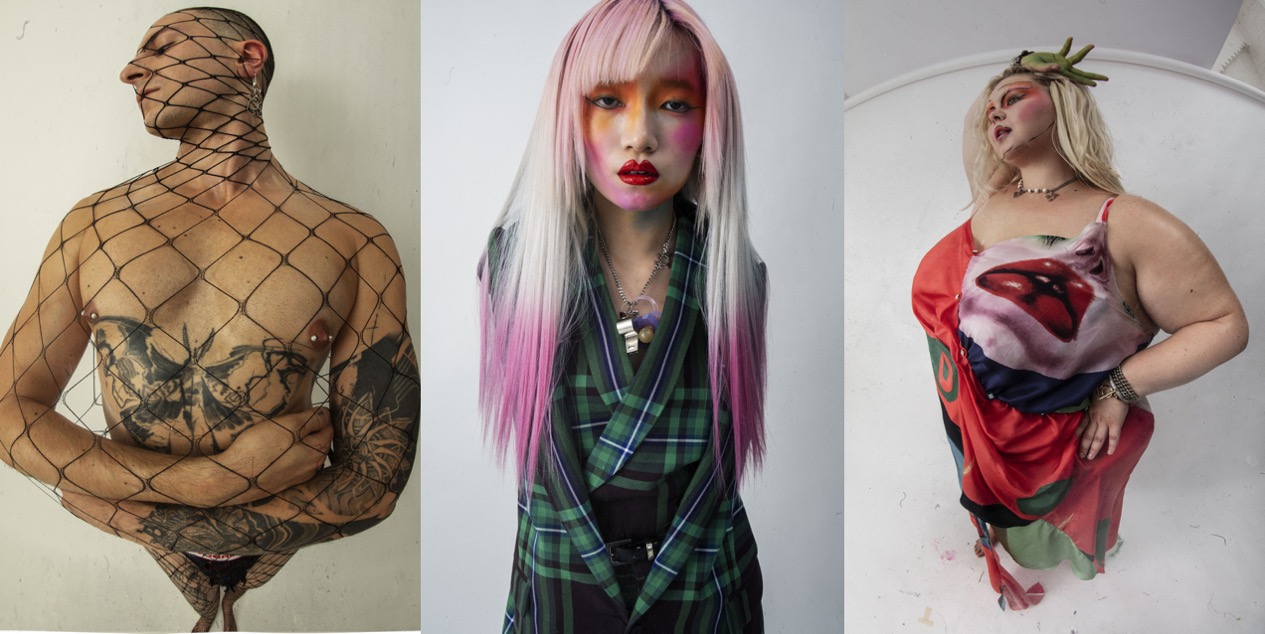
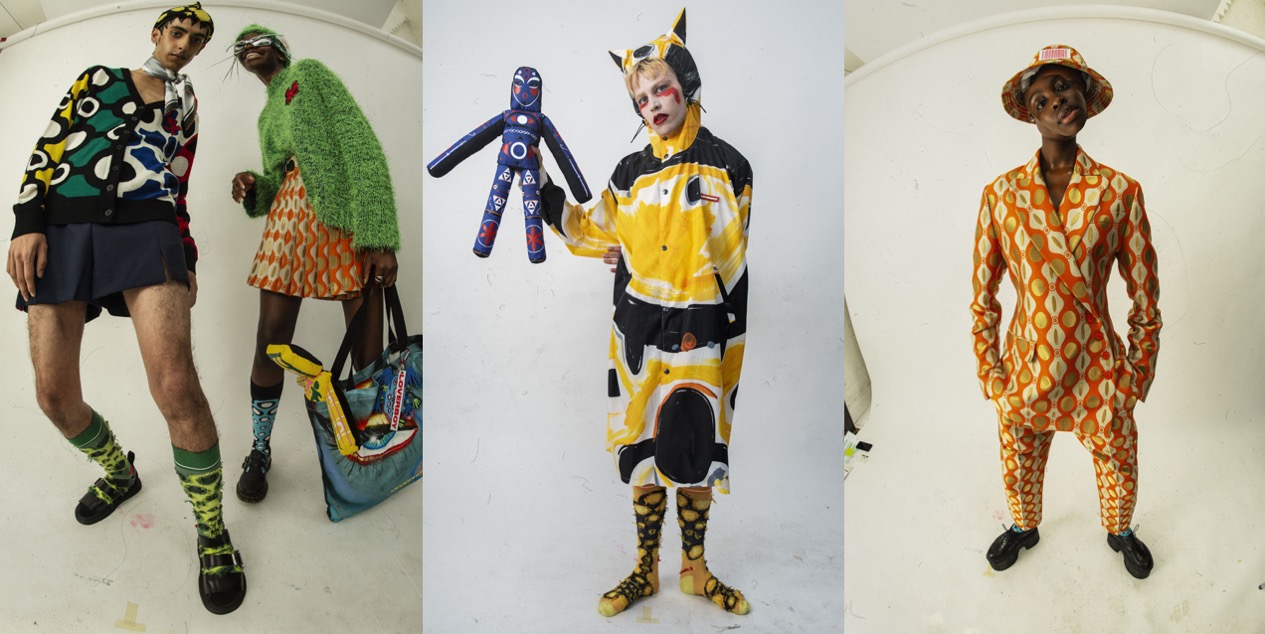
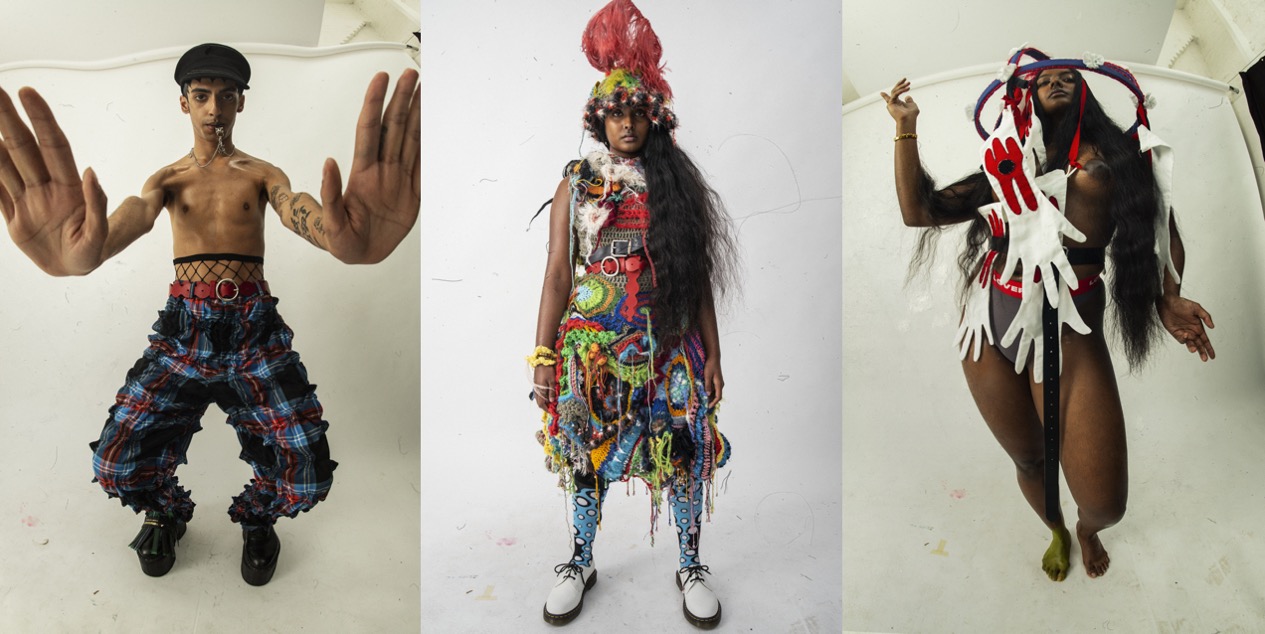
Sometimes all we really want is fantasy, care-free-ness and uplifting escapism. Charles Jeffrey Loverboy‘s spring-summer 2021 collection ticks all of the boxes, plus one more: it’s wearable. Charles Jeffrey’s line-up is a kind of frieze of young fashion’s crazy-joyful fight against fear. Here they are, the expansive Loverboy family, captured in 64 pictures by Tim Walker, a work that’s also printed in a 16-foot long concertina souvenir of the times. “I wanted it to be a physical representation of a stream of consciousness,” says Jeffrey. “It kind of represents my brain as I was thinking on long walks to the studio during lockdown. Taking up space, that’s what we do in a Loverboy show. But now that has gone, stopped. I was thinking: What does it look like when we’re all keeping away from each other?” It ended up as the Healing, a wild celebration of sexiness, inclusion, and craft-y life-forces, with Jeffrey acting as an invoker-provoker of good against evil. “Loverboy was always a community that came together in a club, but also a digital community of friends who’ve gravitated towards us. There are a lot of really amazing people in here,” he says, describing them in his press communiqué as “our queer family captured in defiant joy.” “It was originally nicknamed the Emergency Collection in the studio,” he remembers. “Then, everyone had to go home, except me. There was this panic.” On his solitary  daily walks, the Scottish folk tradition enacted by the Burryman (“costumes that ward off evil”) suddenly popped into Jeffrey’s head. That got his creative synapses jumping. “Our interns, god bless them, had started with us bright-eyed, bushy-tailed, and excited about working on the collection. I didn’t want to take that experience away from them, so we set a craft project they could work on remotely.” Community, Health, and Hope are the emblems in the Loverboy panels of protective armor, embroidered by interns in isolation. The contradictions between enforced separation and the need to feel united simultaneously sent Jeffrey down a rabbit-warren of research into “warning signs in nature.” Out of the search engine popped the vivid clashing colors and patterns in the collection, inspired by poison dart frogs, blue-ringed octopi, puss moth caterpillars, hickory tussock moths, and marbled cone snails. “Well, poisonous markings in nature are also very bright and attractive. That weird interplay felt really instinctive to me as a person who works with color. How it can ward people off, but also brings them together.” The pathway from there to healing went via chromotherapy – but practically, it’s just there quite obviously and visually in all the eye-dancing Loverboy energy radiating from multicolored knits, tartans, and psychedelic prints. There may be no physical spaces for the rituals of clubbing or fashion performances right now, but never mind. Despite the troubled times, there still exist the territorial rights to identity and psychic freedom that the Loverboy generation has mapped out – the progress, as Jeffrey puts it, “from emergency, terror, and jittering-anguish to elation, sex, communion.”

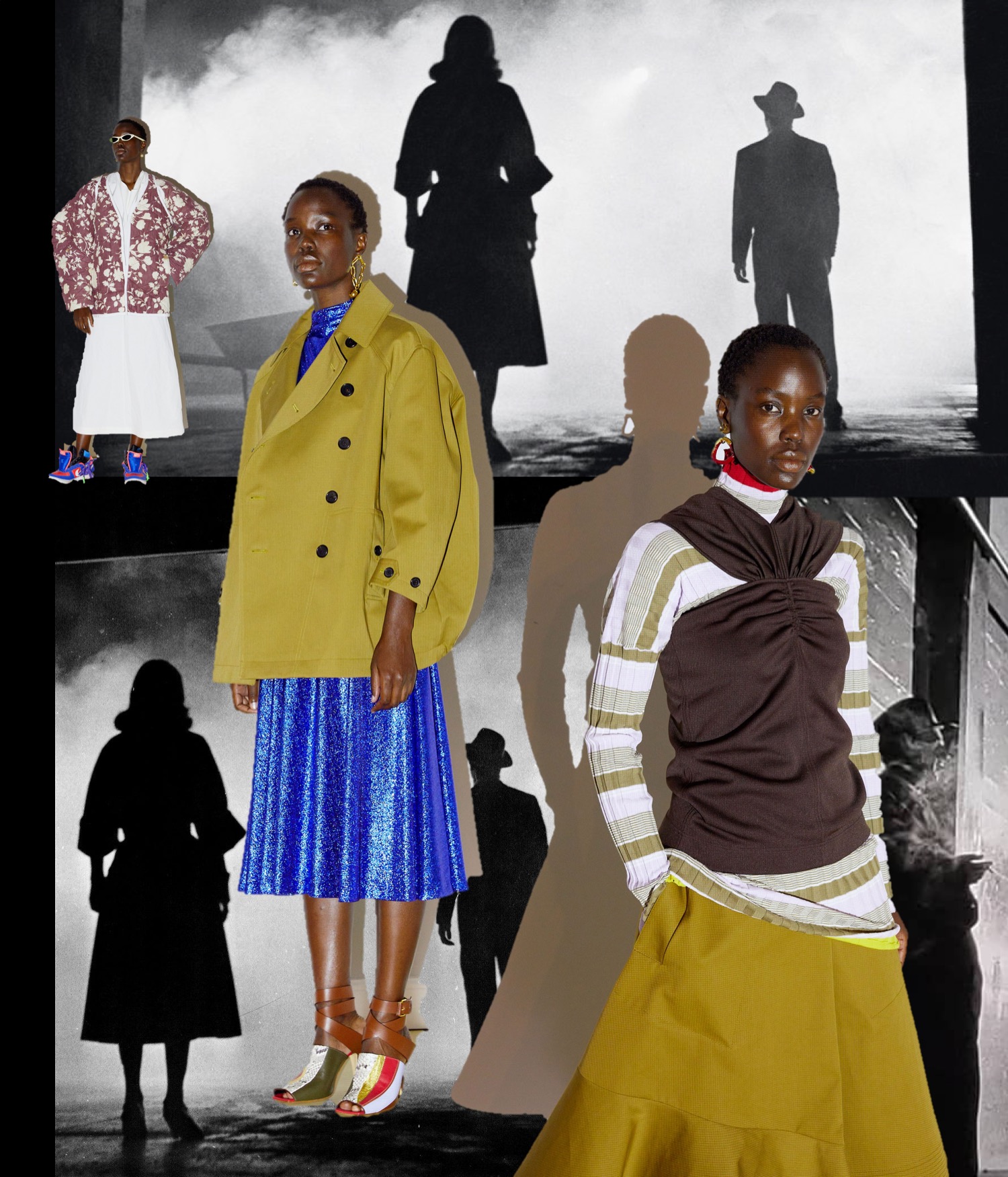
Collage by Edward Kanarecki.

And Some More Colour. Colville SS21

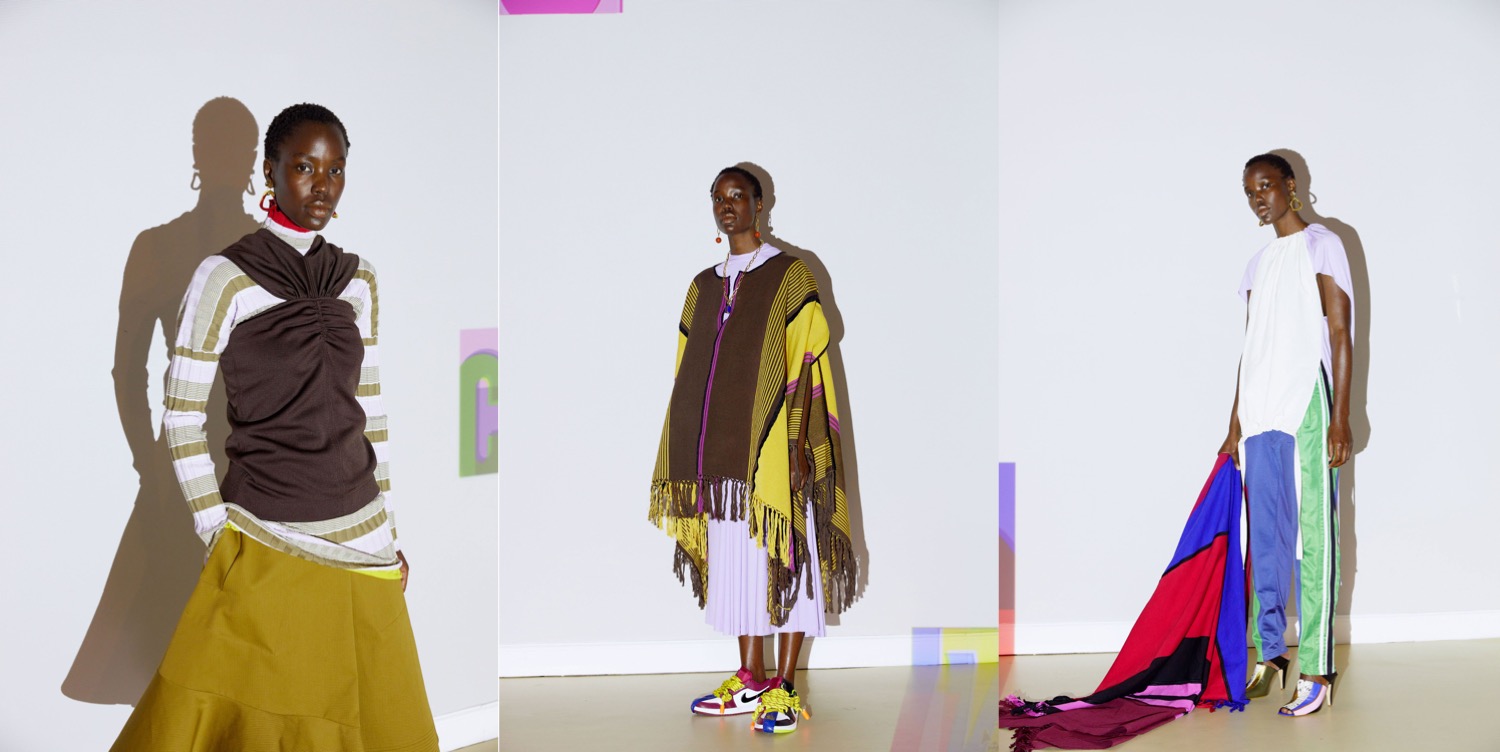
Colville is a quiet, yet steady player. Its founders Molly Molloy and Lucinda Chambers are industry veterans, but they keep their label – consciously or not – under the radar, as a sort of niche place for the insiders. Besides the designers’ obvious flair for color and print, the more vibrant the better, the unifying principles at Colville, it seems to me, are comfort and joy. As women, Molloy and Chambers know those two things are interlinked; you’ll see a preponderance of upcycled trainers and track pants in these look book pictures. But their dresses, too, have a sensuous ease, tied effortlessly with ribbon at the waist or at the nape of the neck above an exposed upper back. Those shawls, locally sourced and dyed by the Tzotzil ethnic group in the Chiapas region of Mexico, are the collection’s hero pieces: they would wake up any outfit, or home. A jacket pieced from a patchwork of traditional Indian bedspreads is similarly colorful, with the feel of a keepsake or heirloom. The pandemic might have made their work more challenging, with Chambers in London and Molloy in Milan, but their spring-summer 2021 line-up shows no signs. Where other brands are shrinking or outright collapsing, Colville is expanding. “There is a kind of level playing field, where if you’ve got a strong story to tell, you get a voice. And that’s a wonderful thing,” Chambers reflected. “It doesn’t matter how much money you have to chuck at it anymore, you can’t buy your way out of this. It has to be about what you’re making and the love you’re putting into it.” That’s the thing you want to hear and read!

Collage by Edward Kanarecki.

Paint The World. Christopher Kane SS21

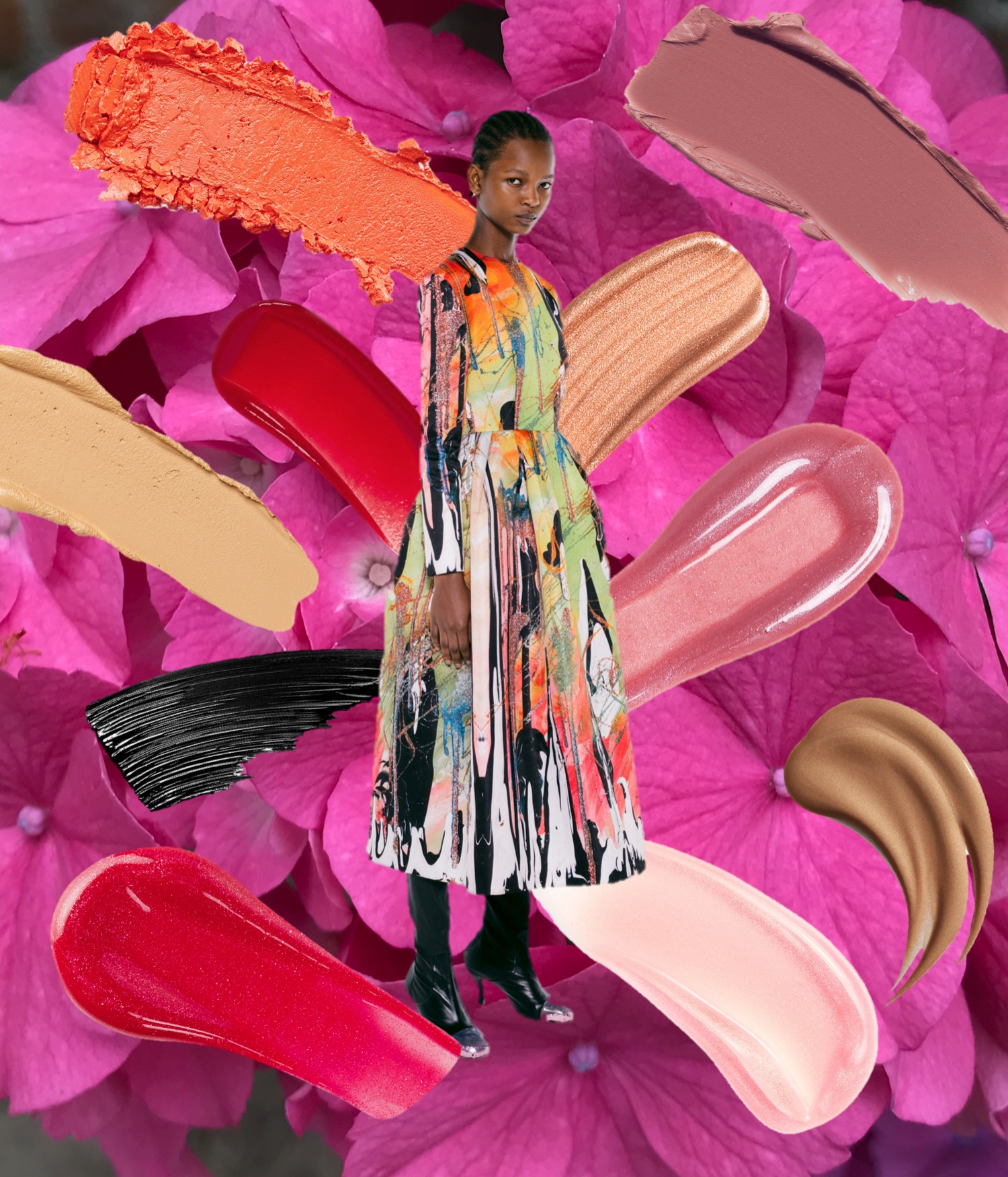
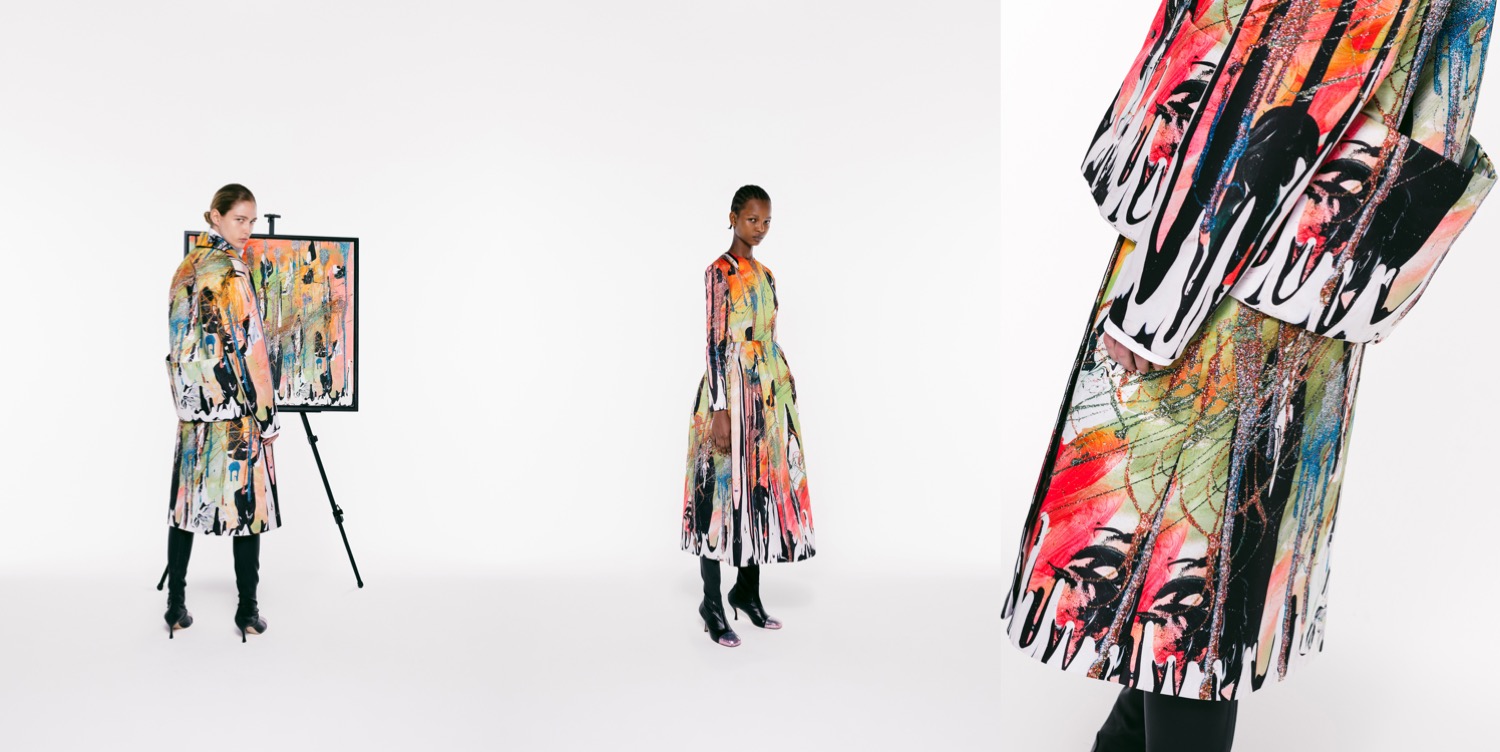
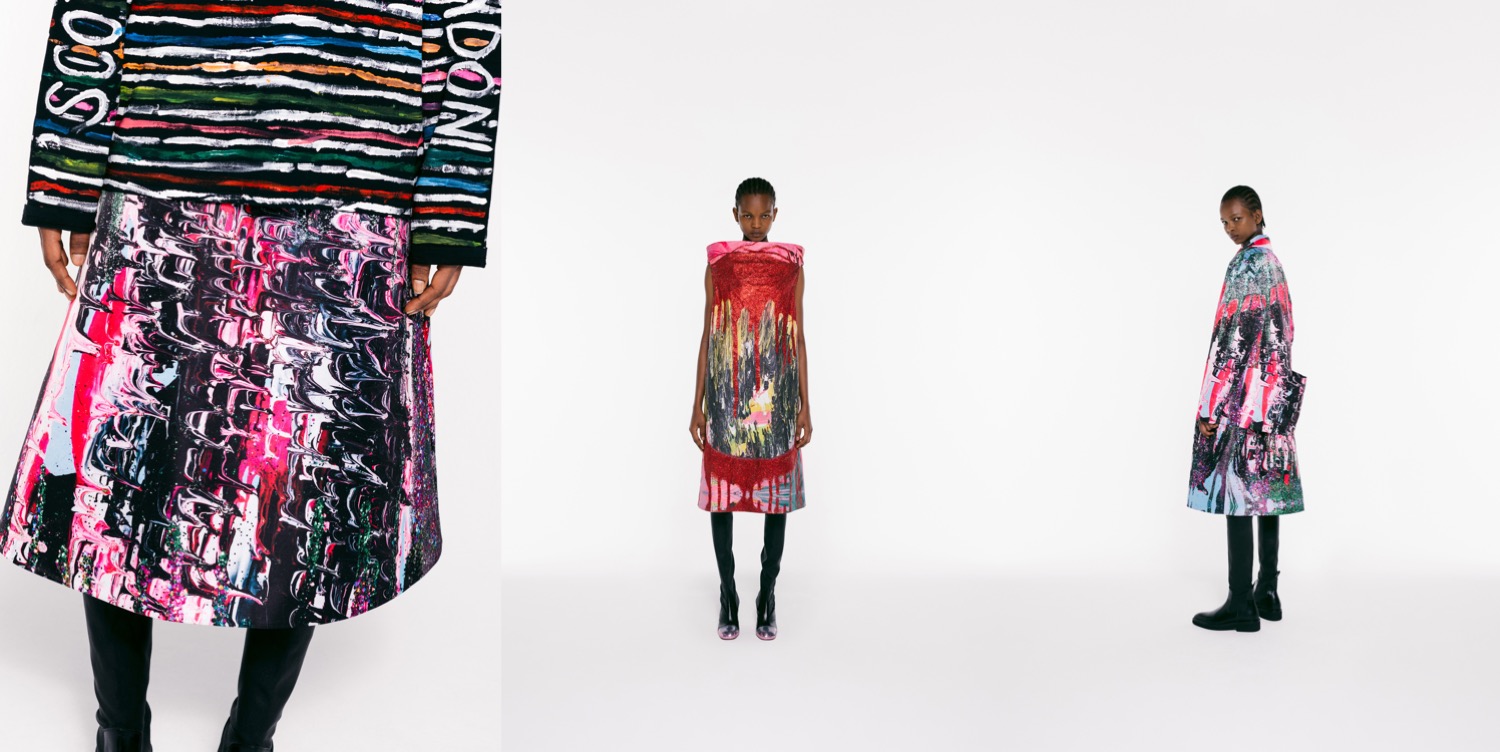
Similar to Victoria Beckham this season, Christopher Kane took the “less is more” path: less clothes and less looks result in a well-edited, meaningful line-up of truly intriguing garments. In Kane’s case, however, it’s been reverting to painting with multicolored glitter as he did as a kid that’s got him back to who he is. His flagship in Mount Street was turned into an exhibition space on the day of the collection’s presentation, filled with easels and canvases and imagined portraits of girls that he’d made obsessively during lockdown. Grouped around on mannequins were vibrant prints that made the jump from pictures to coats, dresses, shirts and t-shirts. Everything is painted – an idea that parallels with Katharina Grosse’s artistic practice, where she’s painting the world around her. “I haven’t painted for 14 years,” he said. “You know, in (the pace of) business, it’s chronic. At the beginning of lockdown, it took me a good month to say, I can’t sit here watching TV all day. I needed to do something. So I went out in the garden and just started painting, not caring whether what I was doing was crap or not. And then I started enjoying myself.” He made paintings of “brats – the girls I love, who’ve always inspired me,” gouaches of his nieces Bonnie and Tippi, and a more abstract impression in sage green sparkles of his sister Tammy. The idiosyncratic technique goes straight back to when he started making drawings in glitter pen of his mum at home in Newarthill, outside Glasgow, at the age of 14. Christine Kane encouraged both Christopher and Tammy, her youngest children, to be as creative as they liked at home. Instead of getting mad at them when their hours of painting and gluing on the sitting-room floor ended up ruining her best carpet, she just removed the carpet and let them get on with it. Going back to that feeling of making for making’s sake, without the pressure of thinking he was designing for any prescriptive outcome, was freeing. He began forming abstract shapes: “circles, voids, mouths” from whirling layers of acrylic paint and glitter. “Then I came up with a process of combing the paint. And then adding stripes. They became like my mindscapes.” In the end, having thought at first they didn’t want to make anything at all, Kane and his sister began transferring some of the work onto duchesse satin, Tyvek, and cotton, and a small summer collection began to take shape. Out of the big pause came something humming with energy, revealing a side to Christopher Kane’s creativity he might never have had time to rediscover and which he’d probably never have shared. As one of the restarts of the season, it felt intensely personal – something speculative, self-reliant, and not meant for endless reproduction. And most of all: “from now on,” said his sister, “we’re streamlining, editing before we decide to put something out into the world.”

Collage by Edward Kanarecki.
A Classic Romance. Erdem SS21

In Erdem‘s world, nothing has changed – at least, at a first glance. Here, women are still dressing up and wear magnificent dresses that have a romantic, elegant side. But the period of confinement did have an impact on Erdem Moralioglu. It reads like a mad experiment: Erdem Moralioglu in his London house for four months, with denied access to the museums and libraries that oxygenate his storyteller mind, and throw in a Susan Sontag novel. “It begins with three people dancing on the lip of a volcano,” the designer said of the collection he authored and drew in quarantine. Inspired by The Volcano Lover, Sontag’s portrait of the 18th-century beauty Emma Hamilton, who married a volcanologist obsessed with Grecian vases and had a passionate love affair with Lord Nelson, this was how Moralioglu coped with everything that happened this spring. “There was something about this odd time that we’re living in, and the idea that there is something so much bigger than all of us that controls everything,” Moralioglu said, drawing a parallel between crises past and present. “It’s beauty in a time that’s very ugly, and the idea of creating something decadent with an underbelly of something poor.” He expressed that sentiment in a meeting between formal and informal: a trans-historical voyage that referenced Grecian nymph shift dresses through the lens of the puff-sleeved empire silhouette, a sprinkling of Nelsonian regalia, and a cameo by Susan Sontag’s post-modern cardigan. Many of his embroidered muslin and organza dresses and 18th-century floral jacquard numbers were treated with crinkling effects to evoke a sense of “poor,” which means something quite different in Moralioglu’s dainty world than it does to the rest of us. But within the folds of those fabrics, there was a feeling of resourcefulness, which illustrated the idea of beauty in a time of uncertainty. Some pieces looked as if they’d been spliced with other pieces, Nelson’s admiral jackets and grosgrain regalia had a scent of thriftiness about them, and opera coats seemed to morph into khaki utility-wear. Then, a sturdy denim bottom popped up, posing as a chic pencil skirt. But still, Erdem is all about eveningwear. “I get asked the same question: Are women’s tastes and wants changing now, given the situation? On the contrary, we have a customer who’s still buying special pieces. It’s the want for something you can wear in five and 10 years. As I enter my 15th year doing this, the most thrilling thing is seeing someone wearing your work from 10 years ago. I’ve always been obsessed with permanence,” Moralioglu asserted. “When it feels like the end of the world, doesn’t someone need a pink moiré hand-embroidered gown?”

Collage by Edward Kanarecki.

Less Is More. Victoria Beckham SS21

The good thing about lockdown’s effect on fashion this season is that some designers did their best (or were forced) to focus on the essentials. Less new clothes results in less looks, and less looks means smaller collections. And we really don’t need stuff that is just “out there”, without a bigger reason behind it. Victoria Beckham‘s spring-summer 2021 line-up, which is just 20 looks, not a regular 40-50, might be one of her strongest in a while. “I found the whole thing liberating. Everything changed this season and it reminds me why I fell in love with the industry in the first place, all those years ago when I used to do smaller presentations and narrate through them,” Beckham said. “We weren’t in a position to have 10 fashion stories and narrow it down to one or two. We had to be very focused and strategic. I’ve really enjoyed coming to work. So much. That sense of freedom is what my business needs right now.” If recent Victoria Beckham collections were all about business-ready elevation, here she loosens up the silhouette and offers clothes that are easy, versatile and comfortable. Floor-length jersey dresses caressed the body rather than constricted it. She loosened the waists of maxidresses and allowed them to drop. Her 1970s tailoring felt more lenient in form, and she described the season’s super-flared trouser, split at the back, as “puddling on the floor.” Cutouts felt sensual rather than strict. And the colour palette? It’s delightful – just look at the first look’s clash of burgundy, pea-green and classic beige. “I can honestly say there’s genuinely nothing I won’t wear here, and that’s not always the case with a runway collection,” she admitted. “Sometimes you do create a silhouette for the runway.” As for the post-lockdown fashion landscape, Beckham said this collection was ultimately about sensing the winds of change: what women will want to wear on the other side. “In lockdown, I was wearing a lot of denim, a lot of t-shirts, shirts,” she said, name-checking components that all appeared in her new season proposal. “I was not doing an elasticated waist and leggings.” Less is more – and can be oh so stylish.

Collage by Edward Kanarecki.