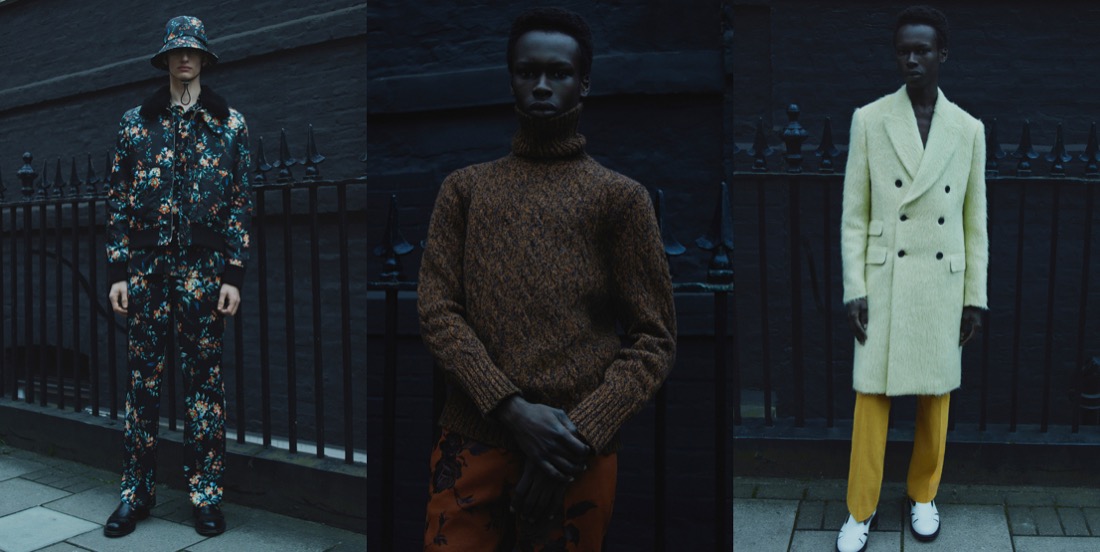
Men’s – Utilitarian Romanticism. Erdem AW22

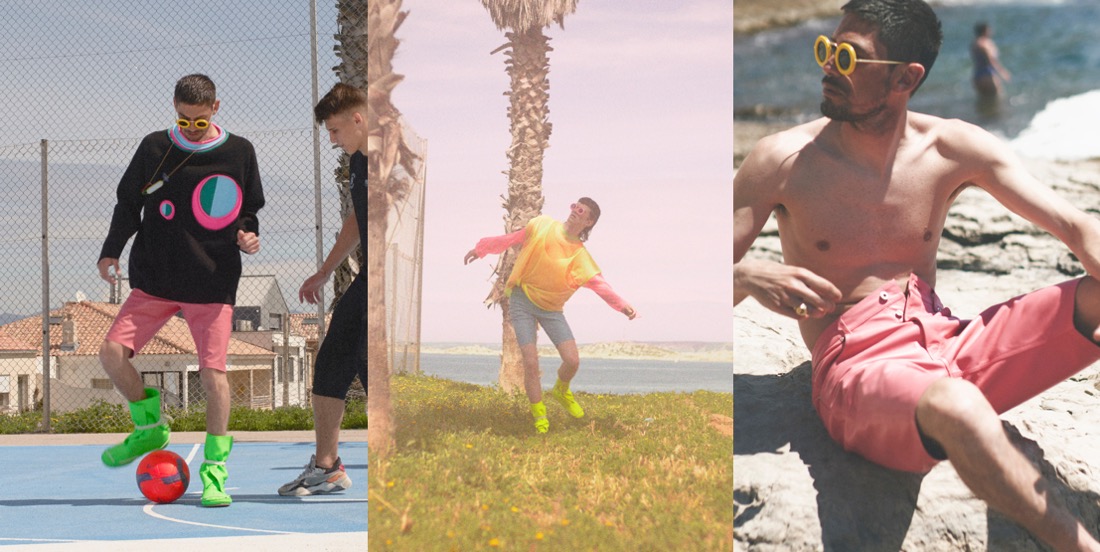
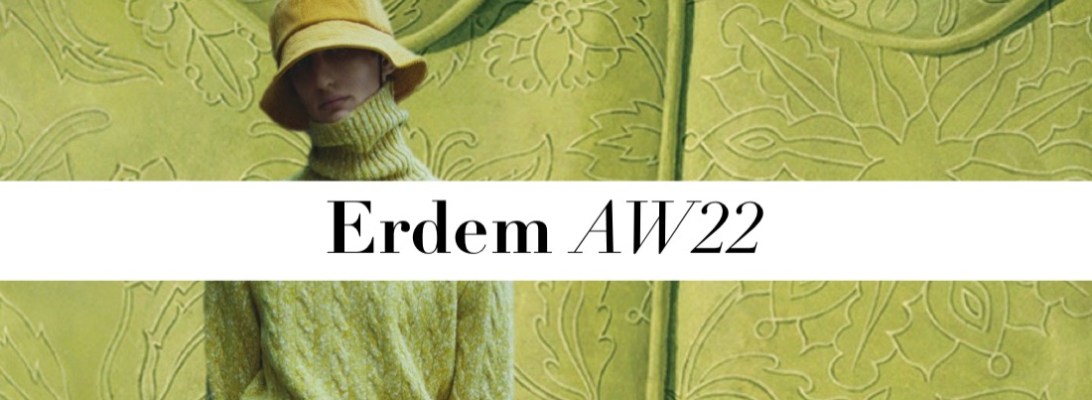
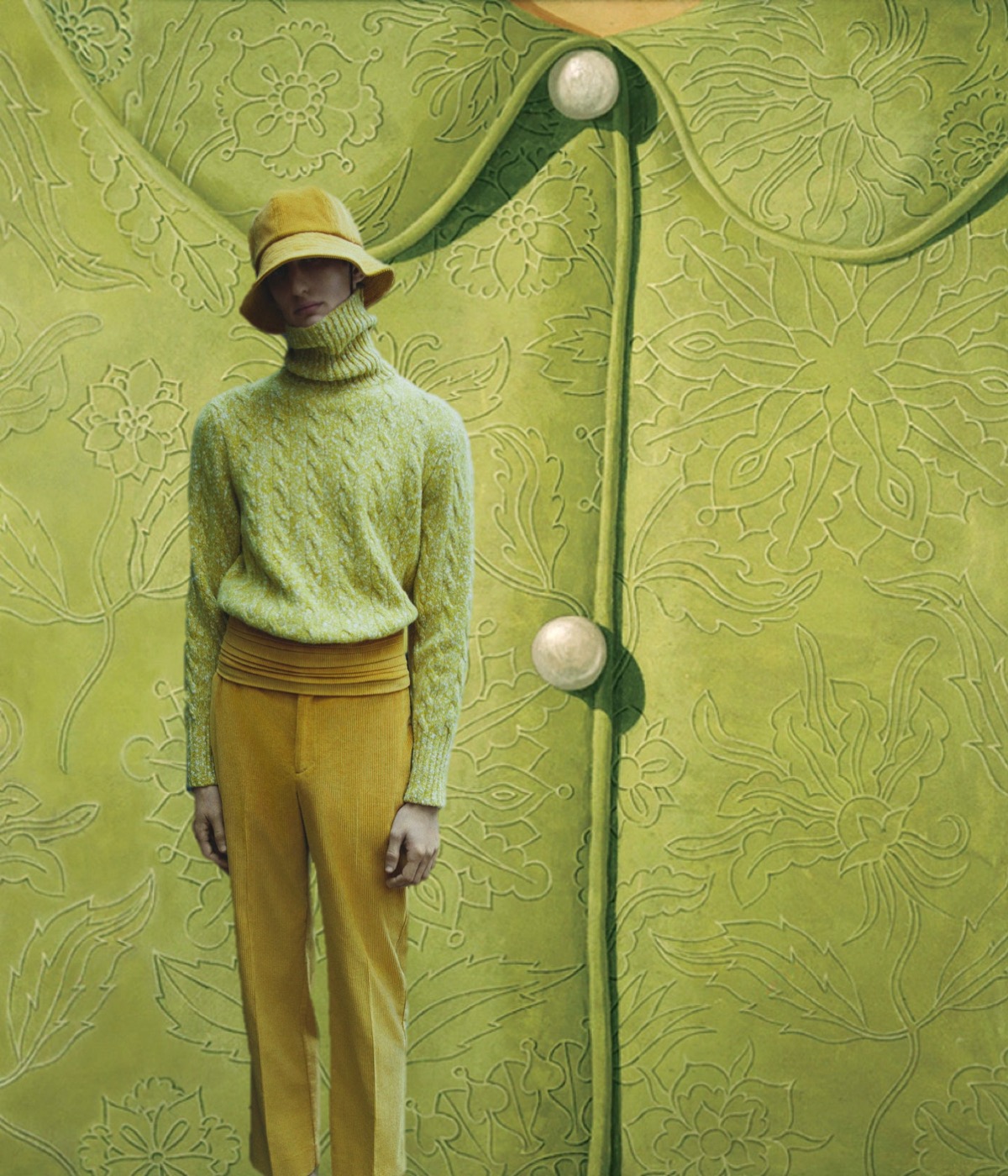
In his second menswear collection, Erdem Moralioglu goes for streetwear – something you never see in his often dramatic women’s offering. “Utilitarian romanticism” is how the London-based designer summed up his newest creative venture. He has a point: in a world where people wear couture-house joggers to dinner, and even Moralioglu surrenders to sporty dress codes, streetwear is really just daywear. “It’s a boiled fleece hoodie with a tailored, nipped jogger,” he said of the collection’s most informal look, describing those garments exactly like he would his ladylike womenswear. But unlike that womenswear Erdem’s men’s world has a relaxed, almost light-hearted quality about it. The designer has been living in the spring men’s collection since he received the first pieces, and, as he confirmed, “it’s very personal.” While the first collection only started to arrive in stores in November, his recipe of ravishingly-colored knits, corduroy, and printed denim has seen great response from the yet-to-be-defined Erdem men’s customer, and has gone down well with his trusty female clientele, too. This season, he took inspiration from the work of two women, who may as well have played muses to one of his women’s collections: Madame d’Ora, a Viennese portrait photographer and contemporary of Picasso, and Madame Yevonde, a portrait and still-life photographer who worked in London around the interwar era. Together, their subjects, grading techniques, and the latter’s use of color inspired a 1930s-driven collection, which borrowed from the women’s wardrobe of the time, and fused those references in Moralioglu’s contemporary “utilitarian romanticism.” What emerged through Moralioglu’s second menswear proposal was a men’s wardrobe of conventional contradictions: feminine vs. masculine, formal vs. informal, Old World vs. new world. Those dichotomies are hardly new territory in menswear, but through the lens of Erdem – with all its history and romanticism – this menswear brand already feels unique and familiar in a way that gives it a character of its own on a very saturated market.

Collage by Edward Kanarecki.

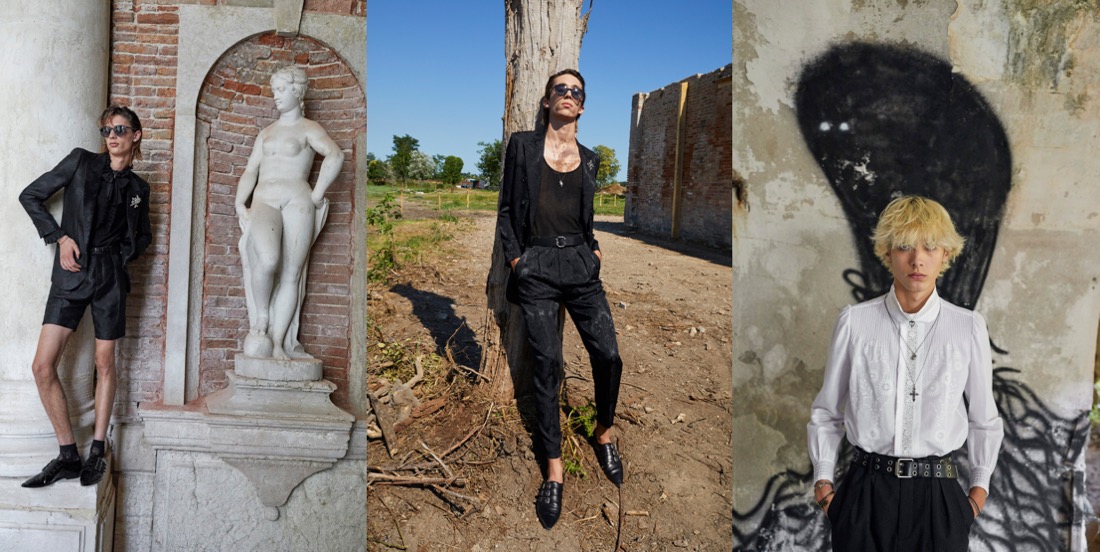
Men’s – Full Throttle. Celine SS22

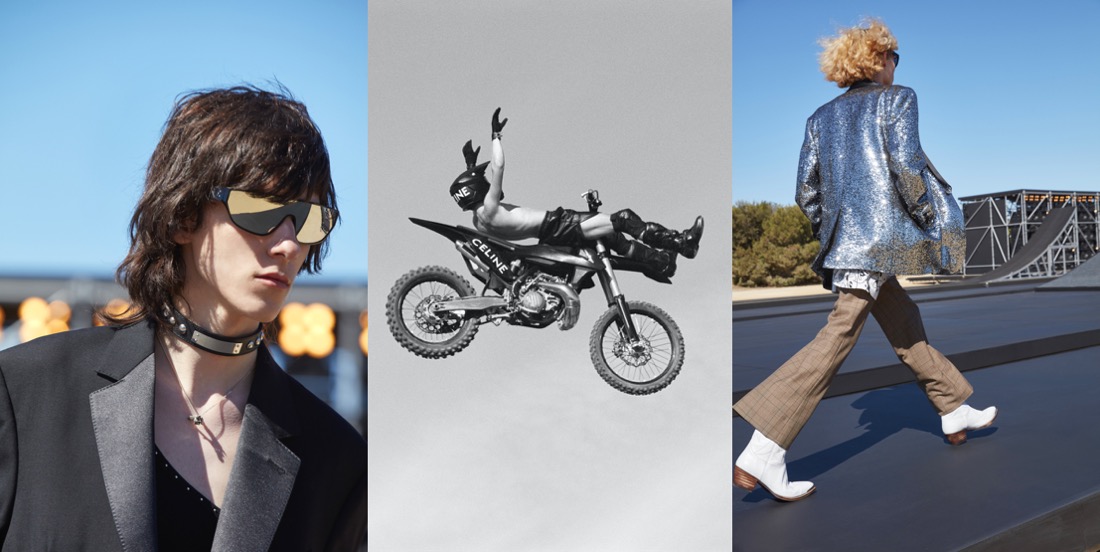
As Phoebe Philo is coming back to fashion, the Celine wound seems to heal. Which doesn’t mean I suddenly love Hedi Slimane‘s vision – but at least I can tolerate it. Still, his men’s spring-summer 2022 collection left me with some mixed feelings. This season, we’ve got an action-and-item packed Celine show recorded by drones somewhere on the Archipel des Embiez in the south of France. On a black runway set up with freestyle motocross ramps and jumps, teams of shirtless Honda-riding boys leapt and arced against the Mediterranean sky. The location is apparently not far from where Slimane lives outside St.Tropez, and this was Slimane on home territory in more ways than one: capturing his endless obsession with male teen energy, studding the collection with multiple art collabs, and wrapping it all up to the beat of a mesmeric looped soundtrack. The FMX bikers belong to a community that invented its renegade free-riding sport in the hills of California in the early ’90s – Slimane has been documenting them since 2011, when he came across them while he was living in L.A. This time, he commissioned and co-produced the music with Izzy Camina, intersecting the long, slouching march of a black-leather and silver-sparkled collection with souvenir slogan T-shirts and prints made by 14 of the emerging artists he collects and promotes. Since the pandemic hit, Slimane has shifted his Celine productions into the open air and into spectacular French locations. Wherever he lands, though, be it a Formula One racetrack, a chateau in the Loire valley, or this time, on a rocky coastline, there’s always the same, recognizable atmosphere, the romantic-erotic stamp Slimane puts on a world inhabited by young men. His meeting of motocross daredevilry and neo-rave frippery nailed the current summer of spring-summer 2021 teen spirit – a full-ranging breakdown of XXL elephant jeans, mirrored bug sunglasses, scaled-up bombers, tour jackets, and draped tuxes. Black capes flew over black leathers; sequins, crystals, and silver western boots glinted. Slimane targets Gen Z, and he confidently thinks he knows what they want. But I’m not sure if his take on youth is actually that relevant today. To me, it feels like an over-done costume. And Gen Z look forward to the unforced sense of authencity.

Collage by Edward Kanarecki.
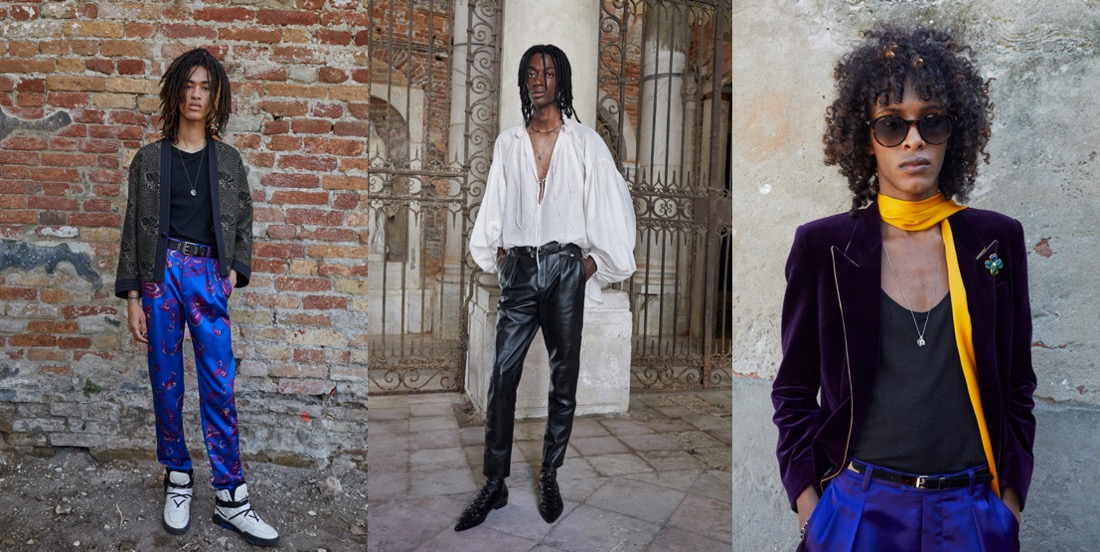
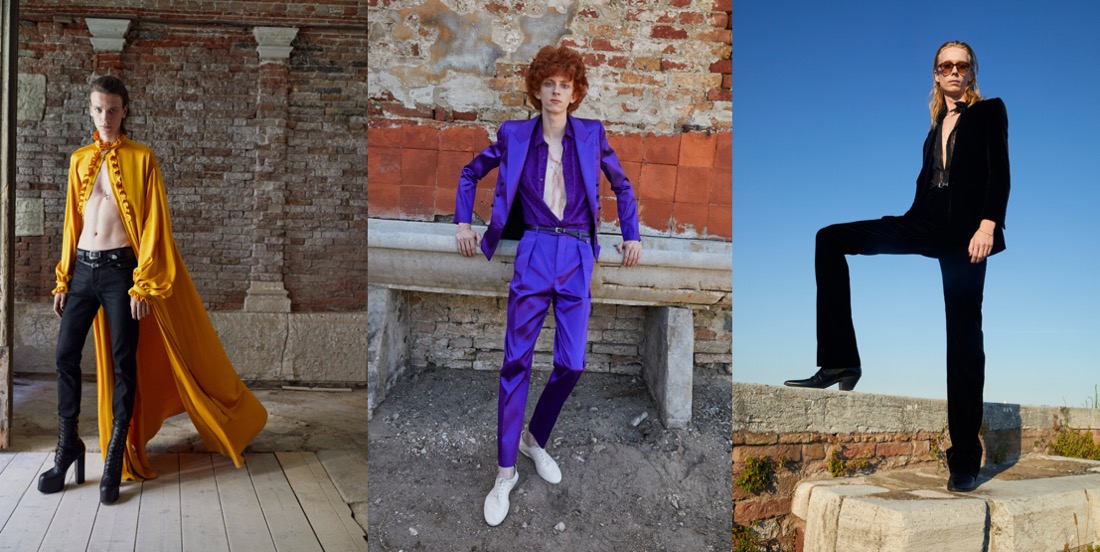
Men’s – Venice Boy. Saint Laurent SS22

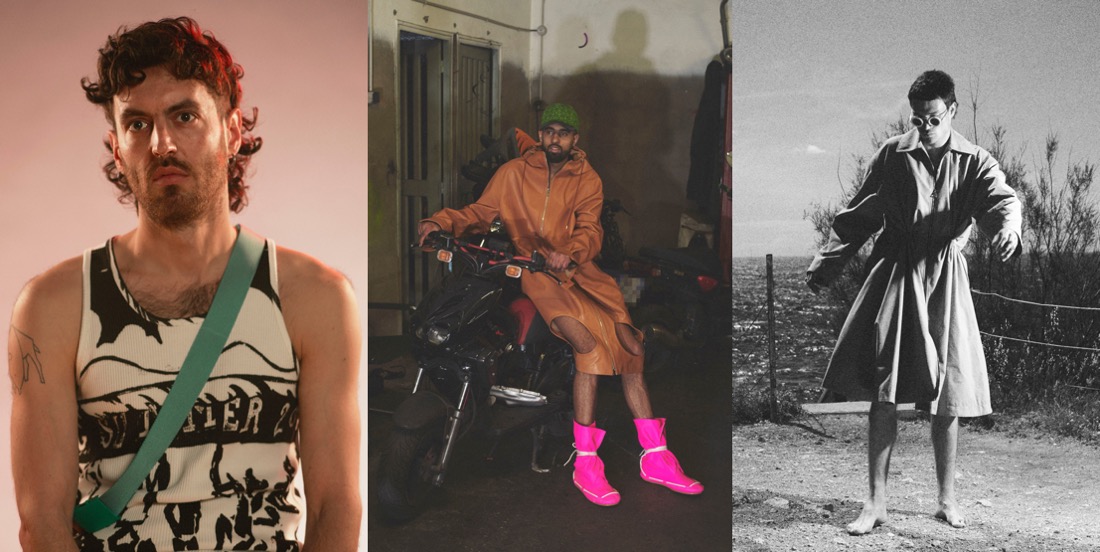
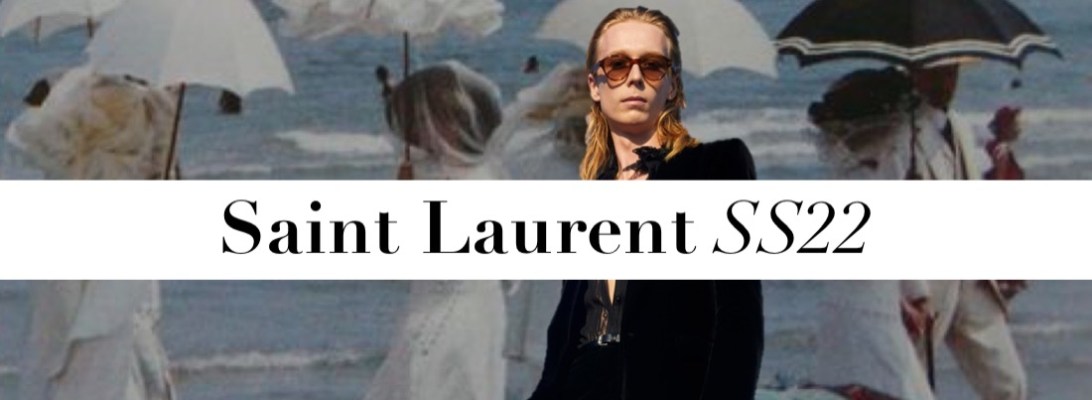
With Venice’s winding lanes and piazzas relatively empty, not exactly overwhelmed with visitors, an army of very slender wraiths, confettied with tattoos, bristling with attitude, and wafting around the city’s fabled landscape, seemed even more conspicuous. These proved to be the (extra, extra skinny) models and brand icons of Anthony Vaccarello’s Saint Laurent, in town to walk the runway in the designer’s collection. In keeping with the city’s current focus on the possibilities of architecture, Vaccarello collaborated with the genre defying artist and filmmaker Doug Aitken (who won the International Prize at the 1999 Venice Biennale) on an environment to showcase his collection. Aitken created Green Lens, an amazing mirror-faceted structure that was assembled in a month on the Isola della Certosa, and planted with hot house jungle greenery. It serves as a response to the question posed by the Biennale, harmoniously blending futurism with the natural landscape. “All the sets of Saint Laurent I’ve always done myself in a way,” Vaccarello explained, at the magical post-show dinner set in the roofless ruin of an old brick structure on the island, “so it was nice to share a concept for the first time with an artist who I truly admire, and it was fun. That concept was supposed to be for the women’s show last year,” Vaccarello added, “and because of the pandemic we pushed it to now. In the end it made more sense to have it in Venice than in Paris, especially with the Architecture Biennale – and with that collection, which is a mix of a lot of influence of Saint Laurent and a lot of Venetian ‘New Romanticism.’ Not putting them into the historical, classical Venetian way, but in a futuristic environment. I think after COVID you want to look more into the future than the past – and I like that mix of the past in the references in the clothes, and the future in the setting.” During the fast-paced show the structure reflected the blue skies, dusk light, and dappled lagoon waters while Aitken’s lighting transformed the mood from moment to moment, suggesting by turns a flaming sunset or a glacial blue Scandinavian dawn. Refracted in those mirrors, Vaccarello’s tribe strode forth in lean jackets or billowing piratical blouses, and cigarette-leg pants with winkle picker ankle boots extending the slender silhouette further still. In a timely reversal of the endless womenswear borrowings from the traditional men’s wardrobe, Vaccarello also had fun exploring the unparalleled Saint Laurent archives for women’s wear pieces that could be appropriated by the guys, including jacquard crepe de chine blouses and shirts from the early ’70s, cropped toreador jackets and spencers from Picasso line-up, and a padded brocade bolero from the China collection reimagined as a bomber and worn with black jeans, as well as a number of variations on Le Smoking. In homage to the host city there was Venetian carnival drama too in the dramatic billowing capes, including one in brilliant yellow silk that evoked a faille example shown in Saint Laurent’s autumn-winter 1983 haute couture show. “I think it was fun to see how a young guy could assume it,” said Vaccarello of his gender fluid propositions, “And I have to say they assumed it very naturally, [whether] a lace shirt, or platform shoes.” With this most convincing menswear line-up to date coming from the designer, hope to see more of such moments coming from Vacarrello in the future.

Collage by Edward Kanarecki.

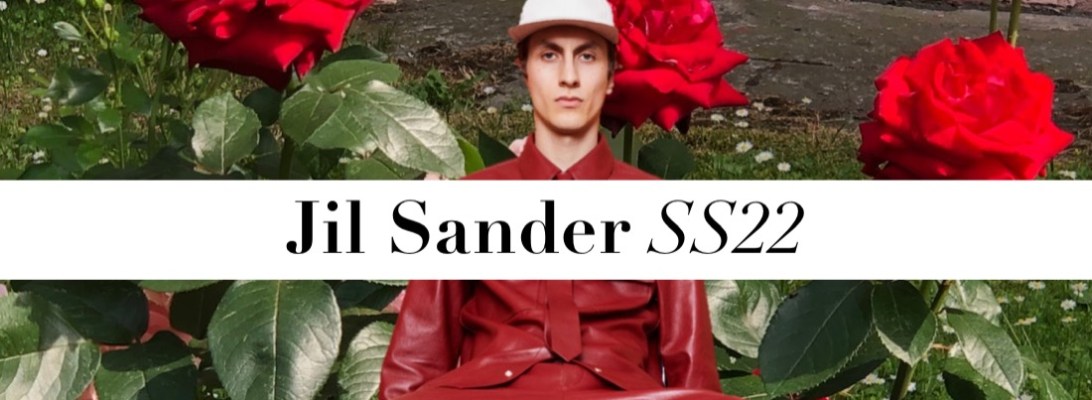
Men’s – For The Individuals. Jil Sander SS22

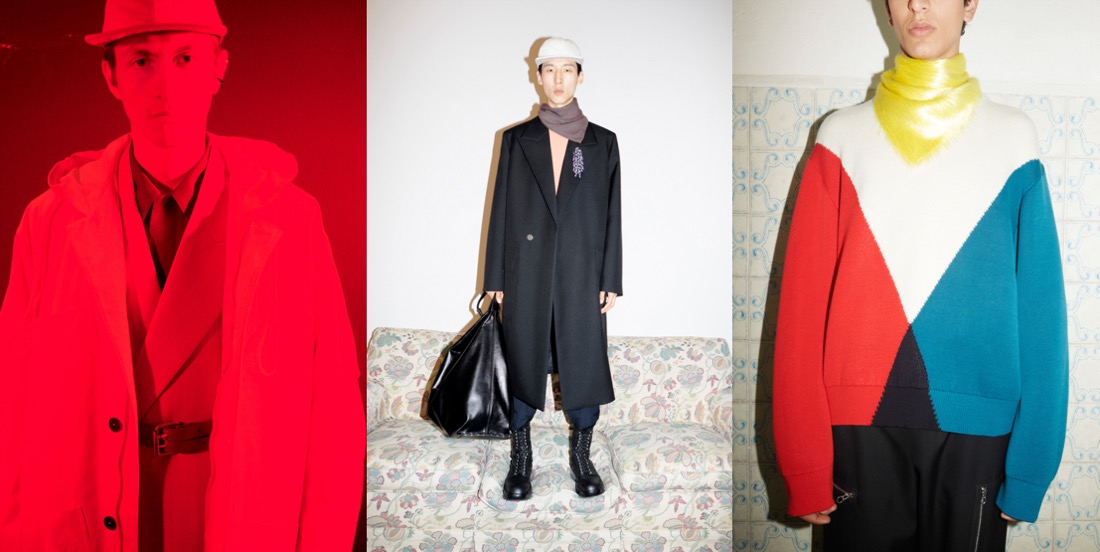
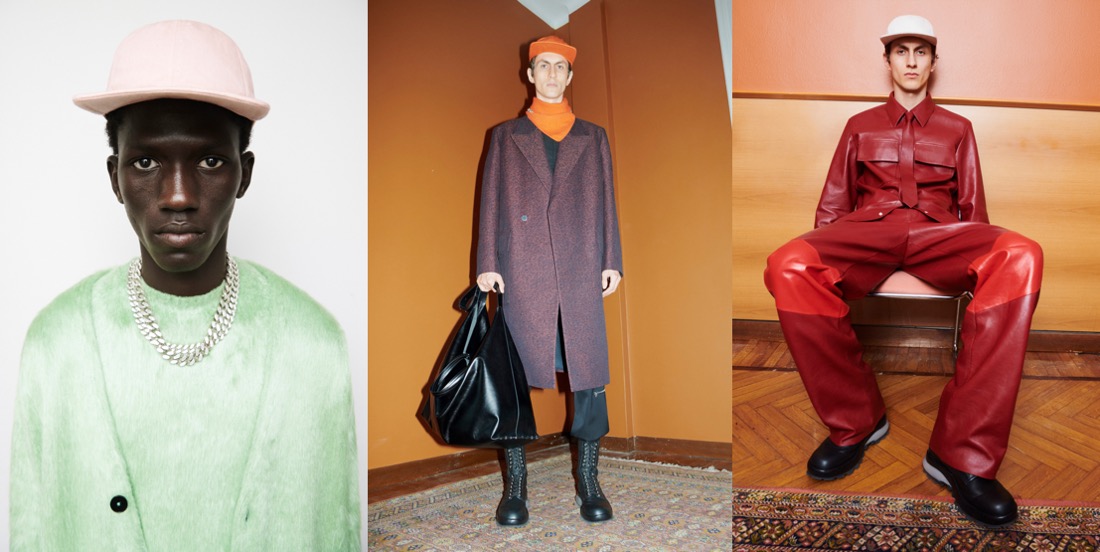
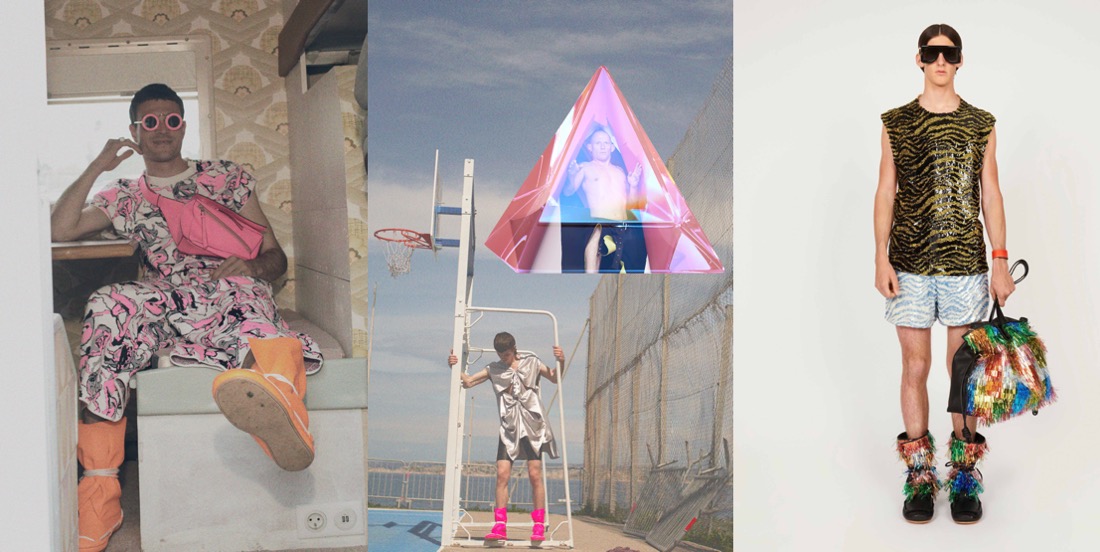
It’s an important time for the duo behind Jil Sander. Two-and-a-half weeks ago, Lucie Meier gave birth to a daughter. “It’s three of us now,” said her husband and co-creative director Luke Meier. Lucie hadn’t tried to hide her pregnancy, but since everyone outside her studio had only seen her neck-up on a Zoom call for the last nine months, no one realized. “I worked until a week before, but it’s good to be two,” she said. “Luke could take over.” They had begun working on their men’s collection some three months into the pregnancy, so, as Luke pointed out, “I don’t know if it’s conscious and present in the work yet.” The designers were, however, more reflective about the fashion world than normal. On a video call from Milan, Luke lamented fashion’s commercialization of parts of the sports – and streetwear that shaped him (he spent eight years at Supreme), and fondly remembered the eclecticism and individuality of New York street style in the early 1990s. “You’d see people on the street who’d be able to mix things like tailoring with an interesting piece of jewelry and something more functional like a parka. We were thinking about Jean-Michel Basquiat or Glenn O’Brien, these seminal New York characters,” he said. “Now, things are a bit uniform: there’s ‘this kind of person’ and ‘that kind of person.’ It’s nice to see people going for something that’s not considered the coolest thing of the moment.” While their collection was a reaction to uniformity, uniforms were undeniably present. Between utility suits, flight suits, strictly-belted tailored suits, and slender leather shirts with matching leather ties, there was an air of tonal, monumental dressing, which did go hand-in-hand with the industrial influences of the post-modern New Yorker artist wardrobe, but also evoked more symbolic uniforms of the post-war era. That wasn’t on the mood board, but the designers explained that the look they had in mind was about interrupting familiar or generic lines with pieces that express a certain individuality. That’s why colorful silken and fluffy foulards were tied around necks, why suits were bejeweled with jingly grape brooches, or why trousers were wildly magnified. It’s why a pink granny cardigan suddenly popped up, then a sexy cheetah print gilet, then a jumper motif that seemed to have zoomed in on a fragment of a multi-colored argyle pattern. Those graphic, color-block elements were nods to Donald Judd, whose SoHo building Luke would pass every day, admiring its Dan Flavin installation, when he lived in New York. After being stuck in the same places for so long, with the selfies of social media as our only real window to people-watching, this re-emergent period could trigger the individuality the Jil Sander designers are hoping to experience in the street once again. “I miss those characters and that world,” Luke said. “I don’t if it’s because we’ve been stuck inside so much, but I just want to see some interesting people.”

Collage by Edward Kanarecki.
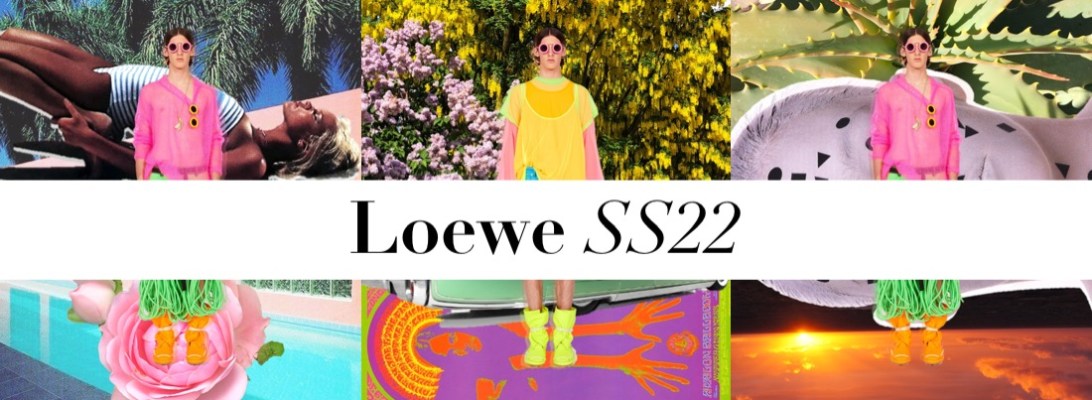
Men’s – Rave, Club, Have Fun. Loewe SS22

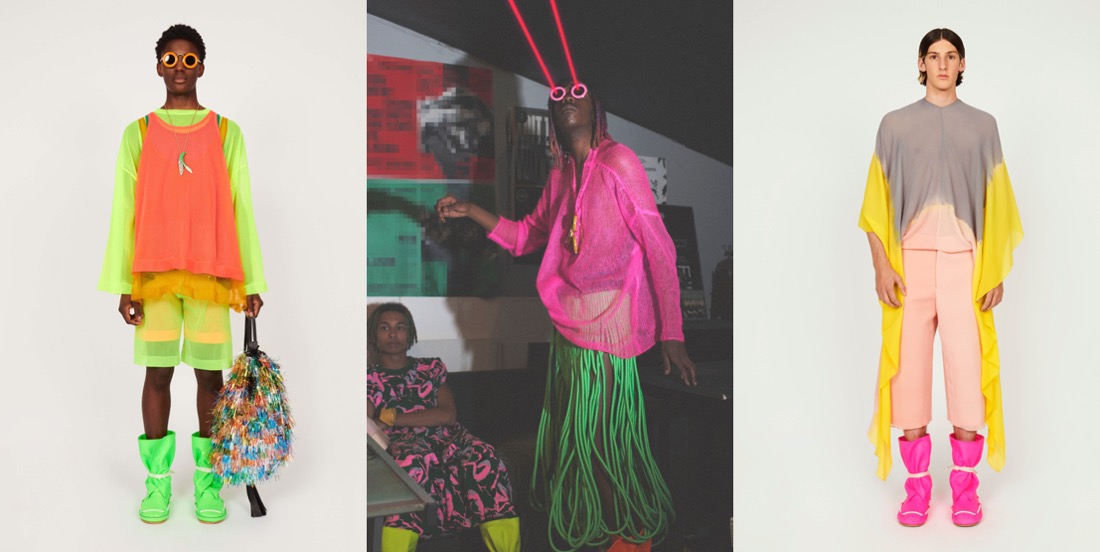
Jonathan Anderson‘s message for spring-summer 2022 is the following: go out, go clubbing, go raving, dance, have fun! And we listen. Inspired by the joy of nightlife and the freedom of club culture, his ecstatic new collection for Loewe is shot by David Sims and presented in book alongside a sister publication featuring the work of artist Florian Krewer. This season, shapes are both abstract and straightforward, meanwhile colours explode in a riot of saturated hues, high octane neons and acrylic shades. Sports-inspired pragmatism meets fluid forms, setting a party-ready, swinging tone. It’s clear it’s the menswear season of delightful hedonism (just take a look at the cosmic hippies by Rick Owens) – a sort of post-lockdown revenge, with a spiritual, even esoteric twist.

“Live” collage by Edward Kanarecki.