Men’s – Be Who You Are. JW Anderson SS22

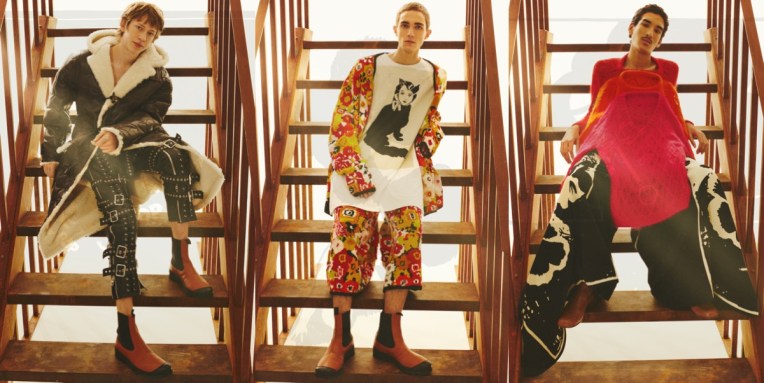
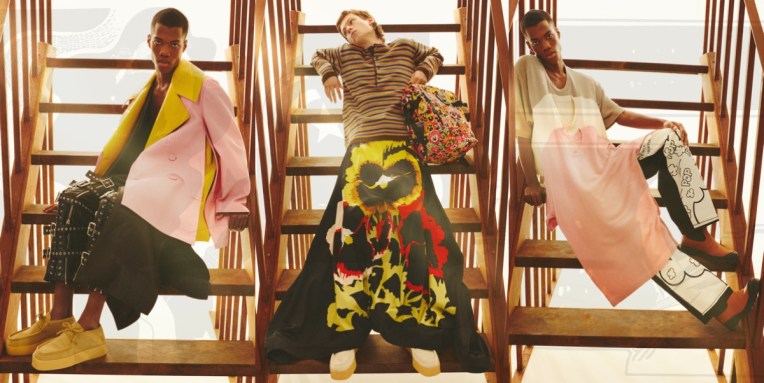
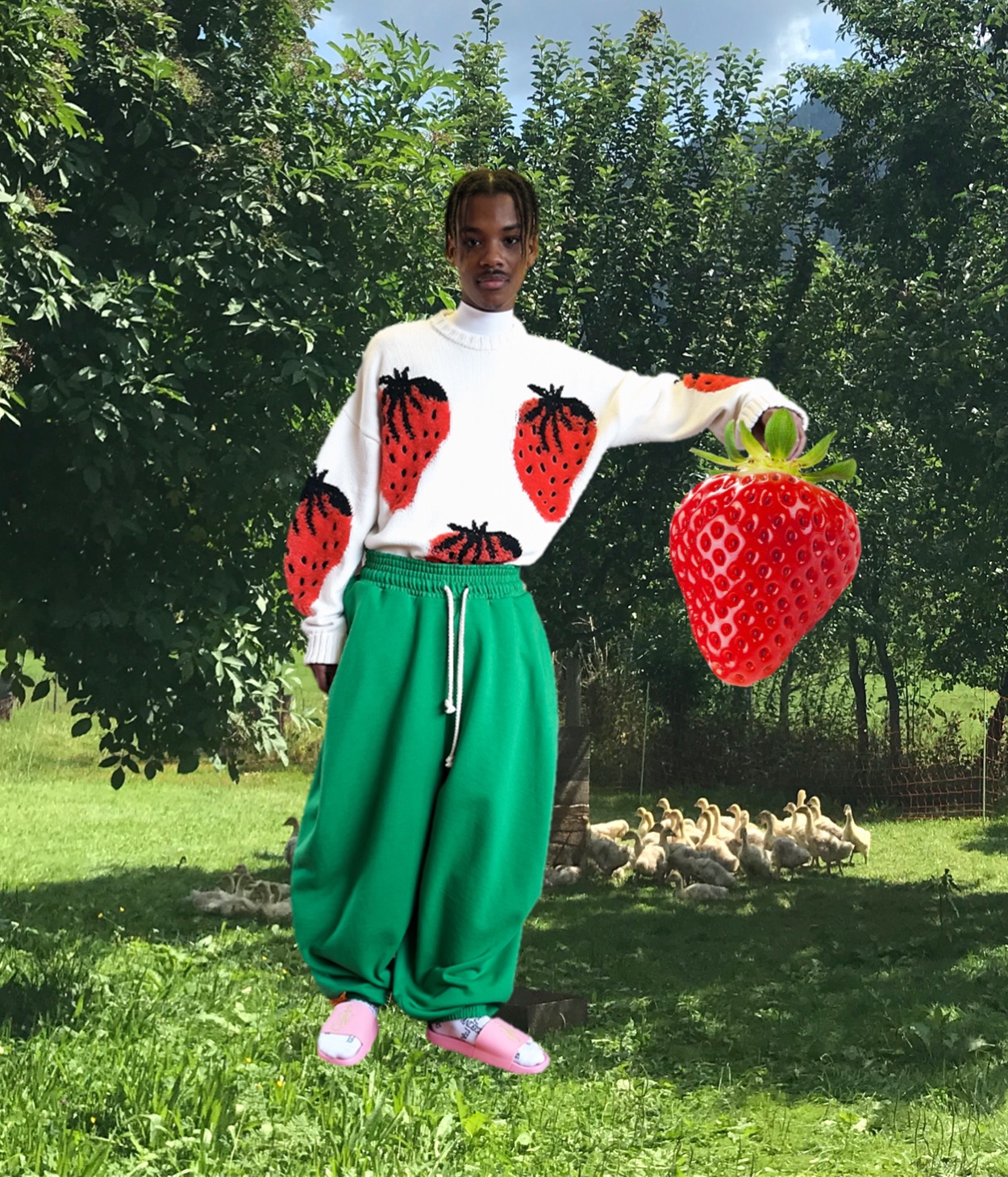
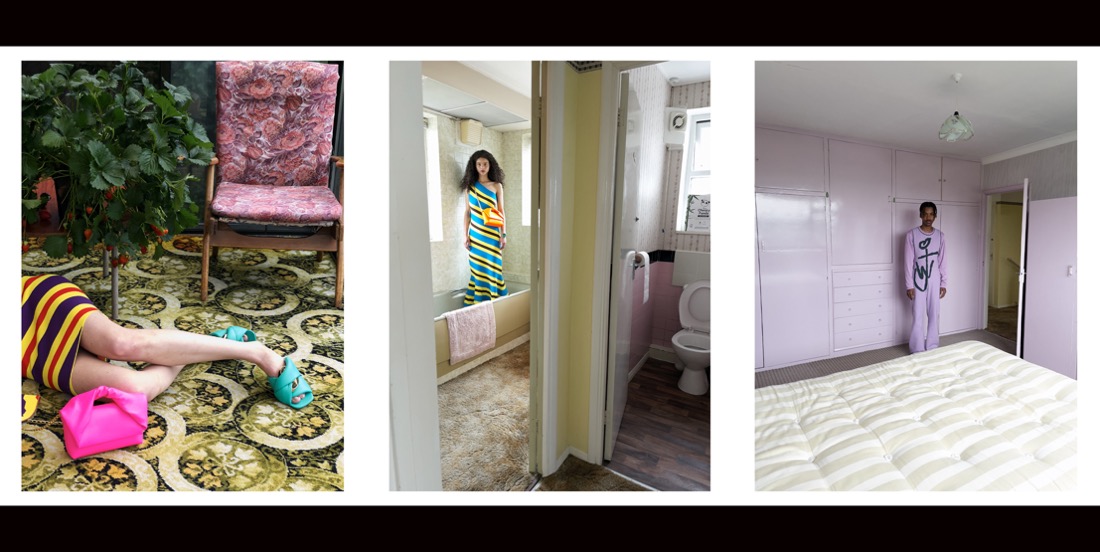
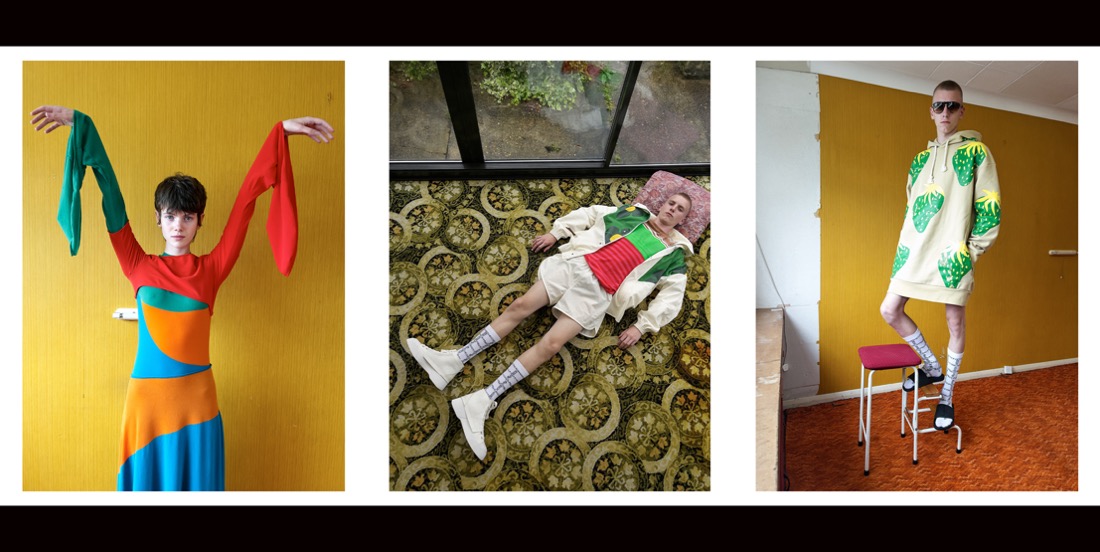
Partly digital, partly physical, men’s Paris Fashion Week starts today. The JW Anderson spring-summer 2022 (and women’s resort 2022) look-book was shot by Juergen Teller, who perfectly captured what’s on Jonathan Anderson‘ mind this season. “Caught in the moment, when sexuality awakens. There is palpable ambiguity, and provocative wrongness, to his dressing choices“, Anderson described the guy he pictures in this playful, bold offering. The collection hits a juvenile note with colourful and hedonistic clothing as a mean of self-expression that blur the lines between stay-at-home, sports and club dressing: “The kind of glorification of being who you are or what want to be: the idea of privacy of the individual“. The line-up’s instant must-have? All the strawberry knitwear, for both him and her. The designer looks forward to full re-emergence, and is clearly ready to celebrate the good days that are coming!

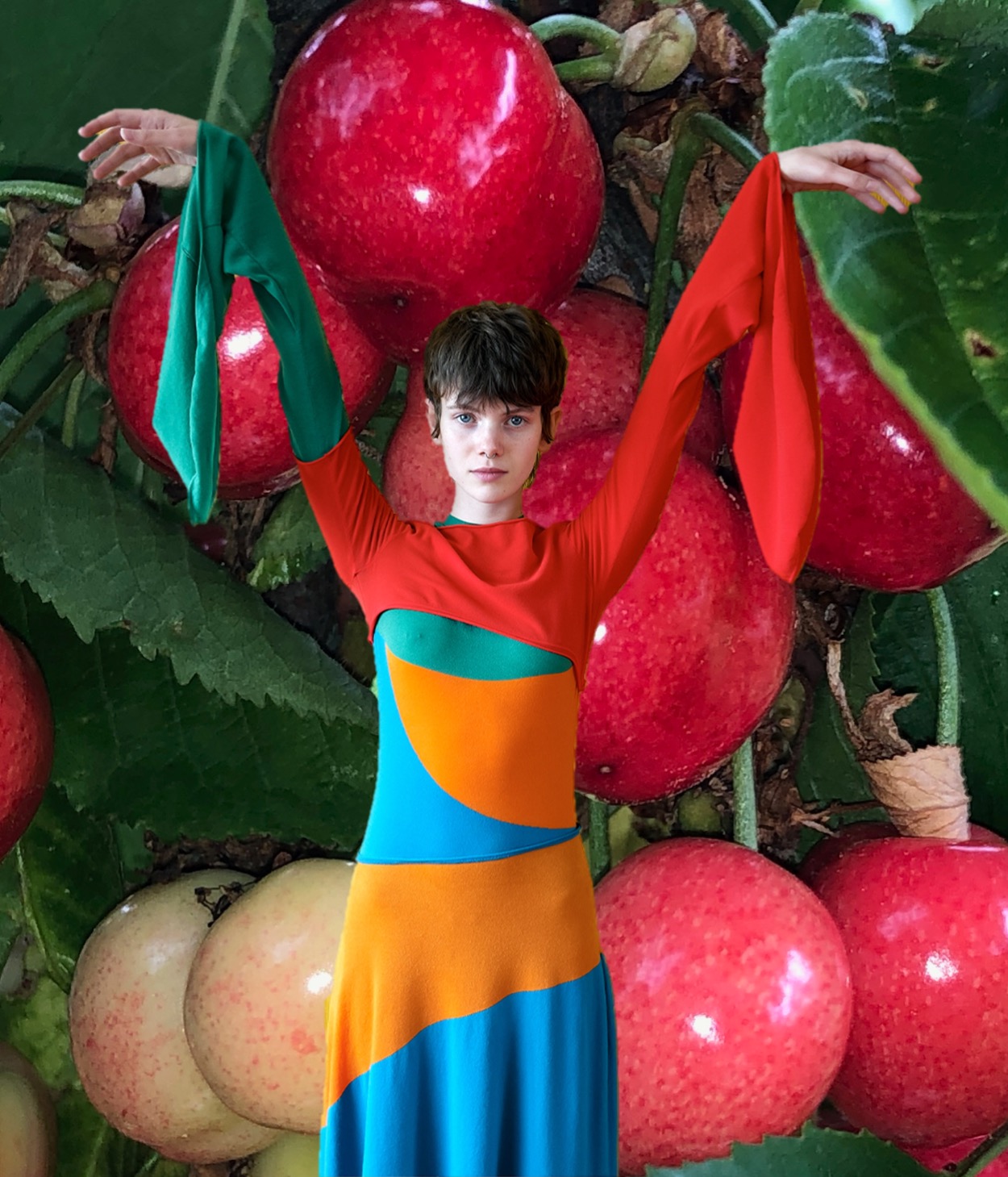
All collages by Edward Kanarecki. Look-book photos by Juergen Teller for JW Anderson.

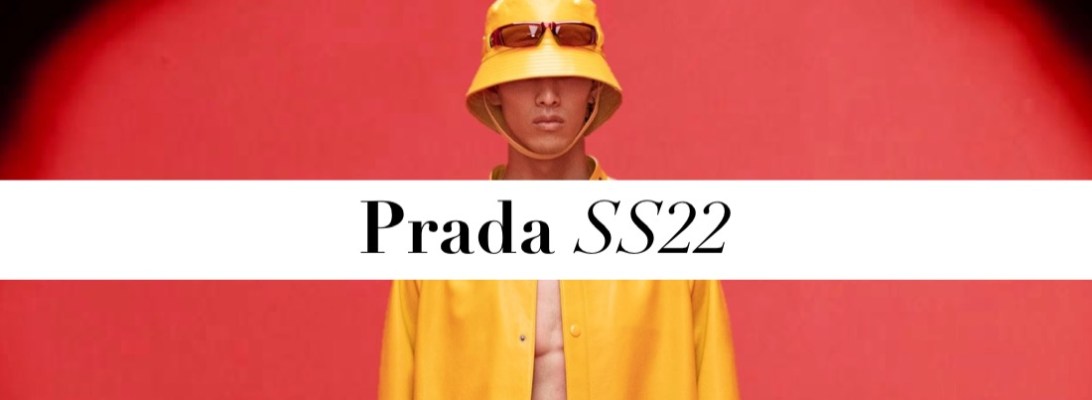
Men’s – An Innocence. Prada SS22

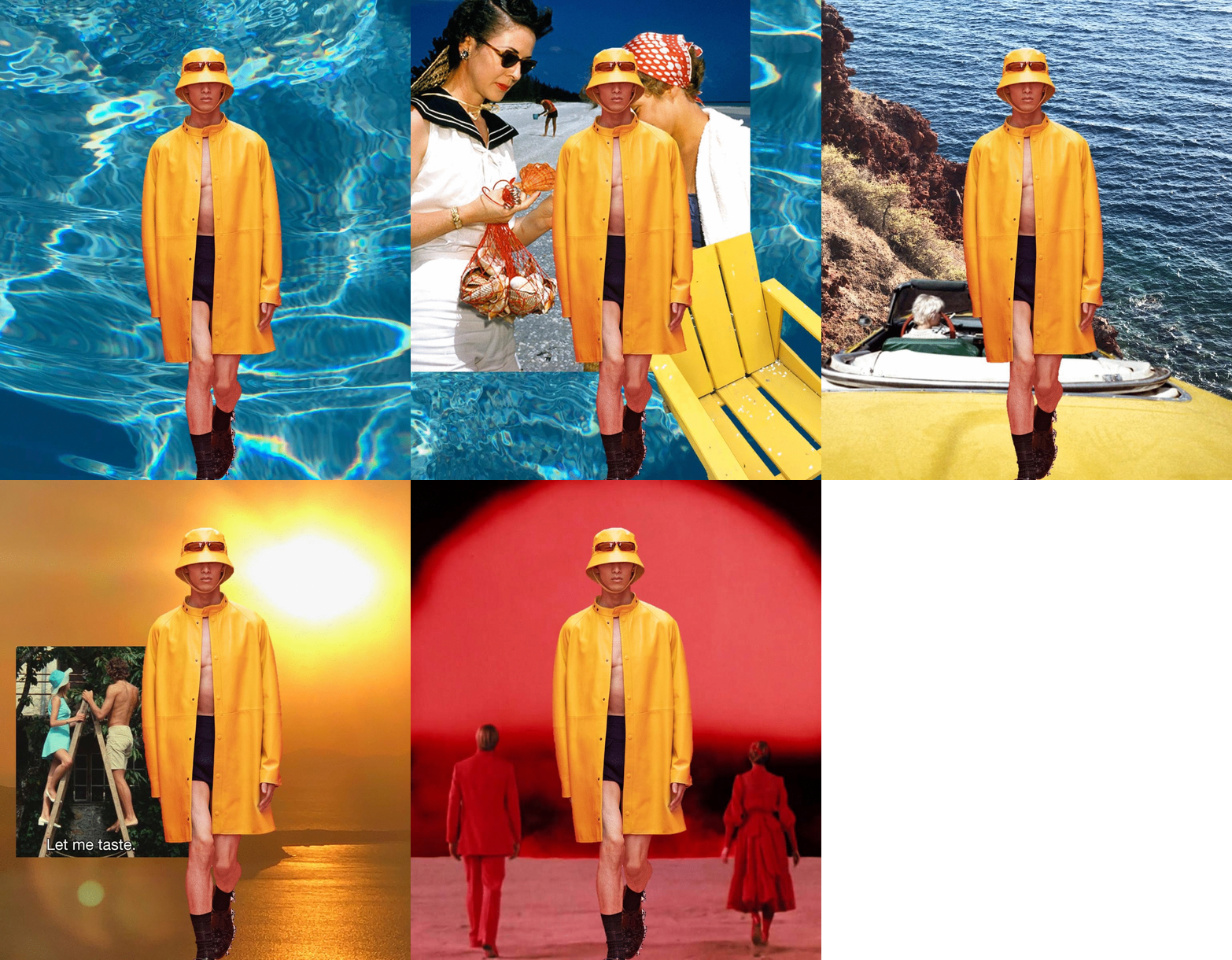
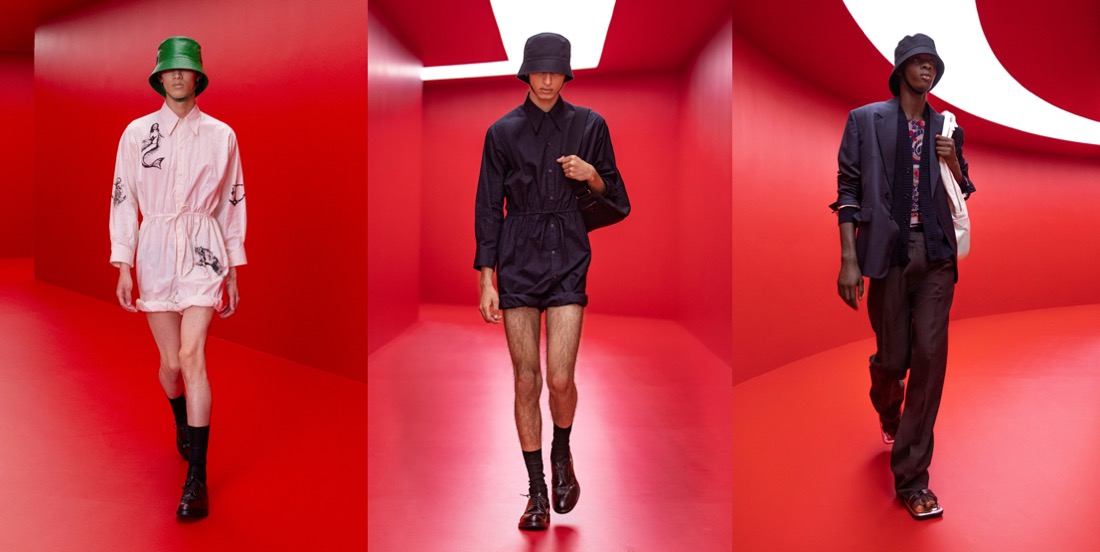
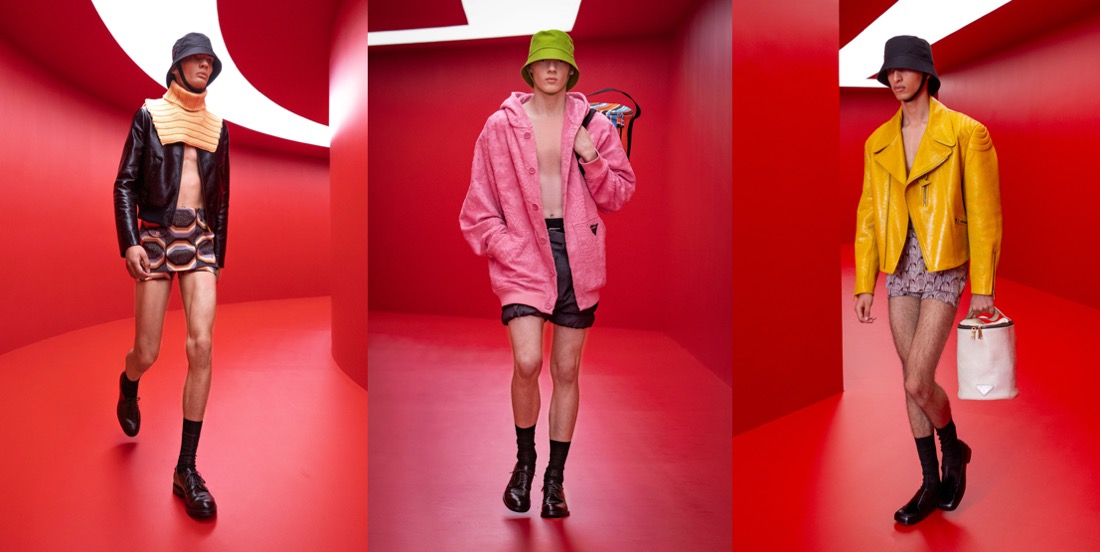
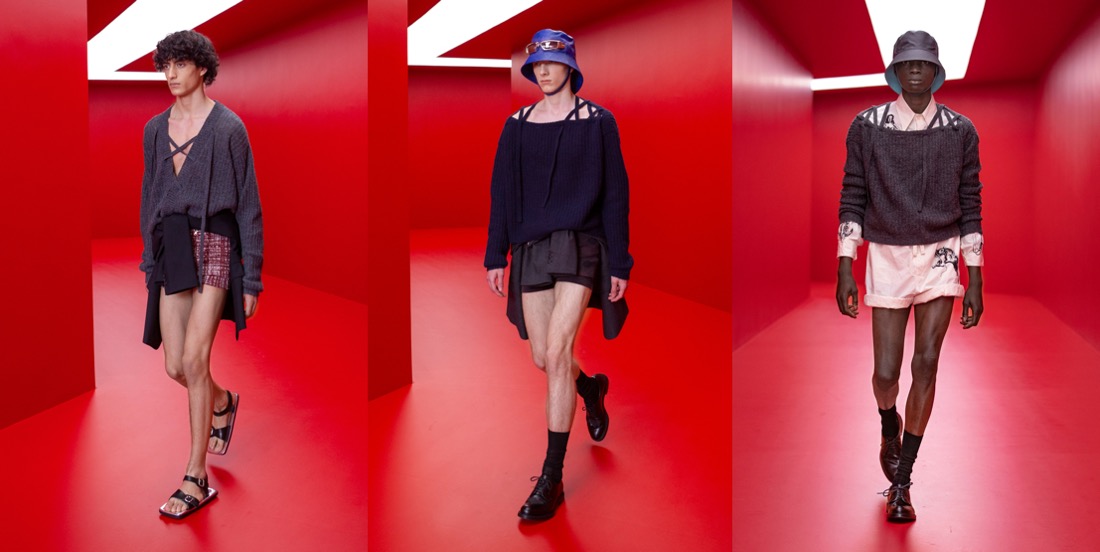
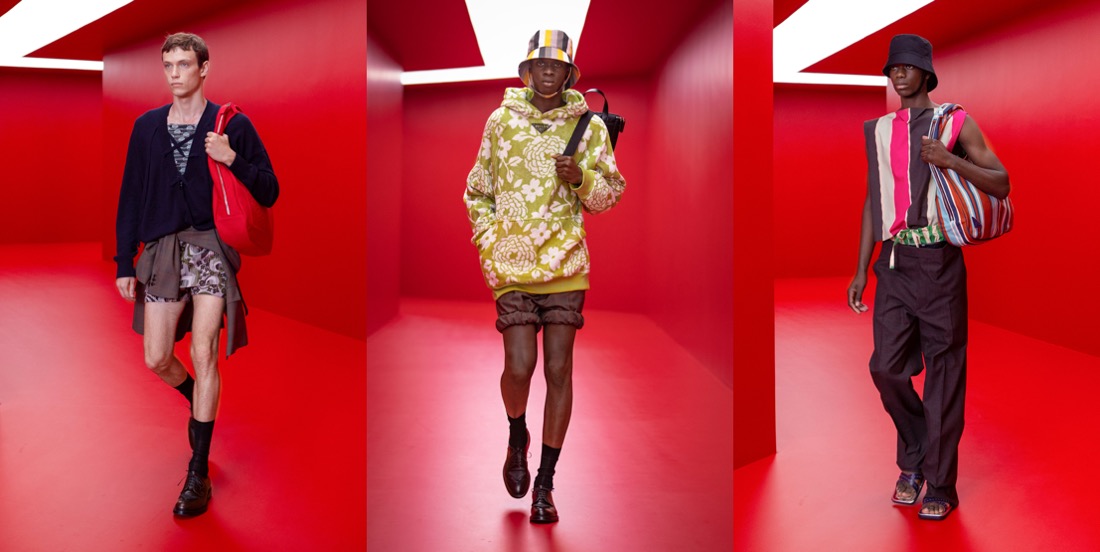
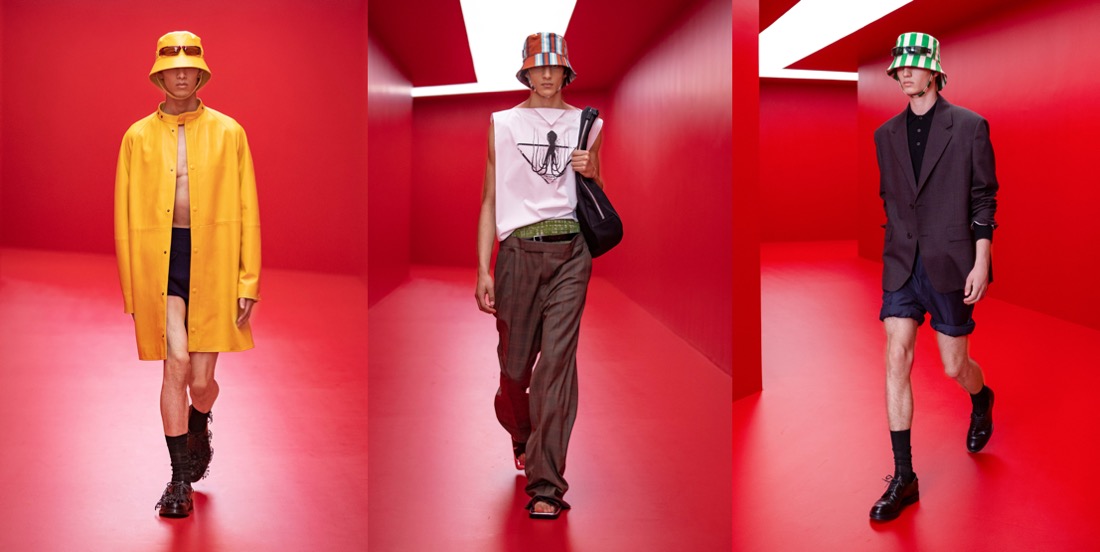
For the first time, Miuccia Prada and Raf Simons let some warmth and a sense of spontainety to their creative dialogue. The Prada man for spring-summer 2022 appears to be a slightly naive beach-boy, who wears his yellow windcheater (nothing underneath) and matching bucket-hat all day long. Which I instantly love, of course. As co-creative director Miuccia observed in a quote released shortly before the collection video: “A sense of the utopian, the ideal, of hope, positivity. To expose yourself to nature, to go to the beach – it’s freedom. It is utopian. That is really a primary need – an intellectual need, too.” This translated into a skin-heavy rendering of a reemergence that was tantamount to a rebirth. The film opened with the models negotiating a “meandering red tunnel”, ready for the world ahead, but not yet in it. Very directly we were presented with some of the key motifs of what looked like a commercially strong Prada suite: bucket hats with almond-shaped brims at the back (a bit British policeman’s helmet) with triangular logo pockets, and some with the awesome functionality of slits at the front to allow sunglasses to be slipped in them. Romper suits with turned-up short hems were presented in corporate-worker charcoal cotton or sailor-boy white, the latter printed with tattoo-ish nautical motifs including octopi, voluptuous mermaid/sirens, anchors and anchor fish. Around two minutes into the film, Prada’s boys finally hit the beach. The scenes were filmed at the south-eastern point of Sardinia, on the coast of Capo Carbonara, an area where the house is funding the reforestation of marine ecosystems. By coincidence, it is also where I’m booked to spend my summer holiday. It was in this setting that the presentation changed from formulaic runway walk into something more apparently spontaneous and free, in order to evoke an essence described by Raf Simons in his pre-show quote portfolio: “The primary feeling is one of joy. It’s almost like that memory of a child, the joy of a child going to the beach. The simplest and most honest of pleasures. In all its simpleness, it’s also something very meaningful and timeless.” Beach-ready were the floral-shorn terry hoodies, the skorts of course, the beautiful bucket bags in cracked leather and rowing stripe cotton drill, and those awesome hats. Away from the water, highlights included a biker jacket in yolk-yellow or show-set-red which felt like an unusual template here; double-waisted pants made to be worn loosely and tantalisingly adrift at the front; plenty of tailoring with (again) rolled up sleeves; and multiple full-look-izations of the skorts via teaming them with matching tank-tops. These looks seemed like summer iterations of the last-show long johns. “This collection and this show is very much about capturing that, the joy of the everyday. The notion that living your life can be a euphoric experience. Much joy can come out of something so simple: when times are complicated, we are searching for simple, direct joys. An innocence“, concluded Prada.

“Live” collage by Edward Kanarecki.

Men’s – Forever Timeless. Bode AW21

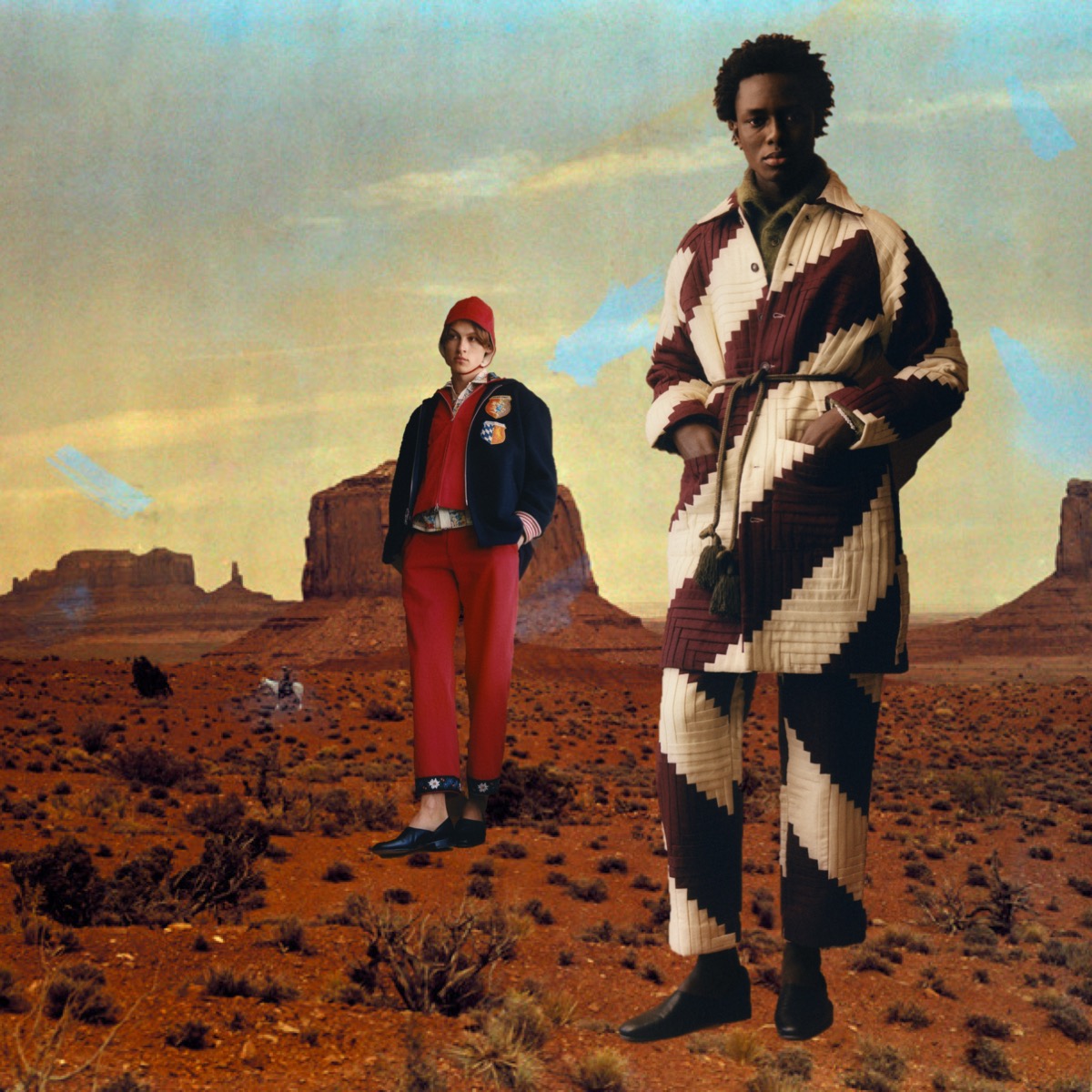
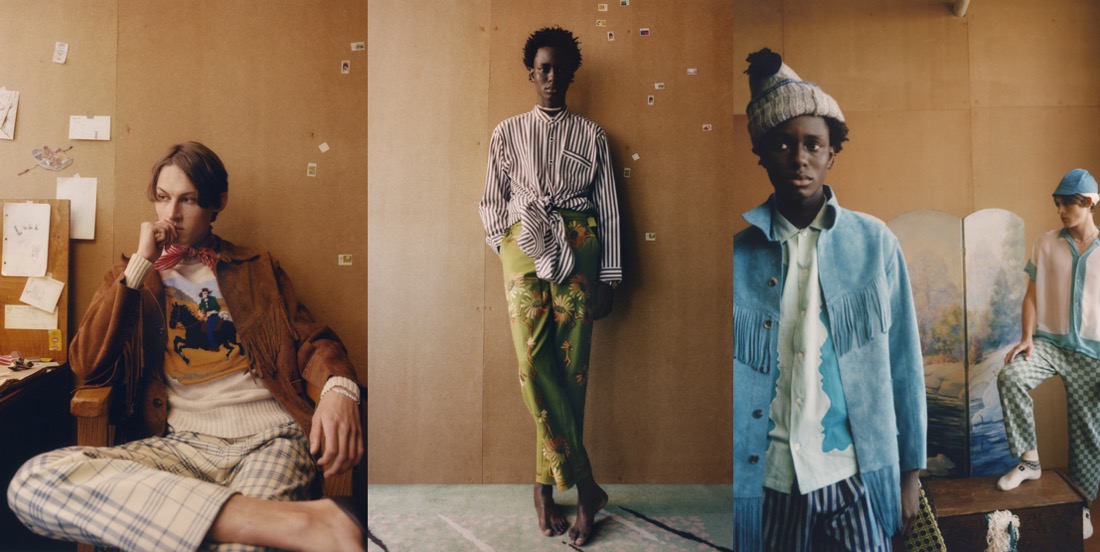
Autumn-winter 2021 marks the first collection Bode has shown since lockdown, though it’s technically spring (arriving in stores this month) and autumn rolled together. For the occasion, Emily Bode invited New York-based editors into what appeared to be a teenage boy’s 1960s bedroom, preserved in all its clutter. Newspapers and LIFE magazines were scattered on the tables; a vintage Monopoly set was splayed on the floor; desks were pinned with comic strips and old photos; and, of course, there were clothes everywhere: spilling out of a hamper, piled on the floor, dangling from coat hooks, draped over the bed. Each item was painstakingly arranged by Bode and her team, but it was a convincing replica of her uncle Bill’s college dorm room at the University of Vermont (or at least Bode’s impression of it, based on his recollection). In 1969, he tricked his parents into thinking he was back at school when in fact he was taking a year off to explore the East Coast, race cars, and play games. Bode explained it was also the last year before Bill’s wife, Mahri, came into the picture; they met in 1970, married, and were together up until 2019, when Mahri passed away. Suddenly, 2020 was Bill’s first “year off” from the life he knew, and he found himself reminiscing about 1969 again. Bode related his story of love, loss, and reflection to our own “year off” during the pandemic. Sifting through the piles, you could find all the familiar Bode-isms: silk button-downs with prints lifted from vintage postcards and handkerchiefs; embroidered camp shirts that are the expert work of Indian artisans; patchworked merino suits, an evolution of her quilted jackets; and her most refined knits yet, from a space-dyed pullover to a stunning hand-crocheted cardigan. A few pieces nodded to Bill and Mahri, like a souvenir jacket with a pug embroidered on the back, while others seemed happily arbitrary: an intarsia’d camel sweater, a pair of shorts chain-stitched with line drawings and funny phrases, a sweater crocheted with 3-D grapes. A small group of tailored pieces trimmed with rows of real pearl buttons spoke to Bode’s particular passion for preserving crafts and techniques. She bought them in bulk from a closed-down button factory in the Midwest, and pointed out how each was individually hand-carved, hand-sanded, and one-of-a-kind. They may have been thrown away or relegated to some dusty warehouse if Bode hadn’t purchased them; the same could be said of the quilts, table cloths, and scraps of fabric piling up in her Brooklyn studio.

If it’s tempting to lump Bode in with other “sustainable” or “upcycled” brands, it’s actually more of a coincidence that some of her materials – not all – were already made. Bode cares about sustaining traditions and stories, not just reducing her carbon footprint, and she understands her role as an employer. She couldn’t have scaled her business to its current size if she hadn’t found a pragmatic, sustainable way to mass-produce certain garments with new materials, like her camp shirts and chore jackets, nor would she have been able to hire her teams of craftspeople in India, Peru, and New York (many designers canceled their orders in Garment District factories during the pandemic, but Bode made it a point to support them.) Bode’s brand-new tailoring shop, located next to her flagship in the formerly-turquoise Classic Coffee Shop, is a more apt reflection of her sustainability ethos. Her tailors will alter your brand-new Bode suit or mend an old quilted jacket. Even if you just picked up your first Bode shirt next door, there’s a comfort in knowing you don’t have to be precious about wearing it; when the time comes, someone will be there to fix it up. On the long list of things that separate Bode from her peers (and her many imitators) is that she absolutely intends for her clothes to be worn – and would rather fix the hole in your shirt than sell you a new one.

Collage by Edward Kanarecki.

Men’s – Familial Affection. Jil Sander AW21

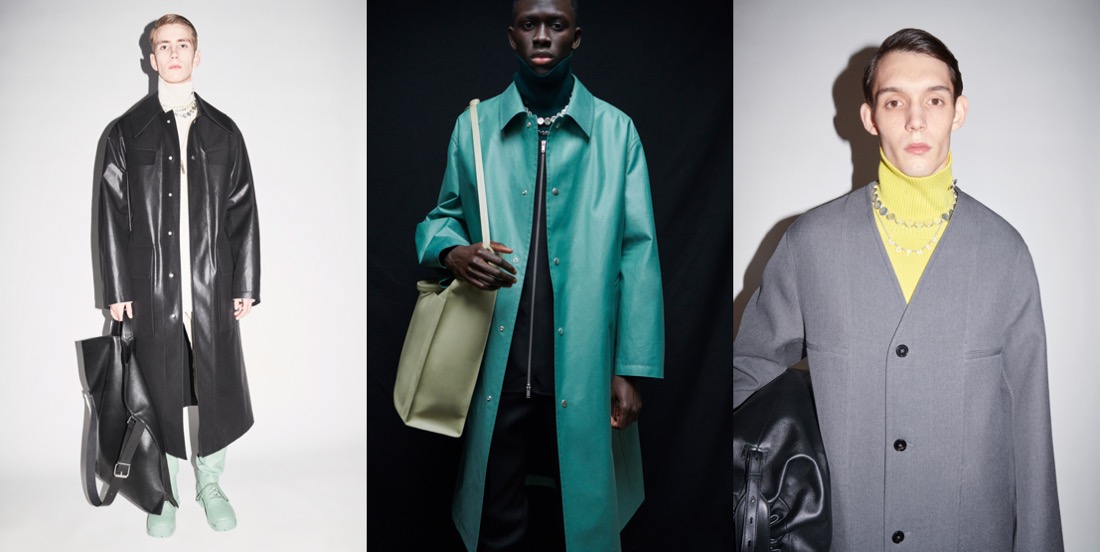
Lucie and Luke Meiers‘ soft minimalism also applies to their menswear collections at Jil Sander. This time, however, the designers seem to be a bit more serious than usual. Between their enveloping wool coats, elongated tailoring, roomy knitwear, fluid overshirts and comforting knitted collars, a more abstract interpretation of our wardrobe mindset than mere ‘comfort-wear’ took shape. Clinical wellies in dusty tonal colors evoked those worn with quarantine suits in science fiction and leather sashes easily conjured visions of spaceship uniforms. Most expressive of the feeling were woven metal necklaces and breastplates, and primitive pendants that spelled out “Mother.” References aside, the pieces spelled out the emotions of solitude and loss of familial contact the designers perceived over the time. “The letter forms are very simple. It’s the feeling he could have just found the metal and made it himself. But it’s very close on his body,” Lucie said. Sewn onto coats and knitwear were panels of frayed canvas printed with photographic portraits of flamboyant young female art students at the Bauhaus shot by Florence Henri in the 1920s. Worn by the un-eccentric young men that made up the cast, the effect wasn’t camp but very human; the male idea, perhaps, of missing a formidable female family member or friend. “It’s a show of familial affection,” Luke noted. The Meiers’ earnest design practice can feel stark or cold, but between its muted colors and themes of loneliness and longing there was an expressed emotional core to this collection that gave it warmth. “There’s a certain personal approach here. I try most of the things on, and I wear most of the pieces,” Luke said.

Collage by Edward Kanarecki.

Men’s – Eclectic, Curated, Sustainable. Loewe AW21

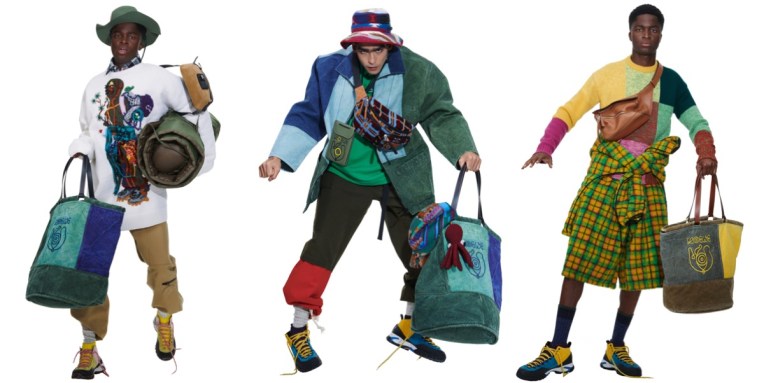
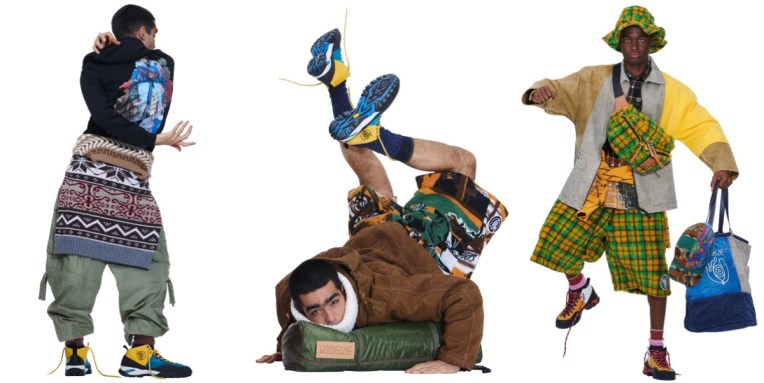
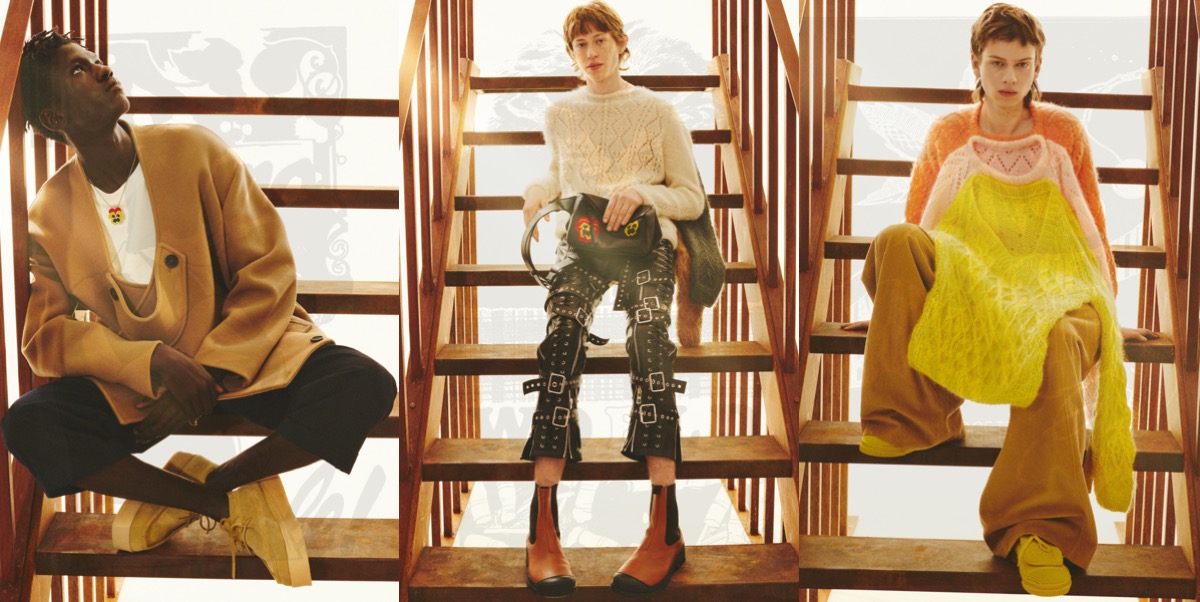
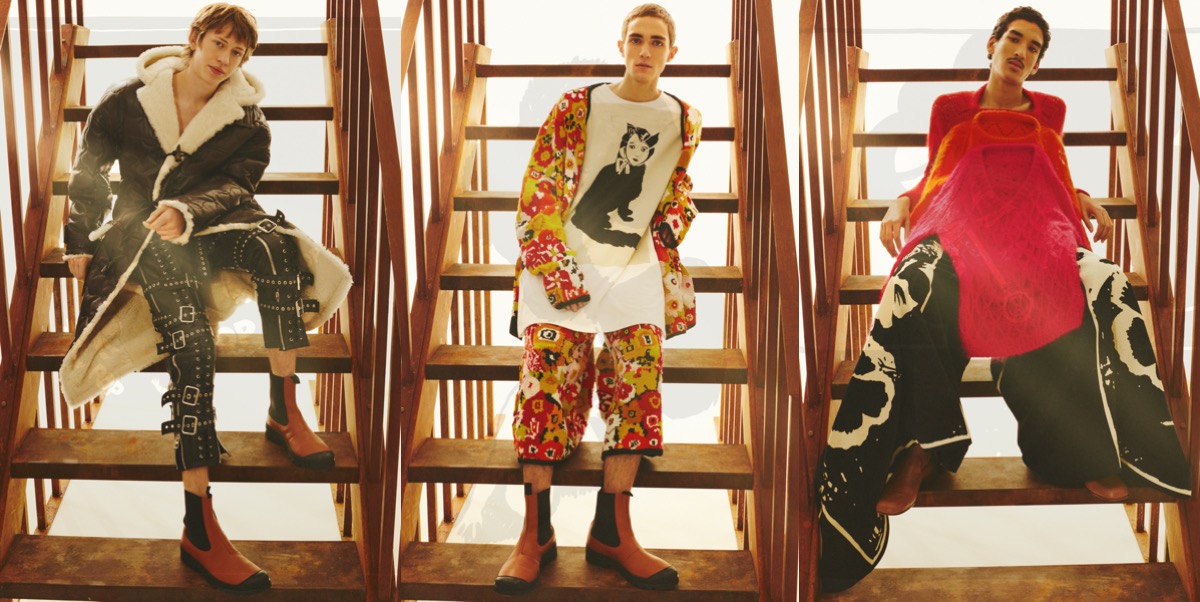
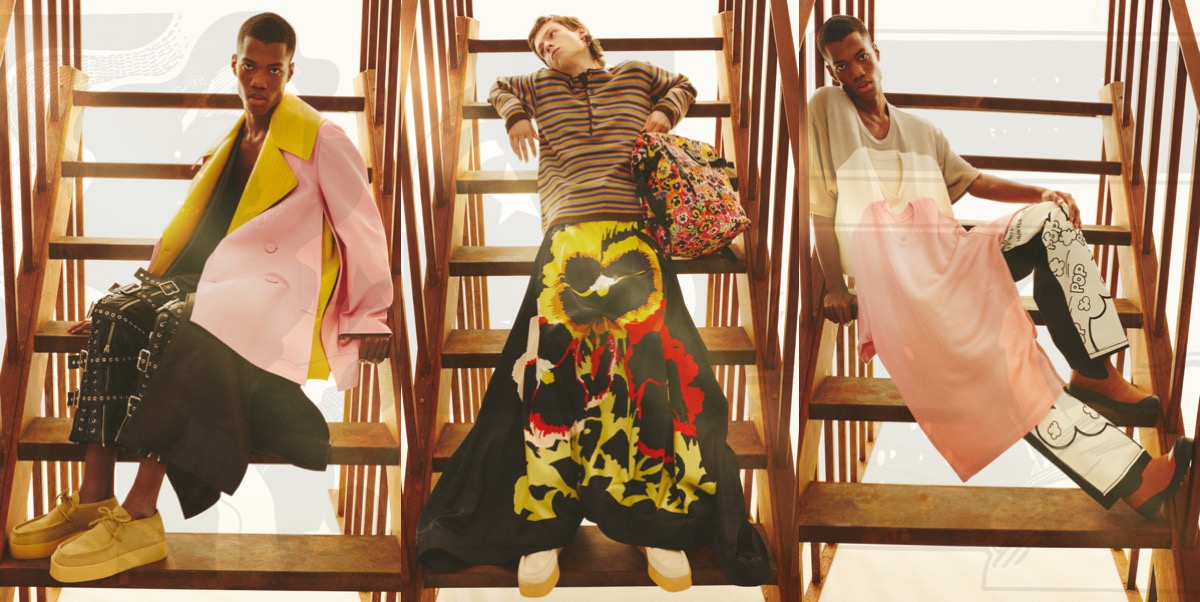
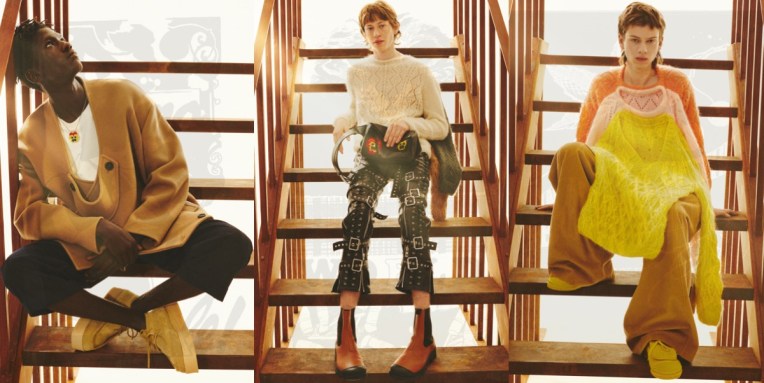
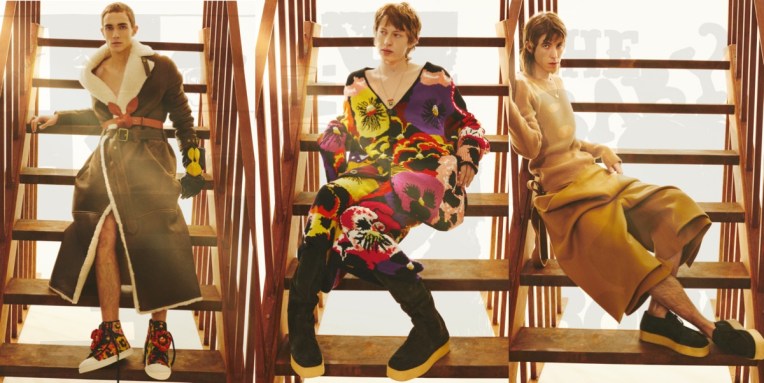
Jonathan Anderson‘s Loewe universe is a wonderland of eclectic, curated – and sustainable! – things. And the autumn-winter 2021 collection for men is like a treasure chest of details, curiosities, textures, crafts prints and colours. But to organize what we’ve got: this Loewe lookbook actually feautures two collections, and the one at the bottom is produce from the company’s Eye/Loewe/Nature sustainable-practice department. This time, the communication came as a show-in-a-book, wrapped up in a coffee-table sized monograph on the queer New York artist Joe Brainard, and as a show-on-a-shirt – a huge T-shirt printed with all the sustainable-practice pictures. Why Brainard? “I remember zines he’d done in the ’70s. We remade a book on him which we’ll be selling in bookshops, and the proceeds will go to the charity we work with all the time, Visual Aids, to help artists who have suffered from AIDS,” says Jonathan Anderson. “I felt like Brainard is so important. He was part of a huge movement, with his writing and his pansy collages – his work is now at MOMA and the Pompidou. I like his writing, it has huge optimism, questions sexuality and things like that. But he’s one of those underground figures.” Anderson talks through the collection in an open-access video on the Loewe website, where it’s easy to see the assembly of charming pansy patterns made into big cardigans, or vast rectangular trousers, or inset as leather marquetry on Loewe Puzzle bags. You also get to understand how the panels of a patchwork shearling are pieced together from reproductions of Brainard’s canvases. And how a tote bag is decorated with the artist’s painting of a whippet on a green background. It’s all adorable and completely wantable. And the extra kick to the feel-good sensation of buying it is that your money is also going to do some good in the world. “I think the whole thing now is about clothing and something else,” says Anderson. “I think the customer wants more than just the clothing now. They want to make sure you have a unique viewpoint and, at the same time, a moral viewpoint.” A joyful vision and a bit of a mad-creative take on fashion are also rare luxuries to enjoy vicariously these days, what Anderson calls “being imaginative with clothing.” His current work on extreme trouser shapes delivers all that. Besides the multi-strapped leather and grommeted punk trousers, the pieces that might read as maxi-skirts actually turn out to be pants too. “I did a lot of wide, wide, super-wide trousers. Kind of performance trousers – this idea of being in your bedroom and dancing on your own.” Which we know is an actual social phenomenon in these days of lockdown.
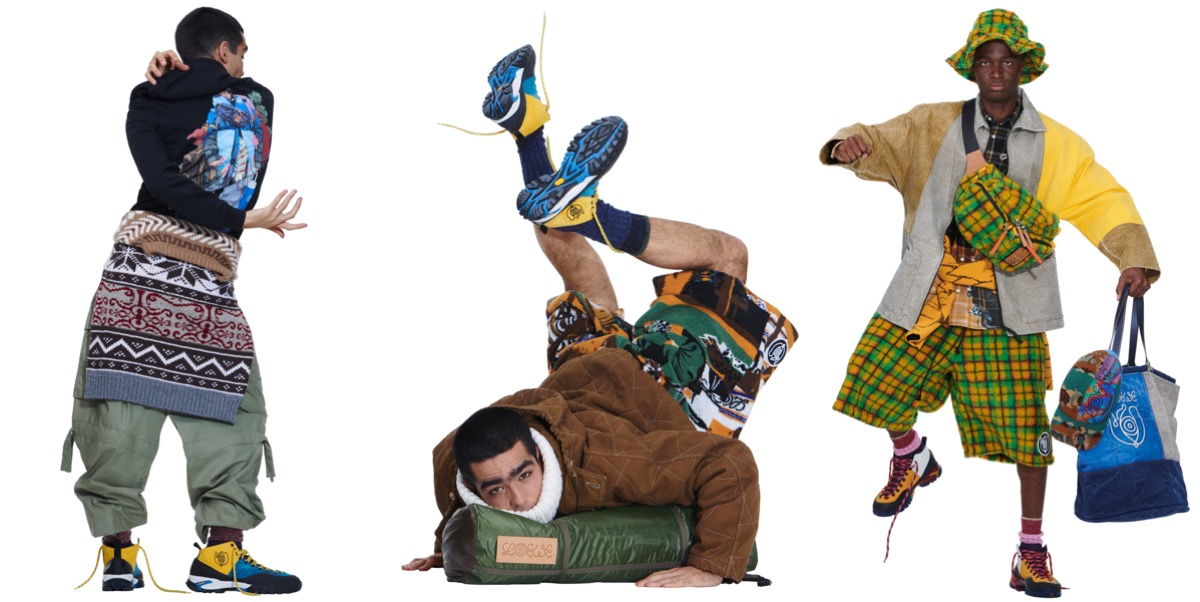
Amongst the collection is also a huge, cosy multi-patterned Shetland-cum-Norwegian type sweater, knitted together from upcycled yarns. It links directly into the work on sustainable research that’s been going on for four years with the Eye/Loewe/Nature collection. It’s much more than an isolated side-project, Anderson explains. “We set it up as an incubator inside Loewe to try to work out a long-term solution to sustainability. It’s where the entire design process is monitored from start to finish. Every year we try to chip away at something – buttons, zips, hardware, plastic clips – so that what was a problem becomes less of a problem. Because it then means that your supply chain can deal with it, manufacturing know how to deal with it, and the design team knows how to design within that framework,” he says. “And from those learnings, working with suppliers, we can disseminate elements into the bigger workings of Loewe.” In practical terms, it’s meant “buying a huge bulk of used knit sweaters, or denim, and working them into garments. The great thing is that the whole company is involved. What I like about the industrial side is the idea of talking to suppliers like YKK about a problem – and actually making it not a problem. The trouble is when you’re impatient, like me, you want to be completely sustainable tomorrow – but you have to realize it takes time. It means turning an industrial revolution into a new eco revolution. Ultimately, the big picture is, we all have to do it,” he says. “It’ll probably be an ongoing thing throughout my entire career.” If luxury goods companies ever worried that customers would baulk at buying products made of upcycled or non-traditional materials, then the testing ground of the Eye/Loewe/ Nature collection is beginning to prove them wrong. “This is the third collection now,” says Anderson. “And, you know, it’s becoming very, very popular.
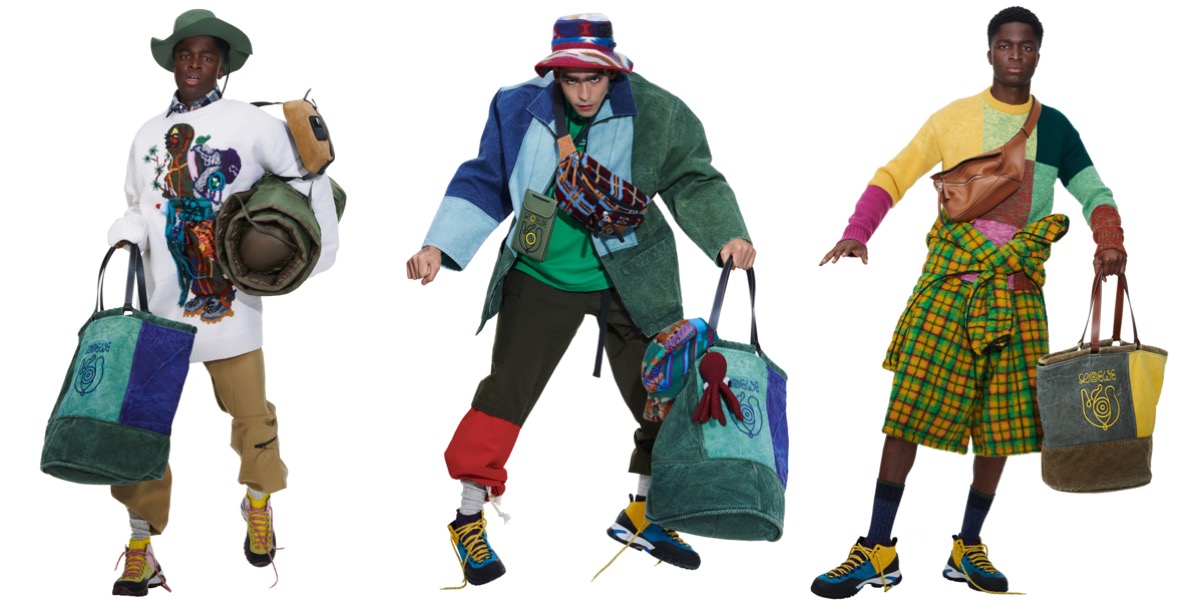
Collages by Edward Kanarecki.