Men’s – Sculptural Ease. Hed Mayner AW21

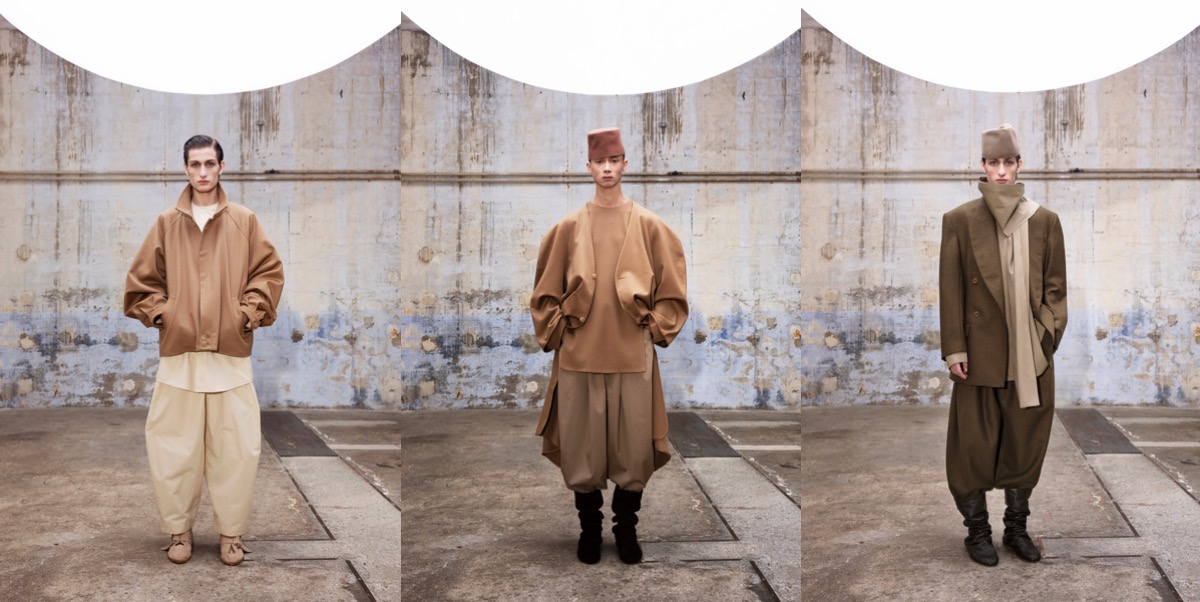
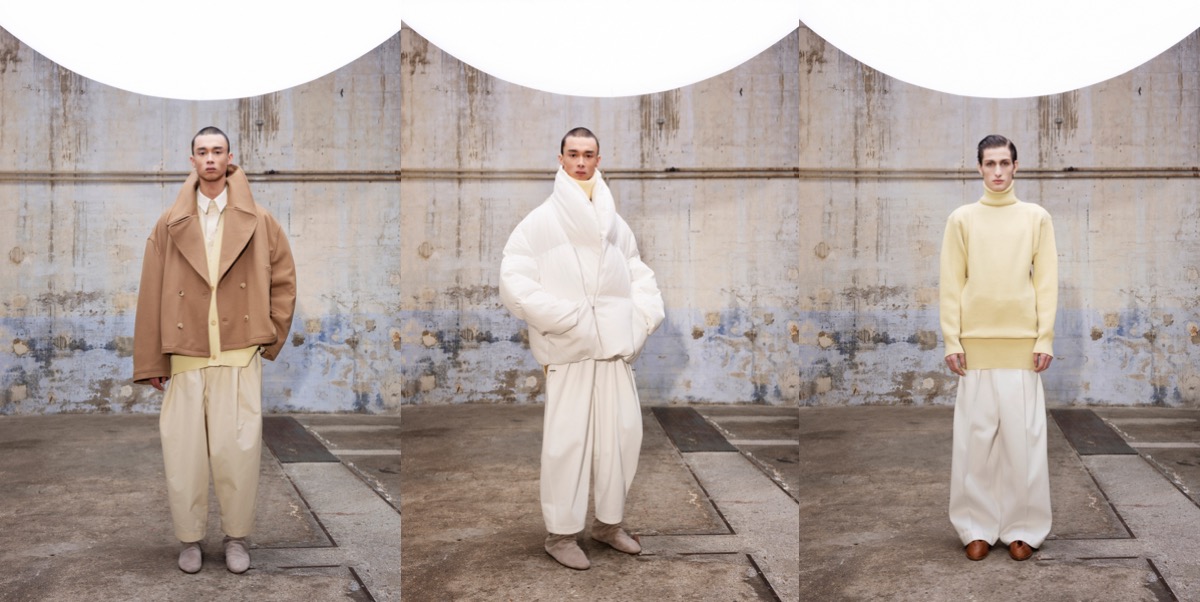
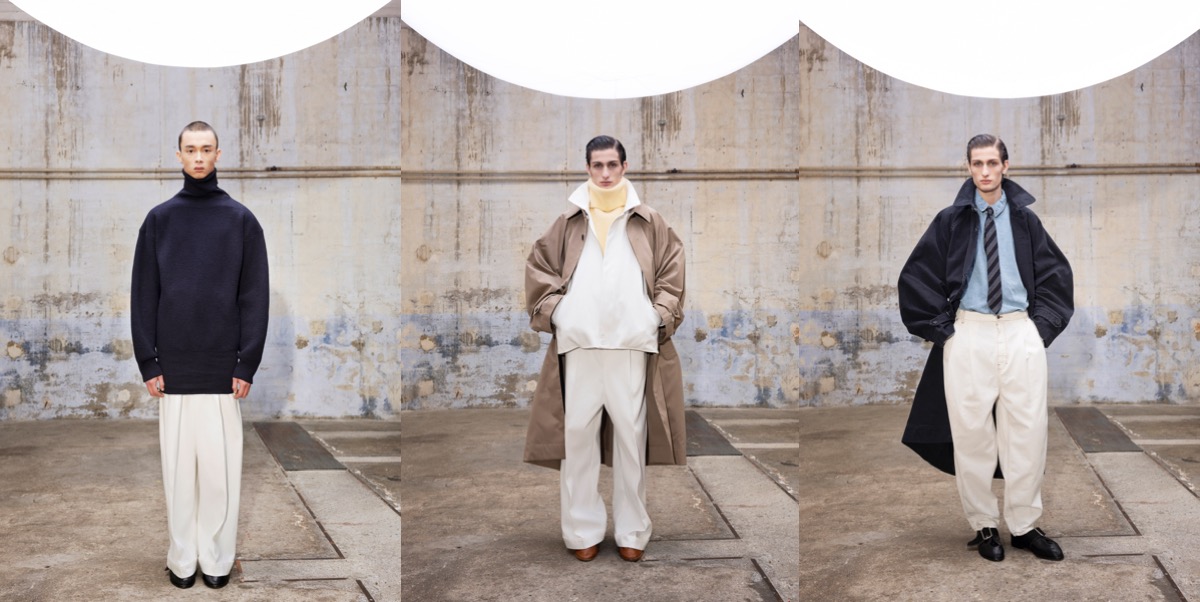
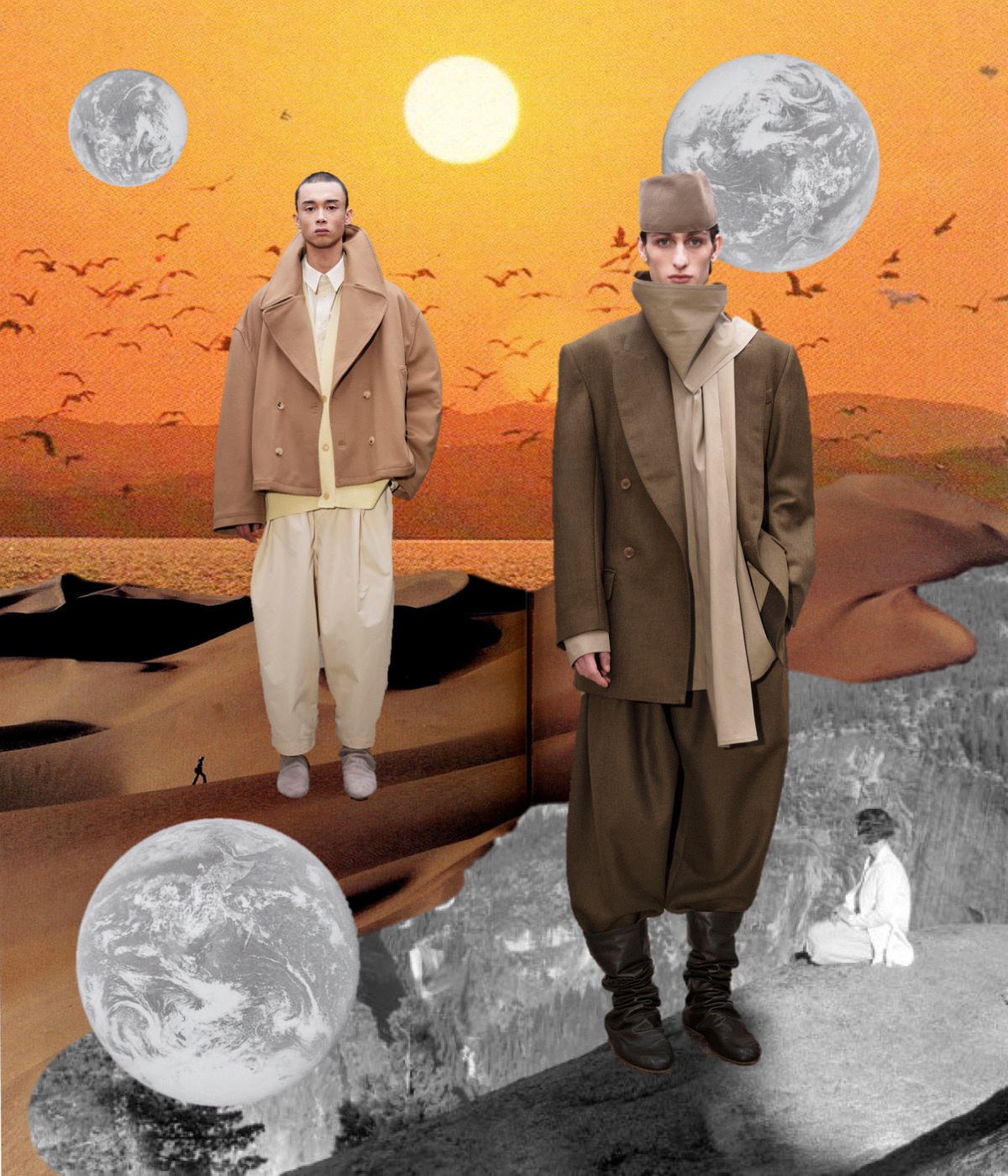
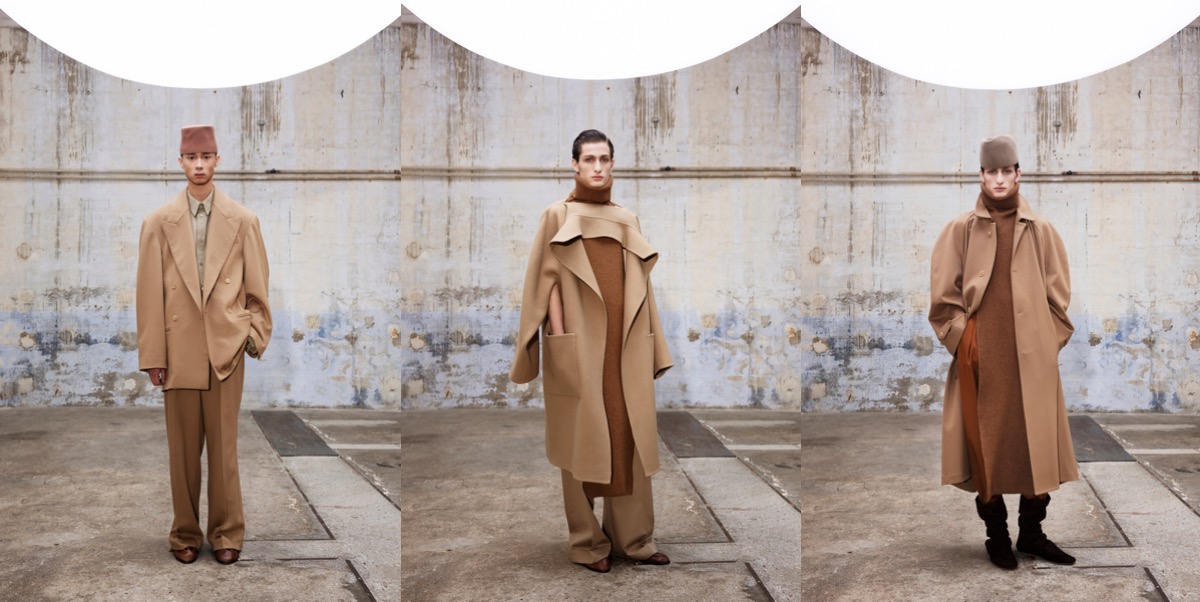
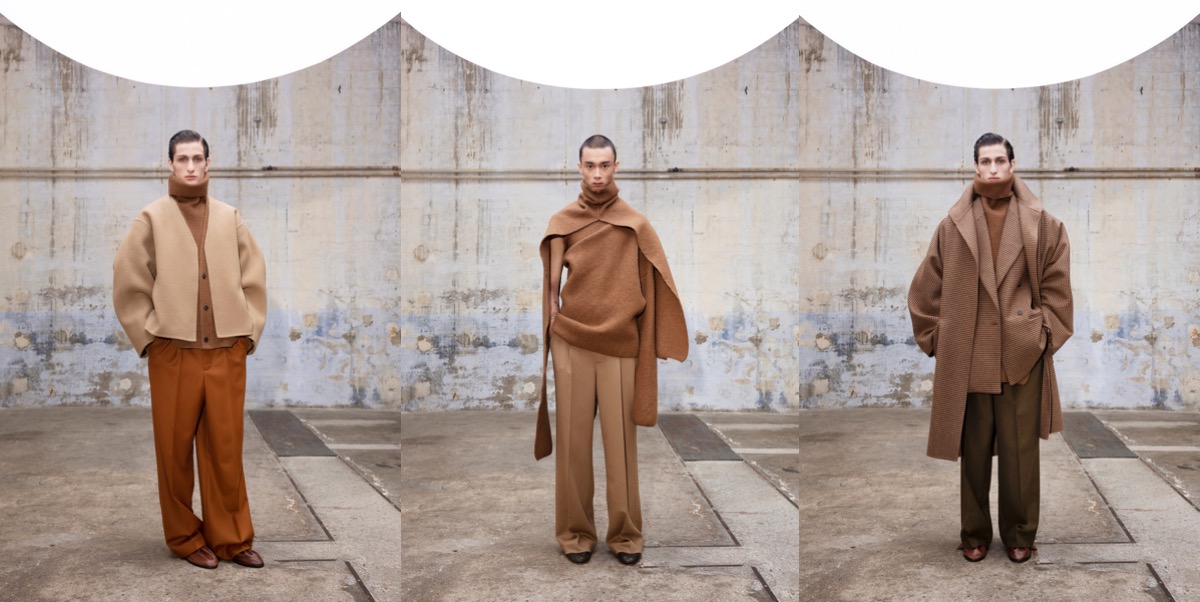
Hed Mayner is one of the most underrated menswear labels, which is just the perfect place for unconventional elegance (and tailoring!) fans. The dynamic between inside and outside – the need to isolate on one hand and what he sees on the streets of Paris and Tel Aviv (the city where the designer is based), on the other – led him to paring things down and meandering through the possibility of line or the language of fabric. “Tailoring can take you into a process where you obsess over the perfect jacket. What I’m trying to do is keep something askew,” the designer noted in a Zoom interview with Vogue. Comfort dressing in slouchy, cozy fabrics was already Mayner’s home turf. This season, he’s expanded that sensibility and reframed it with ample yet tailored silhouettes and more traditional materials, like fluid Italian wools and English tweeds. For the first time, he ventured into double-faced fabrics, for example in a military-inspired coat that, thanks to a simple slit in back, can also be worn as a cape (a quilted puffer reprised that idea too). He also went to town on proportion, stripping away lapels, elongating tops, dropping hems, and toying with asymmetry, bell sleeves, major shoulders, and trousers that sit high on the waist. Those might be tucked into a long, slouchy boot or quite simply cropped above the ankle, judo-style, and paired with a big-buckled shoe. The effect was often sculptural, and warm hues of ivory, rust, camel, butter and olive green added to the feeling of gentle ease. Mayner said that his clients tend to pick a total look, then break it down and make it their own. When autumn arrives, they’ll have a lot to play with.
Collage by Edward Kanarecki.
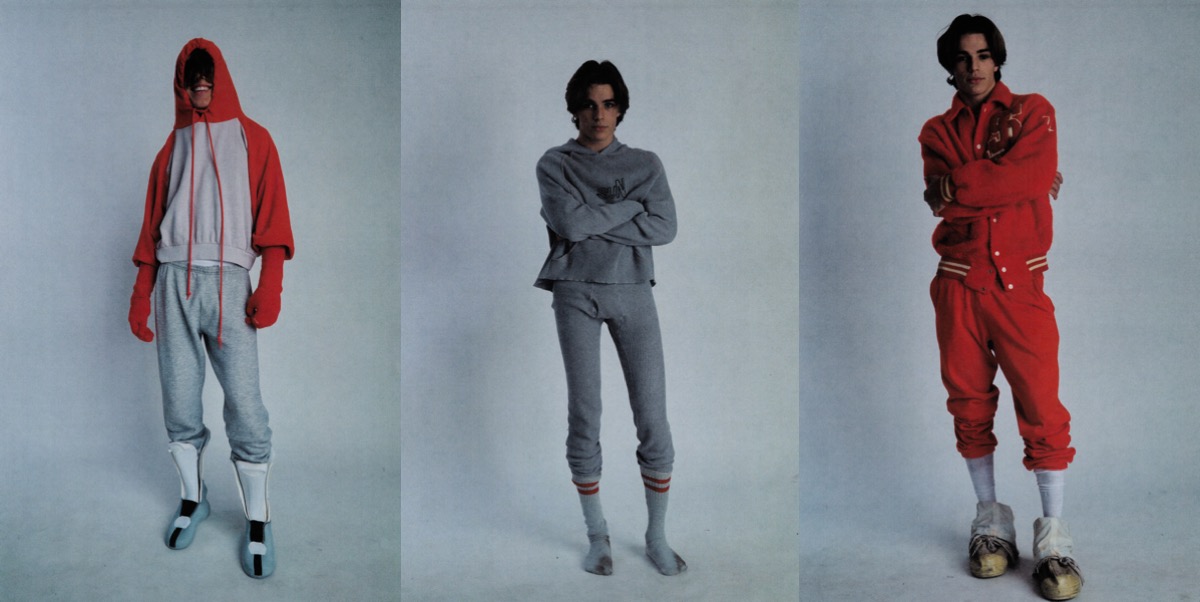
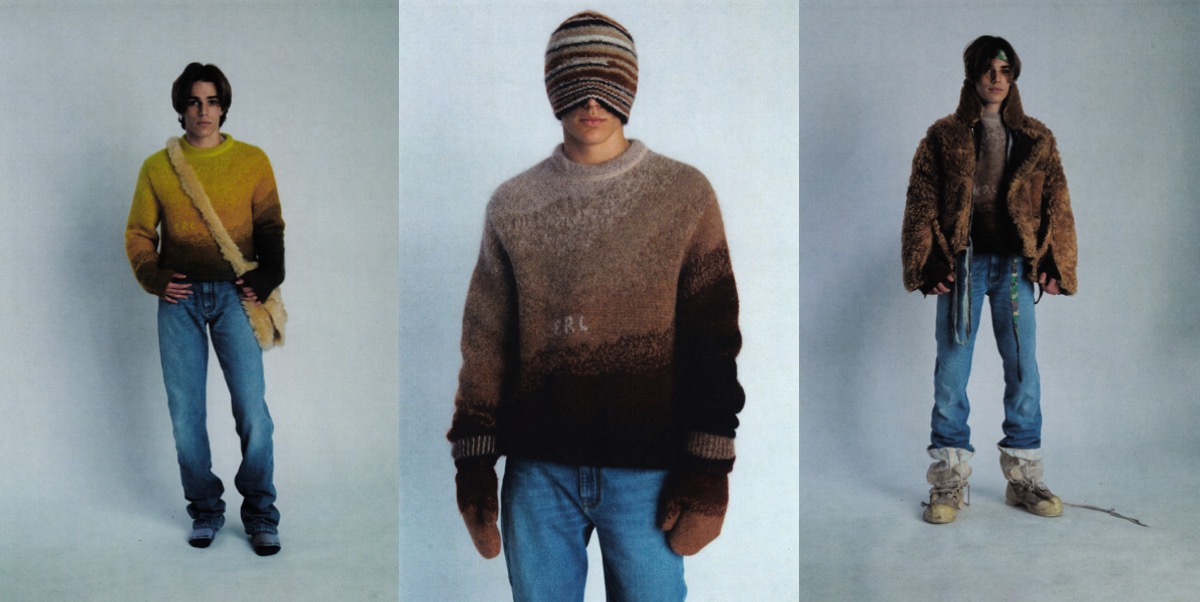
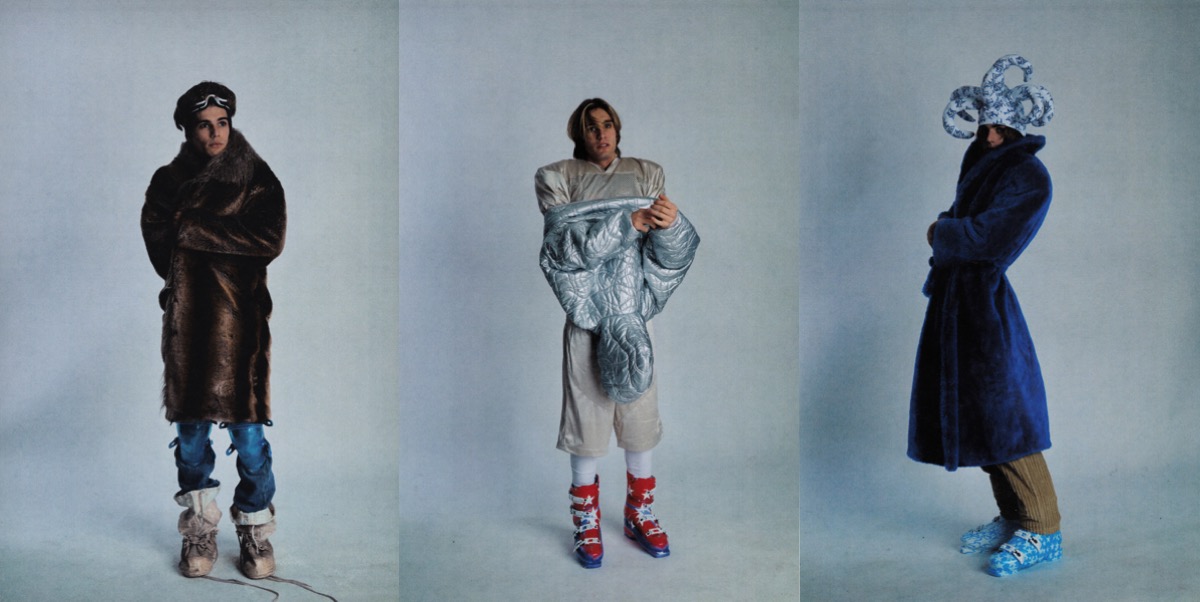
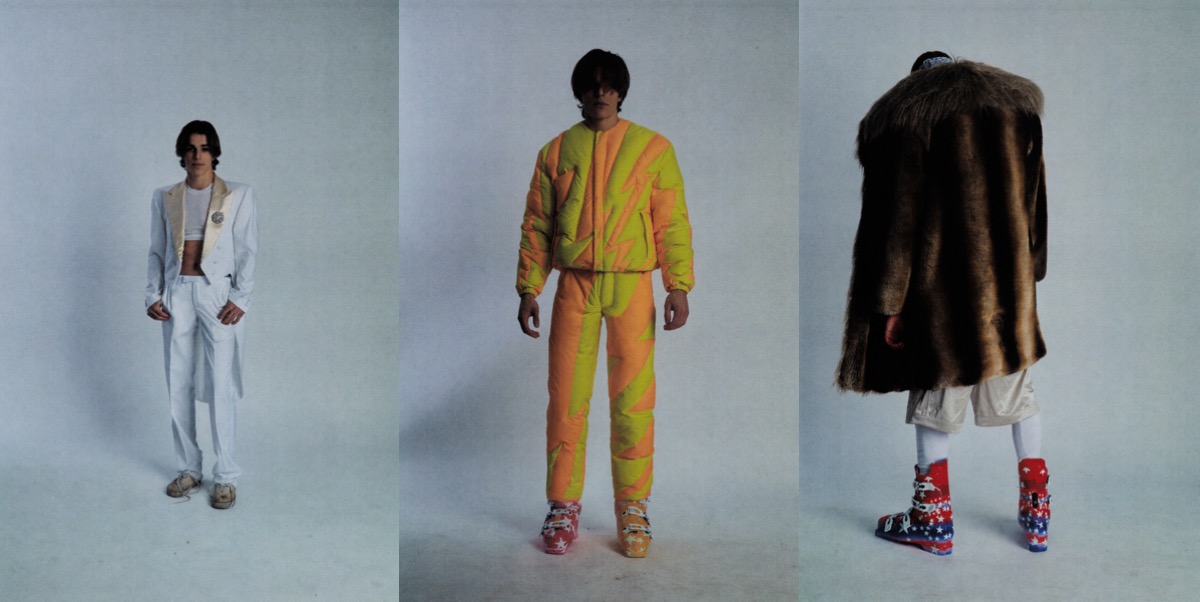
Men’s – The Final Frontier. ERL AW21

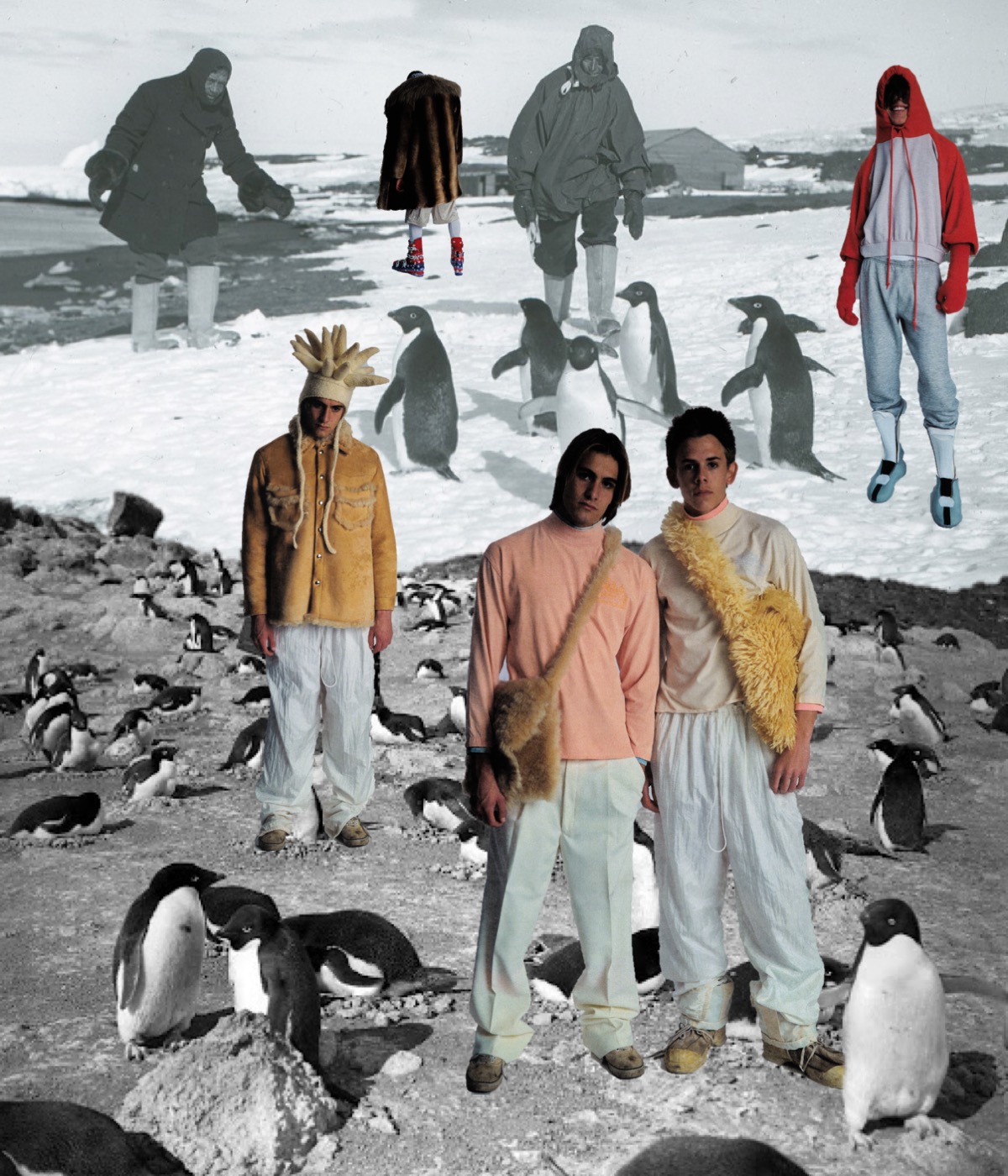
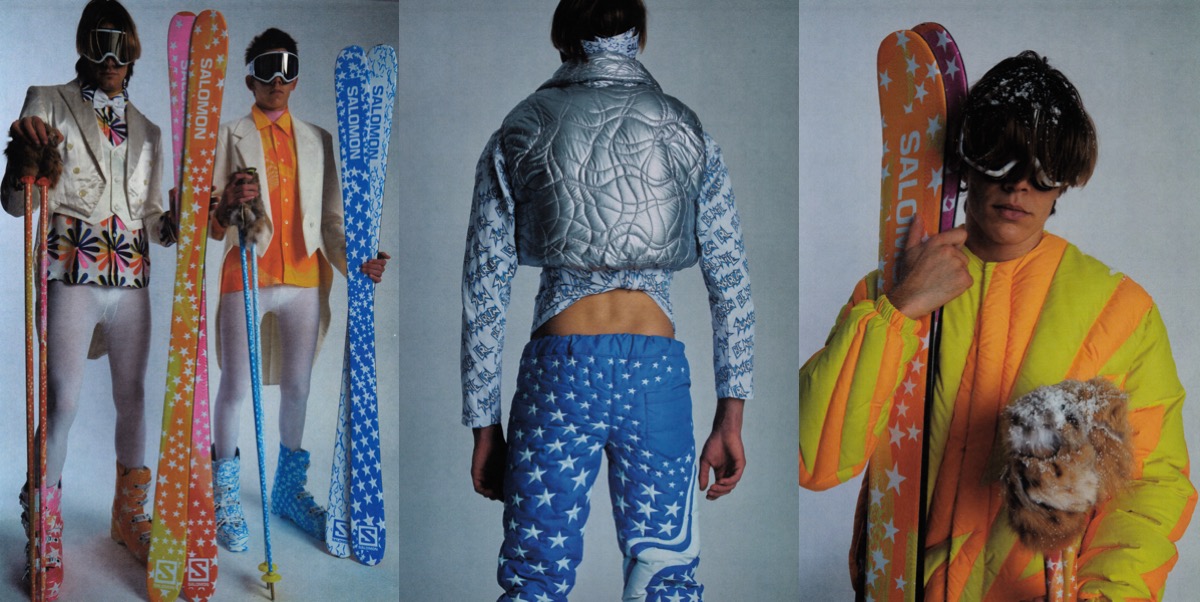
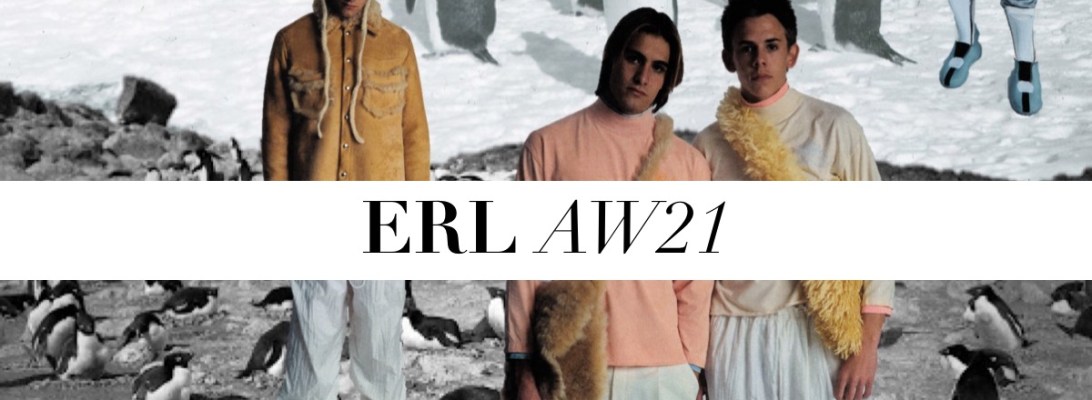
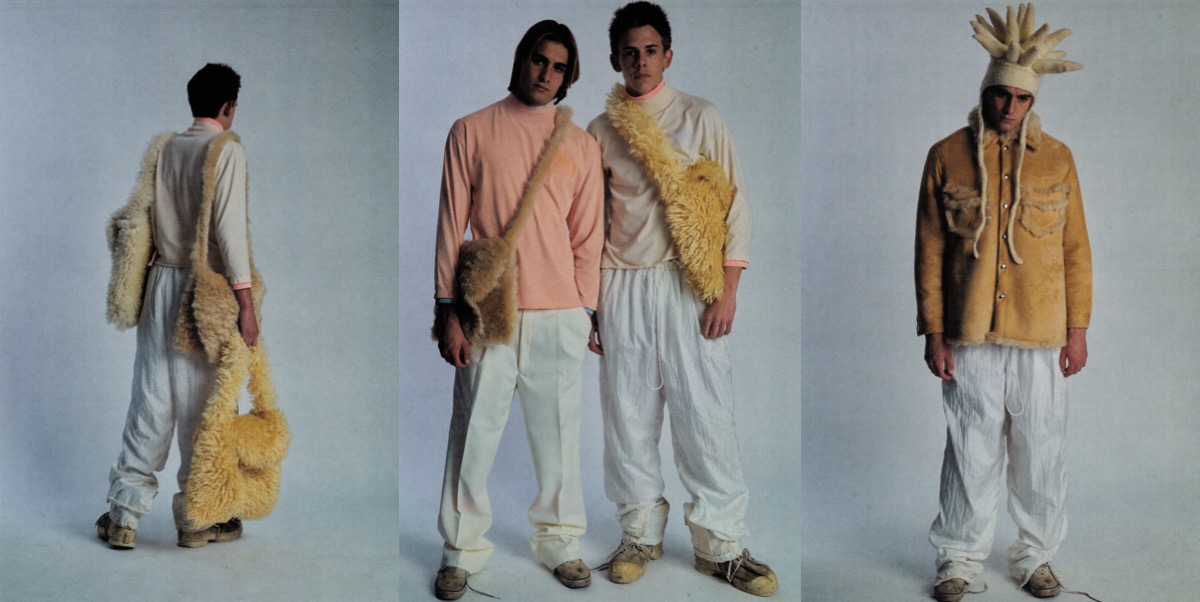
Eli Russell Linnetz is the fresh, Californian blood in Paris. The multi-hyphenate visual artist, stage designer, photographer, and director, Linnetz began working on his own label, ERL, at the encouragement of Dover Street Market’s Adrian Joffe and Ronnie Cooke Newhouse. Now in its third full season, the collection has expanded: it includes ERL takes on everything from swimwear and long-johns (quickly becoming the “it” item of the men’s season – see Prada!) to tuxedos and silver puffer pants. Linnetz makes apparel for everyday life which is far from being basic. That seemingly infinite potential is what makes the things Linnetz does do all the more interesting. Titled “The Final Frontier,” his autumn-winter 2021 collection riffs on the Space Age, the psychedelic 1970s, showy 1980s culture, and a sort of timeless collegiate Americana that always permeates his work. The thread that marries such disparate items as a frat sweater and spiky ski bum hat is Linntez’s irreverent sense of humor. A sense of levity and surreal bit of nonsense is welcome in the at-times far too serious world of fashion. Linnetz’s intimate photography and cast of true Cali beach boys only help make the case for his clothing. Scantily hanging off the dudes’ bodies, the clothes telegraph the laissez faire lifestyle of the West Coast. Wide wale corduroy jeans have a constructed slouch, hoodies feature seaming that mimics wave patterns, and fluffy shearling is actually made from a new corn-fiber material to be more sustainable. The collection also includes a ski collaboration with Salomon, neoprene cowboy belts, and a full range of swimwear. There’s an element of costume, of dressing up, and of changing your clothing to change your life. It’s a sort of everyday escapism, finally available to menswear.

Collage by Edward Kanarecki.
Men’s – Real and Fun. JW Anderson AW21

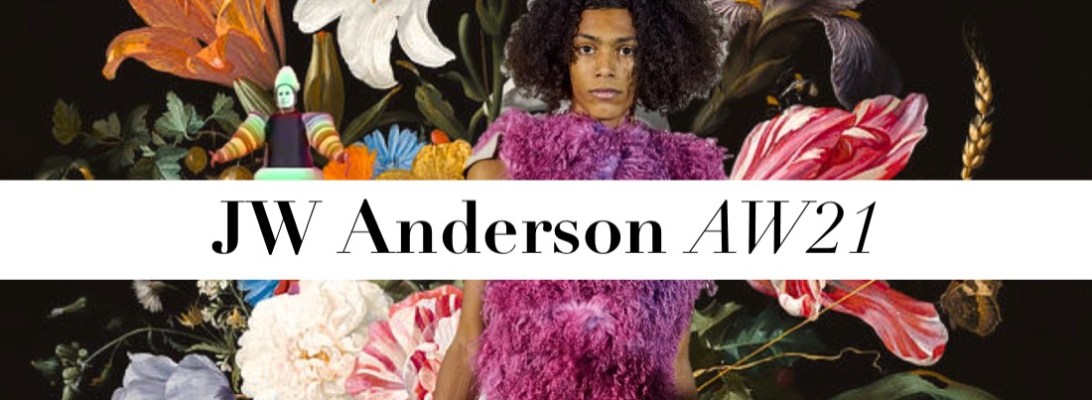
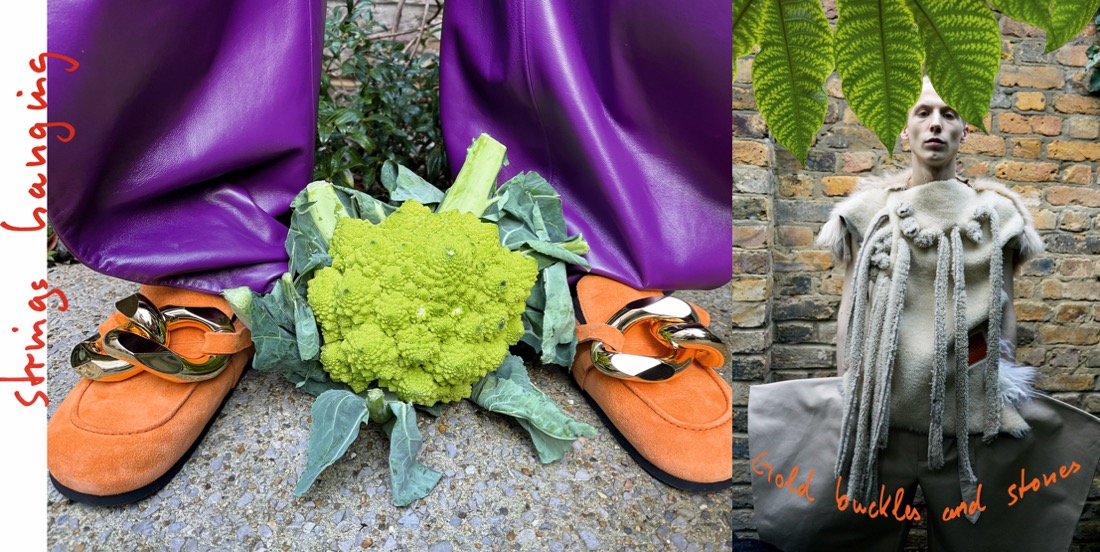
Jonathan Anderson working with Juergen Teller? That’s a match I’m living for. JW Anderson‘s autumn-winter 2021 collection for men (and pre-fall 2021 for women) has been photographed by Teller in London, in his distinct, easy, spontaneous manner. The process basically reflected what Anderson wanted to achieve this season with the garments. “I felt it was better to start the year with something lighter and less calculated,” he declared on a Zoom call with Vogue. “At the beginning of 2021 I wanted something that’s reality. A reality check.” Reality? Well, now that reality’s gone mad, the hilarious antics going on in Anderson’s new set of look-book-posters are a reasonable enough response to the zeitgeist. There’s Sophie Okonedo, who played Charlotte Wells, the mental hospital patient with multiple personality disorder in Ratched, acting up with a gourd, a pumpkin, and an armful of berries, and a trio of male models doing things with cabbage, cauliflower, and an assortment of house plants. To add to the silliness, the handwritten captions are all nonsensically mixed up. “It’s a lot to do with being straightforward, and that’s why I wanted to use Juergen,” Anderson opined. “He’s so good at showing a sharp reality without any fuss.” As usual with JW Anderson, eclectic matchings are the key. Follow the vegetables: ever so cute as crocheted radishes on a sweater, or embroidered on a hoodie; suggestive as great big prints of gourds and a random peach – yet also inspired by Anderson’s interest in 17th century Dutch still lifes, and the work of the British painter William Nicholson. An existential, speculative rabbit-hole, this one: “Why do we glorify something as simple as a lemon or a radish? Is it meditative?” he asks, rhetorically. “So we turned that idea into patterns and iconography. I like this idea of humor in clothing. Squashes on jeans. A peach in the middle of a sweater. Something that makes you grin. Because fashion is meant to make you think, or dream.” Then, the extreme trousering. Follow those upended isosceles triangular trouser legs, and you’re off down the warren leading to Dada and Surrealist costume, the Cabaret Voltaire and Bauhaus theater, if you please. Or perhaps to bump into the checkerboard patterns that the extraordinary gender non-conforming anti-fascist Surrealist Claude Cahoun photographed herself wearing. Those shape experiments are a bold “no, no” to stay-at-home sweats. “I spent so much time last year admiring people ‘doing’,” Anderson says. It’s reinvigorated his belief in craft, in making things himself, in the way he did when he started his brand at the age of 24. “Because I think the world is starting to change. I think this isn’t a time for shock – I think we want reality, honesty, to be stimulated in a way that isn’t sensationalized.

“Live” collage by Edward Kanarecki.

Men’s – Mystery. Prada AW21

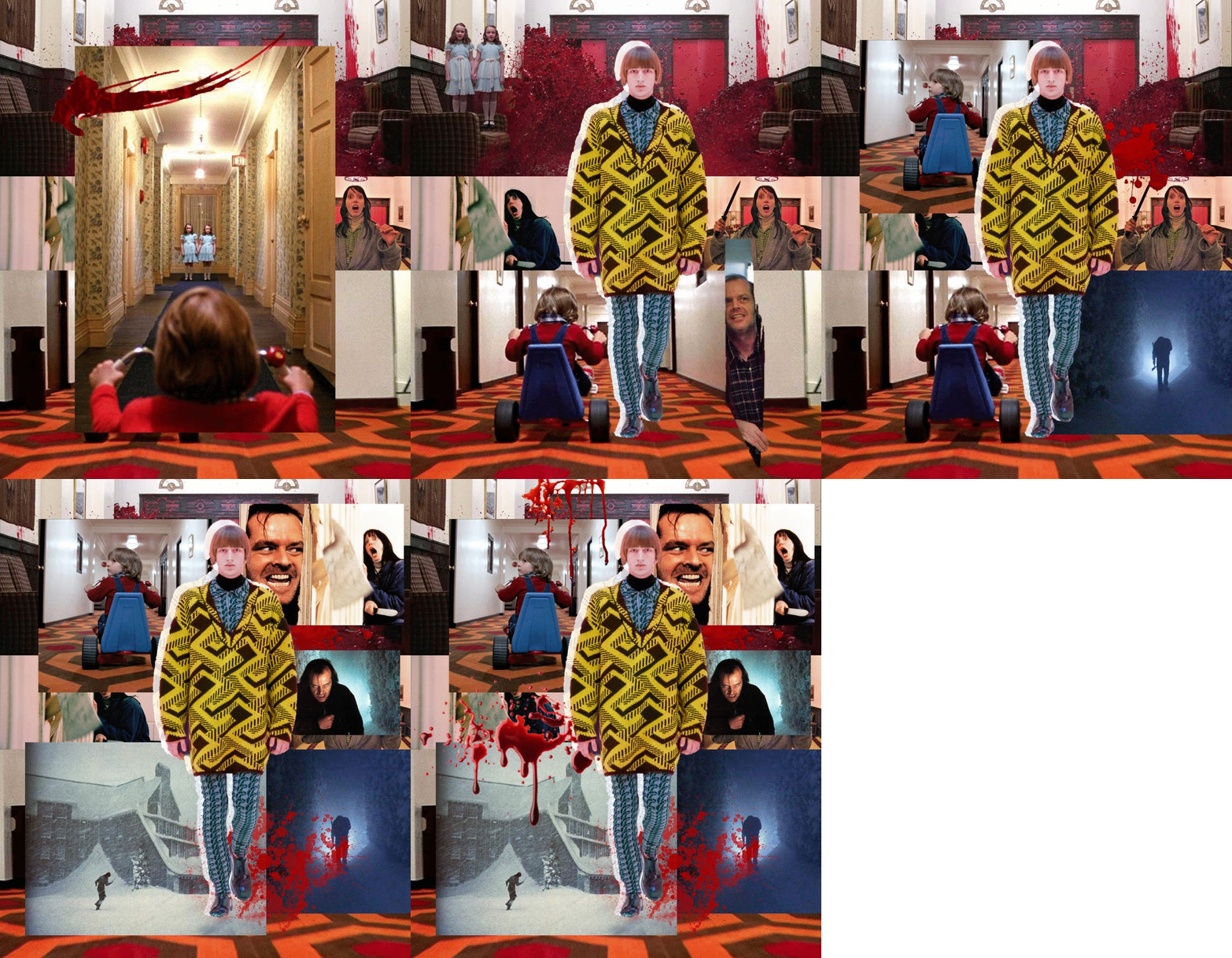
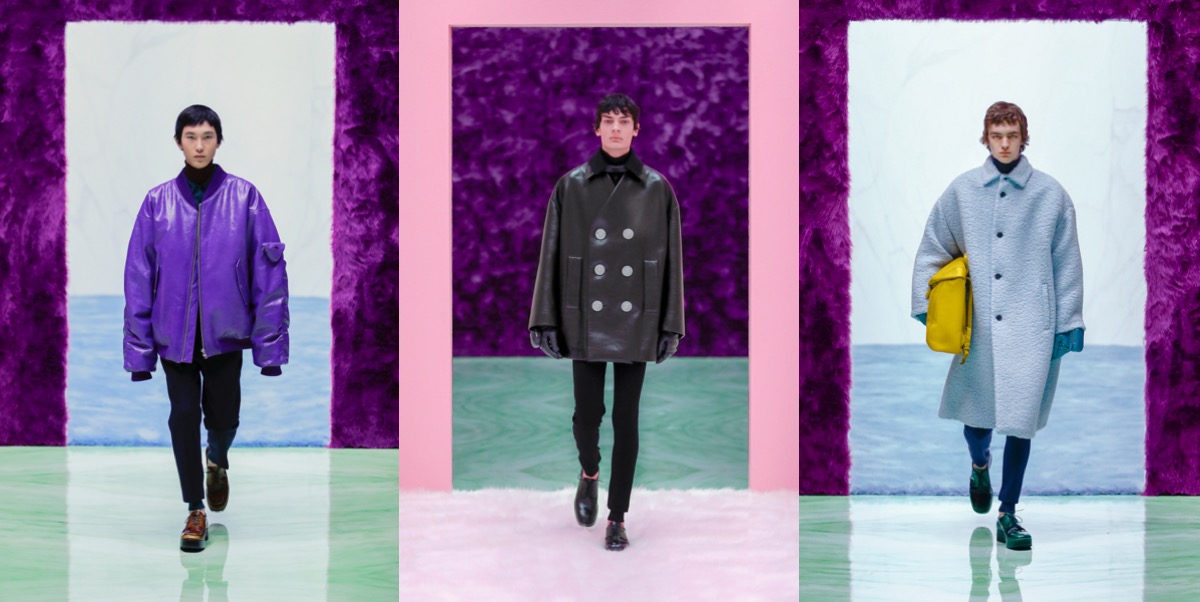
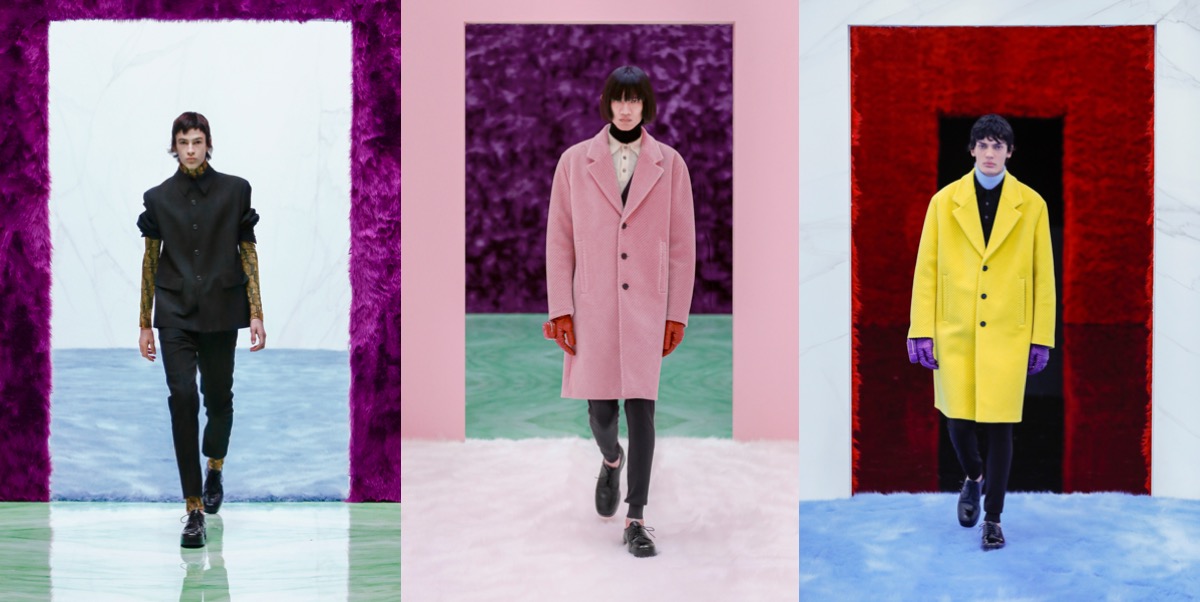
And just like that, we’ve got the second fruit of Miuccia Prada and Raf Simons‘ partnership at Prada – the autumn-winter 2021 collection for men. My first impressions are equal to the ones I had after their debut back in September: a cocktail of feelings. What hits first while watching the fashion show video is the pure mystery, something fashion has forgotten in the last couple of years. The set – a number of geometric chambers made of contrasting colours and textures – had you wonder if it reflects the indoors or outdoors. Or some sort of another dimension, maybe? The analogous sensation of contrasts (something Miuccia always loves) was delivered in the line-up: the oddest colour combinations that worked incredibly well, and clashing textures, from tactile camels and corduroys to synthetic PVC and nylons. Then, the question: who are those guys? Where are they heading to? In the post-show interview with selected students from all over the world, Simons highlighted that he and Miuccia aren’t working with themes. For them gestures, notions and the “unsaid” are much more important. And that keeps the mystery oozing from those characters, who in short video intervals are caught dancing to Plastikman’s soundtrack made specially for the show. Maybe they are raving in the post-COVID world where big gatherings are no longer remembered? As you see, the show sparks a fountain of questions (which don’t really need precise answers). For the clothes, there were some surprises, like knitted body-suits: those “long Johns”, as the designers called them, are body-hugging and “a little dangerous”. There was one take-away that felt distinctly Simons and new to Prada: the bomber jacket, a garment that’s present in Simons’ solo work since the beginning of his name-sake, Antwerp-based label. Another observation: of I course loved each of Miuccia’s men collections, but in the last couple of years there was something mature about them, very grown-up. And Simons, who’s forever youth-obsessed, balances that and invites a younger customer with some signature layered knits and outerwear. Good news: not a lot of logos this time, however, expect for the metal insignias on the patch of jackets and gloves (must-haves!). Similar to the womenswear show, which was like a tabula rasa, the men’s runway line-up featured all new models who had never appeared on a catwalk before. Some of them had home-cut, boyish bangs, just like Danny Torrance, the child character from Stanley Kubrick’s cult classic, The Shining. Who knows, maybe after alll Prada and Simons had that 1980 classic on their secret moodboard. The unsettling ambience of the show, the dramatic music, the unknown destination of the models, even some elements of the peculiar space… there might be some parallels with one of the greatest horrors in history (plus, we’ve seen Raf referring spooky film classics at Calvin Klein!). Summing up: Prada and Simons are warming up, and I’m sure with every season their dialogue will unfold even more intrigue.

“Live” collage by Edward Kanarecki.

Men’s – Updated Classics. Fendi AW21

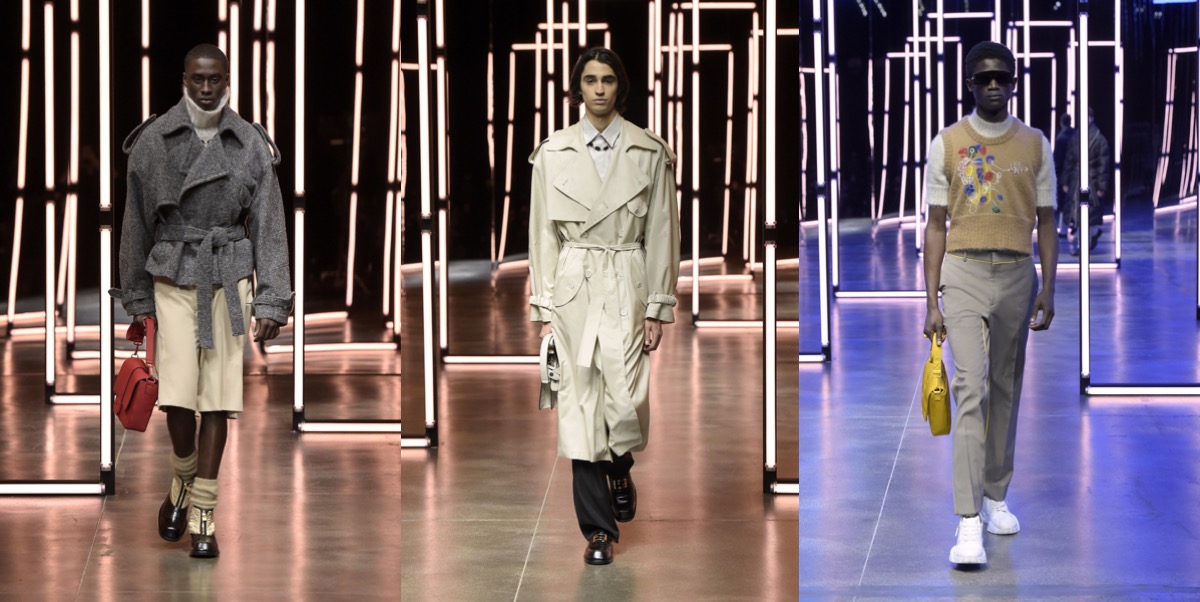
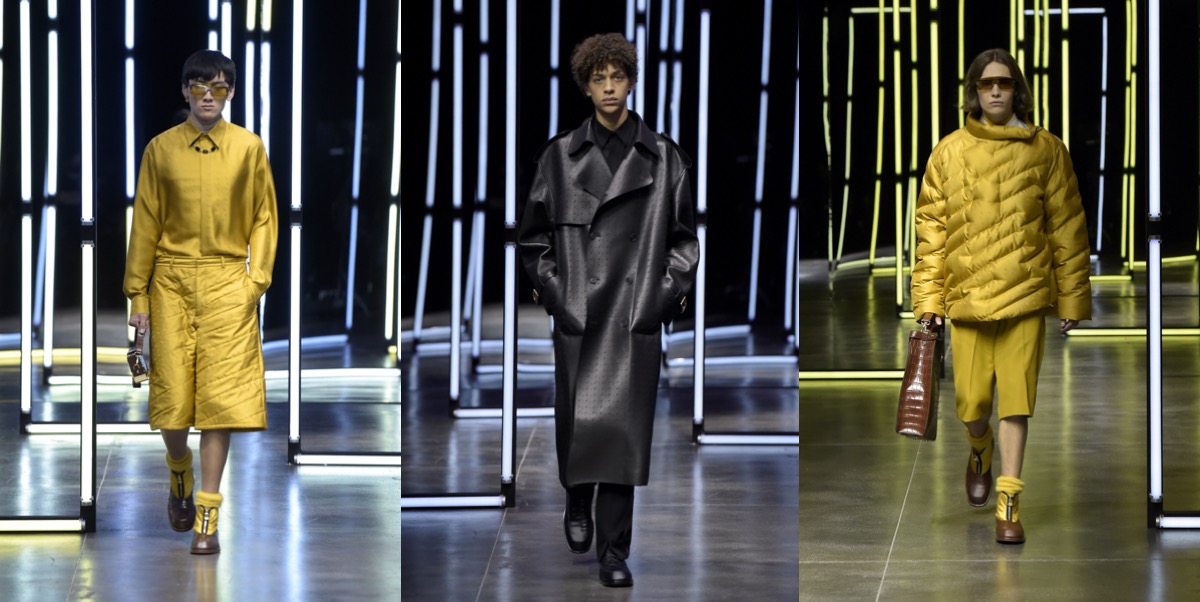
While Kim Jones is about to present his vision at Fendi, menswear is Silvia Fendi‘s territory. This collection contained both examples of bed-to-bodega attire, along with gorgeous intarsia shearling coats and powerfully colored piumino pajamas. Hidden in plain sight among them was a look that Silvia Fendi laughingly conceded was arguably this season’s most transgressive: a black evening suit that was made extra thanks to its pajama-acknowledging blue piping and a louchely low double-breasted construction, but which was a black evening suit nonetheless. The collection was all about laid-back and relaxed feel, however layered with luxury. Camel hair topcoats; hooded shearlings; mink liner-jackets – that reflected a collection of pieces she called: “very tactile – so soft you can sleep in them – and also very functional. Clothes that make you feel good. Because I do think that fashion can have a therapeutic aspect.” Accessories included slipper-spats for seamless indoor-outdoor footwear functionality, and mini-trolleys to reflect our shrunken but still aspirational physical horizons. As Fendi demonstrated, many of the garments were reversible to double their dosage of potential therapy. And the population of patients who might benefit, she added, was purposefully broad: “To avoid that fashionista attitude, I like to consider menswear through many different men who keep their personality… I think in the future, fashion is going to be more individualistic, and I wanted to keep that idea in the show.” One attention grabbing aspect was the inclusion of artwork (including that cursive Fendi lettering) by Noel Fielding. Probably best known as a host of more recent series of The Great British Baking Show, Fielding is a stalwart of British alternative comedy – see The Mighty Boosh and The IT Crowd – of whom Fendi said: “I like him as a man, and he is a multifaceted talent: writing, comedy, music, art. This is something we all have to do today, I think, to change our own skins. And speaking of therapy, in his graphics you can read what you want to see, like colored yarns that have been thrown on the floor to make a pattern.” What Silvia wants, or at least hopes for, she said, is that this collection “will be something that can be worn on the street next winter, and be enjoyed for its bright colors and tactile feel.

Collage by Edward Kanarecki.