Men’s – Refined-At-Home. Ermenegildo Zegna AW21

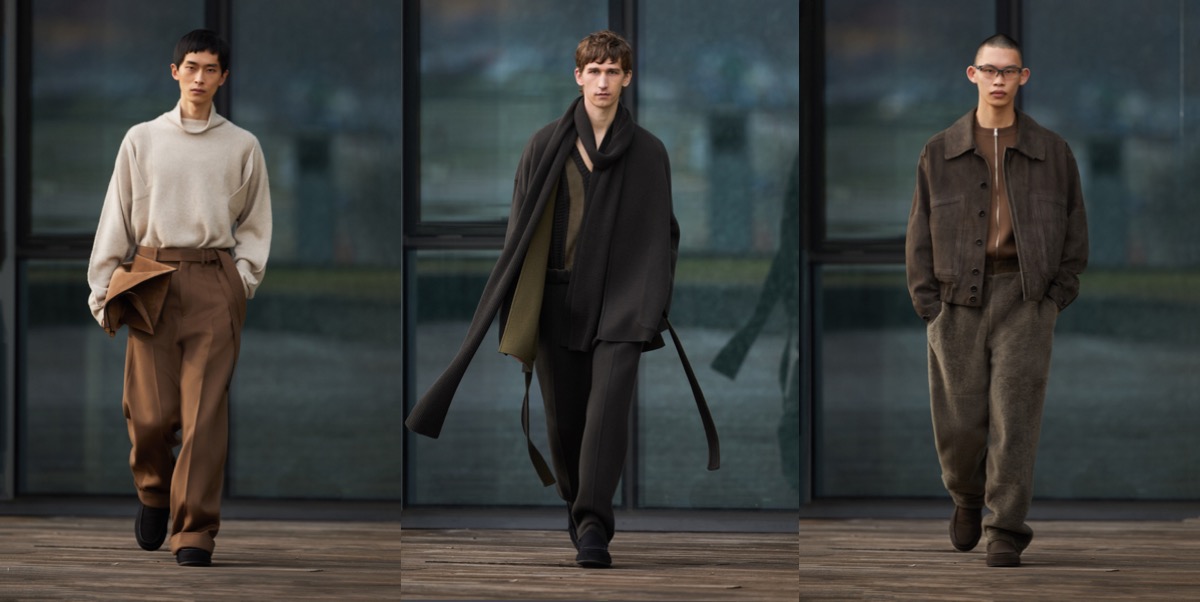
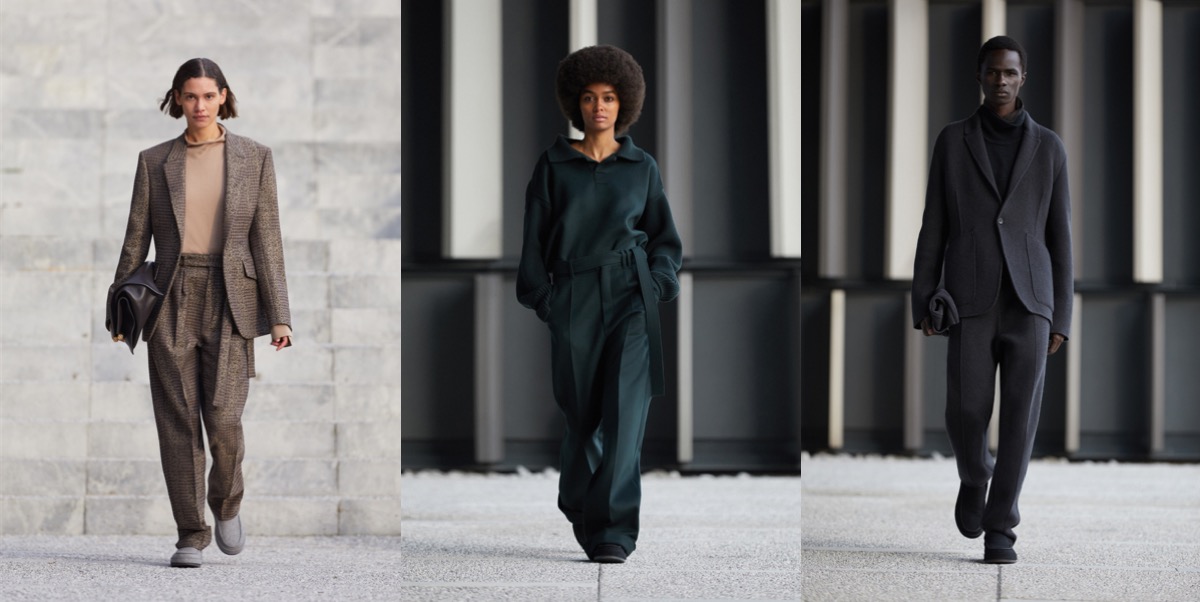
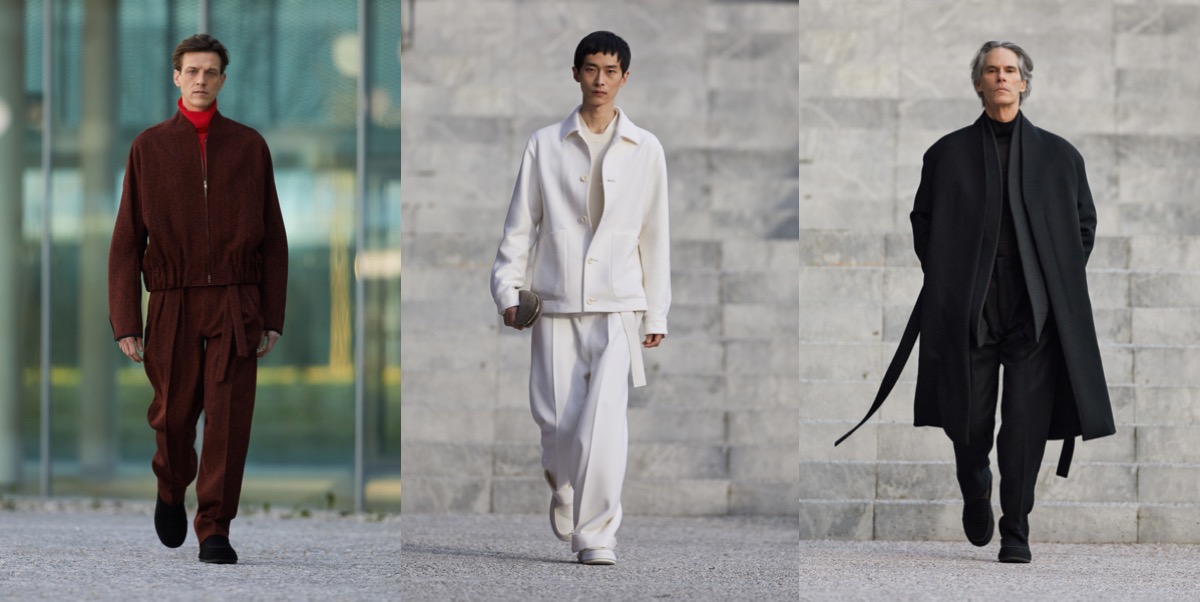
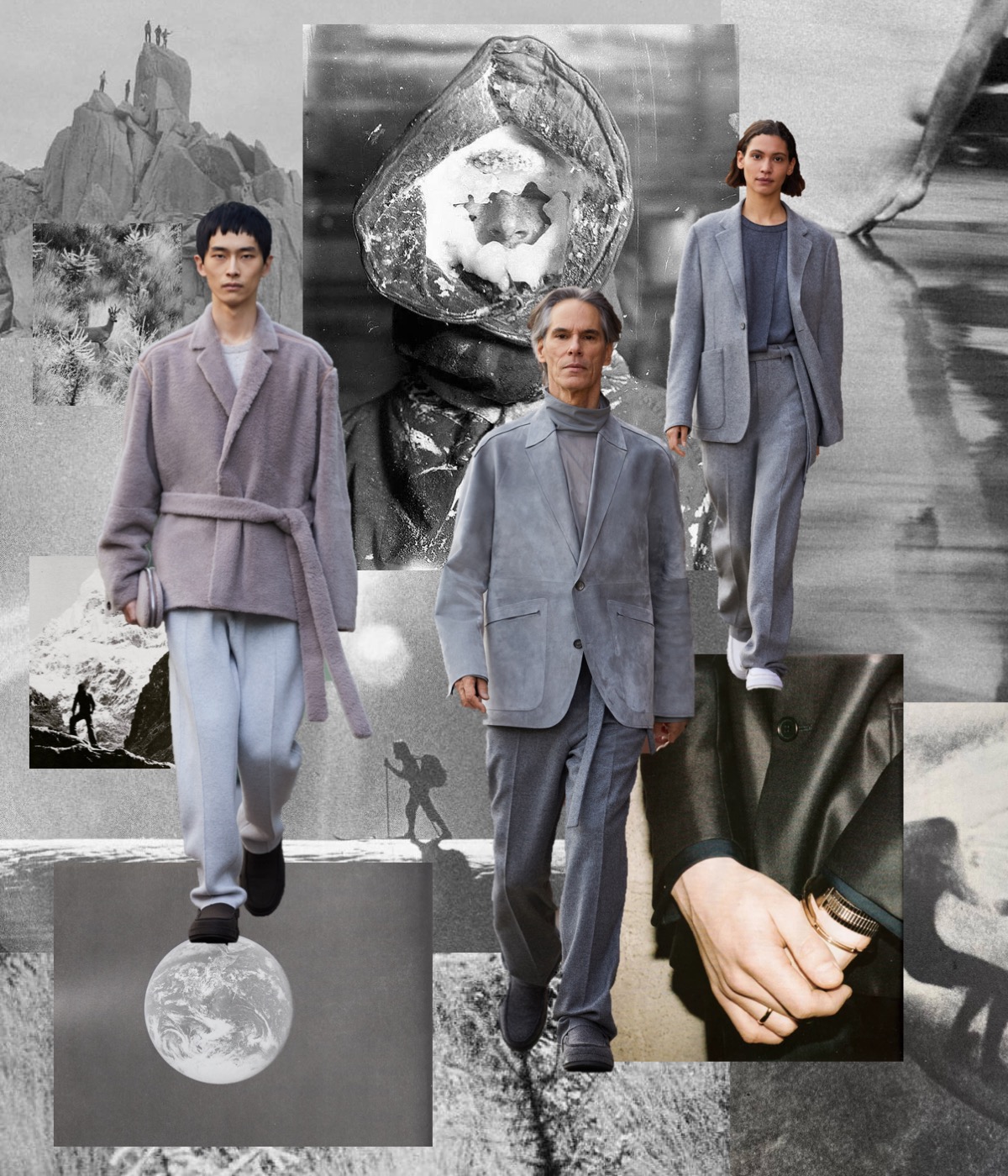
The “phygital” men’s Milan Fashion Week started really well with Ermenegildo Zegna‘s stunning exercise in stay-home refinement. Alessandro Sartori, the brand’s creative director, won’t let Zegna clients do WFH style in basic sweats. Just like the architecture of Milan’s Bocconi campus (Zegna’s HQ) in which the collection was framed, the clothes on show were hyper-contemporary yet contained echoes of past forms; some jackets in suede or felted cashmere bore lapels split at the collarbone, or pockets cut on the hip. Fine knit or even nylon turtlenecks – loose at the throat to create a fresh substitute for the shirt collar and consign to history the tie – had buttonable cuff details. These details were nods to a lineage of traditional tailoring that increasingly seems relegated to habit and history, yet the philosophy of tailoring was refreshed and applied to forms once deemed beyond it. Chore coats, updated leisure suits, and softened outwear—often with slit sides to allow the hands to nestle in cozy internal pockets – will all be offered on a made-to-measure basis for men and women. Like the single shoe style of the collection – a rubber-sole, shearling-lined slipper – these garments were built to service a post-pandemic world in which business life is expanded beyond the office to the home, or as Sartori put it, “a world where the indoor and the outdoor are colliding.” The indoor world was shown via a studio set of 12 open-wall rooms in which the models lived their best Zegna lives, sometimes connected, sometimes apart. Ultimate highlights of this season? The striped jacquard wool suit and overcoat and many of the cashmere jersey pieces which are in line with the Zegna “Use the Existing” policy of presenting its collections in fabrics made from materials recovered during the manufacturing process, a philosophy that is continuously being expanded in partnership with house suppliers to apply right down to shoe linings. Other items, like a long green coat in quilted suede or oversized sweaters decorated with stitched leather, might have been entirely new to existence yet demanded to be worn into vintage old age.

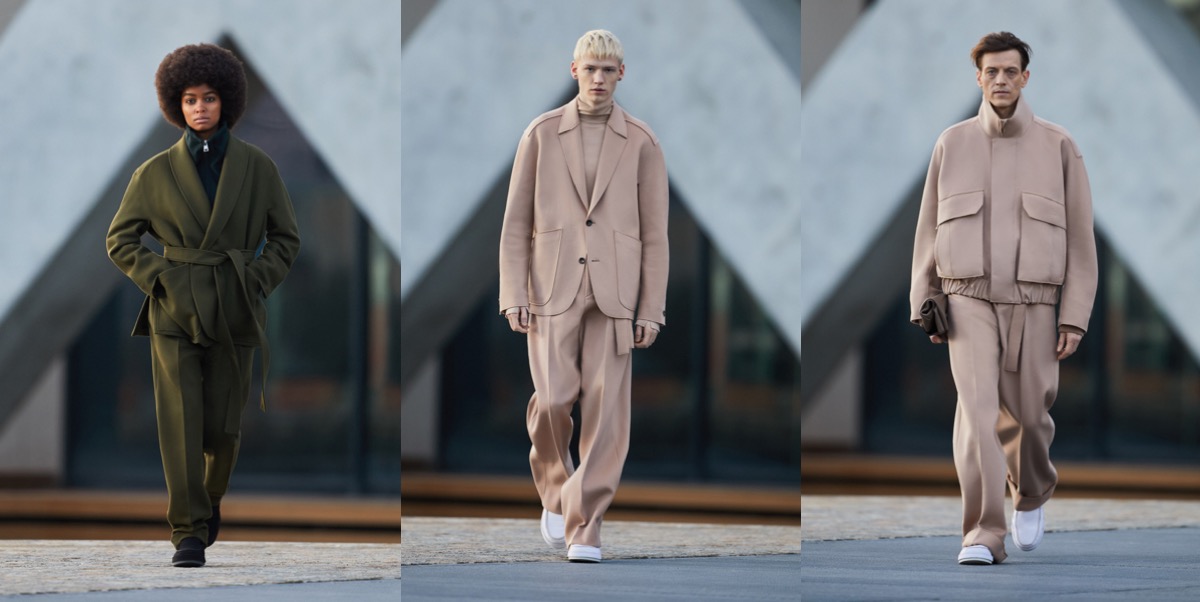
Collage by Edward Kanarecki.
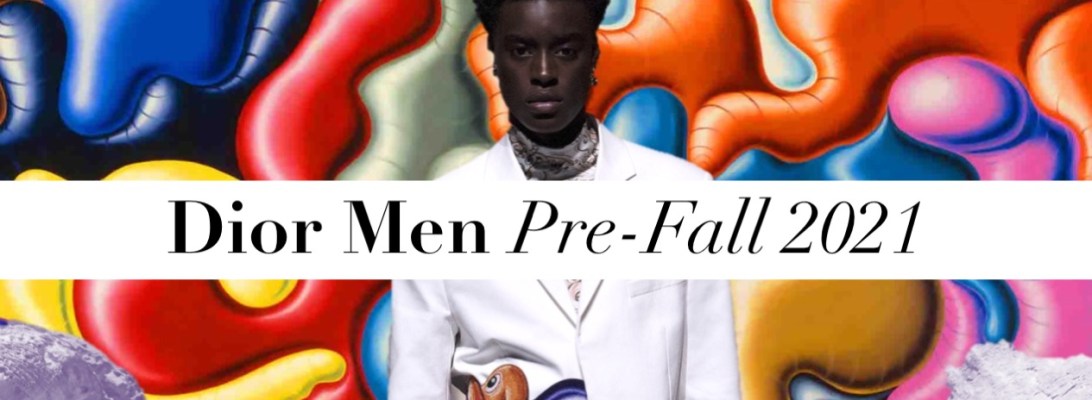
Trippy Elegance. Dior Men Pre-Fall 2021

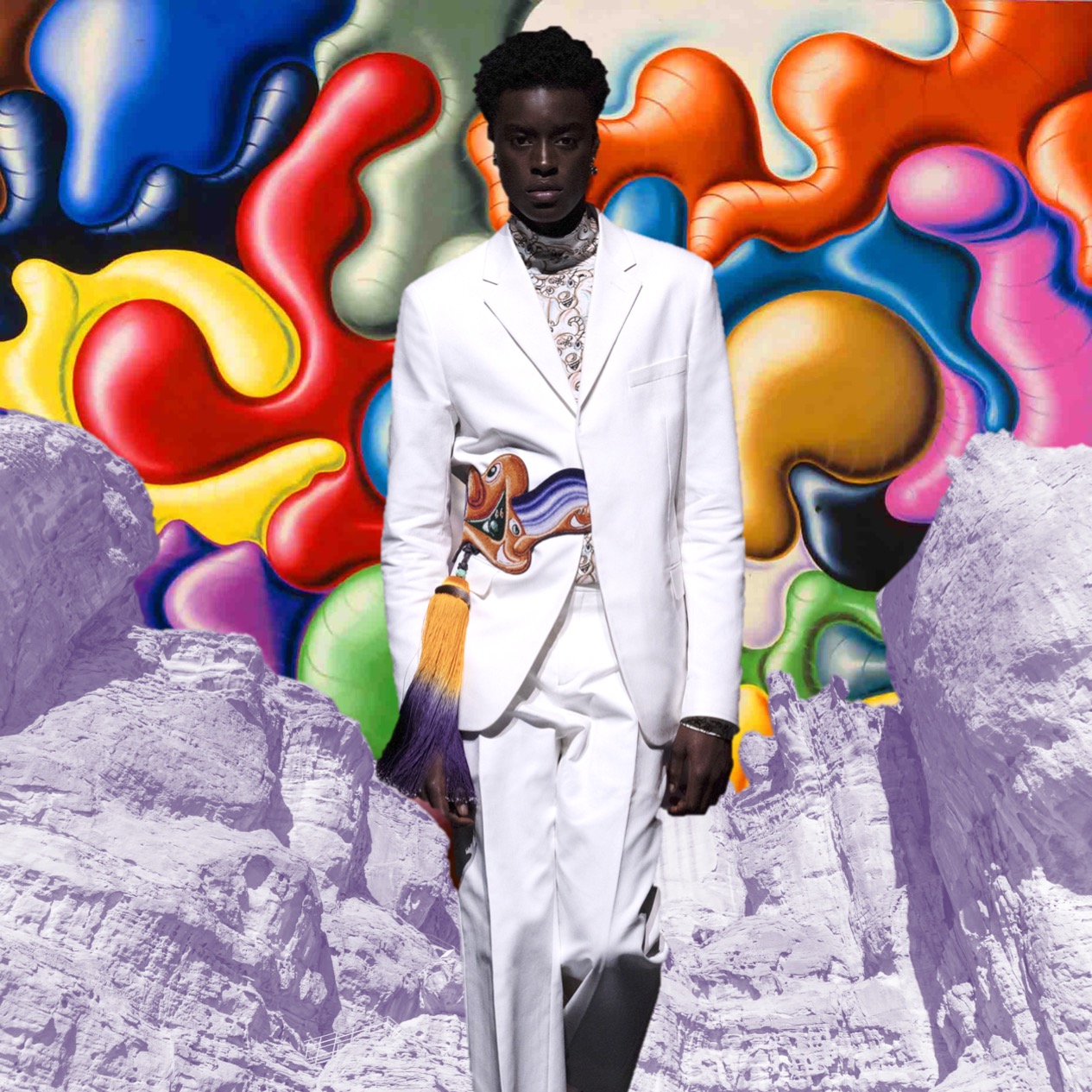
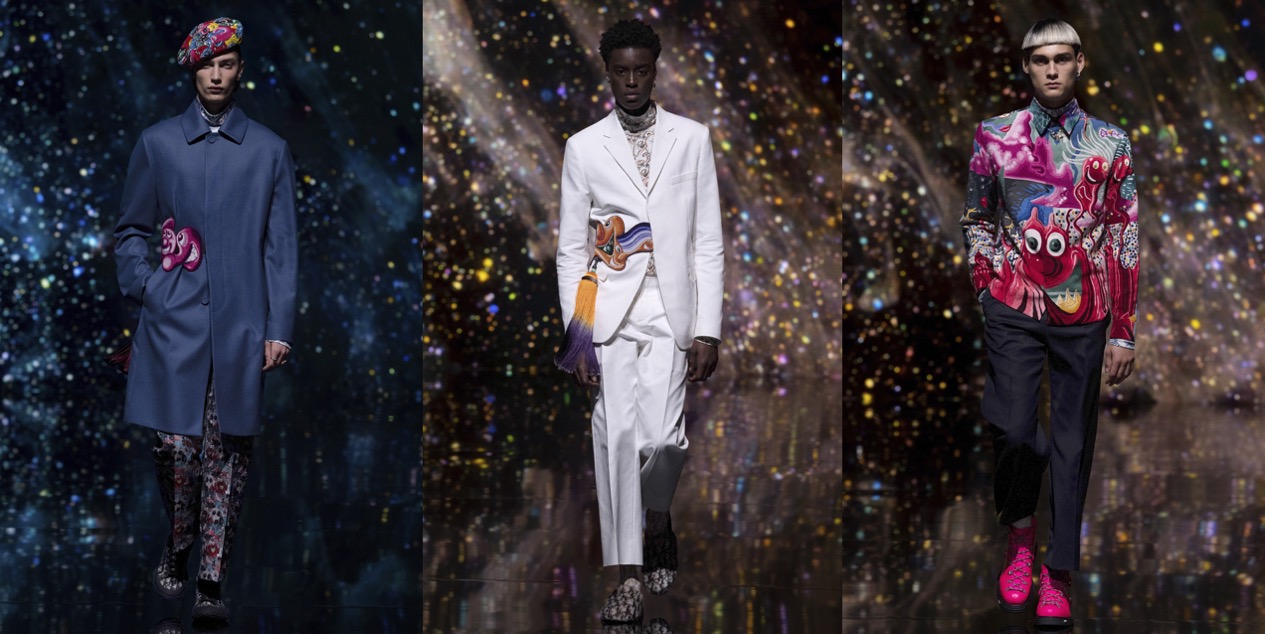
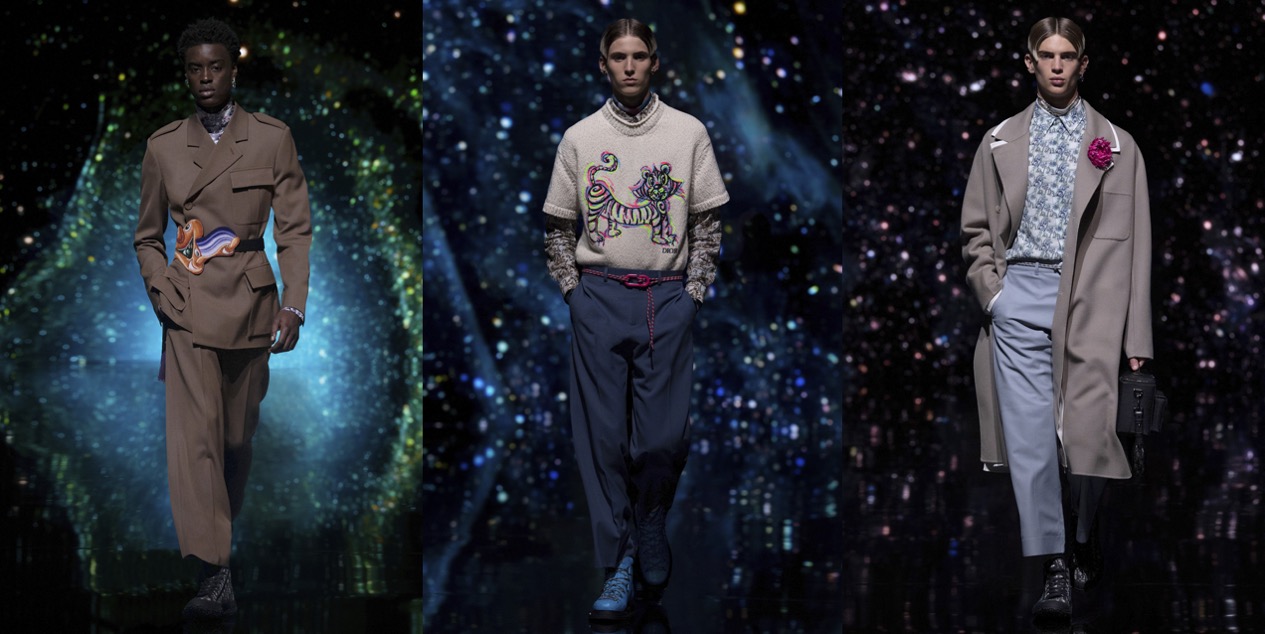
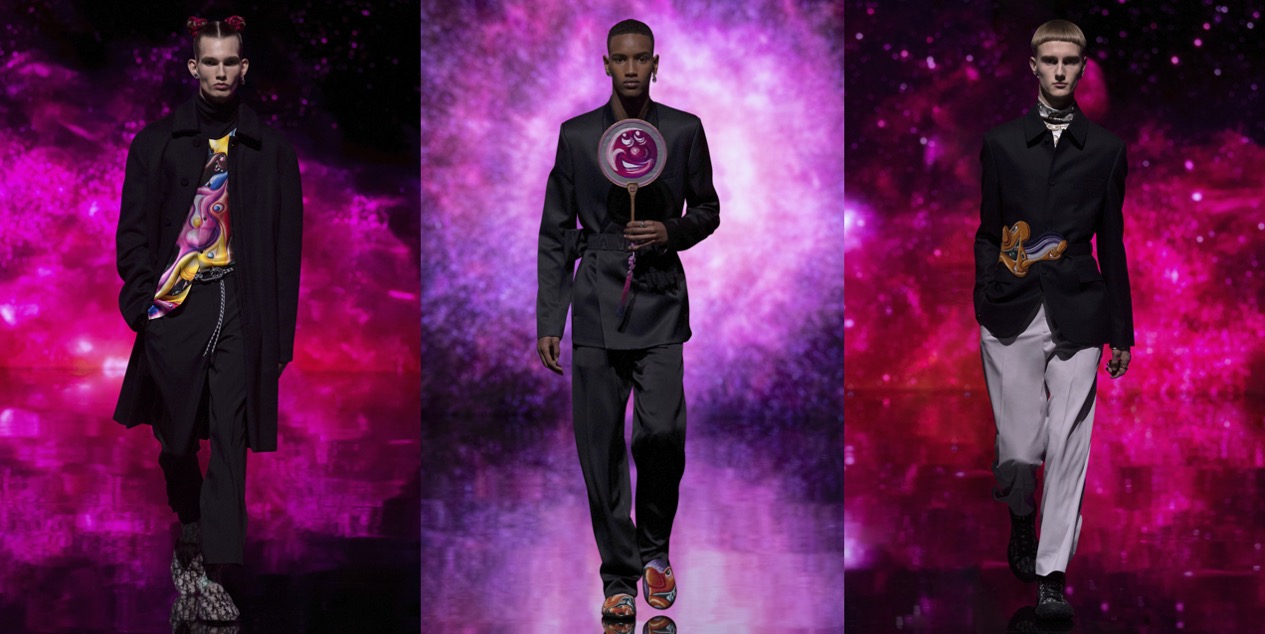
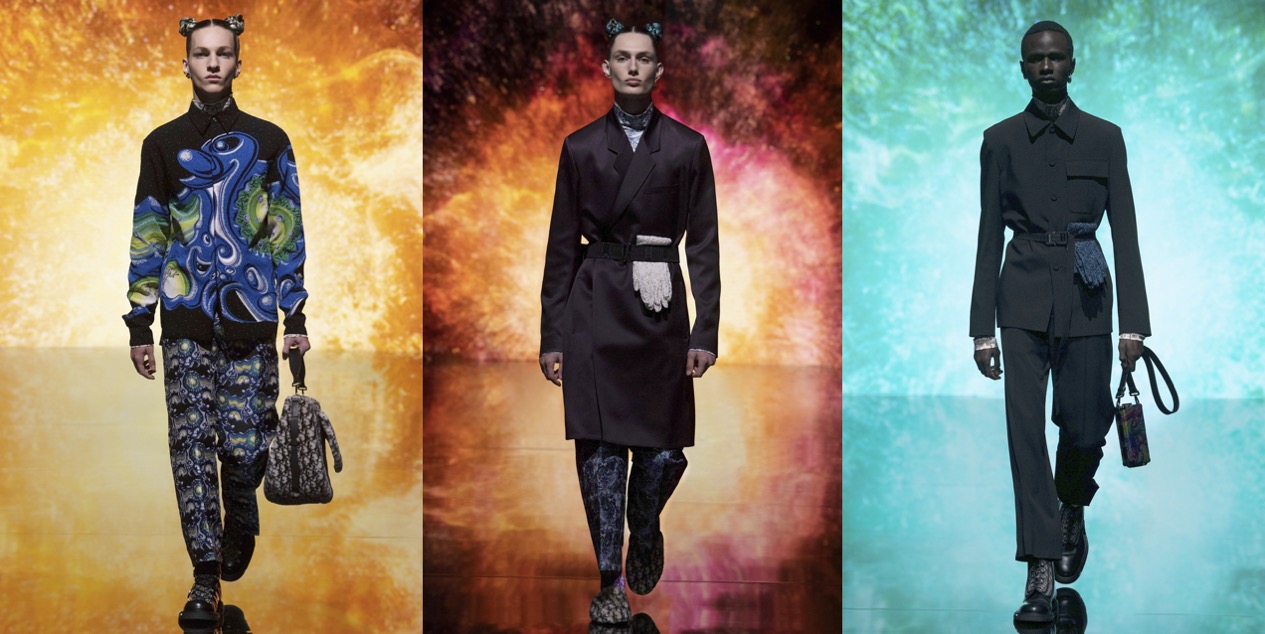
This time last year, Kim Jones’ many fans across the fashion and art worlds were gathered in Miami Beach. His Dior Men show was a Basel-adjacent affair, complete with a walk-through of the new Rubell Museum. Last moments of old reality. The pandemic scuttled plans to stage a show in Beijing for Jones’s latest outing, and this way sole focus was directed at the clothes. Last year, Jones revealed a colorful collaboration with Shawn Stussy, the streetwear OG. This season, he tapped Kenny Scharf, an American artist who emerged from the 1980s East Village scene, making street art alongside his friends Keith Haring and Jean-Michel Basquiat. “The fun and the energy of that time – you see young kids being excited by Kenny Scharf’s work. It’s speaking across generations,” Jones told Vogue via Zoom. Scharf’s canvases can now fetch up to six figures, but he still has street cred: via “Karbombz,” a public art project, he’s tagged upwards of 300 cars with his imaginary creatures – all for free. Scharf, whose first show was at New York’s Fiorucci boutique in 1979 and earliest fashion hookup was with Stephen Sprouse, is the perfect Jones collaborator. His work gleefully obliterates boundaries too. “I’m one of the inventors of all that,” Scharf said on a call from his L.A. studio. He raved about Jones: “He’s a listener, he’s a learner, and that shows. He went really deep into what I’m doing.” Together, the designer and the artist selected contemporary pieces and older ones to reproduce, including When the Worlds Collide, a 1984 canvas in the Whitney’s permanent collection. Scharf also designed 12 Chinese zodiac signs for the show’s knits and underpinnings, and, of course, he had free rein to reinterpret the Dior logo. “I just wanted it to be a very full-on version, using specific techniques to recreate his work in really beautiful ways, to make it even more Pop,” Jones said. In some cases, the Dior ateliers were joined by Chinese artisans who rendered Scharf paintings in delicate seed embroideries. Silhouette-wise, Jones’s instinct was to soften his distinctive tailoring and give it a more lounge-y attitude. Jackets are belted like robes and pants are easy; some of the models wear Oblique-patterned slippers. We are still locked in, after all – lets keep it stylish.

Collage by Edward Kanarecki.
Focus On: Husbands Paris

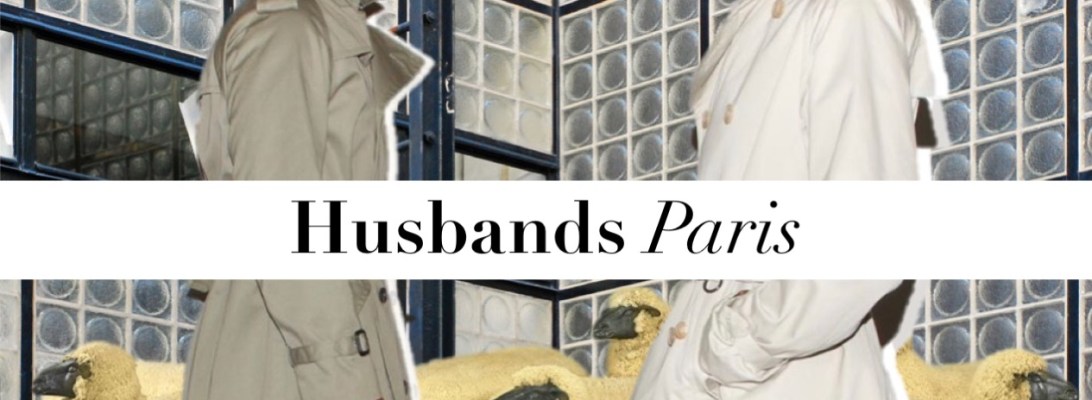
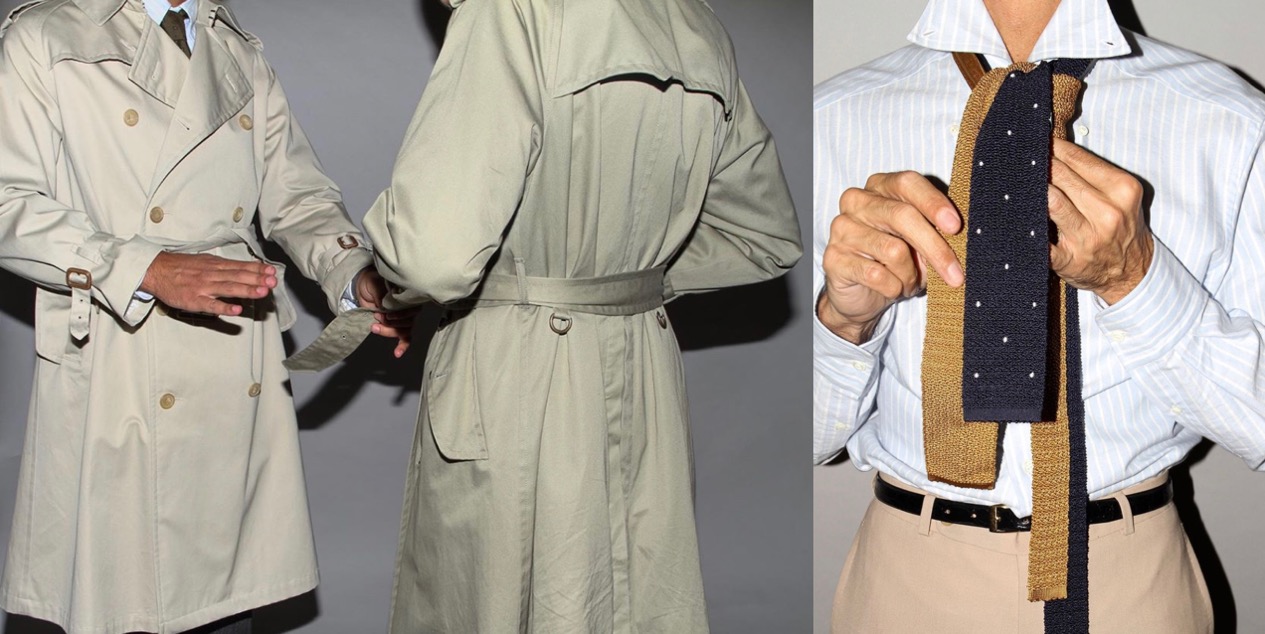
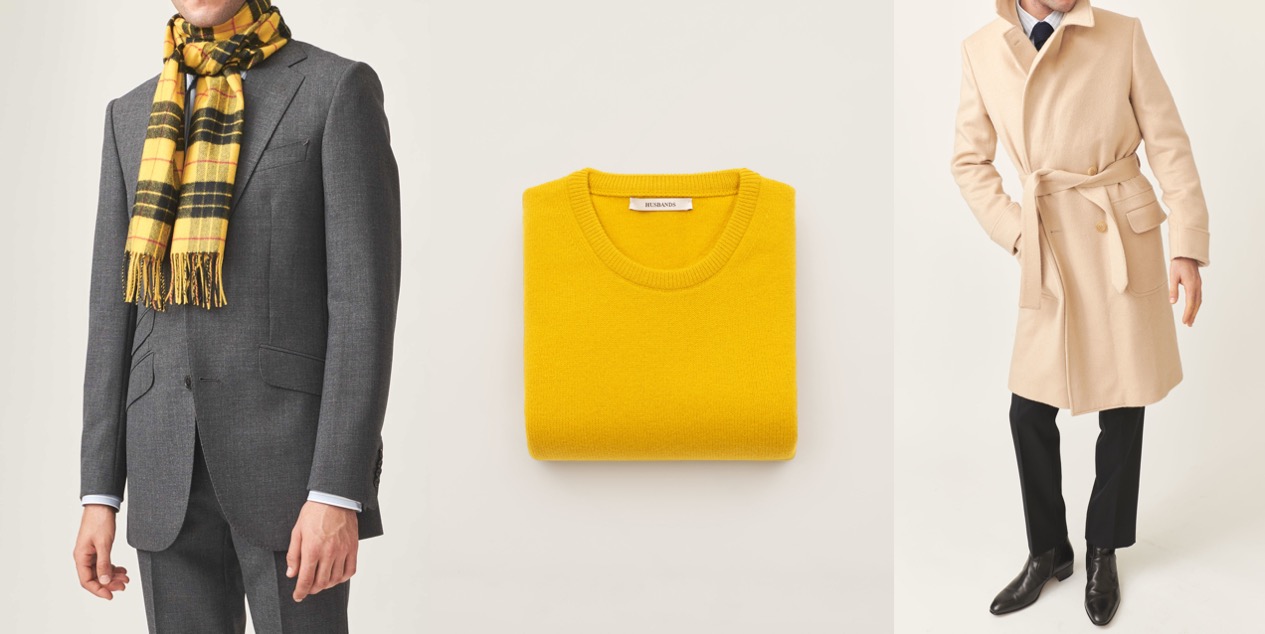
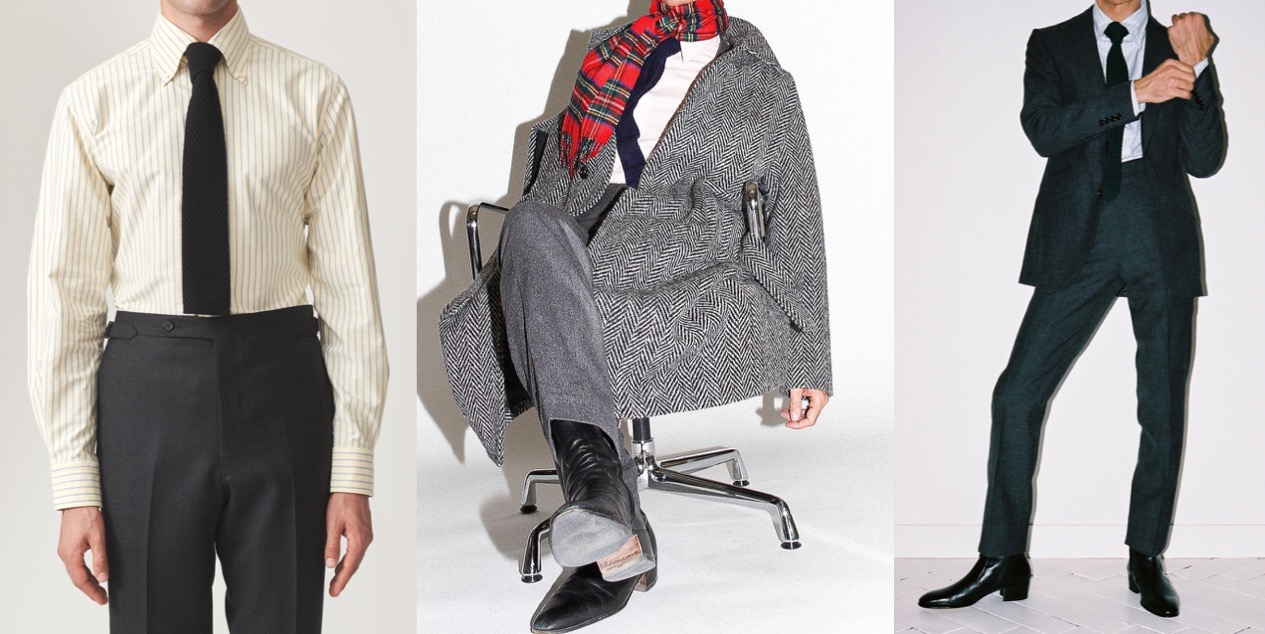
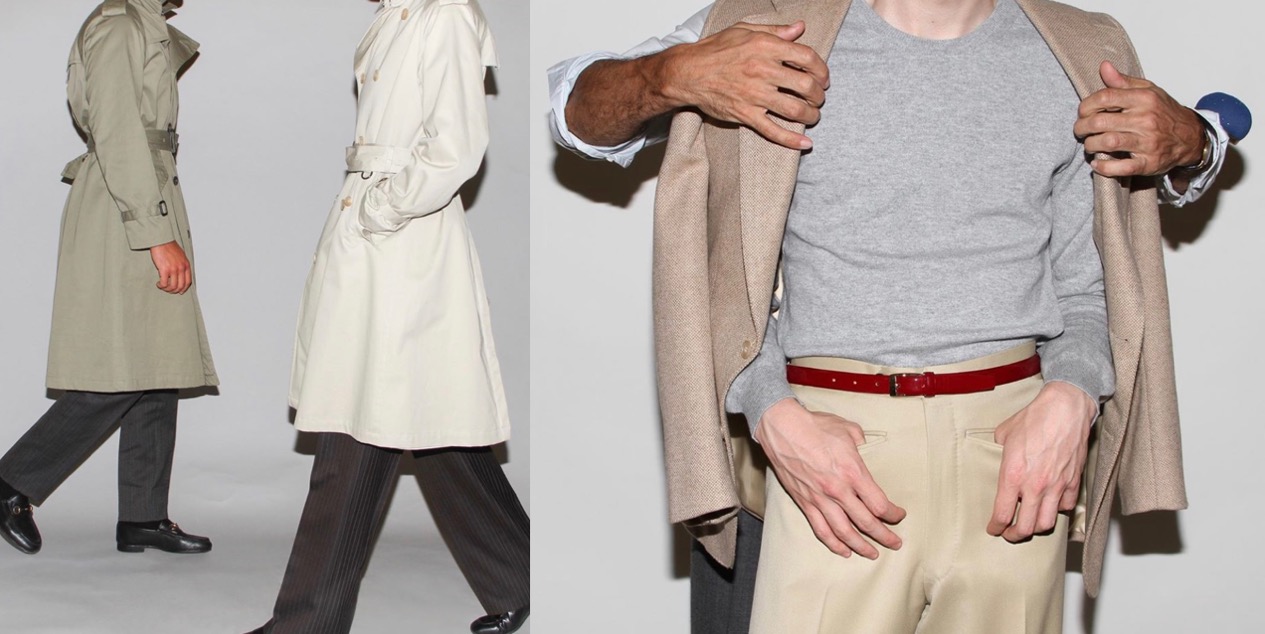
First of all, I’m not a suit guy. I usually hate ties and don’t feel comfortable in blazers. My personal style is rather this: a vintage cashmere knit, Lemaire-ish, over-sized pants (a big no to any sweatpants!), a big coat and Raf Simons sneakers. I yawn at all Zegnas and Brionis (although I respect them), as men’s tailoring is quite uninspiring to me. But there’s one exception. And it’s Husbands Paris. Whenever I see their posts on Instagram, I’m obsessed. Everything is a dream, really, from their signature knitted ties (they might be an ideal option that wouldn’t make me feel out of breath) to the most delightful trench coats. You’ll find Husbands between the orbits of tailoring and fashion, plucking the craftsmanship from the former and stories from the latter to fill an otherwise uninhabited space of the industry with culture and style. The mind behind it, Nicolas Gabard, is as clued up on the technicalities of suit making as he is on the depths of Francis Bacon’s art. This understanding of two worlds has allowed him to birth a bespoke identity of design. In an interview with GQ, he says “craftsmanship is the secret of styleHusbands comes from an obsession with the body – of precision and details. We keep the full canvas of tailoring and its construction because it guarantees a lasting garment. Technically, we offer a perfect piece, but its life comes when the wearer composes something with it.” That’s where the culture comes in. Gabard views fashion as an outlet for “phantasm” and, after stitching on the roots of tailoring through one eye, he seals his designs with stories through the other. They originate from expressive interests, like llistening to The Smiths and Joy Division or watching films by Eric Rohmer. Husbands is proposing the thread of forever intriguing style icons, like Serge Gainsbourg, and then using it as a hook to dig people into exploring the possibilities of their own identities. The label sources its materials from England and manufactures its suits in Naples, but Paris is the base that provides an essential interplay with the individual’s state of mind. As Gabard says, “you don’t have to live the life of other people and that’s the same for clothing – you have to wear your own garments with your body, your culture, your dreams, your past, your phantasm.

Discover the brand here or visit their store in Paris on 57 Rue de Richelieu (in post-lockdown times, of course…).

Collage by Edward Kanarecki, photos sourced from Husbands Paris site and Instagram.

Colmar x White Mountaineering

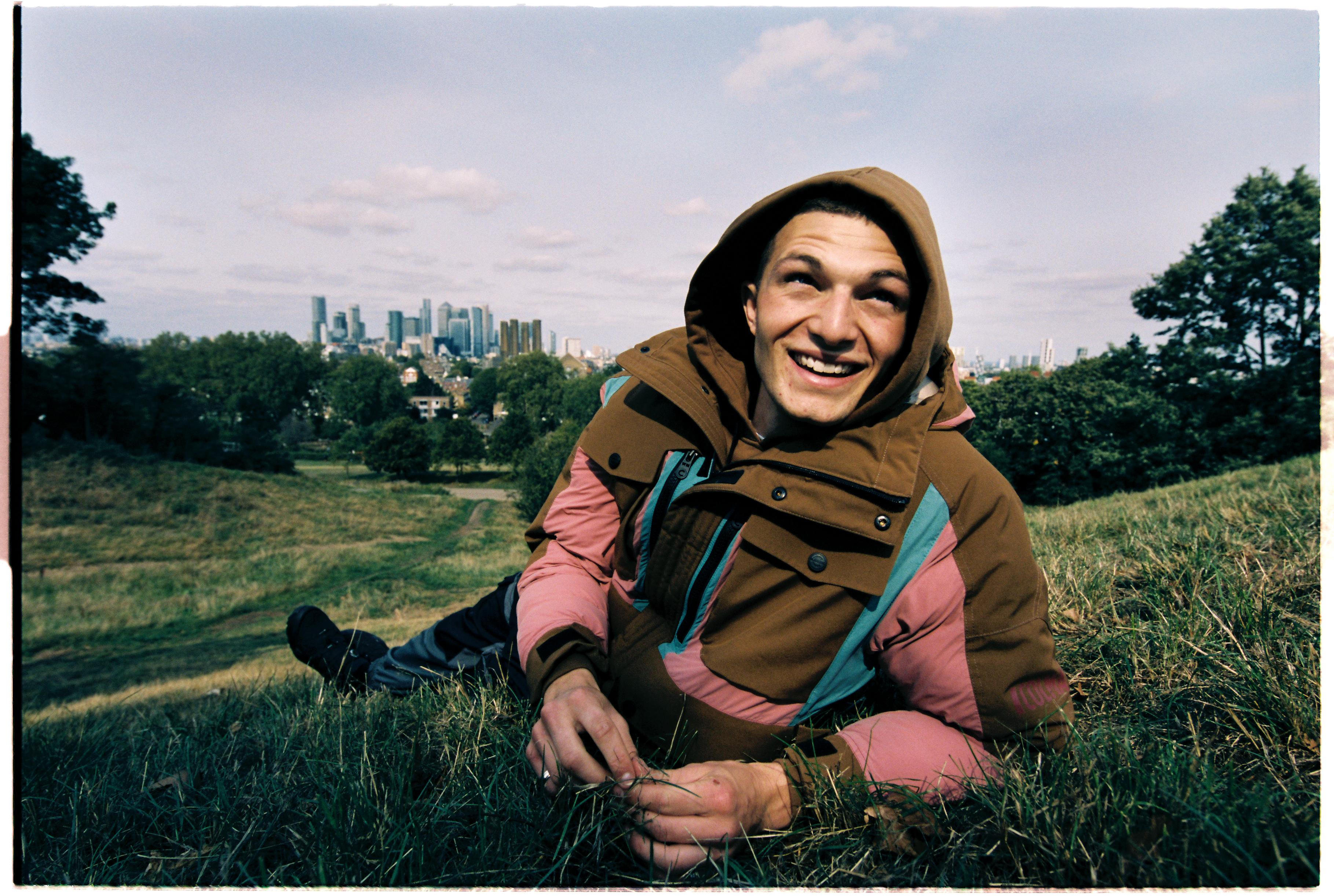
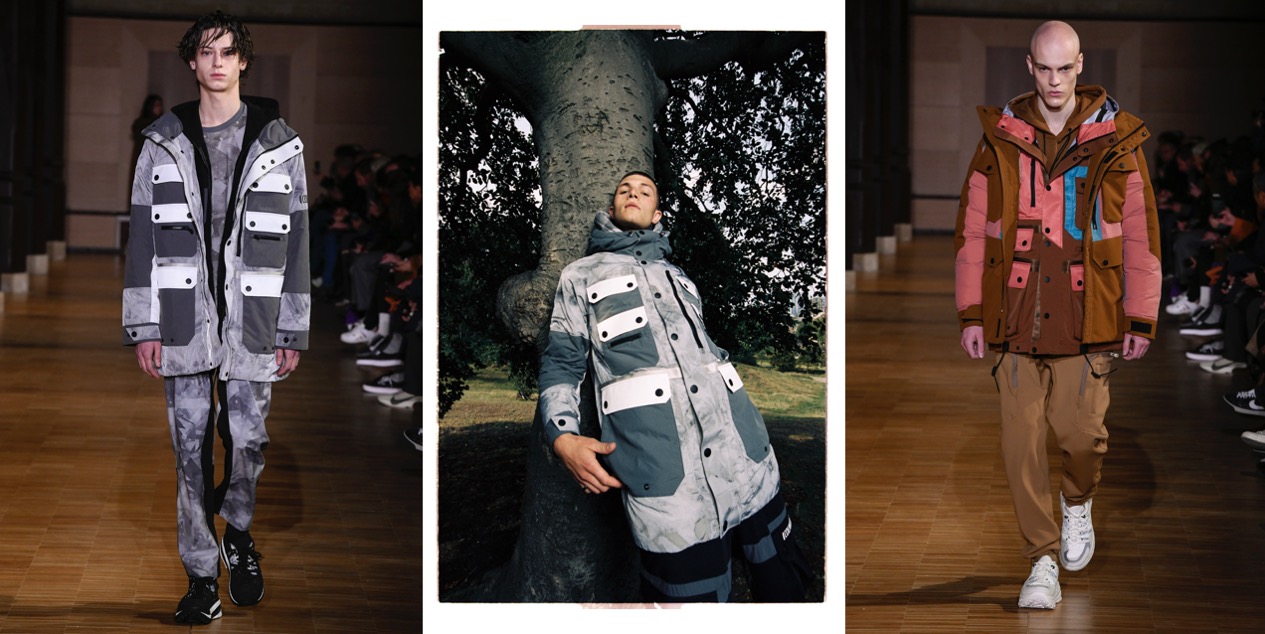
The wait is over… White Mountaineering’s Yosuke Aizawa x Colmar A.G.E AW20 collection, as first glimpsed earlier in the year during Paris Fashion Week, is out. Founder and creative director of the Tokyo-based brand, Aizawa, known for his uncompromising rebellious yet elevated utilitarian menswear, has served up an eye- catching collaboration for the Italian Alpine brand Colmar A.G.E project. Colmar, known globally as the leading technical ski apparel and style pioneers sees its cutting- edge expertise and industrial fabric innovation prowess channeled into a 6-piece unisex collection. Finding common ground between Aizawa’s love of winter sports and Colmar’s almost 100 years of ski apparel expertise, the White Mountaineering x Colmar A.G.E AW20 collaboration serves up looks that feature a sense of two sides of the same coin. The result is a collection which reveals homogeny and full intersection between high performing, technically aligned fabrics and elevated streetwear.

Reimagined from the extensive Colmar archive this utilitarian collection does not wallow in the past instead it meets the needs of the modern style landscape with a nod to heritage. Consisting of a longer length parka plus a thigh length jacket, both water repellant and waterproof, with metal hardware vents, a patchwork of panel pockets, and an impressive warmth-to-weight ration. It’s only fitting that the spirit of invention that defines this collaboration sees both styles come in either padded filling or insulated with down so you choose the best weight outerwear that your lifestyle demands. Each style comes in either a muted black and grey hue combo or a bold biscuit colour with shots of pink and blue inserts. Buttons and zips are personalised with both labels’ emblems and the silicon logo of both brands runs discreetly along the storm flap, with the journey of the two houses joining forces found on a Tyvek label inside each piece. Additionally, the collection contains a brushed cotton pant, wool cotton mix sweatshirt and tee, as well as a boldly branded soft-shell under-jacket equipped with design features to suit a variety of conditions.This is a collection that is uncompromisingly functional in design and performance which collides harmoniously with utilitarian streetwear fashion making each piece an essential part of any wardrobe.

Honesty and Intelligence. Prada Resort 2021 + Men’s SS21

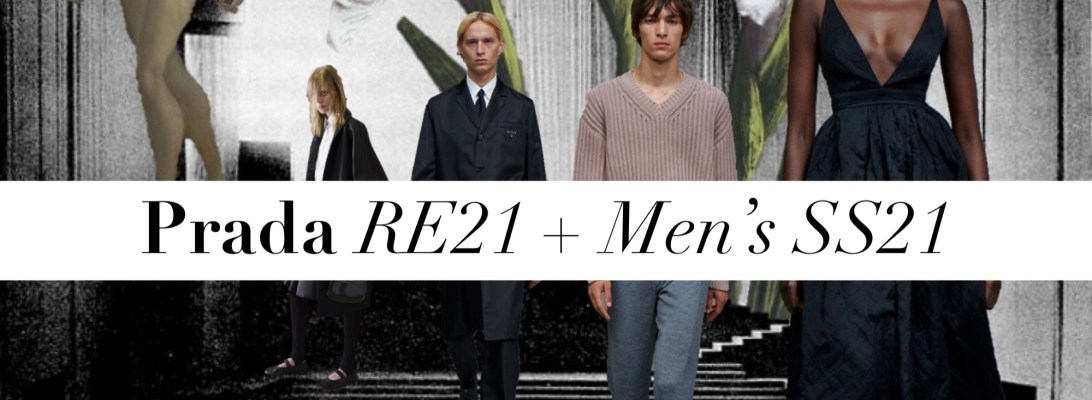
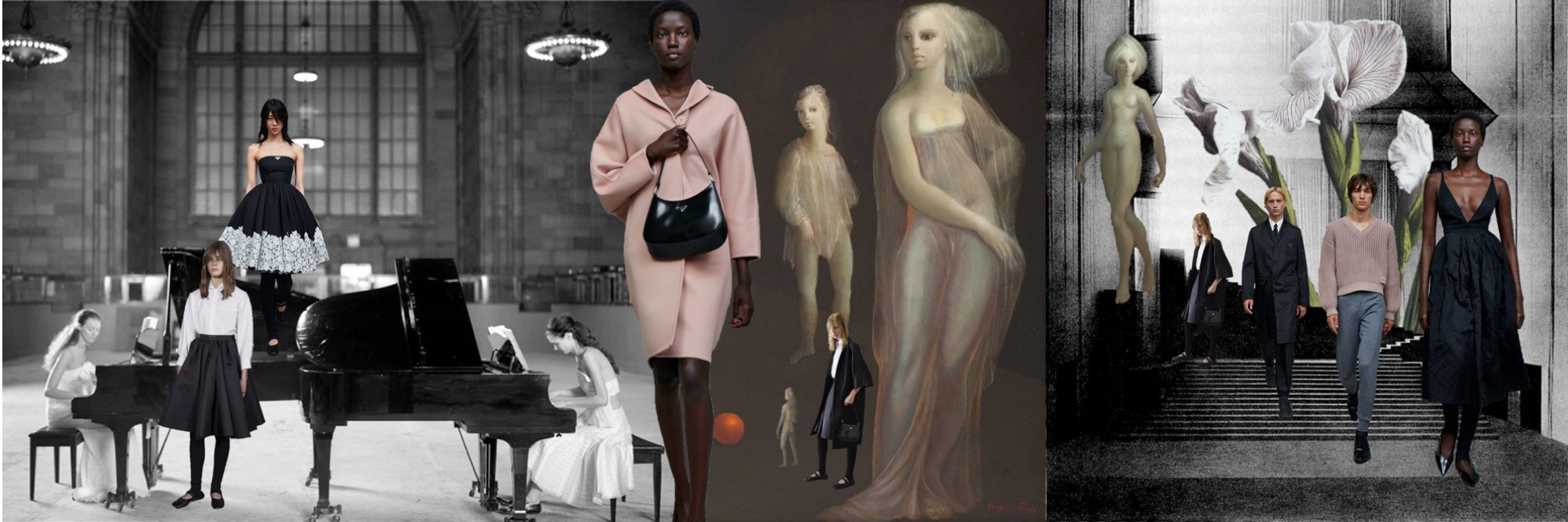
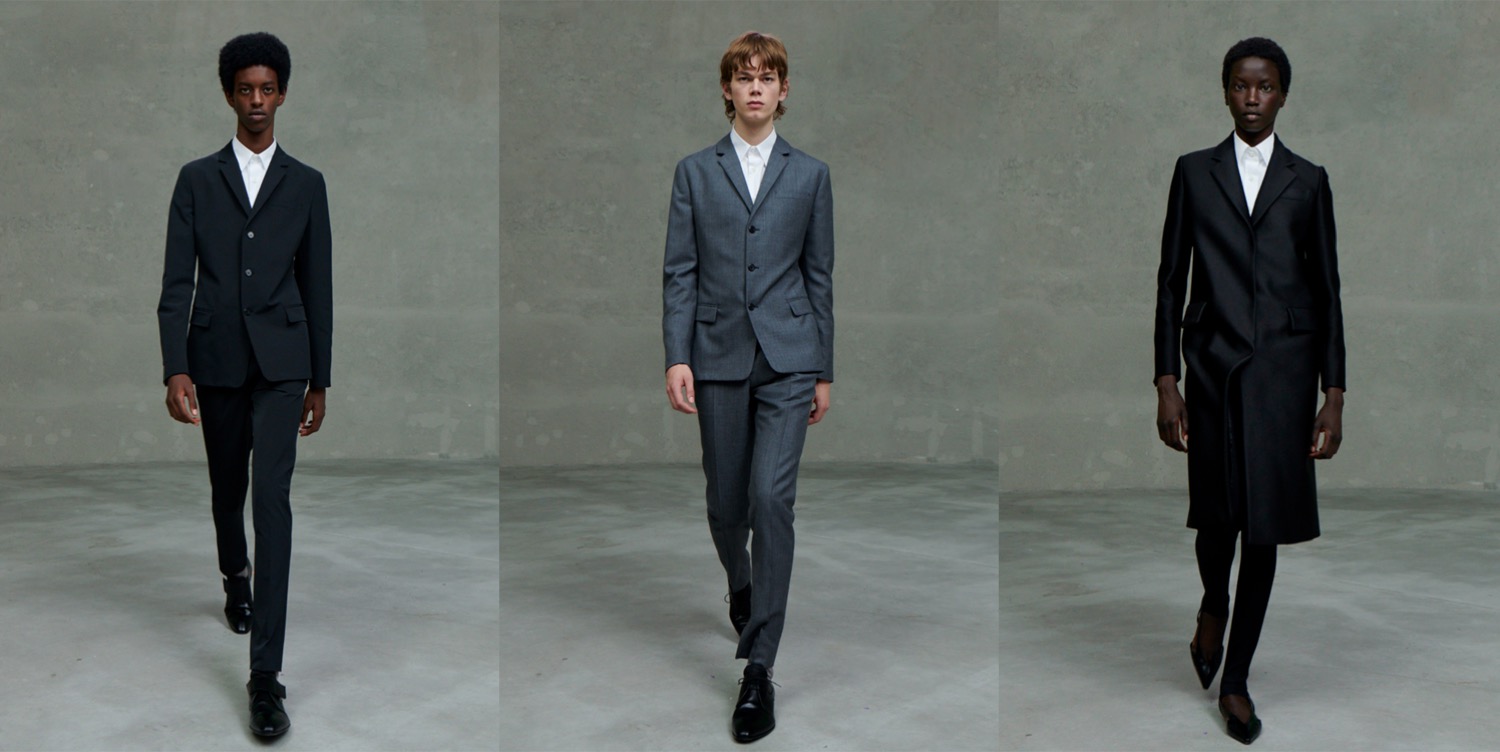
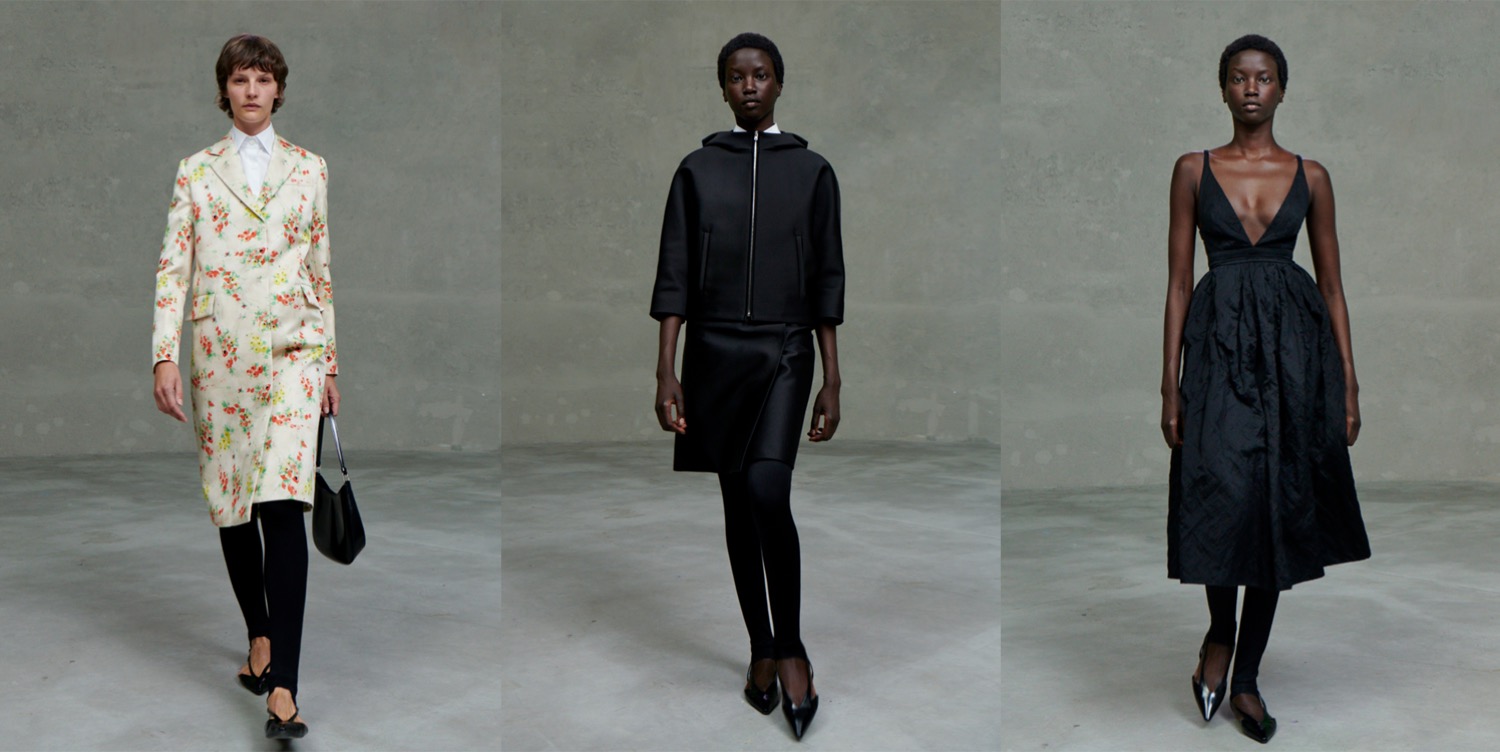
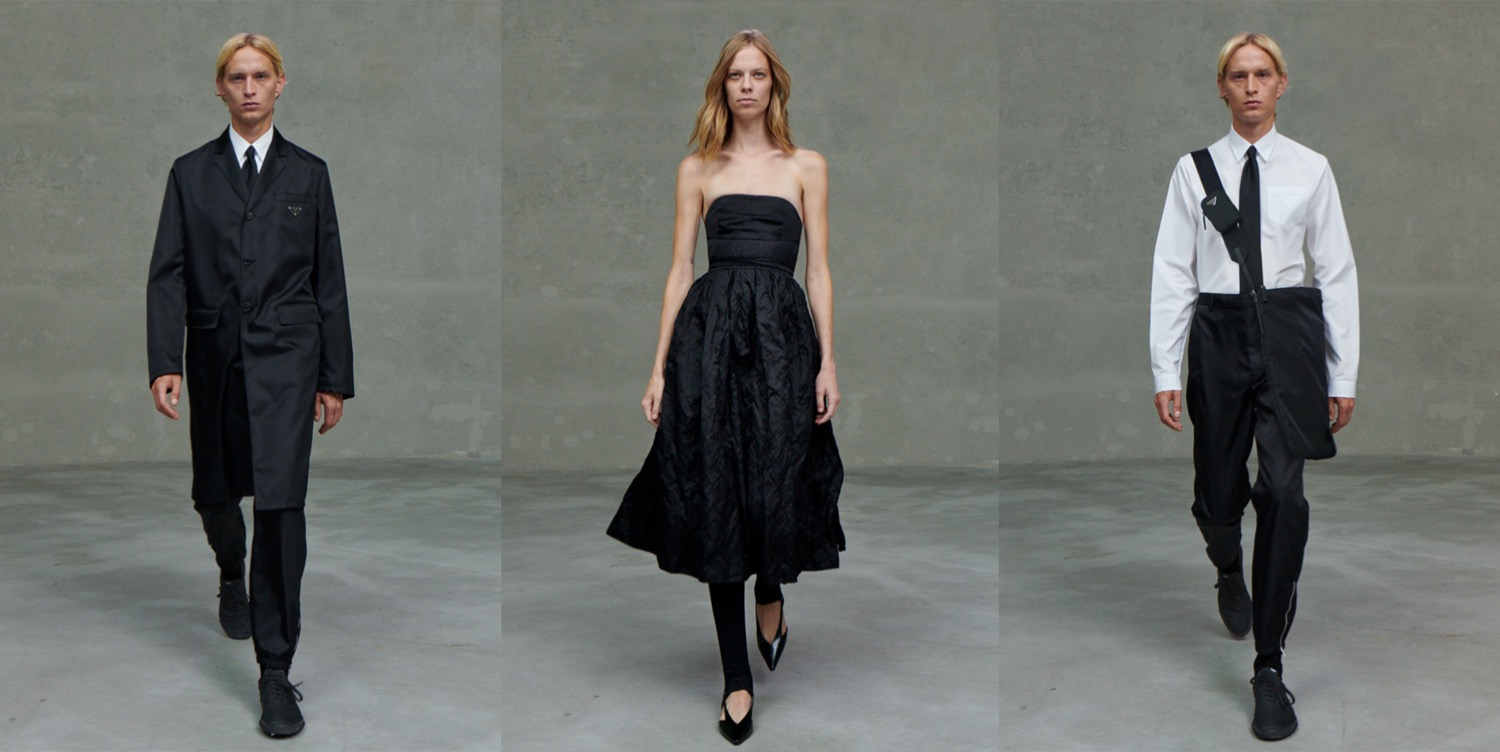
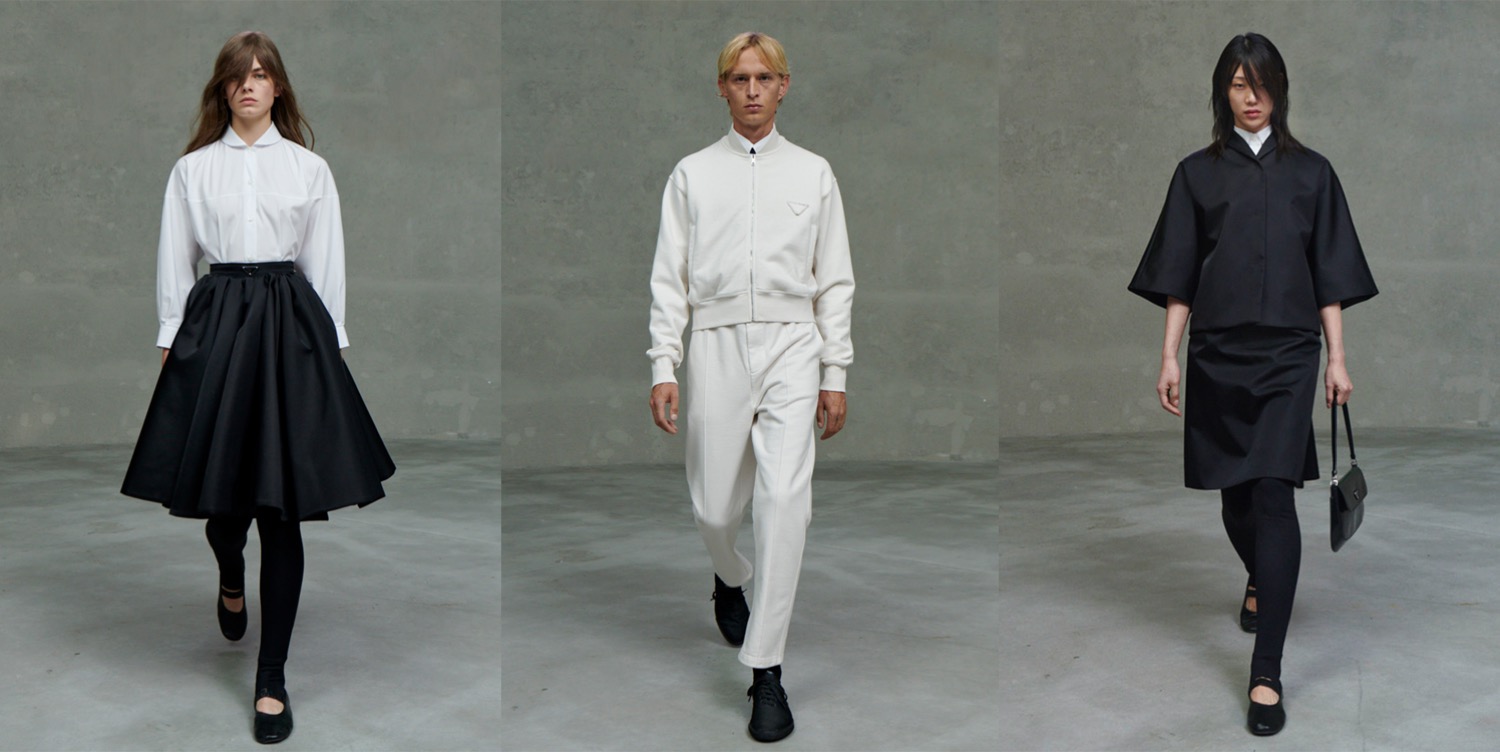
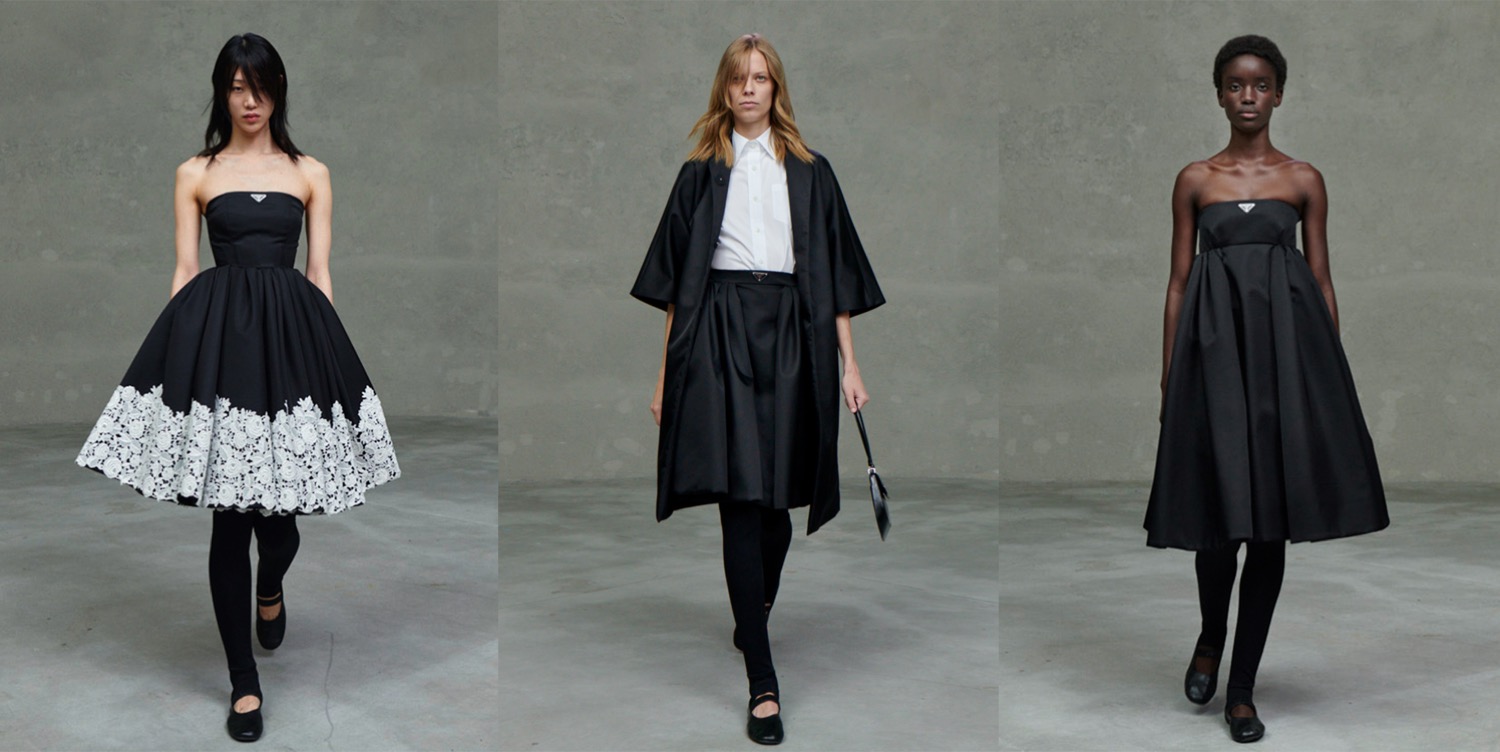
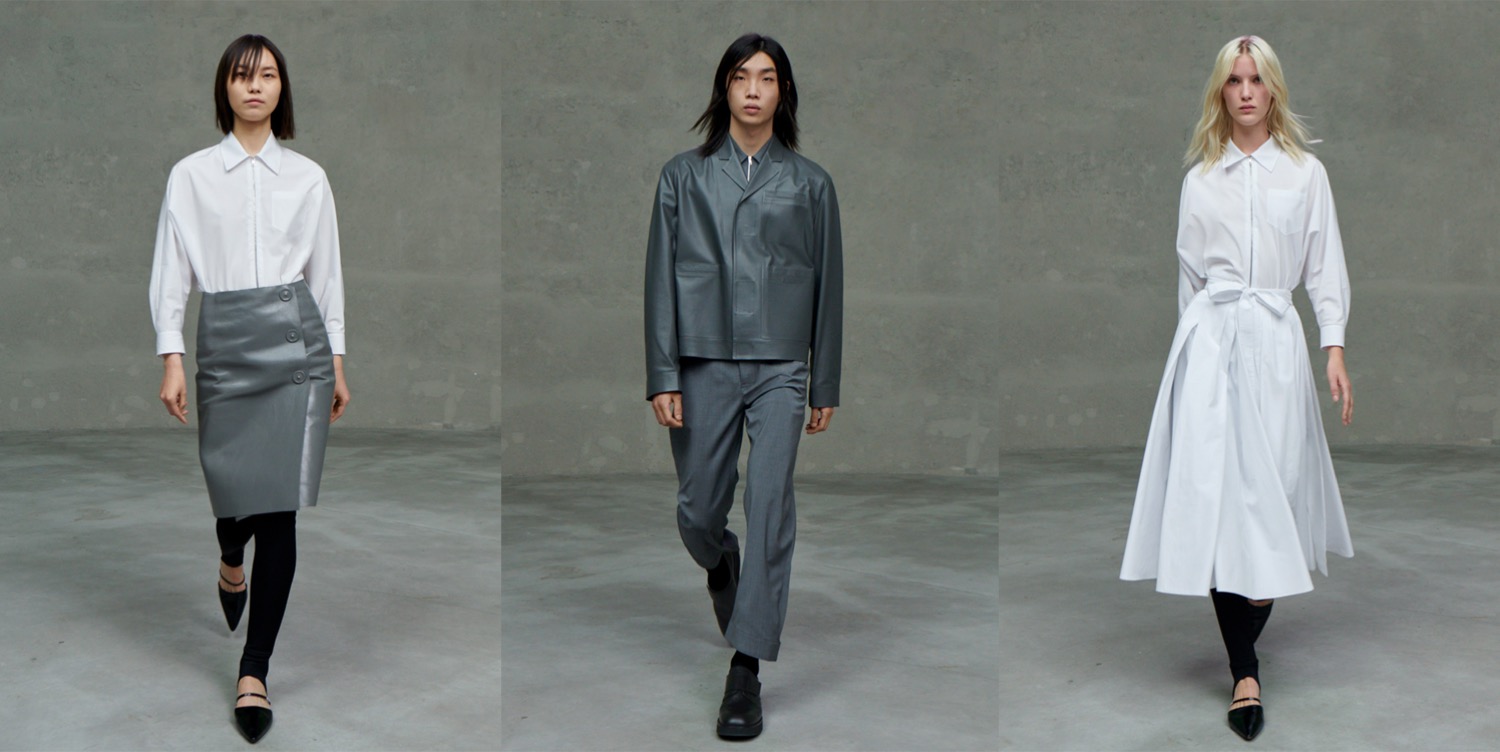
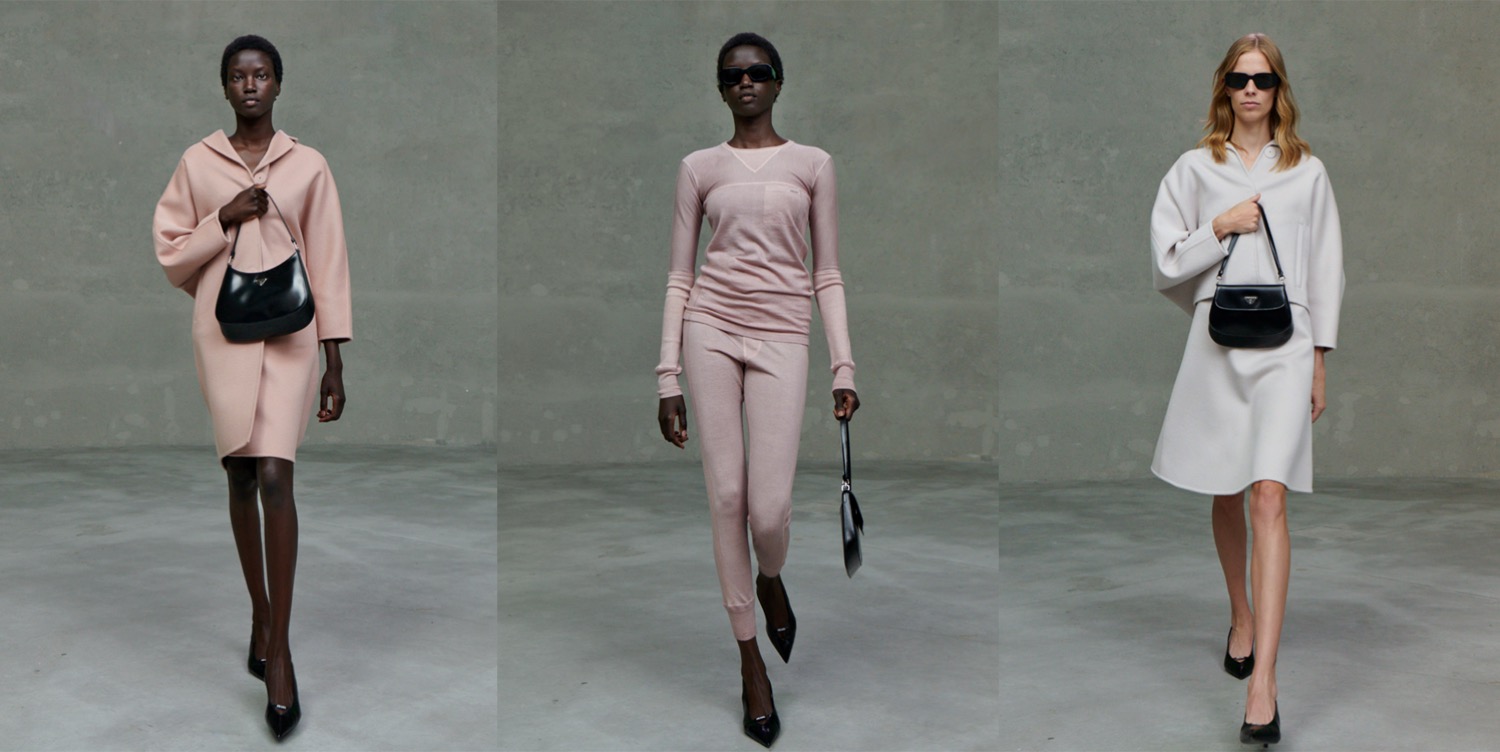
In her last solo “show”, before Raf Simons enters the role of co-creative designer in the September collection (I really, really, really can’t wait for this match to finally happen!), Miuccia Prada delivered a collection that was absolutely 100% Prada vocabulary. “As times become increasingly complex, clothes become straightforward, unostentatious, machines for living and tools for action and activity.” So said the press notes for The Show That Never Happened, which was a digitally delivered group installation of five Prada-facing films by Willy Vanderperre, Juergen Teller, Joanna Piotrowska, Martine Syms, and Terence Nance. They were all made at the Fondazione Prada, the company’s museum of contemporary art collection and the place of all Prada events. The film – which ran consecutively with the addition of a quick final walk at the end before Mrs. Prada’s usual fleeting, half-lateral bow – came to 11 minutes, the ideal duration of a live fashion show. The collection was all about pure elegance, simplicity and a sort of detox from fashion noise. Many looks were identical to Miuccia’s autumn-winter 1995 show, which forever became the image of 90s Prada. Architectural, 1950s silhouettes mixed with a touch of feminine cliché (of course, done in Prada’s ugly chic manner) for resort, and smart, business ready tailoring with a touch of nylon for men’s summer – ta-da, a collection that really got me obsessed in the last few weeks of digital presentations. The press release continued with more food for thought chez Miuccia: “I think that our job as fashion designers is to create clothes for people, that is the honesty of it. That is really the value of our job – to create beautiful, intelligent clothes. This season, we focused on that idea: It is about clothes, about giving value to pieces. The clothes are simple, but with the concept of simplicity as an antidote to useless complication. This is a moment that requires some seriousness, a moment to think and to reflect on things. What do we do, what is fashion for, what are we here for? What can fashion contribute to a community?” As Prada and her peers (plus Raf Simons, of course!) work to anticipate how change alters the specifications of taste and clothes it will be fascinating to watch the architecture of fashion change too.

Collage by Edward Kanarecki.