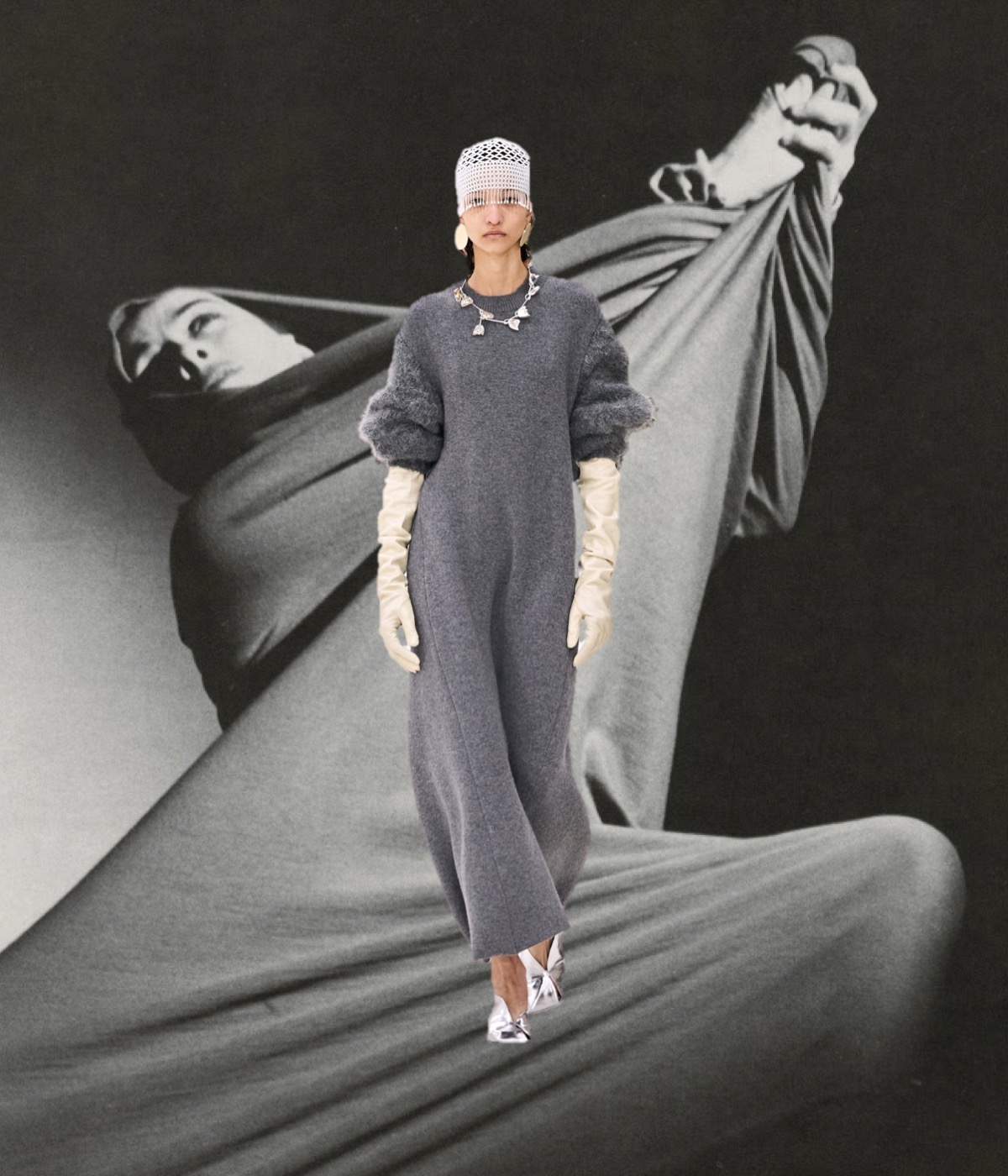
(New) New Bottega. Bottega Veneta AW22

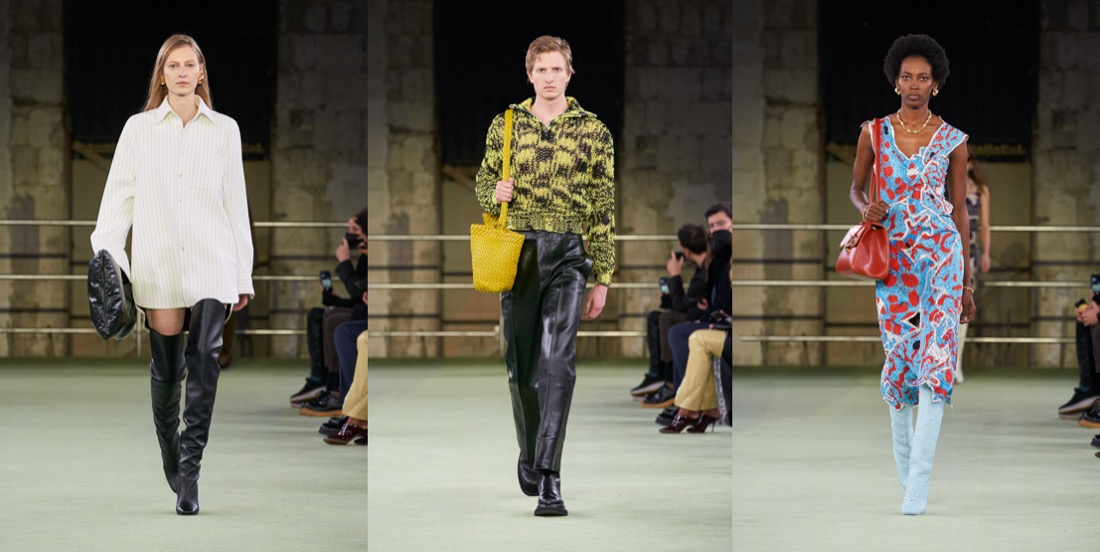
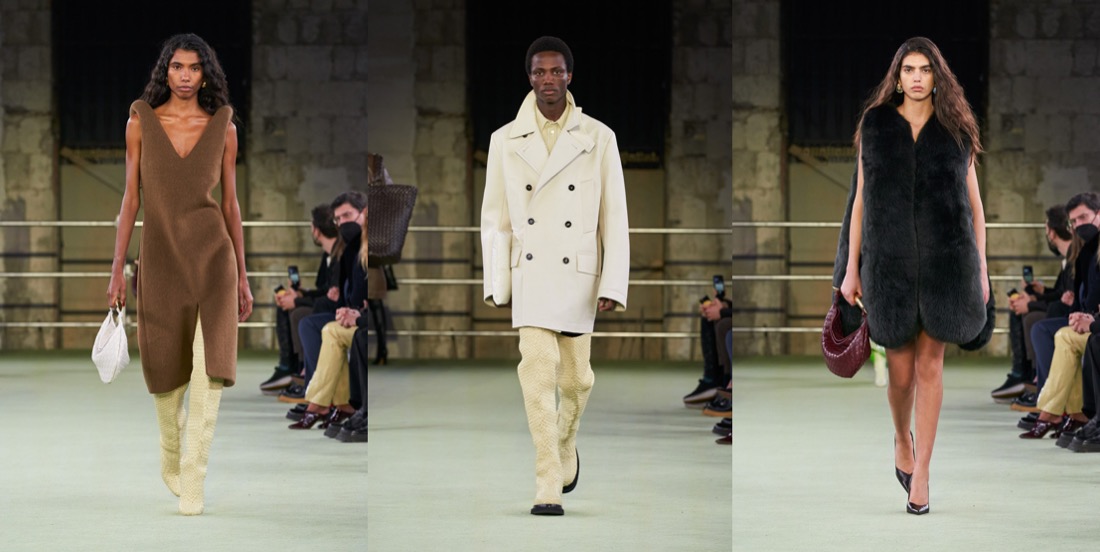
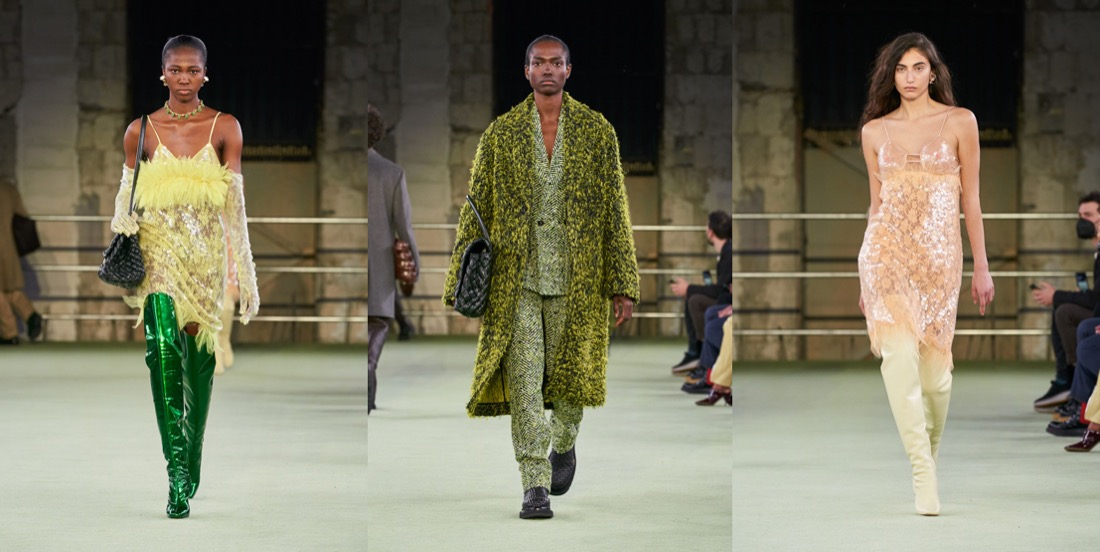
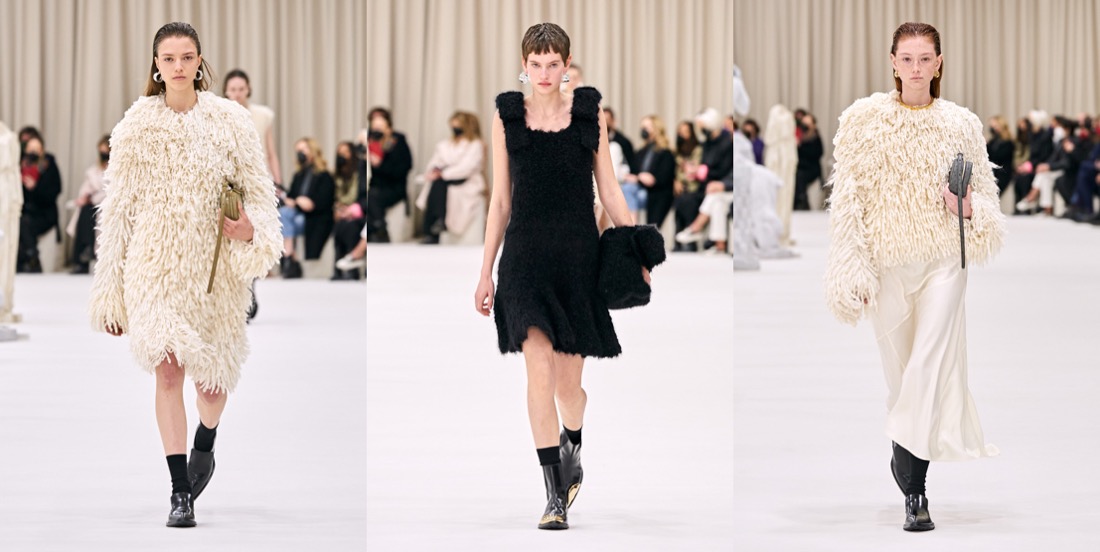
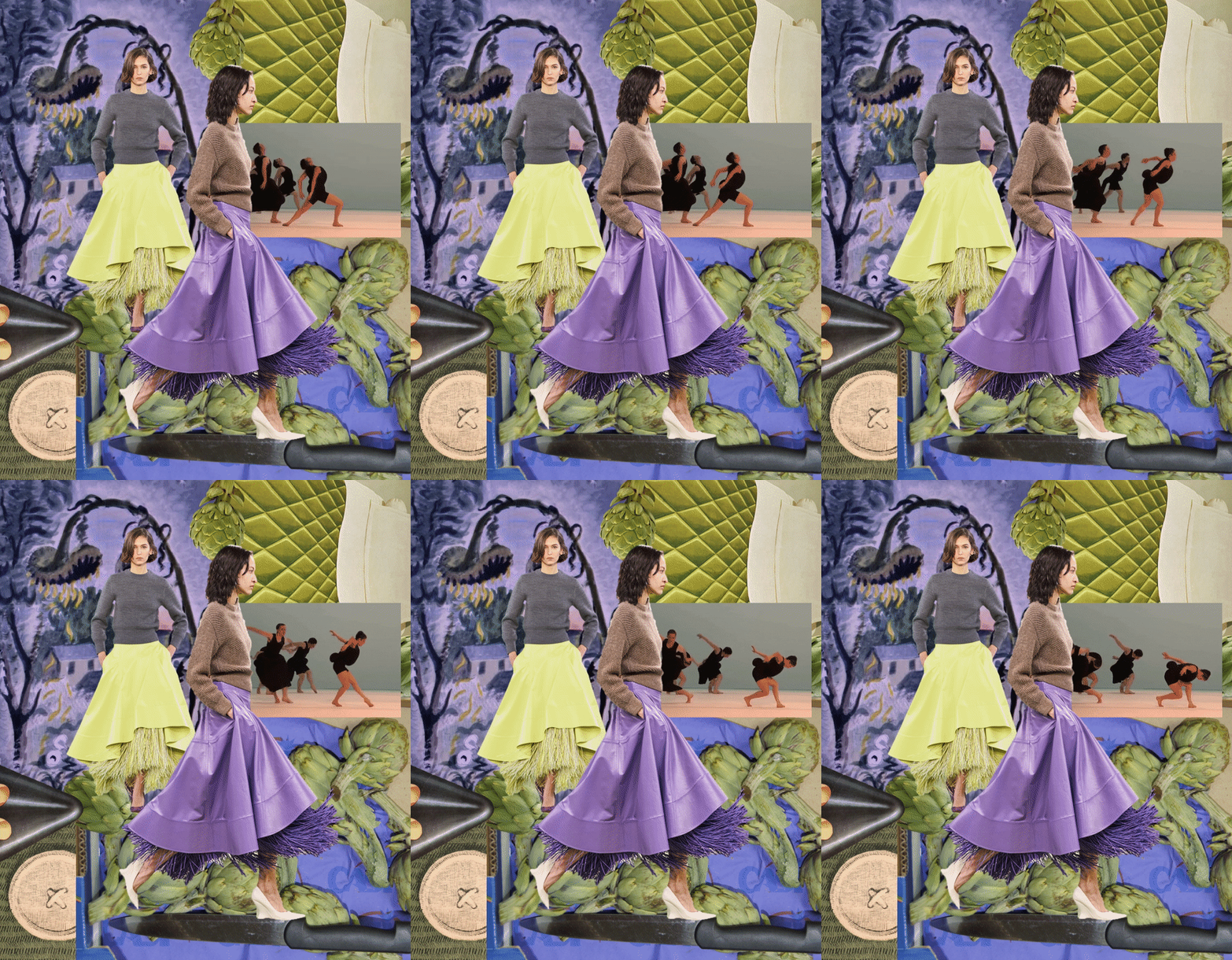
The new new Bottega Veneta, under Matthieu Blazy‘s creative direction, isn’t an abrupt aesthetical leap from Daniel Lee’s days, but definitely feels much sleeker, decluttered and sharper edit-wise. A smooth transition from Lee, who re-invented the Italian brand, to Blazy, who is one of industry’s unsung design heroes (and creatives who worked with the former behind Bottega), resulted in a debut filled with studied, somewhat subversive propositions that are more composed and toned-down than before. Blazy has the kind of track record that makes fashion people stand up straight: he interned at Balenciaga; worked for Raf Simons; what was then called Maison Martin Margiela; Céline under Phoebe Philo; Calvin Klein under Raf Simons. Fashion geeks would have delighted in recognising symbols and techniques tied to his time at those brands, which re-appeared in this collection, especially from Calvin Klein and Bottega Veneta. As a designer whose name hasn’t been formally credited until now, it was as if he was claiming his inventions.

The show opened with a white tank top and blue denim trouser entirely created in leather (!), the latter printed as an optical illusion. The ordinary-to-extraordinary idea of Blazy’s opening look fuelled a collection founded in the weird-ification and glam-ification of classics, from workwear and formal suits to cocktail and even ballroom dress codes. In the tradition of Lee, Blazy continued Bottega Veneta’s focus on the kind of fashion the industry recognises as cool: artsy in form language, intellectually informed, and with the “off” cutting and detailing that make the wrong feel right. On his runway, it had an added chilliness to it, which perhaps heightened the objective. Cases in point were enigmatic details like leather pom poms on cocktail dresses, the square leather closures on a blazer, the leather frill crinoline of a dance skirt, and those abstract crochet dresses. More pragmatic wardrobe proposals included peacoat suits and the men’s knitwear and leather. I wonder what direction will Blazy’s vision go in the next seasons.

Collage by Edward Kanarecki.
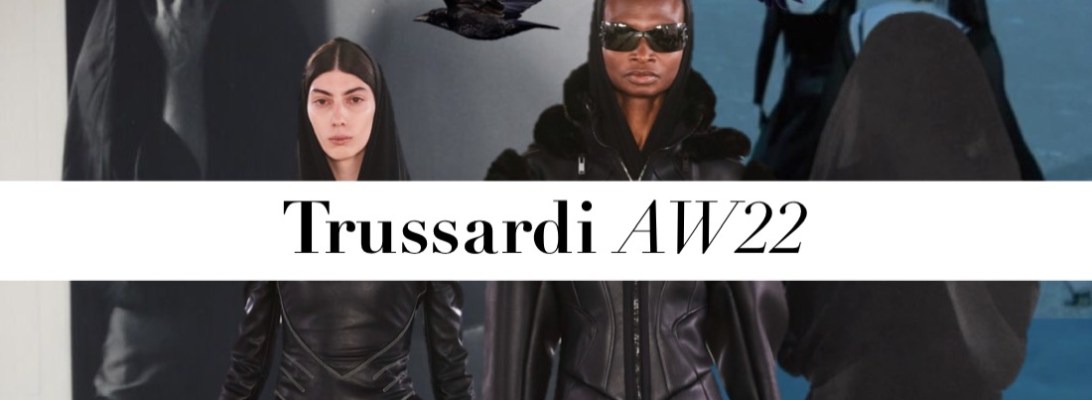
Back To Black. Trussardi AW22

This Milan Fashion Week, it’s renaissance time for a number of Italian brands that in recent years fell into oblivion. First was Diesel, where Glenn Martens has his triumphant runway debut. Then, all eyes were on Trussardi – a brand that until Serhat Isik and Benjamin Huseby‘s take-over had pretty much no identity. Isik and Huseby have made their own Berlin-based brand GmbH a platform for commenting on the moral, philosophical, and ethical quandaries of our era, from race to religion, through fashion. Of course, the designers tried to bring some of that to the sleepy Italian label. The designers began by taking Trussardi’s signatures and making them their own. Rugged, embroidered piumino jackets opened the show, a nod to the anonymous but ubiquitous outerwear of European city life. Then the pair cast their eyes back further, to the complexities of Medieval and Renaissance dress, building armor-like shearlings and stuffing bustles under foxy black minidresses. Each garment in their 40-look lineup had either a curiously compelling texture – especially the holey knits that appeared mid-show – or a grand-scale elegance, like the coat-gown hybrids for models of all genders. The emphasis on a mostly black palette, Isik said post-show, was to reinforce the strength of their silhouettes. The sober ambience of the show (co-incidentally) felt humble and respectful towards the protests in support of Ukraine in the piazza just outside. Models did walk outside the show space within a barricade to give the crowd a glimpse of what was happening within fashion’s elite walls. It was the only direct clash of fashion and reality; the only acknowledgement of what is happening in Eastern Europe officially on the Milan calendar, along with Giorgio Armani’s silent show and social media posts published by an outrageously small number of Italian designers.

Collage by Edward Kanarecki.

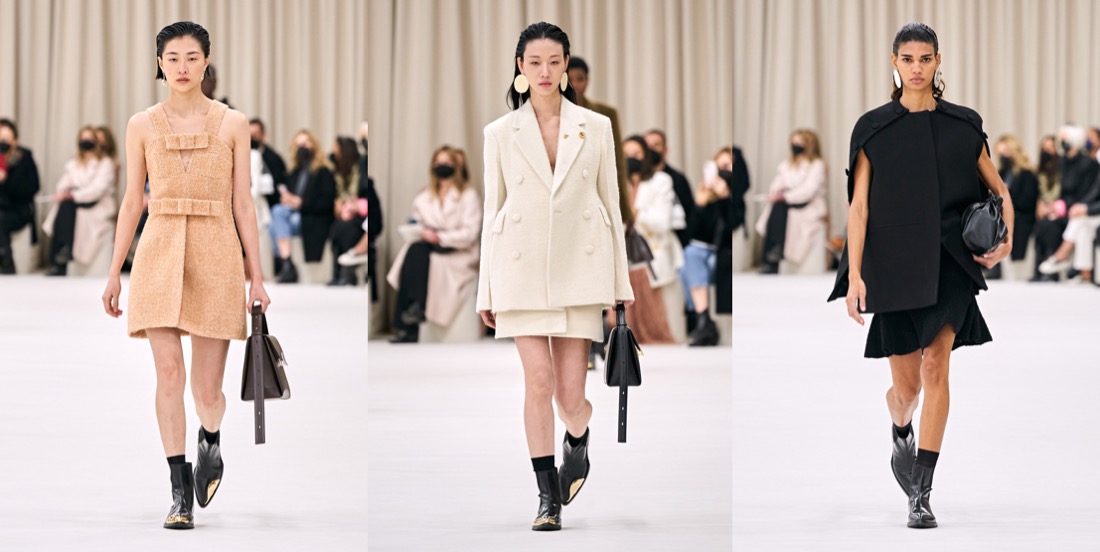
Soft Elegance. Jil Sander AW22

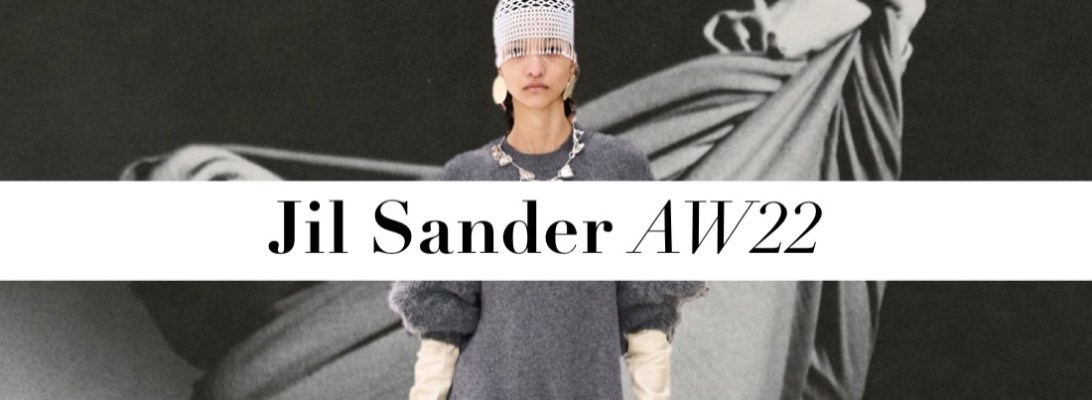
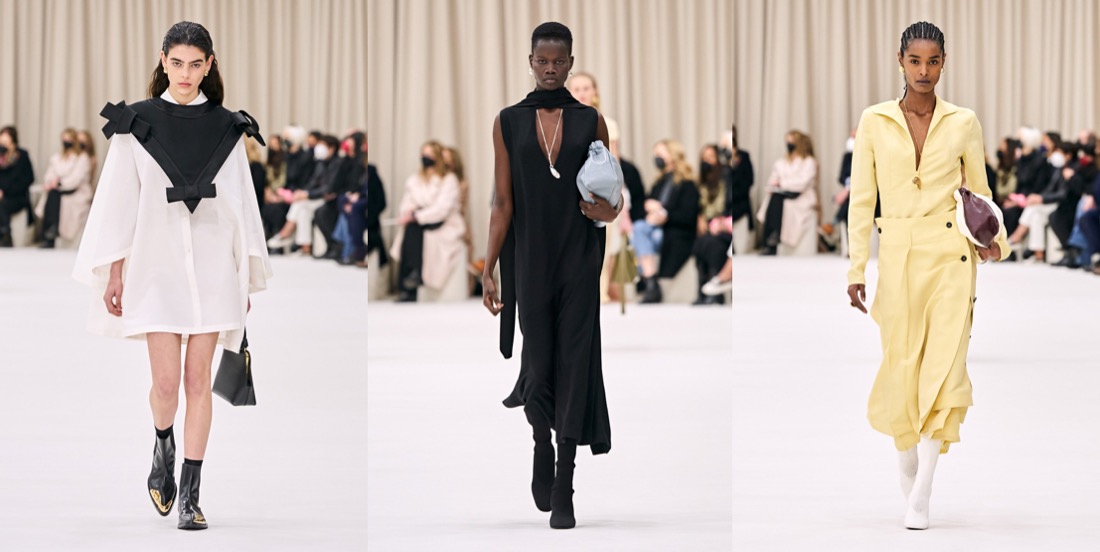
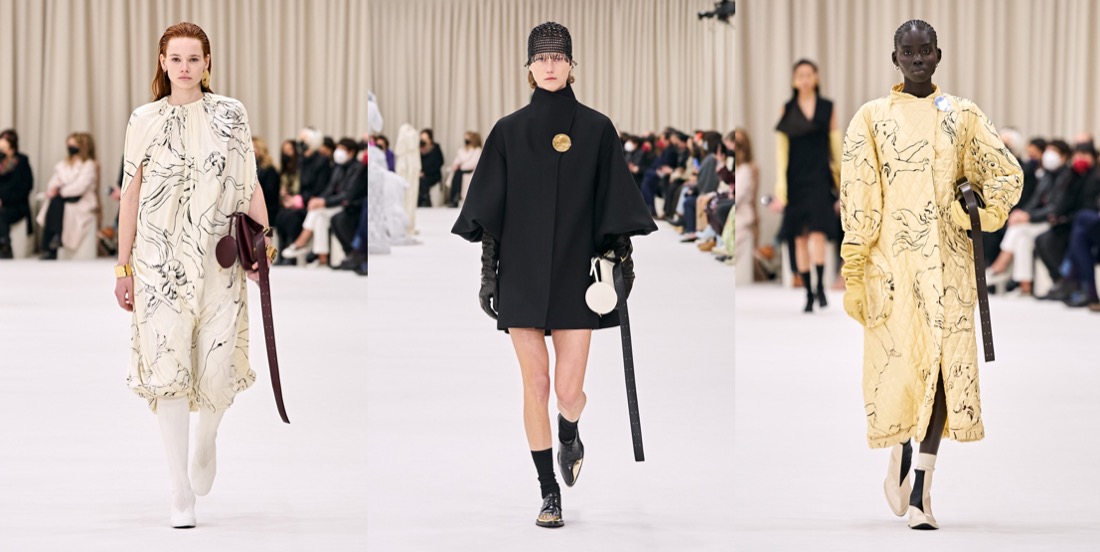
In a season when designers are desperately targeting Gen-Z, Jil Sander’s Lucie and Luke Meier made clothes for grown-ups. That kind of commitment breeds loyalty in women of a certain demographic and income bracket who feel left out of the fashion conversation (and still love Old Céline). “We were thinking about elegance,” Lucie said backstage. “We really wanted to focus on sculptural tailoring, almost couture-like, but we like this new energy, a very cropped silhouette.” The Jil Sander woman is wearing a wool skirt suit, its jacket sculpted with an hourglass volume and the skirt just peeking out from beneath its hem, or a slightly longer, flippier skirt with a cape-like jacket. Completing the silhouette are Chelsea boots with gold hardware, flat and sturdy. Dresses with the same above-the-knee proportion and flat bows at the shoulders and waist called to mind Pierre Cardin, whose death in late 2020 has precipitated new interest in his brand of 1960s minimalism. There were longer, softer lengths as well, including on a group of black dresses whose special details – a deep-v neckline, say, or voluminous bell sleeves – gave them a lot of cost-per-wear value. The Meiers have made handcrafts (like macramé and crochet) an essential part of their Jil Sander aesthetic. This season they pared that back, featuring only one print of astrological signs on drapey stretch jersey or quilted satin, choosing three-dimensional fabrics with surface appeal, like the bouclé on a pair of short dresses and the finer gauge knit of a long dress with fuzzy mohair sleeves. The exception was the guipure lace they used for a trio of long dresses, including one in a sensational shade of marigold. The white and black versions were shown with tailored single-breasted jackets, which is indeed a very elegant, very grown-up way to approach black-tie.

Collage by Edward Kanarecki.

Hotter Than Hell. Versace AW22

Versace is the only brand in Milan so far that has (at least) communicated on its social media solidarity with Ukraine and a call for peace. Donatella Versace did the same, which makes me love her even more. This is what independence from luxury conglomerates gives: the freedom of taking a stance.

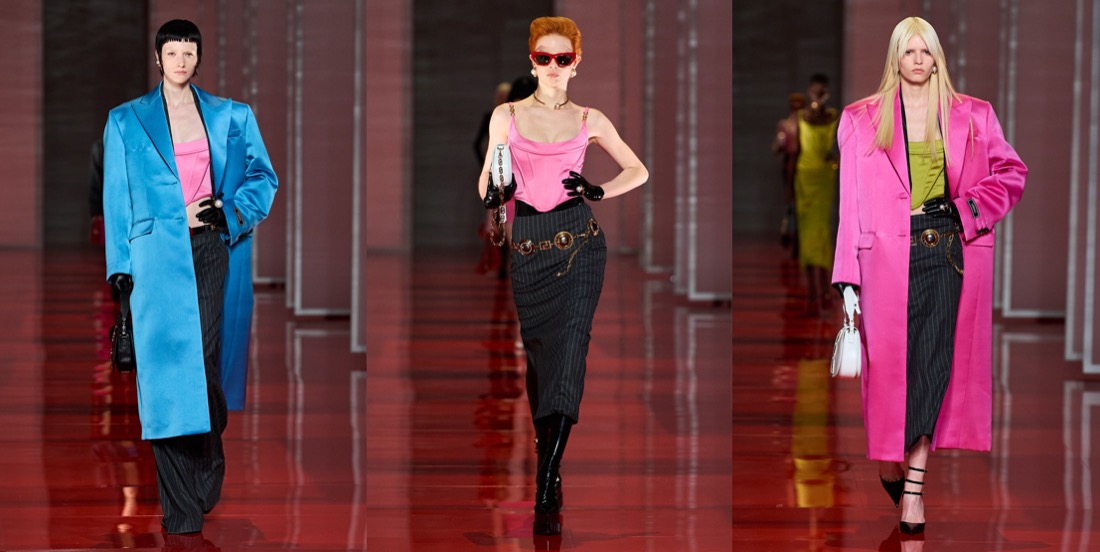
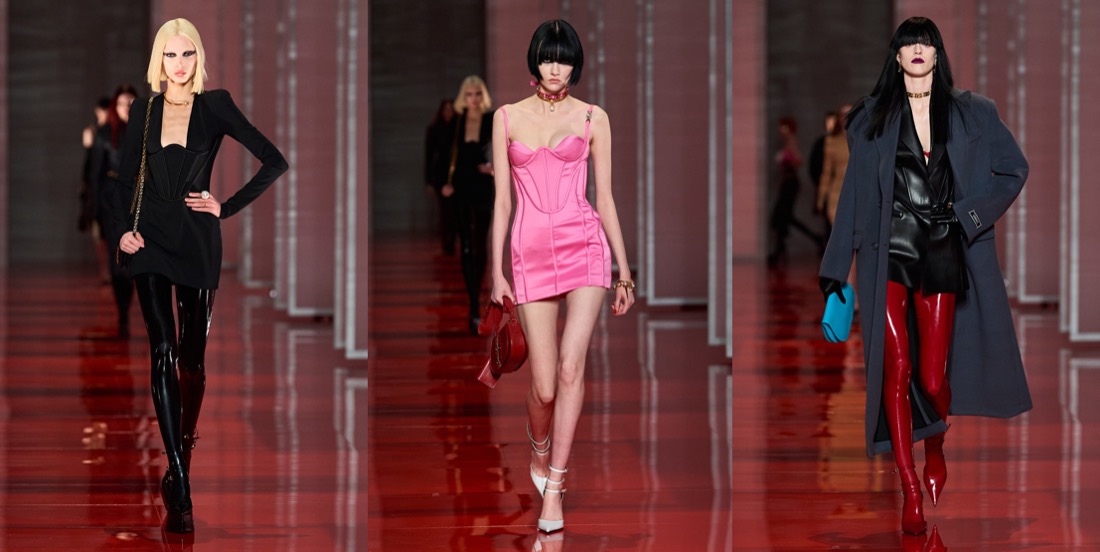
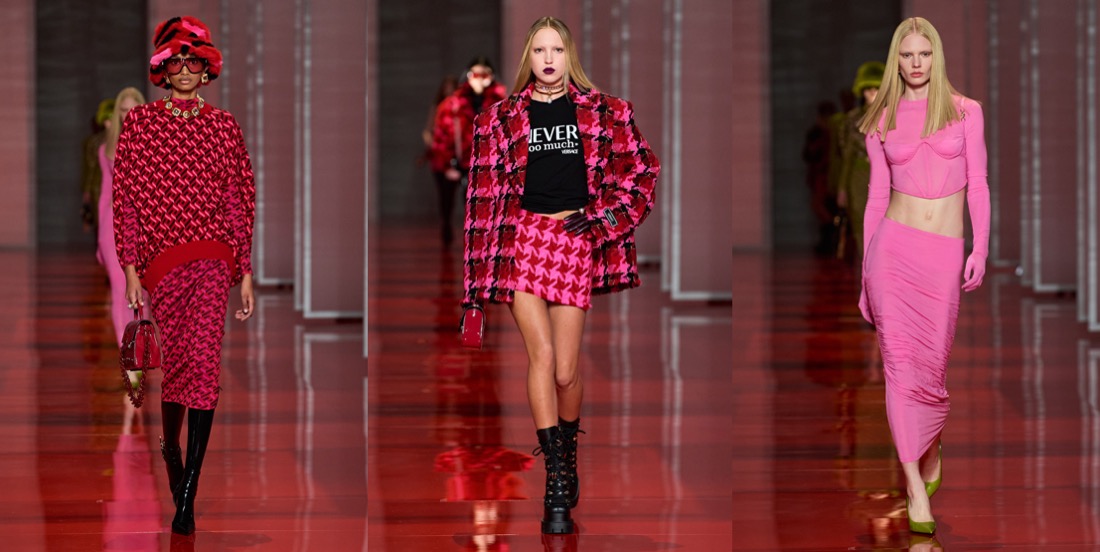
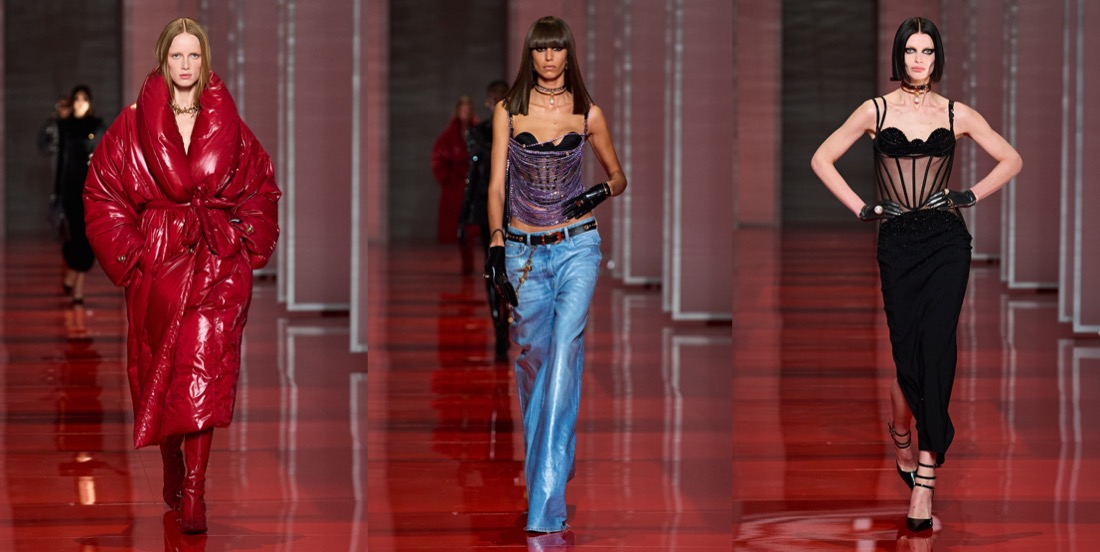
Another great news: the autumn-winter 2022 collection is so, so good. The designer described the line-up as “an elastic band pulled tight and about to snap back with a build-up of energy”. It was an accurate illustration of how the hyper-glam Versace woman she designs for must feel after two years of horrors like “homecore”, “comfort-wear”, and “WFH dressing”. This collection was the antidote: a tailored, corseted, mini-dressed punch of power to the post-pandemic wardrobe, presented on a shiny red runway with a brilliant original soundtrack that mixed what sounded like Versace’s voice with a throbbing and electrifying beat. For its expert dressmaking, the collection was an exercise in perfecting a few simple elements. One was tailoring: Donatella broadening the shoulders and cinched the waists of suits with voluminous trousers, evoking ’80s power dressing through an amplified lens. Skirt suits in tailoring fabrics juxtaposed a skimpy hemline with big, boxy blazers cut at the same length, while skirt suits in tweeds unravelled at the hems in a polished punk way. Throughout, she stuck to her magic body grammar, accentuating shoulders, waist and hips. Then, nearly every look was based on a corset: as minimal bustiers worn on their own; embedded in mini and ankle dresses; as bustiers in tailoring fabric that matched sartorial trousers; built into wool and rubber coats; evoked within long-sleeved dresses as if a waspie had been styled over them; and – most ingeniously – structured into the waist of a puffer jacket that ballooned over it. If the silhouette those corsets created didn’t already make Versace’s models pose up a storm, Donatella underpinned her looks with skin-tight rubber tops and polished latex leggings, cementing the boudoir mood of the collection.

Collage by Edward Kanarecki.

Remix. Etro AW22

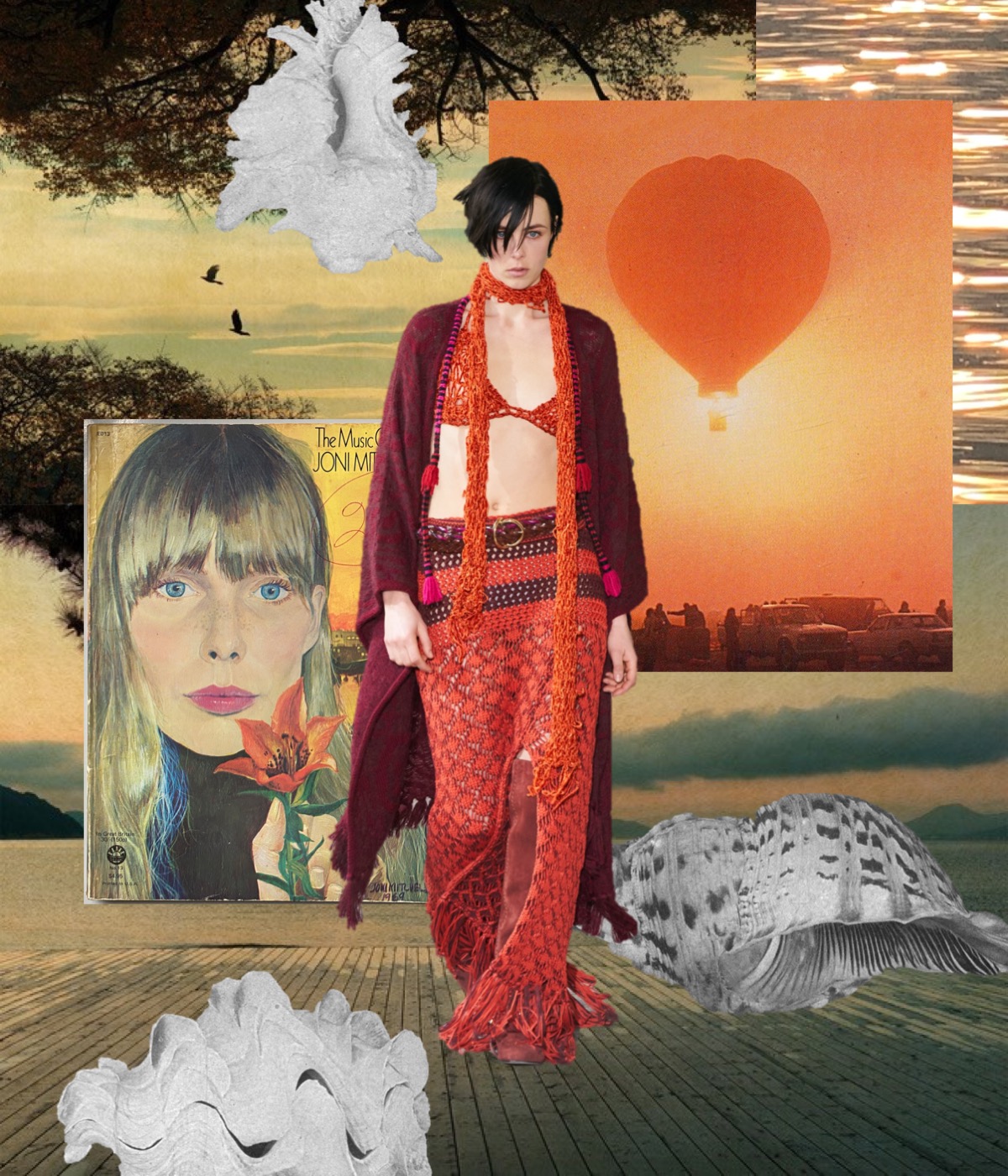
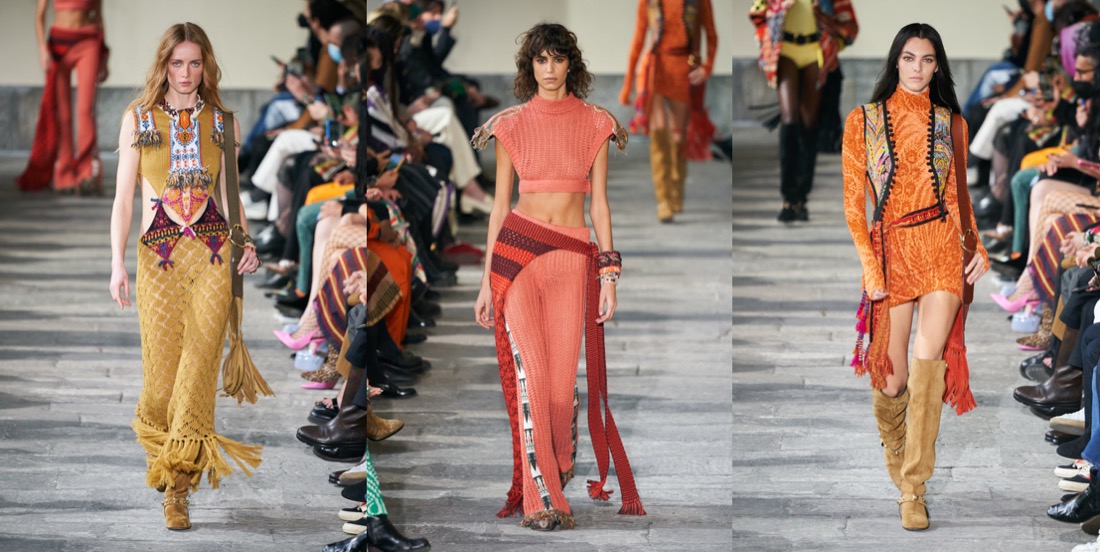
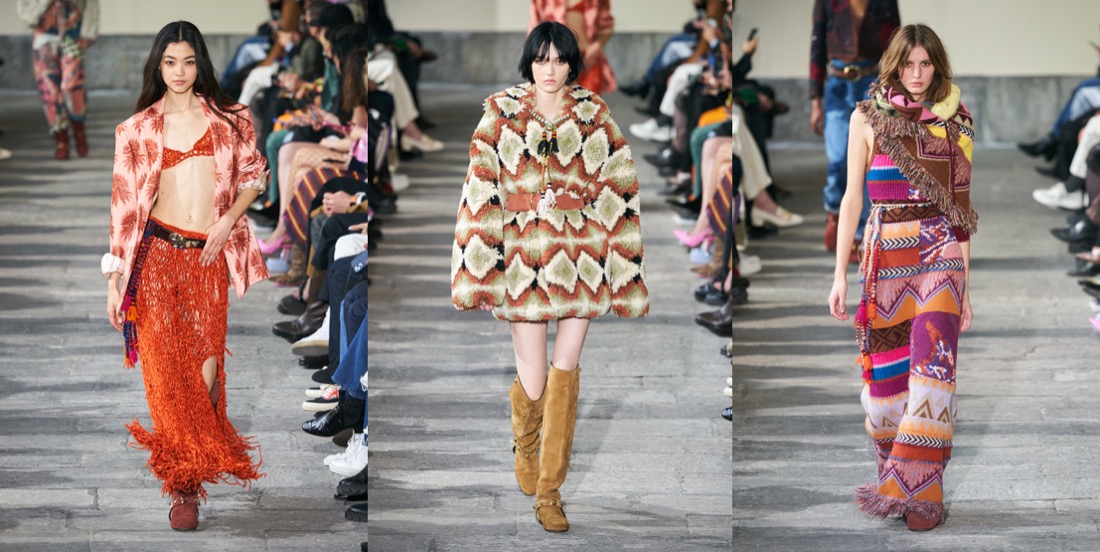
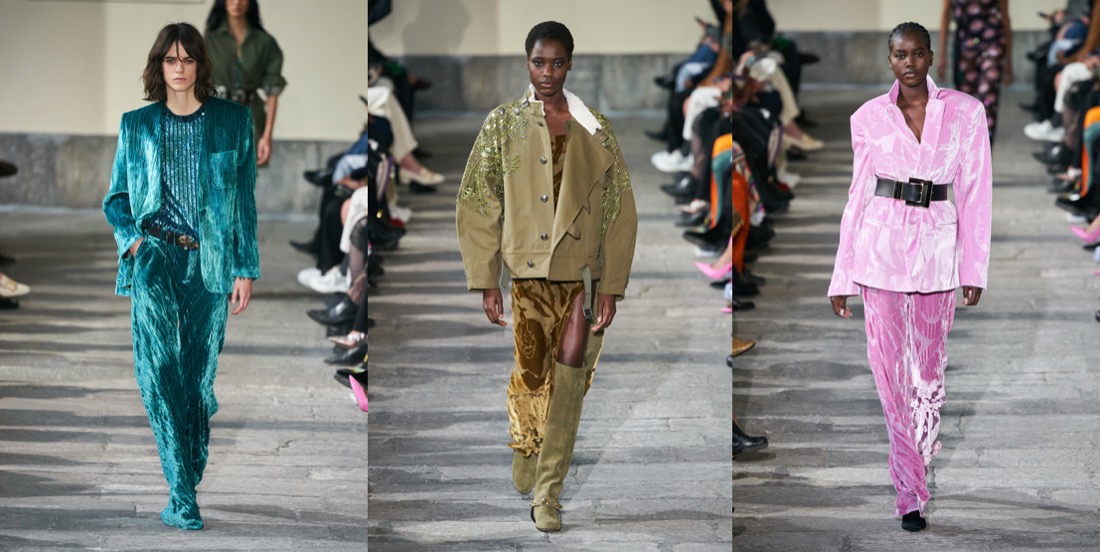
The question I asked myself is: How can I deal with the prints in a totally new way? I wanted to go out of my body and see things from a completely different angle,” Veronica Etro explained backstage of her autumn-winter 2022 fashion show. “So I imagined aliens coming across our archive in 200 years and looking at them with micro-lenses that are sort of zooming in and blowing everything up. So it’s like zoomed heritage!” With Etro’s heritage looping back via its family-founded roots in Italy during the hippie late 1960s, to a style of shawl named after a Scottish mill town that made a massive 19th-century British Colonial fashion business out of appropriating a precious fabric whose culture belongs to Kashmir, on the border of India and Pakistan – the paisley pattern is always the given medium. Veronica Etro’s conundrum has been to contemporize and reconfigure all of that, expanding the range of what her brand can be without losing its character. “You know, Etro was a lifestyle brand,” she observed backstage. “I think the strength is that it has a strong identity, but at the same time it leaves women open to interpret and to be individual and to personalize. It’s about how we can embrace different personalities – I never wanted to make it homogeneous, to make uniforms.” This time she traveled through boho, arty-crafty knitwear to ’80s puffy-silhouetted patchwork bomber jackets to end up with suave, ’70s crushed-velvet trouser suits and slinky bias-cut black satin dresses. Some of it looked like an Italian version of Isabel Marant – and this isn’t something bad. The paisley registered in various graphic forms – super enlarged to look like an animal-print lining on a shearling aviator jacket, or deconstructed down to its “harlequin” elements, stamped in repeat on a vibrant pink velvet jacket and a semisheer, diaphanous chiffon dress.

Collage by Edward Kanarecki.