Do You Even Care? Gucci AW22

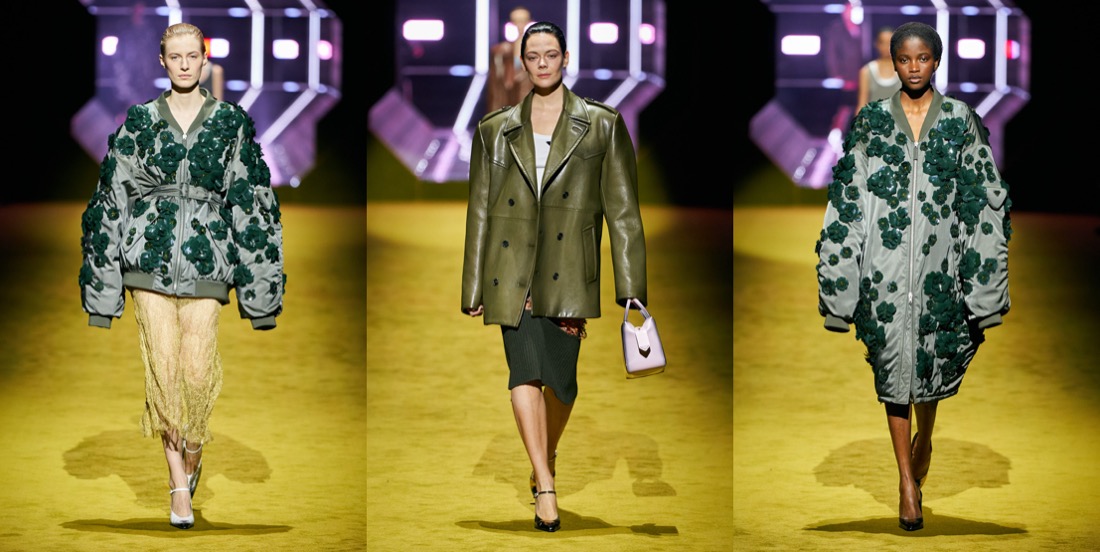
It’s infuriating how huge brands that preach values of “inclusivity”, “love” and “peace” choose to stay silent in case of Russian invasion of Ukraine. I had a different attitude towards labels that showed their collections and decided to stay silent on the first day of the conflict (like Prada) – everybody was confused. But now is the high time to act, and most of the Western European fashion companies and insiders still pretend to be asleep. Gucci‘s silence is telling – not a single social media post in plain sight that would acknowledge the disheartening situation. Why is that? Kering and other luxury conglomerates are just too scared they won’t sell another pair of shoes to its major customer target, largely located in Russia, which supports Putin’s war crime towards Ukraine. As simple as that.

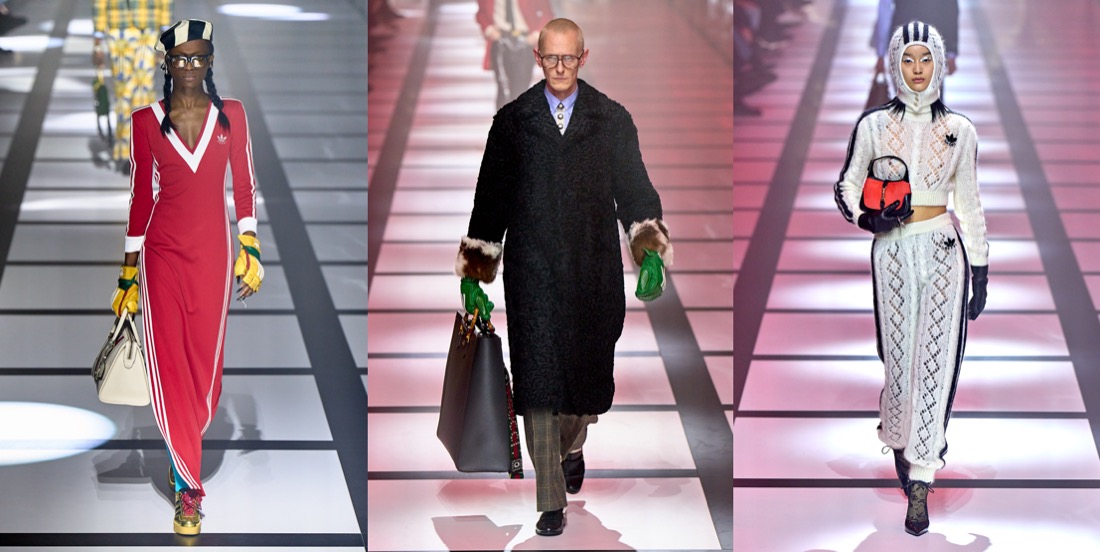
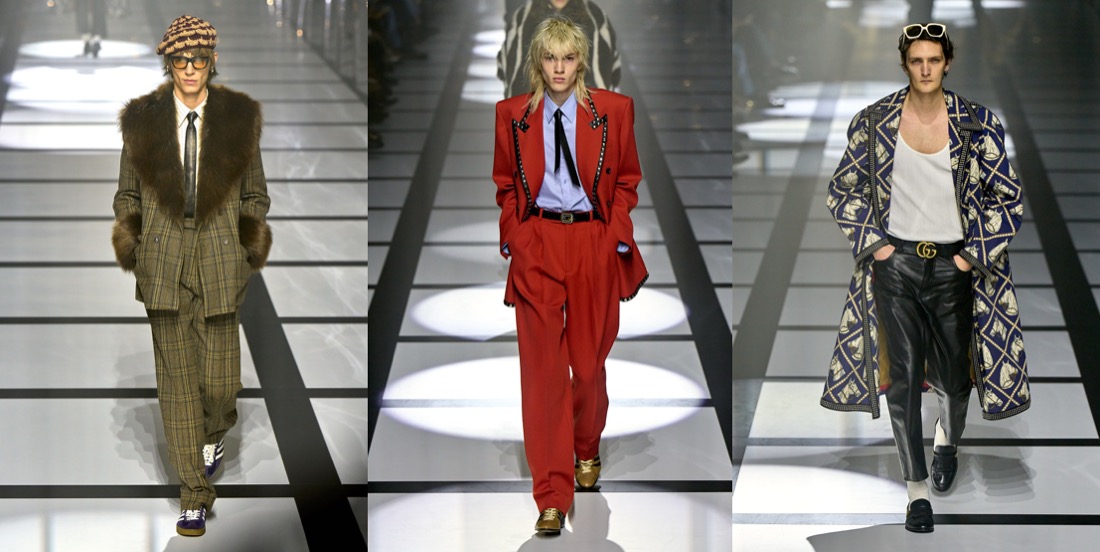
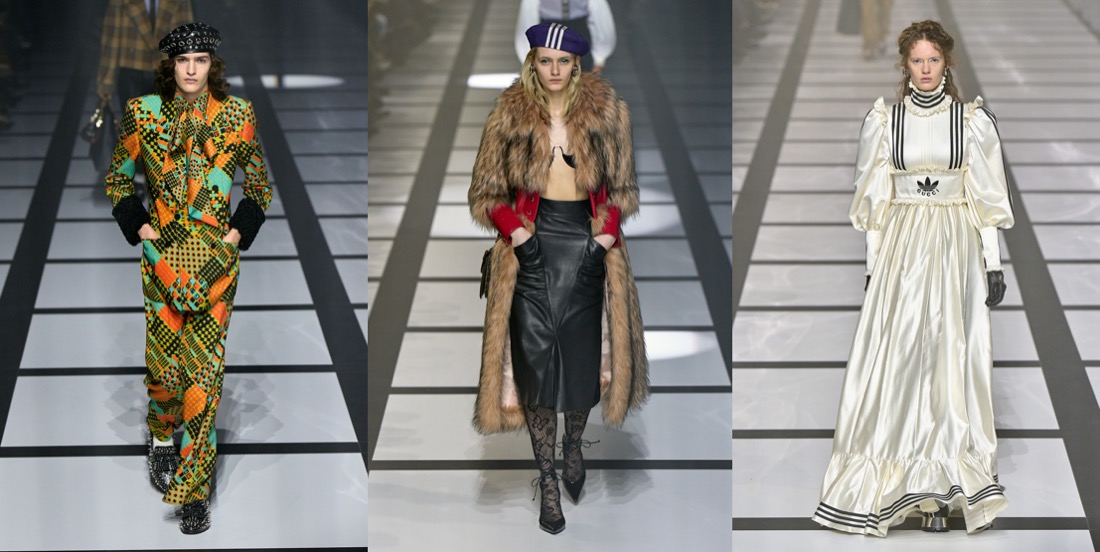
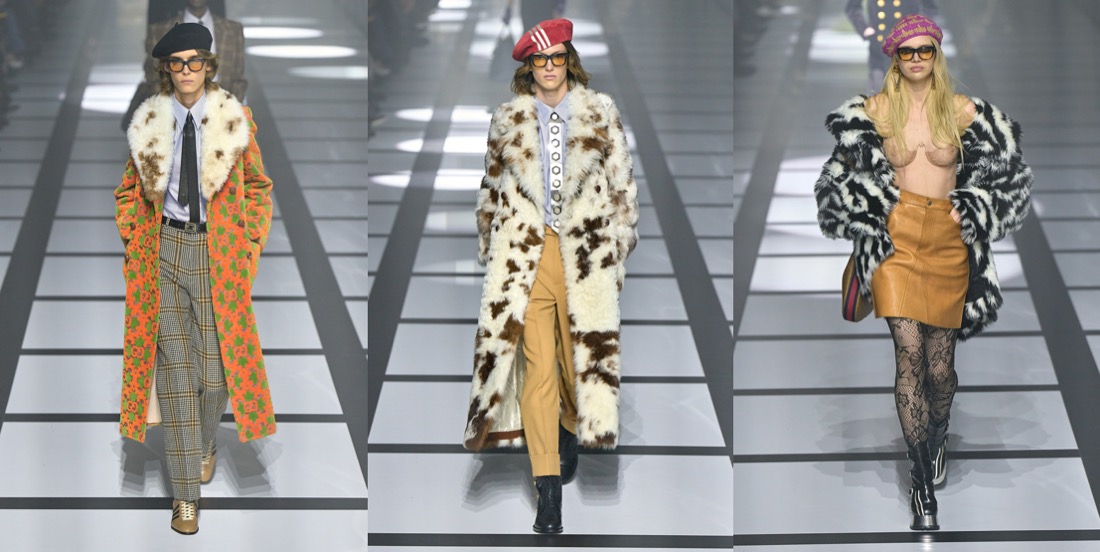
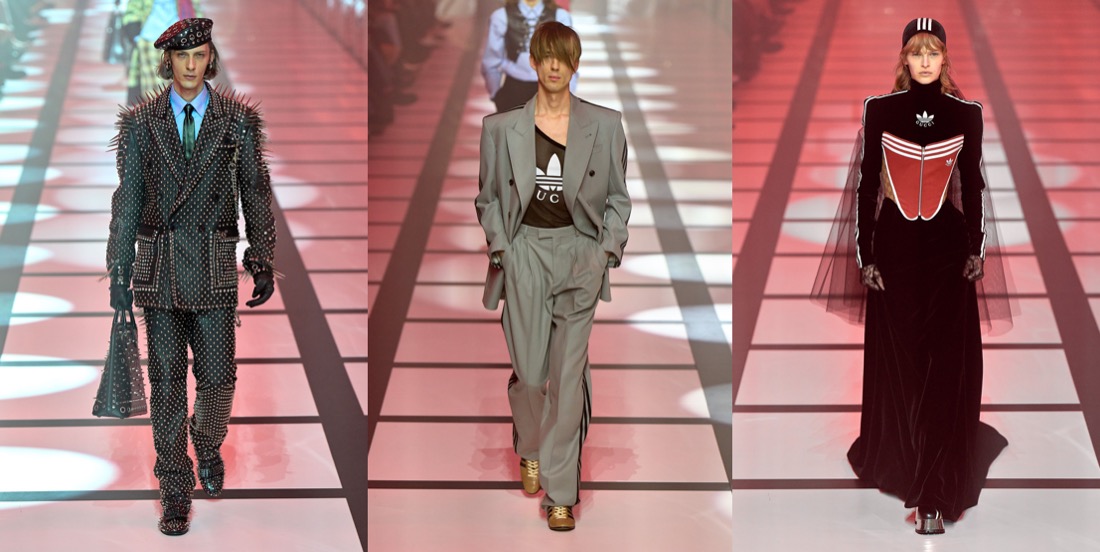
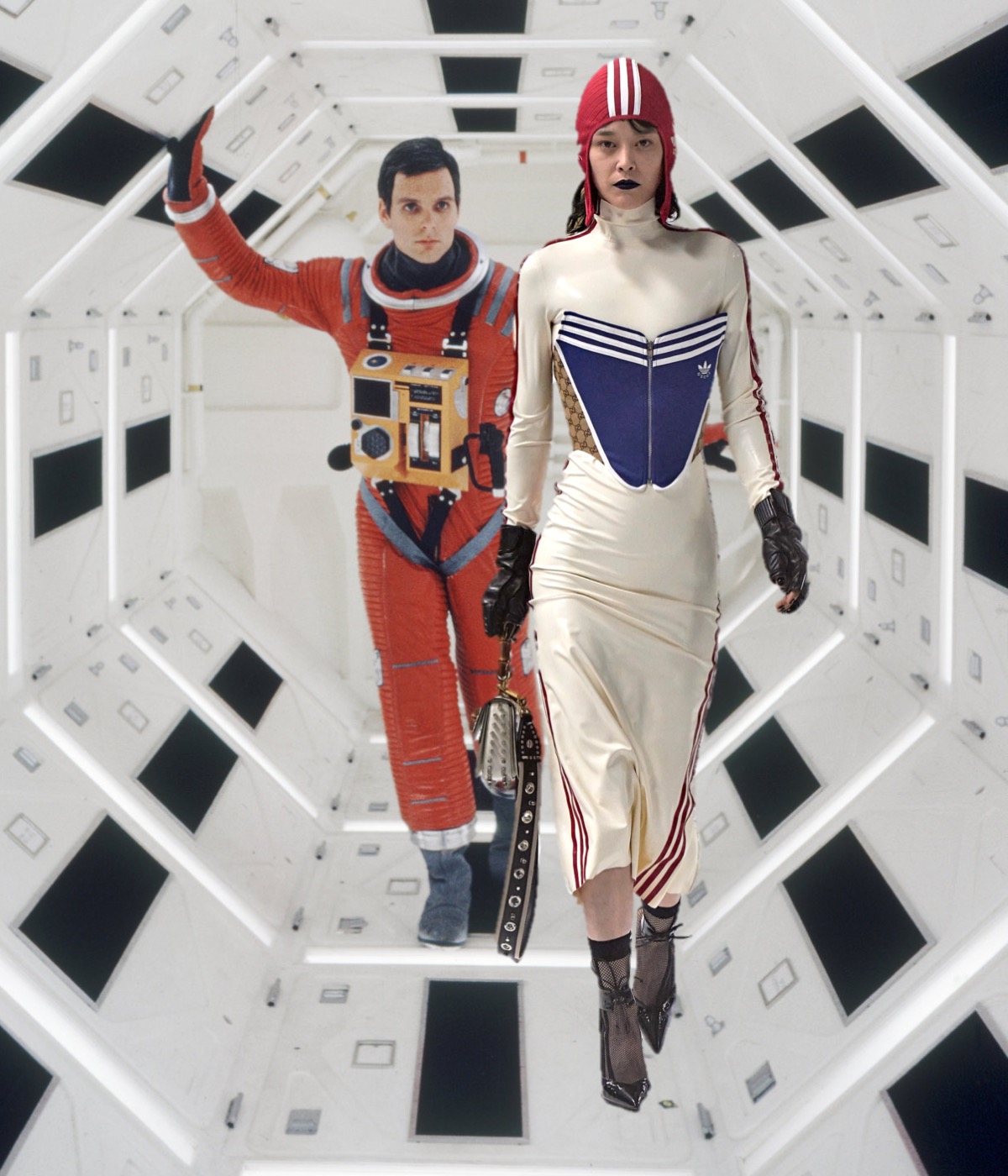
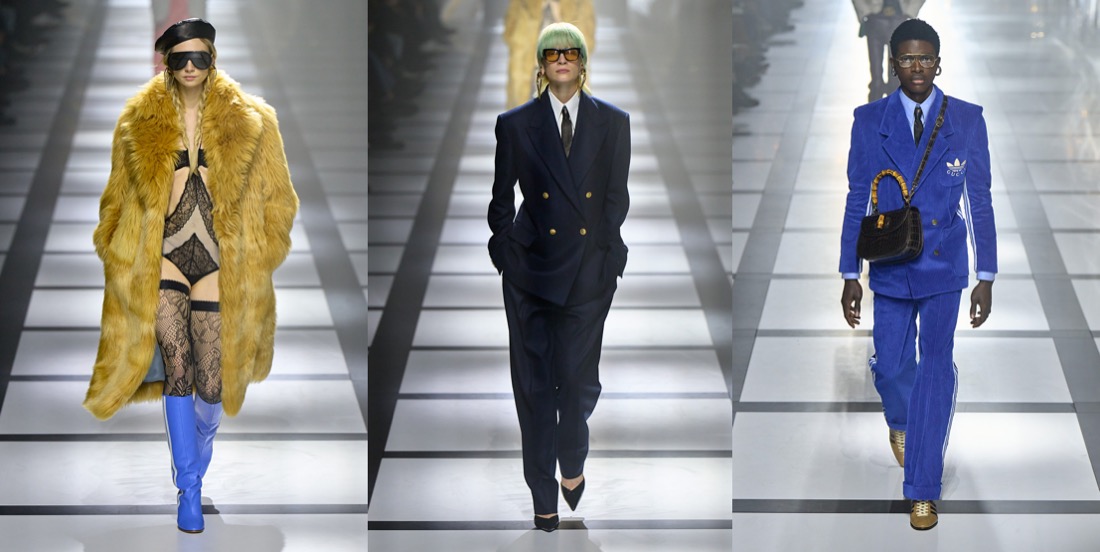
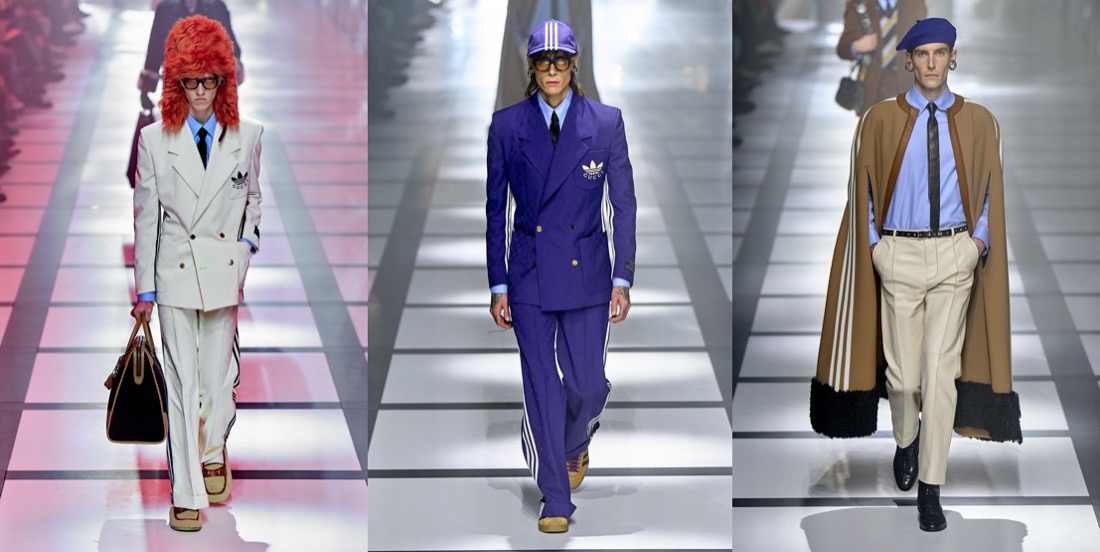
Alessandro Michele‘s autumn-winter 2022 fashion show failed to share any gesture of solidarity with Ukrainians, even though I thought he would be the first to do that in the industry. Possibly, his good intentions might have been tamed by the upper company structures. The distaste caused by the tone-deafness is one thing. In general, this line-up was one of the most mediocre collections coming from the designer in a while. The message for this collection, entitled “Exquisite Gucci“, was suits for all, with male and female models wearing versions of the Gucci sartorial two-piece. Alongside this focus on tailoring was a collaboration with Addidas Originals, which saw the sportswear brand’s iconic three stripes splashed over sharp cut suits, on leather gloves and baseball caps, or forming a dramatic V down the front of a corset dress. To be honest, most of the looks felt uninspiring, and I feel like we’ve seen enough of fashion collabs with Adidas in the last couple of years.

Back to really important stuff. If you want to spread awareness or help and support Ukraine, here are some useful links:

https://www.globalcitizen.org/en/content/ways-to-help-ukraine-conflict/

https://www.doctorswithoutborders.org/what-we-do/countries/ukraine

https://www.rescue.org/article/how-can-i-help-ukraine

https://www.gov.pl/web/udsc/ukraina-en

Also, big love to independent, small and medium-sized brands like Magda Butrym, Collina Strada and MISBHV that will donate 100% of its profits to aid humanitarian crisis in Ukraine in the following days. Any action counts, big or small!
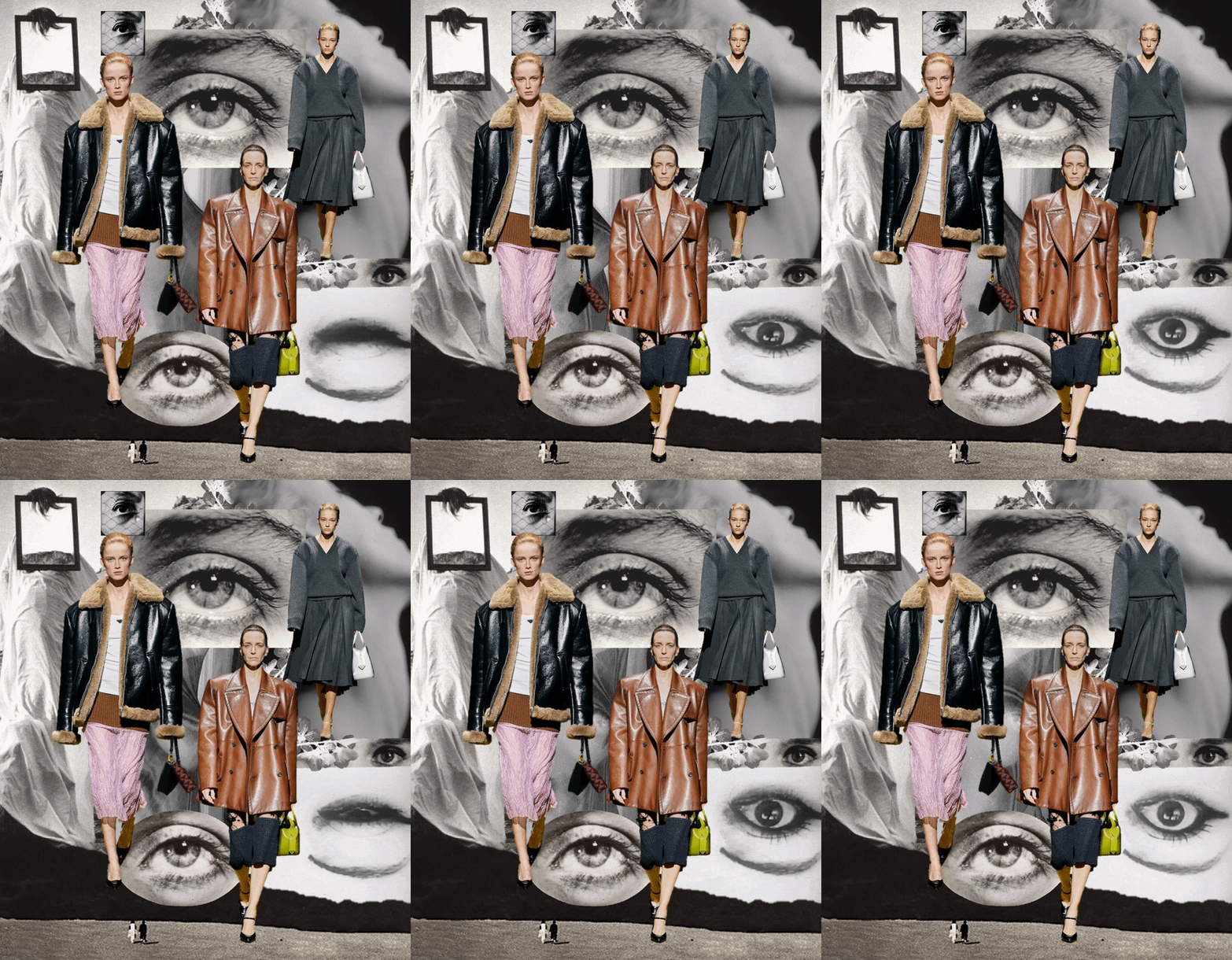
Collage by Edward Kanarecki.

Sensual Allure. Blumarine AW22

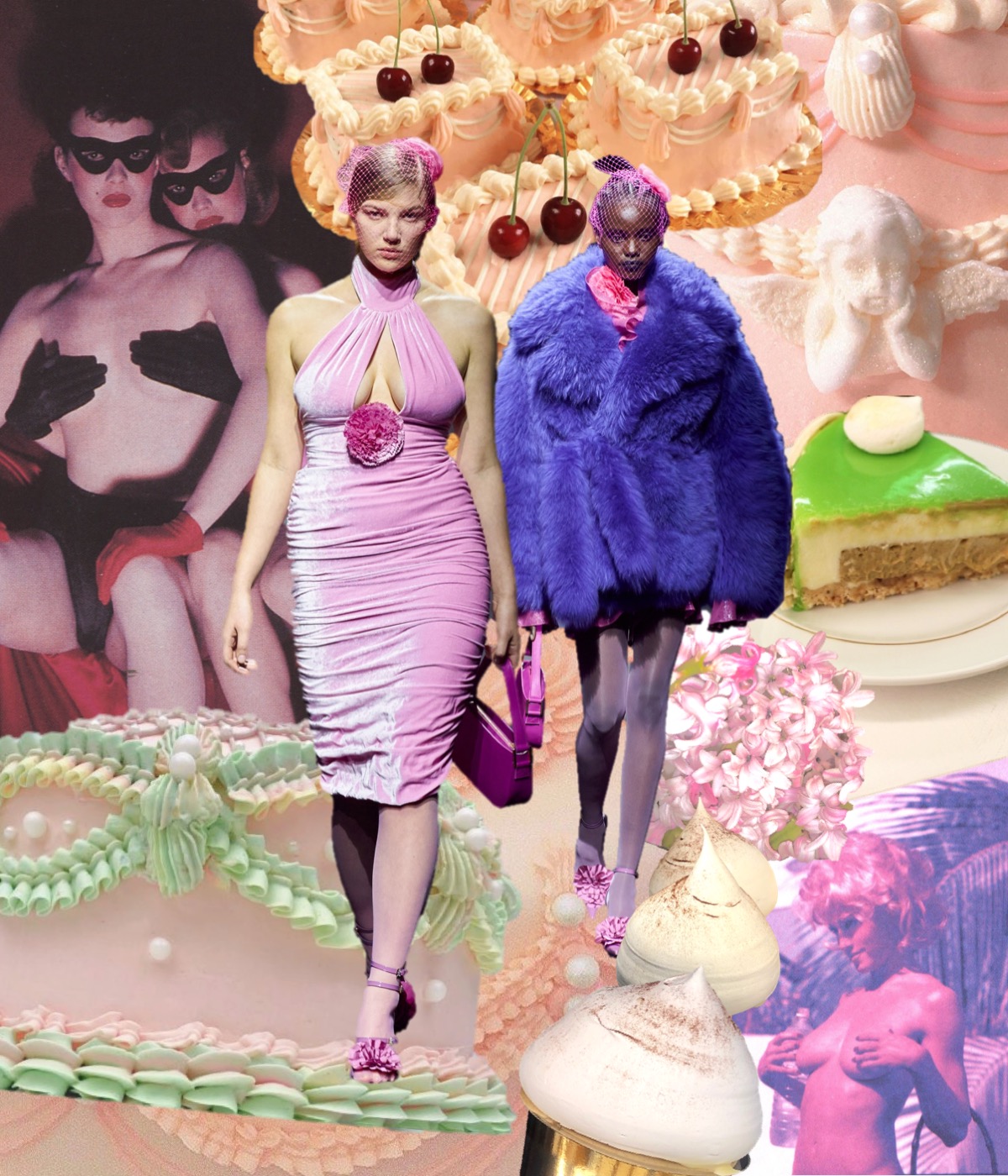
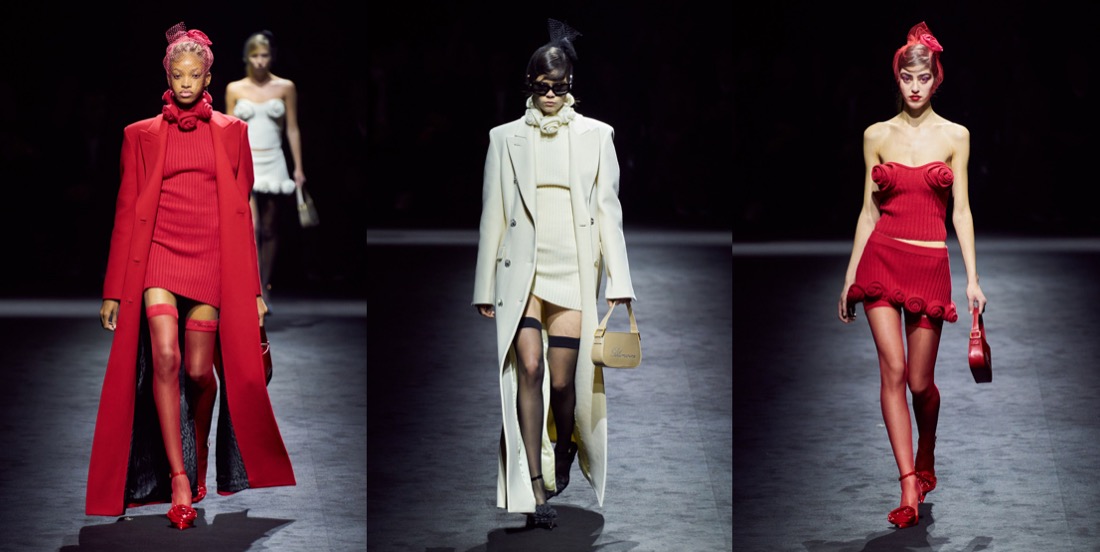
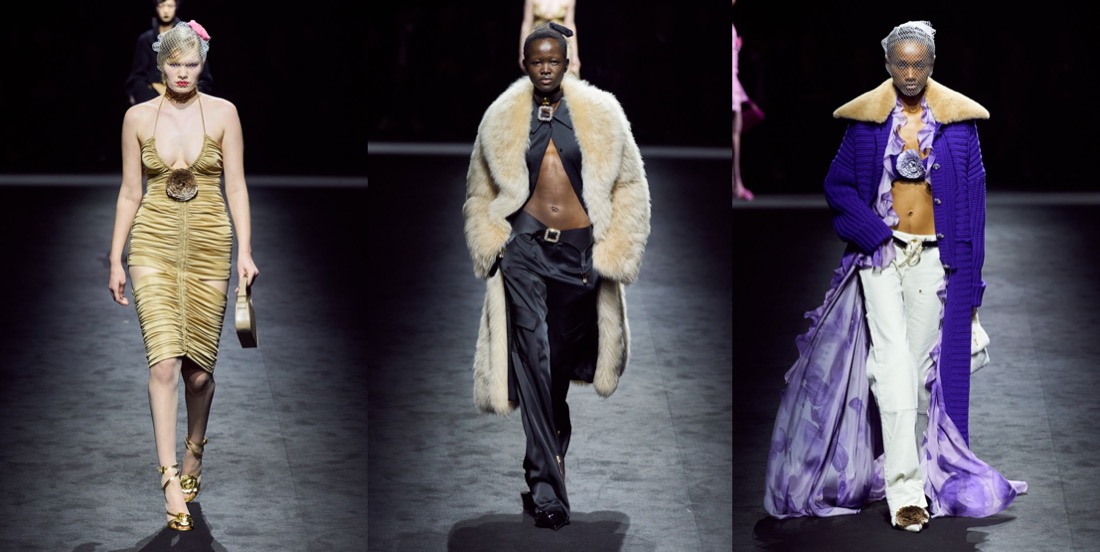
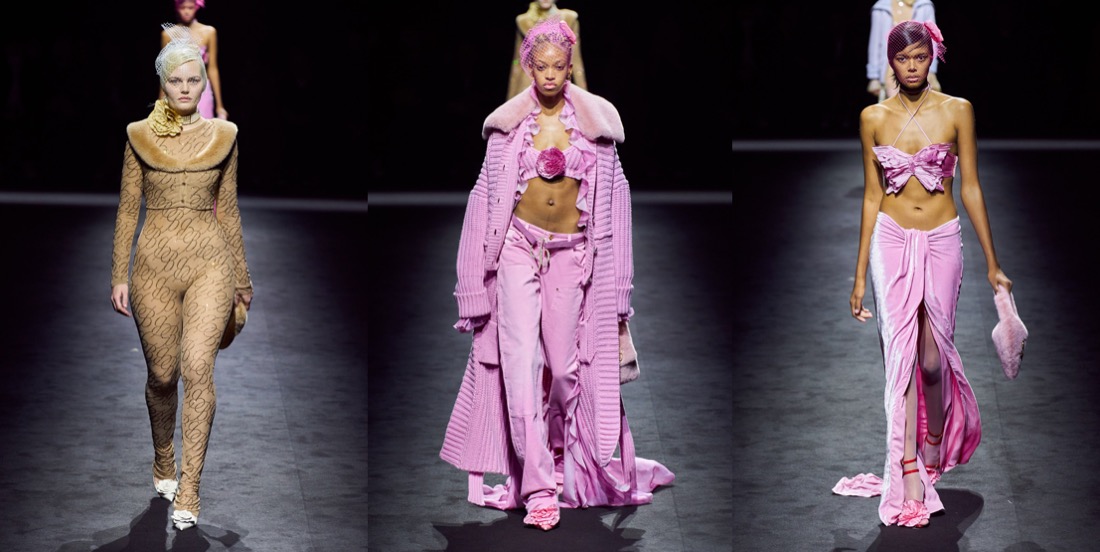
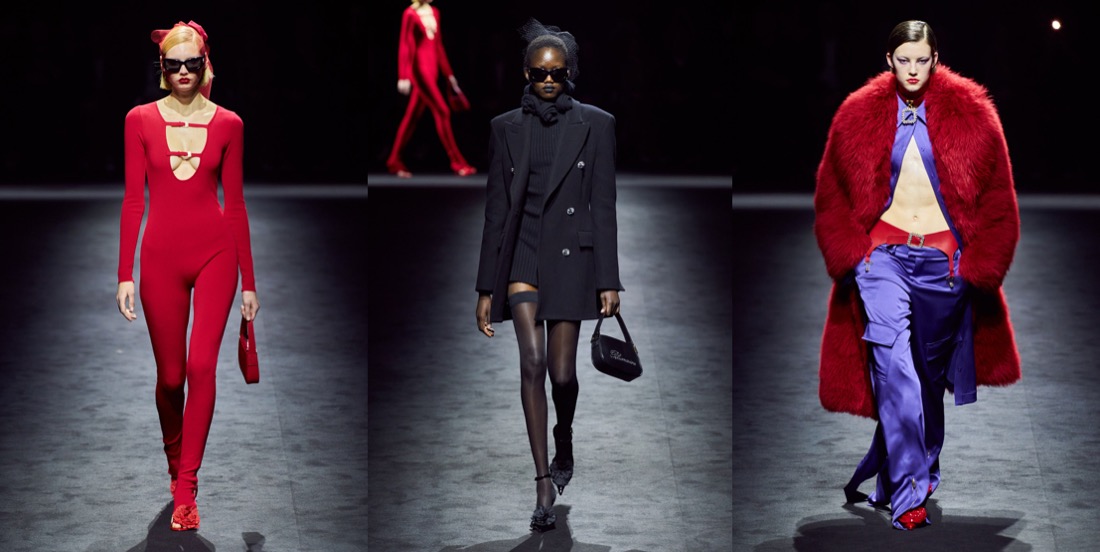
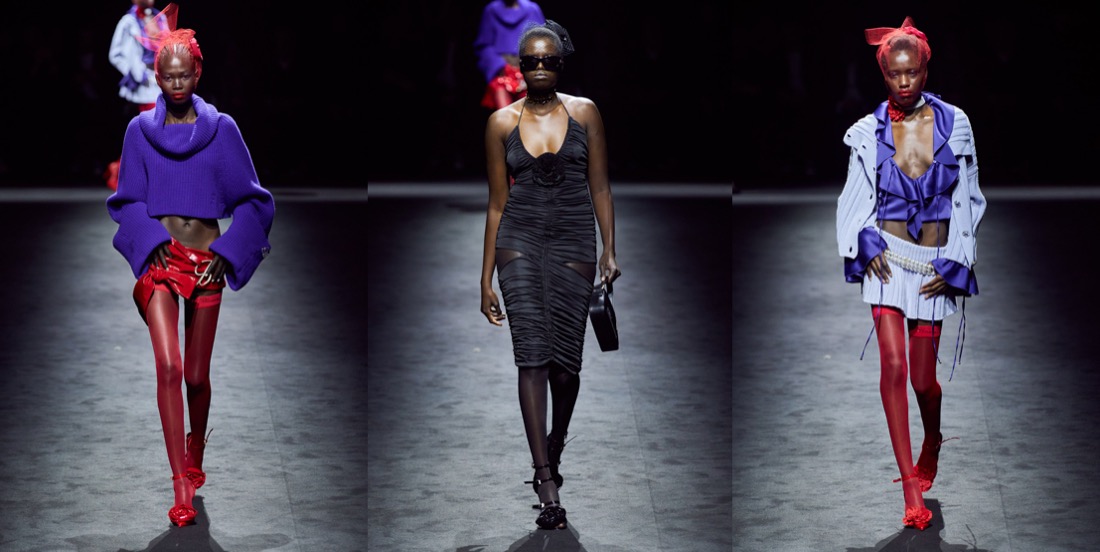
Helmut Newton’s spirit hovered over the Blumarine show. “Always loved his work, how can you not? Always been one of my heroes,” said Nicola Brognano backstage. Newton lensed memorable advertising campaigns for Blumarine; one of the best was shot in 1995, with a young Eva Herzigova clad in a skintight black satin number, slit high to reveal her fabulous legs. Brognano had Herzigova, still breathtakingly gorgeous at 48, close today’s show, nicely coming full circle. You cannot reference Helmut Newton without conjuring dark, sultry atmospheres of intrigue. Brognano is prodding the girly Blumarine ingénue to enter grown-up territory. “She’s more femme and sexual,” he said. His co-conspirator, über-stylist Lotta Volkova, chimed in: “She isn’t so pretty and girly anymore – or at least not only. She has grown into a strong, sexy woman, in command of her body, and powerful. She is a glamorous vamp.” Nocturnal and provocative, the collection was paraded by a cast diverse in age and body type, reflecting the image shift. Lila Moss, Euphoria’s Chloe Cherry, and Mini Anden were among various beautiful curvy figures and willowy, slender silhouettes: all looked equally alluring, clad in a series of skintight, draped micro dresses, each one slinkier, sexier, and skimpier than the other. A bold palette of black, red and purple signaled an erotic detour from the candy pinks and powdery baby blues favored by Blumarine’s teen incarnation. Sweeping long black coats, shapely and nipped at the waist, looked dramatic; in Newton-esque style, faces were sometimes veiled, eyes hidden behind dark glasses. A catsuit in black patent leather with a built-in bustier had an obvious fetish allure; the see-through top with breast-hiding velvet hearts worn by Herzigova in the Newton campaign was remade, as an homage to the Blumarine’s heyday.

Collage by Edward Kanarecki.
Run. Sunnei AW22

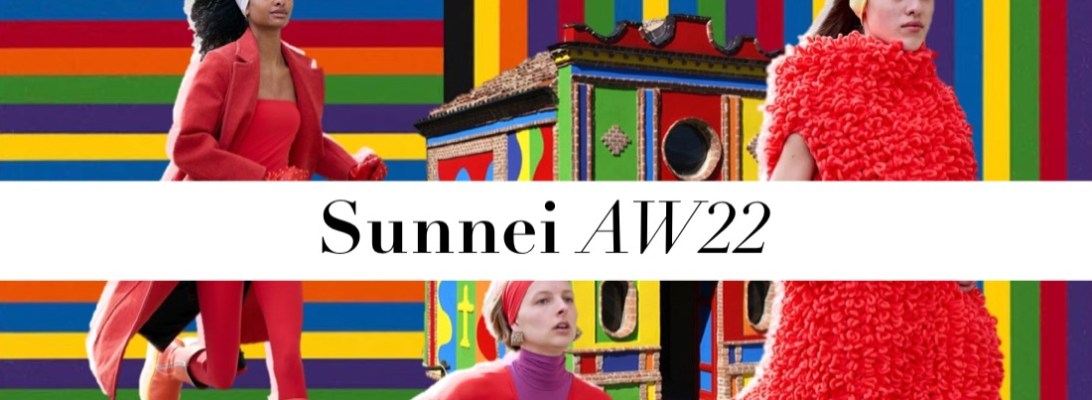
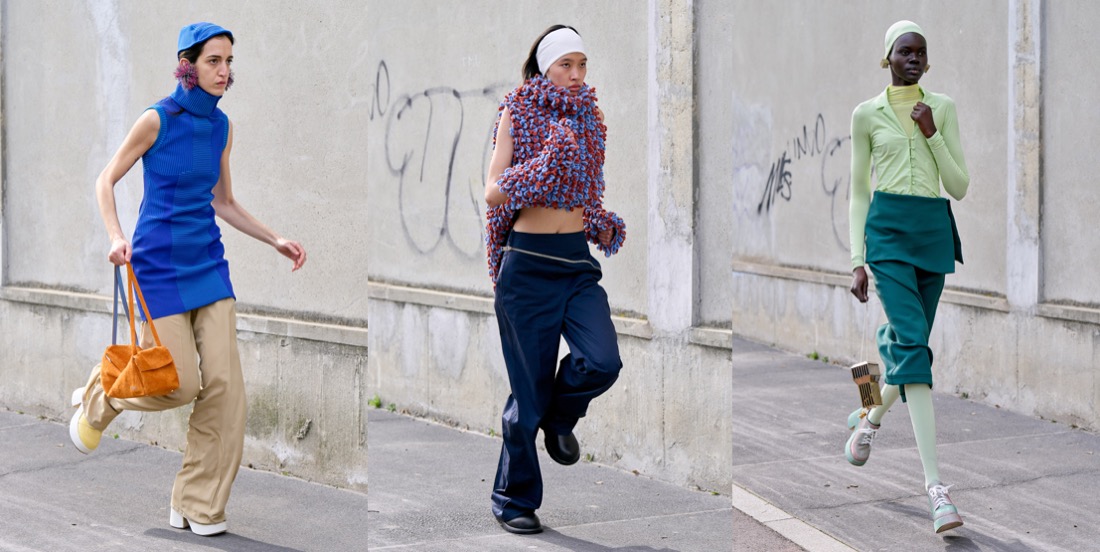
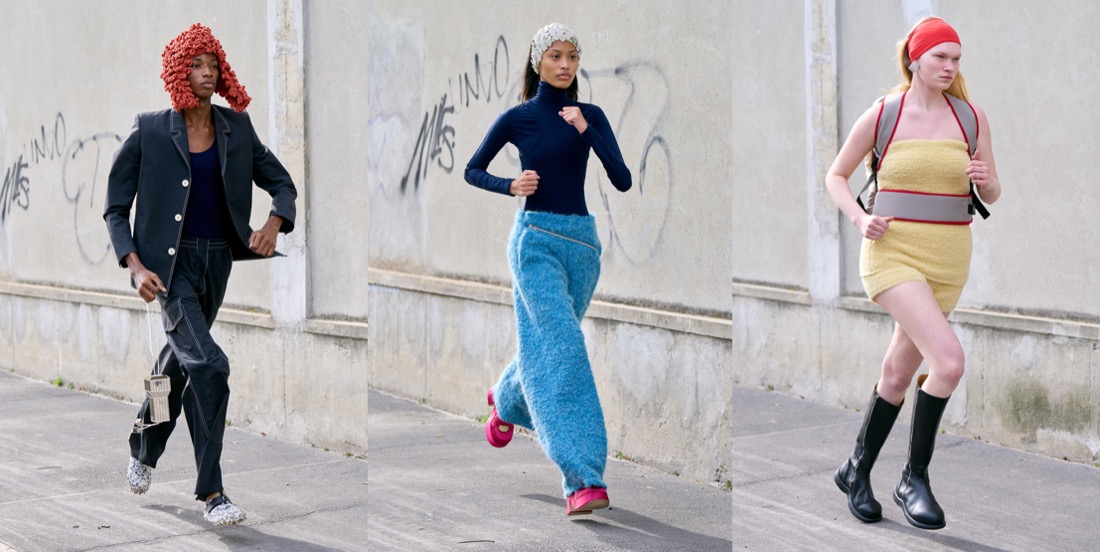
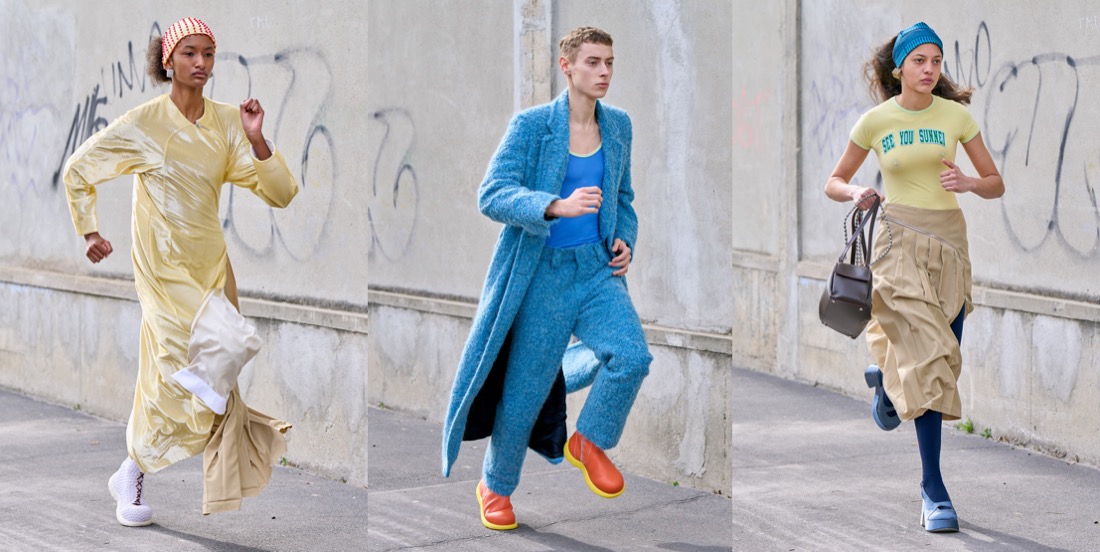
Social commentary always lurks in the background of Sunnei’s practice. The pandemic has offered Simone Rizzo and Loris Messina plenty of open questions to chew on, fashion being rich food-for-thought territory, with game-changing actions still slow to come about within the industry. For starters, fashion’s high-pitched, fast-paced beat hasn’t slowed down (even at the moment when Europe’s peace is under threat), and running from one physical show to the next has become normality again. Collateral effects of frenzy, stress and nerve-racking timetables are part of the picture, despite all the good intentions flaunted when the fashion world was in a state of pandemic shock. Their autumn-winter 2022 show seemed a good occasion for Messina and Rizzo to pick up on our collective scatterbrained state. They rallied their community in an open air set on the outskirts of Milan, where they orchestrated a sort of “performance within the performance” as they called it, with the audience commanded to stand on metal benches, facing the sidewalk near a wall of an industrial building. “We wanted to make people stop for a moment and reflect on what’s happening, especially today, which is such a delicate, disquieting moment,” said the designers. With Russia and Ukraine clashing violently, and war looming on the horizon, the mood was one of uncertainty and worry. Instead of walking, models came running along the wall, while the audience was invited to follow the show in slow motion through their iPhones. As a sort of metaphoric “crystallization of the moment,” as the designers called it, it was quite fitting. As for the collection, it was quite hard to see the details with models running at lightening speed, but the clothes looked fit for such an athletic performance. “We’ve used a new technical fabric that extends and stretches, perfect for layering,” said the designers. They riffed on their core items, “focusing on what we do best, experimenting on making our favorite shapes more extreme and radical, without detracting from their identity and character.” While keeping their offer sleek and minimal, they went quite eclectic, playing with colors and textures with a more tactile appeal on balaclava-capes in furry wool and chenille woven into wavy 3D motifs.

Collage by Edward Kanarecki.
Will It Make Sense? Prada AW22

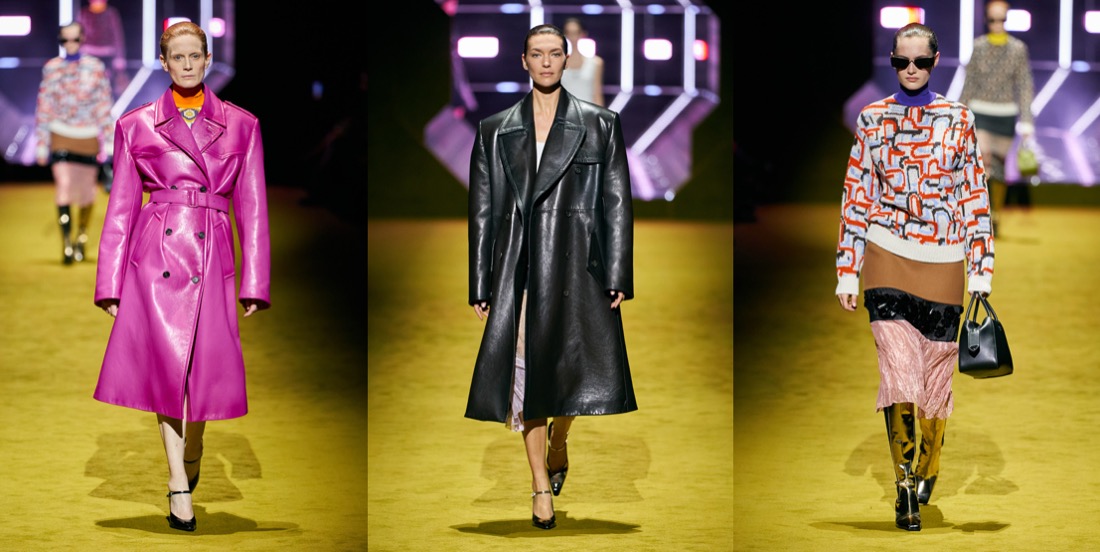
As Russia is invading Ukraine and Europe is at the brink of war, it’s really hard to look at the latest Milan Fashion Week collections. Suddenly, fashion’s frivolity feels ignorant and insensitive, and the smiley street-style faces make you wonder if there are two parallel realities existing simultaneously. Still, one can’t blame Miuccia Prada and Raf Simons for staging a fashion show yesterday, as if nothing wrong was going on the other side of the continent. How could they know that on the same day, Putin would commit a war crime? The situation is getting more and more turbulent with every hour, and as brands in Milan do business as usual (even though at least some symbolic gestures of solidarity would be more than welcomed and appreciated), who knows if this isn’t the last fashion month for a long time to come. Trying to stay hopeful, but I’m really terrified of what might happen next.

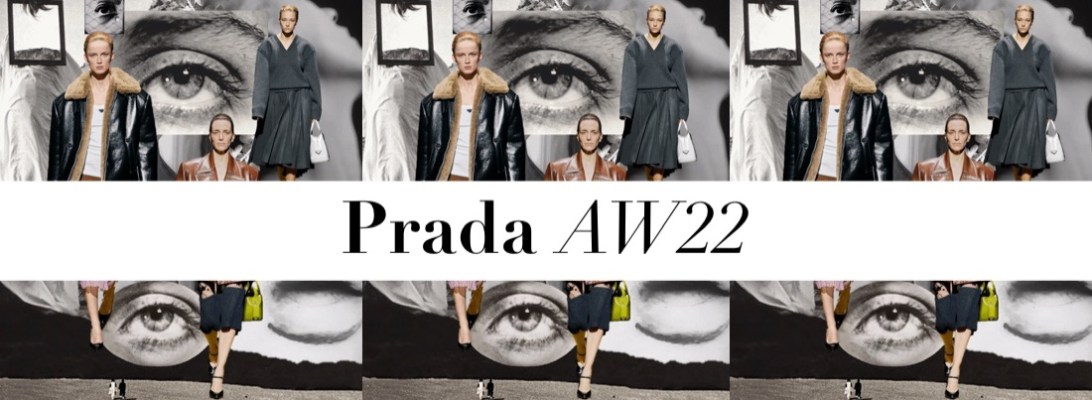
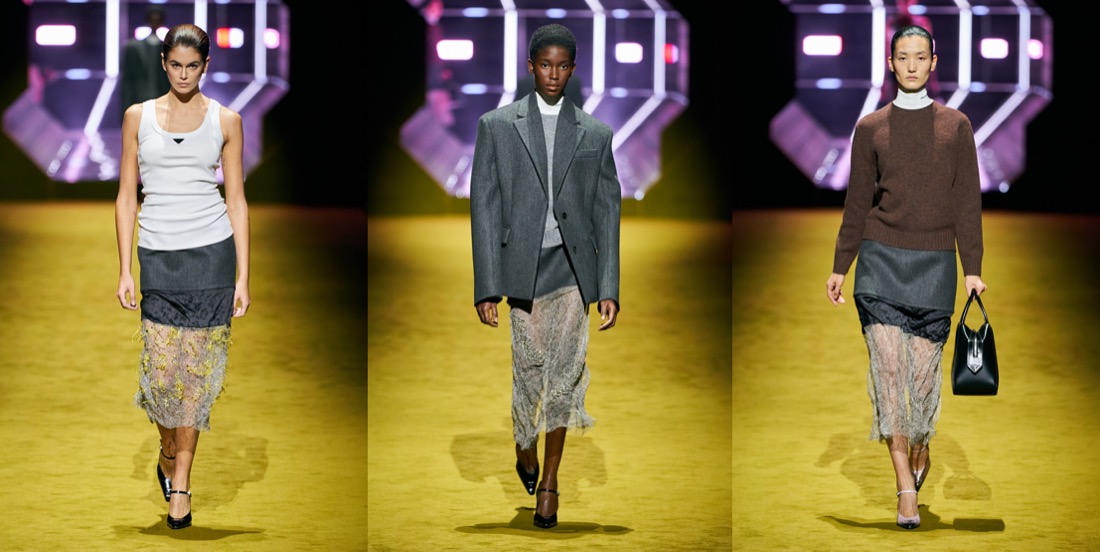
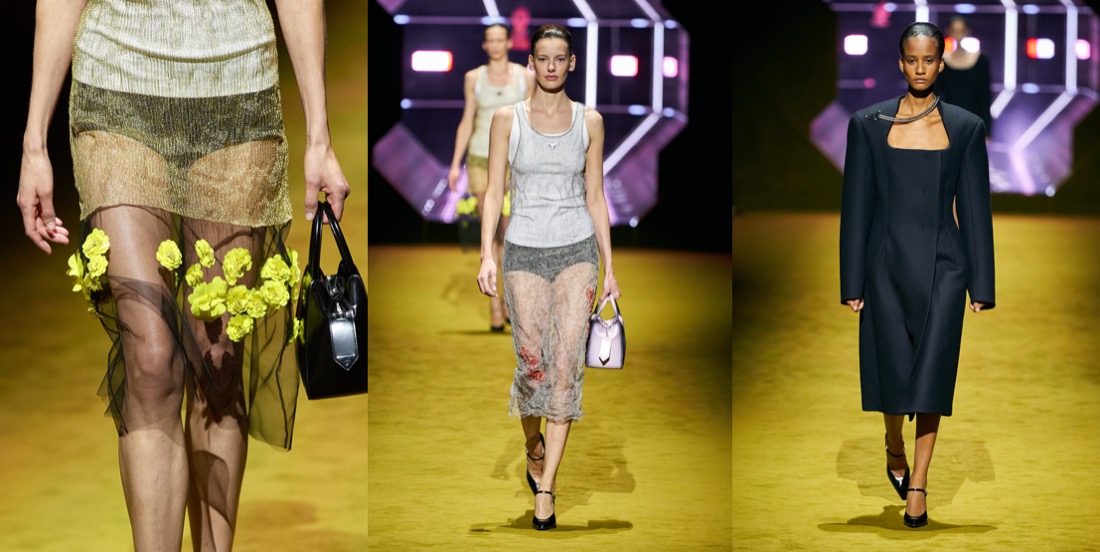
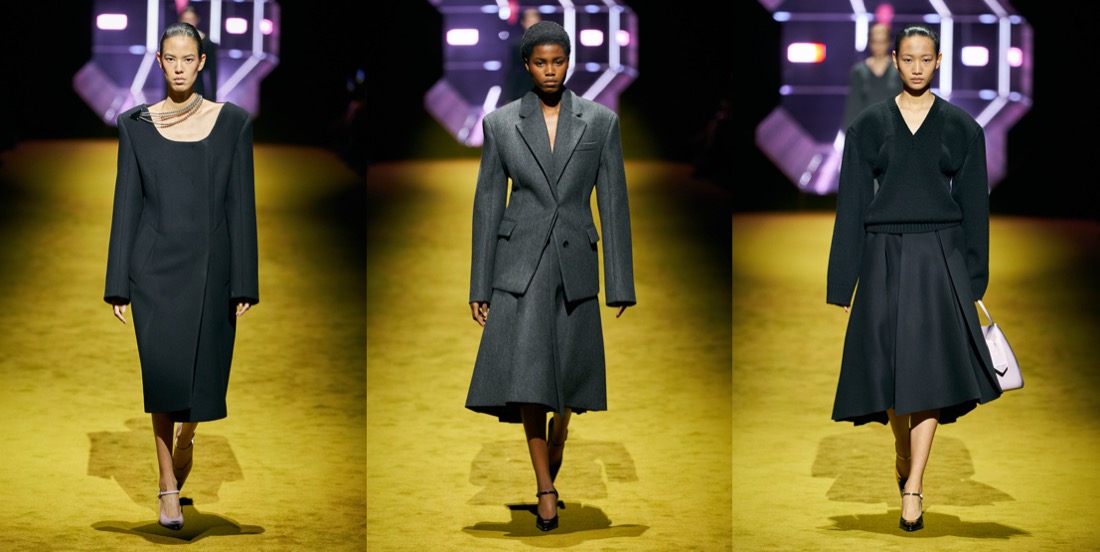
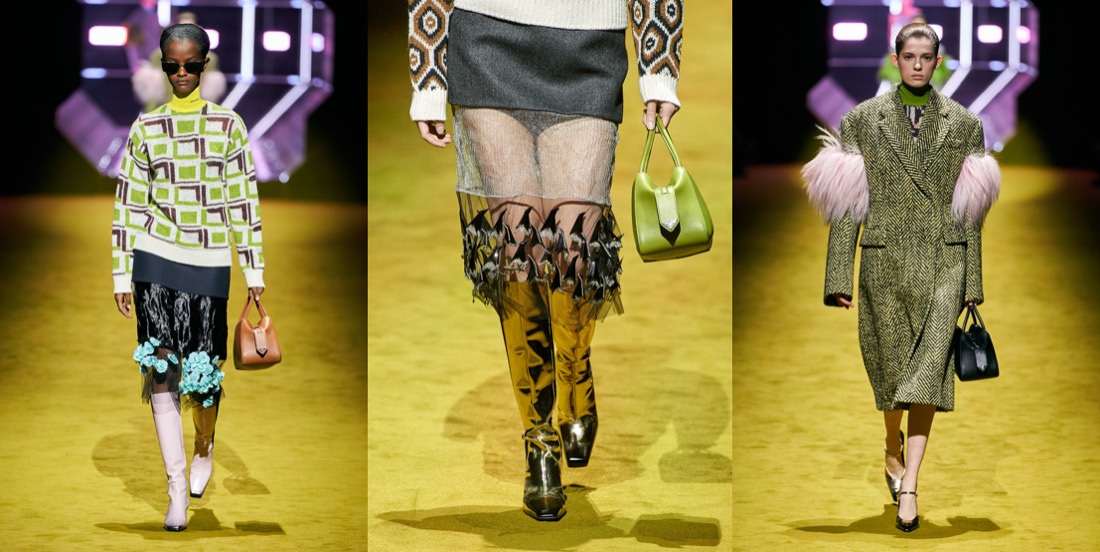
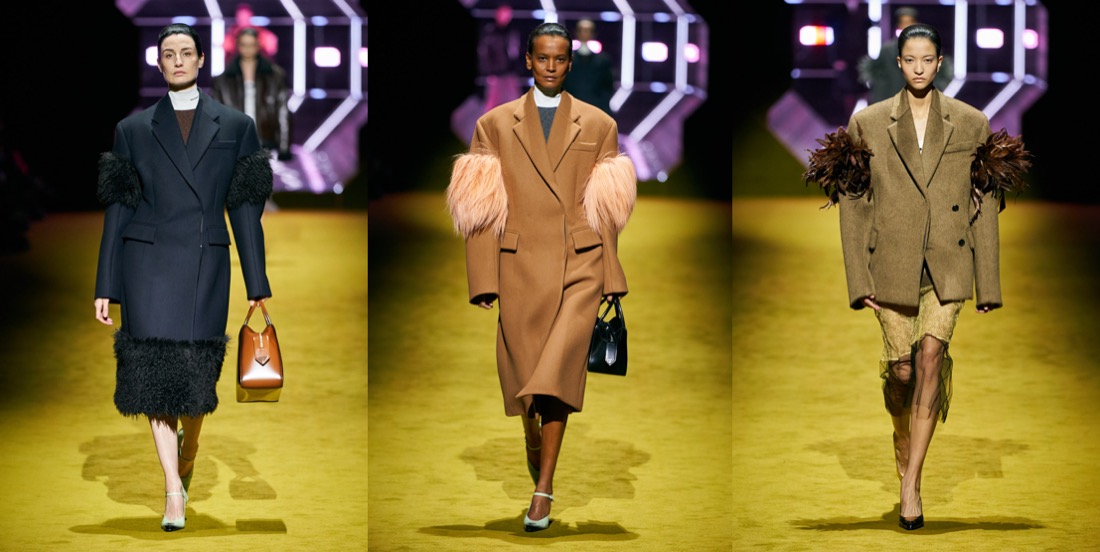
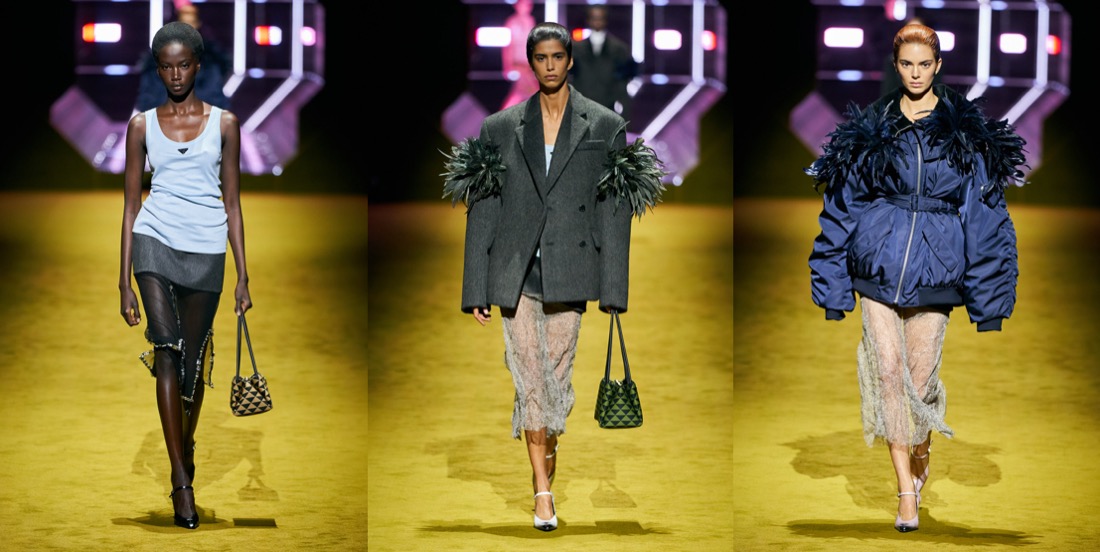
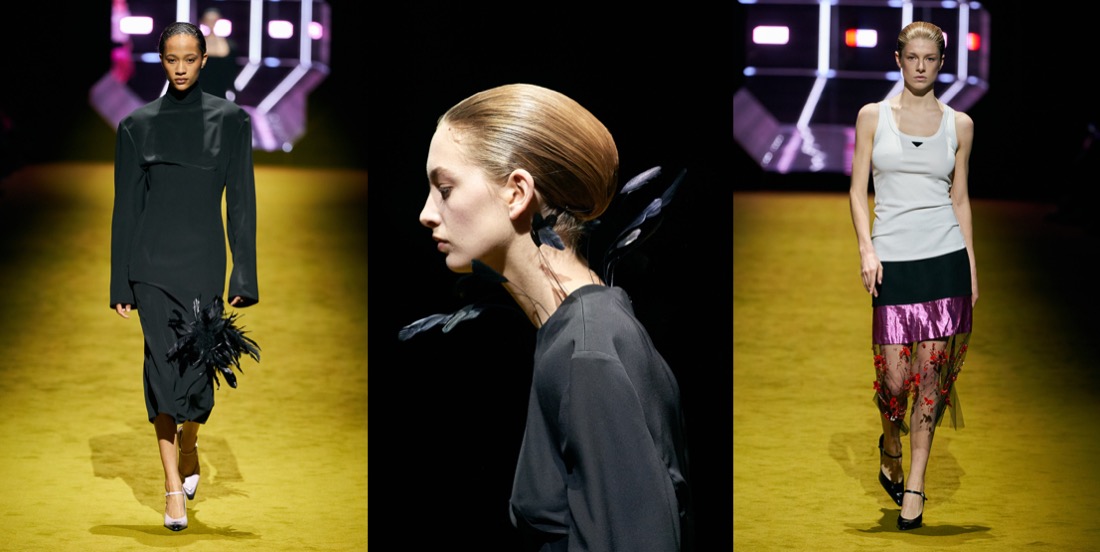
I wish the circumstances wouldn’t make this Prada line-up feel somehow unfortunate and badly timed. The collection is beautiful, yet will it make any sense in the near future? The designers’ offering started with a fitted white tank, triangular logo front-and-center, with a narrow just-below-the-knee skirt divided horizontally in different combinations. Kaia Gerber’s show-opener merged gray flannel, crushed black satin, and a crystal-dusted metallic mesh, but others were sheer to the waist, exposing the boy briefs that the models wore underneath. These pieces formed a foundation on top of which Prada and Simons showed simple Shetland wool sweaters and others that revived the label’s breakout “ugly” prints of the ’90s; mannish single-breasted jackets and double-breasted ones decorated on the upper arms with rings of faux fur or feathers; and oversized MA1s picked out with paillettes. Again, there was that emphasis on unlikely combinations, and the sense of import that kind of intentionality creates: making an occasion out of the everyday. “You want to live again, to be inspired. And to learn from the lives of people,” Prada said in a statement that was distributed after the show. The silhouette didn’t reach the extremes of the men’s collection last month, but the proportions – of black coat dresses draped with askew pearl necklaces, of leather trenches in black and shocking pink – were exaggerated. The shapes conveyed strength, not the decorum or daintiness that the lingerie foundation underneath might suggest. That message was underlined by the cast, which included models who walked Prada runways 20 years ago – Erin O’Connor, Liya Kebede, Elise Crombez, and Hannelore Knuts – amidst new faces like Euphoria‘s Hunter Schafer. As has become their practice, Prada and Simons were looking back at past Prada collections, embracing the Prada-ness. “I think of revolutionary moments in Prada’s history, and we echo them here,” Simons said in his statement. “There are never direct recreations, but there is a reflection of something you know, a language of Prada.” Scrolling through the archive to find the reference isn’t the point, though fashion obsessives will have lots to work with here. More interesting is how together they made something sort of implausible – like, say, a herringbone coat with that proportion-shifting acid green faux fur treatment on the sleeves – look intriguing.

Collage by Edward Kanarecki.

Tactile. Max Mara AW22

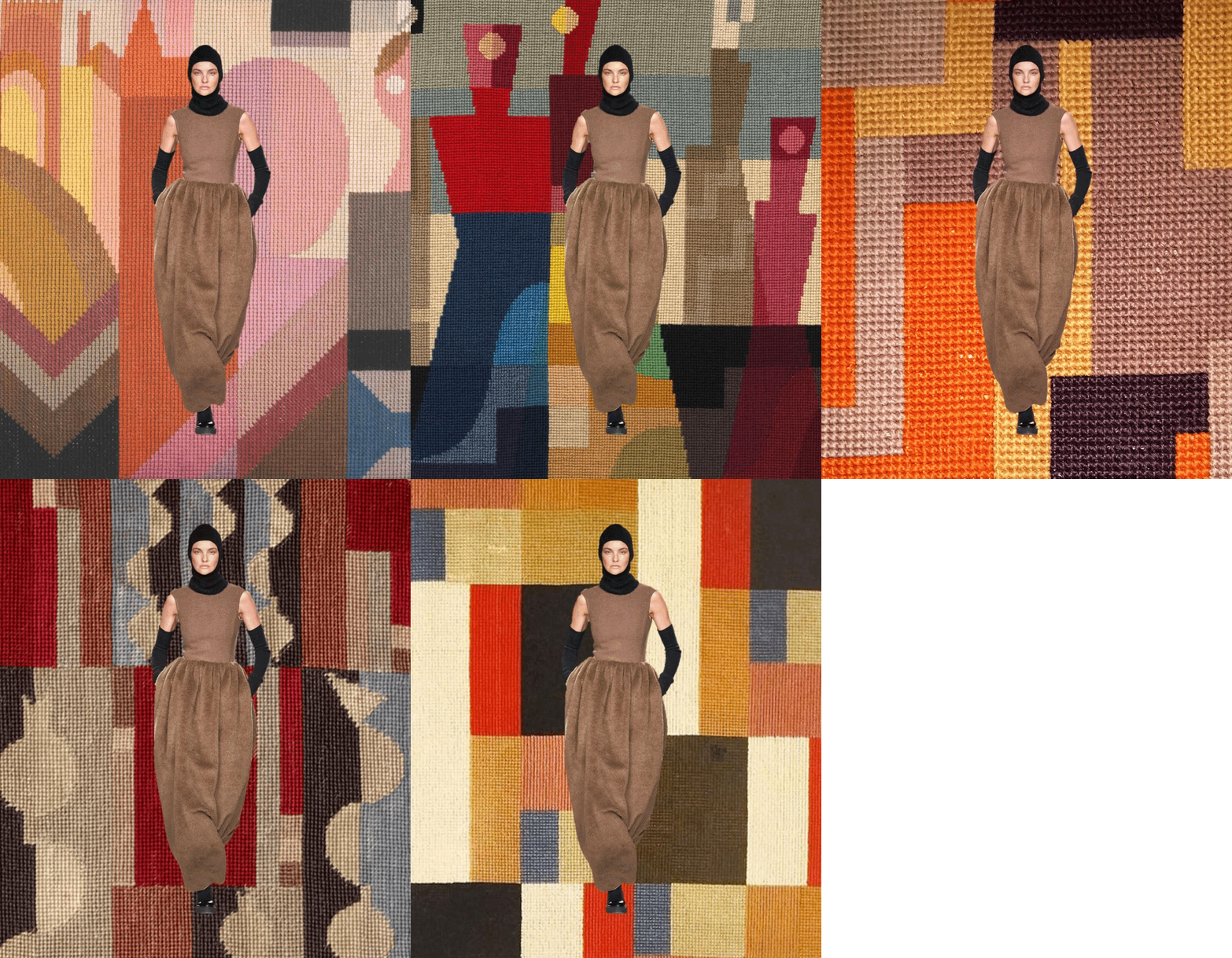
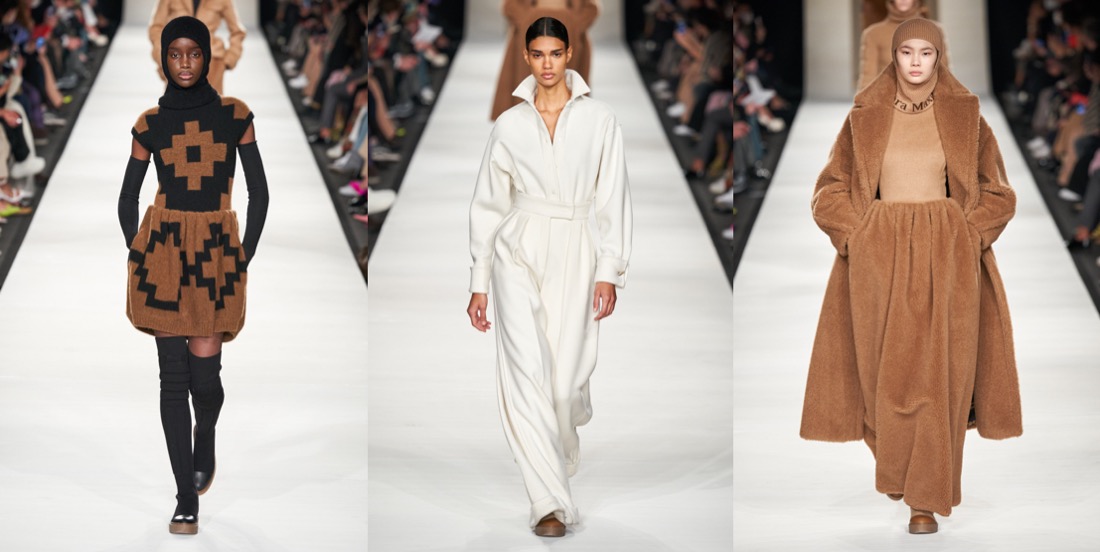
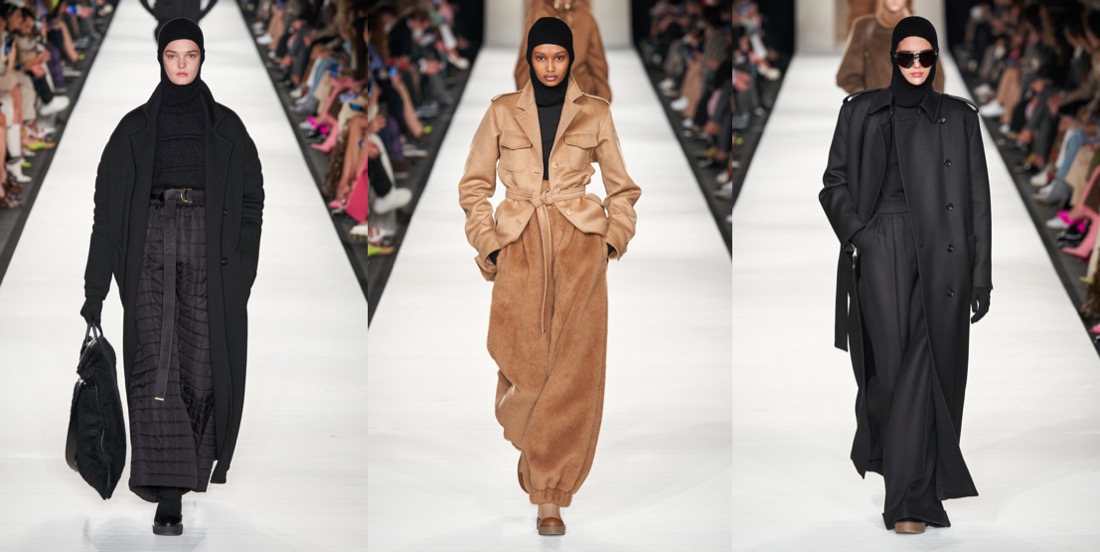
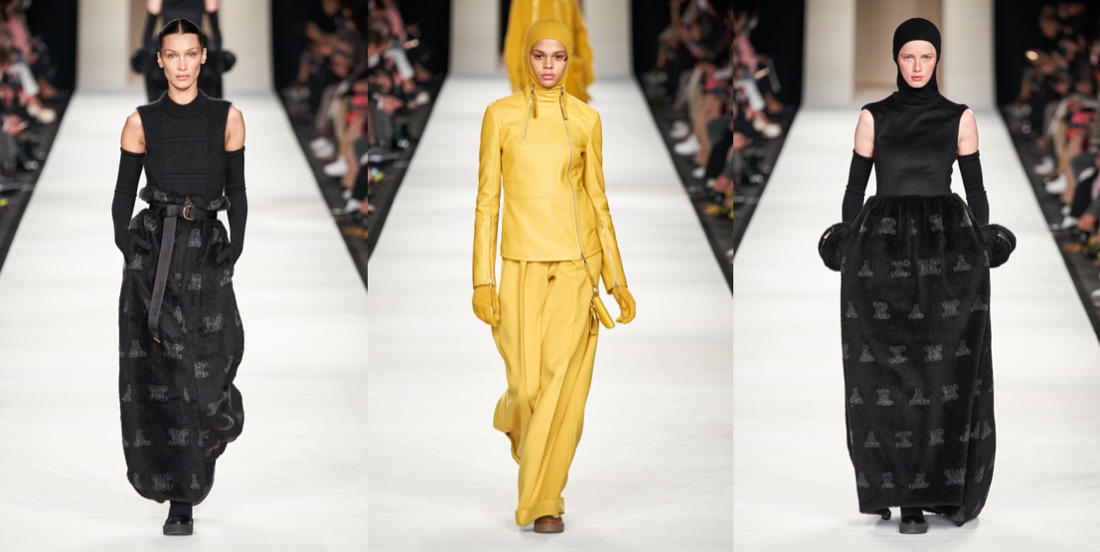
This season, some really delightful looks appeared on the Max Mara runway. Backstage, Ian Griffiths presided over a moodboard pinned with images of the work of Sophie Taeuber-Arp, who was closely affiliated with the Dada movement. Taeuber-Arp is currently the subject of a retrospective at the Museum of Modern Art in New York showcasing a prodigious career that spanned genres: textiles, marionettes, interior and architectural designs, furniture, paintings, relief sculptures, and photographs. Griffiths said he was attracted by the way she invested even everyday objects with magic and mystery. “After the last two years, we’re craving magic,” he said. Active between the two World Wars, the Dadaists rejected nationalism and violence, which made her an all too apt muse on a day when Russia attacked Ukraine. Griffiths used the shapes of marionettes Taeuber-Arp made for a restaging of the 18th century play “The King Stag” as templates for his designs; they informed the bulbous silhouettes of short skirts and the articulated arms of sweaters. Whimsy was the desired effect of the teddy bear material, which he cut not just into oversized enveloping coats, but also full skirts both short and long, and even sweatpants. These pieces were juxtaposed by others with a more utilitarian bent. Parachute pants with zips up the calves had a smart adaptability; add a second-skin turtleneck and a tailored jacket and a woman would be ready for anything. All this marched out on gum-soled over-the-knee sock boots, which got the playful/practical balance that Griffiths was after exactly right.

Collage by Edward Kanarecki.