Hello in 2020! Just returned from the holidays and I really can’t wait to share with you all the places I’ve visited. Plus, the men’s fashion month has started in London, so be prepared for lots of newness in the first days of the decade! Which, by the way, took off with far too many sad events globally… this might be absolutely out of context, but if you mind and can, please donate a dollar or two (or more!) here to help Australia’s wildlife that’s suffering due to the hazardous fires. Or choose any other Australia-focused organisation (like Salvation Army and Red Cross) that will help the ones in need. It’s really time to take action (one of my New Year’s resolutions, by the way).
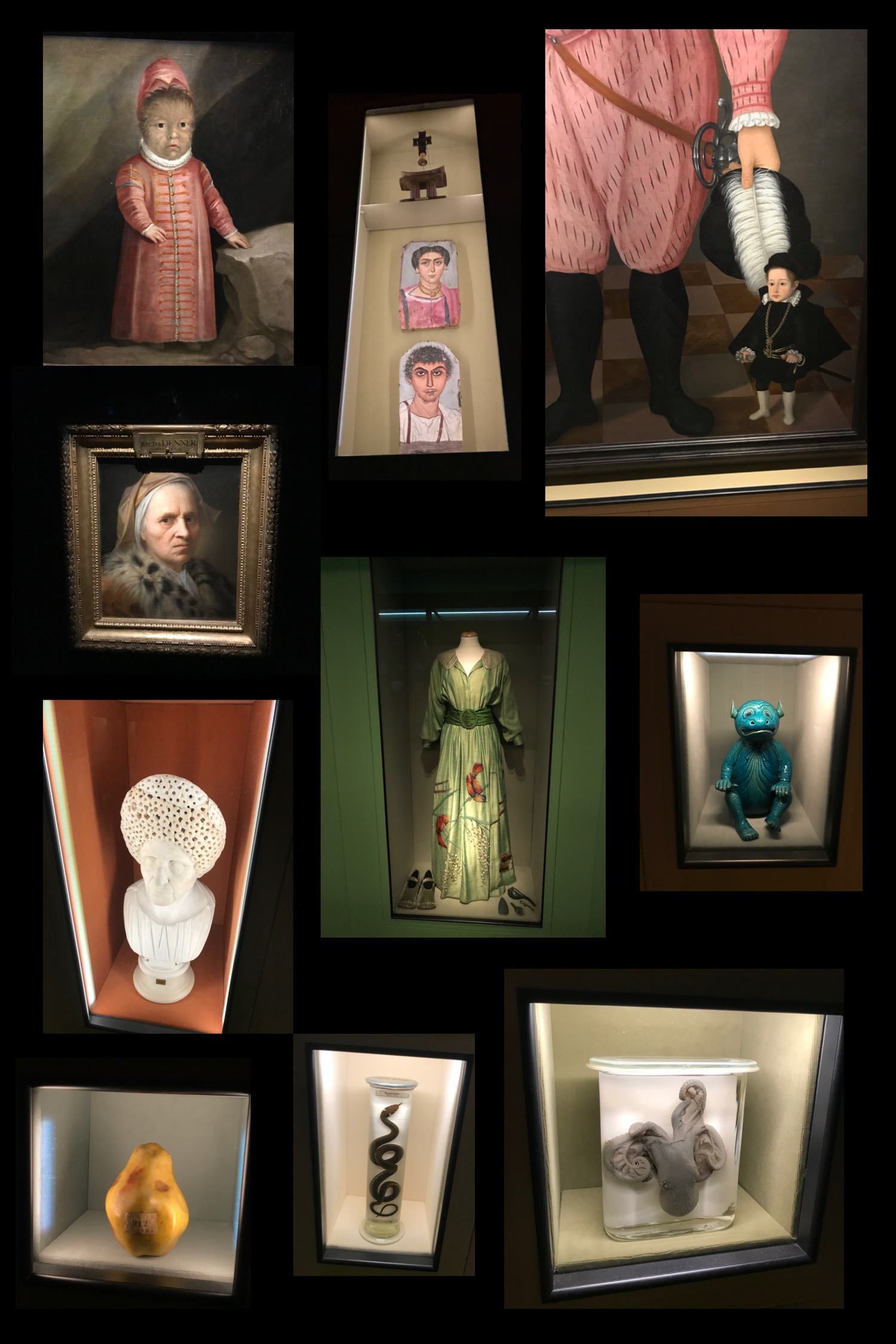
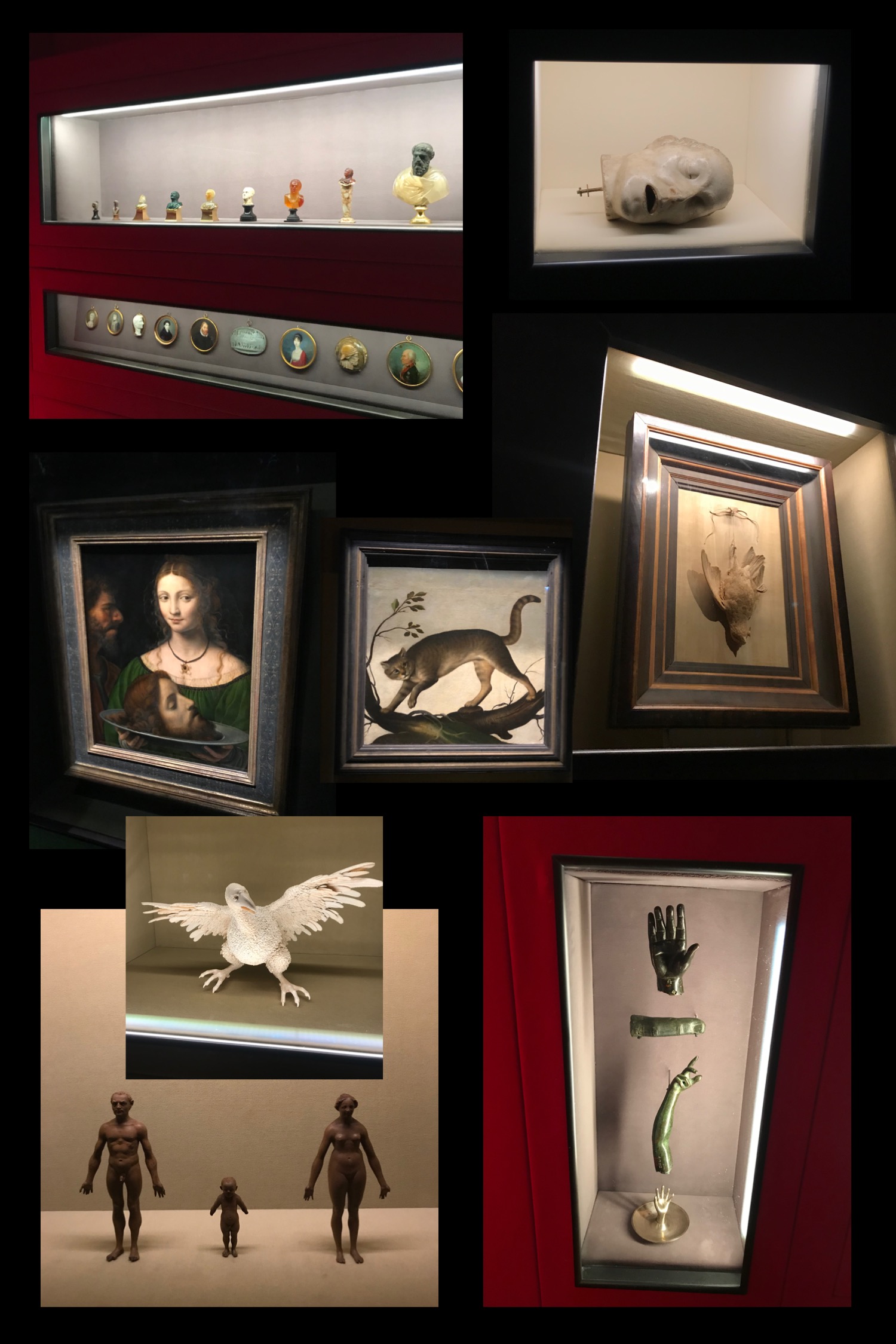
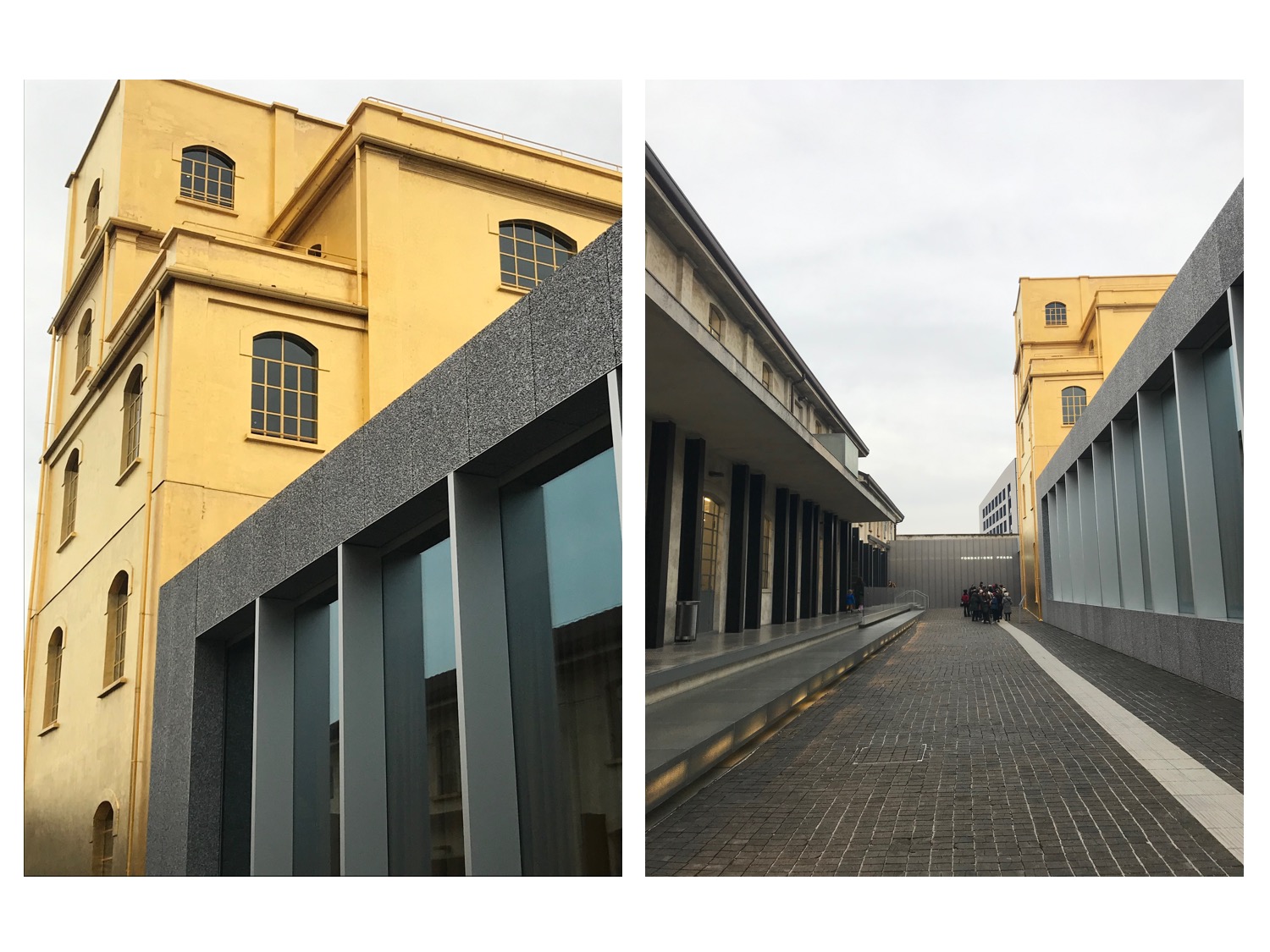
Back to the post’s topic. For the starter, Fondazione Prada in Milan. It was my second time here, and I love this place as much as I did a few years ago (here‘s a post from 2015 feauturing the pernament exhibition). The creator of Fondazione is, as the name suggests, Miuccia Prada, whose love for art is as strong as for fashion. Designed by Rem Koolhaas, the museum is built on the grounds of a former distillery. Throughout the time it expanded (the newest addition is the “Torre” – keep reading for more) and well rooted into Milan’s art landscape. The biggest reason behind visiting Fondazione Prada again – and Milan in general! – was the current exhibition: “Il sarcofago di Spitzmaus e altri tesori” (Spitzmaus Mummy in a Coffin and Other Treasures) conceived by Wes Anderson and Juman Malouf. Organized in collaboration with the Kunsthistorisches Museum in Vienna, the exhibition features 538 artworks and objects selected by the renowned film director and illustrator-writer from 12 collections of the Kunsthistorisches Museum and from 11 departments of the Naturhistorisches Museum in Vienna. Before taking a look at the photos I took there, let me tell you: it was an incredible experience.

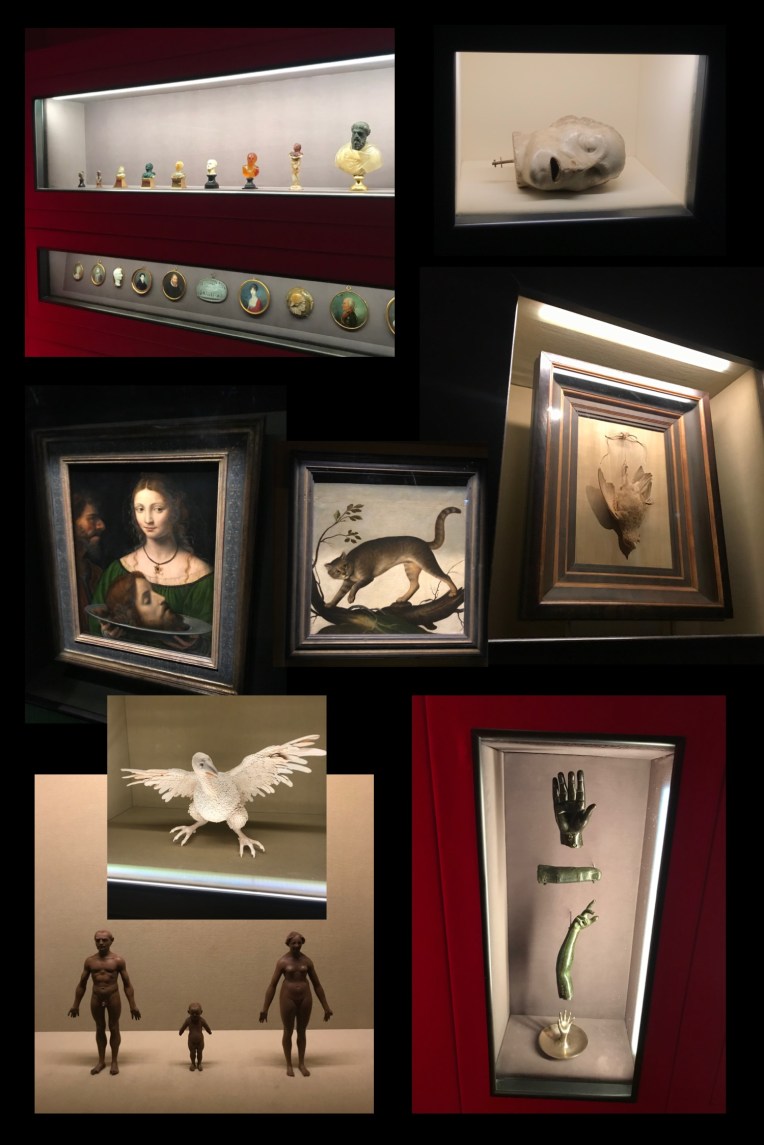
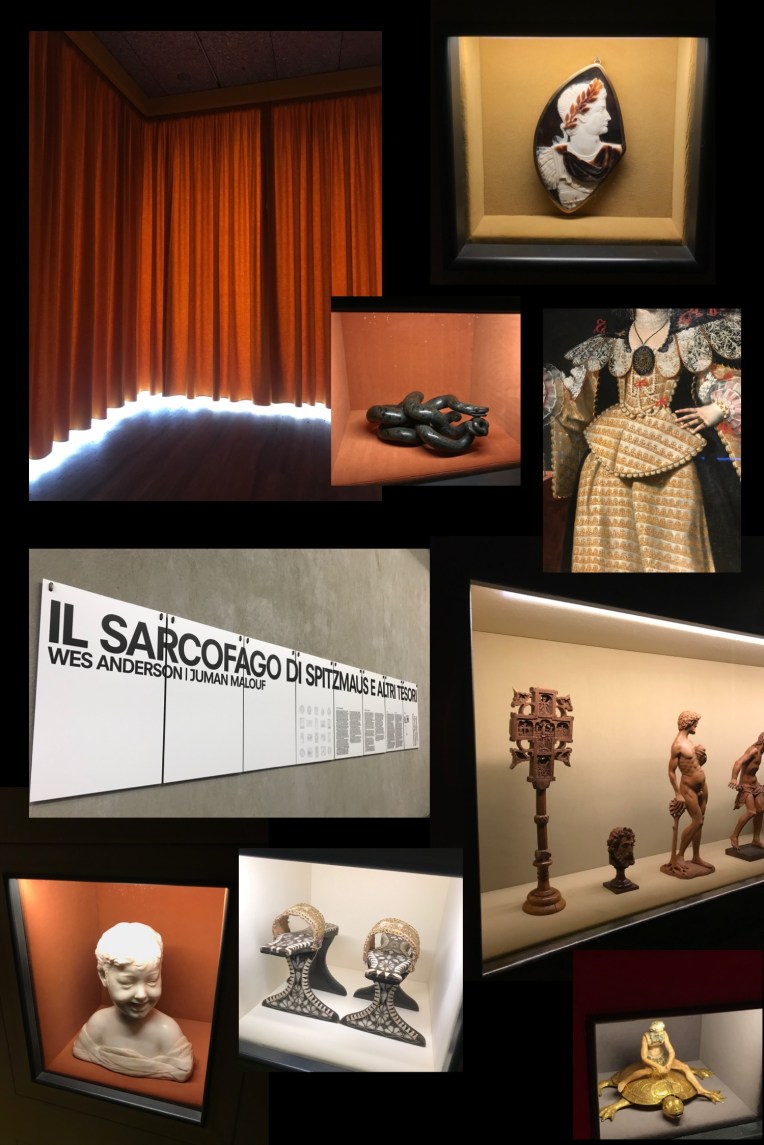
The exhibition explores the reasons behind the decision to create a collection and the ways in which it is housed, presented and experienced. Looking back to the past and drawing inspiration on the model of the Wunderkammer, the exhibition challenges traditional museum canons, proposing new relations between the institutions and their collections, and between their professional figures and their public. The choice of exhibited works, based on a non-academic, interdisciplinary approach, not only illustrates Anderson and Malouf’s deep knowledge of the two museums, but also reveals unexpected parallels and resonances between the works included in the project and the creative universes of the two artists.The exhibition narrative is formed by groups of works: from green objects to portraits of children, from miniatures to timepieces, from boxes to wooden objects, from portraits of noblemen and common people to natural subjects like the garden as well as meteorites and animals presented as scientific exhibits or artistic depictions.
“Spitzmaus Mummy in a Coffin and Other Treasures” was presented at the Kunsthistorisches Museum in Vienna from November 2018 to April 2019. The Milan exhibition is a second version with a larger display area and a greater number of exhibits. The original layout of rooms and vitrines, conceived by the two artist-curators with Itai Margula as a treasure chest, has been transported to the exhibition space of Fondazione Prada as a ready-made. The exhibition extends across the ground floor of the Podium to create a setting inspired by the Italian garden, with the presence of elements evoking hedges and allegorical pavilions typical of Renaissance garden. On view until the 13th of January!
Now, time for the rest of Fondazione Prada…
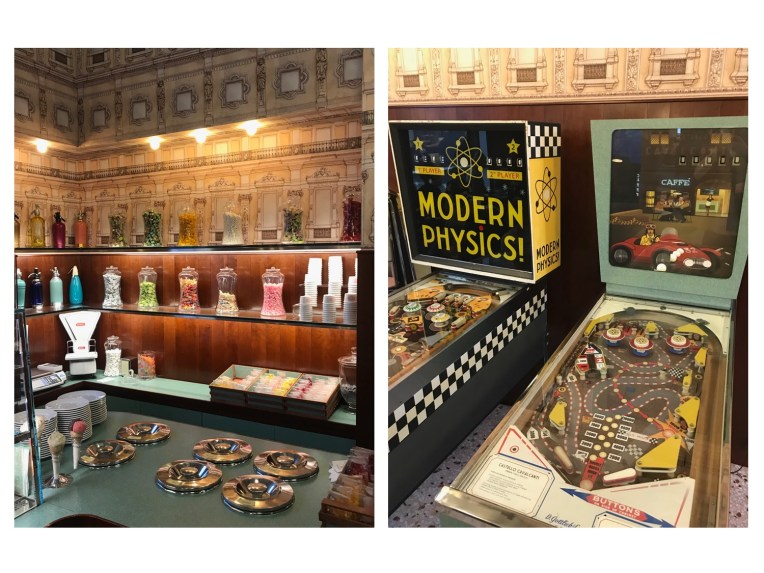
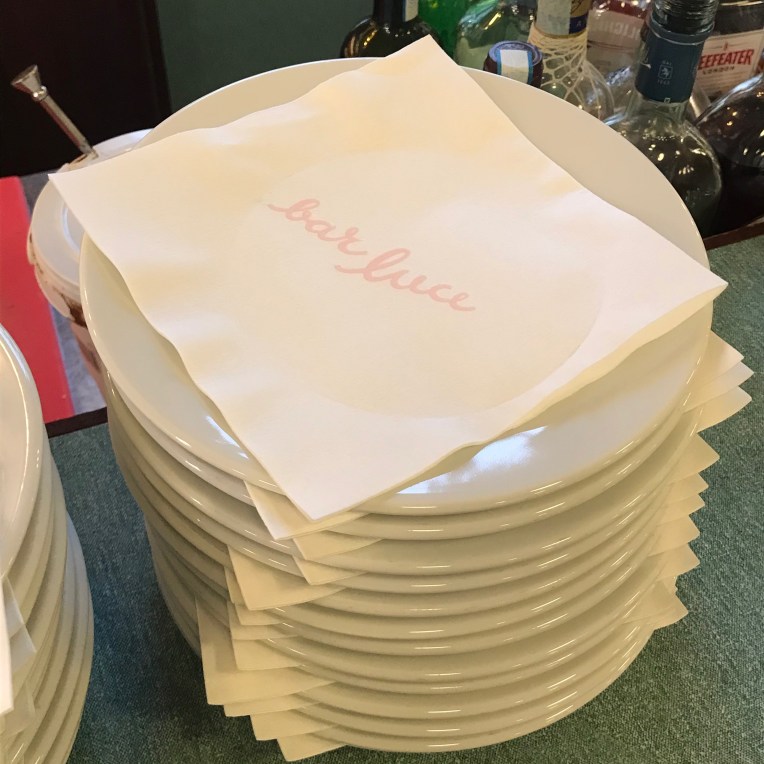
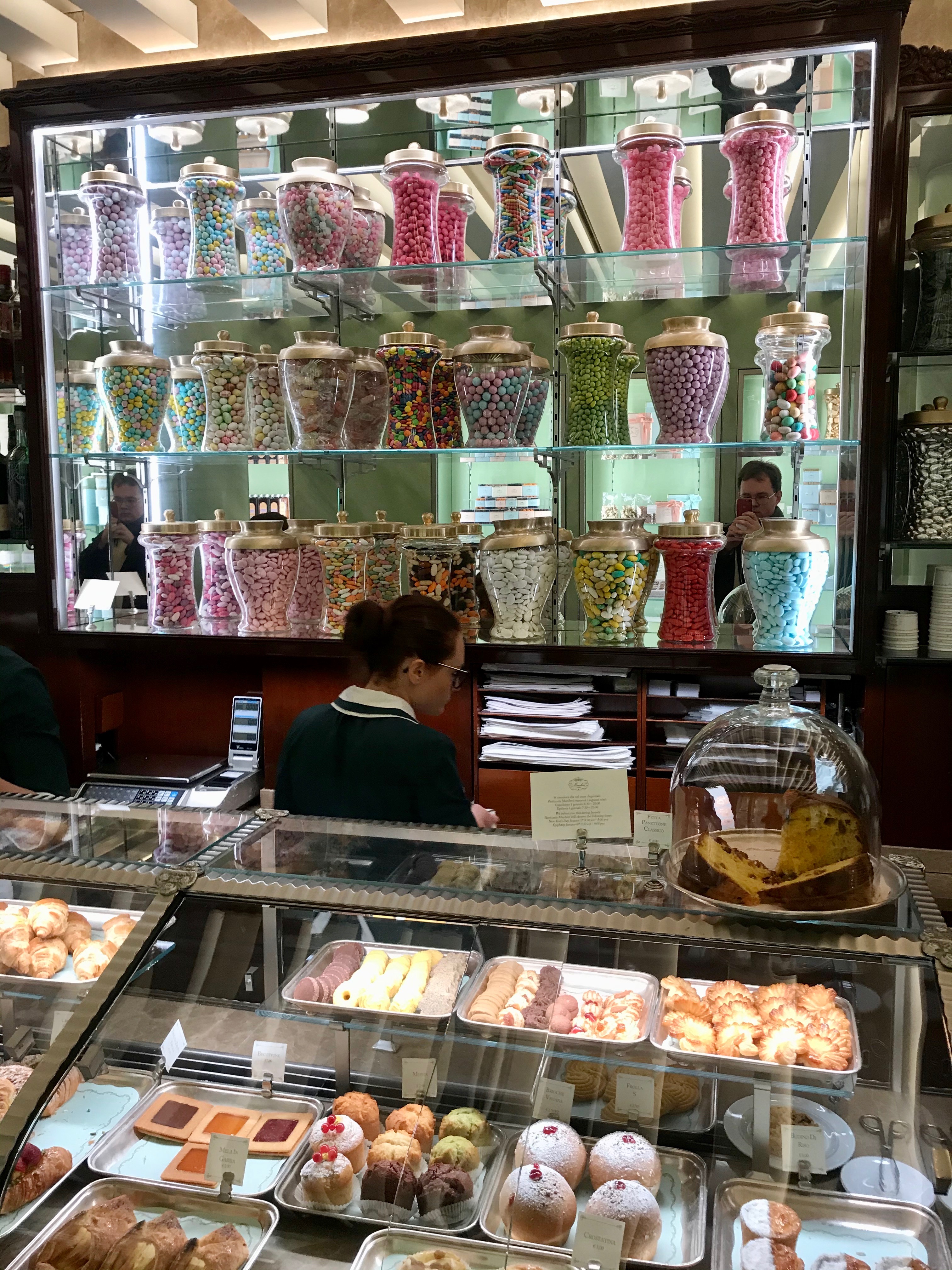
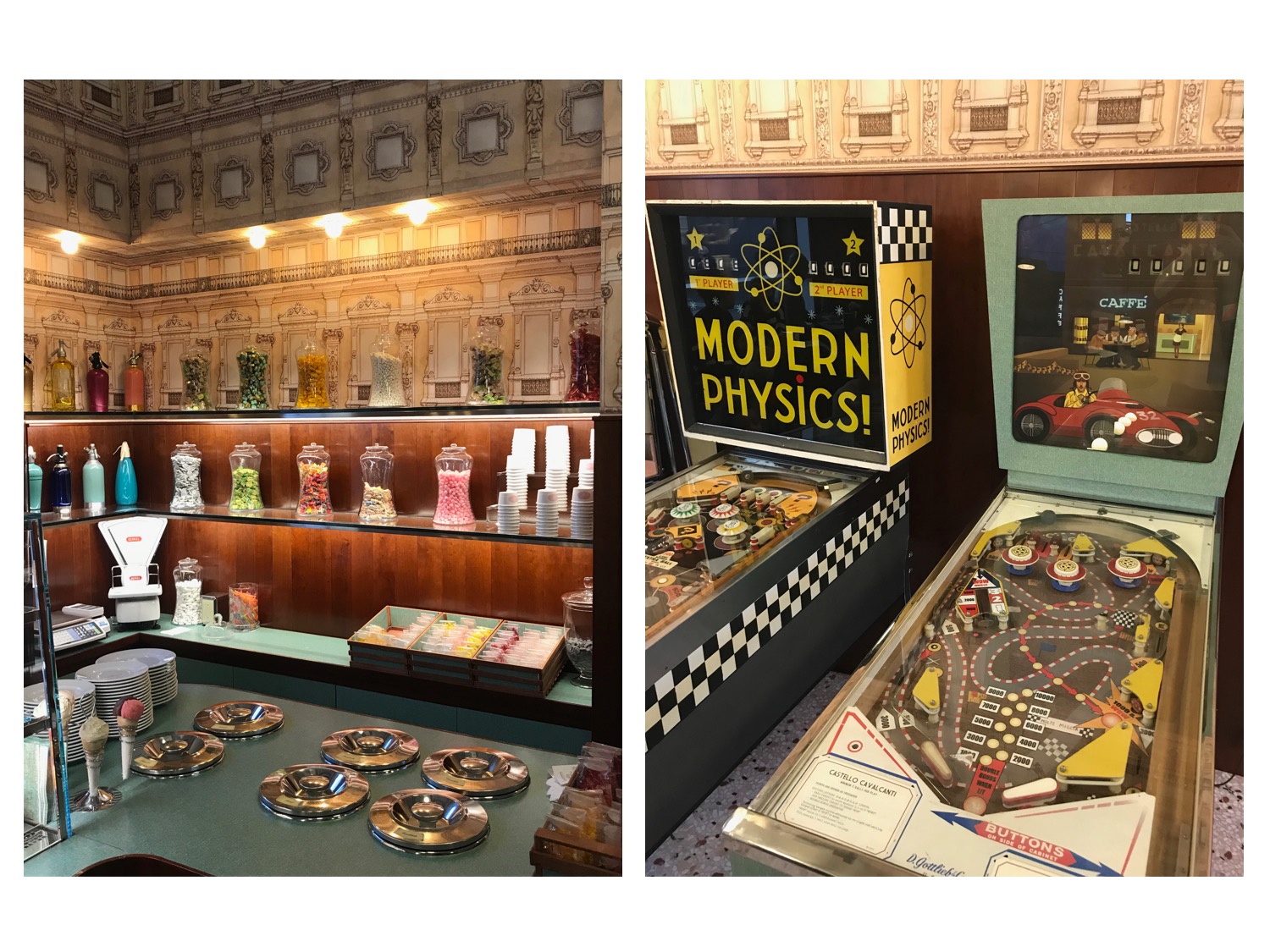
Bar Luce is probably the only museum cafeteria that sparks so many emotions. The place was conceived by Wes Anderson (those pastel colour combinations are unmistakably him) as “a space for real life with numerous good spots for eating, drinking, talking, reading, etc. While I do think it would make a pretty good movie set, I think it would be an even better place to write a movie. I tried to make it a bar I would want to spend my own non-fictional afternoons in.” Delicious coffee and delightful marzipan cakes from Prada’s Marchesi 1824 patisserie (more on this soon!) are served here everday. Be aware of the lines!
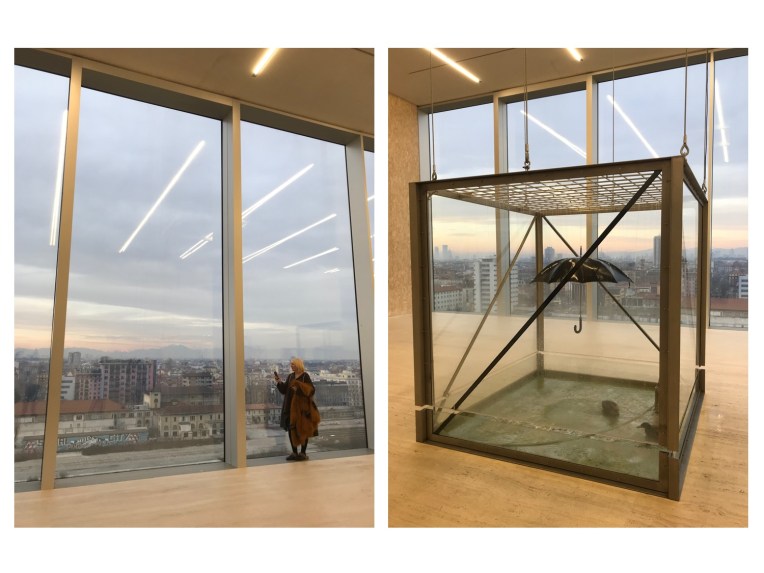
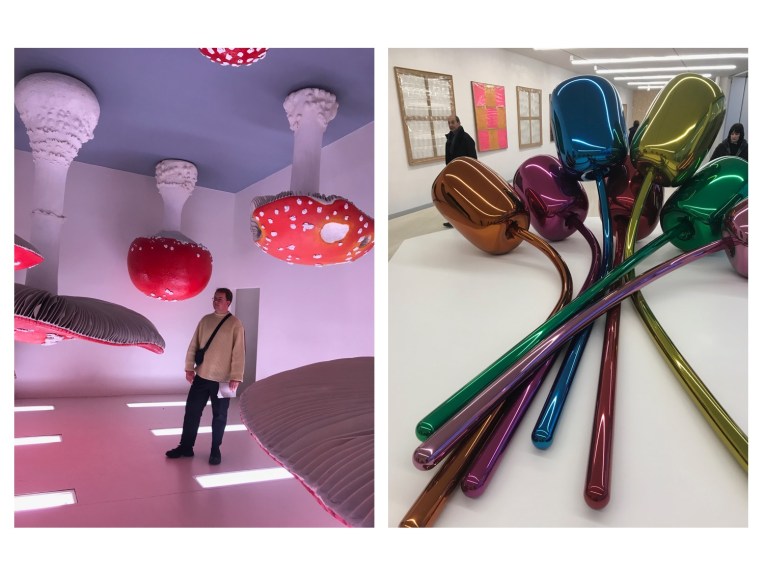


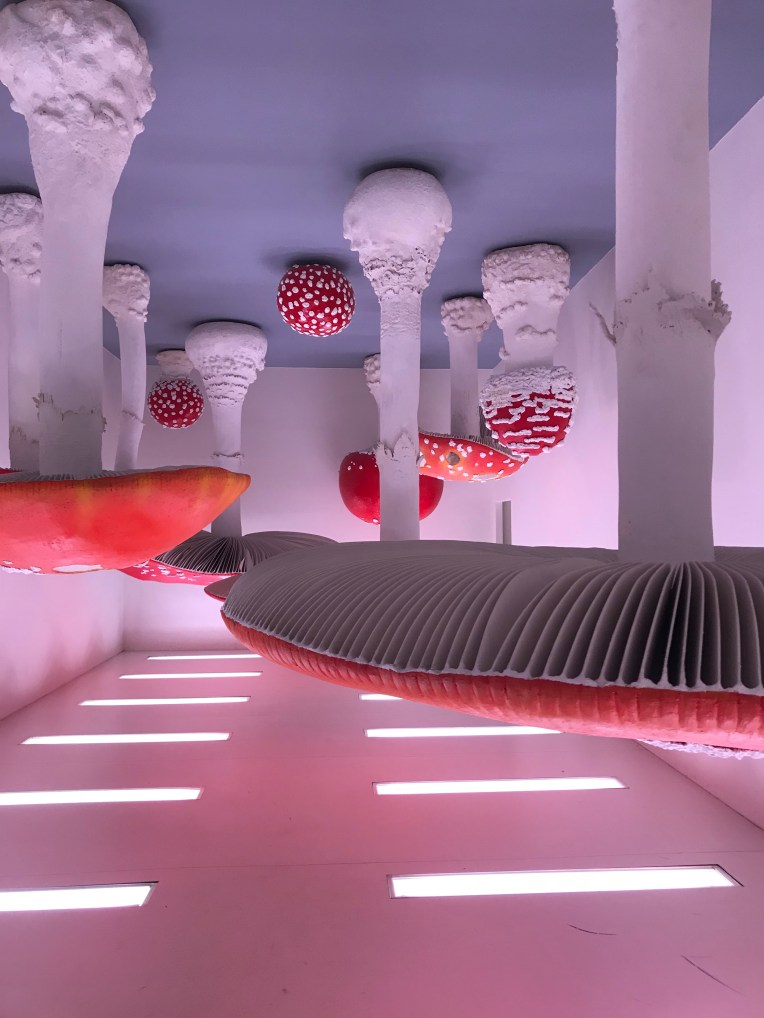
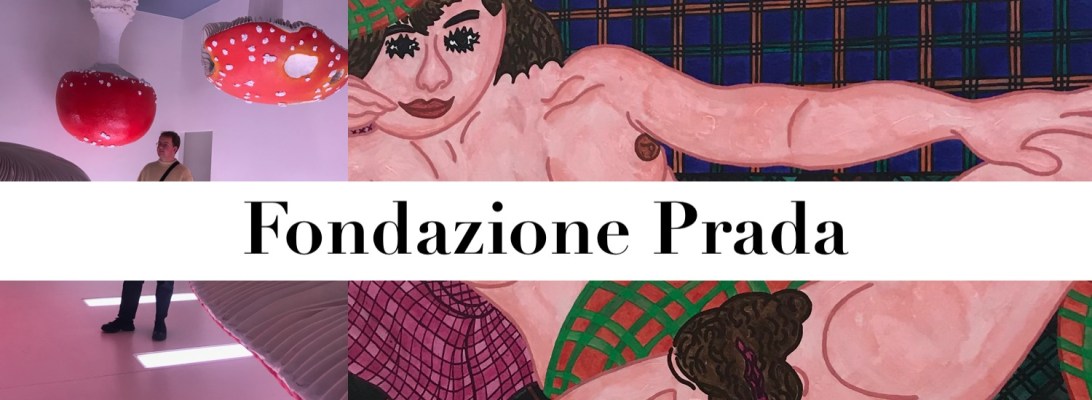
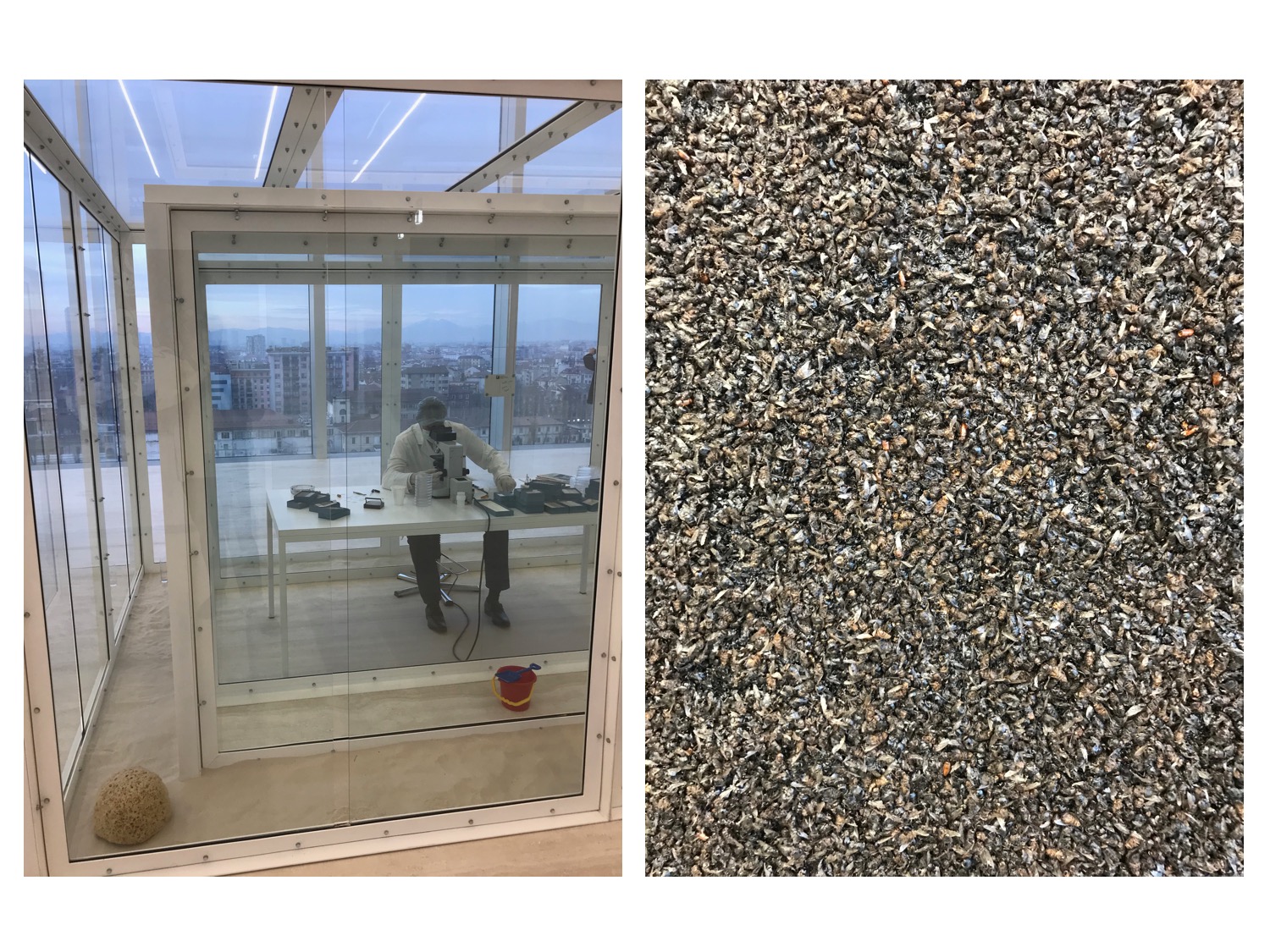
Project Atlas emerged from a dialogue between Miuccia Prada and Germano Celant and is exhibited at the Torre. It hosts works from the Prada Collection displayed in a sequence of environments incorporating solos and confrontations, created through assonances or contrasts, between artists such as Carla Accardi and Jeff Koons, Walter De Maria, Michael Heizer and Pino Pascali, William N. Copley and Damien Hirst, John Baldessari (R.I.P.) and Carsten Höller (the upside down mushroom room!). The group of exhibited artworks, realized between 1960 and 2016, represents a possible mapping of the ideas and visions which have guided the creation of the collection and the collaborations with the artists that have contributed to the activities of the foundation throughout the years. Atlas therefore traces an evolving path between the personal and the institutional, open to temporary and thematic interventions, special projects and events, with possible integrations from other collections and institutions.
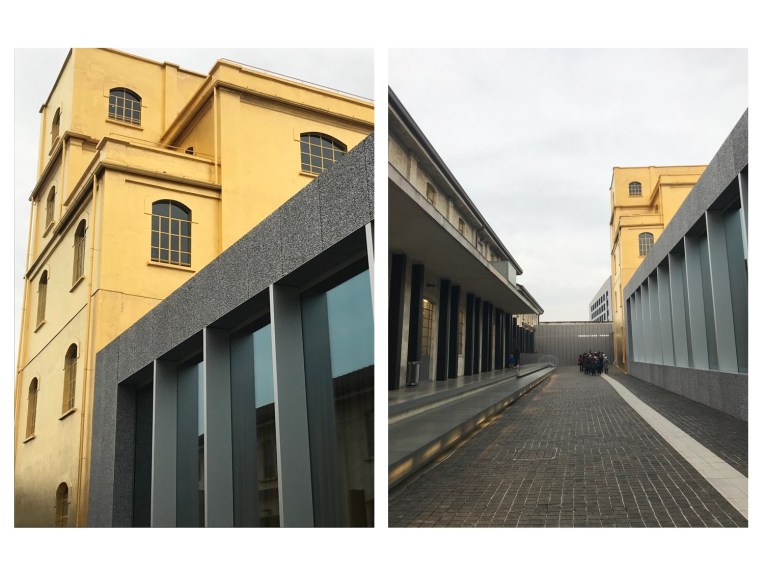

Other than Atlas and Podium spaces, Fondazione Prada also holds such venues as Cinema and the gold-plated Haunted Tower. This time, however, we didn’t manage to visit the latter, as there were no more tickets available. It’s the pernament collection of Robert Gober and Louise Bourgeois artworks – which we saw last time. But if you’re planning your trip here, make sure to book the tickets to every Fondazione space on-line or in advance! It’s really, really, really worth it.
Largo Isarco 2 / Milan
/
All photos by Edward Kanarecki.













 Design & Culture by Ed