Daydream. Celine AW21

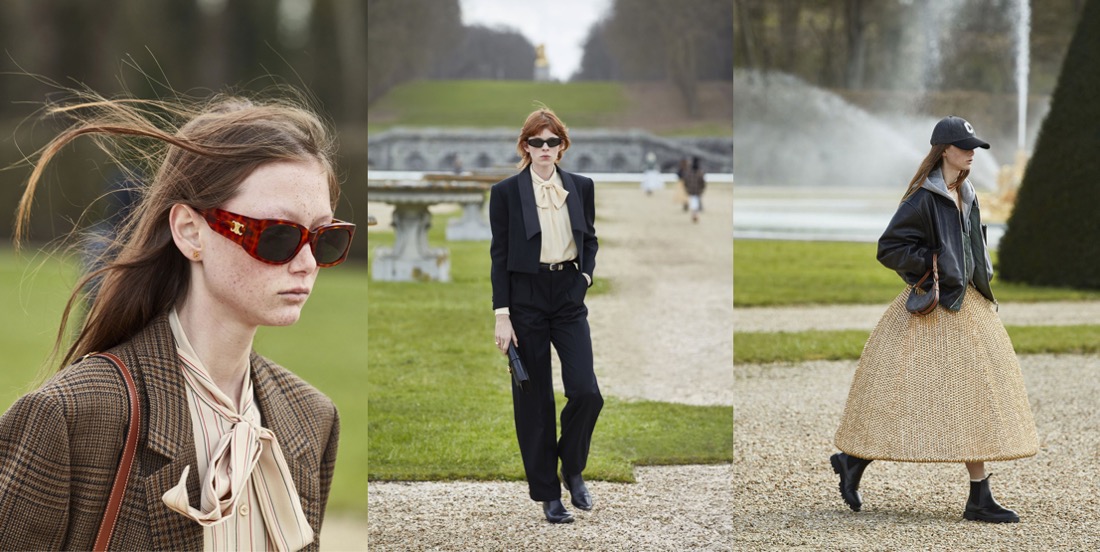
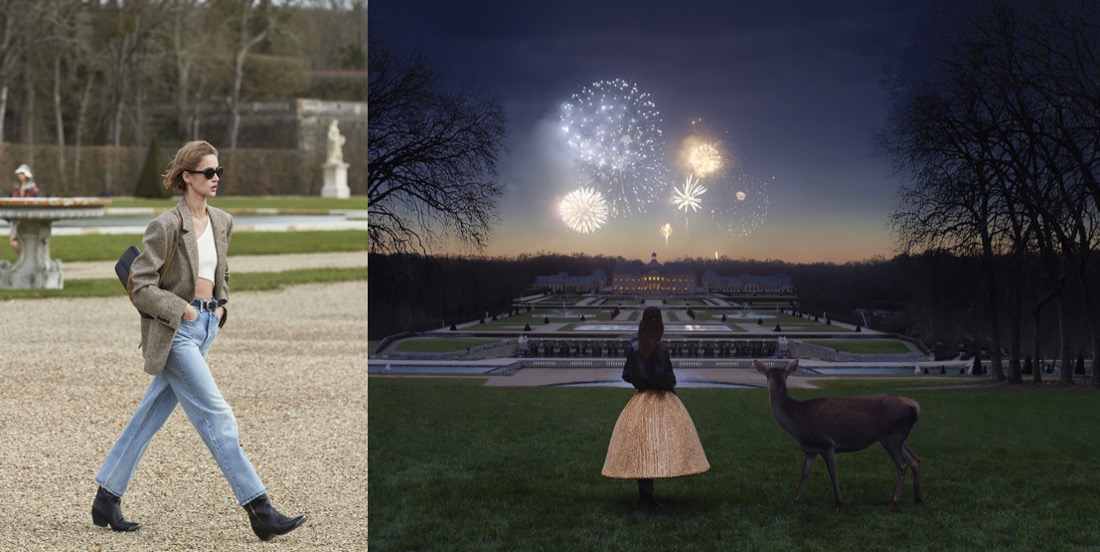
Hedi Slimane wouldn’t be himself if he wasn’t obsessed with youth – even for a moment. But there was something unexpectedly intriguing about his Celine vision of lockdown-era teenagers, who are totally fed up with the real world and induldge in fancy, Disney-like daydreaming. Definitely, the collection’s video was a highlight. The audienceless show was set amongst the breathtaking gardens of the Château Vaux-le-Vicomte, some 55 kilometers outside Paris. The always-sad Hedi girls walked casually past the exquisite formal fountains and pools landscaped centuries ago by André Le Nôtre. It’s landed as a sequel to the last Celine menswear show, in which Slimane’s young chevaliers roamed the battlements of the Château Chambord in the Loire valley. Clothes-wise, this collection was rather usual Slimane offering. Traditionally, the uniform Parisian wardrobe is paced out and remixed in that on-point manner that has made French girl-style the envy of the world. It’s that knack of pairing something posh that might have belonged to your mom or dad with something casual. Throwing on a tweed hacking jacket or trench coat with exactly the right cut of bashed-up old jeans is also always a good idea. The new additions included nods to princess wardrobe: a heavily embellished ball-skirt worn with a heavy leather biker jacket, for instance. There was a line in Slimane’s show notes which alluded to a “utopian parade and melancholic daydream of youth interrupted.” It ran after quotes from Baudelaire, Paul Verlaine, and Arthur Rimbaud – France’s decadent, libertine poets eternally famed for exalting the excess and pain of misspent youth. In a time when parties, clubs, festivals, and events have been banned for so long, the show ended with a shift to a fairy-tale scenario. A girl in a glittering, hand-beaded crinoline stood looking toward the chateau with fireworks exploding in the sky. There was a deer by her side, a tear on her cheek. There’ll be nowhere for the princess to wear that couture-ish crinoline yet – definitely not in locked-down Europe. Let her dream, at least.
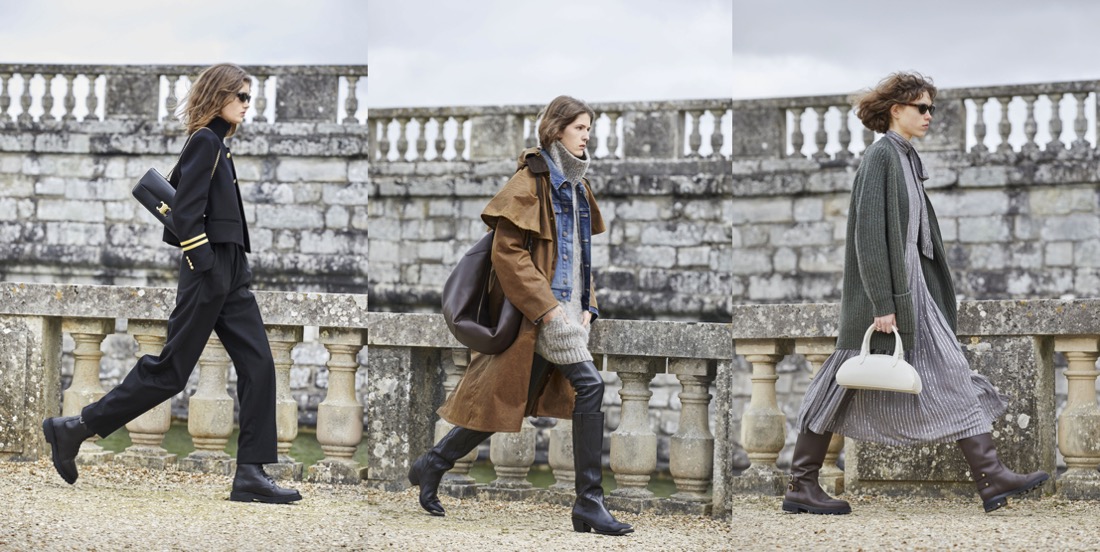
“Live” collage by Edward Kanarecki.
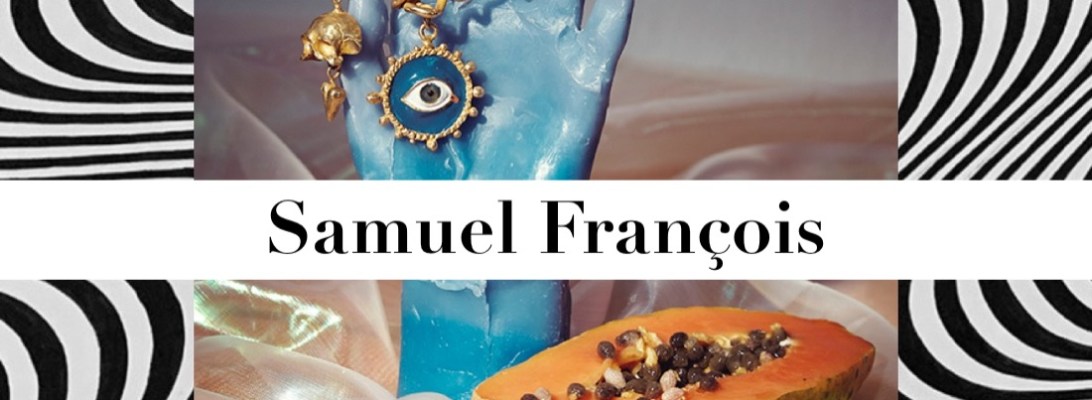
Focus On: Samuel François

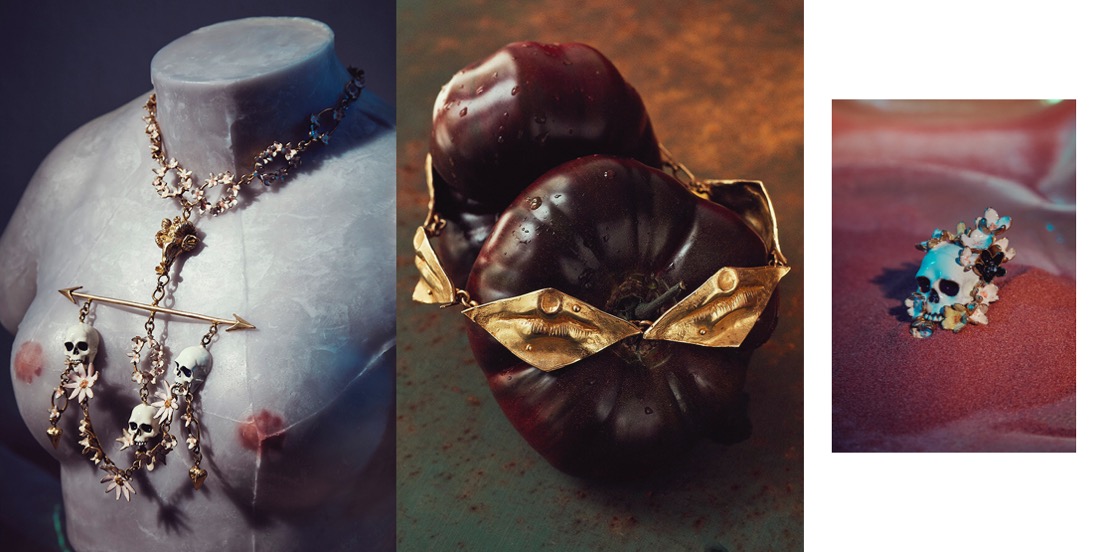
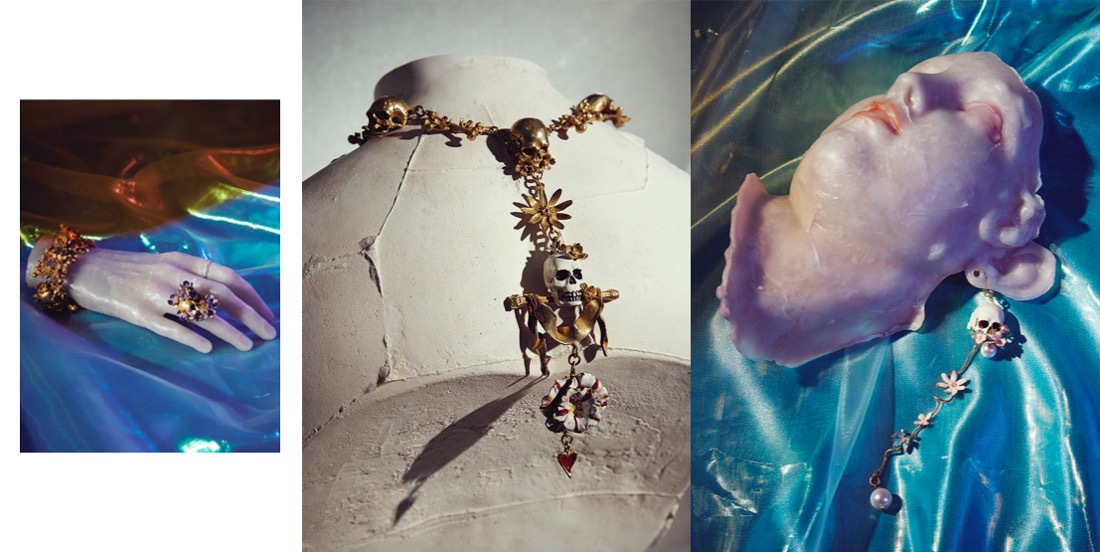
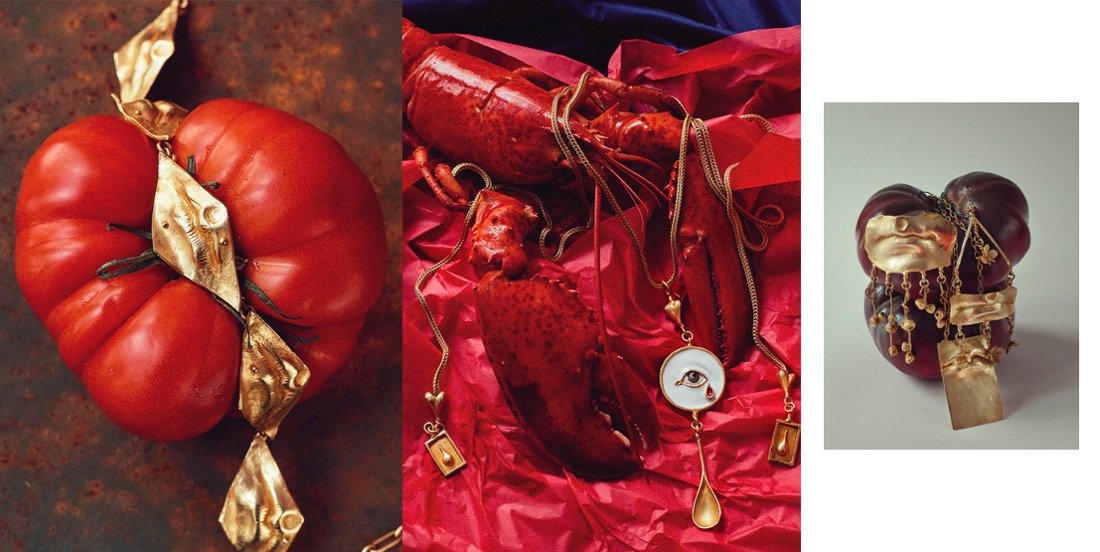
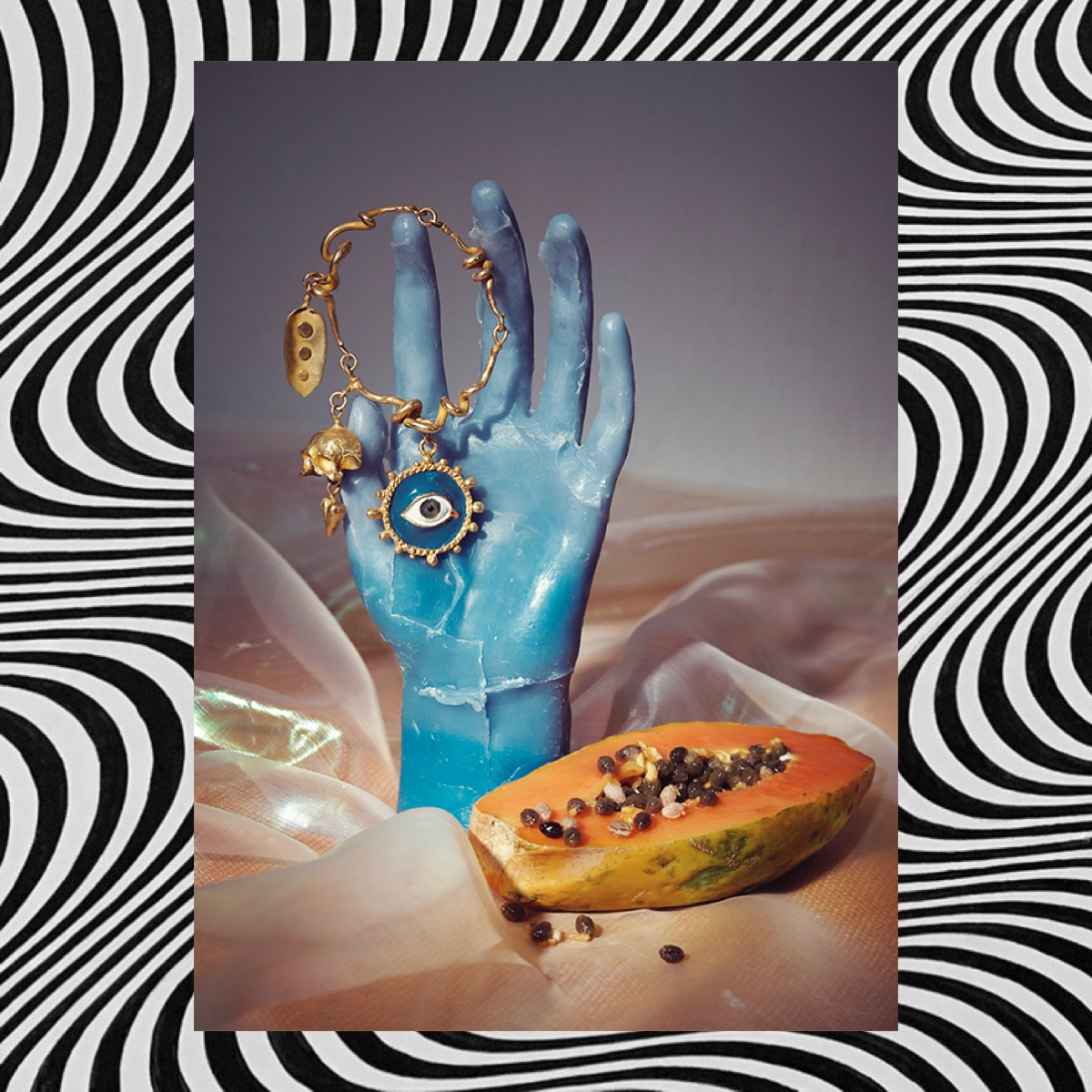
While many are wowed by Schiaparelli‘s Daniel Roseberry and his “surrealist” jewellery boom, first check Samuel François‘ stunning works. The French stylist – who is also the fashion director of Numéro magazine – takes the jewellery medium to another reality. “It’s really just something I began for myself in a very empirical way,” he told Vogue back in 2018. The idea sort of crystallized, he explained, when he bought an Afghan ram’s-head bracelet while on vacation in Thailand. Once back home in Paris, a try at sculpting soon resulted in bronze and enamel jewelry. Not that jewelry was entirely new to him: he had worked on runway pieces for Martine Sitbon and other designers in the past, but it was the first time he had taken up a hobby just for himself. “I love styling, but we live at a frenetic pace,” he said. “I didn’t want to miss a chance to do something more personal and whimsical. I guess it’s kind of my way of showing that I can do something besides putting clothes together nicely.” François describes his aesthetic as a cross-pollination of his love for fashion and a passion for the city of Naples, with its jumble of antiquity and mythology and one destination in particular, Nathalie de Saint Phalle’s boutique hotel, the Albergo del Purgatori. The statement earrings, bracelets, and plate necklaces feature enamel surrealist teary-eyed motifs and macabre skulls, as well as gilded leaves and mouths molded from goldened bronze. For more of his works, check out Samuel’s website!

Images courtesy of Samuel François Jewelry.

Cosmic Goddess Power. Mugler SS21 (2)

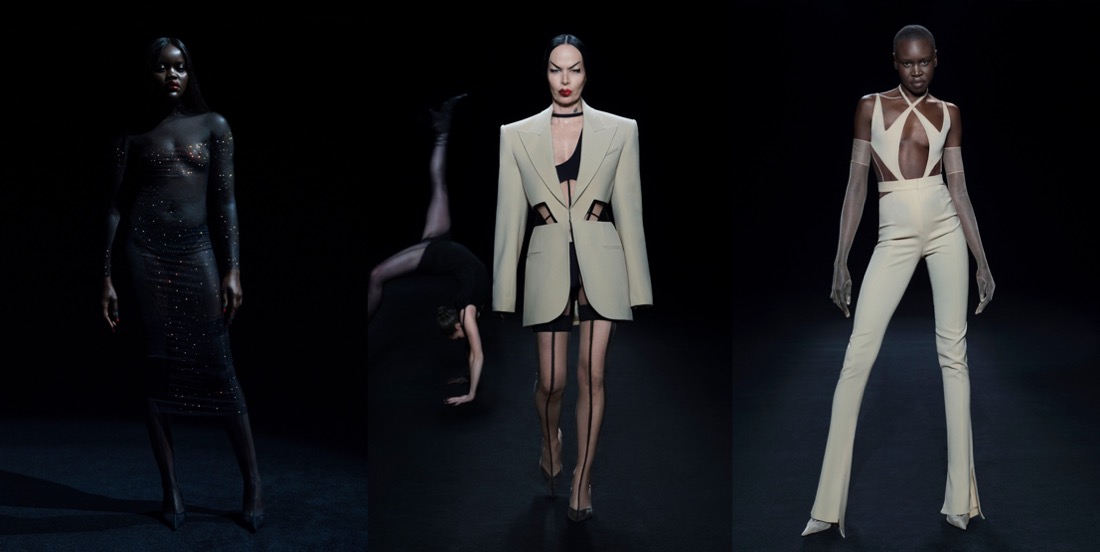
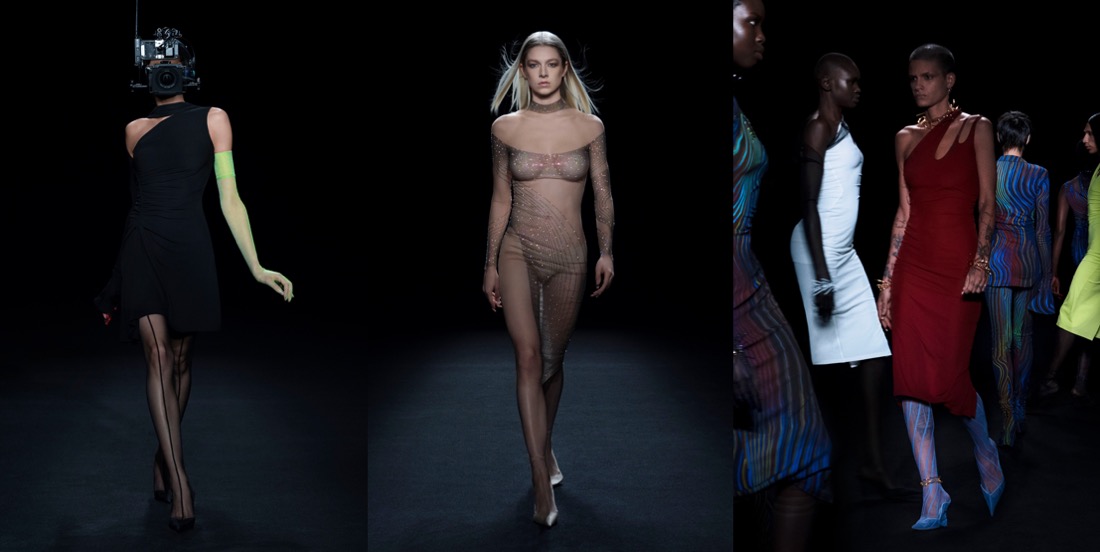
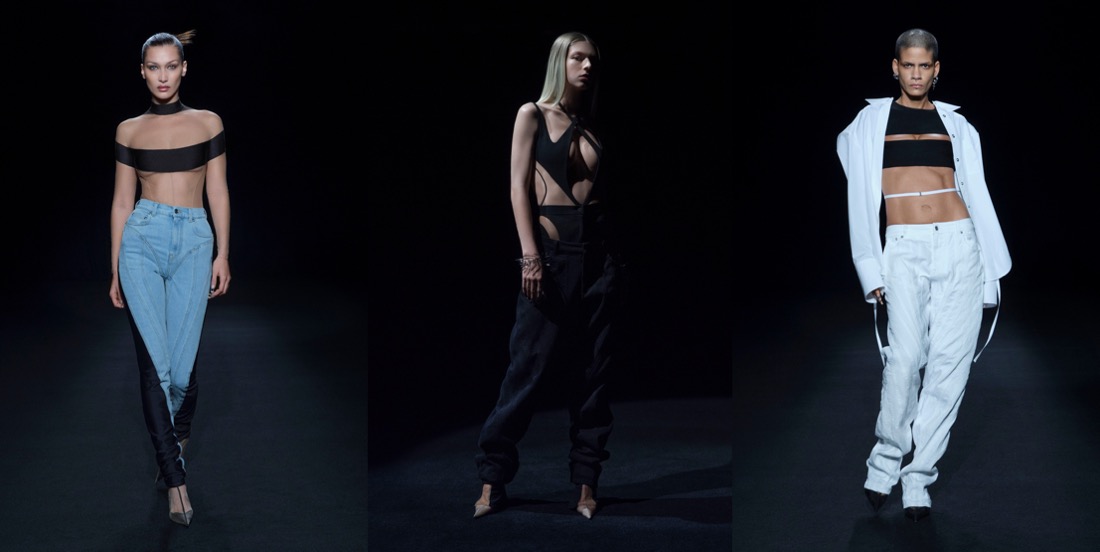
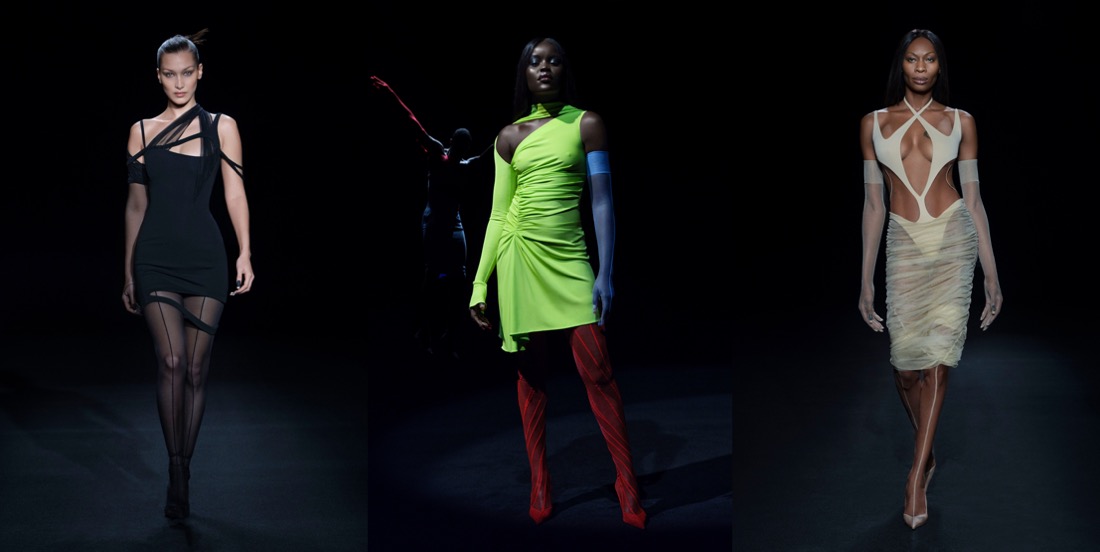
Cosmic goddess power hits the Earth – that’s how one might discover Casey Cadwallader‘s brilliant Mugler collection for spring-summer 2021 (part 2). “It’s important to do the jaw-dropping scandalous stuff; that’s what this house is built on. But it’s also about trying to address an interesting day-to-day wardrobe too,” Cadwallader said. Well, about as “day” as Mugler will ever get. “A lot of young people want to buy Mugler now. I’m trying to do the right thing for the right price,” he explained, pointing to expressive pieces made from recycled Lycra that won’t empty that demographic’s wallets. He’s also thinking a lot about how to elevate sportswear; combining sport with lingerie. Take, for example, the graphic, gravity-defying top that Bella Hadid wears, the one that looks like it’s supported on nothing more than a wing and a prayer, but is in fact a smart combination of fabric technology and illusion. It’s made from a super-stretchy mesh that not only sculpts and smooths the body but also completely disappears against any skin tone. “The idea of shape-wear is built into these garments; there is a lot of attention on fabric technology,” Cadwallader said. “For me, all bodies need to be designed for, not just skinny bodies, although, even skinny bodies sometimes have a bigger butt or boobs and…the clothes help you out with that instead of making you feel bad for having them. I’m celebrating different body shapes.” Cadwallader is having fun making these videos, too. “Should a hyper-charged Hunter Schafer jump off a box onto the runway to drum and bass music? Yes!” he exclaims, of his nine-minute film directed by Torso Solutions, which also stars Kembra Pfahler, Alek Wek, and Dominique Jackson. “I’ve always wanted models to break into dance on the runway or to do something, but when it’s a live show it’s very risky. The runway can be intense and scary, and the audience is often exhausted, but when you’re doing a film you can mess around, play, and edit.” Like deciding to “rewind” and present the whole show backwards, as he does here. The best news? Having just moved the house to a see-now-buy-now model, it’s all available to buy right now.

“Live” collage by Edward Kanarecki.
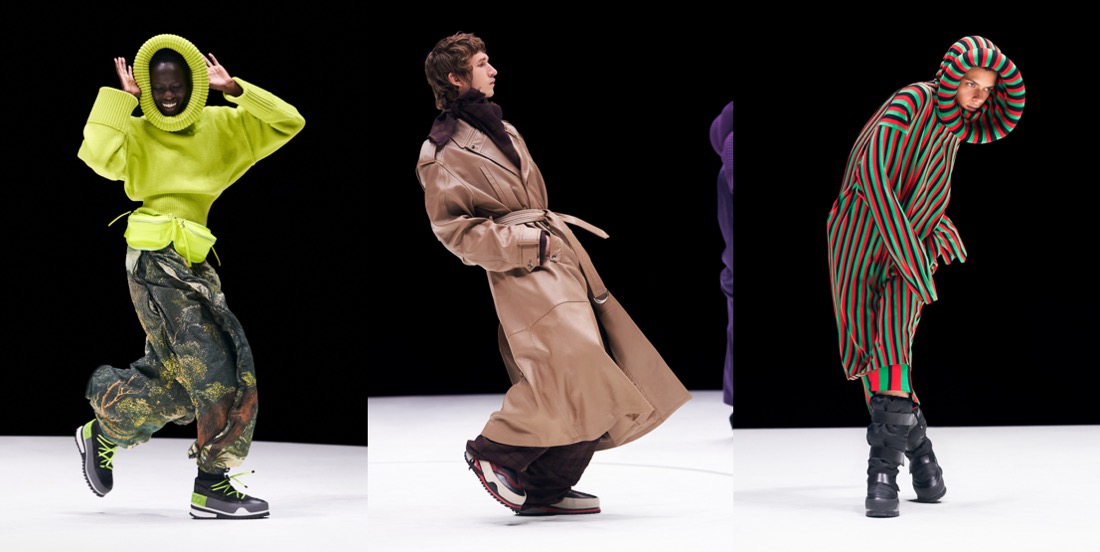
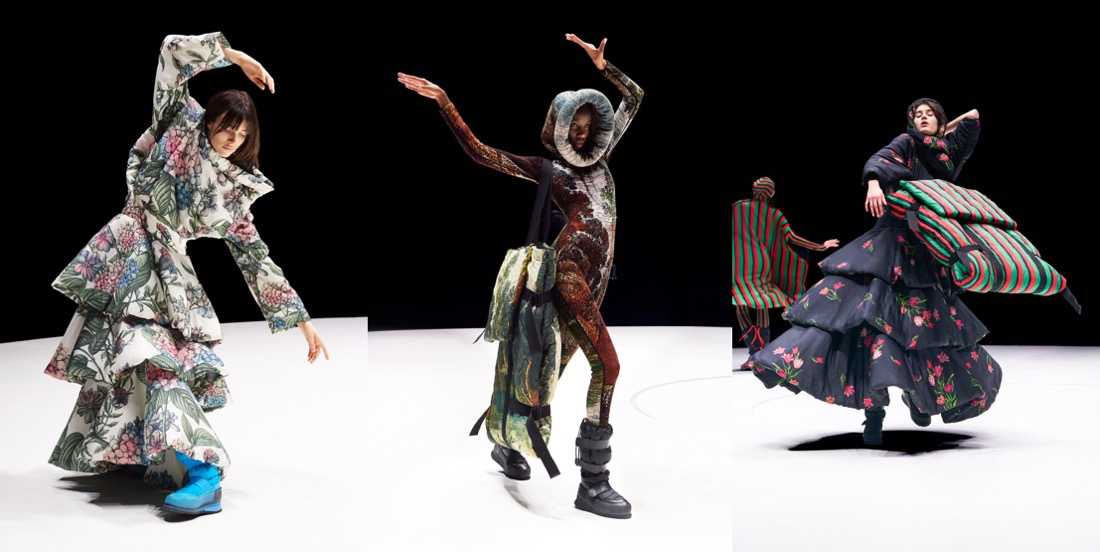
Joyful Motion. Kenzo AW21

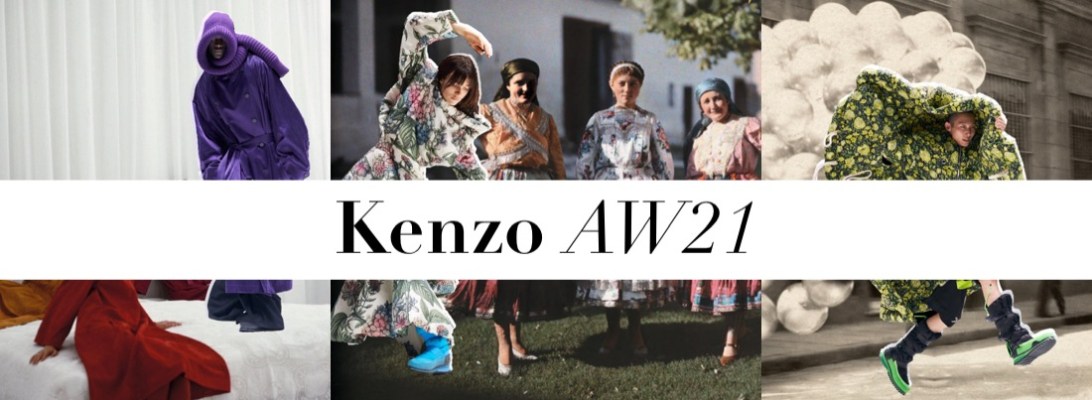
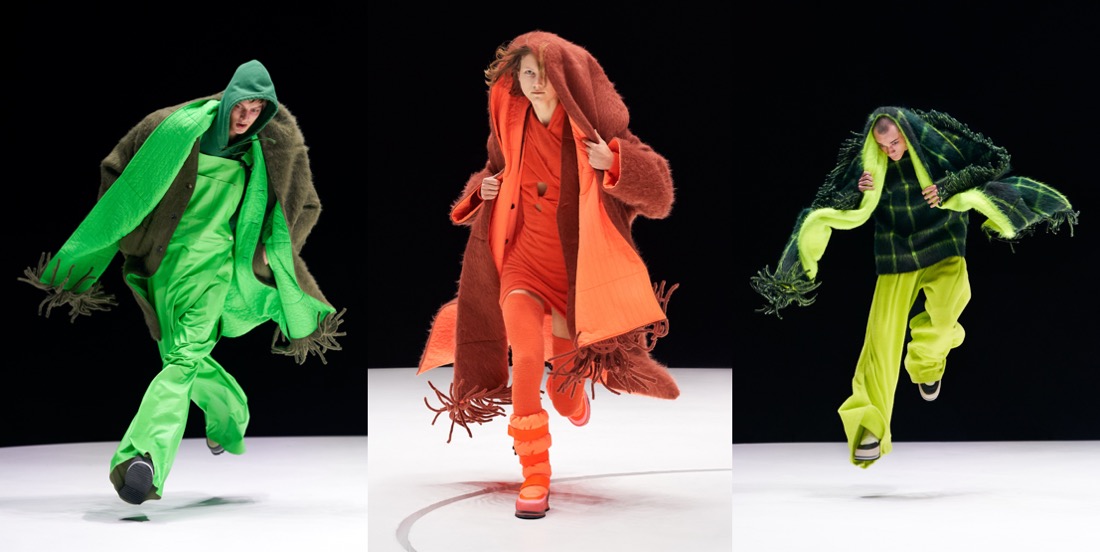
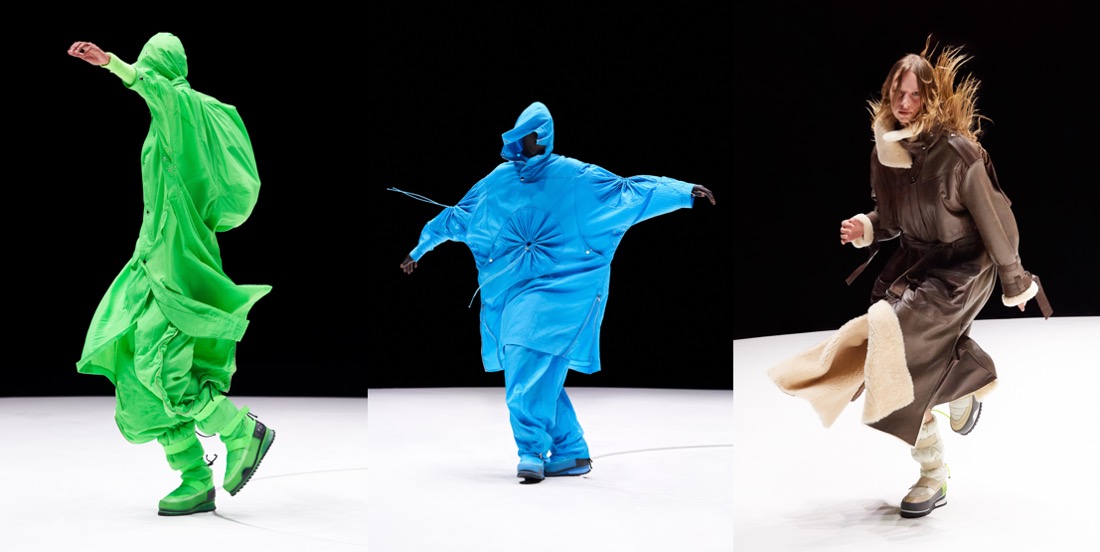
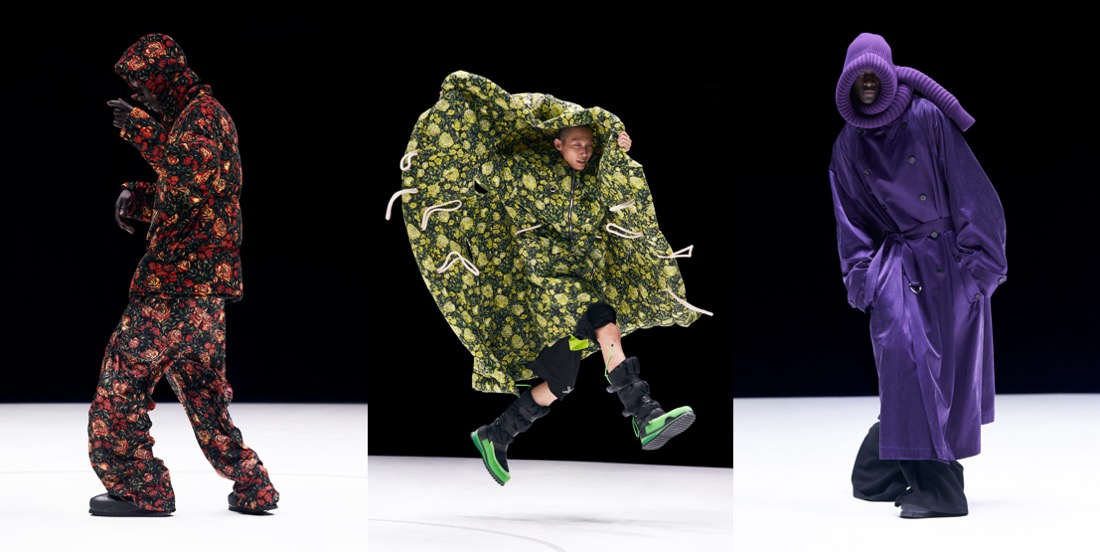
With Felipe Oliveira Baptista, Kenzo is finally back on track. Forget ‘Tiger’ sweatshirts and endless logos – Oliveira Baptista wants to position the brand among the serious ready-to-wear brands, like in the Kenzo Takada days. “Intuition is a banned word at fashion houses these days. It’s as if there’s no space for it. But there was a lot of that in him,” Oliveira Baptista told Vogue, reflecting on the legacy of Takada, who died in October last year aged 81. Sticking to those values, the autumn-winter 2021 collection is dedicated to Takada, yet at the same time, Felipe didn’t reissue a single garment or print from the master’s greatest hits of the 1970s and ’80s. Instead, the designer paid tribute by evoking the founder’s presence through intuitive ideas. Silhouettes riffed on Takada’s most memorable moments through the spherical and orbital, the folkloric, and the cross-cultural. Balancing, as he does, the artisanal with the durable and sporty, Oliveira Baptista simplified and contemporized materials, turning Takada’s geometric lines into a kind of streetwear for a 21st-century Kenzo. Throughout, he painted the garments in the things the founder loved most: pansies, tulips, hydrangeas, and stripes. Honestly, it could have been one of Takada’s shows, shot in the Cirque d’Hiver, where he often presented his collections, with an original soundtrack by Planningtorock (listening it on repeat!) and models dancing in a harmony of shapes, colors, and patterns. Close-up, it was bursting with new life in a performance-y, vivid way. Refreshingly, Oliveira Baptista’s work for Kenzo doesn’t show many signs of pandering to a social media-driven shopping culture as his predecessors.  Before he started working on the collection, Oliveira Baptista was given access to footage of all the old Kenzo shows, which had been undergoing restoration at the time of his arrival. “In the first two seasons, I had only seen the photos and the clothes themselves, so I was struck by the magic of the shows: the intuition, the freedom, how the clothes were always moving. It made me want to portray the movement, the comfort, and the freedom these clothes give you. That’s very much what Kenzo stood for,” he explained. All those things felt like good timing for a post-lockdown proposal. Felipe is looking forward to digging into ‘true’ Kenzo even deeper in the next months. “He was quite revolutionary. When he first arrived in Paris, the way he was cutting clothes and playing with color was so different from the European way of constructing garments. That immediately gave women and men a new freedom of movement,” the designer said, reflecting on Takada’s fashion. “It’s not that he doesn’t have the place he deserves, but sometimes what he’s done is overlooked. The idea of extreme comfort in a very strong look feels very now. He did that first. It’s a very rich legacy.

“Live” collage by Edward Kanarecki.

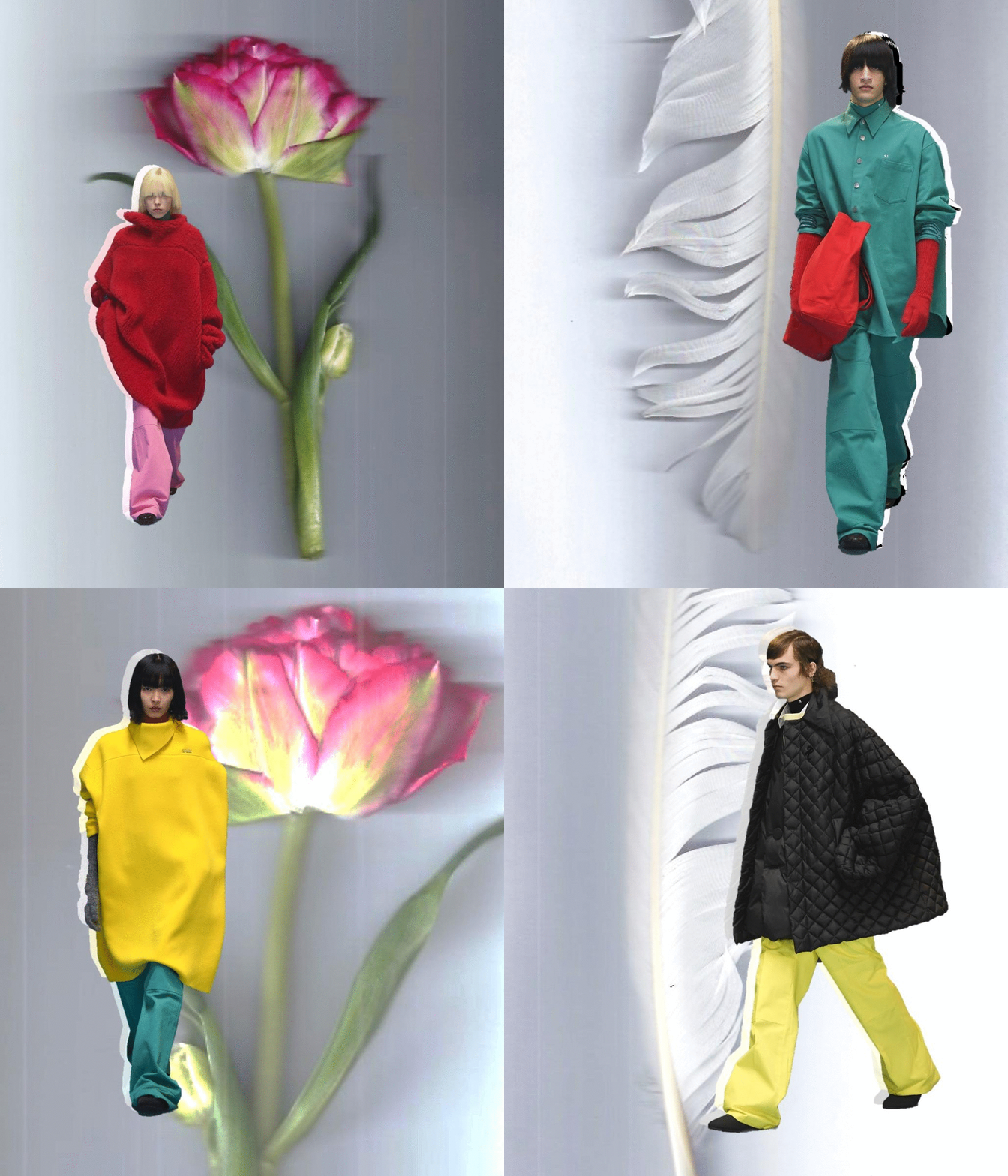
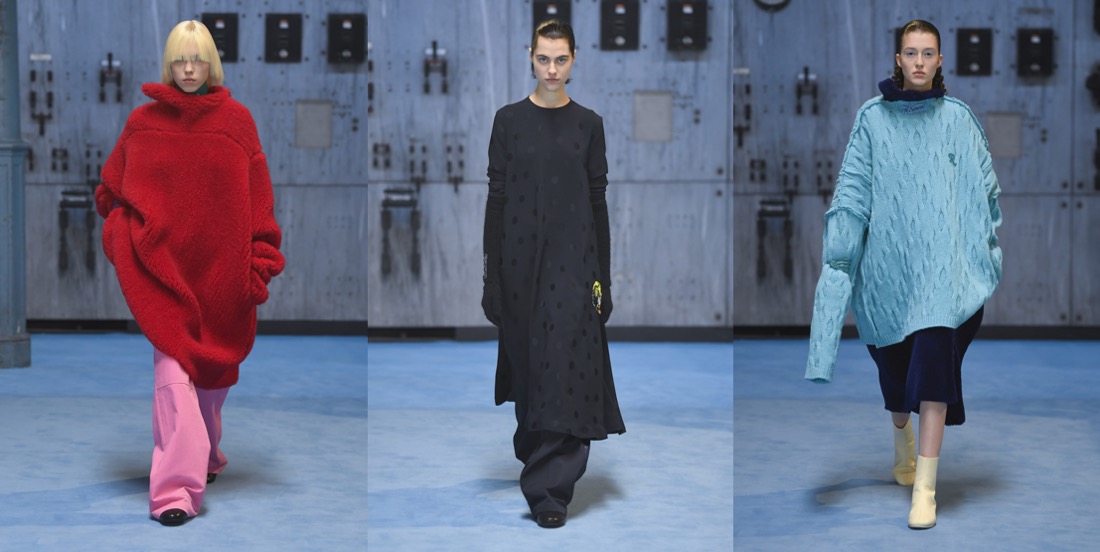
Silhouettes. Raf Simons AW21

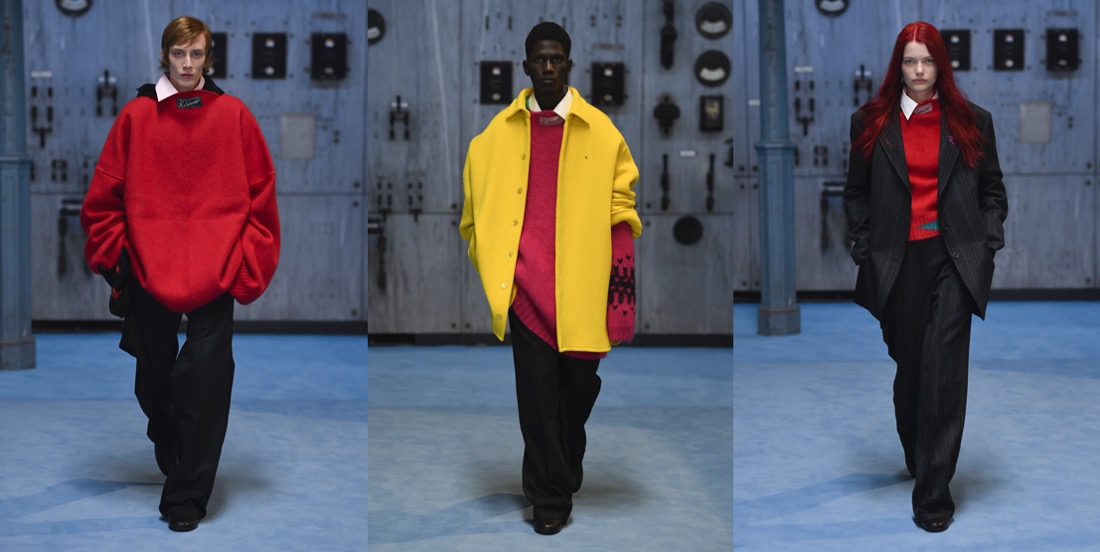
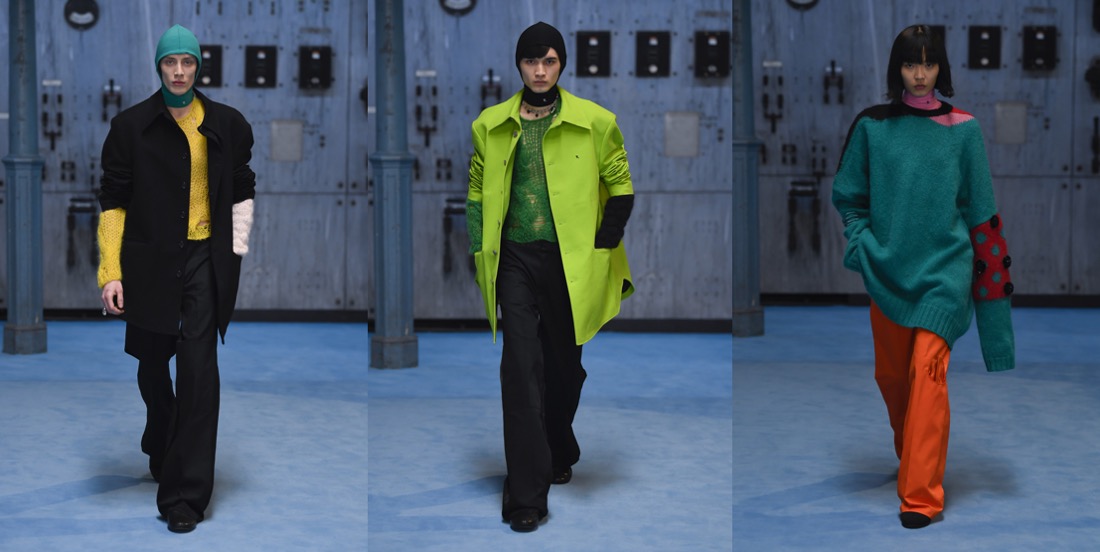
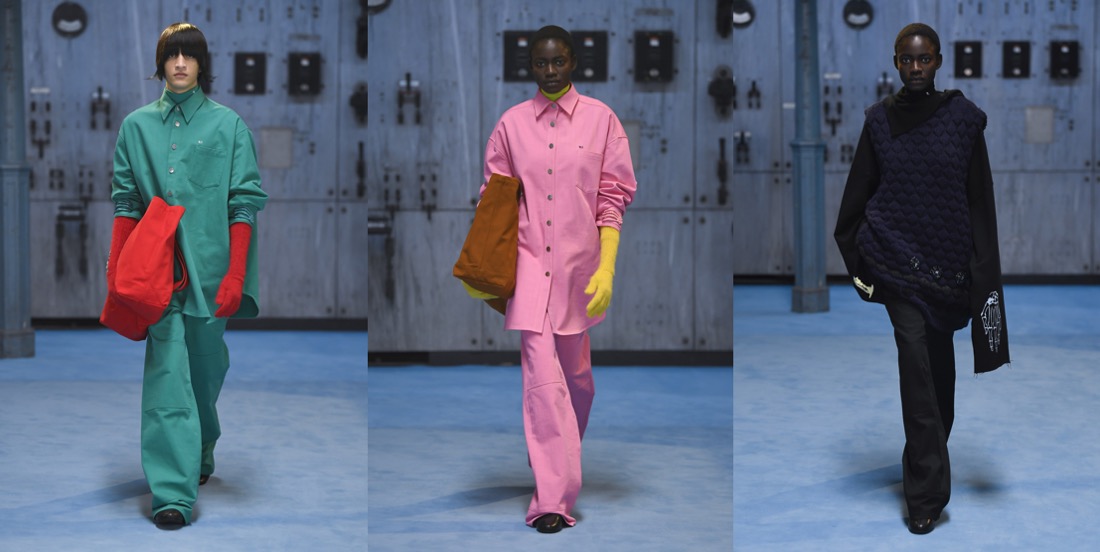
Raf Simons‘ latest collections are more straightforward and easier in approach – yet they have that elusive spark that makes the designer’s work so attractive. For autumn-winter 2021, Simons stated his simple mission: “The collection is about things I love – things I have always loved, that are always there in every collection, in the processes behind it, and the clothes.” This season, silhouettes loosen and expand, almost magnetically propelling away from the body rather than clinging to it. The quilted A-line coats, some layered with puffy vests, and gigantic mushroom cap knits with strass brooches and dot patterns must be the largest garments he has ever offered. Wearing them with relaxed, gently flared trousers, the models look like atomic clouds, their clothing the electrons circling their forms but never touching them. The best part of big, baggy, enveloping clothing is that it really does look good on everyone.  In addition to the over-sized silhouette, Simons has also vastly expanded the collection of small, wantable things that hover around his garments. Ivory runner boots with a pastel gum heel are back, while a vast range of teenage-looking jewelry – hearts, logos, and dangly rib cage earrings – accompanies the clothing. The funniest baubles must be the skeleton hand bangles, fixed high on models’ arms. What I loved most is the dynamic colour palette – bubble-gum pink, pea-green, plastic-yellow, baby-blue… delightful! Simons chose six words to title this collection: ataraxia, equanimity, dichotomy, synchronicity, allegiance, devotion. Peacefulness is the big story, even amidst the techno-medical disasters of our world. Keeping the balance is always a good idea.

“Live” collage by Edward Kanarecki.