What’s Real? Vetements SS22

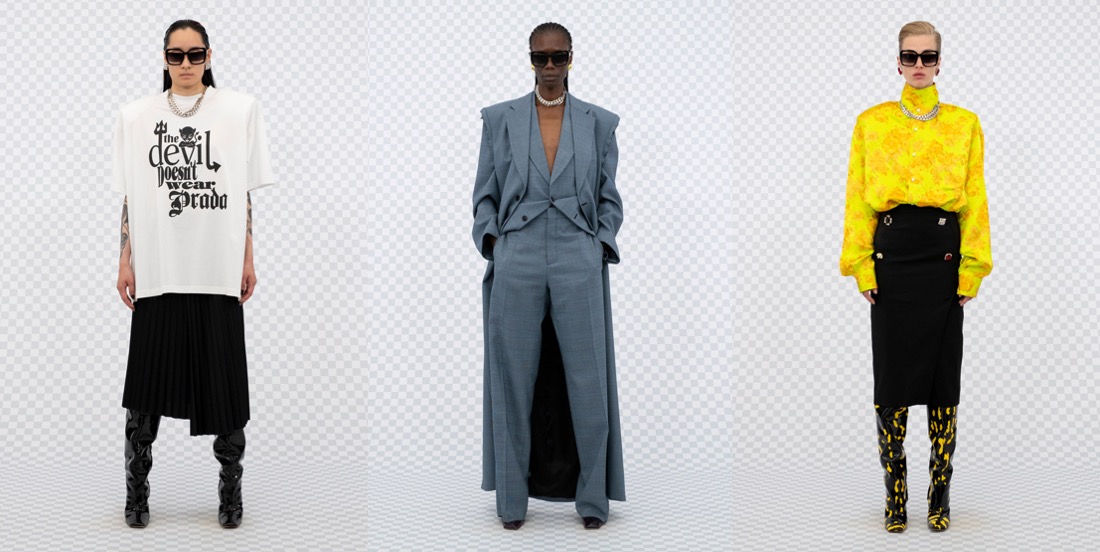
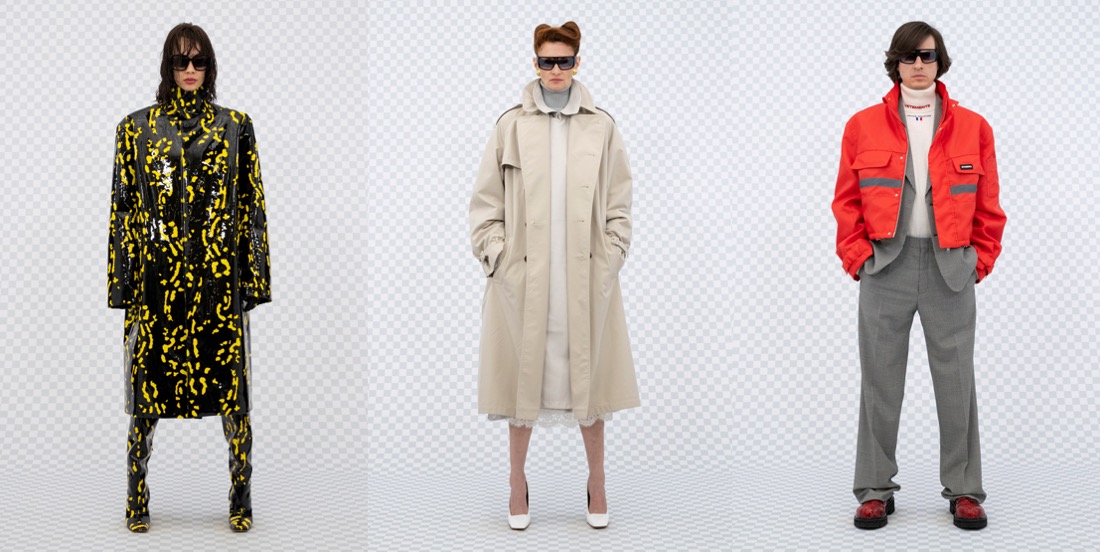
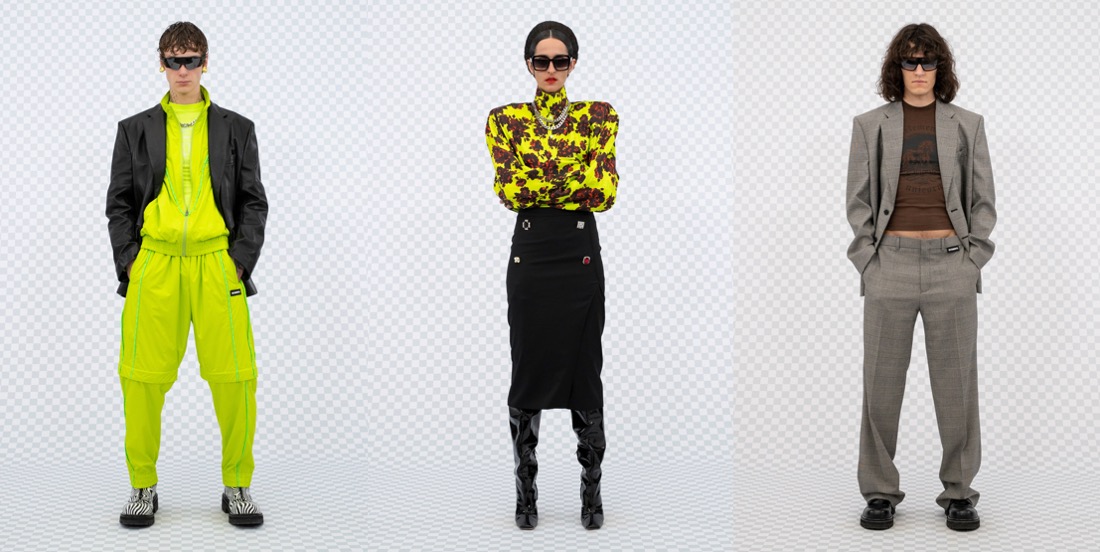
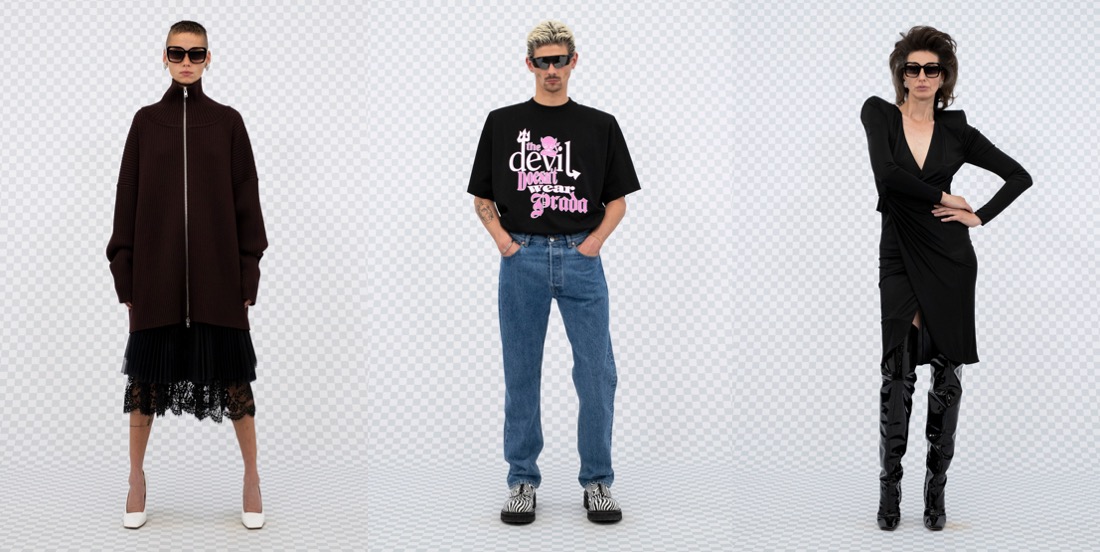
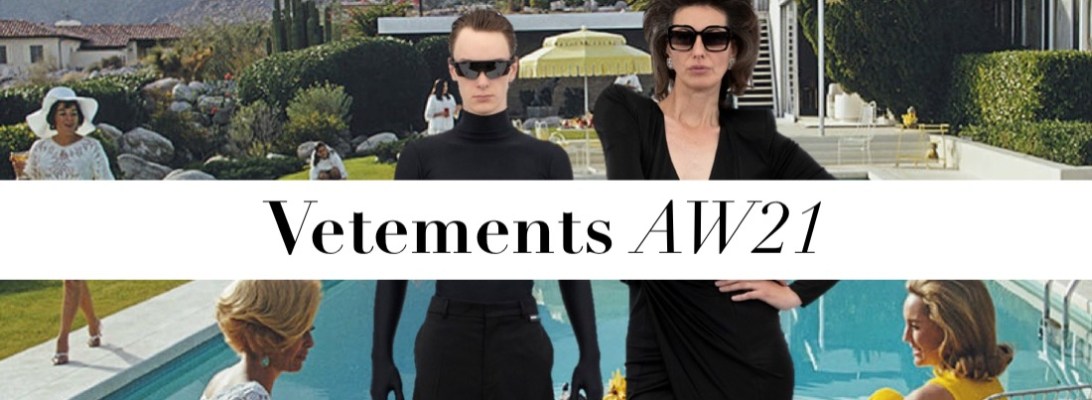
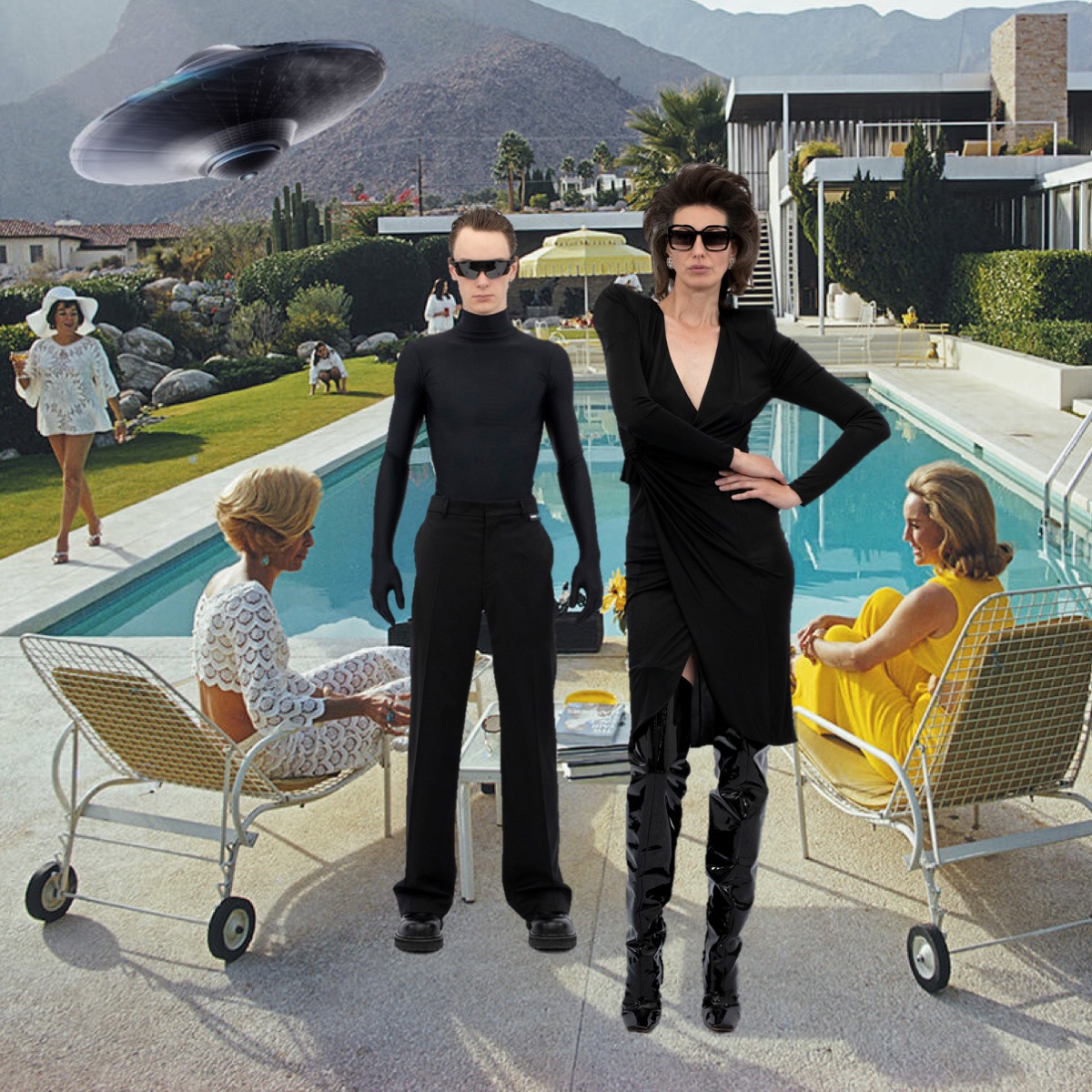
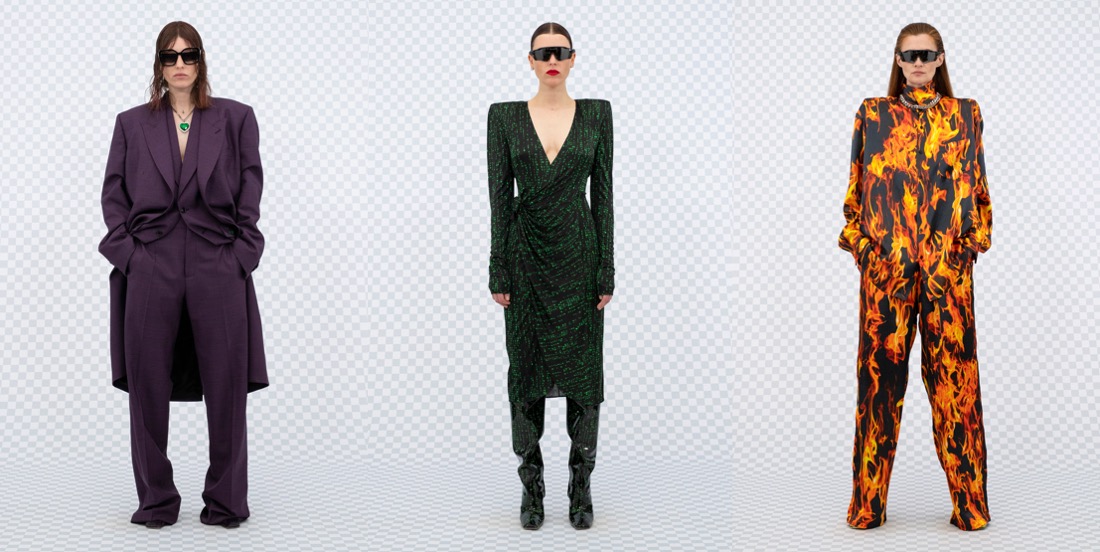
Vetements isn’t what it used to be, and for a couple of seasons now – ironically – the label feels like a mimic of itself. Since Demna Gvasalia’s departure from the label to focus solely on Balenciaga, the brand seems to put emphasis on more commercial stuff. Still, in the spring-summer 2022 look-book featuring over a hundred looks, there are some bits of the Vetements energy that made the brand so controversial (and appealing) a couple of years ago. The checked backdrop of the collection will be familiar to Photoshop users. It’s the background against which graphic designers do their work, and it offers a hint as to what’s on cofounder Guram Gvasalia’s mind. He told Vogue he’s been thinking a lot about our digital existence: “I started to ask myself: What is reality today? We live in this 2D world; the question is, when you scroll through Instagram, is it photoshopped or is it real?” Here’s another one: “Do we consume the internet or does it consume us?” Public opinion may be souring on Silicon Valley, but its digital products have us more firmly in their grip than ever. The pandemic deepened our connections with our computers and smartphones, even as we longed to reacquaint ourselves with nature. The jumbled wires of server farms and a computer font straight out of The Matrix (a timely reference, with The Matrix 4 due out at Christmas) mix with pixelated salamanders and flower prints so bright they almost glow. For every shell suit there was a siren-y gown, and logo-stamped jeans were dressed up with a seriously sharp double trench. The masculine tailoring with its strong shoulder lines, the floral dresses, the puffers and parkas – it’s all about the Vetements foundation pieces. And the slogan tees and hoodies are cleverer than ever; “The Devil Doesn’t Wear Prada” example, Gvasalia said, is an idea he pinned to his mood board some time ago, for a would-be collaboration. A flame print that appeared on a wrap dress and matching boots, among other sportier pieces, was reprised from the brand’s last time on the runway, circa autumn-winter 2020. The boldness of a Vetements show has been integral to the brand’s success from its start. The problem with 2D? It’s not 3D. Gvasalia seemed enthused about the prospect of returning to the runway post-pandemic. “We are 100% going back the moment we can travel,” he promised.
Collage by Edward Kanarecki.
Très Cool. Lacoste AW21

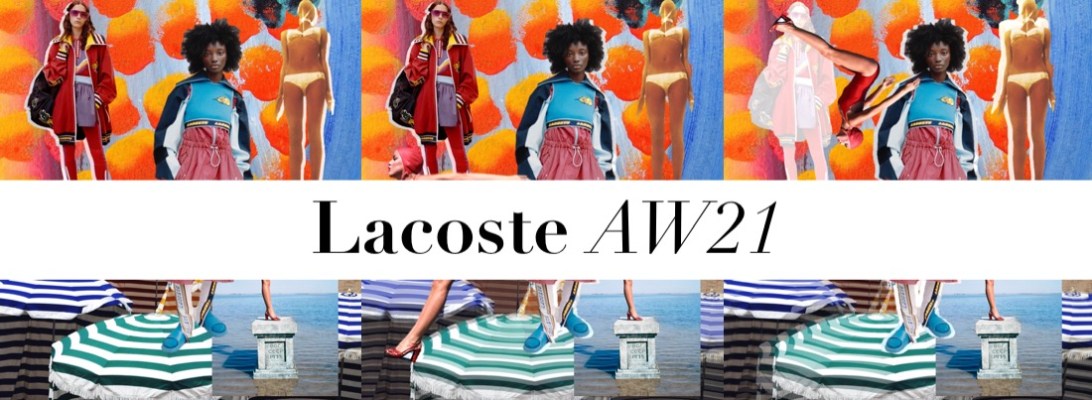
Louise Trotter‘s sustainable-meets-chic-meets-smart vision of Lacoste keeps on delivering with every season. Lacoste has the benefit of being a brand at the nexus of athleisure and luxury, offering pieces that are at once trop sportif and trop française. That’s a clutch position for a fashion house in these times. It also has the benefit of the well-dressed Trotter at its helm. She is the woman in a slouchy polo, mannish trousers, white sneakers, and aviator glasses that makes you pinch yourself in a jealous rage when you pass her on the street or are seated next to her at a dinner. Someone who is calmly unstudied, comfortable, and totally not try-hard. Suffice to say, Trotter has long understood the benefits of generous, easy-to-wear clothing with arty touches in the form of a funny, albeit small, graphic or the juxtaposition of sorbet colors. So when it came time to design Lacoste’s second collection of the lockdowns, she knew exactly what to do: “Capture the active lifestyle that we share today and that blurs between home life, work, and play.” The backbone of Trotter’s autumn-winter 2021 offering is Lacoste’s famous piqué cotton, cut into lively hued polos, but also groovy tracksuits and cardigans. Some are intarsia’d with crocodile claws and flaming tennis balls – sort of silly patterns Trotter found in the brand’s archive. They are all, she notes, unisex – as is almost everything else in the collection. If the varsity jackets and cool puffers read a little on-the-nose in terms of branding, Trotter’s continuation of spring 2021’s upcycled and collaged windbreakers, trousers, and coats offer a more cerebral take. The Lacoste archive is rich with both heritage inspirations and unused or vintage materials; Trotter has married them nicely in these upcycled pieces. They will pair well with the collection’s piqué tracksuits and cartoon colored pool slides. That’s exactly how Trotter would wear them. In a time when everyone is questioning how to dress, a sure-footed and stylish creative director with a singular vision is a good guide.

“Live” collage by Edward Kanarecki.

Cocteau And Coco. Chanel Resort 2022

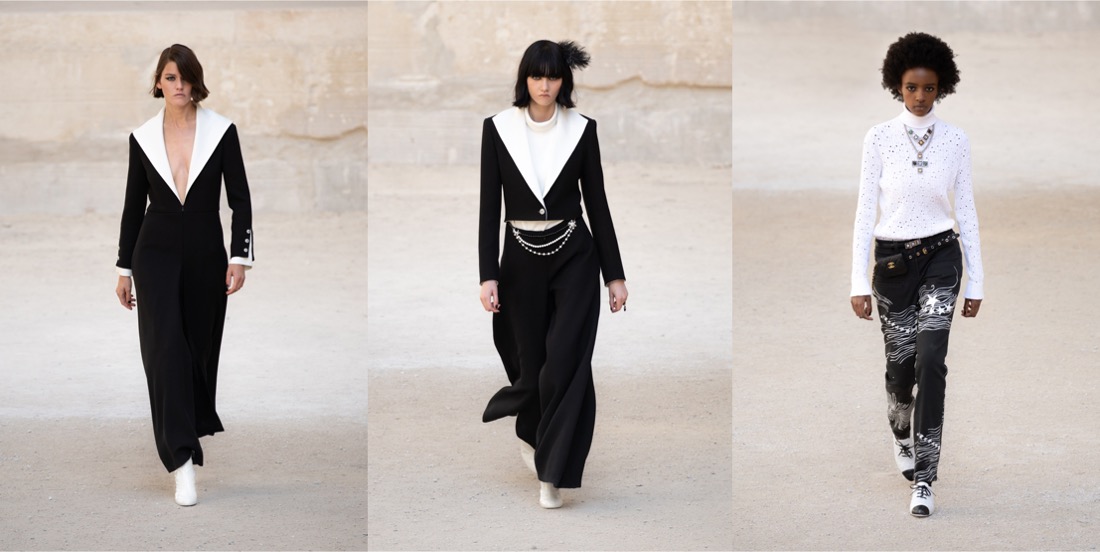
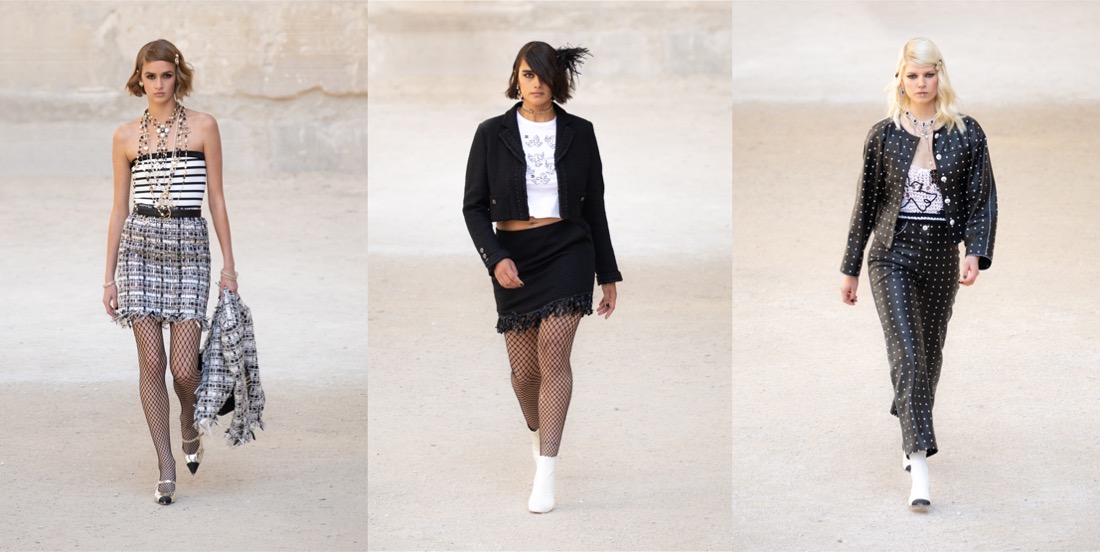
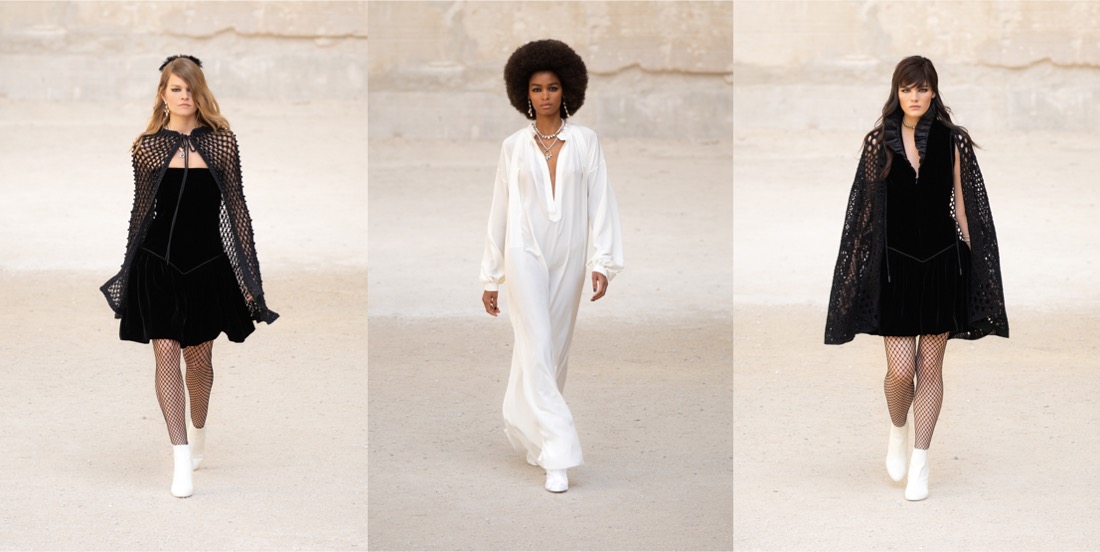
Virginie Viard‘s Chanel is like a sinusoid – one time it’s bizarrely unedited and clumsy, and then it’s fantastically light and super chic. Her resort 2022 has both, although the latter fortunately prevails. The fashion show was a digital, cultural trip, where the clothes worked really well. Viard sought inspiration in Provence, the most beautiful region in the south of France lapped by the marshy Camargue and crowned by the hills of Les Baux-de-Provence, considered one of the area’s loveliest villages. Specifically, she set the collection in the Carrières de Lumières (Quarries of Light) in Les Baux, a series of chalky, cave-like rooms – the spaces left behind after centuries of excavations. In 1960, however, Jean Cocteau – the artist, poet, and filmmaker who cast a long shadow across the worlds of culture and style in 20th century France – used these quarries as a setting for his hauntingly beautiful movie The Testament of Orpheus. It’s “so modern, so fresh, and so strong,” says Viard, who watched the movie, which features Cocteau himself, with cameos from his lover Jean Marais, Pablo Picasso, and Yul Brynner, among others, as she began working on the season. “The movie really inspired the collection,” Viard added. “When I came to see the quarry again – I’d been years ago, before it was used for the son et lumiere – I saw that the clothes had to be strong, and black and white. Otherwise we could be in Petra or Egypt. I love ruffles for the couture,” she continued, “but I thought it would not look modern here. Coco Chanel counted Jean Cocteau amongst her intimates; he produced some evocative portraits of her and illustrations of her clothes, and in turn she costumed productions of his plays AntigoneOrpheus, and Oedipus Rex. The friends would often hang out in Chanel’s daytime apartment on the Rue Cambon, and Viard was excited to read the letters that Cocteau sent to Chanel. The apartment has recently emerged from an extensive restoration, and Viard sought inspiration in the very personal bestiary that Chanel assembled there: The lions for that famous Leo, camels, doves of peace, fauns, and the female sphinxes that all appear in objects and sculptures in the apartment have been reimagined as graphic prints on denim with a hand-painted look, and as lucky charms used as embroidery in the new collection.

In this cocktail of references, Viard as well worked with both Mod and Punk references: striking black and white miniskirts, suits and coat dresses trellised with window pane blocks of small concrete beads, and styling flourishes like fishnet stockings had a Mod sensibility. Accessories including zippered leather holster belts worn at the waist or thigh, handbag chain suspenders, and dog collars read as Punk, as did details like the rock and roll leather fringing on a shimmy dress, and the raw finishing used to hem the skirts and cuffs of caviar tweed suits and crochet minidresses (a Jean Cocteau sketch of a 1920s fringed Chanel dress was the starting point for these designs). The late Stella Tennant’s patrician Punk attitude inspired the lip piercing jewelry, as did Ines and Vinoodh’s photographs of the model Lola in Chanel’s apartment; Viard was thinking of a memorable Mario Testino image of Tennant dressed as a punk with her ball-gowned grandmother, the Duchess of Devonshire, at Chatsworth, her family’s storied stately home. Meanwhile the graphic suits—with a new jacket silhouette featuring a bloused body and fitted peplum—were drawn with the definite lines of Cocteau’s ink brush and pen drawings. There was more softness in the collection in ivory lace dresses scattered with embroidered good luck charms, and wide-legged, high-waisted white linen pants and cotton sweatshirting dresses embroidered with the wild flowers of Provence – lavender, thyme, Cosmos daisies, ranunculus, blue felicia, and scabious, among others. The only colors in the collection appear in 100% sustainable tweeds created by the embroiderer Lesage in what Viard described as a “Cézanne” palette, and used for skimpy, rough-fringed minisuits. For the finale, the short black velvet dresses, each worn with crochet and macramé capes, provided a theatrical flourish of which Cocteau would surely approve. And there’s a pragmatic reason for all those white ankle boots: “It’s better not to have a long black dress or black shoes if you are walking in a quarry all day!” confided Viard with a laugh.

“Live” collage by Edward Kanarecki.
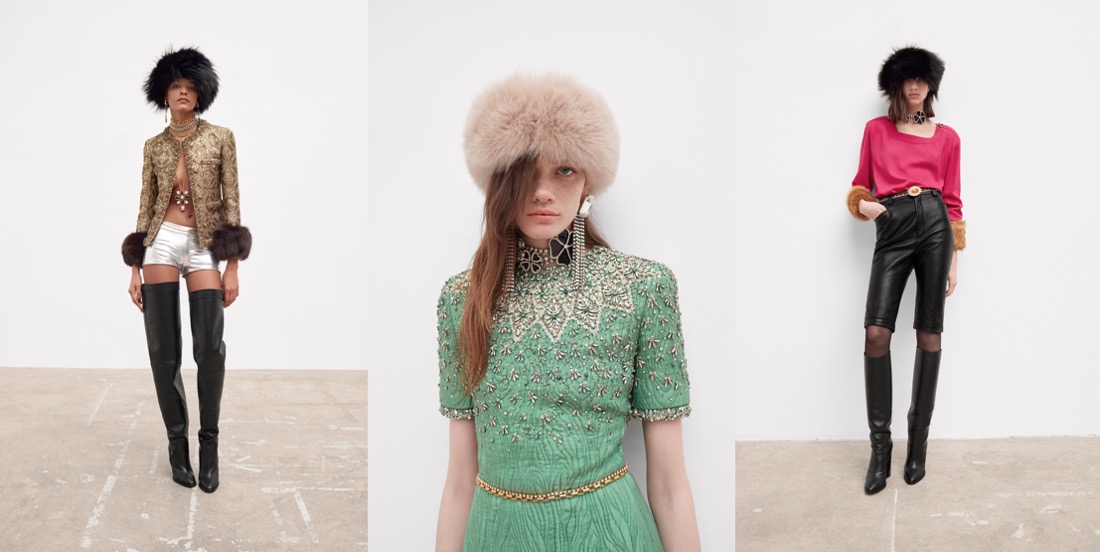
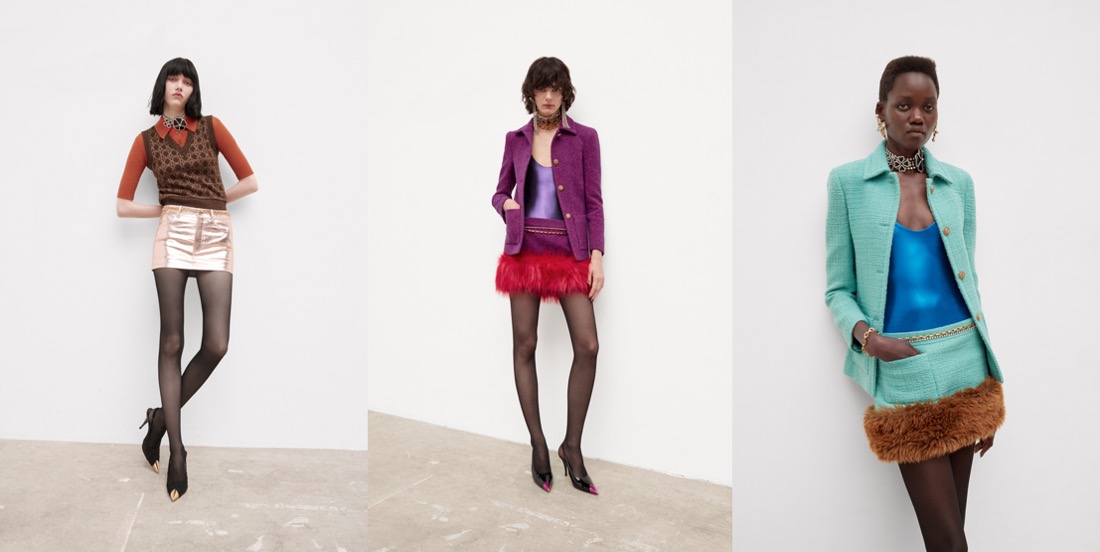
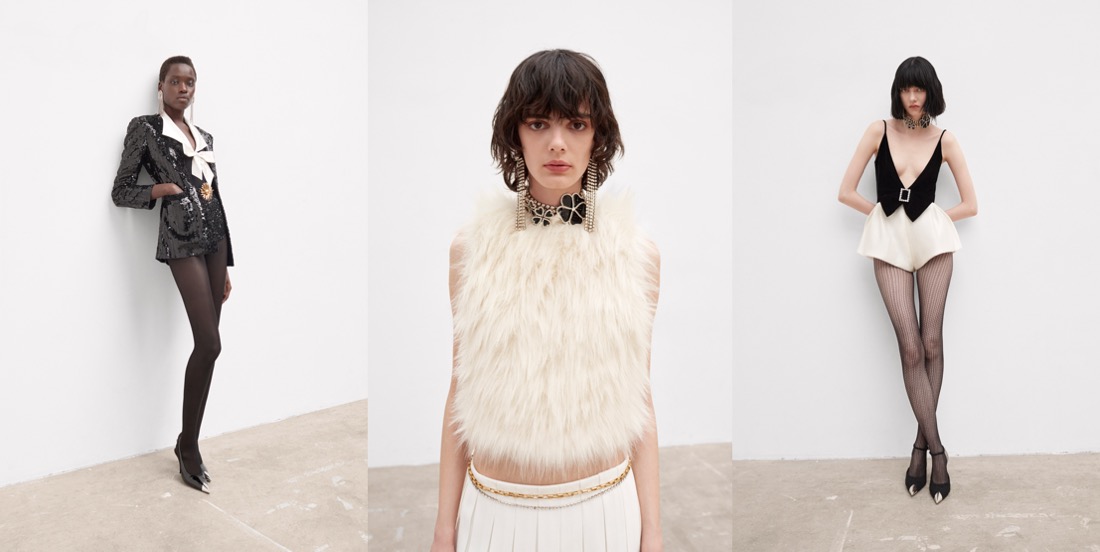
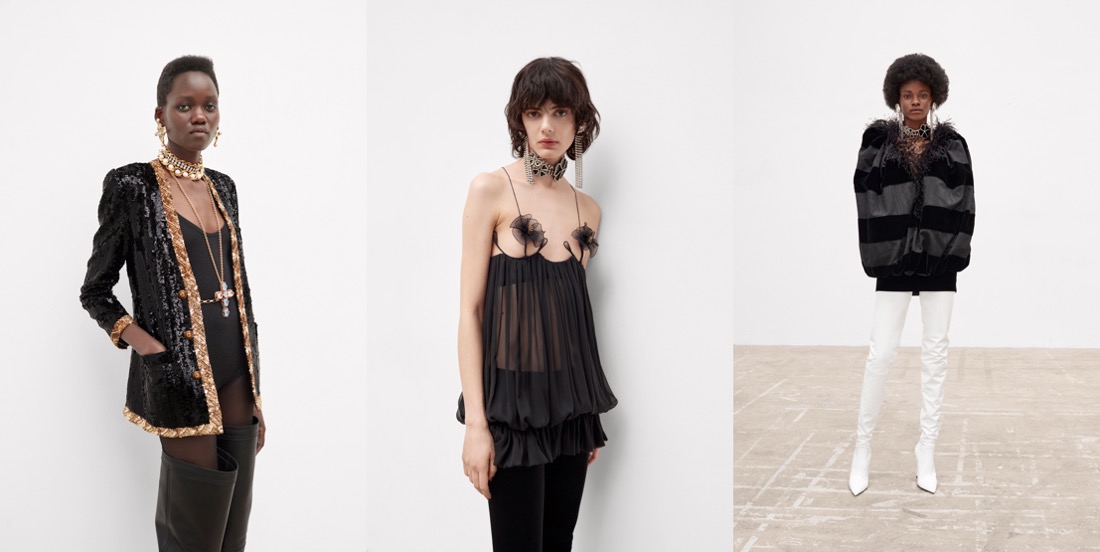
Contrasts Are Sexy. Saint Laurent AW21

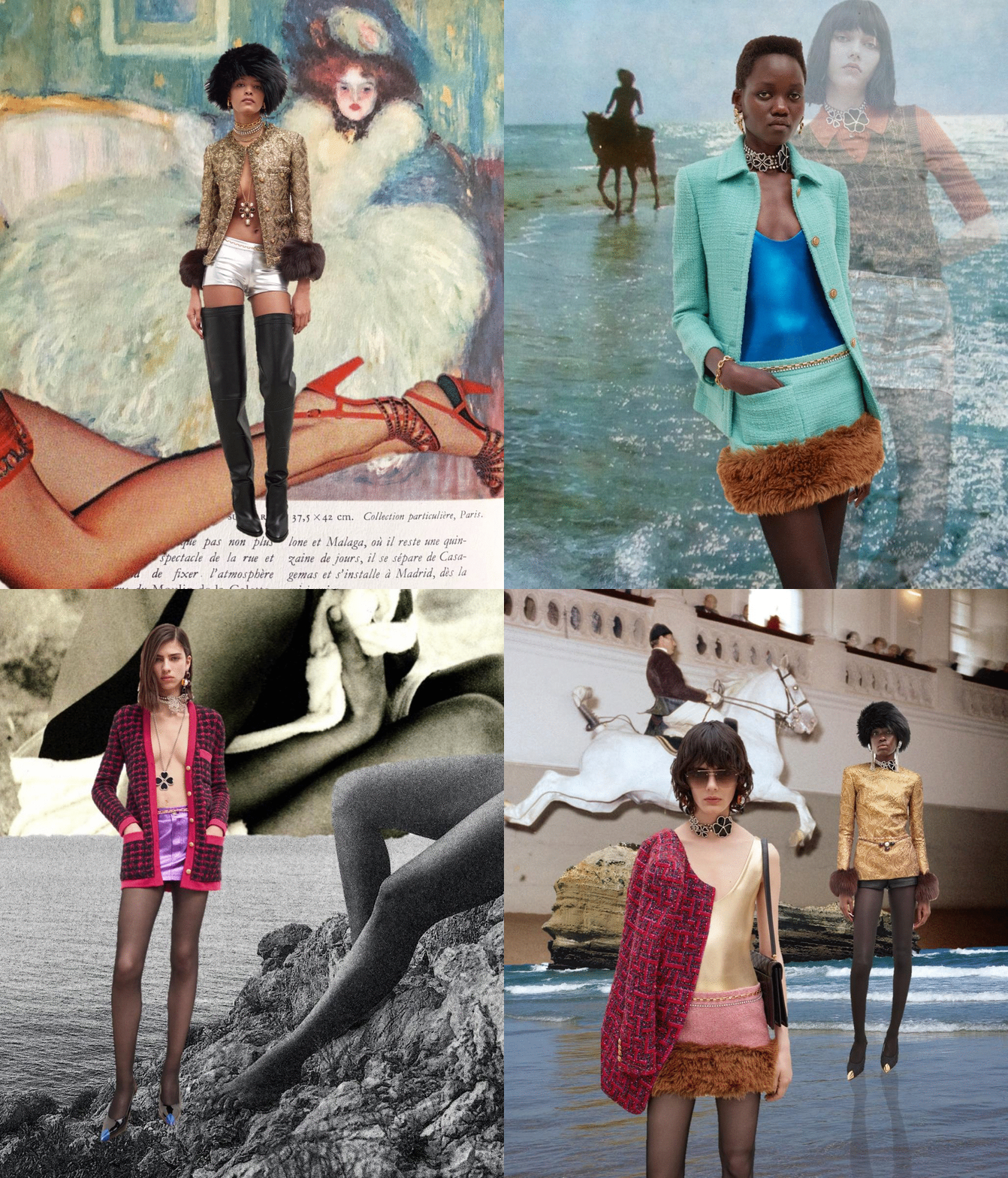
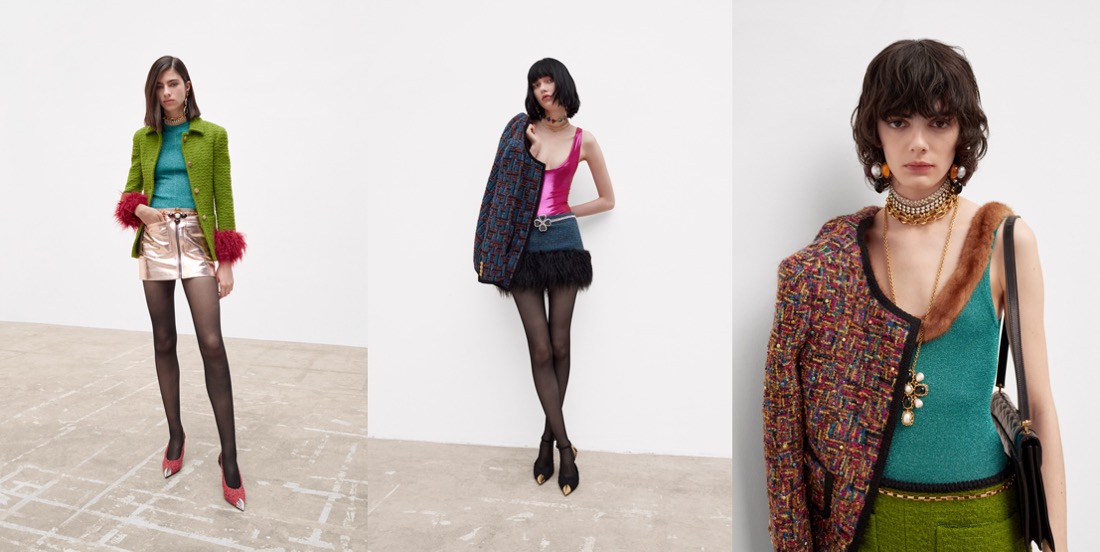
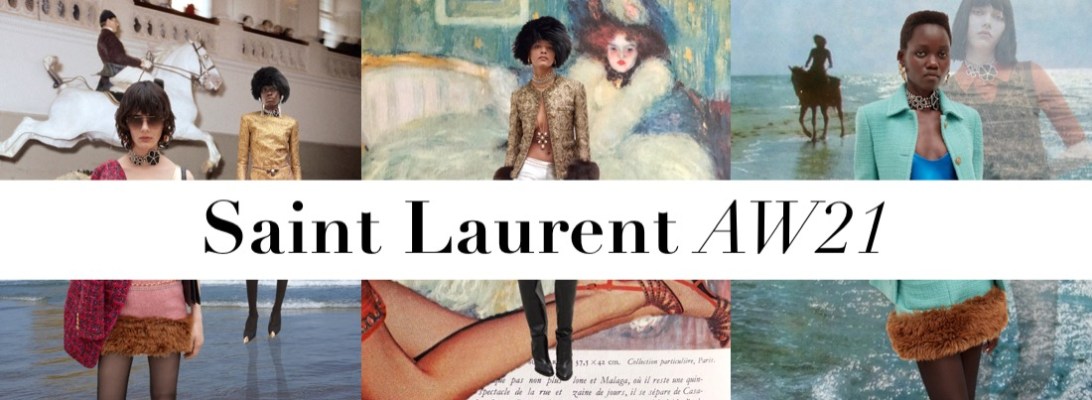
Anthony Vaccarello’s autumn-winter 2021 Saint Laurent collection was all about contrasts: luxury and kitsch, polished and raw, elegance and trash. There was even a stark contrast between the sultry clothes the designer delivered and the (rather very) windy runway venue. Against the most jaw-dropping of backdrops (of what looked like Iceland), with ice glaciers, crashing waves, and a volcanic, black beach, Vaccarello’s girls, looking like badass rock chicks, are shown striding as if on some fantastic odyssey. “When I was thinking about this collection, I had this place in mind, like a movie director,” Vaccarello said on a call to preview his collection. “It’s the idea of a girl in a landscape where she doesn’t belong. I knew I wanted a wintry location,” he went on to say, “one which showed how strong nature is; how we are really nothing next to it, how ephemeral we are. It’s not a place where anyone is going skiing, but Saint Laurent should do something that’s like a dream: What the F?! Why is she there?” The question of why this winter’s Saint Laurent woman is indeed there is left hanging somewhere in the movie’s moody overcast skies. Every season Vaccarello’s exploration of the YSL archive has a welcome air of mystery to it; there has never been any literal, first-degree rehashing of the back catalog’s greatest hits on his watch. This time round, he was drawn to Monsieur Saint Laurent’s classically elegant mid ’60s tailleurs rendered in menswear fabrics. He ratcheted up the cool factor by cutting the jackets lean and sinuous and then matching the length of their hems to his very-mini-skirts. Then he swapped out Saint Laurent’s then preferred monochromatic palette with a fabulously opulent and in your face array of violet, cobalt, gold, and chartreuse: “It’s the shapes of the ’60s with the colors of the ’80s,” Vaccarello said by way of explanation. Finishing the looks off, he slipped gleaming metallic stretch bodysuits or the tiniest of leather miniskirts under the tailoring. Then he loaded up on the bijoux – chandelier earrings, strasse bracelets, and chokers with a four-leaf-clover motif, something else sourced from the archive. It would be remiss not to mention the ultra-long leather boots or the wickedly pointy metal-tipped heels. Watching Mica Argañaraz navigate a stony cliff edge in them gives a whole new meaning to the appellation “rock goddess.” Also, she really seemed not to care for the cold, breezy wind. “I am doing things for the present; I don’t know what the future will be,” said Vaccarello on the subject of re-emergence fashion. “I want Saint Laurent to be more light and playful, but… it’s not just about going out to bars and parties. Life can’t just be when it’s bad we are all in black and pajamas and when it’s good we are in slutty dresses. After the last couple of years we can’t just go back, otherwise we will lose what we all lived through.” In other words, when you helm a house which has long had a reputation for both exuberance and chicness, how do you take it forward in a very big world? You let the fashion fly, but also keep it down to earth. “Fashion should be something you don’t take too seriously,” he continued. “Especially now, when nothing is really necessary. It’s good to laugh about life.

“Live” collage by Edward Kanarecki.
Feel Good. Balenciaga Pre-Fall 2021

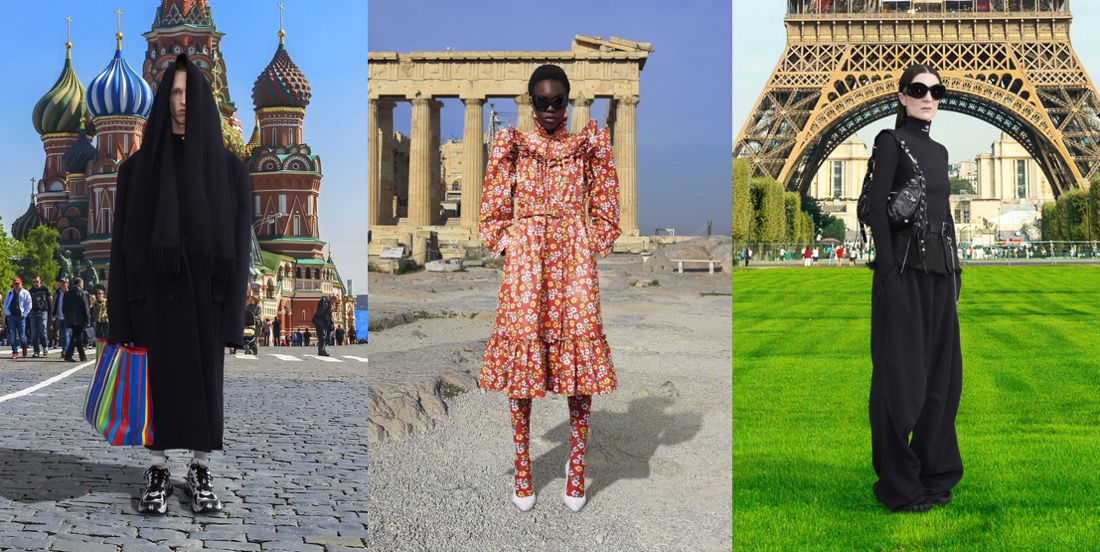
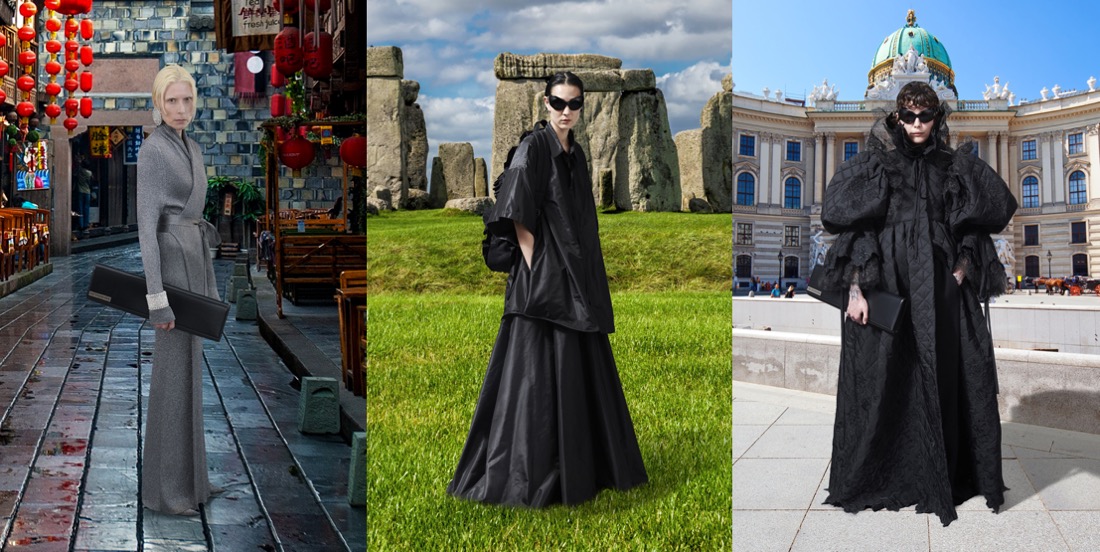
There’s always irony to what Demna Gvasalia does. You can tune into the pre-fall 2021 “Feel Good” Balenciaga video and not see any fashion at all – just a stock compilation of heart-warming running horses, kittens, children, and dreamy landscapes. But the most radical content in this Balenciaga outing is actually invisible to the eye. “When I started this collection,” Gvasalia told Vogue, “I said only show me sustainable fabrics. I don’t want to look at anything else.” So everything here, beginning with the pink hoodie to the black dramatic puffed-sleeve gownlike silhouette at the end, is made from recycled and otherwise certifiably okay materials. That’s big from a brand as powerful and as influential as Balenciaga, one of the major fashion actors of the universe which calls on suppliers who do significant volumes business with them. “As creative directors, asking for this causes a chain reaction, and we have to use it,” Gvasalia continued. Taking action on absolving shoppers’ anxieties about the damaging consequences of how their clothes are made ought to be the norm. Gvasalia promises that what’s gone into this collection isn’t a one-off gesture – because who isn’t suspicious of the greenwashing promo tricks of fashion these days? He started asking for better, more sustainable alternatives a while back, he attests, and began putting some of them into the collection in September. Now to the clothes: a photoshopped lookbook, posed against a wish-we-were-there travelogue of the famous backdrops of the world. Design-wise, there are just as many familiar Balenciaga-universe destinations here: the oversize hoodies, sweatshirts, tailoring; tweaked takes on signature floral-print dresses; recycled leather and denim things; magnified utility-worker jackets. A lot of the garments, Gvasalia said, are constructed as joined-together all-in-one pieces “trompe l’oeil, so what you see isn’t what you get. A lot of dresses which are actually coats.” So, too his lookalike ‘furs,’ which aren’t either animal pelts or petrochemical fakes. A brown chubby jacket and a coat are the results of hundreds of hours of chopping up and embroidering recycled cotton. They’re lavishly time-consuming hand-made pieces. Obviously, Gvasalia is keeping his creative powder dry for the long-deferred launch of the Balenciaga haute couture collection that he’ll show sometime this summer, pandemic willing. Meantime, predictive minds might leap to the elegant silhouette in black – full length, balloon sleeved, quilted and lace-trimmed drama that Gvasalia swears was inspired by the shape of Princess Diana’s wedding dress. It’s actually a coat. “ She’s wearing a t-shirt and jeans under that.” The Gay Pride hoodie worn with the padded stole (consciously a Demna-for-Balenciaga adaptation from Cristobal’s matching ensembles for couture customers) is another highlight of the collection. “I’m gay. I grew up in a society where I couldn’t have worn that, and there are places in the world that you cannot today,” the designer said. “It’s important to push through against homophobia. I’m not someone who goes out in the street and shouts. But this is the political fashion activism I can do.

“Live” collage by Edward Kanarecki.