Beekeepers. Kenzo SS21

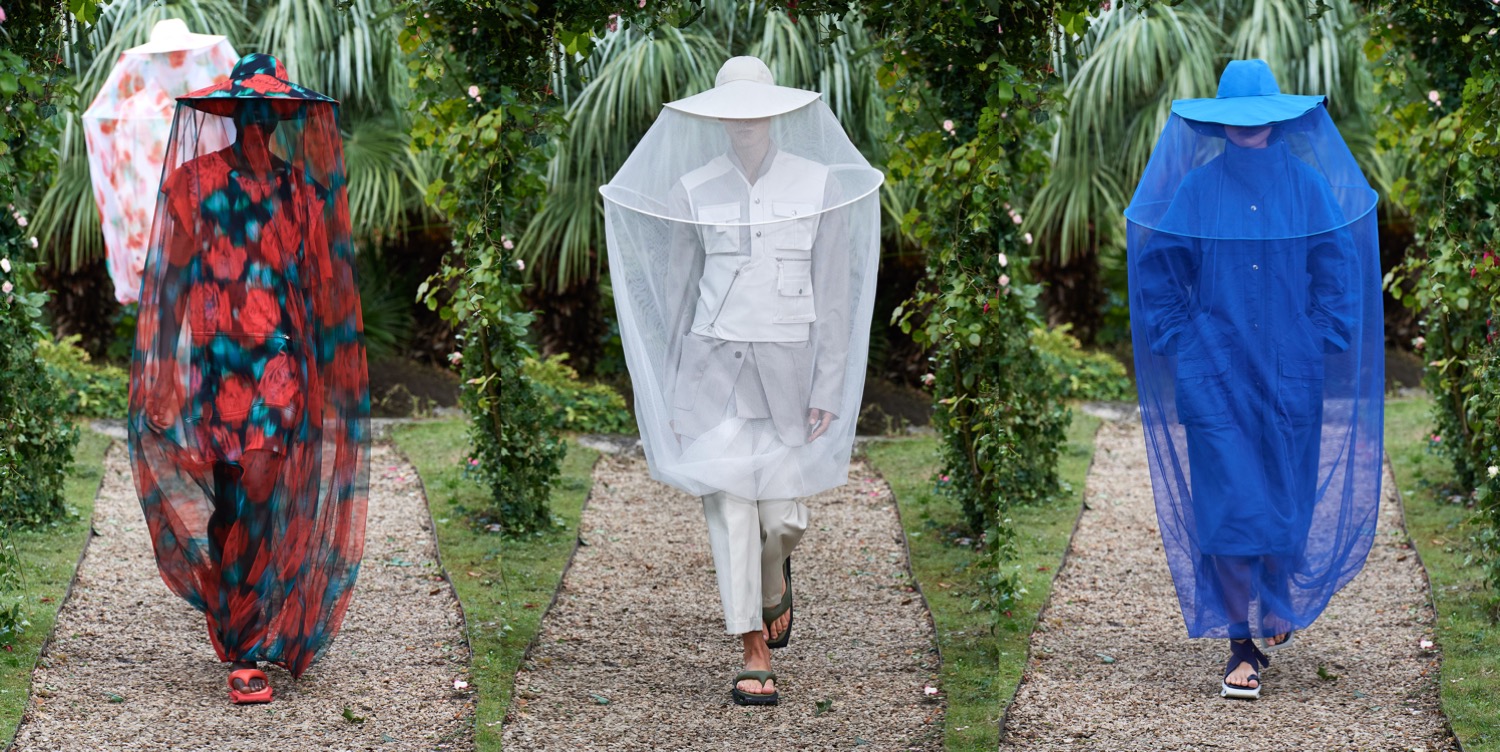
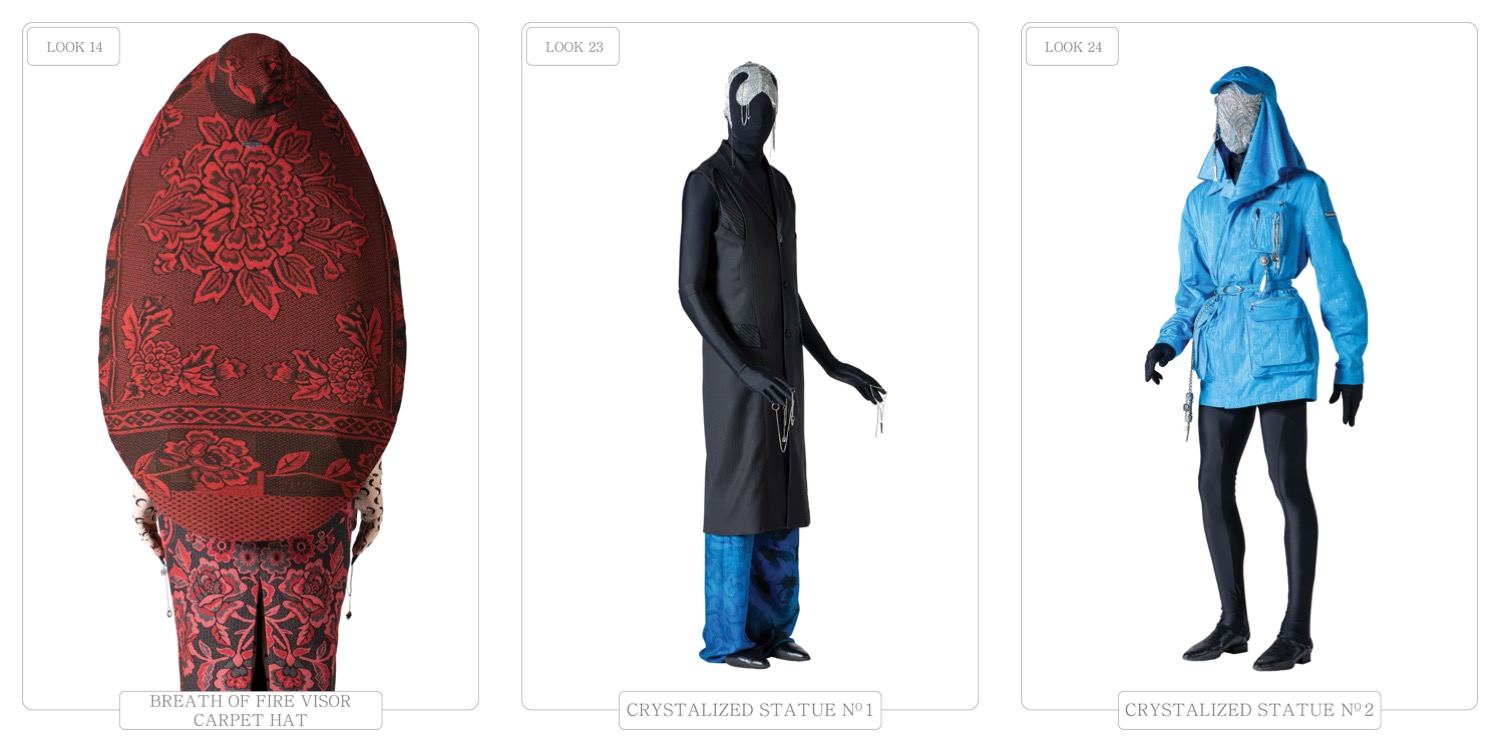
Kenzo is one of those brands, which is always out there, but seems to be unsure of its position on the market for years. Humerto Leon and Carol Lim made Kenzo cool again in the early 2010s thanks to their logomania injection and youthful, colourful approach, but their later, more creative ventures were killed by the brand’s over-commercialised approach. Now, it’s under Felipe Oliveira Baptista‘s creative direction for the second season (I didn’t feel his debut to be honest) and looking at his spring-summer 2021 collection, there’s a chance that Kenzo will turn into a smart fashion brand again. We know Oliveira Baptista for his name-sake brand (which is currently dormant) and few years spent at Hermes and Lacoste. He’s good at reviving French brands that have this sort of “athletic”, active side. In his recent collection, affected by coronavirus reality of course, the designer showed his wit, which actually resonates with the current times. Oliveira Baptista, a nature obsessive with roots in the luxuriant hills of the Azores, wants to instill his work with the harmonious and optimistic aspects of the environment, themes that are also core to Kenzo. He strictly uses recyclable plastic, is working with WWF to double the global population of tigers (Kenzo’s trademark), and has a number of other environmentally conscious projects in the works. The veiled beekeeper suits that opened his collection, however, inevitably felt more Contagion than Honeyland, the 2019 documentary about a beekeeper in rural Macedonia, which served as a reference. The film portrays the contrast between its protagonist, a lady who respects the bees and only ever takes the honey she needs to survive and her industrious neighbors, who deplete the natural resources and end up killing the bees. “It’s one of the most ancient collaborations between man and nature,” Oliveira Baptista said, explaining that the image of the beekeeper came to him amid what he sees as a moment in which humankind is bargaining with the ecosystem. “I wanted to express something about the fragility of the situation we are in. Everyone goes to the low of the situation – fear and anxiety – but we go to the high: dreaming of optimism and a future and going back to the things we’ve been missing.” That may be the case, but the elements with which he imbued his collection felt more geared toward survival than picnics – even if there was a jar of honey on guests’ seats. An adaptable coat with multi-pocketing could be wrapped up into itself and transformed into a bum bag. Out of the zipped bottom of round leather bags came a separate giant shopping bag. A cocoon coat with a caped hood layered over its body easily tapped into said sci-fi quarantine vibe. And floral prints from the Kenzo archives, which had been faded to look clinical and blurry, evoked the effect of flowers sticking to a window in the rain, like something you might have seen in confinement. Oliveira Baptista’s perhaps inadvertent tendencies for the dystopian serve to his advantage. If dark undercurrents didn’t make their way into his delicate veils, lace raincoats, and little summer dresses, they wouldn’t put up any resistance to the flower-power universe of Kenzo. Rather than cute, there was a feeling of self-protection about his collection that hit an obvious nerve in a time when the environment is fighting back, giving us a taste of our own medicine. “We don’t even know what to be afraid of and what to believe in. The whole idea of protection becomes abstract,” the designer said, summing up the broad spectrum of sociopolitical current affairs.
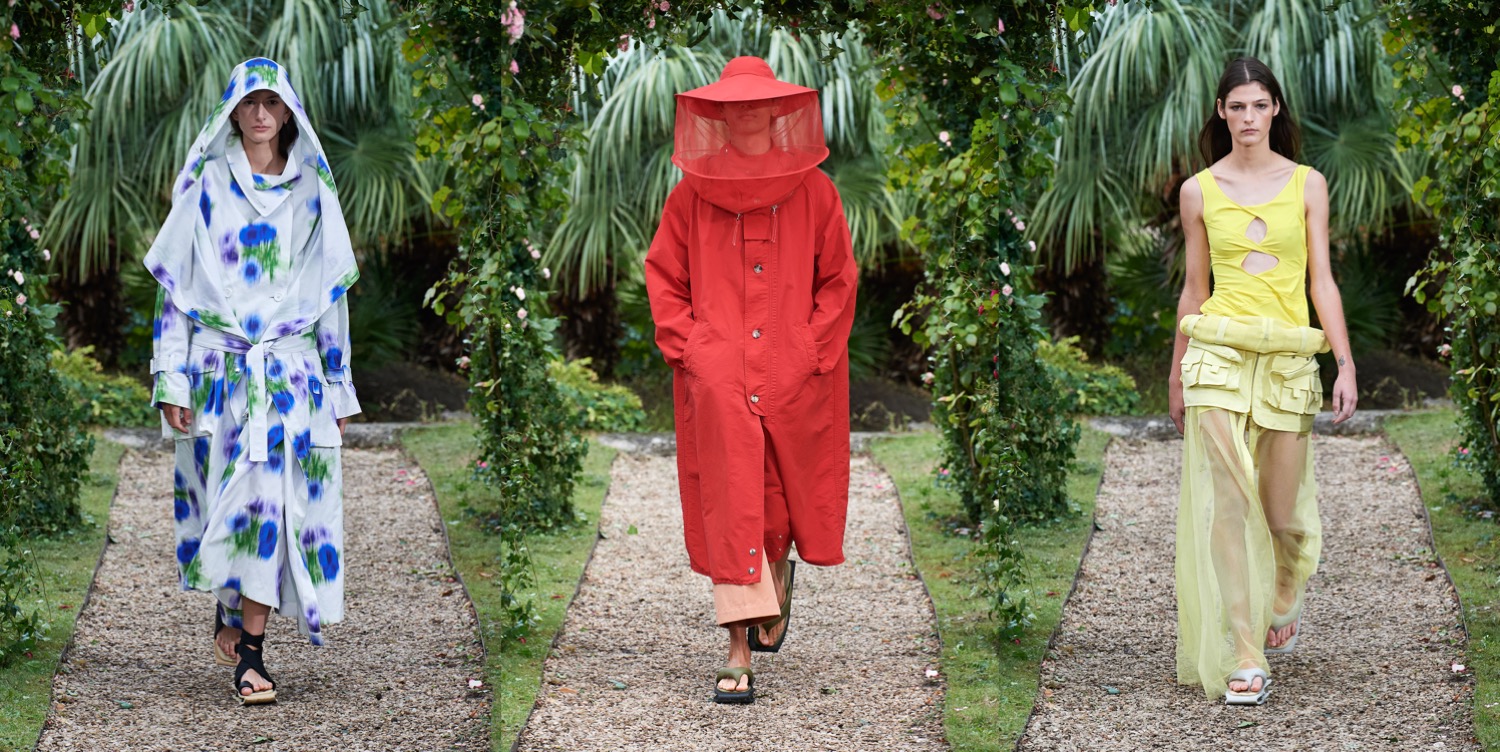
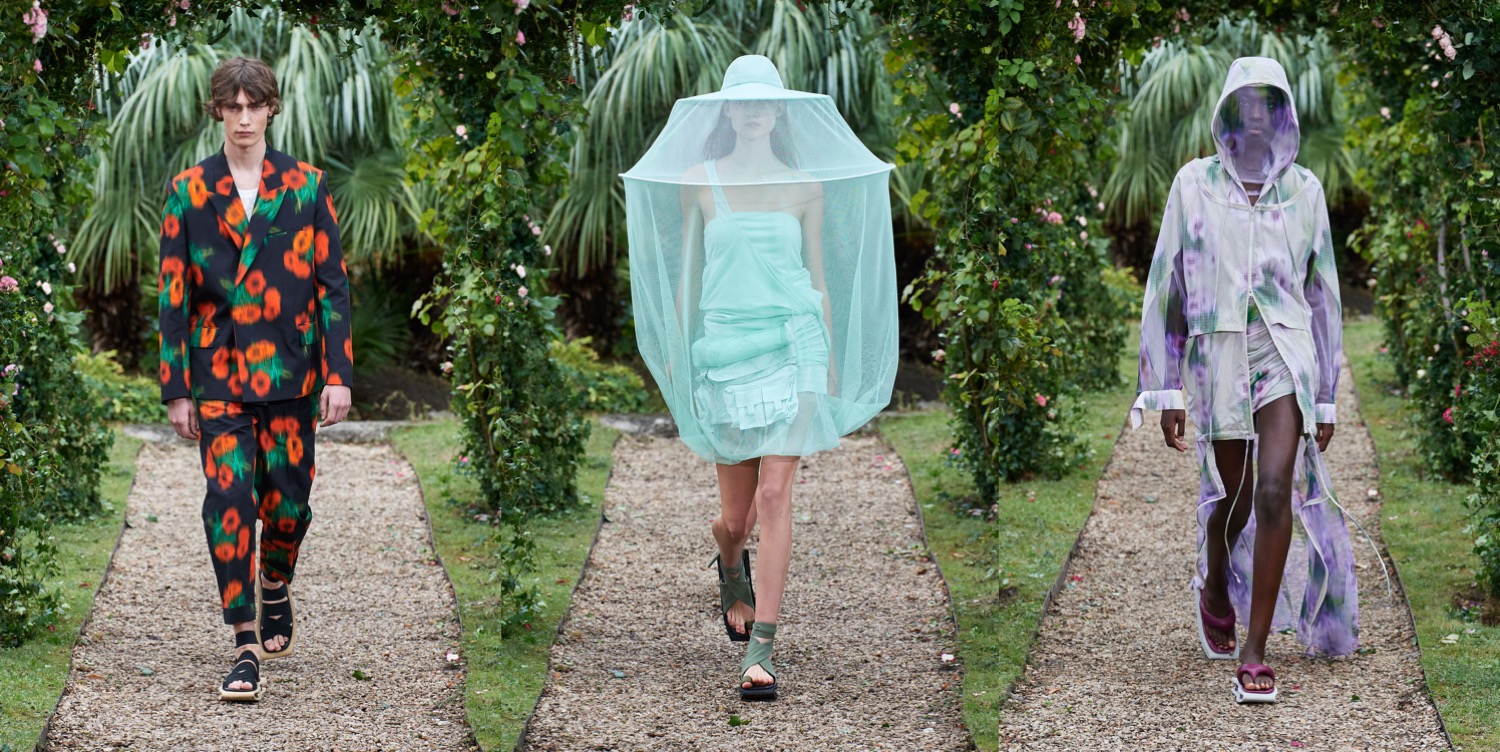
Collage by Edward Kanarecki.
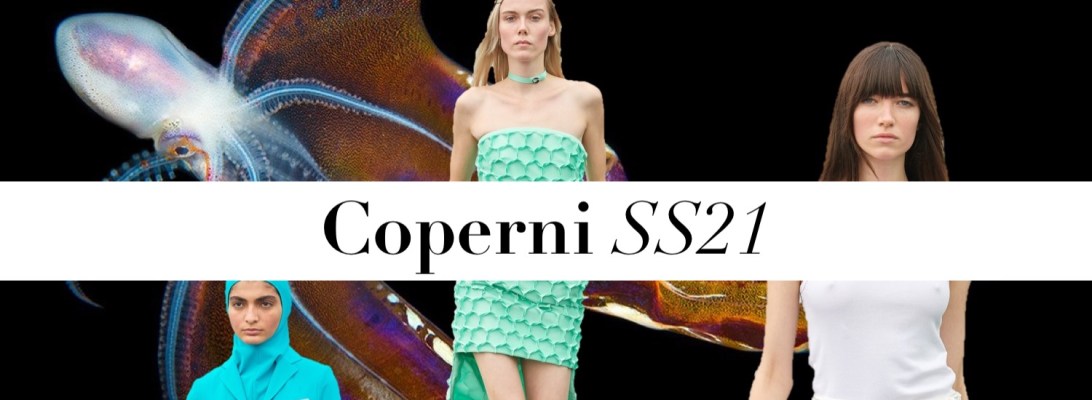
Protective Chic. Coperni SS21

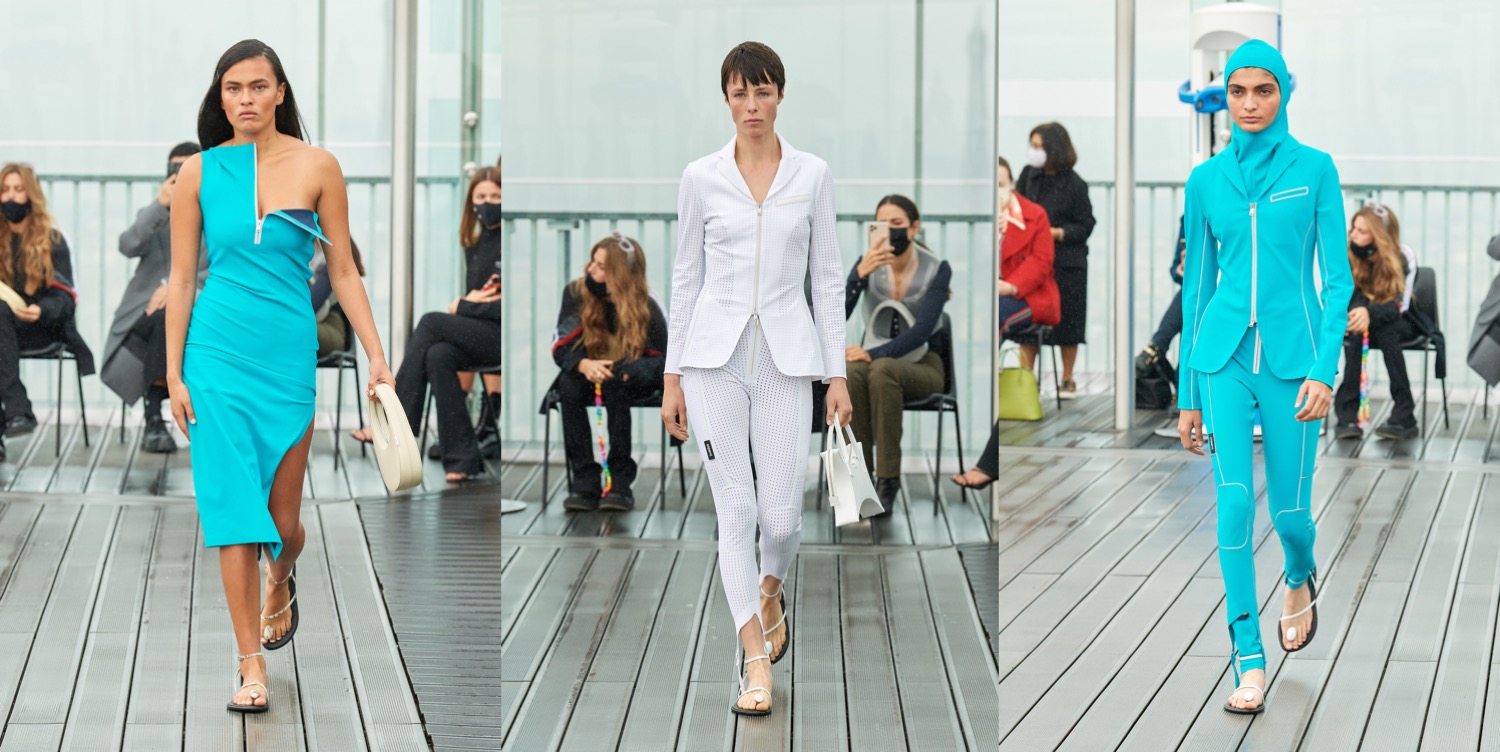
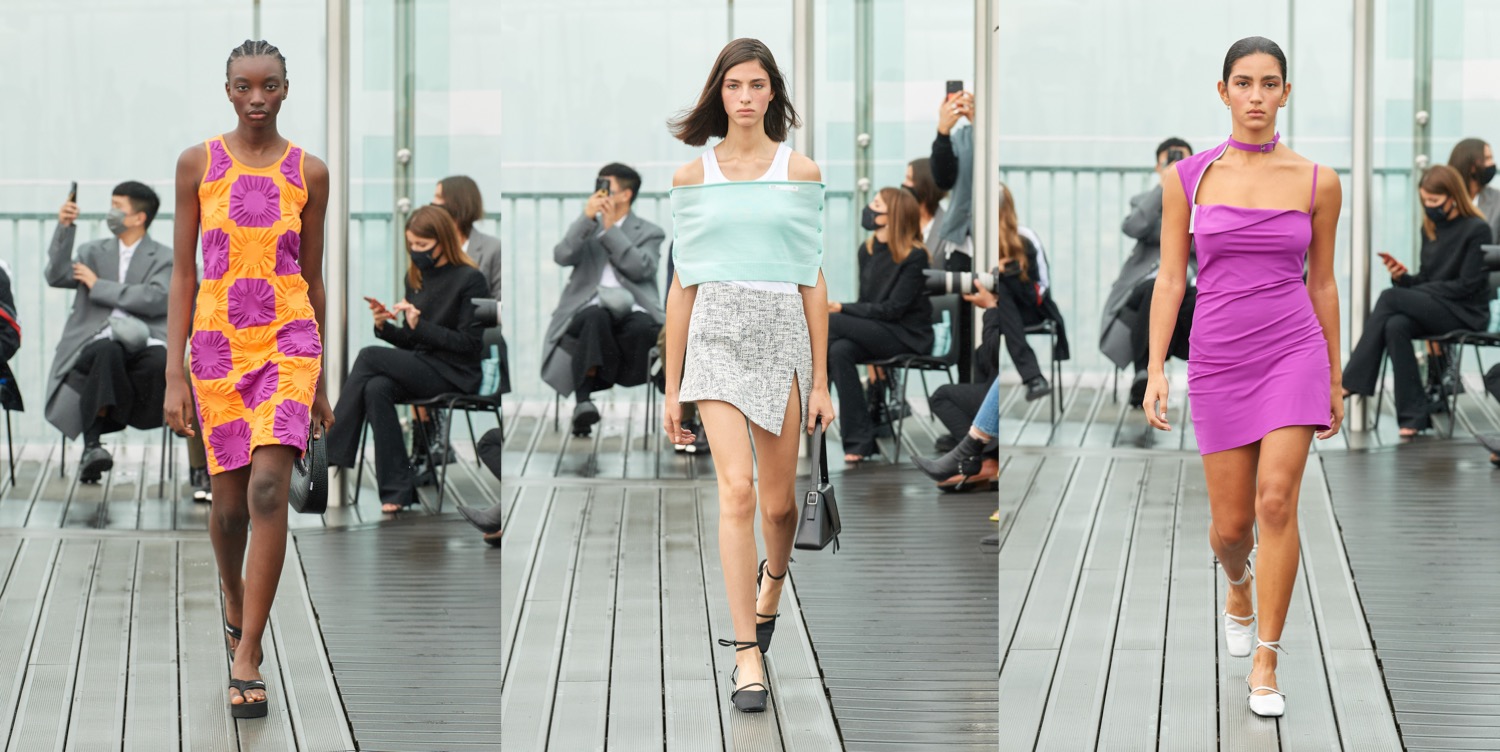
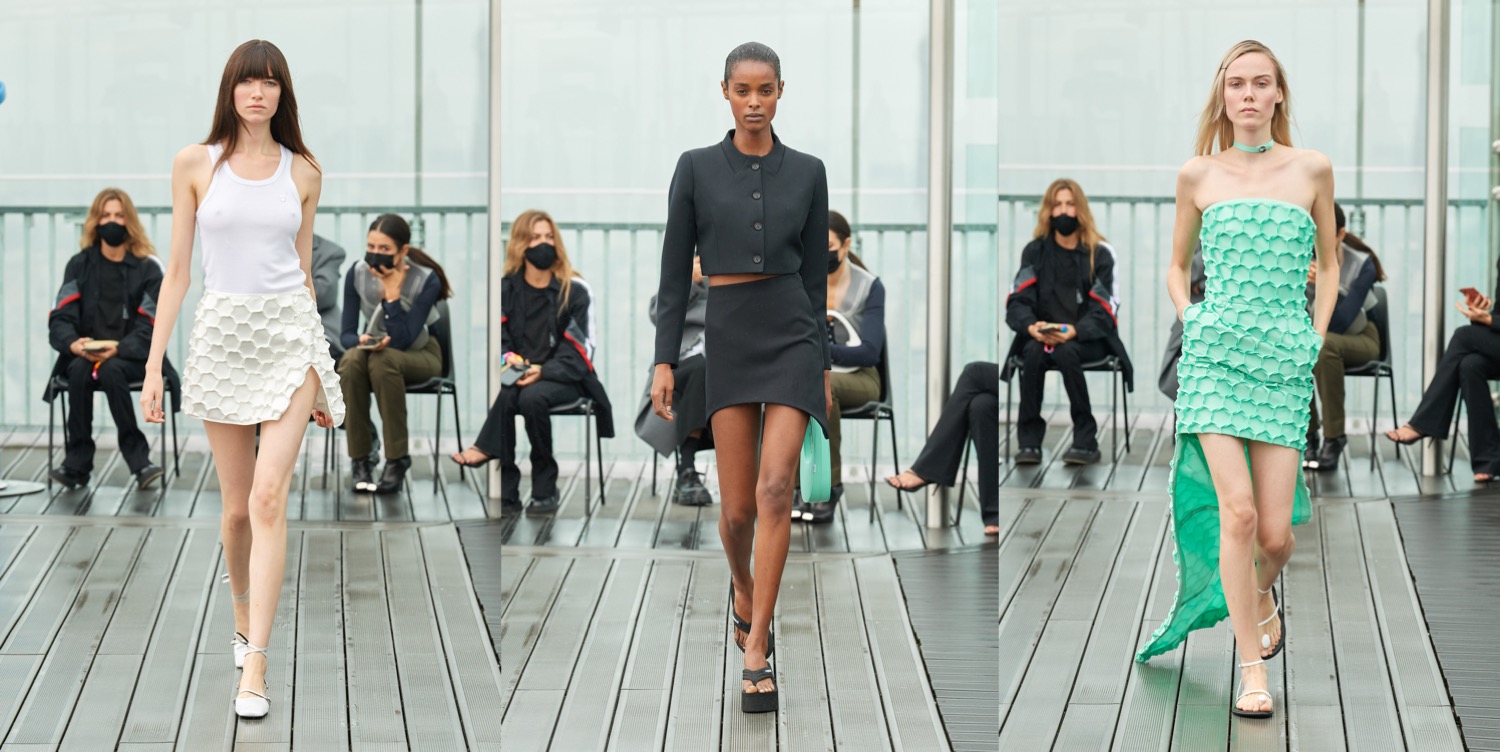
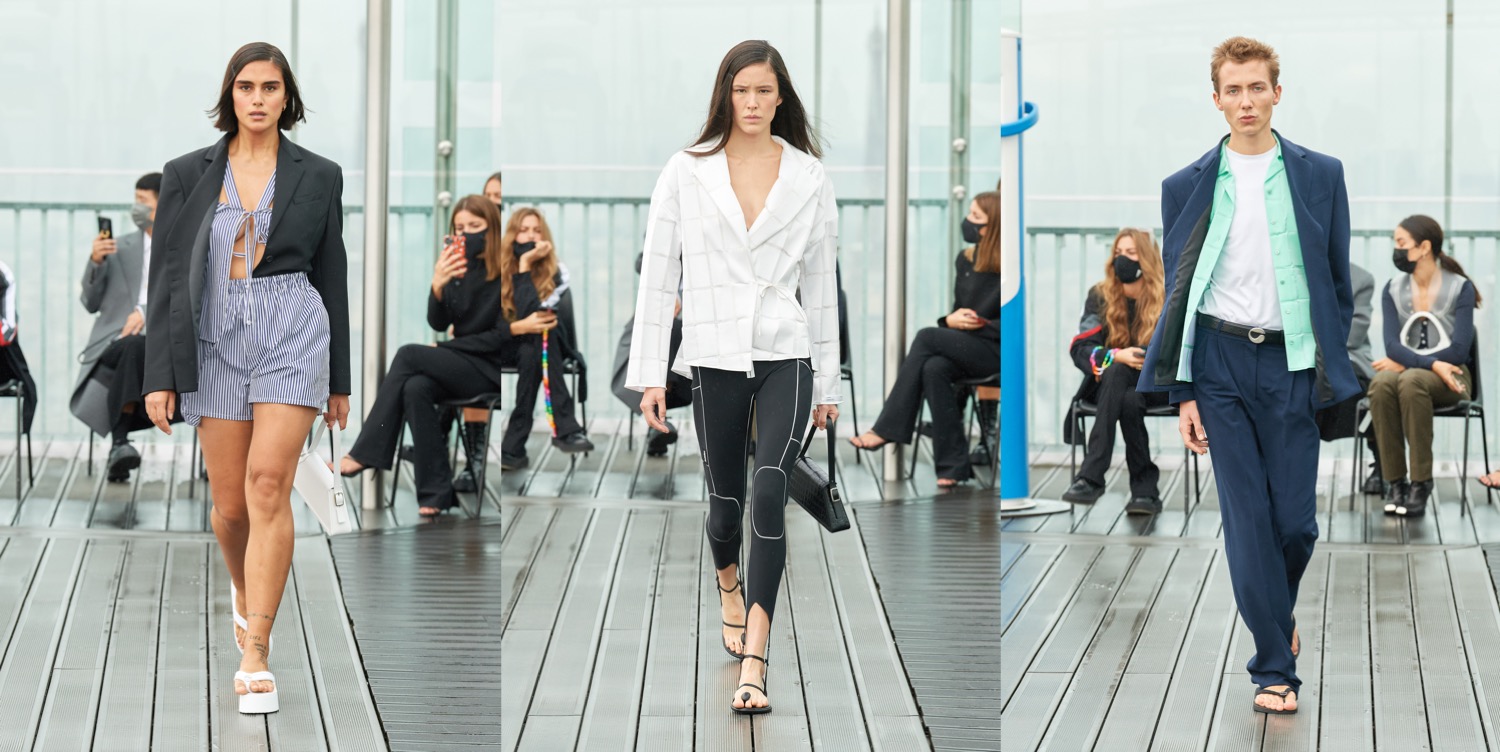
Lockdown has been especially tough for small and medium-sized labels. Coperni, the Paris-based label created and designed by Sébastien Meyer and Arnaud Valliant, is somewhere between small and medium, and is known for making exceptional, well-tailored garments with a hi-tech twist. Also, they keep it quiet and unfussy, which makes it double-hard in facing the giant brands, which desperately produce mega-productions to lurk any customer to their shops in the COVID era. Yet somehow, the boys managed to present a remarkable fashion show in the first days of this very unusual Paris Fashion Week, and keep their distinct, understated style afloat. And also, they are the first to introduce as to protective chic! In lockdown, Meyer and Arnaud Valliant launched a DIY mask making project on Instagram. This was in the early days of the pandemic, when solution-oriented designers scrambled to fill in the gaps left by overwhelmed and underperforming governments. “We were inspired [to start making masks] by our family, most of whom work in the medical field,” they said at the time. “We immediately wanted to help, even with our limited assets.” Soon, they started receiving selfies from Instagram followers around the world who used their easy-to-sew pattern to make masks. As they started to work on this collection, they found themselves hooked on the feel-good results of their problem-solving and decided to make it part of their mission at Coperni. On a Zoom call with Vogue the day before their show, they proudly showed off a new technical jersey material dipped in a solution that renders it anti-UV and antibacterial as well as wrinkle resistant. For years, fashion watchers have been waiting for the runways to catch up with the technical advancements happening in the outdoors and sporting markets. Coronavirus, the drastic accelerator, has hastened that process for the Coperni duo. “The starting point of the collection was how can we improve things and how can we protect everybody?” said Valliant. Meyer added: “I think for designers it’s our duty to evolve the clothes and make them more protective and more comfortable.” The jersey, which they cut into aerodynamic jackets and body-conscious dresses is a preview of a future in which clothes do more work for their wearers, and a promising area of exploration for Coperni. The longer the coronavirus crisis draws out the more potential there is for fashion that’s merely decorative to seem frivolous. Then again, Meyer and Valliant aren’t about to abdicate the notion of fashion for fashion’s sake. Other parts of the collection showcased the graphic fabric manipulation and the spare but idiosyncratic patternmaking that they’ve made their specialities. They staged their show on the roof of La Tour Montparnasse, the highest skyscraper in Paris, under a light rain. The designers see it as an optimistic gesture in a moment that has sharpened their focus. “It hasn’t been an easy season and it’s been stressful,” said Valliant, “but we have to stand up.

Collage by Edward Kanarecki.

For The Outside. Cecilie Bahnsen SS21

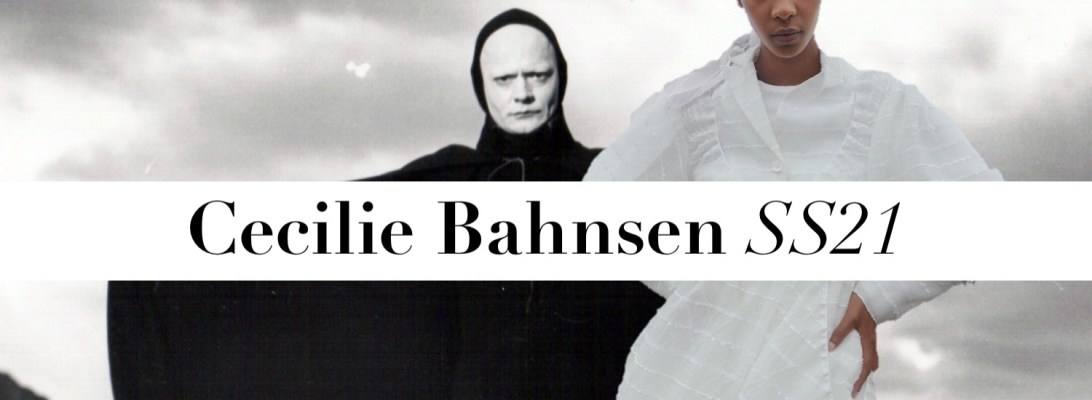
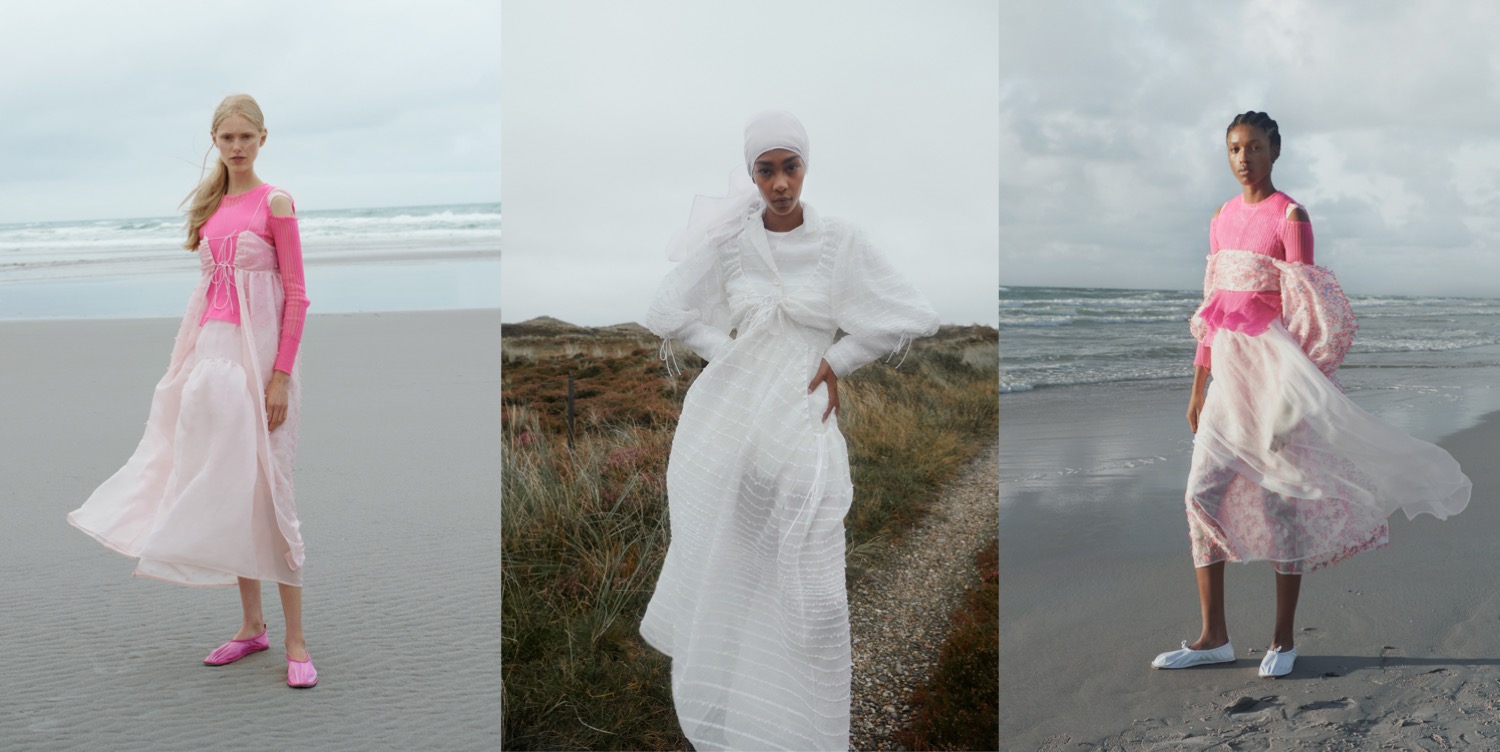
Like many designers this season, Cecilie Bahnsen decided to switch from her home-base (Copenhagen) to Paris. No wonder why, noting the circumstances, it’s the only place where the buyers are heading to – if they still can. This is a very brief collection, presented as a look-book, which rotates around Bahnsen’s distinct signatures. The designer wandered a lot through quarantine, not only in her hometown, but also in her imagination. When she began to think about the direction for her spring-summer 2021 collection, she visualized a woman on a journey across a natural landscape. Bahnsen cited a famous Danish painting by the artist P.S. Krøyer, which depicts women walking on the beach in the town of Skagen. Her designs this season are indeed fanciful: dreamy wandering clothes for women gliding through the current limbo state of the world. Bahnsen, with her billowy textured silhouettes, acknowledges that beauty can lift our spirits up and push us forward during dark times. That optimism was illuminated in some of her newer pieces, like a soft, sheer green 3D sequined dress and hot pink knitwear layered over organza frocks. Everything she made this season was designed to be moved in. The beads and sequins, she said, were placed to make subtle sounds and shine in the wind and sunlight. Bahnsen also added to the mix practical sweaters and a classic raincoat, which she created in her second collaboration with the British outerwear brand Mackintosh. These clothes would most definitely turn heads if they were worn on a typical weekday stroll.

Collage by Edward Kanarecki.

Amor Fati. Marine Serre SS21

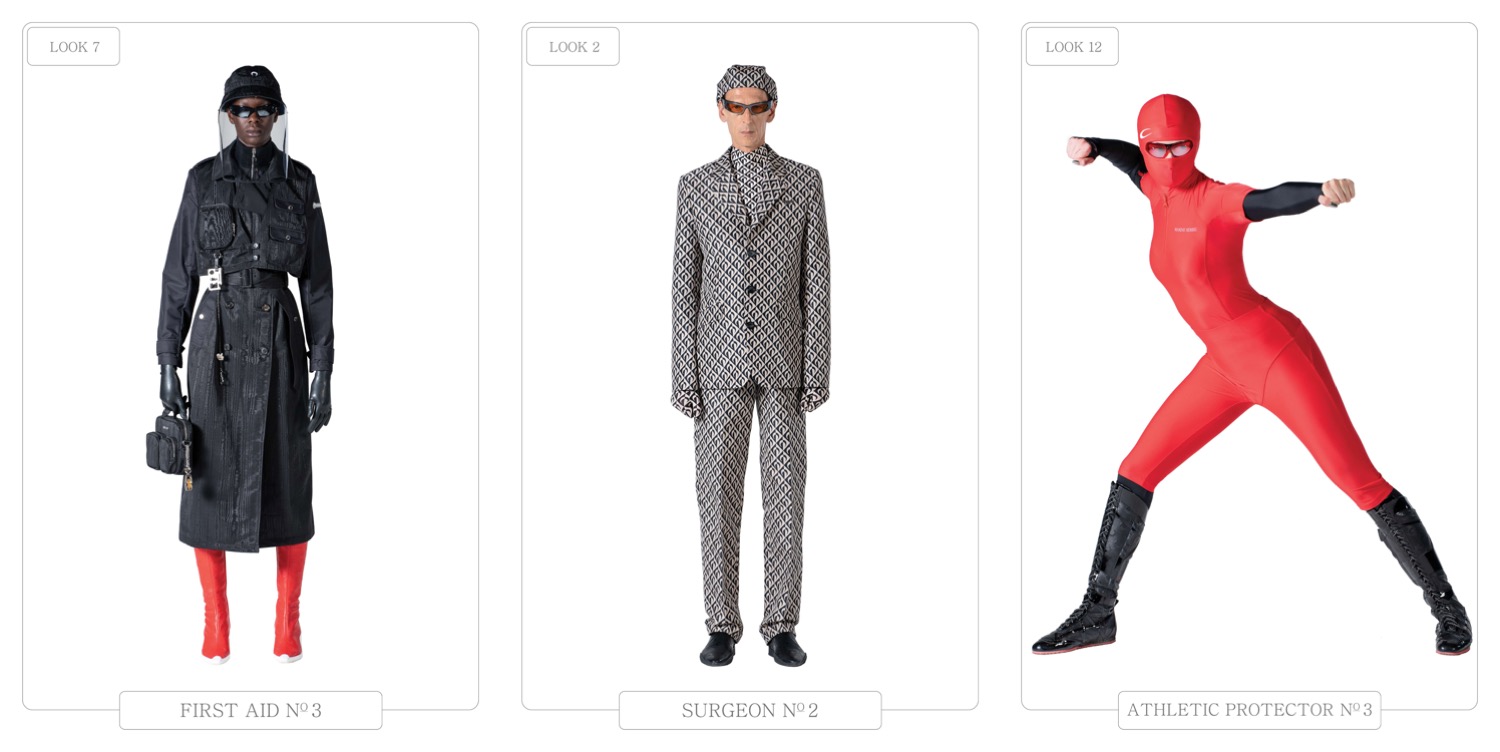
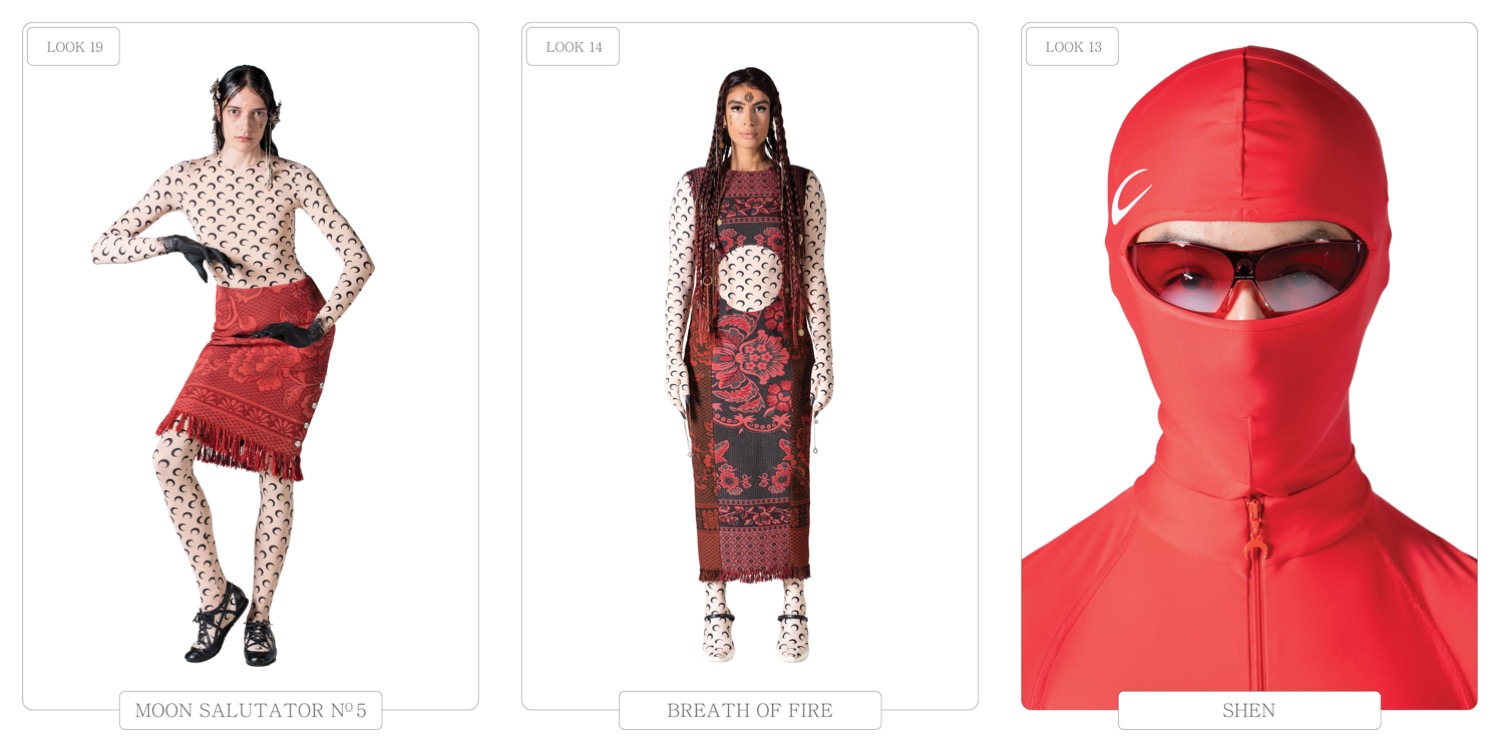
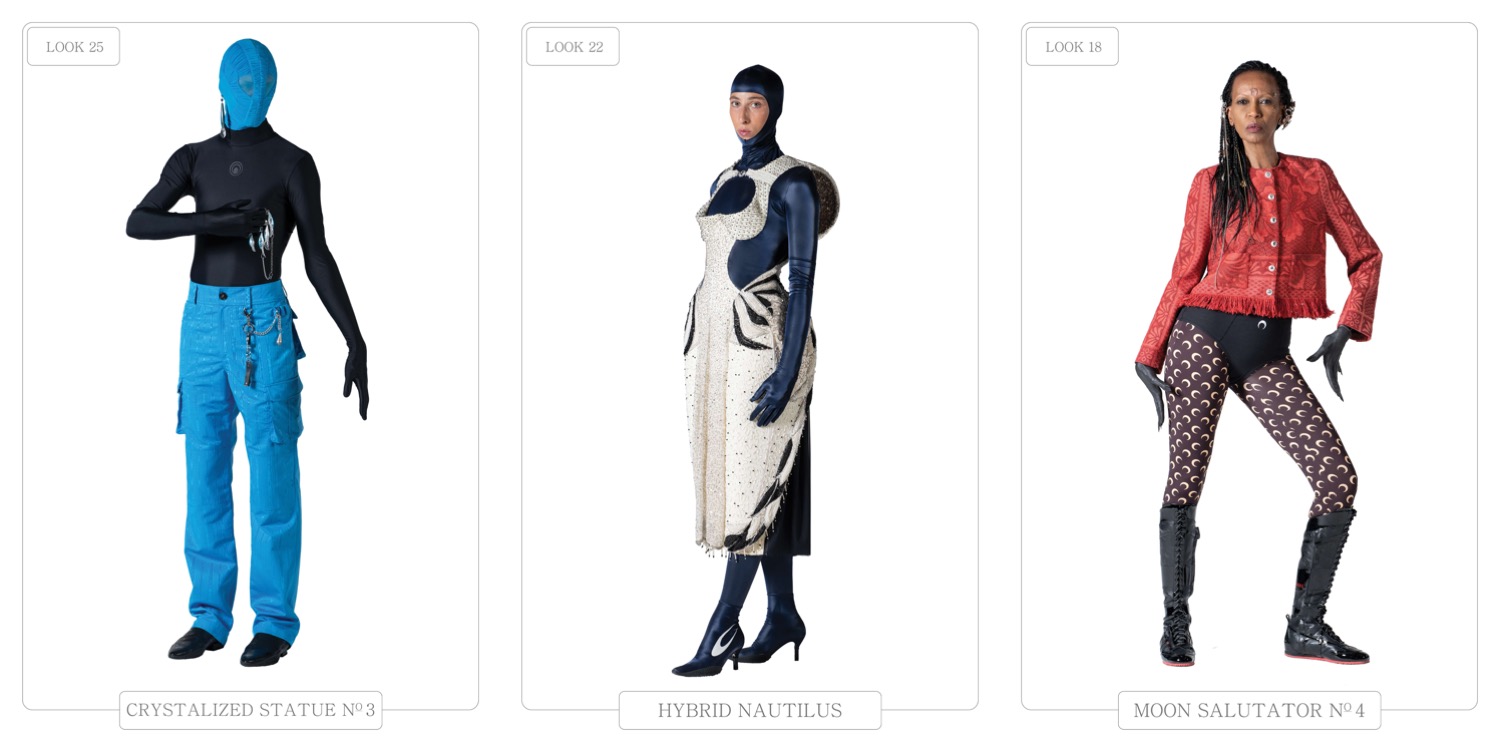
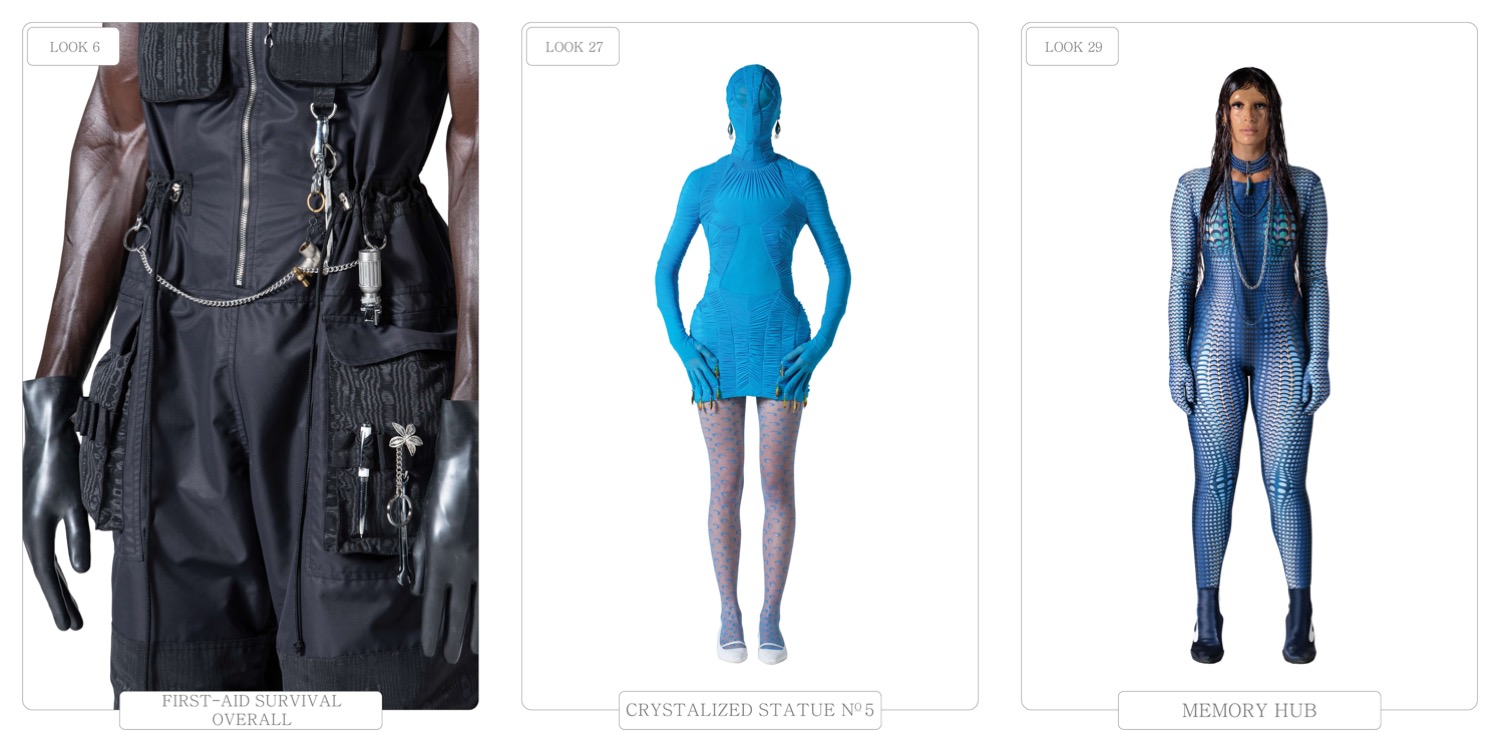
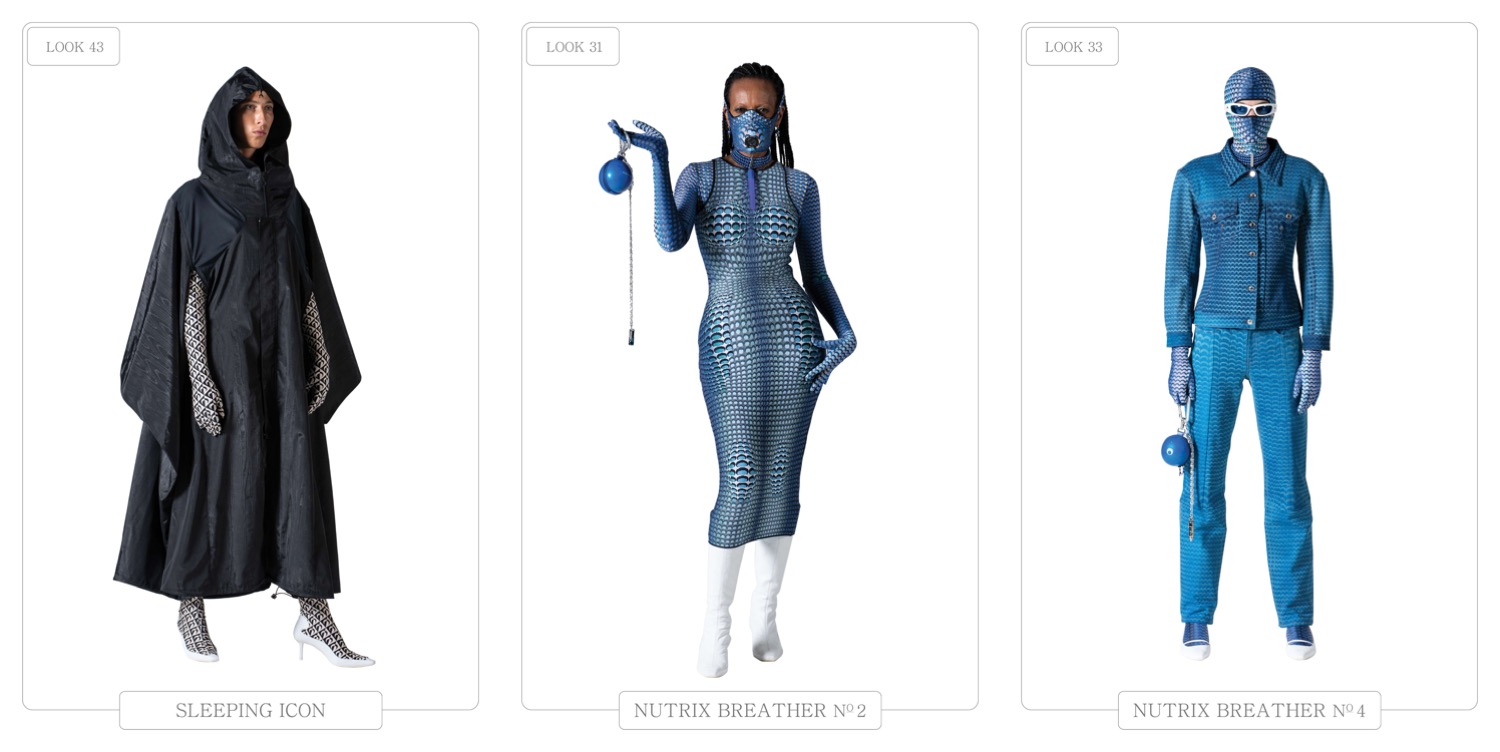
If there’s one designer that took wearing a mask (and covering your face in general) or protecting your hands seriously in times of corona, it’s Marine Serre, the queen of dystopia-foreseeing in Paris. Even though some of her spring-summer 2021 looks seemed bizarre and quite ridiculous, that’s a line-up that literally reflected the present circumstances. The collection has two main focus points. Firstly, the movie, titled Amor Fati, that she made with directors Sacha Barbin and Ryan Doubiago and composer Pierre Rousseau. The short film is compelling. It’s both unsettlingly dystopian in its depiction of menacing clinical interiors and Dune-like acrid skies and emotionally affirming in its choreography of human kinship and community. Two people, the Iranian-Dutch singer Sevdaliza and Juliet Merie, Serre’s good friend and long-time collaborator, interact with a series of people from intense worlds, who are clothed in the collection’s second-skin face-shielding bodysuits, sapphire and cobalt blue utility jackets and cargo pants, and sharply delineated tailoring rendered in a covetable new lozenge jacquard version of her leitmotif crescent moon. And, secondly, Serre mentioned that she had been thinking about how bike usage is up by 30% in Paris, the city that she calls home. Serre’s upcycling experiments led her to work with carpeting, using it for tassel-edged skirts, shorts, and half-zip anoraks, the fabric’s almost baroque decorativeness in stark contrast to the functionality of the pieces it’s used for. That’s where that Parisian bicycle usage came in. For all Serre’s marrying of cerebral impulse and craftsmanship, she’s also deeply pragmatic. “You don’t need a midiskirt if you can’t bike in it,” she said. “You need to be able to function in the clothes, otherwise you might as well just wear a tee and jogging pants.” That sense of using creativity to inform her realist’s view of the world could also be seen in her accessories, what with the whistles, bottle openers, and a cape-like visor, also made from the upcycled carpet, and a neat commentary on the face shield’s newfound ubiquity.  Essentially, it’s Serre’s oscillation between these two points, creative ambition and practical exigency, that make her one of the most vital designers of the moment. Amor Fati, she said, was created during lockdown, and that pause allowed her even more creative agency while also giving her a chance to think about the trajectory of what she’s doing. “It gave me some time to reflect,” she said. “It’s not easy. Things are changing faster than we can.” One thing she decided to do to counteract that: reaffirm her signatures and essentials, and explore how they could interact with our ever-evolving lives. There are plenty of those terrific multi-pocketed utilitarian pieces of hers, for both men and women, in biodegradable nylon or recycled moiré, rigorously sculpted into graphic shapes.

Collage by Edward Kanarecki.
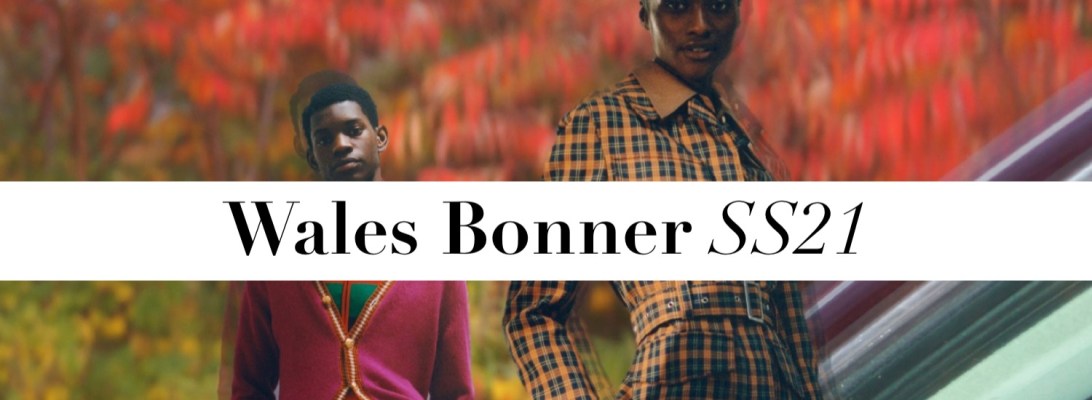
Worlds Between Worlds. Wales Bonner SS21

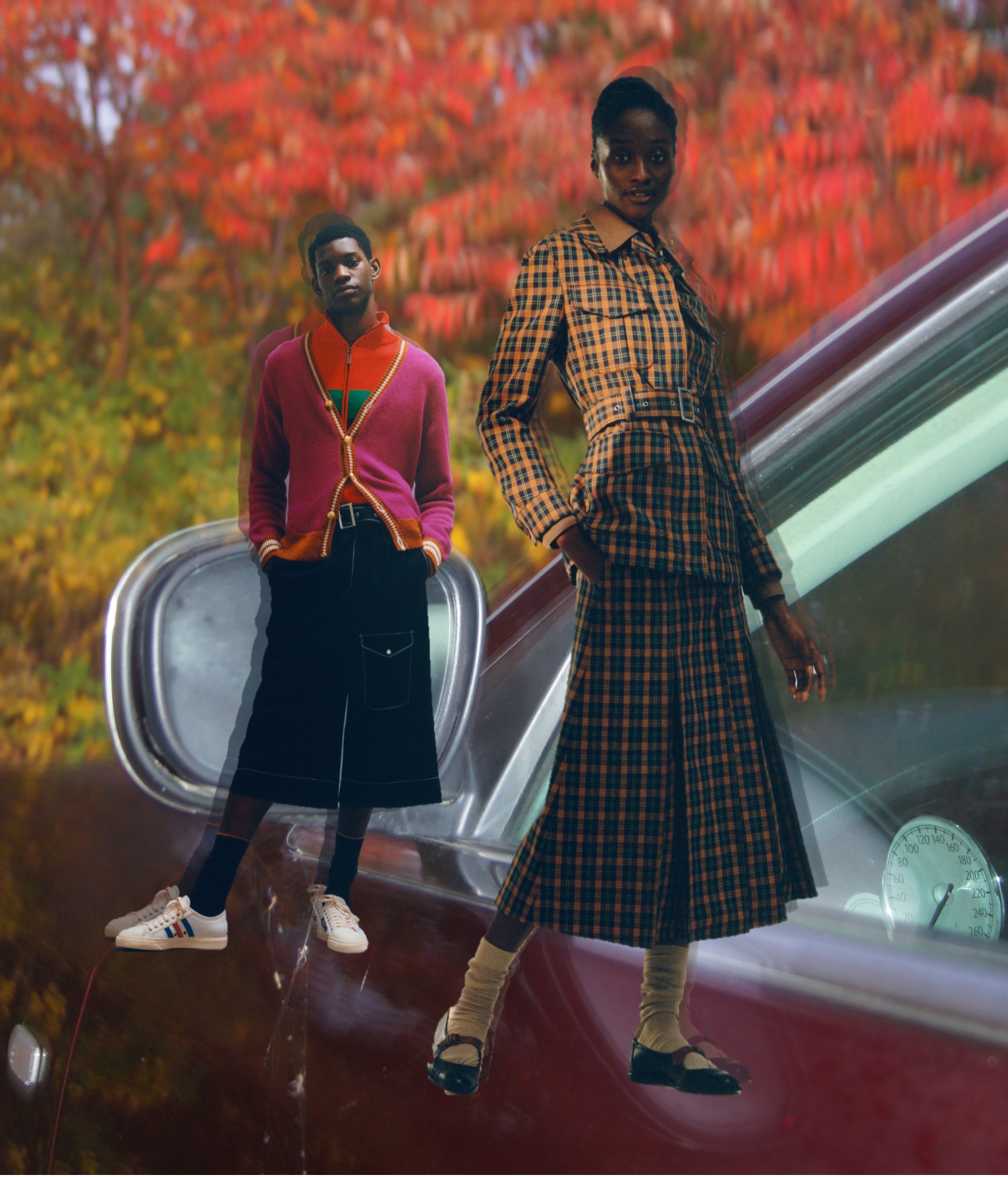
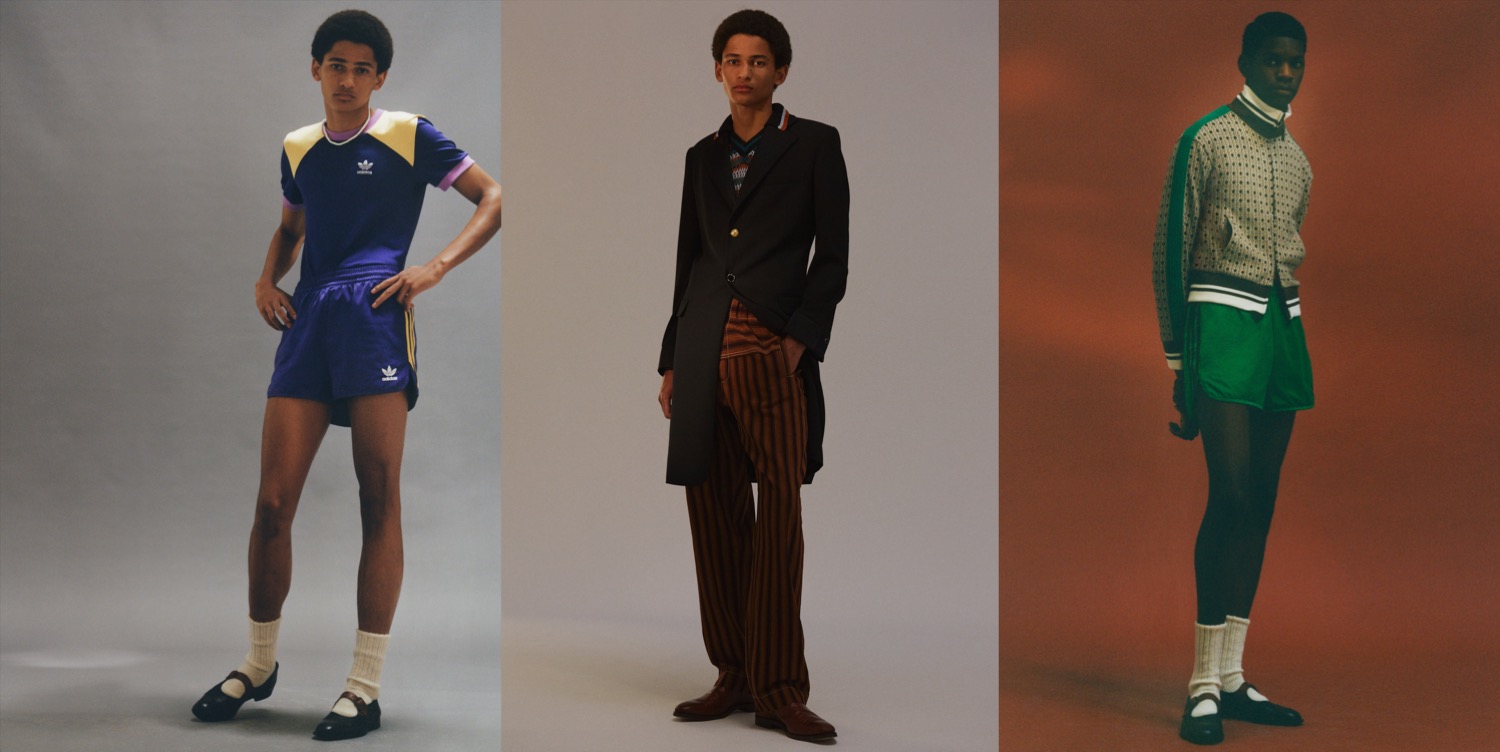
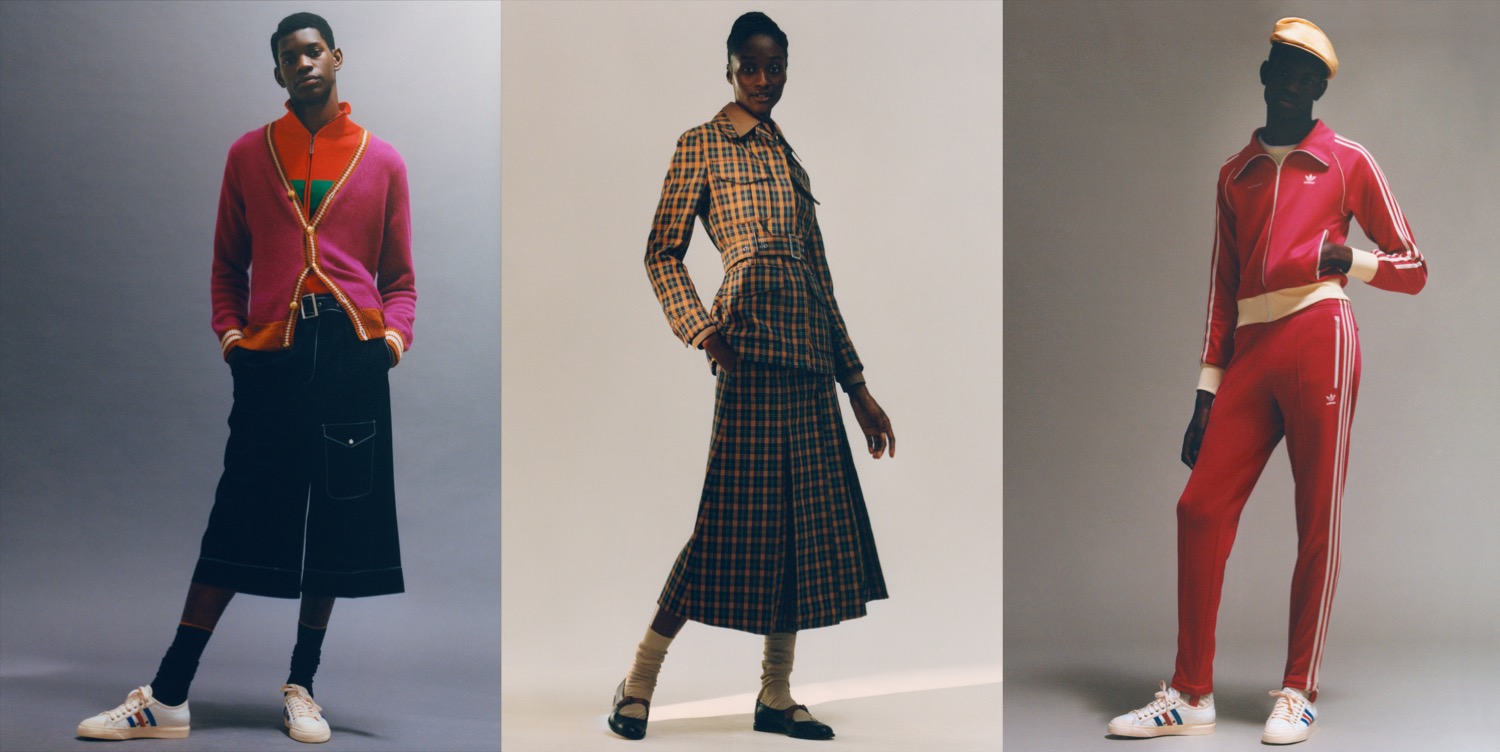
With digital shows and presentations, it’s quite difficult to geo-locate, and while Wales Bonner is a London-based label, it’s presenting spring-summer 2021 as part of Paris Fashion Week. What Grace Wales Bonner has been proposing throughout her career is a concept that has now, finally, come toward the forefront of fashion: exploring Black culture and aesthetics with the same nuance and consideration that has long been afforded Eurocentrism. This season, alongside a look-book photographed by Sean and Seng, the designer remotely worked on a film with director Jeano Edwards to present an immersive, intimate snapshot of Jamaica, and has created a digitally available zine to further expand on her research process. There is a piece in it written by Mahfuz Sultan, where he describes the importance of “Grace’s poetic interstices, the worlds between worlds, where Africa, India, and the islands touch as if on a dance floor…at least for those of us who, like Malik Ambar or Aimé Césaire, have spent our lives on the postcolonial circuit, flickering in and out of other stories as shades, exiles, ephemera.” It is that illumination that has forged a pathway for London’s array of emergent non-white designers: a flourishing generation following in her footsteps and narrating their own histories and identities. “There’s always been a continuity to the way I’ve worked, because I’ve expressed who I am and my position quite clearly since I started,” Wales Bonner says. Now, she continues: “When people expect me to have some point of view on what’s been happening…well, I feel I’ve tried to show that over the past five years. There are certain things we’ve always known. It’s more that now, other people are catching up.” This season that sense of continuity, and of Wales Bonner applying her microscope to regularly marginalized narratives, was more explicitly visible than ever. Instead of taking a new era as her starting point, she zoomed in further on her deeply personal autumn 2020 offering: an exploration of Lovers Rock and the second-generation Jamaican community of 1970s London. While last season was situated in Lewisham, and within the wardrobes of her father and his friends in late-1970s London, this time she located her perspective in early-’80s Jamaica. “It’s been a really wonderful exercise to be able to go into more depth and reflect on research over a more extended period,” she notes. Having visited Kingston just before the pandemic hit, Wales Bonner had already begun her research. An exhibition on dancehall culture at the National Gallery of Jamaica, alongside a meeting with curator Maxine Walters, had directed her toward figures like reggae icon Augustus Pablo who’d wear “incredible shirts with amazing, elongated cuts, which felt very British.” During a trip to Bob Marley’s house, now a museum dedicated to his life, she was struck by a pair of World War II military trousers he’d cut into football shorts: “a connection to Britain transformed, and then integrated into his lifestyle.” “While the first collection was about viewing the Caribbean community from a British-centric perspective, this one is thinking about a similar community in a completely different place,” she explains. “I was interested in British clothes that ended up in the Caribbean and were transformed by how people put them together and their context.” While she notes that the diaspora wore their heritage “exaggerated, extreme, and brighter, showing their connection to Jamaica in a louder way” on the island, particularly among its dancehall musicians, she discovered that there was a more pronounced emphasis placed on the aesthetics of Britishness. “There was a classicism that was celebrated and romanticized,” she continues. “There was a certain sense of sophistication of having something European.” So the shirt-making traditions of Jermyn Street, or the Savile Row tailoring that has long been one of her fixations, found new resonance in a striped nightshirt she describes as “the Stockwell dashiki,” or a “Kingston caftan” in tailoring wool. Flashes of jockey silks, or near-luminous knit cardigans, injected a proud flamboyance; a woven jacquard jacket, developed from West African wax textiles, translated bold 1970s geometrics into the Wales Bonner world. Her womenswear, which has often taken a preppier tone than her men’s, relaxed into ribbed knitwear with handcrafted crochet stripes, or a fringed, flowing dress, but a checked box-pleated skirt suit retained her particular take on feminine formality. “The collection is called Essence, and in a way, I was taking this time to reflect on what is essential within Wales Bonner,” she says. “How do I reflect the brand DNA in everything that I do?” That sentiment was echoed in Wales Bonner’s partnership with Adidas Originals, which has only been integrated in glimpses before, but took center stage this season, yet, rather than appearing like a commercial collaboration, seemed rooted in synchronicity. The brand’s research team, she explained, were able to source a wealth of archival imagery for her, documenting how dancehall musicians had once worn their wares and so the narrow cuts of track pants, or the crops of tailored jackets, have a particular historicism to them. “It’s about reworking pieces from the archive but with a more elegant, or craft sensibility,” she notes of the crochet three stripes, the hand-finished football boots, or the satin finish of fabrications. “What I do is quite subtle, but it’s about attention to detail.” Such a statement could operate as an explainer for Wales Bonner’s practice—and, as it ever has, in 2020 her approach shines.

Collage by Edward Kanarecki.