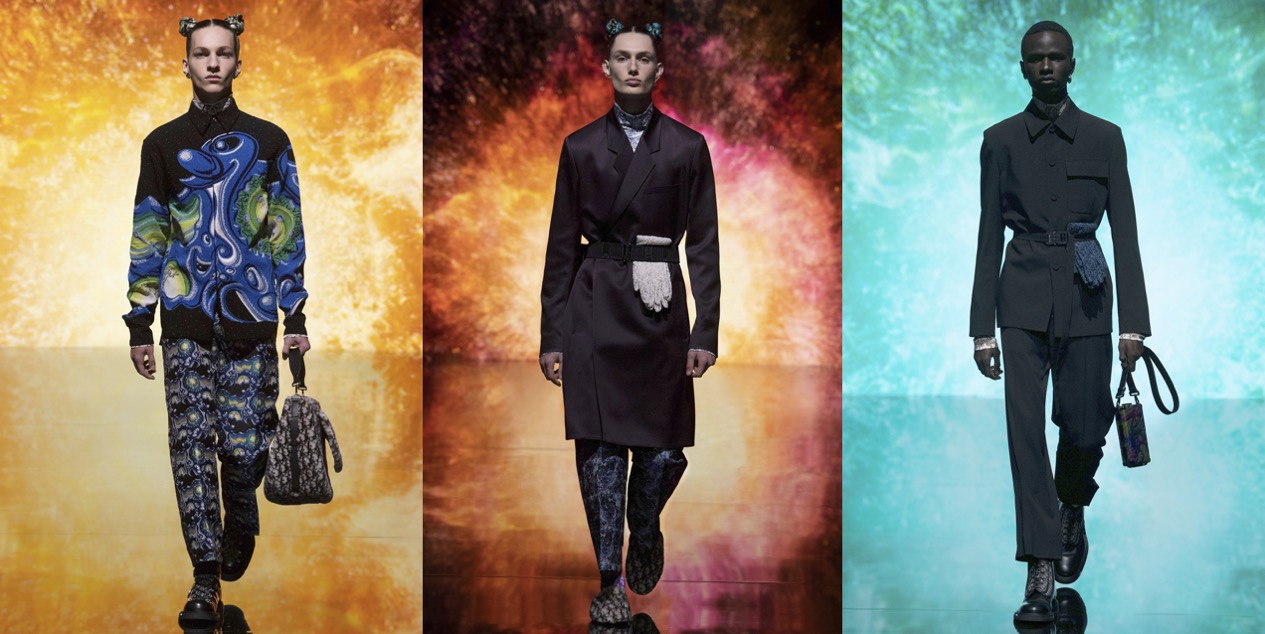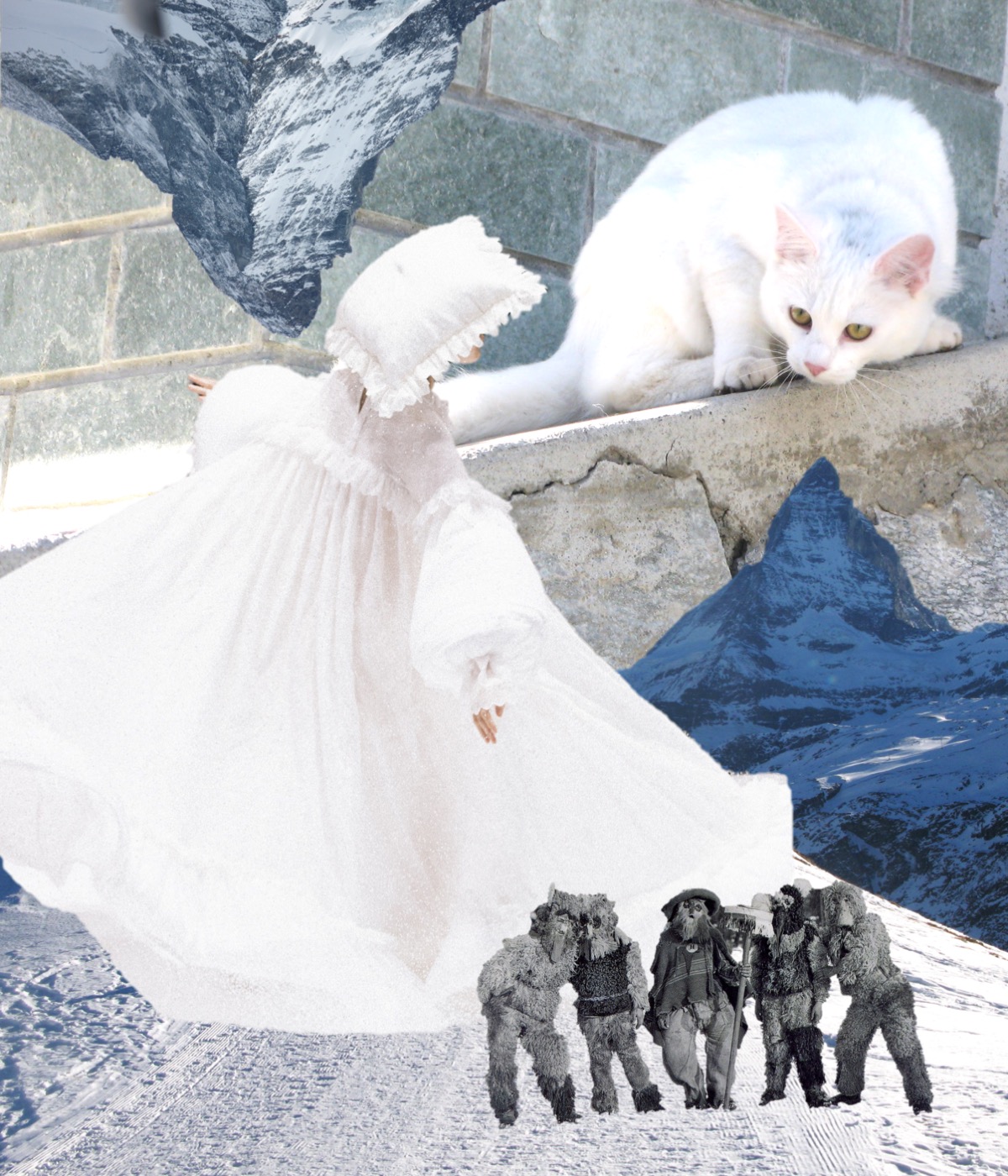
Motional. Beautiful People SS21

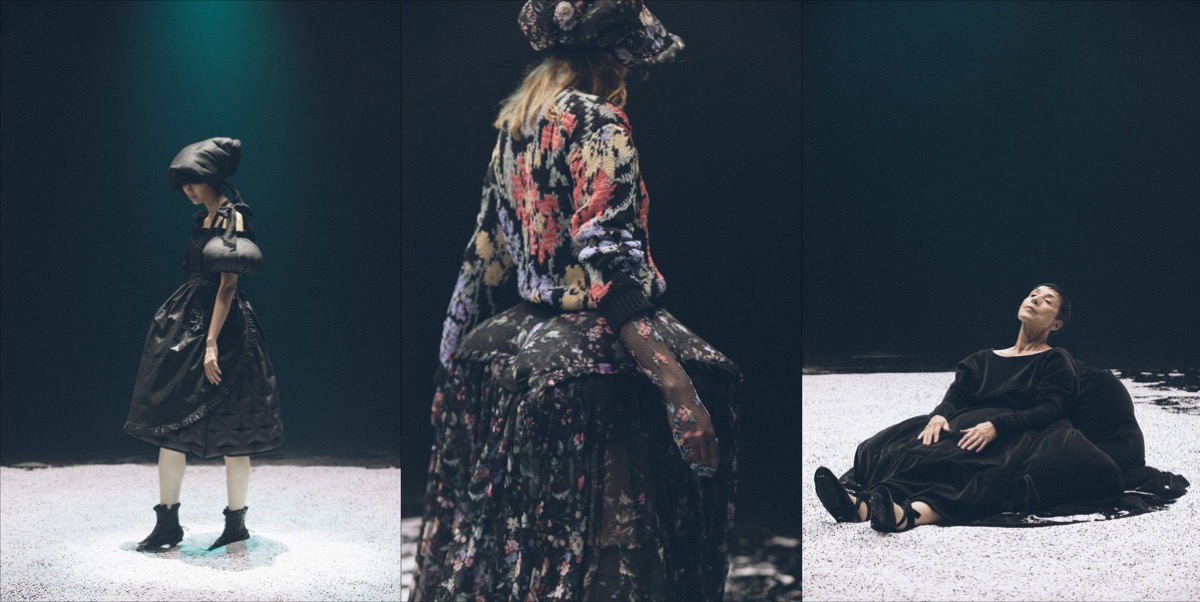
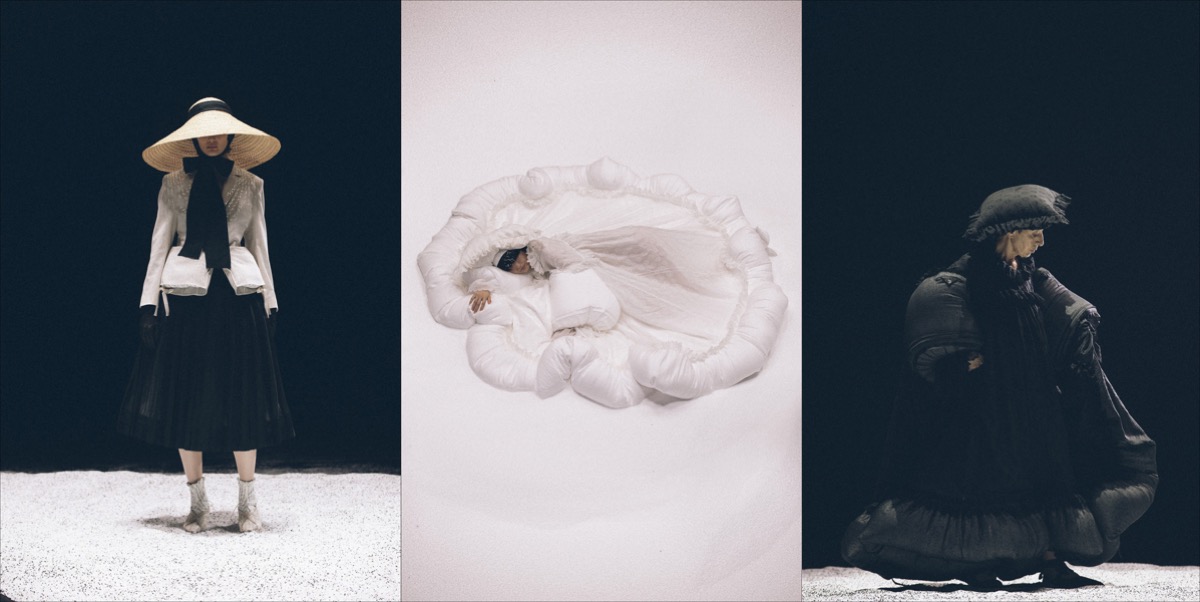
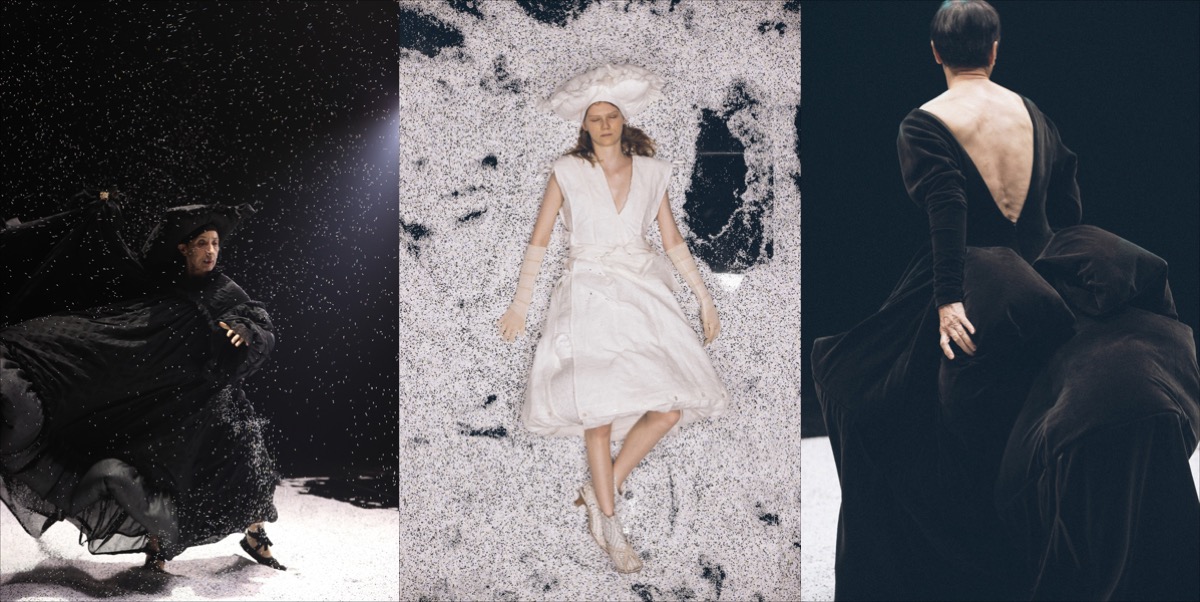
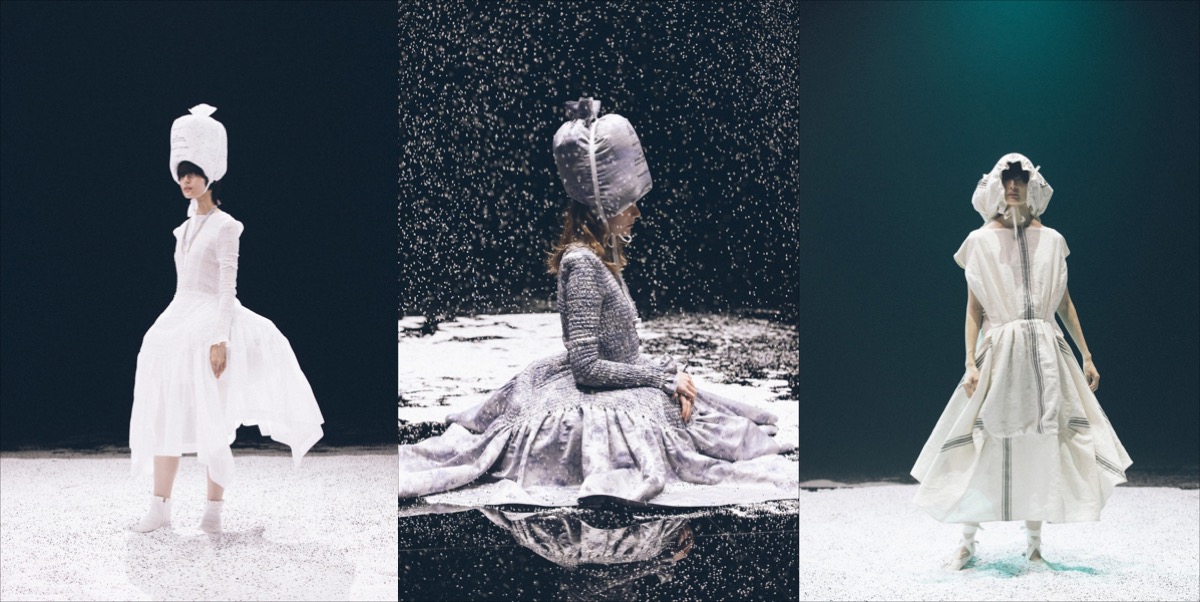
Hidenori Kumakiri creates shape-shifting garments at his Tokyo-slash-Paris-based label, Beautiful People. The former Comme des Garçons pattern-cutter makes classic clothes bordering with fantastical volumes, a mix of femininity and 1950s couture sensibility combined with the Japanese avant-garde. The brand presented the spring summer 2021 Side-C Vol.5 Motional collection, which explores today’s world, where we are stuck in our homes, and overwhelmed by emotions, with a striking film directed by Takahiro Igarashi. The collection sends message of optimism and rebirth, with the bustle-like shapes, and big and flowing volumes. “Side C, the transformative look at classics that focuses on the layers and the in-betweens of clothing, finds another dimension: a flowing, dynamic one. By creating an interconnecting system of pockets inside the garments, and filling them with small beads, movable silhouettes are created. The beads flow as the body moves, sits or stands, allowing for endless reconfigurations. A skirt turns into a couch, a dress into an armchair, only to revert back to what it was,” the press note says. The result is a look at the classics and the layers in between the clothing – a collection filled with an interconnecting system of pockets inside each look which allows them to be filled with small beads. With each movement, the shape and volume of each look changes into an endless array of silhouettes. And when topped off with pillow-like hats, there’s another nod to home and the familiar elements of our humble abode. Incredible.
Collage by Edward Kanarecki.

Alber’s. Yves Saint Laurent AW00

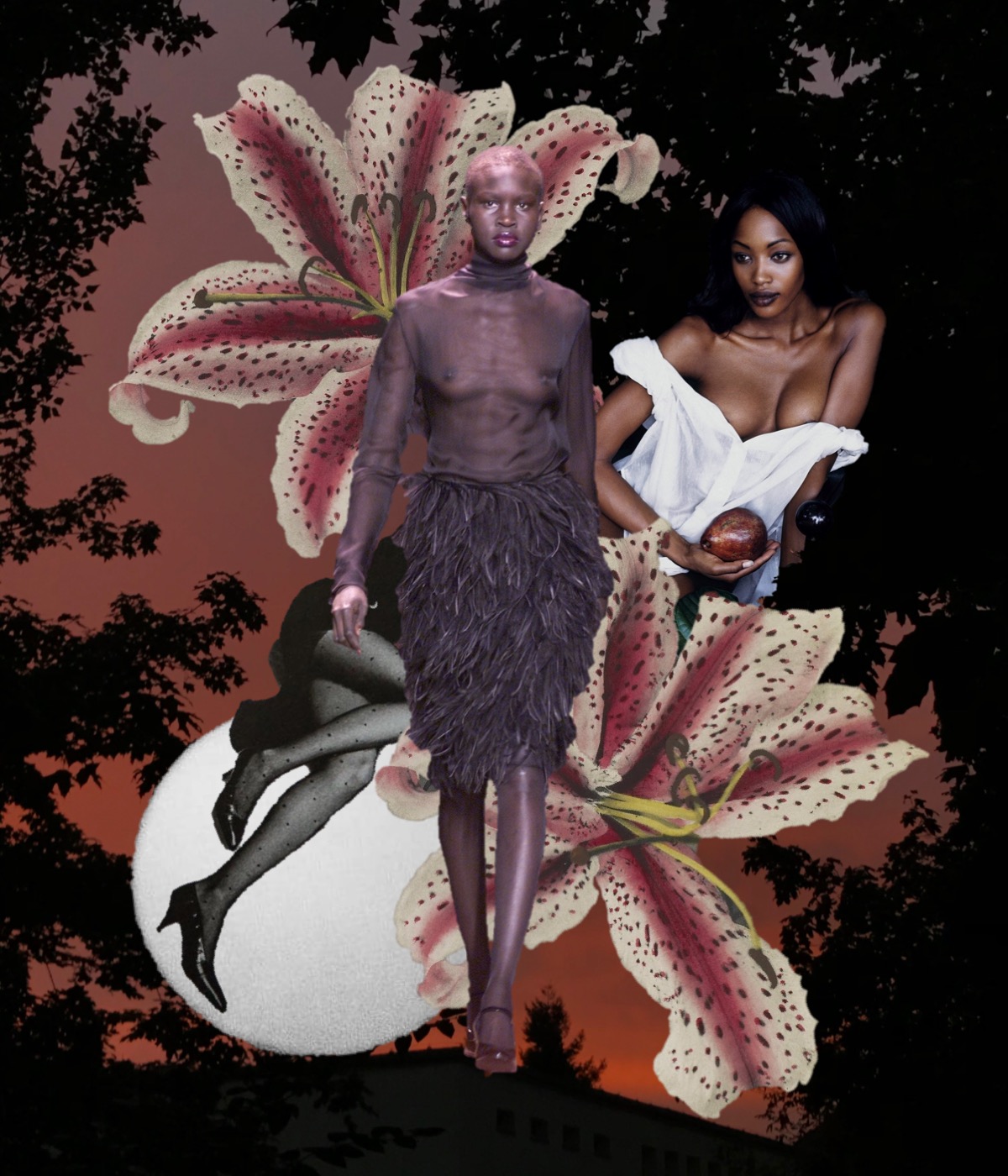
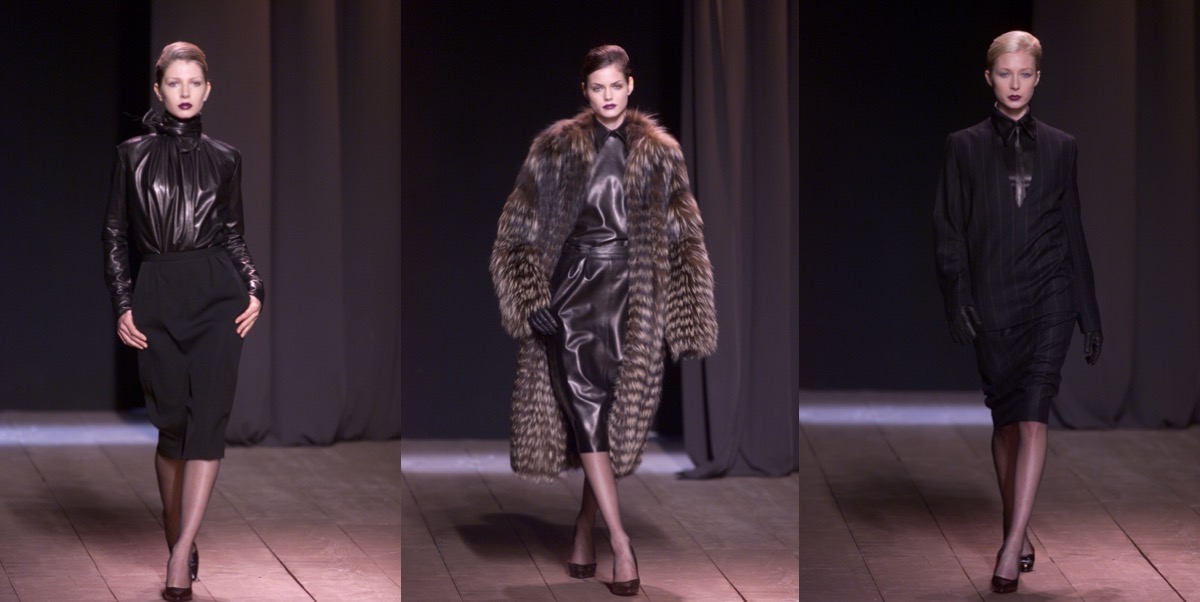
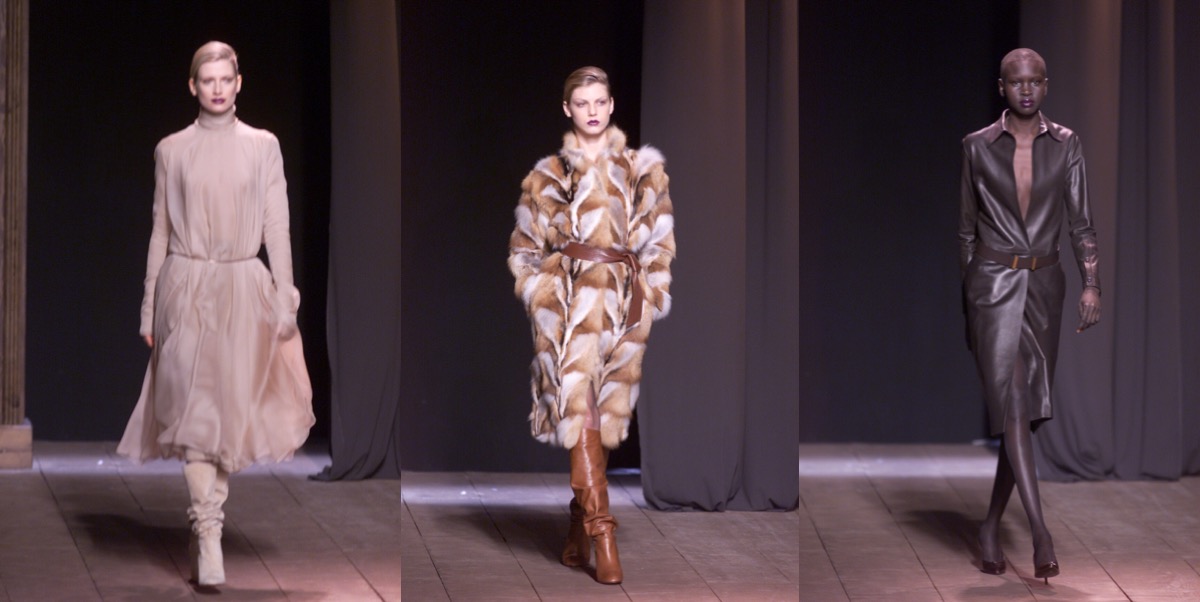
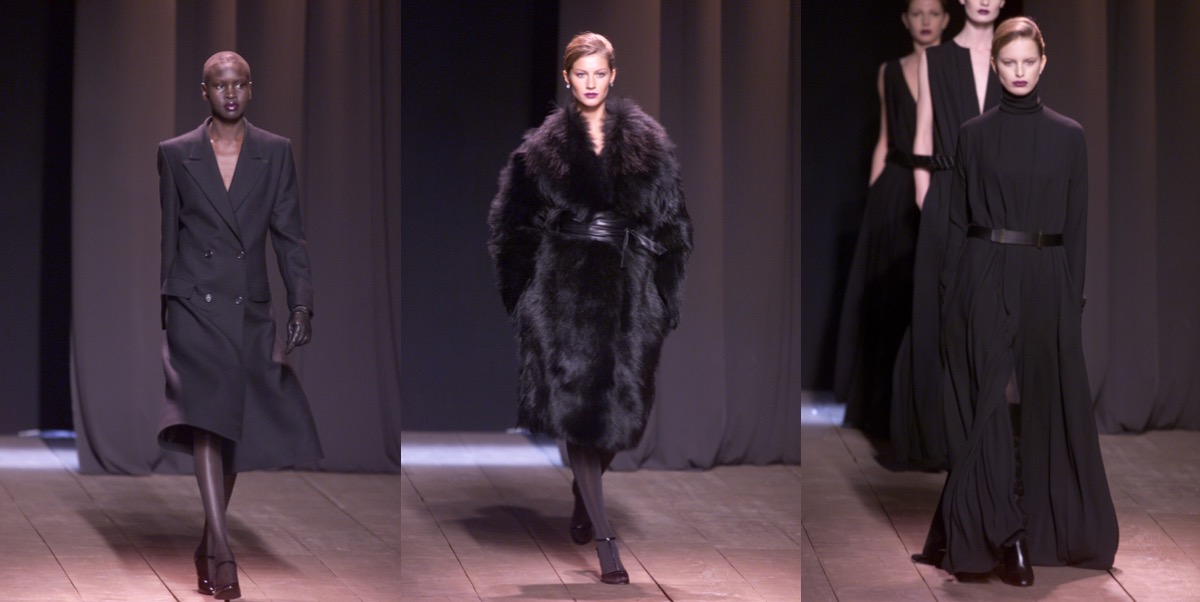
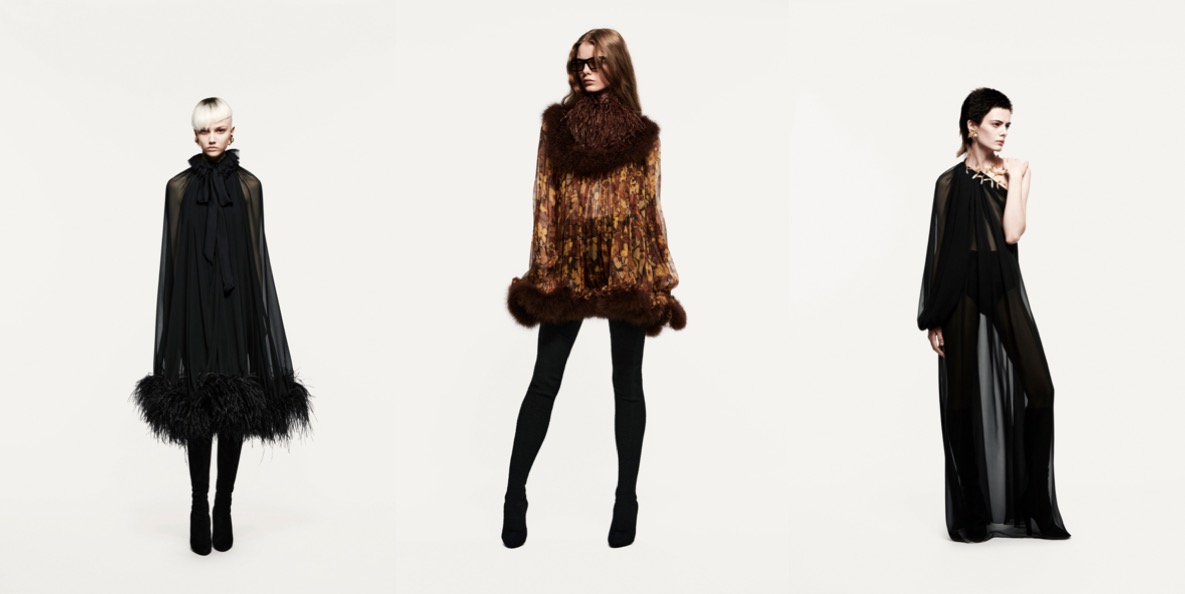
All that holiday season is also a good time for induldging in the fashion archives. Many don’t know that (or simply don’t remember – or were barely born then!) Alber Elbaz worked as creative director of Yves Saint Laurent from 1998 until he was fired after three seasons when Gucci bought the company in 2000 and Tom Ford took over the creative direction. Autumn-winter 2000 was Elbaz’s last collection for the maison, but also his best. As Vogue’s Hamish Bowles recalls, “he finally hit the target with a controlled collection that proved a strong modern take on the house’s timeless chic. Elbaz elongated and chiseled the classic proportions of the trademark boxy jackets and pencil skirts, and showed them with black glove-leather shirts with matching narrow ties – a cool, modern spin for the classic YSL suit. With satin revers on an overscale man’s Crombie coat, he also gave a contemporary twist to ‘le Smoking.'” Looking at the collection now, it feels so relevant and distinctly YSL at the same time. Leaving ‘grand soir’ statements to the master Yves himself and the haute couture collection he continued to design at the time, Elbaz sent out a capsule of few, after-dark looks for his finale. Classic metallic lace looked chic again, in long-sleeved midi dresses styled with hip-slung crocodile belts and wrinkled ’70s cavalier boots. Great-looking tarnished brass lamé suits with black chiffon blouses, body-skimming cocktail dresses in black slipper-satin, and entrance-making flapper dresses were followed by a final stylish take on a YSL classic – the sheer black chiffon blouse with a skirt made entirely of ostrich feathers. No wonder why after this collection, Lanvin invited Elbaz to take over the brand… and he did wonders there for more than a decade!

Collage by Edward Kanarecki.

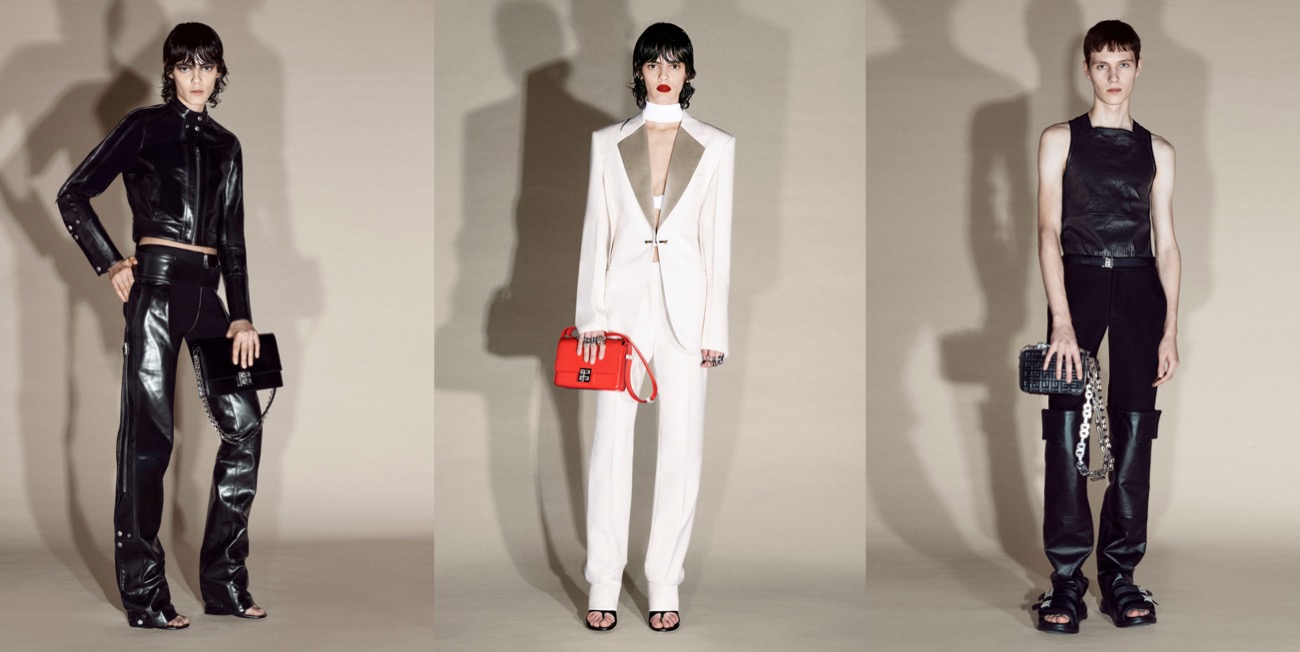
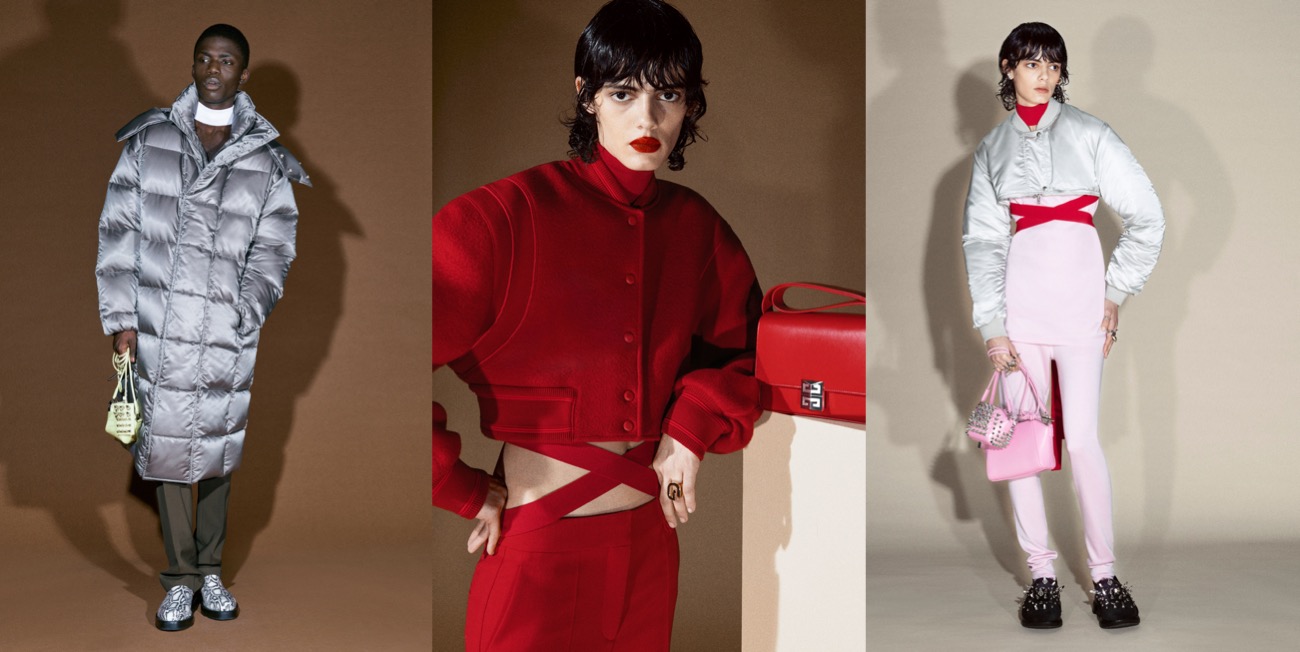
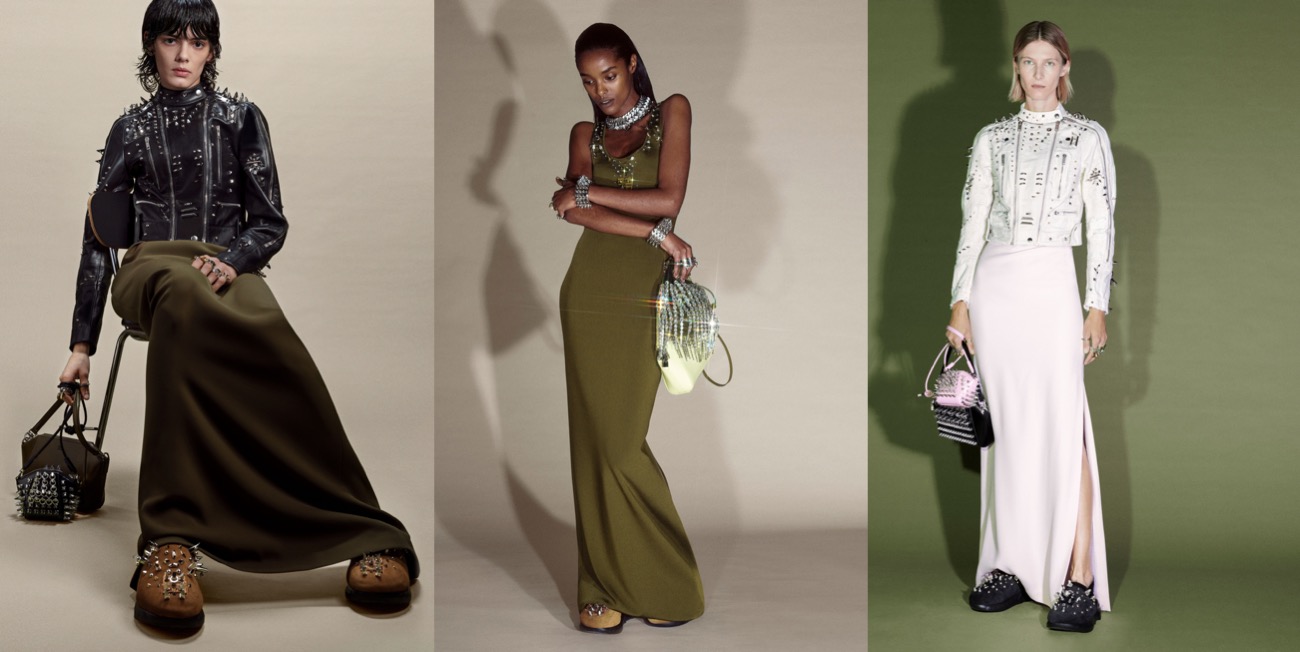
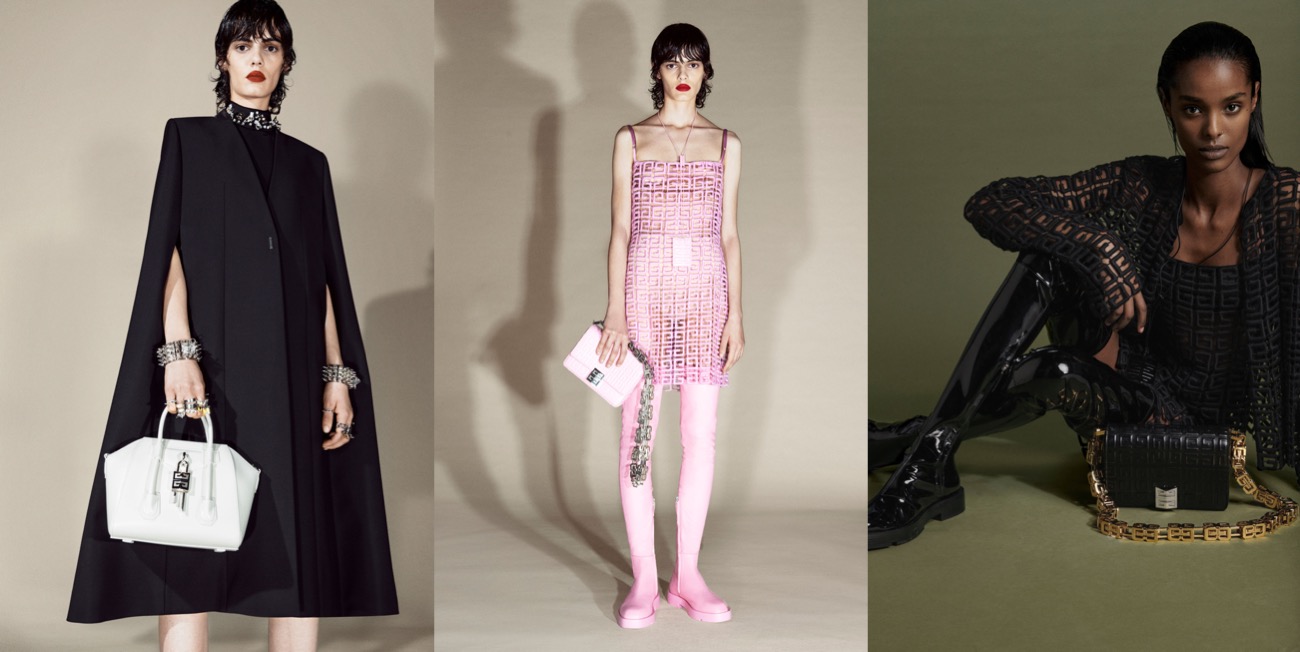
Revisited Classics. Givenchy Pre-Fall 2021

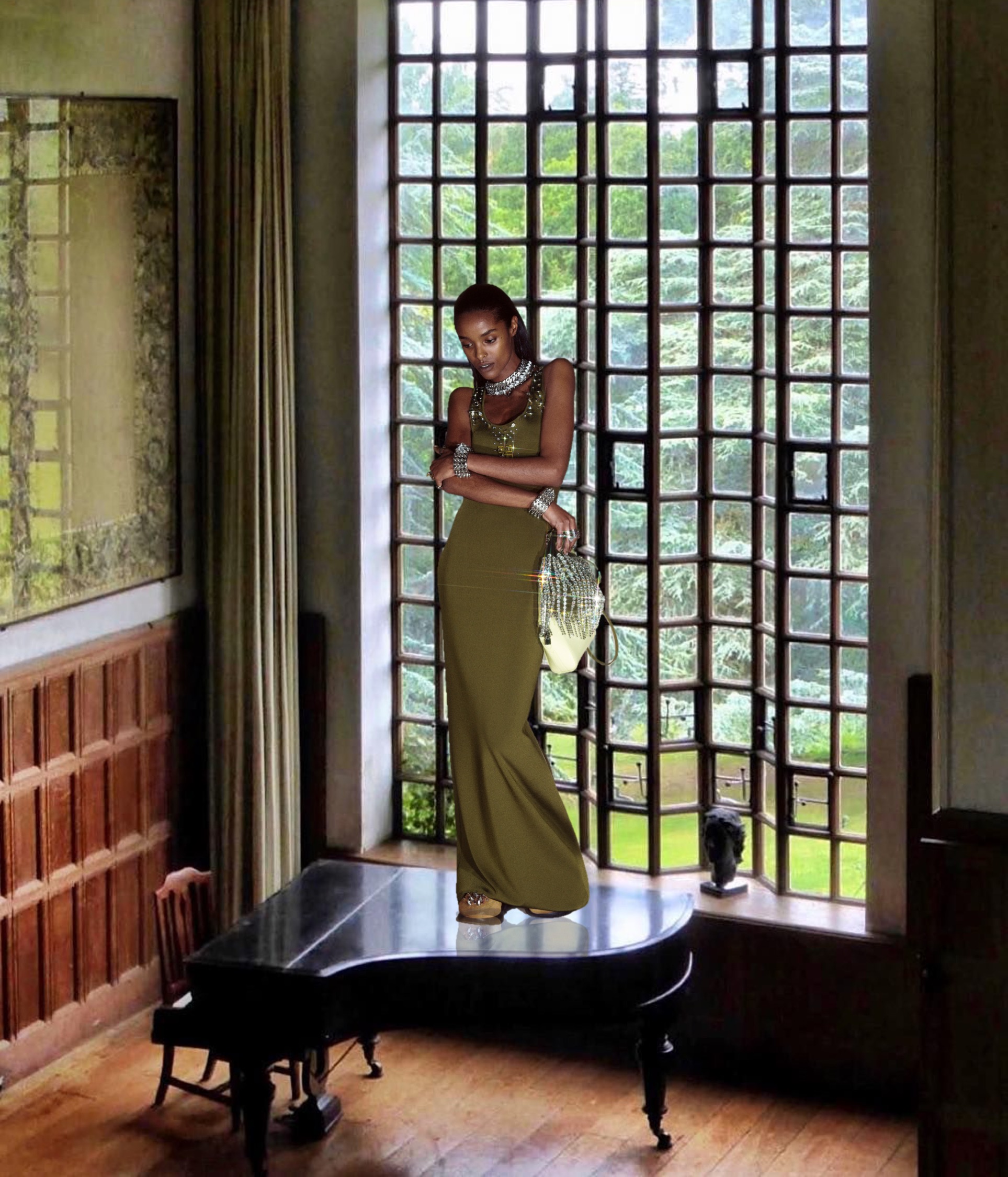
You might be on fence with Matthew M. Williams‘ style and aesthetic, but you’ve got to admit one thing: this guy knows how to shake up a brand and make present it all over the place (even if that revamp isn’t overly ground-breaking). Talking about his first pre-collection for Givenchy, he evaded questions of the specific visual references that may have inspired it, choosing instead to focus on nerdy things like cuts and fabrication. No mood-boards here. “I don’t really work like that, actually. I’m more on the body, touching materials. Sometimes there’ll be imagery that inspires things, but it’s very instinctual,” he told Vogue. Williams is emblematic of a new wave of designers for whom fashion is often less about producing the flashy statement piece than about perfecting the unassuming wardrobe staple – of course, with an endlessly-studied twist. “What I find exciting is often things I would wear myself,” as Williams said. “As somebody who shops, if I’m buying a suit and I want to wear a t-shirt with the suit instead of a button-up, I want that brand to have a nice t-shirt for me to wear.” His new collection for Givenchy proposes a series of wardrobe staples subverted through his soft-versus-aggressive lens. A classic letterman jacket chopped into a bolero and realized in a super luxe, tonal red knitwear; a rather normal long-sleeved black day dress hacked up at the waist like a little piece of architecture; business-ready blazers with complex lapel and collar structures seemingly morphing in and out the fabric. “For me, it’s really finding that tension between my real world – how I wear clothes on a daily basis – with this magical dream world of the maison,” he said. The knitted, slightly figure-hugging dresses continued to outline his womenswear silhouette for Givenchy, which debuted in his first line-up, while silk leggings and EVA-soled suede sliders represented the elevated sportswear element of the collection. Interestingly, Williams’s take on Givenchy isn’t too sporty. “I do wear suits,” he reiterated. “It feels more like me.” Of course, that’s not to say that a generous amount of logos – another pillar of the social media generation – didn’t find their way into the collection. This kind of makes Williams’ vision feel like Riccardo Tisci’s logo-heavy Givenchy off-spring. Williams latticed a lace dress in Givenchy’s archival four-G logo, embossed them on bags and forged them in bag chains. Well. While every fashion magazine has a new Givenchy special in it, 500 million people were reached in October with the brand’s social media campaign featuring everyone from Kim Kardashian to Julianne Moore, and first designs designed by Matthew are hitting the stores, time will show if that “perfect” recipe actually works.

Collage by Edward Kanarecki.

Revived Chic. Saint Laurent SS21

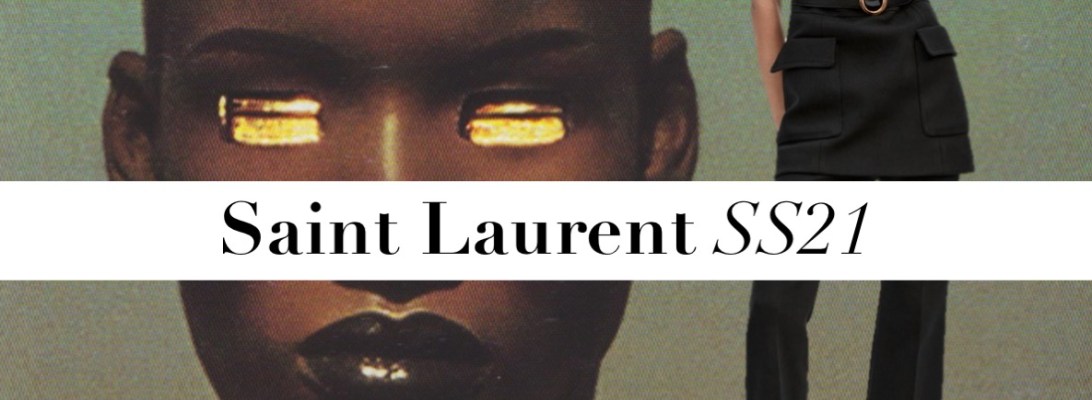
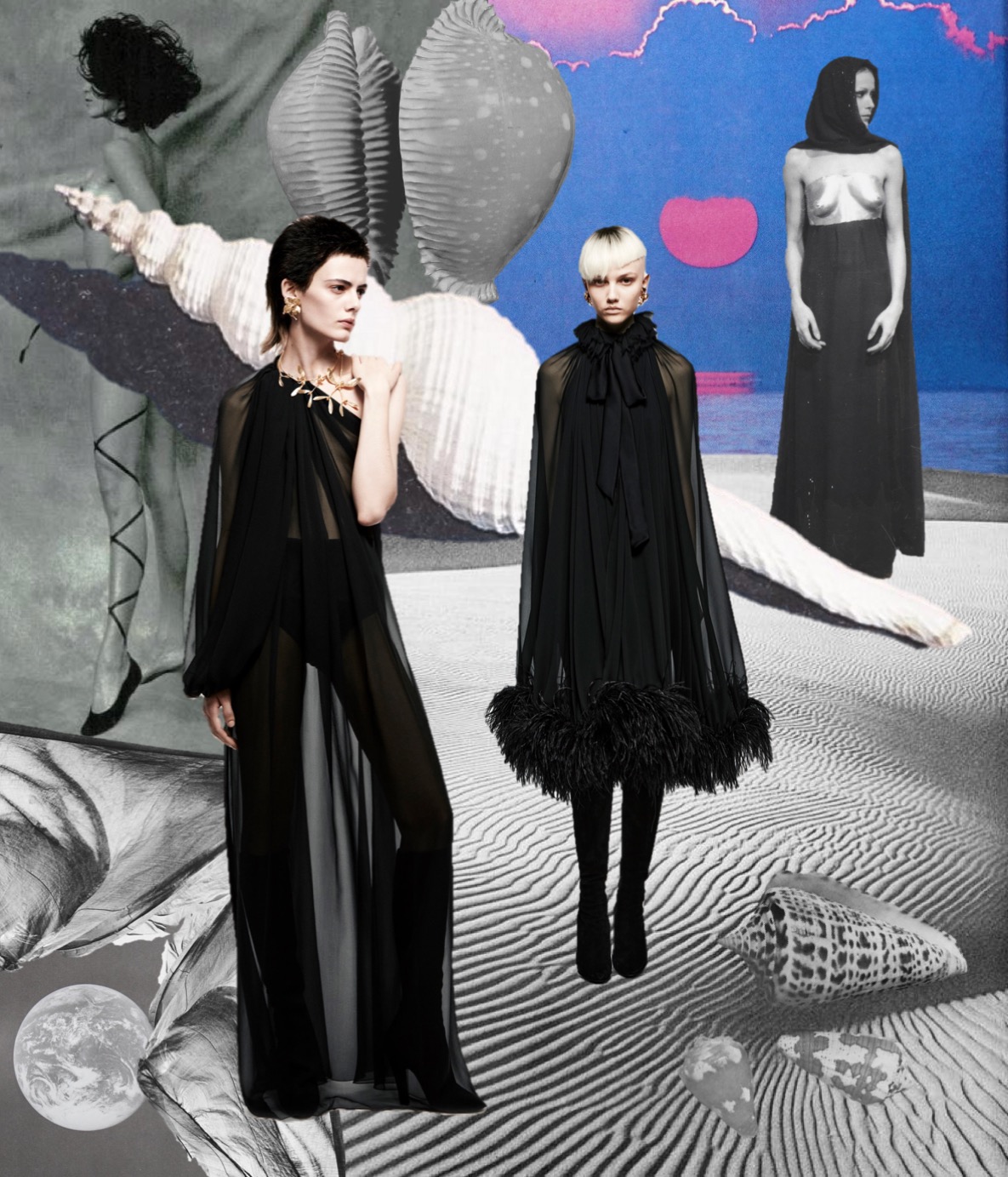
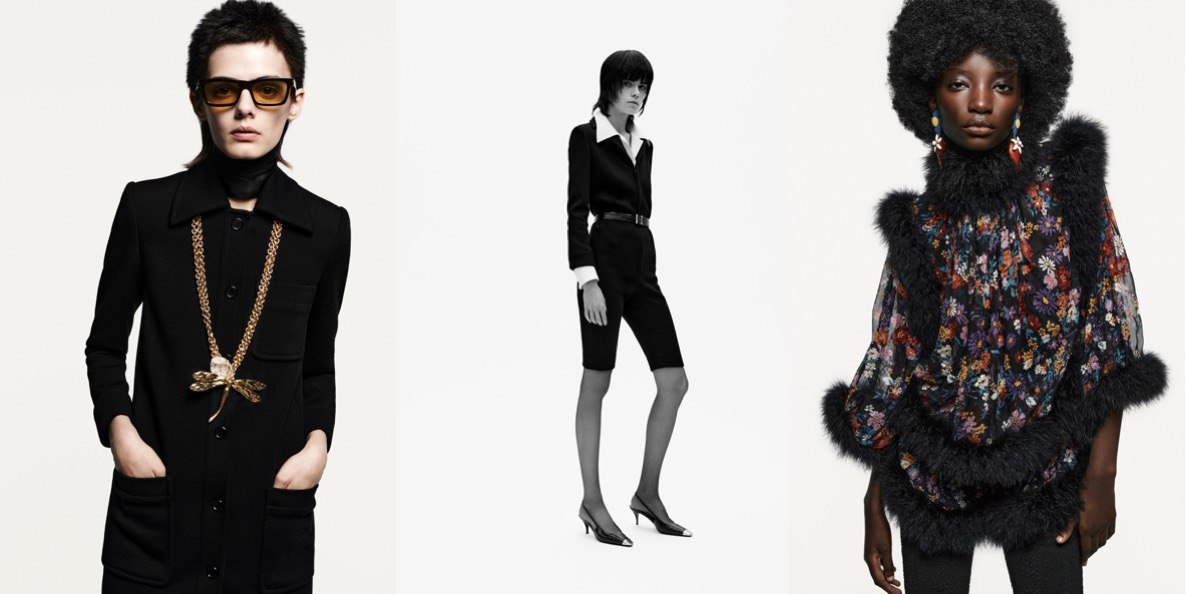
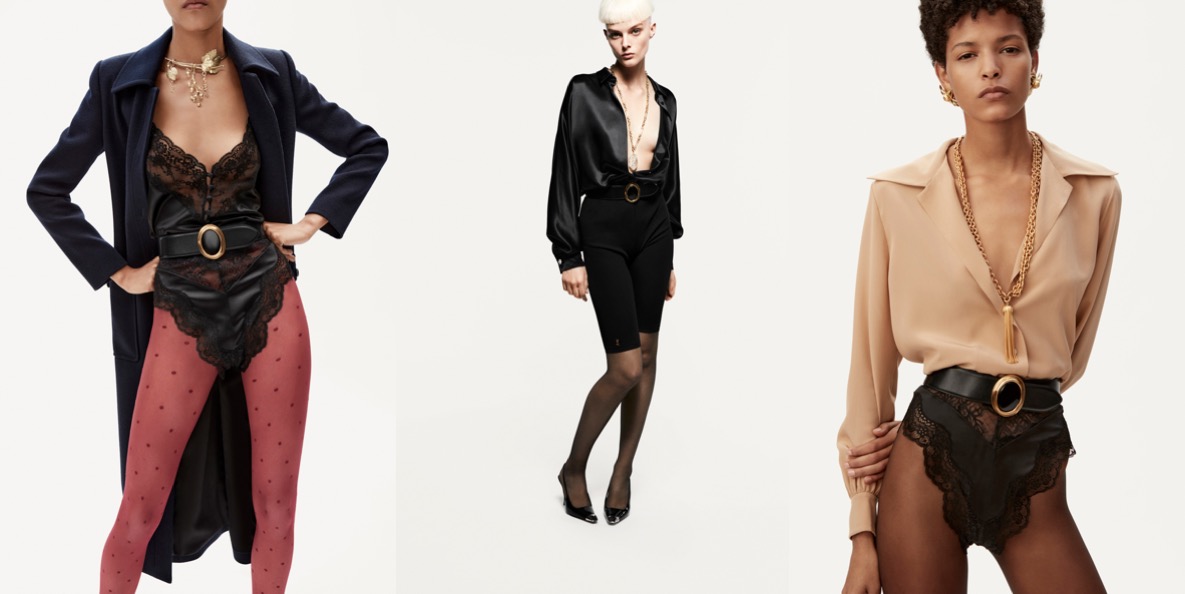
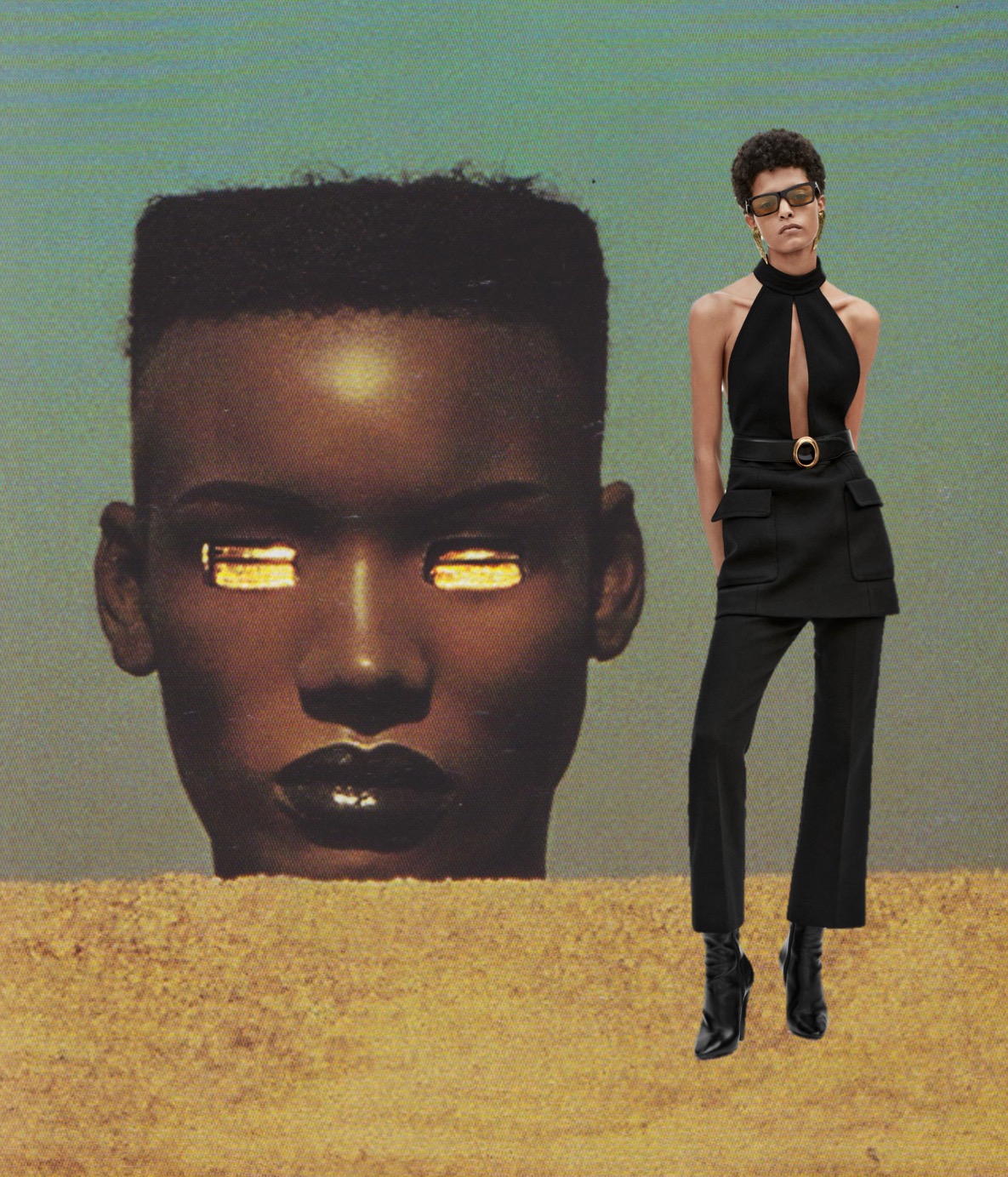
I loved Anthony Vaccarello‘s spring-summer 2021 collection for Saint Laurent. It was an exercise in ultimate chic, an escape from lockdown dressing as we know it. And the guest-less fashion show itself was a visual feast. The hypnotic film by longtime creative accomplice Nathalie Canguilhem of models walking in a snaking single file across striated sandbanks in… well, who knows where, exactly? On a call with Vaccarello a few days ago, he wasn’t letting on. It’s worth noting that the panoramic vista as far as the eye can see performed a similar trick here as it did in February: an uninterrupted backdrop the better to showcase his new streamlined silhouette. The line-up was surprisingly soft, hard edges rounded off, save for the punk-ish haircuts of the models. There’s a general air of relaxing, sometimes even playfulness – but nothing too loose. The months of life in and out of lockdown with the attendant desire for clothes with ease and softness didn’t leave Vaccarello untouched. “With everything that was going on in the world, I wanted something softer, warmer,” he said during that phone call from Paris. “I’ve never really done ‘comfortable’ before.” He found his answer to how to approach it by delving into the YSL archives, alighting in his usual resolutely left-field and non-historicist way on the fluid, pliable jersey dressing that Saint Laurent did in 1968. But the ultimate, refined loungewear was my my favourite here: sheer kaftan gowns and flou dresses, all of them denuded of any details, save for the accessories that accompany them: a hothouse bloom tied close to the throat via a leather thong, razor-sharp slingback heels and reissued versions of Claude Lalanne’s jewellery. Vaccarello’s success here is in answering the more intimate mood of the moment; being able to connect a house whose foundations rest on a particular brand of high-octane cool glamour – a very external expression of self – with our current deep inner need for ease and solace. Even his nods to the ’60s -they also include some very Valley of the Dolls florals and marabou negligee dressing, glorious exercises in kitsch, but just enough; and those geometric updates of the classic Vidal Sassoon five-point cut – aren’t nostalgic rehashes. Instead, it’s a wish to connect that decade’s optimism with his own sense of positivity; a sense that one can start looking again to the future. And who can blame him? By the time this collection is available to buy, Vaccarello will be celebrating the milestone of his fifth anniversary at the house. “I’m not the guy I was when I first came here,” he said. “I am more sure of myself.” So too it seems is the woman he has in his mind’s eye. “She was maybe more seductive when she started,” he said, “but now she has grown up. She has much less to prove.” It’s getting better and better!

Collages by Edward Kanarecki.

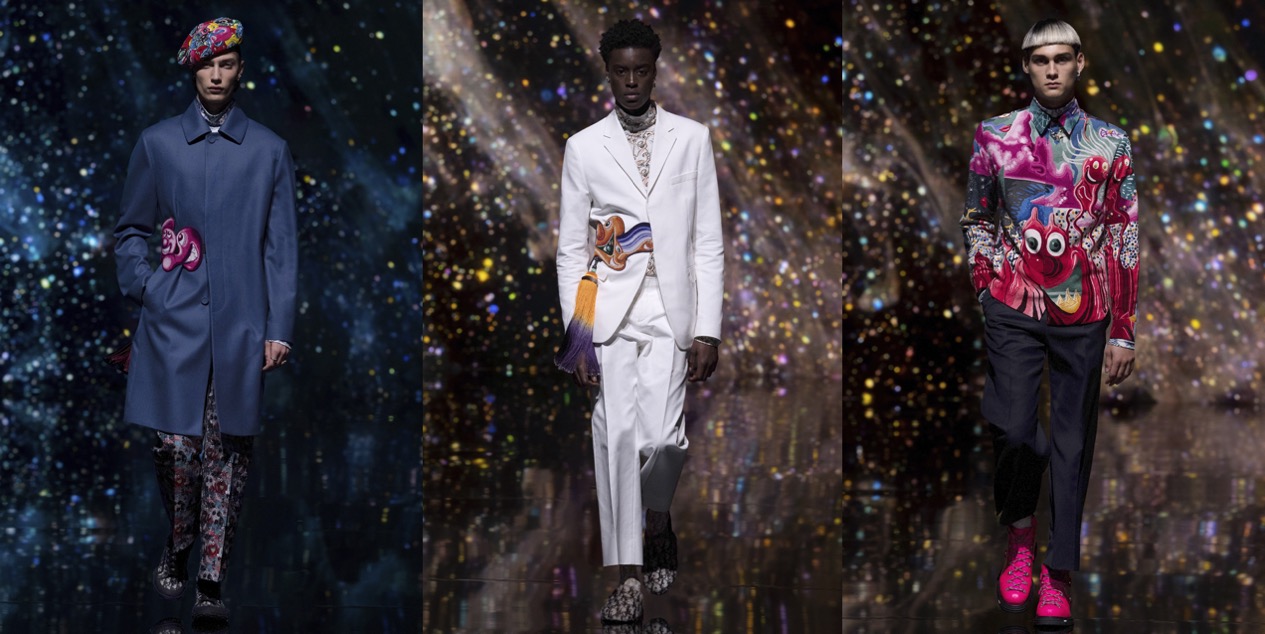
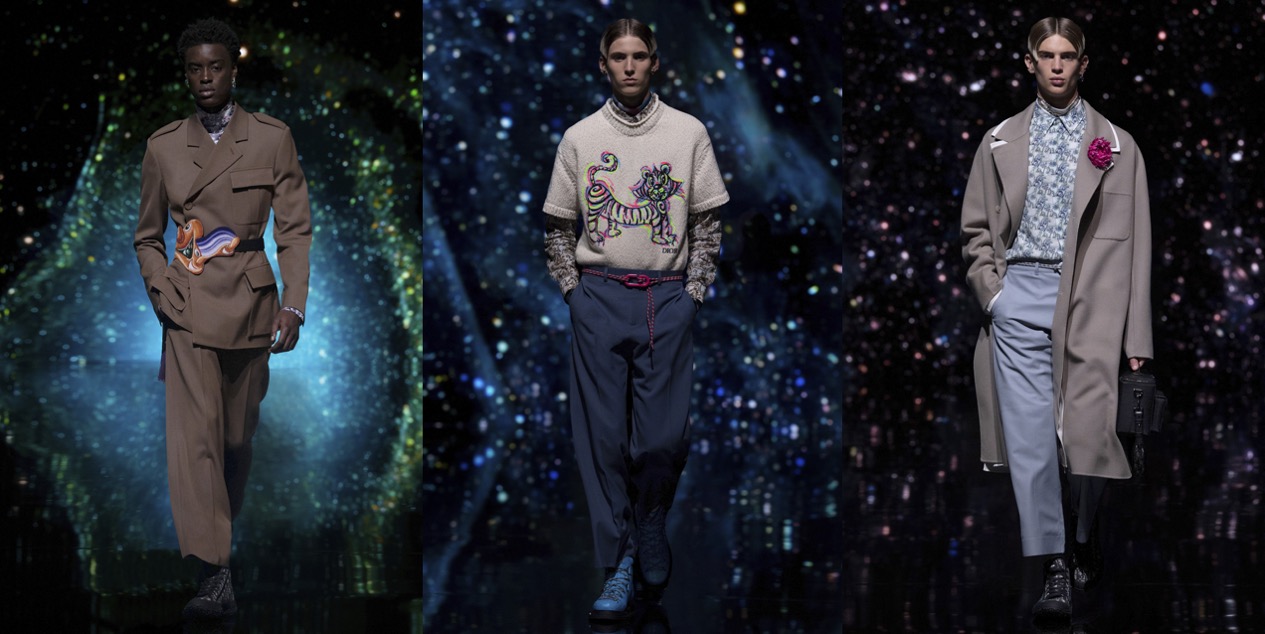
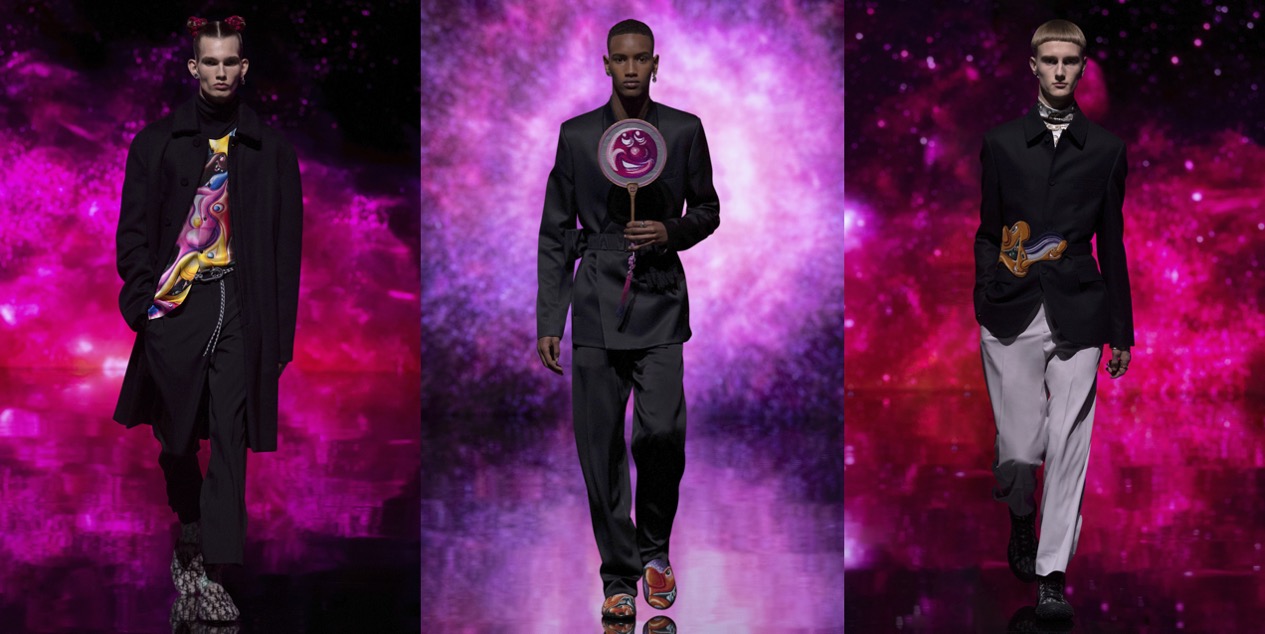
Trippy Elegance. Dior Men Pre-Fall 2021

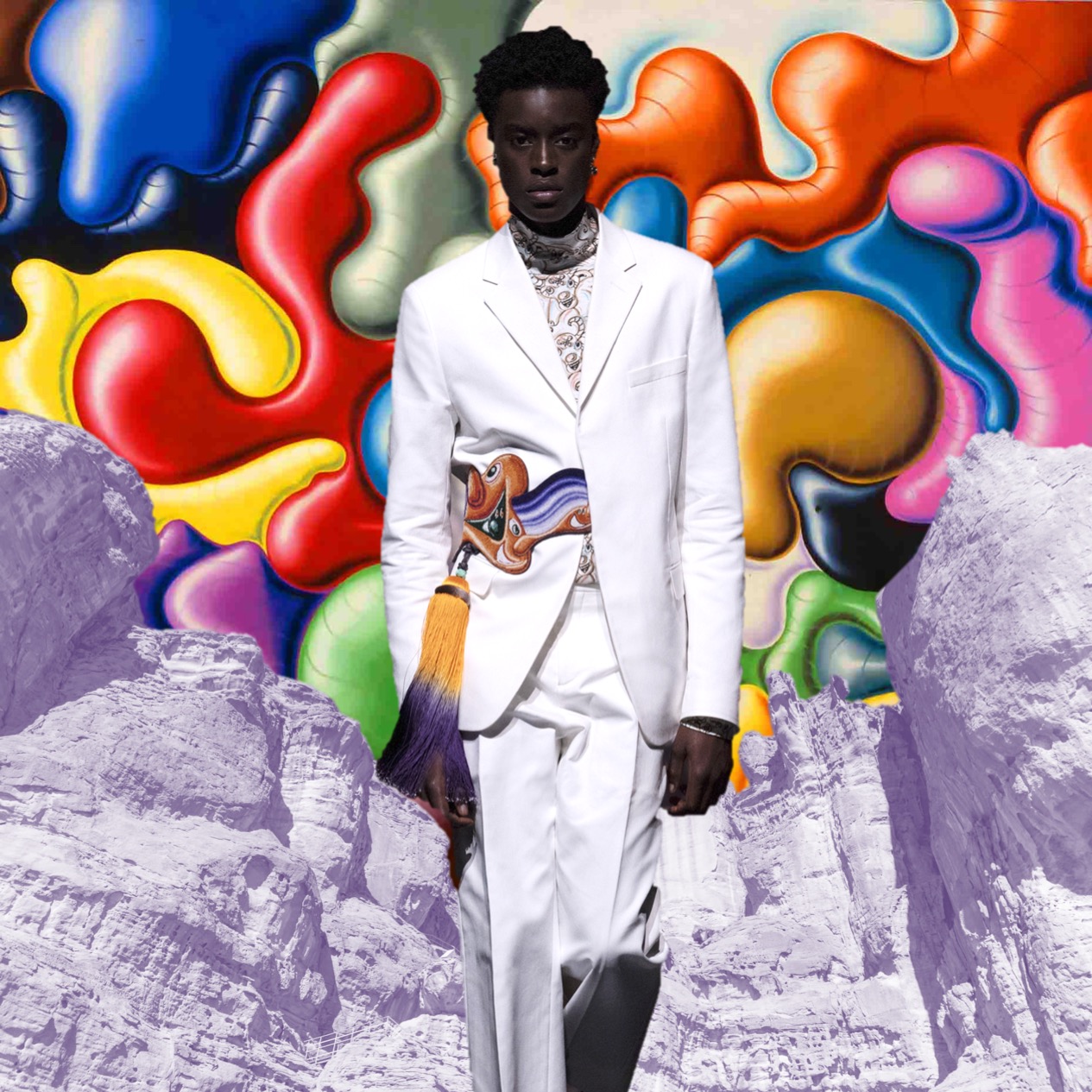
This time last year, Kim Jones’ many fans across the fashion and art worlds were gathered in Miami Beach. His Dior Men show was a Basel-adjacent affair, complete with a walk-through of the new Rubell Museum. Last moments of old reality. The pandemic scuttled plans to stage a show in Beijing for Jones’s latest outing, and this way sole focus was directed at the clothes. Last year, Jones revealed a colorful collaboration with Shawn Stussy, the streetwear OG. This season, he tapped Kenny Scharf, an American artist who emerged from the 1980s East Village scene, making street art alongside his friends Keith Haring and Jean-Michel Basquiat. “The fun and the energy of that time – you see young kids being excited by Kenny Scharf’s work. It’s speaking across generations,” Jones told Vogue via Zoom. Scharf’s canvases can now fetch up to six figures, but he still has street cred: via “Karbombz,” a public art project, he’s tagged upwards of 300 cars with his imaginary creatures – all for free. Scharf, whose first show was at New York’s Fiorucci boutique in 1979 and earliest fashion hookup was with Stephen Sprouse, is the perfect Jones collaborator. His work gleefully obliterates boundaries too. “I’m one of the inventors of all that,” Scharf said on a call from his L.A. studio. He raved about Jones: “He’s a listener, he’s a learner, and that shows. He went really deep into what I’m doing.” Together, the designer and the artist selected contemporary pieces and older ones to reproduce, including When the Worlds Collide, a 1984 canvas in the Whitney’s permanent collection. Scharf also designed 12 Chinese zodiac signs for the show’s knits and underpinnings, and, of course, he had free rein to reinterpret the Dior logo. “I just wanted it to be a very full-on version, using specific techniques to recreate his work in really beautiful ways, to make it even more Pop,” Jones said. In some cases, the Dior ateliers were joined by Chinese artisans who rendered Scharf paintings in delicate seed embroideries. Silhouette-wise, Jones’s instinct was to soften his distinctive tailoring and give it a more lounge-y attitude. Jackets are belted like robes and pants are easy; some of the models wear Oblique-patterned slippers. We are still locked in, after all – lets keep it stylish.

Collage by Edward Kanarecki.