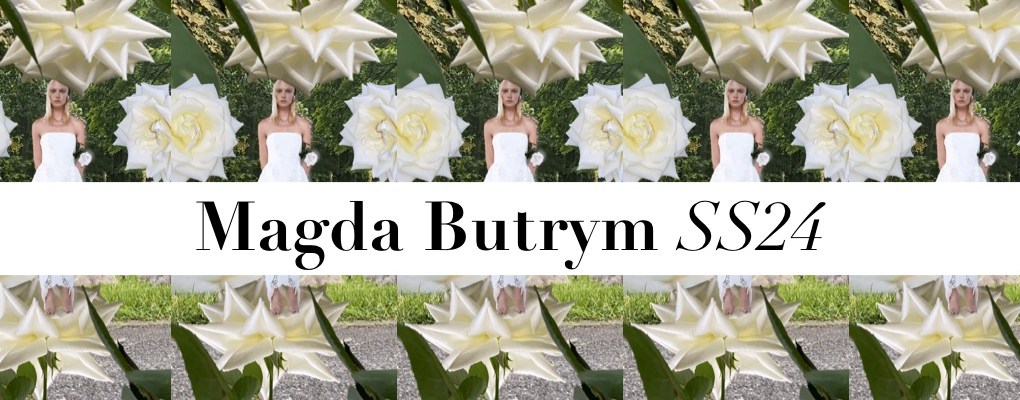
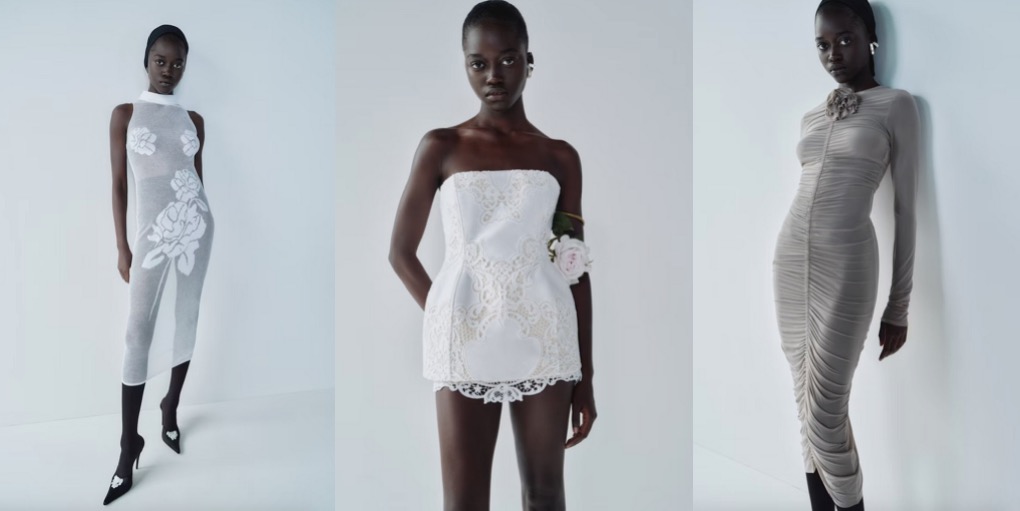
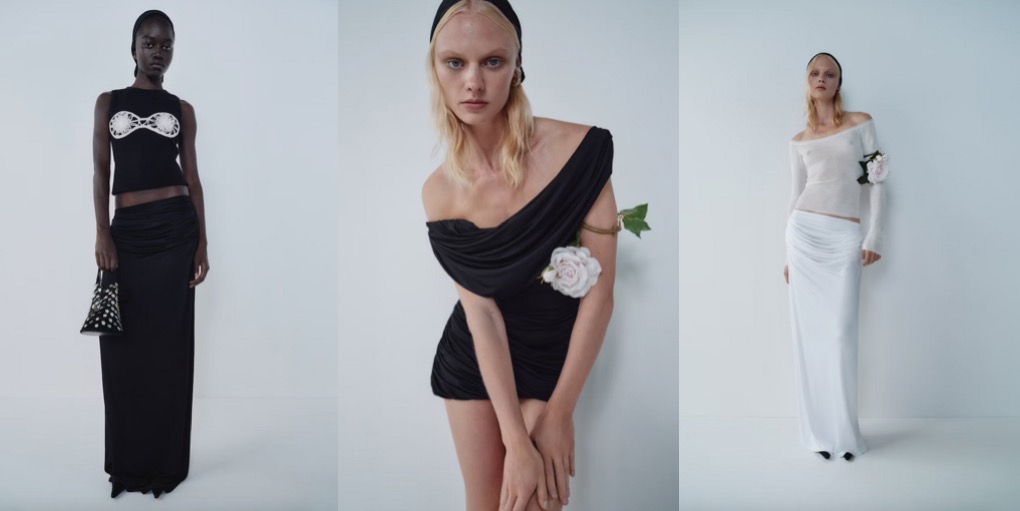
For spring-summer 2024, Magda Butrym emphasizes her vocabulary of signature Slavic chic. Roses are the Polish label’s key signifier, and this season the designer offers a range of iterations of this motif. Silk-petal roses appear on shoes and arm-bracelets; floral shapes are draped around the bustiers, come hand-crotcheted or materialize in form of meticulous lace. The most intriguing version of Butrym’s favorite flowers was created in collaboration with Heven, Breana Box and Peter Dupont’s artisan brand. The gorgeous, blooming necklace made entirely from glass is fit for a goddess. Just like all the sheer, slinky dresses that look light as a feather.
Collage by Edward Kanarecki. Don’t forget to follow Design & Culture by Ed on Instagram! By the way, did you know that I’ve started a newsletter called Ed’s Dispatch? Click here to subscribe!
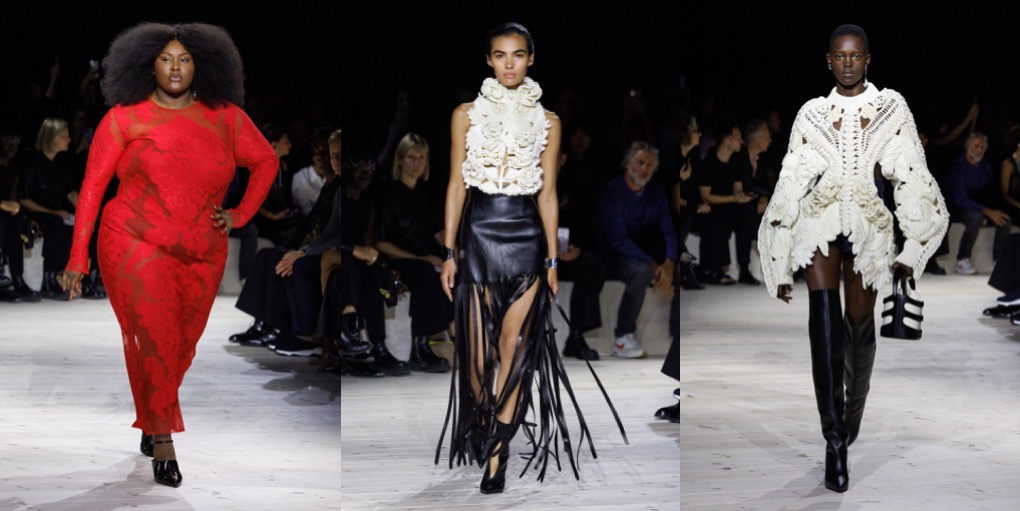
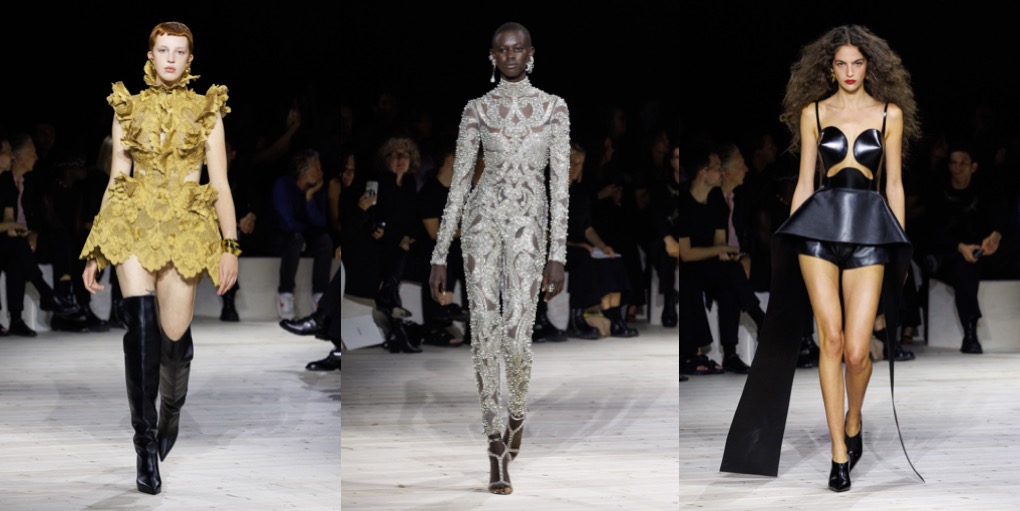
For her final collection for Alexander McQueen, Sarah Burton was inspired by female anatomy, Queen Elizabeth I, the blood red rose and Magdalena Abakanowicz, a transgressive and powerfully creative Polish artist who refused ever to compromise her vision. Abakanowicz’s tactile artworks served as the show’s venue elements as well as reference point for all of Burton’s magnificent knitwear. That was a vivacious farewell, not only to her loyal fans, but the 26 years the designer spent at the brand, of which 13 years were without Lee. Poignantly, the collection served as a sequel to last season’s show, a proposal Burton – at the time – said was founded in the origins of the house: observing the virtues of Savile Row tailoring before tearing it apart and turning it on its head. For spring-summer 2024, the effect was heart-wrenching. Burton cut her tailoring like it was skin, flaying it open in slices along the ribs, shoulders and busts. With her reference to Elizabeth I lingering at the back of the mind, and her era’s taste for torture, there was something fierce and vicious about Burton’s incisions, aggressive and agonising all at once. After long-time house model Naomi Campbell closed the show, David Bowie’s “Heroes” filled the space in preparation for Burton’s final bow. She came out in her modest jeans-and-shirt uniform, embracing the industry figures who have been by her side since her early years with Lee McQueen – starting with fashion journalists par excellence Susannah Frankel and Sarah Mower – before blowing kisses at an audience that will soon be back to welcome her next chapter. Leaving Le Carreau du Temple, the atmosphere was one of gratefulness rather than sadness. Now the big question: who will replace her at McQueen? I’m rooting for Dilara Findikonglu, a fearless London-based talent who would be the perfect match for the brand.
Collage by Edward Kanarecki. Don’t forget to follow Design & Culture by Ed on Instagram! By the way, did you know that I’ve started a newsletter called Ed’s Dispatch? Click here to subscribe!
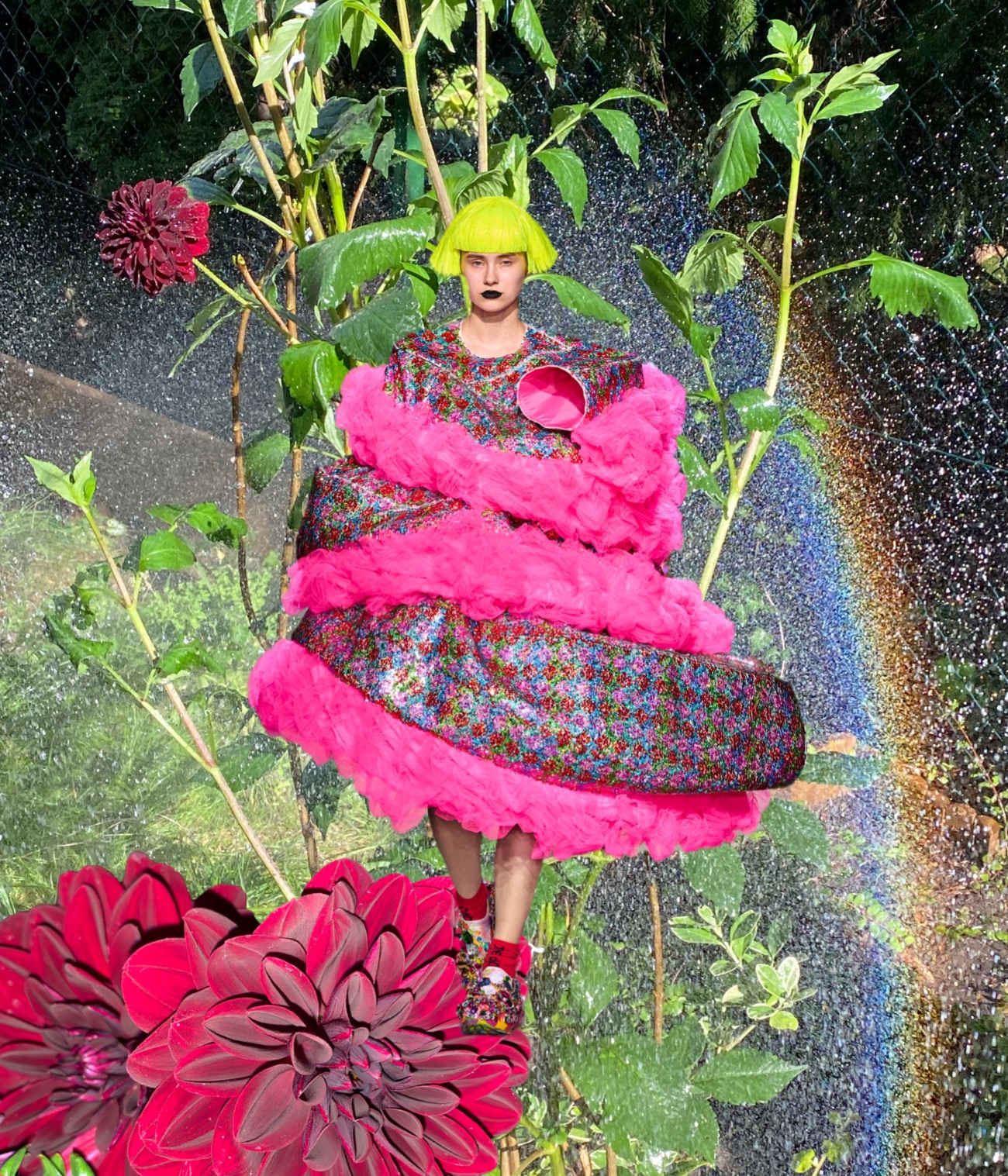
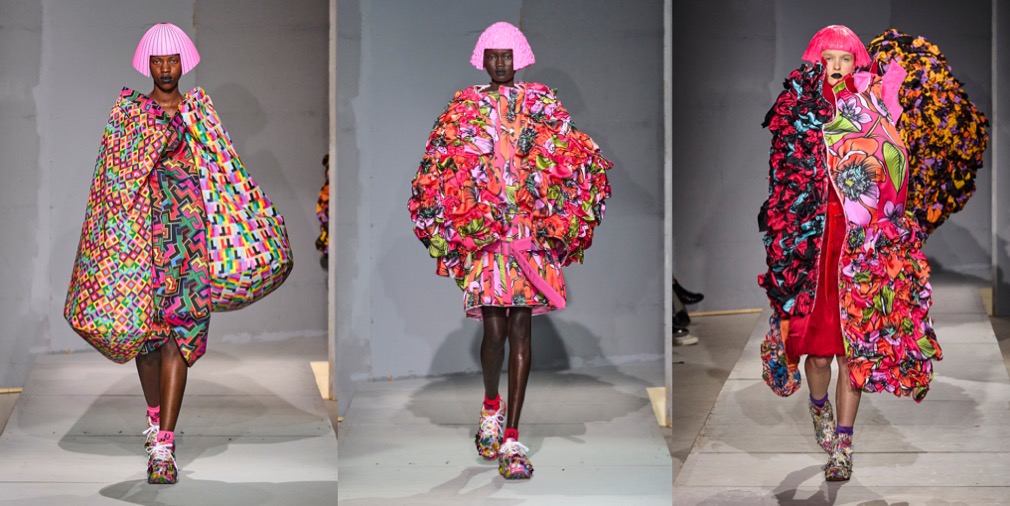
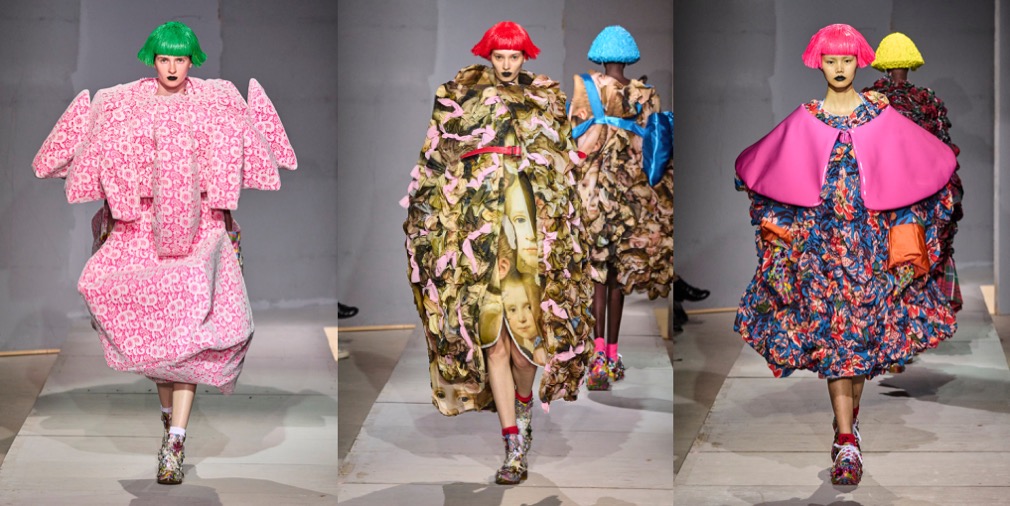
Rei Kawakubo, the visionary designer who is known for responding to global unrests and deep, existential dilemmas through her Comme Des Garçons garments, this season seemed to simply say “fuck it, let me have some fun” with the cacophony of electric colours, hysterically clashing patterns and a range of fantastically irrational, bulbous shapes. Finding happiness and emanating with joy are some of the biggest forces of resistance.
Collage by Edward Kanarecki. Don’t forget to follow Design & Culture by Ed on Instagram! By the way, did you know that I’ve started a newsletter called Ed’s Dispatch? Click here to subscribe!
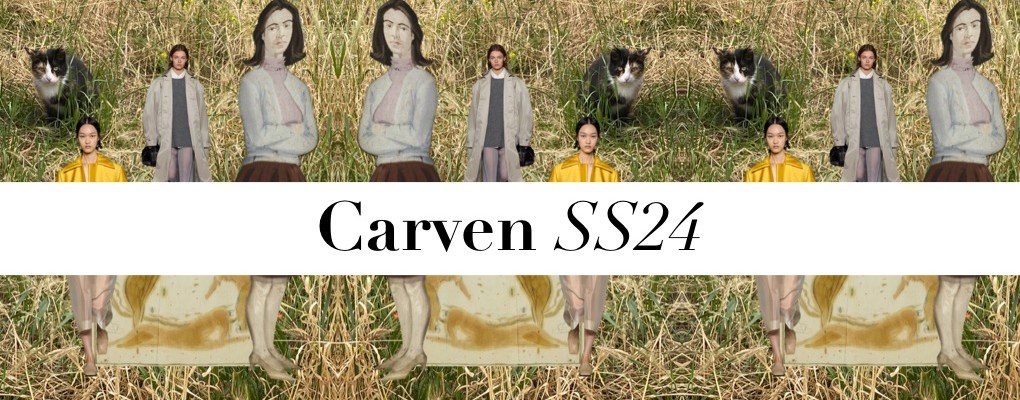
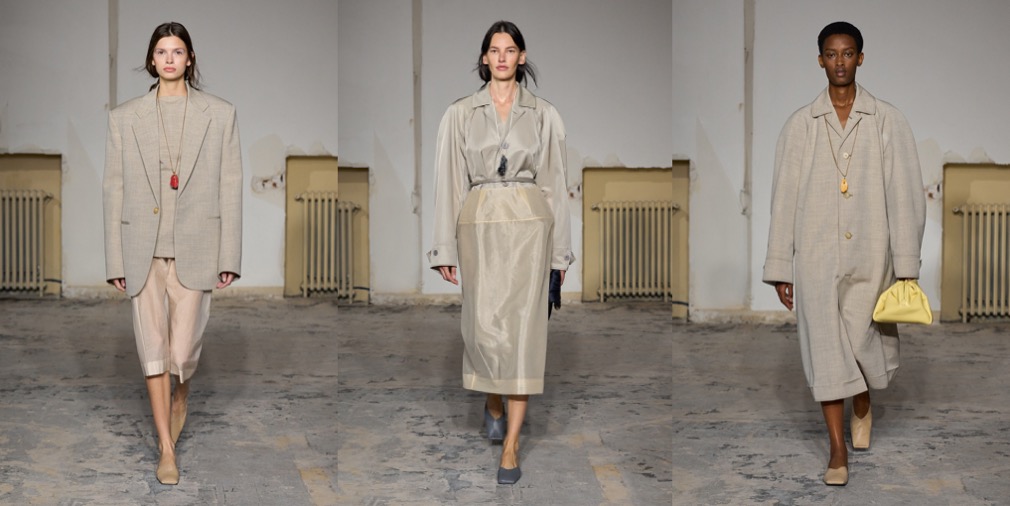
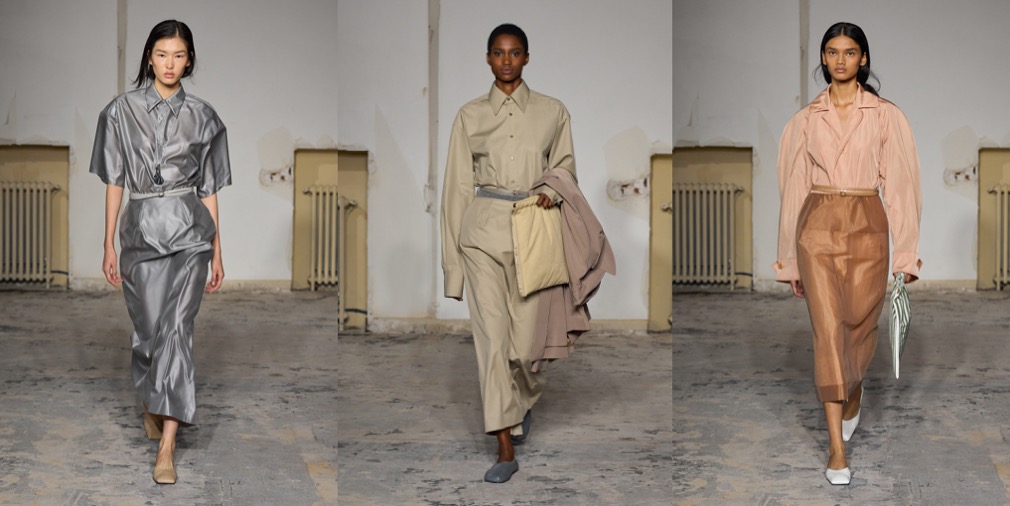
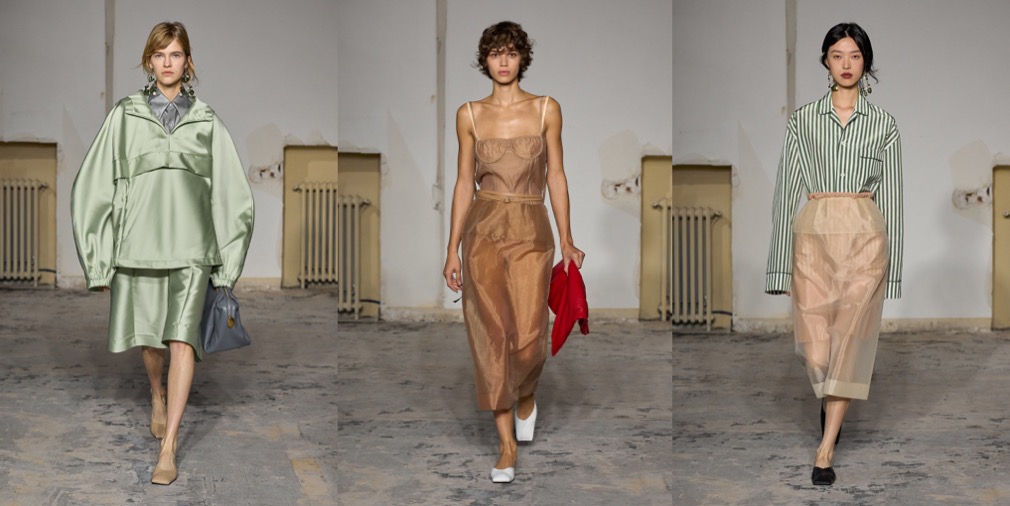
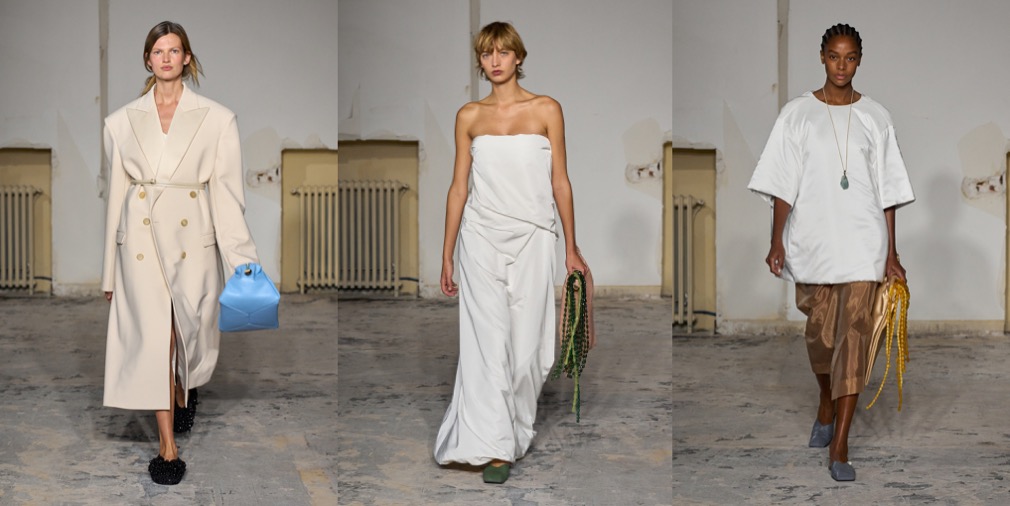
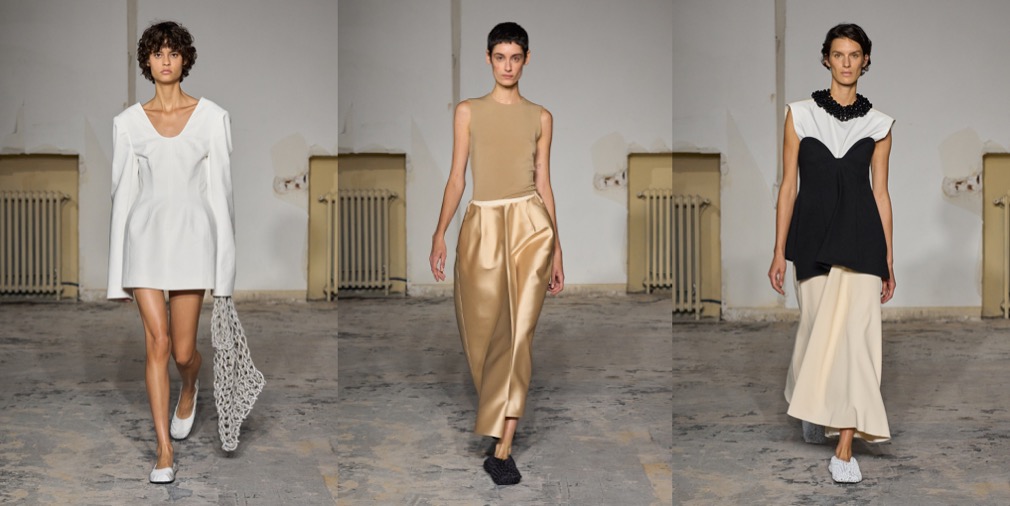
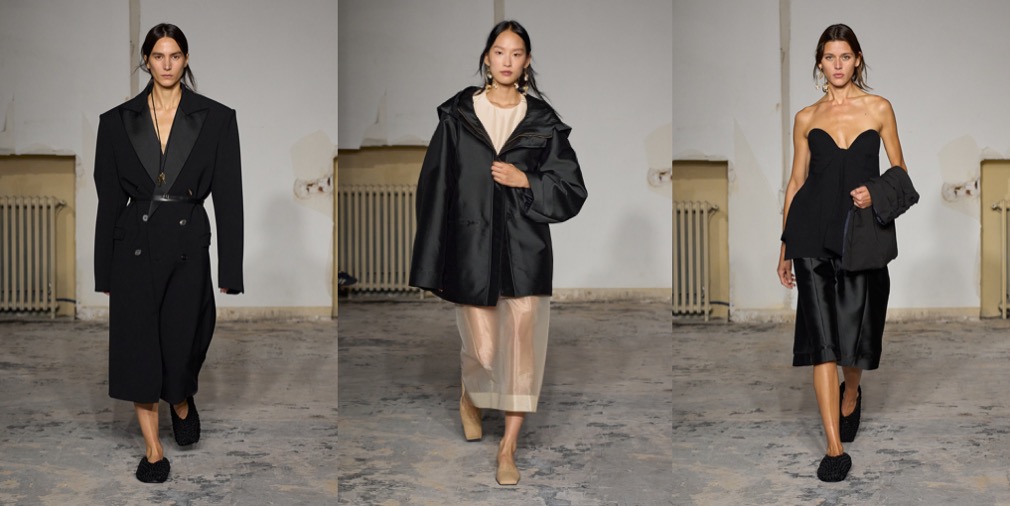
It’s been a while since the last time we’ve heard about Carven. It’s a tricky French maison to revive: it has a vast archive and heritage, but somehow, for years, nobody could position the brand the right way for the contemporary times. But it seems it finally found its person: the hyper-talented Louise Trotter. Her Carven debut is one of the biggest highlights of this Paris Fashion Week. Ahead of her spring-summer 2024 fashion show, Trotter had voiced her desire to start the brand anew. That didn’t mean total erasure of the brand’s identity. Established in 1945, Carven was known for its hourglass silhouette. The British creative director referenced it through powerful shoulders and nipped-in waists. Throughout its 40 looks, styled by Suzanne Koller, the designer is redefining timeless wardrobe essentials. Cinched trench coats, transparent white shirts, elegant black dresses: Carven delivers a new layer to the eternal myth of Parisian chic. For Trotter, simplicity does not mean boring; the designer made sure to explore different textures. Sheer skirts and tops were a standout in the collection, especially when layered on top of heavyweight short dresses, just like the beading of the accessories. Watch this space!
Collage by Edward Kanarecki. Don’t forget to follow Design & Culture by Ed on Instagram! By the way, did you know that I’ve started a newsletter called Ed’s Dispatch? Click here to subscribe!
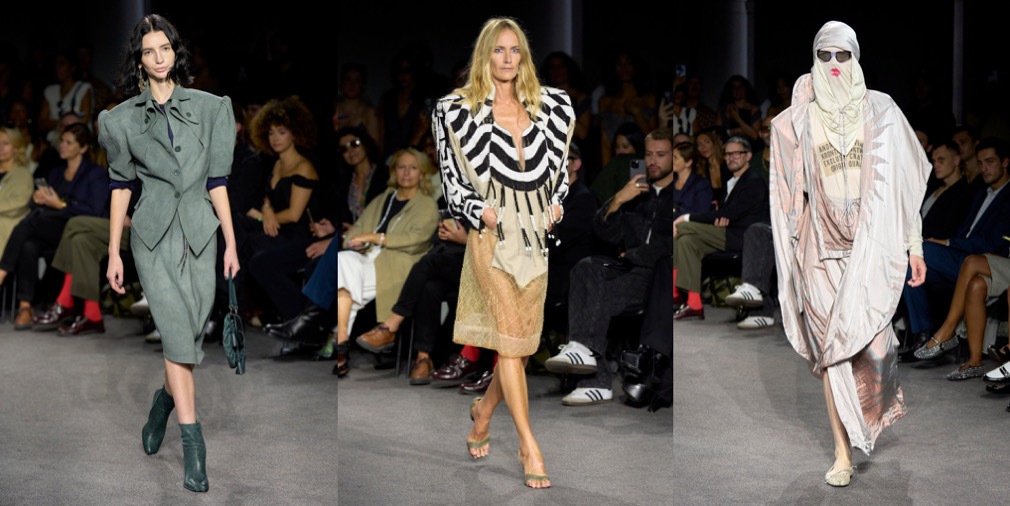
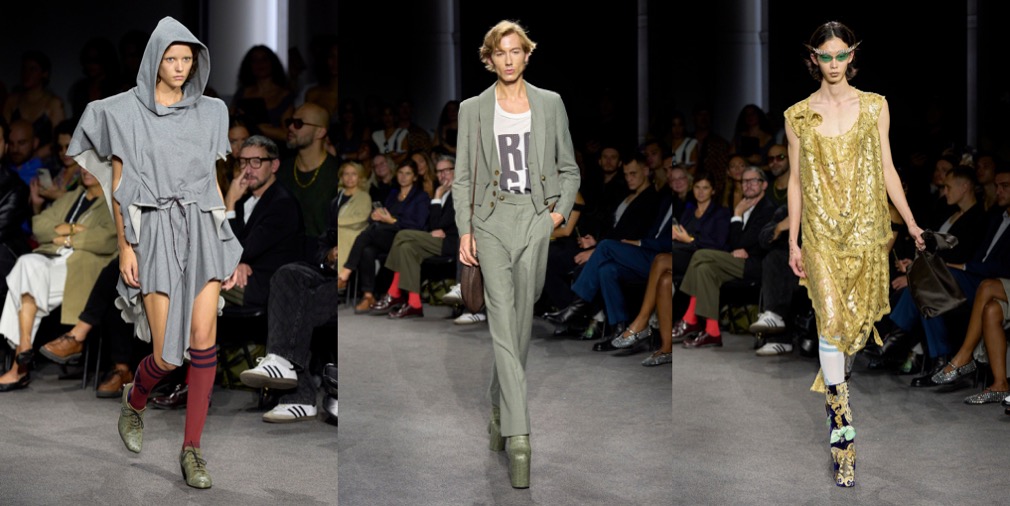
As Andreas Kronthaler put it pre-show, his spring-summer 2024 Vivienne Westwood collection was a synthesis derived from his contemplation of his late wife’s own clothes. Some months ago, he faced the emotional task of packing up her personal wardrobe. “There were maybe 250 looks’ worth, something like that, and as I did it I knew this was going to be the collection,” he said. He decided to go for around 40 looks, which he says he chose from the 250 and arbitrarily ordered for this show by picking the numbers of those he’d archived out of a hat. Whether it was via serendipity or the magical emotional personal lay lines that most-loved and lived-in garments sometimes acquire, his first pick was the number of a brown micro-corduroy suit from 2004 that Westwood had worn day to day for nearly two decades, sometimes patching along the way. Here it was reimagined in a pale berry tone and looked easily the most interesting piece of womenswear tailoring of this Paris season so far: its harmonically incongruous “mistakes” were as wonderful to watch as it looked comfortable to wear. Kronthaler’s loving but also clear-eyed curation of these looks generated a collection that appeared not fleetingly radical, but timelessly so. The linen cape in look six was a reworked version of one Westwood wore when riding in a tank to the house of a disastrous British prime minister to park it on his lawn in protest back in 2015. The penultimate dress, based originally on a Velázquez painting she adored, was worn to an opera in Salzburg: “Some of the things she had worn only once, you know,” said Kronthaler. Westwood’s erudite, curious, and activist intellectual identity added up to a mindset no big bucks creative agency could ever fashion. She was also a woman designing for women (although there was a smattering of men’s looks here). This was a wonderful survey of a design dialect unlike any other.
Collage by Edward Kanarecki. Don’t forget to follow Design & Culture by Ed on Instagram! By the way, did you know that I’ve started a newsletter called Ed’s Dispatch? Click here to subscribe!














 Design & Culture by Ed